Host Dietary Nutrients Shape GH32-Mediated Microbial Responses to Prebiotic Fructans: A Randomized Trial
 , ,
, ,
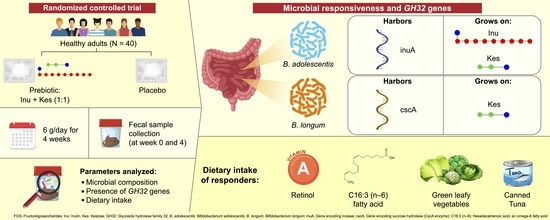
Abstract
1. Introduction
2. Materials and Methods
2.1. Ethical Approval
2.2. Study Design and Participants
2.3. Randomization and Blinding
2.4. Intervention and Study Procedure
2.5. DNA Extraction and 16S rRNA Gene Sequencing
2.6. Bioinformatics Analysis
2.7. Quantitative Analysis of Fecal Microorganisms Using Quantitative PCR
2.8. Bacterial Strains and Growth Conditions
2.9. Determination of Short-Chain Fatty Acid (SCFA) and Lactate Concentrations in Fecal Samples
2.10. Dietary Assessment
2.11. Statistical Analysis
3. Results
3.1. Participant Details and Baseline Characteristics
3.2. Baseline and Post-Intervention Fecal Microbiome Diversity and Composition
3.3. Subgroup Analysis Based on Microbial Response
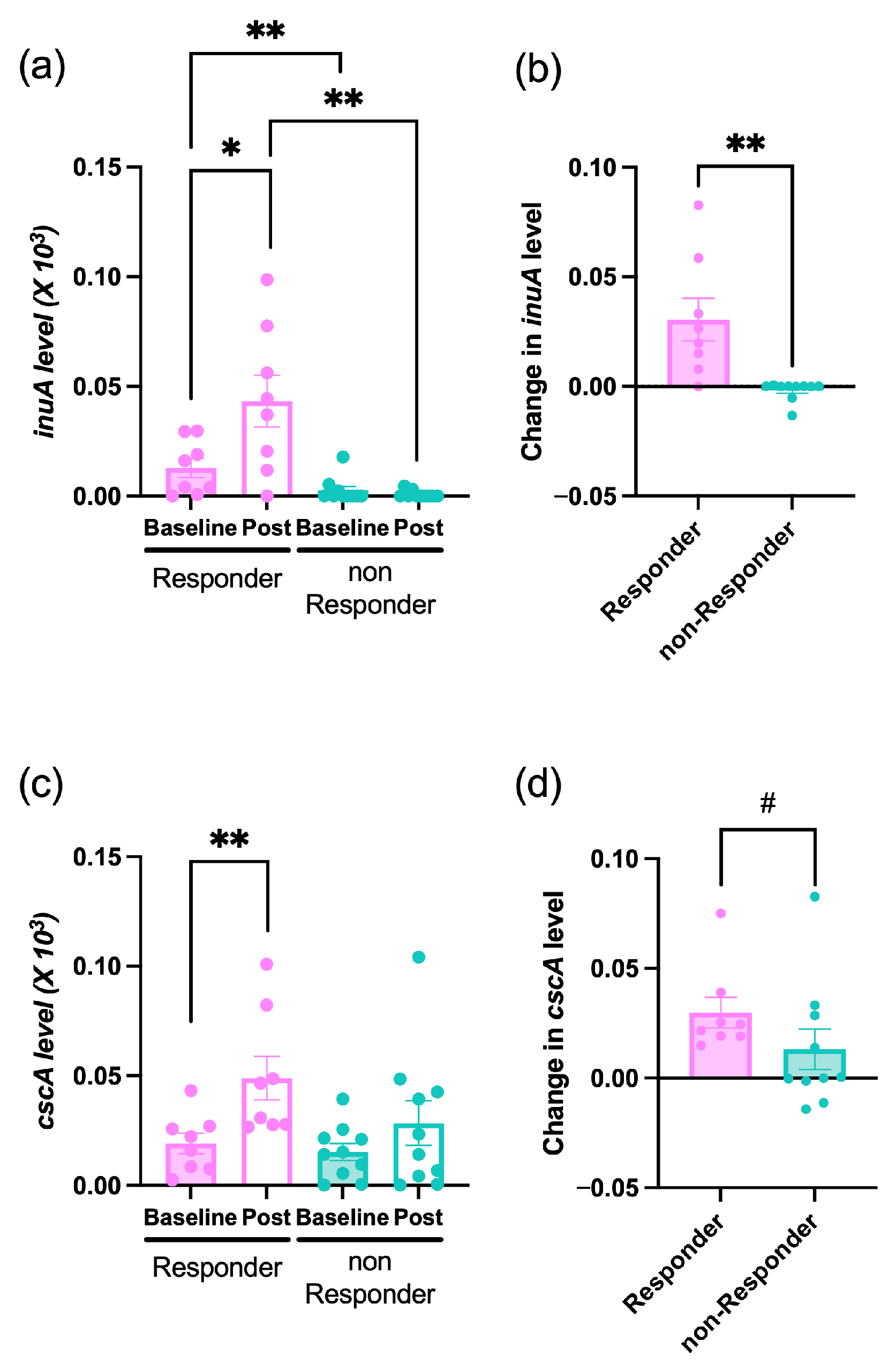
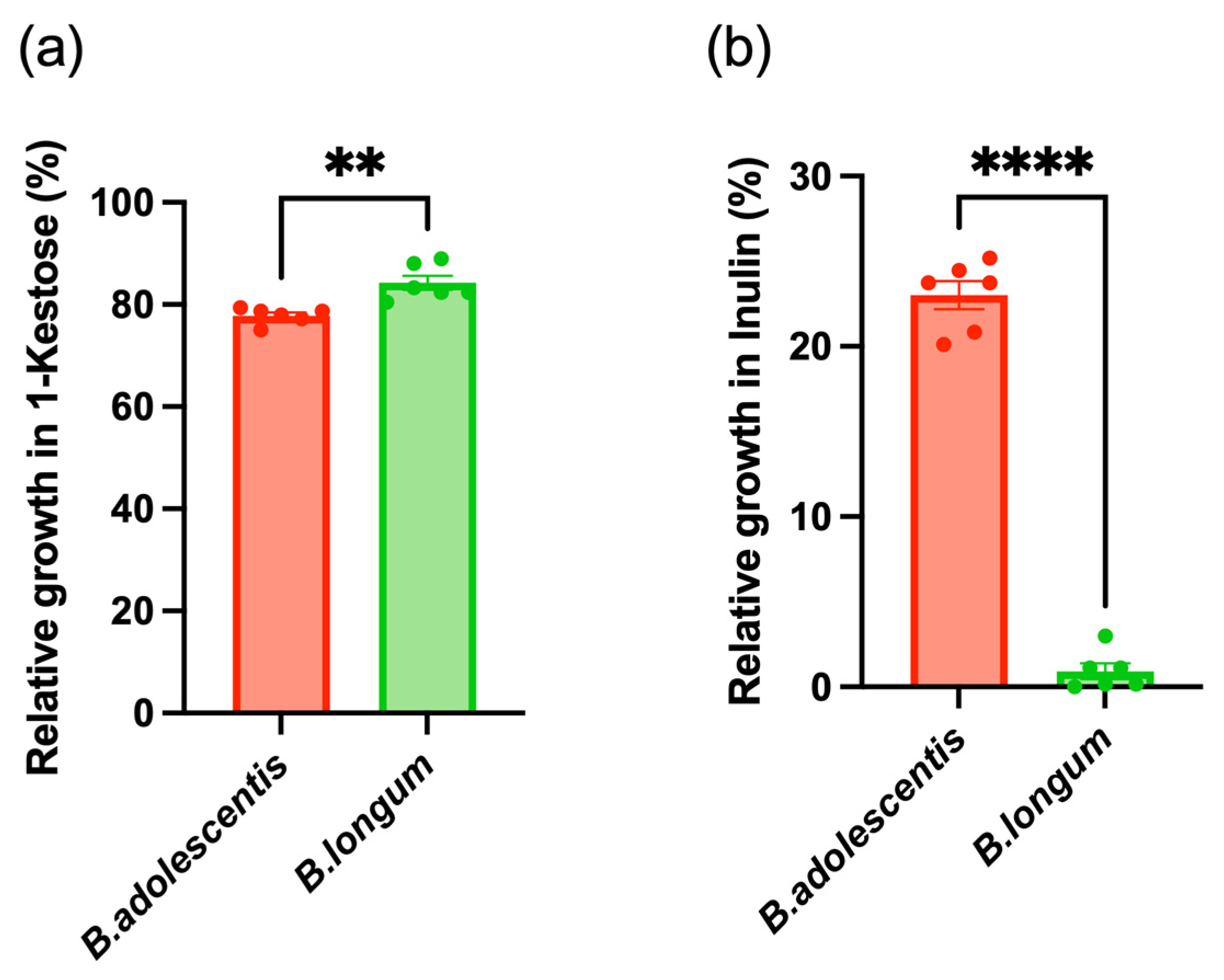
3.4. GH32 Gene Abundance in Responders and Non-Responders and Fructan Utilization by B. adolescentis and B. longum
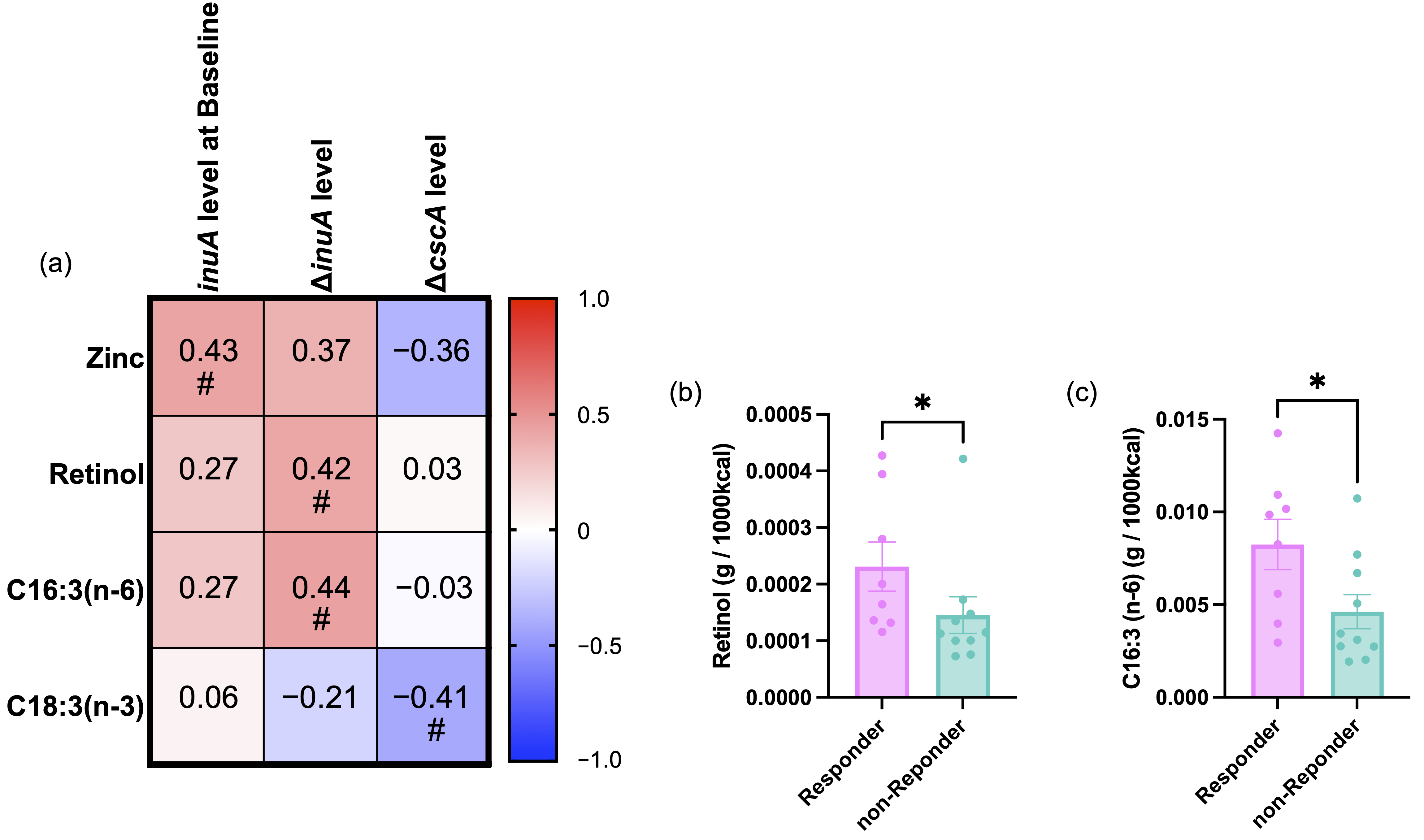
3.5. Associations Between Nutrient Intake and GH32 Gene Response
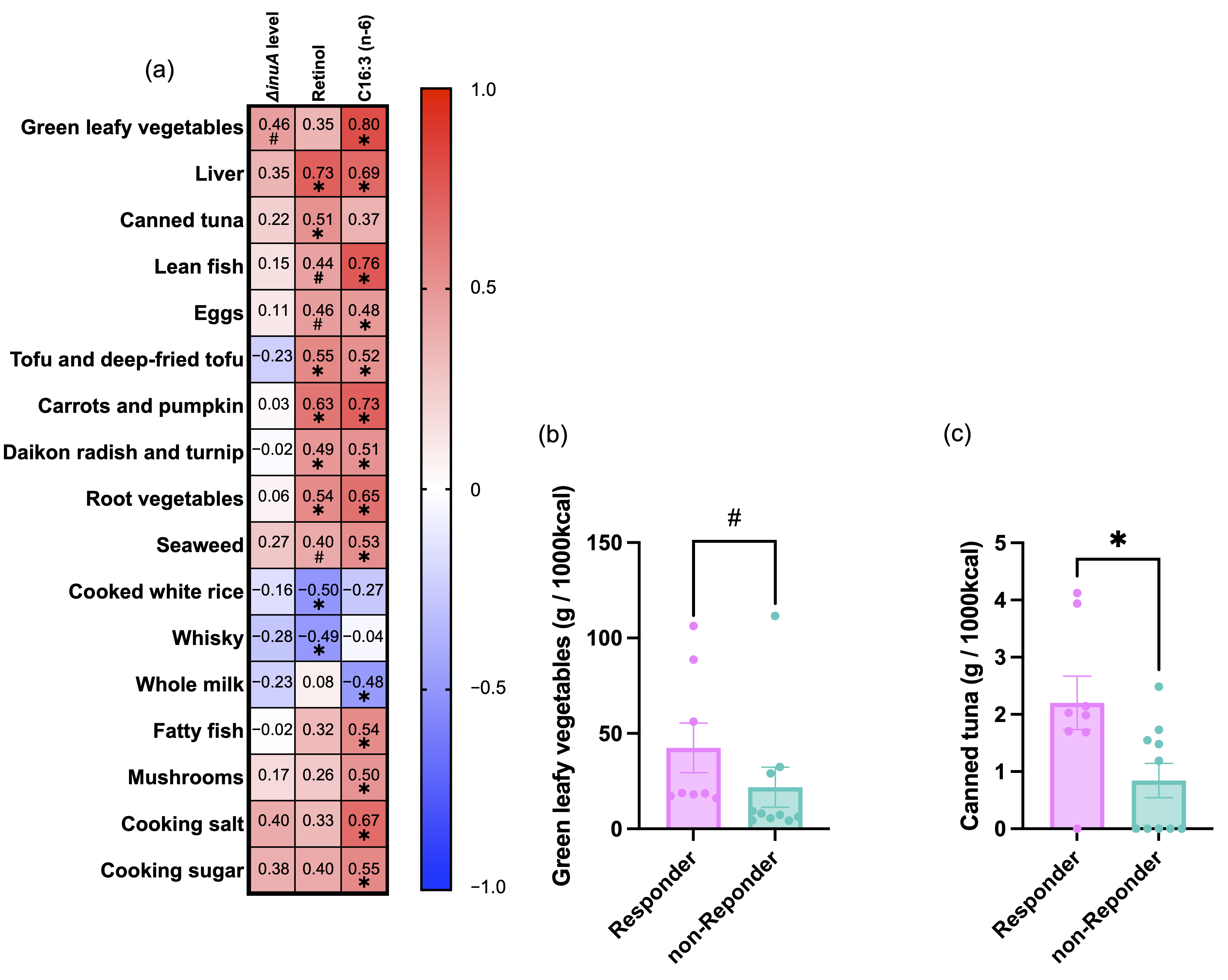
3.6. Dietary Food Intake Associated with GH32-Related Microbial Responses
4. Discussion
5. Conclusions
Supplementary Materials
Author Contributions
Funding
Institutional Review Board Statement
Informed Consent Statement
Data Availability Statement
Acknowledgments
Conflicts of Interest
Abbreviations
| BDHQ | Brief Self-administered Diet History Questionnaire |
| BHI | Brain heart infusion |
| DP | Degree of polymerization |
| FOS | Fructo-oligosaccharides |
| GH32 | glycoside hydrolase family 32 |
| IBD | Inflammatory bowel disease |
| Inu | Inulin |
| JCM | Japan Collection of Microorganisms |
| jRCT | Japan Registry of Clinical Trials |
| Kes | 1-Kestose |
| n-6 PUFAs | n-6 polyunsaturated fatty acids |
| PCoA | Principal coordinate analysis |
| qPCR | Quantitative PCR |
| RA | Retinoic acid |
| RCT | Randomized controlled trial |
| RF | Reinforced flora |
| SCFAs | Short-chain fatty acids |
| SRA | Sequence Read Archive |
| VAD | Vitamin A deficiency |
References
- DeGruttola, A.K.; Low, D.; Mizoguchi, A.; Mizoguchi, E. Current understanding of dysbiosis in disease in human and animal models. Inflamm. Bowel Dis. 2016, 22, 1137–1150. [Google Scholar] [CrossRef] [PubMed]
- Hou, K.; Wu, Z.-X.; Chen, X.-Y.; Wang, J.-Q.; Zhang, D.; Xiao, C.; Zhu, D.; Koya, J.B.; Wei, L.; Li, J.; et al. Microbiota in health and diseases. Signal Transduct. Target. Ther. 2022, 7, 135. [Google Scholar] [CrossRef] [PubMed]
- Pascal, M.; Perez-Gordo, M.; Caballero, T.; Escribese, M.M.; Lopez Longo, M.N.; Luengo, O.; Manso, L.; Matheu, V.; Seoane, E.; Zamorano, M.; et al. Microbiome and allergic diseases. Front. Immunol. 2018, 9, 1584. [Google Scholar] [CrossRef]
- Gibson, G.R.; Hutkins, R.; Sanders, M.E.; Prescott, S.L.; Reimer, R.A.; Salminen, S.J.; Scott, K.; Stanton, C.; Swanson, K.S.; Cani, P.D.; et al. Expert consensus document: The International Scientific Association for Probiotics and Prebiotics (ISAPP) consensus statement on the definition and scope of prebiotics. Nat. Rev. Gastroenterol. Hepatol. 2017, 14, 491–502. [Google Scholar] [CrossRef]
- Slavin, J.J. Fiber and prebiotics: Mechanisms and health benefits. Nutrients 2013, 5, 1417–1435. [Google Scholar] [CrossRef]
- Astó, E.; Méndez, I.; Rodríguez-Prado, M.; Cuñé, J.; Espadaler, J.; Farran-Codina, A. Effect of the degree of polymerization of fructans on ex vivo fermented human gut microbiome. Nutrients 2019, 11, 1293. [Google Scholar] [CrossRef]
- Scott, K.P.; Martin, J.C.; Duncan, S.H.; Flint, H.J. Prebiotic stimulation of human colonic butyrate-producing bacteria and bifidobacteria, in vitro. FEMS Microbiol. Ecol. 2014, 87, 30–40. [Google Scholar] [CrossRef]
- Sannohe, Y.; Fukasawa, T.; Koga, J.; Kubota, H.; Kanegae, M. Comparison of the growth of bifidobacteria in two culture media containing either 1-kestose (GF2) or nystose (GF3). Biosci. Microflora 2008, 27, 13–17. [Google Scholar] [CrossRef]
- Suzuki, N.; Aiba, Y.; Takeda, H.; Fukumori, Y.; Koga, Y. Superiority of 1-kestose, the smallest fructo-oligosaccharide, to a synthetic mixture of fructo-oligosaccharides in the selective stimulating activity on bifidobacteria. Biosci. Microflora 2006, 25, 109–116. [Google Scholar] [CrossRef]
- Watanabe, A.; Tochio, T.; Kadota, Y.; Takahashi, M.; Kitaura, Y.; Ishikawa, H.; Yasutake, T.; Nakano, M.; Shinohara, H.; Kudo, T.; et al. Supplementation of 1-kestose modulates the gut microbiota composition to ameliorate glucose metabolism in obesity-prone hosts. Nutrients 2021, 13, 2983. [Google Scholar] [CrossRef]
- Watanabe, A.; Kadota, Y.; Kamio, R.; Tochio, T.; Endo, A.; Shimomura, Y.; Kitaura, Y. 1-Kestose supplementation mitigates the progressive deterioration of glucose metabolism in type 2 diabetes OLETF rats. Sci. Rep. 2020, 10, 15674. [Google Scholar] [CrossRef] [PubMed]
- Kim, J.-H.; Baek, J.; Sa, S.; Park, J.; Kih, M.; Kim, W. Kestose-enriched fructo-oligosaccharide alleviates atopic dermatitis by modulating the gut microbiome and immune response. J. Funct. Foods 2021, 85, 104650. [Google Scholar] [CrossRef]
- Shibata, R.; Koga, Y.; Takahashi, M.; Murakami, Y.; Tochio, T.; Kadota, Y. In children with cow’s milk allergy, 1-kestose affects the gut microbiota and reaction threshold. Pediatr. Res. 2023, 94, 1067–1074. [Google Scholar] [CrossRef] [PubMed]
- Ikegami, S.; Nakamura, M.; Honda, T.; Yamamura, T.; Maeda, K.; Sawada, T.; Ishikawa, E.; Yamamoto, K.; Furune, S.; Ishikawa, T.; et al. Efficacy of 1-kestose supplementation in patients with mild to moderate ulcerative colitis: A randomised, double-blind, placebo-controlled pilot study. Aliment. Pharmacol. Ther. 2023, 57, 1249–1257. [Google Scholar] [CrossRef]
- Tominaga, K.; Tsuchiya, A.; Nakano, O.; Kuroki, Y.; Oka, K.; Minemura, A.; Matsumoto, A.; Takahashi, M.; Kadota, Y.; Tochio, T.; et al. Increase in muscle mass associated with the prebiotic effects of 1-kestose in super-elderly patients with sarcopenia. Biosci. Microbiota Food Health 2021, 40, 150–155. [Google Scholar] [CrossRef]
- Nakaoka, K.; Ohno, E.; Kuramitsu, K.; Kuzuya, T.; Funasaka, K.; Tochio, T.; Fujii, T.; Takahashi, H.; Kondo, N.; Miyahara, R.; et al. Efficacy of 1-kestose supplementation in patients with pancreatic ductal adenocarcinoma: A randomized controlled pilot study. Nutrients 2024, 16, 2889. [Google Scholar] [CrossRef]
- Alonso-Allende, J.; Milagro, F.I.; Aranaz, P. Health effects and mechanisms of inulin action in human metabolism. Nutrients 2024, 16, 2935. [Google Scholar] [CrossRef]
- Balcázar-Muñoz, B.R.; Martínez-Abundis, E.; González-Ortiz, M. Effect of oral inulin administration on lipid profile and insulin sensitivity in subjects with obesity and dyslipidemia. Rev. Med. Chile 2003, 131, 597–604. [Google Scholar]
- Barbero-Becerra, V.; Juárez-Hernández, E.; Chávez-Tapia, N.C.; Uribe, M. Inulin as a clinical therapeutic intervention in metabolic associated fatty liver disease. Food Rev. Int. 2022, 38 (Suppl. S1), 336–348. [Google Scholar] [CrossRef]
- Ranawana, V. Inulin: A review of its functional properties in relation to calcium absorption in humans. J. Food Agric. 2010, 1, 26–35. [Google Scholar] [CrossRef]
- Tanno, H.; Fujii, T.; Hirano, K.; Maeno, S.; Tonozuka, T.; Sakamoto, M.; Ohkuma, M.; Tochio, T.; Endo, A. Characterization of fructooligosaccharide metabolism and fructooligosaccharide-degrading enzymes in human commensal butyrate producers. Gut Microbes 2021, 13, 1–20. [Google Scholar] [CrossRef]
- Takahashi, H.; Fujii, T.; Yamada, C.; Fujiki, K.; Kondo, N.; Kuramitsu, K.; Funasaka, K.; Ohno, E.; Hirooka, Y.; Tochio, T. Synergistic effects of short- and long-chain fructans: A novel strategy for mitigating ovalbumin allergy via microbiome-driven acetate production. J. Nutr. Sci. Vitaminol. 2025, 71, 238–247. [Google Scholar] [CrossRef]
- Takahashi, H.; Fujii, T.; Yamakawa, S.; Yamada, C.; Fujiki, K.; Kondo, N.; Funasaka, K.; Hirooka, Y.; Tochio, T. Combined oral intake of short and long fructans alters the gut microbiota in food allergy model mice and contributes to food allergy prevention. BMC Microbiol. 2023, 23, 266. [Google Scholar] [CrossRef] [PubMed]
- Abrams, S.A.; Griffin, I.J.; Hawthorne, K.M.; Liang, L.; Gunn, S.K.; Darlington, G.; Ellis, K.J. A combination of prebiotic short- and long-chain inulin-type fructans enhances calcium absorption and bone mineralization in young adolescents. Am. J. Clin. Nutr. 2005, 82, 471–476. [Google Scholar] [CrossRef] [PubMed]
- Moles, L.; Otaegui, D. The impact of diet on microbiota evolution and human health. Is diet an adequate tool for microbiota modulation? Nutrients 2020, 12, 1654. [Google Scholar] [CrossRef] [PubMed]
- Oe, M.; Sasaki, S.; Shimura, T.; Takaki, Y.; Sanada, H. Effects of multilayer silicone foam dressings for the prevention of pressure ulcers in high-risk patients: A randomized clinical trial. Adv. Wound Care 2020, 9, 649–656. [Google Scholar] [CrossRef]
- Kobayashi, S.; Murakami, K.; Sasaki, S.; Okubo, H.; Hirota, N.; Notsu, A.; Fukui, M.; Date, C. Comparison of relative validity of food group intakes estimated by comprehensive and brief-type self-administered diet history questionnaires against 16 d dietary records in Japanese adults. Public Health Nutr. 2011, 14, 1200–1211. [Google Scholar] [CrossRef]
- Kobayashi, S.; Honda, S.; Murakami, K.; Sasaki, S.; Okubo, H.; Hirota, N.; Notsu, A.; Fukui, M.; Date, C. Both comprehensive and brief self-administered diet history questionnaires satisfactorily rank nutrient intakes in Japanese adults. J. Epidemiol. 2012, 22, 151–159. [Google Scholar] [CrossRef]
- Takahashi, S.; Tomita, J.; Nishioka, K.; Hisada, T.; Nishijima, M. Development of a prokaryotic universal primer for simultaneous analysis of bacteria and archaea using next-generation sequencing. PLoS ONE 2014, 9, e105592. [Google Scholar] [CrossRef]
- Bolyen, E.; Rideout, J.R.; Dillon, M.R.; Bokulich, N.A.; Abnet, C.C.; Al-Ghalith, G.A.; Alexander, H.; Alm, E.J.; Arumugam, M.; Asnicar, F.; et al. Reproducible, interactive, scalable and extensible microbiome data science using QIIME 2. Nat. Biotechnol. 2019, 37, 1091. [Google Scholar] [CrossRef]
- Callahan, B.J.; McMurdie, P.J.; Rosen, M.J.; Han, A.W.; Johnson, A.J.A.; Holmes, S.P. DADA2: High-resolution sample inference from Illumina amplicon data. Nat. Methods 2016, 13, 581–583. [Google Scholar] [CrossRef]
- Bokulich, N.A.; Kaehler, B.D.; Rideout, J.R.; Dillon, M.; Bolyen, E.; Knight, R.; Huttley, G.A.; Gregory Caporaso, J. Optimizing taxonomic classification of marker-gene amplicon sequences with QIIME 2’s q2-feature-classifier plugin. Microbiome 2018, 6, 90. [Google Scholar] [CrossRef]
- McDonald, D.; Jiang, Y.; Balaban, M.; Cantrell, K.; Zhu, Q.; Gonzalez, A.; Morton, J.T.; Nicolaou, G.; Parks, D.H.; Karst, S.M.; et al. Greengenes2 unifies microbial data in a single reference tree. Nat. Biotechnol. 2024, 42, 715–718. [Google Scholar] [CrossRef]
- Furet, J.-P.; Firmesse, O.; Gourmelon, M.; Bridonneau, C.; Tap, J.; Mondot, S.; Doré, J.; Corthier, G. Comparative assessment of human and farm animal faecal microbiota using real-time quantitative PCR. FEMS Microbiol. Ecol. 2009, 68, 351–362. [Google Scholar] [CrossRef]
- Le Blay, G.; Lacroix, C.; Zihler, A.; Fliss, I. In vitro inhibition activity of nisin A, nisin Z, pediocin PA-1 and antibiotics against common intestinal bacteria. Lett. Appl. Microbiol. 2007, 45, 252–257. [Google Scholar] [CrossRef] [PubMed]
- Murakami, K.; Sasaki, S.; Uenishi, K.; Japan Dietetic Students’ Study for Nutrition and Biomarkers Group. The degree of misreporting of the energy-adjusted intake of protein, potassium, and sodium does not differ among under-, acceptable, and over-reporters of energy intake. Nutr. Res. 2012, 32, 741–750. [Google Scholar] [CrossRef] [PubMed]
- Duranti, S.; Milani, C.; Lugli, G.A.; Mancabelli, L.; Turroni, F.; Ferrario, C.; Mangifesta, M.; Viappiani, A.; Sánchez, B.; Margolles, A.; et al. Evaluation of genetic diversity among strains of the human gut commensal Bifidobacterium adolescentis. Sci. Rep. 2016, 6, 23971. [Google Scholar] [CrossRef] [PubMed]
- Tanno, H.; Fujii, T.; Ose, R.; Hirano, K.; Tochio, T.; Endo, A. Characterization of fructooligosaccharide-degrading enzymes in human commensal Bifidobacterium longum and Anaerostipes caccae. Biochem. Biophys. Res. Commun. 2019, 518, 294–298. [Google Scholar] [CrossRef]
- Li, B.; Wang, H.; Wang, M.; Liang, H.; Hu, T.; Yang, J.; Li, S.; You, X.; Xia, B.; Yuan, Y.; et al. Genome analysis of Bifidobacterium adolescentis and investigation of its effects on inflammation and intestinal barrier function. Front. Microbiol. 2024, 15, 1496280. [Google Scholar] [CrossRef]
- Kim, M.J.; Lee, D.K.; Park, J.E.; Park, I.H.; Seo, J.G.; Ha, N.J. Antiviral activity of Bifidobacterium adolescentis SPM1605 against coxsackievirus B3. Biotechnol. Biotechnol. Equip. 2014, 28, 681–688. [Google Scholar] [CrossRef]
- Yao, S.; Zhao, Z.; Wang, W.; Liu, X. Bifidobacterium longum: Protection against inflammatory bowel disease. J. Immunol. Res. 2021, 2021, 8030297. [Google Scholar] [CrossRef] [PubMed]
- Yang, H.-Y.; Liu, S.-L.; Ibrahim, S.A.; Zhao, L.; Jiang, J.-L.; Sun, W.-F.; Ren, F.-Z. Oral administration of live Bifidobacterium substrains isolated from healthy centenarians enhanced immune function in BALB/c mice. Nutr. Res. 2009, 29, 281–289. [Google Scholar] [CrossRef] [PubMed]
- Parada Venegas, D.; De la Fuente, M.K.; Landskron, G.; González, M.J.; Quera, R.; Dijkstra, G.; Harmsen, H.J.M.; Faber, K.N.; Hermoso, M.A. Short chain fatty acids (SCFAs)-mediated gut epithelial and immune regulation and its relevance for inflammatory bowel diseases. Front. Immunol. 2019, 10, 277. [Google Scholar] [CrossRef]
- Marx, S.P.; Winkler, S.; Hartmeier, W. Metabolization of beta-(2,6)-linked fructose-oligosaccharides by different bifidobacteria. FEMS Microbiol. Lett. 2000, 182, 163–169. [Google Scholar] [CrossRef][Green Version]
- Boets, E.; Deroover, L.; Houben, E.; Vermeulen, K.; Gomand, S.V.; Delcour, J.A.; Verbeke, K. Quantification of in vivo colonic short-chain fatty acid production from inulin. Nutrients 2015, 7, 8916–8929. [Google Scholar] [CrossRef]
- Rivière, A.; Selak, M.; Geirnaert, A.; Van den Abbeele, P.; De Vuyst, L. Complementary mechanisms for degradation of inulin-type fructans and arabinoxylan oligosaccharides among bifidobacterial strains suggest bacterial cooperation. Appl. Environ. Microbiol. 2018, 84, e02893-17. [Google Scholar] [CrossRef]
- Hurwitz, J.; Surman, S.; Jones, B.; Sealy, R.; Woodland, D.; Rudraraju, R. Vitamin A deficiency alters antibody forming cell and CD8+ T cell responses following intranasal vaccination with a respiratory virus vaccine (105.9). J. Immunol. 2012, 188, 105.9. [Google Scholar] [CrossRef]
- Filipe Rosa, L.; Petersen, P.P.; Görtz, L.F.; Stolzer, I.; Kaden-Volynets, V.; Günther, C.; Bischoff, S.C. Vitamin A- and D-deficient diets disrupt intestinal antimicrobial peptide defense involving Wnt and STAT5 signaling pathways in mice. Nutrients 2023, 15, 376. [Google Scholar] [CrossRef]
- Friedman, A.; Meidovsky, A.; Leitner, G.; Sklan, D. Decreased resistance and immune response to Escherichia coli infection in chicks with low or high intakes of vitamin A. J. Nutr. 1991, 121, 395–400. [Google Scholar] [CrossRef]
- He, X.; Li, Y.; Li, M.; Jia, G.; Dong, H.; Zhang, Y.; He, C.; Wang, C.; Deng, L.; Yang, Y. Hypovitaminosis A coupled to secondary bacterial infection in beef cattle. BMC Vet. Res. 2012, 8, 222. [Google Scholar] [CrossRef]
- Long, K.Z.; Garcia, C.; Ko, G.; Santos, J.I.; Al Mamun, A.; Rosado, J.L.; DuPont, H.L.; Nathakumar, N. Vitamin A modifies the intestinal chemokine and cytokine responses to norovirus infection in Mexican children. J. Nutr. 2011, 141, 957–963. [Google Scholar] [CrossRef]
- Chen, B.; Liu, S.; Feng, D.; Xiao, L.; Yang, T.; Li, T.; Sun, W.; Chen, J. Vitamin A deficiency in the early-life periods alters a diversity of the colonic mucosal microbiota in rats. Front. Nutr. 2020, 7, 580780. [Google Scholar] [CrossRef] [PubMed]
- Patterson, E.; Wall, R.; Fitzgerald, G.F.; Ross, R.P.; Stanton, C. Health implications of high dietary omega-6 polyunsaturated fatty acids. J. Nutr. Metab. 2012, 2012, 539426. [Google Scholar] [CrossRef] [PubMed]
- Ilag, L.L. Are long-chain polyunsaturated fatty acids the link between the immune system and the microbiome towards modulating cancer? Medicines 2018, 5, 102. [Google Scholar] [CrossRef] [PubMed]
- Willemsen, L.E.M.; Koetsier, M.A.; Balvers, M.; Beermann, C.; Stahl, B.; van Tol, E.A.F. Polyunsaturated fatty acids support epithelial barrier integrity and reduce IL-4 mediated permeability in vitro. Eur. J. Nutr. 2008, 47, 183–191. [Google Scholar] [CrossRef]
- Shen, J.; Zhang, L.; Wang, Y.; Chen, Z.; Ma, J.; Fang, X.; Das, U.N.; Yao, K. Beneficial actions of essential fatty acids in streptozotocin-induced type 1 diabetes mellitus. Front. Nutr. 2022, 9, 890277. [Google Scholar] [CrossRef]
- Man, A.W.C.; Zhou, Y.; Xia, N.; Li, H. Involvement of gut microbiota, microbial metabolites and interaction with polyphenol in host immunometabolism. Nutrients 2020, 12, 3054. [Google Scholar] [CrossRef]
- Patel, D.; Evanchuk, J.; Wang, R.; Dunbar, C.L.; Munhoz, J.; Field, C.J. Regulation of immune function in healthy adults: One-stop guide on the role of dietary fatty acids, gut microbiota-derived short chain fatty acids, and select micronutrients in combination with physical activity. Appl. Physiol. Nutr. Metab. 2023, 48, 554–568. [Google Scholar] [CrossRef]



| Placebo Group | Prebio Group | p-Value | |
|---|---|---|---|
| Sex (Male/Female) | 1/18 | 1/17 | >0.9999 |
| Age (years) | 20.38 ± 1.12 | 20.68 ± 0.82 | 0.4076 |
| Height (cm) | 156.30 ± 6.19 | 160.54 ± 6.47 | 0.0222 |
| Body weight (kg) | 50.27 ± 5.18 | 52.17 ± 7.93 | 0.3383 |
| BMI (calculated from BDHQ) | 20.57 ± 1.85 | 20.17 ± 2.18 | 0.3312 |
| Pre-existing medical conditions | 1 participant: hay fever | 1 participant: hay fever | >0.9999 |
| Medications and supplements | 1 participant: Fexofenadine | 1 participant: Fexofenadine 1 participant: Pyridoxal phosphate, Jumihaidokuto | 0.6039 |
| Intake Days | 27.74 ± 0.13 | 27.06 ± 0.3 | 0.0497 |
Disclaimer/Publisher’s Note: The statements, opinions and data contained in all publications are solely those of the individual author(s) and contributor(s) and not of MDPI and/or the editor(s). MDPI and/or the editor(s) disclaim responsibility for any injury to people or property resulting from any ideas, methods, instructions or products referred to in the content. |
© 2025 by the authors. Licensee MDPI, Basel, Switzerland. This article is an open access article distributed under the terms and conditions of the Creative Commons Attribution (CC BY) license (https://creativecommons.org/licenses/by/4.0/).
Share and Cite
Takahashi, H.; Fujii, T.; Yamada, C.; Kondo, N.; Kuramitsu, K.; Funasaka, K.; Ohno, E.; Hirooka, Y.; Tochio, T.; Fujiki, K. Host Dietary Nutrients Shape GH32-Mediated Microbial Responses to Prebiotic Fructans: A Randomized Trial. Foods 2025, 14, 4090. https://doi.org/10.3390/foods14234090
Takahashi H, Fujii T, Yamada C, Kondo N, Kuramitsu K, Funasaka K, Ohno E, Hirooka Y, Tochio T, Fujiki K. Host Dietary Nutrients Shape GH32-Mediated Microbial Responses to Prebiotic Fructans: A Randomized Trial. Foods. 2025; 14(23):4090. https://doi.org/10.3390/foods14234090
Chicago/Turabian StyleTakahashi, Hideaki, Tadashi Fujii, Chikako Yamada, Nobuhiro Kondo, Kento Kuramitsu, Kohei Funasaka, Eizaburo Ohno, Yoshiki Hirooka, Takumi Tochio, and Kotoyo Fujiki. 2025. "Host Dietary Nutrients Shape GH32-Mediated Microbial Responses to Prebiotic Fructans: A Randomized Trial" Foods 14, no. 23: 4090. https://doi.org/10.3390/foods14234090
APA StyleTakahashi, H., Fujii, T., Yamada, C., Kondo, N., Kuramitsu, K., Funasaka, K., Ohno, E., Hirooka, Y., Tochio, T., & Fujiki, K. (2025). Host Dietary Nutrients Shape GH32-Mediated Microbial Responses to Prebiotic Fructans: A Randomized Trial. Foods, 14(23), 4090. https://doi.org/10.3390/foods14234090