Article

The Role of Glyceraldehyde-3-Phosphate Dehydrogenase in 2-Ketogluconic Acid Industrial Production Strain Pseudomonas plecoglossicida JUIM01

School of Food and Biological Engineering, Jiangsu University, Zhenjiang 212013, China
*
Authors to whom correspondence should be addressed.
Foods 2025, 14(22), 3830; https://doi.org/10.3390/foods14223830
Submission received: 25 September 2025 / Revised: 3 November 2025 / Accepted: 7 November 2025 / Published: 8 November 2025
(This article belongs to the Section Food Microbiology)

Abstract

The full-length gapA gene (1002 bp) was cloned from Pseudomonas plecoglossicida JUIM01, an industrial strain used for 2-ketogluconic acid (2KGA) production. The protein encoded by gapA (designated Gap) was predicted to be a canonical NAD(P)-dependent glyceraldehyde-3-phosphate dehydrogenase that catalyzes the interconversion between glyceraldehyde-3-phosphate and 1,3-bisphosphoglycerate. Bioinformatics analyses and electrophoretic mobility shift assays suggested that gapA is regulated by the transcription factor HexR. Through the knockout and complementation of the gene, along with shake-flask experiments and fermentation in bioreactors, this study demonstrated that the deletion of gapA increased the 2KGA production, sugar–acid conversion rate, molar yield, and productivity of P. plecoglossicida JUIM01 by 5.7–6.6% without affecting cell growth, highlighting the mutant’s significant industrial potential.

1. Introduction

The cytoplasmic membrane of Pseudomonas species harbors a direct glucose oxidation system, mainly consisting of a pyrroloquinoline quinone (PQQ)-dependent glucose dehydrogenase (Gcd) and a flavin adenine dinucleotide (FAD)-dependent gluconate dehydrogenase (Gad). Gcd oxidizes glucose to gluconic acid, and Gad further oxidizes gluconic acid to 2-ketogluconic acid (2KGA) in the periplasmic space [1,2,3,4]. Additionally, Pseudomonas strains generally exhibit strong adaptability to diverse physicochemical and nutritional environments, as well as significantly tolerance to endogenous and exogenous stresses [5,6,7,8,9,10]. Hence, they are widely used in the industrial fermentation production of 2KGA. 2KGA has a broad range of industrial applications. Among these applications, the most important one is as a precursor for the synthesis of the food antioxidant d-isoascorbic acid (d-erythorbate) and its salts [11,12,13,14,15].
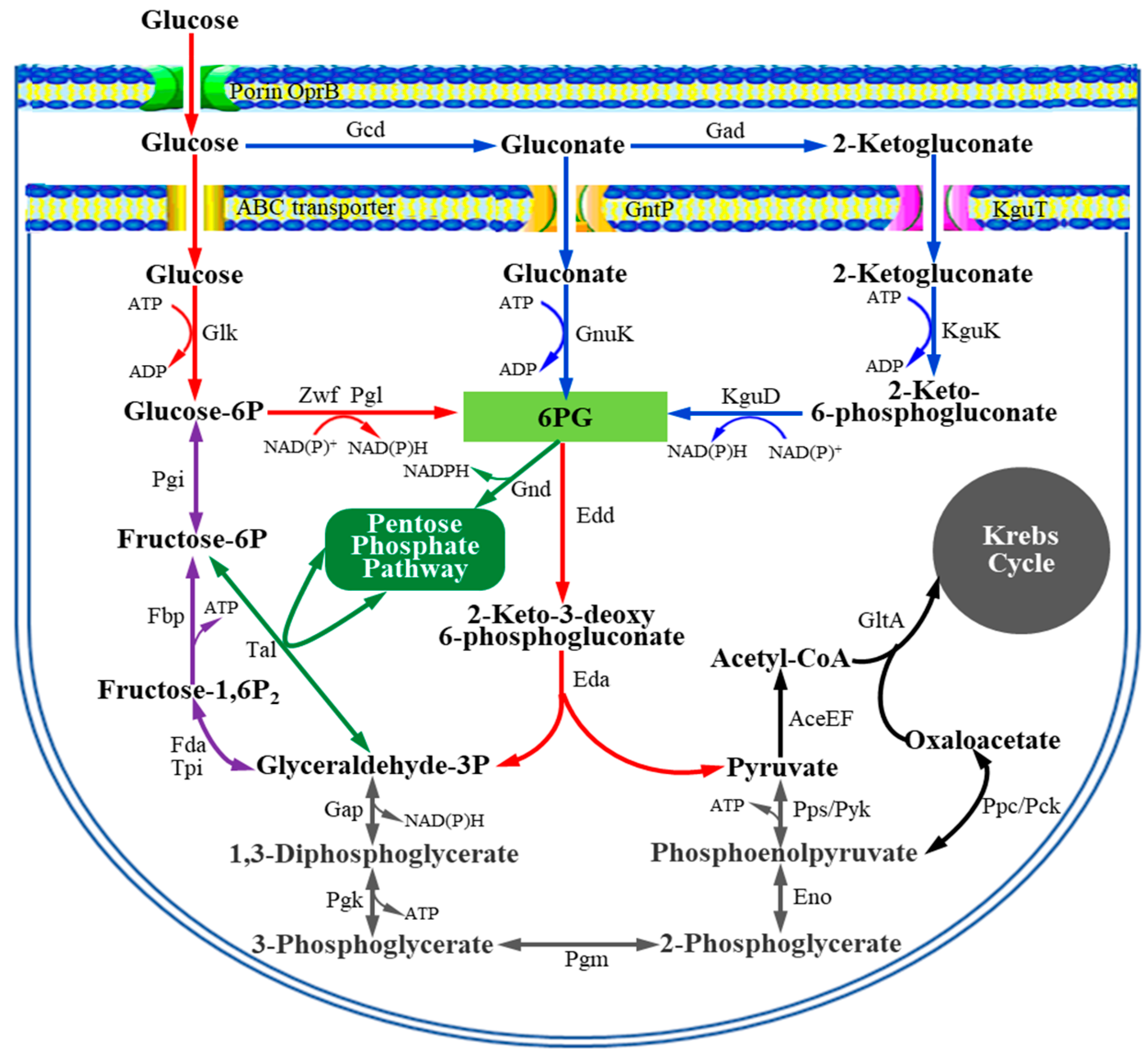
Based on the cellular localization of biochemical reactions, glucose metabolism in Pseudomonas can be divided into two components, namely the extracellular oxidation pathway and the intracellular degradation pathway. Since the oxidation of glucose occurs in the periplasmic space and the final product of oxidation is 2KGA, this metabolic pathway can be referred to as the glucose extracellular oxidation pathway or the 2KGA synthesis pathway of Pseudomonas. Corresponding to the extracellular oxidation pathway, the intracellular degradation pathway involves a series of biochemical reactions for the phosphorylation of glucose, gluconic acid, and 2KGA (imported from the periplasmic space) and the catabolism of their common phosphorylated product 6-phosphogluconate (6PG) in the cytoplasm [16,17,18,19]. There is no 6-phosphofructokinase in Pseudomonas bacteria; hence, they cannot catabolize glucose through the Embden–Meyerhof–Parnas (EMP) pathway in the cytoplasm. Instead, they mainly utilize glucose through a metabolic structure known as the ED–EMP cycle [20,21,22,23], which integrates a series of metabolic reactions from the Entner–Doudoroff (ED) pathway, an incomplete EMP pathway, and the pentose-phosphate (PP) pathway, with glyceraldehyde 3-phosphate as the key metabolic product linking the three pathways in this cycle (Figure 1). Furthermore, glyceraldehyde 3-phosphate is one of the key metabolic products that link the ED–EMP cycle to the Krebs cycle (TCA cycle).
Glyceraldehyde-3-phosphate dehydrogenase (GAPDH/Gap) is a housekeeping enzyme of energy metabolism conserved in virtually all organisms. Type I glyceraldehyde-3-phosphate dehydrogenase (GAPDH-I) catalyzes the interconversion of glyceraldehyde-3-phosphate and 1,3-bisphosphoglycerate, which is a central step in glycolysis and gluconeogenesis [24]. It utilizes NAD (EC 1.2.1.12), NADP (EC 1.2.1.13) or either cofactor (EC 1.2.1.59) [25,26,27]. GAPDH-I, located in the cytoplasm, typically exists as a homotetrameric configuration, with a molecular mass of about 37 kDa per subunit [28]. The protein contains an N-terminal NAD(P)-binding domain and a C-terminal catalytic domain. The primarily N-terminal NAD(P)-binding domain contains a Rossmann fold which combines with the catalytic cysteine-containing C-terminus to form a catalytic cleft [29].
Under specific fermentation conditions, the extracellular oxidation and intracellular degradation pathways of glucose metabolism in Pseudomonas maintain a dynamic balance, resulting in a relatively stable 2KGA yield (glucose to 2KGA conversion rate) [3,12,30]. Pseudomonas plecoglossicida JUIM01 is currently the strain used in China for the industrial production of 2KGA [3,12,30], and it has been proven to be a biosafe and efficient producer. However, its stress resistance and production efficiency under adverse environmental conditions (e.g., high temperature, high acidity, and high sugar concentration) still require further improvement [31]. Multiple genetic manipulation strategies have been attempted. However, most successful attempts to increase 2KGA production in P. plecoglossicida JUIM01 have also adversely affected its growth [30,32,33,34]. Therefore, further enhancing 2KGA production without compromising strain growth remains a challenge. Given the important role of glyceraldehyde-3-phosphate dehydrogenase in the intracellular degradation pathway of glucose in Pseudomonas, this study aimed to develop a better understanding of the structure, function, and expression regulation of the enzyme Gap in P. plecoglossicida JUIM01. It also aimed to elucidate the role of the gapA gene encoding Gap in maintaining the balance between the extracellular oxidation and intracellular degradation of glucose. This is expected to provide theoretical support for improving the stress resistance and production efficiency of 2KGA production strains.

2. Materials and Methods

2.1. Strains, Plasmids, Media and Cultivation

The bacterial strains and plasmids used in this study are listed in Table 1.
Media used in this study are listed in Table 2. Escherichia coli strains were cultured in LB medium or on LB agar plates at 37 °C. Antibiotics (25 µg/mL kanamycin sulfate or 50 µg/mL ampicillin) were supplemented when required. P. plecoglossicida strains were initially activated on agar plates, then inoculated into 50 mL of seed medium and cultured at 32 °C and 265 rpm for 24 h, when both glucose (substrate) and 2KGA (product) in the seed medium were depleted, as they were utilized by the strains as carbon sources for growth. The fermentation of 2KGA in 500 mL flasks was conducted by inoculating 10% (v/v) of the seed culture into 40 mL of fermentation medium, and fermenting at 32 °C and 265 rpm until the substrate glucose was depleted and 2KGA production reached its maximum. The 2KGA fermentation in 10 L bioreactors (Green Bio-engineering Co., Ltd., Zhenjiang, China) was conducted by inoculating 0.6 L of the seed culture into 6 L of fermentation medium, and fermenting at 32 °C and 400 rpm, with an aeration rate of 7.2 L/min, until the substrate glucose was depleted and 2KGA production reached its maximum.

2.2. Bioinformatics Analyses of the gapA Gene and Gap Protein in P. plecoglossicida JUIM01

The genomic DNA of P. plecoglossicida JUIM01 was extracted using a Bacterial Genomic DNA Kit (Beyotime, Shanghai, China). The target sequence, encompassing the gapA gene and edd operon, was amplified with PCR using the primers gapA/edd-F and gapA/edd-R (Table S1) with the genome as the template. The PCR product was sequenced by Sangon Biotech Co. (Shanghai, China). ORF Finder (https://www.ncbi.nlm.nih.gov/orffinder/, accessed on 25 September 2025) was used to predict the open reading frame of gapA. NCBI tools (https://blast.ncbi.nlm.nih.gov/Blast.cgi, accessed on 25 September 2025) were used to analyze the identity of gapA and the encoded amino acid sequence. The conserved domain of Gap was predicted using the Conserved Domain Search Service tool (CD Search) (https://www.ncbi.nlm.nih.gov/Structure/cdd/wrpsb.cgi, accessed on 25 September 2025). The AlphaFold Protein Structure Database (https://alphafold.ebi.ac.uk/, accessed on 25 September 2025) was used to predict the tertiary structure of the Gap protein. BPROM (http://www.softberry.com/berry.phtml?topic=bprom&group=programs&subgroup=gfindb, accessed on 25 September 2025) and BDGP (http://www.fruitfly.org/seq_tools/promoter.html, accessed on 25 September 2025) were used to analyze the promoter region. Molecular docking simulations of the Gap protein with NAD, glyceraldehyde-3-phosphate, and 1,3-bisphosphoglycerate were performed using AutoDock Vina v1.2.x (Scripps Research, La Jolla, CA, USA).

2.3. Construction of the gapA-Knockout Mutant and Its Gene Complementation Strain Derived from P. plecoglossicida JUIM01

A gapA-knockout mutant of P. plecoglossicida JUIM01 (named JUIM01ΔgapA) was constructed using the plasmid pK18mobsacB via a two-step homologous recombination method [32]. Two homologous arms flanking the gapA gene were amplified from JUIM01 genomic DNA using the primer pairs gapA-P1/gapA-P2 and gapA-P3/gapA-P4 (Table S1). They were then fused by overlap extension PCR using the primers gapA-P1/gapA-P4, and ligated into linearized pK18mobsacB to construct the recombinant suicide plasmid pK18mobsacBgapA (Table 1). The plasmid was electroporated (1.2 kV for 5 mS) into freshly prepared JUIM01 competent cells. The mutant strain was selected through two rounds of homologous recombination: first on LB plates containing 25 μg/mL kanamycin, followed by counter-selection on LB agar plates with 10% sucrose. The positive clones were confirmed through colony PCR (Figure S2) and sequencing. Afterwards, gapA was amplified and integrated between the Hind III and BamH I restriction sites of the expression vector pBBR1MCS-2 using the digestion–ligation method to construct the recombinant plasmid pBBR1MCS-2-gapA for gene complementation (Table 1 and Figure S3). The corresponding gapA complementation strain (named JUIM01ΔgapA-gapA) was constructed by transforming the recombinant plasmid pBBR1MCS-2-gapA into JUIM01ΔgapA.

2.4. 5′-Rapid Amplification of cDNA Ends (5′-RACE)

The transcription start site (TSS) of gapA was determined using a 5′-RACE kit (Sangon Biotech, Shanghai, China) with the primers shown in Table S1. The cDNA of P. plecoglossicida JUIM01 was synthesized with reverse transcription using its total RNA as the template, and gapA-RT1/gapA-RT2 as the primers. The resulting cDNA was then digested with RNase H. A poly-C tail was added using deoxynucleotidyl transferase. The second-run PCR was conducted using the above PCR product as the template and NR1/Adaptor and NR2/Outer as the primers (Table S1). The PCR product with a poly-A tail added was ligated with pMD20-T to construct the plasmid pMD20-T-gapA. pMD20-T-gapA was transferred to E. coli JM109 to screen the positive transformants with LB plates containing 50 μg/mL ampicillin for further sequencing.

2.5. Electrophoretic Mobility Shift Assay (EMSA)

Electrophoretic mobility shift assays (EMSA) were conducted as previously reported [37], with some modifications. The hexR gene from P. plecoglossicida JUIM01 was heterologously expressed in E. coli (Table 1). The recombinant protein was purified using Ni-NTA affinity chromatography. The primers G1 and G3 (Table S1) were used to amplify the DNA probe PgapA labeled with biotin at the 5′ end, and G2 and G3 (Table S1) were used to amplify the unlabeled DNA probe PgapA. The purified protein and the probes were used to identify specific binding between HexR and the gapA promoter region. The reaction systems of the EMSA are shown in Table S2.

2.6. Analytical Methods

The growth of P. plecoglossicida strains was assessed by measuring the optical density at 650 nm (OD650nm) using a Biospec-1601 spectrophotometer (Shimadzu, Kyoto, Japan). An OD650nm of 1.0 represents 0.575 g of dry cell weight per liter [30]. The glucose concentration was measured using an SBA-40C biosensor (Biology Institute of Shandong Academy of Sciences, Jinan, China) at room temperature. The concentration of 2KGA was determined using the iodometric method developed by our group [38].

2.7. Statistical Analysis

All the experiments included three biological replicates. The data are presented as the mean ± standard deviation (n = 3) and were analyzed using a one-way analysis of variance (ANOVA). Statistical significance was determined based on the p value (α = 0.05).

3. Results and Discussion

3.1. Identification of the Gene Encoding Glyceraldehyde-3-Phosphate Dehydrogenase in P. plecoglossicida JUIM01

Based on the results of genome sequencing and annotation, the gapA gene encoding glyceraldehyde-3-phosphate dehydrogenase in P. plecoglossicida JUIM01 was cloned using the primers gapA/edd-F and gapA/edd-R (Table S1). The full-length sequence is 1002 bp, with a start codon ATG and a stop codon TGA. Gene sequence alignment revealed that the JUIM01 gapA gene shared 91.27%, 91.27%, 91.37%, 91.37%, and 95.11% sequence identity with orthologs from P. guariconensis (CP162012.1), P. putida (AP022227.1), Pseudomonas sp. BYT-1 (CP072559.1), Pseudomonas sp. BYT-5 (CP097489.1), and Pseudomonas sp. p1 (2021b) (CP083746.1), respectively. The results showed that the amino acid sequence identity of the protein encoded by gapA in JUIM01 with the corresponding GAPDH-Is of P. guariconensis (WP_196144501.1), P. guariconensis (WP_196155289.1), Pseudomonas sp. p1 (2021b) (WP_224456780.1), P. putida (EKT4467476.1), and Pseudomonas (WP_084856669.1) was 97.60%, 97.90%, 97.90%, 100%, and 100%, respectively. Therefore, the JUIM01 Gap protein was predicted to be a cytoplasm, hydrophilic, acidic GAPDH-I consisting of 333 amino acids, with a theoretical molecular mass of 36.15 kDa. Conservative domain analysis further predicted that the protein encoded by JUIM01 gapA is a GAPDH-I that catalyzes the NAD(P)-dependent oxidative phosphorylation of glyceraldehyde-3-phosphate to 1,3-diphosphoglycerate. Its N-terminal domain is a Rossmann NAD(P)-binding fold, and the C-terminal domain is a mixed alpha/antiparallel beta fold (Figure S1). GAPDHs usually contains two major domains, the NAD+ binding domain (amino acids 1–150) and the catalytic or glyceraldehyde-3-phosphate domain (amino acids 151–335) [28]. The molecular docking predictions for the Gap of P. plecoglossicida JUIM01 with NAD, glyceraldehyde-3-phosphate, or 1,3-bisphosphoglycerate also aligned with these findings (Figure S2).

3.2. Analysis of the Promoter Region of gapA in P. plecoglossicida JUIM01

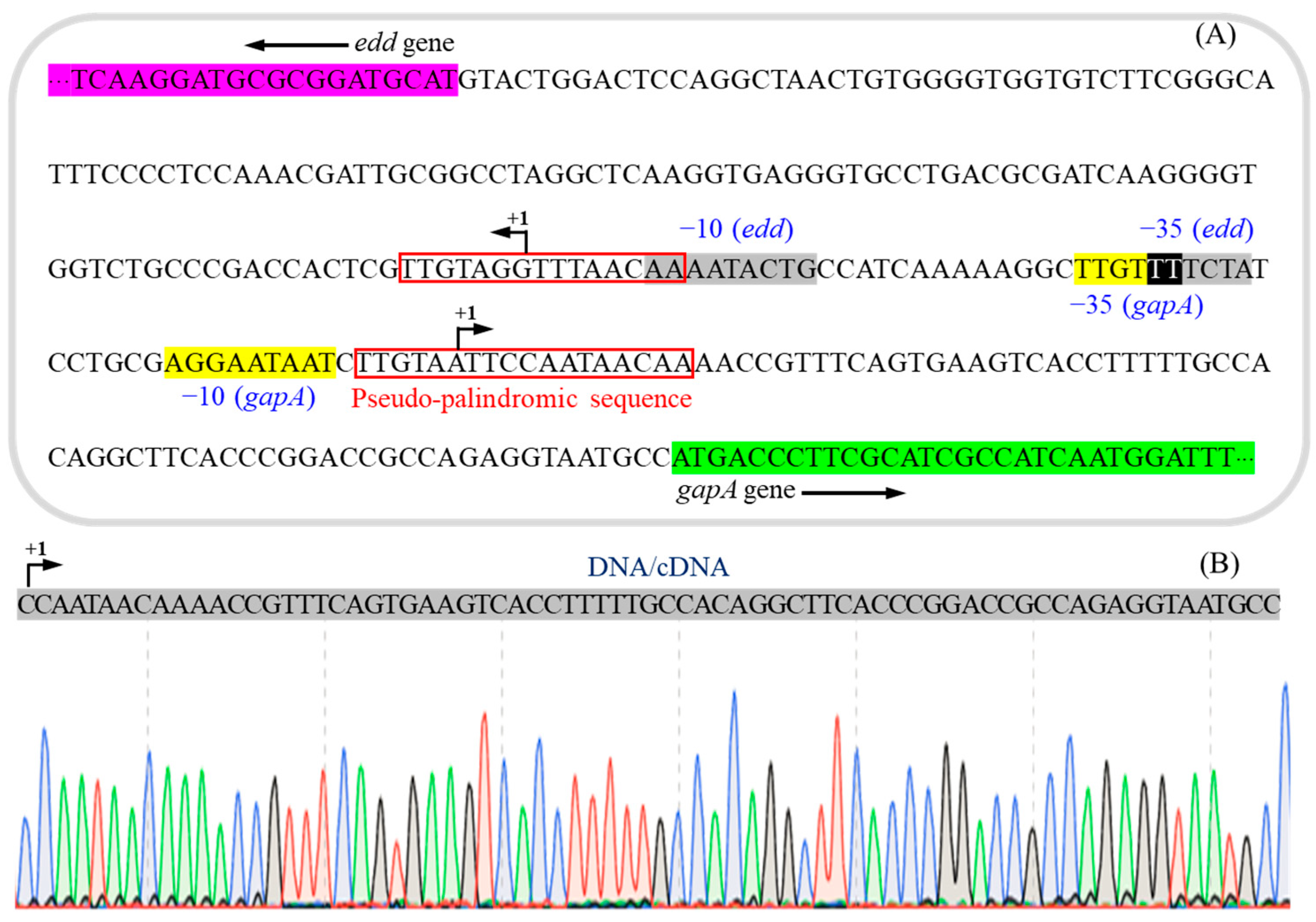
The prediction for the promoter region of gapA in P. plecoglossicida JUIM01 is summarized in Figure 2A. In JUIM01, gapA is adjacent to the edd gene, which encodes 6-phosphogluconate dehydratase, but they are transcribed in opposite directions. Within the edd-gapA intergenic region, the sequence of the −10 box (RNA polymerase binding site) in the promoter of edd is CAGTATTTT (its reverse complement is AAAATACTG), and the sequence of the −35 box (RNA polymerase σ factor recognition site) is TAGAAA (its reverse complement is TTTCTA). The transcription start site (+1) of edd is located 129 bp upstream of the gene and lies within a pseudo-palindromic consensus sequence (TTGT-N7-ACAA) [30]. Using the online analysis software BPROM, the predicted −10 box sequence of the promoter of gapA is AGGAATAAT, and the −35 box sequence is TTGTTT, which overlaps with the edd gene’s −35 box by 2 bp. Its predicted transcription start site (+1) is located 75 bp upstream of gapA and lies within a pseudo-palindromic consensus sequence (TTGT-N10-ACAA) [30]. The transcription start site (+1) determined by 5′-RACE is located 72 bp upstream of gapA, showing a 3 bp deviation from the predicted site, but it is also located within the pseudo-palindromic consensus sequence (TTGT-N10-ACAA) (Figure 2B).
HexR is a ubiquitous global central carbon metabolism regulator in Pseudomonas that regulates the expression of genes related to glucose uptake, glucose phosphorylation, and glucose catabolism via the ED pathway [17,39,40,41,42]. The pseudo-palindromic consensus sequence (5′-TTGT-N7/8-ACAA-3′) is its binding site within the promoter regions of target genes (such as the edd operon, zwf/pgl/eda operon, and gap-1) in P. putida and P. fluorescens [17,41]. Our previous findings demonstrated that the edd gene is also transcriptionally regulated by HexR in P. plecoglossicida [30]. The analysis of the gapA promoter region described above suggests that gapA in P. plecoglossicida is likely under the same regulatory control by HexR.
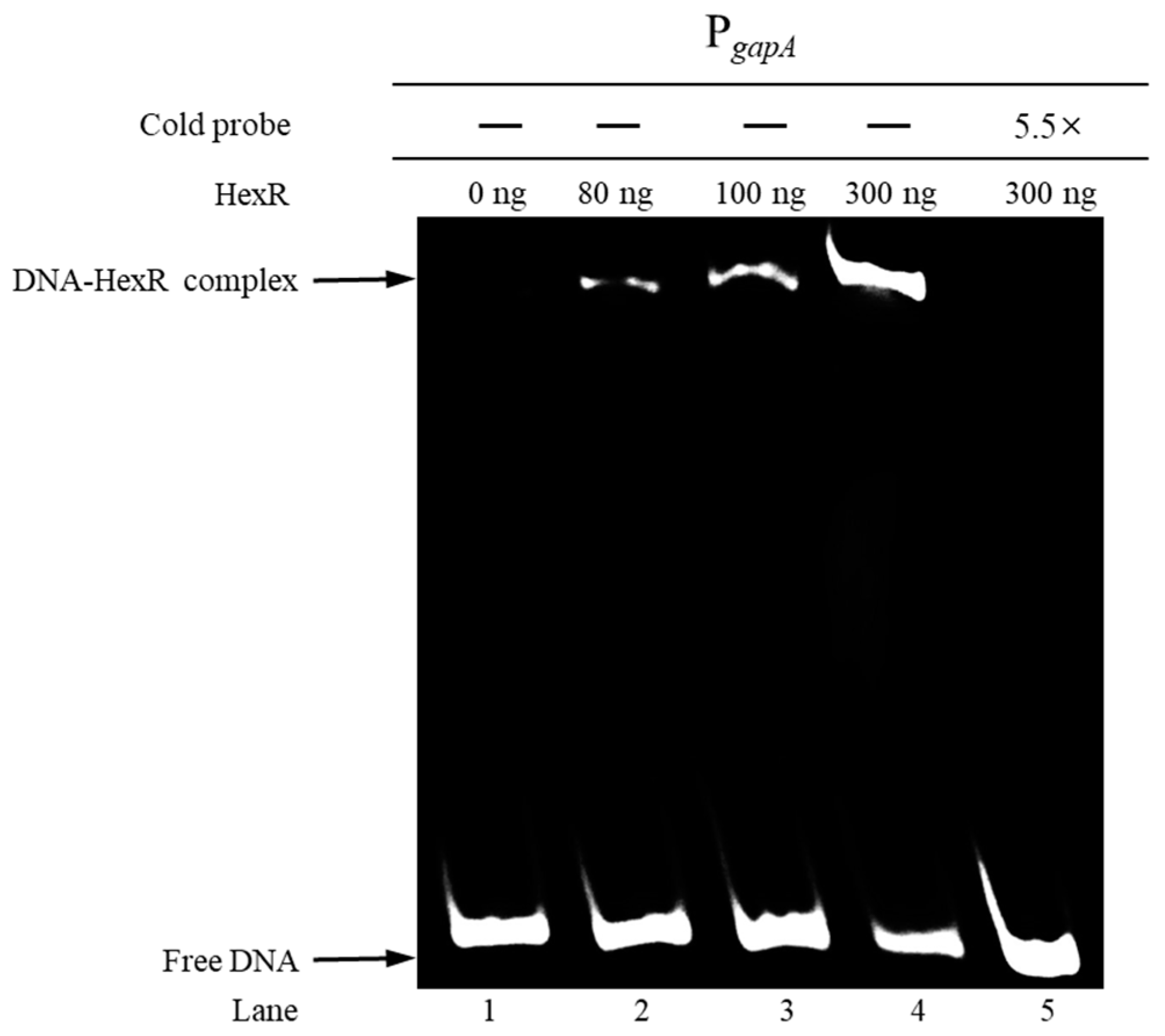
The EMSA confirmed the above speculation. As shown in Figure 3, the 5′-biotin-labeled DNA probe PgapA (which contains the gapA promoter region sequence) could bind to varying concentrations (80–300 ng) of the HexR protein, resulting in mobility shifts (Lanes 2–4). In contrast, when no HexR was added to the reaction system (Lane 1) or when an excess of unlabeled competitive probe was added (Lane 5), only the free DNA band was observed. These results demonstrate that the transcription factor HexR could specifically bind to the gapA promoter region in P. plecoglossicida.

3.3. The Role of gapA in the Growth and Metabolism of P. plecoglossicida JUIM01

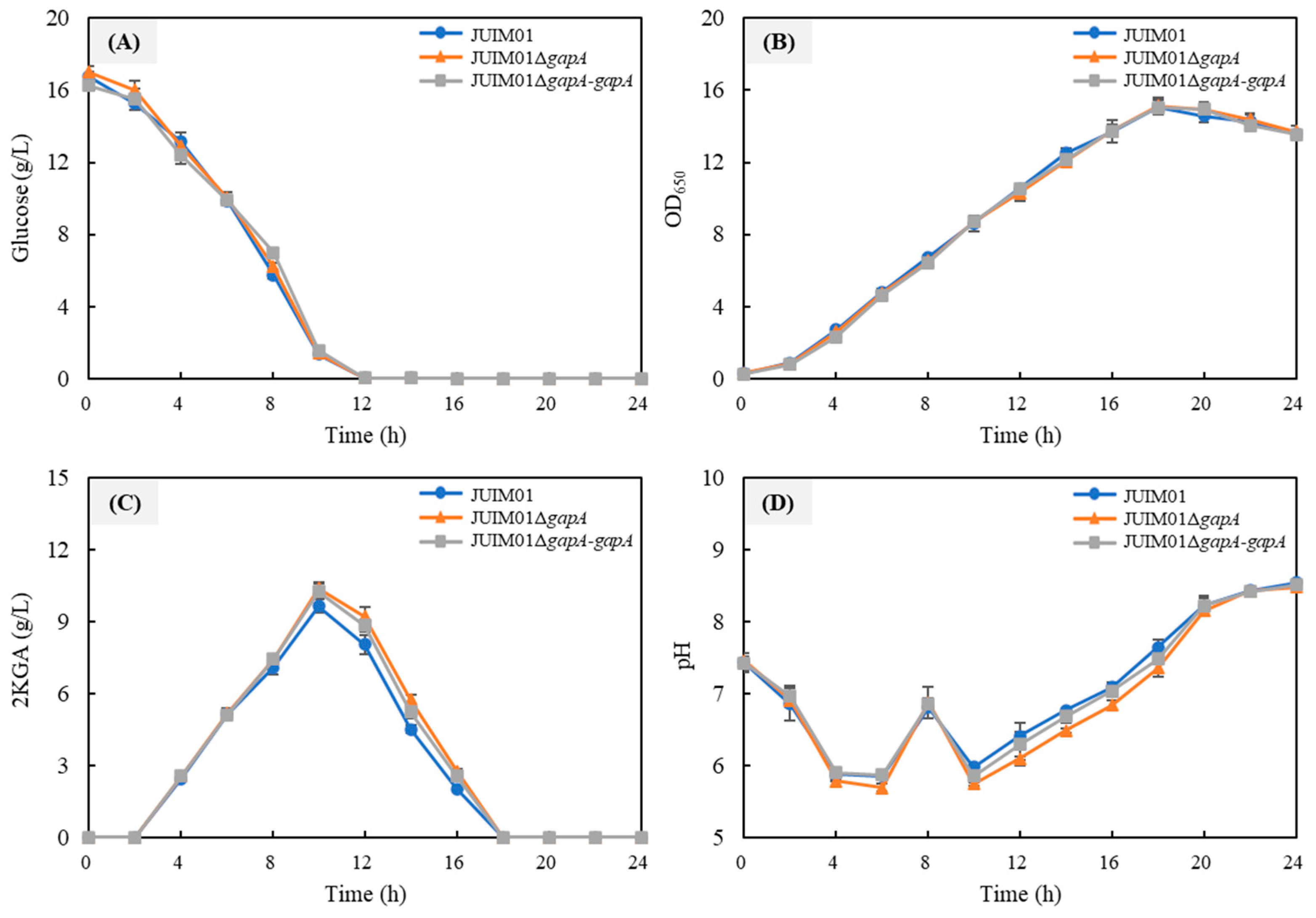
To elucidate the role of gapA in the growth and metabolism of P. plecoglossicida, a gapA gene deletion mutant (JUIM01ΔgapA) and its complementation strain (JUIM01ΔgapA-gapA) were constructed. The PCR validations are shown in Figures S3 and S4. The differences in growth and metabolism among the parental strain JUIM01, the gapA deletion mutant, and the complemented strain were then compared in seed medium containing 18 g/L glucose as the carbon source (Figure 4). As shown in Figure 4A, JUIM01, JUIM01ΔgapA, and JUIM01ΔgapA-gapA were all capable of rapidly utilizing glucose, depleting it within 12 h, with a glucose consumption rate exceeding 1.5 g/L/h. The cell growth of the three strains was nearly identical (Figure 4B). Regarding 2KGA metabolism, the accumulation of 2KGA in all three strains peaked at 10 h, after which the strains reutilized 2KGA as the alternative carbon source until it was depleted [3]. Interestingly, the knockout of gapA increased the maximum 2KGA accumulation in P. plecoglossicida JUIM01 from 9.64 g/L to 10.28 g/L, indicating that the absence of gapA is more favorable for 2KGA production in P. plecoglossicida. This was further confirmed by the 2KGA production profile of JUIM01ΔgapA-gapA, where gapA complementation restored 2KGA production to near-parental levels (Figure 4C). Correspondingly, the pH of JUIM01ΔgapA was the lowest among the three strains due to it having the highest 2KGA (an organic acid) production (Figure 4D).

3.4. 2KGA Production Performance of P. plecoglossicida JUIM01ΔgapA

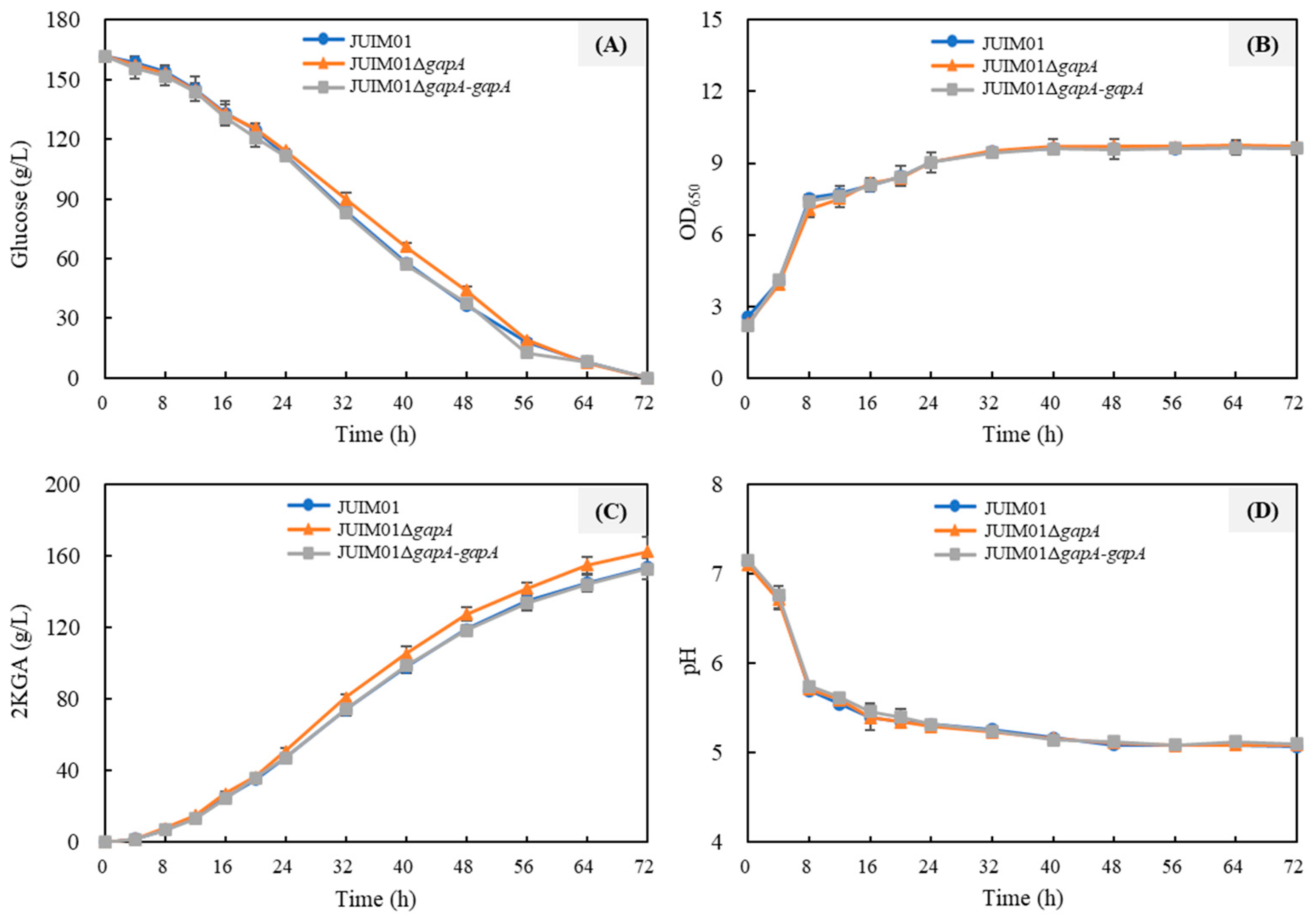
To further confirm that the deletion of gapA is beneficial for 2KGA production and to clarify its impact on 2KGA fermentation by P. plecoglossicida, we compared the performance of JUIM01, JUIM01ΔgapA, and JUIM01ΔgapA-gapA in shake flasks (Table 3 and Figure 5) and in 10 L bioreactors (Figure 6). When using 162 g/L glucose as the substrate, the glucose was nearly depleted in the fermentation broth of all three strains after 72 h of shake-flask fermentation, and the OD650nm values reached their peak and remained stable. JUIM01 and JUIM01ΔgapA-gapA showed similar fermentation performance, whereas JUIM01ΔgapA exhibited the highest 2KGA titer (163.43 g/L), sugar–acid (glucose–2KGA) conversion rate (100.27 g/100 g glucose), molar yield (93.03%), and productivity (2.26 g/L/h). These values were significantly higher (p < 0.05) by more than 5.7% compared to the other two strains.
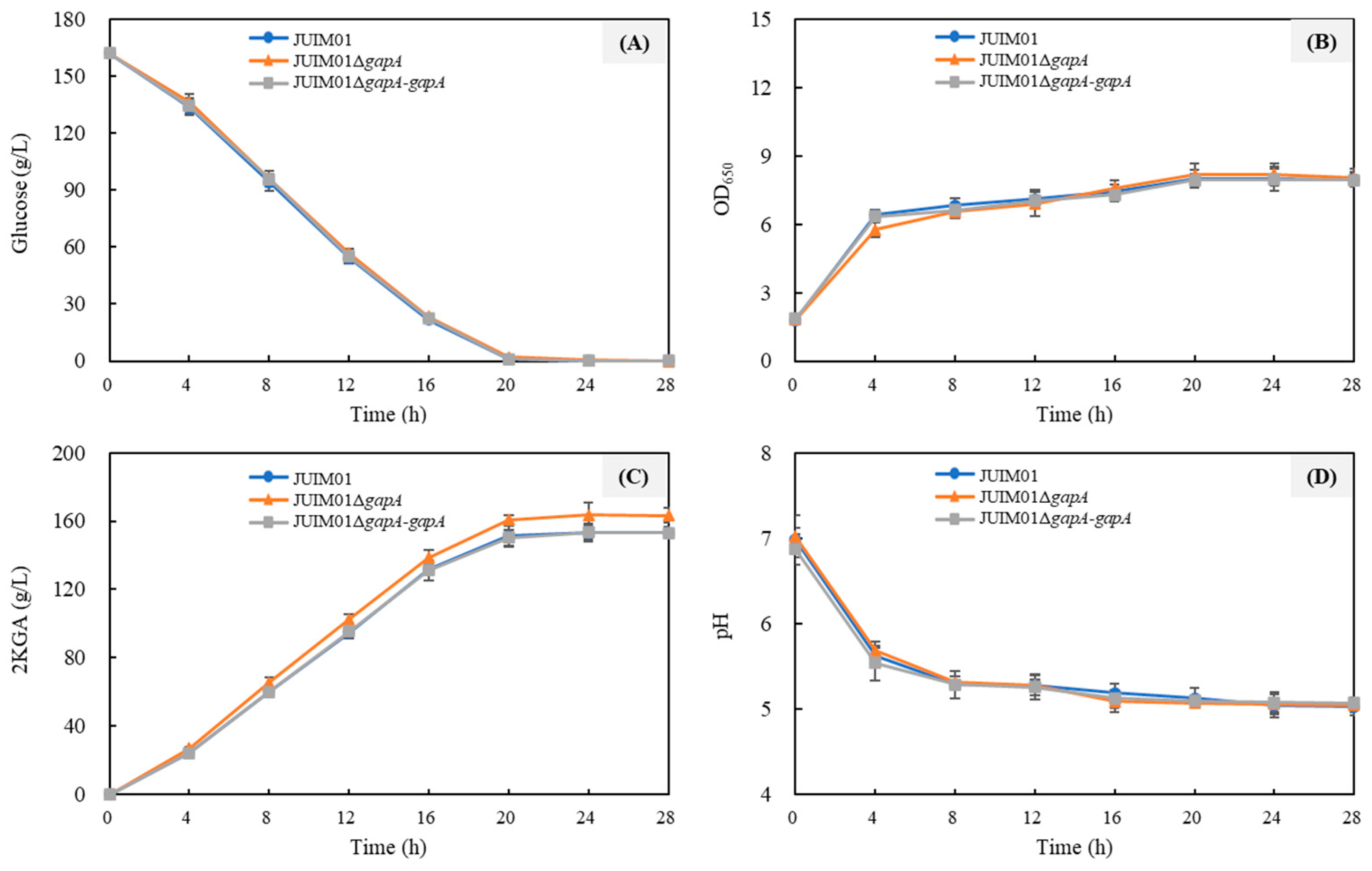
The superiority of P. plecoglossicida JUIM01ΔgapA for 2KGA production was more evident in the 10 L bioreactors. 2KGA is synthesized from glucose through two oxidation reactions. Therefore, sufficient aeration is crucial for 2KGA fermentation [4,43]. The maximum 2KGA titers of the three strains in bioreactors were similar to those in shake-flask fermentation, but their productivities were significantly enhanced with better aeration, and the fermentation time was reduced to within 28 h. Specifically, after 24 h of fermentation, the 2KGA production of JUIM01ΔgapA reached its peak value of 163.42 g/L, with a productivity of 6.81 g/L/h, representing a 6.6% increase (p < 0.05) compared to the other two strains (Figure 6). The yield of JUIM01ΔgapA reached 93.58% (93.58 mol 2KGA/100 mol glucose), which is among the highest levels reported in the past 15 years [44].
So far, we have identified that the knockout of several genes can enhance the accumulation of 2KGA in Pseudomonas (Table 4), such as kguT (which encodes 2-ketogluconate transporter) [32,33], kguD (which encodes 2-keto-6-phosphogluconate reductase) [33], kguK (which encodes 2-ketogluconate kinase) [33,34], kguE (which encodes a putative epimerase) [33], and edd (which encodes 6-phosphogluconate dehydratase) [30]. Among these, the knockout of kguT or kguD promotes 2KGA accumulation, but results in a reduced maximum cell density of the production strain, as the absence of kguT or kguD prevents Pseudomonas from utilizing 2KGA as a carbon source for growth. The knockout of kguK or kguE does not reduce the maximum cell density, but slows the growth rate of the production strain due to the delayed utilization of 2KGA caused by the loss of kguK or kguE. The knockout of edd significantly inhibits the growth of Pseudomonas, as it blocks glucose metabolism via the ED pathway and disables the strain’s ability to utilize 2KGA. A notable distinction of gapA from the aforementioned genes is that its knockout enhanced the 2KGA production in Pseudomonas without adversely affecting cell growth. This characteristic makes JUIM01ΔgapA a promising candidate for industrial 2KGA production. However, the underlying mechanism by which gapA deletion enhances 2KGA production remains unclear. Beyond its initially characterized role in glycolysis, GAPDH is recognized as a multifunctional enzyme (although primarily documented in higher organisms) [28,45,46,47]. Furthermore, genomic sequencing data indicate that P. plecoglossicida JUIM01 may harbor additional genes encoding GAPDH homologs (unpublished data). These factors collectively complicate our interpretation of the mechanisms underlying gapA. Perhaps transcriptomic or metabolomic analyses could provide new insights for this question.

4. Conclusions

We cloned a full-length 1002 bp gene, gapA, from the industrial 2KGA production strain P. plecoglossicida JUIM01. The encoded protein Gap was predicted to be a canonical NAD(P)-dependent GAPDH-I that contains the conserved domains of GAPDH-Is and is capable of catalyzing the interconversion between glyceraldehyde-3-phosphate and 1,3-bisphosphoglycerate. Analyses of the promoter region revealed that the transcription start site is located 72 bp upstream of gapA, within a pseudo-palindromic sequence (TTGT-N10-ACAA). This suggests that, similar to P. putida and P. fluorescens, gapA in P. plecoglossicida is likely regulated by the transcription factor HexR. The EMSA confirmed this speculation. Through the knockout and complementation of gapA, along with shake-flask experiments and fermentation in bioreactors, this study demonstrated that the deletion of gapA increased the 2KGA production, sugar–acid conversion rate, molar yield, and productivity of P. plecoglossicida JUIM01 by 5.7–6.6% without affecting cell growth. Given that P. plecoglossicida JUIM01 is already a high-yield industrial 2KGA-producing strain (molar yield > 88%), this 5.7–6.6% improvement is substantial, underscoring the significant industrial potential and economic value of the JUIM01ΔgapA mutant. The findings of this study also provide guidance for the metabolic engineering of other Pseudomonas species.

Supplementary Materials

The following supporting information can be downloaded at: https://www.mdpi.com/article/10.3390/foods14223830/s1, Table S1: Primers used in this study; Table S2: EMSA reaction systems; Figure S1: The predicted tertiary structure of Gap in Pseudomonas plecoglossicida JUIM01. Protein: Glyceraldehyde-3-phosphate dehydrogenase. Gene: B7H17_13130. Source Organism: Pseudomonas putida. UniProt: A0A1X0ZWI9. Average pLDDT: 97.31 (very high). Sequence length: 333; Figure S2: Molecular docking predictions for the Gap of Pseudomonas plecoglossicida JUIM01 with (A) glyceraldehyde-3-phosphate, (B) 1,3-bisphosphoglycerate, (C) NAD, and (D) both glyceraldehyde-3-phosphate (blue) and NAD (purple); Figure S3: PCR validation of gapA knockout of Pseudomonas plecoglossicida JUIM01. M, DL 5000 DNA Marker; Lane 1, JUIM01; Lane 2, JUIM01ΔgapA; Figure S4: Restriction enzyme digestion verification of the recombinant expression plasmid pBBR1MCS-2-gapA for gapA complementation. The recombinant plasmid pBBR1MCS-2-gapA was verified through the digestion of the gene fragment with BamH I and Hind III. M, DL 15,000 DNA Marker; Lane 1, the single enzyme (BamH I) digestion product of the recombinant plasmid; Lane 2, the double enzyme (BamH I/Hind III) digestion products of the recombinant plasmid.

Author Contributions

Conceptualization, L.S. (Lei Sun), L.S. (Ling Sun) and W.-J.S.; methodology, L.S. (Lei Sun) and W.-J.S.; validation, X.-Y.Z. and L.-L.L.; formal analysis, X.-Y.Z. and W.-J.S.; investigation, L.S. (Lei Sun), D.-J.T., Q.-N.Z., L.-L.L. and L.Z.; resources, L.S. (Lei Sun) and W.-J.S.; data curation, L.S. (Lei Sun), Q.-N.Z. and L.-L.L.; writing—original draft preparation, L.S. (Lei Sun), Q.-N.Z. and W.-J.S.; writing—review and editing, F.-J.C. and L.S. (Ling Sun); supervision, L.S. (Ling Sun) and W.-J.S.; project administration, L.S. (Lei Sun) and W.-J.S.; funding acquisition, L.S. (Lei Sun) and W.-J.S. All authors have read and agreed to the published version of the manuscript.

Funding

This research was funded by the National Natural Science Foundation of China (32201995, 32272286) and the Natural Science Foundation of Jiangsu Province (BK20220526).

Institutional Review Board Statement

Not applicable.

Informed Consent Statement

Not applicable.

Data Availability Statement

The original contributions presented in this study are included in the article/Supplementary Materials. Further inquiries can be directed to the corresponding authors.

Conflicts of Interest

The authors declare no conflicts of interest.

Abbreviations

The following abbreviations are used in this manuscript:
2KGA2-Ketogluconic acid
GAPDH-IGlyceraldehyde-3-phosphate dehydrogenase, type I
EMPEmbden–Meyerhof–Parnas
EDEntner–Doudoroff
6PG6-Phosphogluconate
5′-RACE5′-Rapid amplification of cDNA ends
EMSAElectrophoretic mobility shift assay
OD650nmOptical density at 650 nm

References

  1. Volke, D.C.; Gurdo, N.; Milanesi, R.; Nikel, P.I. Time-resolved, deuterium-based fluxomics uncovers the hierarchy and dynamics of sugar processing by Pseudomonas putida. Metab. Eng. 2023, 79, 159–172. [Google Scholar] [CrossRef]
  2. Xu, C.; Cao, Q.; Lan, L. Glucose-binding of periplasmic protein GltB activates GtrS-GltR two-component system in Pseudomonas aeruginosa. Microorganisms 2021, 9, 447. [Google Scholar] [CrossRef]
  3. Sun, W.J.; Alexander, T.; Man, Z.W.; Xiao, F.F.; Cui, F.J.; Qi, X.H. Enhancing 2-ketogluconate production of Pseudomonas plecoglossicida JUIM01 by maintaining the carbon catabolite repression of 2-ketogluconate metabolism. Molecules 2018, 23, 2629. [Google Scholar] [CrossRef]
  4. Latrach Tlemçani, L.; Corroler, D.; Barillier, D.; Mosrati, R. Physiological states and energetic adaptation during growth of Pseudomonas putida mt-2 on glucose. Arch. Microbiol. 2008, 190, 141–150. [Google Scholar] [CrossRef]
  5. Bitzenhofer, N.L.; Kruse, L.; Thies, S.; Wynands, B.; Lechtenberg, T.; Ronitz, J.; Kozaeva, E.; Wirth, N.T.; Eberlein, C.; Jaeger, K.; et al. Towards robust Pseudomonas cell factories to harbour novel biosynthetic pathways. Essays Biochem. 2021, 65, 319–336. [Google Scholar] [CrossRef] [PubMed]
  6. Craig, K.; Johnson, B.R.; Grunden, A. Leveraging Pseudomonas stress response mechanisms for industrial applications. Front. Microbiol. 2021, 12, 660134. [Google Scholar] [CrossRef]
  7. Bugg, T.D.H.; Williamson, J.J.; Alberti, F. Microbial hosts for metabolic engineering of lignin bioconversion to renewable chemicals. Renew. Sust. Energ. Rev. 2021, 152, 111674. [Google Scholar] [CrossRef]
  8. Weimer, A.; Kohlstedt, M.; Volke, D.C.; Nikel, P.I.; Wittmann, C. Industrial biotechnology of Pseudomonas putida: Advances and prospects. Appl. Microbiol. Biotechnol. 2020, 104, 7745–7766. [Google Scholar] [CrossRef]
  9. Nikel, P.I.; Chavarria, M.; Danchin, A.; de Lorenzo, V. From dirt to industrial applications: Pseudomonas putida as a synthetic biology chassis for hosting harsh biochemical reactions. Curr. Opin. Chem. Biol. 2016, 34, 20–29. [Google Scholar] [CrossRef] [PubMed]
  10. Nikel, P.I.; de Lorenzo, V. Pseudomonas putida as a functional chassis for industrial biocatalysis: From native biochemistry to trans-metabolism. Metab. Eng. 2018, 50, 142–155. [Google Scholar] [CrossRef]
  11. Chia, M.; Nguyen, T.B.V.; Choi, W.J. DO-stat fed-batch production of 2-keto-d-gluconic acid from cassava using immobilized Pseudomonas aeruginosa. Appl. Microbiol. Biotechnol. 2008, 78, 759–765. [Google Scholar] [CrossRef]
  12. Sun, L.; Zhang, X.J.; Zhou, Y.Z.; Peng, Z.; Cui, F.J.; Zhou, Q.; Man, Z.W.; Guo, J.; Sun, W.J. Can cadmium-contaminated rice be used to produce food additive sodium erythorbate? Food Chem. 2025, 462, 140923. [Google Scholar] [CrossRef]
  13. Zhou, X.L.; Shen, Y.; Xu, Y.; Balan, V. Directing cell catalysis of glucose to 2-keto-d-gluconic acid using Gluconobacter oxydans NL71. Process Biochem. 2020, 94, 365–369. [Google Scholar] [CrossRef]
  14. Georgiana, L.R.; Cristina, B.A.; Niculina, D.E.; Irina, G.A.; Dan, C. Mechanism, influencing factors exploration and modelling on the reactive extraction of 2-ketogluconic acid in presence of a phase modifier. Sep. Purif. Technol. 2021, 255, 117740. [Google Scholar] [CrossRef]
  15. EFSA Panel on Food Additives and Nutrient Sources Added to Food (ANS). Scientific Opinion on the re-evaluation of erythorbic acid (E 315) and sodium erythorbate (E 316) as food additives. EFSA J. 2016, 14, 4360. [Google Scholar] [CrossRef]
  16. del Castillo, T.; Ramos, J.L.; Rodríguez-Herva, J.J.; Fuhrer, T.; Sauer, U.; Duque, E. Convergent peripheral pathways catalyze initial glucose catabolism in Pseudomonas putida: Genomic and flux analysis. J. Bacteriol. 2007, 189, 5142–5152. [Google Scholar] [CrossRef]
  17. Daddaoua, A.; Krell, T.; Ramos, J.L. Regulation of glucose metabolism in Pseudomonas: The phosphorylative branch and Entner-Doudoroff enzymes are regulated by a repressor containing a sugar isomerase domain. J. Biol. Chem. 2009, 284, 21360–21368. [Google Scholar] [CrossRef]
  18. Rojo, F. Carbon catabolite repression in Pseudomonas: Optimizing metabolic versatility and interactions with the environment. FEMS Microbiol. Rev. 2010, 34, 658–684. [Google Scholar] [CrossRef] [PubMed]
  19. Sudarsan, S.; Dethlefsen, S.; Blank, L.M.; Siemann-Herzberg, M.; Schmid, A. The functional structure of central carbon metabolism in Pseudomonas putida KT2440. Appl. Environ. Microb. 2014, 80, 5292–5303. [Google Scholar] [CrossRef]
  20. Kohlstedt, M.; Wittmann, C. GC-MS-based 13C metabolic flux analysis resolves the parallel and cyclic glucose metabolism of Pseudomonas putida KT2440 and Pseudomonas aeruginosa PAO1. Metab. Eng. 2019, 54, 35–53. [Google Scholar] [CrossRef]
  21. Nikel, P.I.; Chavarría, M.; Fuhrer, T.; Sauer, U.; de Lorenzo, V. Pseudomonas putida KT2440 strain metabolizes glucose through a cycle formed by enzymes of the Entner–Doudoroff, Embden–Meyerhof–Parnas, and pentose phosphate pathways. J. Biol. Chem. 2015, 290, 25920–25932. [Google Scholar] [CrossRef]
  22. Sasnow, S.S.; Wei, H.; Aristilde, L. Bypasses in intracellular glucose metabolism in iron-limited Pseudomonas putida. MicrobiologyOpen 2016, 5, 3–20. [Google Scholar] [CrossRef]
  23. Chavarría, M.; Nikel, P.I.; Pérez-Pantoja, D.; de Lorenzo, V. The Entner–Doudoroff pathway empowers Pseudomonas putida KT2440 with a high tolerance to oxidative stress. Environ. Microbiol. 2013, 15, 1772–1785. [Google Scholar] [CrossRef]
  24. Zhang, L.; Liu, M.; Bao, L.; Boström, K.I.; Yao, Y.; Li, J.; Gu, S.; Ji, C. Novel structures of type 1 glyceraldehyde-3-phosphate dehydrogenase from Escherichia coli provide new insights into the mechanism of generation of 1,3-bisphosphoglyceric acid. Biomolecules 2021, 11, 1565. [Google Scholar] [CrossRef]
  25. Elkhalfi, B.; Araya-Garay, J.M.; Rodríguez-Castro, J.; Rey-Méndez, M.; Soukri, A.; Delgado, A.S. Cloning and heterologous overexpression of three gap genes encoding different glyceraldehyde-3-phosphate dehydrogenases from the plant pathogenic bacterium Pseudomonas syringae pv. tomato strain DC3000. Protein Expr. Purif. 2013, 89, 146–155. [Google Scholar] [CrossRef] [PubMed]
  26. Casas-Román, A.; Lorite, M.J.; Werner, M.; Muñoz, S.; Gallegos, M.T.; Sanjuán, J. The gap gene of Rhizobium etli is required for both free life and symbiosis with common beans. Microbiol. Res. 2024, 284, 127737. [Google Scholar] [CrossRef] [PubMed]
  27. Son, H.F.; Yu, H.; Hong, J.; Lee, D.; Kim, I.K.; Kim, K.J. Structure-guided protein engineering of glyceraldehyde-3-phosphate dehydrogenase from Corynebacterium glutamicum for dual NAD/NADP cofactor specificity. J. Agric. Food Chem. 2023, 71, 17852–17859. [Google Scholar] [CrossRef]
  28. Sirover, M.A. Structural analysis of glyceraldehyde-3-phosphate dehydrogenase functional diversity. Int. J. Biochem. Cell Biol. 2014, 57, 20–26. [Google Scholar] [CrossRef] [PubMed]
  29. Querol-García, J.; Fernández, F.J.; Marin, A.V.; Gómez, S.; Fullà, D.; Melchor-Tafur, C.; Franco-Hidalgo, V.; Albertí, S.; Juanhuix, J.; Rodríguez de Córdoba, S.; et al. Crystal structure of glyceraldehyde-3-phosphate dehydrogenase from the gram-positive bacterial pathogen A. vaginae, an immunoevasive factor that interacts with the human C5a anaphylatoxin. Front. Microbiol. 2017, 8, 541. [Google Scholar] [CrossRef] [PubMed]
  30. Sun, W.J.; Zhang, Q.N.; Li, L.L.; Qu, M.X.; Zan, X.Y.; Cui, F.J.; Zhou, Q.; Wang, D.M.; Sun, L. The functional characterization of the 6-phosphogluconate dehydratase operon in 2-ketogluconic acid industrial producing strain Pseudomonas plecoglossicida JUIM01. Foods 2024, 13, 3444. [Google Scholar] [CrossRef]
  31. Wang, D.M.; Chen, X.; Guo, H.; Wang, Q.H.; Sun, L.; Sun, W.J. Exploring the response mechanism of Pseudomonas plecoglossicida to high-temperature stress by transcriptomic analyses for 2-keto gluconic acid production. Food Biosci. 2024, 62, 105063. [Google Scholar] [CrossRef]
  32. Sun, W.J.; Wang, Q.H.; Luan, F.; Man, Z.W.; Cui, F.J.; Qi, X.H. The role of kguT gene in 2-ketogluconate-producing Pseudomonas plecoglossicida JUIM01. Appl. Biochem. Biotech. 2019, 187, 965–974. [Google Scholar] [CrossRef]
  33. Sun, L.; Yang, W.; Li, L.; Wang, D.; Zan, X.; Cui, F.; Qi, X.; Sun, L.; Sun, W. Characterization and transcriptional regulation of the 2-ketogluconate utilization operon in Pseudomonas plecoglossicida. Microorganisms 2024, 12, 2530. [Google Scholar] [CrossRef] [PubMed]
  34. Sun, L.; Wang, D.M.; Sun, W.J.; He, X.Y.; Cui, F.J.; Zhang, X.M.; Gong, J.S.; Shi, J.S.; Xu, Z.H. A 2-ketogluconate kinase KguK in Pseudomonas plecoglossicida JUIM01: Enzymatic characterization and its role in 2-keto-d-gluconic acid metabolism. Int. J. Biol. Macromol. 2020, 165 Pt B, 2640–2648. [Google Scholar] [CrossRef]
  35. Schäfer, A.; Tauch, A.; Jäger, W.; Kalinowski, J.; Thierbach, G.; Pühler, A. Small mobilizable multi-purpose cloning vectors derived from the Escherichia coli plasmids pK18 and pK19: Selection of defined deletions in the chromosome of Corynebacterium glutamicum. Gene 1994, 145, 69–73. [Google Scholar] [CrossRef]
  36. Hao, L.; Liu, X.; Wang, H.; Lin, J.; Pang, X.; Lin, J. Detection and validation of a small broad-host-range plasmid pBBR1MCS-2 for use in genetic manipulation of the extremely acidophilic Acidithiobacillus sp. J. Microbiol. Methods 2012, 90, 309–314. [Google Scholar] [CrossRef]
  37. Qu, M.X.; Li, L.L.; Zan, X.Y.; Cui, F.J.; Sun, L.; Sun, W.J. Molecular characterization of a transcriptional regulator GntR for gluconate metabolism in industrial 2-ketogluconate producer Pseudomonas plecoglossicida JUIM01. Microorganisms 2025, 13, 1395. [Google Scholar] [CrossRef]
  38. Feng, X.Y.; Zhou, Y.Z.; Sun, W.J.; Wang, D.M.; Yu, S.L.; Liu, J.Z. Iodometric determination of 2-keto-d-gluconic acid in fermentation broth. Food Sci. 2010, 31, 314–317. (In Chinese) [Google Scholar]
  39. Hager, P.W.; Calfee, M.W.; Phibbs, P.V. The Pseudomonas aeruginosa devB/SOL homolog, pgl, is a member of the hex regulon and encodes 6-phosphogluconolactonase. J. Bacteriol. 2000, 182, 3934–3941. [Google Scholar] [CrossRef] [PubMed][Green Version]
  40. Kim, J.; Jeon, C.O.; Park, W. Dual regulation of zwf-1 by both 2-keto-3-deoxy-6-phosphogluconate and oxidative stress in Pseudomonas putida. Microbiology 2008, 154, 3905–3916. [Google Scholar] [CrossRef] [PubMed]
  41. Campilongo, R.; Fung, R.K.Y.; Little, R.H.; Grenga, L.; Trampari, E.; Pepe, S.; Chandra, G.; Stevenson, C.E.; Roncarati, D.; Malone, J.G. One ligand, two regulators and three binding sites: How KDPG controls primary carbon metabolism in Pseudomonas. PLoS Genet. 2017, 13, e1006839. [Google Scholar] [CrossRef] [PubMed]
  42. Udaondo, Z.; Ramos, J.L.; Segura, A.; Krell, T.; Daddaoua, A. Regulation of carbohydrate degradation pathways in Pseudomonas involves a versatile set of transcriptional regulators. Microb. Biotechnol. 2018, 11, 442–454. [Google Scholar] [CrossRef] [PubMed]
  43. Choi, W.J.; Lee, E.Y.; Choi, C.Y. Effect of dissolved oxygen concentration on the metabolism of glucose in Pseudomonas putida BM014. Biotechnol. Bioprocess Eng. 1998, 3, 109–111. [Google Scholar] [CrossRef]
  44. Sun, L.; Sun, W.J.; Wang, D.M.; Cui, F.J.; Qi, X.H.; Xu, Z.H. A novel 2-keto-d-gluconic acid high-producing strain Arthrobacter globiformis JUIM02. Appl. Biochem. Biotechnol. 2018, 185, 947–957. [Google Scholar] [CrossRef]
  45. Sirover, M.A. The role of posttranslational modification in moonlighting glyceraldehyde-3-phosphate dehydrogenase structure and function. Amino Acids 2021, 53, 507–515. [Google Scholar] [CrossRef]
  46. Hassan, S.S.; Nawn, D.; Mukherjee, N.; Goswami, A.; Uversky, V.N. A mathematical genomics perspective on the moonlighting role of glyceraldehyde-3-phosphate dehydrogenase (GAPDH). Int. J. Biol. Macromol. 2025, 330 Pt 3, 148045. [Google Scholar] [CrossRef]
  47. Cao, Y.; Hong, J.; Wang, H.; Lin, M.; Cai, Y.; Liao, L.; Li, X.; Han, Y. Beyond glycolysis: Multifunctional roles of glyceraldehyde-3-phosphate dehydrogenases in plants. Hortic. Res. 2025, 12, uhaf070. [Google Scholar] [CrossRef] [PubMed]
Figure 1. Glucose metabolism in Pseudomonas deduced from gene annotations and functional analysis. 6PG, 6-phosphogluconate.
Foods 14 03830 g001
Figure 2. The prediction of the promoter region of gapA (A) and the determined transcription start site of gapA by 5′-RACE (B).
Foods 14 03830 g002
Figure 3. EMSA analysis of the specific binding between HexR and the gapA promoter region in P. plecoglossicida.
Foods 14 03830 g003
Figure 4. Time course of the cultivation of JUIM01, JUIM01ΔgapA and JUIM01ΔgapA-gapA in seed medium in shake flasks. (A) Glucose consumption; (B) cell growth; (C) 2-ketogluconic acid (2KGA) metabolism; and (D) pH of the culture broth.
Foods 14 03830 g004
Figure 5. Time course of 2KGA fermentation under shake-flask culture conditions. (A) Glucose consumption; (B) cell growth (OD650nm); (C) 2-ketogluconic acid (2KGA) production; and (D) pH of the fermentation broth.
Foods 14 03830 g005
Figure 6. Time course of 2KGA fermentation in 10 L bioreactors. (A) Glucose consumption; (B) cell growth (OD650nm); (C) 2-ketogluconic acid (2KGA) production; and (D) pH of the fermentation broth.
Foods 14 03830 g006
Table 1. Strains and plasmids used in this study.
Strains and PlasmidsDescriptionSource
Strains
P. plecoglossicida JUIM012-Ketogluconate industrial producing strainOur lab
E. coli JM109General cloning strainTaKaRa (Beijing, China)
E. coli BL21(DE3)Heterologous gene expression strainTaKaRa
E. coli JM109/pK18mobsacBgapAJM109 containing vector pK18mobsacBgapAThis work
E. coli JM109/pBBR1MCS-2-gapAJM109 containing vector pBBR1MCS-2-gapAThis work
E. coli JM109/pMD20-T-gapAJM109 containing vector pMD20-T-gapAThis work
P. plecoglossicida JUIM01ΔgapAgapA-knockout mutant of JUIM01This work
P. plecoglossicida JUIM01ΔgapA-gapAgapA-complemented strain of JUIM01ΔgapAThis work
E. coli BL21(DE3)/pET-24b-hexRHeterologous hexR gene expression strainThis work
Plasmids
pK18mobsacBMobilizable E. coli vector, Kanr, Sucs[35]
pBBR1MCS-2E. coli-Pseudomonas shuttle vector, Kanr[36]
pMD20-TT-vector, Ampr, lacZTaKaRa
pET-24b(+)E. coli expression vector, KanrTaKaRa
pK18mobsacBgapApK18mobsacB containing incomplete gapA sequence of JUIM01This work
pBBR1MCS-2-gapApBBR1MCS-2 containing the gapA of JUIM01This work
pMD20-T-gapApMD20-T containing the promoter region of gapA (for 5′-RACE)This work
pET-24b-hexRpET-24b(+) containing the hexR of JUIM01This work
Table 2. Media used in this study.
MediumComponent (g/L) and pHDescription
LB medium and agar platePeptone 10, beef extract 5, NaCl 5 without/with agar 20, pH of 7.0For E. coli culture
Activation platePeptone 10, beef extract 5, NaCl 5, and agar 20, pH of 7.0For activation of P. plecoglossicida
Seed mediumGlucose 18, corn syrup powder 5, urea 2, KH2PO4 2, MgSO4·7H2O 0.5, and CaCO3 5,
pH of 7.0
For analysis of the role of gapA in the growth and metabolism of P. plecoglossicida (Section 3.3), and to for seed culture preparation
Fermentation mediumGlucose 162, corn syrup powder 10, and CaCO3 45, pH of 6.7For 2KGA fermentation in shake flasks and bioreactors (Section 3.4)
Table 3. Comparison of 2KGA production performance among the strains JUIM01, JUIM01ΔgapA, and JUIM01ΔgapA-gapA under shake-flask culture conditions.
StrainsJUIM01JUIM01ΔgapAJUIM01ΔgapA-gapA
Initial Glucose (g/L)162.00 ± 0.00162.00 ± 0.00162.00 ± 0.00
Residual Glucose (g/L)0.01 ± 0.000.00 ± 0.000.03 ± 0.00
Maximum Cell Concentration (OD650nm)9.66 ± 0.319.73 ± 0.129.64 ± 0.21
2KGA Production (g/L)153.68 ± 6.48162.43 ± 8.02 *152.84 ± 5.94
2KGA Yield (g/100 g)94.86 ± 0.04100.27 ± 0.05 *94.35 ± 0.04
2KGA Yield (mol/100 mol)88.02 ± 0.0493.03 ± 0.05 *87.54 ± 0.03
Fermentation Period (h)72.072.072.0
2KGA Productivity (g/L/h)2.13 ± 0.092.26 ± 0.11 *2.12 ± 0.08
* The asterisk indicates a statistically significant difference compared to the other datasets (p < 0.05).
Table 4. Genes whose knockout may enhance 2KGA production in Pseudomonas.
GeneProteinAdverse Impact on Cell GrowthMechanismReference
kguT2-Ketogluconate transporterYesMutant cannot utilize 2KGA[32,33]
kguD2-Keto-6-phosphogluconate reductaseYesMutant cannot utilize 2KGA[33]
kguK2-Ketogluconate kinaseYesSlower utilization of 2KGA[33,34]
kguEA putative
epimerase (not clear)
YesSlower utilization of 2KGA[33]
edd6-Phosphogluconate
dehydratase
YesMutant cannot utilize 2KGA;
ED pathway is blocked
[30]
gapAGlyceraldehyde-3-phosphate dehydrogenaseNoNot clearThis work
Disclaimer/Publisher’s Note: The statements, opinions and data contained in all publications are solely those of the individual author(s) and contributor(s) and not of MDPI and/or the editor(s). MDPI and/or the editor(s) disclaim responsibility for any injury to people or property resulting from any ideas, methods, instructions or products referred to in the content.