Consumption of Dietary Premna microphylla Turcz Leaf Alleviates Functional Constipation via Regulating Gut Microbiota and Aquaporins Transport System in Rats
Abstract
1. Introduction
2. Materials and Methods
2.1. Chemicals and Reagents
2.2. Chemical Composition Analysis of PMTL
2.3. Preparation of PMTL-Supplemented Feeds
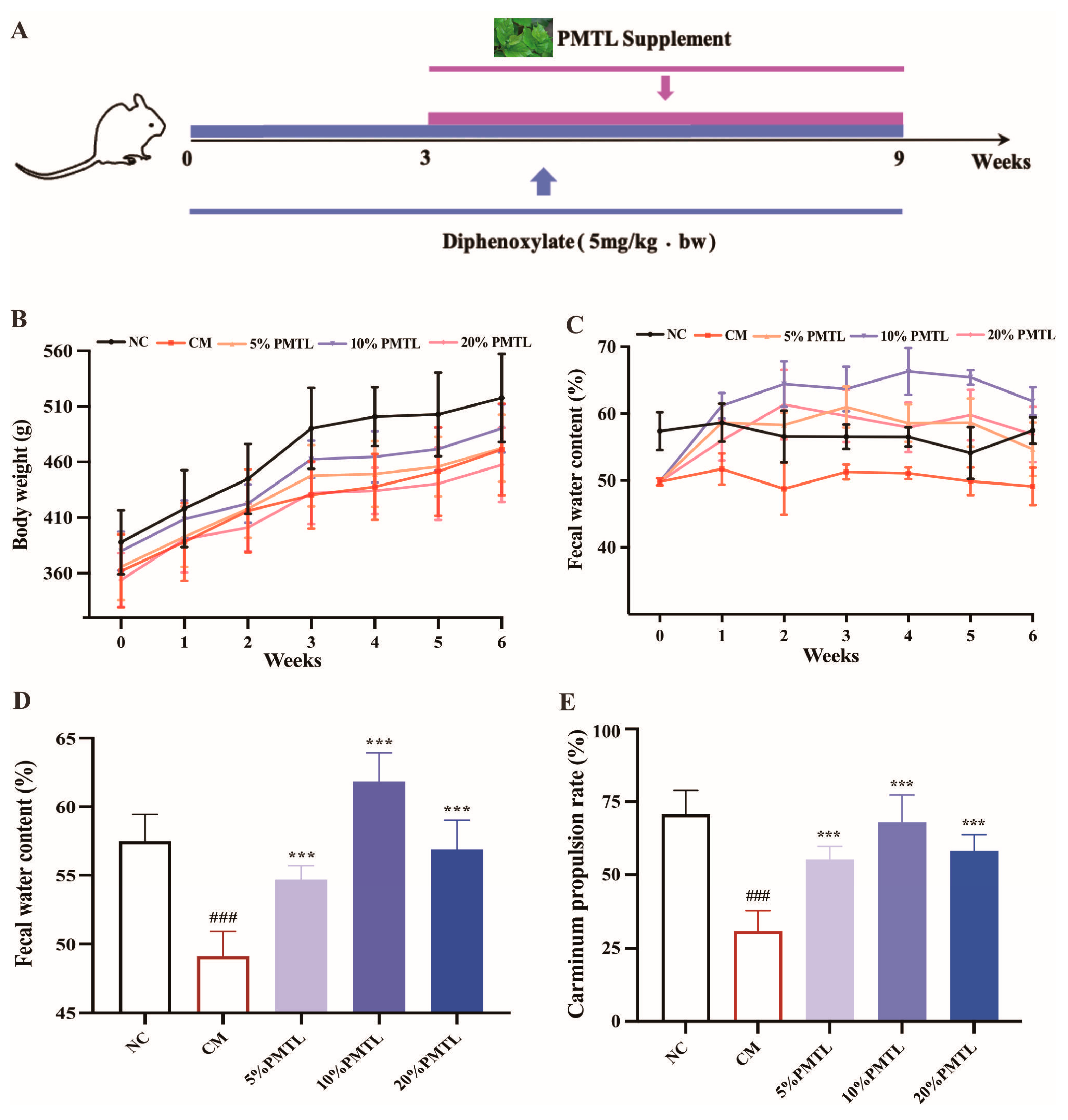
2.4. Animals and Experimental Design
2.5. Defecation Test
2.6. Test for Small Intestinal Propulsion Rate
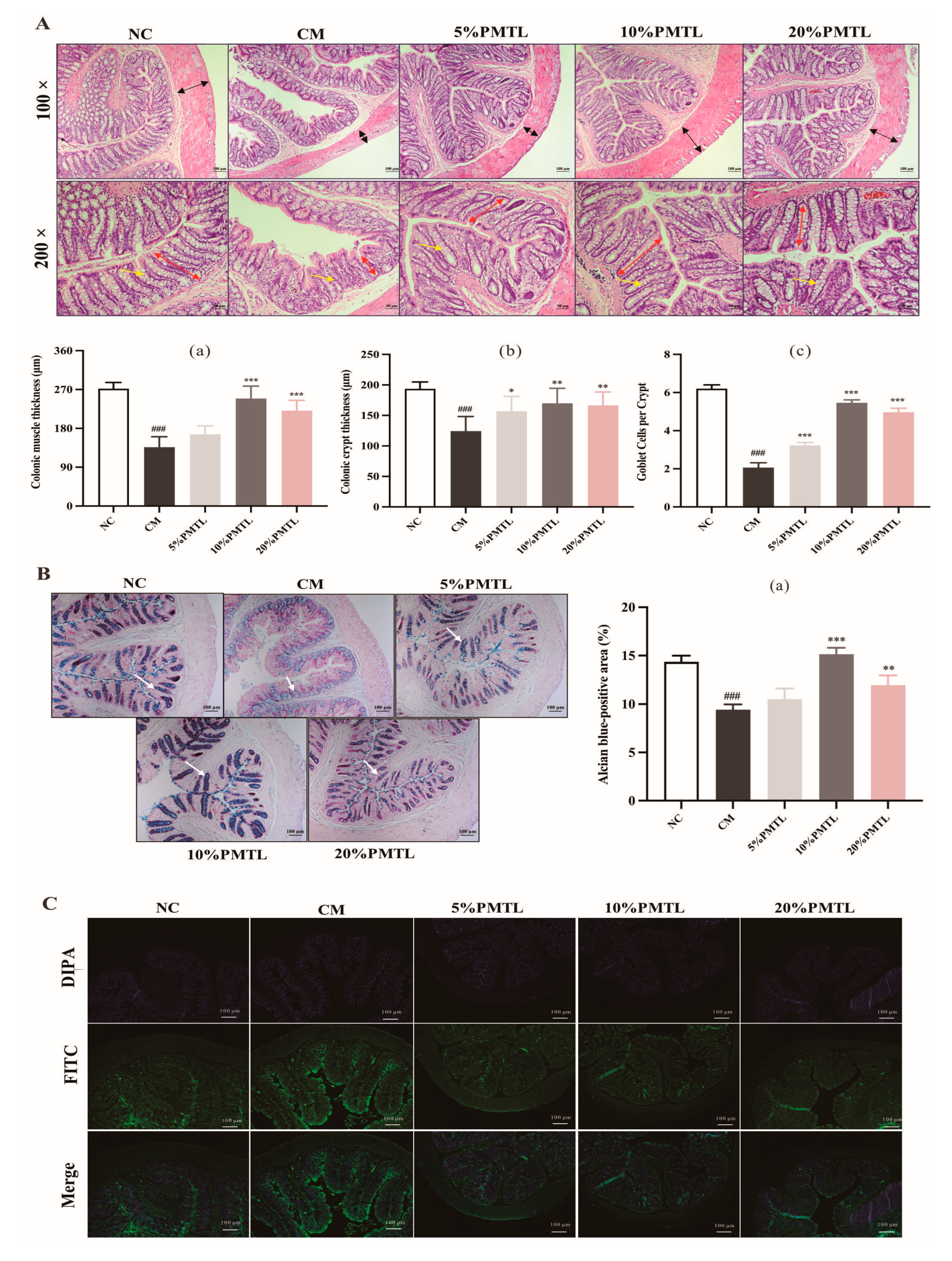
2.7. Histopathological Examination
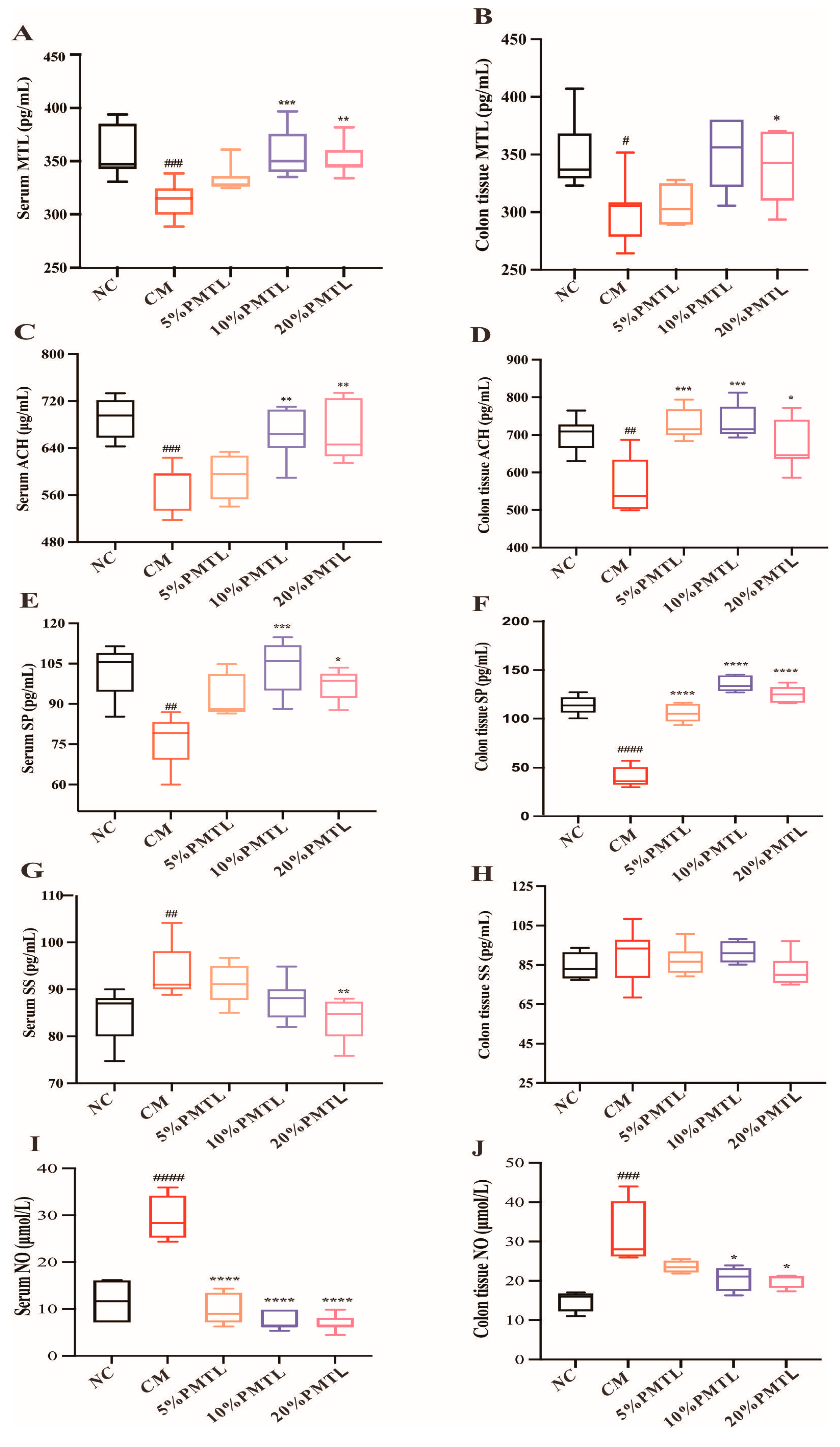
2.8. Measurement of Excitatory and Inhibitory Neurotransmitters
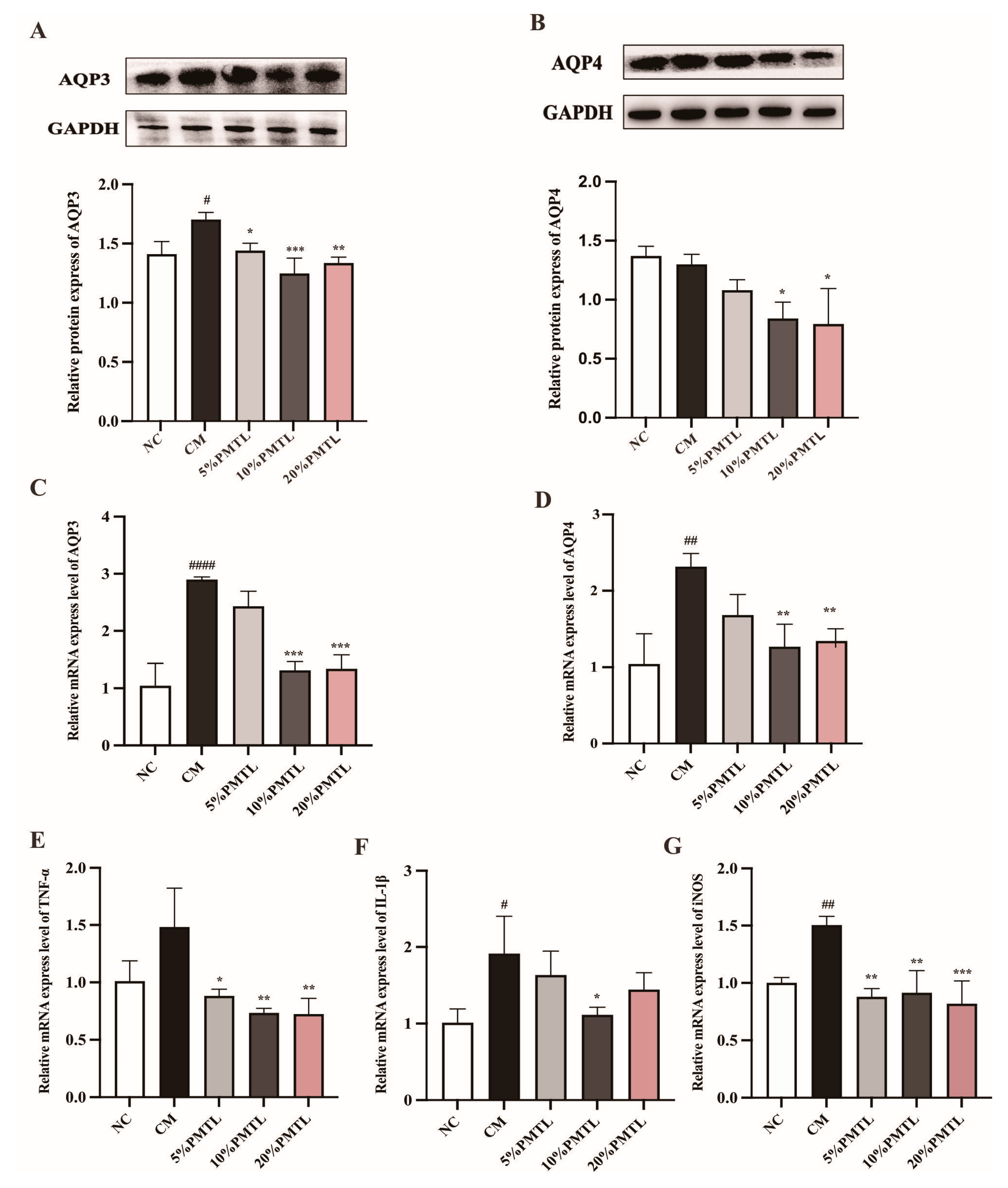
2.9. Western Blot Determination
2.10. RT-qPCR Analysis
2.11. Gut Microbiota Analysis
2.12. GC-MS Analysis for SCFAs
2.13. Data Analysis
3. Results
3.1. Chemical Composition of PMTL and Its Effects on Body Weight and Fecal Water Content
3.2. PMTL Promoted Carmine Propulsion Rate in Constipated Rats
3.3. PMTL Altered Colonic Histological Structure of Constipated Rats
3.4. PMTL Regulated Excitatory and Inhibitory Neurotransmitters in Rats
3.5. Effects of PMTL on Expressions of Aquaporins and Inflammatory Factors in Rats
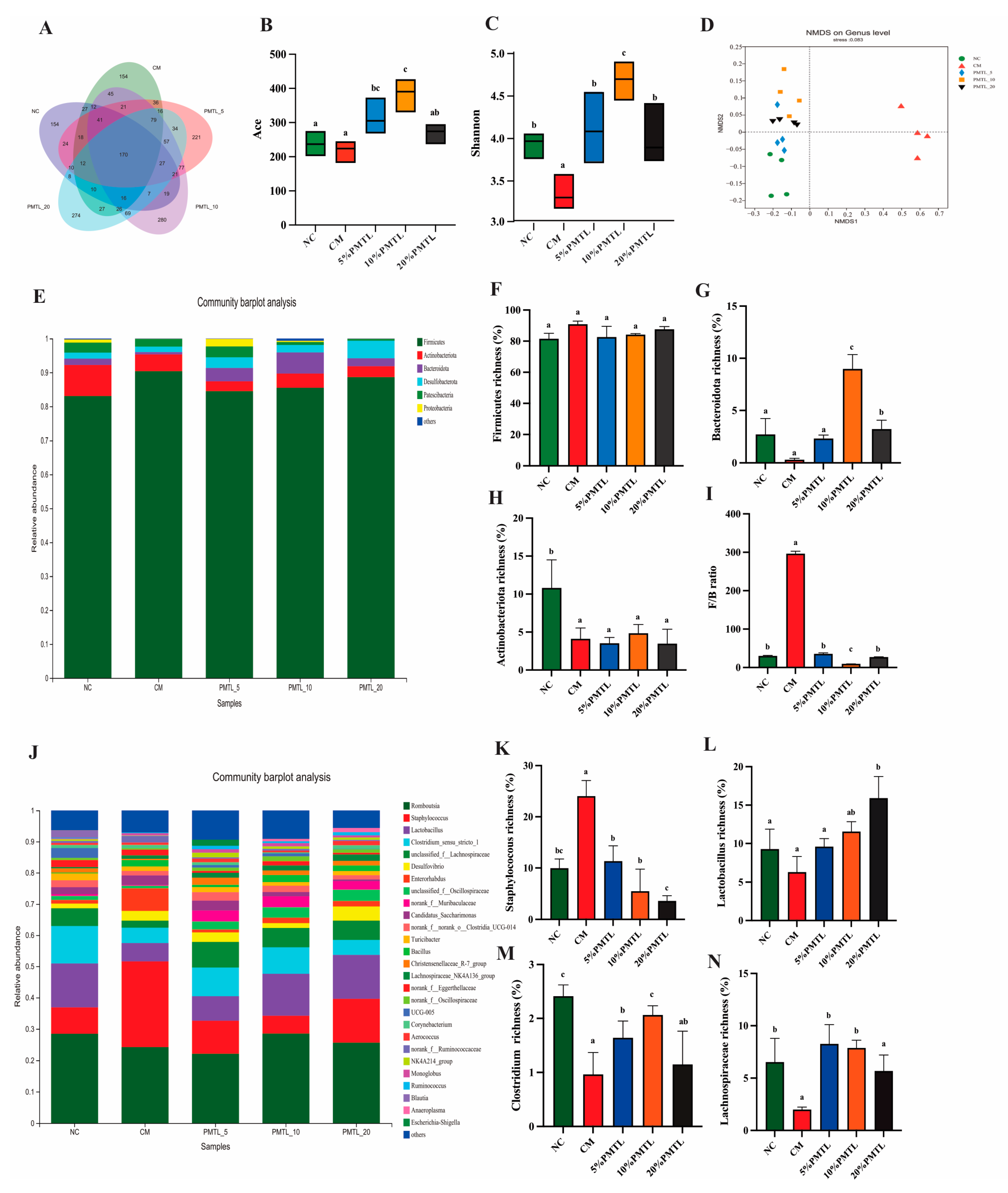
3.6. PMTL Alleviated Gut Microbiota Disturbance in Constipated Rats
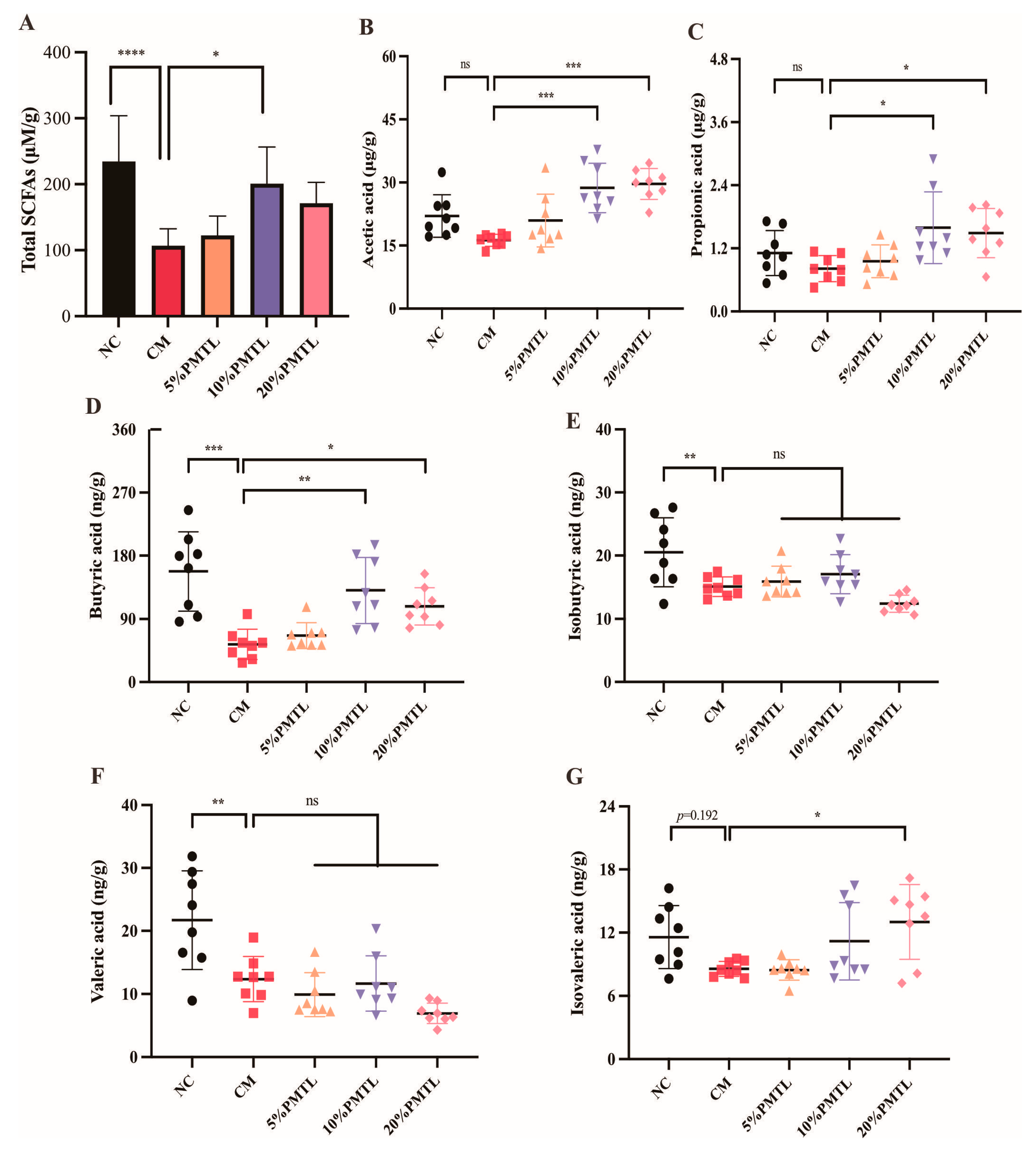
3.7. Effects of PMTL Supplementation on Colonic SCFAs in Rats
4. Discussion
5. Conclusions
Author Contributions
Funding
Institutional Review Board Statement
Informed Consent Statement
Data Availability Statement
Conflicts of Interest
References
- Tran, D.L.; Sintusek, P. Functional Constipation in Children: What Physicians Should Know. World J. Gastroenterol. 2023, 29, 1261–1288. [Google Scholar] [CrossRef]
- Krogh, K.; Chiarioni, G.; Whitehead, W. Management of chronic constipation in adults. United Eur. Gastroent. 2017, 5, 465–472. [Google Scholar] [CrossRef] [PubMed]
- Salvi, F.; Petrino, R.; Conroy, S.P.; Liperoti, R.; Paoletti, L.; Beccacece, A.; dell’Aquila, G.; Fedecostante, M.; Cherubini, A. Constipation: A Neglected Condition in Older Emergency Department Patients. Intern. Emerg. Med. 2024, 19, 1977–1986. [Google Scholar] [CrossRef]
- Parthasarathy, G.; Chen, J.; Chen, X.; Chia, N.; O’Connor, H.M.; Wolf, P.G.; Gaskins, H.R.; Bharucha, A.E. Relationship Between Microbiota of the Colonic Mucosa vs. Feces and Symptoms, Colonic Transit, and Methane Production in Female Patients with Chronic Constipation. Gastroenterology 2016, 150, 367–379. [Google Scholar] [CrossRef] [PubMed]
- Ikarashi, N.; Kon, R.; Sugiyama, K. Aquaporins in the Colon as a New Therapeutic Target in Diarrhea and Constipation. Int. J. Mol. Sci. 2016, 17, 1172. [Google Scholar] [CrossRef] [PubMed]
- Dimidi, E.; Christodoulides, S.; Scott, S.M.; Whelan, K. Mechanisms of Action of Probiotics and the Gastrointestinal Microbiota on Gut Motility and Constipation. Adv. Nutr. 2017, 8, 484–494. [Google Scholar] [CrossRef]
- Bassotti, G.; Villanacci, V.; Maurer, C.A.; Fisogni, S.; Di Fabio, F.; Cadei, M.; Morelli, A.; Panagiotis, T.; Cathomas, G.; Salerni, B. The role of glial cells and apoptosis of enteric neurones in the neuropathology of intractable slow transit constipation. Gut 2006, 55, 41–46. [Google Scholar] [CrossRef]
- Zhao, R.H.; Baig, M.K.; Thaler, K.J.; Mack, J.; Abramson, S.; Woodhouse, S.; Tamir, H.; Wexner, S.D. Reduced expression of serotonin receptor(s) in the left colon of patients with colonic inertia. Dis. Colon Rectum 2003, 46, 81–86. [Google Scholar] [CrossRef]
- Mollen, R.M.; Hopman, W.P.; Kuijpers, H.H.; Jansen, J.B. Plasma cholecystokinin, plasma peptide YY and gallbladder motility in patients with slow transit constipation: Effect of intestinal stimulation. Digestion 2000, 62, 185–193. [Google Scholar] [CrossRef]
- Matsuzaki, T.; Tajika, Y.; Ablimit, A.; Aoki, T.; Hagiwara, H.; Takata, K. Aquaporins in the digestive system. Med. Electron Microsc. 2004, 37, 71–80. [Google Scholar] [CrossRef]
- Iantorno, G.; Bassotti, G.; Kogan, Z.; Lumi, C.M.; Cabanne, A.M.; Fisogni, S.; Varrica, L.M.; Bilder, C.R.; Munoz, J.P.; Liserre, B.; et al. The enteric nervous system in chagasic and idiopathic megacolon. Am. J. Surg. Pathol. 2007, 31, 460–468. [Google Scholar] [CrossRef] [PubMed]
- Forootan, M.; Bagheri, N.; Darvishi, M. Chronic constipation: A review of literature. Medicine 2018, 97, e10631. [Google Scholar] [CrossRef]
- Chang, L.; Chey, W.D.; Imdad, A.; Almario, C.V.; Bharucha, A.E.; Diem, S.; Greer, K.B.; Hanson, B.; Harris, L.A.; Ko, C.; et al. American Gastroenterological Association-American College of Gastroenterology Clinical Practice Guideline: Pharmacological Management of Chronic Idiopathic Constipation. Gastroenterology 2023, 164, 1086–1106. [Google Scholar] [CrossRef] [PubMed]
- Pohl, D.; Tutuian, R.; Fried, M. Pharmacologic treatment of constipation: What is new? Curr. Opin. Pharmacol. 2008, 8, 724–728. [Google Scholar] [CrossRef]
- Hu, T.G.; Wen, P.; Fu, H.Z.; Lin, G.Y.; Liao, S.T.; Zou, Y.X. Protective effect of mulberry (Morus atropurpurea) fruit against diphenoxylate-induced constipation in mice through the modulation of gut microbiota. Food Funct. 2019, 10, 1513–1528. [Google Scholar] [CrossRef]
- Huang, P.H.; Jian, C.H.; Lin, Y.W.; Huang, D.W. Impact of Premna microphylla Turcz Leaf Water Extracts on the Properties of Gelatin-Carrageenan Edible Film and Its Application in Cherry Tomatoes Storage. Food Chem. X 2025, 25, 102186. [Google Scholar] [CrossRef] [PubMed]
- Tang, G.; Lin, J.; Li, X.; Li, R.; Wang, D.; Ji, S. Pharmacognostical studies of Premna microphylla. Rev. Bras. Farmacogn. 2018, 28, 520–526. [Google Scholar] [CrossRef]
- Pan, M.K.; Zhou, F.F.; Shi, R.H.; Liu, Y.; Zhang, Q.; Wang, J.H. Characterizations of a pectin extracted from Premna microphylla turcz and its cold gelation with whey protein concentrate at different pHs. Int. J. Biol. Macromol. 2019, 139, 818–826. [Google Scholar] [CrossRef]
- Zhang, T.; Yuan, D.; Guo, Q.; Qiu, F.; Yang, D.; Ou, Z. Preparation of a renewable biomass carbon aerogel reinforced with sisal for oil spillage clean-up: Inspired by green leaves to green Tofu. Food Bioprod. Process. 2019, 114, 154–162. [Google Scholar] [CrossRef]
- Gong, H.; Lin, X.; Xie, Y.; Liu, L.; Zhou, J.; Liao, H.; Shang, R.; Luo, X. A novel self-crosslinked gel microsphere of Premna microphylla turcz leaves for the absorption of uranium. J. Hazard. Mater. 2021, 404, 124151. [Google Scholar] [CrossRef]
- Yu, Q.; Xiong, Z.; Shi, T.; Yuan, L.; Bao, Y.; Gao, R. On the gelation of Premna microphylla turcz extracts: The effects of supernatant and precipitate of plant ash suspension. Food Res. Int. 2022, 156, 111316. [Google Scholar] [CrossRef] [PubMed]
- Huang, Z.; Xing, G.; Tu, C.; Rui, X.; Dong, M. Effect of Premna microphylla turcz leaves’ extract addition on physicochemical and antioxidant properties of packed tofu by lactic fermentation. Int. J. Food Sci. Tech. 2020, 55, 2541–2550. [Google Scholar]
- Gao, J.; Zhang, M.; Zhang, L.; Wang, N.; Zhao, Y.; Ren, D.; Yang, X. Dietary Pectin from Premna microphylla Turcz Leaves Prevents Obesity by Regulating Gut Microbiota and Lipid Metabolism in Mice Fed High-Fat Diet. Foods 2024, 13, 2248. [Google Scholar] [CrossRef] [PubMed]
- Zhang, H.Y.; Gao, Y.; Lai, P.X. Chemical Composition, Antioxidant, Antimicrobial and Cytotoxic Activities of Essential Oil from Premna microphylla Turczaninow. Molecules 2017, 22, 381. [Google Scholar] [CrossRef] [PubMed]
- Song, G.; Chen, F.; Chen, S.; Ye, S. Polysaccharides from Premna microphylla turcz ameliorate inflammation via the enhancement of intestinal resistance in host. J. Ethnopharmacol. 2021, 276, 114208. [Google Scholar] [CrossRef]
- Li, X.; Wei, Z.; Wang, X.; Duan, F.; Xiong, L.; Li, J.; Tian, J.; Jia, L.; Gao, H. Premna microphylla Turcz leaf pectin exhibited antioxidant and anti-inflammatory activities in LPS-stimulated RAW 264.7 macrophages. Food Chem. 2021, 349, 129164. [Google Scholar]
- Chen, Y.; Liu, X.; Lei, X.; Lei, L.; Zhao, J.; Zeng, K.; Ming, J. Premna microphylla Turcz pectin protected UVB-induced skin aging in BALB/c-nu mice via Nrf2 pathway. Int. J. Biol. Macromol. 2022, 215, 12–22. [Google Scholar] [PubMed]
- Dong, Z.; Du, Z.; Wu, X.; Zhai, K.; Wei, Z.; Rashed, M.M.A. Fabrication and characterization of ZnO nanofilms using extracted pectin of Premna microphylla Turcz leaves and carboxymethyl cellulose. Int. J. Biol. Macromol. 2022, 209, 525–532. [Google Scholar] [CrossRef] [PubMed]
- Pereira, E.; Encina-Zelada, C.; Barros, L.; Gonzales-Barron, U.; Cadavez, V.; Ferreira, I.C.F.R. Chemical and nutritional characterization of Chenopodium quinoa Willd (quinoa) grains: A good alternative to nutritious food. Food Chem. 2019, 280, 110–114. [Google Scholar] [CrossRef]
- Gupta, A.K.; Dhua, S.; Sahu, P.P.; Abate, G.; Mishra, P.; Mastinu, A. Variation in Phytochemical, Antioxidant and Volatile Composition of Pomelo Fruit (Citrus grandis (L.) Osbeck) during Seasonal Growth and Development. Plants 2021, 10, 1941. [Google Scholar] [CrossRef]
- Hughes, R.K.; Shiwani, H.; Rosmini, S.; Augusto, J.B.; Burke, L.; Jiang, Y.; Pierce, I.; Joy, G.; Castelletti, S.; Orini, M.; et al. Improved Diagnostic Criteria for Apical Hypertrophic Cardiomyopathy. JACC Cardiovasc. Imaging 2024, 17, 501–512. [Google Scholar]
- Yang, C.; Chen, X.; Niu, P.; Yang, X.; Lu, Y. Incremental Effects of Eurotium cristatum Fermentation of Soybean on Its Nutrients, Flavor Profile and Laxative Regulation in Experimental Constipated Rats. Food Funct. 2025, 16, 2363–2377. [Google Scholar] [CrossRef]
- Wintola, O.A.; Sunmonu, T.O.; Afolayan, A.J. Toxicological evaluation of aqueous extract of Aloe ferox Mill. in loperamide-induced constipated rats. Hum. Exp. Toxicol. 2011, 30, 425–431. [Google Scholar]
- Li, T.; Lu, X.; Yang, X. Stachyose-enriched α-galacto-oligosaccharides regulate gut microbiota and relieve constipation in mice. J. Agric. Food Chem. 2013, 61, 11825–11831. [Google Scholar]
- Sun, W.; Wang, Y.; Miao, X.; Wang, Y.; Zhang, L.; Xin, Y.; Zheng, S.; Epstein, P.N.; Fu, Y.; Cai, L. Renal improvement by zinc in diabetic mice is associated with glucose metabolism signaling mediated by metallothionein and Akt, but not Akt2. Free Radic. Biol. Med. 2014, 68, 22–34. [Google Scholar] [CrossRef]
- Zhang, X.; Wu, Q.; Zhao, Y.; Aimy, A.; Yang, X. Consumption of post-fermented Jing-Wei Fuzhuan brick tea alleviates liver dysfunction and intestinal microbiota dysbiosis in high fructose diet-fed mice. RSC Adv. 2019, 9, 17501–17513. [Google Scholar]
- Wang, Y.; Li, T.; Liu, Y.Y.; Yang, C.C.; Liu, L.; Zhang, X.N.; Yang, X.B. Heimao Tea Polysaccharides Ameliorate Obesity via Enhancing Gut Microbiota-Dependent Adipocytes Thermogenesis in Mice Fed with High Fat Diet. Food Funct. 2022, 13, 13014–13027. [Google Scholar] [PubMed]
- Zhang, J.; Zhao, Y.; Ren, D.; Yang, X. Effect of okra fruit powder supplementation on metabolic syndrome and gut microbiota diversity in high fat diet-induced obese mice. Food Res. Int. 2020, 130, 108929. [Google Scholar] [CrossRef] [PubMed]
- Kusumo, P.D.; Maulahela, H.; Utari, A.P.; Surono, I.S.; Soebandrio, A.; Abdullah, M. Probiotic Lactobacillus plantarum IS 10506 supplementations increase SCFA of women with functional constipation. Iran. J. Microbiol. 2019, 11, 389–396. [Google Scholar] [CrossRef] [PubMed]
- Mann, E.R.; Lam, Y.K.; Uhlig, H.H. Short-Chain Fatty Acids: Linking Diet, the Microbiome and Immunity. Nat. Rev. Immunol. 2024, 24, 577–595. [Google Scholar] [CrossRef]
- Baldassano, S.; Tesoriere, L.; Rotondo, A.; Serio, R.; Livrea, M.A.; Mulè, F. Inhibition of the mechanical activity of mouse ileum by cactus pear (Opuntia Ficus Indica, L., Mill.) fruit extract and its pigment indicaxanthin. J. Agric. Food Chem. 2010, 58, 7565–7571. [Google Scholar] [CrossRef]
- Li, G.; Wang, Q.; Qian, Y.; Zhou, Y.; Wang, R.; Zhao, X. Component analysis of Puerh and its anti-constipation effects. Mol. Med. Rep. 2014, 9, 2003–2009. [Google Scholar]
- Lee, H.Y.; Kim, J.H.; Jeung, H.W.; Lee, C.U.; Kim, D.S.; Li, B.; Lee, G.H.; Sung, M.S.; Ha, K.C.; Back, H.I.; et al. Effects of Ficus carica paste on loperamide-induced constipation in rats. Food Chem. Toxicol. 2012, 50, 895–902. [Google Scholar] [CrossRef] [PubMed]
- Liang, S.; He, Z.; Liang, Z.; Wang, K.; Du, B.; Guo, R.; Li, P. Prunus persica (L.) Batsch Blossom Soluble Dietary Fiber Synergia Polyphenol Improving Loperamide-Induced Constipation in Mice via Regulating Stem Cell Factor/C-kit, NF-κB Signaling Pathway and Gut Microbiota. Food Res. Int. 2024, 192, 114761. [Google Scholar] [PubMed]
- Gao, X.; Hu, Y.; Tao, Y.; Liu, S.; Chen, H.; Li, J.; Zhao, Y.; Sheng, J.; Tian, Y.; Fan, Y. Cymbopogon citratus (DC.) Stapf Aqueous Extract Ameliorates Loperamide-Induced Constipation in Mice by Promoting Gastrointestinal Motility and Regulating the Gut Microbiota. Front. Microbiol. 2022, 13, 1017804. [Google Scholar] [CrossRef] [PubMed]
- Li, X.; Xiang, Z.; Wang, X.; He, H.; Xu, M.; Tan, C.; Wu, X.; Zhang, J.; Dong, W. Metformin Attenuates Colitis via Blocking STAT3 Acetylation by Reducing Acetyl-CoA Production. J. Adv. Res. 2025; in press. [Google Scholar]
- Knowles, C.H.; Martin, J.E. Slow transit constipation: A model of human gut dysmotility. Review of possible aetiologies. Neurogastroenterol. Motil. 2000, 12, 181–196. [Google Scholar] [CrossRef]
- Schulz, S.; Röcken, C.; Mawrin, C.; Weise, W.; Höllt, V.; Schulz, S. Immunocytochemical identification of VPAC1, VPAC2, and PAC1 receptors in normal and neoplastic human tissues with subtype-specific antibodies. Clin. Cancer Res. 2004, 10, 8235–8242. [Google Scholar] [CrossRef]
- Du, L.; Zhan, S.; Guo, X. The relationship between substance P, vasoactive intestinal peptide and abnormal gastrointestinal transite. J. Xi’an Jiaotong Univ. (Med. Sci.) 2003, 24, 363. [Google Scholar]
- Yang, Z.; Ye, S.; Xu, Z.; Su, H.; Tian, X.; Han, B.; Shen, B.; Liao, Q.; Xie, Z.; Hong, Y. Dietary synbiotic ameliorates constipation through the modulation of gut microbiota and its metabolic function. Food Res. Int. 2021, 147, 110569. [Google Scholar] [CrossRef]
- Lucey, M.R. Endogenous somatostatin and the gut. Gut 1986, 27, 457–467. [Google Scholar] [CrossRef]
- Gill, S.K.; Rossi, M.; Bajka, B.; Whelan, K. Dietary Fibre in Gastrointestinal Health and Disease. Nat. Rev. Gastroenterol. Hepatol. 2021, 18, 101–116. [Google Scholar]
- Deng, Y.; Li, M.; Mei, L.; Cong, L.M.; Liu, Y.; Zhang, B.B.; He, C.Y.; Zheng, P.Y.; Yuan, J.L. Manipulation of intestinal dysbiosis by a bacterial mixture ameliorates loperamide-induced constipation in rats. Benef. Microbes 2018, 9, 453–464. [Google Scholar] [CrossRef] [PubMed]
- Li, Z.; Yuan, W.T.; Zhi, H. mRNA expression of aquaporin protein 1 and 7 in rat model of slow transit constipation (STC). J. Pharm. Pharmacol. 2012, 6, 2643–2645. [Google Scholar][Green Version]
- Gallardo, P.; Cid, L.P.; Vio, C.P.; Sepúlveda, F.V. Aquaporin-2, a regulated water channel, is expressed in apical membranes of rat distal colon epithelium. Am. J. Physiol. Gastrointest. Liver Physiol. 2001, 281, G856–G863. [Google Scholar] [PubMed]
- Gallardo, P.; Olea, N.; Sepúlveda, F.V. Distribution of aquaporins in the colon of Octodon degus, a South American desert rodent. Am. J. Physiol. Regul. Integr. Comp. Physiol. 2002, 283, R779–R788. [Google Scholar] [CrossRef] [PubMed][Green Version]
- Wang, K.S.; Ma, T.; Filiz, F.; Verkman, A.S.; Bastidas, J.A. Colon water transport in transgenic mice lacking aquaporin-4 water channels. Am. J. Physiol. Gastrointest. Liver Physiol. 2000, 279, G463–G470. [Google Scholar]
- Wang, L.; Hu, L.; Yan, S.; Jiang, T.; Fang, S.; Wang, G.; Zhao, J.; Zhang, H.; Chen, W. Effects of different oligosaccharides at various dosages on the composition of gut microbiota and short-chain fatty acids in mice with constipation. Food Funct. 2017, 8, 1966–1978. [Google Scholar] [CrossRef]
- Shin, A.; Preidis, G.A.; Shulman, R.; Kashyap, P.C. The Gut Microbiome in Adult and Pediatric Functional Gastrointestinal Disorders. Clin. Gastroenterol. Hepatol. 2019, 17, 256–274. [Google Scholar] [CrossRef] [PubMed]
- Koh, A.; De Vadder, F.; Kovatcheva-Datchary, P.; Bäckhed, F. From Dietary Fiber to Host Physiology: Short-Chain Fatty Acids as Key Bacterial Metabolites. Cell 2016, 165, 1332–1345. [Google Scholar] [CrossRef]
- Zhang, T.; Liu, W.; Lu, H.; Cheng, T.; Wang, L.; Wang, G.; Zhang, H.; Chen, W. Lactic Acid Bacteria in Relieving Constipation: Mechanism, Clinical Application, Challenge, and Opportunity. Crit. Rev. Food Sci. Nutr. 2025, 65, 551–574. [Google Scholar] [PubMed]
- Gou, Y.; Sun, J.; Liu, J.; Chen, H.; Qian, J.C.; Jin, C.H. Structural characterization of a water-soluble purple sweet potato polysaccharide and its effect on intestinal inflammation in mice. J. Funct. Foods 2019, 61, 9. [Google Scholar] [CrossRef]
- Zagato, E.; Pozzi, C.; Bertocchi, A.; Schioppa, T.; Saccheri, F.; Guglietta, S.; Fosso, B.; Melocchi, L.; Nizzoli, G.; Troisi, J.; et al. Endogenous murine microbiota member Faecalibaculum rodentium and its human homologue protect from intestinal tumour growth. Nat. Microbiol. 2020, 5, 511–524. [Google Scholar] [CrossRef]
- Chiefari, A.K.; Perry, M.J.; Kelly-Cirino, C.; Egan, C.T. Detection of Staphylococcus aureus enterotoxin production genes from patient samples using an automated extraction platform and multiplex real-time PCR. Mol. Cell. Probes 2015, 29, 461–467. [Google Scholar] [CrossRef] [PubMed]
- Maezawa, Y.; Nagasaki, K. Aerococcus urinae: An Emerging, Gram-Positive Pathogen Causing Urinary Tract Infection. Am. J. Med. 2024, 137, e89–e90. [Google Scholar] [CrossRef] [PubMed]
- Kang, D.W.; DiBaise, J.K.; Ilhan, Z.E.; Crowell, M.D.; Rideout, J.R.; Caporaso, J.G.; Rittmann, B.E.; Krajmalnik-Brown, R. Gut microbial and short-chain fatty acid profiles in adults with chronic constipation before and after treatment with lubiprostone. Anaerobe 2015, 33, 33–41. [Google Scholar] [CrossRef]
- Sasaki, H.; Masutomi, H.; Yamauchi, Y.; Ishihara, K.; Fukuda, S. Effectiveness of Personalized Granola Tailored to the Gut Microbiota for Improving Gut Environment and Mood States. Front. Microbiol. 2025, 16, 1607918. [Google Scholar] [CrossRef]



| Gene | Forward Primer | Reverse Primer |
|---|---|---|
| Aqp3 | TGGACCTCGCCTTTTCACT | GACACCACCAATGGAACCCA |
| Aqp4 | ACCTGTGATAGCACCTTGCCC | CAGACGCCTTTGAAAGCCAC |
| Gapdh | GCATCTTCTTGTGCAGTGCC | GGTAACCAGGCGCCGATAC |
| Tnfα | GACCCTCAGACTCAGATCATCCTTCT | ACGCTGGCTCAGCCACTC |
| Il1b | CTCCATGAGCTTTGTACAAGG | TGCTGATGTACCAGTTGGGG |
| Nos2 | AGAGAGATCGGGTTCACA | CACAGAACTGAGGGTACA |
| Total Component | Regression Curve | R2 | Content (Mean ± SD) |
|---|---|---|---|
| polyphenols | y = 38.1x + 0.0502 | 0.9992 | 116.8 ± 1.3 mg GAE/g dw |
| flavonoids | y = 6.718x − 0.2861 | 0.9985 | 150.6 ± 4.1 mg RE/g dw |
| carbohydrates | y = 2.3629x + 0.0405 | 0.9996 | 459.9 ± 3.2 mg GE/g dw |
| soluble proteins | 41.3 ± 0.37% (w/w) | ||
| fats | 41.6 ± 0.19% (w/w) |
Disclaimer/Publisher’s Note: The statements, opinions and data contained in all publications are solely those of the individual author(s) and contributor(s) and not of MDPI and/or the editor(s). MDPI and/or the editor(s) disclaim responsibility for any injury to people or property resulting from any ideas, methods, instructions or products referred to in the content. |
© 2025 by the authors. Licensee MDPI, Basel, Switzerland. This article is an open access article distributed under the terms and conditions of the Creative Commons Attribution (CC BY) license (https://creativecommons.org/licenses/by/4.0/).
Share and Cite
Wang, N.; Zhang, M.; Zhang, L.; Ren, D.; Zhao, Y.; Yang, X. Consumption of Dietary Premna microphylla Turcz Leaf Alleviates Functional Constipation via Regulating Gut Microbiota and Aquaporins Transport System in Rats. Foods 2025, 14, 3535. https://doi.org/10.3390/foods14203535
Wang N, Zhang M, Zhang L, Ren D, Zhao Y, Yang X. Consumption of Dietary Premna microphylla Turcz Leaf Alleviates Functional Constipation via Regulating Gut Microbiota and Aquaporins Transport System in Rats. Foods. 2025; 14(20):3535. https://doi.org/10.3390/foods14203535
Chicago/Turabian StyleWang, Nan, Mengxue Zhang, Li Zhang, Daoyuan Ren, Yan Zhao, and Xingbin Yang. 2025. "Consumption of Dietary Premna microphylla Turcz Leaf Alleviates Functional Constipation via Regulating Gut Microbiota and Aquaporins Transport System in Rats" Foods 14, no. 20: 3535. https://doi.org/10.3390/foods14203535
APA StyleWang, N., Zhang, M., Zhang, L., Ren, D., Zhao, Y., & Yang, X. (2025). Consumption of Dietary Premna microphylla Turcz Leaf Alleviates Functional Constipation via Regulating Gut Microbiota and Aquaporins Transport System in Rats. Foods, 14(20), 3535. https://doi.org/10.3390/foods14203535