Comparative Protective Effects of Static Magnetic Field-Treated and Untreated Corn Sprouts on DSS-Induced Ulcerative Colitis in Mice: Inflammation Modulation and Gut Microbiota Regulation


Abstract
1. Introduction
2. Materials and Methods
2.1. Preparation of M-CSP and Static Magnetic Field-Untreated Corn Sprouts (C-CSP)
2.2. Determination of the Bioactive Components in Corn Sprouts
2.3. Construction and Treatment of DSS
2.4. Evaluation of Disease Activity Index (DAI)
2.5. Evaluation of Organ Index
2.6. Histopathological Analysis
2.7. Determination of Pro- and Anti-Inflammatory Cytokines in Colon Tissues
2.8. Determination of Nitric Oxide (NO) and Malondialdehyde (MDA) in Colon Tissues
2.9. Determination of Serum Superoxide Dismutase (SOD)
2.10. qPCR Analysis of NF-κB Pathway Genes
2.11. High-Throughput Sequencing of Fecal 16s rDNA in Mice
2.12. Statistical Analysis
3. Results
3.1. Effects of SMF Treatment on Bioactive Components in Corn Sprouts
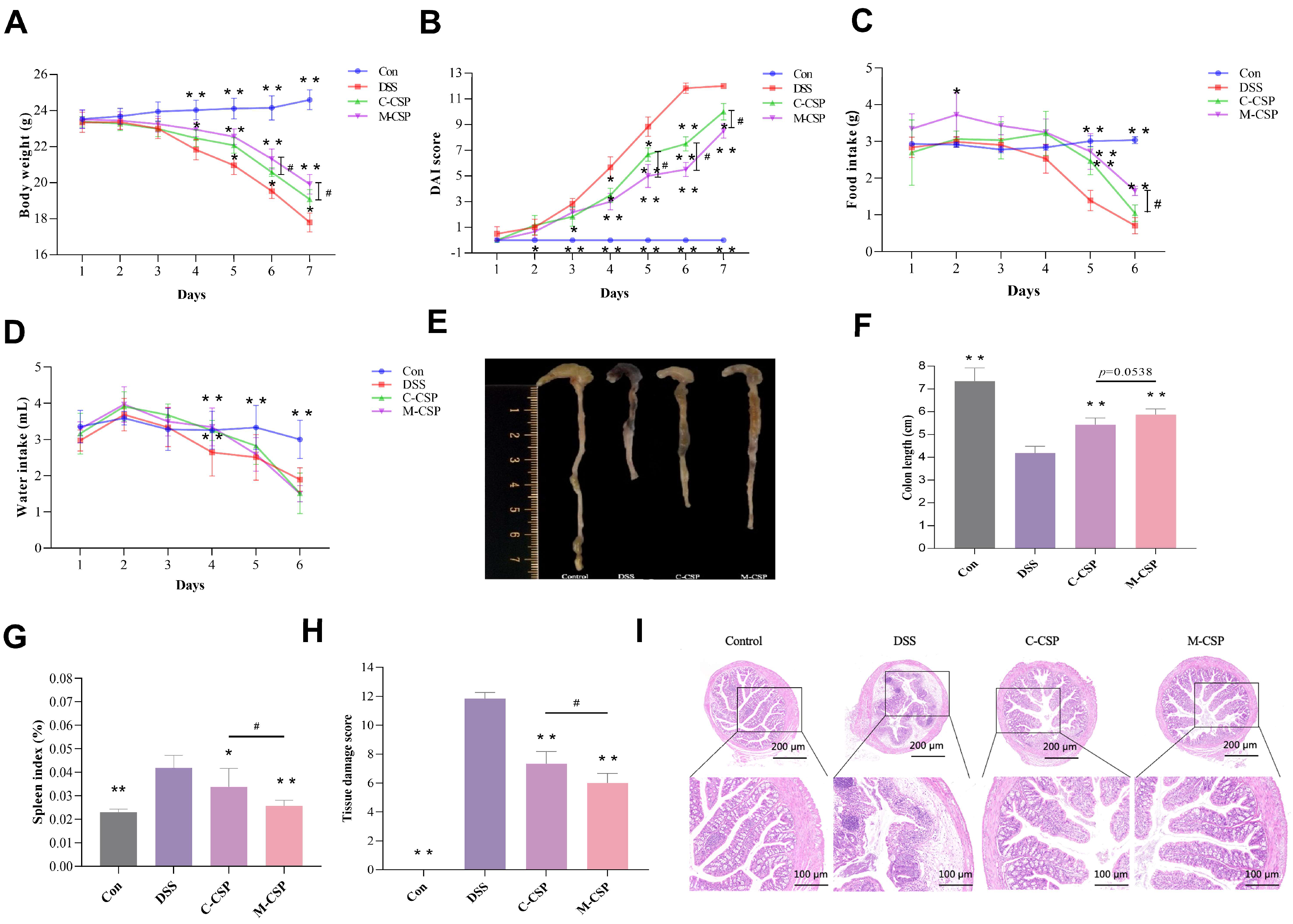
3.2. Effect of M-CSP on Clinical Symptoms in DSS Mice
3.3. Effect of M-CSP on Histologic Changes in DSS Mice
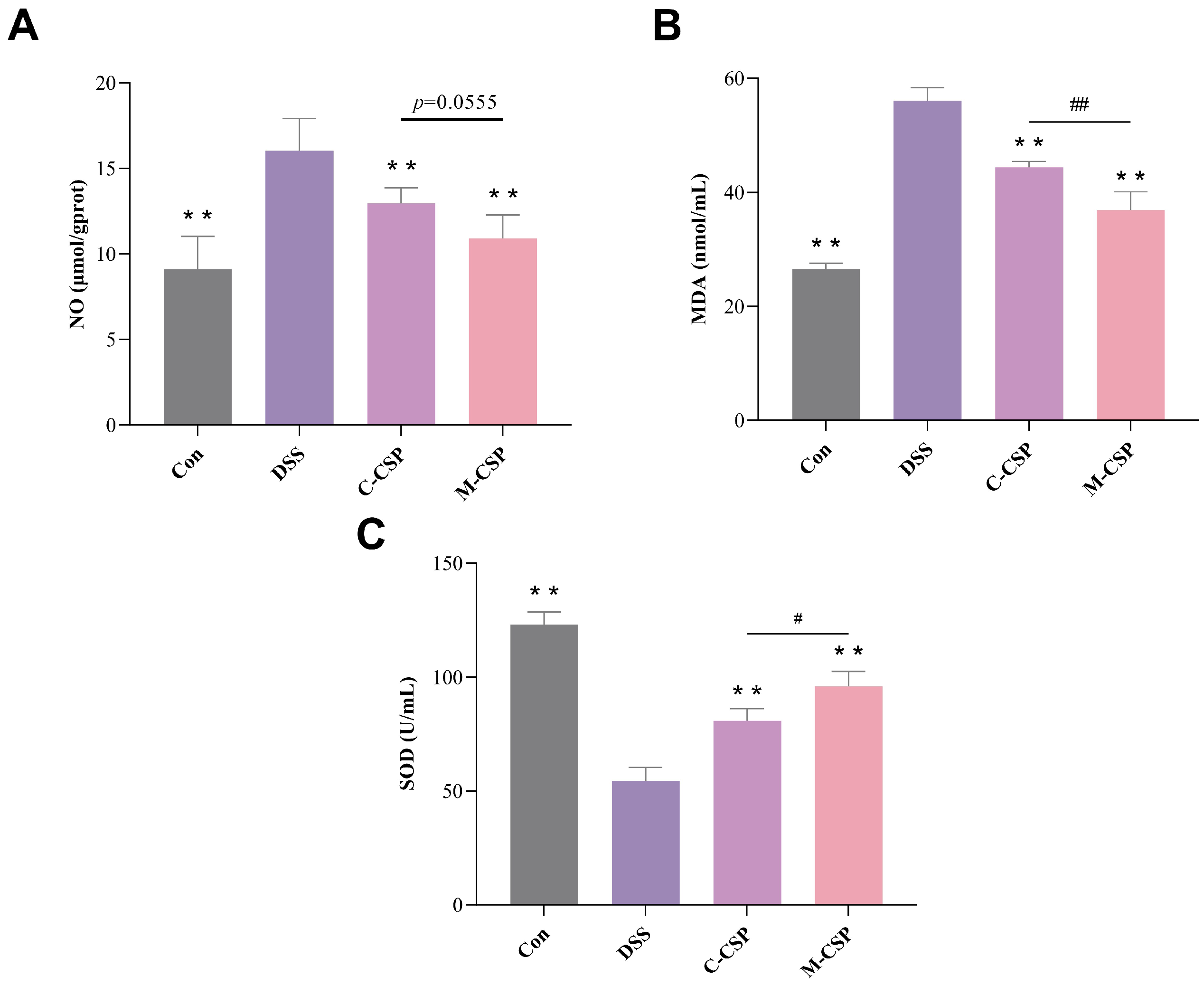
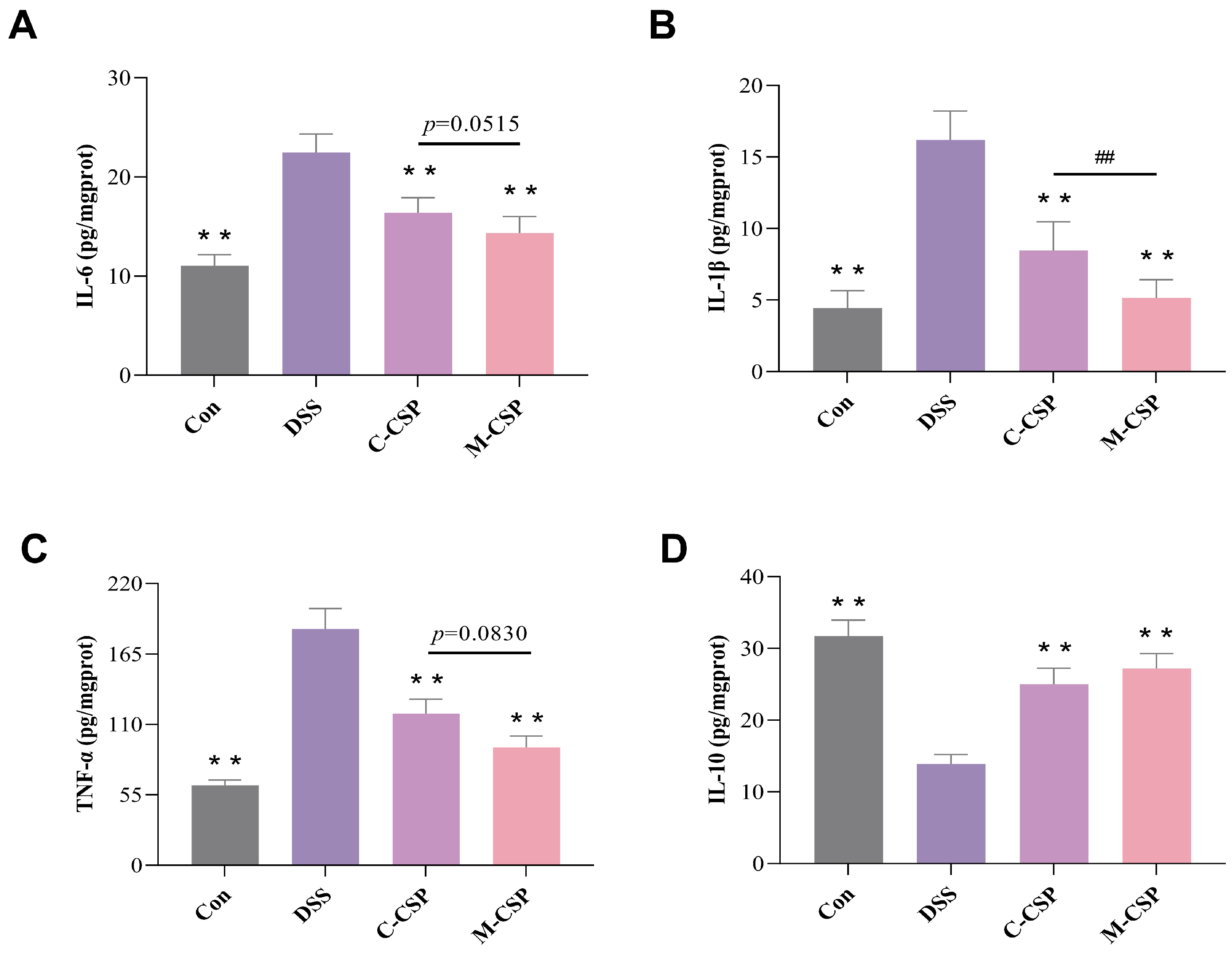
3.4. Effects of M-CSP on Oxidative Stress-Related Indices and Inflammatory Factors in DSS Mice
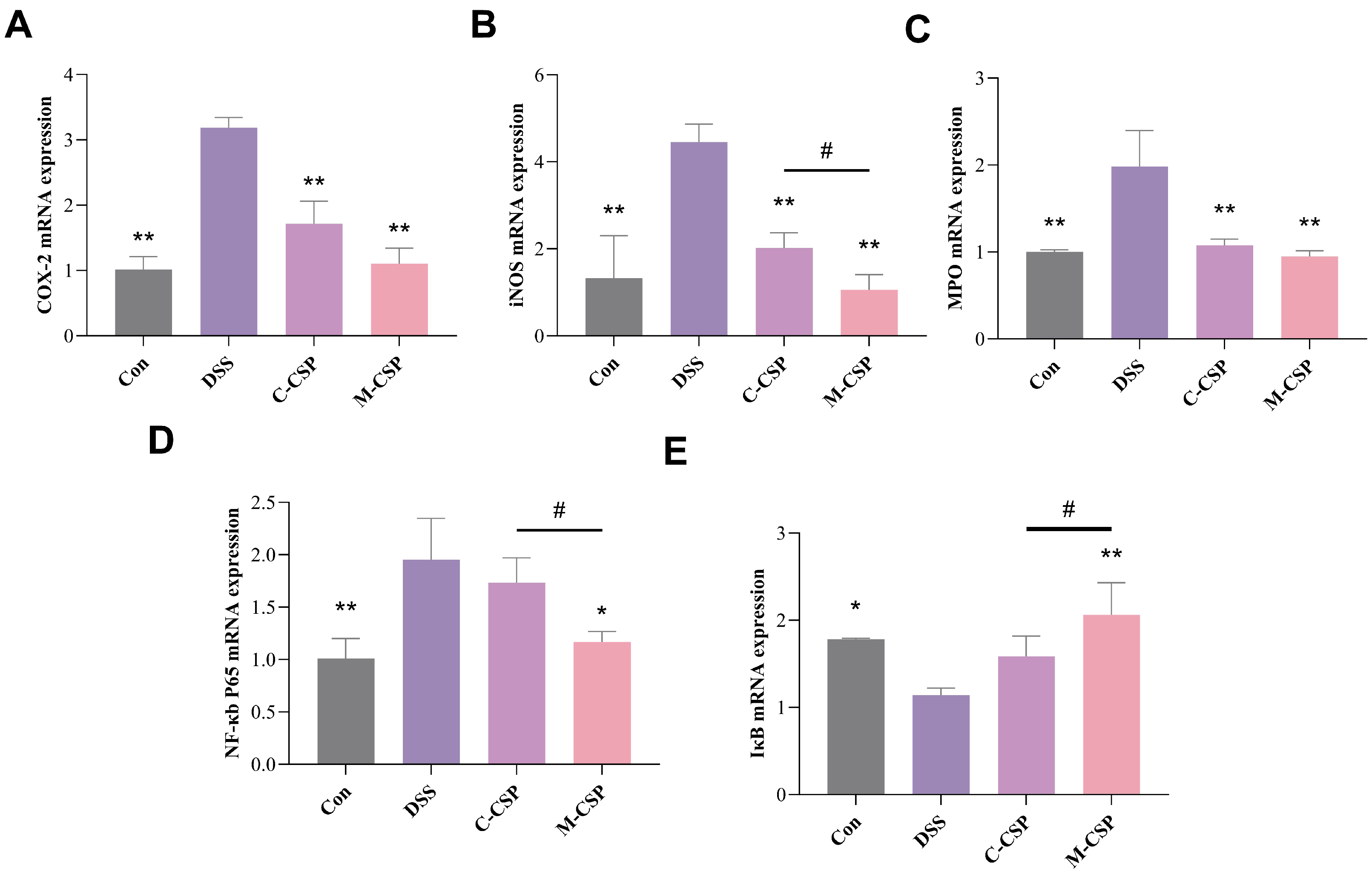
3.5. Effect of M-CSP on Myeloperoxidase (MPO), COX-2 and iNOS mRNA Expression
3.6. Effect of M-CSP on the NF-κb Signaling Pathway
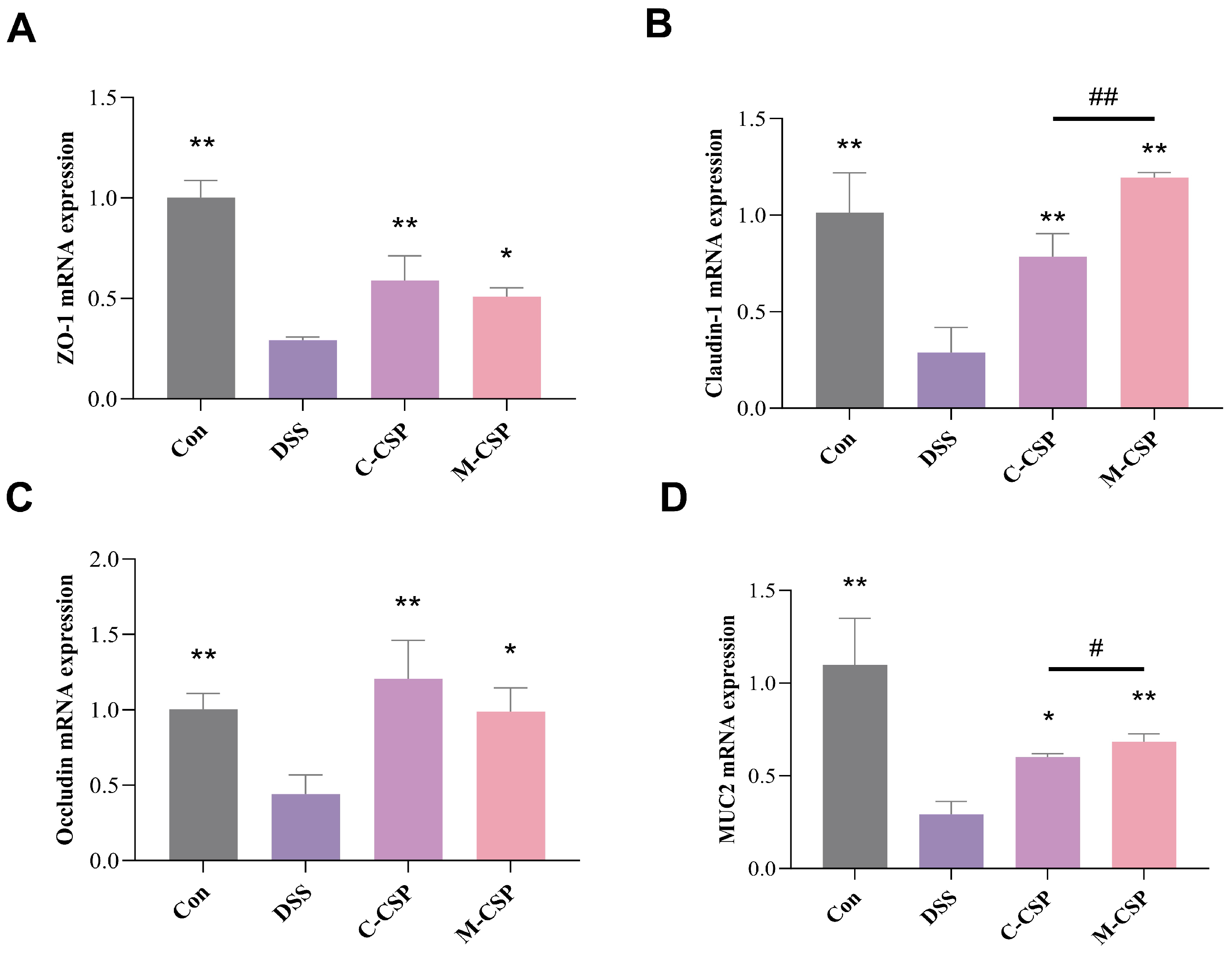
3.7. Effect of M-CSP on Intestinal Barrier Integrity in DSS Mice
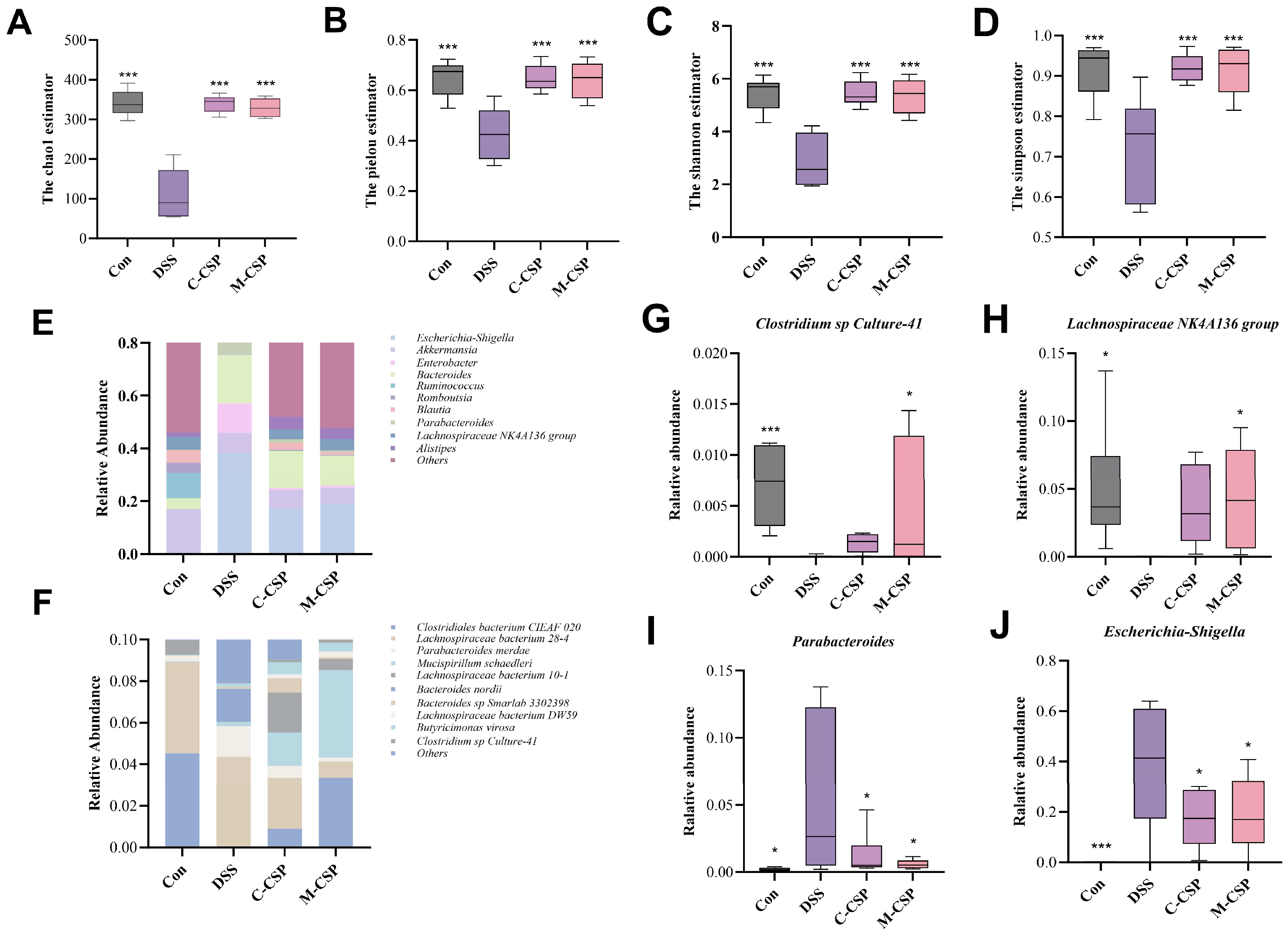
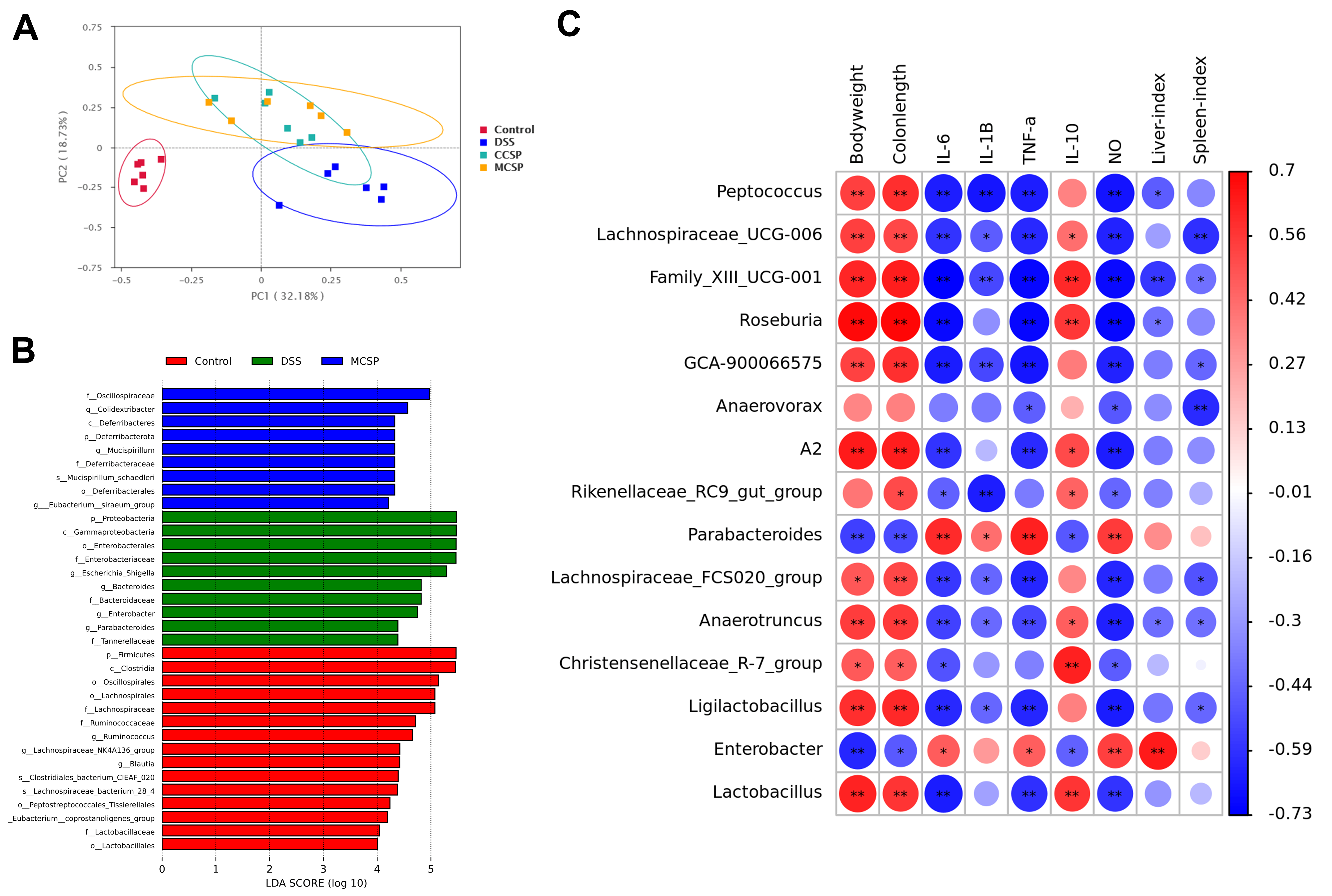
3.8. Effects of M-CSP on Gut Microbiota Composition in DSS Mice
4. Discussion
5. Conclusions
Supplementary Materials
Author Contributions
Funding
Institutional Review Board Statement
Informed Consent Statement
Data Availability Statement
Conflicts of Interest
Abbreviations
| SMF | Static Magnetic Field |
| UC | Ulcerative Colitis |
| DSS | Dextran Sulphate Sodium |
| CSP | Corn Sprout Powder |
| C-CSP | Static Magnetic Field-Untreated Corn Sprouts |
| M-CSP | Static Magnetic Field-Treated Corn Sprouts |
| H&E | Hematoxylin–Eosin staining |
| DAI | Disease Activity Index |
| IL-6 | Interleukin-6 |
| IL-1β | Interleukin-1β |
| TNF-α | Tumor necrosis factor-α |
| L-10 | Interleukin-10 |
| NO | Nitric oxide |
| MDA | Malondialdehyde |
| SOD | Superoxide Dismutase |
| MPO | Myeloperoxidase |
| COX-2 | Cyclooxygenase-2 |
| iNOS | Inducible nitric oxide synthase |
| NF-κb | Nuclear factor-kappa b |
| IκB | IkappaB |
| ZO-1 | Zonula occludens-1 |
| MUC2 | Mucoprotein2 |
References
- Benincasa, P.; Falcinelli, B.; Lutts, S.; Stagnari, F.; Galieni, A. Sprouted Grains: A Comprehensive Review. Nutrients 2019, 11, 421. [Google Scholar] [CrossRef] [Scilit] [PubMed]
- Lu, Y.; Wang, F.; Luo, H.; He, W.; Li, D.; Bao, Y.; Zhang, Z.; Zhou, C. Changes in phytochemical profiles, relevant enzyme activity and antioxidant capacity of different germinated maize varieties. Food Biosci. 2023, 56, 103410. [Google Scholar] [CrossRef] [Scilit]
- Karmakar, S.; Billah, M.; Hasan, M.; Sohan, S.R.; Hossain, M.F.; Faisal Hoque, K.M.; Kabir, A.H.; Rashid, M.M.; Talukder, M.R.; Reza, M.A. Impact of LFGD (Ar+O2) plasma on seed surface, germination, plant growth, productivity and nutritional composition of maize (Zea mays L.). Heliyon 2021, 7, e06458. [Google Scholar] [CrossRef] [Scilit]
- Lu, X.; Wang, S.; Dong, Y.; Xu, Y.; Wu, N. Effects of microwave treatment on the microstructure, germination characteristics, morphological characteristics and nutrient composition of maize. South Afr. J. Bot. 2024, 165, 144–152. [Google Scholar] [CrossRef] [Scilit]
- Zhang, L.; Hao, N.; Li, W.; Zhang, B.; Shi, T.; Xie, M.; Yu, M. Effect of Ultrasonic Induction on the Main Physiological and Biochemical Indicators and γ–Aminobutyric Acid Content of Maize during Germination. Foods 2022, 11, 1358. [Google Scholar] [CrossRef] [Scilit]
- Kataria, S.; Baghel, L.; Guruprasad, K.N. Pre-treatment of seeds with static magnetic field improves germination and early growth characteristics under salt stress in maize and soybean. Biocatal. Agric. Biotechnol. 2017, 10, 83–90. [Google Scholar] [CrossRef] [Scilit]
- Ćalić, D.; Ristić-Djurović, J.L.; Ćirković, S.; Milojević, J.; Belić, M.; Stanišić, M.; Zdravković-Korać, S. Overcoming Low Germination and Low Quality of Flax Seeds (Linum usitatissimum L.) in Unfavorable Storage Using Static Magnetic Fields. Agriculture 2023, 13, 2120. [Google Scholar] [CrossRef] [Scilit]
- Shine, M.B.; Guruprasad, K.N.; Anand, A. Enhancement of germination, growth, and photosynthesis in soybean by pre-treatment of seeds with magnetic field. Bioelectromagnetics 2011, 32, 474–484. [Google Scholar] [CrossRef] [Scilit]
- Luo, X.; Li, D.; Tao, Y.; Wang, P.; Yang, R.; Han, Y. Effect of static magnetic field treatment on the germination of brown rice: Changes in α-amylase activity and structural and functional properties in starch. Food Chem. 2022, 383, 132392. [Google Scholar] [CrossRef] [Scilit] [PubMed]
- Piacentini, M.P.; Fraternale, D.; Piatti, E.; Ricci, D.; Vetrano, F.; Dachà, M.; Accorsi, A. Senescence delay and change of antioxidant enzyme levels in Cucumis sativus L. etiolated seedlings by ELF magnetic fields. Plant Sci. 2001, 161, 45–53. [Google Scholar] [CrossRef] [Scilit]
- Sujak, A.; Dziwulska-Hunek, A.; Kornarzynski, K. Compositional and nutritional values of amaranth seeds after pre-sowing He-Ne laser light and alternating magnetic field treatment. Int. Agrophysics 2009, 23, 81–86. [Google Scholar]
- Li, X.; Sun, S.; Liu, J.; Zheng, M.; Cai, D.; Liu, H.; Liu, J. Influence of static magnetic field pretreatment on the structure, physicochemical and functional properties of dietary fiber in corn sprouts. Food Chem. 2025, 477, 143524. [Google Scholar] [CrossRef] [Scilit]
- Lee, S.H.; eun Kwon, J.; Cho, M.-L.J.I.R. Immunological pathogenesis of inflammatory bowel disease. Intest. Res. 2018, 16, 26–42. [Google Scholar] [CrossRef] [Scilit] [PubMed]
- Nóbrega, V.G.; Silva, I.N.D.N.; Brito, B.S. The onset of clinical manifestations in inflammatory bowel disease patients. Arq. De Gastroenterol. 2018, 55, 290–295. [Google Scholar] [CrossRef] [Scilit]
- Sairenji, T.; Collins, K.L.; Evans, D.V. An Update on Inflammatory Bowel Disease. Prim. Care 2017, 44, 673–692. [Google Scholar] [CrossRef] [Scilit] [PubMed]
- Pagnini, C.; Pizarro, T.T.; Cominelli, F. Novel Pharmacological Therapy in Inflammatory Bowel Diseases: Beyond Anti-Tumor Necrosis Factor. Front. Pharmacol. 2019, 10, 671. [Google Scholar] [CrossRef] [Scilit] [PubMed]
- Chen, M.; Xin, P.; Feng, K.; Zhao, T.; Yang, X. Efficacy and safety of acupoint catgut-embedding for ulcerative colitis. Medicine 2020, 99, e22658. [Google Scholar] [CrossRef] [Scilit]
- Yi, W.; Ruining, Z.; Bohan, A.; Xiaolong, H.; Hongling, F.; Junjie, G.; Amin, K.; Bo, L.; Hansong, Y. Intake of high-purity dietary fiber from Okara to prevent intestinal damage caused by acute ulcerative colitis. J. Funct. Foods 2025, 130, 106918. [Google Scholar] [CrossRef] [Scilit]
- Zhao, Y.; Nakatsu, C.; Jones-Hall, Y.; Jiang, Q. Supplementation of polyphenol-rich grapes attenuates colitis, colitis-associated colon cancer, and disease-associated dysbiosis in mice, but fails to mitigate colitis in antibiotic-treated mice. J. Nutr. Biochem. 2022, 109, 109124. [Google Scholar] [CrossRef] [Scilit]
- Joung, E.-J.; Cao, L.; Gwon, W.-G.; Kwon, M.-S.; Lim, K.T.; Kim, H.-R. Meroterpenoid-Rich Ethanoic Extract of Sargassum macrocarpum Ameliorates Dextran Sulfate Sodium-Induced Colitis in Mice. Foods 2022, 11, 329. [Google Scholar] [CrossRef] [Scilit] [PubMed]
- GB 5009.5-2016; Determination of Protein in Food. Standards Press of China: Beijing, China, 2016.
- GB 5009.6-2016; Determination of Fat in Food. Standards Press of China: Beijing, China, 2016.
- GB 5009.3-2016; Determination of Moisture Content in Food. Standards Press of China: Beijing, China, 2016.
- GB 5009.4-2016; Determination of Ash Content in Food. Standards Press of China: Beijing, China, 2016.
- GB 5009.88-2014; Determination of Dietary Fiber in Food. Standards Press of China: Beijing, China, 2014.
- GB/T 37493-2019; Grain and oil inspection—Determination of soluble sugar in cereals and pulses—Copper reduction-iodometric method. Standards Press of China: Beijing, China, 2019.
- GB 5009.9-2023; Determination of Starch in Food. Standards Press of China: Beijing, China, 2023.
- Camelo-Méndez, G.A.; Agama-Acevedo, E.; Tovar, J.; Bello-Pérez, L.A. Functional study of raw and cooked blue maize flour: Starch digestibility, total phenolic content and antioxidant activity. J. Cereal Sci. 2017, 76, 179–185. [Google Scholar] [CrossRef] [Scilit]
- Liu, J.; Wang, Z.; Mai, P.; Hao, Y.; Wang, Z.; Wang, J. Quinoa bran soluble dietary fiber ameliorates dextran sodium sulfate induced ulcerative colitis in BALB/c mice by maintaining intestinal barrier function and modulating gut microbiota. Int. J. Biol. Macromol. 2022, 216, 75–85. [Google Scholar] [CrossRef] [Scilit] [PubMed]
- da Silva, A.P.B.; Ellen, R.P.; Sørensen, E.S.; Goldberg, H.A.; Zohar, R.; Sodek, J. Osteopontin attenuation of dextran sulfate sodium-induced colitis in mice. Lab. Invest. 2009, 89, 1169–1181. [Google Scholar] [CrossRef] [Scilit]
- Wang, J.; Su, L.; Zhang, L.; Zeng, J.; Chen, Q.; Deng, R.; Wang, Z.; Kuang, W.; Jin, X.; Gui, S.J.J.O.Z.U.-S.B. Spirulina platensis aqueous extracts ameliorate colonic mucosal damage and modulate gut microbiota disorder in mice with ulcerative colitis by inhibiting inflammation and oxidative stress. J. Zhejiang Univ.-Sci. B 2022, 23, 481–501. [Google Scholar] [CrossRef] [Scilit]
- Huang, Y.-F.; Zhou, J.-T.; Qu, C.; Dou, Y.-X.; Huang, Q.-H.; Lin, Z.-X.; Xian, Y.-F.; Xie, J.-H.; Xie, Y.-L.; Lai, X.-P.; et al. Anti-inflammatory effects of Brucea javanica oil emulsion by suppressing NF-κB activation on dextran sulfate sodium-induced ulcerative colitis in mice. J. Ethnopharmacol. 2017, 198, 389–398. [Google Scholar] [CrossRef] [Scilit]
- Nunes, C.; Almeida, L.; Barbosa, R.M.; Laranjinha, J.J.F. Luteolin suppresses the JAK/STAT pathway in a cellular model of intestinal inflammation. Food Funct. 2017, 8, 387–396. [Google Scholar] [CrossRef] [Scilit]
- Tang, J.; Xu, L.; Zeng, Y.; Gong, F. Effect of gut microbiota on LPS-induced acute lung injury by regulating the TLR4/NF-kB signaling pathway. Int. Immunopharmacol. 2021, 91, 107272. [Google Scholar] [CrossRef] [Scilit]
- Pan, S.-M.; Wang, C.-L.; Hu, Z.-F.; Zhang, M.-L.; Pan, Z.-F.; Zhou, R.-Y.; Wang, X.-J.; Huang, S.-W.; Li, Y.-Y.; Wang, Q.; et al. Baitouweng decoction repairs the intestinal barrier in DSS-induced colitis mice via regulation of AMPK/mTOR-mediated autophagy. J. Ethnopharmacol. 2024, 318, 116888. [Google Scholar] [CrossRef] [Scilit]
- Chinma, C.E.; Ezeocha, V.C.; Shadrach, A.M.; Onwuka, Q.I.; Adebo, O.A. Impact of Short-Term Germination on the Nutritional, Physicochemical, and Techno-Functional Properties of Black Turtle Beans. J. Food Sci. 2025, 90, e70298. [Google Scholar] [CrossRef] [Scilit]
- Sharma, S.; Saxena, D.C.; Riar, C.S. Analysing the effect of germination on phenolics, dietary fibres, minerals and γ-amino butyric acid contents of barnyard millet (Echinochloa frumentaceae). Food Biosci. 2016, 13, 60–68. [Google Scholar] [CrossRef] [Scilit]
- Tomé-Sánchez, I.; Martín-Diana, A.B.; Peñas, E.; Frias, J.; Rico, D.; Jiménez-Pulido, I.; Martínez-Villaluenga, C. Bioprocessed Wheat Ingredients: Characterization, Bioaccessibility of Phenolic Compounds, and Bioactivity During in vitro Digestion. Front. Plant Sci. 2021, 12, 790898. [Google Scholar] [CrossRef] [Scilit] [PubMed]
- Taghizadeh, M.; Nasibi, F.; Manouchehri Kalantari, K.; Mohseni-Moghadam, M. Modification of phytochemical production and antioxidant activity of Dracocephalum kotschyi cells by exposure to static magnetic field and magnetite nanoparticles. Plant Cell Tissue Organ Cult. PCTOC 2021, 147, 365–377. [Google Scholar] [CrossRef] [Scilit]
- Zhou, Y.; Ma, J.; Xie, J.; Deng, L.; Yao, S.; Zeng, K. Transcriptomic and biochemical analysis of highlighted induction of phenylpropanoid pathway metabolism of citrus fruit in response to salicylic acid, Pichia membranaefaciens and oligochitosan. Postharvest Biol. Technol. 2018, 142, 81–92. [Google Scholar] [CrossRef] [Scilit]
- Maurer, L.H.; Cazarin, C.B.B.; Quatrin, A.; Minuzzi, N.M.; Costa, E.L.; Morari, J.; Velloso, L.A.; Leal, R.F.; Rodrigues, E.; Bochi, V.C.; et al. Grape peel powder promotes intestinal barrier homeostasis in acute TNBS-colitis: A major role for dietary fiber and fiber-bound polyphenols. Food Res. Int. 2019, 123, 425–439. [Google Scholar] [CrossRef] [Scilit]
- Wen, X.; Peng, H.; Zhang, H.; He, Y.; Guo, F.; Bi, X.; Liu, J.; Sun, Y. Wheat Bran Polyphenols Ameliorate DSS-Induced Ulcerative Colitis in Mice by Suppressing MAPK/NF-κB Inflammasome Pathways and Regulating Intestinal Microbiota. Foods 2024, 13, 225. [Google Scholar] [CrossRef] [Scilit]
- Cronin, P.; Joyce, S.A.; O’Toole, P.W.; O’Connor, E.M. Dietary Fibre Modulates the Gut Microbiota. Nutrients 2021, 13, 1655. [Google Scholar] [CrossRef] [Scilit]
- Thomson, C.; Garcia, A.L.; Edwards, C.A. Interactions between dietary fibre and the gut microbiota. Proc. Nutr. Soc. 2021, 80, 398–408. [Google Scholar] [CrossRef] [Scilit]
- Çelik, E.E.; Rubio, J.M.A.; Andersen, M.L.; Gökmen, V. Interactions of dietary fiber bound antioxidants with hydroxycinnamic and hydroxybenzoic acids in aqueous and liposome media. Food Chem. 2019, 278, 294–304. [Google Scholar] [CrossRef] [Scilit]
- Faller, A.L.K.; Fialho, E. Polyphenol content and antioxidant capacity in organic and conventional plant foods. J. Food Compos. Anal. 2010, 23, 561–568. [Google Scholar] [CrossRef] [Scilit]
- Huang, Q.; Wen, T.; Fang, T.; Lao, H.; Zhou, X.; Wei, T.; Luo, Y.; Xie, C.; Huang, Z.; Li, K. A comparative evaluation of the composition and antioxidant activity of free and bound polyphenols in sugarcane tips. Food Chem. 2025, 463, 141510. [Google Scholar] [CrossRef] [Scilit] [PubMed]
- Wang, X.; Purcaro, G.; Fan, B.; Tong, L.-T.; Liu, L.; Sun, J.; Wang, F.; Wang, L. Antioxidant dietary fibre: A structure-function journey. Trends Food Sci. Tech. 2024, 143, 104305. [Google Scholar] [CrossRef] [Scilit]
- Zhang, L.; Wu, T.; Zhang, Y.; Chen, Y.; Ge, X.; Sui, W.; Zhu, Q.; Geng, J.; Zhang, M. Release of bound polyphenols from wheat bran soluble dietary fiber during simulated gastrointestinal digestion and colonic fermentation in vitro. Food Chem. 2023, 402, 134111. [Google Scholar] [CrossRef] [Scilit]
- Alabi, Q.K.; Akomolafe, R.O.; Omole, J.G.; Adefisayo, M.A.; Ogundipe, O.L.; Aturamu, A.; Sanya, J.O. Polyphenol-rich extract of Ocimum gratissimum leaves ameliorates colitis via attenuating colonic mucosa injury and regulating pro-inflammatory cytokines production and oxidative stress. Biomed. Pharmacother. 2018, 103, 812–822. [Google Scholar] [CrossRef] [Scilit] [PubMed]
- Huguet-Casquero, A.; Xu, Y.; Gainza, E.; Pedraz, J.L.; Beloqui, A. Oral delivery of oleuropein-loaded lipid nanocarriers alleviates inflammation and oxidative stress in acute colitis. Int. J. Pharm. 2020, 586, 119515. [Google Scholar] [CrossRef] [Scilit]
- Bucio-Noble, D.; Kautto, L.; Krisp, C.; Ball, M.S.; Molloy, M.P. Polyphenol extracts from dried sugarcane inhibit inflammatory mediators in an in vitro colon cancer model. J. Proteom. 2018, 177, 1–10. [Google Scholar] [CrossRef] [Scilit]
- He, Y.; Sun, Z.; Bai, J.; Zhang, Y.; Qian, Y.; Zhao, X.; Chen, S. Citrus peel polyphenols alleviate intestinal inflammation in mice with dextran sulfate sodium-induced acute colitis. Heliyon 2023, 9, e18137. [Google Scholar] [CrossRef] [Scilit]
- Tong, L.; Hao, H.; Zhang, Z.; Lv, Y.; Liang, X.; Liu, Q.; Liu, T.; Gong, P.; Zhang, L.; Cao, F.; et al. Milk-derived extracellular vesicles alleviate ulcerative colitis by regulating the gut immunity and reshaping the gut microbiota. Theranostics 2021, 11, 8570–8586. [Google Scholar] [CrossRef] [Scilit]
- Ohkusa, T.; Koido, S. Intestinal microbiota and ulcerative colitis. J. Infect. Chemother. 2015, 21, 761–768. [Google Scholar] [CrossRef] [Scilit]
- Nishida, A.; Inoue, R.; Inatomi, O.; Bamba, S.; Naito, Y.; Andoh, A. Gut microbiota in the pathogenesis of inflammatory bowel disease. Clin. J. Gastroenterol. 2017, 11, 1–10. [Google Scholar] [CrossRef] [Scilit]
- Hwang, S.; Jo, M.; Hong, J.E.; Park, C.O.; Lee, C.G.; Yun, M.; Rhee, K.-J. Zerumbone Suppresses Enterotoxigenic Bacteroides fragilis Infection-Induced Colonic Inflammation through Inhibition of NF-κΒ. Int. J. Mol. Sci. 2019, 20, 4560. [Google Scholar] [CrossRef] [Scilit]
- Jialing, L.; Yangyang, G.; Jing, Z.; Xiaoyi, T.; Ping, W.; Liwei, S.; Simin, C. Changes in serum inflammatory cytokine levels and intestinal flora in a self-healing dextran sodium sulfate-induced ulcerative colitis murine model. Life Sci. 2020, 263, 118587. [Google Scholar] [CrossRef] [Scilit]
- Zhang, Z.J.; Lehmann, C.J.; Cole, C.G.; Pamer, E.G.J.A.R.O.M. Translating microbiome research from and to the clinic. Annu. Rev. Microbiol. 2022, 76, 435–460. [Google Scholar] [CrossRef] [Scilit]
- Wang, L.; Tang, L.; Feng, Y.; Zhao, S.; Han, M.; Zhang, C.; Yuan, G.; Zhu, J.; Cao, S.; Wu, Q.J.G. A purified membrane protein from Akkermansia muciniphila or the pasteurised bacterium blunts colitis associated tumourigenesis by modulation of CD8+ T cells in mice. Gut 2020, 69, 1988–1997. [Google Scholar] [CrossRef] [Scilit]
- Cani, P.D.; Depommier, C.; Derrien, M.; Everard, A.; de Vos, W.M. Akkermansia muciniphila: Paradigm for next-generation beneficial microorganisms. Nat. Rev. Gastroenterol. Hepatol. 2022, 19, 625–637. [Google Scholar] [CrossRef] [Scilit]
- Anhê, F.F.; Pilon, G.; Roy, D.; Desjardins, Y.; Levy, E.; Marette, A. TriggeringAkkermansiawith dietary polyphenols: A new weapon to combat the metabolic syndrome? Gut Microbes 2016, 7, 146–153. [Google Scholar] [CrossRef] [Scilit] [PubMed]



| Nutrient | Corn (g/100 g) | C-CSP (g/100 g) | M-CSP (g/100 g) |
|---|---|---|---|
| Moisture | 13.72 ± 0.18 a | 6.69 ± 0.07 Ab | 6.71 ± 0.32 Ab |
| Ash | 1.49 ± 0.52 b | 4.55 ± 0.01 Aa | 4.64 ± 0.21 Aa |
| Protein | 9.18 ± 0.52 b | 25.30 ± 0.52 Aa | 24.91 ± 0.11 Aa |
| Fat | 5.26 ± 0.46 b | 6.32 ± 0.09 Aa | 5.82 ± 0.11 Bb |
| Soluble sugars | 2.39 ± 0.26 c | 3.04 ± 0.07 Bb | 4.50 ± 0.28 Aa |
| Starch | 73.97 ± 1.31 a | 5.92 ± 0.76 Ab | 4.85 ± 0.69 Ab |
| Total Dietary Fiber (TDF) | 2.14 ± 0.21 c | 46.31 ± 0.31 Bb | 47.39 ± 0.09 Aa |
| Soluble Dietary Fiber (SDF) | 0.36 ± 0.05 c | 4.09 ± 0.03 Bb | 4.39 ± 0.12 Aa |
| Insoluble Dietary Fiber (IDF) | 1.78 ± 0.26 c | 42.21 ± 0.28 Bb | 43.01 ± 0.20 Aa |
| Total phenol | 0.20 ± 0.01 c | 1.76 ± 0.03 Bb | 2.33 ± 0.08 Aa |
| Free phenol | 0.03 ± 0.01 c | 1.50 ± 0.05 Bb | 1.86 ± 0.07 Aa |
| Bound phenolics | 0.17 ± 0.01 c | 0.26 ± 0.03 Bb | 0.48 ± 0.02 Aa |
| Organ | Con | DSS | C-CSP | M-CSP |
|---|---|---|---|---|
| Heart | 4.78 ± 0.45 a | 5.00 ± 0.69 a | 5.13 ± 0.72 Aa | 4.53 ± 0.23 Aa |
| Liver | 44.60 ± 1.81 a | 40.78 ± 1.62 b | 41.05 ± 0.68 Ab | 42.46 ± 1.11 Ab |
| Spleen | 2.30 ± 0.14 c | 4.20 ± 0.53 a | 3.38 ± 0.79 Ab | 2.57 ± 0.24 Bc |
| Lung | 6.62 ± 0.40 b | 7.96 ± 1.33 a | 6.89 ± 0.72 Ab | 6.69 ± 0.19 Ab |
| Kidney | 7.81 ± 3.04 c | 15.30 ± 0.79 a | 13.78 ± 0.97 Aab | 11.43 ± 0.78 Bb |
Disclaimer/Publisher’s Note: The statements, opinions and data contained in all publications are solely those of the individual author(s) and contributor(s) and not of MDPI and/or the editor(s). MDPI and/or the editor(s) disclaim responsibility for any injury to people or property resulting from any ideas, methods, instructions or products referred to in the content. |
© 2025 by the authors. Licensee MDPI, Basel, Switzerland. This article is an open access article distributed under the terms and conditions of the Creative Commons Attribution (CC BY) license (https://creativecommons.org/licenses/by/4.0/).
Share and Cite
Zhao, J.; Gu, Y.; Sun, S.; Guo, A.; Zheng, M.; Cai, D.; Lin, K.; Liu, H. Comparative Protective Effects of Static Magnetic Field-Treated and Untreated Corn Sprouts on DSS-Induced Ulcerative Colitis in Mice: Inflammation Modulation and Gut Microbiota Regulation. Foods 2025, 14, 3248. https://doi.org/10.3390/foods14183248
Zhao J, Gu Y, Sun S, Guo A, Zheng M, Cai D, Lin K, Liu H. Comparative Protective Effects of Static Magnetic Field-Treated and Untreated Corn Sprouts on DSS-Induced Ulcerative Colitis in Mice: Inflammation Modulation and Gut Microbiota Regulation. Foods. 2025; 14(18):3248. https://doi.org/10.3390/foods14183248
Chicago/Turabian StyleZhao, Jiaqi, Ye Gu, Shijie Sun, Aoran Guo, Mingzhu Zheng, Dan Cai, Ke Lin, and Huimin Liu. 2025. "Comparative Protective Effects of Static Magnetic Field-Treated and Untreated Corn Sprouts on DSS-Induced Ulcerative Colitis in Mice: Inflammation Modulation and Gut Microbiota Regulation" Foods 14, no. 18: 3248. https://doi.org/10.3390/foods14183248
APA StyleZhao, J., Gu, Y., Sun, S., Guo, A., Zheng, M., Cai, D., Lin, K., & Liu, H. (2025). Comparative Protective Effects of Static Magnetic Field-Treated and Untreated Corn Sprouts on DSS-Induced Ulcerative Colitis in Mice: Inflammation Modulation and Gut Microbiota Regulation. Foods, 14(18), 3248. https://doi.org/10.3390/foods14183248