Article

Novel Perspectives for Sensory Analysis Applied to Piperaceae and Aromatic Herbs: A Pilot Study

1
Interdepartmental Research Centre “Nutraceuticals and Food for Health”, University of Pisa, Via del Borghetto 80, I-56124 Pisa, Italy
2
Department of Agriculture, Food and Environment, University of Pisa, Via del Borghetto 80, I-56124 Pisa, Italy
3
Institute of Clinical Physiology, National Research Council of Italy (IFC-CNR), I-56124 Pisa, Italy
4
Department of Pharmacy, University of Pisa, Via Bonanno Pisano 6, I-56126 Pisa, Italy
*
Author to whom correspondence should be addressed.
Foods 2025, 14(1), 110; https://doi.org/10.3390/foods14010110
Submission received: 2 December 2024 / Revised: 23 December 2024 / Accepted: 28 December 2024 / Published: 3 January 2025
(This article belongs to the Special Issue Feature Review on Food Nutrition)

Abstract

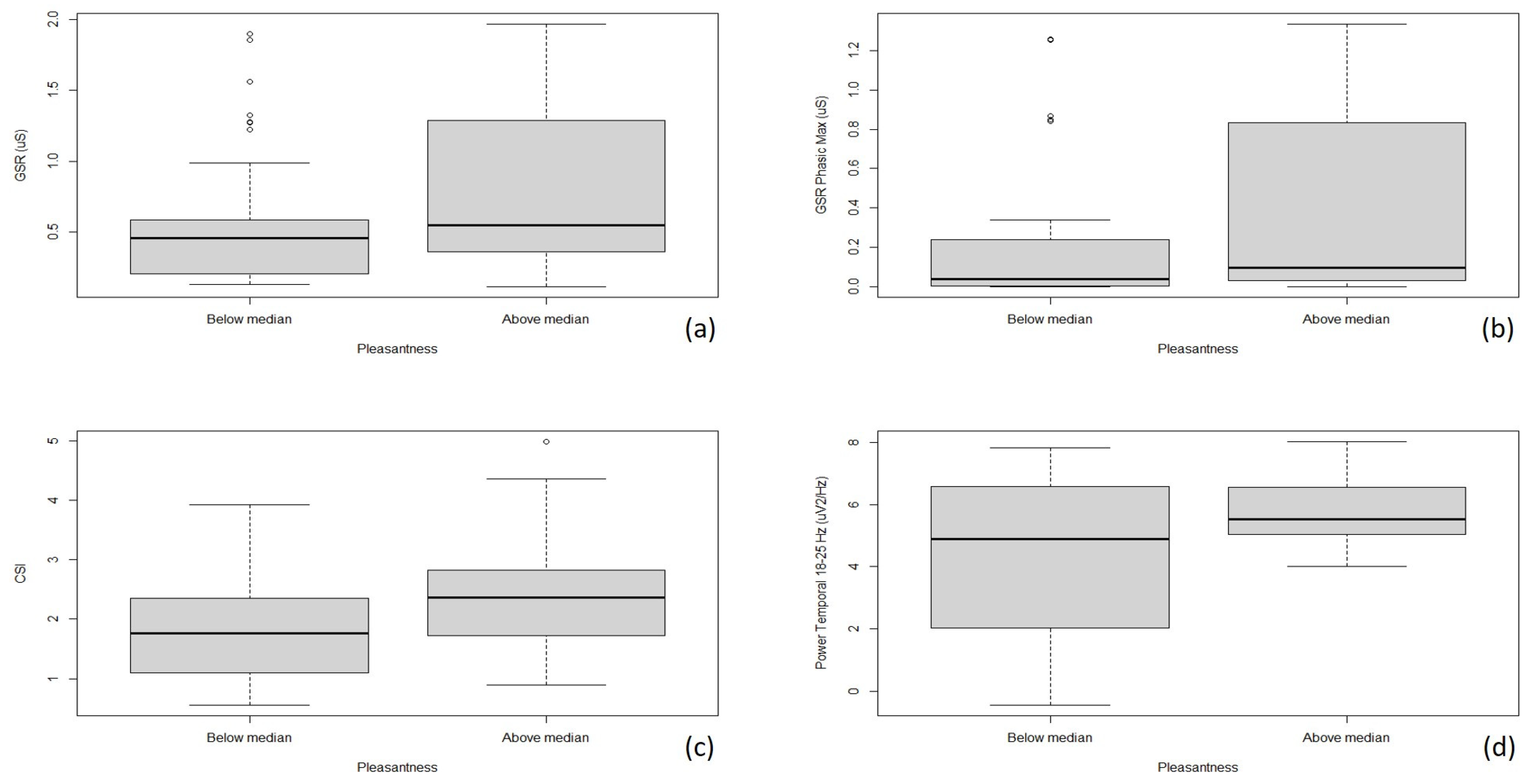
Spices and aromatic herbs are important components of everyday nutrition in several countries and cultures, thanks to their capability to enhance the flavor of many dishes and convey significant emotional contributions by themselves. Indeed, spices as well as aromatic herbs are to be considered not only for their important values of antimicrobial agents or flavor enhancers everybody knows, but also, thanks to their olfactory and gustatory spectrum, as drivers to stimulate the consumers’ memories and, in a stronger way, emotions. Considering these unique characteristics, spices and aromatic herbs have caught the attention of consumer scientists and experts in sensory analysis for their evaluation using semi-quantitative approaches, with interesting evidence. In this pilot study as a first step, each studied botanical, belonging to Piperaceae or aromatic herbs, has been subjected to headspace solid phase micro-extraction (HS-SPME) coupled with gas-chromatography mass spectrometry (GC-MS) analysis to assess their spontaneous volatile emission, representing the complex chemical pattern, which encounters the consumers’ olfactory perception. Furthermore, the present investigation, performed on 12 individuals, outlines the administration of a pilot study, merging the typical sensory analysis with emotional data collection and the innovative contribution related to the study around the Autonomic and Central Nervous System activation in consumers, performed using wearable technologies and related signal processing. The results obtained by our study, beyond demonstrating the feasibility of the approach, confirmed, both in terms of emotional responses and biomedical signals, the significant emotional potential of spices and aromatic herbs, most of which featuring an overall positive valence, yet with inter-subjects’ variations. Future investigations should aim to increase the number of volunteers evaluated with such an approach to draw more stable conclusions and attempting a customization of product preferences based on both implicit and explicit sensory responses.
Keywords: autonomic nervous system; aromatic herbs; EEG; electrocardiogram; emotions; GC-MS; sensory analysis; spices; VOCs; wearable sensors autonomic nervous system; aromatic herbs; EEG; electrocardiogram; emotions; GC-MS; sensory analysis; spices; VOCs; wearable sensors