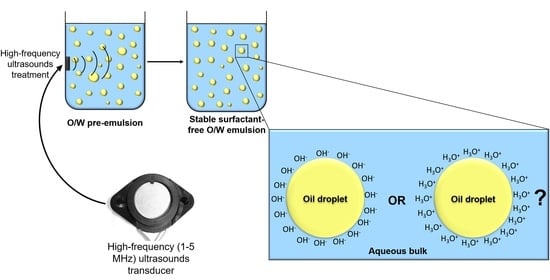
Review of High-Frequency Ultrasounds Emulsification Methods and Oil/Water Interfacial Organization in Absence of any Kind of Stabilizer


Abstract
Share and Cite
Perrin, L.; Desobry-Banon, S.; Gillet, G.; Desobry, S. Review of High-Frequency Ultrasounds Emulsification Methods and Oil/Water Interfacial Organization in Absence of any Kind of Stabilizer. Foods 2022, 11, 2194. https://doi.org/10.3390/foods11152194
Perrin L, Desobry-Banon S, Gillet G, Desobry S. Review of High-Frequency Ultrasounds Emulsification Methods and Oil/Water Interfacial Organization in Absence of any Kind of Stabilizer. Foods. 2022; 11(15):2194. https://doi.org/10.3390/foods11152194
Chicago/Turabian StylePerrin, Louise, Sylvie Desobry-Banon, Guillaume Gillet, and Stephane Desobry. 2022. "Review of High-Frequency Ultrasounds Emulsification Methods and Oil/Water Interfacial Organization in Absence of any Kind of Stabilizer" Foods 11, no. 15: 2194. https://doi.org/10.3390/foods11152194
APA StylePerrin, L., Desobry-Banon, S., Gillet, G., & Desobry, S. (2022). Review of High-Frequency Ultrasounds Emulsification Methods and Oil/Water Interfacial Organization in Absence of any Kind of Stabilizer. Foods, 11(15), 2194. https://doi.org/10.3390/foods11152194