
The Attention Mismatch: Mapping the Structural Academic Governance Deficit in the Age of Generative AI

Abstract
1. Introduction
2. Materials and Methods
2.1. Detection of the Severity of AI-Related Academic Misconduct
2.2. Detection of AIGC Penetration
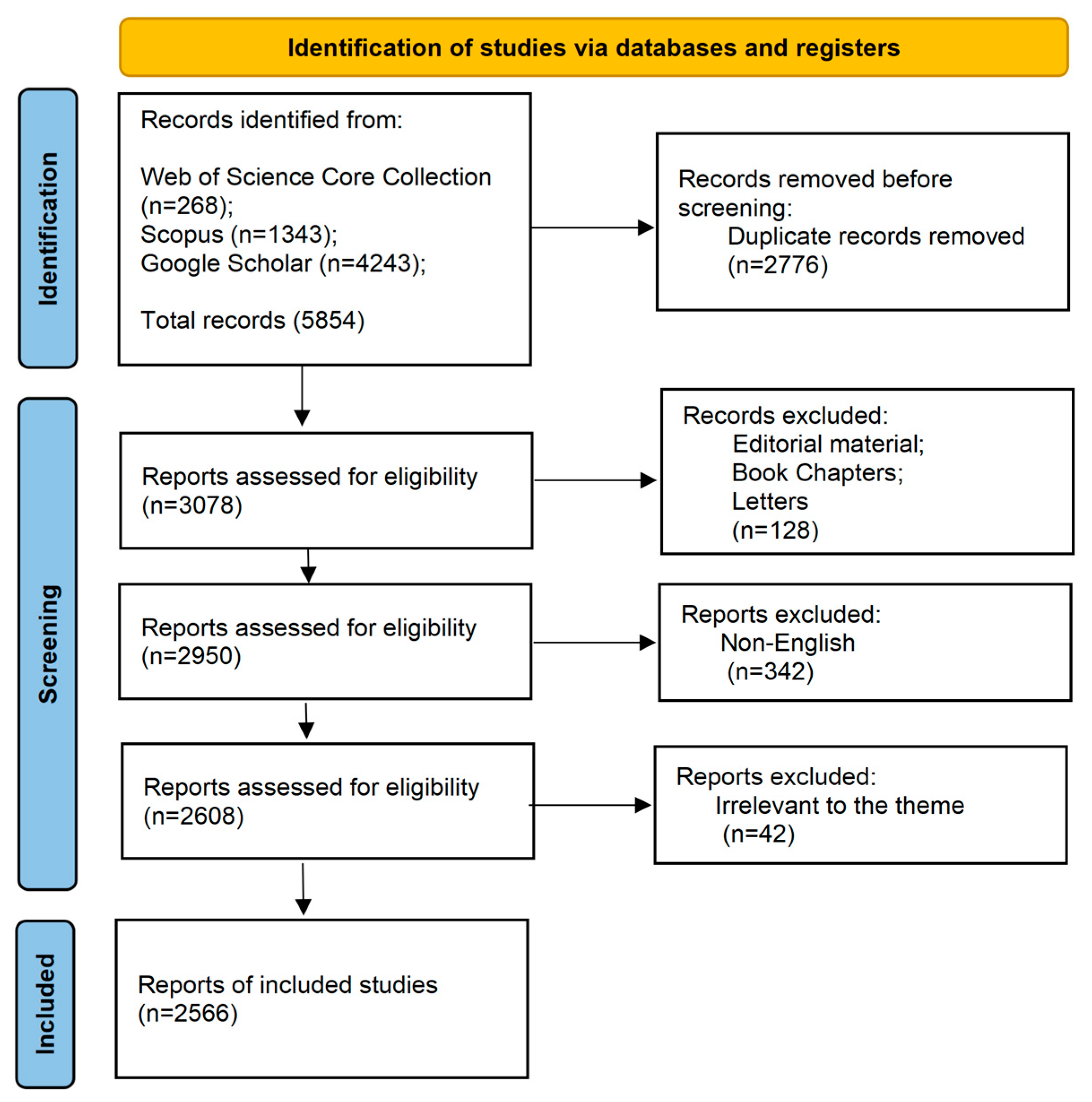
2.3. Bibliometric Analysis of AI-Related Academic Misconduct Governance
2.4. Subject-Level Normalized Coverage Analysis
3. Results
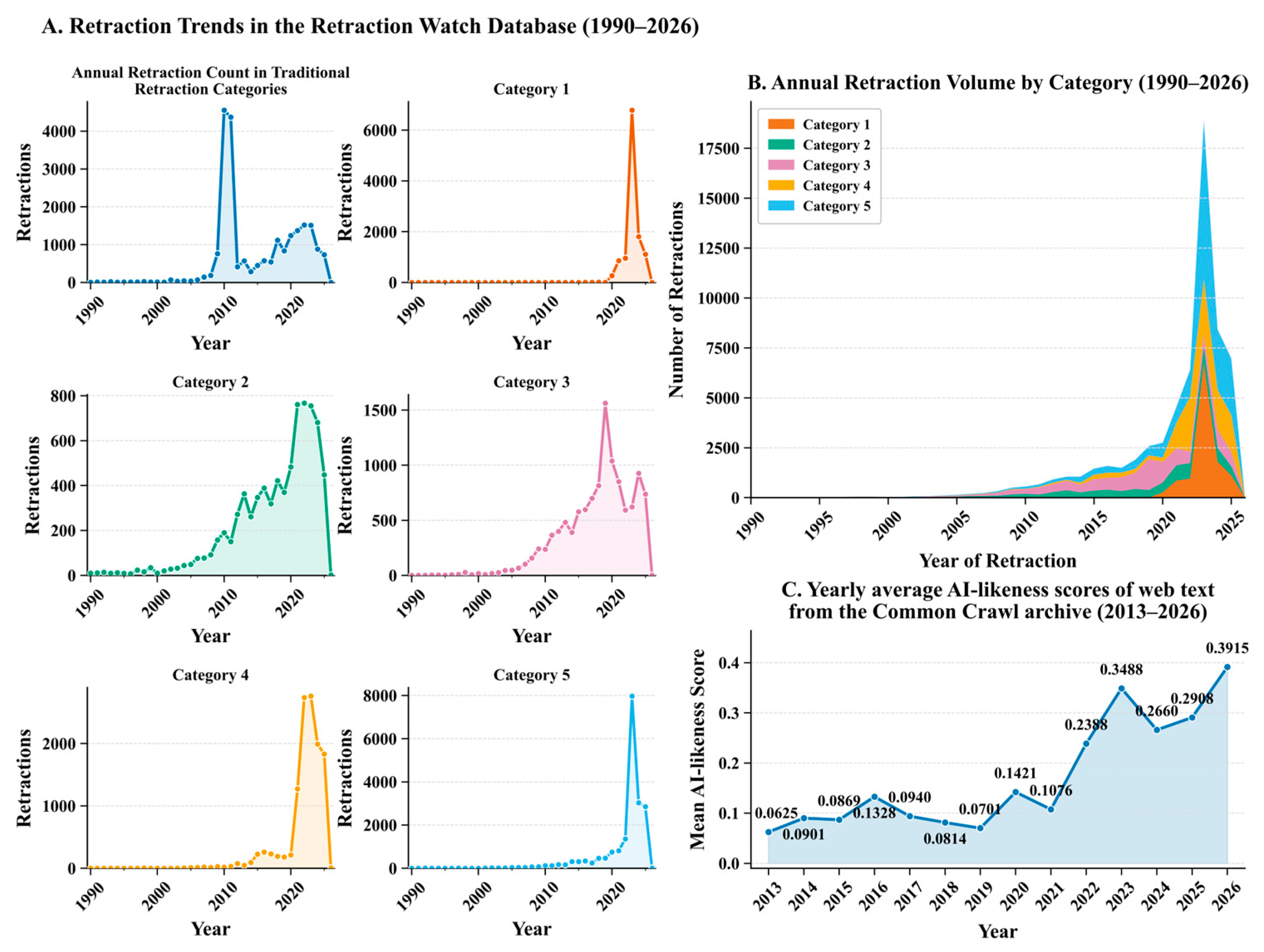
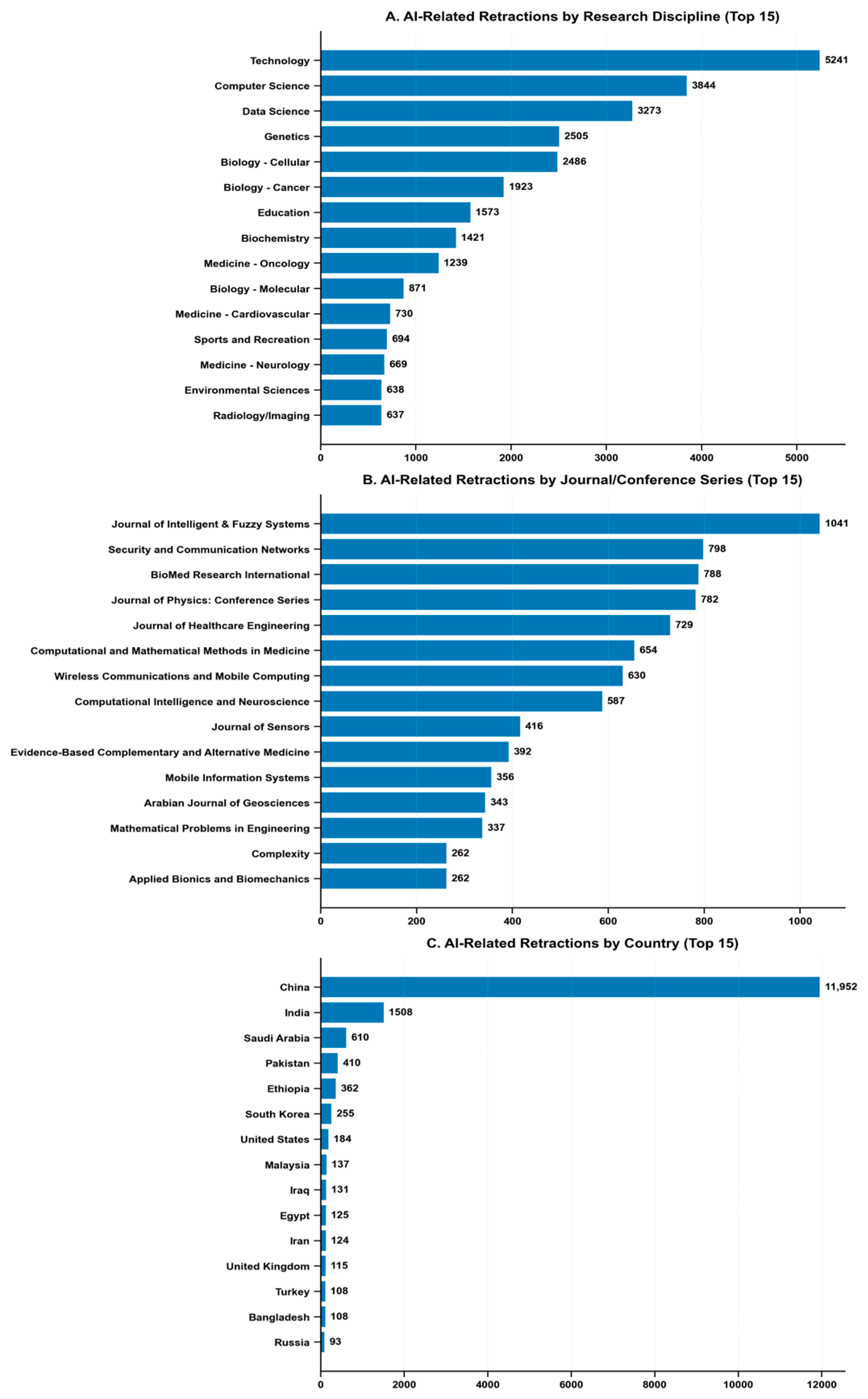
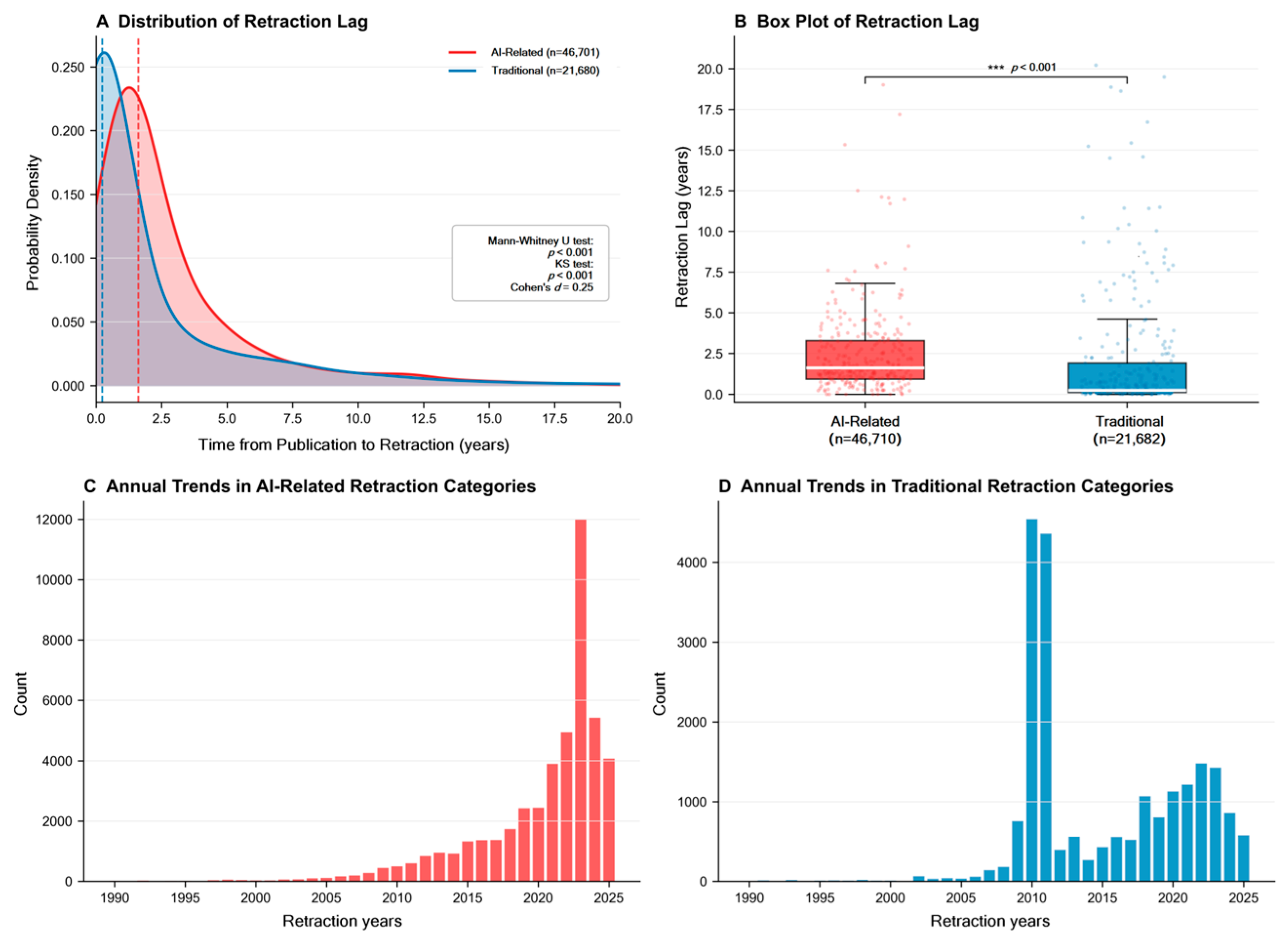
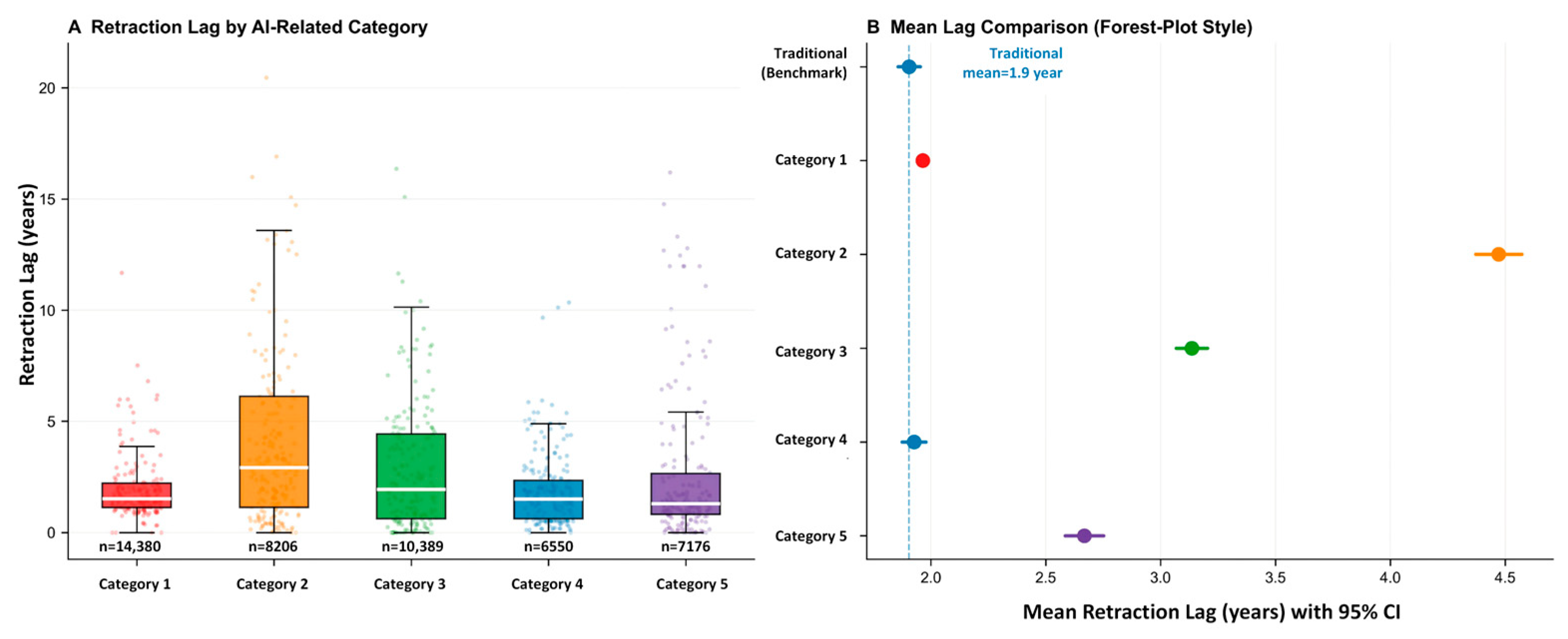
3.1. The Degree of AIGC Penetration and the Severity of AI-Related Academic Misconduct
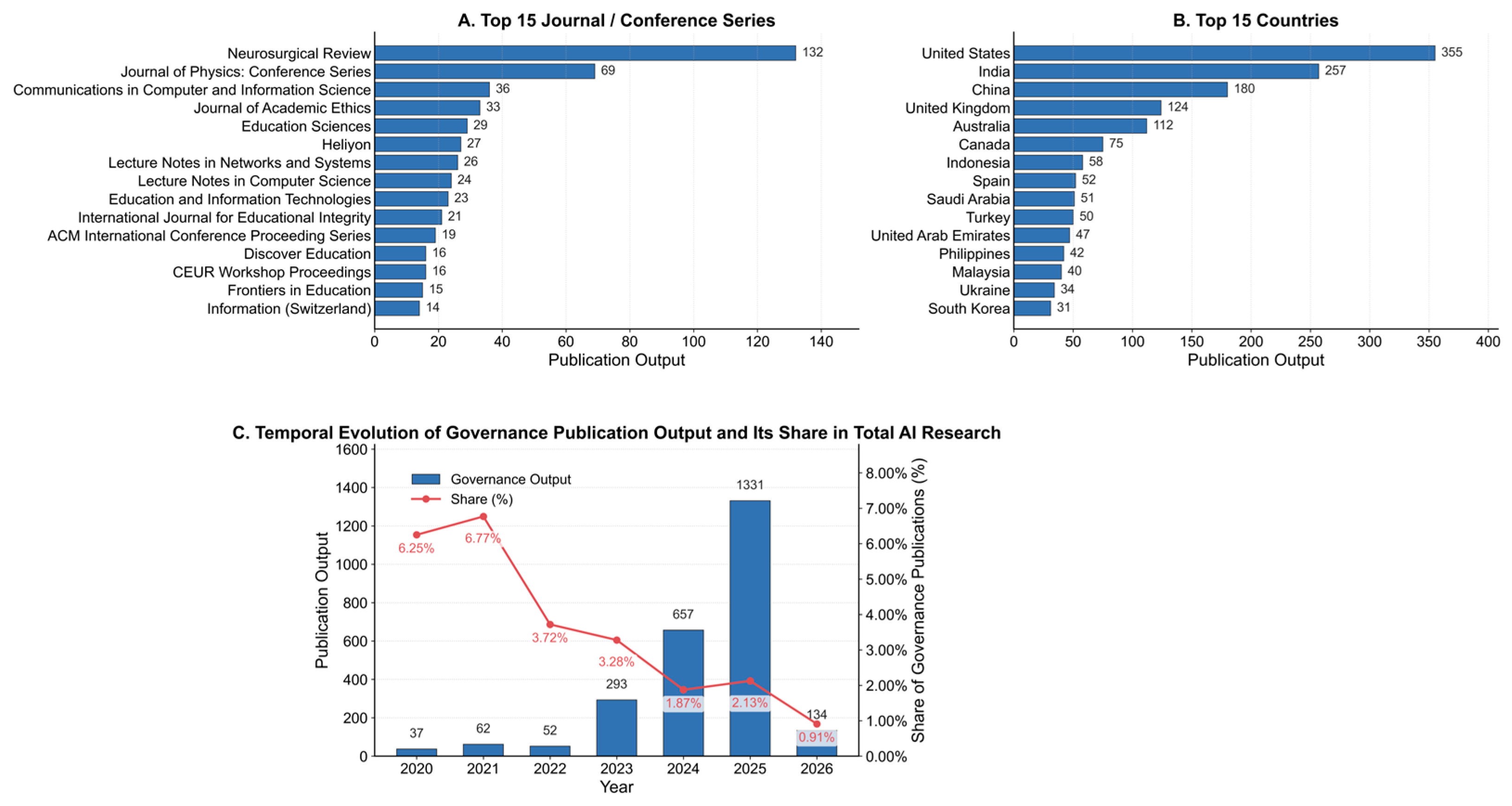
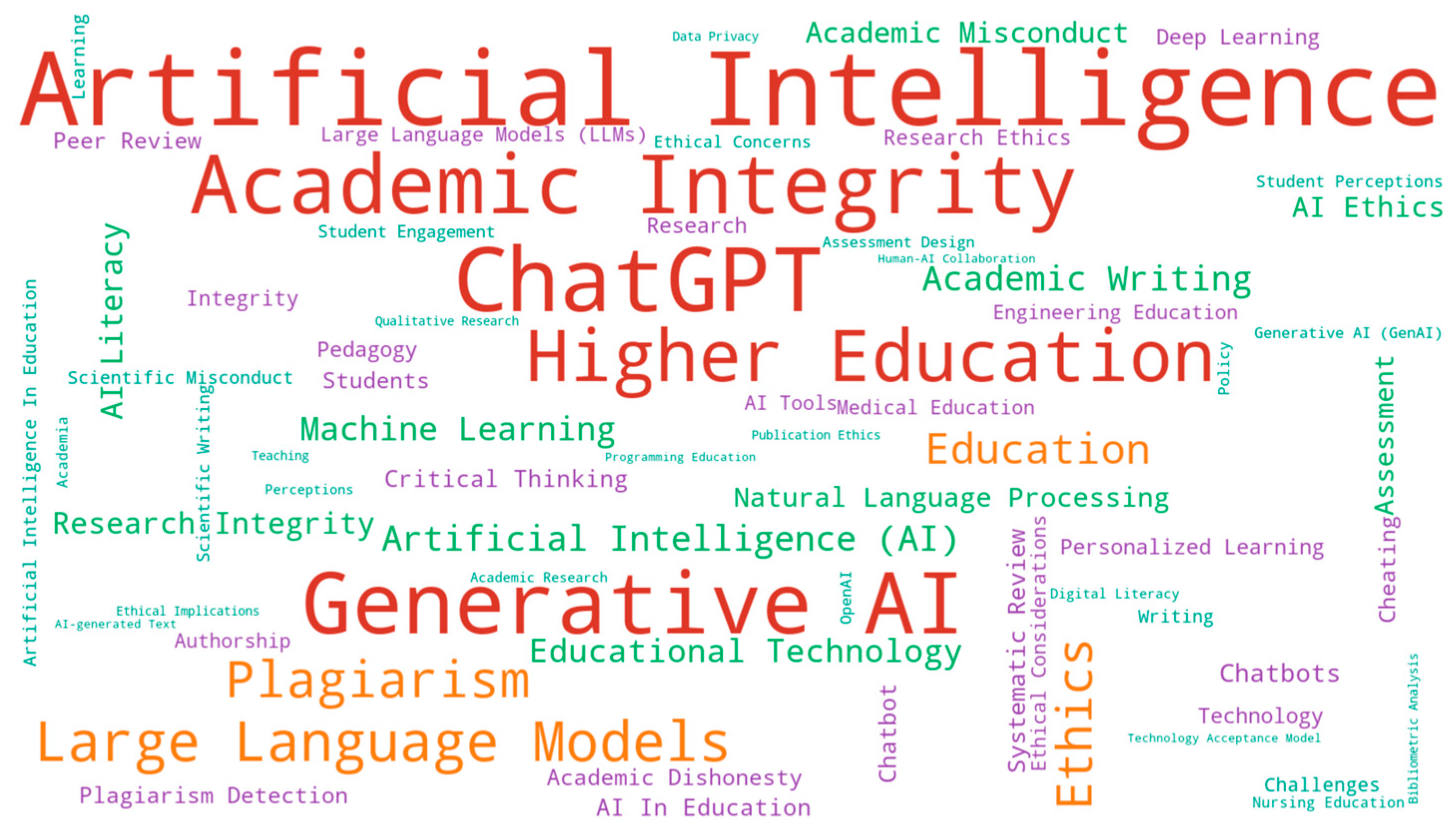
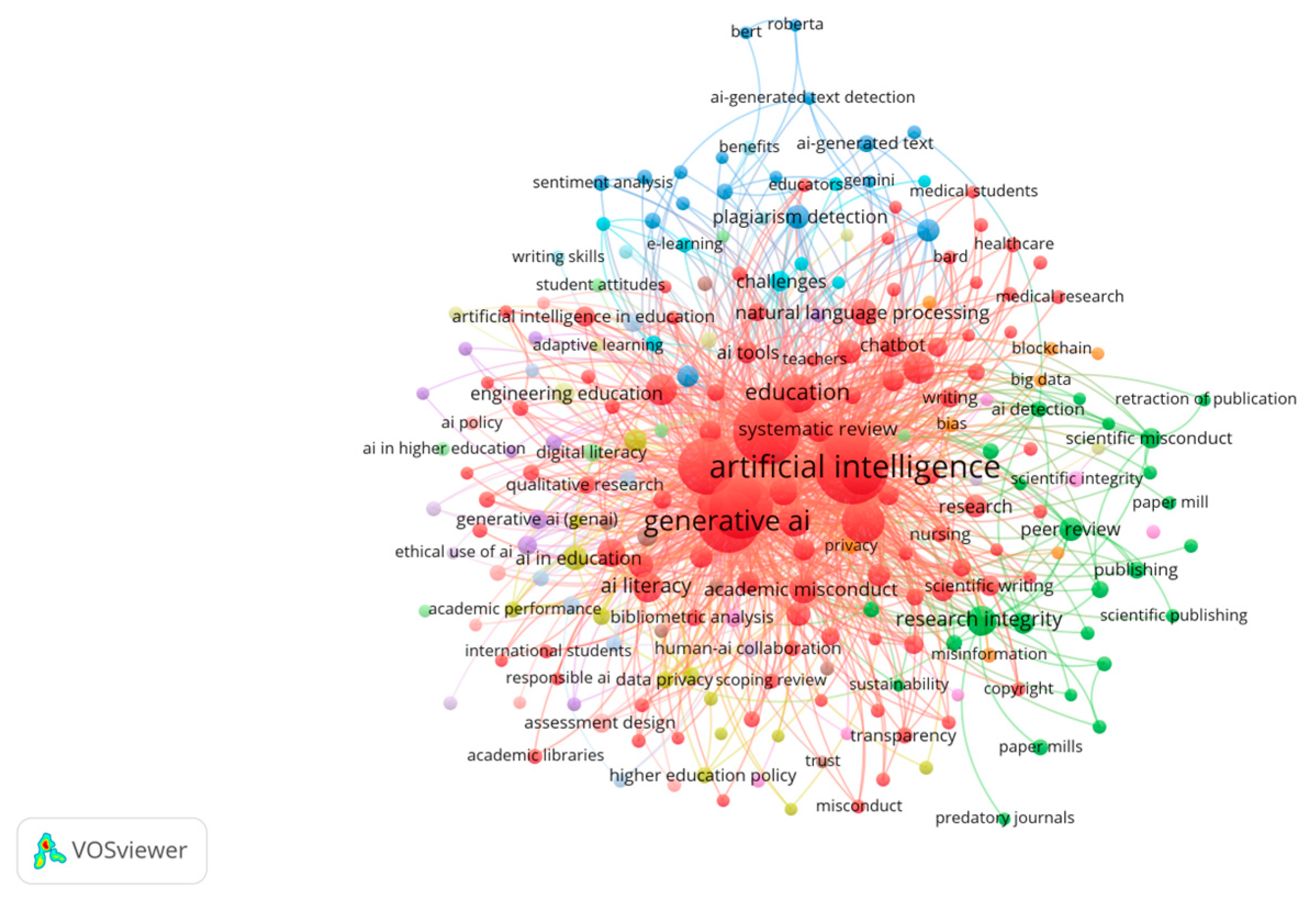
3.2. Analysis of the Current State of Governance of AI-Related Academic Misconduct
4. Discussion
4.1. AI-Related Academic Misconduct and Governance Misalignment
4.2. Research Implications and Future Directions
4.3. Limitations
5. Conclusions
Supplementary Materials
Author Contributions
Funding
Data Availability Statement
Conflicts of Interest
Abbreviations
| AI | Artificial Intelligence |
| GenAI | Generative Artificial Intelligence |
| AIGC | AI-Generated Content |
| LLM | Large Language Model |
| LLMs | Large Language Models |
| NCI | Normalized Coverage Index |
| WoS | Web of Science |
| WoSCC | Web of Science Core Collection |
| COPE | Committee on Publication Ethics |
| PRISMA | Preferred Reporting Items for Systematic Reviews and Meta-Analyses |
| KDE | Kernel Density Estimation |
| KS | Kolmogorov–Smirnov |
| COVID-19 | Coronavirus Disease 2019 |
References
- Aburass, S., & Abu Rumman, M. (2024). Authenticity in authorship: The writer’s integrity framework for verifying human-generated text. Ethics and Information Technology, 26(3), 62. [Google Scholar] [CrossRef]
- Alnaimat, F., AlSamhori, A. R. F., Hamdan, O., Seiil, B., & Qumar, A. B. (2025). Perspectives of artificial intelligence use for in-house ethics checks of journal submissions. Journal of Korean Medical Science, 40, e170. [Google Scholar] [CrossRef]
- Benítez, T. M., Xu, Y., Boudreau, J. D., Kow, A. W. C., Bello, F., Van Phuoc, L., Wang, X., Sun, X., Leung, G. K., Lan, Y., Wang, Y., Cheng, D., Tham, Y. C., Wong, T. Y., & Chung, K. C. (2024). Harnessing the potential of large language models in medical education: Promise and pitfalls. Journal of the American Medical Informatics Association, 31, 776–783. [Google Scholar] [CrossRef]
- Bisenbaev, A. K. (2026). Scientific artificial intelligence: From a procedural toolkit to cognitive coauthorship. Philosophies, 11, 12. [Google Scholar] [CrossRef]
- Emanuele, E. (2025). Duplicate submission, zero consequences: A reviewer’s first-person case study. Cureus, 17(12), e99518. [Google Scholar] [CrossRef]
- Ganjavi, C., Eppler, M. B., Pekcan, A., Biedermann, B., Abreu, A., Collins, G. S., Gill, I. S., & Cacciamani, G. E. (2024). Publishers’ and journals’ instructions to authors on use of generative artificial intelligence in academic and scientific publishing: Bibliometric analysis. BMJ, 384, e077192. [Google Scholar] [CrossRef]
- Hanley, H. W. A., & Durumeric, Z. (2024). Machine-made media: Monitoring the mobilization of machine-generated articles on misinformation and mainstream news websites. Proceedings of the International AAAI Conference on Web and Social Media, 18(1), 542–556. [Google Scholar] [CrossRef]
- Hatos, A. (2025). Between innovation and ethical challenges: The impact of artificial intelligence in social science research. Sociologie Romaneasca, 23, 121–139. [Google Scholar] [CrossRef]
- Jazbec, M., Pàsztor, B., Faltings, F., Antulov-Fantulin, N., & Kolm, P. N. (2021). On the impact of publicly available news and information transfer to financial markets. Royal Society Open Science, 8(7), 202321. [Google Scholar] [CrossRef]
- Jiang, Y., Xie, L., Lin, G., & Mo, F. (2024). Widen the debate: What is the academic community’s perception on ChatGPT? Education and Information Technologies, 29, 20181–20200. [Google Scholar] [CrossRef]
- Kanmodi, K. K., Nwafor, J. N., Salami, A. A., Egbedina, E. A., Nnyanzi, L. A., Ojo, T. O., Duckworth, R. M., & Zohoori, F. V. (2022). A Scopus-based bibliometric analysis of global research contributions on milk fluoridation. International Journal of Environmental Research and Public Health, 19, 8233. [Google Scholar] [CrossRef]
- Kay, J., Kasirzadeh, A., & Mohamed, S. (2024). Epistemic injustice in generative AI. Proceedings of the AAAI/ACM Conference on AI, Ethics, and Society, 7, 684–697. [Google Scholar] [CrossRef]
- Kendall, G. (2024). When using artificial intelligence tools in scientific publications authors should include the prompts and the generated text as part of the submission. Journal of Academic Ethics, 23, 639–647. [Google Scholar] [CrossRef]
- Kocak, Z. (2024). Publication ethics in the era of artificial intelligence. Journal of Korean Medical Science, 39, e249. [Google Scholar] [CrossRef]
- Kwee, R. M., & Kwee, T. C. (2023). Retracted publications in medical imaging literature: An analysis using the Retraction Watch database. Academic Radiology, 30, 1148–1152. [Google Scholar] [CrossRef] [PubMed]
- Lei, F., Du, L., Dong, M., & Liu, X. (2024). Global retractions due to randomly generated content: Characterization and trends. Scientometrics, 129, 7943–7958. [Google Scholar] [CrossRef]
- Lin, A., Chen, Z., Jiang, A., Tang, B., Qi, C., Zhu, L., Mou, W., Gan, W., Zeng, D., Xiao, M., Chu, G., Peng, S., Wong, H. Z. H., Zhang, L., Zhang, H., Deng, X., Cheng, Q., Zhang, J., & Luo, P. (2026). Navigating academic integrity in biomedical research: The impact of large language models on current practices and future directions. International Journal of Surgery (London, England), 112(2), 4418–4433. [Google Scholar] [CrossRef]
- Mezzadri, D. (2025). The paradox of ethical AI-assisted research. Journal of Academic Ethics, 23, 2653–2667. [Google Scholar] [CrossRef]
- Mortlock, R., & Lucas, C. (2024). Generative artificial intelligence (Gen-AI) in pharmacy education: Utilization and implications for academic integrity: A scoping review. Exploratory Research in Clinical and Social Pharmacy, 15, 100481. [Google Scholar] [CrossRef]
- Nag, S. N., Roy, A., & Sudhier, K. (2025). Global perspectives on retracted papers in artificial intelligence and machine learning: A bibliometric study. Global Knowledge, Memory and Communication. Advanced online publication. [Google Scholar] [CrossRef]
- Nature Machine Intelligence. (2024). Pick your AI poison. Nature Machine Intelligence, 6, 1119. [Google Scholar] [CrossRef]
- Ong, J. C. L., Chang, S. Y., William, W., Butte, A. J., Shah, N. H., Chew, L. S. T., Liu, N., Doshi-Velez, F., Lu, W., Savulescu, J., & Ting, D. S. W. (2024). Ethical and regulatory challenges of large language models in medicine. The Lancet Digital Health, 6, e428–e432. [Google Scholar] [CrossRef]
- Pattnaik, M. (2023). Healthcare management and COVID-19: Data-driven bibliometric analytics. OPSEARCH, 60(1), 234–255. [Google Scholar] [CrossRef] [PubMed Central]
- Pellegrina, D., & Helmy, M. (2025). AI for scientific integrity: Detecting ethical breaches, errors, and misconduct in manuscripts. Frontiers in Artificial Intelligence, 8, 1644098. [Google Scholar] [CrossRef]
- Perkins, M., Roe, J., Postma, D., McGaughran, J., & Hickerson, D. (2023). Detection of GPT-4 generated text in higher education: Combining academic judgement and software to identify generative AI tool misuse. Journal of Academic Ethics, 22, 89–113. [Google Scholar] [CrossRef]
- Prifti, K., & Fosch-Villaronga, E. (2024). Towards experimental standardization for AI governance in the EU. Computer Law & Security Review, 52, 105959. [Google Scholar] [CrossRef]
- Pudasaini, S., Miralles-Pechuán, L., Lillis, D., & Llorens Salvador, M. (2024). Survey on AI-generated plagiarism detection: The impact of large language models on academic integrity. Journal of Academic Ethics, 23, 1137–1170. [Google Scholar] [CrossRef]
- Rhodes, C., & Linnenluecke, M. K. (2025). The junkification of research. Organization. Advanced online publication. [Google Scholar] [CrossRef]
- Shumailov, I., Shumaylov, Z., Zhao, Y., Papernot, N., Anderson, R., & Gal, Y. (2024). AI models collapse when trained on recursively generated data. Nature, 631, 755–759. [Google Scholar] [CrossRef]
- Sridharan, K., & Sivaramakrishnan, G. (2026). Artificial intelligence in the retraction spotlight: Trends, causes and consequences of withdrawn AI literature through a systematic bibliometric review. Frontiers in Research Metrics and Analytics, 10, 1737168. [Google Scholar] [CrossRef] [PubMed]
- Villatte, G., Marcheix, P., Antoni, M., Devos, P., Descamps, S., Boisgard, S., & Erivan, R. (2020). Do bibliometric findings differ between Medline, Google Scholar and Web of Science? Bibliometry of publications after oral presentation to the 2013 and 2014 French Society of Arthroscopy (SFA) congresses. Orthopaedics & Traumatology: Surgery & Research, 106, 1469–1473. [Google Scholar] [CrossRef]
- Wu, F., Gao, J., Kang, J., Wang, X., Niu, Q., Liu, J., & Zhang, L. (2022). Knowledge mapping of exosomes in autoimmune diseases: A bibliometric analysis (2002–2021). Frontiers in Immunology, 13, 939433. [Google Scholar] [CrossRef] [PubMed]
- Wu, Y., Lu, X., & Lin, C. (2025). AI, originality, and attribution: Researchers’ perspectives on distinguishing contributions. Accountability in Research, 33(3), 2536817. [Google Scholar] [CrossRef] [PubMed]
- Xu, S., Xu, D., Wen, L., Zhu, C., Yang, Y., Han, S., & Guan, P. (2020). Integrating unified medical language system and Kleinberg’s burst detection algorithm into research topics of medications for post-traumatic stress disorder. Drug Design, Development and Therapy, 14, 3899–3913. [Google Scholar] [CrossRef] [PubMed]
- Yao, M., Wei, Y., & Liu, H. (2025). AI practices and ethical concerns: An analysis of undeclared uses of AI in published research articles. Ethics & Behavior. Advanced online publication. [Google Scholar] [CrossRef]
- Zhang, G., Xu, Z., Jin, Q., Chen, F., Fang, Y., Liu, Y., Rousseau, J. F., Xu, Z., Lu, Z., Weng, C., & Peng, Y. (2025). Leveraging long context in retrieval augmented language models for medical question answering. NPJ Digital Medicine, 8, 239. [Google Scholar] [CrossRef] [PubMed]


Disclaimer/Publisher’s Note: The statements, opinions and data contained in all publications are solely those of the individual author(s) and contributor(s) and not of MDPI and/or the editor(s). MDPI and/or the editor(s) disclaim responsibility for any injury to people or property resulting from any ideas, methods, instructions or products referred to in the content. |
© 2026 by the authors. Licensee MDPI, Basel, Switzerland. This article is an open access article distributed under the terms and conditions of the Creative Commons Attribution (CC BY) license.
Share and Cite
Guo, Z.; Mao, H.; Zhang, F. The Attention Mismatch: Mapping the Structural Academic Governance Deficit in the Age of Generative AI. Publications 2026, 14, 27. https://doi.org/10.3390/publications14020027
Guo Z, Mao H, Zhang F. The Attention Mismatch: Mapping the Structural Academic Governance Deficit in the Age of Generative AI. Publications. 2026; 14(2):27. https://doi.org/10.3390/publications14020027
Chicago/Turabian StyleGuo, Zhenning, Haoran Mao, and Fang Zhang. 2026. "The Attention Mismatch: Mapping the Structural Academic Governance Deficit in the Age of Generative AI" Publications 14, no. 2: 27. https://doi.org/10.3390/publications14020027
APA StyleGuo, Z., Mao, H., & Zhang, F. (2026). The Attention Mismatch: Mapping the Structural Academic Governance Deficit in the Age of Generative AI. Publications, 14(2), 27. https://doi.org/10.3390/publications14020027