
Simulated Body Fluids for Dental Implant Corrosion: A Practical Guide


Abstract
1. Introduction
2. Review Methodology
- (i)
- investigated corrosion, ion release, passive-film stability, tribocorrosion, or microbiologically influenced corrosion of dental implant materials or related biomedical alloys;
- (ii)
- used artificial saliva, physiological simulated fluids, cell culture media, or challenge electrolytes relevant to oral or peri-implant environments;
- (iii)
- reported electrolyte composition, pH, additives, or testing conditions sufficiently to support mechanistic interpretation; or
- (iv)
- provided standard formulations or methodological guidance relevant to corrosion testing.
3. Electrolyte Selection for Oral and Physiological Simulations
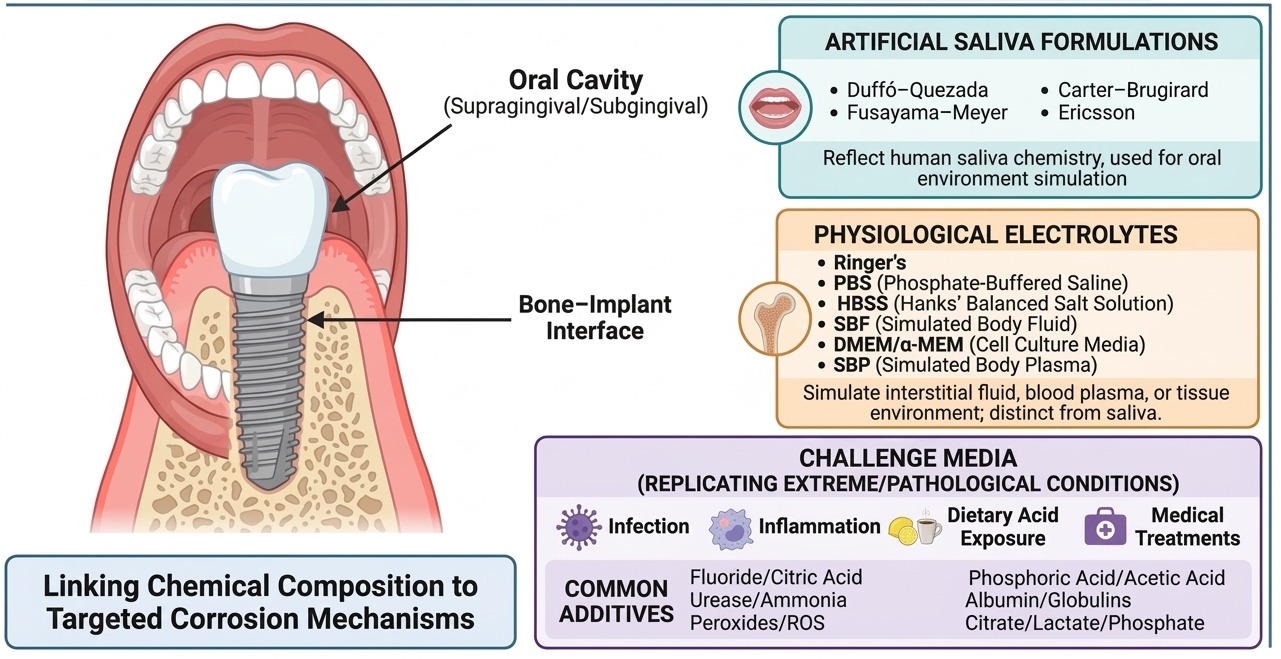
4. Oral Simulation: Artificial Saliva Solutions

| Reagents | Duffó–Quezada Artificial Saliva | Fusayama–Meyer Artificial Saliva | Carter–Brugirard Artificial Saliva | Ericsson’s Artificial Saliva |
|---|---|---|---|---|
| NaCl | 0.600 | 0.400 | 0.700 | 0.584 |
| KCl | 0.720 | 0.400 | 1.200 | - |
| CaCl2·2H2O | 0.220 | 0.906 | - | - |
| CaCl2 | - | - | - | 0.166 |
| MgCl2 | - | - | - | 0.014 |
| KH2PO4 | 0.680 | - | 0.260 | 0.340 |
| Na2HPO4·12H2O | 0.856 | - | - | - |
| Na2HPO4·H2O | - | - | 0.190 | - |
| Na2HPO4 | - | - | - | 0.340 |
| NaH2PO4·2H2O | - | 0.690 | - | - |
| NaHCO3 | - | - | 1.500 | - |
| KHCO3 | 1.500 | - | - | 1.500 |
| KSCN | 0.060 | - | 0.330 | - |
| Urea | - | 1.000 | 0.130 | - |
| Na2S·9H2O | - | 0.005 | - | - |
| Citric acid | 0.030 | - | - | 0.029 |
| pH | ~6.5 | ~5–5.8 | ~7.6 | ~6.7 |
- •
- Duffó–Quezada saliva represents a near-neutral composition containing calcium and phosphate together with bicarbonate buffering. This formulation supports mineral equilibria and enables calcium–phosphate deposition at the interface, making it particularly suitable for bioactivity assessment, surface conditioning studies, and investigations of interfacial mineral formation relevant to implant integration [36,42].
- •
- •
- Carter–Brugirard saliva is mildly alkaline (approximately pH 7.6) and deliberately excludes calcium to prevent precipitation and maintain high buffering stability. Its chemical simplicity and reproducibility make it particularly suitable for controlled electrochemical investigations focused on passive-film integrity and breakdown behavior [46].
- •
- Ericsson’s formulation is a simplified inorganic buffer containing calcium and phosphate, commonly used in enamel-focused studies and when isolating ionic and pH effects without interference from organic components [47].
5. Electrolytes Mimicking Physiological Fluids
| Reagents | Ringer’s | PBS 1× (No Ca/Mg) | PBS 1× (+Ca/Mg) | HBSS 1× (with Ca/Mg) | SBF (Kokubo 1×, TRIS) | r-SBF (27 mM HCO3−) | DMEM 1× (High Glucose) | α-MEM 1× | SBP |
|---|---|---|---|---|---|---|---|---|---|
| NaCl | 8.6 | 8.0 | 8.0 | 8.0 | 8.035 | 6.547 | 6.4 | 6.8 | 6.8 |
| KCl | 0.3 | 0.2 | 0.2 | 0.4 | 0.225 | 0.373 | 0.4 | 0.4 | 0.4 |
| NaHCO3 | - | - | - | 0.35 | 0.355 | 2.268 | 3.7 | 2.2 | 2.2 |
| Na2SO4 | - | - | - | - | 0.072 | 0.071 | - | - | - |
| Na2HPO4 (anhydrous) | - | 1.44 | 1.44 | 0.048 | - | - | - | - | 0.126 |
| Na2HPO4·2H2O | - | - | - | - | - | 0.178 | - | - | - |
| NaH2PO4 (anhydrous) | - | - | - | - | - | - | - | - | 0.026 |
| NaH2PO4·H2O | - | - | - | - | - | - | 0.125 | 0.14 | - |
| KH2PO4 | - | 0.24 | 0.24 | 0.06 | - | - | - | - | - |
| K2HPO4·3H2O | - | - | - | - | 0.231 | - | - | - | - |
| CaCl2 (anhydrous) | - | - | 0.132 | - | 0.292 | - | 0.2 | - | 0.2 |
| CaCl2·2H2O | 0.33 | - | - | 0.185 | - | 0.368 | - | 0.265 | - |
| MgCl2 (anhydrous) | - | - | - | 0.1 | - | - | - | - | - |
| MgCl2·6H2O | - | - | 0.102 | - | 0.311 | 0.305 | - | - | - |
| MgSO4 (anhydrous) | - | - | - | 0.098 | - | - | 0.098 | 0.098 | 0.1 |
| D-Glucose | - | - | - | 1.0 | - | - | 4.5 | 1.0 | - |
| TRIS | - | - | - | - | 6.118 | 6.057 | - | - | - |
| HEPES | - | - | - | 2.38 | - | - | - | - | - |
| Phenol red | - | - | - | - | - | - | 0.015 | - | - |
| pH | 7.3–7.4 | 7.3–7.4 | 7.3–7.4 | ~7.4 | 7.4 | 7.4 | ~7.4 | ~7.4 | 7.36 |
| pH adjustment | - | Titrate with HCl/NaOH to pH 7.4 at 37 °C | Titrate with HCl/NaOH to pH 7.4 at 37 °C | Bicarbonate/CO2 buffering; equilibrate under 5% CO2 | TRIS/HCl system; add ~39 mL/L of 1 M HCl at 36.5–37 °C to pH 7.40 | TRIS/HCl system; add ~15 mL/L of 1 M HCl at 36.5–37 °C to pH 7.40 | Bicarbonate/CO2 buffering; equilibrate under 10% CO2 | Bicarbonate/CO2 buffering | Bicarbonate/CO2 buffering; equilibrate as needed |
| CO2 requirement | - | - | - | 5% CO2 | - | Optional (closed system or 5% CO2 to stabilize HCO3−) | 10% CO2 | 5–10% CO2 | 5% CO2 |
6. Challenge Media: Acidity, Alkalinity, Oxidants, and Additives
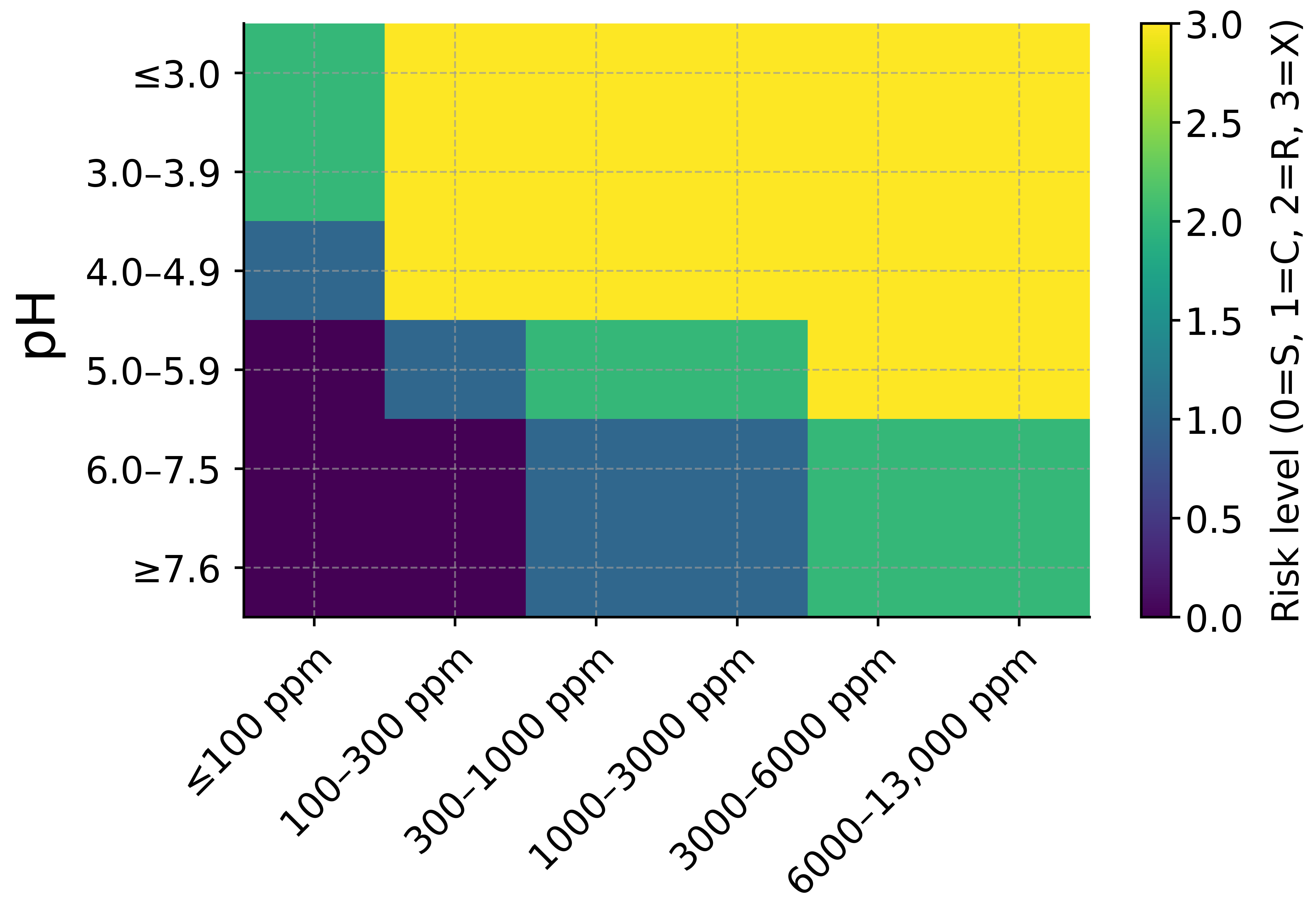
6.1. Dietary and Clinical Acids
6.2. Metabolic Disorders and Drug Effects
6.3. Alkaline Challenges: Urease and Ammonia
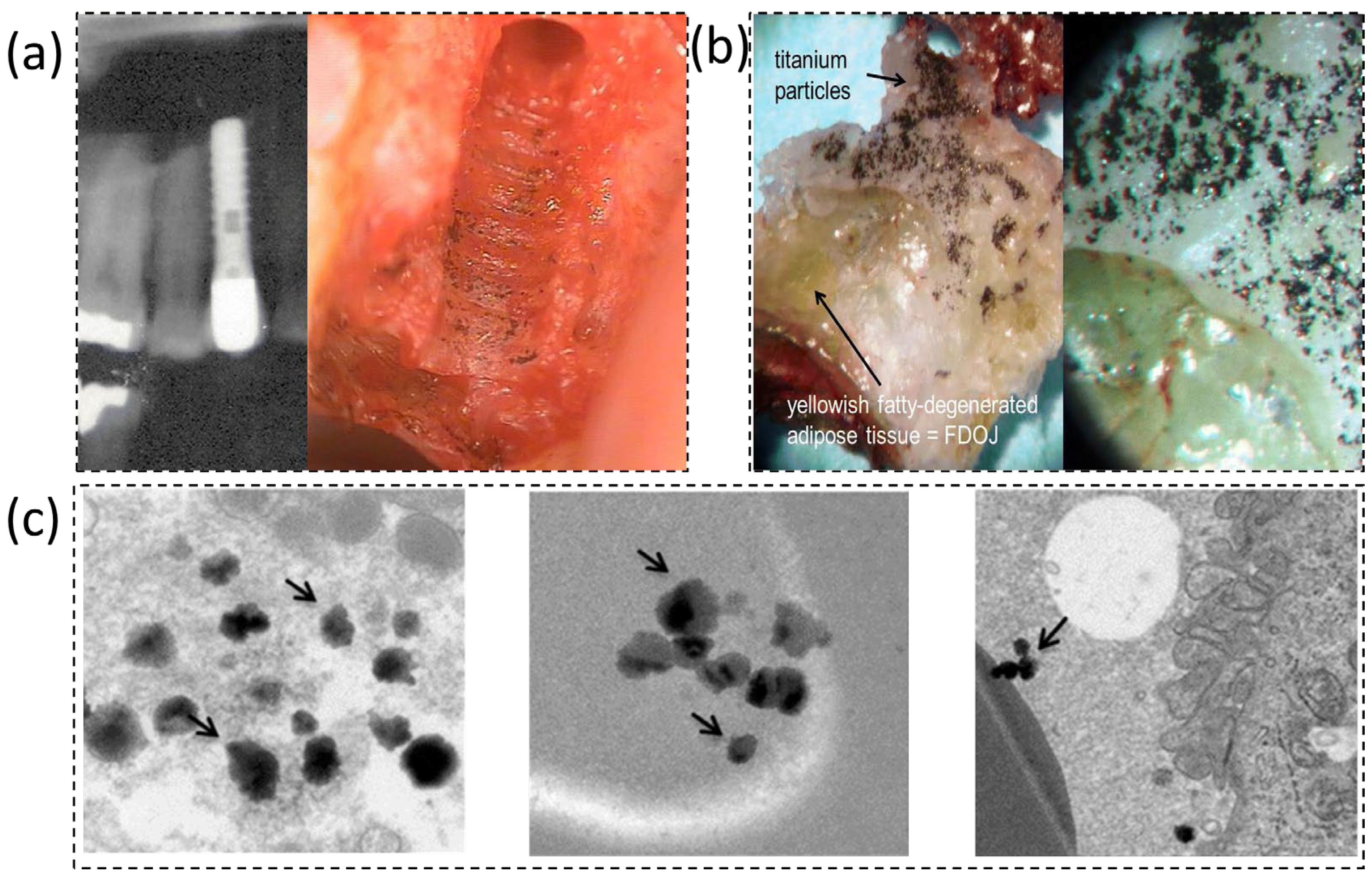
6.4. Peroxides and Reactive Oxygen Species (ROS)
6.5. Serum Proteins
6.6. Organic Complexing Agents
7. Standards, Comparability, and Reproducibility
8. Limitations of Simulated Fluids and Clinical Translation
9. Conclusions and Future Directions
Funding
Institutional Review Board Statement
Informed Consent Statement
Data Availability Statement
Acknowledgments
Conflicts of Interest
References
- Pandey, C.; Rokaya, D.; Bhattarai, B.P. Contemporary concepts in osseointegration of dental implants: A review. Biomed. Res. Int. 2022, 2022, 6170452. [Google Scholar] [CrossRef]
- Rushinek, H.; Cohen, A.; Casap, N.; Alterman, M. The effect of implant-associated factors on the long-term outcomes of dental implants. Oral. Maxillofac. Surg. Clin. 2025, 37, 51–63. [Google Scholar] [CrossRef]
- Kreth, J.; Merritt, J.; Pfeifer, C.S.; Khajotia, S.; Ferracane, J.L. Interaction between the oral microbiome and dental composite biomaterials: Where we are and where we should go. J. Dent. Res. 2020, 99, 1140–1149. [Google Scholar] [CrossRef]
- Kim, J.C.; Lee, M.; Yeo, I.S.L. Three interfaces of the dental implant system and their clinical effects on hard and soft tissues. Mater. Horiz. 2022, 9, 1387–1411. [Google Scholar] [CrossRef]
- Chmielewski, M.; Pilloni, A. Current molecular, cellular and genetic aspects of peri-implantitis disease: A narrative review. Dent. J. 2023, 11, 134. [Google Scholar] [CrossRef]
- Nagay, B.E.; Cordeiro, J.M.; Barao, V.A. Insight into corrosion of dental implants: From biochemical mechanisms to designing corrosion-resistant materials. Curr. Oral. Health Rep. 2022, 9, 7–21. [Google Scholar] [CrossRef]
- Lechner, J.; Noumbissi, S.; von Baehr, V. Titanium implants and silent inflammation in jawbone—A critical interplay of dissolved titanium particles and cytokines TNF-α and RANTES/CCL5 on overall health? EPMA J. 2018, 9, 331–343. [Google Scholar] [CrossRef] [PubMed]
- Bressan, E.; Ferroni, L.; Gardin, C.; Bellin, G.; Sbricoli, L.; Sivolella, S.; Zavan, B. Metal nanoparticles released from dental implant surfaces: Potential contribution to chronic inflammation and peri-implant bone loss. Materials 2019, 12, 2036. [Google Scholar] [CrossRef]
- Bordbar-Khiabani, A.; Gasik, M. Electrochemical behavior of additively manufactured patterned titanium alloys under simulated normal, inflammatory, and severe inflammatory conditions. J. Mater. Res. Technol. 2023, 26, 356–370. [Google Scholar] [CrossRef]
- Bordbar-Khiabani, A.; Gasik, M. Electrochemical and biological characterization of Ti–Nb–Zr–Si alloy for orthopedic applications. Sci. Rep. 2023, 13, 2312. [Google Scholar] [CrossRef] [PubMed]
- Bordbar-Khiabani, A.; Bahrampour, S.; Mozafari, M.; Gasik, M. Surface functionalization of anodized tantalum with Mn3O4 nanoparticles for effective corrosion protection in simulated inflammatory condition. Ceram. Int. 2022, 48, 3148–3156. [Google Scholar] [CrossRef]
- Kim, S.M. Oral galvanism related to dental implants. Maxillofac. Plast. Reconstr. Surg. 2023, 45, 36. [Google Scholar] [CrossRef] [PubMed]
- Thiyaneswaran, N.; Rahul, B.; Devi, S.; Devi, M.S.; Selvaganesh, S. Micro gap at implant abutment connections—A systematic review. J. Pharm. Sci. Res. 2023, 15, 999–1004. [Google Scholar]
- Kheder, W.; Al Kawas, S.; Khalaf, K.; Samsudin, A.R. Impact of tribocorrosion and titanium particles release on dental implant complications—A narrative review. Jpn. Dent. Sci. Rev. 2021, 57, 182–189. [Google Scholar] [CrossRef] [PubMed]
- Vegas-Bustamante, E.; Sanmartí-García, G.; Gil, J.; Delgado-Garoña, L.; Figueiredo, R.; Camps-Font, O.; Toledano-Serrabona, J. Effect of tribocorrosion on mechanical behavior of titanium dental implants: An in vitro study. Materials 2025, 18, 1136. [Google Scholar] [CrossRef]
- Hubenova, E.; Mitov, M.; Hubenova, Y. Microbiologically influenced corrosion can cause a dental implant rejection. Electrochim. Acta 2024, 485, 144087. [Google Scholar] [CrossRef]
- Costa, R.C.; Abdo, V.L.; Mendes, P.H.; Mota-Veloso, I.; Bertolini, M.; Mathew, M.T.; Souza, J.G.S. Microbial corrosion in titanium-based dental implants: How tiny bacteria can create a big problem? J. Bio-Tribo-Corros. 2021, 7, 136. [Google Scholar] [CrossRef]
- De Stefano, M.; Aliberti, S.M.; Ruggiero, A. (Bio) tribocorrosion in dental implants: Principles and techniques of investigation. Appl. Sci. 2022, 12, 7421. [Google Scholar] [CrossRef]
- Bordbar-Khiabani, A.; Ebrahimi, S.; Yarmand, B. In-vitro corrosion and bioactivity behavior of tailored calcium phosphate-containing zinc oxide coating prepared by plasma electrolytic oxidation. Corros. Sci. 2020, 173, 108781. [Google Scholar] [CrossRef]
- Bordbar-Khiabani, A.; Yarmand, B.; Sharifi-Asl, S.; Mozafari, M. Improved corrosion performance of biodegradable magnesium in simulated inflammatory condition via drug-loaded plasma electrolytic oxidation coatings. Mater. Chem. Phys. 2020, 239, 122003. [Google Scholar] [CrossRef]
- Eliaz, N. Corrosion of metallic biomaterials: A review. Materials 2019, 12, 407. [Google Scholar] [CrossRef]
- Alhamad, M.; Barao, V.A.R.; Sukotjo, C.; Yerokhin, A.; Mathew, M.T. Unpredictable electrochemical processes in Ti dental implants: The role of Ti ions and inflammatory products. ACS Appl. Bio Mater. 2023, 6, 3661–3673. [Google Scholar] [CrossRef]
- Jamali, R.; Bordbar-Khiabani, A.; Yarmand, B.; Mozafari, M.; Kolahi, A. Effects of co-incorporated ternary elements on biocorrosion stability, antibacterial efficacy, and cytotoxicity of plasma electrolytic oxidized titanium for implant dentistry. Mater. Chem. Phys. 2022, 276, 125436. [Google Scholar] [CrossRef]
- Mohammed, N.B.; Daily, Z.A.; Alsharbaty, M.H.; Abullais, S.S.; Arora, S.; Lafta, H.A.; Jalil, A.T.; Almulla, A.F.; Ramírez-Coronel, A.A.; Aravindhan, S.; et al. Effect of PMMA sealing treatment on the corrosion behavior of plasma electrolytic oxidized titanium dental implants in fluoride-containing saliva solution. Mater. Res. Express 2022, 9, 125401. [Google Scholar] [CrossRef]
- Chifor, E.; Bordeianu, I.; Anastasescu, C.; Calderon-Moreno, J.M.; Bratan, V.; Eftemie, D.-I.; Anastasescu, M.; Preda, S.; Plavan, G.; Pelinescu, D.; et al. Bioactive coatings based on nanostructured TiO2 modified with noble metal nanoparticles and lysozyme for Ti dental implants. Nanomaterials 2022, 12, 3186. [Google Scholar] [CrossRef]
- Larsen, M.J.; Pearce, E.I.F. Saturation of human saliva with respect to calcium salts. Arch. Oral. Biol. 2003, 48, 317–322. [Google Scholar] [CrossRef] [PubMed]
- Pytko-Polonczyk, J.; Jakubik, A.; Przeklasa-Bierowiec, A.; Muszynska, B. Artificial saliva and its use in biological experiments. J. Physiol. Pharmacol. 2017, 68, 807–813. [Google Scholar]
- Baumann, T.; Kozik, J.; Lussi, A.; Carvalho, T.S. Erosion protection conferred by whole human saliva, dialysed saliva, and artificial saliva. Sci. Rep. 2016, 6, 34760. [Google Scholar] [CrossRef] [PubMed]
- Yilmaz, B.; Pazarceviren, A.E.; Tezcaner, A.; Evis, Z. Historical development of simulated body fluids used in biomedical applications: A review. Microchem. J. 2020, 155, 104713. [Google Scholar] [CrossRef]
- Marco, I.; Feyerabend, F.; Willumeit-Römer, R.; Van der Biest, O. Degradation testing of Mg alloys in Dulbecco’s modified Eagle medium: Influence of medium sterilization. Mater. Sci. Eng. C 2016, 62, 68–78. [Google Scholar] [CrossRef]
- Wagener, V.; Virtanen, S. Influence of electrolyte composition (simulated body fluid vs. Dulbecco’s modified Eagle’s medium), temperature, and solution flow on the biocorrosion behavior of commercially pure Mg. Corrosion 2017, 73, 1413–1422. [Google Scholar] [CrossRef]
- Kokubo, T.; Yamaguchi, S. Simulated body fluid and the novel bioactive materials derived from it. J. Biomed. Mater. Res. Part A 2019, 107, 968–977. [Google Scholar] [CrossRef] [PubMed]
- Prestat, M.; Thierry, D. Corrosion of titanium under simulated inflammation conditions: Clinical context and in vitro investigations. Acta Biomater. 2021, 136, 72–87. [Google Scholar] [CrossRef]
- Gilbert, J.L.; Kubacki, G.W. Oxidative stress, inflammation, and the corrosion of metallic biomaterials: Corrosion causes biology and biology causes corrosion. In Oxidative Stress and Biomaterials; Academic Press: Cambridge, MA, USA, 2016; pp. 59–88. [Google Scholar]
- Preetha, A.; Banerjee, R. Comparison of artificial saliva substitutes. Trends Biomater. Artif. Organs 2005, 18, 178–187. [Google Scholar]
- Duffo, G.S.; Castillo, E.Q. Development of an artificial saliva solution for studying the corrosion behavior of dental alloys. Corrosion 2004, 60, 594–602. [Google Scholar] [CrossRef]
- Buruiana, D.L.; Bogatu, N.L.; Muresan, A.C.; Herbei, E.E.; Trus, C.; Ghisman, V. Evaluating the impact of artificial saliva formulations on stainless steel integrity. Appl. Sci. 2025, 15, 5345. [Google Scholar] [CrossRef]
- De Aguiar, S.R.M.M.; Nicolai, M.; Almeida, M.; Gomes, A. Electrochemical behaviour of a cobalt–chromium–molybdenum dental alloy in artificial salivas: Influence of phosphate ions and mucin components. Biomed. Mater. Eng. 2015, 25, 53–66. [Google Scholar] [CrossRef]
- Souza, J.C.; Apaza-Bedoya, K.; Benfatti, C.A.; Silva, F.S.; Henriques, B. A comprehensive review on the corrosion pathways of titanium dental implants and their biological adverse effects. Metals 2020, 10, 1272. [Google Scholar] [CrossRef]
- Biggio, D.; Fantauzzi, M.; Elsener, B.; Atzei, D.; Rossi, A. The role of organic compounds in artificial saliva for corrosion studies: Evidence from X-ray photoelectron spectroscopy. Surf. Interface Anal. 2023, 55, 450–456. [Google Scholar] [CrossRef]
- Biggio, D.; Elsener, B.; Usai, G.; Fantauzzi, M.; Rossi, A. Surface chemistry of passive films on Ni-free stainless steel: The effect of organic components in artificial saliva. Langmuir 2024, 40, 6824–6833. [Google Scholar] [CrossRef]
- Solá, C.; Amorim, A.; Espías, Á.; Capelo, S.; Fernandes, J.; Proenga, L.; Sanchez, L.; Fonseca, I. Galvanic corrosion behaviour of Ti and Ti6Al4V coupled to noble dental alloys. Int. J. Electrochem. Sci. 2013, 8, 406–420. [Google Scholar] [CrossRef]
- Fusayama, T.; Katayori, T.; Nomoto, S. Corrosion of gold and amalgam placed in contact with each other. J. Dent. Res. 1963, 42, 1183–1197. [Google Scholar] [CrossRef]
- Meyer, J.M.; Nally, J.N. Influence of artificial salivas on corrosion of dental alloys. J. Dent. Res. 1975, 54, 678. [Google Scholar]
- Gal, J.Y.; Fovet, Y.; Adib-Yadzi, M. About a synthetic saliva for in vitro studies. Talanta 2001, 53, 1103–1115. [Google Scholar] [CrossRef]
- Popa, M.V.; Vasilescu, E.; Drob, P.; Vasilescu, C.; Demetrescu, I.; Ionita, D. Long-term assessment of the implant titanium material—Artificial saliva interface. J. Mater. Sci. Mater. Med. 2008, 19, 1–9. [Google Scholar] [CrossRef]
- Ericsson, Y. Clinical investigations of the salivary buffering action. Acta Odontol. Scand. 1959, 17, 131–165. [Google Scholar] [CrossRef]
- Slama, H.; Tayyaba, Q.; Kadiri, M.; Hermawan, H. Electrochemical evaluation of new Ti-based high-entropy alloys in artificial saliva with fluoride: Implications for dental implant applications. Materials 2025, 18, 2973. [Google Scholar] [CrossRef]
- Kakaa, F.; Ferkhi, M.; Khaled, A.; Amira, S.; Eyraud, M. Corrosion behavior of electrochemical and thermal treated titanium into artificial saliva: Effect of pH and fluoride concentration. Corros. Mater. Degrad. 2025, 6, 52. [Google Scholar] [CrossRef]
- Bilhan, H.; Bilgin, T.A.F.C.; Cakir, A.F.; Yuksel, B.; Von Fraunhofer, J.A. The effect of mucine, IgA, urea, and lysozyme on the corrosion behavior of various non-precious dental alloys and pure titanium in artificial saliva. J. Biomater. Appl. 2007, 22, 197–221. [Google Scholar] [CrossRef]
- Smart, P.; Neville, A.; Bryant, M. Tribocorrosion of dental tissues: The role of mucin. Tribol. Int. 2020, 148, 106337. [Google Scholar] [CrossRef]
- Mystkowska, J.; Łysik, D.; Klekotka, M. Effect of saliva and mucin-based saliva substitutes on fretting processes of 316 austenitic stainless steel. Metals 2019, 9, 178. [Google Scholar] [CrossRef]
- Zhang, C.; Liu, J.; Yu, W.; Sun, D.; Sun, X. Susceptibility to corrosion of laser welding composite arch wire in artificial saliva of salivary amylase and pancreatic amylase. Mater. Sci. Eng. C 2015, 55, 267–271. [Google Scholar] [CrossRef]
- Insua, A.; Monje, A.; Wang, H.L.; Miron, R.J. Basis of bone metabolism around dental implants during osseointegration and peri-implant bone loss. J. Biomed. Mater. Res. Part A 2017, 105, 2075–2089. [Google Scholar] [CrossRef]
- Bordbar-Khiabani, A.; Kovrlija, I.; Locs, J.; Loca, D.; Gasik, M. Octacalcium phosphate-laden hydrogels on 3D-printed titanium biomaterials improve corrosion resistance in simulated biological media. Int. J. Mol. Sci. 2023, 24, 13135. [Google Scholar] [CrossRef]
- Ghodrati, H.; Goodarzi, A.; Golrokhian, M.; Fattahi, F.; Anzabi, R.M.; Mohammadikhah, M.; Mirhadi, S. A narrative review of recent developments in osseointegration and anti-corrosion of titanium dental implants with nano surface. Bone Rep. 2025, 25, 101846. [Google Scholar] [CrossRef]
- Almeraya-Calderón, F.; Jáquez-Muñoz, J.M.; Lara-Banda, M.; Zambrano-Robledo, P.; Cabral-Miramontes, J.A.; Lira-Martínez, A.; Tiburcio, C.G. Corrosion behavior of titanium and titanium alloys in Ringer’s solution. Int. J. Electrochem. Sci. 2022, 17, 220751. [Google Scholar] [CrossRef]
- Kumar, S.; Narayanan, T.S. Electrochemical characterization of β-Ti alloy in Ringer’s solution for implant application. J. Alloys Compd. 2009, 479, 699–703. [Google Scholar] [CrossRef]
- Gudić, S.; Vrsalović, L.; Kvrgić, D.; Nagode, A. Electrochemical behaviour of Ti and Ti-6Al-4V alloy in phosphate buffered saline solution. Materials 2021, 14, 7495. [Google Scholar] [CrossRef]
- Msweli, N.P.; Akinwamide, S.O.; Olubambi, P.A.; Obadele, B.A. Microstructure and biocorrosion studies of spark plasma sintered yttria stabilized zirconia reinforced Ti6Al7Nb alloy in Hanks’ solution. Mater. Chem. Phys. 2023, 293, 126940. [Google Scholar] [CrossRef]
- Baino, F.; Yamaguchi, S. The use of simulated body fluid (SBF) for assessing materials bioactivity in the context of tissue engineering: Review and challenges. Biomimetics 2020, 5, 57. [Google Scholar] [CrossRef]
- Groeger, S.; Meyle, J. Reactivity of titanium dental implant surfaces in simulated body fluid. ACS Appl. Bio Mater. 2021, 4, 5575–5584. [Google Scholar] [CrossRef]
- Tas, A.C. Grade-1 titanium soaked in a DMEM solution at 37 °C. Mater. Sci. Eng. C 2014, 36, 84–94. [Google Scholar] [CrossRef]
- Delgado-Ruiz, R.; Romanos, G. Potential causes of titanium particle and ion release in implant dentistry: A systematic review. Int. J. Mol. Sci. 2018, 19, 3585. [Google Scholar] [CrossRef] [PubMed]
- Asirvatham, A.; Devadoss, D.; Kujur, A.; Selvam, A.; Devi, J.N.; Mary, S.J. Anti corrosion activity of CRF (Cardiac Risk Free) drug for SS316L, Ni–Ti, and Ti-6Al-4V in artificial blood plasma. Chem. Afr. 2024, 7, 891–903. [Google Scholar] [CrossRef]
- Verdeguer, P.; Gil, J.; Punset, M.; Manero, J.M.; Nart, J.; Vilarrasa, J.; Ruperez, E. Citric acid in the passivation of titanium dental implants: Corrosion resistance and bactericide behavior. Materials 2022, 15, 545. [Google Scholar] [CrossRef]
- Souza, J.G.; Cordeiro, J.M.; Lima, C.V.; Barão, V.A. Citric acid reduces oral biofilm and influences the electrochemical behavior of titanium: An in situ and in vitro study. J. Periodontol. 2019, 90, 149–158. [Google Scholar] [CrossRef]
- Manickam, A.; Srinivasan, G.; Murugan, J.; Sivakumar, S.; Mohan, S. Corrosion mitigation strategies for 316L stainless steel in biomedical implants: Advances in materials and surface modifications. J. Bio-Tribo-Corros. 2026, 12, 44. [Google Scholar] [CrossRef]
- Koike, M.; Fujii, H. The corrosion resistance of pure titanium in organic acids. Biomaterials 2001, 22, 2931–2936. [Google Scholar] [CrossRef]
- Lucchetti, M.C.; Fratto, G.; Valeriani, F.; De Vittori, E.; Giampaoli, S.; Papetti, P.; Manzon, L. Cobalt-chromium alloys in dentistry: An evaluation of metal ion release. J. Prosthet. Dent. 2015, 114, 602–608. [Google Scholar] [CrossRef]
- Koike, M.; Fujii, H. In vitro assessment of corrosive properties of titanium as a biomaterial. J. Oral. Rehabil. 2001, 28, 540–548. [Google Scholar] [CrossRef] [PubMed]
- Fovet, Y.; Gal, J.Y.; Toumelin-Chemla, F. Influence of pH and fluoride concentration on titanium passivating layer: Stability of titanium dioxide. Talanta 2001, 53, 1053–1063. [Google Scholar] [CrossRef] [PubMed]
- Borgioli, F. The corrosion behavior in different environments of austenitic stainless steels subjected to thermochemical surface treatments at low temperatures: An overview. Metals 2023, 13, 776. [Google Scholar] [CrossRef]
- Sun, H.; Meng, S.; Chen, J.; Wan, Q. Effects of hyperlipidemia on osseointegration of dental implants and its strategies. J. Funct. Biomater. 2023, 14, 194. [Google Scholar] [CrossRef]
- Revathi, A.; Borrás, A.D.; Muñoz, A.I.; Richard, C.; Manivasagam, G. Degradation mechanisms and future challenges of titanium and its alloys for dental implant applications in oral environment. Mater. Sci. Eng. C 2017, 76, 1354–1368. [Google Scholar] [CrossRef]
- Wu, X.; Tamimi, F. Pharmacological risk assessment for dental implants. In Mandibular Implant Prostheses: Guidelines for Edentulous Geriatric Populations; Springer International Publishing: Cham, Switzerland, 2018; pp. 37–65. [Google Scholar]
- Pourshadloo, M.; Jameel, M.F.; Romero-Parra, R.M.; Yeslam, H.E.; Shafik, S.S.; Kareem, A.K.; Zabibah, R.S.; Sharifianjazi, F.; Bathaei, M.S. Synthesis of TiO2/rGO composite coatings on titanium alloys with enhanced anticorrosion performance in palmitic acid-incorporated physiological solutions. Ceram. Int. 2023, 49, 33598–33606. [Google Scholar] [CrossRef]
- Plyukhin, D.V.; Tseylikman, V.E.; Tseylikman, O.B.; Sinitskiy, A.I. Features of free radical lipid peroxidation and serum proteins at dental implants and peri-implantitis. Kazan. Med. J. 2015, 96, 756–759. [Google Scholar] [CrossRef]
- Wang, Y.N.; Liu, S. Lipid droplet accumulation impairs osseointegration by disturbing the osteogenesis–osteoclasis balance on titanium implant surface in hyperlipidemia. BMC Oral. Health 2025, 25, 823. [Google Scholar] [CrossRef]
- Winnett, B.; Tenenbaum, H.C.; Ganss, B.; Jokstad, A. Perioperative use of non-steroidal anti-inflammatory drugs might impair dental implant osseointegration. Clin. Oral. Implant. Res. 2016, 27, e1–e7. [Google Scholar] [CrossRef] [PubMed]
- Delcaru, C.; Alexandru, I.; Podgoreanu, P.; Grosu, M.; Stavropoulos, E.; Chifiriuc, M.C.; Lazar, V. Microbial biofilms in urinary tract infections and prostatitis: Etiology, pathogenicity, and combating strategies. Pathogens 2016, 5, 65. [Google Scholar] [CrossRef]
- Fonseca, C.; Barbosa, M.A. Corrosion behaviour of titanium in biofluids containing H2O2 studied by electrochemical impedance spectroscopy. Corros. Sci. 2001, 43, 547–559. [Google Scholar] [CrossRef]
- Al-Hawary, S.I.S.; Habash, R.T.; Abosaooda, M.; Hjazi, A.; Saleh, E.A.M.; Hassan, Z.F.; Bathaei, M.S. TiO2/PEG as smart anticorrosion and drug-eluting platforms in inflammatory conditions. Heliyon 2024, 10, e25605. [Google Scholar] [CrossRef] [PubMed]
- Kubacki, G.W.; Gilbert, J.L. The effect of the inflammatory species hypochlorous acid on the corrosion and surface damage of Ti-6Al-4V and CoCrMo alloys. J. Biomed. Mater. Res. Part A 2018, 106, 3185–3194. [Google Scholar] [CrossRef] [PubMed]
- Prestat, M.; Vucko, F.; Holzer, L.; Thierry, D. Microstructural aspects of Ti6Al4V degradation in H2O2-containing phosphate buffered saline. Corros. Sci. 2021, 190, 109640. [Google Scholar] [CrossRef]
- Cheng, X.; Roscoe, S.G. Corrosion behavior of titanium in the presence of calcium phosphate and serum proteins. Biomaterials 2005, 26, 7350–7356. [Google Scholar] [CrossRef]
- Talha, M.; Ma, Y.; Kumar, P.; Lin, Y.; Singh, A. Role of protein adsorption in the biocorrosion of metallic implants—A review. Colloids Surf. B Biointerfaces 2019, 176, 494–506. [Google Scholar] [CrossRef]
- Mabilleau, G.; Bourdon, S.; Joly-Guillou, M.L.; Filmon, R.; Baslé, M.F.; Chappard, D. Influence of fluoride, hydrogen peroxide and lactic acid on the corrosion resistance of commercially pure titanium. Acta Biomater. 2006, 2, 121–129. [Google Scholar] [CrossRef]
- Benea, L.; Bounegru, I.; Axente, E.R.; Buruiană, D. Susceptibility of 316L stainless steel structures to corrosion degradation in salivary solutions in the presence of lactic acid. J. Funct. Biomater. 2023, 14, 535. [Google Scholar] [CrossRef]

| Ion | Human Saliva (mM) | Blood Plasma (mM) | Notes |
|---|---|---|---|
| Na+ | Unstimulated: 2–21; Stimulated: 10–80 | 136–146 | Saliva rises with flow rate |
| K+ | 10–30 | 3.5–5.0 | Higher in saliva than plasma |
| Ca2+ (free) | 1.0–2.5 | 1.1–1.3 (total plasma Ca ≈ 2.2–2.6 mM) | Comparable free Ca2+ levels |
| Mg2+ | 0.2–0.6 | 0.7–1.1 | - |
| Cl− | 5–40 | 95–105 | Saliva increases with flow rate |
| HCO3− | 1–60 | 22–28 | Strongly flow-dependent in saliva |
| PO43− (inorganic) | 2–10 | 0.8–1.5 | Mostly as HPO42−/H2PO4− |
| SCN− | 0.5–3 (non-smokers); up to 6 (smokers) | - | Highly diet/smoking dependent |
| F− | 0.02–0.05 | - | Depends on fluoridation; ≈0.4–1 ppm |
Disclaimer/Publisher’s Note: The statements, opinions and data contained in all publications are solely those of the individual author(s) and contributor(s) and not of MDPI and/or the editor(s). MDPI and/or the editor(s) disclaim responsibility for any injury to people or property resulting from any ideas, methods, instructions or products referred to in the content. |
© 2026 by the author. Licensee MDPI, Basel, Switzerland. This article is an open access article distributed under the terms and conditions of the Creative Commons Attribution (CC BY) license.
Share and Cite
Bordbar-Khiabani, A. Simulated Body Fluids for Dental Implant Corrosion: A Practical Guide. Dent. J. 2026, 14, 292. https://doi.org/10.3390/dj14050292
Bordbar-Khiabani A. Simulated Body Fluids for Dental Implant Corrosion: A Practical Guide. Dentistry Journal. 2026; 14(5):292. https://doi.org/10.3390/dj14050292
Chicago/Turabian StyleBordbar-Khiabani, Aydin. 2026. "Simulated Body Fluids for Dental Implant Corrosion: A Practical Guide" Dentistry Journal 14, no. 5: 292. https://doi.org/10.3390/dj14050292
APA StyleBordbar-Khiabani, A. (2026). Simulated Body Fluids for Dental Implant Corrosion: A Practical Guide. Dentistry Journal, 14(5), 292. https://doi.org/10.3390/dj14050292