Article

Extracellular Phosphate Modulation and Polyphosphate Accumulation by Corynebacterium matruchotii and Streptococcus mutans


by
Debarati Ghose
1 and
Robert S. Jones
2,*
1
Department of Biology, Texas A&M University, College Station, TX 77840, USA
2
Department of Developmental & Surgical Sciences, University of Minnesota, Minneapolis, MN 55455, USA
*
Author to whom correspondence should be addressed.
Dent. J. 2024, 12(11), 366; https://doi.org/10.3390/dj12110366
Submission received: 10 October 2024 / Revised: 7 November 2024 / Accepted: 13 November 2024 / Published: 16 November 2024
(This article belongs to the Special Issue Updates and Highlights in Cariology)

Abstract

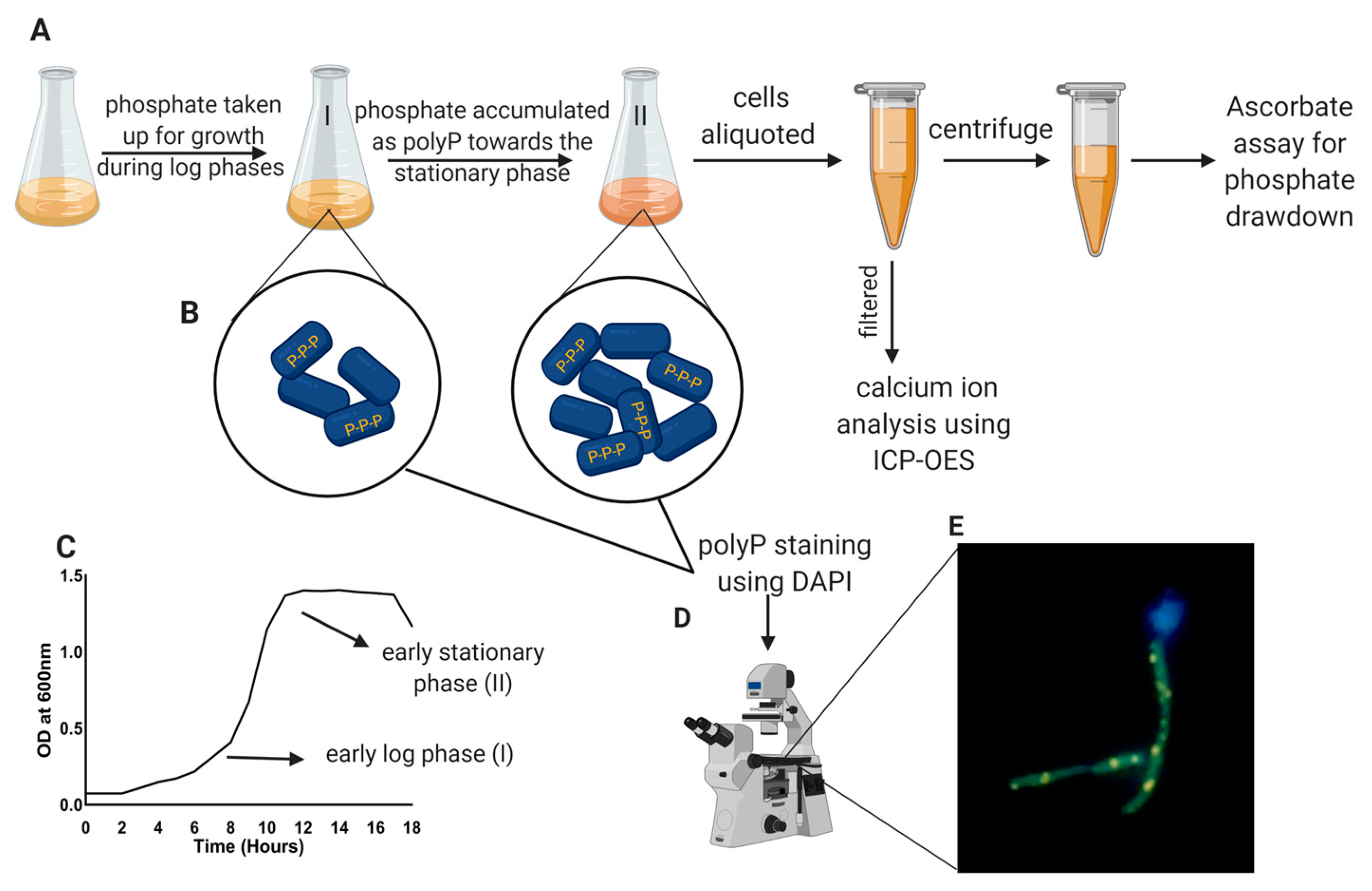
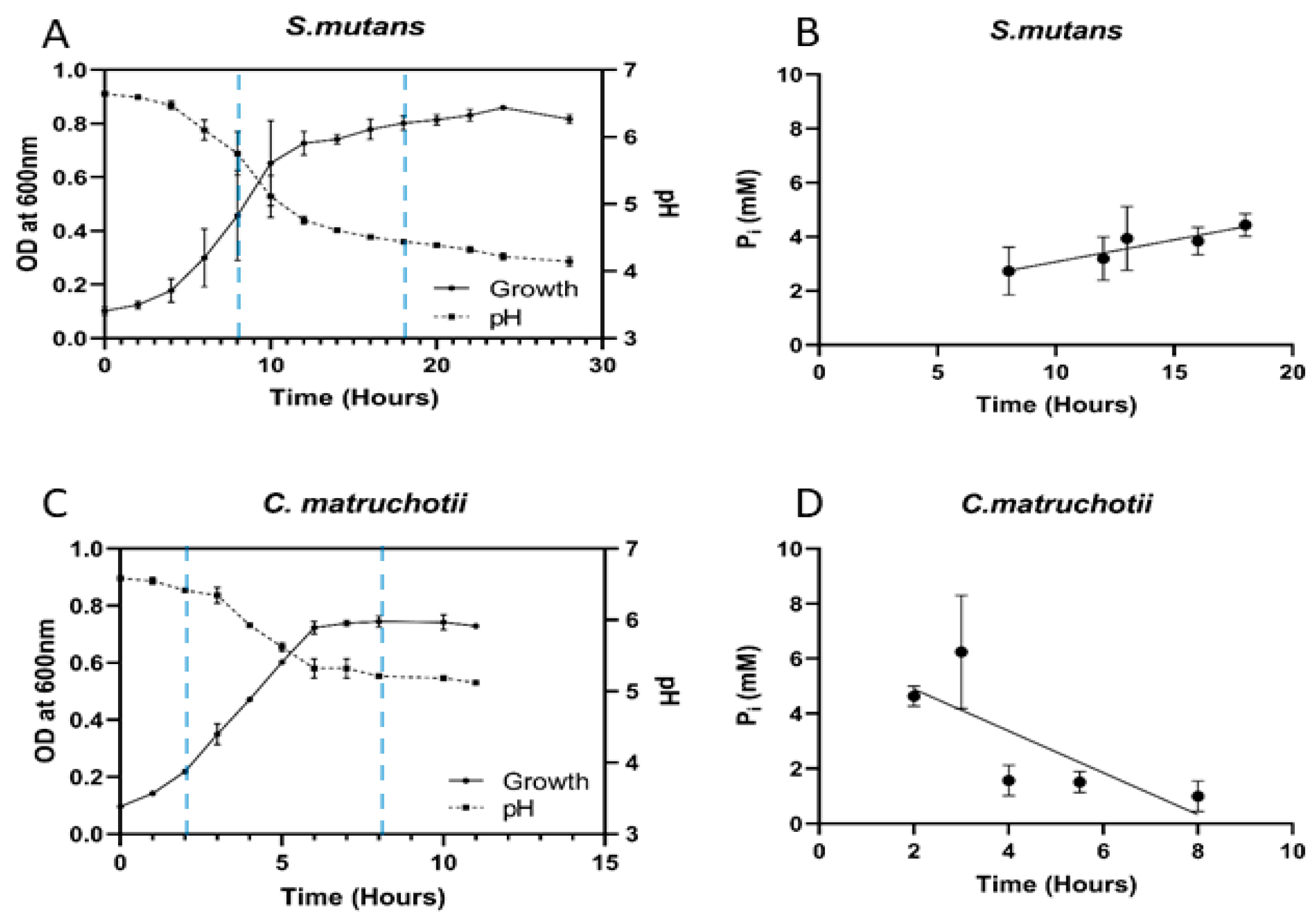
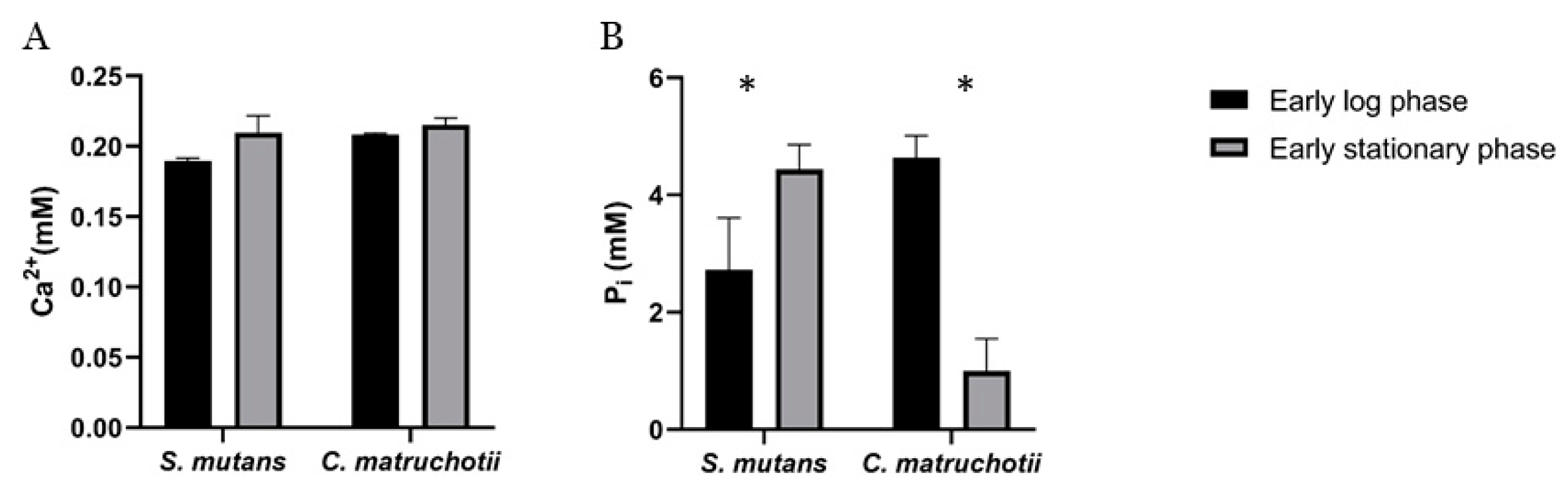
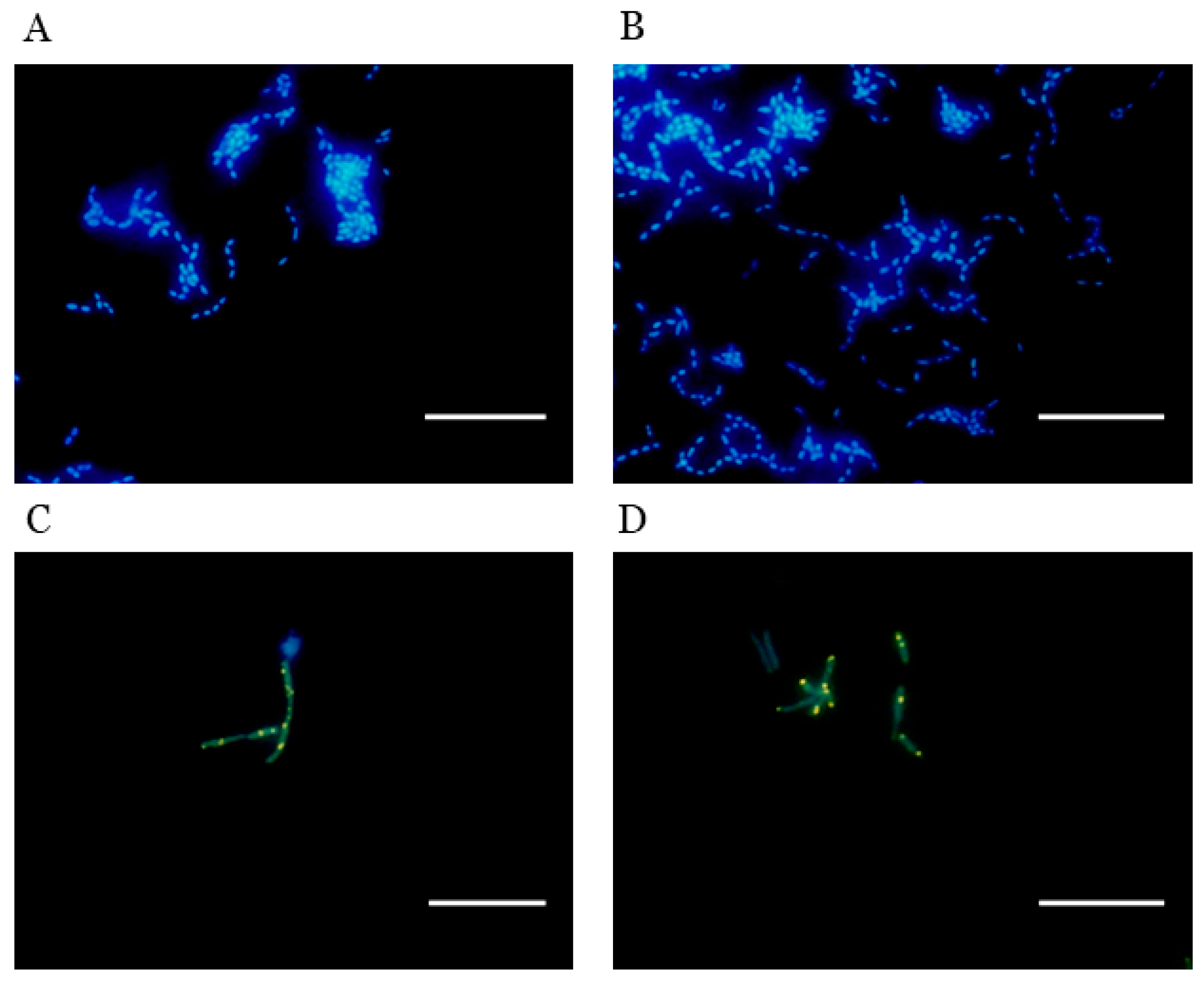
(1) Background: An alternative and understudied microbial mechanism that may influence demineralization is the microbially mediated ion exchange of Ca2+ and orthophosphate (Pi), which alters the saturation state of the mineral species within the surface enamel. There is a need to examine the ability of members of the oral microbiome to modulate Ca2+ and Pi, which control mineral solubility, in order to effectively evaluate mineralization therapies to improve oral health. (2) Methods: Pi uptake was measured using an ascorbic acid assay during a BHI liquid culture growth of Corynebacterium matruchotii and Streptococcus mutans for up to 20 h. The initial and endpoint medium Ca2+ levels were measured using ICP-OES. Bacterial cells were examined at different growth stages using DAPI/polyP binding emission at 525 nm to detect the presence of internalized macromolecules of polyphosphates (polyP) that could drive Pi uptake. (3) Results: C. matruchotii (p = 0.0061) substantially accumulated Pi (3.84 mmol/L), with a concomitant formation of polyP. In contrast, S. mutans did not take up Pi or accumulate polyP. No significant Ca2+ drawdown in the media was observed in either strain. (4) Conclusions: This study suggests that when examining the future efficacy of prevention technologies to improve, in vitro assays may consider including specific oral bacteria capable of substantial Pi uptake.
Keywords: oral; bacteria; calcium; phosphate; polyphosphate oral; bacteria; calcium; phosphate; polyphosphate