Multifactorial Optimization of Biochar Synthesis from Pea Pods Using the RSM Method: Insights into Process Parameters and Adsorption Capabilities Towards Cr(VI) and CO2

 ,
,  , , , and
Abstract
1. Introduction
2. Results and Discussion
2.1. Characterization of the Raw Material
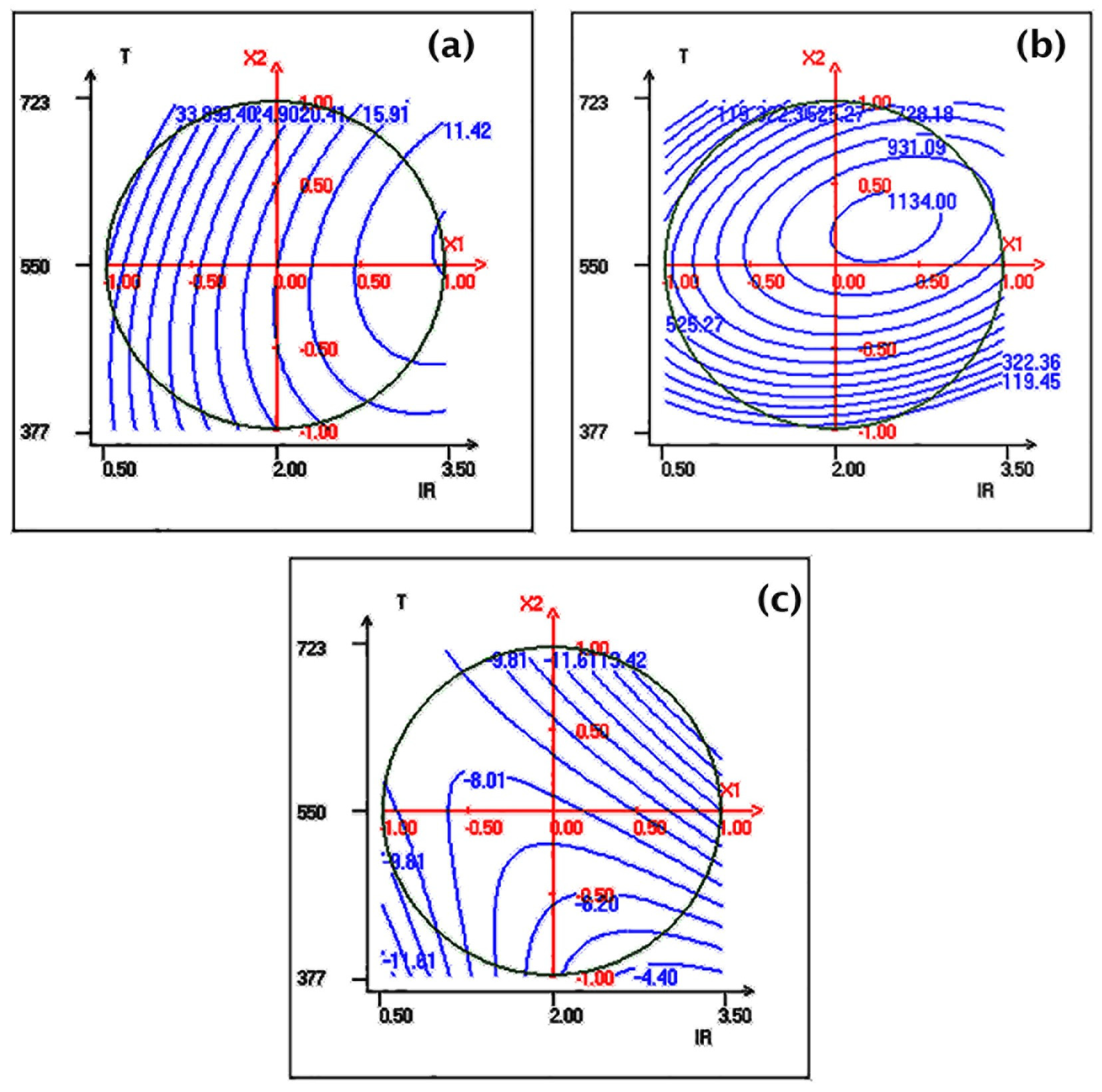
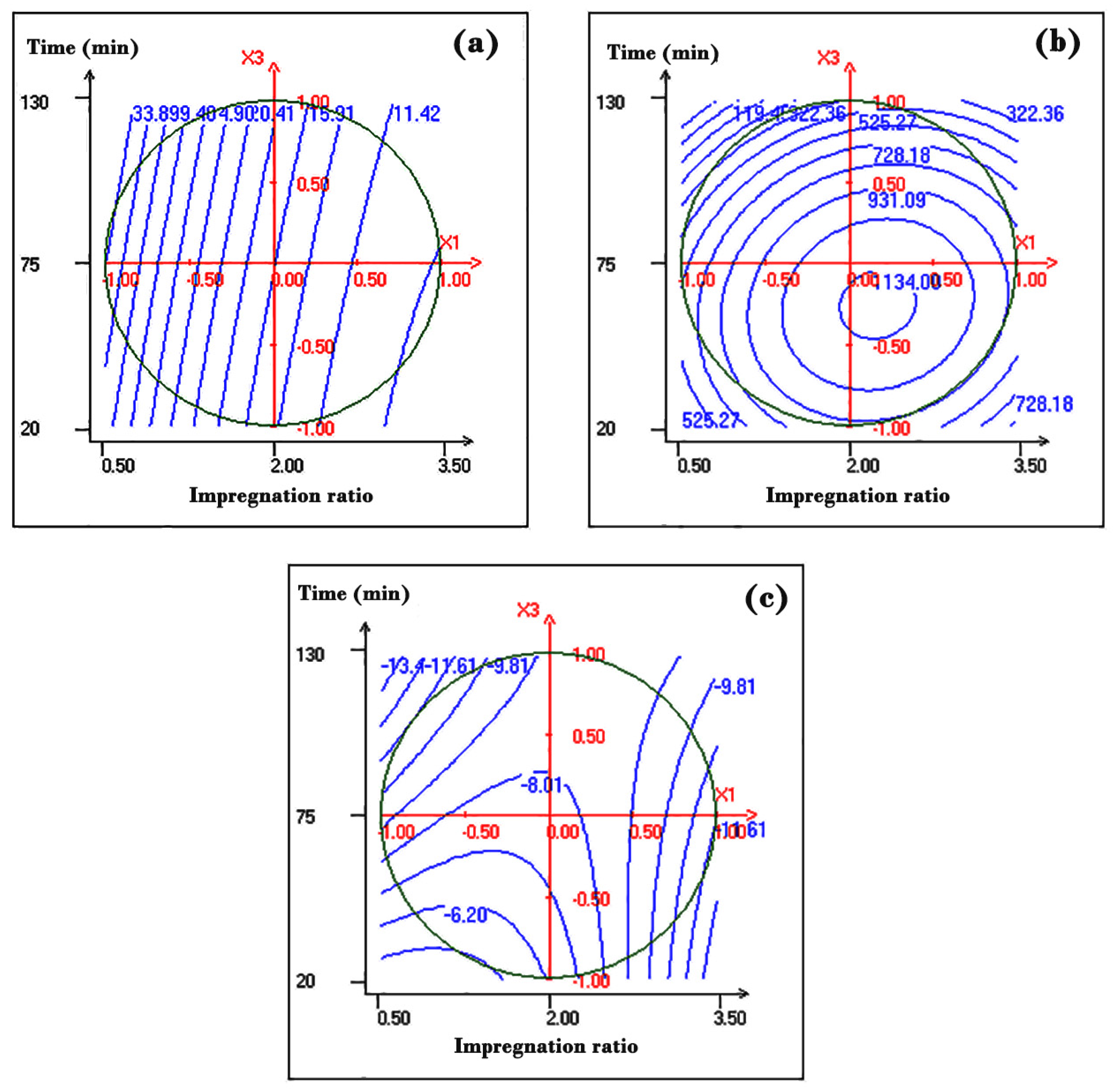
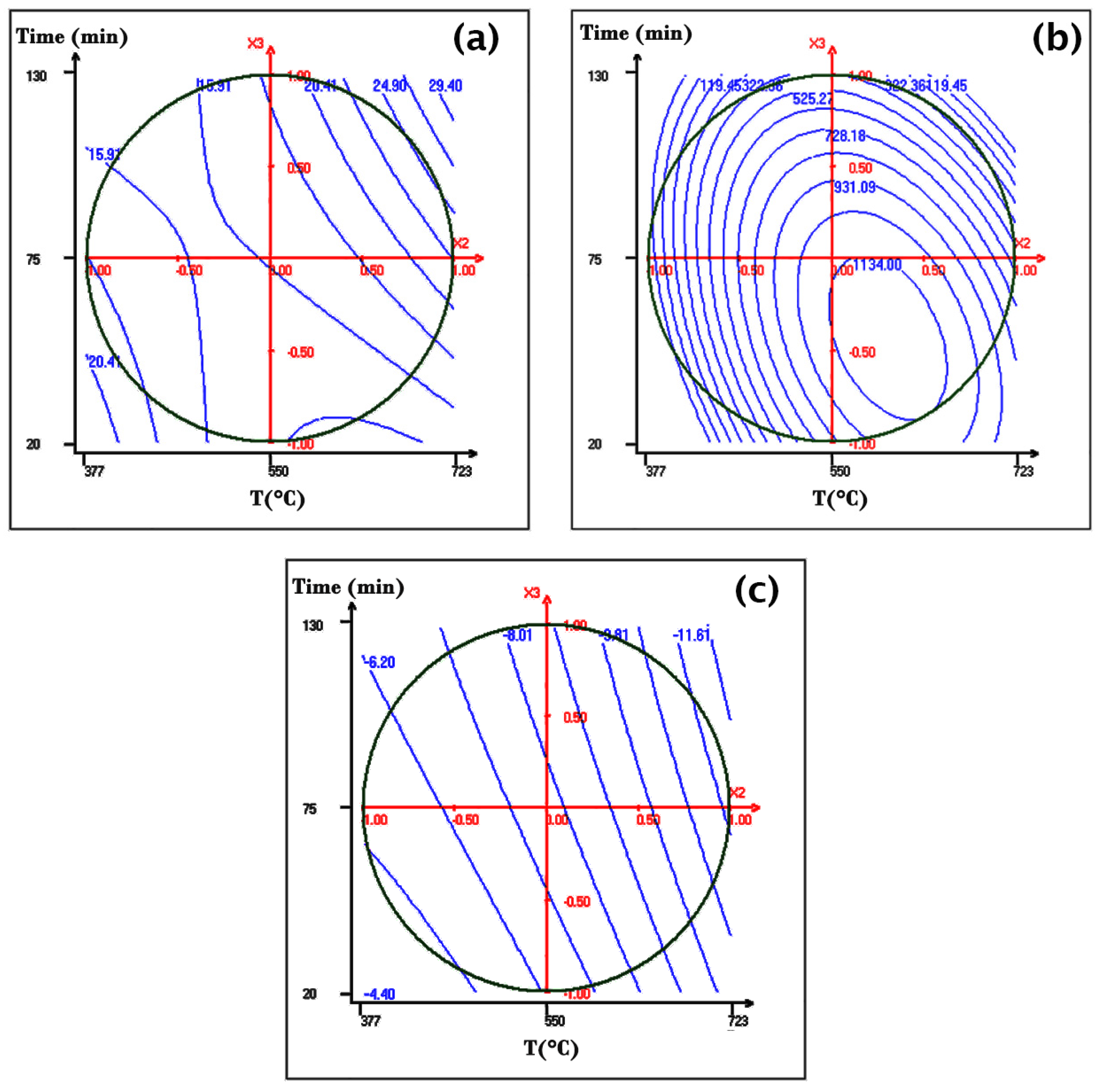
2.2. Modeling and Design of Experiments
2.3. Statistical Evaluation and Optimization of Process Variables
2.4. Application on Hexavalent Chromium Removal and CO2 Removal
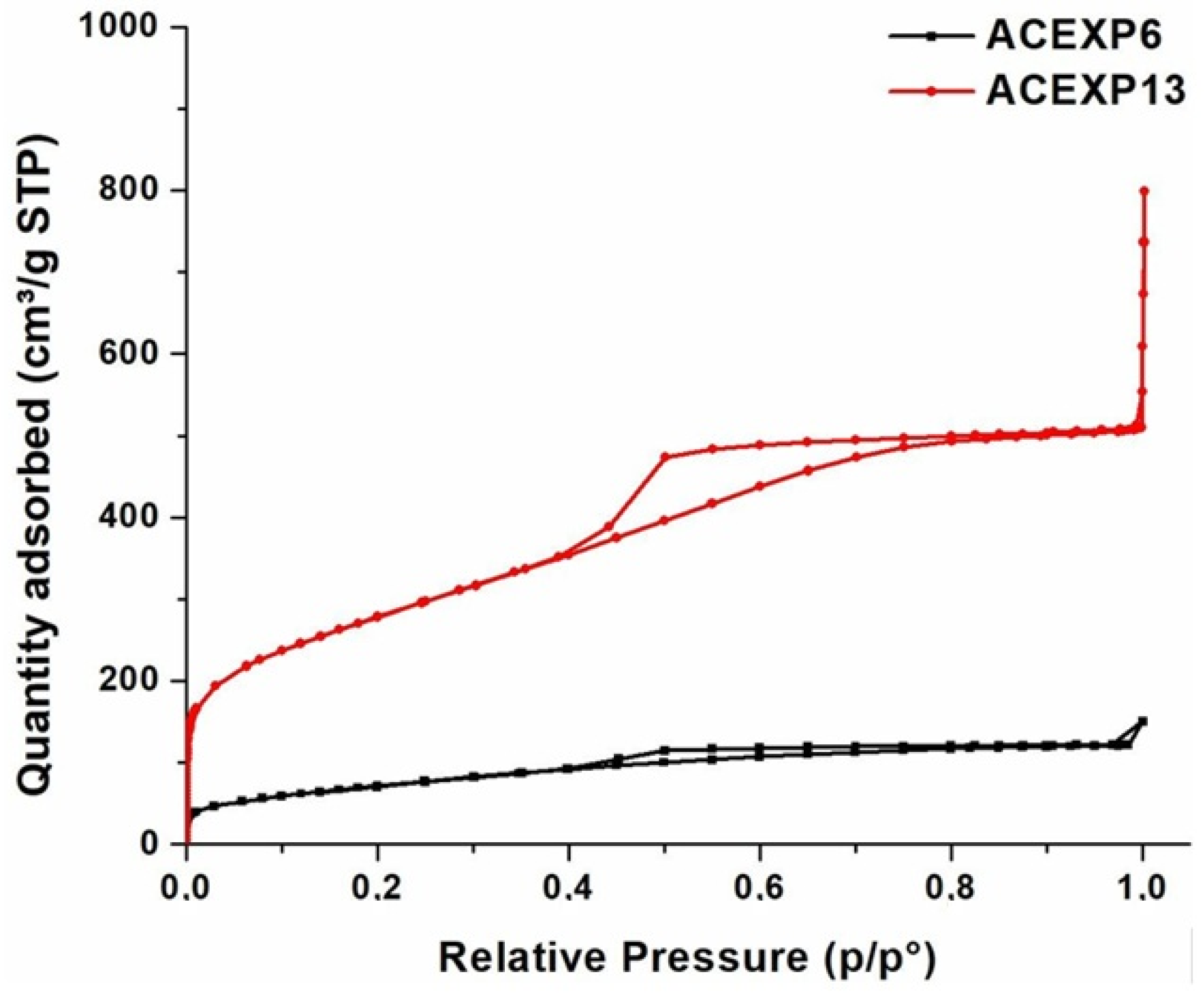
2.4.1. Characterization of the Two Biochars
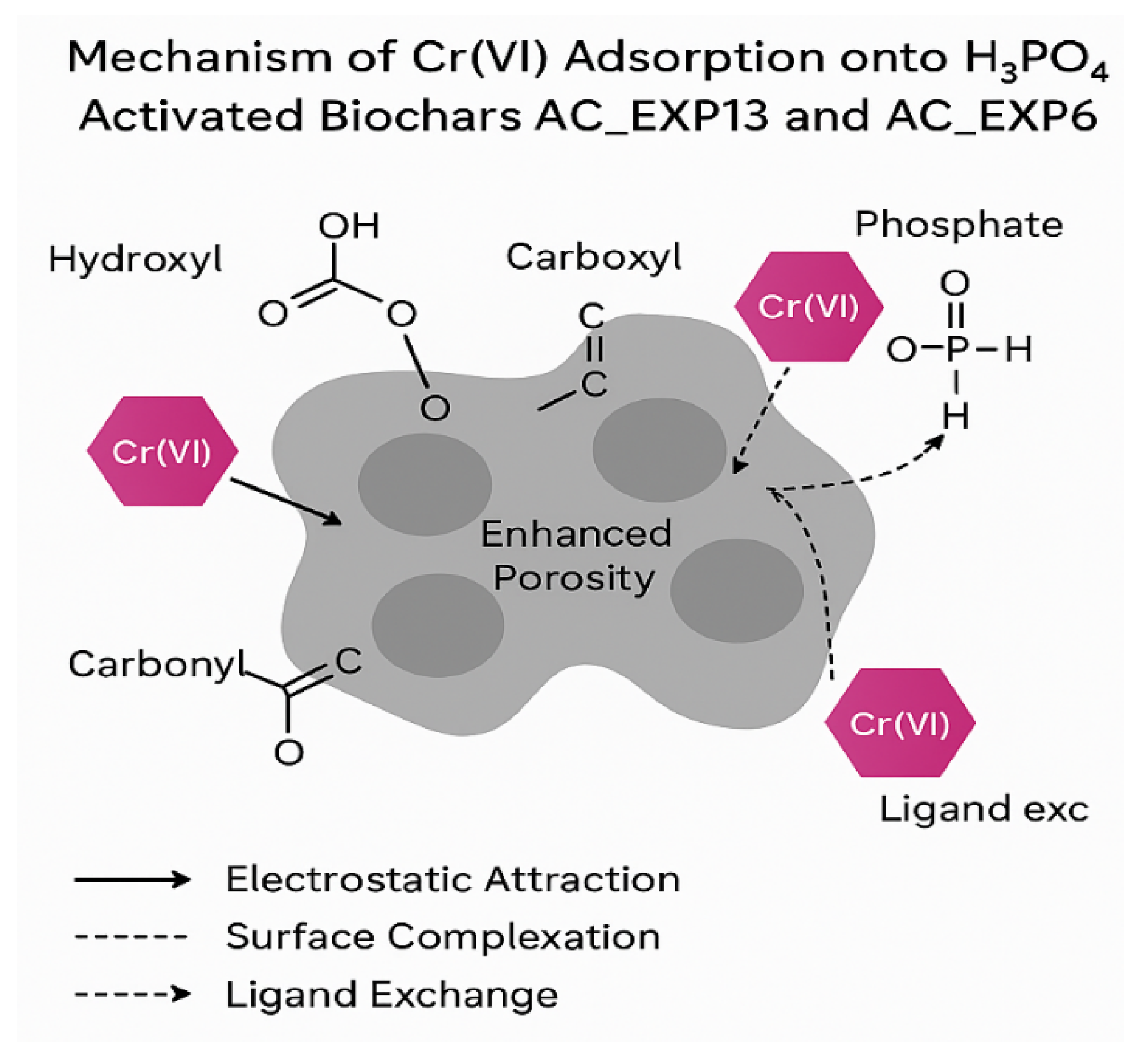
2.4.2. Effect of Parameters, Adsorption Isotherms, and Mechanism of Cr(VI) Removal
2.4.3. Application in CO2 Capture
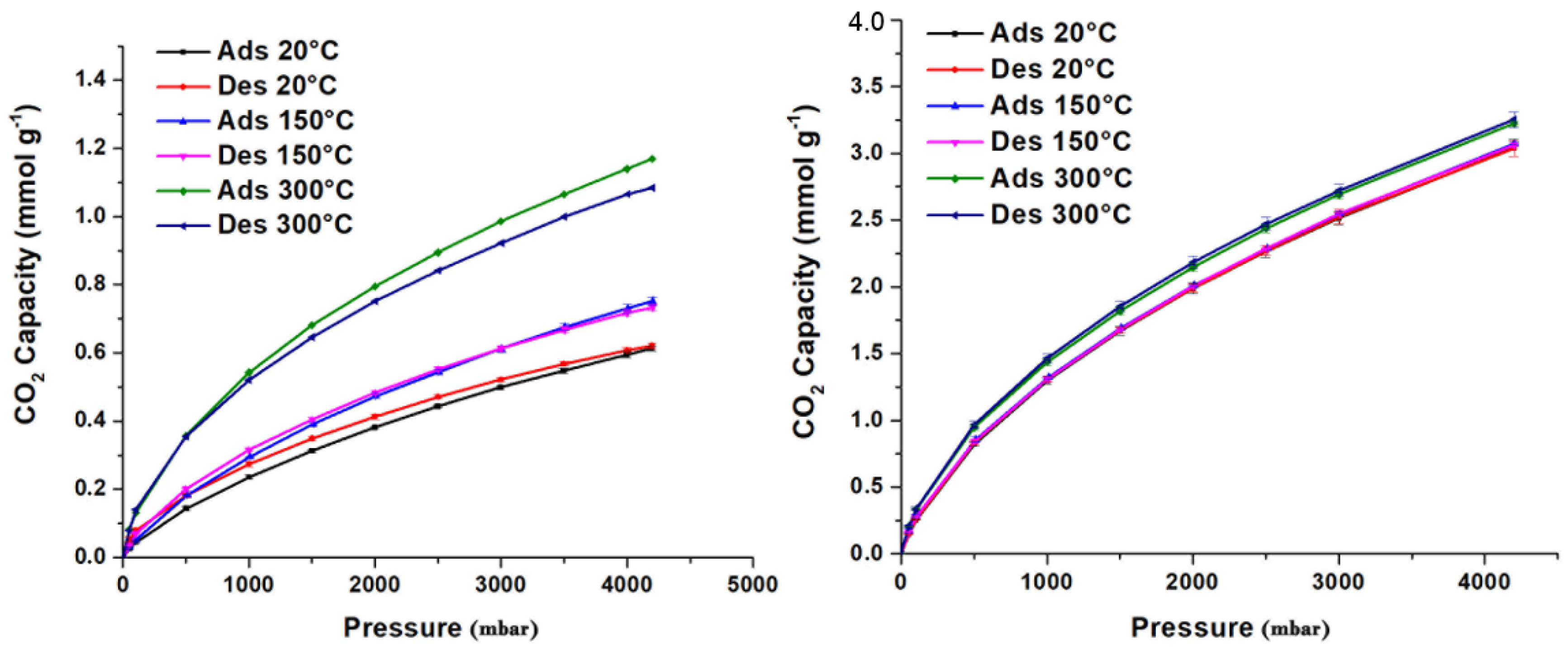
Effect of Activation Temperature
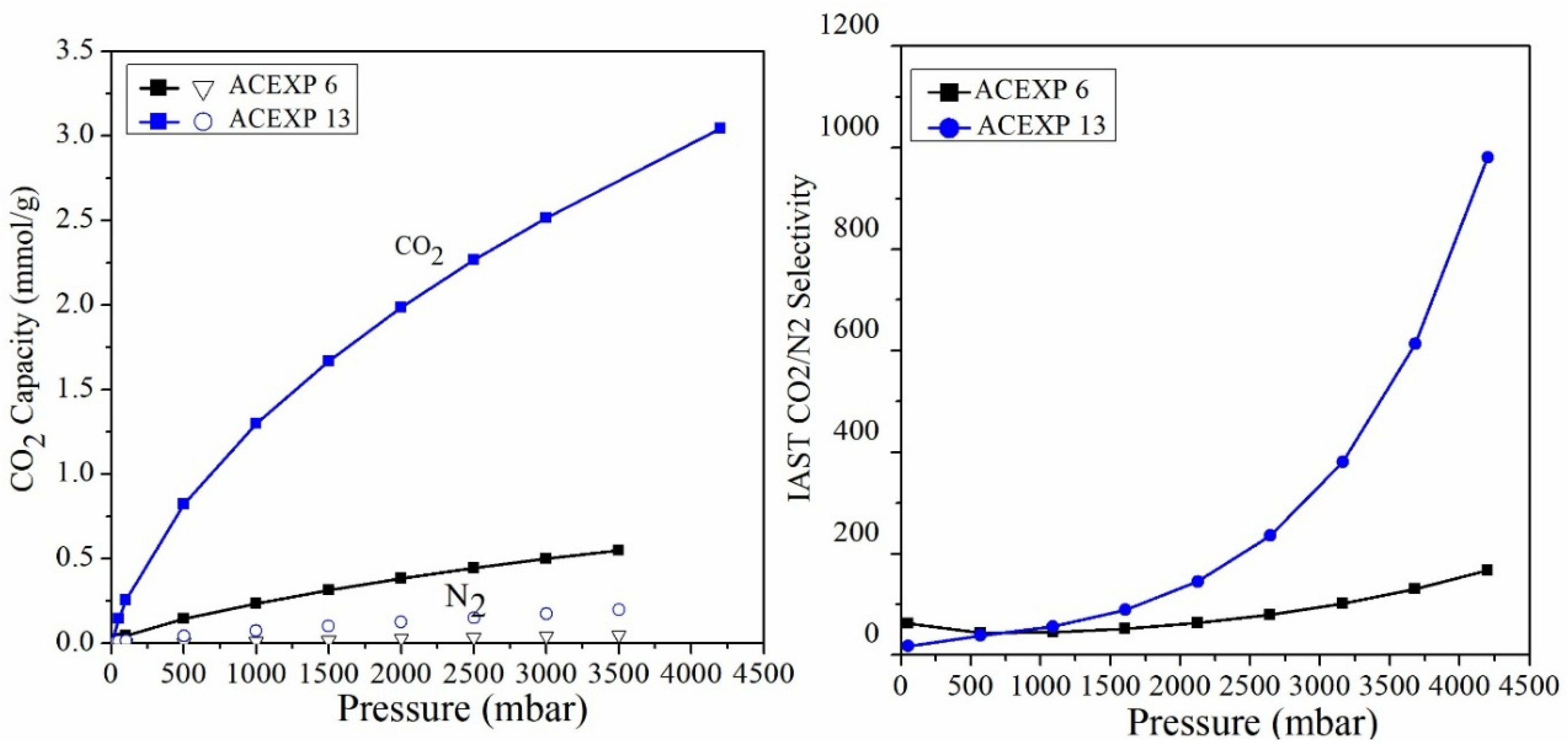
Adsorption Selectivity
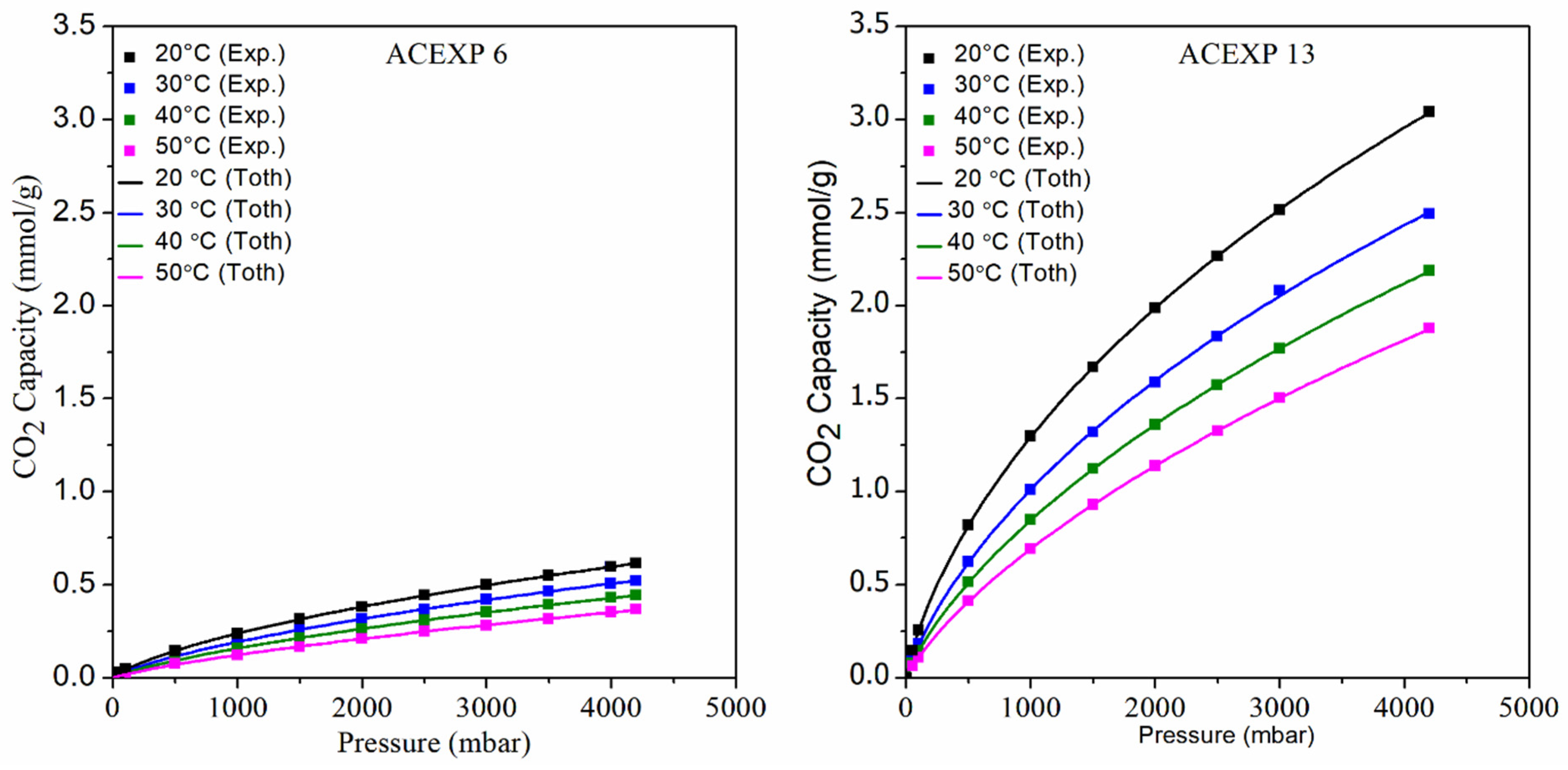
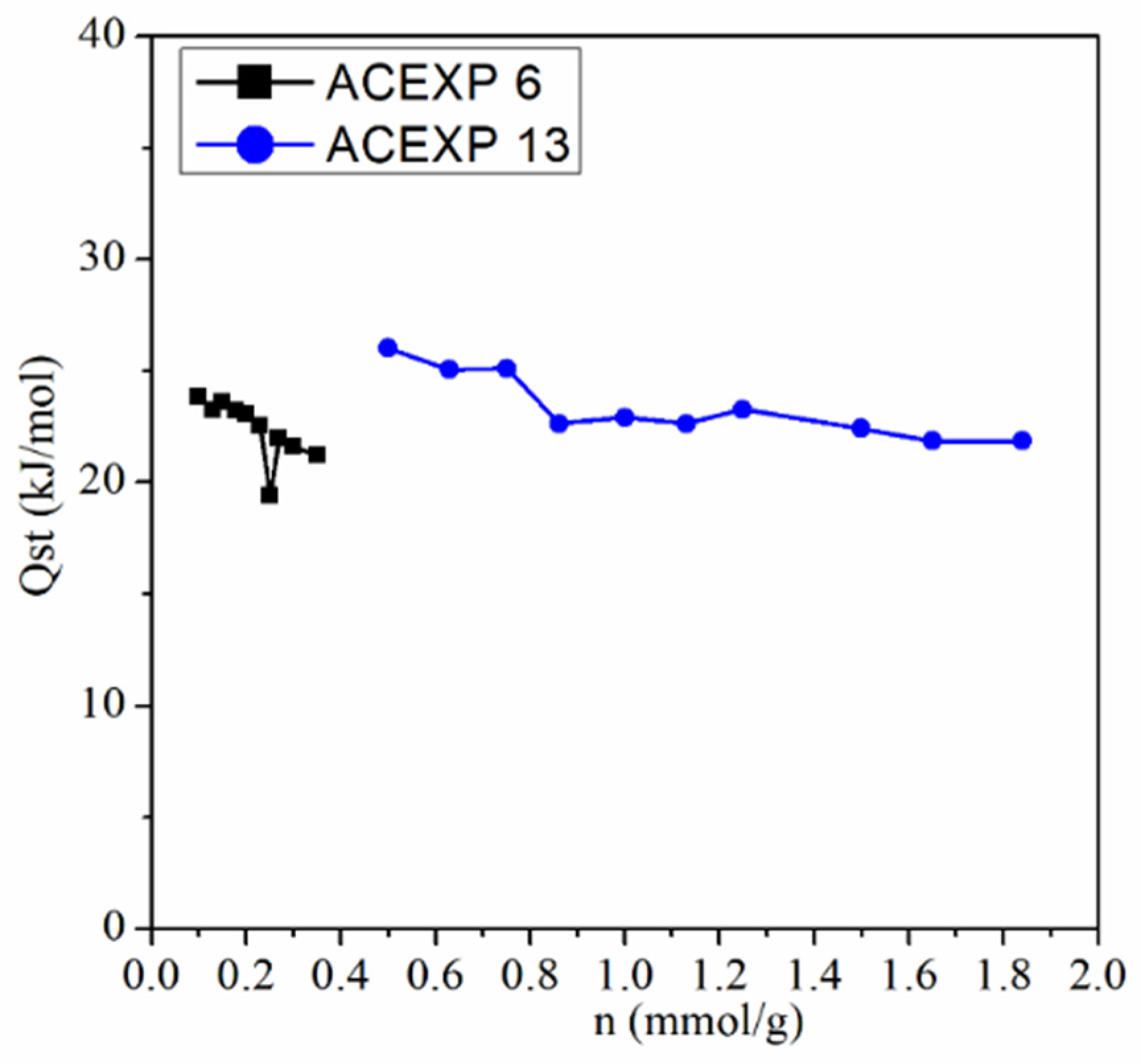
Adsorption Thermodynamics
3. Materials and Methods
3.1. Materials
3.2. Characterization of Raw Material
3.3. Fabrication of the Biochar
3.4. Doehlert Experimental Design
3.5. Adsorption Experiments
4. Conclusions
Author Contributions
Funding
Institutional Review Board Statement
Informed Consent Statement
Data Availability Statement
Acknowledgments
Conflicts of Interest
References
- Tessema, B.; Gonfa, G.; Mekuria Hailegiorgis, S. Preparation of modified silica gel supported silver nanoparticles and its evaluation using zone of inhibition for water disinfection. Arab. J. Chem. 2024, 17, 106036. [Google Scholar] [CrossRef] [Scilit]
- Singh, B.J.; Chakraborty, A.; Sehgal, R. A systematic review of industrial wastewater management: Evaluating challenges and enablers. J. Environ. Manag. 2023, 348, 119230. [Google Scholar] [CrossRef] [Scilit] [PubMed]
- Sriram, G.; Kigga, M.; Uthappa, U.T.; Rego, R.M.; Thendral, V.; Kumeria, T.; Jung, H.-Y.; Kurkuri, M.D. Naturally available diatomite and their surface modification for the removal of hazardous dye and metal ions: A review. Adv. Colloid Interface Sci. 2020, 282, 102198. [Google Scholar] [CrossRef] [Scilit] [PubMed]
- Musie, W.; Gonfa, G. Fresh water resource, scarcity, water salinity challenges and possible remedies: A review. Heliyon 2023, 9, e18685. [Google Scholar] [CrossRef] [Scilit] [PubMed]
- Jomova, K.; Alomar, S.Y.; Nepovimova, E.; Kuca, K.; Valko, M. Heavy metals: Toxicity and human health effects. Arch. Toxicol. 2025, 99, 153–209. [Google Scholar] [CrossRef] [Scilit] [PubMed]
- Tesfaye Gari, M.; Tessema Asfaw, B.; Arumugasamy, S.K.; Deso Abo, L.; Jayakumar, M. Natural Resources-Based Activated Carbon Synthesis. In Encyclopedia of Green Materials; Baskar, C., Ramakrishna, S., Daniela La Rosa, A., Eds.; Springer Nature: Singapore, 2022; pp. 1–11. [Google Scholar] [CrossRef] [Scilit]
- Islam, M.; Roy, D.; Singha, D. Metal Ion Toxicity in Human Body: Sources, Effects, Mechanisms and Detoxification Methods. Chem. Afr. 2025, 8, 779–797. [Google Scholar] [CrossRef] [Scilit]
- Alegbe, P.J.; Appiah-Brempong, M.; Awuah, E. Heavy metal contamination in vegetables and associated health risks. Sci. Afr. 2025, 27, e02603. [Google Scholar] [CrossRef] [Scilit]
- Nibe, R.L.; Gaikwad, R.W. A Comprehensive Review on Application of Different Natural and Chemically Modified Nanomaterials Adsorbents for Heavy Metals Removal. J. Inorg. Organomet. Polym. 2025, 35, 3222–3242. [Google Scholar] [CrossRef] [Scilit]
- Medina, C.; Debut, A.; Silva, J.; Gallegos, J.; Vicuña, K.; Palmay, P.; Carrera, S. Chromic Oxide Recovery from Tannery Wastewater and Application as Dye. Rev. Politécnica 2025, 55, 41–50. [Google Scholar]
- Liu, M.; Mao, J.; Zhang, Z.; Li, L.; Long, T.; Chao, W. Current supply status, demand trends and security measures of chromium resources in China. Green Smart Min. Eng. 2024, 1, 53–57. [Google Scholar] [CrossRef] [Scilit]
- Shang, X.; Che, X.; Ma, K.; Guo, W.; Wang, S.; Sun, Z.P.; Xu, W.; Zhang, Y. Chronic Cr(VI) exposure-induced biotoxicity involved in liver microbiota-gut axis disruption in Phoxinus lagowskii Dybowski based on multi-omics technologies. Environ. Pollut. 2025, 368, 125759. [Google Scholar] [CrossRef] [Scilit] [PubMed]
- Hussain, S.A.; Nadeem, M.; Ayub, M.A.; Ali, M.; Abbasi, G.H.; Ul Haq, M.A.; Mehmood, H.; Khan, A.; Alnafisi, B.K.; Irfan, M. Health Risk Assessment Associated with Heavy Metals Pollution in Sandy Clay Loam Soils and Vegetables Irrigated by Wastewater: A Case Study of Bahawalpur City. Eurasian Soil Sci. 2025, 58, 16. [Google Scholar] [CrossRef] [Scilit]
- Yang, X.; Xiong, J.; Cao, L.; Zhang, Y.; Wu, P.; Shi, Y.; Zhang, H.; Pi, K.; Qiu, G. One-step electrochemical reduction and precipitation removal of Cr(VI) in acid wastewaters using amidoxime-functionalized carbon felt. Desalination 2025, 593, 118257. [Google Scholar] [CrossRef] [Scilit]
- Gao, Z.; Jia, Z.; Liu, F.; Yang, L.; Cheng, Q.; Zhao, T. Hydrophobic deep eutectic solvents: Towards a greener and more efficient extraction process of Cr(VI) from aqueous solutions. J. Environ. Chem. Eng. 2025, 13, 115122. [Google Scholar] [CrossRef] [Scilit]
- Wang, D.; Wu, D.; Wei, A.; Gao, J.; Pan, C.; Mao, Z.; Feng, Q. Scalable, high flux of electrospun nanofibers membrane for rapid adsorption-reduction synergistic removal of Cr(VI) ions in wastewater. Sep. Purif. Technol. 2025, 360, 130747. [Google Scholar] [CrossRef] [Scilit]
- Cai, J.; Liu, B.; Xie, F.; Mao, X.; Zhang, B. Micelle-enhanced nanofiltration process for chromium-containing wastewater treatment: Performance, Cr(VI) redox and mechanism. J. Water Process Eng. 2025, 69, 106631. [Google Scholar] [CrossRef] [Scilit]
- Rzig, B.; Guesmi, F.; Sillanpää, M.; Hamrouni, B. Biosorption potential of olive leaves as a novel low-cost adsorbent for the removal of hexavalent chromium from wastewater. Biomass Convers. Biorefin. 2024, 14, 12961–12979. [Google Scholar] [CrossRef] [Scilit]
- Rzig, B.; Guesmi, F.; Sillanpää, M.; Hamrouni, B. Modelling and optimization of hexavalent chromium removal from aqueous solution by adsorption on low-cost agricultural waste biomass using response surface methodological approach. Water Sci. Technol. 2021, 84, 552–575. [Google Scholar] [CrossRef] [Scilit] [PubMed]
- Azaiez, S.; Ben Khalifa, E.; Magnacca, G.; Cesano, F.; Bracco, P.; Hamrouni, B. Highly porous biochars from different biomasses as potential adsorbents for chromium removal: Optimization by response surface methodology. Int. J. Environ. Sci. Technol. 2024, 21, 4565–4586. [Google Scholar] [CrossRef] [Scilit]
- Ben Khalifa, E.; Rzig, B.; Chakroun, R.; Nouagui, H.; Hamrouni, B. Application of response surface methodology for chromium removal by adsorption on low-cost biosorbent. Chemom. Intell. Lab. Syst. 2019, 189, 18–26. [Google Scholar] [CrossRef] [Scilit]
- Rashid, R.; Shafiq, I.; Akhter, P.; Iqbal, M.J.; Hussain, M. A state-of-the-art review on wastewater treatment techniques: The effectiveness of adsorption method. Environ. Sci. Pollut. Res. 2021, 28, 9050–9066. [Google Scholar] [CrossRef] [Scilit] [PubMed]
- Neme, I.; Gonfa, G.; Masi, C. Activated carbon from biomass precursors using phosphoric acid: A review. Heliyon 2022, 8, e11940. [Google Scholar] [CrossRef] [Scilit] [PubMed]
- Rani, G.M.; Pathania, D.; Umapathi, R.; Rustagi, S.; Huh, Y.S.; Gupta, V.K.; Kaushik, A.; Chaudhary, V. Agro-waste to sustainable energy: A green strategy of converting agricultural waste to nano-enabled energy applications. Sci. Total Environ. 2023, 875, 162667. [Google Scholar] [CrossRef] [Scilit] [PubMed]
- Ali, H.M.; Essawy, A.A.; Elnasr, T.A.S.; Aldawsari, A.M.; Alsohaimi, I.; Hassan, H.M.A.; Abdel-Farid, I.B. Selective and efficient sequestration of Cr(VI) in ground water using trimethyloctadecylammonium bromide impregnated on Artemisia monosperma plant powder. J. Taiwan Inst. Chem. Eng. 2021, 125, 122–131. [Google Scholar] [CrossRef] [Scilit]
- Beyan, S.M.; Prabhu, S.V.; Ambio, T.A.; Gomadurai, C. A Statistical Modeling and Optimization for Cr(VI) Adsorption from Aqueous Media via Teff Straw-Based Activated Carbon: Isotherm, Kinetics, and Thermodynamic Studies. Adsorpt. Sci. Technol. 2022, 2022, 7998069. [Google Scholar] [CrossRef] [Scilit]
- Shewatatek, S.; Gonfa, G.; Hailegiorgis, S.M.; Tessema, B. Response Surface Optimization of Chromium (IV) Removal with Teff Straw-Based Activated Carbon. Results Chem. 2025, 15, 102168. [Google Scholar] [CrossRef] [Scilit]
- Abdel-Galil, E.A.; Hussin, L.M.S.; El-Kenany, W.M. Adsorption of Cr(VI) from aqueous solutions onto activated pomegranate peel waste. Desalin. Water Treat. 2021, 211, 250–266. [Google Scholar] [CrossRef] [Scilit]
- Enniya, I.; Rghioui, L.; Jourani, A. Adsorption of hexavalent chromium in aqueous solution on activated carbon prepared from apple peels. Sustain. Chem. Pharm. 2018, 7, 9–16. [Google Scholar] [CrossRef] [Scilit]
- Nimbalkar, P.R.; Khedkar, M.A.; Chavan, P.V.; Bankar, S.B. Biobutanol production using pea pod waste as substrate: Impact of drying on saccharification and fermentation. Renew. Energy 2018, 117, 520–529. [Google Scholar] [CrossRef] [Scilit]
- Gao, Y.; Xia, H.; Sulaeman, A.P.; De Melo, E.M.; Dugmore, T.I.J.; Matharu, A.S. Defibrillated Celluloses via Dual Twin-Screw Extrusion and Microwave Hydrothermal Treatment of Spent Pea Biomass. ACS Sustain. Chem. Eng. 2019, 7, 11861–11871. [Google Scholar] [CrossRef] [Scilit]
- Verma, N.; Bansal, M.C.; Kumar, V. Pea peel waste: A lignocellulosic waste and its utility in cellulase production by Trichoderma reesei under solid state cultivation. Bioresources 2011, 6, 1505–1519. [Google Scholar] [CrossRef] [Scilit]
- Islam, F.S. Clean coal technology: The solution to global warming by reducing the emission of carbon dioxide and methane. Am. J. Smart Technol. Solut. 2025, 4, 8–15. [Google Scholar] [CrossRef] [Scilit]
- Zhang, J.; Li, Q.; Zhang, J.; Liu, H.; Wang, H.; Zhang, J. Enhanced CO2 absorption in amine-based carbon capture aided by coconut shell-derived nitrogen-doped biochar. Sep. Purif. Technol. 2025, 353, 128451. [Google Scholar] [CrossRef] [Scilit]
- Oktaviana, A.A.; Hermana, J.; Syafei, A.D.; Hsi, H.C. Effect of Pyrolysis Temperature of Domestic Sewage Sludge Biochar on CO2 Adsorption. Results Eng. 2025, 26, 105136. [Google Scholar] [CrossRef] [Scilit]
- Pan, X.; Zhao, N.; Shi, H.; Wang, H.; Ruan, F.; Wang, H.; Feng, Q. Biomass activated carbon derived from golden needle mushroom root for the methylene blue and methyl orange adsorption from wastewater. Ind. Crops Prod. 2025, 223, 120051. [Google Scholar] [CrossRef] [Scilit]
- Taer, E.; Melisa, M.; Agustino, A.; Taslim, R.; Sinta Mustika, W.; Apriwandi, A. Biomass-based activated carbon monolith from Tectona grandis leaf as supercapacitor electrode materials. Energy Sources Part A Recovery Util. Environ. Eff. 2025, 47, 9490–9501. [Google Scholar] [CrossRef] [Scilit]
- Rzig, B.; Kojok, R.; Ben Khalifa, E.; Magnacca, G.; Lahssini, T.; Hamrouni, B.; Bellakhal, N. Adsorption performance of tartrazine dye from wastewater by raw and modified biomaterial: Equilibrium, isotherms, kinetics and regeneration studies. Biomass Convers. Biorefin. 2024, 14, 18313–18330. [Google Scholar] [CrossRef] [Scilit]
- Ben Khalifa, E.; Cecone, C.; Rzig, B.; Azaiez, S.; Cesano, F.; Malandrino, M.; Bracco, P.; Magnacca, G. Green surface modification of polyvinyl alcohol fibers and its application for dye removal using Doehlert experimental design. React. Funct. Polym. 2023, 193, 105763. [Google Scholar] [CrossRef] [Scilit]
- Ben Khalifa, E.; Cecone, C.; Bracco, P.; Malandrino, M.; Paganini, M.C.; Magnacca, G. Eco-friendly PVA-LYS fibers for gold nanoparticle recovery from water and their catalytic performance. Environ. Sci. Pollut. Res. 2023, 30, 65659–65674. [Google Scholar] [CrossRef] [Scilit] [PubMed]
- Nasir, G.; Zaidi, S.; Siddiqui, A.; Sirohi, R. Characterization of pea processing by-product for possible food industry applications. J. Food Sci. Technol. 2023, 60, 1782–1792. [Google Scholar] [CrossRef] [Scilit] [PubMed]
- Dafalla, M.; Inayat, A.; Jamil, F.; Ghenai, C.; Rocha-Meneses, L.; Shanableh, A. Integrated approach for response surface methodology optimization in biochar and bio-oil production from Moringa seeds: Pyrolysis enhancement with zeolite catalyst. Bioresour. Technol. Rep. 2025, 30, 102123. [Google Scholar] [CrossRef] [Scilit]
- Guo, C.; Ding, L.; Jin, X.; Zhang, H.; Zhang, D. Application of response surface methodology to optimize chromium (VI) removal from aqueous solution by cassava sludge-based activated carbon. J. Environ. Chem. Eng. 2021, 9, 104785. [Google Scholar] [CrossRef] [Scilit]
- Lotfy, V.F.; Basta, A.H. Sustainable Heteroatom Doped Biochar for Methylene Blue Adsorption with Structure Function Insights. Sci. Rep. 2026, 16, 13153. [Google Scholar] [CrossRef] [Scilit] [PubMed]
- Liu, S.; Wang, Y.; Xiao, C.; Jiang, M.; Ding, X.; Zhang, H.; Zheng, K.; Chen, L.; Tian, X.; Zhang, X. Pea-Pod-like Carbon Microspheres Encapsulated by Graphene-like Carbon Nitride for Enhanced Thermal Conductivity in Polyimide Films. ACS Appl. Polym. Mater. 2022, 4, 6553–6562. [Google Scholar] [CrossRef] [Scilit]
- Benadjemia, M.; Millière, L.; Reinert, L.; Benderdouche, N.; Duclaux, L. Preparation, characterization and Methylene Blue adsorption of phosphoric acid activated carbons from globe artichoke leaves. Fuel Process. Technol. 2011, 92, 1203–1212. [Google Scholar] [CrossRef] [Scilit]
- Hajji Nabih, M.; El Hajam, M.; Boulika, H.; Chiki, Z.; Ben Tahar, S.; Idrissi Kandri, N.; Zerouale, A. Preparation and characterization of activated carbons from cardoon “Cynara Cardunculus” waste: Application to the adsorption of synthetic organic dyes. Mater. Today Proc. 2023, 72, 3369–3379. [Google Scholar] [CrossRef] [Scilit]
- El Hajam, M.; Idrissi Kandri, N.; Harrach, A.; El Khomsi, A.; Zerouale, A. Physicochemical characterization of softwood waste “Cedar” and hardwood waste “Mahogany”: Comparative study. Mater. Today Proc. 2019, 13, 803–811. [Google Scholar] [CrossRef] [Scilit]
- El-Nemr, M.A.; Yılmaz, M.; Ragab, S.; Al-Mur, B.A.; Hassaan, M.A.; El Nemr, A. Fabrication of Pea pods biochar-NH2 (PBN) for the adsorption of toxic Cr6+ ion from aqueous solution. Appl. Water Sci. 2023, 13, 194. [Google Scholar] [CrossRef] [Scilit]
- Muhammed, H.; Balaji, K.; Tamilarasan, N.; Senthil Kumar, D.; Sakthivel, R. Characterization of Tea Factory Waste Biomass via TGA: Pyrolysis Kinetics and Thermal Behavior. Chem. Thermodyn. Therm. Anal. 2026, 21, 100251. [Google Scholar] [CrossRef] [Scilit]
- Divyangkumar, N.; Panwar, N.L. Optimizing high performance biochar from sugarcane bagasse and corncob via vacuum pyrolysis. Energy 360 2025, 3, 100014. [Google Scholar] [CrossRef] [Scilit]
- Kumar, M.; Shukla, S.K.; Upadhyay, S.N.; Mishra, P.K. Analysis of thermal degradation of banana (Musa balbisiana) trunk biomass waste using iso-conversional models. Bioresour. Technol. 2020, 310, 123393. [Google Scholar] [CrossRef] [Scilit] [PubMed]
- Chueca de Bruijn, A.; Gómez-Gras, G.; Fernández-Ruano, L.; Farràs-Tasias, L.; Pérez, M.A. Optimization of a combined thermal annealing and isostatic pressing process for mechanical and surface enhancement of Ultem FDM parts using Doehlert experimental designs. J. Manuf. Process. 2023, 85, 1096–1115. [Google Scholar] [CrossRef] [Scilit]
- de Oliveira Fontoura, C.R.; Dutra, L.V.; Guezgüan, S.M.; Nascimento, M.A.; de Oliveira, A.F.; Lopes, R.P. Optimization of one-pot H3PO4-activated hydrochar synthesis by Doehlert design: Characterization and application. J. Anal. Appl. Pyrolysis 2022, 168, 105775. [Google Scholar] [CrossRef] [Scilit]
- Wang, Y.; Li, J.; Li, Q.; Xu, L.; Ai, Y.; Liu, W.; Zhou, Y.; Zhang, B.; Guo, N.; Cao, B.; et al. Effective amendment of cadmium in water and soil before and after aging of nitrogen-doped biochar: Preparation optimization, removal efficiency and mechanism. J. Hazard. Mater. 2024, 477, 135356. [Google Scholar] [CrossRef] [Scilit] [PubMed]
- Ribeiro, T.S.; de Araújo Sobrinho, I.; Gonçalves, M.A.; da Silva Lima, V.; Figueira, B.A.M.; da Rocha Filho, G.N.; da Conceição, L.R.V. Green synthesis of biodiesel from magnetic basic biochar derived from Amazonian murici residual biomass: Optimization, kinetic, thermodynamic, and environmental studies. J. Environ. Chem. Eng. 2024, 12, 114725. [Google Scholar] [CrossRef] [Scilit]
- Bell, S. Experimental Design. In International Encyclopedia of Human Geography; Elsevier: Amsterdam, The Netherlands, 2009; pp. 672–675. [Google Scholar] [CrossRef] [Scilit]
- Irfan, M.; Ghalib, S.A.; Waqas, S.; Khan, J.A.; Rahman, S.; Faraj Mursal, S.N.; Ghanim, A.A.J. Response Surface Methodology for the Synthesis and Characterization of Bio-Oil Extracted from Biomass Waste and Upgradation Using the Rice Husk Ash Catalyst. ACS Omega 2023, 8, 17869–17879. [Google Scholar] [CrossRef] [Scilit] [PubMed]
- Dechapanya, W.; Wongsuwan, K.; Lewis, J.H.; Khamwichit, A. Optimization and Modification of Bacterial Cellulose Membrane from Coconut Juice Residues and Its Application in Carbon Dioxide Removal for Biogas Separation. Energies 2024, 17, 4750. [Google Scholar] [CrossRef] [Scilit]
- Dhar, S.A.; Sakib, T.U.; Hilary, L.N. Effects of pyrolysis temperature on production and physicochemical characterization of biochar derived from coconut fiber biomass through slow pyrolysis process. Biomass Convers. Biorefin. 2022, 12, 2631–2647. [Google Scholar] [CrossRef] [Scilit]
- Lu, Z.; Zhang, H.; Shahab, A.; Zhang, K.; Zeng, H.; Bacha, A.-U.-R.; Nabi, I.; Ullah, H. Comparative study on characterization and adsorption properties of phosphoric acid activated biochar and nitrogen-containing modified biochar employing Eucalyptus as a precursor. J. Clean. Prod. 2021, 303, 127046. [Google Scholar] [CrossRef] [Scilit]
- Jiang, H.; Li, X.; Bai, J.; Pan, W.; Luo, Z.; Dai, Y. Removal of ciprofloxacin lactate by phosphoric acid activated biochar: Urgent consideration of new antibiotics for human health. Chem. Eng. Sci. 2024, 283, 119403. [Google Scholar] [CrossRef] [Scilit]
- Samghouli, N.; Bencheikh, I.; Azoulay, K.; Jansson, S.; El Hajjaji, S. Mechanistic and reactional activation study of carbons destined for emerging pharmaceutical pollutant adsorption. Environ. Monit. Assess. 2025, 197, 259. [Google Scholar] [CrossRef] [Scilit] [PubMed]
- Shi, Y.; Liu, G.; Wang, L.; Zhang, H. Heteroatom-doped porous carbons from sucrose and phytic acid for adsorptive desulfurization and sulfamethoxazole removal: A comparison between aqueous and non-aqueous adsorption. J. Colloid Interface Sci. 2019, 557, 336–348. [Google Scholar] [CrossRef] [Scilit] [PubMed]
- Zuo, J.; Li, W.; Xia, Z.; Zhao, T.; Tan, C.; Wang, Y.; Li, J. Preparation of Modified Biochar and Its Adsorption of Cr(VI) in Aqueous Solution. Coatings 2023, 13, 1884. [Google Scholar] [CrossRef] [Scilit]
- Juturu, R.; Vinayagam, R.; Murugesan, G.; Selvaraj, R. Mesoporous phosphorus-doped activated carbon from Acacia falcata: Mechanistic insights into Cr(VI) removal, regeneration, and spiking studies. Diam. Relat. Mater. 2025, 153, 112015. [Google Scholar] [CrossRef] [Scilit]
- Chen, T.; Xing, L.; Niu, S. Simultaneous reduction and adsorption of Cr(VI) on a novel magnetic nitrogen-rich nanocomposite in acidic solutions. Diam. Relat. Mater. 2024, 148, 111353. [Google Scholar] [CrossRef] [Scilit]
- Bahador, F.; Foroutan, R.; Esmaeili, H.; Ramavandi, B. Enhancement of the chromium removal behavior of Moringa oleifera activated carbon by chitosan and iron oxide nanoparticles from water. Carbohydr. Polym. 2021, 251, 117085. [Google Scholar] [CrossRef] [Scilit] [PubMed]
- Madan, S.; Thapa, U.; Tiwari, S.; Tiwari, S.K.; Jakka, S.K.; Soares, M.J. Designing of a nanoscale zerovalent iron@fly ash composite as efficient and sustainable adsorbents for hexavalent chromium (Cr(VI)) from water. Environ. Sci. Pollut. Res. 2021, 28, 22474–22487. [Google Scholar] [CrossRef] [Scilit] [PubMed]
- Qiu, Y.; Zhang, Q.; Gao, B.; Li, M.; Fan, Z.; Sang, W.; Hao, H.; Wei, X. Removal mechanisms of Cr(VI) and Cr(III) by biochar supported nanosized zero-valent iron: Synergy of adsorption, reduction and transformation. Environ. Pollut. 2020, 265, 115018. [Google Scholar] [CrossRef] [Scilit] [PubMed]
- Yang, Y.; Zhang, Y.; Wang, G.; Yang, Z.; Xian, J.; Yang, Y.; Li, T.; Pu, Y.; Jia, Y.; Li, Y.; et al. Adsorption and reduction of Cr(VI) by a novel nanoscale FeS/chitosan/biochar composite from aqueous solution. J. Environ. Chem. Eng. 2021, 9, 105407. [Google Scholar] [CrossRef] [Scilit]
- Tian, Y.; Sun, X.; Chen, N.; Cui, X.; Yu, H.; Feng, Y.; Xing, D.; He, W. Efficient removal of hexavalent chromium from wastewater using a novel sodium alginate-biochar composite adsorbent. J. Water Process Eng. 2024, 64, 105655. [Google Scholar] [CrossRef] [Scilit]
- Yadav, S.; Tomar, S.; Sharma, V.; Jaiswar, G. Investigation of Potential of Activated Carbon by Activation of Rubia cordifolia with Phosphoric Acid in Removal of Cr(VI) from Aqueous Solution. Chem. Afr. 2024, 7, 2073–2085. [Google Scholar] [CrossRef] [Scilit]
- Malwade, K.; Lataye, D.; Mhaisalkar, V.; Kurwadkar, S.; Ramirez, D. Adsorption of hexavalent chromium onto activated carbon derived from Leucaena leucocephala waste sawdust: Kinetics, equilibrium and thermodynamics. Int. J. Environ. Sci. Technol. 2016, 13, 2107–2116. [Google Scholar] [CrossRef] [Scilit]
- Ali, I.H.; Alrafai, H.A. Kinetic, isotherm and thermodynamic studies on biosorption of chromium(VI) by using activated carbon from leaves of Ficus nitida. Chem. Cent. J. 2016, 10, 36. [Google Scholar] [CrossRef] [Scilit] [PubMed]
- Ghorbani, F.; Kamari, S.; Zamani, S.; Akbari, S.; Salehi, M. Optimization and modeling of aqueous Cr(VI) adsorption onto activated carbon prepared from sugar beet bagasse agricultural waste by application of response surface methodology. Surf. Interfaces 2020, 18, 100444. [Google Scholar] [CrossRef] [Scilit]
- Cai, Y.; Yang, J.; Ran, Z.; Bu, F.; Chen, X.; Shaaban, M.; Peng, Q.-A. Optimizing Typha biochar with phosphoric acid modification and ferric chloride impregnation for hexavalent chromium remediation in water and soil. Chemosphere 2024, 354, 141739. [Google Scholar] [CrossRef] [Scilit] [PubMed]
- Chu, G.; Zhao, J.; Huang, Y.; Zhou, D.; Liu, Y.; Wu, M.; Peng, H.; Zhao, Q.; Pan, B.; Steinberg, C.E. Phosphoric acid pretreatment enhances the specific surface areas of biochars by generation of micropores. Environ. Pollut. 2018, 240, 1–9. [Google Scholar] [CrossRef] [Scilit] [PubMed]
- Zhao, L.; Zheng, W.; Mašek, O.; Chen, X.; Gu, B.; Sharma, B.K.; Cao, X. Roles of Phosphoric Acid in Biochar Formation: Synchronously Improving Carbon Retention and Sorption Capacity. J. Environ. Qual. 2017, 46, 393–401. [Google Scholar] [CrossRef] [Scilit] [PubMed]
- Chen, Y.; Zhang, R.; Gao, J.; Han, M.; Qin, S.; Liu, K.; Shu, Y.; Zhang, R.; Shi, C.; Zheng, Y. The role of silica in biomass for calcium-modified biochar: Phosphorus removal mechanism and potential as a phosphate fertilizer application. J. Environ. Sci. 2025, 158, 242–253. [Google Scholar] [CrossRef] [Scilit] [PubMed]
- Ismail, M.; Bustam, M.A.; Kari, N.E.F.; Yeong, Y.F. Ideal Adsorbed Solution Theory (IAST) of Carbon Dioxide and Methane Adsorption Using Magnesium Gallate Metal-Organic Framework (Mg-gallate). Molecules 2023, 28, 3016. [Google Scholar] [CrossRef] [Scilit] [PubMed]
- Zhang, Y.; Wei, Z.; Liu, X.; Liu, F.; Yan, Z.; Zhou, S.; Wang, J.; Deng, S. Synthesis of palm sheath derived-porous carbon for selective CO2 adsorption. RSC Adv. 2022, 12, 8592–8599. [Google Scholar] [CrossRef] [Scilit] [PubMed]
- Serafin, J.; Dziejarski, B.; Sreńscek-Nazzal, J. An innovative and environmentally friendly bioorganic synthesis of activated carbon based on olive stones and its potential application for CO2 capture. Sustain. Mater. Technol. 2023, 38, e00717. [Google Scholar] [CrossRef] [Scilit]
- Etzi, M.; Sartoretti, E.; Bensaid, S.; Allione, M.; Ferraris, S.; Castellino, M.; Armandi, M. Tuning microporosity and surface chemistry: The synergistic effect of KOH and urea on CO2 capture performance of sucrose-derived activated carbons. Chem. Eng. J. 2025, 521, 167166. [Google Scholar] [CrossRef] [Scilit]
- Kuloglija, S.; Kropik, I.-M.; Ahmed, A.E.G.; Kalman, V.; Windbacher, A.; Jordan, C.; Konior, A.; Abbaspour, N.; Steinacher, N.; Winter, F.; et al. Isotherms and kinetics of CO2 adsorption on biochar-based activated carbon for sustainable climate solutions. Sep. Purif. Technol. 2026, 382, 136079. [Google Scholar] [CrossRef] [Scilit]
- Vargas, D.P.; Giraldo, L.; Moreno-Piraján, J.C. CO2 Adsorption on Activated Carbon Honeycomb-Monoliths: A Comparison of Langmuir and Tóth Models. Int. J. Mol. Sci. 2012, 13, 8388–8397. [Google Scholar] [CrossRef] [Scilit] [PubMed]
- Mukhtar, A.; Mellon, N.; Saqib, S.; Khawar, A.; Rafiq, S.; Ullah, S.; Al-Sehemi, A.G.; Babar, M.; Bustam, M.A.; Khan, W.A.; et al. CO2/CH4 adsorption over functionalized multi-walled carbon nanotubes; an experimental study, isotherms analysis, mechanism, and thermodynamics. Microporous Mesoporous Mater. 2020, 294, 109883. [Google Scholar] [CrossRef] [Scilit]
- Manyà, J.J.; González, B.; Azuara, M.; Arner, G. Ultra-microporous adsorbents prepared from vine shoots-derived biochar with high CO2 uptake and CO2/N2 selectivity. Chem. Eng. J. 2018, 345, 631–639. [Google Scholar] [CrossRef] [Scilit]
- Mehra, P.; Paul, A. Decoding Carbon-Based Materials’ Properties for High CO2 Capture and Selectivity. ACS Omega 2022, 7, 34538–34546. [Google Scholar] [CrossRef] [Scilit] [PubMed]
- Ramos, P.B.; Mamaní, A.; Erans, M.; Jerez, F.; Ponce, M.F.; Sardella, M.F.; Arencibia, A.; Bavio, M.A.; Sanz-Pérez, E.S.; Sanz, R. CO2 Capture from Porous Carbons Developed from Olive Pruning Agro-Industrial Residue. Energy Fuels 2024, 38, 6102–6115. [Google Scholar] [CrossRef] [Scilit]
- Chakraborty, R.; Asthana, A.; Singh, A.K.; Verma, R.; Sankarasubramanian, S.; Yadav, S.; Carabineiro, S.A.C.; Susan, M.A.B.H. Chicken feathers derived materials for the removal of chromium from aqueous solutions: Kinetics, isotherms, thermodynamics and regeneration studies. J. Dispers. Sci. Technol. 2022, 43, 446–460. [Google Scholar] [CrossRef] [Scilit]
- Cerqueira, U.M.F.M.; Bezerra, M.A.; Ferreira, S.L.C.; de Jesus Araújo, R.; da Silva, B.N.; Novaes, C.G. Doehlert design in the optimization of procedures aiming food analysis—A review. Food Chem. 2021, 364, 130429. [Google Scholar] [CrossRef] [Scilit] [PubMed]
- Ben Khalifa, E.; Azaiez, S.; Magnacca, G.; Cesano, F.; Benzi, P.; Hamrouni, B. Synthesis and characterization of promising biochars for hexavalent chromium removal: Application of response surface methodology approach. Int. J. Environ. Sci. Technol. 2023, 20, 4111–4126. [Google Scholar] [CrossRef] [Scilit]



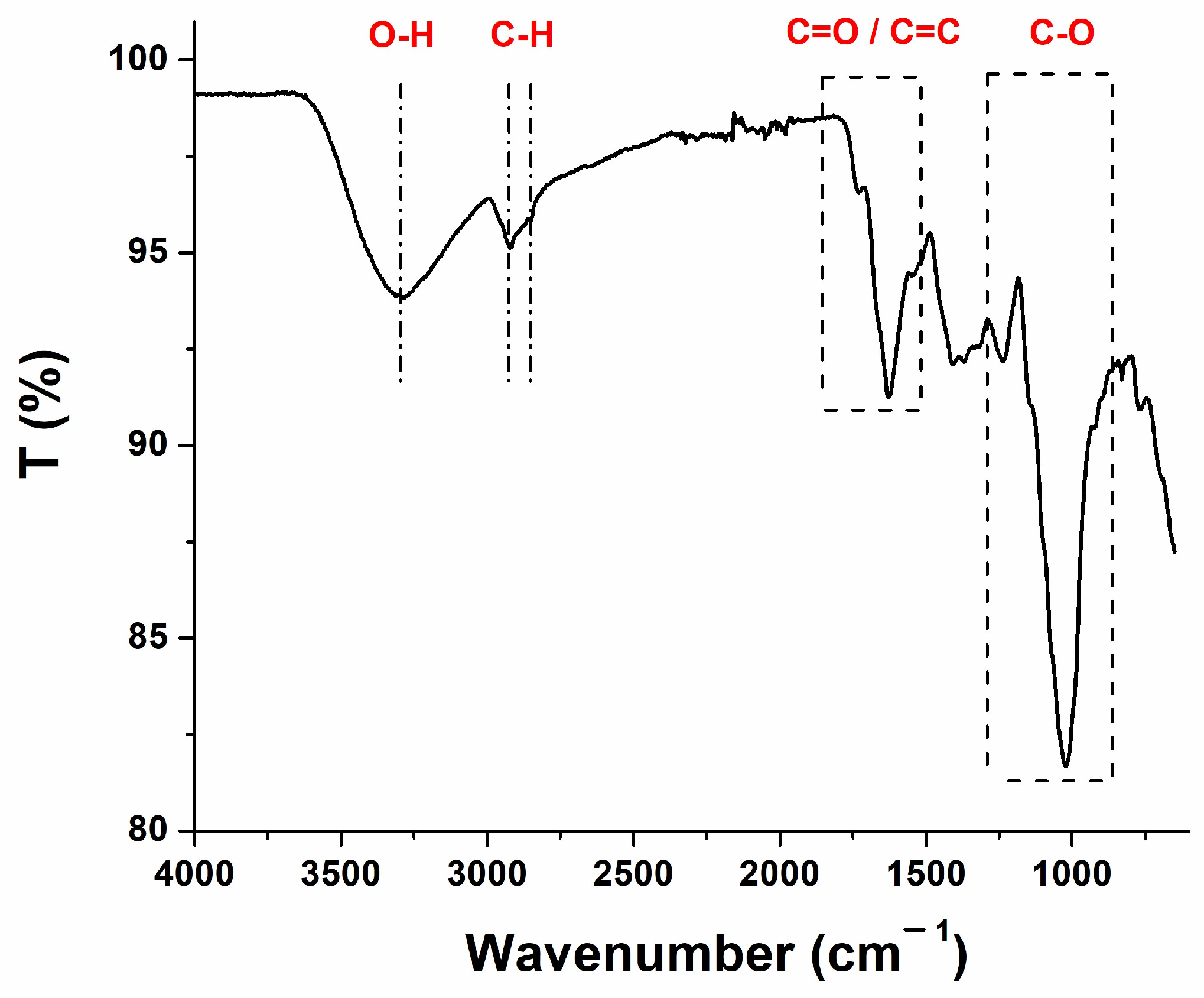
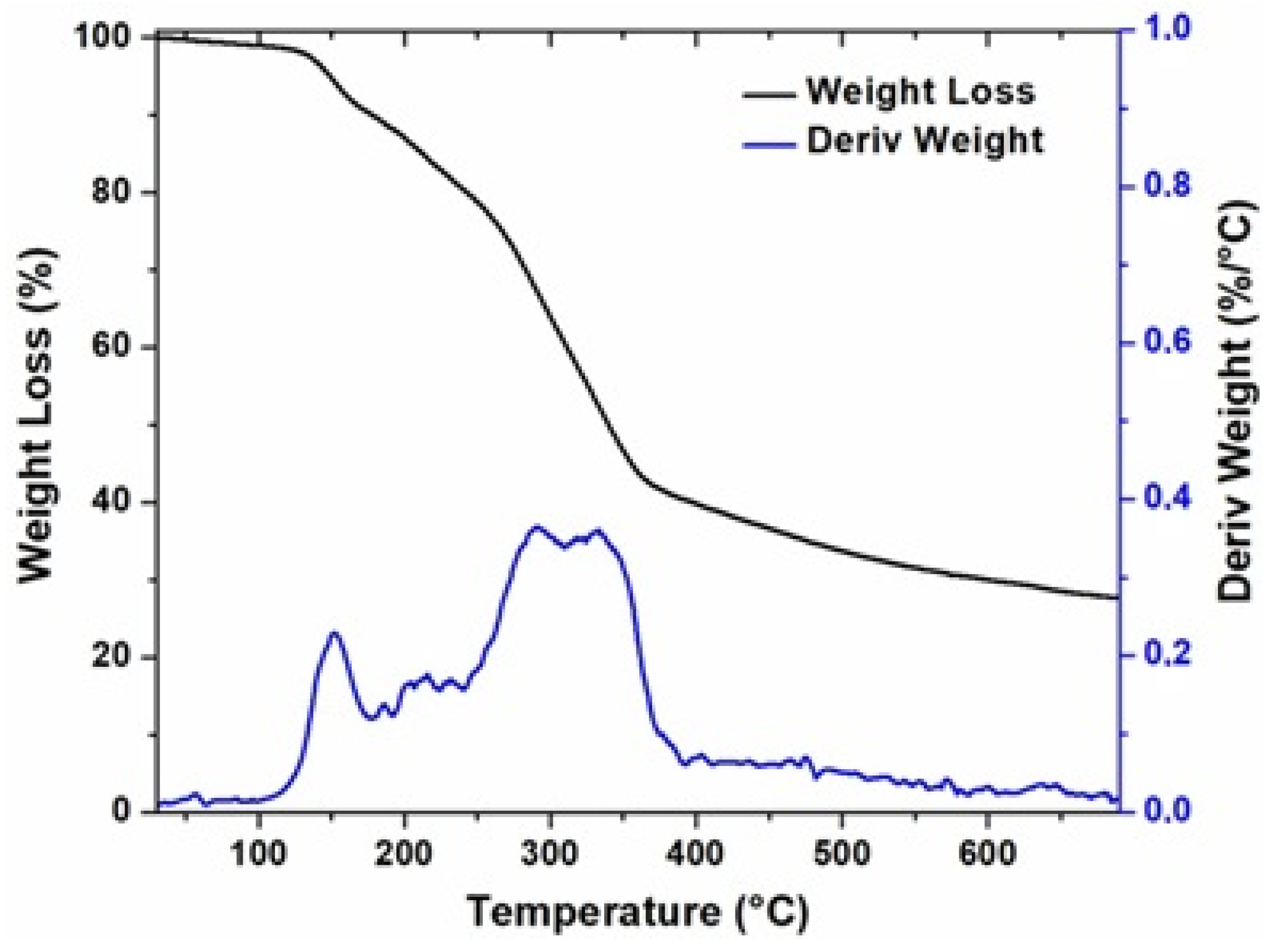
| Proximate Analysis | |
| Moisture content (%) | 8.51 ± 1.28 |
| Ash content (%) | 4.34 ± 0.05 |
| Volatile matter (%) | 82.37 ± 1.20 |
| Fixed carbon (%) | 4.78 ± 0.63 |
| pH of zero charge | 4.61 |
| Elemental analysis | |
| Carbon (%) | 41.33 ± 0.45 |
| Nitrogen (%) | 3.20 ± 0.18 |
| Hydrogen (%) | 6.20 ± 0.01 |
| Sulfur (%) | Not revealed |
| Oxygen (%) * | 49.27 ± 0.28 |
| Exp | Real Values Factors | Responses | ||||
|---|---|---|---|---|---|---|
| IR (Wt./Wt.) | T (°C) | Time (min) | Yield Y1 (%) | BET Area Y2 (m2 g−1) | Zeta Potential Y3 (mV) | |
| 1 | 3.5:1 | 550 | 75 | 9.17 | 850 | −11.68 |
| 2 | 0.5:1 | 550 | 75 | 33.89 | 623 | −9.15 |
| 3 | 2.75:1 | 700 | 75 | 14.30 | 833 | −14.32 |
| 4 | 1.25:1 | 400 | 75 | 24.17 | 204 | −8.34 |
| 5 | 2.75:1 | 400 | 75 | 12.86 | 18 | −4.40 |
| 6 | 1.25:1 | 700 | 75 | 31.69 | 263 | −9.35 |
| 7 | 2.75:1 | 600 | 120 | 15.22 | 660 | −10.60 |
| 8 | 1.25:1 | 500 | 30 | 21.42 | 585 | −5.12 |
| 9 | 2.75:1 | 500 | 30 | 12.94 | 698 | −7.79 |
| 10 | 2.00:1 | 650 | 30 | 13.58 | 1134 | −8.62 |
| 11 | 1.25:1 | 600 | 120 | 28.24 | 224 | −10.11 |
| 12 | 2.00:1 | 450 | 120 | 15.85 | 374 | −6.95 |
| 13 | 2.00:1 | 550 | 75 | 16.16 | 1003 | −7.41 |
| 14 | 2.00:1 | 550 | 75 | 15.45 | 1112 | −7.95 |
| 15 | 2.00:1 | 550 | 75 | 16.49 | 1100 | −9.72 |
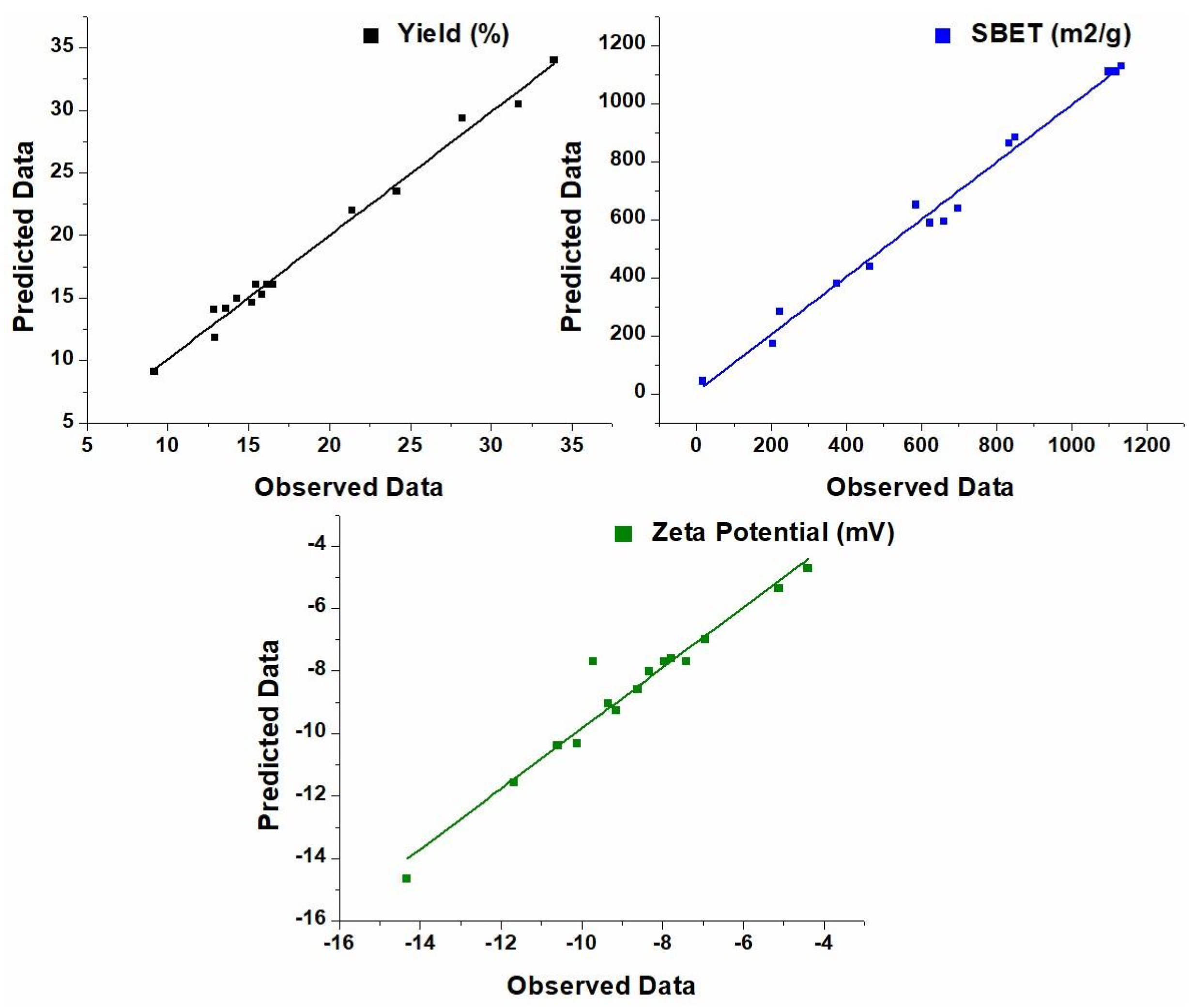
| Y1 (%) | Y2 (m2 g−1) | Y3 (mV) | |
|---|---|---|---|
| F-ratio | 35.473 | 1991.768 | 61.356 |
| Lack of fit p-value | ˂0.05 (**) | ˂0.001 (***) | ˂0.001 (***) |
| R2 | 0.985 | 0.988 | 0.991 |
| Source | Yield (%) | BET Area (m2 g−1) | Zeta Potential (mV) | |||
|---|---|---|---|---|---|---|
| Coefficient | Signif.% | Coefficient | Signif.% | Coefficient | Signif.% | |
| Model | 16.03 | *** | 1071.66 | *** | −7.69 | *** |
| X1_Impregnation ratio | −12.45 | *** | 173.37 | *** | −1.15 | ** |
| X2_Temperature | 2.26 | * | 270.12 | *** | −3.17 | *** |
| X3_Time | 2.32 | * | −236.57 | *** | −1.25 | ** |
| X1X2 | 5.49 | ** | 436.49 | *** | −2.72 | *** |
| X1X3 | 4.46 | * | 43.46 | *** | −0.97 | * |
| X2X3 | 0.27 | 81.1% | −492.05 | *** | 0.16 | 64.7% |
| X12 | −3.51 | 6.4% | −335.16 | *** | −5.14 | *** |
| X22 | −1.53 | 40.0% | −877.88 | * | 3.15 | ** |
| X32 | 6.33 | * | −385.44 | *** | −0.25 | 63.3% |
| Sample | ACEXP6 | ACEXP13 |
|---|---|---|
| pH of zero charge | 2.24 | 2.34 |
| Elemental analysis | ||
| Carbon (%) | 68.78 ± 0.33 | 62.74 ± 0.34 |
| Nitrogen (%) | 1.68 ± 0.01 | 1.32 ± 0.15 |
| Hydrogen (%) | 2.72 ± 0.19 | 1.99 ± 0.31 |
| Sulfur (%) | 0.06 ± 0.04 | Not Detected |
| Oxygen (%) * | 26.79 ± 0.55 | 33.95 ± 0.12 |
| O/C | 0.39 | 0.54 |
| H/C | 0.04 | 0.03 |
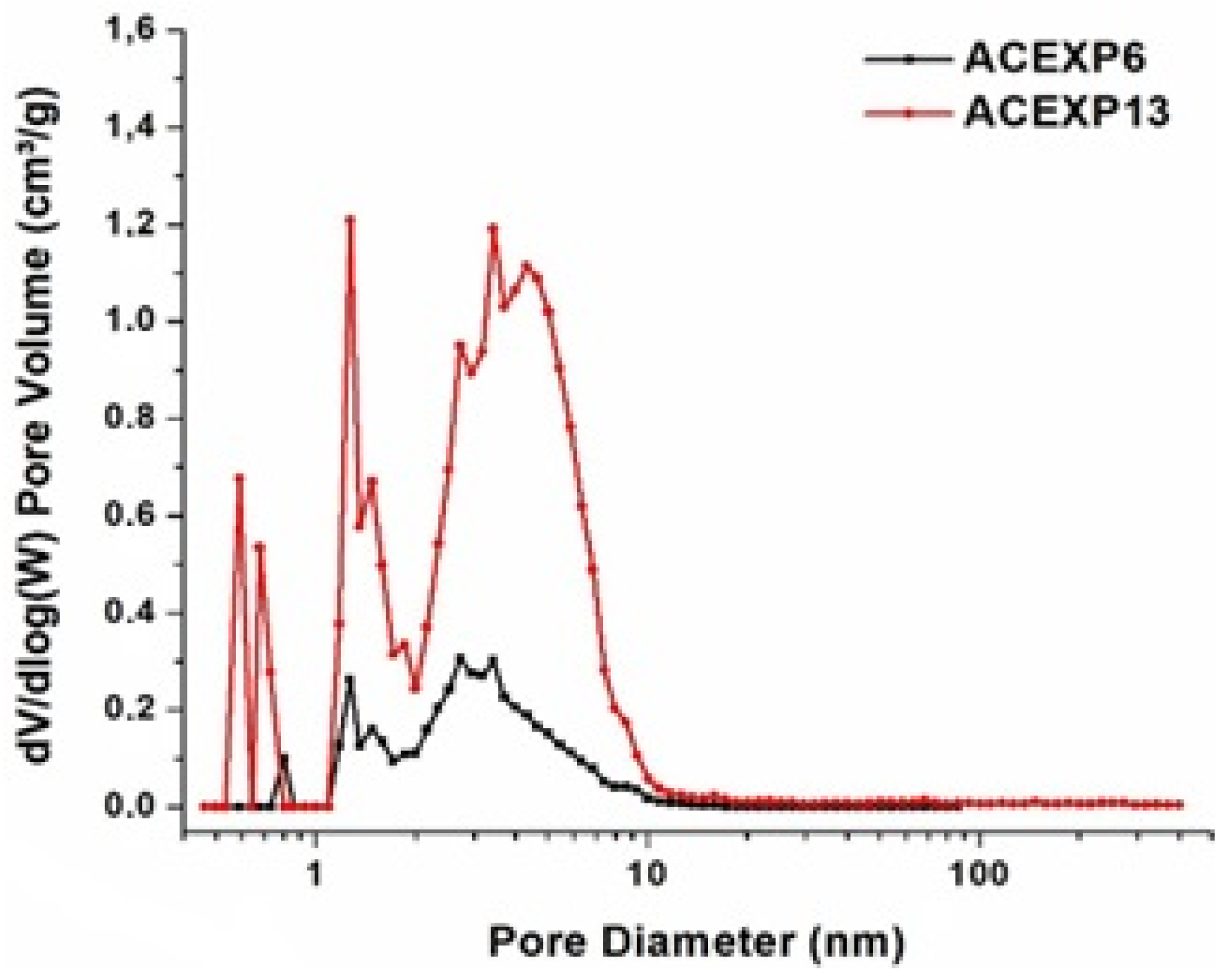
| ACEXP6 | ACEXP13 | |
|---|---|---|
| BET (m2 g−1) | 263 | 1003 |
| DFT Total pore volume (cm3 g−1) | 0.16 | 0.71 |
| DFT Micropores volume (cm3 g−1) | 0.05 | 0.21 |
| DFT Mesopores volume (cm3 g−1) | 0.11 | 0.49 |
| Micropore fraction (v/v) | 0.31 | 0.30 |
| Isotherm Model | ACEXP13 | ACEXP6 |
|---|---|---|
| Langmuir | ||
| Q0 (mg g−1) | 77.597 | 67.277 |
| B (L mg−1) | 0.098 | 0.319 |
| R2 | 0.959 | 0.970 |
| Freundlich | ||
| Kf | 21.031 | 26.865 |
| 0.261 | 0.198 | |
| R2 | 0.969 | 0.922 |
| Temkin | ||
| AT (L mg−1) | 9.672 | 24.312 |
| Br (J mol−1) | 251.854 | 292.949 |
| R2 | 0.93791 | 0.959 |
| Dubinin–Radushkevich | ||
| Qs (mg g−1) | 69.820 | 62.283 |
| E (kJ mol−1) | 0.173 | 0.744 |
| R2 | 0.837 | 0.906 |
| Biomass Sources | Activation Agent | BET Surface Area (m2/g) | pH | Time (min) | Adsorption Capacity (mg g−1) | Affinity (mg m−2) | Ref |
|---|---|---|---|---|---|---|---|
| Leucaena leucocephala | H3PO4 | 1131 | 4 | 60 | 13.85 | 0.0122 | [74] |
| Teff Straw | H2SO4 | 456 | 2.2 | 109 | 19.48 | 0.0427 | [26] |
| Ficus nitida leaves | H2SO4 | 1230 | 4 | 24 h | 21.00 | 0.0171 | [75] |
| Pomegranate peel | H2SO4 | Not reported | 3 | 28.28 | - | [28] | |
| Artemisia monosperma | H3PO4 | Not reported | 3 | 40 | 36.9 | - | [25] |
| Apple peels | NaOH | Not reported | 2 | 240 | 36.01 | - | [29] |
| Teff straw | H3PO4 | 824 | 2 | 60 | 49.285 | 0.0598 | [27] |
| Sugar beet bagasse | H3PO4 | 748 | 4 | 120 | 52.8 | 0.0706 | [76] |
| Typha | H3PO4 | 53 | 6 | 720 | 55.5 | 1.0472 | [77] |
| Acacia falcata | H3PO4 | 407 | 2 | 180 | 60.14 | 0.1478 | [66] |
| Pea pods (ACEXP6) | H3PO4 | 263 | 2 | 120 | 67.3 | 0.2559 | This study |
| Pea pods (ACEXP13) | 1003 | 77.6 | 0.0774 |
| T (°C) | nm, T (mmol g−1) | t (bar−1) | KT | R2 |
|---|---|---|---|---|
| ACEXP6 | ||||
| 20 | 40.87 | 0.233 | 2.69 × 10⁻⁵ | 0.99993 |
| 30 | 43.17 | 0.244 | 1.60 × 10⁻⁵ | 0.99994 |
| 40 | 57.25 | 0.237 | 9.16 × 10⁻⁶ | 0.99993 |
| 50 | 144.67 | 0.220 | 2.49 × 10⁻⁶ | 0.99953 |
| ACEXP13 | ||||
| 20 | 50.52 | 0.281 | 1.24 × 10⁻⁴ | 0.99998 |
| 30 | 33.58 | 0.330 | 9.45 × 10⁻⁵ | 0.99978 |
| 40 | 47.15 | 0.308 | 5.47 × 10⁻⁵ | 0.99999 |
| 50 | 51.31 | 0.314 | 3.51 × 10⁻⁵ | 0.99999 |
| Factors | Level | ||
|---|---|---|---|
| −1 | 0 | +1 | |
| X1: Impregnation ratio | 0.5 | 2 | 3.5 |
| X2: Temperature (°C) | 400 | 550 | 700 |
| X3: Time (min) | 30 | 75 | 120 |
Disclaimer/Publisher’s Note: The statements, opinions and data contained in all publications are solely those of the individual author(s) and contributor(s) and not of MDPI and/or the editor(s). MDPI and/or the editor(s) disclaim responsibility for any injury to people or property resulting from any ideas, methods, instructions or products referred to in the content. |
© 2026 by the authors. Licensee MDPI, Basel, Switzerland. This article is an open access article distributed under the terms and conditions of the Creative Commons Attribution (CC BY) license.
Share and Cite
Ben Khalifa, E.; Rzig, B.; Audu, M.F.; Minoia, A.; Cesano, F.; Hamrouni, B.; Magnacca, G. Multifactorial Optimization of Biochar Synthesis from Pea Pods Using the RSM Method: Insights into Process Parameters and Adsorption Capabilities Towards Cr(VI) and CO2. Inorganics 2026, 14, 205. https://doi.org/10.3390/inorganics14080205
Ben Khalifa E, Rzig B, Audu MF, Minoia A, Cesano F, Hamrouni B, Magnacca G. Multifactorial Optimization of Biochar Synthesis from Pea Pods Using the RSM Method: Insights into Process Parameters and Adsorption Capabilities Towards Cr(VI) and CO2. Inorganics. 2026; 14(8):205. https://doi.org/10.3390/inorganics14080205
Chicago/Turabian StyleBen Khalifa, Eya, Boutheina Rzig, Mariam Fadeke Audu, Angelica Minoia, Federico Cesano, Bechir Hamrouni, and Giuliana Magnacca. 2026. "Multifactorial Optimization of Biochar Synthesis from Pea Pods Using the RSM Method: Insights into Process Parameters and Adsorption Capabilities Towards Cr(VI) and CO2" Inorganics 14, no. 8: 205. https://doi.org/10.3390/inorganics14080205
APA StyleBen Khalifa, E., Rzig, B., Audu, M. F., Minoia, A., Cesano, F., Hamrouni, B., & Magnacca, G. (2026). Multifactorial Optimization of Biochar Synthesis from Pea Pods Using the RSM Method: Insights into Process Parameters and Adsorption Capabilities Towards Cr(VI) and CO2. Inorganics, 14(8), 205. https://doi.org/10.3390/inorganics14080205