Article

Photocatalytic Transesterification of Palm Oil Using TiO2-K: Synthesis, Characterization, and Kinetic Modeling


by
Andrés Suárez-Escobar
1,*,
Ricardo Ríos-Linares
2,
Tatiana Santos-Castellanos
1,
Andrea Álvarez-Cabrera
1,
Felipe Mendoza-Abella
1 and
Miguel A. Esteso
3,*
1
Facultad de Ciencias Naturales e Ingeniería, Universidad Jorge Tadeo Lozano, Bogotá 1103011, Colombia
2
Facultad de Ingeniería, Universidad Libre, Bogotá 111071, Colombia
3
Faculty of Health Sciences, Universidad Católica de Ávila, Calle Los Canteros s/n, 05005 Ávila, Spain
*
Authors to whom correspondence should be addressed.
Inorganics 2026, 14(6), 150; https://doi.org/10.3390/inorganics14060150 (registering DOI)
Submission received: 20 April 2026 / Revised: 23 May 2026 / Accepted: 29 May 2026 / Published: 30 May 2026

Abstract

Potassium-modified titanium dioxide (TiO2–K) was synthesized and evaluated as a heterogeneous photocatalyst for fatty acid methyl ester (FAME) production from palm oil under UV irradiation. The catalyst was characterized by X-ray diffraction (XRD), Brunauer–Emmett–Teller (BET) analysis, and scanning electron microscopy coupled with energy-dispersive spectroscopy (SEM–EDS). Potassium modification preserved the TiO2 crystalline framework while producing marked changes in morphology and a significant decrease in surface area. Photocatalytic transesterification was optimized using a central composite design, evaluating the effects of catalyst loading and the methanol-to-oil molar ratio on FAME yield. The quadratic response surface model adequately described the experimental data and predicted an optimum FAME yield of approximately 98.96% under the evaluated conditions. Kinetic analysis showed that the reaction profile was well described by an apparent pseudo-first-order model, consistent with the use of excess methanol, while the Avrami–Weibull equation provided a flexible empirical representation of the conversion profile. Control experiments confirmed that irradiation and catalyst presence were required for measurable FAME formation. Overall, this study demonstrates the potential of TiO2–K as a photocatalyst for light-assisted biodiesel production and provides an initial framework for process optimization and kinetic interpretation.

1. Introduction

The increasing demand for renewable and sustainable energy sources has driven extensive research toward alternative fuels, with biodiesel emerging as one of the most promising replacements for fossil-derived diesel [1,2,3]. As a renewable, biodegradable, and environmentally friendly fuel, biodiesel offers numerous advantages, including reduced greenhouse gas emissions, lower toxicity, and compatibility with existing diesel engines. Biodiesel is predominantly produced through the transesterification of triglycerides from vegetable oils, animal fats, and waste oils in the presence of alcohol and a catalyst [4]. However, conventional biodiesel production processes suffer from key limitations—such as high feedstock costs, catalyst instability, and energy-intensive purification steps—that hinder large-scale implementation, motivating the development of more cost-effective, efficient, and sustainable catalytic technologies [5,6].
To overcome these constraints, researchers have explored several catalytic pathways, including heterogeneous catalysis, enzymatic catalysis, and photocatalysis. Among them, photocatalysis has gained increasing attention due to its ability to operate under mild reaction conditions while harnessing abundant and renewable solar energy [7,8]. Semiconductor photocatalysts such as titanium dioxide (TiO2) have demonstrated significant potential in driving transesterification reactions [9]. TiO2 and its modified derivatives function by generating electron–hole pairs upon light absorption, enhancing catalytic activity and promoting the conversion of lipids into biodiesel. Recent advances in photocatalyst design—such as SnS2/fly ash nanocomposites and visible-light-active semiconductor systems—have further improved light harvesting and charge separation efficiency [10,11]. Additionally, doped photocatalysts, including TiO2–KO2 composites, have shown enhanced basicity, superior charge carrier separation, and improved recyclability, positioning them as promising candidates for scalable photocatalytic biodiesel production [12,13,14].
Conventional biodiesel synthesis is typically carried out using homogeneous alkaline catalysts due to their high reaction rates [15]. However, heterogeneous catalysts offer advantages in terms of reusability and product purification, despite often showing lower catalytic activity [9,16]. In this context, photocatalytic transesterification has emerged as an attractive approach, particularly for processing low-grade feedstocks such as waste cooking oils and fish oil, requiring less energy input and achieving improved environmental performance [17,18]. The development of visible-light-responsive photocatalysts has further expanded the feasibility of integrating solar energy into biodiesel production systems, reducing dependence on fossil fuel-derived electricity [12].
One of the major benefits of photocatalytic transesterification is its ability to operate under ambient temperatures and pressures, enabling significant reductions in energy consumption and operational costs [7,19]. Photocatalysis also minimizes the formation of undesirable byproducts, such as soaps, that typically arise in alkaline-catalyzed systems [15]. Nonetheless, scaling up photocatalytic biodiesel production remains challenging due to limited light penetration, mass-transfer limitations, and the need for efficient photoreactor designs. Recent advancements in plasmonic nanomaterials, hybrid photocatalysts, and continuous-flow photoreactors have shown promise in overcoming these barriers and improving process intensification [20,21,22].
Despite steady progress in photocatalytic biodiesel research, several challenges must still be addressed for industrial application, including limited visible-light absorption, rapid recombination of photogenerated charge carriers, and catalyst stability issues. Material engineering strategies—such as bandgap tuning, nanostructuring, heterojunction formation, and plasmonic enhancement—have been proposed to address these issues and enhance photocatalytic efficiency [8]. Reactor design also plays a fundamental role, with immobilized photocatalysts and continuous-flow configurations demonstrating improved light utilization and enhanced reaction performance [12,20]. Emerging materials such as MOFs, carbon nitrides, and graphene-based photocatalysts have likewise shown considerable potential by improving charge transport and reducing recombination losses, particularly when combined to form heterojunctions or when modified with co-catalysts such as transition metals or noble metals.
The design of modified materials for photocatalytic applications remains an active research field, extending from advanced oxidation processes to light-driven applications in environmental, energy, and biomedical systems. In this context, recent studies on photoactive materials have highlighted the importance of structural modification, photon absorption, charge-transfer processes, and reactive species generation for improving photocatalytic performance [23,24,25,26]. These advances support the broader relevance of developing modified semiconductor-based catalysts, such as TiO2–K, for light-assisted chemical transformations.
In this context, potassium-modified TiO2 has attracted increasing interest due to its enhanced surface basicity, improved charge separation, and potential to promote transesterification under photocatalytic conditions [13,14]. Building on these advances, this study investigates the catalytic performance of a TiO2–K photocatalyst for biodiesel production, with emphasis on catalyst characterization, kinetic modeling, and process optimization using response surface methodology. By systematically analyzing the relationship between catalyst modification, light-driven reaction kinetics, and operational variables, this work aims to contribute to the development of efficient, scalable, and sustainable photocatalytic technologies for biodiesel production, helping bridge the gap between laboratory research and industrial application.

2. Results and Discussion

2.1. Catalyst Characterization

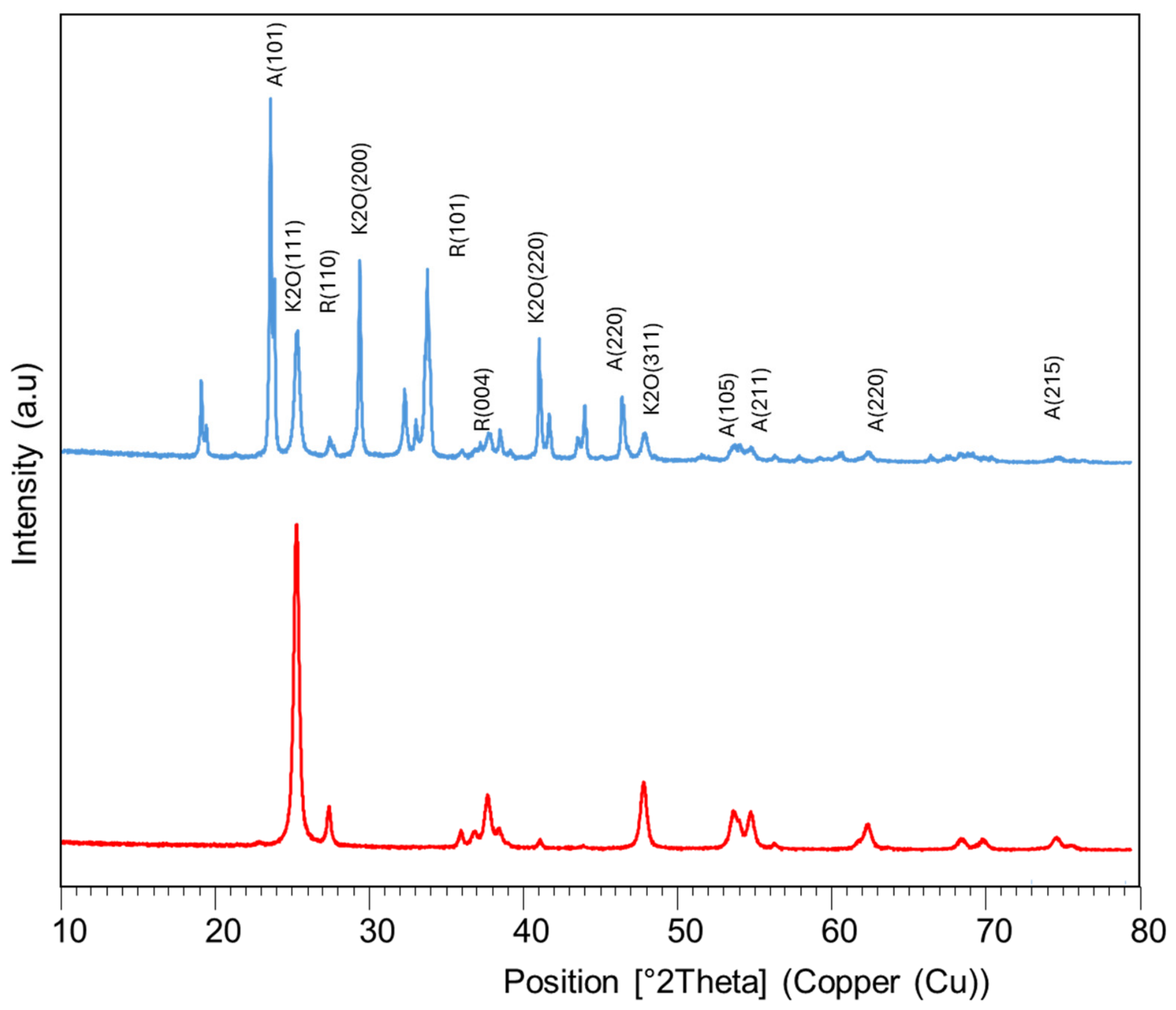
Figure 1 shows X-ray diffraction (XRD) analysis of unmodified TiO2 P25 confirmed the presence of both anatase and rutile phases, consistent with the known composition of Degussa P25 [27], typically composed of approximately 80% anatase and 20% rutile. This mixed-phase structure is widely recognized for its enhanced photocatalytic behavior due to the synergistic charge-transfer interactions between the two crystalline forms.
Following the hydrothermal pretreatment and subsequent potassium incorporation, the characteristic reflections of anatase and rutile remained clearly identifiable in the TiO2–K sample, indicating that the primary crystalline framework of TiO2 was preserved. However, several notable modifications were observed in the diffractogram. Subtle shifts in peak positions, along with changes in relative intensities and slight peak broadening, suggest lattice distortions and modifications in crystallite size induced by the chemical treatments. These effects are consistent with partial incorporation of potassium species on the surface or within defect sites, as well as with structural rearrangements resulting from the high-temperature calcination process.
In addition to these changes, the modified catalyst exhibited low-intensity features that may correspond to poorly crystalline potassium-containing species or amorphous potassium titanates such as K2Ti6O13 or K4Ti3O8 [13], which have been reported in the literature for alkali-modified TiO2 systems [14]. Although these phases cannot be conclusively assigned due to limited diffraction intensity and potential overlap with TiO2 reflections, their presence would be consistent with the reduction in surface area and the morphological changes observed in SEM analysis. Such potassium titanate-like environments have been associated with increased surface basicity and modified electronic properties [28], both of which can influence catalytic behavior.
Overall, the XRD results indicate that potassium modification alters the structural environment of TiO2 while maintaining its anatase–rutile backbone. The observed lattice distortions, crystallite size variations, and potential formation of potassium-containing surface species suggest meaningful interactions between potassium and the TiO2 matrix [29], which may contribute to the enhanced photocatalytic activity observed during transesterification.
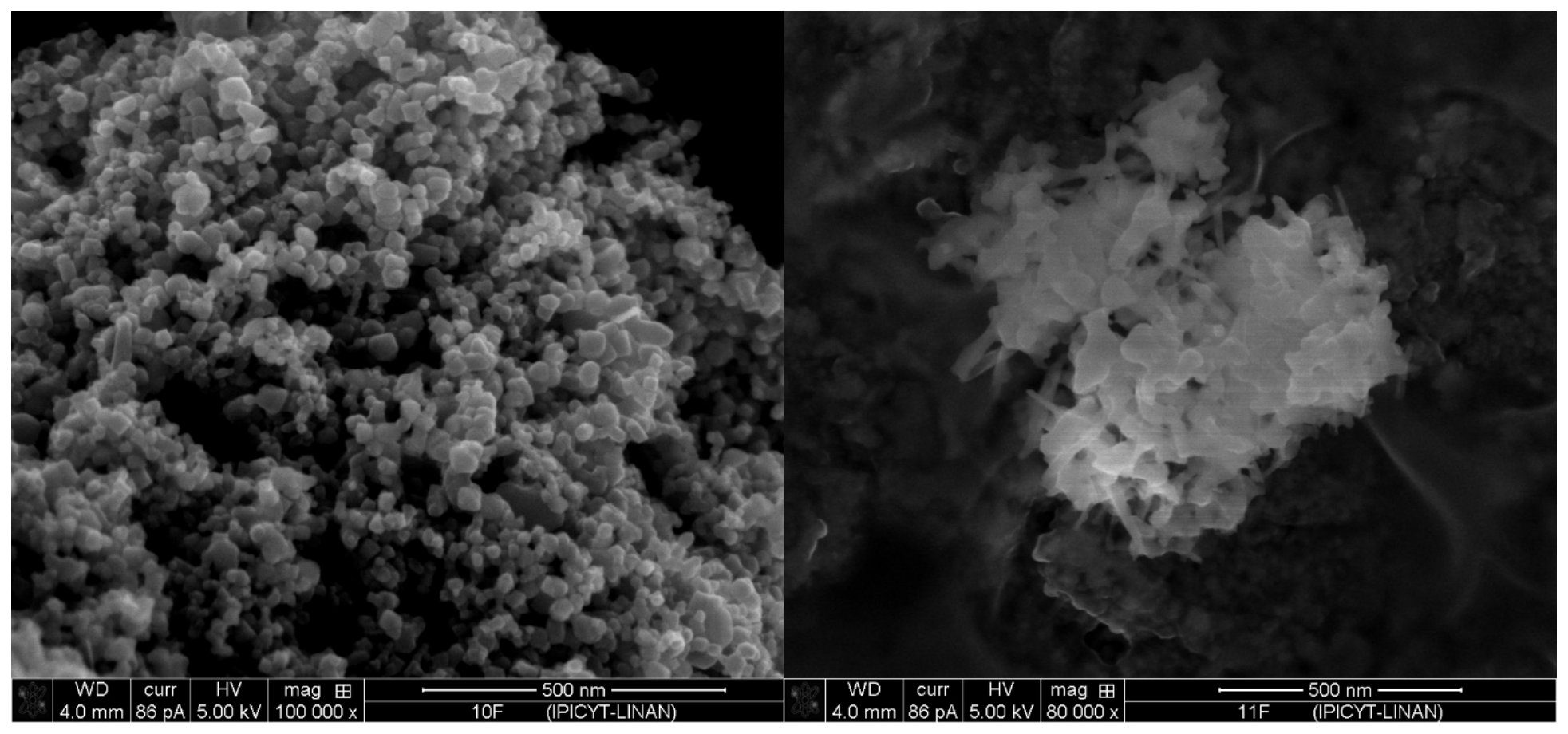
The scanning electron microscopy (SEM) images shown in Figure 2 reveal clear morphological differences between pristine TiO2 P25 and the potassium-modified catalyst after KNO3 impregnation and calcination. The unmodified TiO2 exhibits the typical microstructure of Degussa P25, consisting of highly dispersed near-spherical nanoparticles forming loosely packed agglomerates [27]. This morphology provides a high external surface area and is consistent with its well-known photocatalytic performance.
In contrast, the TiO2–K catalyst displays substantial changes in surface morphology. The particles appear more densely agglomerated, with evidence of sintering and the formation of larger and more compact aggregates [30,31]. This structural evolution can be attributed to the high-temperature calcination required to decompose the KNO3 precursor and stabilize potassium species on the TiO2 surface. Such thermal treatment promotes particle growth and neck formation between adjacent crystallites, reducing particle dispersion.
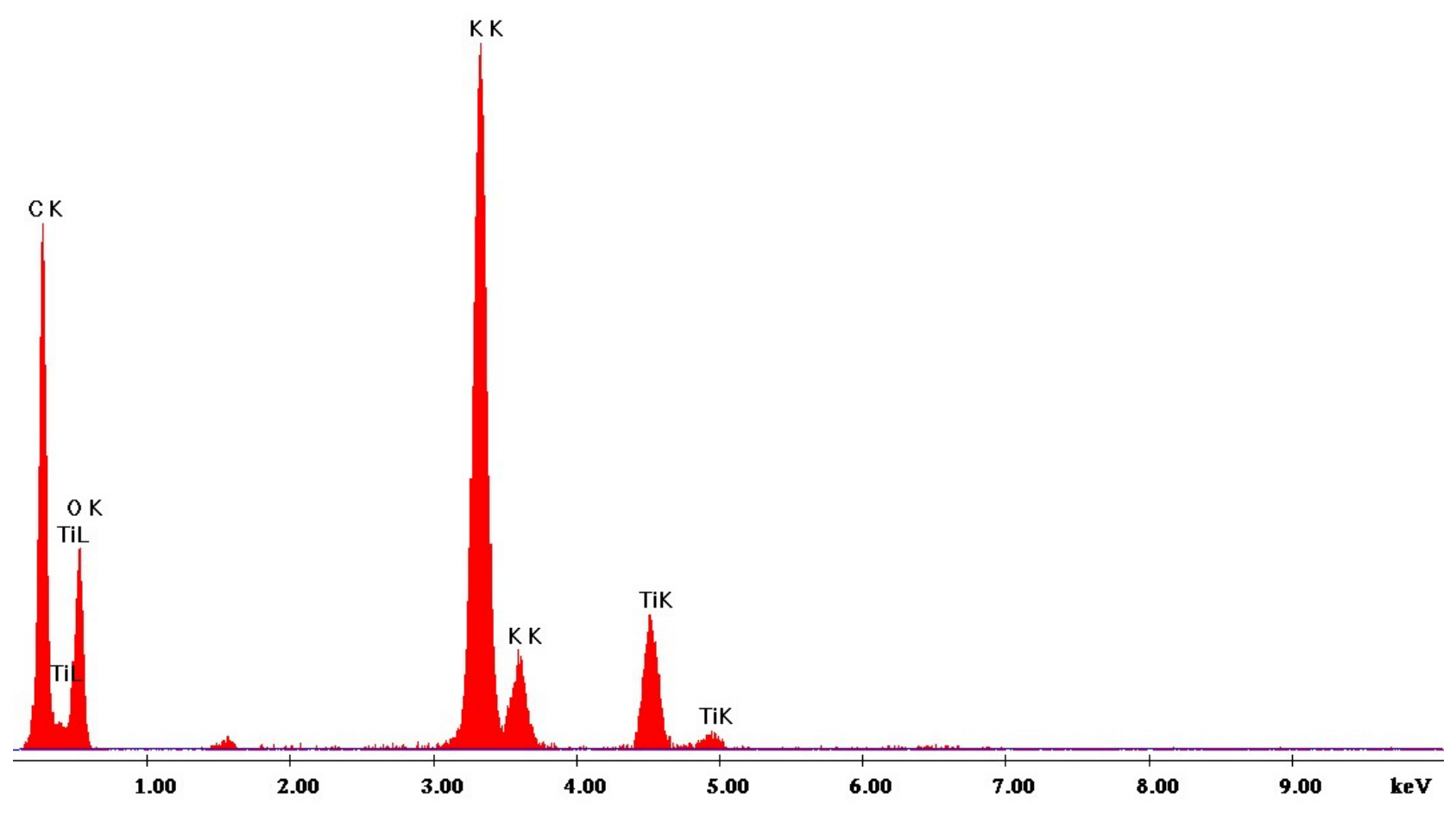
Energy-dispersive X-ray spectroscopy (EDS) performed on the modified catalyst (Figure 3) confirms the presence of potassium in addition to titanium and oxygen. The K signal observed in the EDS spectrum indicates that potassium species are effectively incorporated into the solid after impregnation and calcination. Although the analysis corresponds to selected regions of the sample, the detection of K across representative areas suggests that potassium is not present as isolated macroscopic domains but rather is reasonably well distributed on the TiO2 surface [32]. This elemental evidence supports the successful modification of TiO2 by potassium salts and complements the structural and textural characterization, reinforcing the interpretation that potassium-containing surface species play a key role in the catalytic behavior of TiO2–K. SEM–EDS analysis confirmed the presence of potassium in the TiO2–K catalyst. The semi-quantitative EDS analysis of the catalyst showed 4.20 wt% K, corresponding to 1.48 at%, when normalized including carbon. Because a strong carbon signal was observed, likely associated with the conductive carbon tape, a carbon-excluded normalization was also calculated for descriptive purposes, giving 12.0 wt% K among the detected inorganic elements.
The Brunauer–Emmett–Teller (BET) surface area analysis corroborated these morphological observations. The unmodified TiO2 exhibited a surface area of 50 m2/g with a pore volume of 0.28 cm3/g, values consistent with its highly dispersed nanostructure. However, after modification with KNO3 and subsequent calcination, the surface area drastically decreased to 2 m2/g, while the pore volume was reduced to 0.03 cm3/g. This substantial reduction is a direct consequence of sintering and pore collapse, which were visually confirmed in the SEM images [31].
These findings suggest that the incorporation of potassium significantly alters the textural properties of TiO2, potentially influencing its photocatalytic efficiency. While potassium doping may enhance electronic properties and charge separation, the drastic reduction in surface area and porosity could limit the accessibility of reactants to active sites, ultimately affecting overall catalytic performance. Future studies should focus on optimizing calcination conditions and doping strategies to balance structural stability with enhanced photocatalytic reactivity.
These morphological changes are in line with the decrease in BET surface area observed for the modified catalyst, indicating partial loss of porosity and collapse of interparticle voids. The formation of larger aggregates typically reduces the number of accessible active sites, which may affect catalytic performance depending on the nature of the reaction. However, in photocatalytic systems, surface chemistry and electronic modifications introduced by potassium species may partially compensate for the reduced surface area by enhancing surface basicity, charge separation, or light absorption efficiency.

2.2. Surface Response of FAMES Production

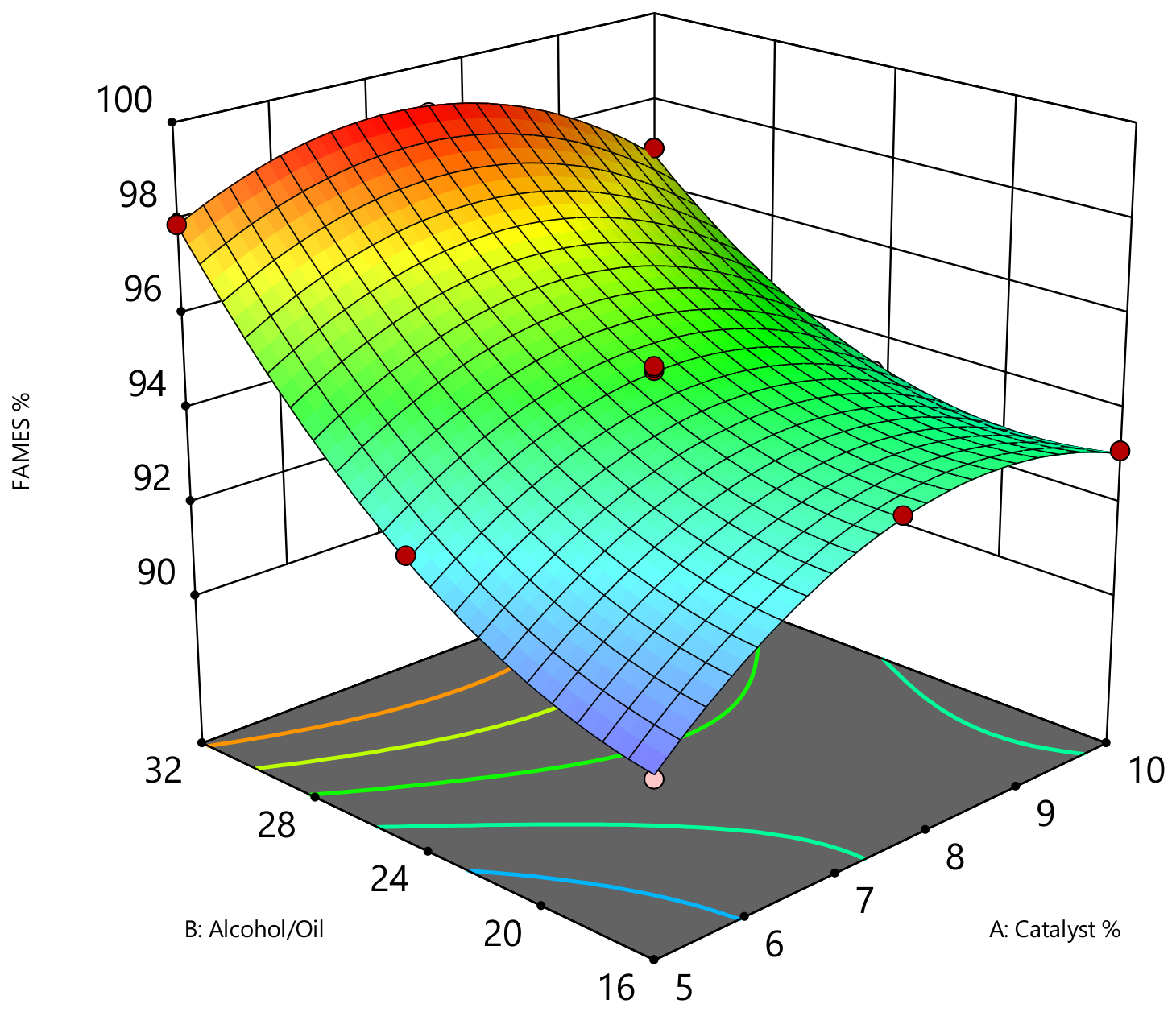
Response surface methodology (RSM) was applied to evaluate the combined effects of catalyst loading and methanol-to-oil ratio on FAMEs production using the TiO2–K catalyst as shown in Figure 4. The quadratic model was highly significant (F = 656.71, p < 0.0001), demonstrating excellent predictive capacity for the system (Table 1). The determination coefficient (R2 = 0.998) and the non-significant lack of fit (p = 0.0631) indicate that the model adequately fits the experimental data and that the experimental error is minimal. These results confirm that the TiO2–K-catalyzed transesterification process is well-described by a second-order polynomial.
Analysis of individual factors revealed that both catalyst loading (p = 0.0002) and methanol-to-oil ratio (p < 0.0001) significantly influenced FAME yield (Table 2). The positive linear coefficients indicate that increasing either factor enhances FAME formation within the experimental range. Increasing catalyst concentration provides a greater number of accessible basic and photocatalytic sites, which accelerate triglyceride conversion. This trend is consistent with the SEM–EDS analysis, which confirmed the presence of uniformly dispersed potassium species that increase the density of active sites, despite the partial sintering observed after calcination. Although sintering decreases surface area, the presence of strong K–O–Ti basic sites compensate by improving catalytic reactivity.
The methanol-to-oil ratio was the dominant factor, showing the largest linear effect (coefficient = 2.79). This strong dependence is expected in transesterification reactions, where methanol acts both as a reactant and as a phase-disrupting agent that improves contact between oil and catalyst. Contrary to some conventional alkaline systems, the increased methanol ratio in the present photocatalytic system did not reduce conversion; instead, higher methanol consistently improved FAME yield. This behavior is supported by the kinetic results, where the pseudo-first-order model fits the data extremely well (R2 = 0.9991), confirming that excess methanol drives the reaction by maintaining its concentration effectively constant.
The interaction term AB was also significant (p < 0.0001), indicating that the combined effect of catalyst loading and methanol ratio is not purely additive. The negative coefficient (−0.9575) suggests that while each factor individually increases FAME yield, their simultaneous increase leads to diminishing returns. This effect is typically attributed to mass-transfer limitations at high catalyst loadings (e.g., light-scattering, turbidity) or to increased viscosity and phase distortions at very high methanol ratios. The quadratic terms A2 and B2 were also significant (p < 0.0001), confirming the curvature in the response surface and defining the existence of clear optimal operational conditions.
Under numerically optimized conditions determined by the RSM model, the TiO2–K catalyst achieved a maximum FAME yield of 98.96%, demonstrating excellent photocatalytic activity. The high FAME yield obtained with TiO2–K may be associated with the combined effect of potassium-containing surface species, which can modify surface basicity and promote methanol activation, together with photoinduced charge generation under UV irradiation. However, the exact mechanistic pathway cannot be unambiguously assigned from the present data and requires further investigation using radical scavengers or in situ spectroscopic techniques. The microstructural evidence from SEM–EDS, showing uniform potassium distribution despite partial sintering, further supports the high catalytic effectiveness observed.
Overall, the RSM results establish that the TiO2–K catalyst operates efficiently within a wide range of reaction conditions, with methanol ratio as the main driver of conversion and catalyst loading as the secondary contributor. The model provides a strong statistical and mechanistic basis for process optimization and supports the potential scalability of this photocatalytic system.

2.3. Kinetics of Heterogeneous Transesterification of Palm Oil

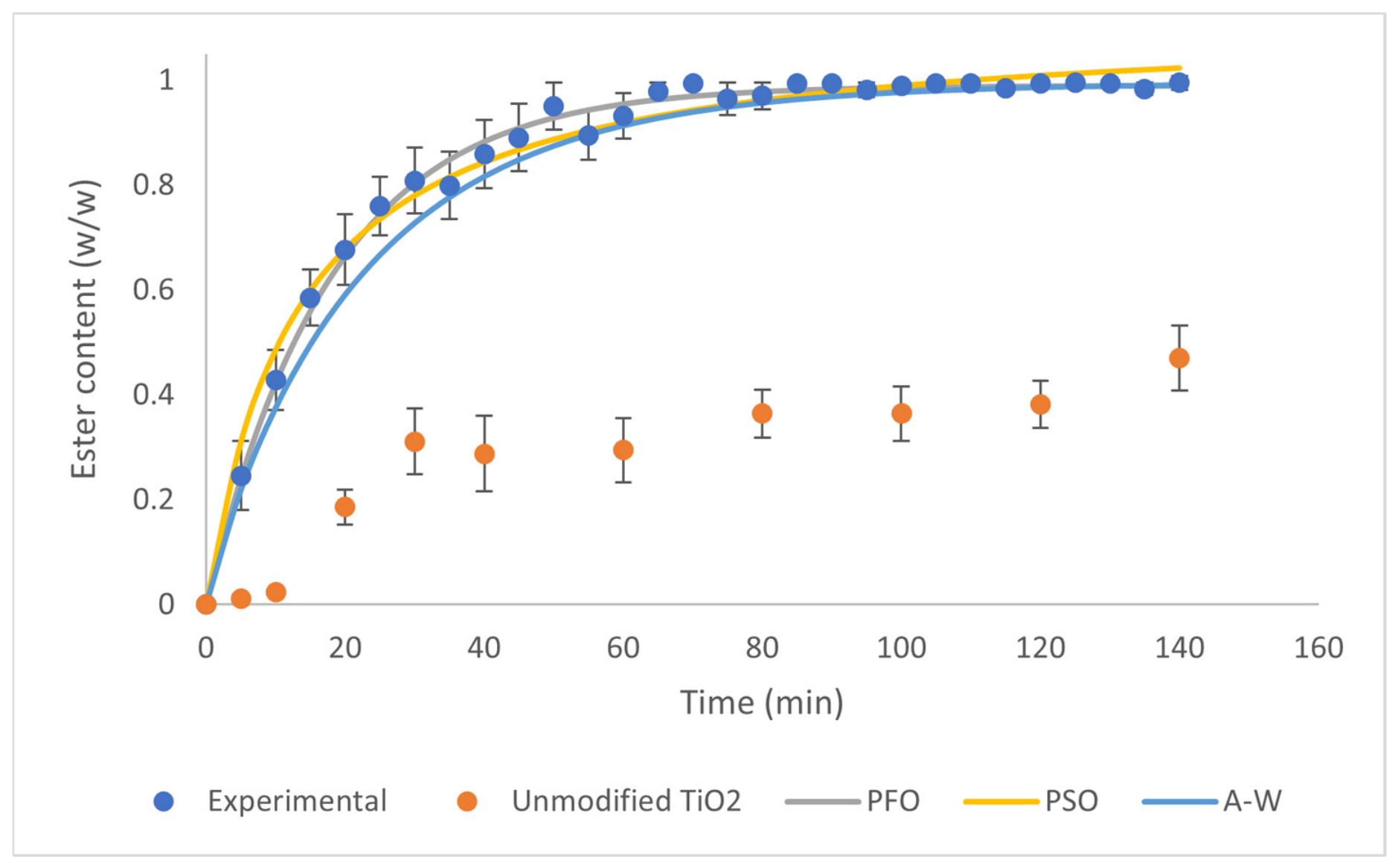
Kinetic data and fitting results are shown in Figure 5. Equations and results of the modeling are shown in Table 3.
Control experiments conducted under dark conditions and in the absence of catalyst confirmed that the TiO2–K catalyst exhibits no measurable transesterification activity toward the triglycerides present in palm oil, suggesting that for this case, photon-induced activation is essential for initiating the reaction.
The orange data points, corresponding to P25 under radiation, show a much slower and less efficient response than the main experimental series over the period evaluated. Unlike the blue experimental data, which rise rapidly and approach values close to 1, the P25 with radiation results remain low throughout the experiment, reaching only about 0.45–0.50 by 140 min. This indicates that, under the tested conditions, irradiated P25 exhibited limited activity and could not achieve the high conversion or degradation levels observed for the other system within the studied reaction time.
The evolution of the FAMEs fraction (Y) as a function of reaction time was fitted to three kinetic models: pseudo-first order, pseudo-second order, and the Avrami–Weibull expression. The experimental Y(t) profile shows a rapid increase during the first minutes of reaction, with the highest apparent rate observed between 0 and 5 min, followed by a gradual approach to an apparent plateau after approximately 60 min. This trend indicates that FAME formation proceeds rapidly under the selected reaction conditions. However, based on the present kinetic dataset alone, no definitive conclusion can be drawn regarding the specific rate-limiting step or whether the apparent kinetic behavior is governed by surface reaction, solution-phase processes, mass-transfer effects, or equilibrium limitations. Therefore, the kinetic models are used here primarily to describe and compare the experimental profile rather than to assign a definitive mechanistic pathway. The pseudo-first-order model provided an excellent fit to the experimental data, whereas the Avrami–Weibull model yielded the highest correlation coefficient and slightly better captured the full kinetic profile. In contrast, the pseudo-second-order model produced a physically unrealistic asymptotic value, indicating that it should be considered only as a comparative model and not as evidence of a second-order mechanism.
The pseudo-first-order model describes well the intermediate and final portions of the curve, with a high correlation coefficient (R2 = 0.9946), a kinetic constant of k = 0.0556 min−1, and an asymptotic conversion close to the experimental plateau (Y = 0.9916). Nevertheless, the model underestimates the early sharp increase in Y, demonstrating its limited capacity to capture the rapid activation observed under these reaction conditions. In contrast, the pseudo-second-order model, despite producing a relatively high R2 (0.9891), predicts a non-physical maximum conversion (Y = 1.1180) and deviates substantially at longer times, revealing that the system does not follow a second-order rate dependence and that this formulation lacks mechanistic validity.
The Avrami–Weibull model provides the best overall representation of the kinetic profile, achieving an excellent fit (R2 = 0.9949) and accurately capturing both the rapid initial rise and the gradual approach to equilibrium. The fitted parameters (k = 0.05539 min−1, n = 0.9296, and Y = 0.9954) indicate that the overall reaction behaves similarly to a first-order process (as n ≈ 1), while retaining sufficient flexibility to model the early acceleration phase typical of catalytic processes dominated by swift adsorption–reaction interactions. The ability of this model to reproduce the sigmoidal nature of the curve suggests that the reaction rate is initially governed by the high availability of active surface sites and by favorable adsorption interactions on the K-modified TiO2 surface, before transitioning into a regime limited by surface reaction and decreasing reactant availability.
Overall, the Avrami–Weibull expression offers the most complete and mechanistically consistent description of the transesterification kinetics, capturing both the initial rapid activation and the subsequent deceleration as the reaction approaches equilibrium. The pseudo-first-order model remains a simpler but still accurate approximation for most of the reaction trajectory. Altogether, the kinetic analysis indicates that the TiO2–K material exhibits high initial intrinsic activity and that the process is primarily governed by surface reaction phenomena with minimal diffusional resistance at early stages.
The photocatalytic performance of the TiO2–K catalyst was compared with selected photocatalytic biodiesel systems reported in the literature. In the present work, TiO2–K achieved >95% FAMEs within approximately 60 min under UV irradiation. For comparison, a TiO2/SiO2 composite has been reported to reach approximately 97% conversion after nearly 10 h of reaction [17], while other TiO2-based or heterojunction photocatalytic systems have commonly required reaction times in the range of several hours to achieve high yields [10]. These comparisons suggest that the TiO2–K system exhibits a rapid conversion profile under the experimental conditions evaluated in this study. However, differences among photocatalytic systems are strongly influenced by lamp power, emission wavelength, irradiance, distance between the light source and the reaction medium, reactor geometry, optical path length, catalyst loading, alcohol-to-oil ratio, temperature, and mixing conditions. Therefore, the observed performance is best understood as the result of the specific combination of TiO2–K surface modification, UV irradiation, and reactor configuration used in this work. More detailed comparisons of photocatalytic efficiency would require normalized photochemical parameters, such as photon flux, irradiance, apparent quantum yield, or light-normalized kinetic constants.
Although potassium modification caused a marked decrease in BET surface area, the higher activity of TiO2–K suggests that the reaction was not controlled only by textural properties. The improved response may be associated with changes in surface chemistry introduced by potassium species, including the formation of more reactive basic surface environments and modified charge-transfer behavior under UV irradiation. Similar effects have been reported for alkali-modified TiO2 systems, where alkali cations can influence photocatalytic performance by altering surface interactions and charge-carrier behavior [33].

3. Materials and Methods

3.1. Materials

Refined palm oil was used as the feedstock for biodiesel production. Methanol (≥99.8%, LiChrosolv®, gradient grade for liquid chromatography; Merck KGaA, Darmstadt, Germany) was used as the alcohol reagent. Commercial titanium dioxide (TiO2, Degussa P25, 80% anatase/20% rutile; Evonik Industries AG, Essen, Germany) served as the support material. Potassium nitrate (KNO3, pure, Pharma grade, CAS 7757-79-1, code 141524.1210; PanReac AppliChem, ITW Reagents, Castellar del Vallès, Barcelona, Spain) was used as the potassium precursor. Potassium hydroxide pellets (KOH, EMSURE®, ≥85.0%, CAS 1310-58-3, code 1.05033.1000; Merck KGaA, Darmstadt, Germany), hydrochloric acid (HCl, 37%, for analysis, Reag. USP/ACS/ISO, CAS 7647-01-0; PanReac AppliChem, ITW Reagents, Castellar del Vallès, Barcelona, Spain), and deionized water obtained from a Simplicity® UV Water Purification System (Merck Millipore, Merck KGaA, Darmstadt, Germany) were used during pretreatment steps. All chemicals were used as received without further purification.

3.2. Catalyst Preparation

3.2.1. Hydrothermal Pretreatment of TiO2

Ten grams of TiO2 P25 were dispersed in 10 M NaOH solution and subjected to hydrothermal treatment at 80 °C on a heating plate under continuous stirring at 600 rpm for 24 h. This step aimed to modify the surface structure and enhance the material’s reactivity.
The resulting suspension was then neutralized by adding 0.1 M HCl at room temperature and left overnight to ensure complete pH adjustment. The solid was recovered by filtration, thoroughly washed with deionized water until neutral pH was achieved, and dried at 110 °C for 12 h. Finally, the material was calcined at 700 °C for 6 h to improve structural stability and crystallinity.

3.2.2. Potassium Impregnation

Potassium deposition was performed by wet impregnation following a similar methodology described in a previous study [26]. A mass of KNO3 corresponding to a 20 wt% potassium loading with respect to the pretreated TiO2 was dissolved in deionized water and slowly added to the solid under stirring to ensure uniform contact.
The impregnated material was dried at 110 °C overnight to remove moisture and subsequently calcined at 700 °C for 3 h to promote decomposition of the precursor, dispersion of potassium species, and stabilization of the active sites. The final catalyst is denoted as TiO2–K.

3.3. Catalyst Characterization

3.3.1. X-Ray Diffraction (XRD)

Phase identification was carried out using a SmartLab X-ray diffractometer (Rigaku Corporation, Tokyo, Japan) with Cu Kα radiation (λ = 1.5406 Å) over a 2θ range of 10–80°. Diffractograms were compared with reference patterns to determine crystalline phases and assess structural modifications induced by NaOH pretreatment and potassium incorporation.

3.3.2. Surface Area and Porosity (BET)

Nitrogen adsorption–desorption isotherms were recorded using an ASAP 2010 analyzer(Micromeritics Instrument Corporation, Norcross, GA, USA). Samples were degassed under vacuum at 150 °C prior to measurement. BET surface area, pore size distribution, and total pore volume were calculated to evaluate textural changes. The complete N2 adsorption–desorption isotherms are provided in the Supplementary Material.

3.3.3. Scanning Electron Microscopy and Energy-Dispersive X-Ray Spectroscopy (SEM–EDS)

Morphological examination was performed using an Helios XHR scanning electron microscope(FEI Company, Hillsboro, OR, USA). Particle aggregation, surface texture, and morphological changes induced by pretreatment and potassium deposition were assessed. EDS was used to confirm the presence and dispersion of potassium on the catalyst surface. Complementary XRD and SEM–EDS characterization results are presented in the Supplementary Material.

3.4. Photocatalytic Transesterification Experiments

Reactions were conducted in a UV photocatalysis chamber equipped with a 70 W medium-pressure mercury lamp (λ = 240–580) positioned centrally at a distance of 8 cm among six quartz tubes to ensure uniform illumination. The reaction mixture was maintained at 55 °C using an air thermostat and stirred at 120 rpm to ensure adequate mixing and dispersion of the catalyst.
For each run, palm oil, methanol, and a known amount of catalyst were added to the quartz reactor tube. Reaction time and sampling intervals were controlled to allow kinetic and statistical interpretation of FAME formation.
For the kinetic study, triplicate measurements were performed for each experimental point. Additionally, control experiments were carried out under dark conditions and under UV irradiation without catalyst to evaluate the individual contributions of irradiation and the photocatalyst. Unmodified TiO2 P25 was also evaluated under the same UV irradiation conditions to assess the effect of potassium modification on the photocatalytic transesterification performance.

3.5. Experimental Design and Response Surface Optimization

A Central Composite Design (CCD) was used to evaluate and optimize the effects of two independent variables:
  • Alcohol-to-oil molar ratio: 16:1, 24:1, 32:1
  • Catalyst loading: 5%, 7.5%, 10% (w/w relative to oil)
  • The CCD included factorial, axial, and center points to generate a robust quadratic model [34]. Experimental runs were randomized to minimize systematic errors. The response variable was FAME yield.
Statistical analysis—ANOVA, regression fitting, and generation of response surface plots—was performed using Design Expert 13 trial version software. Optimal reaction conditions were determined by numerical optimization.

3.6. FAME Quantification

FAME composition was evaluated according to UNE-EN 14103 standards [35] using a GC-2014 gas chromatograph equipped with a flame ionization detector (FID) and an AOC-20i/AOC-20s autosampler (Shimadzu Corporation, Kyoto, Japan). Methyl heptadecanoate (certified reference material, TraceCERT®, CAS 1731-92-6, product code 90606; Sigma-Aldrich Production GmbH, Buchs, Switzerland) was used as the internal standard for gas chromatographic analysis. Additional chromatographic information used for ester quantification is provided in the Supplementary Material.

3.7. Kinetic Modeling of Photocatalytic Transesterification

The transesterification profile was analyzed using three kinetic models commonly applied to heterogeneous catalytic systems: pseudo-first-order, pseudo-second-order, and the semiempirical Avrami–Weibull model. These models were selected to capture different potential kinetic regimes, ranging from simple surface-reaction control to sigmoidal behaviors associated with evolving reaction environments. All regressions were performed using the experimental FAMEs fraction as a function of reaction time, and model performance was evaluated using nonlinear least-squares fitting and correlation coefficients (R2).

4. Conclusions

The combined kinetic, phenomenological, and characterization analyses demonstrate that the K-modified TiO2 catalyst exhibits a highly efficient transesterification activity, characterized by a rapid initial reaction rate and a smooth approach to equilibrium. The kinetic profile, which is most accurately described by the Avrami–Weibull model, reveals that the catalyst becomes active almost immediately, reflecting the availability of accessible basic or nucleophilic surface sites capable of rapidly generating methoxide species and promoting triglyceride activation. The global kinetic behavior approximates a first-order regime, as supported by the pseudo-first-order fit, although the Avrami–Weibull expression provides a more complete representation by capturing the early acceleration phase and the gradual deceleration as equilibrium is approached. These findings are consistent with the structural and surface traits obtained from the material characterization, which show a predominantly anatase TiO2 framework, appropriate textural properties, and the presence of dispersed potassium species that enhance surface basicity and facilitate adsorption–reaction interactions. The response surface methodology (RSM) results further corroborate this mechanistic interpretation, as the statistically significant factors—such as catalyst loading and methanol-to-oil, ratio directly influence the accessibility and activation of catalytic sites as well as the reactivity of adsorbed intermediates.
Overall, the synergy between catalyst surface chemistry, kinetic behavior, and optimized reaction conditions leads to a coherent understanding of the catalyst’s performance. The TiO2–K material demonstrates high intrinsic activity, minimal diffusional limitations at early stages, and a surface-controlled kinetic regime throughout most of the reaction. These results highlight the potential of potassium-modified titania as a promising catalytic system for biodiesel-related transesterification reactions and offer a strong foundation for future work aimed at improving catalyst stability, understanding surface speciation in greater detail, and scaling up the process under continuous or semi-continuous operational modes. In summary, the integrated use of kinetic modeling, material characterization, and statistical optimization provides a comprehensive framework for guiding the development and refinement of solid catalysts for sustainable fuel synthesis.

Supplementary Materials

The following supporting information can be downloaded at: https://www.mdpi.com/article/10.3390/inorganics14060150/s1, Table S1: Elemental composition of the catalyst TiO2-K; Table S2. Nitrogen adsorption Isotherm for the catalyst TiO2-K; Figure S1: TiO2 P25 100000x; Figure S2: TiO2 P25 200000x; Figure S3: TiO2-K 100000x; Figure S4: TiO2-K 20000x; Figure S5: Chromatogram of the C14–C22 FAME mix, certified reference material (CRM 18917); Figure S6: Chromatogram of GC-grade hexane solvent; Figure S7: Chromatogram of the methyl heptadecanoate internal standard; Figure S8: Sample chromatogram of the palm oil FAMEs form transesterification.

Author Contributions

Conceptualization, A.S.-E. and M.A.E.; methodology, F.M.-A., A.Á.-C., A.S.-E. and M.A.E.; software, F.M.-A. and A.Á.-C.; validation, A.S.-E., M.A.E., R.R.-L. and T.S.-C.; formal analysis, F.M.-A., A.Á.-C., R.R.-L. and T.S.-C.; investigation, R.R.-L., T.S.-C., A.S.-E. and M.A.E.; resources, A.S.-E. and M.A.E.; data curation, R.R.-L., T.S.-C., F.M.-A. and A.Á.-C.; writing—original draft preparation, A.S.-E. and M.A.E.; writing—review and editing, A.S.-E., M.A.E., F.M.-A. and A.Á.-C.; visualization, R.R.-L., T.S.-C. and F.M.-A.; supervision, A.S.-E. and M.A.E.; project administration, A.S.-E. and M.A.E.; funding acquisition, A.S.-E. and M.A.E. All authors have read and agreed to the published version of the manuscript.

Funding

This research was funded by UNIVERSIDAD JORGE TADEO LOZANO.

Institutional Review Board Statement

Not applicable.

Data Availability Statement

The data presented in this study are available upon request from the corresponding author.

Conflicts of Interest

The authors declare no conflicts of interest.

References

  1. Borges, M.E.; Díaz, L. Recent Developments on Heterogeneous Catalysts for Biodiesel Production by Oil Esterification and Transesterification Reactions: A Review. Renew. Sustain. Energy Rev. 2012, 16, 2839–2849. [Google Scholar] [CrossRef]
  2. Endalew, A.K.; Kiros, Y.; Zanzi, R. Inorganic Heterogeneous Catalysts for Biodiesel Production from Vegetable Oils. Biomass Bioenergy 2011, 35, 3787–3809. [Google Scholar] [CrossRef]
  3. Chouhan, A.P.S.; Sarma, A.K. Modern Heterogeneous Catalysts for Biodiesel Production: A Comprehensive Review. Renew. Sustain. Energy Rev. 2011, 15, 4378–4399. [Google Scholar] [CrossRef]
  4. Farooq, M.; Ramli, A.; Subbarao, D. Biodiesel Production from Waste Cooking Oil Using Bifunctional Heterogeneous Solid Catalysts. J. Clean. Prod. 2013, 59, 131–140. [Google Scholar] [CrossRef]
  5. Semwal, S.; Arora, A.K.; Badoni, R.P.; Tuli, D.K. Biodiesel Production Using Heterogeneous Catalysts. Bioresour. Technol. 2011, 102, 2151–2161. [Google Scholar] [CrossRef]
  6. Islam, A.; Taufiq-Yap, Y.H.; Chu, C.M.; Chan, E.S.; Ravindra, P. Studies on Design of Heterogeneous Catalysts for Biodiesel Production. Process Saf. Environ. Prot. 2013, 91, 131–144. [Google Scholar] [CrossRef]
  7. Gadore, V.; Mishra, S.R.; Ahmaruzzaman, M. Advances in Photocatalytic Biodiesel Production: Preparation Methods, Modifications and Mechanisms. Fuel 2024, 362, 130749. [Google Scholar] [CrossRef]
  8. Liu, X.; Chen, Z.; Lu, S.; Xu, B.; Cheng, D.; Wei, W.; Shen, Y.; Ni, B.J. Heterogeneous Photocatalytic Conversion of Biomass to Biofuels: A Review. Chem. Eng. J. 2023, 476, 146794. [Google Scholar] [CrossRef]
  9. Athar Hussain, A.; Nazir, S.; Ullah Khan, A.; Tahir, K.; Albalawi, K.; Ibrahim, M.M.; Almarhoon, Z.M.; Al-Shehri, H.S.; Mersal, G.A.M.; Mohammed Aldawsari, A. Preparation of Zinc Oxide Graphted Nickel Incorporated Mesoporous SBA-16 Doped Graphene Oxide: An Efficient Catalyst for Transesterification of Waste Edible Oil to Biodiesel and Photocatalytic Degradation of Organic Dyes. Inorg. Chem. Commun. 2022, 139, 109379. [Google Scholar] [CrossRef]
  10. Gadore, V.; Ranjan Mishra, S.; Ahmaruzzaman, M. Visible Light-Driven Photocatalytic Biodiesel Production Using Novel SnS2/Fly Ash Photocatalyst. Fuel 2025, 382, 133615. [Google Scholar] [CrossRef]
  11. Yuan, Z.; Zhu, J.; Lu, J.; Li, Y.; Ding, J. Preparation of Biodiesel by Transesterification of Castor Oil Catalyzed by Flaky Halloysite Supported ZnO/SnO2 Heterojunction Photocatalyst. Renew. Energy 2024, 227, 120516. [Google Scholar] [CrossRef]
  12. Alduhaish, O.M.; Shaik, M.R.; Adil, S.F. Photo-Induced Preparation of Ag@MOF-801 Composite Based Heterogeneous Nanocatalyst for the Production of Biodiesel. Catalysts 2022, 12, 533. [Google Scholar] [CrossRef]
  13. Kim, M.-H.; Woo, H.-G. Synthesis of TiO2 Hollow Fibers with K2Ti6O13 or KTi8O16 Nanorod-like Whiskers Using Cotton Threads as Bio-Templates. Mater. Lett. 2014, 134, 229–232. [Google Scholar] [CrossRef]
  14. Liu, Y.; Qi, T.; Zhang, Y. A Novel Way to Synthesize Potassium Titanates. Mater. Lett. 2006, 60, 203–205. [Google Scholar] [CrossRef]
  15. Olutoye, M.A.; Wong, C.P.; Chin, L.H.; Hameed, B.H. Synthesis of FAME from the Methanolysis of Palm Fatty Acid Distillate Using Highly Active Solid Oxide Acid Catalyst. Fuel Process. Technol. 2014, 124, 54–60. [Google Scholar] [CrossRef]
  16. Ho, W.W.S.; Ng, H.K.; Gan, S. Development and Characterisation of Novel Heterogeneous Palm Oil Mill Boiler Ash-Based Catalysts for Biodiesel Production. Bioresour. Technol. 2012, 125, 158–164. [Google Scholar] [CrossRef]
  17. Brindhadevi, K.; Kim, P.T.; Chinnathambi, A.; Kamarudin, S.K.; Pugazhendhi, A. Comparison of Photocatalytic vs Conventional Transesterification for Biodiesel Preparation from Fish Waste Oil Using Green TiO2/SiO2 Catalyst. Process Saf. Environ. Prot. 2024, 188, 167–176. [Google Scholar] [CrossRef]
  18. Li, M.; Zheng, Y.; Chen, Y.; Zhu, X. Biodiesel Production from Waste Cooking Oil Using a Heterogeneous Catalyst from Pyrolyzed Rice Husk. Bioresour. Technol. 2014, 154, 345–348. [Google Scholar] [CrossRef] [PubMed]
  19. Pansa-Ngat, P.; Jedsukontorn, T.; Hunsom, M. Simultaneous H2 Production and Pollutant Removal from Biodiesel Wastewater by Photocatalytic Oxidation with Different Crystal Structure TiO2 Photocatalysts. J. Taiwan Inst. Chem. Eng. 2017, 78, 386–394. [Google Scholar] [CrossRef]
  20. Prayoonpunratn, P.; Jedsukontorn, T.; Hunsom, M. Photocatalytic Activity of Metal Nanoparticle-Decorated Titanium Dioxide for Simultaneous H2 Production and Biodiesel Wastewater Remediation. Chin. J. Chem. Eng. 2021, 36, 86–100. [Google Scholar] [CrossRef]
  21. Reetu; Jaiswal, A.; Prakash, R.; Clifford, M.; Gill, S.S.; Prakash Rai, M. A Sustainable Bioeconomy Approach for Improved Biodiesel Production Using Photocatalytic GO@CN Assisted Cultivation of Chlorosarcinopsis Sp. MAS04. Biomass Bioenergy 2023, 173, 106802. [Google Scholar] [CrossRef]
  22. Islam, A.; Teo, S.H.; Islam, M.T.; Ahamed, E.; Islam, M.S.; Alsultan, A.G.; Marwani, H.M.; Rahman, M.M.; Asiri, A.M.; Taufiq-Yap, Y.H.; et al. Boosting Biodiesel Production over Silicon Heterojunction with Visible Light Irradiation. Energy Convers. Manag. 2023, 292, 117435. [Google Scholar] [CrossRef]
  23. Qi, C.; Chen, J.; Qu, Y.; Luo, X.; Wang, W.; Zheng, X. Recent Advances in Porphyrin-Based Covalent Organic Frameworks for Synergistic Photodynamic and Photothermal Therapy. Pharmaceutics 2024, 16, 1625. [Google Scholar] [CrossRef] [PubMed]
  24. Chen, M.; Ji, S.; Liu, X.; Zheng, X.; Wang, W. Porphyrins and Their Derivatives in Cancer Therapy: Current Advances, Mechanistic Insights, and Prospective Directions. Mol. Pharm. 2025, 22, 2765–2782. [Google Scholar] [CrossRef]
  25. Wang, X.; Zou, T.; Wang, W.; Xu, K.; Zhang, H. Uniform Cu-Based Metal–Organic Framework Micrometer Cubes with Synergistically Enhanced Photodynamic/Photothermal Properties for Rapid Eradication of Multidrug-Resistant Bacteria. Pharmaceutics 2025, 17, 1018. [Google Scholar] [CrossRef] [PubMed]
  26. Zhang, L.; Sheng, B.; Xin, Z.; Liu, Q.; Sun, S. Kinetics of Transesterification of Palm Oil and Dimethyl Carbonate for Biodiesel Production at the Catalysis of Heterogeneous Base Catalyst. Bioresour. Technol. 2010, 101, 8144–8150. [Google Scholar] [CrossRef] [PubMed]
  27. Ohtani, B.; Prieto-Mahaney, O.O.; Li, D.; Abe, R. What Is Degussa (Evonik) P25? Crystalline Composition Analysis, Reconstruction from Isolated Pure Particles and Photocatalytic Activity Test. J. Photochem. Photobiol. A Chem. 2010, 216, 179–182. [Google Scholar] [CrossRef]
  28. Yu, J.; Zhao, X. Effect of Surface Treatment on the Photocatalytic Activity and Hydrophilic Property of the Sol-Gel Derived TiO2 Thin Films. Mater. Res. Bull. 2001, 36, 97–107. [Google Scholar] [CrossRef]
  29. Shin, E.; Jin, S.; Kim, J.; Chang, S.-J.; Jun, B.-H.; Park, K.-W.; Hong, J. Preparation of K-Doped TiO2 Nanostructures by Wet Corrosion and Their Sunlight-Driven Photocatalytic Performance. Appl. Surf. Sci. 2016, 379, 33–38. [Google Scholar] [CrossRef]
  30. Ahmad, B.B.; Davies, P.R.; Sankar, M.; Powell, J.; Toledo Camacho, S.Y. Effect of Alkali Metal Cations on the TiO2 P25 Catalyst for Hydrogen Generation by the Photoreforming of Glycerol. ChemistrySelect 2023, 8, e202304301. [Google Scholar] [CrossRef]
  31. Mitsionis, A.I.; Vaimakis, T.C. The Effect of Thermal Treatment in TiO2 Photocatalytic Activity. J. Therm. Anal. Calorim. 2013, 112, 621–628. [Google Scholar] [CrossRef]
  32. Lee, S.Y.; Matsubara, T.; Numata, D.; Serizawa, A. Facile Synthesis of Potassium-Doped Titanium Oxide Nanostructure (KTiOxs)/AlO(OH) Composites for Enhanced Photocatalytic Performance. Catalysts 2021, 11, 548. [Google Scholar] [CrossRef]
  33. Navarro, L.K.T.; Garay-Rodríguez, L.F.; Hidalgo, M.C.; Navío, J.A.; Colón, G. Enhancing Photocatalytic Properties of TiO2 Photocatalyst by Coupling with Other Materials: A Review. Catalysts 2023, 13, 1599. [Google Scholar]
  34. Boey, P.-L.; Ganesan, S.; Maniam, G.P.; Khairuddean, M.; Efendi, J. A New Heterogeneous Acid Catalyst for Esterification: Optimization Using Response Surface Methodology. Energy Convers. Manag. 2013, 65, 392–396. [Google Scholar] [CrossRef]
  35. UNE-EN 14103:2003; Fat and Oil Derivatives—Fatty Acid Methyl Esters (FAME)—Determination of Ester and Linolenic Acid Methyl Ester Contents. Asociación Española de Normalización: Madrid, Spain, 2003.
Figure 1. XRD spectra of the TiO2 P25(red) and TiO2-K catalyst (blue).
Inorganics 14 00150 g001
Figure 2. SEM images of TiO2 P25 Degussa (left) and TiO2-K (right).
Inorganics 14 00150 g002
Figure 3. EDS of TiO2-K.
Inorganics 14 00150 g003
Figure 4. Surface response of FAMES production.
Inorganics 14 00150 g004
Figure 5. Kinetics of FAMES production and modeling.
Inorganics 14 00150 g005
Table 1. ANOVA for the surface response analysis.
SourceSum of SquaresdfMean
Square
F-Valuep-Value
Model62.07512.41656.71<0.0001significant
A-Catalyst %0.897110.897147.460.0002
B-Alcohol/Oil46.65146.652467.74<0.0001
AB3.6713.67194.00<0.0001
A28.7618.76463.46<0.0001
B26.0816.08321.75<0.0001
Residual0.132370.0189
Lack of Fit0.107230.03575.690.0631not significant
Pure Error0.025140.0063
Cor Total62.2012
df: degrees of freedom; F-value: ratio of the mean square of a model term to the mean square of the residual error; p-value: probability used to evaluate the statistical significance of each term. “Sum of Squares” represents the variability attributed to each model term or error source, while “Mean Square” is obtained by dividing the corresponding sum of squares by its degrees of freedom. “Residual” represents unexplained variation, “Lack of Fit” evaluates whether the model adequately describes the experimental data, “Pure Error” represents experimental error estimated from replicated runs, and “Cor Total” represents the corrected total variation.
Table 2. Coefficient estimates for the quadratic model and factors selected.
Coefficient
Estimate
Standard
Error
95% CI Low95% CI HighVIF
Intercept94.840.057194.7194.98
A-Catalyst %0.38670.05610.25390.51941.0000
B-Alcohol
/Oil
2.790.05612.662.921.0000
AB−0.95750.0687−1.12−0.79491.0000
A2−1.780.0827−1.98−1.591.17
B21.480.08271.291.681.17
A: catalyst loading (% w/w relative to oil); B: alcohol-to-oil molar ratio; AB: interaction between catalyst loading and alcohol-to-oil ratio; A2 and B2: quadratic terms; 95% CI: 95% confidence interval; VIF: variance inflation factor. The coefficient estimate represents the fitted contribution of each model term, and the standard error indicates the uncertainty associated with the estimated coefficient.
Table 3. Models employed for kinetic data fitting.
Kinetic ModelEquationFitted ParametersR2
Pseudo-first-order (PFO) Y t = Y 1 e k t k = 0.0556 min−1, Y = 0.98950.9946
Pseudo-second-order
(PSO)
Y t = Y 1 1 / Y + k t k = 0.06866 min−1, Y = 1.11800.9847
Avrami–Weibull
(A-W)
Y t = Y 1 e k t n k = 0.055676 min−1, n = 0.9296,
Y = 0.9949
0.9954
Disclaimer/Publisher’s Note: The statements, opinions and data contained in all publications are solely those of the individual author(s) and contributor(s) and not of MDPI and/or the editor(s). MDPI and/or the editor(s) disclaim responsibility for any injury to people or property resulting from any ideas, methods, instructions or products referred to in the content.