Article

Turning Colombian Banana Waste into a Lignocellulosic Carbocatalyst: A Green Photocatalytic Route for Mercury Remediation


by
Hasleidy Úsuga-Guerra
1,
Milton Rojas
2,
John Rojas
1,
Lis Manrique-Losada
3,4,
Daniel Ávila-Torres
5,
Ricardo A. Torres-Palma
1,* and
Yenny P. Ávila-Torres
1,5,*
1
Environmental Remediation and Biocatalysis, Institute of Chemistry, University of Antioquia UdeA, Calle 70 No. 52-21, Medellín 050010, Colombia
2
Heomi Group, Z-Spec Organization, Bogotá 110010, Colombia
3
Grupo de Investigación Materiales, Ambiente y Desarrollo (MADE), Universidad de la Amazonia, Cl. 17 Diagonal 17 con Cra. 3F, Florencia 180001, Colombia
4
Laboratorio de Química Ambiental, Centro de Investigaciones Amazónicas Macagual, César Augusto Estrada González, Florencia 180001, Colombia
5
Innovative Scientific and Technical Solutions—Socitecnova S.A.S, La Araucaria, Nuevo Sol, Pereira 660008, Colombia
*
Authors to whom correspondence should be addressed.
Inorganics 2026, 14(5), 141; https://doi.org/10.3390/inorganics14050141
Submission received: 6 March 2026 / Revised: 29 April 2026 / Accepted: 8 May 2026 / Published: 21 May 2026
(This article belongs to the Special Issue Inorganic Photocatalysts for Environmental Applications)

Abstract

Mercury pollution from artisanal and small-scale gold mining remains one of the most persistent environmental threats due to the high toxicity, mobility, and bioaccumulation of Hg(II). In this work, Colombian banana pseudostem waste is valorized into a lignocellulosic carbocatalyst through pyrolysis at 500 °C followed by MnCO3-derived MnOx functionalization, producing a sustainable material for Hg(II) remediation. The transformation of the biomass leads from a fibrous structure (~25 µm) to a pyrolyzed carbon matrix (9.56 µm), and finally to a heterogeneous Mn-modified system with bimodal particle distribution (~25 µm and ~0.85 µm), the latter being associated with highly dispersed MnOx redox-active domains. Structural and textural analyses reveal that Mn incorporation significantly enhances surface properties, increasing the BET surface area from 140.8 to 213 m2 g−1 while reducing pore size to the meso–microporous range (~1.9 nm). Importantly, the material retains intrinsic minerals such as Ca, Mg, K, and Si, which contribute to surface basicity and ion-exchange capacity, supporting additional Hg(II) interaction pathways. Optical and electronic characterization shows a wide band gap semiconductor behavior (≈3.4 eV) and a conduction band position at −0.892 V vs. NHE, sufficiently negative to thermodynamically drive Hg2+ reduction to Hg0 under UV-A irradiation. Hg(II) quantification was validated using a UV–Vis method based on the Hg2+–dipicolinic acid (DPA) complex, confirming stable complex formation with 1:2 stoichiometry (Hg2+:DPA) and high analytical reliability (R2 = 0.948, LOD = 1.85 mg L−1). Photocatalytic experiments demonstrated negligible Hg(II) reduction under UV-A light in the absence of catalyst, whereas the carbon-based materials enabled significant Hg transformation through adsorption-assisted photoinduced electron transfer. Electrochemical analyses (Rct ≈ 11 Ω) confirmed efficient charge transport, while cyclic voltammetry evidenced reversible Mn(IV)/Mn(III)/Mn(II) redox cycling, which sustains electron mediation during photocatalysis. Overall, pristine biochar acts primarily through adsorption driven by oxygenated functional groups and porous structure, whereas Mn-functionalized biochar operates via a synergistic adsorption–photocatalytic mechanism. In this system, MnOx species function as redox-active centers that facilitate electron transfer from the carbon matrix to Hg(II), while the conductive lignocellulosic-derived framework enhances charge mobility. The combination of structural carbon stability, dispersed Mn active sites, and inherent mineral functionality establishes a highly efficient and sustainable carbocatalyst, demonstrating a green and scalable approach for mercury remediation in mining-impacted regions.

1. Introduction

The release of metallic mercury and its associated inorganic species into aquatic and terrestrial environments leads to the formation of methylmercury, one of the most toxic, persistent, and bioaccumulative mercury derivatives. Its high biomagnification potential through trophic webs poses a major environmental and public health concern worldwide, particularly in regions impacted by artisanal and small-scale gold mining, such as Latin America. These challenges have intensified the need for remediation technologies that are not only effective, but also accessible, sustainable, and compatible with the socioeconomic conditions of developing countries [1,2].
Conventional remediation strategies (including excavation, stabilization/solidification, chemical precipitation, and leaching) have significant limitations, including high operational costs, technical complexity, low selectivity, and the generation of secondary pollutants. As a result, increasing attention has been directed toward advanced treatment approaches based on nanomaterials, heterogeneous catalysis, and photocatalytic processes. Functionalized nanomaterials, such as zero-valent iron nanoparticles (nZVI) and hybrid carbon–metal-oxide composites, have demonstrated a strong affinity for Hg2+ species and the ability to promote their reduction to elemental mercury (Hg0), enabling subsequent separation and recovery [3]. Among these alternatives, heterogeneous photocatalysis has emerged as a particularly promising strategy. Under light irradiation, semiconductor photocatalysts generate electron–hole pairs capable of reducing Hg2+ to Hg0. Classical materials such as TiO2 and ZnO exhibit high photocatalytic activity under UV light; however, their performance is significantly limited under visible irradiation due to rapid charge recombination [4,5]. To overcome these limitations, various strategies have been developed, including noble metal deposition (e.g., Ag, Au), heterojunction engineering (e.g., Bi2O3/ZnO, ZnO/ZnFe2O4, SrRuO3/g-C3N4), and chemical functionalization or doping to improve charge separation, extend light absorption, and enhance mercury affinity.
As summarized in Table 1, a wide range of photocatalytic systems have demonstrated high efficiency in Hg(II) reduction. For example, unmodified TiO2 (P25) can induce Hg(II) photoreduction under UV irradiation, with direct detection of gaseous Hg(0) confirming the process [6]. Performance improvements have been achieved through Ag doping [7] and ligand functionalization [8], which enhance charge separation and adsorption capacity. Similarly, Au-modified TiO2 systems facilitate both the reduction and stabilization of Hg(0) via amalgam formation [8]. More advanced systems, such as Ag/ZnO–SiO2 composites and Ag–ZnO nanowires, exhibit improved efficiency under visible light, although sometimes requiring electron donors [9,10]. Heterojunction-based materials, including Bi2O3/ZnO and ZnO/ZnFe2O4, significantly enhance charge carrier dynamics and photocatalytic rates [11,12] while perovskite-based systems such as SrRuO3/g-C3N4 can achieve near-complete Hg(II) reduction under visible light (~100% in 50 min) [13].
Despite these advances, most of the reported systems rely on engineered metal oxides, noble metals, or complex heterostructures, which typically involve high synthesis costs, energy-intensive preparation methods, and potential risks of secondary contamination. In addition, several systems require UV irradiation or sacrificial agents to reach optimal performance, limiting their scalability and applicability under real environmental conditions.
In this context, carbon-based materials derived from agricultural waste have emerged as a highly promising and sustainable alternative. Carbonaceous materials (such as biochar, activated carbon, and doped carbon frameworks) offer advantages including low cost, high surface area, chemical stability, and tunable surface functionality. Moreover, recent studies have demonstrated that functionalized carbon materials can exhibit photocatalytic activity and contribute to Hg2+ reduction [14]. However, fully carbonaceous photocatalytic systems capable of efficient Hg(II) reduction without relying on complex metal-based structures remain relatively underexplored.
Therefore, the present work addresses this gap by developing carbonaceous materials derived from banana waste as sustainable photocatalysts for Hg(II) reduction. Unlike conventional systems, the materials proposed here originate from a low-cost biomass source, representing a greener alternative based on waste valorization. Furthermore, this study explores two complementary materials: (i) a metal-free carbon material and (ii) a Mn-modified carbon material. The metal-free system demonstrates that efficient Hg(II) photoreduction can be achieved without the addition of metals, minimizing the risk of secondary contamination, while the Mn-modified material provides insight into enhanced electron transfer and photocatalytic performance.
Overall, this study demonstrates that banana-waste-derived carbon materials (both metal-free and Mn-modified) can achieve efficient Hg(II) photoreduction while offering advantages in sustainability, reduced material complexity, and environmental compatibility, aspects that are not simultaneously addressed by previously reported systems [15].
Therefore, this work evaluates a photocatalyst derived from banana pseudostem for Hg2+ remediation. Two materials were studied: (i) a metal-free carbonaceous photocatalyst and (ii) a Mn-modified carbon material obtained via MnCO3 functionalization. Structural and textural properties were characterized by XRD, BET, and SEM–EDS, while the reduction pathways were analyzed using XPS, EIS, and cyclic voltammetry. The photocatalytic performance and its reusability were evaluated through successive reuse cycles. The results show that Mn incorporation enhances the photocatalytic reduction of Hg2+.

2. Results and Discussion

2.1. Pyrolyzed and Manganese-Modified Carbonaceous Materials

During both washing stages, a total mass loss of approximately 31% was observed for the raw BS material. This decrease is mainly attributed to the removal of soluble inorganic species, residual moisture, and low-molecular-weight organic compounds generated during the initial pyrolysis process. Such washing steps are critical to improving the surface purity and porosity of the carbonaceous matrix as they help eliminate ash-forming components that could otherwise block active sites or interfere with subsequent metal impregnation. Following the manganese modification step, the thermal decomposition of manganese carbonate (MnCO3) supported on the pyrolyzed biomass led to the in situ formation of manganese oxide species (MnOx), accompanied by the release of CO2. This transformation is consistent with the expected thermal behavior of manganese carbonate under the applied conditions and contributes to the anchoring of manganese species onto the carbon matrix. After accounting for both the washing losses and the decomposition process, a corrected overall yield of 76.8% was obtained for the Mn-modified carbonaceous material (BS-Mn). This relatively high yield suggests an efficient retention of the carbon framework despite chemical activation and metal incorporation. Moreover, the preservation of a significant fraction of the original solid matrix indicates that the pyrolyzed structure maintains sufficient stability to support manganese dispersion, which is essential for enhancing surface reactivity in subsequent catalytic or adsorption applications [16,17].

2.2. Mercury Quantification Method: Study of Absorbance Additivity, Formation Kinetics, and Complex Stoichiometry

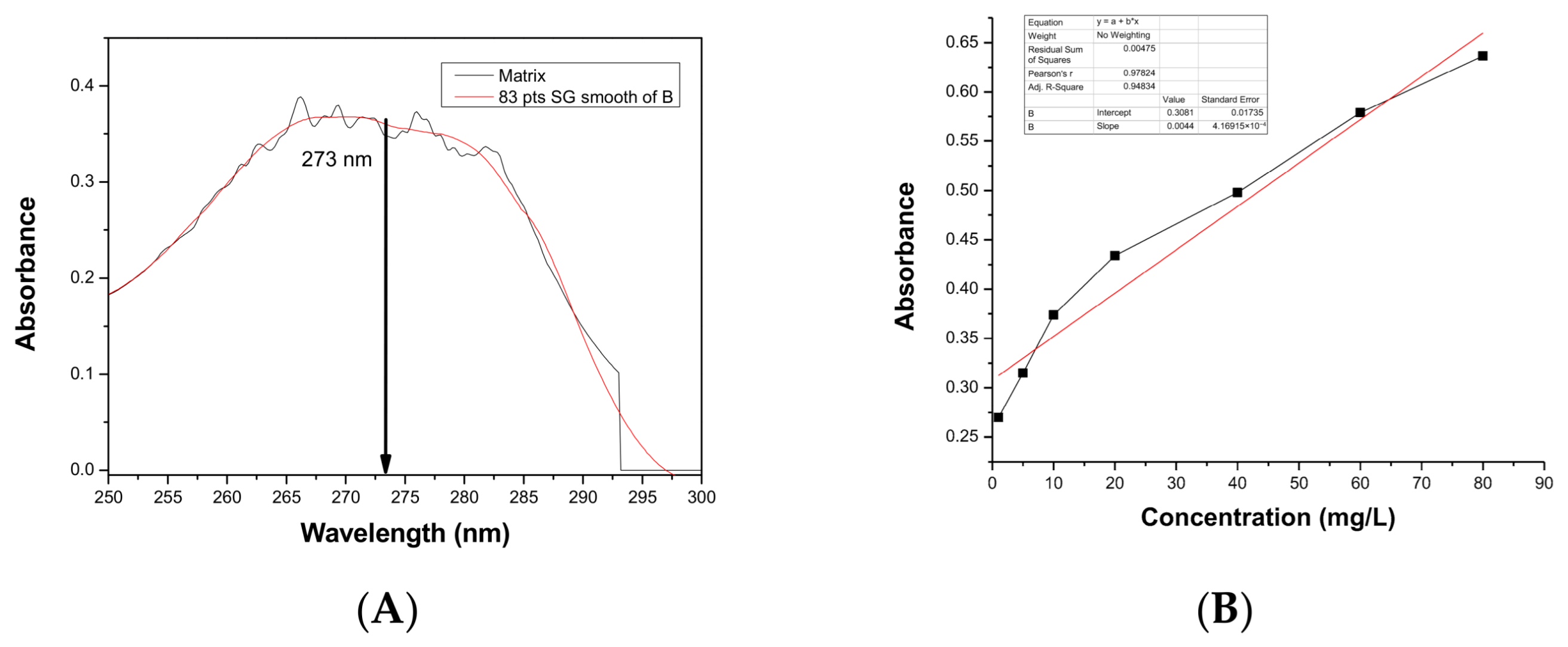
A UV–Vis absorbance additivity analysis confirmed the formation of the Hg2+–DPA complex, as the experimental absorbance (0.7409 ± 0.0087) was significantly higher than the sum of the individual component contributions (0.555 ± 0.017). Kinetic monitoring revealed a progressive increase in absorbance during the first eight minutes, followed by signal stabilization, indicating the saturation of the complex. Stoichiometric analysis showed a plateau at a 1:2 [Hg2+:DPA] molar ratio, consistent with previously reported coordination behavior under similar pH conditions, Figure 1A [18]. The analytical method exhibited good linearity for HgCl2 concentrations in the range of 1–100 mg/L (R2 = 0.94834), with a sensitivity of 0.0044 absorbance·mg/L−1 and an intercept of 0.3081. Detection and quantification limits, calculated within the 1–25 mg/L range, were 1.85 mg/L and 5.61 mg/L, respectively, confirming the method’s capability to reliably detect and quantify low mercury concentrations, Figure 1B.

2.3. Characterization Spectroscopic and Textural for Materials BS and BS-Mn

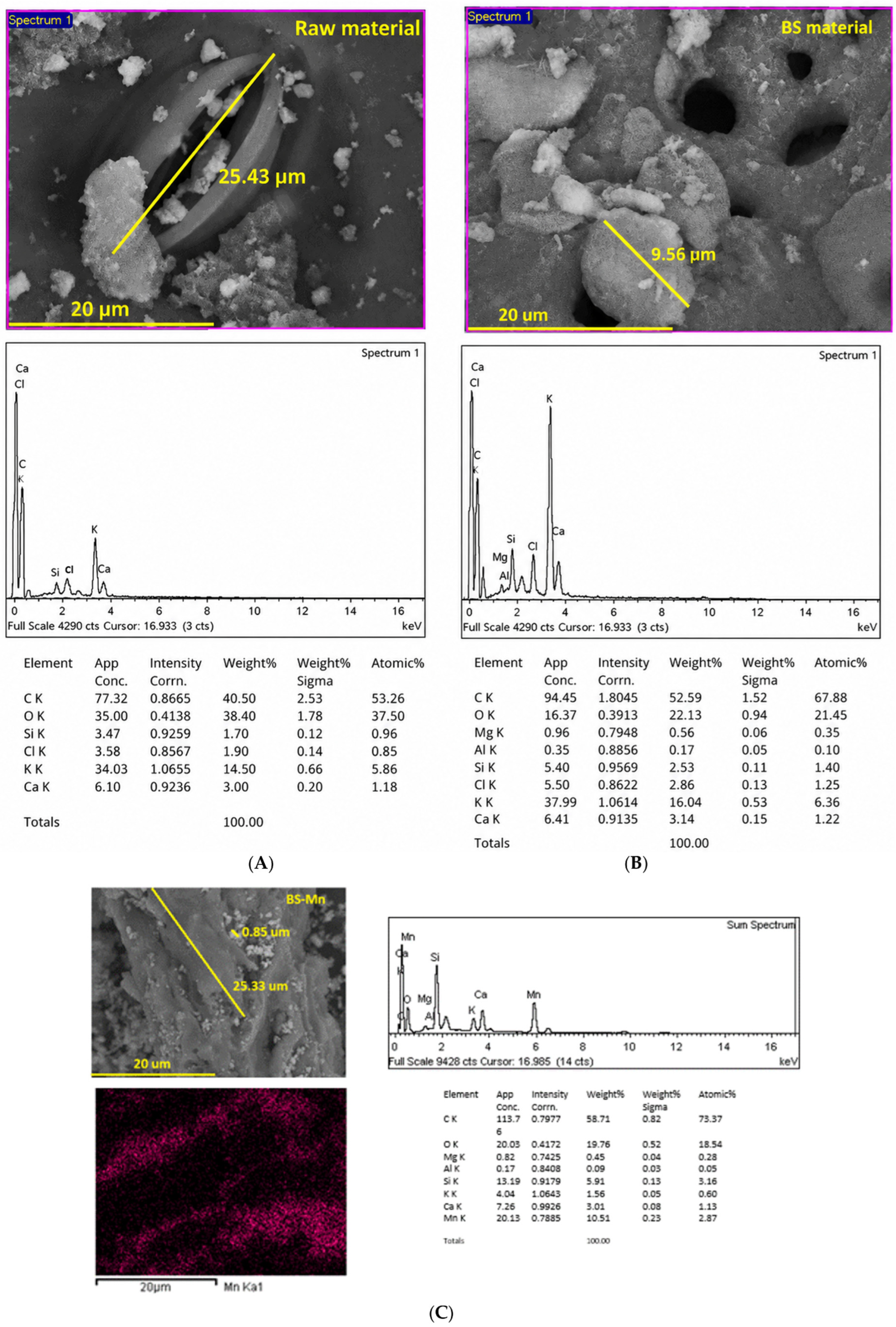
Figure 2A, the raw banana pseudostem (BS) exhibited a fibrous structure with a characteristic size of approximately 25 µm, consistent with intact lignocellulosic architecture. After pyrolysis, a clear reduction in particle size was observed, reaching an average of 9.56 µm, Figure 2B. This decrease is attributed to the thermal decomposition of cellulose, hemicellulose, and lignin, which leads to structural collapse, volatilization of organic fractions, and the formation of a more fragmented carbonaceous matrix. Following Mn functionalization (BS-Mn) Figure 2C, a bimodal particle size distribution was identified. One population remained around 25 µm, corresponding to residual carbonaceous fragments that preserve the original structural framework. A second population of much smaller particles (~0.85 µm) was also observed, which is strongly associated with manganese-containing species deposited onto the biochar surface. These submicrometric features are likely MnOx particles formed through the decomposition of manganese precursors and their subsequent nucleation and growth on the carbon matrix. The presence of these fine particles suggests a high degree of dispersion of Mn active phases, which is favorable for increasing the density of redox-active sites, although partial agglomeration may still occur depending on local surface chemistry. In addition to Mn, the EDS and morphological evolution also reflect the presence and retention of inherent inorganic elements such as calcium (Ca), magnesium (Mg), potassium (K), and silicon (Si). These minerals, originally present in the biomass, remain partially embedded within the carbon matrix after pyrolysis. Ca and Mg, in particular, may exist as dispersed oxide or carbonate-like species, contributing to surface basicity and enhancing ion-exchange capacity. These functionalities can play a complementary role in heavy metal interaction, particularly in the immobilization of Hg(II) through electrostatic attraction and surface complexation mechanisms. Furthermore, their relatively stable distribution suggests that they are less affected by thermal treatment compared to volatile organic components and may help stabilize the overall structure of the biochar. Overall, the transition from 25 µm (raw BS) → 9.56 µm (pyrolyzed BS) → bimodal 25 µm/0.85 µm (BS–Mn) reflects a combined effect of biomass carbonization, structural collapse, and metal incorporation. While Mn introduces finely dispersed redox-active domains that enhance surface reactivity, residual Ca and Mg contribute additional chemical functionality through basicity and ion-exchange properties. The synergistic presence of carbonaceous structures, transition metal oxides, and alkaline earth minerals ultimately defines a heterogeneous but highly reactive surface architecture, which is expected to play a key role in Hg(II) adsorption and transformation processes.
The textural properties of BS reveal a moderate BET constant (C ≈ 2.89), indicating relatively weak adsorbate–surface interactions and low adsorption energy for the first layer, which is characteristic of carbon materials with limited microporosity development. The BET surface area (140.8 m2 g−1) is consistent with a biochar obtained by pyrolysis without chemical activation. The pore structure is predominantly mesoporous, with an average pore diameter (D_avg ≈ 3.04 nm), supported by the presence of hysteresis in the adsorption–desorption isotherm. Additionally, NLDFT analysis indicates a contribution of narrow micropores with a modal pore size of ~1.59 nm, suggesting a hierarchical pore structure combining micro- and meso-porosity. In contrast, the Mn-functionalized material (BS–Mn) exhibits a significantly higher BET surface area (213 m2 g−1) and a markedly increased BET constant (C ≈ 67), indicating stronger adsorbate–surface interactions and enhanced surface heterogeneity. These results confirm that Mn incorporation does not reduce the surface area, but rather induces structural modifications in the carbon matrix. The decrease in monolayer capacity (Wm = 5.70 cm3(STP) g−1) compared to BS (32.38 cm3(STP) g−1) is not contradictory as it can be attributed to pore narrowing and the development of microporosity, which affect the volumetric estimation of the monolayer despite an increase in accessible surface area. This interpretation is supported by the reduction in average pore diameter (from 3.04 nm to 1.9 nm) and the shift in modal pore size (from 1.585 nm to 1.47 nm), indicating the formation of narrower pores after Mn incorporation. Furthermore, the increase in total pore volume from ~0.091 cm3 g−1 (BS) to 0.118 cm3 g−1 (BS–Mn) suggests that Mn does not block the porous structure but instead restructures the pore network, generating a higher density of smaller pores.
Overall, these results are consistent with previous reports indicating that metal incorporation in carbonaceous materials can enhance microporosity, increase surface heterogeneity, and create additional active sites [19]. The corrected BET analysis, performed within an appropriate relative pressure range following Rouquerol criteria [20], ensures physically meaningful parameters and confirms that the observed differences between BS and BS–Mn arise from Mn-induced structural modifications rather than experimental artifacts, Table 2.
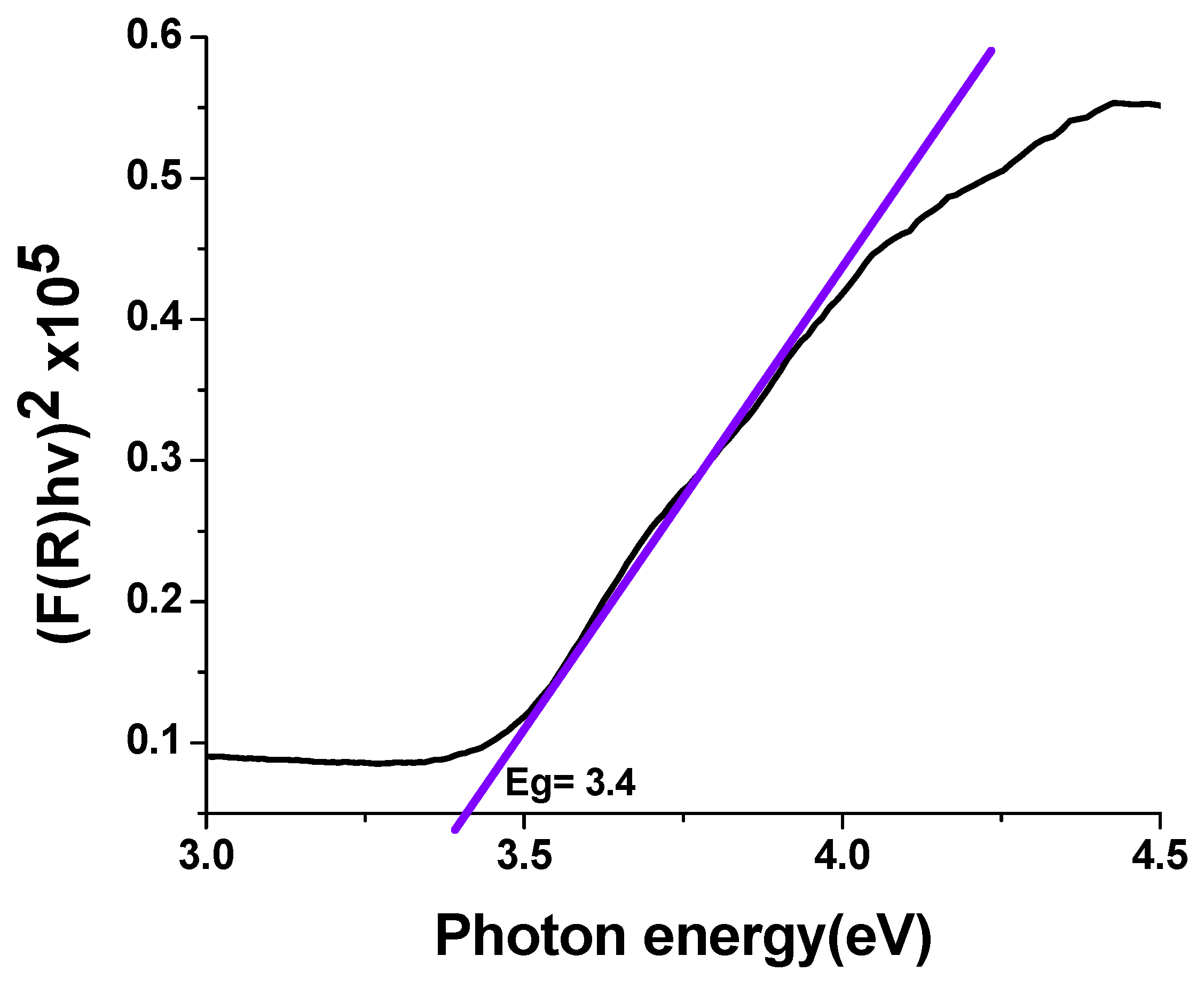
The optical properties of the material were investigated using diffuse reflectance spectroscopy (DRS), and the band gap energy was estimated through the Kubelka–Munk function. The reflectance data were transformed according to the Kubelka–Munk equation, (F(R) = (1 − R)2/(2R)), which is proportional to the absorption coefficient for scattering samples. Assuming a direct allowed electronic transition, the band gap energy was determined by constructing a Tauc plot as a function of photon energy ((h\nν)). The linear region of the curve was extrapolated to the energy axis, and the intercept provided the optical band gap value. The obtained plot exhibits a well-defined linear region in the higher energy range (see Figure 3 below), indicating that the direct transition model is appropriate for describing the optical behavior of the material. From the extrapolation, the band gap energy was estimated to be approximately 3.4 eV. This relatively wide band gap suggests that the material requires high-energy photons for electronic excitation, which is consistent with semiconductor materials exhibiting strong oxidative and reductive capabilities. Furthermore, the direct transition nature may facilitate efficient electron excitation and transfer processes, which are advantageous for photocatalytic and environmental applications. Overall, the Kubelka–Munk analysis confirms that the manganese-modified carbonaceous material behaves as a wide band gap semiconductor with direct electronic transitions, supporting its potential use in light-driven redox processes [21], Figure 3.

2.4. Evaluation of Carbon-Based Materials to Eliminate Hg2+ by Adsorption and Photocatalytic Reduction

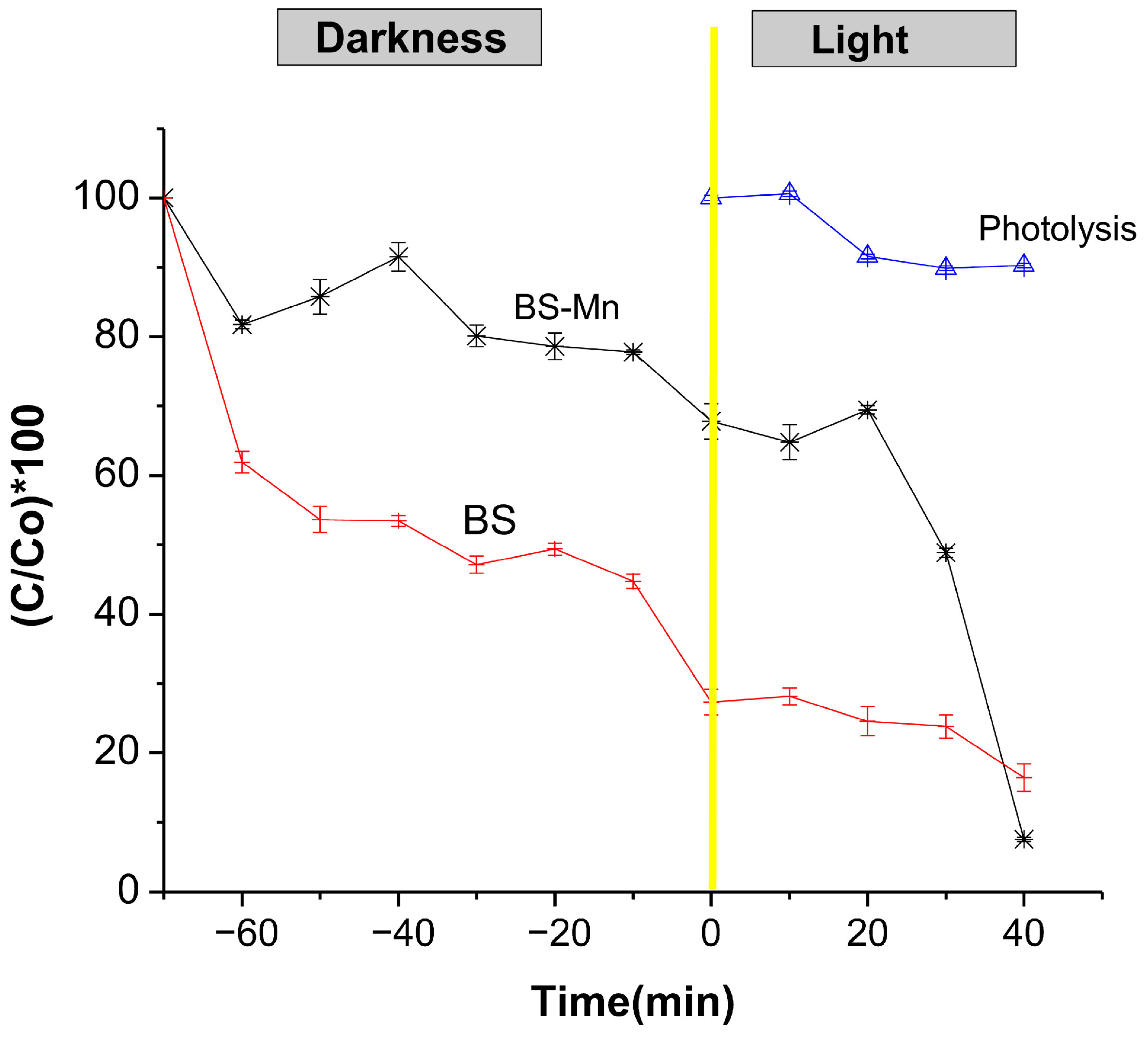
Initially, a photolysis control experiment was conducted using a HgCl2 solution under UV-A irradiation (λ = 360 nm) in the absence of carbonaceous materials (Figure 4, curve bleu). Under these conditions, no significant elimination of Hg(II) was observed, indicating that direct photolysis of HgCl2 at this wavelength is not an efficient pathway for mercury reduction. This behavior is consistent with the limited absorption of Hg(II) species in the UV-A region and the lack of effective electron donors in the system. In contrast, experiments performed in the presence of carbonaceous materials showed significant Hg(II) reduction, highlighting their key role in promoting adsorption and/or photoinduced electron transfer processes. Upon irradiation, these materials can act as photosensitizers or electron reservoirs, generating reactive species (e.g., photoexcited electrons or surface-bound radicals) capable of reducing Hg(II) to Hg(0). The marked difference between the control and the carbon-assisted systems confirms that Hg(II) reduction at 360 nm is predominantly driven by indirect photochemical pathways mediated by the carbonaceous materials rather than by direct photolysis of HgCl2. These findings are in agreement with previous studies reporting that Hg(II) photoreduction in aqueous systems is strongly enhanced by the presence of electron-donating substrates or photosensitizing matrices, while direct photolysis under UV-A irradiation remains inefficient [22,23,24], Figure 4. This also shows the adsorption properties of the developed materials. As seen, BS material exhibits higher surface affinity and greater Hg2+ adsorption. The differences in adsorption behavior between BS and BS-Mn can be explained by their textural properties obtained via BET analysis.
Chemically, the pyrolyzed biochar (BS) retains a significant fraction of oxygenated functional groups (hydroxyl, carboxyl, and carbonyl groups), which serve as interaction sites with contaminants via hydrogen bonding and electrostatic forces. In contrast, Mn impregnation reduces the availability of these groups, as many coordinate with metal ions or become covered by manganese oxides. This modification, combined with the decreased accessible pore volume, explains the lower initial adsorption observed for BS-Mn compared to BS, despite its higher BET surface area.
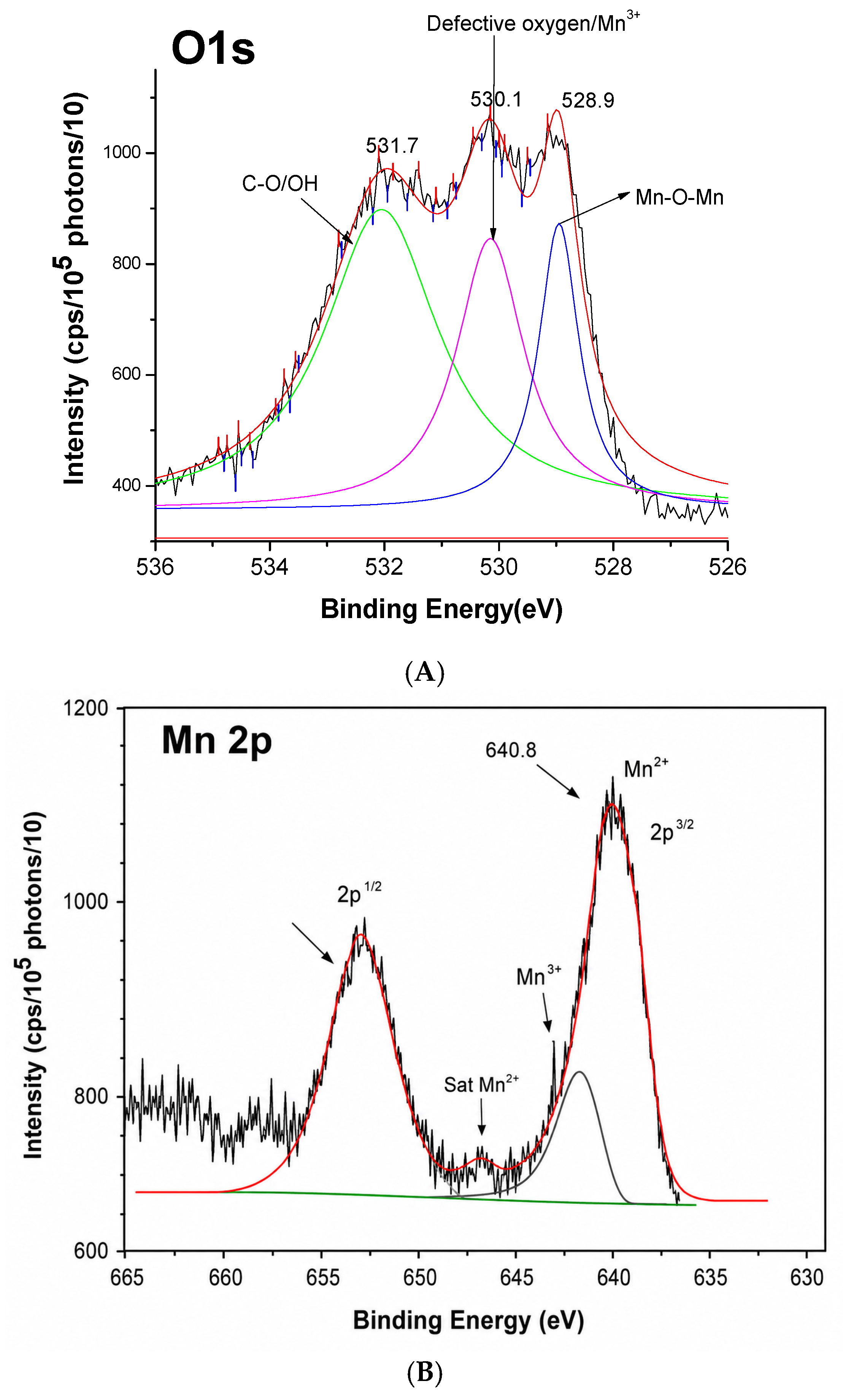
Considering the above results, a marked contrast is observed between pyrolyzed BS and Mn-modified BS-Mn. While BS shows higher initial adsorption capacity due to its larger pore volume and oxygenated surface groups from pyrolysis, its photocatalytic activity is very limited. Upon illumination, BS does not significantly promote Hg2+ degradation, suggesting that its carbon structure lacks the active centers necessary for efficient photoinduced charge transfer. In this case, surface oxygenated groups act efficiently as adsorption anchors but do not substantially contribute to reactive species generation under irradiation, leaving BS dominated by adsorption processes. In contrast, BS-Mn exhibits the opposite behavior: despite its much lower initial adsorption capacity, it displays clear photocatalytic activity upon irradiation. This is attributed to the incorporation of manganese into the carbon structure, which modifies the surface chemistry and electronic environment. Additionally, the reduced pore volume and smaller average pore diameter in BS-Mn (Table 2) indicate a higher proportion of micropores, which, although limiting overall adsorption capacity, bring the adsorbed contaminant into closer proximity with Mn catalytic centers. This enhances photoinduced electron transfer from the catalyst to the metallic species due to a reduced diffusional barrier. SEM/EDS micrographs of BS-Mn show that the uniform dispersion of Mn on the surface may lower interfacial resistance between the adsorbed Hg2+ and the catalytic material, accelerating charge-transfer-limited steps, not just carrier generation. Furthermore, surface complexation between oxidized manganese species and mercury may alter surface polarity and potential, favoring electrostatic interactions with Hg2+. In this context, while BS excels in adsorption but lacks significant photocatalytic response, BS-Mn sacrifices part of its adsorption capacity in favor of enhanced catalytic activity. This arises from the synergistic interaction between the carbon matrix and manganese metal centers. Mn modification not only alters porosity and surface chemistry but also endows the material with electronic properties that render it an effective photocatalyst, overcoming the limitations of undoped pyrolyzed biochar [25,26]. This behavior is relationship with manganese species in BS-Mn. The XPS O 1s spectrum was deconvoluted into four components centered at approximately 529.8, 530.9, 531.8, and 532.8 eV. The peak at 529.8 eV corresponds to lattice oxygen (Mn–O), confirming the formation of manganese oxides after thermal treatment at 500 °C. The significant contribution at ~530.9 eV is attributed to defect-related oxygen species associated with Mn3+ and oxygen vacancies, indicating a mixed-valence manganese system (Figure 5). The higher binding energy components arise from hydroxyl groups and oxygen-containing functional groups of the carbon matrix, confirming strong Mn–O–C interactions [27,28].
Figure 5. XPS spectra (A) O1s, and (B) Mn 2p results for the BS-Mn material.
Inorganics 14 00141 g005
The elemental comparison of the BS-Mn material before and after the photocatalytic treatment of mercury chloride (Table 3) reveals key changes that highlight both the catalyst’s stability and its interaction with species in the reaction medium. Potassium decreases markedly from 5589 mg/L to 1412 mg/L after the process, suggesting surface washing or the release of mobile salts during photocatalysis. In contrast, calcium remains essentially unchanged (0.86 mg/L to 0.89 mg/L), indicating that this element is neither involved in nor significantly affected by the reaction. Manganese, the main dopant, shows only a slight decrease from 36,720 mg/L to 33,892 mg/L, confirming that most Mn remains anchored to the material and that its structure is generally stable, although minor loss or redistribution of Mn species may occur under oxidative conditions. Finally, the sharp increase in mercury from 0.14 mg/L to 9.26 mg/L demonstrates strong capture or surface accumulation of Hg by the catalyst during photocatalysis, indicating that BS-Mn not only participates in the transformation of HgCl2 but also effectively retains the resulting mercury species. Overall, these changes show that the material preserves its essential elemental integrity while acting as an efficient adsorbent–catalyst for mercury removal, Table 3.

2.5. Electrochemical Analysis of BS and BS-Mn

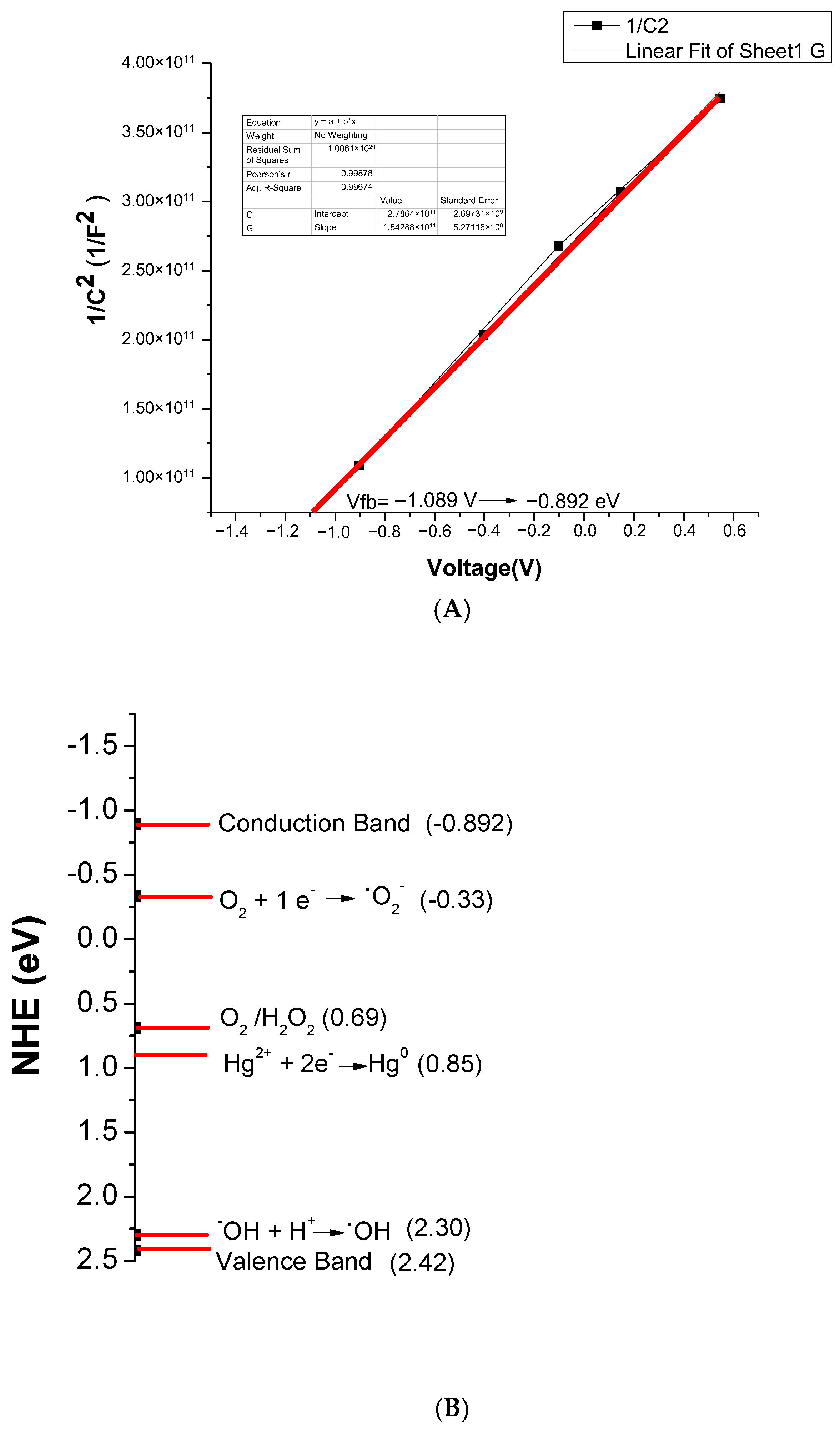
The electrochemical performance of BS–Mn was comprehensively evaluated through cyclic voltammetry (CV) and electrochemical impedance spectroscopy (EIS) to elucidate the interfacial mechanisms governing Hg2+ reduction. The Mott–Schottky analysis revealed a positive slope, confirming the n-type semiconductor behavior of the manganese-modified carbonaceous material. From the flat band potential, the conduction band (CB) edge was estimated at −0.892 V vs. the normal hydrogen electrode (NHE), while the valence band (VB) was determined to be −2.508 eV. These band positions are critical for evaluating the thermodynamic feasibility of redox reactions relevant to environmental remediation. The reduction of Hg2+ to Hg (Hg2+ + 2e → Hg0) has a standard reduction potential of approximately +0.85 V vs. NHE. For this reaction to proceed spontaneously, the CB potential of the semiconductor must be more negative than the redox potential of the target species. In this study, the CB position (−0.892 V vs. NHE) is significantly more negative than the Hg2+/Hg0 couple, indicating that the photogenerated or electrochemically available electrons possess sufficient reducing power to drive this transformation. This energetic alignment demonstrates that the manganese-doped carbon material is thermodynamically capable of reducing Hg2+ to Hg0. Such behavior is consistent with previous reports highlighting that semiconductors with sufficiently negative CB potentials can effectively reduce heavy metal ions in aqueous systems [29,30]. Moreover, the presence of manganese species within the carbon matrix may enhance charge separation efficiency and provide additional active sites, thereby improving electron transfer kinetics and suppressing recombination processes [31]. It is important to note that, while thermodynamic feasibility is confirmed, the overall efficiency of mercury reduction will also depend on kinetic factors, including surface adsorption, charge carrier lifetime, and solution chemistry such as pH and competing ions. Nevertheless, the favorable band alignment strongly supports the potential application of this material in mercury remediation strategies. Overall, the results indicate that the manganese-modified carbonaceous material is a promising candidate for the reduction and removal of Hg2+ from aqueous environments, owing to its suitable conduction band position and enhanced electronic properties, Figure 6.
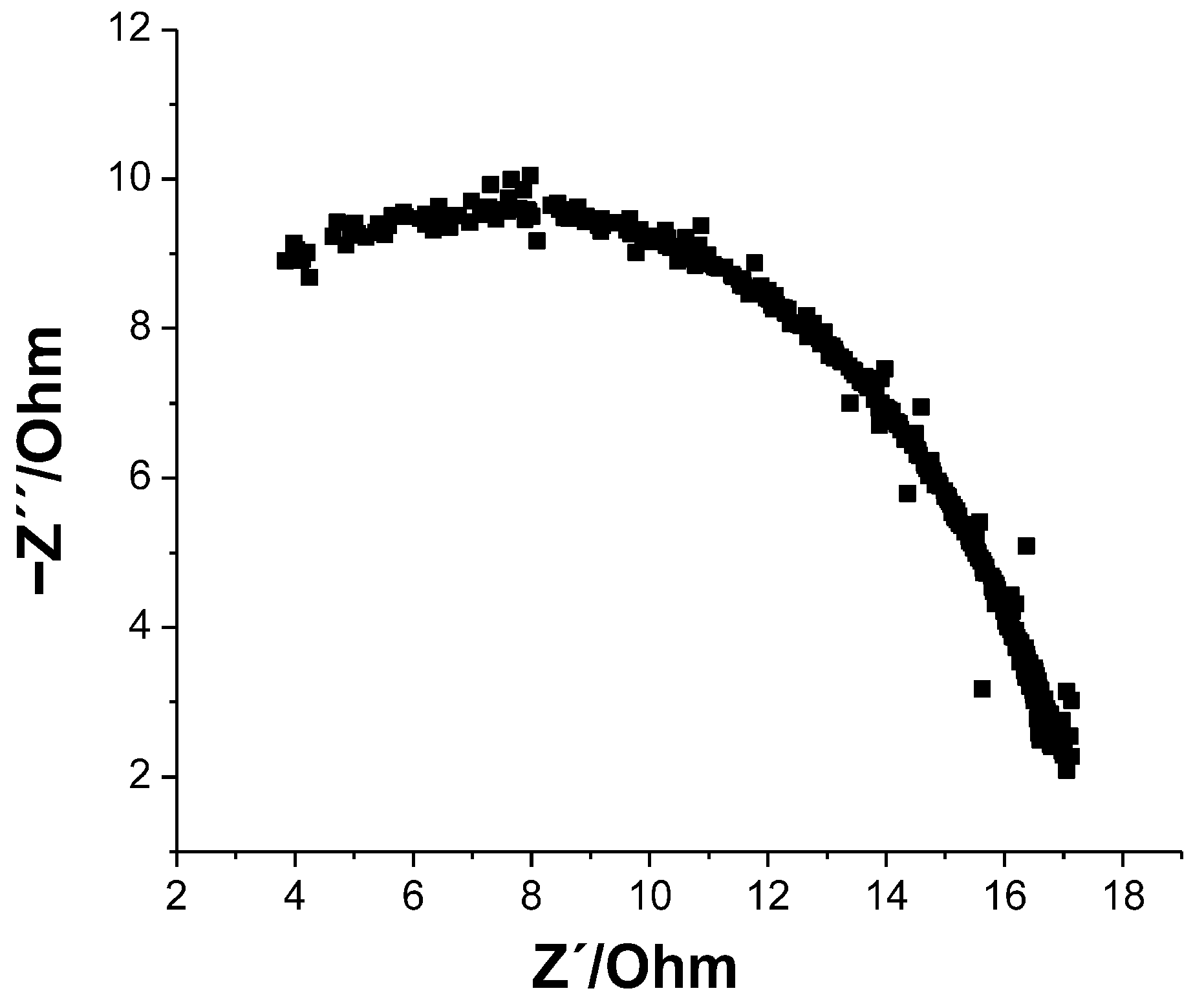
The Nyquist plot recorded for Bs-Mn exhibited a single depressed semicircle, characteristic of a charge-transfer-controlled process. The estimated charge-transfer resistance (Rct ≈ 11 Ω) indicates relatively efficient intrinsic electron transport across the electrode–electrolyte interface, which can be attributed to the synergistic interaction between the conductive carbon framework and the redox-active Mn sites. The depressed nature of the semicircle suggests non-ideal capacitive behavior due to surface heterogeneity and porosity, typical of carbon-based composite materials. The absence of a pronounced Warburg diffusion tail further confirms that the system is predominantly controlled by interfacial charge transfer rather than mass transport limitations. Under irradiation, the photocatalytic process can be described as Equation (1) [32]. Figure 7, Equation (1).
R s + R c t C P E R s + ( R c t C P E )
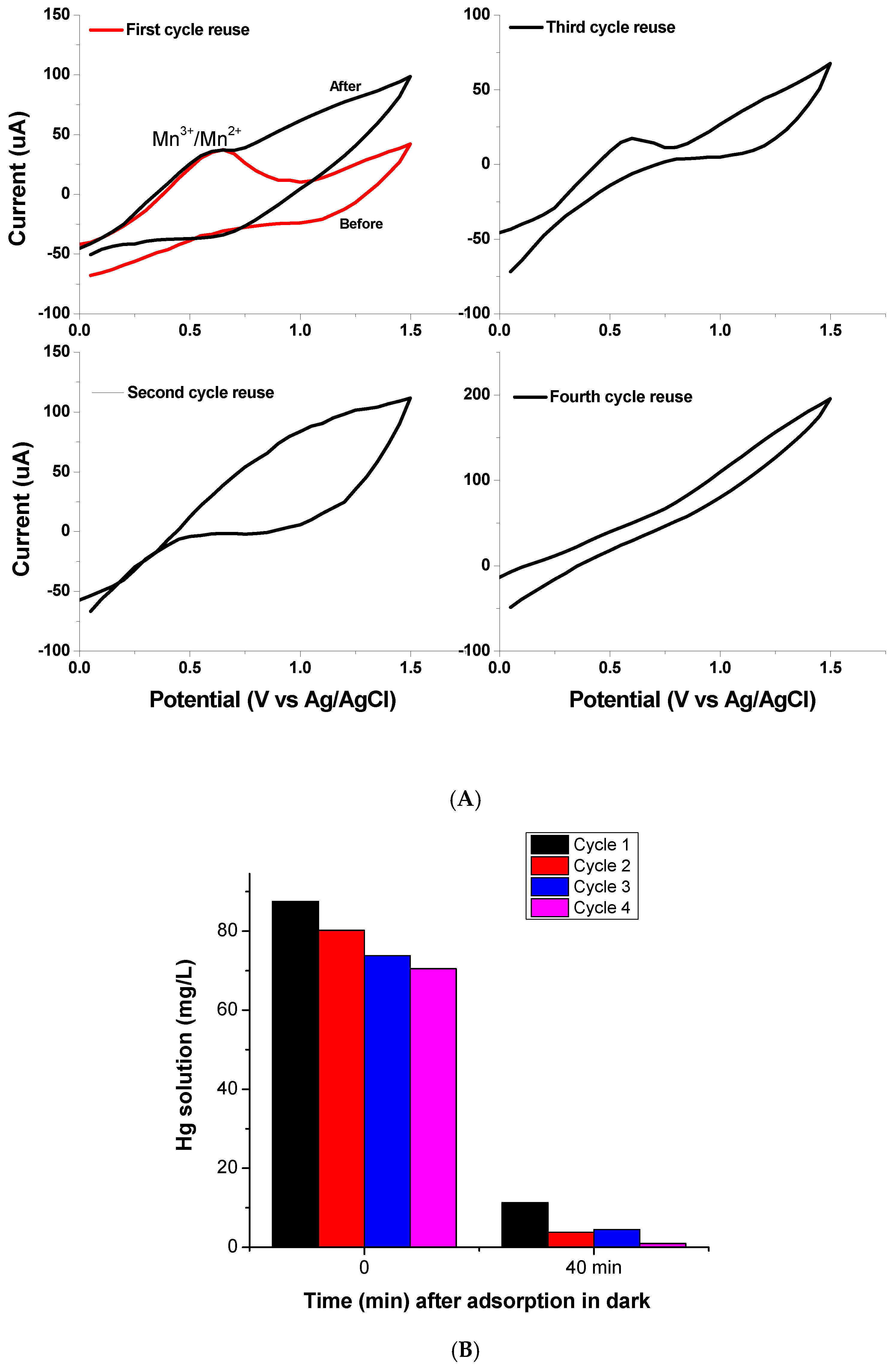
The cyclic voltammetry (CV) profiles recorded over successive reuse cycles provide important insights into the electrochemical behavior and stability of the Mn-doped pyrolyzed carbon material. In the first cycle, the voltammogram exhibits a well-defined redox response with relatively high current density, indicating the presence of abundant electroactive sites associated with both the carbon matrix and manganese species. This behavior is typical of transition metal-doped carbon materials, where heteroatoms and metal centers promote efficient electron transfer and redox activity upon repeated cycling, a gradual evolution in the voltammetric response is observed. In the second and third cycles, the decrease in current intensity and the distortion of redox features suggest partial deactivation or restructuring of surface-active sites. Such changes are commonly attributed to surface passivation, adsorption of intermediates, or dynamic variations in oxidation states under electrochemical conditions. In this context, the XPS results, which reveal variations in Mn2+, Mn3+, and Mn4+ species, support the occurrence of continuous redox transformations and surface reconstruction processes. Interestingly, in the fourth cycle, a recovery and enhancement of the current response is observed, accompanied by a more capacitive-like behavior. This phenomenon can be associated with electrochemical activation, where structural rearrangement or exposure of new active sites improves charge transfer kinetics. Furthermore, the coexistence of multiple manganese oxidation states is known to facilitate electron hopping and redox mediation, thereby enhancing the electrochemical performance [33]. The overall electrochemical evolution highlights the role of manganese species as dynamic redox mediators, enabling efficient electron transfer through reversible oxidation–reduction cycles. This behavior has been widely reported in Mn-based catalytic systems, where mixed-valence states contribute to enhanced catalytic activity and stability [34]. Therefore, despite initial fluctuations in current response, the material retains significant electroactivity, demonstrating its potential for repeated use in Hg(II) reduction processes, Figure 8A. On the other hand, Figure 6 shows the reusability cycles of the carbon-based photocatalyst for Hg2+ removal from aqueous solution. The initial Hg concentration after the dark adsorption stage remains relatively consistent across cycles, indicating stable adsorption capacity. After 40 min of irradiation, a significant decrease in Hg concentration is observed in all cycles, confirming effective photocatalytic reduction. Although a slight decline in removal efficiency is evident from cycle 1 to cycle 4, the material maintains considerable activity, demonstrating good stability and reusability over multiple cycles, Figure 8B [35,36].

3. Materials and Methods

3.1. Reagents

Mercury chloride (HgCl2), dipicolinic acid (DPA, C7H5NO4), manganese carbonate (MnCO3), and hydrogen peroxide (H2O2) were supplied by Sigma-Aldrich (St. Louis, MO, USA). Other reagents, such as nitric acid (HNO3), sodium hydroxide (NaOH), and oxalic acid (C2H2O4), were obtained from Merck S.A. (Darmstadt, Germany). Milli-Q water from a Sartorius (Göttingen, Germany) system (18.2 MΩ·cm at 25 °C) was used.

3.2. Determination of Synthesis Parameters to Synthesize a Carbocatalyst from Banana Residual Biomass

3.2.1. Collection and Preparation of Raw Material

For the synthesis of carbonaceous materials, the banana pseudostem was used as the precursor. It was collected from the Colombian and local farming communities. Approximately 40 kg of this material was collected, washed with distilled water to remove impurities, and subsequently dried in an oven at 105 °C for 24 h. The dried material was then crushed and sieved using 30 and 25 mesh screens, yielding particles with a uniform size distribution between 600 and 710 μm. The milling process achieved a yield of 83%.

3.2.2. Synthesis of Pyrolyzed and Manganese-Modified Carbonaceous Materials

The preconditioned banana pseudostem residue was subjected to a synthesis process to obtain activated carbonaceous materials. The chemical activation route was carried out in two stages. In the first stage, the lignocellulosic precursor was carbonized in an electric furnace under an anoxic atmosphere at a controlled heating rate of 100 °C·h−1 up to 500 °C, maintained for 1 h. The resulting material was washed with distilled water and dried, yielding the pyrolyzed banana pseudostem biochar (BS) [37].
In the second stage, a fraction of the biochar was functionalized with manganese carbonate (MnCO3) in a 1:1 ratio relative to the precursor. This material was thermally treated at 700 °C for 1 h under anoxic conditions. A purification step followed, involving successive washes with 0.1 M HCl and 0.1 M NaOH aqueous solutions to remove inorganic residues and ash fractions. The washing continued with distilled water until a neutral pH was reached. Finally, the material was dried at 105 °C for 24 h and stored in airtight plastic containers, resulting in the manganese-modified carbocatalyst (BS-Mn) [38].

3.2.3. Spectroscopic and Electrochemical Characterization of Carbonaceous Materials

Surface morphology and elemental composition were analyzed by scanning electron microscopy coupled with energy-dispersive X-ray spectroscopy (SEM-EDS) using a JEOL JSM-6490LV instrument (Tokyo, Japan). Textural properties were evaluated by nitrogen adsorption at –196 °C using a Micromeritics ASAP 2020 system (Norcross, GA, USA). All measurements and data processing were carried out under calibrated conditions following standardized quality control procedures. The XPS binding energies for the Mn 2p3/2, C 1s, and O 1s core levels of the samples were calculated, and assignments of photoemission signals corresponding to the chemical compounds were performed. Total mercury (Hg) and manganese (Mn) content in the carbonaceous samples was determined by X-ray fluorescence (XRF) spectroscopy. Prior to analysis, samples were dried, homogenized, and finely ground (<75 μm). Approximately 2–4 g of each powder was pressed into pellets using a hydraulic press to obtain a homogeneous and stable surface for analysis. Quantification was performed using a calibration curve constructed from certified soil reference materials with known Hg concentrations, prepared under identical pelletizing conditions to minimize matrix effects. This matrix-matched calibration approach is widely applied for the determination of heavy metals in solid environmental samples, particularly soils and carbon-rich matrices, and provides reliable semi-quantitative to quantitative results when properly standardized [39]. Instrument calibration was carried out using multi-point linear regression based on characteristic Hg fluorescence intensities. Quality control was ensured through repeated measurements of reference materials. Mercury in aqueous leachates and dissolved Mn were quantified by ion chromatography (Metrohm IC system) equipped with a cation-exchange column (Metrosep C6). Separation of Mn2+ and associated ionic species was achieved under isocratic conditions using an aqueous acidic mobile phase consisting of methanesulfonic acid (MSA, 3–5 mM). Samples were filtered through 0.45 μm membranes before injection and analyzed without further digestion to preserve dissolved species. Column temperature and flow rate were optimized according to standard Metrohm IC operating conditions for transition metals. Quantification was performed by external calibration using aqueous standards prepared in the same acidic matrix. Hg2+ in solution during photocatalytic and adsorption experiments was monitored by UV–Vis spectroscopy using dipicolinic acid (DPA) as a selective complexing agent. For BET, according to the widely accepted criteria proposed by Rouquerol et al. [18], the selection of the BET fitting range must ensure linearity and physically meaningful parameters (i.e., positive intercept and C constant). It is well established that the conventional range (0.05–0.30) is not universally applicable, particularly for microporous or hierarchical materials, where deviations from BET behavior frequently occur.

3.3. Identification of a UV-Vis Spectroscopy-Based Analytical Method for Mercury Quantification in Aqueous Medium

The Hg2+–DPA complex forms at pH 6.5–7.5 with a 1:2 molar ratio (Hg2+:DPA), and HgCl2 (10 mg/L) and DPA (20 mg/L) solutions were prepared individually and as mixtures. Absorbance was recorded at 230 nm, corresponding to the characteristic band of the Hg2+–DPA complex, and complex formation was confirmed using Beer–Lambert additivity between mixed and individual spectra. A calibration curve was constructed using HgCl2 standards in the range of 1–100 mg/L, yielding excellent linearity (R2 = 0.94834), with a sensitivity (slope) of absorbance·0.0044 mg/L−1 and an intercept of 0.3081. The method exhibited a limit of detection (LOD) of 1.85 mg/L mg/L and a limit of quantification (LOQ) of 0.561 mg/L, defining a reliable working range of 1–25 mg/L. This analytical approach was applied to follow Hg2+ evolution during photocatalysis and adsorption processes. Importantly, the method selectively quantifies Hg2+ and avoids interference from partially reduced species (Hg+ or Hg0), which may form under reaction conditions and lead to erroneous total mercury estimation. Therefore, it enables mechanistic interpretation of mercury removal pathways by distinguishing dissolved Hg2+ depletion from possible reduction processes using a JASCO V-570 spectrophotometer. The experimental development consisted of four stages: Verification of complex formation through the concept of absorbance additivity, study of the kinetics of complex formation, determination of complex stoichiometry, and standardization of the calibration curve.

3.4. Evaluation of the Carbocatalyst’s Effectiveness in the Photocatalytic Reduction of Mercury

To evaluate the materials’ capacity for photocatalytic reduction of Hg(II), the same initial HgCl2 concentration (15 mg/L in 200 mL) and pH conditions (6.5–7.5) were used. An amount of 0.1 g of carbonaceous material was added, and the suspension was kept in darkness for 30 min before irradiation to establish adsorption equilibrium. The system was then exposed to ultraviolet radiation in a reactor equipped with an aluminum reflector and three UV lamps (220 V, 5 × 30 W, λ = 365 nm). The decrease in Hg(II) concentration was attributed to the synergistic action of surface adsorption and photoinduced reduction processes mediated by the modified carbonaceous materials.

3.5. Electrochemical Study of the Materials

Cyclic voltammetry (CV) was performed using a PalmSens5 electrochemical workstation (2004–2022 PalmSens BV, version 5.9.4206 Build 30281t) coupled to a conventional three-electrode system comprising a working electrode coated with the material, a Ti/IrO2 auxiliary electrode, and an Ag/AgCl/KCl reference electrode. Each working electrode was prepared by impregnation on FTO-coated glass slides (30 mm × 20 mm × 2 mm) obtained from TechInstro (Nagpur, India). Before each experiment, the FTO slides were immersed in HClO4 (1 × 10⁻³ M) for 1 h and mechanically abraded. Approximately 0.05 g of each material (BS and BS-Mn) was suspended in 10 mL of water, and the FTO slide was immersed for 30 s, followed by drying and heating at 110 °C. This process was repeated five times to obtain a complete coating. The coated FTO slides were then calcined under a controlled atmosphere at 500 °C for 1 h, and the procedure was repeated twice to ensure full material deposition [39].
For the reusability assessment, photocatalytic cycles were carried out using 0.1 g of the material under the same reaction conditions. After each cycle, the material was recovered by filtration, thoroughly washed with distilled water to remove residual species, and dried before reuse. The recovered material was subsequently re-evaluated by cyclic voltammetry using the same PalmSens system to monitor any changes in electrochemical behavior after successive reuse cycles.

4. Conclusions

Banana pseudostem waste can be successfully converted into a Mn-functionalized lignocellulosic carbocatalyst capable of effectively reducing Hg(II) under UV-A irradiation. The synergistic combination of a porous carbon matrix and dispersed MnOx redox-active sites enhances surface reactivity, charge transfer (Rct ≈ 11 Ω), and electron availability (CB = −0.892 V vs. NHE), enabling the thermodynamically favorable reduction of Hg2+ to Hg0. Compared to pristine biochar, which acts mainly through adsorption, the Mn-modified material introduces a dominant photocatalytic pathway driven by Mn(IV)/Mn(III)/Mn(II) cycling and improved interfacial electron transport. Overall, the results confirm that the proposed carbocatalyst not only captures but effectively reduces mercury, offering a simple, sustainable, and scalable strategy for Hg remediation in contaminated environments.

Author Contributions

H.Ú.-G.: Verification assessments, Data management, and Research; M.R.: Data management; J.R.: Data management; L.M.-L.: Data management; D.Á.-T.: Data management, R.A.T.-P.: Data management, and Research; Y.P.Á.-T.: Concept development, Research design, Verification assessments, Data management, Draft composition, Data representation, and Research. All authors have read and agreed to the published version of the manuscript.

Funding

Project 82476, MinCiencias- Colombia. Implementación de estrategias para la recuperación de aguas residuales urbanas basadas en tratamientos solares y convencionales: Caso Florencia Caquetá, mayor centro poblado de la Amazonía Colombiana. Minciencias. Project 2023-64146 - CODI- Universidad de Antioquia- Colombia. Convocatoria de Regionalización 2023. “Remediación de suelos degradados por minería de oro en el bajo cauca a partir de carbocatalizadores obtenidos de residuos de banano del Urabá Antioqueño”.

Institutional Review Board Statement

Not applicable.

Informed Consent Statement

Not applicable.

Data Availability Statement

The original contributions presented in this study are included in the article. Further inquiries can be directed to the corresponding authors.

Acknowledgments

The researchers acknowledge University of Antioquia for all the administrative support provided in managing the regionalization and territorial impact projects.

Conflicts of Interest

Author Milton Rojas was employed by the company Heomi Group, Z-Spec Organization. Author Daniel Avila-Torres and Yenny P. Ávila-Torres were employed by the company Innovative Scientific and Technical Solutions—Socitecnova S.A.S. The remaining authors declare that the research was conducted in the absence of any commercial or financial relationships that could be construed as a potential conflict of interest.

References

  1. UNEP. Global Mercury Assessment 2018. United Nations Environment Programme. 2019. Available online: https://www.unep.org (accessed on 9 April 2026).
  2. World Health Organization. Mercury and Health. 2021. Available online: https://www.who.int/news-room/fact-sheets/detail/mercury-and-health (accessed on 3 March 2026).
  3. Kadi, M.W.; Mohamed, R.M.; Ismail, A.A.; Bahnemann, D.W. Soft and hard templates assisted synthesis mesoporous CuO/g-C3N4 heterostructures for highly enhanced and accelerated Hg(II) photoreduction under visible light. J. Colloid Interface Sci. 2020, 580, 223–233. [Google Scholar] [CrossRef]
  4. Hoffmann, M.R.; Martin, S.T.; Choi, W.; Bahnemann, D.W. Environmental applications of semiconductor photocatalysis. Chem. Rev. 1995, 95, 69–96. [Google Scholar] [CrossRef]
  5. Matsuoka, K.-I.; Tahara, H.; Akiyama, T.; Yamada, S. Effects of capping layers on the photoelectrochemical property of silver nanoparticle-modified indium–tin-oxide electrode. J. Photochem. Photobiol. A Chem. 2011, 221, 239–243. [Google Scholar] [CrossRef]
  6. Chen, H.; Nanayakkara, C.E.; Grassian, V.H. Titanium dioxide photocatalysis in atmospheric chemistry. Chem. Rev. 2012, 112, 5919–5948. [Google Scholar] [CrossRef] [PubMed]
  7. Lenzi, G.G.; Fávero, C.V.B.; Colpini, L.M.S.; Bernabe, H.; Baesso, M.L.; Specchia, S.; Santos, O.A.A. Photocatalytic reduction of Hg(II) on TiO2 and Ag/TiO2 prepared by the sol–gel and impregnation methods. Desalination 2011, 270, 241–247. [Google Scholar] [CrossRef]
  8. Cristante, V.M.; Araujo, A.B.; Jorge, S.M.A.; Florentino, A.O.; Valente, J.P.S.; Padilha, P.M. Enhanced photocatalytic reduction of Hg(II) in aqueous medium by 2-aminothiazole-modified TiO2 particles. J. Braz. Chem. Soc. 2006, 17, 453–457. [Google Scholar] [CrossRef]
  9. Mohamed, R.M.; Salam, M.A. Photocatalytic reduction of aqueous mercury(II) using multi-walled carbon nanotubes/Pd-ZnO nanocomposite. Mater. Res. Bull. 2014, 50, 85–90. [Google Scholar] [CrossRef]
  10. Rajhi, A.A.; Basaleh, A.S.; Aljohani, N.S.; Shawky, A.; Salem, M.E.; Mohamed, R.M. Accelerated photocatalytic reduction of mercury(II) ions from water over Ag2O-sensitized MoO3/SiO2 nanophotocatalyst. Mater. Sci. Eng. B 2026, 325, 119127. [Google Scholar] [CrossRef]
  11. Chang, G.; Zhou, Y.; Wang, H.; Chen, S.; Fu, J.; Sun, J.; Hao, S. Efficient photocatalytic reduction of Hg (II) enabled by S-scheme Bi2O3/Bi/g-C3N4 heterojunctions with N, O dual vacancies. J. Environ. Chem. Eng. 2025, 13, 120157. [Google Scholar] [CrossRef]
  12. Coelho, A.L.S.; de Almeida Neto, A.F.; Ivashita, F.F.; Lenzi, G.G.; Jorge, L.M.M.; dos Santos, O.A.A. Characterization and performance of ZnO and ZnO/ZnFe2O4 catalyst using artificial and solar light for mercury (II) reduction. Braz. J. Chem. Eng. 2019, 36, 797–810. [Google Scholar] [CrossRef]
  13. Albukhari, S.M.; Alshaikh, H.; Mahmoud, M.H.H.; Ismail, A.A. Intense visible-light absorption in SrRuO3/C3N4 heterostructures for the highly efficient reduction of Hg(II). ACS Omega 2021, 6, 14713–14725. [Google Scholar] [CrossRef] [PubMed]
  14. Fu, T.; Zhang, B.; Gao, X.; Cui, S.; Guan, C.-Y.; Zhang, Y.; Zhang, B.; Peng, Y. Recent progresses, challenges, and opportunities of carbon-based materials applied in heavy metal polluted soil remediation. Sci. Total Environ. 2023, 856, 158810. [Google Scholar] [CrossRef] [PubMed]
  15. Yang, Q.; Wang, Y.; Zhong, H. Remediation of mercury-contaminated soils and sediments using biochar: A critical review. Biochar 2021, 3, 23–35. [Google Scholar] [CrossRef]
  16. Bai, X.-R.; Zeng, Y.; Zhou, X.-D.; Wang, X.-H.; Shen, A.-G.; Hu, J.-M. Environmentally safe mercury(II) ions aided zero-background and ultrasensitive SERS detection of dipicolinic acid. Anal. Chem. 2017, 89, 10335–10342. [Google Scholar] [CrossRef]
  17. Thommes, M.; Kaneko, K.; Neimark, A.V.; Olivier, J.P.; Rodriguez-Reinoso, F.; Rouquerol, J.; Sing, K.S.W. Physisorption of gases, with special reference to the evaluation of surface area and pore size distribution (IUPAC Technical Report). Pure Appl. Chem. 2015, 87, 1051–1069. [Google Scholar] [CrossRef]
  18. Sing, K.S.W.; Everett, D.H.; Haul, R.A.W.; Moscou, L.; Pierotti, R.A.; Rouquerol, J.; Siemieniewska, T. Reporting physisorption data for gas/solid systems. Pure Appl. Chem. 1985, 57, 603–619. [Google Scholar] [CrossRef]
  19. Romero-Hernández, J.J.; Paredes-Laverde, M.; Silva-Agredo, J.; Mercado, D.F.; Ávila-Torres, Y.; Torres-Palma, R.A. Pharmaceutical adsorption on NaOH-treated rice husk-based activated carbons: Kinetics, thermodynamics, and mechanisms. J. Clean. Prod. 2024, 434, 139935. [Google Scholar] [CrossRef]
  20. Gautam, M.; Patodia, T.; Gupta, V.; Sachdev, K.; Kushwaha, H.S. Synthesis of high surface area activated carbon from banana peels biomass for zinc-ion hybrid supercapacitor. J. Energy Storage 2024, 102, 114088. [Google Scholar] [CrossRef]
  21. Corrales, J.; Acosta, J.; Castro, S.; Riascos, H.; Serna-Galvis, E.; Torres-Palma, R.A.; Ávila-Torres, Y. Manganese Dioxide Nanoparticles Prepared by Laser Ablation as Materials with Interesting Electronic, Electrochemical, and Disinfecting Properties in Both Colloidal Suspensions and Deposited on Fluorine-Doped Tin Oxide. Nanomaterials 2022, 12, 4061. [Google Scholar] [CrossRef]
  22. Amyot, M.; McQueen, D.J.; Mierle, G.; Lean, D.R.S. Sunlight-induced formation of dissolved gaseous mercury in lake waters. Environ. Sci. Technol. 1994, 28, 2366–2371. [Google Scholar] [CrossRef]
  23. Lalonde, J.D.; Amyot, M.; Kraepiel, A.M.L.; Morel, F.M.M. Photooxidation of Hg(0) in artificial and natural waters. Environ. Sci. Technol. 2001, 35, 1367–1372. [Google Scholar] [CrossRef]
  24. Ravichandran, M. Interactions between mercury and dissolved organic matter—A review. Chemosphere 2004, 55, 319–331. [Google Scholar] [CrossRef]
  25. Xu, J.; Zhang, K.; Chen, J.; Zhu, Y. Adsorption and surface complexation of Cu(II) and Cd(II) on biochar in single and binary systems. Bioresour. Technol. 2013, 149, 383–389. [Google Scholar] [CrossRef]
  26. Lu, H.; Zhang, W.; Yang, Y.; Huang, X.; Wang, S.; Qiu, R. Relative distribution of Pb2+ sorption mechanisms by sludge-derived biochar. Water Res. 2012, 46, 854–862. [Google Scholar] [CrossRef]
  27. Liu, S.; Li, J.; Xu, S.; Wang, M.; Zhang, Y.; Xue, X. A modified method for enhancing adsorption capability of banana pseudostem biochar towards methylene blue at low temperature. Bioresour. Technol. 2019, 282, 48–55. [Google Scholar] [CrossRef]
  28. Suyana, P.; Ganguly, P.; Nair, B.N.; Pillai, S.C.; Hareesh, U.S. Structural and compositional tuning in g-C3N4-based systems for photocatalytic antibiotic degradation. Chem. Eng. J. Adv. 2021, 8, 100148. [Google Scholar] [CrossRef]
  29. Fujishima, A.; Zhang, X.; Tryk, D.A. TiO2 photocatalysis and related surface phenomena. Surf. Sci. Rep. 2008, 63, 515–582. [Google Scholar] [CrossRef]
  30. Agraz, R.; Sevilla, M.T.; Hernández, L. Voltammetric quantification and speciation of mercury compounds. J. Electroanal. Chem. 1995, 390, 47–57. [Google Scholar] [CrossRef]
  31. Wang, X.; Pehkonen, S.O.; Ray, A.K. Photocatalytic reduction of Hg(II) on two commercial TiO2 catalysts. Electrochim. Acta 2004, 49, 1435–1444. [Google Scholar] [CrossRef]
  32. Chen, J.; Arianpour, B.; Wang, K.; Wang, S.; Yin, J.; Zhang, Y.; Zhu, E.; Hsiai, T.K. Emerging nanomaterials to enhance electrochemical impedance spectroscopy for biomedical applications. Front. Mater. 2023, 10, 1146045. [Google Scholar] [CrossRef]
  33. Xu, Y.; Chen, S.; Yao, L.; Dai, W.; Fang, J.; Sun, C.; Feng, W.; Zou, J.; Luo, X. Janus Mn single atoms for triggering efficient photothermal catalytic CO2 methanation through spin polarization effect. Sci. Adv. 2026, 12, eadz7504. [Google Scholar] [CrossRef]
  34. Post, J.E. Manganese oxide minerals: Crystal structures and economic and environmental significance. Proc. Natl. Acad. Sci. USA 1999, 96, 3447–3454. [Google Scholar] [CrossRef]
  35. Zhao, L.Z.; Young, V. XPS studies of carbon supported films formed by the resistive deposition of manganese. J. Electron Spectrosc. Relat. Phenom. 1984, 34, 45–54. [Google Scholar] [CrossRef]
  36. Wu, D.; Xie, X.; Zhang, Y.; Zhang, D.; Du, W.; Zhang, X. MnO2/carbon composites for supercapacitor: Synthesis and electrochemical performance. Front. Mater. 2020, 7, 2. [Google Scholar] [CrossRef]
  37. Quimbaya-Ñañez, C.; Serna-Galvis, E.A.; Silva-Agredo, J.; Huerta, L.; Torres-Palma, R.A.; Ávila-Torres, Y. Mn-based material derived from industrial sawdust for the elimination of ciprofloxacin: Loss of antibiotic activity and toxicity via carbocatalysis assisted by ultrasound. J. Environ. Chem. Eng. 2024, 12, 112015. [Google Scholar] [CrossRef]
  38. Mosquera-Olano, C.; Quimbaya, C.; López-Pérez, S.; Castellón-Castrillón, E.; Navarro, S.; Rojas, J.; Acosta, J.; Torres-Palma, R.A.; Ávila-Torres, Y.P. A method for modifying carbonaceous materials with manganese carbonate to modulate the formation of singlet oxygen via activation with peroxymonosulfate. MethodsX 2025, 14, 103252. [Google Scholar] [CrossRef]
  39. Lasso-Escobar, A.V.; Castrillón, E.D.C.; Acosta, J.; Navarro, S.; Correa-Penagos, E.; Rojas, J.; Ávila-Torres, Y.P. Modulation of electronic availability in g-C3N4 using nickel (II), manganese (II), and copper (II) to enhance disinfection and photocatalytic properties. Molecules 2024, 29, 3775. [Google Scholar] [CrossRef]
Figure 1. (A) Absorption spectrum of the [DPA–Hg2+] complex, (B) calibration curve 1–100 mg/L range HgCl2.
Inorganics 14 00141 g001
Figure 2. SEM images and EDS analysis of (A) raw banana biomass (BS), (B) pyrolyzed biochar (BS), and (C) Mn-functionalized biochar (BS–Mn) corresponding to EDS spectra and elemental mapping showing composition and Mn distribution.
Inorganics 14 00141 g002
Figure 3. Photocatalytic properties, Eg (Band Gap Energy), using solid-state diffuse reflectance.
Inorganics 14 00141 g003
Figure 4. Hg2+ elimination by photocatalysis by using BS and BS-Mn materials (200 mL of an aqueous HgCl2 solution (15 mg/L), pH 6.5–7.5 using 0.1 M HNO3, 0.1 g of the carbonaceous material (BS or BS-Mn) in darkness for 60 min and light interaction for 40 min).
Inorganics 14 00141 g004
Figure 6. (A) Mott–Schottky plot (1/C2 vs. applied potential) of the material BS-Mn, and (B) band energy diagram of the material constructed from Mott–Schottky analysis. The conduction band (CB) position was estimated from the flat band potential (V_fb), while the valence band (VB) was determined using the band gap energy.
Inorganics 14 00141 g006
Figure 7. Nyquist diagram for BS-Mn. Conditions: scan rate (0.1 V/s), initial voltage (0 V), electrolyte (Na2SO4 1 × 10⁻³ M).
Inorganics 14 00141 g007
Figure 8. (A) Electrochemical analysis of materials (reuse-cycle), a Ti/IrO2 auxiliary electrode, and an Ag/AgCl/KCl reference electrode. (B) Residual Hg2+ concentration in solution determined by ion chromatography for reuse cycles.
Inorganics 14 00141 g008
Table 1. Photocatalytic and functionalized carbon-based systems for Hg(II) reduction: modifications, light sources, efficiency, and evidence of elemental mercury formation.
Material/SystemModificationLight SourceEfficiency/ResultsEvidence of Hg(0)
TiO2 (P25, UV100)UnmodifiedUVPhotoreduction of Hg(II) in aerated waterDirect detection of gaseous-phase Hg(0)
TiO2/Ag–TiO2Ag dopingUVEnhanced reduction compared to pure TiO2Hg(0) recovered at electrode
TiO2 + 2-aminothiazoleLigand functionalizationUVIncreased reduction rateDisappearance of Hg(II) and appearance of Hg(0)
Au/TiO2 nanotubesAu depositionUV/solarEfficient reduction of Hg2+; amalgam formationHg–Au amalgam; anodic stripping
Ag/ZnO–SiO2Ag dopant, SiO2 supportVisible + formic acidComplete reduction with electron donorHg(0) detected in aqueous and gas phases
Ag–ZnO nanowiresHierarchical structure + AgVisibleHigher efficiency than pure ZnOHg(0) confirmed
Bi2O3/ZnOHeterojunctionUV/visible10–20× faster than ZnO/TiO2Hg(0) detected in solution
ZnO/ZnFe2O4Magnetic heterojunctionSolar/artificialSignificant reduction of Hg(II)Disappearance of Hg2+
SrRuO3/g-C3N4Perovskite heterojunctionVisible~100% reduction in 50 minHg(0) detected
Table 2. Textural properties of pristine and Mn-functionalized banana-derived biochars determined by BET and DFT analyses.
ParameterBSBS-Mn
BET range
P/Po = 0.05–0.30.
BET fit (y vs. P/Po)
R2 = 0.965
Slope (s) = 0.02018
Intercept (i) = 0.01070
Range: 0.05–0.030
R2 = 0.999
Slope (s) = 19.2
Intercept (i) = 0.01
Range: 0.03–0.12
Monolayer capacity
Wm = 1/(s + i)
Wm = 32.38 cm3(STP)/gWm = 5.70 cm3(STP)/g
BET constant
C = s/i + 1
C = 2.89C = 67
Specific surface area
SBET = Wm × 4.35
SBET = 140.8 m2/gSBET = 213 m2/g m2/g
Total pore volume (at P/Po)Vt = 0.107 cm3/gVt = 0.091–0.100 cm3/g
Average pore diameter (cylindrical model)
Davg ≈ 4 Vt/S
Davg = 3.04 nm (mesoporous)Davg = 1.9 nm (mesopores/micropores)
Total pore volume (DFT)
Modal pore size
0.091 cm3/g, 1.585 nm0.118 cm3/g, 1.47 nm
Table 3. Elementary changes in carbon matrices after the photocatalytic process.
ElementBS-Mn After (mg/L)BS-Mn Before (mg/L)
K 191412 5589
Ca 200.890.86
Mn 2533,89236,720
Hg 809.260.14 
Disclaimer/Publisher’s Note: The statements, opinions and data contained in all publications are solely those of the individual author(s) and contributor(s) and not of MDPI and/or the editor(s). MDPI and/or the editor(s) disclaim responsibility for any injury to people or property resulting from any ideas, methods, instructions or products referred to in the content.