


Synthesis, Characterization, and Bioactivity of a Dioxime-Based Copper(II) Complex: SOD/Catalase Mimicry, DNA/HSA Binding, and In Silico Evaluation for Cuproptosis-Mediated Anticancer Activity

Abstract
1. Introduction
2. Results and Discussion
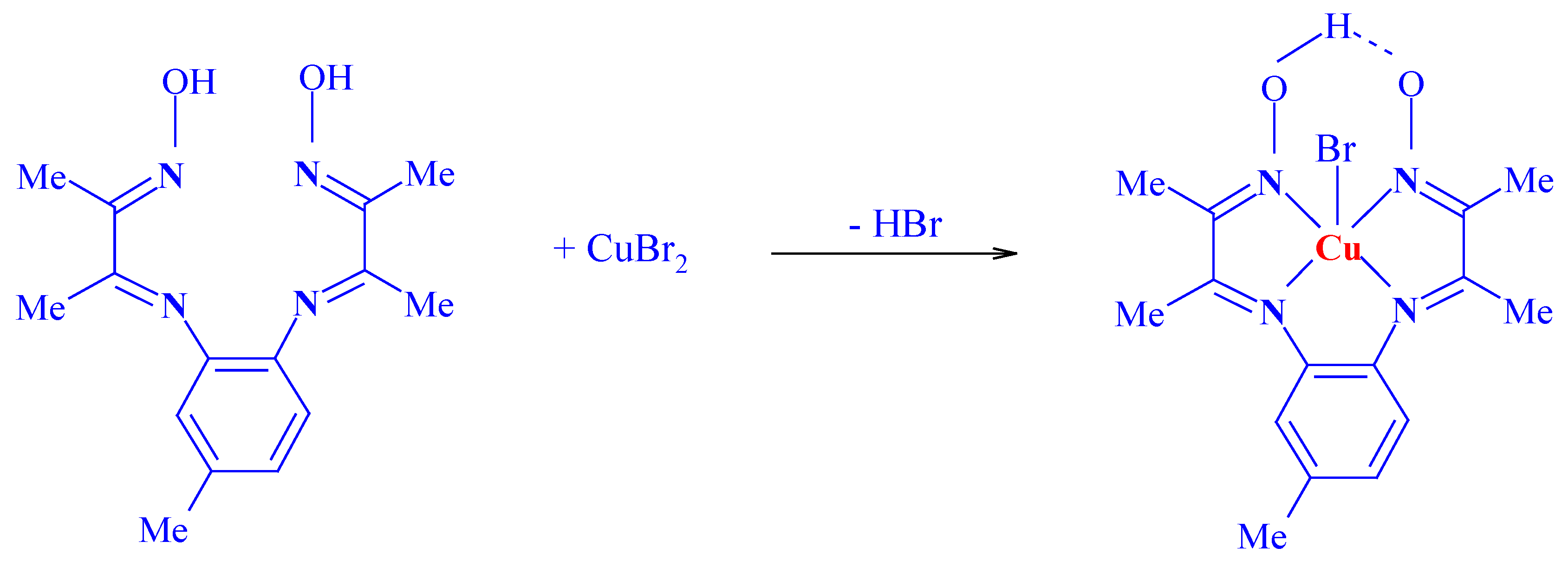
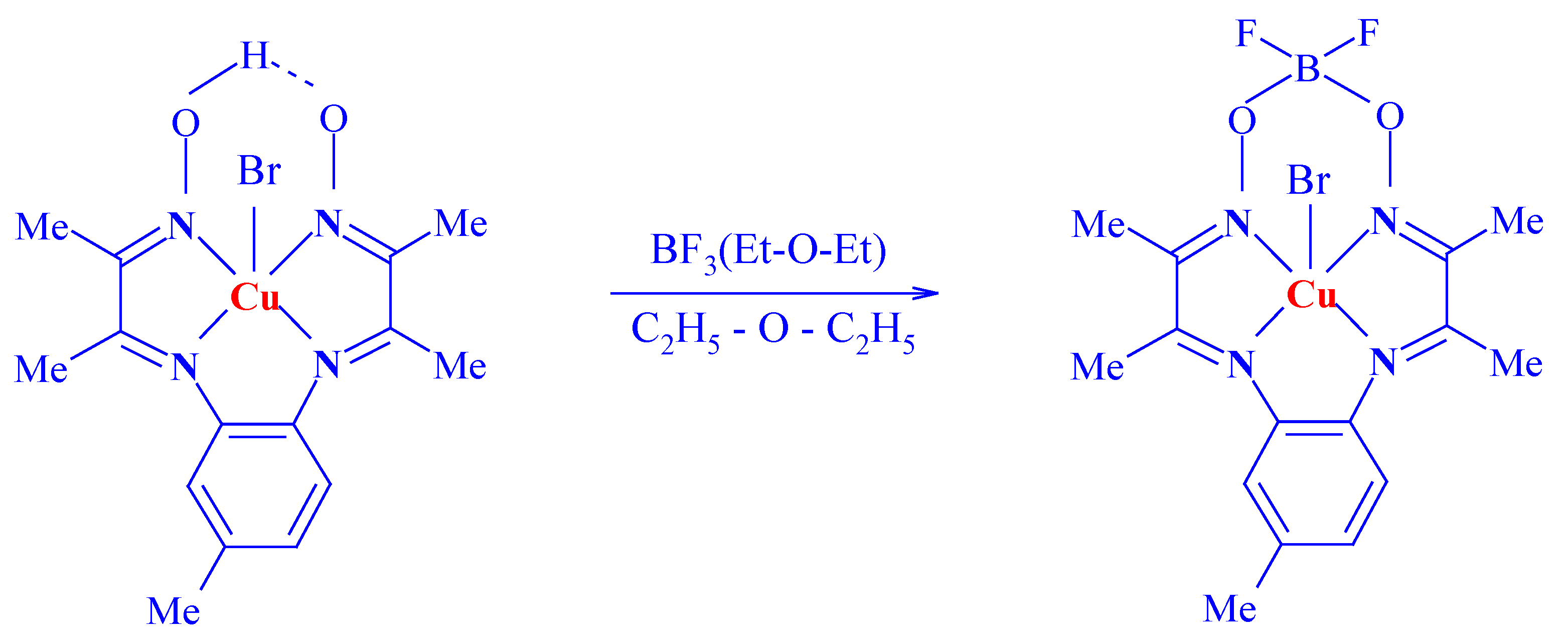
2.1. H2L and [CuLBr] Complex Synthesis and Characterization
2.2. Thermal Analysis
2.3. Bonding Pattern
2.4. Geometry Determination
2.4.1. UV-Vis Spectra
2.4.2. Magnetic Moment and Electron Paramagnetic Resonance Analysis
2.5. PXRD Structural Analysis
2.5.1. Crystallographic Data
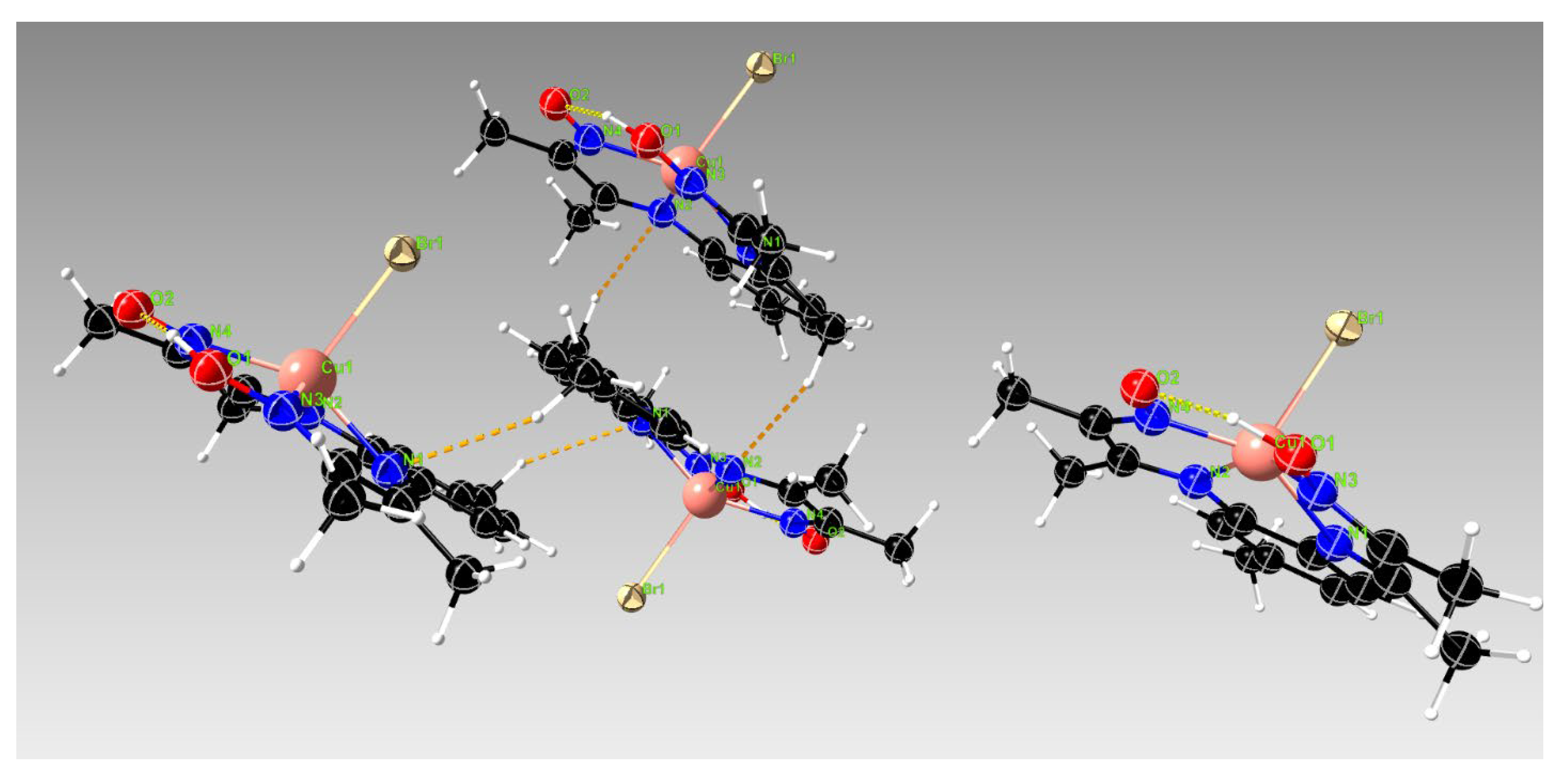
2.5.2. The Molecular Packing
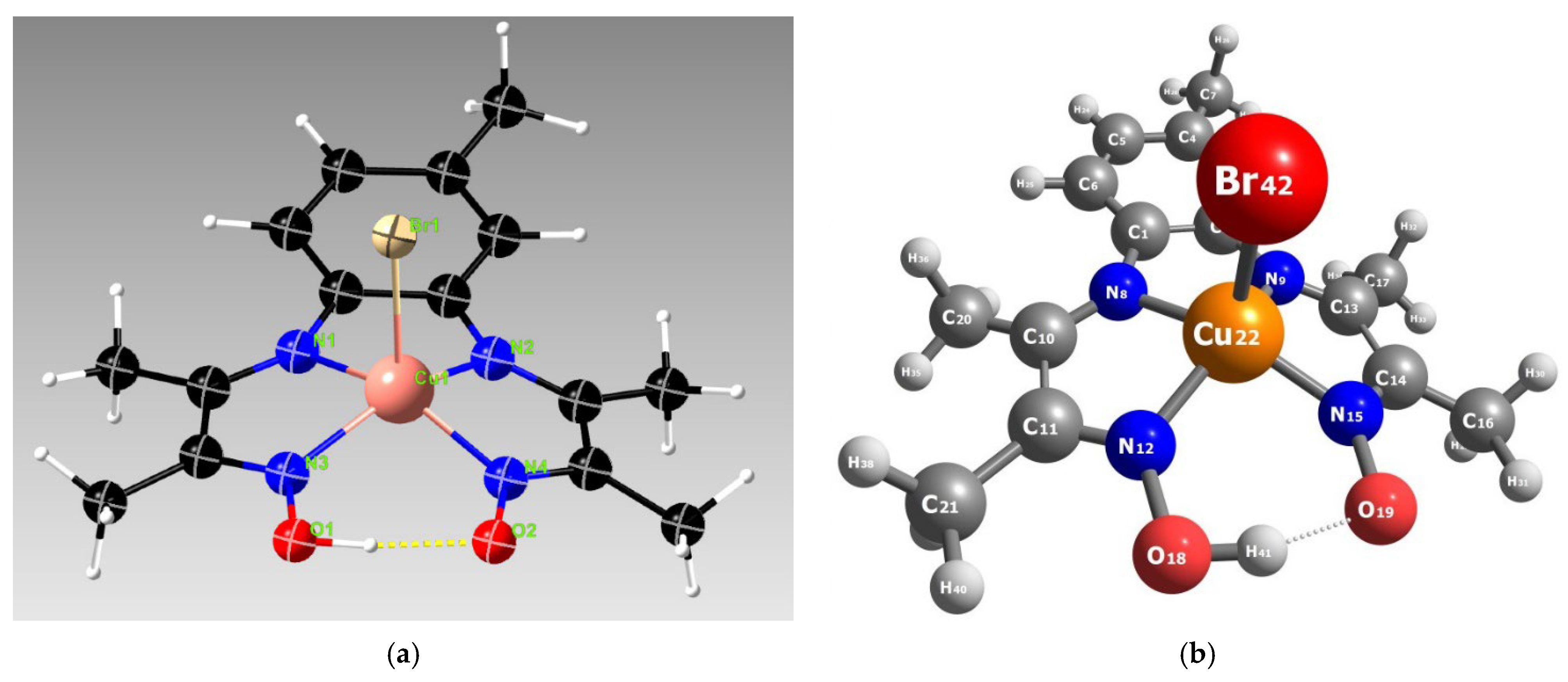
2.5.3. Structural Configuration Around the Metal Center
2.6. DFT Calculations
2.6.1. Geometrical Optimization
2.6.2. Global Reactivity Descriptors
2.6.3. The Relationship Between DNA-Binding Ability and Global Reactivity Descriptors
2.6.4. The Relationship Between Anticancer Activity and Global Reactivity Descriptors
2.7. Electrochemical Characterization of the [CuLBr] Complex
2.8. Antioxidant Mimetic Catalytic Activity
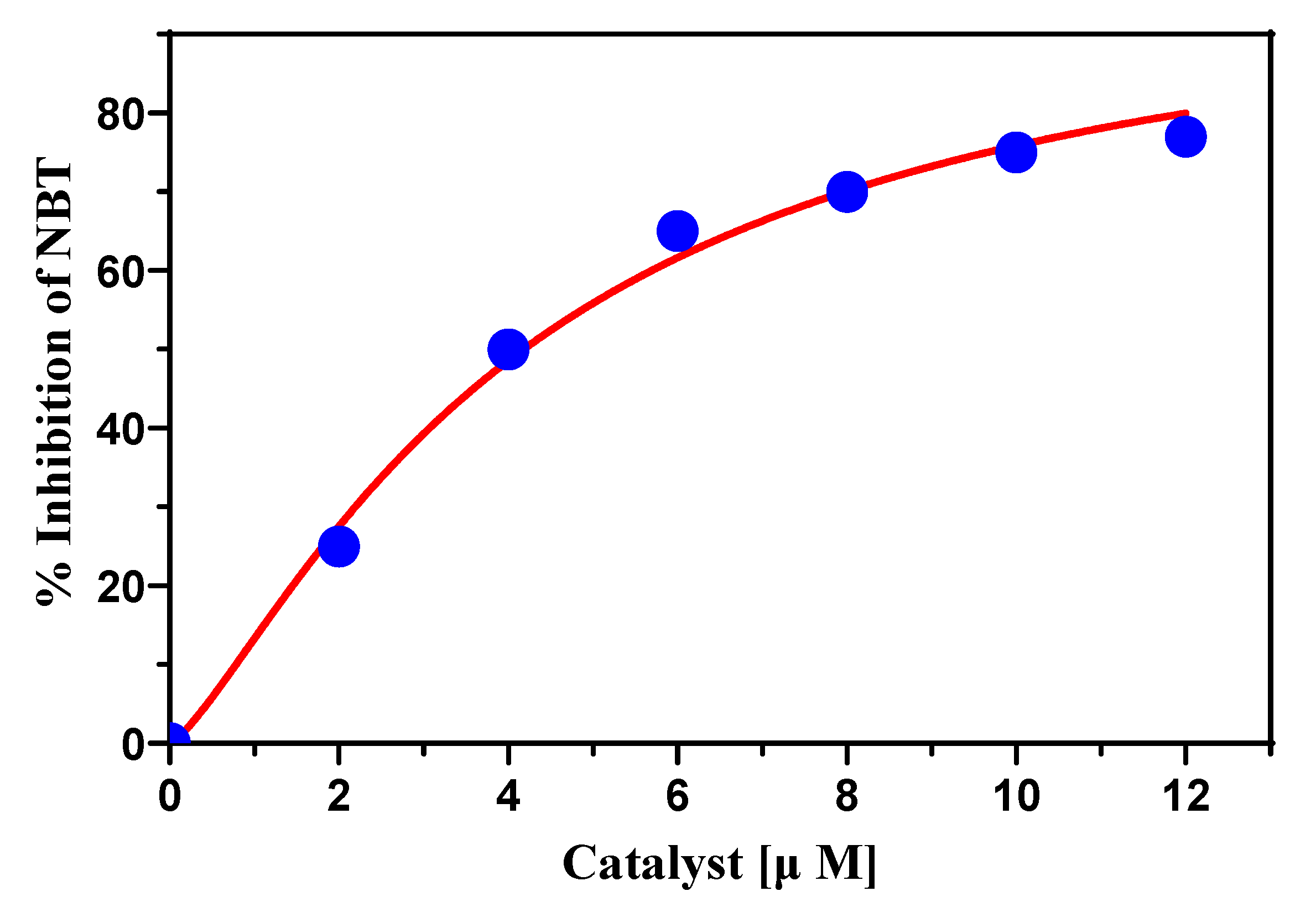
2.8.1. SOD Mimetic Activity
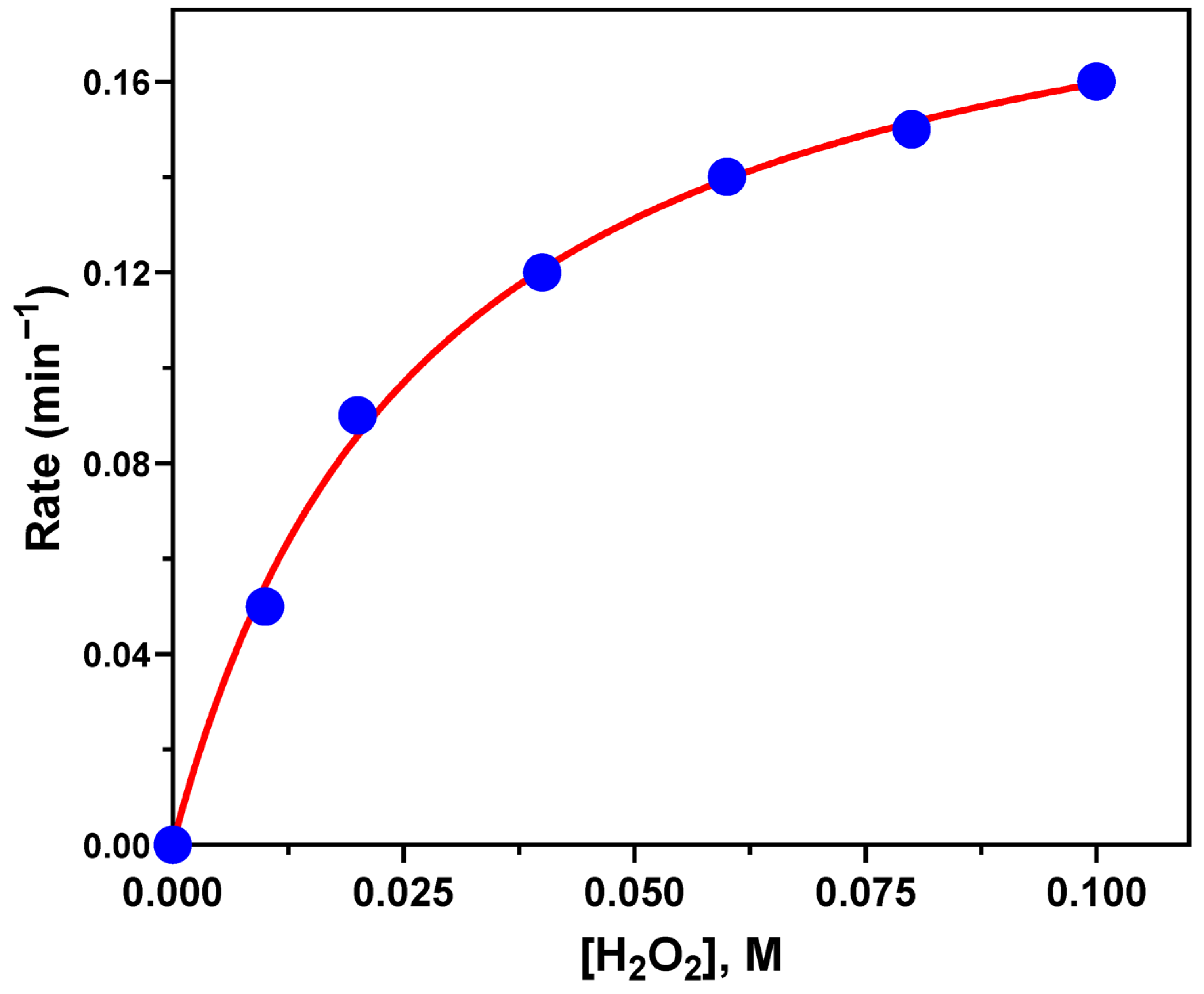
2.8.2. Catalase-like Activity of [CuLBr]
2.9. Biological Studies
2.9.1. Interaction Studies with Biomolecules (DNA and HSA)
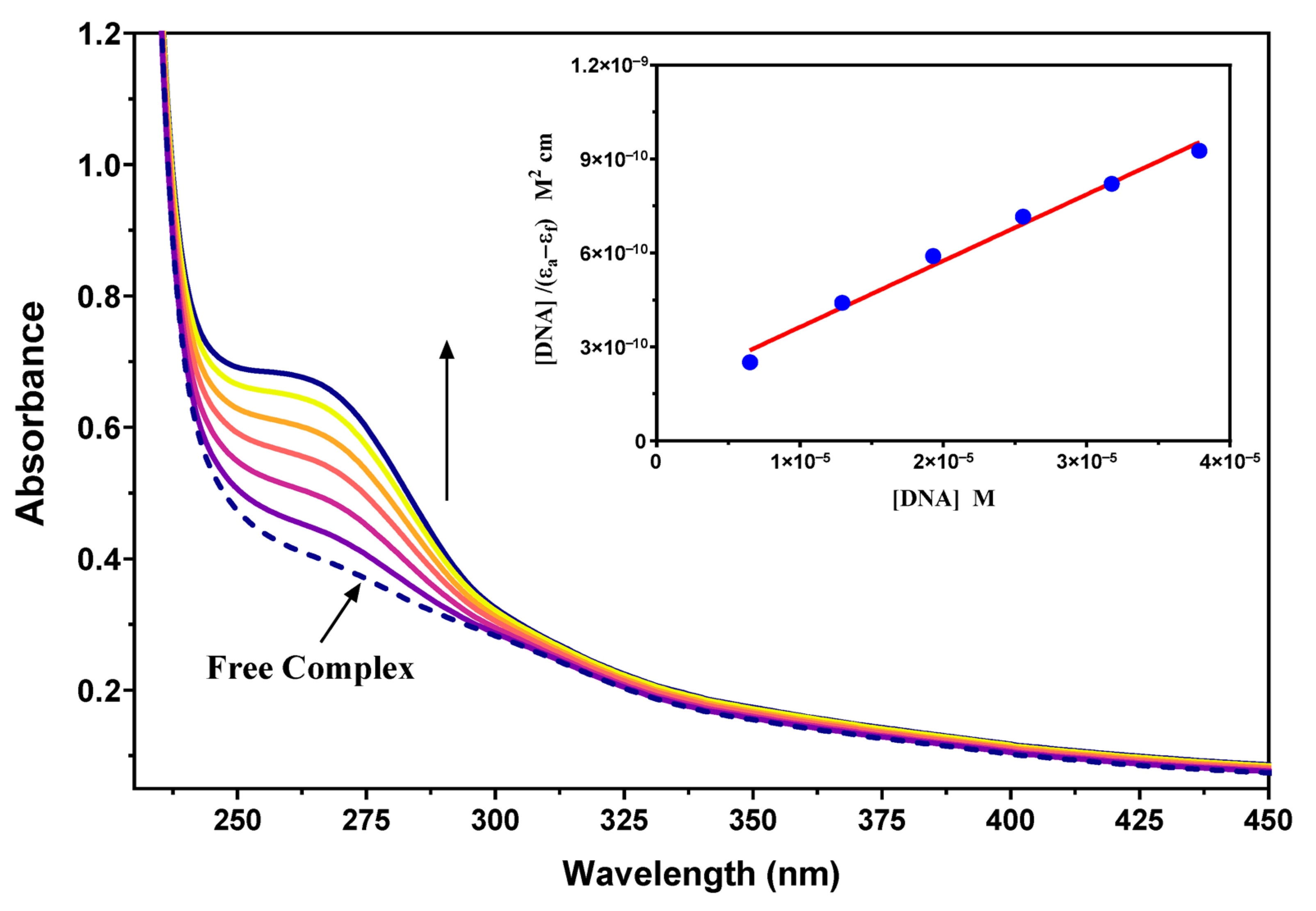
Assessment of DNA-Binding Affinity Using UV-Vis Absorption Spectroscopy
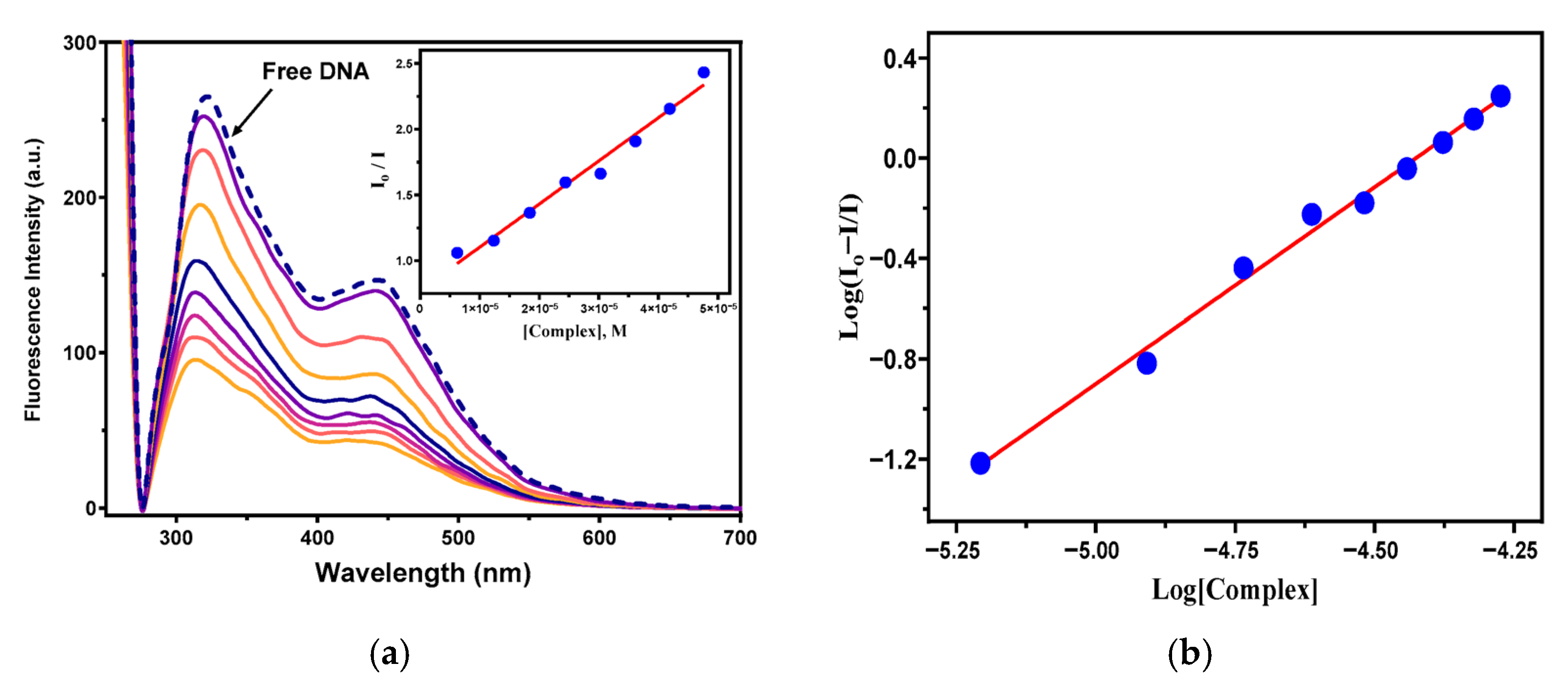
DNA-Binding Affinity via Fluorescence Spectroscopy
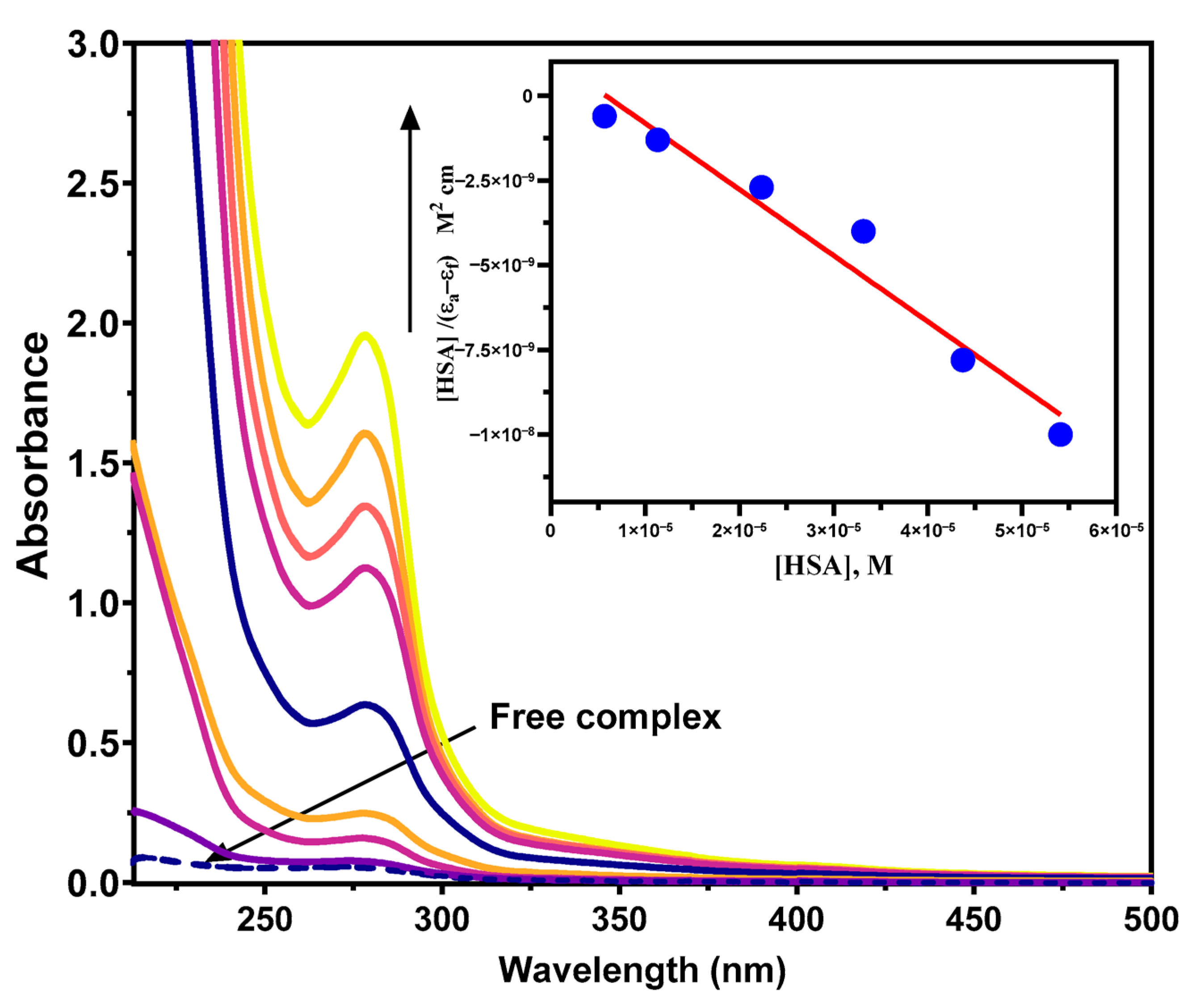
- Investigation of HSA Interactions via UV-Vis Absorption Spectroscopy
- 2.
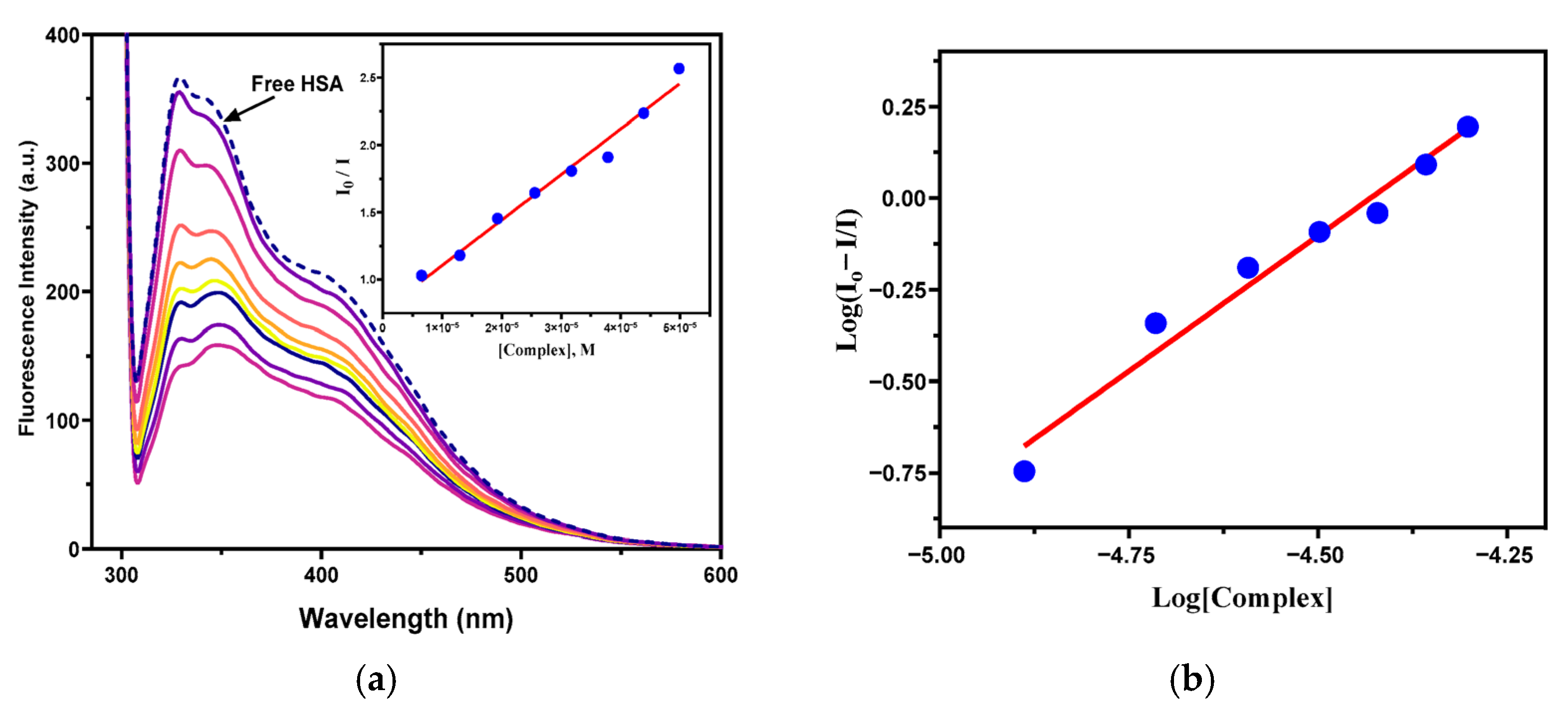
- Fluorescence Quenching and Binding Interaction with HSA
Viscosity Measurements
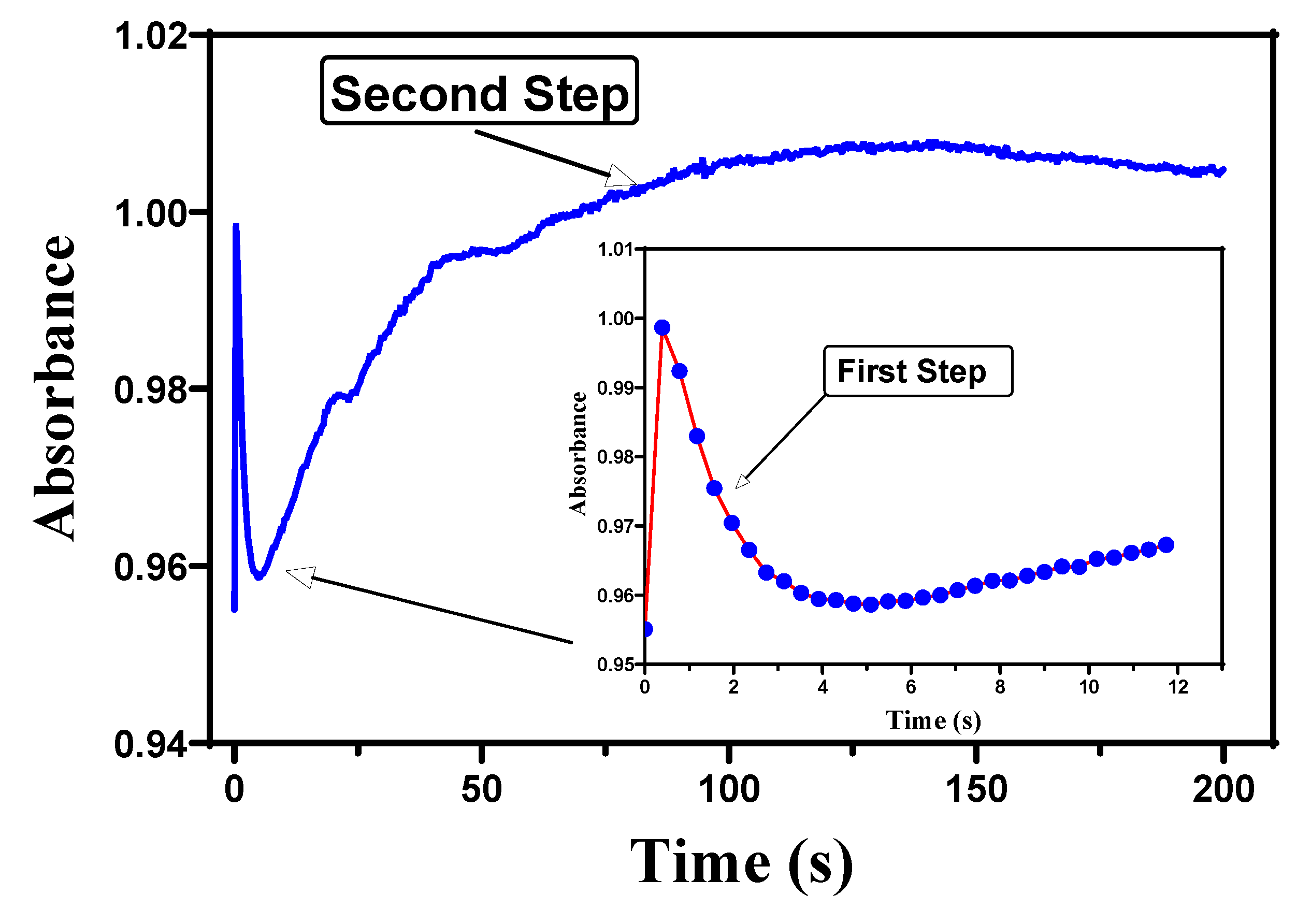
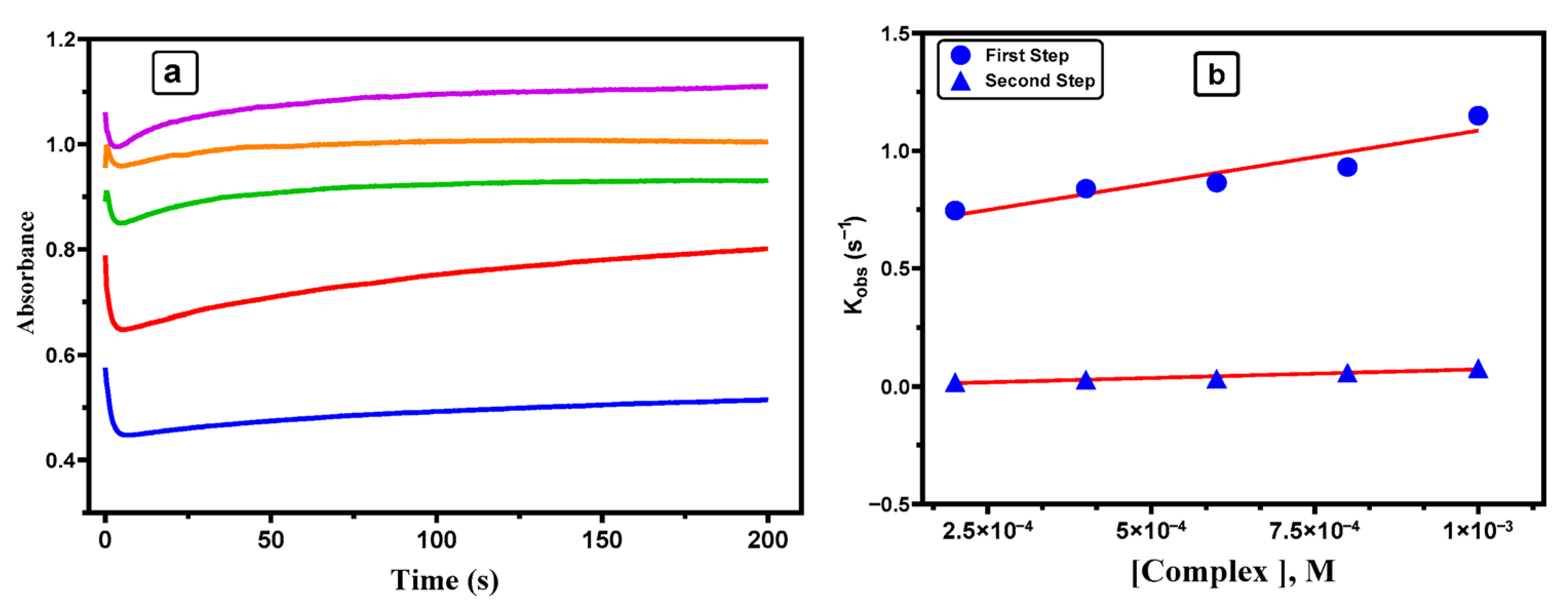
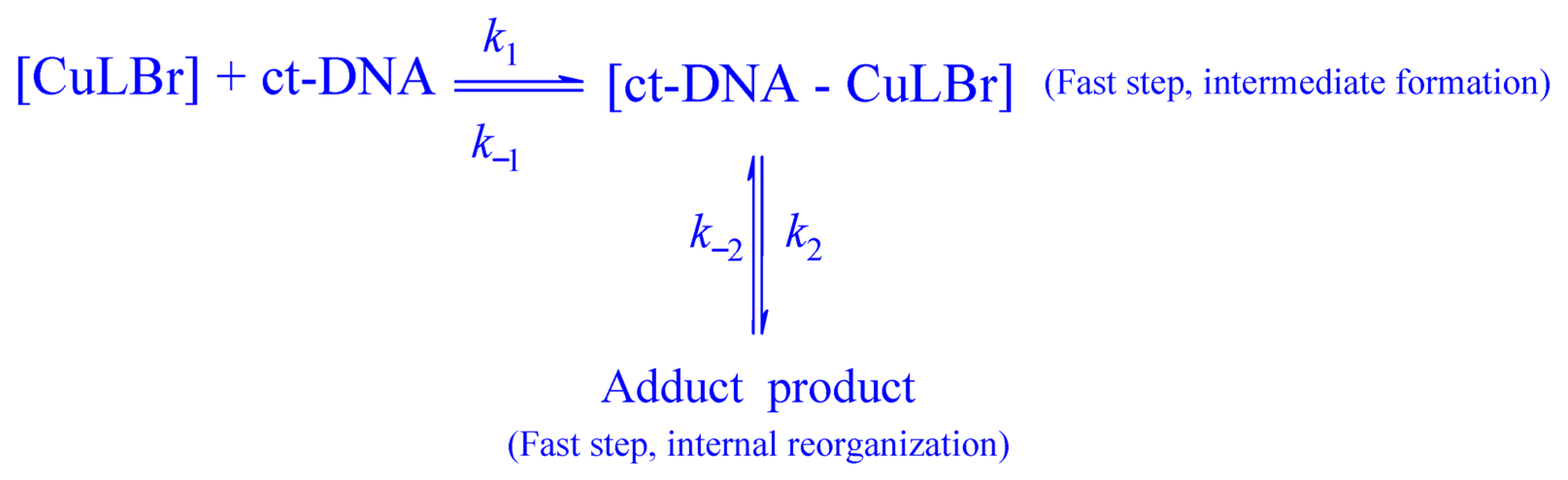
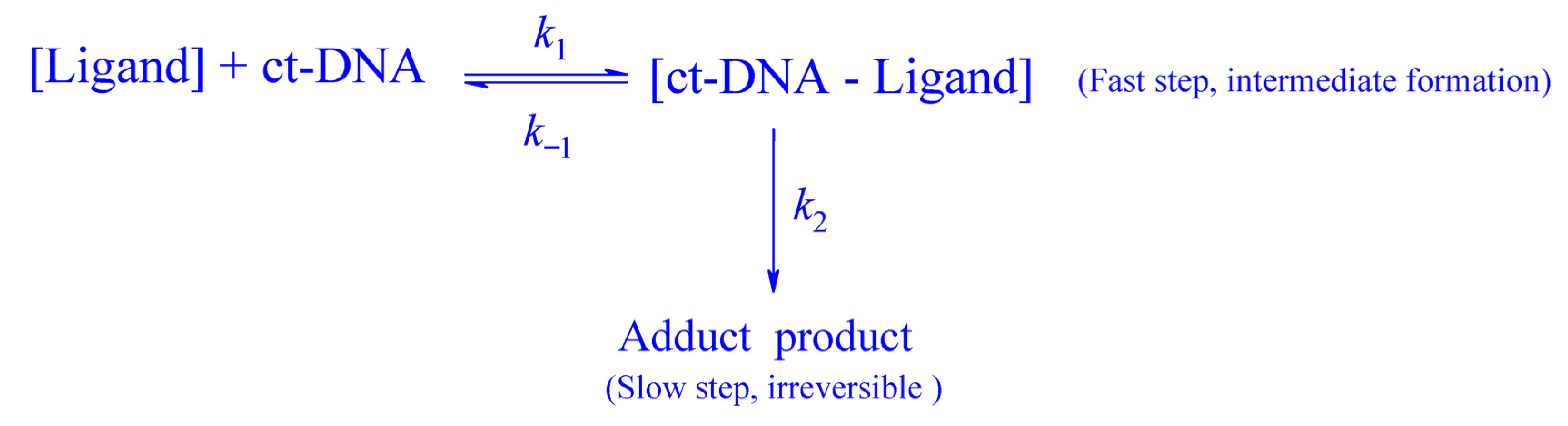
Kinetic and Thermodynamic Parameters for DNA Interaction
2.9.2. Antineoplastic Potential of [CuLBr]
The Therapeutic Coefficient (TC)
2.10. The Correlation Between DNA Binding, Cytotoxicity, and Selectivity
2.11. Molecular Docking Analysis of the [CuLBr] Complex with FDX1 and VEGF: Implications for Cuproptosis and Angiogenesis Inhibition
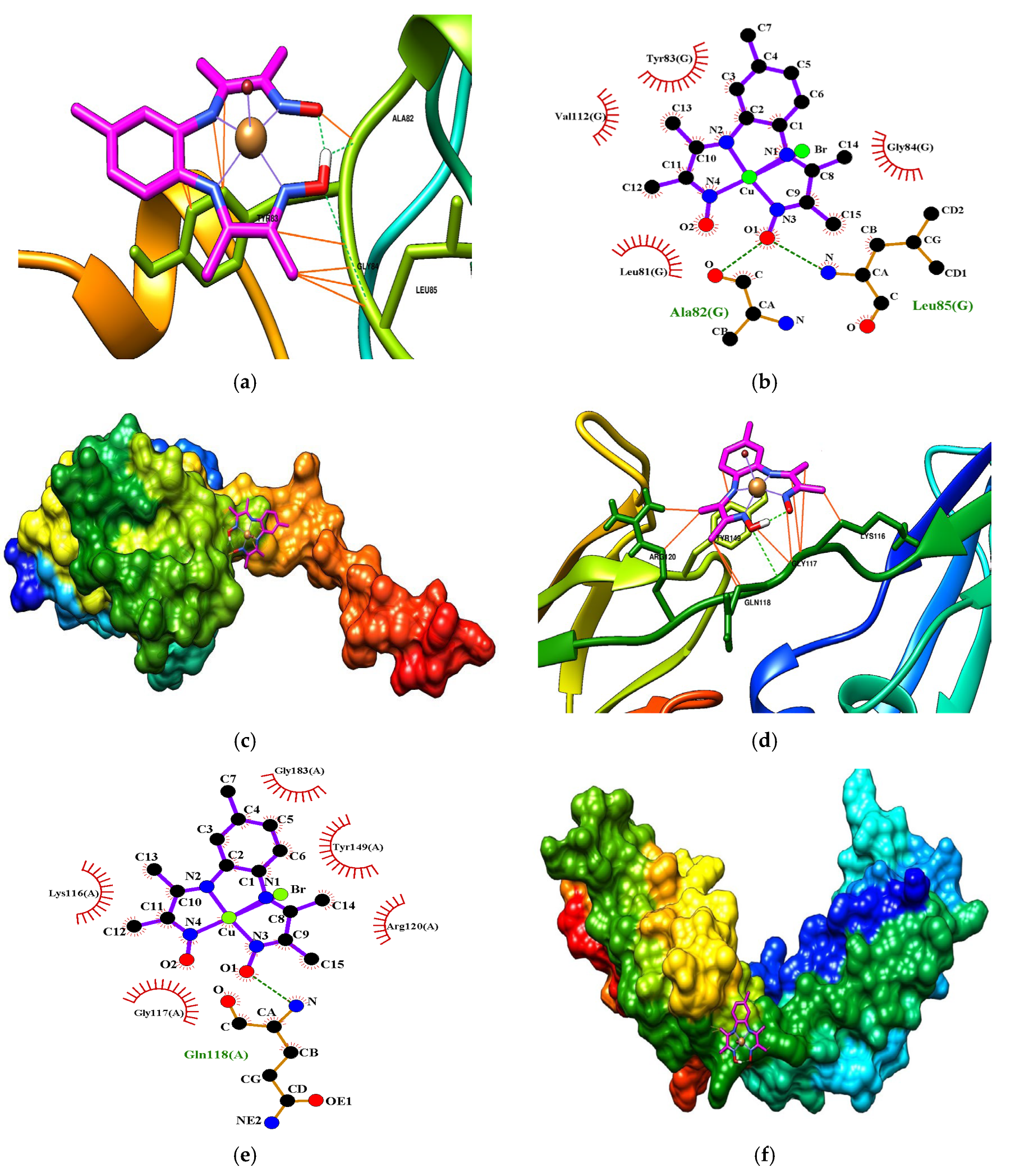
2.11.1. Interaction with FDX1 and Induction of Cuproptosis
2.11.2. Interaction with VEGF and Angiogenesis Inhibition
3. Experimental Section
3.1. Chemicals
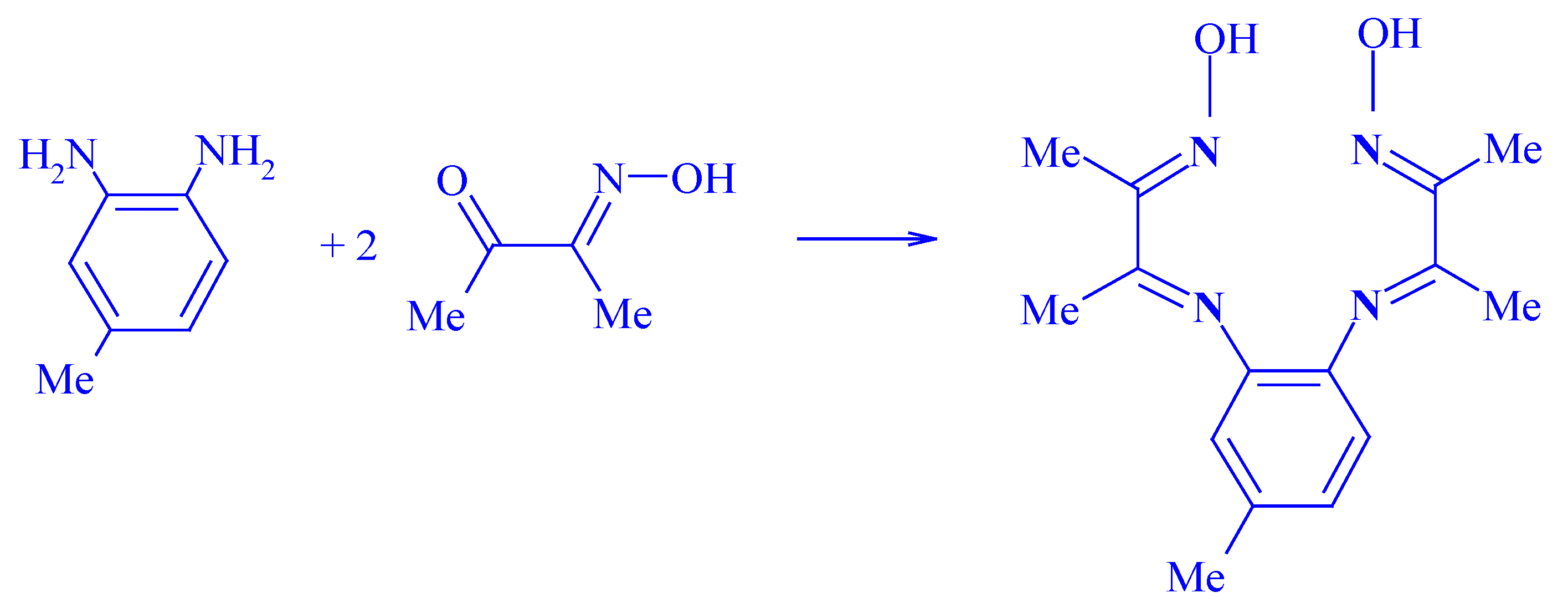
3.2. Synthesis of the Tetradentate Oxime Ligand (H2L)
3.3. Synthesis of [CuLBr] Complex
3.4. Physicochemical and Biological Investigations
3.5. Molecular Docking
4. Conclusions
Supplementary Materials
Author Contributions
Funding
Institutional Review Board Statement
Informed Consent Statement
Data Availability Statement
Conflicts of Interest
References
- Badr, H.E.; Aboelnga, M.M.; Elgamouz, A.; Kawde, A.-N.; El-Hendawy, A.M.; Elsayed, S.A. Developing a Novel Cu(II) Complex: Crystal Structure, Cyclic Voltammetry, Biomolecular Interactions, Anticancer Activity, and Computational Investigations. J. Inorg. Biochem. 2026, 274, 113079. [Google Scholar] [CrossRef]
- Zhang, C.X.; Lippard, S.J. New Metal Complexes as Potential Therapeutics. Curr. Opin. Chem. Biol. 2003, 7, 481–489. [Google Scholar] [CrossRef] [PubMed]
- Aldossary, S.A. Review on Pharmacology of Cisplatin: Clinical Use, Toxicity and Mechanism of Resistance of Cisplatin. Biomed. Pharmacol. J. 2019, 12, 7–15. [Google Scholar] [CrossRef]
- Cope, J.D.; Valle, H.U.; Hall, R.S.; Riley, K.M.; Goel, E.; Biswas, S.; Hendrich, M.P.; Wipf, D.O.; Stokes, S.L.; Emerson, J.P. Tuning the Copper(II)/Copper(I) Redox Potential for More Robust Copper-Catalyzed C–N Bond Forming Reactions. Eur. J. Inorg. Chem. 2020, 2020, 1278–1285. [Google Scholar] [CrossRef] [PubMed]
- Wang, T.; Guo, Z. Copper in Medicine: Homeostasis, Chelation Therapy and Antitumor Drug Design. Curr. Med. Chem. 2006, 13, 525–537. [Google Scholar] [CrossRef]
- Tardito, S.; Isella, C.; Medico, E.; Marchiò, L.; Lanfranchi, M.; Bussolati, O.; Franchi-Gazzola, R. Paraptotic Cell Death Induced by the Thioxotriazole Copper Complex A0: A New Tool to Kill Apoptosis-Resistant Cancer Cells. In Platinum and Other Heavy Metal Compounds in Cancer Chemotherapy; Humana Press: Totowa, NJ, USA, 2009; pp. 201–207. [Google Scholar]
- Tardito, S.; Bussolati, O.; Gaccioli, F.; Gatti, R.; Guizzardi, S.; Uggeri, J.; Marchiò, L.; Lanfranchi, M.; Franchi-Gazzola, R. Non-Apoptotic Programmed Cell Death Induced by a Copper(II) Complex in Human Fibrosarcoma Cells. Histochem. Cell Biol. 2006, 126, 473–482. [Google Scholar] [CrossRef]
- Ruankham, W.; Songtawee, N.; Prachayasittikul, V.; Worachartcheewan, A.; Suwanjang, W.; Pingaew, R.; Prachayasittikul, V.; Prachayasittikul, S.; Phopin, K. Promising 8-Aminoquinoline-Based Metal Complexes in the Modulation of SIRT1/3-FOXO3a Axis against Oxidative Damage-Induced Preclinical Neurons. ACS Omega 2023, 8, 46977–46988. [Google Scholar] [CrossRef]
- Sahyon, H.A.; Shoair, A.G.F.; Althobaiti, F.; Shanab, M.M.A.H.; Helal, M.A.; Fathy, A.M.; Aldhahrani, A. Exploration of New Nickel and Copper(II) Complexes as Potential P53/Caspase 9 Activator in Human Colon Cancer Cell Line. Russ. J. Gen. Chem. 2022, 92, 2058–2069. [Google Scholar] [CrossRef]
- Da Costa Ferreira, A.M.; Hureau, C.; Facchin, G. Bioinorganic Chemistry of Copper: From Biochemistry to Pharmacology. Inorganics 2024, 12, 97. [Google Scholar] [CrossRef]
- Wehbe, M.; Lo, C.; Leung, A.W.Y.; Dragowska, W.H.; Ryan, G.M.; Bally, M.B. Copper (II) Complexes of Bidentate Ligands Exhibit Potent Anti-Cancer Activity Regardless of Platinum Sensitivity Status. Investig. New Drugs 2017, 35, 682–690. [Google Scholar] [CrossRef]
- Golubeva, Y.A.; Lider, E.V. Copper(Ii) Complexes Based on 2,2′-Bipyridine and 1,10-Phenanthroline as Potential Objects for Developing Antitumor Drugs. J. Struct. Chem. 2024, 65, 1159–1209. [Google Scholar] [CrossRef]
- Silva, C.M.F.; Lino, R.C.; de Moura, M.C.T.; de Sá Borges, A.P.; de Oliveira Júnior, R.J. Innovative Approaches in the Synthesis and Optimization of Copper Complexes for Antitumor Therapies: A Comprehensive Review. Molecules 2025, 30, 2104. [Google Scholar] [CrossRef] [PubMed]
- Balsa, L.M.; de la Parra, L.S.M.; Espindola-Moreno, O.; León, I.E. Advances in Copper Complexes in Cancer Treatment. Drug Discov. Today 2025, 30, 104522. [Google Scholar] [CrossRef] [PubMed]
- Fan, R.; Wei, J.; Xu, B.-B.; Jin, N.; Gong, X.-Y.; Qin, X.-Y. A Novel Chiral Oxazoline Copper(ii)-Based Complex Inhibits Ovarian Cancer Growth In Vitro and In Vivo by Regulating VEGF/VEGFR2 Downstream Signaling Pathways and Apoptosis Factors. Dalt. Trans. 2023, 52, 11427–11440. [Google Scholar] [CrossRef]
- Hou, X.-X.; Ren, Y.-P.; Luo, Z.-H.; Jiang, B.-L.; Lu, T.-T.; Huang, F.-P.; Qin, X.-Y. Two Novel Chiral Tetranucleate Copper-Based Complexes: Syntheses, Crystal Structures, Inhibition of Angiogenesis and the Growth of Human Breast Cancer in Vitro and in Vivo. Dalt. Trans. 2021, 50, 14684–14694. [Google Scholar] [CrossRef]
- Hu, F.; Huang, J.; Bing, T.; Mou, W.; Li, D.; Zhang, H.; Chen, Y.; Jin, Q.; Yu, Y.; Yang, Z. Stimulus-Responsive Copper Complex Nanoparticles Induce Cuproptosis for Augmented Cancer Immunotherapy. Adv. Sci. 2024, 11, e2309388. [Google Scholar] [CrossRef]
- Lu, Y.; Pan, Q.; Gao, W.; Pu, Y.; He, B. Reversal of Cisplatin Chemotherapy Resistance by Glutathione-Resistant Copper-Based Nanomedicine via Cuproptosis. J. Mater. Chem. B 2022, 10, 6296–6306. [Google Scholar] [CrossRef]
- Xu, B.-B.; Jin, N.; Liu, J.-C.; Liao, A.-Q.; Lin, H.-Y.; Qin, X.-Y. Arene–Arene Coupled Disulfamethazines (or Sulfadiazine)-Phenanthroline-Metal(II) Complexes Were Synthesized by In Situ Reactions and Inhibited the Growth and Development of Triple-Negative Breast Cancer through the Synergistic Effect of Antiangiogenesis. J. Med. Chem. 2024, 67, 7088–7111. [Google Scholar] [CrossRef]
- Wang, X.; Zhu, M.; Li, S.; Xu, G.; Zhang, Z.; Yang, F. Novel Mono-, Bi-, Tri- and Tetra-Nuclear Copper Complexes That Inhibit Tumor Growth through Apoptosis and Anti-Angiogenesis. J. Inorg. Biochem. 2024, 250, 112403. [Google Scholar] [CrossRef]
- Wang, Y.; Chen, Y.; Zhang, J.; Yang, Y.; Fleishman, J.S.; Wang, Y.; Wang, J.; Chen, J.; Li, Y.; Wang, H. Cuproptosis: A Novel Therapeutic Target for Overcoming Cancer Drug Resistance. Drug Resist. Updat. 2024, 72, 101018. [Google Scholar] [CrossRef]
- Tang, D.; Kroemer, G.; Kang, R. Targeting Cuproplasia and Cuproptosis in Cancer. Nat. Rev. Clin. Oncol. 2024, 21, 370–388. [Google Scholar] [CrossRef] [PubMed]
- Quan, Y.; Li, W.; Yan, R.; Cheng, J.; Xu, H.; Chen, L. Tumor Cuproptosis and Immune Infiltration Improve Survival of Patients with Hepatocellular Carcinoma with a High Expression of Ferredoxin 1. Front. Oncol. 2023, 13, 1168769. [Google Scholar] [CrossRef]
- Ren, H.; Liu, C.; Zhang, C.; Wu, H.; Zhang, J.; Wang, Z.; Chen, L.; Wang, H.; Shao, C.; Zhou, L. A Cuproptosis-Related Gene Expression Signature Predicting Clinical Prognosis and Immune Responses in Intrahepatic Cholangiocarcinoma Detected by Single-Cell RNA Sequence Analysis. Cancer Cell Int. 2024, 24, 92. [Google Scholar] [CrossRef] [PubMed]
- Geindreau, M.; Ghiringhelli, F.; Bruchard, M. Vascular Endothelial Growth Factor, a Key Modulator of the Anti-Tumor Immune Response. Int. J. Mol. Sci. 2021, 22, 4871. [Google Scholar] [CrossRef] [PubMed]
- Elebiyo, T.C.; Rotimi, D.; Evbuomwan, I.O.; Maimako, R.F.; Iyobhebhe, M.; Ojo, O.A.; Oluba, O.M.; Adeyemi, O.S. Reassessing Vascular Endothelial Growth Factor (VEGF) in Anti-Angiogenic Cancer Therapy. Cancer Treat. Res. Commun. 2022, 32, 100620. [Google Scholar] [CrossRef]
- Scagliotti, A.; Capizzi, L.; Cazzaniga, M.E.; Ilari, A.; De Giorgi, M.; Cordani, N.; Gallazzi, M.; Bruno, A.; Pelosi, G.; Albini, A.; et al. Co-Targeting Triple-Negative Breast Cancer Cells and Endothelial Cells by Metronomic Chemotherapy Inhibits Cell Regrowth and Migration via Downregulation of the FAK/VEGFR2/VEGF Axis and Autophagy/Apoptosis Activation. Front. Oncol. 2022, 12, 998274. [Google Scholar] [CrossRef]
- Huang, N.; Ren, J.; Deng, X.; Bao, Q.; Huang, G.; Zhi, S.; Li, Y.; Li, J.; Hu, B.; Zeng, D.; et al. Endothelial F3-Mediated Autolysosome and Lipid Metabolism Promote Resistance to Anti-VEGFA Therapy in Metastatic Colorectal Cancer. Autophagy 2025, 21, 3004–3023. [Google Scholar] [CrossRef]
- Li, H.; Zhang, Y.; Feng, Y.; Hu, X.; Bi, L.; Zhu, H.; Wang, Y. Predictors Based on Cuproptosis Closely Related to Angiogenesis Predict Colorectal Cancer Recurrence. Front. Oncol. 2024, 13, 1322421. [Google Scholar] [CrossRef]
- Li, X.; Dai, Z.; Liu, J.; Sun, Z.; Li, N.; Jiao, G.; Cao, H. Characterization of the Functional Effects of Ferredoxin 1 as a Cuproptosis Biomarker in Cancer. Front. Genet. 2022, 13, 969856. [Google Scholar] [CrossRef]
- Yuan, H.; Qin, X.; Wang, J.; Yang, Q.; Fan, Y.; Xu, D. The Cuproptosis-Associated 13 Gene Signature as a Robust Predictor for Outcome and Response to Immune- and Targeted-Therapies in Clear Cell Renal Cell Carcinoma. Front. Immunol. 2022, 13, 971142. [Google Scholar] [CrossRef]
- Sørensen, M.; Neilson, E.H.J.; Møller, B.L. Oximes: Unrecognized Chameleons in General and Specialized Plant Metabolism. Mol. Plant 2018, 11, 95–117. [Google Scholar] [CrossRef]
- Schepetkin, I.A.; Plotnikov, M.B.; Khlebnikov, A.I.; Plotnikova, T.M.; Quinn, M.T. Oximes: Novel Therapeutics with Anticancer and Anti-Inflammatory Potential. Biomolecules 2021, 11, 777. [Google Scholar] [CrossRef] [PubMed]
- Dhuguru, J.; Zviagin, E.; Skouta, R. FDA-Approved Oximes and Their Significance in Medicinal Chemistry. Pharmaceuticals 2022, 15, 66. [Google Scholar] [CrossRef] [PubMed]
- Pereira, T.H.R.; de Moura, T.R.; Santos, M.R.M.; dos Zamarioli, L.S.; Erustes, A.G.; Smaili, S.S.; Pereira, G.J.S.; de Netto, A.V.G.; Bincoletto, C. Palladium (II) Compounds Containing Oximes as Promising Antitumor Agents for the Treatment of Osteosarcoma: An in Vitro and in Vivo Comparative Study with Cisplatin. Eur. J. Med. Chem. 2024, 264, 116034. [Google Scholar] [CrossRef] [PubMed]
- Guler, E.M.; Bozali, K. Synthesised Thymoquinone-Oxime Induces Cytotoxicity, Genotoxicity and Apoptosis in Hepatocellular Cancer Cells: In Vitro Study. Nat. Prod. Res. 2024, 38, 1695–1703. [Google Scholar] [CrossRef]
- Kale, E.; Kale, A.; Bozali, K.; Gulgec, A.S.; Ozdemir, M.; Yalcin, B.; Guler, E.M. TQ-Ox, a Novel Synthetic Derivative of Thymoquinone on Ovarian Cancer Cells in Vitro. Nat. Prod. Res. 2023, 37, 3015–3024. [Google Scholar] [CrossRef]
- Ragab, M.S.; Soliman, M.H.; Shehata, M.R.; Shoukry, M.M.; Ragheb, M.A. Design, Synthesis, Spectral Characterization, Photo-Cleavage, and in Vitro Evaluation of Anticancer Activities of New Transition Metal Complexes of Piperazine Based Schiff Base-Oxime Ligand. Appl. Organomet. Chem. 2022, 36, e6802. [Google Scholar] [CrossRef]
- Fazzi, R.B.; de Paiva, R.E.F.; Ferreira, A.M.D.C. A Combined EPR Spectroscopy and DFT-Based Structural Interpretation of the Antitumor Properties of Oxindolimine-Copper(II) Complexes. Arkivoc 2020, 2020, 123–133. [Google Scholar] [CrossRef]
- Oliveri, V. Selective Targeting of Cancer Cells by Copper Ionophores: An Overview. Front. Mol. Biosci. 2022, 9, 841814. [Google Scholar] [CrossRef]
- Abdullah, K.M.; Kaushal, J.B.; Takkar, S.; Sharma, G.; Alsafwani, Z.W.; Pothuraju, R.; Batra, S.K.; Siddiqui, J.A. Copper Metabolism and Cuproptosis in Human Malignancies: Unraveling the Complex Interplay for Therapeutic Insights. Heliyon 2024, 10, e27496. [Google Scholar] [CrossRef]
- Ramanujam, V.V.; Alexander, V. ChemInform Abstract: Vitamin B12 and Coenzyme B12 Models. Part 1. Synthesis and Physical Characterization of Alkyl- and (Non-alkyl)Cobalt(III) Complexes of 3,8-Dimethyl-5,6-benzo-4,7-diazadeca-3,7-diene-2,9-dione Dioxime. ChemInform 1988, 19, 169–171. [Google Scholar] [CrossRef]
- Geary, W.J. The Use of Conductivity Measurements in Organic Solvents for the Characterisation of Coordination Compounds. Coord. Chem. Rev. 1971, 7, 81–122. [Google Scholar] [CrossRef]
- Blinc, R.; Hadži, D. 915. Infrared Spectra and Hydrogen Bonding in the Nickel–Dimethylglyoxime and Related Complexes. J. Chem. Soc. 1958, 1958, 4536–4540. [Google Scholar] [CrossRef]
- Nakamoto, K. Infrared and Raman Spectra of Inorganic and Coordination Compounds; Wiley: Hoboken, NJ, USA, 2008; pp. 56–70. ISBN 9780471744931. [Google Scholar]
- Schrauzer, G.N. Chemie Der Metall-Koordinationsverbindungen, I. Reaktion von Bis-dimethylglyoxim-nickel Mit Borverbindungen. Chem. Ber. 1962, 95, 1438–1445. [Google Scholar] [CrossRef]
- R, G. Inorganic Electronic Spectroscopy. J. Mol. Struct. 1985, 129, 180–181. [Google Scholar] [CrossRef]
- Akiyoshi, R.; Suzuki, H. Abstracts of the 17th International Symposium on Bioluminescence and Chemiluminescence-(ISBC 2012). Luminescence 2012, 27, 95–178. [Google Scholar] [CrossRef]
- Ramadan, A.E.-M.M.; Shaban, S.Y.; Ibrahim, M.M.; Sallam, S.A.; El-Shami, F.I.; Al-Juaid, S. Correction to: Metformin-Based Copper(II) Complexes: Synthesis, Structural Characterization and Mimicking Activity of Catechol Oxidase and Phenoxazinone Synthase. J. Mater. Sci. 2021, 56, 12059. [Google Scholar] [CrossRef]
- Raithby, P.R.; Shields, G.P.; Allen, F.H.; Motherwell, W.D.S. Structure Correlation Study of Four-Coordinate Copper(I) and (II) Complexes. Acta Crystallogr. Sect. B Struct. Sci. 2000, 56, 444–454. [Google Scholar] [CrossRef]
- Abo El-Kheir, D.A.H.; Shaban, S.Y.; Ibrahim, M.M.; Ramadan, A.E.M.; Fathy, A.M. Copper (II) Complexes Based on the Mixed Ligand System: Study of Synthesis, Characterization, and Stopped-flow Kinetics of Copper Oxidase-mimicking Catalytic Activity. Appl. Organomet. Chem. 2024, 38, e7588. [Google Scholar] [CrossRef]
- Alhadhrami, A. Nano-Crystallites of a Ruthenium(iii) Violurate Complex: Synthesis, Characterization, PXRD and DFT Structural Analysis. DNA/HSA-Binding, Antiviral Activity against COVID-19 and Molecular Docking Study. New J. Chem. 2024, 48, 9718–9737. [Google Scholar] [CrossRef]
- Ibrahim, M.M.; Fathy, A.M.; Al-Harbi, S.A.; Sallam, S.A.; Al-Juaid, S.S.; Ramadan, A.E.-M.M. Palladium(II) Based Imines; Synthesis, Characterization, X-Ray Structural Analysis; DFT and Catalytic Hydrogenation Study. J. Organomet. Chem. 2021, 939, 121764. [Google Scholar] [CrossRef]
- Altomare, A.; Cuocci, C.; Giacovazzo, C.; Moliterni, A.; Rizzi, R.; Corriero, N.; Falcicchio, A. EXPO2013: A Kit of Tools for Phasing Crystal Structures from Powder Data. J. Appl. Crystallogr. 2013, 46, 1231–1235. [Google Scholar] [CrossRef]
- Al-Nashawy, A.M.A.; Ramadan, A.E.-M.M.; Shaban, S.Y.; Khalil, S.; Shebl, M.; Abdel-Galeil, M.M.; Al-Harbie, S.A.; Fathy, A.M. Structural and Bio-Catalytic Aspects of Nano Crystallite Iron(iii) Complexes Containing Triazole-Based Ligands. New J. Chem. 2023, 47, 3084–3103. [Google Scholar] [CrossRef]
- Sessler, J.L. Medicinal Inorganic Chemistry; Copyright, Foreword; American Chemical Society: Washington, DC, USA, 2005; pp. i–v. [Google Scholar]
- Flohé, L.; Ötting, F. [10] Superoxide Dismutase Assays. In Methods in Enzymology; Academic Press: Cambridge, MA, USA, 1984; pp. 93–104. [Google Scholar]
- Iranzo, O. Manganese Complexes Displaying Superoxide Dismutase Activity: A Balance between Different Factors. Bioorg. Chem. 2011, 39, 73–87. [Google Scholar] [CrossRef]
- Csire, G.; Timári, S.; Asztalos, J.; Király, J.M.; Kiss, M.; Várnagy, K. Coordination, Redox Properties and SOD Activity of Cu(II) Complexes of Multihistidine Peptides. J. Inorg. Biochem. 2017, 177, 198–210. [Google Scholar] [CrossRef]
- Siqueira, J.D.; de Pellegrin, S.F.; dos Santos, S.S.; Iglesias, B.A.; Piquini, P.C.; Arantes, L.P.; Soares, F.A.; Chaves, O.A.; Neves, A.; Back, D.F. SOD Activity of New Copper II Complexes with Ligands Derived from Pyridoxal and Toxicity in Caenorhabditis Elegans. J. Inorg. Biochem. 2020, 204, 110950. [Google Scholar] [CrossRef]
- Patel, S.K.; Patel, R.N.; Patel, N.; Patel, A.K.; Herrero, S.; Choquesillo-Lazarte, D.; Butcher, R.J. Mono- and Binuclear Copper(II) Complexes with Different Structural Motifs and Geometries: Synthesis, Spectral Characterization, DFT Calculations and Superoxide Dismutase Enzymatic Activity. Polyhedron 2022, 222, 115913. [Google Scholar] [CrossRef]
- Kang, Y.; Sun, X.; Wang, Y.; Zhang, Y.; Huang, W. Water-Soluble Copper-Based Simulated Enzyme: Biomimetic Synthesis and Activities in Vitro. Chin. J. Struct. Chem. 2023, 42, 100046. [Google Scholar] [CrossRef]
- Hou, X.; Liang, X.; Wang, Y.; Cai, D.; Kang, Y.; Huang, W. Efficient Water-Soluble Copper(II) Complexes with SOD/CO-like Activities and the Relationship between Their Structure and Activity. Polyhedron 2024, 260, 117097. [Google Scholar] [CrossRef]
- Verhagen, M.F.J.M.; Meussen, E.T.M.; Hagen, W.R. On the Reduction Potentials of Fe and Cu Zn Containing Superoxide Dismutases. Biochim. Biophys. Acta-Gen. Subj. 1995, 1244, 99–103. [Google Scholar] [CrossRef]
- Metzler-Nolte, N. Biological Inorganic Chemistry: Structure and Reactivity. Edited by Ivano Bertini, Harry B. Gray, Edward I. Stiefel and Joan Selverstone Valentine. ChemBioChem 2007, 8, 1327. [Google Scholar] [CrossRef]
- Weintraub, S.; Moskovitz, Y.; Fleker, O.; Levy, A.R.; Meir, A.; Ruthstein, S.; Benisvy, L.; Gruzman, A. SOD Mimetic Activity and Antiproliferative Properties of a Novel Tetra Nuclear Copper (II) Complex. JBIC J. Biol. Inorg. Chem. 2015, 20, 1287–1298. [Google Scholar] [CrossRef]
- Lakk-Bogáth, D.; Török, P.; Giorgi, M.; Kaizer, J. Catalase and Catecholase-like Activities of Manganese and Copper Complexes Supported by Pentadentate Polypyridyl Ligands in Aqueous Solution. J. Mol. Struct. 2022, 1262, 133100. [Google Scholar] [CrossRef]
- Pires, B.M.; Silva, D.M.; Visentin, L.C.; Rodrigues, B.L.; Carvalho, N.M.F.; Faria, R.B. Synthesis and Characterization of Cobalt(III), Nickel(II) and Copper(II) Mononuclear Complexes with the Ligand 1,3-Bis[(2-Aminoethyl)Amino]-2-Propanol and Their Catalase-Like Activity. PLoS ONE 2015, 10, e0137926. [Google Scholar] [CrossRef] [PubMed]
- Ben Hadj Hammouda, Y.; Coulibaly, K.; Bathily, A.; Teoh Sook Han, M.; Policar, C.; Delsuc, N. Improvement of Peptidyl Copper Complexes Mimicking Catalase: A Subtle Balance between Thermodynamic Stability and Resistance towards H2O2 Degradation. Molecules 2022, 27, 5476. [Google Scholar] [CrossRef] [PubMed]
- Guerreiro, J.F.; Gomes, M.A.G.B.; Pagliari, F.; Jansen, J.; Marafioti, M.G.; Nistico, C.; Hanley, R.; Costa, R.O.; Ferreira, S.S.; Mendes, F.; et al. Iron and Copper Complexes with Antioxidant Activity as Inhibitors of the Metastatic Potential of Glioma Cells. RSC Adv. 2020, 10, 12699–12710. [Google Scholar] [CrossRef]
- Dionízio, T.P.; dos Santos, A.C.; da Silva, F.P.; da Silva Moura, F.; D’Elia, E.; dos Santos Garrido, F.M.; Medeiros, M.E.; Casellato, A. Copper(II) Schiff Base Complex with Electrocatalytic Activity Towards the Oxygen Reduction Reaction and Its Catalase Activity. Electrocatalysis 2021, 12, 137–145. [Google Scholar] [CrossRef]
- Shank, M.; Barynin, V.; Dismukes, G.C. Protein Coordination to Manganese Determines the High Catalytic Rate of Dimanganese Catalases. Comparison to Functional Catalase Mimics. Biochemistry 1994, 33, 15433–15436. [Google Scholar] [CrossRef]
- Jakopitsch, C.; Vlasits, J.; Wiseman, B.; Loewen, P.C.; Obinger, C. Redox Intermediates in the Catalase Cycle of Catalase-Peroxidases from Synechocystis PCC 6803, Burkholderia Pseudomallei, and Mycobacterium Tuberculosis. Biochemistry 2007, 46, 1183–1193. [Google Scholar] [CrossRef]
- Tanase, S.; Koval, I.A.; Bouwman, E.; de Gelder, R.; Reedijk, J. Ligand Conformation Enforces Trigonal Bipyramidal Coordination Geometry in a New Dinuclear Bis(Pyrazolato)-Bridged Copper(II) Complex: Synthesis, Crystal Structure, and Properties of [Cu(Npy2Pz)]2(ClO4)2·2CH3CN. Inorg. Chem. 2005, 44, 7860–7865. [Google Scholar] [CrossRef]
- Ramzy, E.; Ibrahim, M.M.; El-Mehasseb, I.M.; Ramadan, A.E.-M.M.; Elshami, F.I.; Shaban, S.Y.; van Eldik, R. Synthesis, Biophysical Interaction of DNA/BSA, Equilibrium and Stopped-Flow Kinetic Studies, and Biological Evaluation of Bis(2-Picolyl)Amine-Based Nickel(II) Complex. Biomimetics 2022, 7, 172. [Google Scholar] [CrossRef] [PubMed]
- Arshad, N.; Abbas, N.; Perveen, F.; Mirza, B.; Almuhaini, A.M.; Alkahtani, S. Molecular Docking Analysis and Spectroscopic Investigations of Zinc(II), Nickel(II) N-Phthaloyl-β-Alanine Complexes for DNA Binding: Evaluation of Antibacterial and Antitumor Activities. J. Saudi Chem. Soc. 2021, 25, 101323. [Google Scholar] [CrossRef]
- Zaki, M.; Hairat, S.; Kamaal, S.; Aljarba, N.H.; AL–Johani, N.S.; Alkahtani, S. Synthesis, Crystal Structure Elucidation and DNA/HSA Binding Profile of Ni(II) Complex of Schiff Base Derived from 3–Ethoxy Salicylaldehyde and o–Phenylenediamine. J. Mol. Struct. 2022, 1265, 133351. [Google Scholar] [CrossRef]
- Nithya, P.; Helena, S.; Simpson, J.; Ilanchelian, M.; Muthusankar, A.; Govindarajan, S. New Cobalt(II) and Nickel(II) Complexes of Benzyl Carbazate Schiff Bases: Syntheses, Crystal Structures, in Vitro DNA and HSA Binding Studies. J. Photochem. Photobiol. B Biol. 2016, 165, 220–231. [Google Scholar] [CrossRef]
- Phadte, A.A.; Banerjee, S.; Mate, N.A.; Banerjee, A. Spectroscopic and Viscometric Determination of DNA-Binding Modes of Some Bioactive Dibenzodioxins and Phenazines. Biochem. Biophys. Reports 2019, 18, 100629. [Google Scholar] [CrossRef]
- Parthiban, K.; Sundaram, G.A.; Ganapathy, D. Multifunctional Bioactivity of the [Cu(En)(Im)2](ClO4)2 Complex: Antimicrobial, Antibiofilm, and Anticancer Effects. Microbe 2025, 7, 100307. [Google Scholar] [CrossRef]
- Peña, Q.; Rodríguez-Calado, S.; Simaan, A.J.; Capdevila, M.; Bayón, P.; Palacios, O.; Lorenzo, J.; Iranzo, O. Cell-Penetrating Peptide-Conjugated Copper Complexes for Redox-Mediated Anticancer Therapy. Front. Pharmacol. 2022, 13, 1060827. [Google Scholar] [CrossRef]
- Wang, Y.; Tang, T.; Yuan, Y.; Li, N.; Wang, X.; Guan, J. Copper and Copper Complexes in Tumor Therapy. ChemMedChem 2024, 19, e202400060. [Google Scholar] [CrossRef]
- Tang, X.; Yan, Z.; Miao, Y.; Ha, W.; Li, Z.; Yang, L.; Mi, D. Copper in Cancer: From Limiting Nutrient to Therapeutic Target. Front. Oncol. 2023, 13, 1209156. [Google Scholar] [CrossRef]
- Parveen, S. Nucleic Acid Interactions of Copper Complexes. In Nucleic Acids; Elsevier: Amsterdam, The Netherlands, 2023; pp. 95–144. ISBN 9780128205037. [Google Scholar]
- Alfonso-Herrera, L.A.; Hernández-Romero, D.; Cruz-Navarro, J.A.; Ramos-Ligonio, Á.; López-Monteon, A.; Rivera-Villanueva, J.M.; Morales-Morales, D.; Colorado-Peralta, R. Transition Metal Complexes with Tetradentate Schiff Bases (N2O2) Obtained from Salicylaldehyde: A Review of Their Possible Anticancer Properties. Coord. Chem. Rev. 2024, 505, 215698. [Google Scholar] [CrossRef]
- Rogalewicz, B.; Czylkowska, A. Recent Advances in the Discovery of Copper(II) Complexes as Potential Anticancer Drugs. Eur. J. Med. Chem. 2025, 292, 117702. [Google Scholar] [CrossRef]
- Akram, E.; Najeeb, D.A.; Jawad, A.A.; Bedair, N.H.; Hussein, A.M.; Jaafar, S.R.; Ali, R.H.; Shaher, R.F.; Hussein, M.A.; Hamid, D.M.; et al. Chemistry of DNA-Binding Molecules. Al-Salam J. Med. Sci. 2025, 4, 76–84. [Google Scholar] [CrossRef]
- Gaur, R.; Khan, R.A.; Tabassum, S.; Shah, P.; Siddiqi, M.I.; Mishra, L. Interaction of a Ruthenium(II)–Chalcone Complex with Double Stranded DNA: Spectroscopic, Molecular Docking and Nuclease Properties. J. Photochem. Photobiol. A Chem. 2011, 220, 145–152. [Google Scholar] [CrossRef]
- Cory, A.H.; Owen, T.C.; Barltrop, J.A.; Cory, J.G. Use of an Aqueous Soluble Tetrazolium/Formazan Assay for Cell Growth Assays in Culture. Cancer Commun. 1991, 3, 207–212. [Google Scholar] [CrossRef] [PubMed]
- Mboge, M.Y.; Combs, J.; Singh, S.; Andring, J.; Wolff, A.; Tu, C.; Zhang, Z.; McKenna, R.; Frost, S.C. Inhibition of Carbonic Anhydrase Using SLC-149: Support for a Noncatalytic Function of CAIX in Breast Cancer. J. Med. Chem. 2021, 64, 1713–1724. [Google Scholar] [CrossRef]
- Frisch, M.; Trucks, G.W.; Schlegel, H.B.; Scuseria, G.E.; Robb, M.A.; Cheeseman, J.R.; Scalmani, G.; Barone, V.; Mennucci, B.; Petersson, G. Gaussian 09; Revision D. 02; Gaussian Inc.: Wallingford, CT, USA, 2009. [Google Scholar]
- Becke, A.D. Density-Functional Thermochemistry. III. The Role of Exact Exchange. J. Chem. Phys. 1993, 98, 5648–5652. [Google Scholar] [CrossRef]
- Lee, C.; Yang, W.; Parr, R.G. Development of the Colle-Salvetti Correlation-Energy Formula into a Functional of the Electron Density. Phys. Rev. B 1988, 37, 785–789. [Google Scholar] [CrossRef]
- Stephens, P.J.; Devlin, F.J.; Chabalowski, C.F.; Frisch, M.J. Ab Initio Calculation of Vibrational Absorption and Circular Dichroism Spectra Using Density Functional Force Fields. J. Phys. Chem. 1994, 98, 11623–11627. [Google Scholar] [CrossRef]
- Lobner, E.; Humm, A.-S.; Mlynek, G.; Kubinger, K.; Kitzmüller, M.; Traxlmayr, M.W.; Djinović-Carugo, K.; Obinger, C. Two-Faced Fcab Prevents Polymerization with VEGF and Reveals Thermodynamics and the 2.15 Å Crystal Structure of the Complex. MAbs 2017, 9, 1088–1104. [Google Scholar] [CrossRef]



| Metal Complex | Temperature °C | DTGmax °C | % Mass Loss Found (Calcd.) | Formed Formulas |
|---|---|---|---|---|
| [CuLBr] | 230–320 | 295 | 18.50 (18.55) | [CuL] |
| 320–410 | 380 | 46.50 (46.70) | [CuL(0.25)] | |
| 410–700 | 470 | 16.00 (15.56) | CuO |
| Compound | υ(OH) | υ(C=N) | υ(N-O) | υ(Cu-N) |
|---|---|---|---|---|
| H2L | 3411 | 1655 | 1182 | - |
| [CuLBr] | 3451, υ(O–H…O) | 1630 | 1182 | 570 |
| [CuLBr BF2] | - | 1630 | 1182 | 570 |
| Nearly Ideal Square Pyramidal Geometry Cu1 Center (τ5 = 0.04) | |||
|---|---|---|---|
| Type | XRD | DFT | Difference |
| N1–Cu1–N2 | 82.87 | 82.81912 | 0.05088 |
| N1–Cu1–N3 | 80.51 | 80.50962 | 0.00038 |
| N1–Cu1–N4 | 148.49 | 148.47169 | 0.01831 |
| N1–Cu1–Br1 | 100.67 | 100.72734 | 0.05734 |
| N2–Cu1–N3 | 146.23 | 146.18061 | 0.04939 |
| N2–Cu1–N4 | 82.64 | 82.70510 | 0.0651 |
| N2–Cu1–Br1 | 106.61 | 106.56457 | 0.04543 |
| N3–Cu1–N4 | 96.68 | 96.63133 | 0.04867 |
| N3–Cu1–Br1 | 105.24 | 105.33139 | 0.09139 |
| N4–Cu1–Br1 | 110.25 | 110.20558 | 0.04442 |
| Type | Bond Length (Ǻ) | ||
|---|---|---|---|
| XRD | DFT | Difference | |
| Cu1–N1 | 2.001589 | 2.00385 | 0.002261 |
| Cu1–N2 | 1.971297 | 1.97149 | 0.000193 |
| Cu1–N3 | 1.985400 | 1.98660 | 0.0012 |
| Cu1–N4 | 1.957957 | 1.95905 | 0.001093 |
| Cu1–Br1 | 2.545548 | 2.54916 | 0.003612 |
| ELUMO | EHOMO | ΔE | χ | η | S | ω | ΔNmax | μ | |
|---|---|---|---|---|---|---|---|---|---|
| H2L | 0.991061 | −3.43813 | 4.429192 | 1.2235 | 2.214596 | 0.225775 | 0.337993 | 0.552487 | −1.22353 |
| [CuLBr] | −2.98661 | −5.15619 | 2.169583 | 4.0714 | 1.084792 | 0.460918 | 7.640314 | 3.753163 | −4.0714 |
| Compound | λmax Free (nm) | λmax Bound (nm) | Δλ (nm) | Chromism Type | Chromism (%) | (Kb) mol−1 dm3 | ΔG kJ mol−1 |
|---|---|---|---|---|---|---|---|
| H2L | 276 | 271 | 5 | Hyper | 96.0 | 0.68 × 10⁵ | −26.6 |
| [CuLBr] | 268 | 266 | 2 | Hyper | 67.7 | 1.4 × 10⁵ | −28.4 |
| Compound | Ksv (M−1) | Kq (M−1 S−1) | R2 | Kb mol−1 dm3 | n | R2 | ΔG kJ mol−1 |
|---|---|---|---|---|---|---|---|
| H2L | 2.75 × 10⁴ | 2.76 × 10¹² | 0.9620 | 1.449 × 10⁵ | 1.203 | 0.991 | −29.444 |
| [CuLBr] | 3.55 × 10⁴ | 3.55 × 10¹² | 0.9739 | 8.128 × 10⁵ | 1.340 | 0.9844 | −33.7173 |
| Compound | λmax Free (nm) | λmax Bound (nm) | Δλ (nm) | Type of Chromism | a Chromism (%) | (Kb) × 105 mol−1 dm3 | ΔG# kJ mol−1 |
|---|---|---|---|---|---|---|---|
| H2L | 204 | 211 | 7 | hyper | 12.126 | 0.5396825 | −26.997 |
| [CuLBr] | 278 | 278 | 0 | hyper | 35.11 | 1.717429 | −29.865 |
| Compound | Ksv × 103 (M−1) | Kq × 1011 (M−1 S−1) | R2 | Kb (M−1) | n | R2 | ΔG kJ mol−1 |
|---|---|---|---|---|---|---|---|
| H2L | 7.566 | 7.566 | 0.9953 | 1.9275× 10³ | 0.8099 | 0.9809 | −18.7413 |
| [CuLBr] | 33.753 | 33.753 | 0.9802 | 3.614 × 10⁶ | 1.480 | 0.9715 | −37.414 |
| Reaction Phase | Kinetic Parameters | [CuLBr] Complex | Free H2L |
|---|---|---|---|
| 1st phase | k1 (s−1) | 449.6 ± 95.46 | 129.5 ± 8.658 |
| k−1 (s−1) | 0.6367 ± 0.063 | 9.66 ± 0.0023 | |
| ka1 (M−1) | 706.141 | 1.34 | |
| Kd1 (10−3 M) | 1.4161 | 0.07459 | |
| ΔG1 (kJ mol−1) | −16.253 | −23.547 | |
| 2nd phase | K2 (s−1) | 73.19 ± 10.99 | Irreversible step |
| k−2 (10−3 s−1) | 0.139 ± 0.007 | ||
| ka2 (104 M−1) | 526,546.762 | ||
| Kd2 (10−3 M) | 0.0018 | ||
| ΔG2 (kJ mol−1] | −32.641 | ||
| Overall reaction | Kd [M] | 1.418 | |
| ka | 1.0013 | ||
| ΔG# [kJ mol−1] | −48.894 |
| Compound | Free H2L | [CuLBr] | DOX | [CuL′] | [CuL″] |
|---|---|---|---|---|---|
| WISH | 10.5 ± 0.409 * | 27.49 ± 0.288 * | 4.376 ± 0.347 * | - | - |
| HepG-2 | 10.48 ± 0.50 * | 4.34 ± 0.338 * | 5.425 ± 0.380 * | 19.6 ± 0.433 * | 12.3 ± 0.5 * |
| HCT-116 | 18.43 ± 0.506 * | 6.24 ± 0.382 * | 6.21 ± 0.393 * | 16.6 ± 0.301 * | 11.8 ± 0.11 * |
| MDA-231 | 6.937 ± 0.469 * | 5.9 ± 0.377 * | 5.66 ± 0.330 * | 16.75 ± 0.450 * | 11.7 ± 0.21 * |
| Compound | Free Energy of Binding (kcal/mol) | Intermolecular Energy (kcal/mol) | vdW + Hbond + Desolv Energy (kcal/mol) | Electrostatic Energy (kcal/mol) | Total Internal Energy (kcal/mol) | Torsional Free Energy (kcal/mol) | Unbound System’s Energy | Inhibition Constant, Ki (mM) |
|---|---|---|---|---|---|---|---|---|
| Citrate anion | −1.50 | −3.29 | −2.46 | −0.83 | +0.08 | +1.79 | +0.08 | 80.05 |
| Fe2/S2 inorganic cluster | −2.11 | −2.11 | 0.00 | 0.00 | 0.00 | 0.00 | 0.00 | 28.22 |
| [CuLBr] | −4.06 | −4.06 | −3.92 | −0.14 | 0.00 | 0.00 | 0.00 | 1.06 |
| Compound | Free Energy of Binding (kcal/mol) | Intermolecular Energy (kcal/mol) | vdW + Hbond + Desolv Energy (kcal/mol) | Electrostatic Energy (kcal/mol) | Total Internal Energy (kcal/mol) | Torsional Free Energy (kcal/mol) | Unbound System’s Energy | Inhibition Constant, Ki (mM) |
|---|---|---|---|---|---|---|---|---|
| 2-(n-morpholino)-ethane sulfonic acid | −1.96 | −2.85 | −1.86 | −0.99 | −2.87 | +0.89 | −2.87 | 36.81 |
| Glycerol | −1.86 | −3.35 | −3.05 | −0.30 | −3.29 | +1.49 | −3.29 | 43.23 |
| [CuLBr] | −4.08 | −4.08 | −4.07 | −0.01 | 0.00 | 0.00 | 0.00 | 1.03 |
Disclaimer/Publisher’s Note: The statements, opinions and data contained in all publications are solely those of the individual author(s) and contributor(s) and not of MDPI and/or the editor(s). MDPI and/or the editor(s) disclaim responsibility for any injury to people or property resulting from any ideas, methods, instructions or products referred to in the content. |
© 2026 by the authors. Licensee MDPI, Basel, Switzerland. This article is an open access article distributed under the terms and conditions of the Creative Commons Attribution (CC BY) license.
Share and Cite
Abou-Krisha, M.M.; Ramadan, A.E.-M.M.; Sahyon, H.A.; Fathy, A.M. Synthesis, Characterization, and Bioactivity of a Dioxime-Based Copper(II) Complex: SOD/Catalase Mimicry, DNA/HSA Binding, and In Silico Evaluation for Cuproptosis-Mediated Anticancer Activity. Inorganics 2026, 14, 84. https://doi.org/10.3390/inorganics14030084
Abou-Krisha MM, Ramadan AE-MM, Sahyon HA, Fathy AM. Synthesis, Characterization, and Bioactivity of a Dioxime-Based Copper(II) Complex: SOD/Catalase Mimicry, DNA/HSA Binding, and In Silico Evaluation for Cuproptosis-Mediated Anticancer Activity. Inorganics. 2026; 14(3):84. https://doi.org/10.3390/inorganics14030084
Chicago/Turabian StyleAbou-Krisha, Mortaga M., Abd El-Motaleb M. Ramadan, Heba A. Sahyon, and Ahmed M. Fathy. 2026. "Synthesis, Characterization, and Bioactivity of a Dioxime-Based Copper(II) Complex: SOD/Catalase Mimicry, DNA/HSA Binding, and In Silico Evaluation for Cuproptosis-Mediated Anticancer Activity" Inorganics 14, no. 3: 84. https://doi.org/10.3390/inorganics14030084
APA StyleAbou-Krisha, M. M., Ramadan, A. E.-M. M., Sahyon, H. A., & Fathy, A. M. (2026). Synthesis, Characterization, and Bioactivity of a Dioxime-Based Copper(II) Complex: SOD/Catalase Mimicry, DNA/HSA Binding, and In Silico Evaluation for Cuproptosis-Mediated Anticancer Activity. Inorganics, 14(3), 84. https://doi.org/10.3390/inorganics14030084