


Abstract
Anilido-oxazoline iron(II) chloride complexes were synthesized and evaluated for their catalytic performance in the ring-opening polymerization (ROP) of cyclic esters. Complexes 1–5 were obtained via transmetalation of FeCl2(THF)1.5 and pyridine derivatives with in situ generated anilido-oxazoline lithium. They exhibited excellent controllability and high initiating efficiency in the ROP of ε-caprolactone (CL). In the presence of benzyl alcohol as the initiator, these iron complexes efficiently catalyzed the ROP of CL, reaching a TOF of 3.2 × 10³ h−1. High molecular weight polycaprolactone was obtained with a number-average molecular weight of 161.38 kg/mol. The chain initiation and propagation processes were investigated using matrix-assisted laser desorption/ionization time-of-flight mass spectrometry and kinetic analyses. Kinetic studies confirmed a pseudo-first-order dependence of the polymerization rate on catalyst concentration. Furthermore, the iron(II) complexes were also found to be efficient catalysts for the ROP of δ-valerolactone.
1. Introduction
Plastic materials have greatly facilitated advancements across multiple industries while posing severe environmental challenges [1]. The persistent accumulation of plastic debris in terrestrial and marine ecosystems, and even within living organisms, threatens both ecological stability and biological health [2,3]. The persistence and recyclability issues of plastics are key barriers to sustainable polymer materials, contributing to resource depletion and environmental pollution [4,5,6]. In this context, bio-based and biodegradable materials offer a promising route to both reduce reliance on petroleum and address environmental pollution at its source [7,8,9]. Sustainable materials such as polylactic acid (PLA) and polycaprolactone (PCL) exhibit favorable biocompatibility, biodegradability, and permeability [10,11]. Notably, they can be sourced from renewable feedstocks—for instance, the monomer lactide (LA) used for PLA is entirely derived from biomass—and degrade within a controllable timeframe, thereby reducing dependence on fossil resources and alleviating associated energy and environmental burdens [12,13]. Among them, PCL stands out as an important biodegradable polyester, possessing not only good biocompatibility but also adequate mechanical strength and high elasticity [14,15]. These properties make it widely applicable in biomedical engineering, drug delivery systems, and packaging materials [16].
Organometallic compounds are widely employed as effective catalysts for the ring-opening polymerization (ROP) of commercial biodegradable polyesters such as PLA and PCL [17,18,19]. Industrially, tin(II) octoate is commonly used, yet it typically requires high reaction temperatures and produces polymers with broad molecular weight distributions [20]. Moreover, the residual tin in the final materials restricts their downstream processing and applications. In response, iron-based catalysts have attracted growing interest as sustainable alternatives, owing to iron’s natural abundance, biocompatibility, and demonstrated potential in ROP catalysis [21,22]. Iron complexes are not only active in lactone ROP but also employed in other industrially relevant processes, including ethylene polymerization [23,24] and radical-mediated polymerizations [25]. Notably, their catalytic activity can be reversibly regulated by external redox agents [26], a feature that enables advanced applications such as temporally controlled polymerization [27] and redox-responsive chemical sensing [28,29].
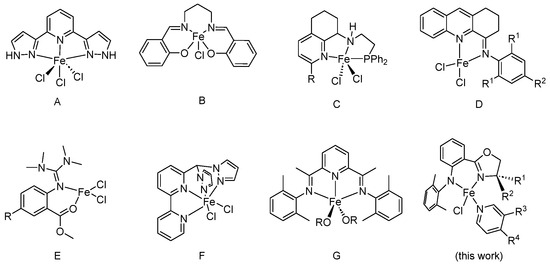
The development of iron-based catalysts for the ROP of cyclic esters has evolved significantly since early exploratory studies. As early as 1984, Kricheldorf and co-workers reported the use of simple iron(III) chloride in polyester synthesis, highlighting its affordability and stability [30]. Subsequent research has focused on designing well-defined iron complexes with enhanced activity and control. A notable breakthrough came with redox-switchable systems, such as the 2,6-dipyrazolylpyridine iron(III) trichloride complex A (Figure 1), whose polymerization activity toward CL could be turned “on” or “off” by changing the oxidation state of the iron center [31]. Similarly, iron(III) chloride complex B (Figure 1) requires activation with an initiator such as propylene oxide (PO) to achieve high activity. Once activated, the in situ generated iron alkoxide species are highly active for the ROP of both rac-LA and CL at room temperature, yielding polymers with controlled molecular weights (up to 113 kDa) and, in the case of rac-LA, significant stereoselectivity (Pm = 0.78) [32]. The performance of iron catalysts is significantly impacted by their ligand design and activation strategy. Iron(II) complexes C (Figure 1) supported by tetrahydroquinoline-amine-phosphine hybrid ligands, when activated with an alkylating agent, achieve high activities (TOF > 8 × 10³ h−1) within minutes at moderate temperatures [33]. Moreover, in situ activation of bidentate iron(II) complexes D (Figure 1) bearing 4-arylimino-1,2,3-trihydroacridines could efficiently catalyze the ROP of ε-CL using tetradecanol as an external initiator under mild conditions [34]. In the polymerization of LA, iron(II) guanidinate complexes E (Figure 1) exhibit exceptional activity under industrially relevant bulk conditions at 150 °C, with propagation rate constants surpassing the conventional tin-based catalyst Sn(Oct)2 by an order of magnitude. These systems show high tolerance toward technical-grade monomer and enable the synthesis of high molecular weight PLA (Mn > 90 kg/mol) at very high monomer-to-initiator ratios [35]. This work reports the first series of neutral tetradentate bis(pyrazolyl)bipyridinylmethane Fe(II) F (Figure 1) complexes, which effectively circumvent the bisfacial coordination problem and demonstrated notable activity in the ROP of rac-LA at 150 °C [36]. In addition to iron chloride complexes, iron(II) alkoxide complexes G (Figure 1) are capable of copolymerizing two monomers to generate block copolymers. Their selectivity can be controlled by the oxidation state of the catalyst: selective polymerization of LA has been observed in the iron(II) state, while selective epoxide polymerization has occurred in the iron(III) state [37]. Overall, the field of iron-catalyzed ROP has followed a clear trajectory from simple salts to sophisticated molecular designs. These advanced systems deliver high activity, adjustable reactivity, excellent control over polymer properties, and compatibility with green process conditions. This progress firmly establishes iron complexes as viable and sustainable catalysts for the synthesis of biodegradable polyesters.
Figure 1.
Based on iron and other iron chloride complexes.
Following our previous work on aniline-oxazoline-based transition metal complexes [38,39,40,41], we have recently developed a series of iron(II) alkyl and alkoxide complexes. This has enabled us to demonstrate their efficacy as catalysts for the ROP of CL and its derivatives [42]. Herein, we further extend the application of aniline-oxazoline ligands to iron(II) coordination chemistry. A series of anilido-oxazoline-ligated iron(II) chloride complexes have been synthesized involving pyridine and its derivatives as the second ligand that exhibit high activities on the ROP of cyclic esters. The electronic properties (electron donating/withdrawing) and steric bulk of the ancillary ligands influence their catalytic behavior. The resulting aniline-oxazoline iron(II) chloride complexes exhibit high activity, excellent initiating efficiency, and notable controllability in the ROP of CL. Moreover, they are also effectively applicable to the ROP of VL. Notably, high molecular weight polymer is obtained in the bulk polymerization of CL.
2. Results and Discussion
2.1. Synthesis and Characterization of Iron(II) Chloride Complexes
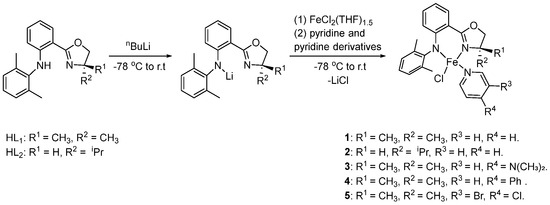
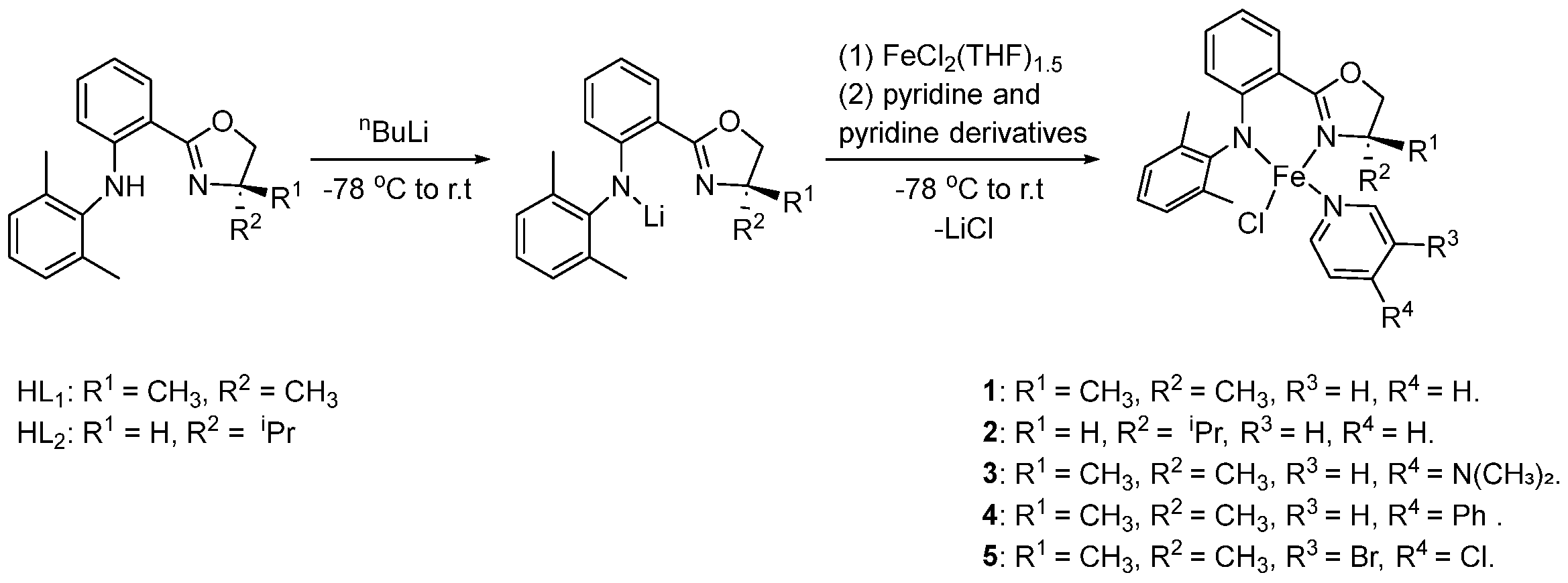
As shown in Scheme 1, deprotonation of the aniline-oxazoline ligand was achieved using n-butyllithium, generating the aniline-oxazoline lithium species in situ. Treatment of the lithium species with equimolar amounts of FeCl2(THF)1.5 and pyridine in THF afforded complex 1 (Scheme 1). The analogous complex 2 could be synthesized by a similar procedure with an isopropyl-substituted aniline-oxazoline ligand. Based on this, the reactions with different pyridine derivatives could generate complexes 3, 4, and 5. All the complexes could be recrystallized from toluene/heptane solutions at −25 °C to generate crystalline products. The 1H NMR spectra of the complexes exhibited broad resonances in the range of −110 to 110 ppm (Figures S1–S5 in the supporting information). This is because the paramagnetic shift effect of the Fe(II) center caused large and unpredictable displacements of the proton signals, along with severe line broadening [43]. The IR spectra of 1–5 displayed strong ν(C–N) bands at 1474–1633 cm−1, redshifted from 1633 to 1638 cm−1 observed for the free aniline-oxazoline ligand (Figures S6–S12 in the supporting information). These suggest the coordination of the oxazoline nitrogen atom to the central iron. The UV-Vis spectra of complexes 1–5 all exhibited redshifted absorption bands relative to the free ligand (Figures S13–S17 in the supporting information), confirming the successful formation of the complexes.
Scheme 1.
Synthetic routes for complexes 1–5.
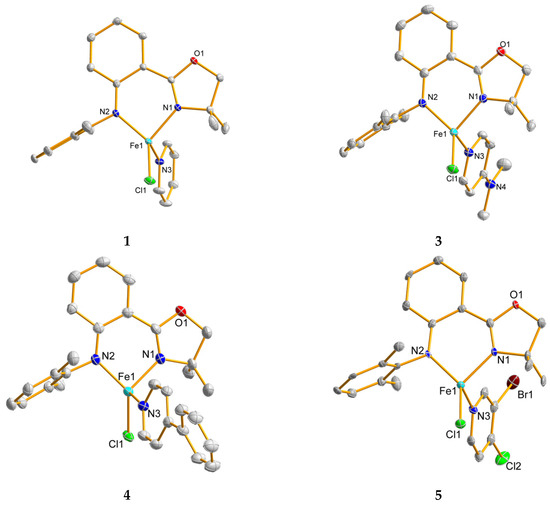
Single crystals of complexes 1, 3, 4, and 5, suitable for X-ray diffraction analysis, were isolated and their structures were identified. It is shown that complexes 1, 3, 4, and 5 are in the monoclinic system with space groups P21/c and P21/n. The molecular structures showed that each iron center was coordinated by a bidentate aniline-oxazoline ligand, a pyridine derivative, and a chloride ion, adopting a distorted tetrahedral geometry. In complex 1, the iron atom was bonded to one chloride ion and three nitrogen atoms. Complex 1 exhibited an Fe1–Cl bond length of 2.2524 Å, a value consistent with the established range for iron–chloride bonds [44]. The iron–chloride bond lengths in the other three iron complexes also fall within the typical range [45,46]. In complex 1, the bond angles of N2–Fe1–N1, N3–Fe1–Cl1, and N1–Fe1–N3 were determined to be 90.49°, 101.01°, and 102.94°, respectively. The pyridine molecule was oriented almost perpendicular to the plane defined by the Fe1–N1. Compared with complex 1 (2.112 Å), the introduction of the DMAP ligand in complex 3 led to a shortened Fe1–N3 (2.092 Å) bond and a lengthened Fe1–Cl (2.260 Å) bond, reflecting their differing electronic properties. Overall, the bond lengths and angles remained similar across the series, indicating closely related coordination modes (Figure 2). In complex 4, the Fe1–N3 (2.107 Å) bond length was intermediate between those in complexes 1 and 3, while its Fe1–Cl (2.265 Å) bond was longer than that in complex 3. Complex 5 exhibited the longest Fe1–N3 (2.125 Å) bond and the shortest Fe1–Cl (2.247 Å) bond among all complexes, which may be attributed to the introduction of a bromine atom and chlorine atom in its structure.
Figure 2.
Geometric structures of 1, 3, 4, and 5. Ellipsoids are drawn at 30% probability level. Hydrogen atoms and solvent molecule(s) are omitted for clarity. Selected bond lengths (Å) and angles (deg): 1: Fe−N1 2.037, Fe−N2 1.976, Fe−N3 2.112, Fe−Cl1 2.252, N1−Fe−N2 90.49, and N1−Fe−Cl1 122.89; 3: Fe−N1 2.0347(11), Fe−N2 1.9807(11), Fe−N3 2.0922(11), Fe−Cl1 2.2599(4), N1−Fe−N3 105.12(4). and N3−Fe−Cl1 105.40(3); 4: Fe−N1 2.0253(17), Fe−N2 1.9717(17), Fe−N3 2.1070(18), Fe−Cl1 2.2647(6), N1−Fe−N2 90.95(7), and N3−Fe−Cl1 102.76(5); and 5: Fe−N1 2.021(5), Fe−N2 1.965(5), Fe−N3 2.125(5), Fe−Cl1 2.2470(19), N1−Fe−N2 91.8(2). and N3−Fe−Cl1 101.86(15).
2.2. Redox Properties
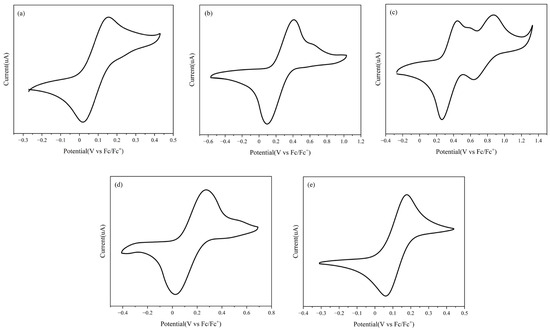
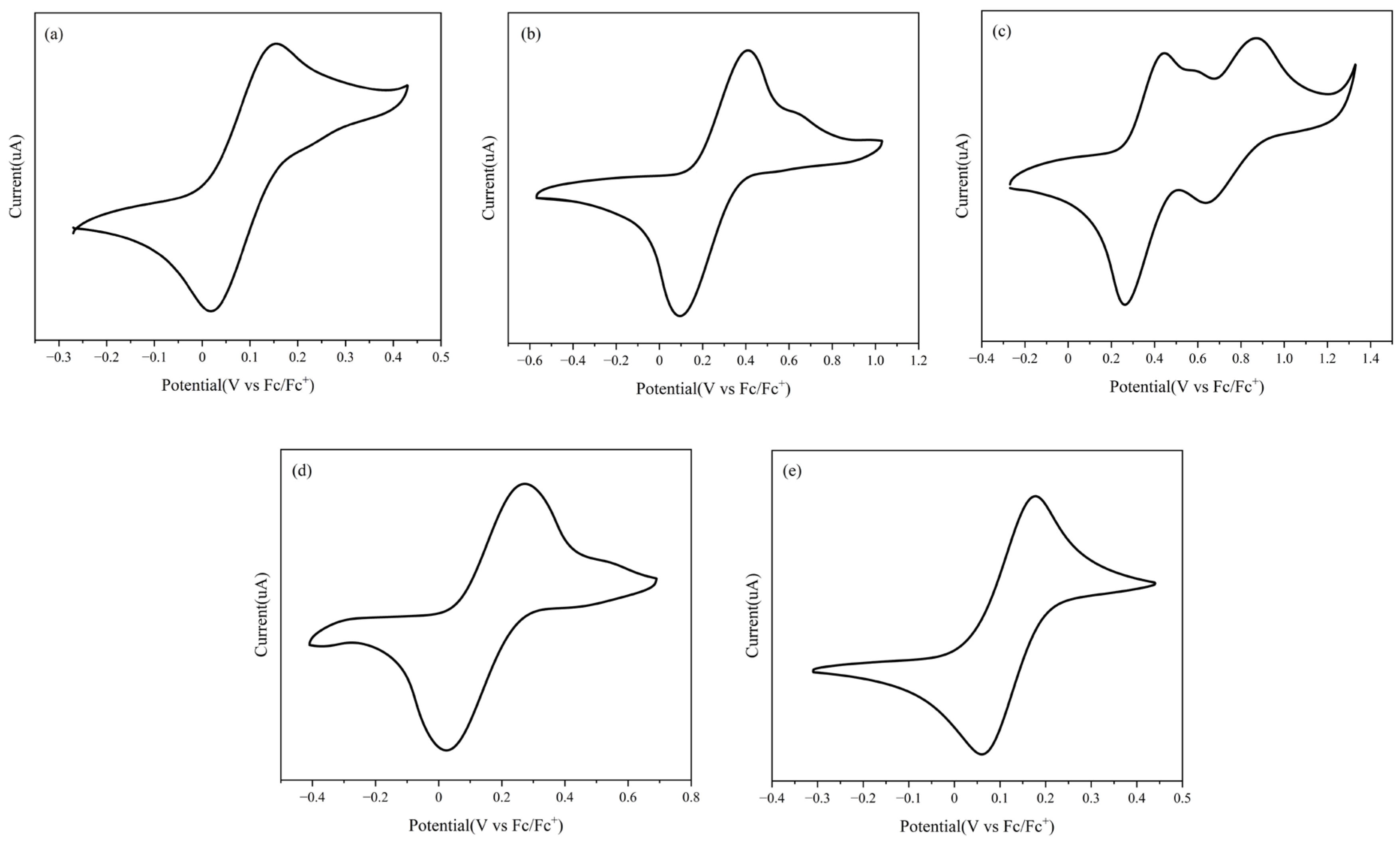
The electrochemical properties of iron(II) chloride complexes were investigated using cyclic voltammetry (CV). It was shown that the half-wave potentials (E1/2) of complexes 1–5 were 0.085, 0.248, 0.351, 0.183, and 0.117 V, respectively (Figure 3). The oxidation peak potentials for the complexes were Epa(1) = 0.155 V, Epa(2) = 0.410 V, Epa(3) = 0.441 V, Epa(4) = 0.303 V, and Epa(5) = 0.175 V. The lower oxidation potential showed that complex 1 can be oxidized more easily than 3. This finding further validated the molecular structures of the complexes. The oxidation potential of complex 3 was more positive than that of complex 1. Structurally, the Fe–N3 bond length in complex 3 (2.092 Å) was also shorter than that in complex 1 (2.112 Å), consistent with the electrochemical observations. The reduction peak potentials were Epc(1) = 0.015 V, Epc(2) = 0.086 V, Epc(3) = 0.260 V, Epc(4) = 0.062 V, and Epc(5) = 0.058 V. Complex 3 exhibited two oxidation peaks and one reduction peak. Notably, the reduction peak (Epc(3) = 0.260 V) was only observed concomitantly with the first oxidation peak (Epa(3) = 0.441 V), suggesting that this pair of peaks corresponded to a single redox couple (Figure S18 in the supporting information). With the exception of complex 3, the ratio of the cathodic to anodic peak currents for the complexes was approximately 1, indicating nearly equal cathodic and anodic peak currents. Furthermore, the peak-to-peak separation (ΔE) for complex 1 was 0.135 V, which was larger than the value expected for an ideal reversible one-electron redox process. These observations suggested a quasi-reversible redox event.
Figure 3.
CV curves of (a) complex 1, (b) complex 2, (c) complex 3, (d) complex 4, and (e) complex 5.
2.3. Catalytic Performance on ROP
In the ROP catalyzed by iron complexes, ligand-based coordination modes can be categorized into three types, namely, iron salts, iron complexes, and mixed iron compounds [47]. In this work, a series of iron(II) chloride complexes were synthesized and their catalytic performance in the ROP of CL and VL was investigated. Iron complex 1 alone showed negligible activity in the ROP of CL over 24 h (Table 1, entry 1). Previous studies have indicated that alcohol initiators can significantly influence the ROP of lactones [48]. When one equivalent of benzyl alcohol relative to the iron center was introduced at a monomer-to-initiator ratio of 100, the system exhibited high activity toward the ROP of CL. Therefore, benzyl alcohol was employed as the initiator in subsequent polymerizations. Among the studies of different solvents, toluene afforded the highest conversion and activity with a narrow molecular weight distribution compared to THF, dichloromethane, and chlorobenzene (Table 1, entry 2–5). Thus, toluene was selected as the solvent for all further experiments.
Table 1.
The ROP of ε-CL by complexes 1–5 a.
The polymerization data revealed that the PCL produced by complex 1 exhibited a molecular weight (Mn = 9.55 kg/mol) consistent with the theoretical value (Mn calcd = 9.36 kg/mol), and the molecular weight distribution was unimodal and narrow (PDI = 1.11). The polymerization data revealed that complex 2 containing isopropyl groups exhibited lower activity than its dimethyl-substituted complexes such as complex 1, likely due to steric hindrance from the isopropyl substituents that impeded monomer insertion (Table 1, entry 2 vs. entry 6). Complex 3 bearing the electron-donating DMAP group showed the highest activity (44 h−1), which may be attributed to increased electron density around the iron center facilitating monomer coordination and insertion. However, its relatively broad molecular weight distribution (PDI = 1.47) indicated poor controllability and significant transesterification side reactions (Table 1, entry 7). The activity of complex 4 with 4-phenylpyridine as the second ligand was lower than that of complex 3, likely due to its bulkier steric hindrance, which hindered the coordination and insertion of monomers (Table 1, entry 8). Complex 5, with an electron-withdrawing group, exhibited the lowest activity, possibly because strong Lewis acidity at the iron center led to excessive monomer activation that hindered chain propagation (Table 1, entry 9). When the monomer-to-catalyst ratio was increased and the reaction conducted at 120 °C, higher molecular weight polymers were obtained (reaching 161.38 kg/mol), which represented a relatively high molecular weight PCL achieved with iron complex catalysis (Table S2 in the Supporting Information). Under these conditions, complex 3 achieved an activity of 3200 h−1 (Table 1, entry 12). The obtained PCL was also subjected to thermal analysis. The polymer exhibited a melting point (Tm) of 53 °C and a 5% weight loss temperature (Td5%) of 223 °C (Figure S19 in the supporting information). On the basis of the quasi-reversible redox processes, the redox-switchable polymerization of CL was attempted using complex 1. Initially, iron(III) complex, obtained by oxidizing complex 1 with PhICl2, showed no activity for CL polymerization at room temperature (Figure S20 in the supporting information) [42,49]. In the redox polymerization system, complex 1 showed inert toward CL polymerization after the addition of a traditional oxidizing agent [Cp2Fe][PF6] [28], which was similar to the catalytic performance of iron(III) complex 6. However, unfortunately, the system could not re-initiate CL polymerization after the addition of a traditional reducing agent Cp2Co [28], indicating that redox-switchable ring-opening polymerization was not achieved (Figure S21 in the supporting information). The possible reasons for this are still under exploration.
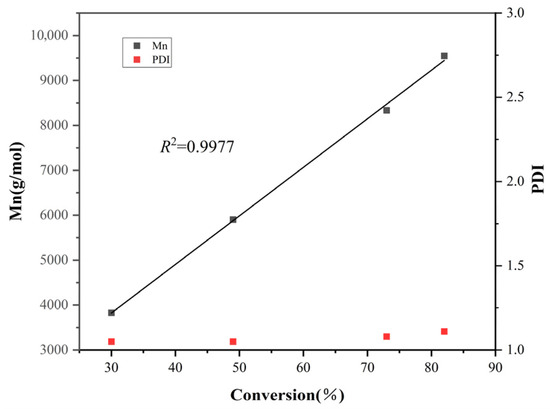
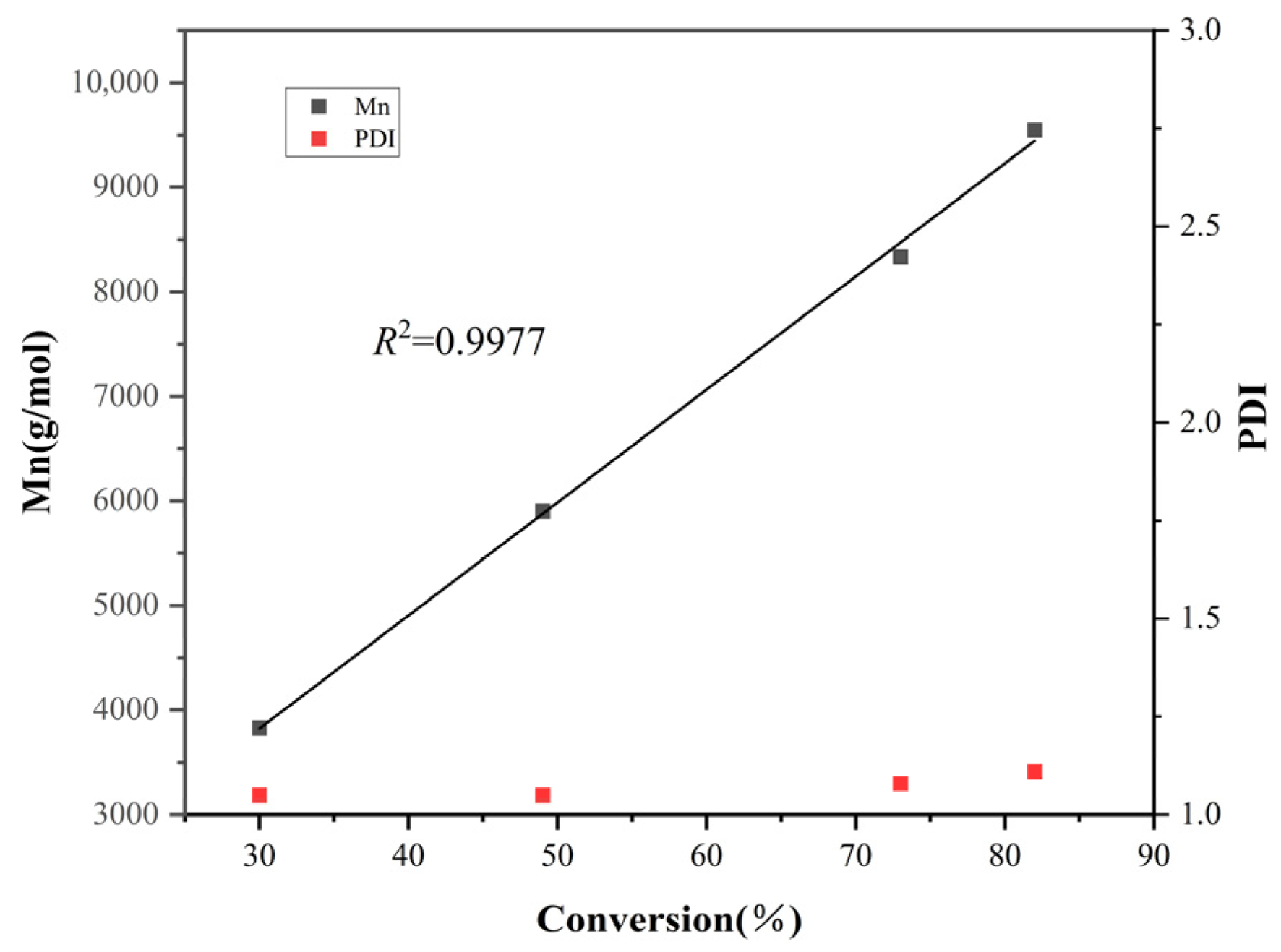
To investigate the controllability of ROP, complex 1 was selected as a representative catalyst for the ROP of CL under various conditions. Using complex 1, polymerizations were carried out at a monomer-to-iron molar ratio of 100:1 and quenched after 0.5, 1, 1.5, and 2 h. GPC analysis revealed that the molecular weights of the resulting PCL samples all aligned well with their theoretical values. Based on the data (Table 2, entry 1–4), a plot of conversion versus molecular weight was constructed (Figure 4). The plot showed a linear relationship between monomer conversion and number-average molecular weight, with a goodness-of-fit R2 of 0.9977. Meanwhile, the molecular weight distribution remained narrow throughout (PDI ≤ 1.2), further confirming the controlled nature of the polymerization.
Table 2.
The ROP of CL by complex 1 under various conditions a.
Figure 4.
Plot of Mn and Mw/Mn of PCL produced by complex 1 versus monomer conversion with a [CL]0/[1]0 ratio.
2.4. Kinetics and Behavior of Polymerization
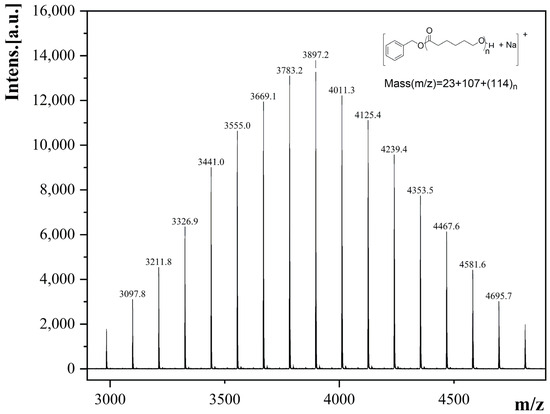
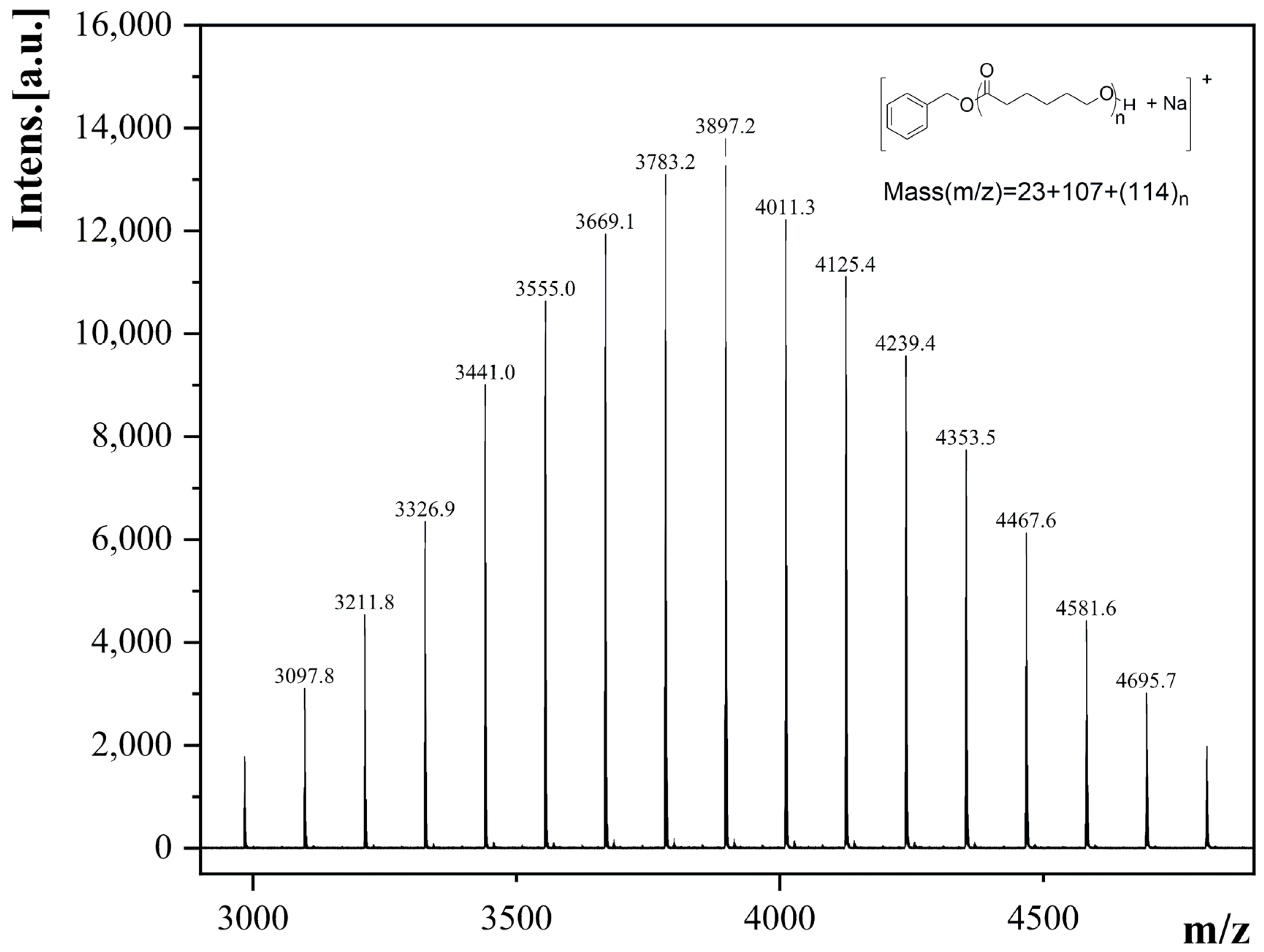
In order to investigate the initiation process, the matrix-assisted laser desorption/ionization time-of-flight mass spectrometry (MALDI-TOF MS) was used to test the oligomer of CL, which was synthesized using complex 1. As shown in Figure 5, there was a series of peaks separated by a mass unit of 114.1 g/mol, which was assigned to the molecular weight of the CL monomer. The calculation showed that the molecular weights of the peaks were consistent with the values of [PhCH2O–[C(=O)(CH2)5O]n-H + Na]+, indicating benzyloxy and hydrogen as the end-capped groups of CL oligomer. The analysis suggested that benzyloxy served as the initiating group for ROP of CL with a coordination-insertion mechanism. The iron complexes, functioning as Lewis acids, could coordinate with the monomer CL, thereby activating the carbonyl group in CL. Subsequently, nucleophilic attack by benzyl alcohol led to the ROP [35,50,51]. Additionally, the pyridine-based second ligands in the iron complexes could function as Lewis bases, activating benzyl alcohol to some extent [52]. The 1H NMR spectrum of the oligomer showed that the characteristic peaks at 5.11 and 7.35 ppm could be assigned to benzyloxy, and the peaks at 3.65 ppm were assignable to the methylene adjacent to hydroxyl (Figure S22 in the Supporting Information). These results can lend further support that the ROP was initiated by the benzyloxy group.
Figure 5.
MALDI-TOF MS spectrum of the oligomer of CL produced by complex 1.
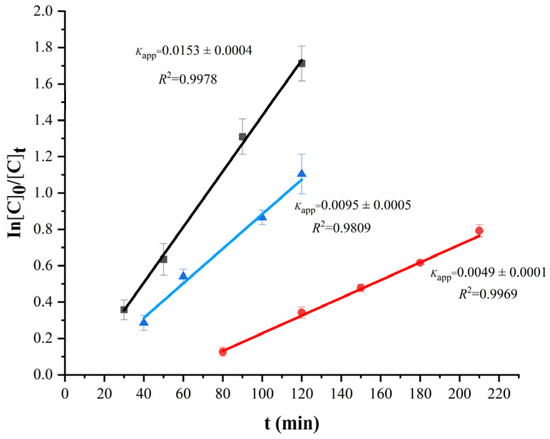
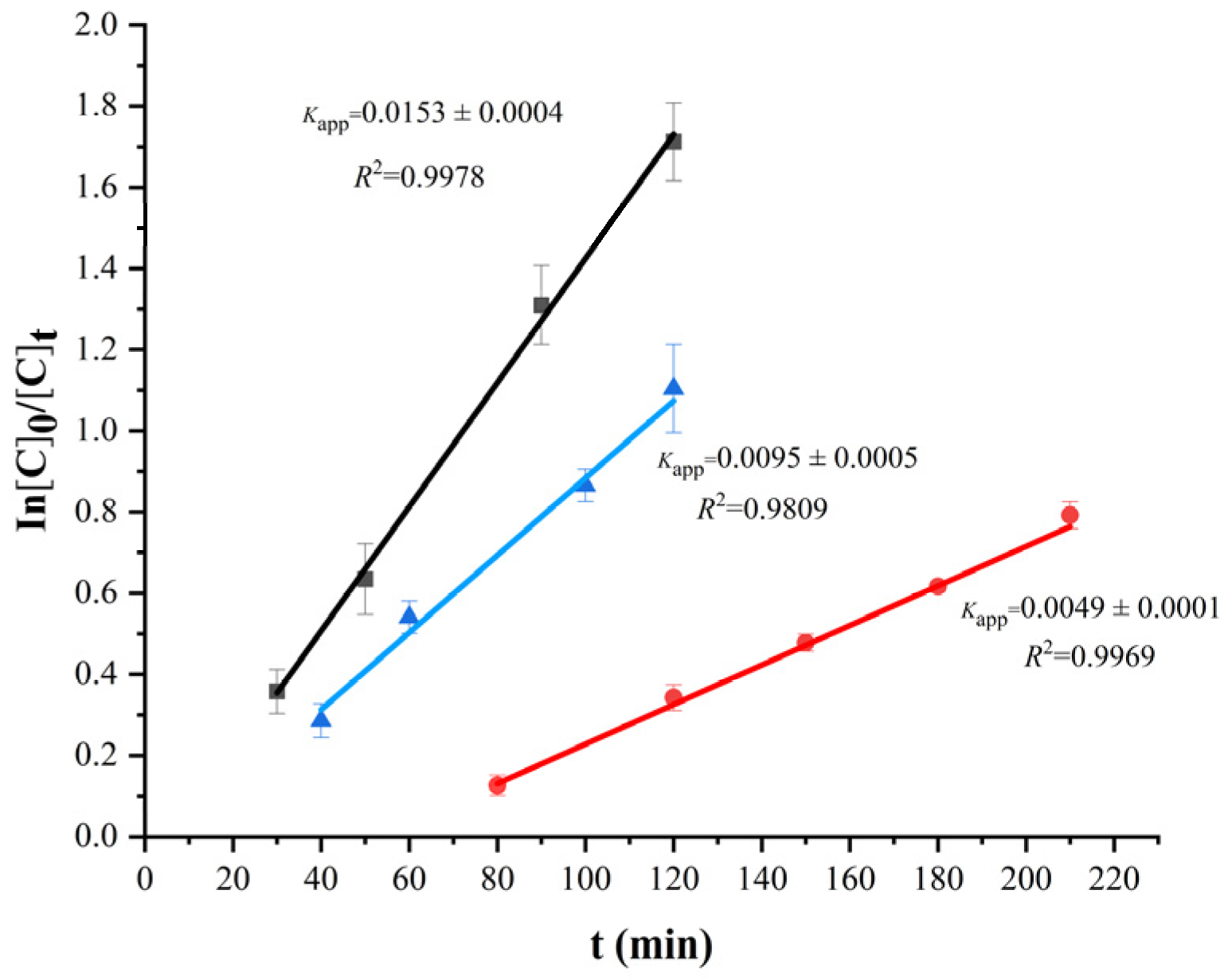
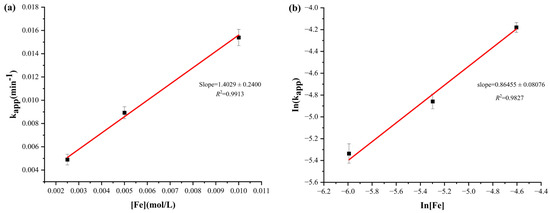
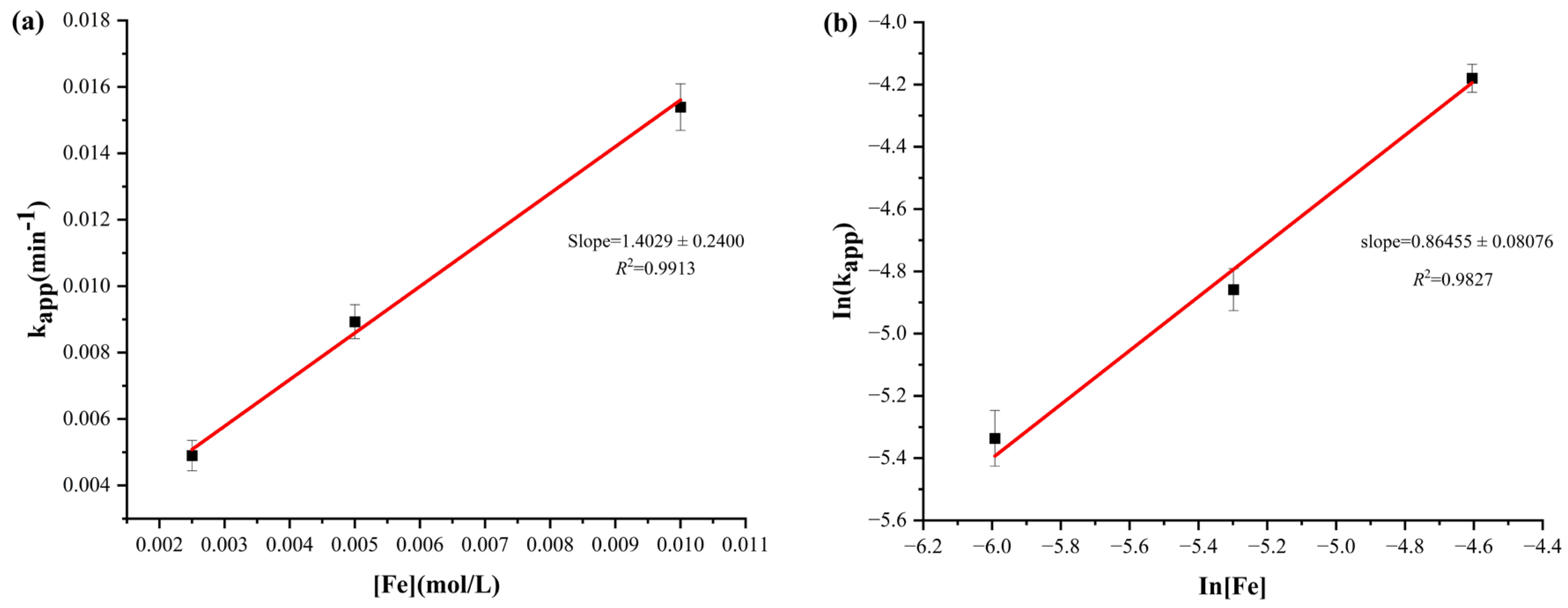
During the chain propagation stage, the kinetics of ROP of CL were investigated through a series of experiments conducted at different [CL]/[complex 1] ratios. It was shown that the slopes of the best-fit lines of ln([CL]0/[CL]t) versus time provided the apparent rate constants (kapp) of 0.0153, 0.0095, and 0.0049 for the three series of experiments. The polymerization rate proceeded with the first-order dependency on the concentration of CL for all the [CL]0/[1]0 ratios (Figure 6). The data in Figure 7a exhibits a high degree of linear correlation (R2 = 0.9913), indicative of pseudo-first-order kinetics. Further analysis demonstrated that a double logarithm plot of kapp and initial concentration of Fe ion was fit to a linear relationship (R2 = 0.9827) with a slope of 0.86 (Figure 7b). The slope was 0.86, close to one, indicating a pseudo-first-order dependence. The deviation in the slope might be attributed to experimental errors, catalyst aggregation, or the coexistence of multiple active species. Combining the remarkably high initiation efficiency for the iron complexes, it was shown that the polymerization exhibited pseudo-first-order dependence on the iron concentration, consistent with the involvement of a molecularly well-defined active species operating via a coordination–insertion mechanism [35,50,53]. The recent literature has demonstrated that first-order kinetic data alone may not be insufficient to distinguish between mono- and dinuclear mechanisms [54].
Figure 6.
Semilogarithmic plots of ln([CL]0/[CL]t) versus time for the polymerization of CL by complex 1 with varied catalyst concentrations: [1]0 = 10 mM (■), 5 mM (▲), 2.5 mM (•).
Figure 7.
(a) Plot of kapp vs. [Fe] and (b) plot of ln(kapp) vs. ln[Fe] for the ROP of CL by complex 1.
2.5. ROP of Other Cyclic Esters
We further investigated the catalytic performance of the resultant iron(II) complexes on the ROP of VL. In the polymerization of VL, the resulting PVL typically exhibited lower molecular weights relative to PCL. Replacing the dimethyl substituents on the oxazoline moiety with isopropyl groups resulted in a significant decrease in catalytic activity and initiating efficiency (Table 3, entry 1 vs. entry 2). Among the series, complex 3 showed the highest activity (37 h−1) but yielded a relatively broad dispersity (PDI = 1.44; Table 3, entry 3). This behavior can be attributed to the strong electron-donating para-NMe2 group on the pyridine ring, which stabilized the active intermediate during polymerization while its steric bulk partially hindered chain propagation. In contrast, complex 5 exhibited lower activity, likely due to electron-withdrawing effects that reduced its ability to polarize and activate the monomer carbonyl group (Table 3, entry 5). In addition to CL and VL, the polymerization of L-LA was also attempted. When tested in solution polymerization, only complex 3 exhibited activity, albeit modest, with a turnover frequency (TOF) of 12 h−1. The resulting polymer had a molecular weight of 9.21 kg/mol and a broad molecular weight distribution (PDI = 1.47). This result may be attributed to the steric hindrance of the monomer which impeded its coordination and insertion. In polymerization reactions, different monomers could also strongly influence catalytic activity, as their ability to occupy the active site varied [55] and the polymerization was limited by monomer accessibility [56]. These findings have further illustrated the reasons behind the significant differences in the performance of the same catalytic system with different monomers, highlighting the critical importance of managing ligand–monomer competition for the coordination sphere.
Table 3.
The ROP of VL by complexes 1–5 a.
3. Materials and Methods
General Materials and Methods: All air- and moisture-sensitive reactions were performed under a dry argon atmosphere using standard Schlenk techniques or in a glovebox. Tetrahydrofuran, toluene, and n-hexane were obtained from a solvent purification system and used directly. FeCl2(THF)1.5 and the aniline-oxazoline ligands were prepared according to procedures in the literature [57]. CL and VL were purchased from Macklin Biochemical (Shanghai, China). CL and VL were dried over CaH2 under a dry nitrogen atmosphere and distilled prior to use. L-LA was recrystallized three times from purified ethyl acetate and subsequently sublimed. Deuterated solvent C6D6 (99.6 atom % D) and CDCl3 (99.6 atom % D) were both purchased from Energy Chemical (Shanghai, China). All other solvents and reagents were acquired from commercial sources and used without further purification.
1H NMR spectra were recorded on a JEOL JNM-ECZ600R/S1 (JEOL Ltd., Tokyo, Japan) spectrometer at room temperature, using tetramethylsilane (TMS) as an internal standard. The molecular weights and molecular weight distributions of the polymers were determined by gel permeation chromatography (GPC) on a Waters 2414 system (Waters Corporation, Milford, MA, USA). The measurements were conducted at 40 °C with tetrahydrofuran as the eluent at a flow rate of 1.0 mL/min, using polystyrene standards for calibration. Infrared (IR) spectra were recorded on a Thermo Scientific Nicolet iS50 FTIR Spectrometer (Thermo Fisher Scientific, Waltham, MA, USA) using KBr pellets over the range of 400–4000 cm−1. CV measurements were performed with a three-electrode cell consisting of a glassy carbon working electrode, a platinum counter electrode, and an Ag/AgNO3 reference electrode. All potentials were reported relative to the ferrocene/ferrocenium (Fc/Fc+) redox couple.
Synthesis of complex 1: At −78 °C, under nitrogen atmosphere, a solution of n-butyllithium (solution in hexane, 0.32 mL, 0.51 mmol) was added dropwise to a solution of the aniline-oxazoline ligand HL1 (150.00 mg, 0.51 mmol) in THF (10 mL). The mixture was stirred and warmed slowly to room temperature, then reacted for 1 h. At −78 °C, a mixture of FeCl2(THF)1.5 (119.60 mg, 0.51 mmol) and pyridine (0.12 mL, 1.53 mmol) was added to the ligand solution. After 12 h of reaction, an orange-red suspension was obtained. The solvent was removed under reduced pressure. Recrystallization from toluene afforded orange crystals (236 mg, 88% yield). 1H NMR (500 MHz, C6D6, 25 °C): δ 75.30 (s, 1H), 73.93 (s, 1H), 41.15 (s, 2H), 24.04 (d, J = 1775.2 Hz, 7H), 17.55 (s,1H), 10.06 (s, 3H), −6.40 (s, 1H), −37.40 (d, J = 489.9 Hz, 3H), −43.80 (d, J = 2251.8 Hz,6H, PhMe2), −61.17 (s, 1H). IR(KBr): 2924 (s), 1474 (s), 1365 (m), 1223 (s), 1064 (w), 720 (s).
Synthesis of complex 2: Following the procedure for complex 1 but using HL2 as the ligand, Complex 2 was synthesized in 80% yield (186 mg). 1H NMR (500 MHz, C6D6, 25 °C): δ 73.69 (s, 3H), 40.34 (s, 1H), 13.94 (s, 3H), 8.15 (s, 2H), −8.43 (s,7H), −20.74 (s, 5H), −37.39 (s, 4H), 61.07 (s, 2H), −71.30 (s, 1H). IR(KBr): 2959 (s), 1605 (s), 1468 (s), 1346 (m), 1235 (s), 1062 (w), 746 (s).
Synthesis of complex 3: Following the procedure for complex 1, pyridine was replaced with 4-(dimethylamino)pyridine and yielded 67% (172 mg). 1H NMR (600 MHz, C6D6, 25 °C): δ 77.67 (s, 1H), 72.26 (s, 1H), 36.21 (s, 2H), 23.44 (s, 1H), 18.64 (d, J = 618 Hz, 5H), −4.75(s, 1H), −34.17 (s, 1H), −43.26 (s, 3H,), −53.73 (s, 3H,), −59.33 (s, 1H). IR(KBr): 2832 (s), 1605 (s), 1467 (w), 1366 (s), 1068 (m), 776 (s).
Synthesis of complex 4: Following the procedure for complex 1, pyridine was replaced with 4-phenylpyridine and yielded 70% (192 mg). 1H NMR (600 MHz, C6D6, 25 °C): δ 76.29 (s, 1H), 74.91 (s, 1H), 24.50 (s, 4H), 10.33 (s, 1H), 7.68 (s, 1H),5.53 (d, J = 504 Hz 6H), 3.61 (s, 1H), 2.19 (s, 1H), 1.09 (s, 1H), −37.81 (s, 1H), −38.65 (s, 1H), −44.26 (s, 6H, PhMe2), −61.93 (s, 1H). IR(KBr): 2967 (s), 1607 (s), 1468 (s), 1258 (s), 1059 (m), 764 (m), 622 (w).
Synthesis of complex 5: Following the procedure for complex 1, pyridine was replaced with 3-Bromo-4-chloropyridine and yielded 55% (161 mg). 1H NMR (600 MHz, C6D6, 25 °C): δ 74.62 (s, 1H), 73.51(s, 1H), 26.20 (s, 2H), 10.35 (s, 1H), 8.16(s, 1H), 6.65 (s, 1H), 6.40 (s, 1H), 3.62 (d, J = 48Hz 2H), 1.45 to 1.08 (m, 5H), −38.96 (d, J = 348Hz 2H), −42.19 (s, 6H, PhMe2), −62.97 (s, 1H). IR(KBr): 2967 (s), 1604 (s), 1464(s), 1209 (m), 1063 (s), 872 (w), 751 (s).
Generic procedure for ROP—using CL as a representative example: In a glovebox, CL (114 mg, 1 mmol) was added to a toluene solution (1 mL) of complex 1 (4.6 mg, 10 μmol) and an initiator (1.1 mg, 10 μmol) to initiate polymerization. The mixture was stirred vigorously at 25 °C for the required time. The reaction was quenched with ethanol. The polymer was precipitated from excess ethanol, collected by filtration, and dried under a vacuum to obtain a constant weight. Molecular weights and molecular weight distributions of all polymers were determined by GPC at 40 °C using THF as eluent (flow rate: 1.0 mL/min) relative to polystyrene standards.
X-Ray Crystallography: In a glovebox, selected crystals of the complex were coated with polyisobutylene oil. Suitable crystals for analysis were selected under a microscope. Diffraction data were collected at 150 K on a Rigaku XtaLAB Synergy-DW (Rigaku Corporation, Tokyo, Japan) diffractometer using Mo Kα radiation (λ = 0.71073 Å). The structure was solved and refined using Olex2-1.5 software, and molecular graphics were generated with Diamond. Crystallographic data, data collection parameters, and refinement details are summarized in the Supporting Information.
MALDI-TOF mass spectrometry: Oligomers of CL for MALDI-TOF analysis were obtained from oligomerization reactions initiated by complex 1 in toluene. Analyses were performed on an UltrafleXtreme MALDI-TOF mass spectrometer (Bruker GmbH, Bremen, Germany). The polymer sample was dissolved in THF. 2,5-Dihydroxybenzoic acid (DHB) was used as the matrix with sodium trifluoroacetate as the cationizing agent. A small aliquot of the solution was manually spotted onto a stainless-steel target plate and dried. The plate was loaded into the instrument, and spectra were recorded.
4. Conclusions
A series of novel anilido-oxazoline iron(II) chloride complexes 1–5, bearing different pyridine-based ancillary ligands, were synthesized. The molecular structures of the iron(II) complexes revealed a four-coordinate, distorted tetrahedral geometry at each metal center. In the presence of BnOH as the initiator, these anilido-oxazoline iron(II) chloride complexes exhibited high catalytic activity, excellent controllability, and high initiating efficiency in the ROP of CL. The analysis indicated that each iron center could efficiently initiate polymerization. MALDI-TOF MS and 1H NMR spectra of the CL oligomers confirmed that the benzyloxy group served as the initiating species in the ROP of CL. Kinetic studies demonstrated a pseudo-first-order dependence of the polymerization rate on iron catalyst concentration. The iron(II) complexes were also found to be efficient catalysts for the ROP of VL.
Supplementary Materials
The following supporting information can be downloaded at: https://www.mdpi.com/article/10.3390/inorganics14030081/s1, The crystallographic data for the crystal structures reported in this paper have been deposited with the Cambridge Crystallographic Data Centre (CCDC 2526255, 2526286, 2526361, 2526362). Detailed crystallographic refinement data; 1H NMR spectra of the complexes; IR and UV-Vis spectra of both the complexes and ligands; and the 1H NMR spectrum of the CL oligomer. References [58,59,60,61,62] are cited in the supplementary materials.
Author Contributions
Conceptualization, P.D. and Y.P.; methodology, Y.M., N.L. and M.H.; software, Y.M.; validation, N.L., P.D. and K.Z.; formal analysis, X.-Z.S., X.L. and G.Z.; investigation, Y.M., N.L. and M.H.; resources, Y.M., N.L., P.D. and X.-Z.S.; data curation, Y.M., N.L. and X.L.; writing—original draft preparation, Y.M. and N.L.; writing—review and editing, Y.M., N.L. and Y.P.; visualization, Y.M. and N.L.; supervision, P.D. and Y.P.; project administration, Y.P.; funding acquisition, G.Z. and Y.P. All authors have read and agreed to the published version of the manuscript.
Funding
This research was funded by the Natural Science Foundation of Shandong Province, grant number ZR2024ME197; the National Key Research and Development Program of China, grant number 2021YFB3801905; and the National Natural Science Foundation of China, grant number 21971029.
Institutional Review Board Statement
Not applicable.
Informed Consent Statement
Not applicable.
Data Availability Statement
The original contributions presented in this study are included in the article/Supplementary Material. Further inquiries can be directed to the corresponding author.
Acknowledgments
We gratefully acknowledge Xiaojing Liu at Shandong University for her assistance with the structural characterization of the complexes.
Conflicts of Interest
The authors declare no conflicts of interest.
Abbreviations
The following abbreviations are used in this manuscript:
| ROP | ring-opening polymerization |
| NMR | nuclear magnetic resonance |
| LA | lactide |
| PLA | polylactide |
| ε-CL | ε-caprolactone |
| PCL | polycaprolactone |
| δ-VL | δ-valerolactone |
| PVL | poly(δ-valerolactone) |
| MALDI-TOF | matrix-assisted laser desorption/ionization time-of-flight |
| CV | cyclic voltammetry |
References
- Hahladakis, J.N.; Velis, C.A.; Weber, R.; Iacovidou, E.; Purnell, P. An overview of chemical additives present in plastics: Migration, release, fate and environmental impact during their use, disposal and recycling. J. Hazard. Mater. 2018, 344, 179–199. [Google Scholar] [CrossRef] [Scilit]
- Geyer, R.; Jambeck, J.R.; Law, K.L. Production, use, and fate of all plastics ever made. Sci. Adv. 2017, 3, 5. [Google Scholar] [CrossRef] [Scilit]
- Thushari, G.G.N.; Senevirathna, J.D.M. Plastic pollution in the marine environment. Heliyon 2020, 6, e04709. [Google Scholar] [CrossRef] [Scilit]
- Li, Z.; Yang, Y.; Chen, X.; He, Y.; Bolan, N.; Ringlebe, J.; Lam, S.S.; Peng, W.; Sonne, C. A discussion of microplastics in soil and risks for ecosystems and food chains. Chemosphere 2023, 313, 137637. [Google Scholar] [CrossRef] [Scilit]
- MacLeo, M.; Arp, H.P.H.; Tekman, M.B.; Jahnke, A. The global threat from plastic pollution. Science 2021, 373, 61–65. [Google Scholar] [CrossRef] [Scilit]
- Chen, J.; Wu, J.; Sherrell, P.C.; Chen, J.; Wang, H.; Zhang, W.-X.; Yang, J. How to Build a Microplastics-Free Environment: Strategies for Microplastics Degradation and Plastics Recycling. Adv. Sci. 2022, 9, 2103764. [Google Scholar] [CrossRef] [Scilit] [PubMed]
- Sun, C.; Wei, S.; Tan, H.; Huang, Y.; Zhang, Y. Progress in upcycling polylactic acid waste as an alternative carbon source: A review. Chem. Eng. J. 2022, 446, 136881. [Google Scholar] [CrossRef] [Scilit]
- Yang, Y.; Li, P.; Jiao, J.; Yang, Z.; Lv, M.; Li, Y.; Zhou, C.; Wang, C.; He, Z.; Liu, Y.; et al. Renewable sourced biodegradable mulches and their environment impact. Sci. Hortic. 2020, 268, 109375. [Google Scholar] [CrossRef] [Scilit]
- Akhrib, S.; Djellali, S.; Haddaoui, N.; Karimian, D.; Carraro, M. Biocomposites and Poly(lactic acid) in Active Packaging: A Review of Current Research and Future Directions. Polymers 2025, 17, 3. [Google Scholar] [CrossRef] [Scilit]
- Woodruff, M.A.; Hutmacher, D.W. The return of a forgotten polymer-Polycaprolactone in the 21st century. Prog. Polym. Sci. 2010, 35, 1217–1256. [Google Scholar] [CrossRef] [Scilit]
- Iwata, T. Biodegradable and Bio-Based Polymers: Future Prospects of Eco-Friendly Plastics. Angew. Chem. Int. Ed. 2015, 54, 3210–3215. [Google Scholar] [CrossRef] [Scilit]
- Marszalek-Harych, A.; Jedrzkiewicz, D.; Ejfler, J. Bio- and chemocatalysis cascades as a bridge between biology and chemistry for green polymer synthesis. Cell. Mol. Biol. Lett. 2017, 22. 28. [Google Scholar] [CrossRef] [Scilit]
- Chiellini, E.; Solaro, R. Biodegradable polymeric materials. Adv. Mater. 1996, 8, 305–313. [Google Scholar] [CrossRef] [Scilit]
- Ferreira, F.V.; Dufresne, A.; Pinheiro, I.F.; Souza, D.H.S.; Gouveia, R.F.; Mei, L.H.I.; Lona, L.M.F. How do cellulose nanocrystals affect the overall properties of biodegradable polymer nanocomposites: A comprehensive review. Eur. Polym. J. 2018, 108, 274–285. [Google Scholar] [CrossRef] [Scilit]
- Han, J.; Branford-White, C.J.; Zhu, L.-M. Preparation of poly(ε-caprolactone)/poly(trimethylene carbonate) blend nanofibers by electrospinning. Carbohydr. Polym. 2010, 79, 214–218. [Google Scholar] [CrossRef] [Scilit]
- Gunatillake, P.A.; Adhikari, R. Biodegradable synthetic polymers for tissue engineering. Eur Cell Mater. 2003, 5, 1–16. [Google Scholar] [CrossRef] [Scilit]
- Cheng, M.; Attygalle, A.B.; Lobkovsky, E.B.; Coates, G.W. Single-Site Catalysts for Ring-Opening Polymerization: Synthesis of Heterotactic Poly(lactic acid) from rac-Lactide. J. Am. Chem. Soc. 1999, 121, 11583–11584. [Google Scholar] [CrossRef] [Scilit]
- Nijenhuis, A.J.; Grijpma, D.W.; Pennings, A.J. Lewis acid catalyzed polymerization of L-lactide. Kinetics and mechanism of the bulk polymerization. Macromolecules 1992, 25, 6419–6424. [Google Scholar] [CrossRef] [Scilit]
- Yu, I.; Acosta-Ramírez, A.; Mehrkhodavandi, P. Mechanism of Living Lactide Polymerization by Dinuclear Indium Catalysts and Its Impact on Isoselectivity. J. Am. Chem. Soc. 2012, 134, 12758–12773. [Google Scholar] [CrossRef] [Scilit]
- Yu, Y.; Storti, G.; Morbidelli, M. Kinetics of Ring-Opening Polymerization of l,l-Lactide. Ind. Eng. Chem. Res. 2011, 50, 7927–7940. [Google Scholar] [CrossRef] [Scilit]
- Tschan, M.J.L.; Brulé, E.; Haquette, P.; Thomas, C.M. Synthesis of biodegradable polymers from renewable resources. Polym. Chem. 2012, 3, 836–851. [Google Scholar] [CrossRef] [Scilit]
- Reddy, M.M.; Vivekanandhan, S.; Misra, M.; Bhatia, S.K.; Mohanty, A.K. Biobased plastics and bionanocomposites: Current status and future opportunities. Prog. Polym. Sci. 2013, 38, 1653–1689. [Google Scholar] [CrossRef] [Scilit]
- Wang, Z.; Solan, G.A.; Zhang, W.; Sun, W.-H. Carbocyclic-fused N,N,N-pincer ligands as ring-strain adjustable supports for iron and cobalt catalysts in ethylene oligo-/polymerization. Coord. Chem. Rev. 2018, 363, 92–108. [Google Scholar] [CrossRef] [Scilit]
- Britovsek, G.J.P.; Clentsmith, G.K.B.; Gibson, V.C.; Goodgame, D.M.L.; McTavish, S.J.; Pankhurst, Q.A. The nature of the active site in bis(imino)pyridine iron ethylene polymerisation catalysts. Catal. Commun. 2002, 3, 207–211. [Google Scholar] [CrossRef] [Scilit]
- Bennett, M.R.; Gurnani, P.; Hill, P.J.; Alexander, C.; Rawson, F.J. Iron-Catalysed Radical Polymerisation by Living Bacteria. Angew. Chem. Int. Ed. 2020, 59, 4750–4755. [Google Scholar] [CrossRef] [Scilit]
- Delle Chiaie, K.R.; Yablon, L.M.; Biernesser, A.B.; Michalowski, G.R.; Sudyn, A.W.; Byers, J.A. Redox-triggered crosslinking of a degradable polymer. Polym. Chem. 2016, 7, 4675–4681. [Google Scholar] [CrossRef] [Scilit]
- Hern, Z.C.; Quan, S.M.; Dai, R.; Lai, A.; Wang, Y.; Liu, C.; Diaconescu, P.L. ABC and ABAB Block Copolymers by Electrochemically Controlled Ring-Opening Polymerization. J. Am. Chem. Soc. 2021, 143, 19802–19808. [Google Scholar] [CrossRef] [Scilit] [PubMed]
- Biernesser, A.B.; Li, B.; Byers, J.A. Redox-Controlled Polymerization of Lactide Catalyzed by Bis(imino)pyridine Iron Bis(alkoxide) Complexes. J. Am. Chem. Soc. 2013, 135, 16553–16560. [Google Scholar] [CrossRef] [Scilit] [PubMed]
- Qi, M.; Zhang, H.; Dong, Q.; Li, J.; Musgrave, R.A.; Zhao, Y.; Dulock, N.; Wang, D.; Byers, J.A. Electrochemically switchable polymerization from surface-anchored molecular catalysts. Chem. Sci. 2021, 12, 9042–9052. [Google Scholar] [CrossRef] [Scilit] [PubMed]
- Kricheldorf, H.R.; Mang, T.; Jonte, J.M. Polylactones. 1. Copolymerizations of glycolide and iε-caprolactone. Macromolecules 1984, 17, 2173–2181. [Google Scholar] [CrossRef] [Scilit]
- Fang, Y.-Y.; Gong, W.-J.; Shang, X.-J.; Li, H.-X.; Gao, J.; Lang, J.-P. Synthesis and structure of a ferric complex of 2,6-di(1H-pyrazol-3-yl)pyridine and its excellent performance in the redox-controlled living ring-opening polymerization of ε-caprolactone. Dalton Trans. 2014, 43, 8282–8289. [Google Scholar] [CrossRef] [Scilit] [PubMed]
- Duan, R.; Hu, C.; Li, X.; Pang, X.; Sun, Z.; Chen, X.; Wang, X. Air-Stable Salen–Iron Complexes: Stereoselective Catalysts for Lactide and ε-Caprolactone Polymerization through in Situ Initiation. Macromolecules 2017, 50, 9188–9195. [Google Scholar] [CrossRef] [Scilit]
- Wang, Y.; Zhang, W.; Wang, X.; Zuo, W.; Xue, X.; Ma, Y.; Sun, W.-H. N-(2-(Diphenylphosphino)ethyl)-2-alkyl-5,6,7,8-tetrahydro-quinolin-8-amines iron(ii) complexes: Structural diversity and the ring opening polymerization of ε-caprolactone. RSC Adv. 2023, 13, 29866–29878. [Google Scholar] [CrossRef] [Scilit]
- Dou, J.; Zhu, D.; Zhang, W.; Wang, R.; Wang, S.; Zhang, Q.; Zhang, X.; Sun, W.-H. Highly efficient iron(II) catalysts toward ring opening polymerization of ε-caprolactone through in situ initiation. Inorg. Chim. Acta 2019, 488, 299–303. [Google Scholar] [CrossRef] [Scilit]
- Rittinghaus, R.D.; Schäfer, P.M.; Albrecht, P.; Conrads, C.; Hoffmann, A.; Ksiazkiewicz, A.N.; Bienemann, O.; Pich, A.; Herres-Pawlis, S. New Kids in Lactide Polymerization: Highly Active and Robust Iron Guanidine Complexes as Superior Catalysts. ChemSusChem 2019, 12, 2161–2165. [Google Scholar] [CrossRef] [Scilit] [PubMed]
- Herber, U.; Hegner, K.; Wolters, D.; Siris, R.; Wrobel, K.; Hoffmann, A.; Lochenie, C.; Weber, B.; Kuckling, D.; Herres-Pawlis, S. Iron(II) and Zinc(II) Complexes with Tetradentate Bis(pyrazolyl)methane Ligands as Catalysts for the Ring-Opening Polymerisation of rac-Lactide. Eur. J. Inorg. Chem. 2017, 2017, 1341–1354. [Google Scholar] [CrossRef] [Scilit]
- Biernesser, A.B.; Delle Chiaie, K.R.; Curley, J.B.; Byers, J.A. Block Copolymerization of Lactide and an Epoxide Facilitated by a Redox Switchable Iron-Based Catalyst. Angew. Chem. Int. Ed. 2016, 55, 5251–5254. [Google Scholar] [CrossRef] [Scilit]
- Pan, Y.; Jiang, X.; Kang, X.; Hou, X.; Wan, C.; Song, X.; Leung, W.-H.; So, Y.-M. Flexible Coordination of the Bis(amino-oxazoline) Ligand in Rare-Earth Metal Complexes: Synthesis, Structure, and Their Reactivity and Polymerization Performance. Inorg. Chem. 2022, 61, 18828–18841. [Google Scholar] [CrossRef] [Scilit]
- Li, W.; Jiang, X.; So, Y.-M.; He, G.; Pan, Y. Lutetium and yttrium complexes supported by an anilido-oxazoline ligand for polymerization of 1,3-conjugated dienes and ε-caprolactone. New J. Chem. 2020, 44, 121–128. [Google Scholar] [CrossRef] [Scilit]
- Pan, Y.; Li, W.; Wei, N.-N.; So, Y.-M.; Li, Y.; Jiang, K.; He, G. Anilido-oxazoline-ligated rare-earth metal complexes: Synthesis, characterization and highly cis-1,4-selective polymerization of isoprene. Dalton Trans. 2019, 48, 3583–3592. [Google Scholar] [CrossRef] [Scilit]
- Pan, Y.; Xu, T.; Yang, G.-W.; Jin, K.; Lu, X.-B. Bis(oxazolinyl)phenyl-Ligated Rare-Earth-Metal Complexes: Highly Regioselective Catalysts for cis-1,4-Polymerization of Isoprene. Inorg. Chem. 2013, 52, 2802–2808. [Google Scholar] [CrossRef] [Scilit]
- Pan, Y.; Hao, M.; Li, X.; Meng, Y.; Kang, X.; Zhang, G.; Sun, X.; Song, X.-Z.; Zhang, L.; So, Y.-M. Anilido-Oxazoline-Ligated Iron Alkoxide Complexes for Living Ring-Opening Polymerization of Cyclic Esters with Controllability. Inorg. Chem. 2025, 64, 530–544. [Google Scholar] [CrossRef] [Scilit] [PubMed]
- Chen, F.-L.; Sun, A.-N.; Yang, J.; Chen, B.; Qin, J.-P.; Shao, D. Synthesis, structure, magnetic property, and proton conduction of a hydrogen-bonded framework assembled from Fe(II) coordination chains. Polyhedron 2026, 284, 117892. [Google Scholar] [CrossRef] [Scilit]
- Plaul, D.; Spielberg, E.T.; Plass, W. 2,6-Bis(pyrazol-3-yl)pyridine as Meridional Capping Ligand: Synthesis, Characterization, and Crystal Structure of the First Corresponding Hexanuclear Iron(III) Complex. Z. Anorg. Allg. Chem. 2010, 636, 1268–1274. [Google Scholar] [CrossRef] [Scilit]
- Sciarone, T.J.J.; Nijhuis, C.A.; Meetsma, A.; Hessen, B. Synthesis and reactivity of mono(amidinate) organoiron(ii) complexes. Dalton Trans. 2006, 4896–4904. [Google Scholar] [CrossRef] [Scilit]
- Bleith, T.; Wadepohl, H.; Gade, L.H. Iron Achieves Noble Metal Reactivity and Selectivity: Highly Reactive and Enantioselective Iron Complexes as Catalysts in the Hydrosilylation of Ketones. J. Am. Chem. Soc. 2015, 137, 2456–2459. [Google Scholar] [CrossRef] [Scilit]
- Wang, Y.; Wang, X.; Zhang, W.; Sun, W.-H. Progress of Ring-Opening Polymerization of Cyclic Esters Catalyzed by Iron Compounds. Organometallics 2023, 42, 1680–1692. [Google Scholar] [CrossRef] [Scilit]
- Amgoune, A.; Thomas, C.M.; Roisnel, T.; Carpentier, J.-F. Ring-Opening Polymerization of Lactide with Group 3 Metal Complexes Supported by Dianionic Alkoxy-Amino-Bisphenolate Ligands: Combining High Activity, Productivity, and Selectivity. Chem. Eur. J. 2006, 12, 169–179. [Google Scholar] [CrossRef] [Scilit]
- Dröse, P.; Crozier, A.R.; Lashkari, S.; Gottfriedsen, J.; Blaurock, S.; Hrib, C.G.; Maichle-Mössmer, C.; Schädle, C.; Anwander, R.; Edelmann, F.T. Facile Access to Tetravalent Cerium Compounds: One-Electron Oxidation Using Iodine(III) Reagents. J. Am. Chem. Soc. 2010, 132, 14046–14047. [Google Scholar] [CrossRef] [Scilit]
- Nylund, P.V.S.; Monney, B.; Weder, C.; Albrecht, M. N-Heterocyclic carbene iron complexes catalyze the ring-opening polymerization of lactide. Catal. Sci. Technol. 2022, 12, 996–1004. [Google Scholar] [CrossRef] [Scilit]
- Gowda, R.R.; Chakraborty, D. Environmentally benign process for bulk ring opening polymerization of lactones using iron and ruthenium chloride catalysts. J. Mol. Catal. A Chem. 2009, 301, 84–92. [Google Scholar] [CrossRef] [Scilit]
- Naumann, S.; Scholten, P.B.V.; Wilson, J.A.; Dove, A.P. Dual Catalysis for Selective Ring-Opening Polymerization of Lactones: Evolution toward Simplicity. J. Am. Chem. Soc. 2015, 137, 14439–14445. [Google Scholar] [CrossRef] [Scilit]
- Hermann, A.; Hill, S.; Metz, A.; Heck, J.; Hoffmann, A.; Hartmann, L.; Herres-Pawlis, S. Next Generation of Zinc Bisguanidine Polymerization Catalysts towards Highly Crystalline, Biodegradable Polyesters. Angew. Chem. Int. Ed. 2020, 59, 21778–21784. [Google Scholar] [CrossRef] [Scilit]
- Gravina, G.; Romano, E.; Liporace, A.; D’Alterio, M.C.; Talarico, G.; Pellecchia, C. Sustainable Polymerization of Natural Lactones via Iron Catalysis: An Integrated Experimental and Computational Study. ACS Sustain. Chem. Eng. 2025, 13, 19613–19624. [Google Scholar] [CrossRef] [Scilit]
- Gravina, G.; Pierri, G.; Pellecchia, C. New highly active Fe(II) pyridylamido catalysts for the ring opening polymerization and copolymerization of cyclic esters. Mol. Catal. 2024, 555, 113891. [Google Scholar] [CrossRef] [Scilit]
- Hashmi, O.H.; Capet, F.; Visseaux, M.; Champouret, Y. Homoleptic and Heteroleptic Substituted Amidomethylpyridine Iron Complexes: Synthesis, Structure and Polymerization of rac-Lactide. Eur. J. Inorg. Chem. 2022, 2022, e202200073. [Google Scholar] [CrossRef] [Scilit]
- Binda, P.I.; Abbina, S.; Du, G. Modular Synthesis of Chiral β-Diketiminato-Type Ligands Containing 2-Oxazoline Moiety via Palladium-Catalyzed Amination. Synthesis 2011, 2609–2618. [Google Scholar] [CrossRef] [Scilit]
- Rittinghaus, R.D.; Zenner, J.; Pich, A.; Kol, M.; Herres-Pawlis, S. Master of chaos and order: Opposite microstructures of PCL-co-PGA-co-PLA accessible by a single catalyst. Angew. Chem. Int. Ed. 2022, 61, e202112853. [Google Scholar] [CrossRef] [Scilit]
- O’Keefe, B.J.; Breyfogle, L.E.; Hillmyer, M.A.; Tolman, W.B. Mechanistic comparison of cyclic ester polymerizations by novel iron(III)-alkoxide complexes: Single vs multiple site catalysis. J. Am. Chem. Soc. 2002, 124, 4384–4393. [Google Scholar] [CrossRef] [Scilit]
- Stewart, J.A.; McKeown, P.; Driscoll, O.J.; Mahon, M.F.; Ward, B.D.; Jones, M.D. Tuning the thiolen: Al(III) and Fe(III) thiolen complexes for the isoselective ROP of rac-lactide. Macromolecules 2019, 52, 5977−5984. [Google Scholar] [CrossRef] [Scilit]
- Delle Chiaie, K.R.; Biernesser, A.B.; Ortuño, M.A.; Dereli, B.; Lovan, D.A.; Wilding, M.J.T.; Li, B.; Cramer, C.J.; Byers, J.A. The role of ligand redox non-innocence in ring-opening polymerization reactions catalysed by bis(imino)pyridine iron alkoxide complexes. Dalton Trans. 2017, 46, 12971−12980. [Google Scholar] [CrossRef] [Scilit] [PubMed]
- Manna, C.M.; Kaplan, H.Z.; Li, B.; Byers, J.A. High molecular weight poly(lactic acid) produced by an efficient iron catalyst bearing a bis(amidinato)-N-heterocyclic carbene ligand. Polyhedron 2014, 84, 160−167. [Google Scholar] [CrossRef] [Scilit]

Disclaimer/Publisher’s Note: The statements, opinions and data contained in all publications are solely those of the individual author(s) and contributor(s) and not of MDPI and/or the editor(s). MDPI and/or the editor(s) disclaim responsibility for any injury to people or property resulting from any ideas, methods, instructions or products referred to in the content. |
© 2026 by the authors. Licensee MDPI, Basel, Switzerland. This article is an open access article distributed under the terms and conditions of the Creative Commons Attribution (CC BY) license.