
Article

Effect of Mn Rate on Structural, Optical and Electrical Properties in LiCo1−xMnxO2 (x = 0.5; 0.7) Compounds

by
Miftah Ali Bin Yazeed
1,2,
Moufida Krimi
1,
Abdulrahman Alsawi
3,*,
Mohamed Houcine Dhaou
3,
Abdelfattah Mahmoud
4 and
Abdallah Ben Rhaiem
1,*
1
Laboratory LaSCOM, Faculty of Sciences, University of Sfax, B P1171, Sfax 3000, Tunisia
2
Department of Physics, Faculty of Science, University of Alasmarya Islamic, Zliten 3825, Libya
3
Department of Physics, College of Science, Qassim University, Buraydah 51452, Saudi Arabia
4
GREENMAT, CESAM, Institute of Chemistry B6, University of Liège, 4000 Liège, Belgium
*
Authors to whom correspondence should be addressed.
Inorganics 2026, 14(1), 19; https://doi.org/10.3390/inorganics14010019 (registering DOI)
Submission received: 6 November 2025 / Revised: 13 December 2025 / Accepted: 16 December 2025 / Published: 30 December 2025
(This article belongs to the Special Issue Advanced Inorganic Semiconductor Materials, 4th Edition)

Abstract

The compounds LiCo1−xMnxO2 (x = 0.5, 0.7) were synthesized via the solid-state method and exhibited crystallization in the cubic spinel structure (space group Fd-3m). UV–Vis spectroscopy reveals strong visible-light absorption and a reduction in the indirect optical band gap from 1.85 eV (x = 0.5) to 1.60 eV (x = 0.7) with increasing Mn content, which is consistent with semiconducting behavior. This narrowing arises from Mn3+/Mn4+ mixed valence, which introduces mid-gap states and enhances Co/Mn 3d–O 2p orbital hybridization within the spinel framework. In contrast, the Urbach energy increases from 0.55 eV to 0.65 eV, indicating greater structural and energetic disorder in the Mn-rich composition which is attributed to the Jahn–Teller distortions and valence heterogeneity associated with Mn3+. Impedance and dielectric modulus analyses confirm two distinct non-Debye relaxation processes related to grains and grain boundaries. AC conductivity is governed by the Correlated Barrier Hopping (CBH) model, with bipolaron hopping identified as the dominant conduction mechanism. The x = 0.7 sample displays significantly enhanced conductivity due to increased Mn3+/Mn4+ mixed valence, lattice expansion, efficient 3D electronic connectivity of the spinel lattice, and reduced interfacial resistance. These findings highlight the potential of these two spinels compounds as narrow-gap semiconductors for optoelectronic applications including visible-light photodetectors, photocatalysts, and solar absorber layers extending their utility beyond conventional battery cathodes.

1. Introduction

Lithium-ion batteries have been an inspiring source for many researchers due to their high energy storage capabilities, excellent rechargeability, and low self-discharge rate [1,2,3]. Central to their performance is cathode material, which has driven extensive research into transition metal oxides with the general formula LiMO2 (M = Mn, Co, Ni, Cu, Fe, etc.). These materials offer stable crystalline structures, tunable particle morphologies, and layered frameworks where lithium ions occupy octahedral (O) or prismatic (P) sites between close-packed oxygen layers, enabling reversible Li+ intercalation and high electrochemical activity [4,5].
Among these, LiCoO2 remains a benchmark cathode material due to its high capacity (~274 mAh g−1) and energy density (~1070 Wh kg−1) [6]. However, its widespread use is hindered by the high cost and environmental toxicity of cobalt [7]. In response, researchers have turned to manganese-based alternatives such as LiMnO2, which benefits from manganese’s abundance, low cost, and eco-compatibility [8,9]. Yet, pure layered LiMnO2 is notoriously difficult to synthesize via conventional solid-state methods due to the mismatch in ionic radii between Li+ and Mn3+, which favors spinel or orthorhombic polymorphs over the desired R-3m layered structure [10].
A promising strategy to circumvent these limitations is partial substitution of Co with Mn in LiCoO2, yielding solid solutions such as LiCo1−xMnxO2. This approach not only reduces cobalt content but also enhances structural stability and electronic conductivity [11,12]. Notably, the LiCo0.5Mn0.5O2 composition has attracted considerable attention. Kajiyama et al. [13] synthesized this material via ion exchange from a layered Na0.8Co0.5Mn0.5O2 precursor and demonstrated a high operating voltage of ~4.5 V vs. Li+/Li—superior to both LiCoO2 (4.0 V) and LiMnO2 along with a specific capacity of 125 mAh g−1 for Li0.8Co0.5Mn0.5O2. Their work confirmed a layered R-3m structure and highlighted the critical role of lithium content in electrochemical performance.
Similarly, Zhou and Li [12] employed a sol–gel templating method within anodic alumina membranes to fabricate highly ordered LiCo0.5Mn0.5O2 nanowire arrays. Using X-ray diffraction (XRD) and electron diffraction, they verified the layered R-3m structure and confirmed a near-stoichiometric composition via X-ray photoelectron spectroscopy (XPS). Their nanostructured morphology offered enhanced surface area and shortened Li+ diffusion paths, suggesting potential for high-rate battery applications.
Critically, both studies focused exclusively on electrochemical and structural properties. Neither investigated the fundamental optical characteristics (e.g., band gap, Urbach energy) nor the intrinsic electrical conduction mechanisms (e.g., polaron hopping, grain vs. grain boundary contributions) of LiCo1−xMnxO2. Yet, Mn substitution is expected to significantly alter the electronic band structure, introduce mid-gap states via Mn3+/Mn4+ redox couples, and enable polaronic conduction phenomena with profound implications not only for battery performance but also for optoelectronic applications such as photodetectors, visible-light photocatalysts, and absorber layers in solar cells.
Given this gap in the literature, the present study aims to prepare bulk polycrystalline LiCo1−xMnxO2 (x = 0.5, 0.7) via the solid-state method and provide the first comprehensive analysis of their structural, optical, and electrical transport properties. While our synthesis route differs from the soft-chemical approaches of Kajiyama and Zhou [12,13], it is industrially scalable and relevant to practical cathode manufacturing. We employ X-ray diffraction (with Rietveld refinement), scanning electron microscopy (SEM), UV–Vis spectroscopy, and impedance spectroscopy to characterize the materials. By shifting focus from electrochemical cycling to intrinsic functional properties, this work establishes new structure–property relationships that extend the potential of LiCo1−xMnxO2 beyond conventional battery electrodes toward multifunctional optoelectronic devices.

2. Result and Discussion

2.1. X-Ray Diffractions and X-Ray Analysis

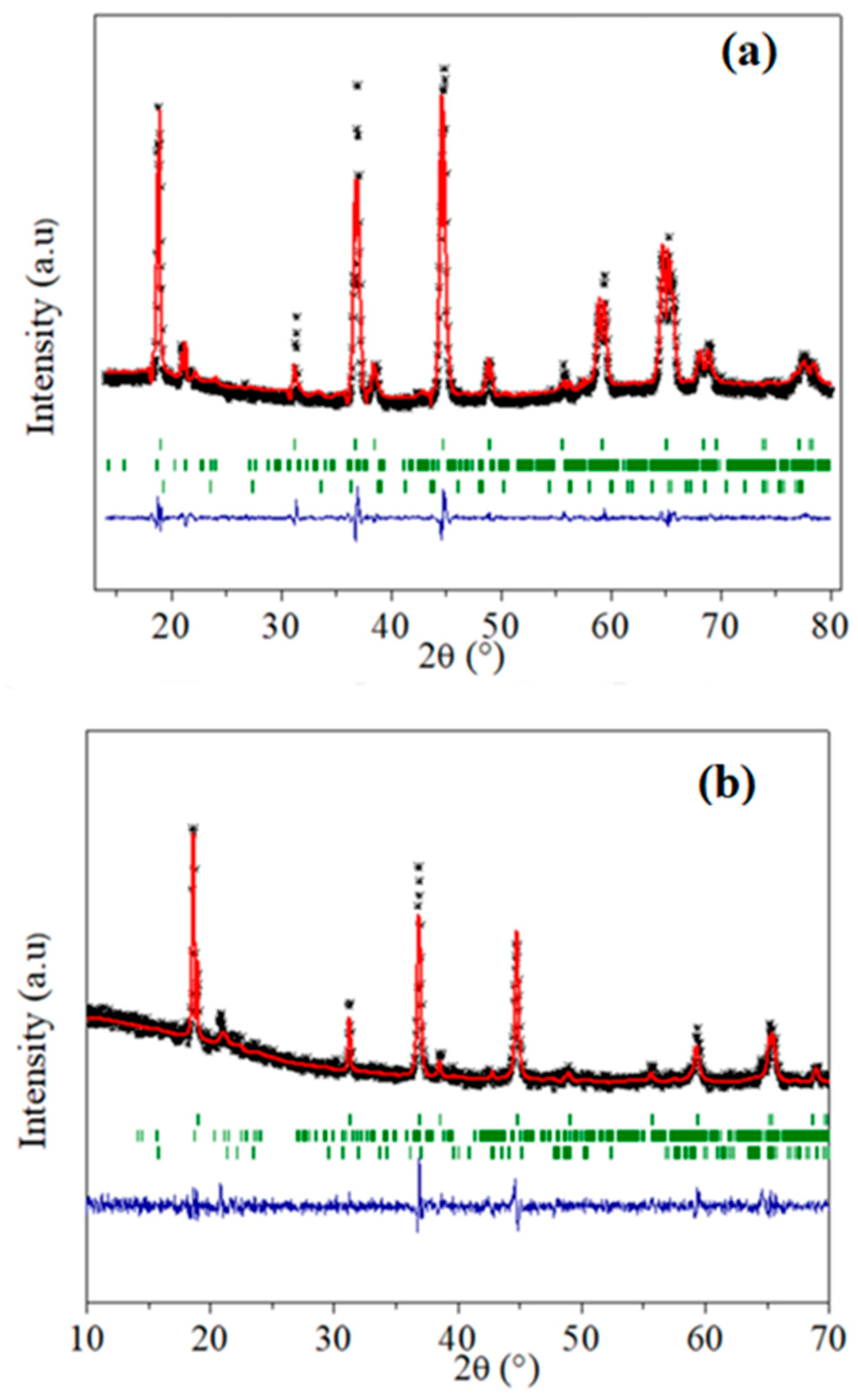
A qualitative analysis of the X-ray diffraction profile was performed using the FullProf software (suit 64 bits) (Figure 1a,b). Based on this analysis, the two compounds LiCo1−xMnxO2 (with x = 0.5 and x = 0.7) appear to crystallize in the cubic spinel structure (space group Fd-3m), with estimated lattice parameters of a ≈ 8.095 Å for x = 0.5 and a ≈ 8.112 Å for x = 0.7. Secondary phases are also observed, consistent with impurities commonly reported in manganese-substituted spinel structures [14].

2.2. Scanning Electron Microscopy

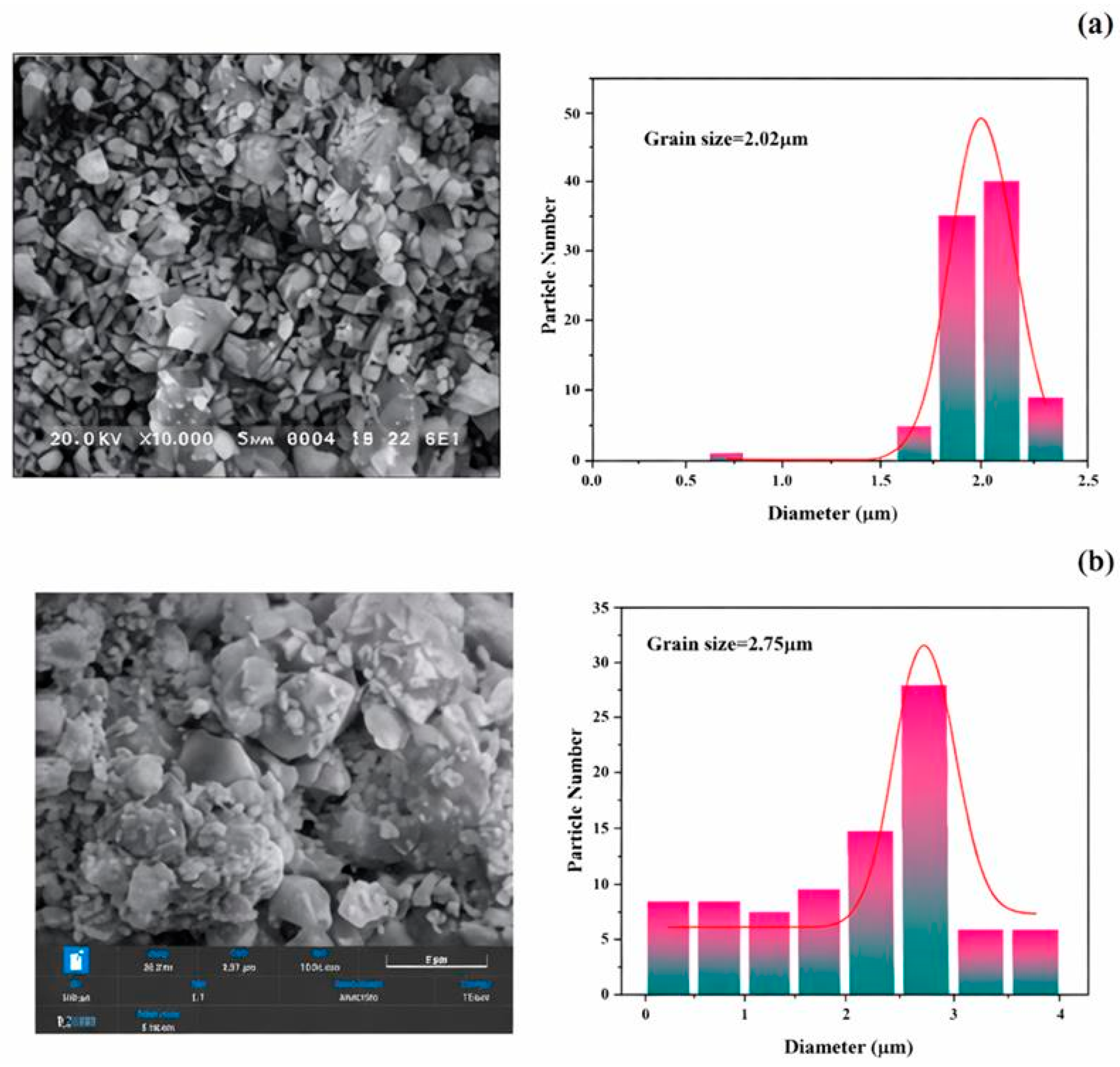
The electrical and dielectric performances of materials are largely influenced by grain size, which affects both ion diffusion and total conductivity [15,16]. For both compounds studied, SEM images and the corresponding grain size histogram are presented in Figure 2a,b. These images demonstrate grain uniformity and agglomeration, suggesting high structural stability and good grain adhesion. Because the material is porous, some tiny voids are also present, as is to be expected. We can extract the particle size distribution from the previous histogram using the Image J 1.54d program. The LiCo0.5Mn0.5O2 compound exhibits a smaller average grain size (2.02 µm) compared to LiCo0.3Mn0.7O2 (2.75 µm). This difference in grain size may reflect the influence of manganese content on grain growth during the solid-state synthesis, as higher Mn concentrations appear to promote grain coarsening under the adopted thermal treatment conditions.

2.3. Optical Study

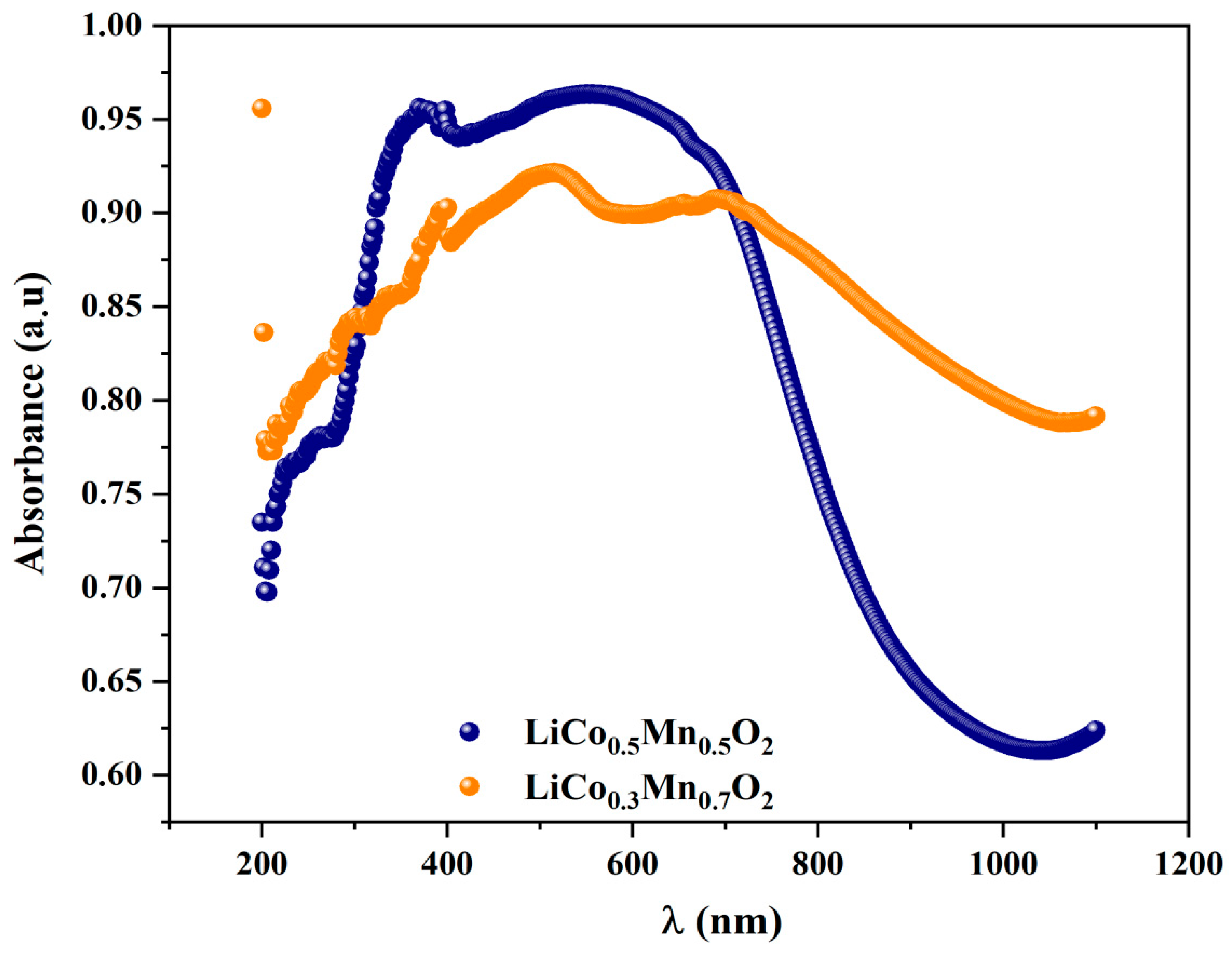
In our work, UV-visible was used to determine light efficiency via absorption methods to unveil the material’s optical band gap entropy properties for describing crystalline and electronic properties [17,18,19,20,21]. The absorption spectra of the studied compounds LiCo1−xMnxO2 (x = 0.5; 0.7) are shown in Figure 3, where we observe two consecutive large peaks for the two compounds moving towards long wavelengths with increasing manganese rate. The spectra are characterized by broad absorption in the visible range which implies the possibility of exploiting these materials in optoelectronic devices [22].
The first peak was observed at 230 and 240 nm for the compounds with x = 0.5 and 0.7, respectively, compared to 225 nm for LiCo0.7Mn0.3O2 [18]. This peak is attributed to O2−-Co2+. The second peak, corresponding to the electronic transition from the valence band to the conduction band, appeared at 368 [18], 372, and 380 nm for x = 0.3, 0.5, and 0.7, respectively. Both peaks in the LiCo1−xMnxO2 compounds increase with the manganese content, indicating that the band gap energy generally decreases as Mn content rises. Substituting Co with Mn alters the electronic structure and crystal field splitting, affecting the positions of the valence and conduction band edges, which results in a shift in the band-to-band transition peak. To better understand the effect of this substitution on the optical properties, the band gap of the synthesized LiCo1−xMnxO2 sample is calculated. According to the literature, the lamellar compounds with the formula AMO2 are characterized by an indirect electronic transition (e.g., LiCo0.7Mn0.3O2: Eg = 1.88 eV) [18].
Using the Kubelka–Munk relationship [22,23] shown in Equation (1) the energy gap (Eg) values can be determined:
F ( R ) e = ( 1 R ) 2 2 R
where R is the reflectance and e is the thickness of the compound (e = 1 mm). The term ((F(R))/e) is directly proportional to the absorption coefficient (α), this can be accomplished by multiplying F(R) by (hv) and using the exponent (n) related to the electronic transition as shown in Equation (2):
F R e × h v n = A h v E g
where n = 1/2 for the allowed indirect transition, n = 2 for the allowed direct transition [20].
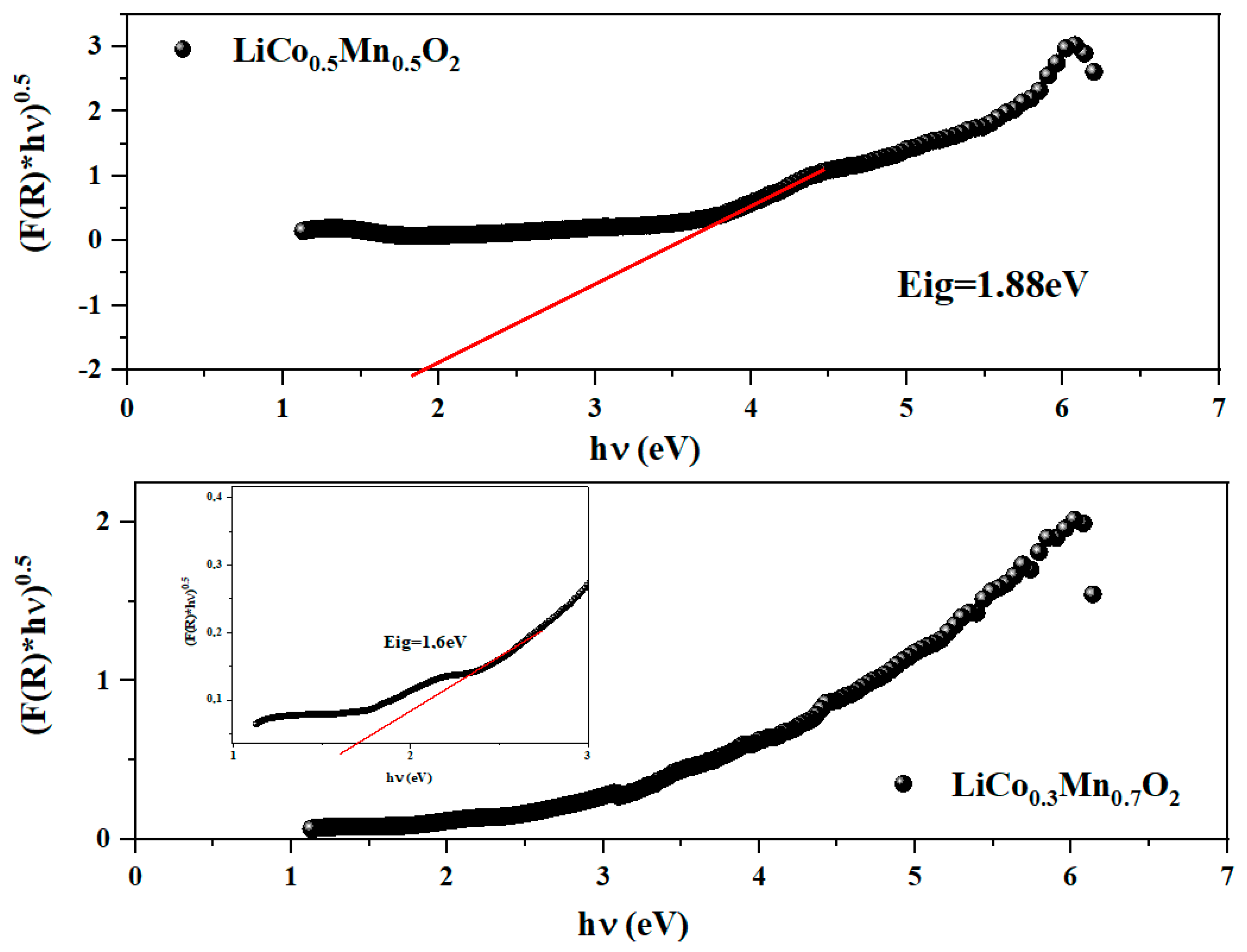
The point of intersection between the axis of irradiation energy (hν) and the extrapolation of (F(R)/e × hν)0.5 as a function of energy (hν) was used to schematically evaluate the indirect optical gap energies (Figure 4). The energy gap values were 1.88 [18], 1.85, and 1.60 eV for x = 0.3, 0.5, and 0.7, respectively. A decrease in the energy gap was observed with an increasing Mn ratio in the samples. Indeed, Mn, which can have a variable oxidation state (e.g., Mn3+ or Mn4+), can introduce energy levels into the band gap [23,24,25,26,27,28]. These levels add additional states between the valence band and the conduction band, which reduces the effective gap energy, thus facilitating the passage of electrons between the two bands. Moreover, the substitution of Co3+ with Mn3+/Mn4+ in the cubic spinel framework (Fd-3m) significantly modifies the electronic structure of LiCo1−xMnxO2. The larger ionic radius of Mn3+ (0.645 Å) compared to Co3+ (0.545 Å), combined with mixed Mn valence states, induces local lattice distortions, bond-length disorder, and enhanced 3d(O)–2p(Mn/Co) orbital hybridization. These effects introduce mid-gap states and reduce the effective band gap, as evidenced by the decrease from 1.88 eV (x = 0.3) to 1.60 eV (x = 0.7). The observed band gap energies (1.60–1.88 eV) lower than those of LiCoO2 (2.15 eV) and LiFeO2 (2.40 eV) [29] enable strong absorption across the visible and into the near-infrared range. The cubic symmetry governs the optoelectronic response, making these Mn-rich spinel systems promising for applications such as visible-light photodetectors, narrow-gap absorber layers in solar cells, and photocatalysts for environmental remediation [30,31,32,33,34].
In semiconductor or insulating materials, the absorption edge shows a rapid increase in absorption near or above the band gap energy. The Urbach tail found beyond this edge in the absorption spectrum indicates an exponential rise in absorption related to localized states caused by defect impurities or structural disorder. The Urbach tail energy (Eu) can be determined using the Urbach–Martiansen law presented as follows (Equation (3)) [30]:
α = α 0 exp h v E g E U
where α0 is a constant and Eu is the Urbach energy (eV). Figure S1 illustrates the Urbach energy calculation for the studied compounds. In contrast to the optical band gap, the Urbach energy (Eu) increases with increasing manganese content in LiCo1−xMnxO2 (x = 0.5, 0.7), with values of 0.55 eV and 0.65 eV, respectively. This trend correlates directly with the evolution in phase purity and microstructural homogeneity revealed by X-ray diffraction and Rietveld refinement [18]. The composition with x = 0.5 exhibits the lowest Urbach energy (0.55 eV) among the Mn-rich samples, suggesting reduced structural and electronic disorder, better crystallinity, and a lower density of tail states within the dominant spinel framework. In contrast, the increase in Urbach energy to 0.65 eV at x = 0.7 reflects heightened disorder, likely driven by the greater concentration of Jahn–Teller-active Mn3+ ions and the resulting Mn3+/Mn4+ mixed valence. This valence heterogeneity promotes local lattice distortions, cationic disorder, and microstrains, particularly near phase boundaries or secondary phases, thereby broadening the band tail states and increasing (Eu). Despite this rise in disorder at higher Mn content, the optical band gap decreases monotonically from 1.88 eV (x = 0.3) to 1.60 eV (x = 0.7), as Mn substitution introduces mid-gap states and enhances visible-light absorption. Consequently, while Mn incorporation narrows the band gap beneficial for visible-light harvesting, it also introduces trade-offs in electronic homogeneity at very high Mn concentrations (e.g., x = 0.7). The x = 0.5 composition thus represents an optimal balance between narrow band gap, low Urbach energy, and structural integrity, making it especially promising for applications such as visible-light photocatalysts and narrow-gap semiconductor devices.

2.4. Impedance Spectrum Analysis

The impedance spectroscopy analysis is considered an effective method for characterizing the electrical behavior of samples. It distinguishes between contributions from grains, grain boundaries, and the effects of electrode polarization [31]. The following spectra (Figures S2 and S3) show the changes in the real and imaginary parts of the impedance for both studied compounds within a specific frequency range and at a certain temperature.
The evolution of the loss factor (Z″) shows a relaxation peak in each spectrum, located between 102 and 105 Hz. The compound with x = 0.7 shows a higher relaxation frequency than the one with x = 0.5 at all temperatures, suggesting that the former has a shorter relaxation period. A thermally induced relaxation mechanism is evidenced in both compounds, with the relaxation peak shifting to higher frequencies as the temperature increases.
The frequency fluctuation in the real part (Z′) of the complex impedance as a function of temperature is shown in Figure S1. Z′ is found to decrease with increasing frequency and temperature, indicating that these compounds exhibit negative temperature coefficient of resistance (NTCR) behavior. This kind of behavior indicates that our material’s decreased density of trapped charges and improved mobility of charge carriers may lead to an increase in AC conductivity. In the high-frequency range, Z′ is temperature-independent, indicating that the material contains space charges. As the frequency rises, space charges have less time to unwind. As a result, the curves at high frequencies converge as space charge polarization decreases [32,33].
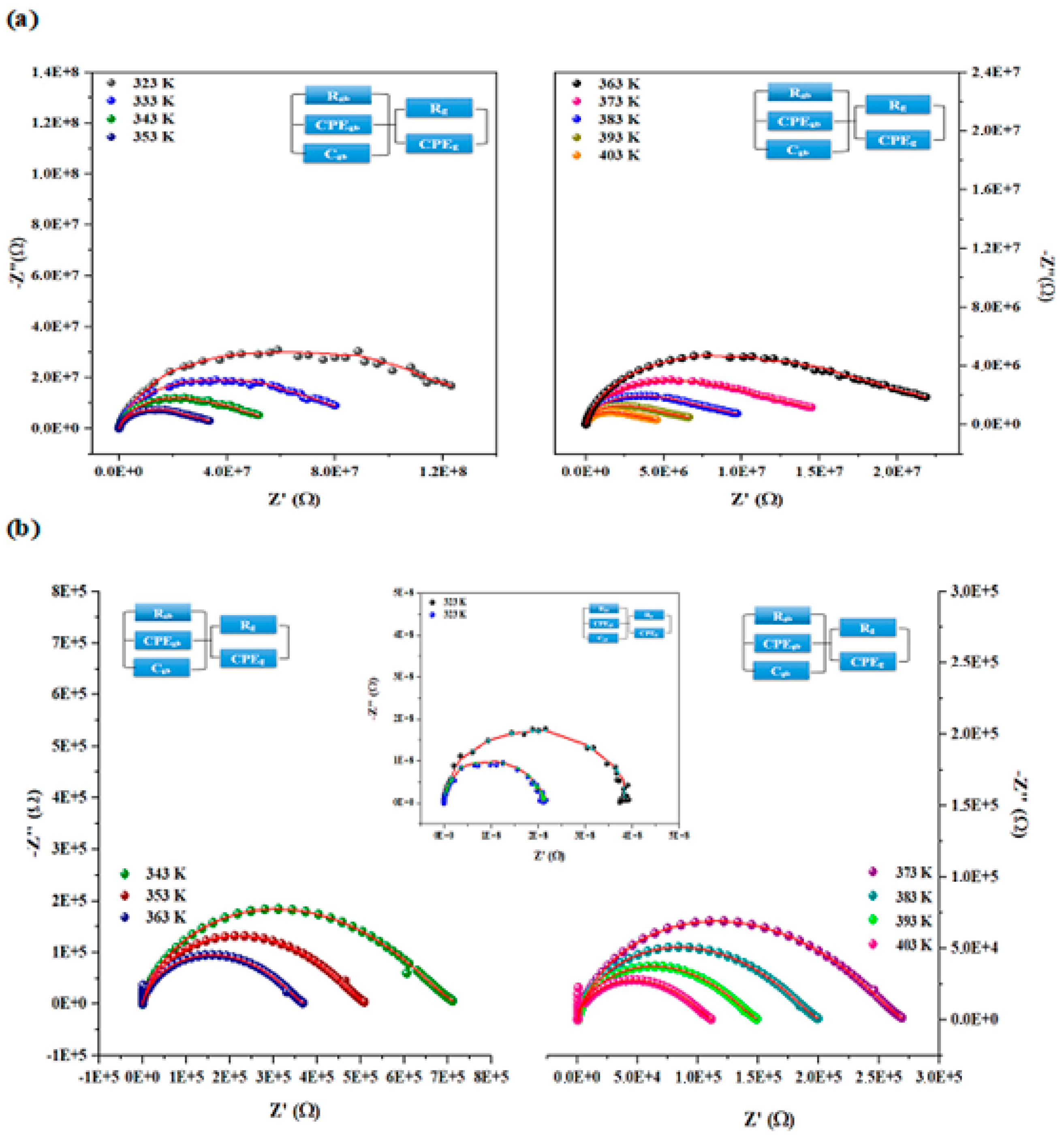
Figure 5a,b display the Nyquist plots for the studied compounds LiCo0.5Mn0.5O2 and LiCo0.3Mn0.7O2, respectively. The observed semicircular arcs indicate relaxation processes associated with charge transport in the grains and their boundaries [34]. We propose a circuit model consisting of two cells: the grain contribution is modeled as a parallel combination of resistance and fractal capacitance, while the grain boundaries are represented by a parallel combination of resistance and capacitance. The impedance of the CPE element is ZCPE = 1/Q(jω)α, where Q indicates the value of capacitance of the CPE and α is the fractal exponent. The total impedance of the proposed equivalent circuit has the expression: Z = Z′ + jZ″ such that it manifests the following (Equations (4) and (5)):
Z =   1 R g b + Q g b ω α g c o s α g b π 2 1 R g b + Q g b ω α g b c o s α g b π 2 2 + ( ω C g b + Q g b ω α g b s i n α g b π 2 ) 2 + 1 R g + Q g ω α g c o s α g π 2 1 R g b + Q g ω α g c o s α g π 2 2 + ( Q g ω α g s i n α g π 2 ) 2 ,
Z = ω C g b + Q g b ω α g sin α g b π 2 1 R g b + Q g b ω α g b c o s α g b π 2 2 + ( ω C g b + Q g b ω α g b s i n α g b π 2 ) 2 + Q g ω α g sin α g π 2 1 R g b + Q g ω α g c o s α g π 2 2 + ( Q g ω α g s i n α g π 2 ) 2
The overlap of the experimental data with the fitting model demonstrates a strong agreement confirming the validity of the chosen equivalent circuit to describe the electrical behavior of the system. To differentiate the existed contributions, the 393 K Nyquist plot was deconvolved as shown in Figure S4. Red lines indicate equivalent circuit predictions, while green and blue lines represent grain and grain boundary effects, respectively. Through this adjustment we can extract some important parameters as shown in Tables S1 and S2.
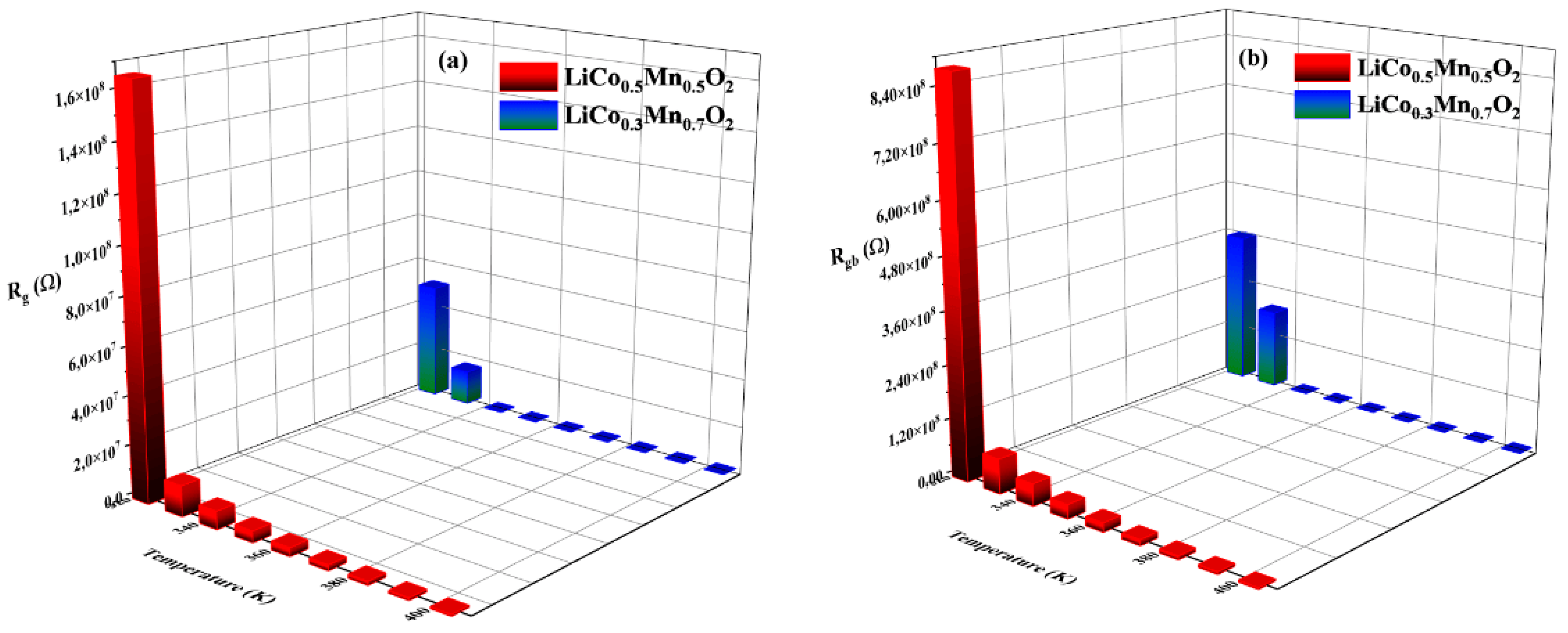
Among the extracted parameters, we present the dependence of resistance on temperature for both the grain and the grain boundaries of the studied compounds as illustrated in Figure 6a,b. The grain resistance decreases with increasing temperature in both compounds, indicating NTCR behavior [34,35]. This property characteristic of resistors with negative temperature coefficients highlights its dependence on thermal effects to alter electrical conductivity. Higher temperatures increase the thermal vibrations of charge carriers, enhancing their mobility and reducing resistive barriers in the materials.
Furthermore, and using the pellet geometry (diameter = 8 mm, thickness = 1 mm), the grain and grain boundary conductivities were calculated from the extracted resistances. At 393 K, the grain conductivity (σg) of LiCo0.3Mn0.7O2 (4.16 × 10⁻⁷ Ω/cm) is 2.4 times higher than that of LiCo0.5Mn0.5O2 (1.74 × 10⁻⁷ Ω/cm), while the grain boundary conductivity (σgb) is 5.4 times higher (1.74 × 10⁻⁷ Ω/cm vs. 3.24 × 10⁻⁸ Ω/cm). This significant enhancement in both σg and σgb with increasing Mn content confirms that Mn3+/Mn4+ mixed valence promotes bipolaron hopping not only within grains but also across grain boundaries. Notably, for LiCo0.3Mn0.7O2, σgb approaches σg, indicating that the grain boundaries are less resistive likely due to improved interfacial connectivity or reduced defect density at boundaries in the Mn-rich composition. In contrast, for LiCo0.5Mn0.5O2, σgb is an order of magnitude lower than σg, highlighting the dominant role of grain boundaries as barriers to charge transport in the Co-rich sample. These results underscore that Mn substitution not only enhances bulk electronic conduction but also mitigates interfacial resistance, collectively contributing to the superior overall conductivity of the x = 0.7 compound. The lower activation energy of LiCo0.3Mn0.7O2 (0.28 eV vs. 0.45 eV for LiCo0.3Mn0.7O2), extracted from the Arrhenius fit of the temperature-dependent conductivity data illustrated in Figure S4, indicates easier thermally activated charge transport.

2.5. Modulus Analysis

The electrical modulus is used to analyze the relaxation process in a sample, enabling us to understand the complex dielectric behavior under an electric field. The complex modulus M * ω is defined as the reciprocal of the complex permittivity ε * ( ω ) as expressed by the following Equation (6):
M * ω = 1 ε * ( ω )
The complex modulus can exhibit substantial variation with frequency changes due to polarization effects, thereby elucidating the behavior of insulating materials. Consequently, it is critical to analyze the frequency dependence of the complex modulus. Utilizing mathematical techniques and appropriate models in the fitting procedures allows for the deconstruction of the complexities inherent in dielectric relaxation processes, yielding deeper insights into charge transport mechanisms. In this context, the asymmetrical peak width observed in the imaginary component of the electrical modulus surpasses that of the Debye peak, which justifies the selection of the Bergman model as a suitable fit for the experimental data [36,37]. The Bergman equation is represented as follows (Equation (7)):
M = M 1   m a x 1 β 1 + β 1 1 + β 1 β 1 ω 1   m a x ω + ω ω 1   m a x β 1 + M 2   m a x 1 β 2 + β 2 1 + β 2 β 2 ω 2   m a x ω + ω ω 2   m a x β 2 .
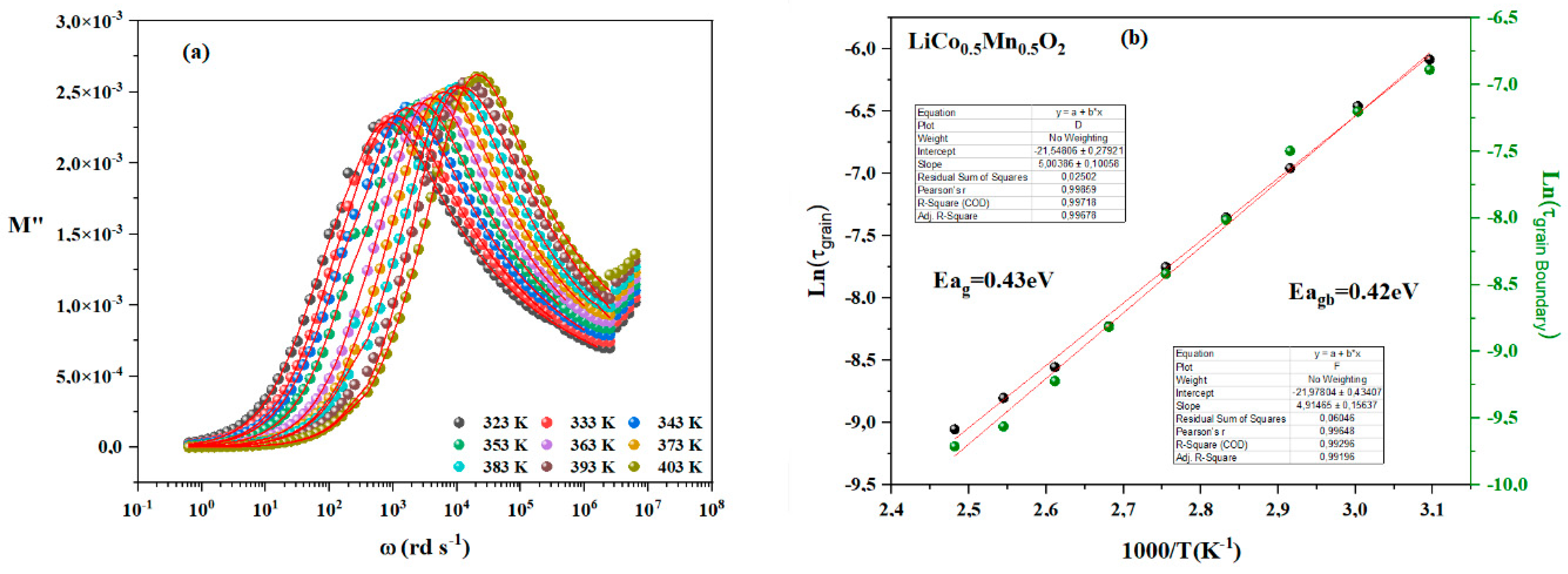
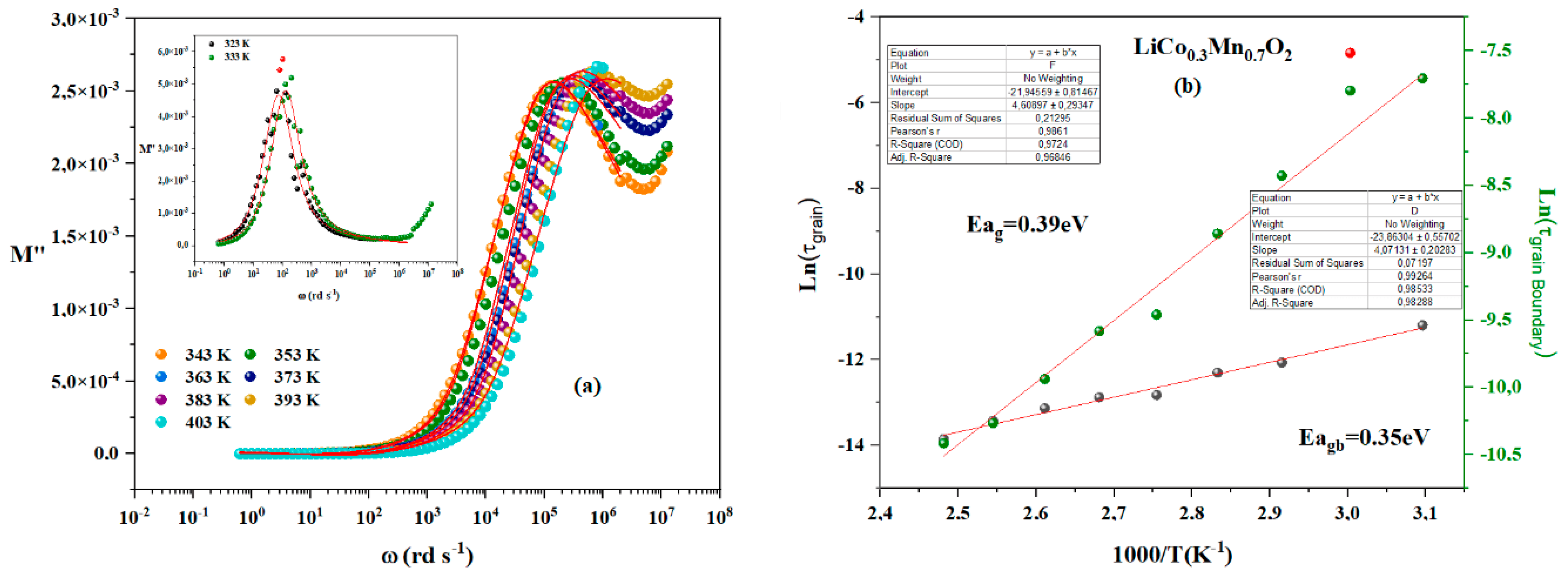
where β is the Kohlrausch parameter, which ranges from 0 to 1, and M″max is the maximum of the complex modulus corresponding to ωmax [38]. Figure 7a and Figure 8a show the variation in the imaginary part of the electric modulus as an angular frequency function at different temperatures for the LiCo0.5Mn0.5O2 and LiCo0.3Mn0.7O2 compounds, respectively.
Comparing the responses of the two materials reveals that increasing manganese content shifts the dielectric response to higher frequencies. This shift occurs because manganese alters the crystal structure and atom arrangement, affecting the material’s response to electric fields. Additionally, manganese may introduce defect states that influence dielectric properties, facilitating faster relaxation processes and contributing to the observed shift [39].
As shown in Figure 7a and Figure 8a, the theoretical results align well with the experimental results, confirming our choice of the Bergman model. Qualitative analyses of the experimental data indicate that the increase causes the relaxation peaks to shift towards higher frequencies. This shift occurs because the electrodes at elevated temperatures respond more quickly to stimulation, resulting in a reduced relaxation time. Additionally, we observe the overlap of two relaxation phenomena (grain responses and grain boundary responses), which occur at adjacent frequencies. The variation in relaxation time (τ = 1/2πfp), which is inversely related to temperature, and the increase in τ with rising temperature suggest that the relaxation mechanism is thermally activated for both the grain and grain boundary contribution and follow an Arrhenius-type law (Figure 7b and Figure 8b) [40]. The activation energies for the grains and grain boundaries in the complex module of the two samples are very close, indicating similar relaxation mechanisms and interaction as a coherent system. The obtained value of ωmax affirms our previous prediction. Assuming that M″max represents the material’s ability to dissipate energy; we notice that the LiCo0.3Mn0.7O2 compound has a higher energy dissipation than the compound LiCo0.5Mn0.5O2. We can explain this result by the fact that higher manganese content inLiCo0.3Mn0.7O2 may lead to a more favorable structural arrangement that enhances energy dissipation mechanisms, such as increased ionic mobility or more effective polarization processes.
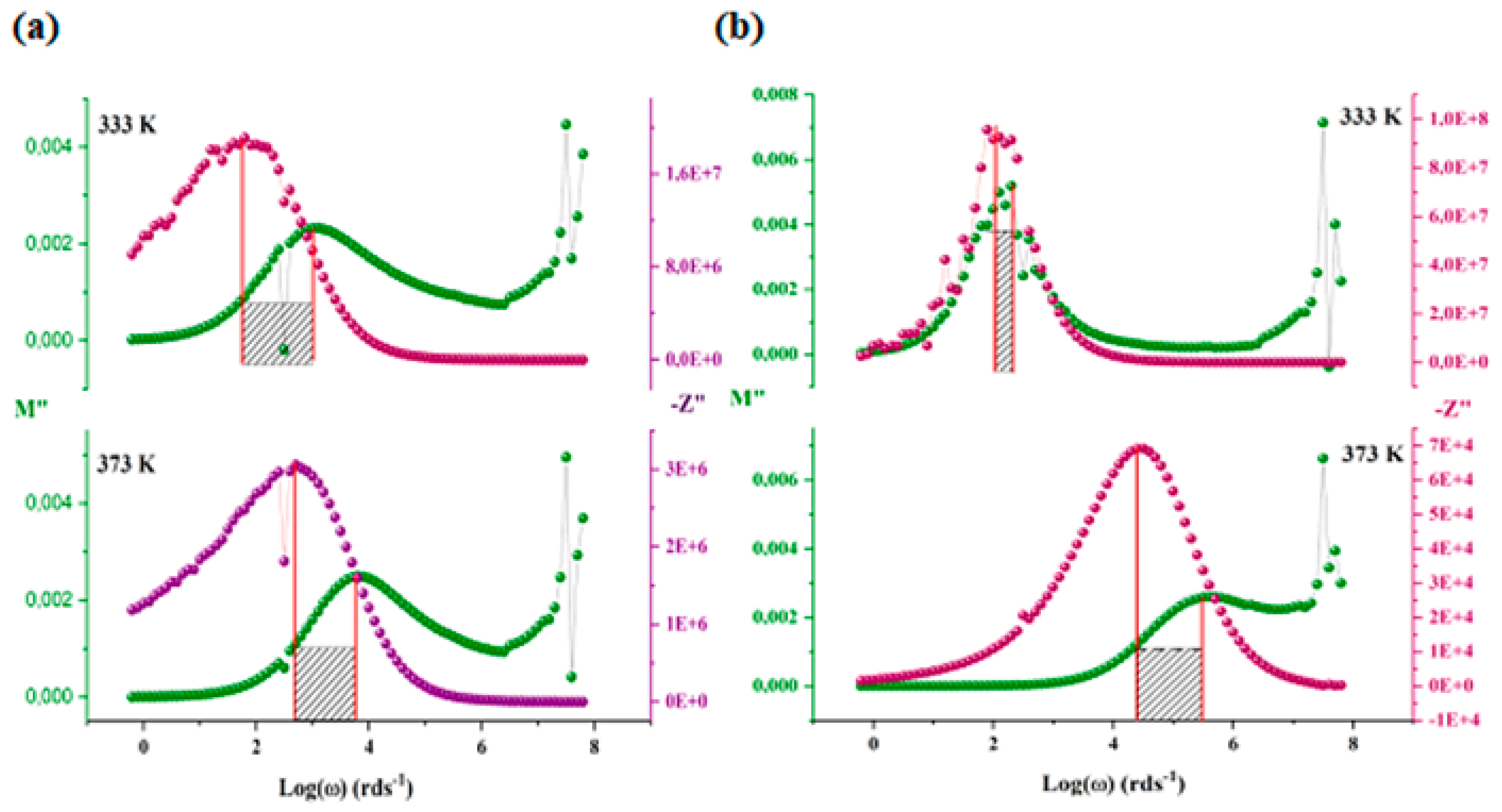
The exponent β is small and far from unity for both the grain and grain boundary contributions, confirming the absence of Debye-type relaxation. Since this parameter reflects dipole interactions, it continuously decreases with temperature, indicating the dominance of thermally activated interactions [40]. If the impedance and modulus peaks coincide at the same frequency, it indicates a long-range motion; if not, a short-range motion explains the conduction process [41,42]. The M″max and Z″max peaks at 333 and 373 K are significantly out of alignment, as seen in Figure 9a,b. This discrepancy illustrates the departure from the ideal Debye response and points to a short-range motion of polarons in both compounds. Figure 9a demonstrates that for the LiCo0.3Mn0.7O2 compound, the shift between the peaks becomes very small at 333 K. Consequently, we deduce that this material possesses a relaxation of delocalized polarons (Debye type) at low temperatures. However, for the complex LiCo0.5Mn0.5O2, the shift is steady and does not vary significantly with temperature (Figure 9b).

2.6. Conductivity Analysis

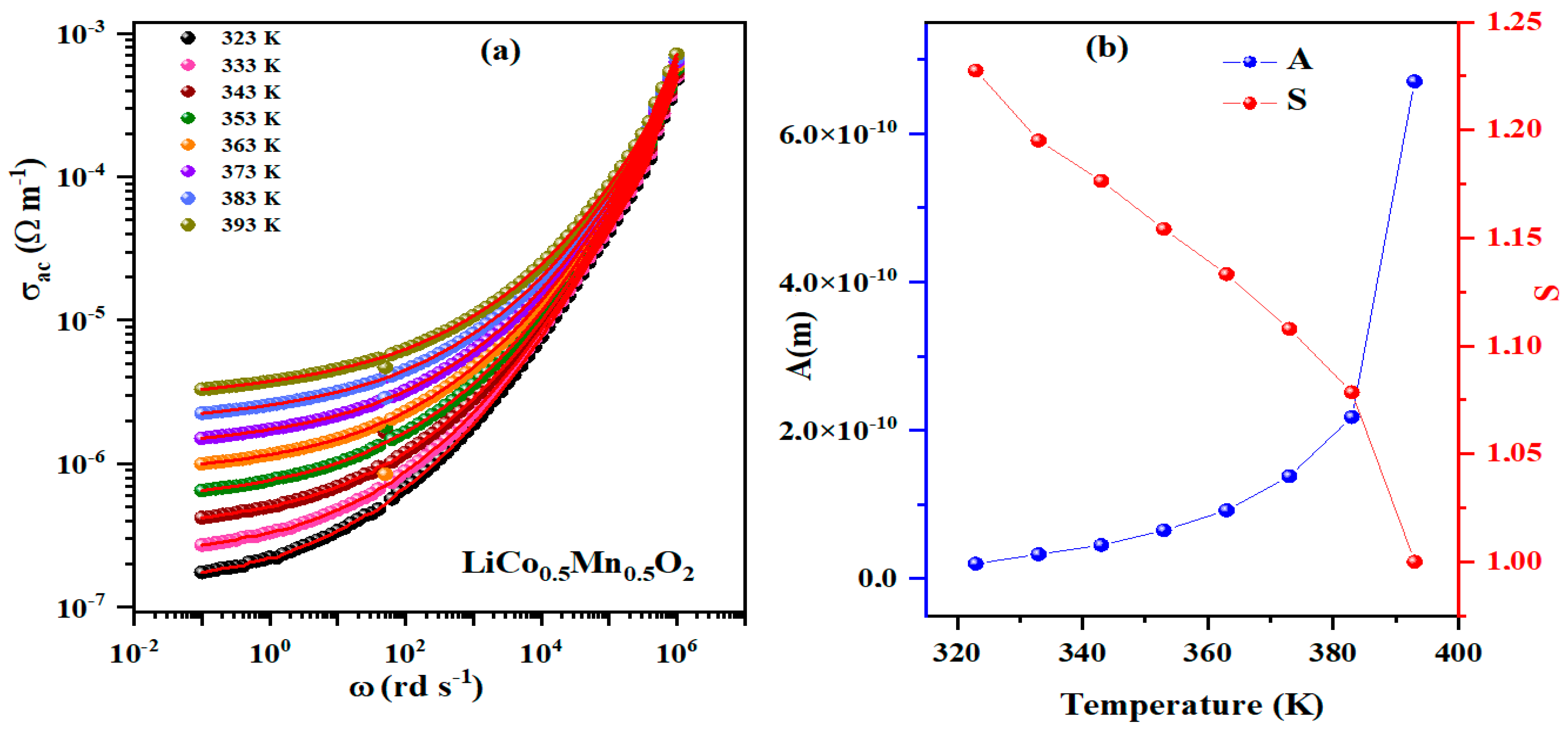
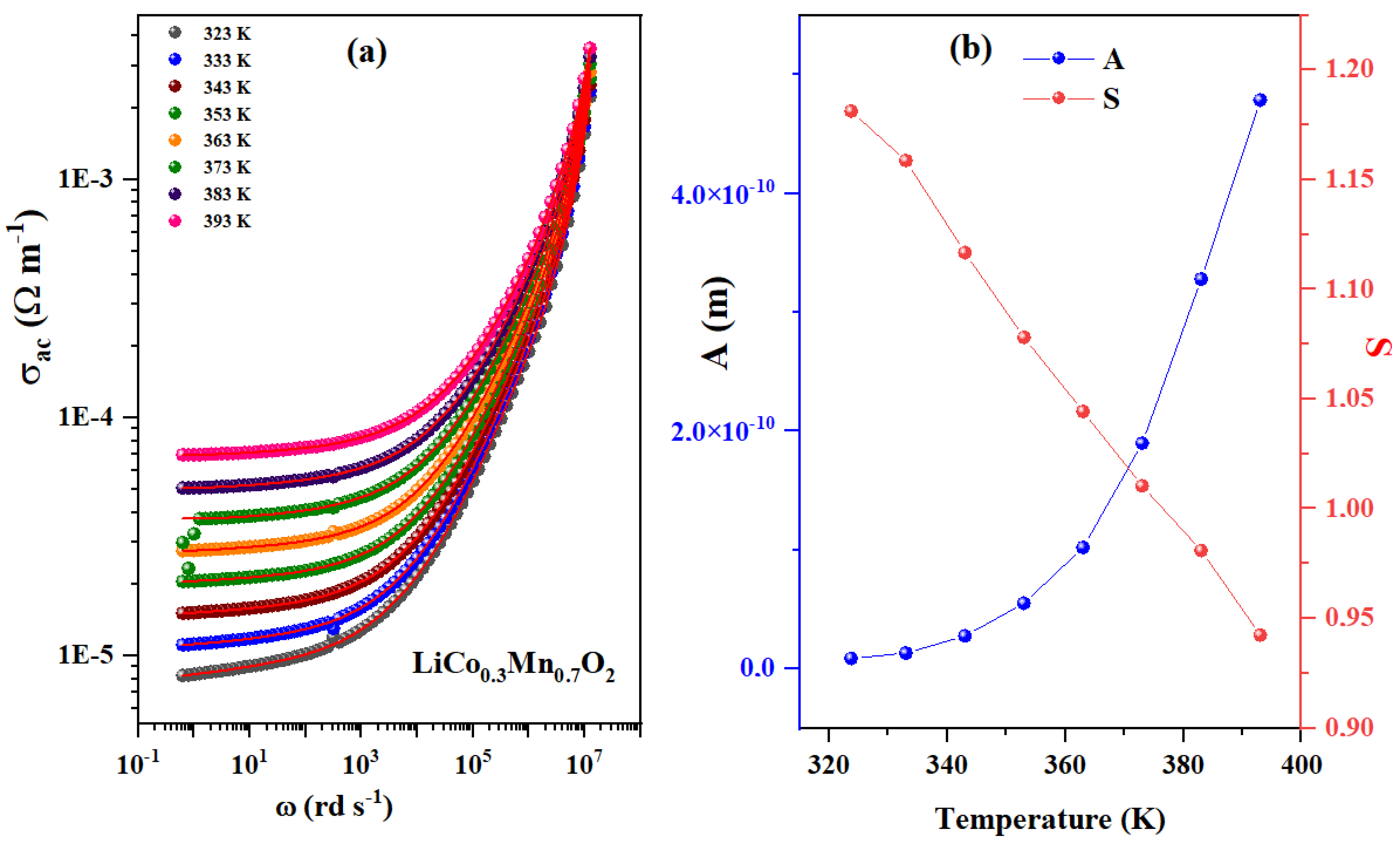
Two separate regimes can be seen in the frequency dependence of the investigated compounds’ alternating conductivity (AC), which is displayed in Figure 10a and Figure 11a. Because the charge carriers react to the alternating field too slowly, conductivity at low frequencies is dominated by the direct current component (σdc) and seems to be frequency independent. Long-range transport systems are linked to this characteristic. Because of the increased mobility of charge carriers, which enables them to more efficiently follow the oscillating electric field, the alternating conductivity (σac) becomes dominant at high frequencies and typically increases with frequency. Higher conductivity results from an increase in energy transfer as the carriers synchronize with the applied field.
The variation in AC conductivity with frequency for both studied compounds is characteristic of theuniversal power lawdescribed by Jonscher’s model (Equation (8)):
σ a c = = σ d c + A ω s
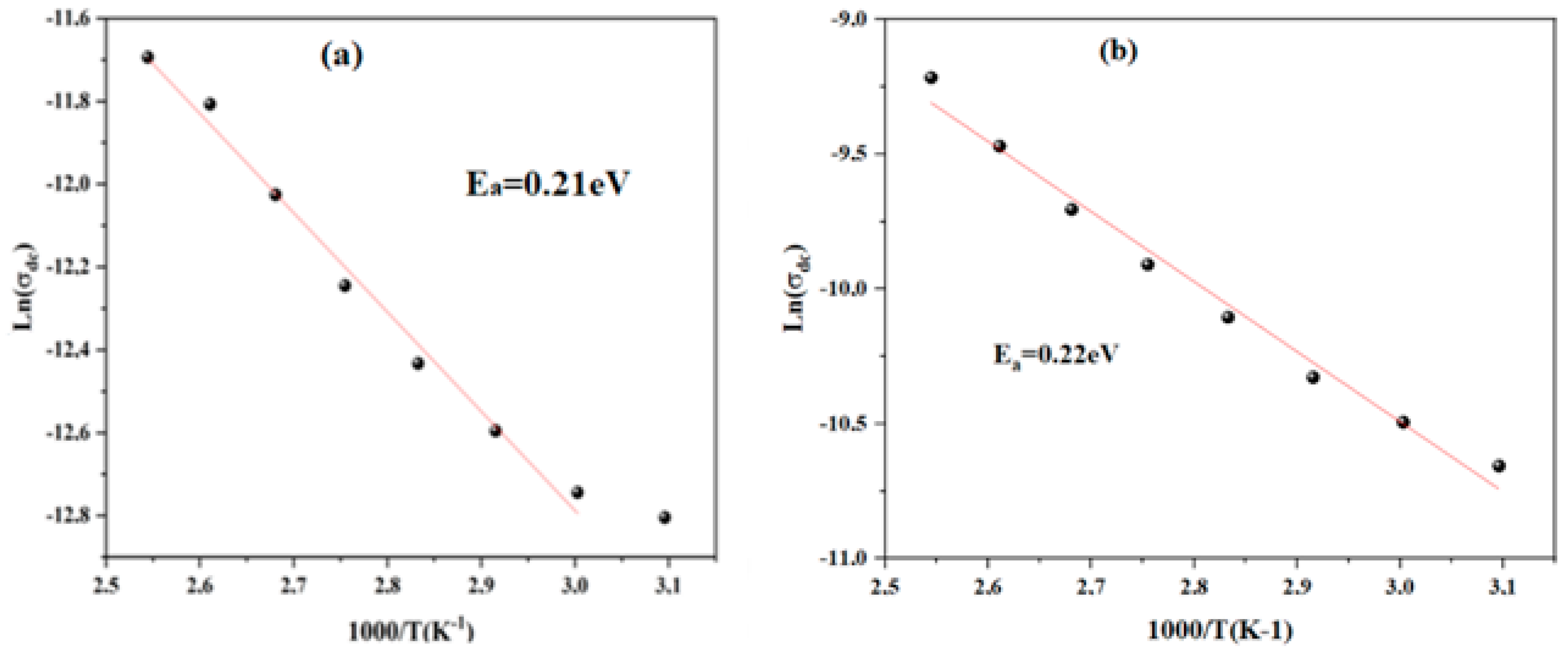
where σdc is the direct current conductivity; A is a scaling coefficient that describes the amplitude of the frequency-dependent terms and 0 < S < 1 which describe the degree of interaction between the charge carriers and corresponds to the short motion of the mobile ion [43]. Figure 10a and Figure 11a show a notable agreement between the theoretical model and the experimental results, confirming the validity of our approach. This analysis allows us to extract important parameters, such as the thermal dependence of ln(σdc) shown in Figure 12a,b. It is clear that the low-frequency conductivity of the compound with x = 0.7 is higher than that of the compound with x = 0.5. Linear fitting enables the determination of the activation energy of charge carriers in our compounds, yielding values of 0.21 eV for LiCo0.5Mn0.5O2 and 0.22 eV for LiCo0.3Mn0.7O2. These comparable values suggest that both compounds may exhibit similar conduction mechanisms.
Also, there are some other parameters derived from the adjustment of AC conductivity such as the exponent A and S; theses later indicate the interaction among charge carriers and their environment. The temperature dependence of the exponent S defines the conduction mechanism; Figure 10b and Figure 11b represent the temperature dependency of both exponents A and S for the LiCo0.5Mn0.5O2 and LiCo0.3Mn0.7O2 compounds, respectively. From the illustrated curves, we observe that the exponent A is in the order of angstroms. This suggests that the interactions modeled by the Jonscher equation are likely related to the forces acting between individual atoms or molecules, such as Van der Waals forces, covalent bonds, or other molecular interactions occurring at this length scale. The presence of the exponent A in this range indicates that these small-scale interactions are significant and must be considered when analyzing the system [44]. Conversely, the exponent S for the two compounds decreases with the rising temperature, consistent with the CBH model [45,46]. The exponent “s” for this model is represented as follows (Equation (9)):
s = 1 6   k B T W M + k B T   l n ( 1 ω τ 0 )
where WM is the height of the potential barrier. In the case where WM/KB has a large value the exponent s is expressed as follows (Equation (10)):
s = 1 6   k B   T w M
The value of WM with respect to the previously calculated activation energy distinguishes the quantity of charge carriers involved in the jump [47]. If WM = Ea/2, conduction occurs through the correlated jump of two polarons. If WM = Ea/4, a single polaron is responsible for the jump.
As evident from Figures S4 and S5, the measured barrier height value is equal to half of the activation energy (WM = 0.12 eV for LiCo0.5Mn0.5O2 and WM = 0.14 eV for LiCo0.3Mn0.7O2), indicating that the conductivity in both compounds is mediated by bipolaron hopping. The bipolaron refers to a localized distortion in the lattice structure, facilitating effective charge carrier transport. This highlights the significance of electron-phonon interactions in conduction, revealing the mechanisms that influence the electrical properties of the compound. The conductivity for this model is given by the following expression (Equation (11)) [48]:
σ a c = n   π 2 N N p ε   w R w 6 24
where NNp is proportional to the square of the localized states density, ε′ is the value of the dielectric constant for a fixed frequency, while Rω presents the jump distance given by Equation (12) [49]:
R w = 8 e 2 π ε ε 0 [ w M + k B T ln w τ 0 ]
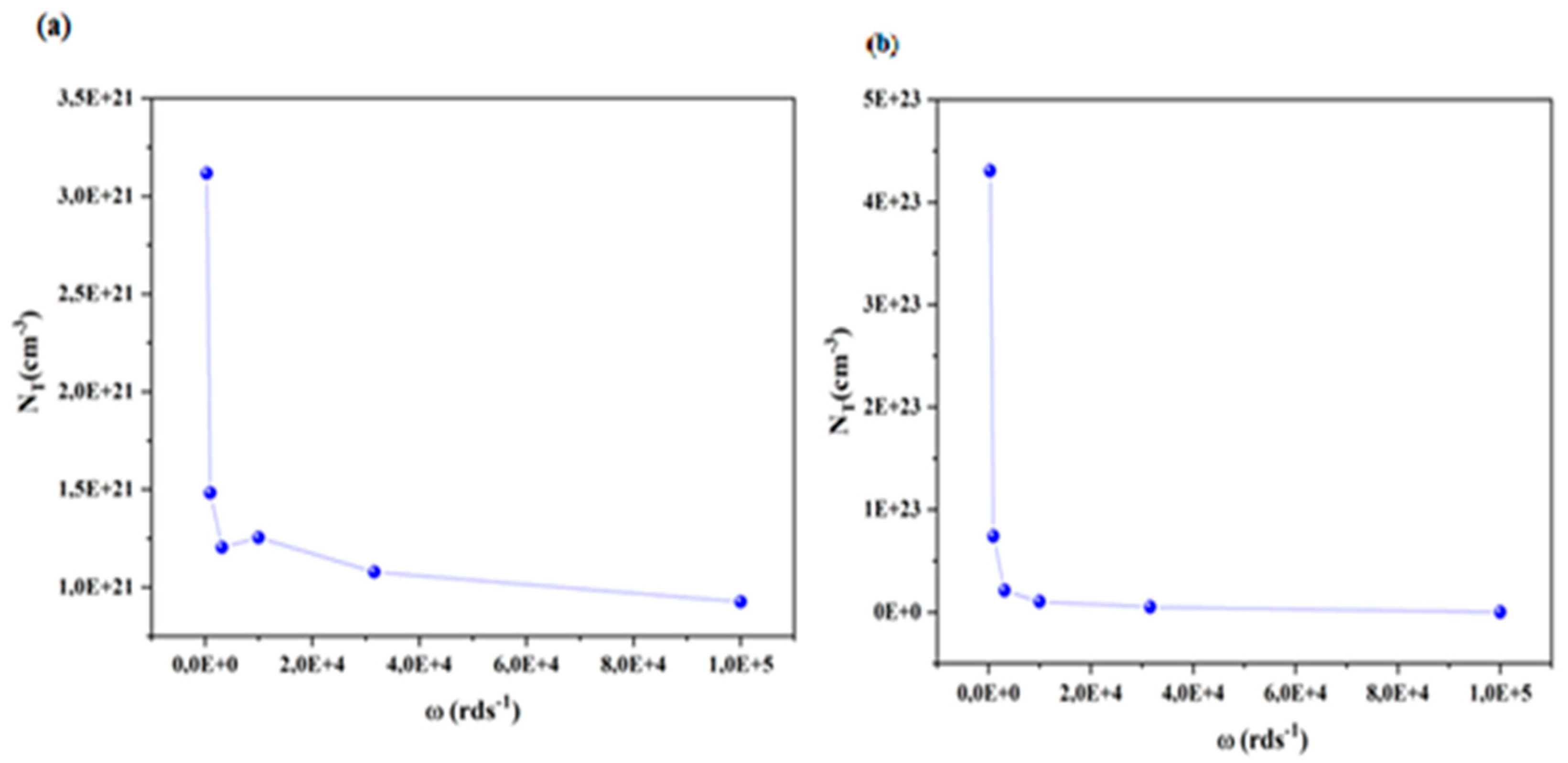
The adjustment of Ln(σac) as a function of (1000/T) within the temperature ranges based on previous deductions shows a notable agreement between the theoretical data and the experimental results, thereby enhancing the credibility of our choice as illustrated in Figures S7 and S8. This adjustment enabled us to explore the variation in localized states’ density with respect to specific frequency values, reflecting the number of potentially occupied electronic states. Figure 13a,b demonstrate the dependence of this parameter on frequency for the LiCo0.5Mn0.5O2 and LiCo0.3Mn0.7O2 compounds, respectively. The density of localized states decreases as the frequency rises. This is frequently explained by a decrease in the stability of non-localized states and an increase in chaos [50].
Based on this research, it was found that the electrical conductivity in LiCo1−xMnxO2 composites (x = 0.3, 0.5 and 0.7) follows the same conductivity model, which is the CBH double polaron. Additionally, it rises with increasing manganese content (x); in fact, ln(σdc) falls between (−11, −15) for x = 0.3 [18], (−12.8, −11.6) for x = 0.5, and (−11, −9) for x = 0.7, for example. The increase in electrical conductivity in the LiCo1−xMnxO2 composites with increasing x can be explained by several interdependent factors. First, manganese introduces mixed oxidation states (Mn3+ and Mn4+), enabling reversible electron transfer processes between these two states, thereby increasing the density of mobile charge carriers [51]. Second, the substitution of cobalt with manganese causes an expansion of the crystal lattice due to the larger ionic radius of Mn3+ (0.67 Å compared to 0.545 Å for Co3+), reducing the effective distance between metal orbitals and facilitating electronic interactions [52]. Third, both Mn-containing compositions crystallize in a cubic spinel framework (Fd-3m), which provides three-dimensional connectivity of the transition metal cations, facilitating efficient electron transport through the crystal lattice [53]. Finally, the higher Mn content in the x = 0.7 sample further enhances conductivity not through a phase change, but via increased Mn3+/Mn4+ mixed valence within the same spinel matrix, which introduces additional charge carriers and lowers hopping barriers [54]. These combined mechanisms explain the significant improvement in electrical conductivity with increasing manganese content [55]. We note that this increase in conductivity as a function of Mn rate is accompanied by an increase in the density of localized N(EF) states, consequently, of the number of charge carriers. Indeed the density of localized states at the Fermi energy (N(EF)) is directly related to the number of charge carriers available for electrical conduction. A higher value of N(EF) indicates more accessible electronic states, increasing the density of charge carriers and, consequently, electrical conductivity [56,57].
As a result of bipolaron conduction mechanisms and manganese’s mixed valence states, the controlled addition of manganese to LiCoO2 not only lowers cost and toxicity (by lowering the cobalt content), but it also preserves or even improves electronic conductivity when compared to LiFeO2 while remaining competitive with LiCoO2.

3. Experiment

3.1. Synthesis

LiCo1−xMnxO2 compounds (where x = 0.5 and 0.7) were prepared using the solid-state method with the following raw materials: Li2CO3 (Sigma Aldrich, St. Louis, MO, USA, 99%), Co3O4 (Sigma Aldrich, 99%), and Mn2O3 (Sigma Aldrich, 99%). The calculated stoichiometric ratios of the raw materials were manually ground in an agate mortar for homogenization. The resulting mixture was first calcined in air at 450 °C for 24 h to decompose lithium carbonate and release carbon dioxide. The pre-calcined powder was then reground to ensure homogeneity and uniaxially pressed at a pressure of 5 t/cm2 into circular pellets of 8 mm diameter and 1 mm thickness. These green pellets were subsequently sintered at 650 °C for 12 h in air to enhance densification and crystallinity. This relatively low sintering temperature was deliberately chosen to suppress lithium volatilization, minimize the formation of secondary phases, and preserve stoichiometric integrity factors critical for achieving phase-pure cathode materials, as widely reported in the literature on layered lithium transition metal oxides [58,59,60]. Using the pellet geometry (volume = 0.0503 cm3) and the measured masses (120 mg for x = 0.5; 135 mg for x = 0.7), the relative densities were determined to be 95.2% and 96.1%, respectively, indicating highly dense pellets with minimal porosity. After sintering, both flat faces of each pellet were uniformly coated with silver paint and dried at 120 °C for 1 h to ensure low-resistance ohmic contacts for subsequent electrical measurements.

3.2. Equipment

The purity of the compounds was verified using X-ray diffraction at room temperature. This measurement was performed using an AnalyticalX’Pert Pro MPD instrument (Malvern Panalytical-Almere, Almelo, The Netherlands) with a copper anti-cathode X-ray source (CuKα. λ = 1.5406 Å) at room temperature in the angular range of 10° ≤ 2θ ≤ 80°. The scanning electron microscope (FEI XL30 FEG ESEM) was used to investigate the external structure at a high-vacuum condition with an accelerating voltage of 15 kV. Furthermore UV–Vis spectroscopy was used to determine the optical properties of the studied material and this analysis was performed using the “UV-3101PC” instrument in the wavelength range of 200 to 800 nm. The analysis was carried out on a 0.5 mm thick pellet. A “Solartron SI 1260” with double probes is used to perform electrical measurements in the air at temperatures between 363 and 473 K and frequencies between 0.1 and 106 Hz. Pellets were placed between two copper electrodes in a specialized container and coated with a small layer of silver on the opposing surfaces to achieve good contact. A pressure of 5 t/cm2 was applied to the powder in order to obtain a circular disk that is 1 mm thick and 8 mm in diameter.

4. Conclusions

Samples of LiCo1−xMnxO2 (x = 0.5, 0.7) were successfully synthesized via the solid-state method. Rietveld refinement of X-ray diffraction data confirms that both compositions are dominated by a cubic spinel phase (space group Fd-3m), with lattice parameters increasing from ≈8.095 Å (x = 0.5) to ≈8.112 Å (x = 0.7), reflecting the incorporation of the larger Mn3+ ion into the structure.
Optical characterization by UV–Vis spectroscopy reveals strong absorption across the visible range, with the indirect optical band gap narrowing from 1.85 eV (x = 0.5) to 1.60 eV (x = 0.7). This reduction is attributed to Mn3+/Mn4+ mixed valence, which introduces mid-gap states and enhances Co/Mn 3d–O 2p orbital hybridization within the spinel framework, thereby improving visible-light harvesting.
In contrast to the band gap trend, the Urbach energy increases from 0.55 eV (x = 0.5) to 0.65 eV (x = 0.7), indicating greater structural and energetic disorder in the Mn-rich composition. This is ascribed to the higher concentration of Jahn–Teller-active Mn3+ ions and associated Mn3+/Mn4+ valence heterogeneity, which promote local lattice distortions and broaden the band tail states—even within the dominant spinel matrix.
Impedance spectroscopy identifies two distinct relaxation processes corresponding to grain and grain boundary responses. AC conductivity analysis, interpreted via the Correlated Barrier Hopping (CBH) model, confirms that charge transport occurs through bipolaron hopping. The x = 0.7 sample exhibits significantly enhanced conductivity both in grains and across grain boundaries due to increased Mn3+/Mn4+ mixed valence, lattice expansion, efficient 3D electronic connectivity inherent to the cubic spinel framework, and reduced interfacial resistance. Despite the higher disorder (as reflected by Urbach energy), the Mn-rich composition achieves superior overall electrical performance, with a slightly higher activation energy (0.22 eV for x = 0.7 vs. 0.21 eV for x = 0.5), consistent with thermally activated bipolaron conduction.
These results demonstrate that Mn substitution in LiCo1−xMnxO2 not only reduces reliance on costly cobalt but also tailors optoelectronic properties for applications beyond battery cathodes, such as visible-light photodetectors, narrow-gap absorbers, and photocatalytic systems, while maintaining robust charge transport through the spinel architecture.

Supplementary Materials

The following supporting information can be downloaded at: https://www.mdpi.com/article/10.3390/inorganics14010019/s1, Figure S1 illustrates the Urbach energy calculation for the studied compounds. Figure S2: Variation in real and imaginary part of the impedance of the LiCo0.5Mn0.5O2 compound; Figure S3: Variation in real and imaginary part of the impedance of the LiCo0.3Mn0.7O2 compound; Figure S4: Deconvolution of the Nyquist plot at 393 K; Figure S5: Ln (σg) vs. (1000/T) for LiCo0.5Mn0.5O2 and LiCo0.3Mn0.7O2 compounds; Figure S6: Variation of (1s) as a function of temperature for the LiCo0.5Mn0.5O2 compound; Figure S7: Variation of (1s) as a function of temperature for the LiCo0.3Mn0.7O2 compound; Figure S8: Variation in AC conductivity versus 1000/T for the LiCo0.5Mn0.5 compound; Figure S9: Variation in AC conductivity versus 1000/T of CBH model for the LiCo0.3Mn0.7O2 compound; Table S1: Equivalent circuit parameters for LiCo0.5Mn0.5O2; Table S2: Equivalent circuit parameters for LiCo0.3Mn0.7O2; Table S3: Parameters derived from fitting the Bergman model to the frequency and temperature-dependent imaginary part of the electrical modulus for the LiCo0.5Mn0.5O2 compound; Table S4: Parameters derived from fitting the Bergman model to the frequency and temperature-dependent imaginary part of the electrical modulus for the LiCo0.3Mn0.7O2 compound.

Author Contributions

Conceptualization, M.K., A.B.R. and A.M. carried out the experiments and analyzed the experimental data. M.A.B.Y. and M.K. wrote the paper. M.A.B.Y., M.K. and A.B.R. participated in the analysis of experimental data and discussion of the results. A.A., M.H.D. and A.B.R. revised the manuscript. All authors have read and agreed to the published version of the manuscript.

Funding

The Researchers would like to thank the Deanship of Graduate Studies and Scientific Research at Qassim University for financial support (QU-APC-2025).

Institutional Review Board Statement

Not applicable.

Informed Consent Statement

Not applicable.

Data Availability Statement

All data supporting the findings of this study are included within the manuscript.

Conflicts of Interest

The authors declare that they have no known competing financial interests or personal relationships that could have appeared to influence the work reported in this paper.

References

  1. Nitta, N.; Wu, F.; Lee, J.T.; Yushin, G. Li-ion battery materials: Present and future. Mater. Today 2015, 18, 252–264. [Google Scholar] [CrossRef]
  2. Wei, C.; Deng, J.; Xi, L.; Zhou, H.; Wang, Z.; Chung, C.Y.; Yao, Q.; Rao, G. High Power LiMn2O4 Hollow Microsphere Cathode Materials for Lithium Ion Batteries. Int. J. Electrochem. Sci. 2013, 8, 6775–6783. [Google Scholar] [CrossRef]
  3. Horiba, T. Lithium-ion battery systems. Proc. IEEE 2014, 102, 939–950. [Google Scholar] [CrossRef]
  4. Delmas, C.; Fouassier, C.; Hagenmuller, P. Structural classification and properties of the layered oxides. Phys. B+C 1980, 99, 81–85. [Google Scholar] [CrossRef]
  5. Kim, Y. First-principles investigation of the structural characteristics of LiMO2 cathode materials for lithium secondary batteries. J. Mol. Struct. 2015, 1099, 317–322. [Google Scholar] [CrossRef]
  6. Obrovac, M.N.; Mao, O.; Dahn, J.R. Structure and electrochemistry of LiMO2 (M = Ti, Mn, Fe, Co, Ni) prepared by mechanochemical synthesis. Solid State Ion. 1998, 112, 9–19. [Google Scholar] [CrossRef]
  7. Koksbang, R.; Barker, J.; Saidi, M.Y.; West, K.; Zachau-Christiansen, B.; Skaarup, S. Lithium insertion in LixMn2O4, 0 < x < 4. Solid State Ion. 1996, 83, 151–157. [Google Scholar] [CrossRef]
  8. Lee, Y.-S.; Sun, Y.K.; Adachi, K.; Yoshio, M. Synthesis and electrochemical characterization of orthorhombic LiMnO2 material. Electrochim. Acta 2003, 48, 1031–1039. [Google Scholar] [CrossRef]
  9. Guo, Z.P.; Konstantinov, K.; Wang, G.X.; Liu, H.K.; Dou, S.X. Preparation of orthorhombic LiMnO2 material via the sol–gel process. J. Power Sources 2003, 119, 221–225. [Google Scholar] [CrossRef]
  10. Jeong, E.-D.; Won, M.-S.; Shim, Y.-B. Cathodic properties of a lithium-ion secondary battery using LiCoO2 prepared by a complex formation reaction. J. Power Sources 1998, 70, 70–77. [Google Scholar] [CrossRef]
  11. Mizushima, K.; Jones, P.C.; Wiseman, P.J.; Goodenough, J.B. LixCoO2 (0 < x ≤ 1): A new cathode material for batteries of high energy density. Mater. Res. Bull. 1980, 15, 783–789. [Google Scholar] [CrossRef]
  12. Zhou, Y.; Li, H. Sol–Gel Template Synthesis of Highly Ordered LiCo0.5Mn0.5O2 Nanowire Arrays and Their Structural Properties. J. Solid State Chem. 2002, 165, 247–253. [Google Scholar] [CrossRef]
  13. Kajiyama, A.; Takada, K.; Inada, T.; Kouguchi, M.; Kondo, S.; Watanabe, M. Synthesis and electrochemical properties of LixCo0.5Mn0.5O2. Solid State Ion. 2002, 149, 39–45. [Google Scholar] [CrossRef]
  14. Suresh, P.; Rodrigues, S.; Shukla, A.K.; Vasan, H.N.; Munichandraiah, N. Synthesis of LiCo1−xMnxO2 from a low-temperature route and characterization as cathode materials in Li-ion cells. Solid State Ion. 2005, 176, 281–290. [Google Scholar] [CrossRef]
  15. Liu, Q.; Mao, D.; Chang, C.; Huang, F. Phase conversion and morphology evolution during hydrothermal preparation of orthorhombic LiMnO2 nanorods for lithium ion battery application. J. Power Sources 2007, 173, 538–544. [Google Scholar] [CrossRef]
  16. Li, X.; Liu, D.; Zhang, D.; Chen, X.; Tian, X. One-step synthesis and electrochemical behavior of LiMnO2 and its composite from MnO2 in the presence of glucose. J. Phys. Chem. Solids 2009, 70, 936–940. [Google Scholar] [CrossRef]
  17. Bagtache, R.; Brahimi, R.; Abdmeziem, K.; Trari, M. Physical properties of o-LiMnO2. Appl. Phys. A 2019, 125, 606. [Google Scholar] [CrossRef]
  18. Moufida, K.; Altarifi, M.S.M.; Rhaiem, A.B. Investigation of optical, dielectric properties and conduction mechanism of LiCo0.7Mn0.3O2. Phys. Scr. 2023, 98, 125980. [Google Scholar] [CrossRef]
  19. Banov, K.; Petkov, T.; Boukoureshtlieva, R.; Ivanova, D.; Fachikov, L.; Kotev, V.; Banov, B. High voltage cathode materials based on lithium cobaltate with nickel and manganese doping. Bulg. Chem. Commun. 2018, 50, 171–176. [Google Scholar]
  20. Julien, C.; Camacho-Lopez, M.A.; Mohan, T.; Chitra, S.; Kalyani, P.; Gopukumar, S. Combustion synthesis and characterization of substituted lithium cobalt oxides in lithium batteries. Solid State Ion. 2000, 135, 241–248. [Google Scholar] [CrossRef]
  21. Xu, H.-T.; Zhang, H.; Liu, L.; Feng, Y.; Wang, Y. Fabricating hexagonal Al-doped LiCoO2 nanomeshes based on crystal-mismatch strategy for ultrafast lithium storage. ACS Appl. Mater. Interfaces 2015, 7, 20979–20986. [Google Scholar] [CrossRef] [PubMed]
  22. Lipton, J.S. Light-Matter Interactions in Multifunctional Materials and Lithium-Ion Battery Cathodes. Doctoral Dissertation, New York University Tandon School of Engineering, New York, NY, USA, 2022. [Google Scholar]
  23. Boukthir, M.; Chakchouk, N.; Dammak, S.; Altarifi, S.M.; Karoui, K.; Mahmoud, A.; Boschini, F.; Ben Rhaiem, A. Optical and electrical conduction mechanisms of the ceramic LiMnO2 as cathode active materials for lithium-ion batteries. Ionics 2024, 31, 1299–1313. [Google Scholar] [CrossRef]
  24. Stoyanova, R.; Zhecheva, E.; Zarkova, L. Effect of Mn-substitution for Co on the crystal structure and acid delithiation of LiMnyCo1−yO2 solid solutions. Solid State Ion. 1994, 73, 233–240. [Google Scholar] [CrossRef]
  25. Jin, Y.; Zhao, Z.; Ren, P.-G.; Zhang, B.; Chen, Z.; Guo, Z.; Ren, F.; Sun, Z.; Liu, S.; Song, P. Recent Advances in Oxygen Redox Activity of Lithium-Rich Manganese-Based Layered Oxides Cathode Materials: Mechanism, Challenges and Strategies. Adv. Energy Mater. 2024, 14, 2402061. [Google Scholar] [CrossRef]
  26. Missaoui, F.; Krimi, M.; Mahmoud, A.; Boschini, F.; Rhaiem, A.B. Electrical and dielectric study of Na2/3Mn2/3Fe1/3O2 as a cathode active material for sodium-ion batteries. New J. Chem. 2024, 48, 12817–12827. [Google Scholar] [CrossRef]
  27. Satyavani, T.; Kiran, B.R.; Kumar, V.R.; Kumar, A.S.; Naidu, S.V. Effect of particle size on dc conductivity, activation energy and diffusion coefficient of lithium iron phosphate in Li-ion cells. Eng. Sci. Technol. Int. J. 2016, 19, 40–44. [Google Scholar] [CrossRef]
  28. Tangra, A.K.; Lotey, G.S. Synthesis and investigation of structural, optical, magnetic, and biocompatibility properties of nanoferritesAFeO2. Curr. Appl. Phys. 2021, 27, 103–116. [Google Scholar] [CrossRef]
  29. Jellibi, A.; Chaabane, I.; Guidara, K. Spectroscopic ellipsometry and UV–vis studies at room temperature of the novel organic–inorganic hybrid of salt Bis (4-acetylanilinium) tetrachlorocadmiate. Phys. E Low-Dimens. Syst. Nanostruct. 2016, 79, 167–172. [Google Scholar] [CrossRef]
  30. Kalthoum, R.; Bechir, M.B.; Rhaiem, A.B. CH3NH3CdCl3: A promising new lead-free hybrid organic–inorganic perovskite for photovoltaic applications. Phys. E Low-Dimens. Syst. Nanostruct. 2020, 124, 114235. [Google Scholar] [CrossRef]
  31. Kubelka, P.; Munk, F. An article on optics of paint layers. Z. Tech. Phys. 1931, 12, 259–274. [Google Scholar]
  32. Tauc, J.; Menth, A. States in the gap. J. Non-Cryst. Solids 1972, 8, 569–585. [Google Scholar] [CrossRef]
  33. Polat, O.; Coskun, M.; Coskun, F.M.; Zlamal, J.; Kurt, B.Z.; Durmus, Z.; Caglar, M.; Turut, A. Co doped YbFeO3: Exploring the electrical properties via tuning the doping level. Ionics 2019, 25, 4013–4029. [Google Scholar] [CrossRef]
  34. Coskun, M.; Polat, O.; Coskun, F.M.; Durmus, Z.; Caglar, M.; Turut, A. Synthesis, characterization and wide range frequency and temperature dependent electrical modulus study of LaCrO3 and cobalt (Co) doped LaCrO3 perovskite compounds. Mater. Sci. Eng. B 2019, 248, 114410. [Google Scholar] [CrossRef]
  35. Turut, A.; Coșkun, M.; Coșkun, F.M.; Polat, O.; Durmuș, Z.; Çağlar, M.; Efeoğlu, H. The current-voltage characteristics of the ferroelectric p-YMnO3 thin film/bulk p-Si heterojunction over a broad measurement temperature range. J. Alloys Compd. 2019, 782, 566–575. [Google Scholar] [CrossRef]
  36. Polat, O.; Coskun, M.; Yildirim, Y.; Roupcova, P.; Sobola, D.; Sen, C.; Durmus, Z.; Caglar, M.; Turt, A. Variation in the dielectric and magnetic characteristics of multiferroic LuFeO3 as a result of cobalt substitution at Fe sites. J. Alloys Compd. 2023, 963, 170939. [Google Scholar] [CrossRef]
  37. Polat, O.; Coskun, M.; Yildirim, Y.; Coskun, F.M.; Durmus, Z.; Sen, C.; Caglar, Y.; Caglar, M.; Turut, A. A comprehensive investigation of the structural, chemical and dielectric properties of co-doped YMnO3 multiferroic component. Appl. Phys. A 2024, 130, 166. [Google Scholar] [CrossRef]
  38. Polat, O.; Coskun, F.M.; Coskun, M.; Durmus, Z.; Caglar, Y.; Caglar, M.; Turut, A. Tailoring the bandgap of ferroelectric YMnO3 through tuning the Os doping level. J. Mater. Sci. Mater. Electron. 2019, 30, 3443–3451. [Google Scholar] [CrossRef]
  39. Barhoumi, A.; Leroy, G.; Duponchel, B.; Gest, J.; Guermazi, S. Aluminum doped ZnO thin films deposited by direct current sputtering: Structural and optical properties. Superlattices Microstruct. 2015, 82, 483–498. [Google Scholar] [CrossRef]
  40. Ajmi, A.; Chemingui, M.; Mahmoud, A.; Boschini, F.; Rhaiem, A.B. Structural, vibrational spectroscopic, and electrical conduction mechanisms of α-NaCoPO4 compound. Ionics 2019, 25, 1091–1103. [Google Scholar] [CrossRef]
  41. Boukthir, M.; Krimi, M.; Karoui, K.; Altarifi, S.M.; Mahmoud, A.; Boschini, F.; Rhaiem, A.B. Synthesis, optical properties and conduction mechanism study of α- and γ-NaMnO2 materials. New J. Chem. 2023, 47, 21107–21117. [Google Scholar] [CrossRef]
  42. Znaidia, S.; Bechir, M.B. Investigation of optical, dielectric, and charge transfer properties in lead-free double perovskite Cs2MSbBr6 (M= Cu, Ag). Ionics 2024, 30, 1177–1195. [Google Scholar] [CrossRef]
  43. Kumar, N.S.; Suvarna, R.P.; Naidu, K.C.B. Grain and grain boundary conduction mechanism in sol-gel synthesized and microwave heated Pb0.8−yLayCo0.2TiO3 (y= 0.2–0.8) nanofibers. Mater. Chem. Phys. 2019, 223, 241–248. [Google Scholar] [CrossRef]
  44. Omari, L.H.; Hajji, L.; Haddad, M.; Lamhasni, T.; Jama, C. Synthesis, structural, optical and electrical properties of La-modified Lead Iron Titanate ceramics for NTCR thermo-resistance based sensors. Mater. Chem. Phys. 2019, 223, 60–67. [Google Scholar] [CrossRef]
  45. Maji, P.; Chatterjee, S.; Das, S. Study on charge transportation and scaling behavior of CsPbI3 microwires. Ceram. Int. 2019, 45, 6012–6020. [Google Scholar] [CrossRef]
  46. Singh, D.N.; Sinha, T.P.; Mahato, D.K. Electric modulus, scaling and ac conductivity of La2CuMnO6 double perovskite. J. Alloys Compd. 2017, 729, 1226–1233. [Google Scholar] [CrossRef]
  47. Assar, S.T.; El-Ghazzawy, E.H.; Abosheiasha, H.F. Study on dielectric properties, electric modulus, and impedance spectroscopy of Ni–Ca ferrite nanoparticles. Mater. Chem. Phys. 2022, 287, 126336. [Google Scholar] [CrossRef]
  48. Bergman, R. General susceptibility functions for relaxations in disordered systems. J. Appl. Phys. 2000, 88, 1356–1365. [Google Scholar] [CrossRef]
  49. Yousefian, P.; Akkopru-Akgun, B.; Randall, C.A.; Trolier-McKinstry, S. Electrical Degradation in Dielectric and Piezoelectric Oxides: Review of Defect Chemistry and Associated Characterization Techniques. arXiv 2024, arXiv:2403.06359. [Google Scholar] [CrossRef]
  50. Chchiyai, Z.; El Bachraoui, F.; Tamraoui, Y.; Haily, E.M.; Bih, L.; Lahmar, A.; El Marssi, M.; Alami, J.; Manoun, B. Effect of cobalt doping on the crystal structure, magnetic, dielectric, electrical and optical properties of PbTi1−xCoxO3−δ perovskite materials. J. Alloys Compd. 2022, 927, 166979. [Google Scholar] [CrossRef]
  51. Abdessalem, M.B.; Aydi, A.; Abdelmoula, N. Raman scattering, structural, electrical studies and conduction mechanism of Ba0.9Ca0.1Ti0.95Zr0.05O3 ceramic. J. Alloys Compd. 2019, 774, 685–693. [Google Scholar] [CrossRef]
  52. Jebli, M.; Rayssi, C.; Dhahri, J.; Henda, M.B.; Zaidi, N. Effect of Nb substitution on the structural, dielectric and modulus character of Ba0.97La0.02TiO3 ceramics. Inorg. Chem. Commun. 2021, 129, 108628. [Google Scholar] [CrossRef]
  53. Gueye, M.N.; Carella, A.; Faure-Vincent, J.; Demadrille, R.; Simonato, J.-P. Progress in understanding structure and transport properties of PEDOT-based materials: A critical review. Prog. Mater. Sci. 2020, 108, 100616. [Google Scholar] [CrossRef]
  54. Jia, X.; Xiaa, Q.; Xu, Y.; Feng, H.; Wang, P.; Tan, Q. A review on progress of lithium-rich manganese-based cathodes for lithium ion batteries. J. Power Sources 2021, 487, 229362. [Google Scholar] [CrossRef]
  55. Goodenough, J.B.; Kim, Y. Challenges for Rechargeable Li Batteries. Chem. Mater. 2010, 22, 587–603. [Google Scholar] [CrossRef]
  56. Zhu, X.; Huang, A.; Martens, I.; Vostrov, N.; Sun, Y.; Richard, M.-I.; Schülli, T.U.; Wang, L. High-Voltage Spinel Cathode Materials: Navigating the Structural Evolution for Lithium-Ion Batteries. Adv. Mater. 2024, 36, 2403482. [Google Scholar] [CrossRef]
  57. Liu, W.; Geng, X.; Wang, H.; Chen, J.; Wang, C.; Zhang, N.; Hashem, A.M.; Chu, W.; He, X. Enhancement of La–Ti modification on the conductivity and stability of Co-free Li- and Mn-rich layered cathode. J. Power Sources 2024, 613, 234805. [Google Scholar] [CrossRef]
  58. Kaewmala, S.; Kamma, N.; Buakeaw, S.; Limphirat, W.; Nash, J.; Srilomsak, S.; Limthongkul, P. Impacts of Mg doping on the structural properties and degradation mechanisms of a Li and Mn rich layered oxide cathode for lithium-ion batteries. Sci. Rep. 2023, 13, 4526. [Google Scholar] [CrossRef]
  59. Slima, I.B.; Karoui, K.; Mahmoud, A.; Boschini, F.; Rhaiem, A.B. Effects of Mn doping on structural properties and conduction mechanism of NaCu0.2Fe0.8−xMnxO2 (x = 0.4; 0.5; 0.6; 0.7) materials. J. Alloys Compd. 2022, 920, 166002. [Google Scholar] [CrossRef]
  60. Karoui, K.; Rhaiem, A.B. Electrical and dielectric properties of the Li1.5Na0.5WO4 compound. J. Alloys Compd. 2017, 698, 510–517. [Google Scholar]
Figure 1. (a,b) X-ray powder diffraction pattern ofLiCo1−xMnxO2 (x = 0.5; 0.7).
Inorganics 14 00019 g001
Figure 2. (a,b) SEM images compound and the corresponding particle size histogram for: (a) LiCo0.5Mn0.5O2, (b) LiCo0.3Mn0.7O2.
Inorganics 14 00019 g002
Figure 3. UV–visible absorbance spectrum of LiCo1−xMnxO2 (x = 0.5; 0.7).
Inorganics 14 00019 g003
Figure 4. (αhν)0.5 vs. (hν) plot for the compound LiCo1−xMnxO2 (x = 0.5 and x = 0.7).
Inorganics 14 00019 g004
Figure 5. (a,b): Nyquist diagram of (a) LiCo0.5Mn0.5O2 and (b) LiCo0.3Mn0.7O2 compounds.
Inorganics 14 00019 g005
Figure 6. (a) Temperature dependency of grain resistance. (b) Temperature dependency of grain boundary resistance.
Inorganics 14 00019 g006
Figure 7. (a) Frequency dependence of the imaginary part of electric modulus. (b) Variation in Ln (τ) as a function of 1000/T for LiCo0.5Mn0.5O2 compound.
Inorganics 14 00019 g007
Figure 8. (a) Frequency dependence of the imaginary part of electric modulus. (b) Variation in Ln (τ) as a function of 1000/T for LiCo0.3Mn0.7O2 compound.
Inorganics 14 00019 g008
Figure 9. Correlation of −Z″(u) and M″(u) plots at 273 and 393 K for: (a) LiCo0.5Mn0.5O2, (b) LiCo0.3Mn0.7O2.
Inorganics 14 00019 g009
Figure 10. (a) Frequency dependency of LiCo0.5Mn0.5O2. (b) Temperature dependency of A and S for LiCo0.5Mn0.5O2 compound.
Inorganics 14 00019 g010
Figure 11. (a) Frequency dependency of LiCo0.3Mn0.7O2 compound. (b) Temperature dependency of A and S for LiCo0.3Mn0.7O2 compound.
Inorganics 14 00019 g011
Figure 12. (a) Ln(σdc) vs. 1000/T for LiCo0.5Mn0.5O2 compound. (b) Ln(σdc) vs. 1000/T for LiCo0.3Mn0.7O2 compound.
Inorganics 14 00019 g012
Figure 13. Frequency variation in the localized states density for (a) LiCo0.5Mn0.5O2 and (b) LiCo0.3Mn0.7O2 compounds.
Inorganics 14 00019 g013
Disclaimer/Publisher’s Note: The statements, opinions and data contained in all publications are solely those of the individual author(s) and contributor(s) and not of MDPI and/or the editor(s). MDPI and/or the editor(s) disclaim responsibility for any injury to people or property resulting from any ideas, methods, instructions or products referred to in the content.