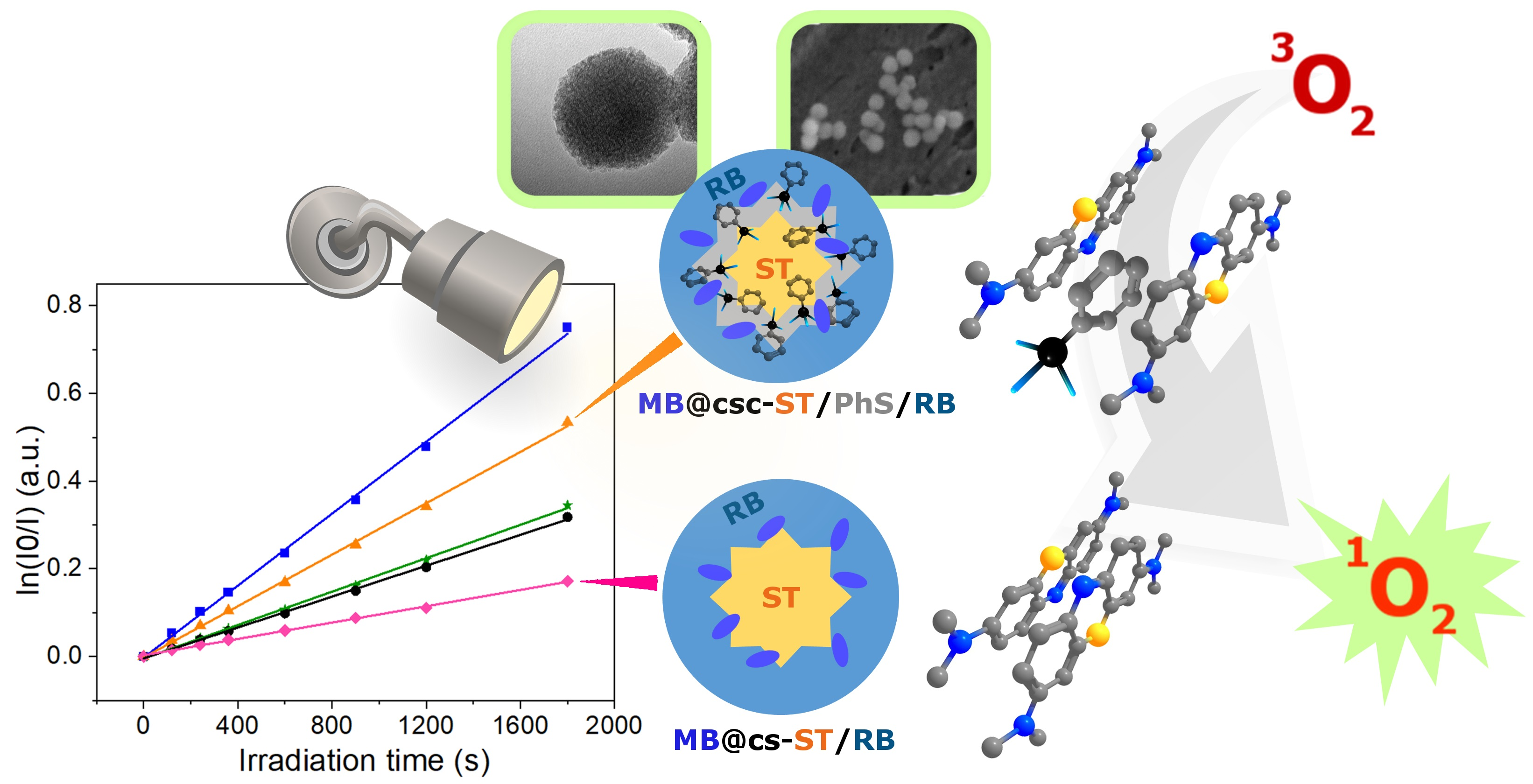

Matrix Effect on Singlet Oxygen Generation Using Methylene Blue as Photosensitizer

 , ,
, ,  ,
,  ,
,  , and
, and Abstract
Share and Cite
Xu, J.; Bonneviot, L.; Guari, Y.; Monnereau, C.; Zhang, K.; Poater, A.; Rodríguez-Pizarro, M.; Albela, B. Matrix Effect on Singlet Oxygen Generation Using Methylene Blue as Photosensitizer. Inorganics 2024, 12, 155. https://doi.org/10.3390/inorganics12060155
Xu J, Bonneviot L, Guari Y, Monnereau C, Zhang K, Poater A, Rodríguez-Pizarro M, Albela B. Matrix Effect on Singlet Oxygen Generation Using Methylene Blue as Photosensitizer. Inorganics. 2024; 12(6):155. https://doi.org/10.3390/inorganics12060155
Chicago/Turabian StyleXu, Jianan, Laurent Bonneviot, Yannick Guari, Cyrille Monnereau, Kun Zhang, Albert Poater, Montserrat Rodríguez-Pizarro, and Belén Albela. 2024. "Matrix Effect on Singlet Oxygen Generation Using Methylene Blue as Photosensitizer" Inorganics 12, no. 6: 155. https://doi.org/10.3390/inorganics12060155
APA StyleXu, J., Bonneviot, L., Guari, Y., Monnereau, C., Zhang, K., Poater, A., Rodríguez-Pizarro, M., & Albela, B. (2024). Matrix Effect on Singlet Oxygen Generation Using Methylene Blue as Photosensitizer. Inorganics, 12(6), 155. https://doi.org/10.3390/inorganics12060155