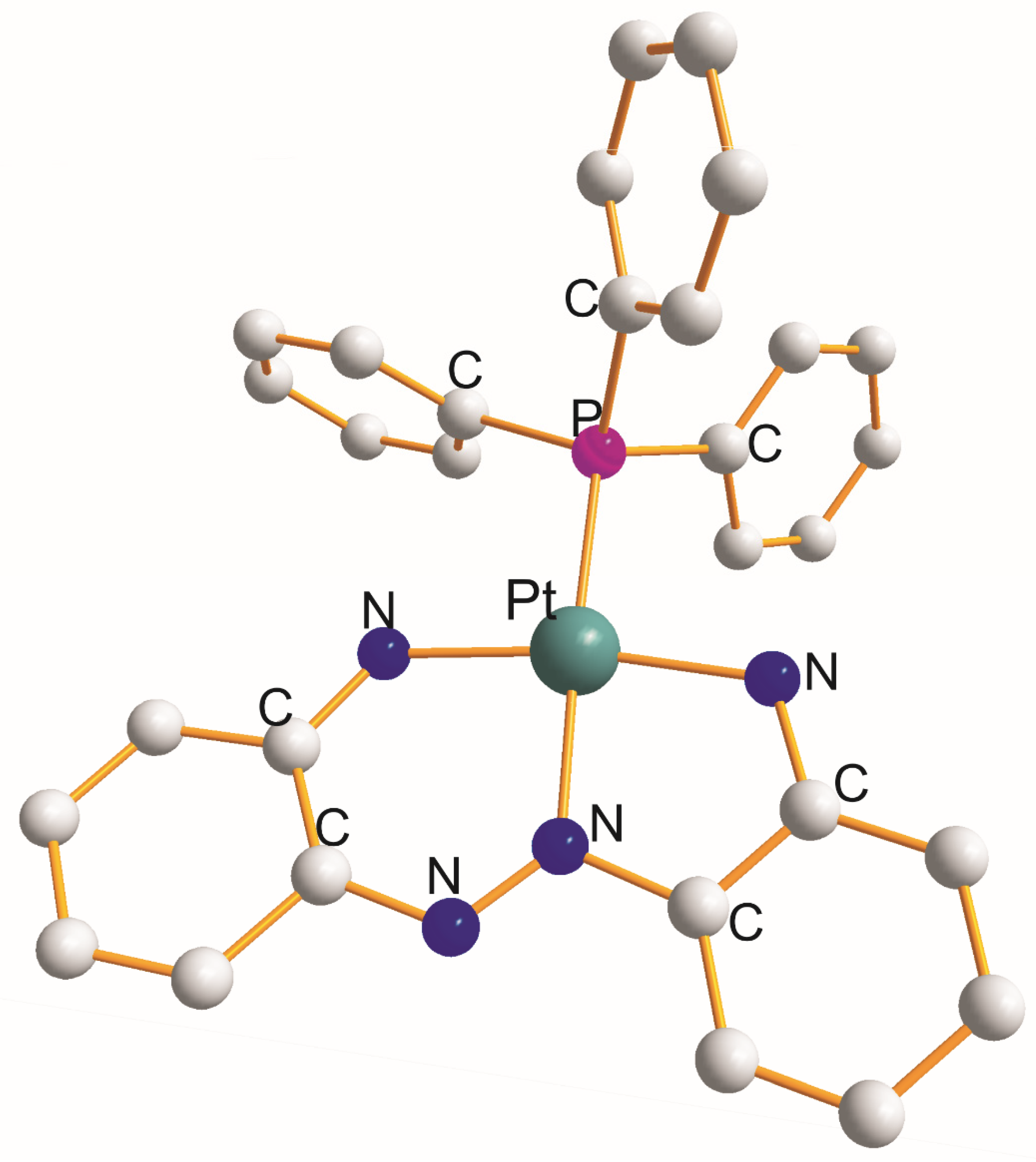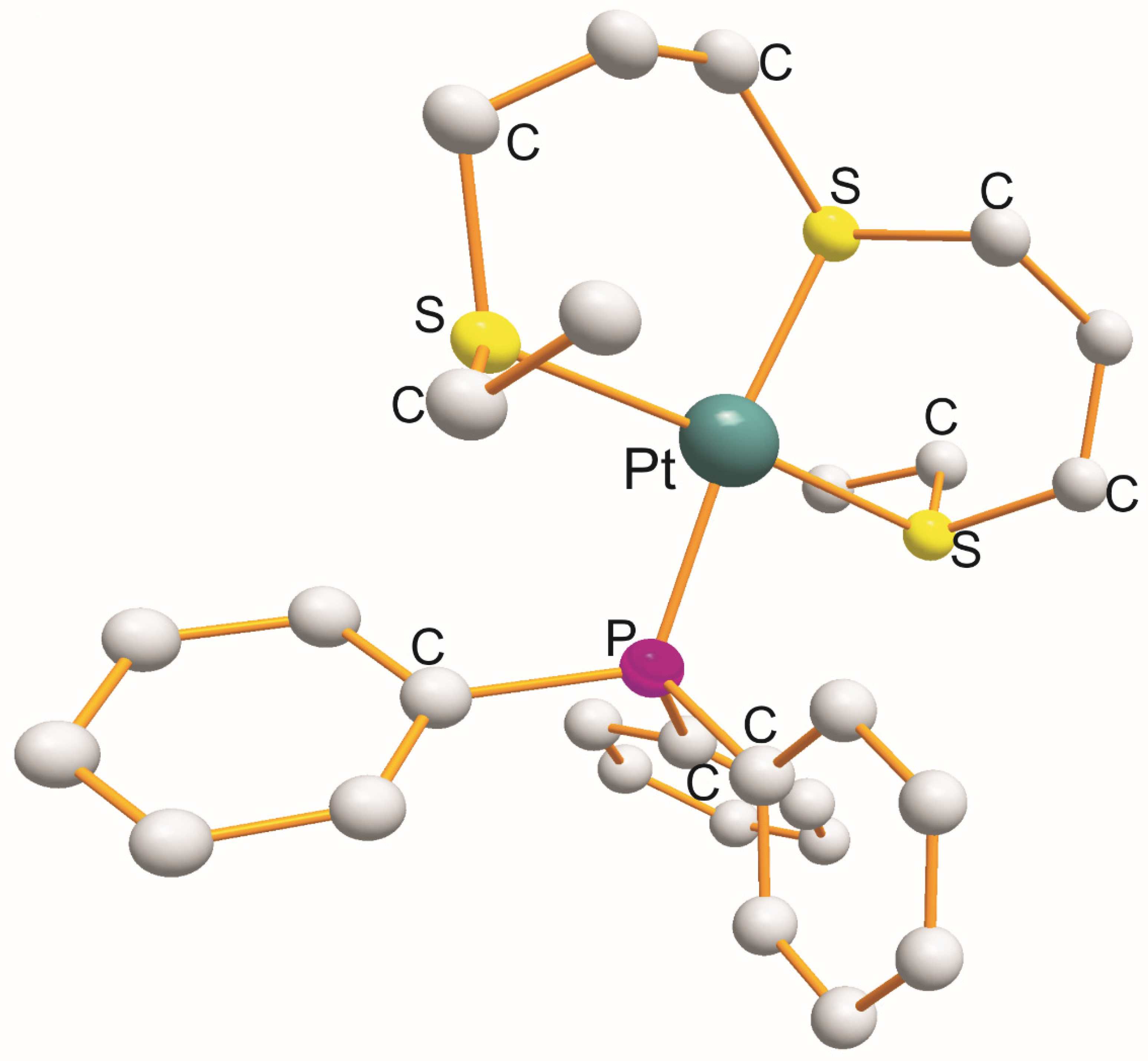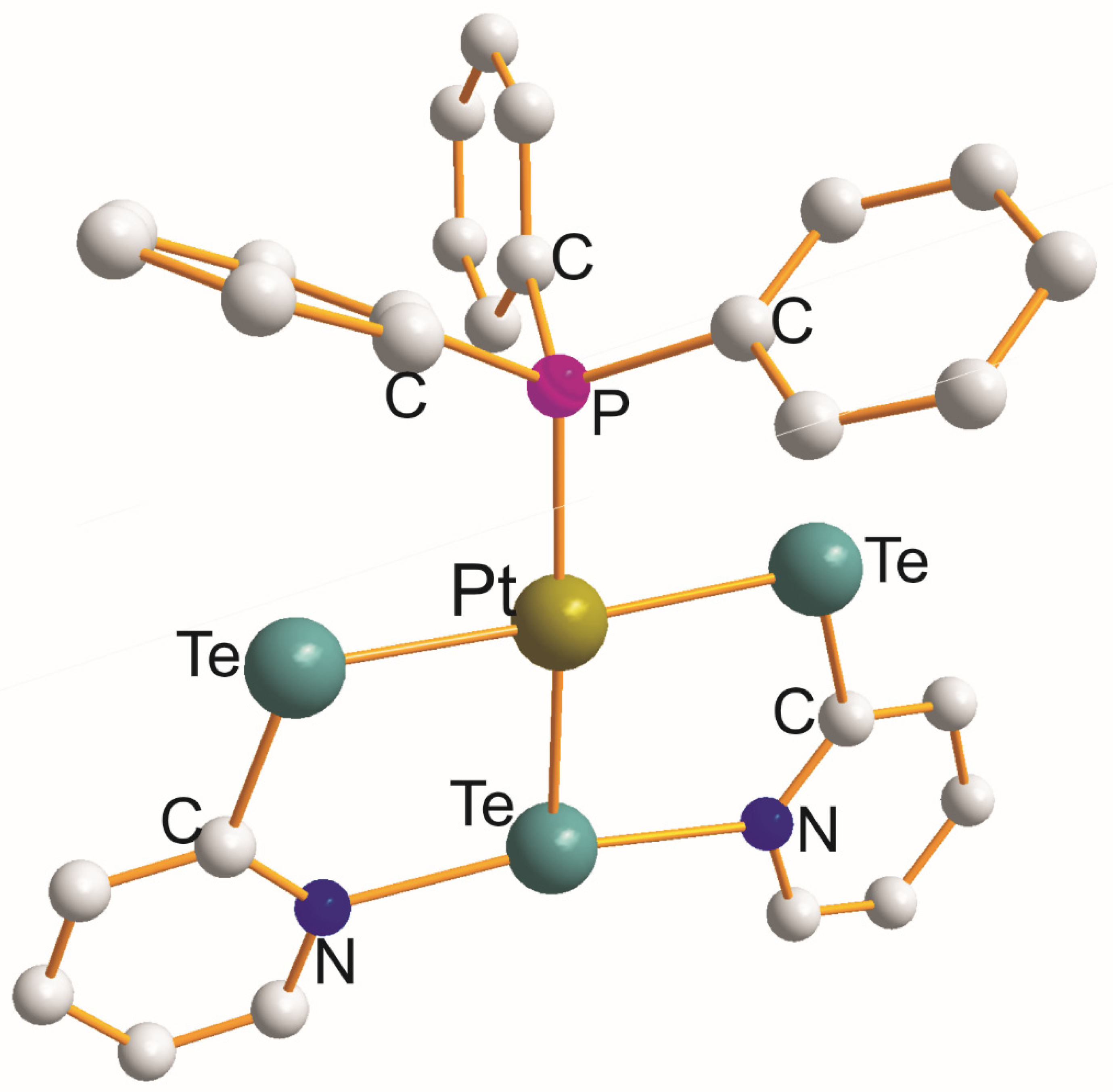


Organomonophosphines in Pt(η3-X1X2X3)(PR3), (X = N1, N2, N3; S1, S2, S3; or Te1, Te2, Te3) Derivatives: Structural Aspects



Abstract
Share and Cite
Melník, M.; Mikušová, V.; Mikuš, P. Organomonophosphines in Pt(η3-X1X2X3)(PR3), (X = N1, N2, N3; S1, S2, S3; or Te1, Te2, Te3) Derivatives: Structural Aspects. Inorganics 2023, 11, 242. https://doi.org/10.3390/inorganics11060242
Melník M, Mikušová V, Mikuš P. Organomonophosphines in Pt(η3-X1X2X3)(PR3), (X = N1, N2, N3; S1, S2, S3; or Te1, Te2, Te3) Derivatives: Structural Aspects. Inorganics. 2023; 11(6):242. https://doi.org/10.3390/inorganics11060242
Chicago/Turabian StyleMelník, Milan, Veronika Mikušová, and Peter Mikuš. 2023. "Organomonophosphines in Pt(η3-X1X2X3)(PR3), (X = N1, N2, N3; S1, S2, S3; or Te1, Te2, Te3) Derivatives: Structural Aspects" Inorganics 11, no. 6: 242. https://doi.org/10.3390/inorganics11060242
APA StyleMelník, M., Mikušová, V., & Mikuš, P. (2023). Organomonophosphines in Pt(η3-X1X2X3)(PR3), (X = N1, N2, N3; S1, S2, S3; or Te1, Te2, Te3) Derivatives: Structural Aspects. Inorganics, 11(6), 242. https://doi.org/10.3390/inorganics11060242