Article

C–H Metalation of Terpyridine Stereoisomers with Ni(II), Pd(II), and Pt(II)

Universität zu Köln, Mathematisch-Naturwissenschaftliche Fakultät, Department für Chemie, Institut für Anorganische Chemie, Greinstraße 6, D-50939 Köln, Germany
*
Author to whom correspondence should be addressed.
Inorganics 2023, 11(4), 174; https://doi.org/10.3390/inorganics11040174

Submission received: 4 April 2023 / Revised: 17 April 2023 / Accepted: 18 April 2023 / Published: 21 April 2023

Abstract

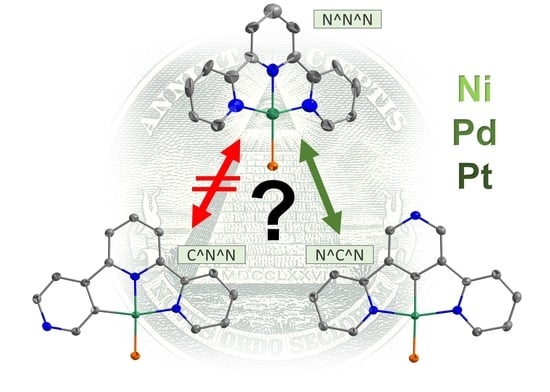
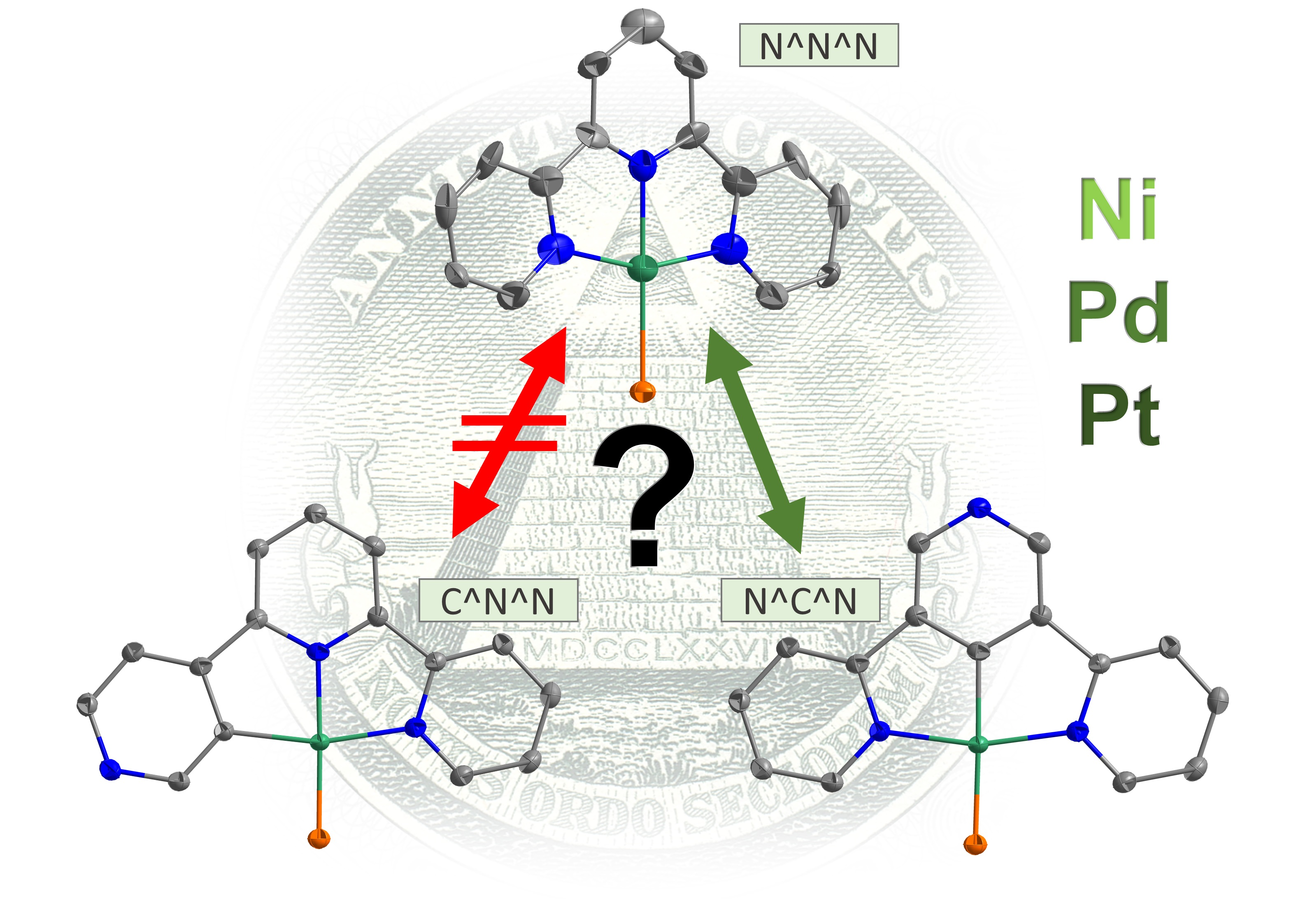
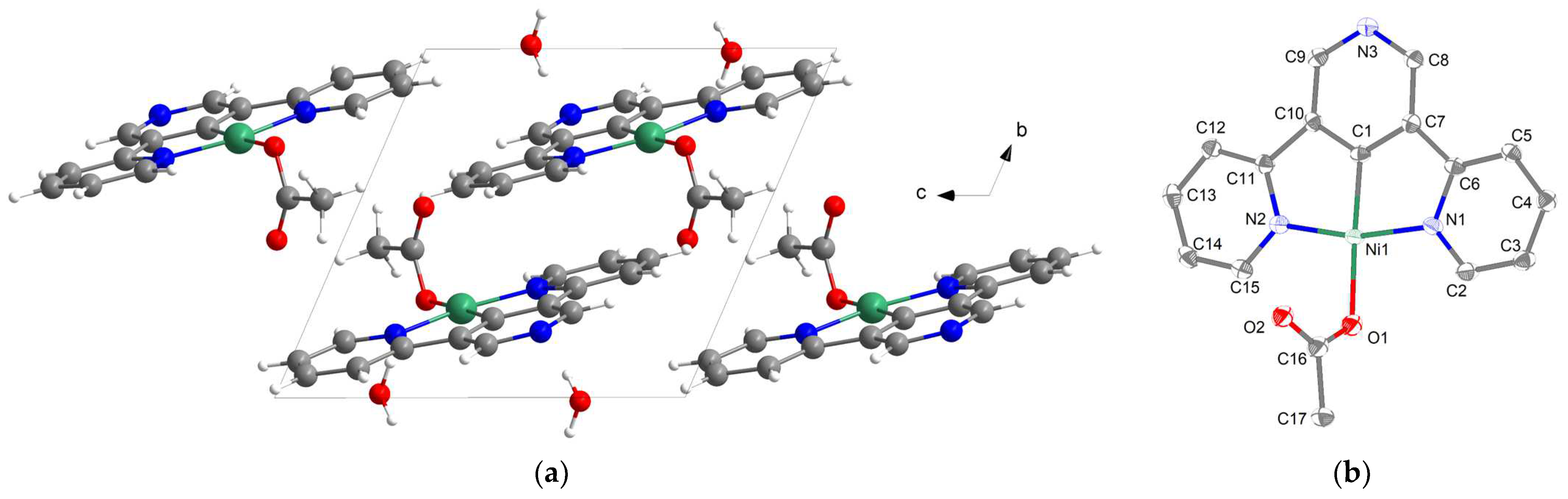
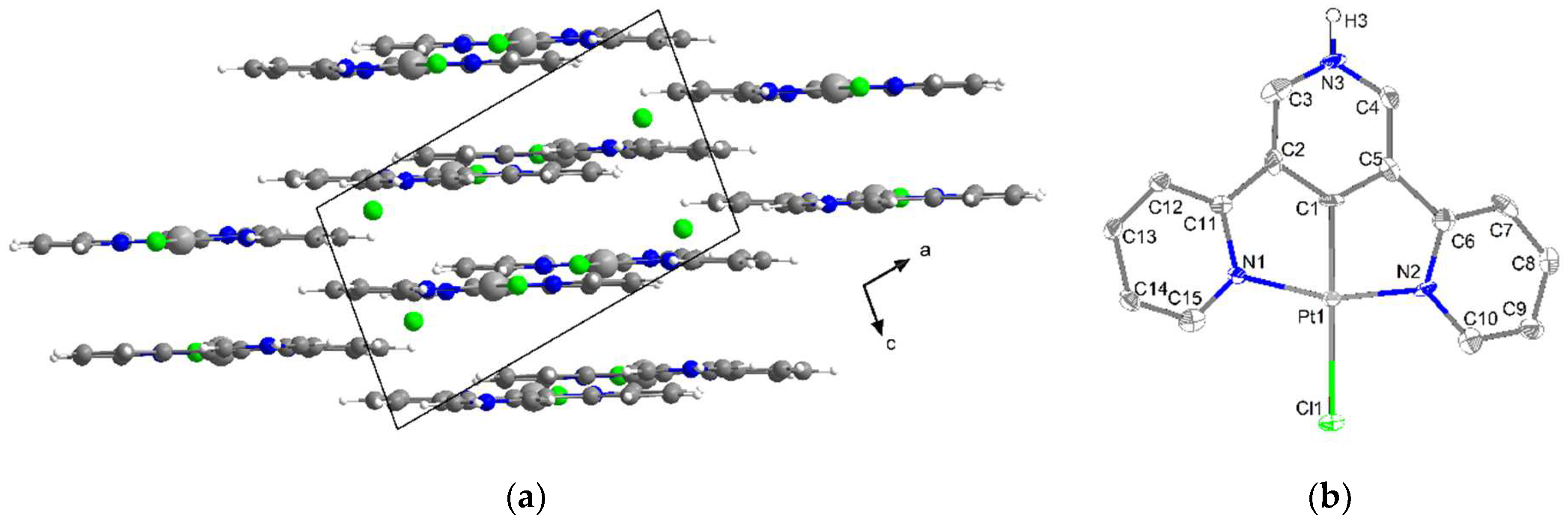
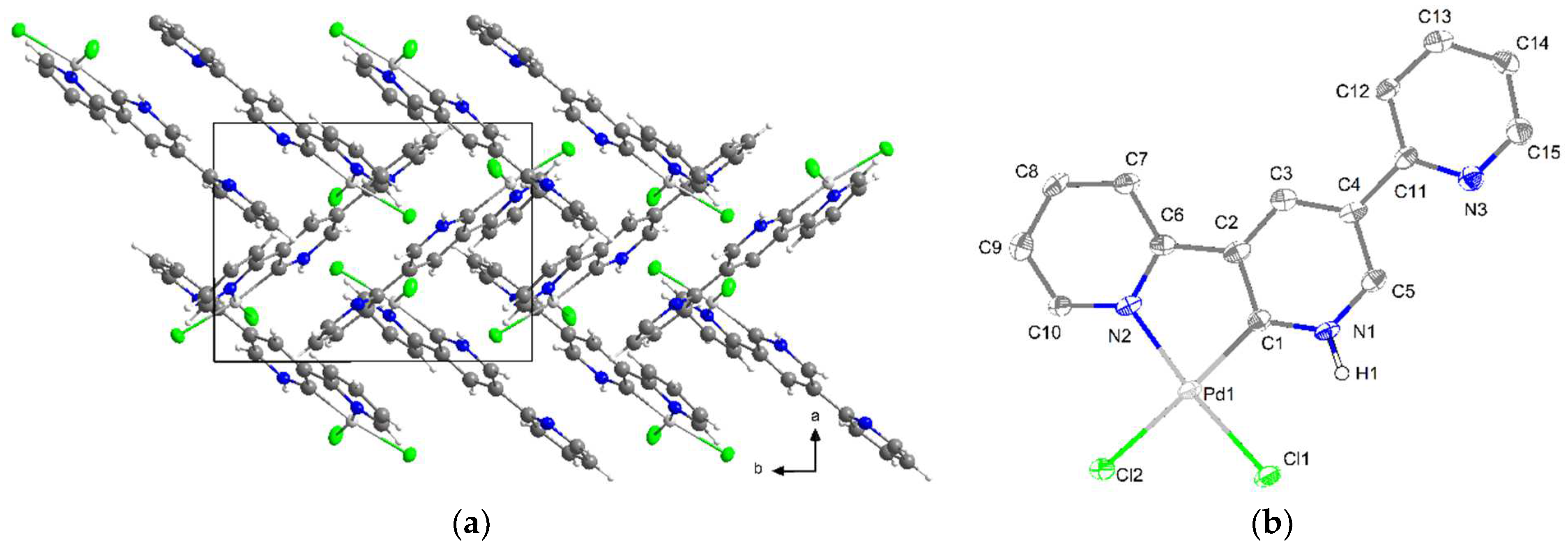
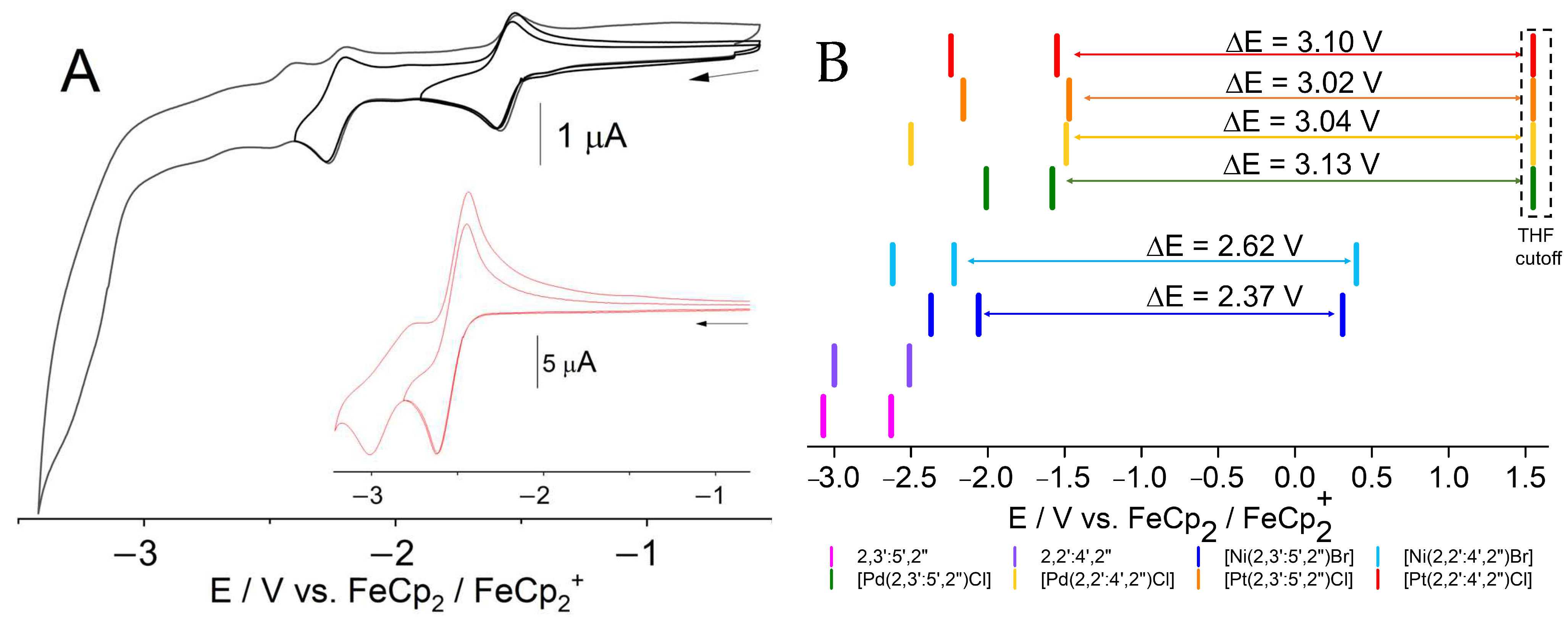
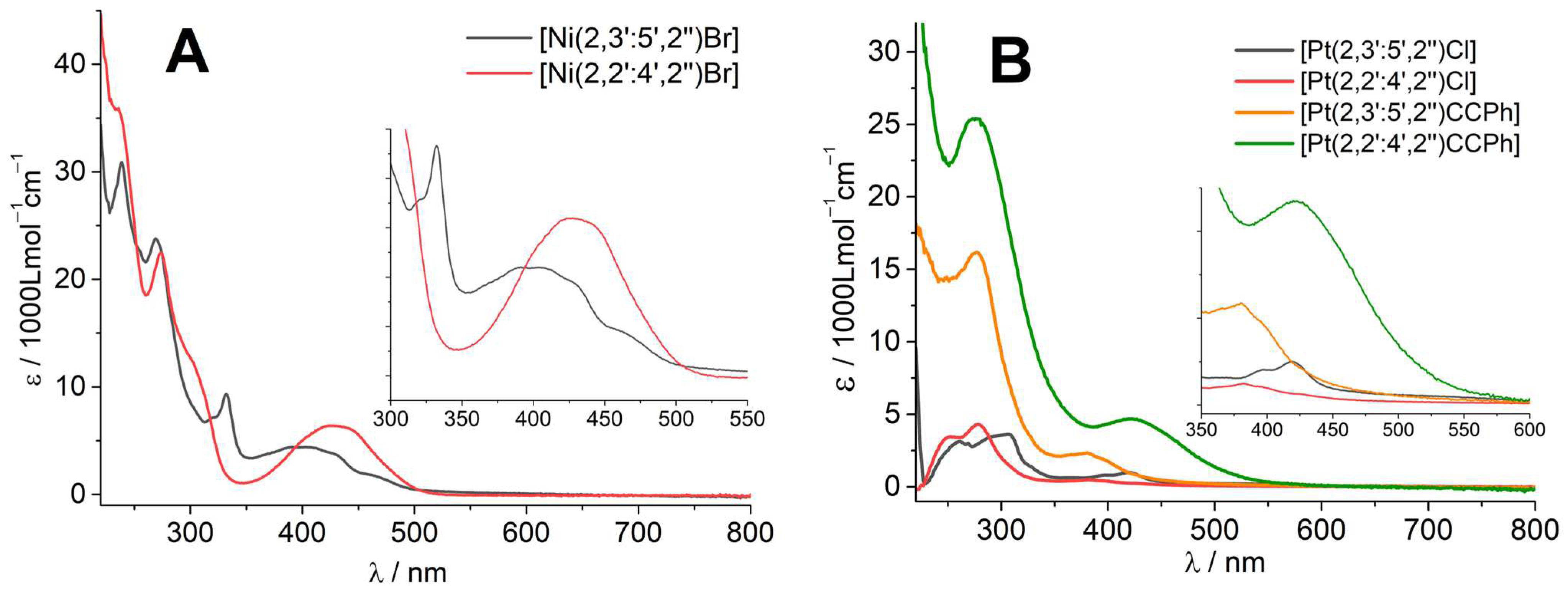
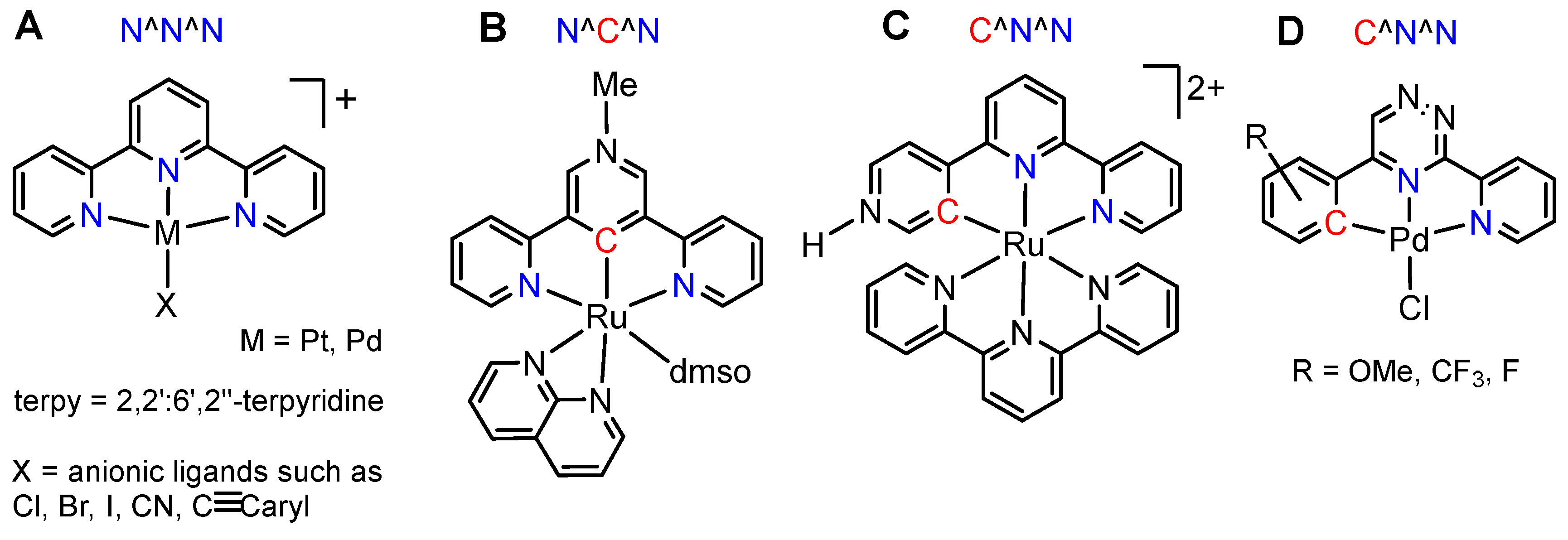
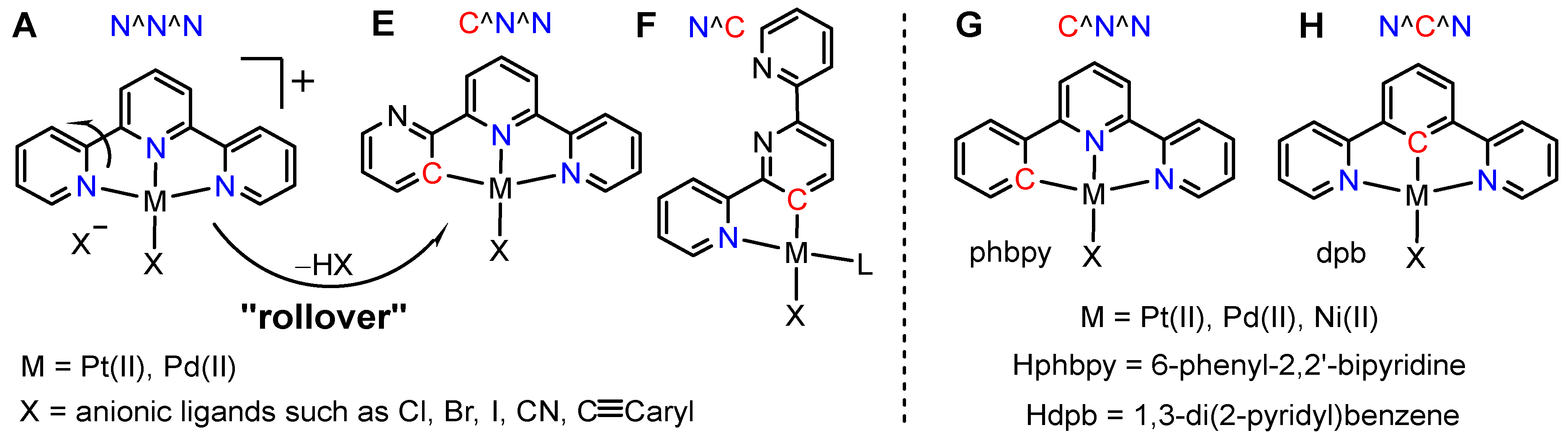
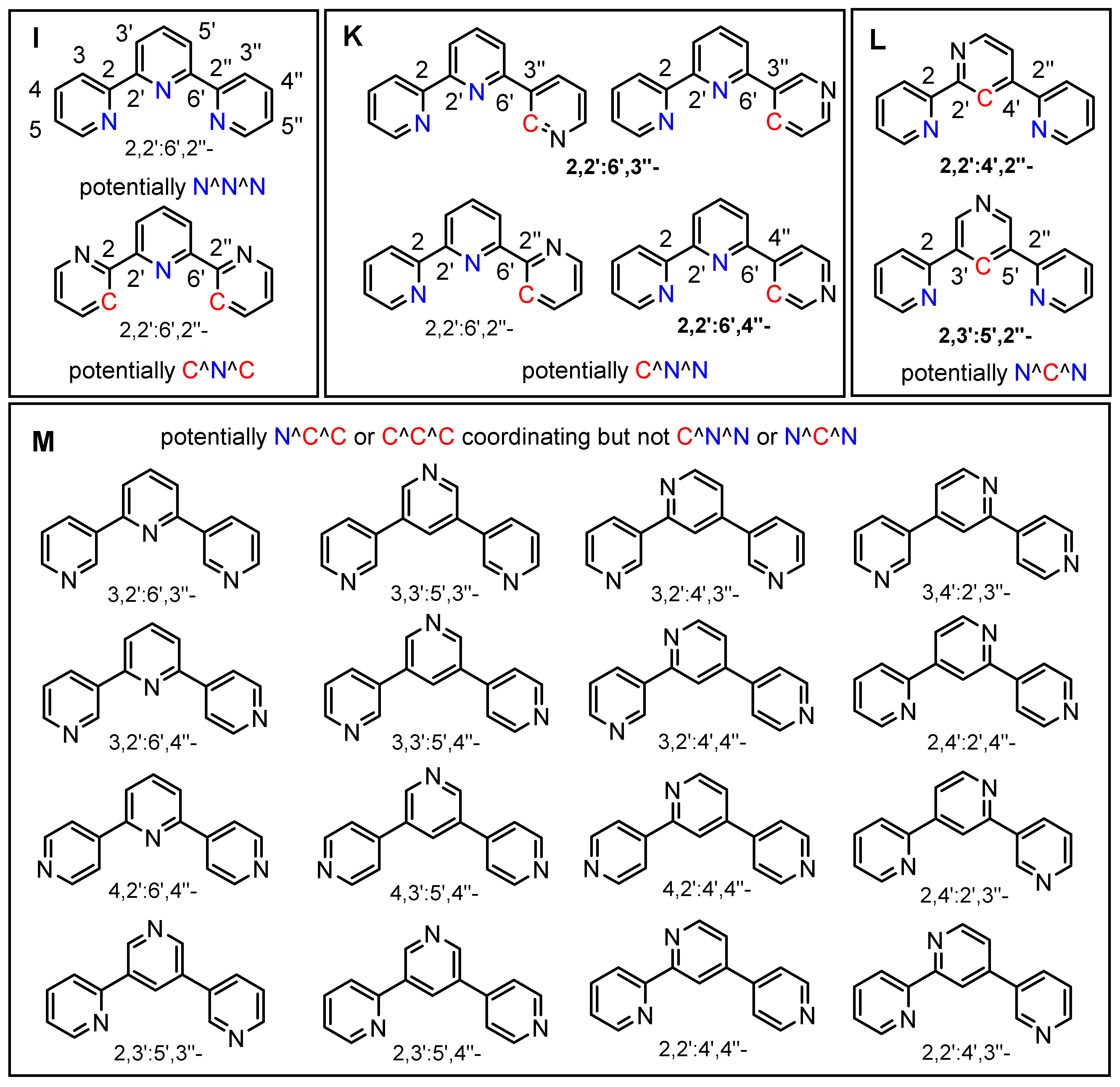
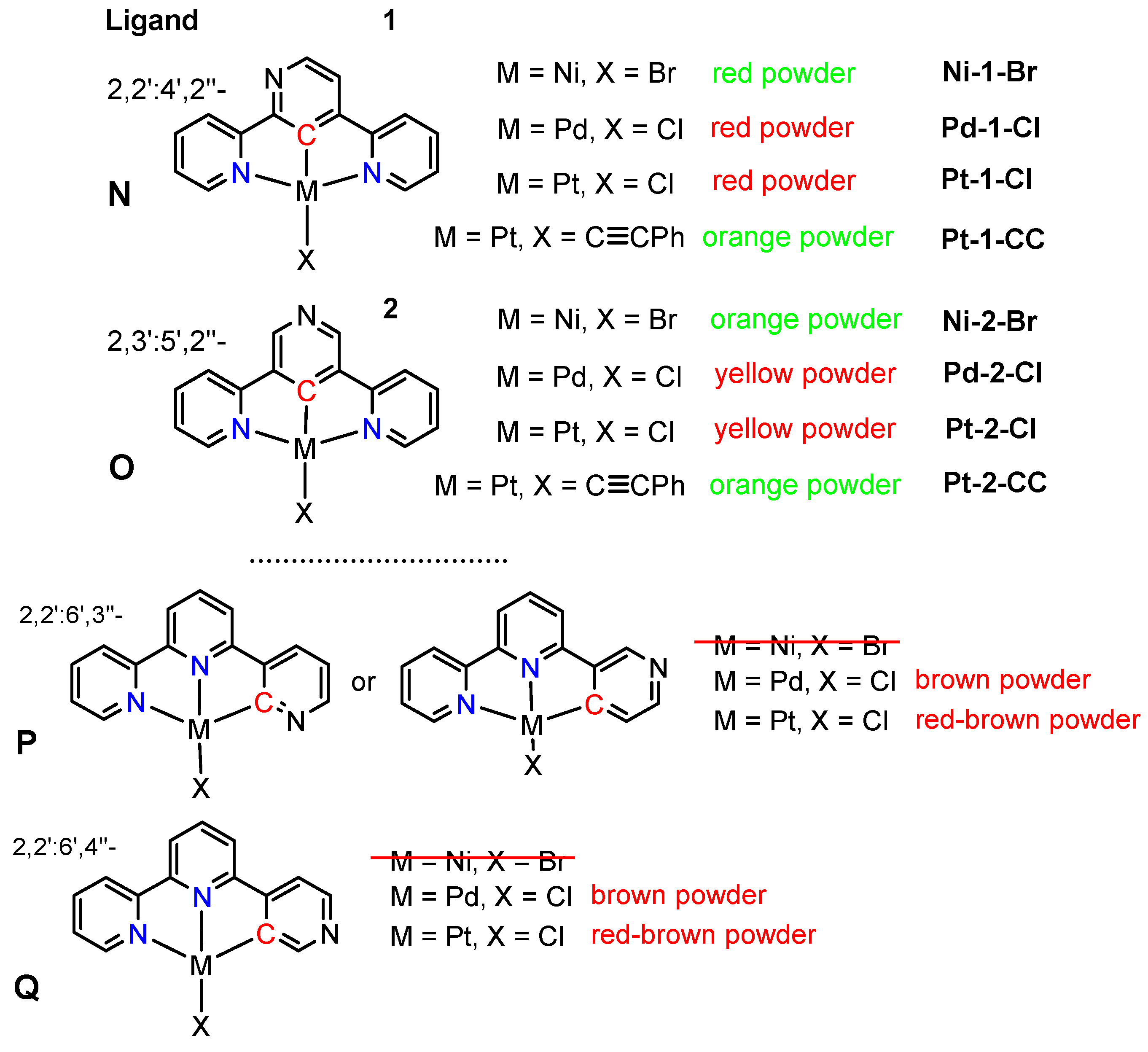
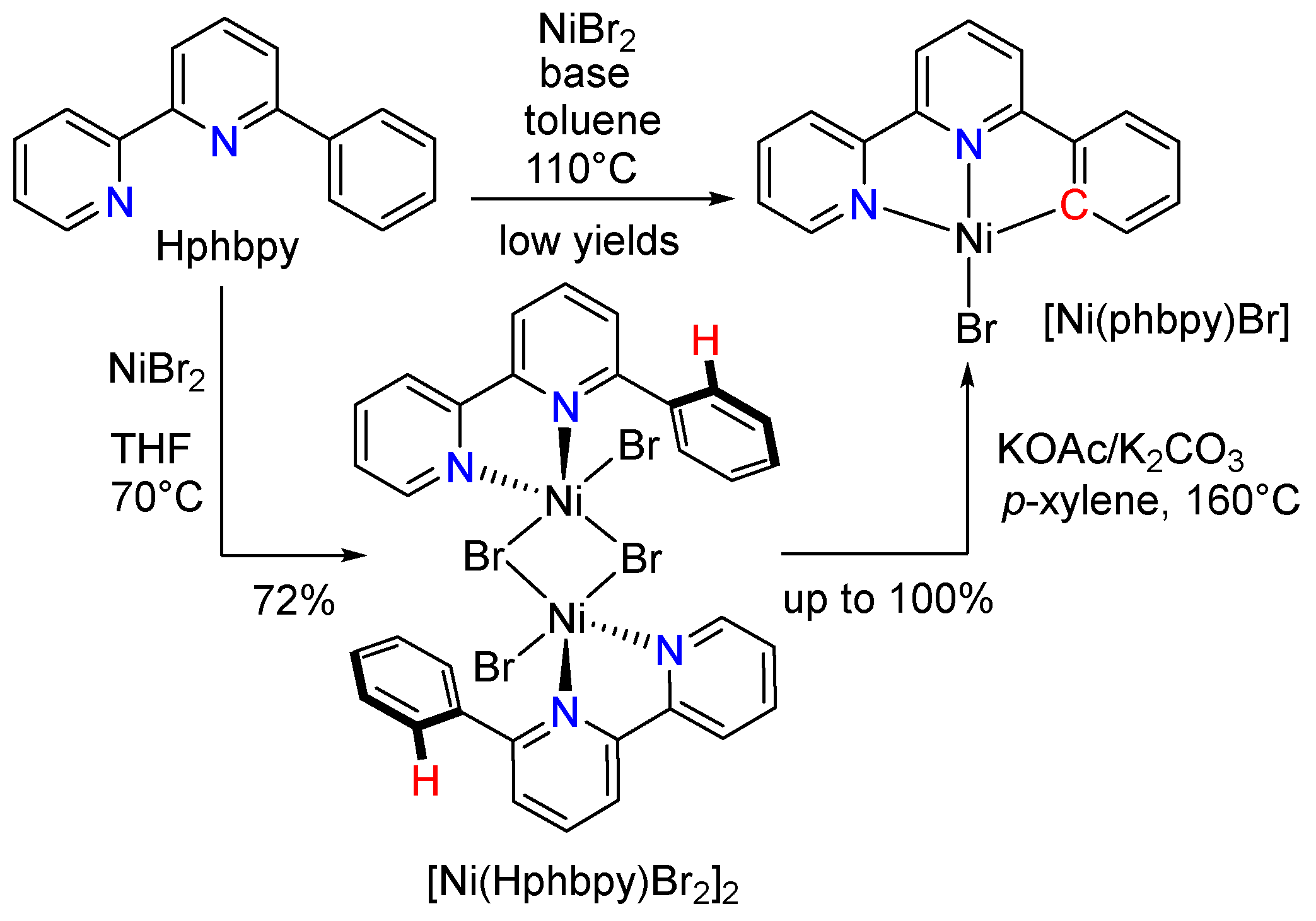
Ni(II), Pd(II), and Pt(II) complexes [M(Y-terpy)X] (X = Cl or Br) containing the tridentate N^C^N-cyclometalating 2,3′:5′,2″and 2,2′:4′,2″ stereoisomers of the well-known tridentate N^N^N ligand 2,2′:6′,2″-terpyridine (terpy) were synthesised in moderate to good yields through C–H activation. For the Pt complexes, the phenyl ethynide derivatives [Pt(Y-terpy)(C≡CPh)] were also obtained under Sonogashira conditions. In contrast to this, C^N^N cyclometalated complexes using the 2,2′:6′,3″- and 2,2′:6′4″-terpy isomers were not obtained. Comparison of the N^C^N complexes of the cyclometalated 2,3′:5′,2″- and 2,2′:4′,2″-terpy ligands with complexes [M(dpb)Cl] of the prototypical N^C^N cyclometalating ligand dpb (Hdpb = 2,6-diphenyl-pyridine) showed higher potentials for the terpy complexes for the ligand-centred reductions in line with the superior π-accepting properties of the terpy ligands compared with dpb. Metal-centred oxidations were facilitated by the dpb ligand carrying a central σ-donating phenyl group instead of a metalated pyridine moiety. The same trends were found for the long-wavelength absorptions and the derived electrochemical and optical band gaps. The lower σ-donating capacities of the cyclometalated terpy derivatives is also confirmed by a reduced trans influence in the structure of [Ni(2,3′:5′,2″-terpy)Br0.14/OAc0.86]. Attempts to re-crystallise some poorly soluble Pd(II) and Pt(II) complexes of this series under solvothermal conditions (HOAc) gave two structures with N-protonated cyclometalated pyridine moieties, [Pt(2,3′:5′,2″-terpyH)Cl].Cl and [Pd(2,3′:5′,2″-terpyH)Cl2].
Keywords: nickel; palladium; platinum; cyclometalation; C–H activation; terpyridine nickel; palladium; platinum; cyclometalation; C–H activation; terpyridine
Graphical Abstract