Article

Transfer of Orbital Angular Momentum of Light Using Autler-Townes Splitting


by
Seyyed Hossein Asadpour
1,
Hamid Reza Hamedi
2 and
Emmanuel Paspalakis
3,*
1
School of Physics, Institute for Research in Fundamental Sciences (IPM), Tehran P.O. Box 19395-5531, Iran
2
Institute of Theoretical Physics and Astronomy, Vilnius University, Saulėtekio 3, LT-10257 Vilnius, Lithuania
3
Materials Science Department, School of Natural Sciences, University of Patras, 26504 Patras, Greece
*
Author to whom correspondence should be addressed.
Photonics 2022, 9(12), 954; https://doi.org/10.3390/photonics9120954

Submission received: 10 November 2022 / Revised: 28 November 2022 / Accepted: 29 November 2022 / Published: 9 December 2022
(This article belongs to the Special Issue Light Control and Particle Manipulation)

Abstract

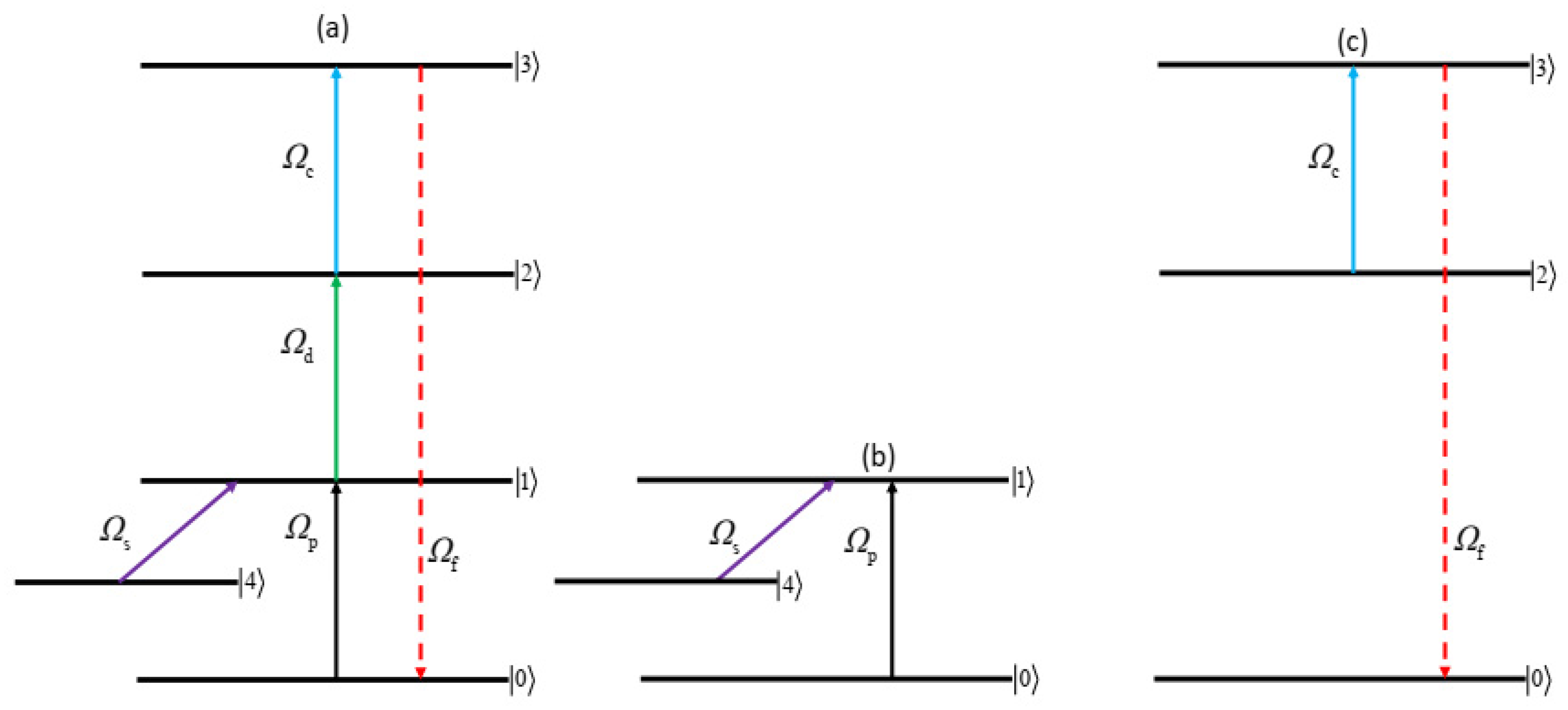
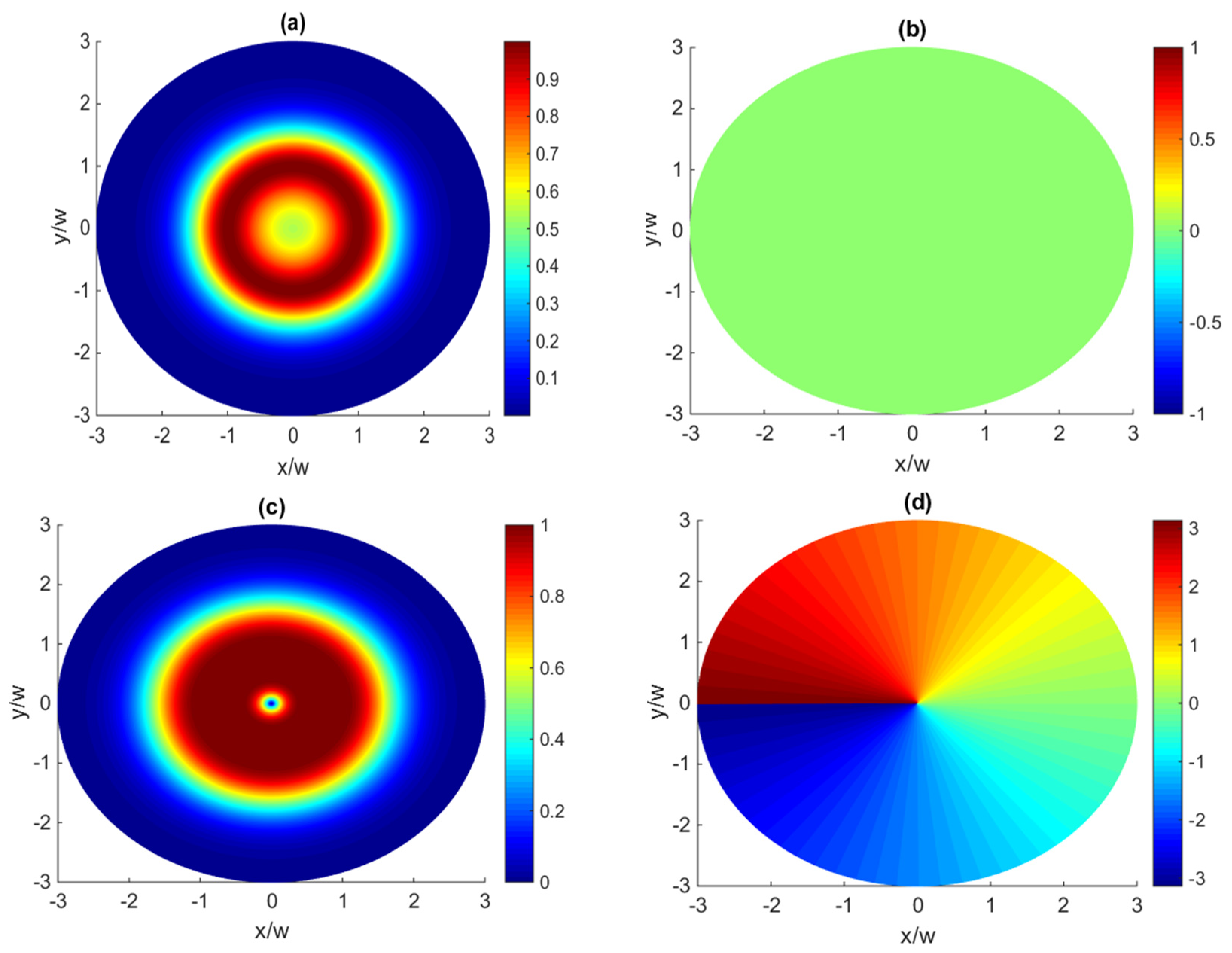
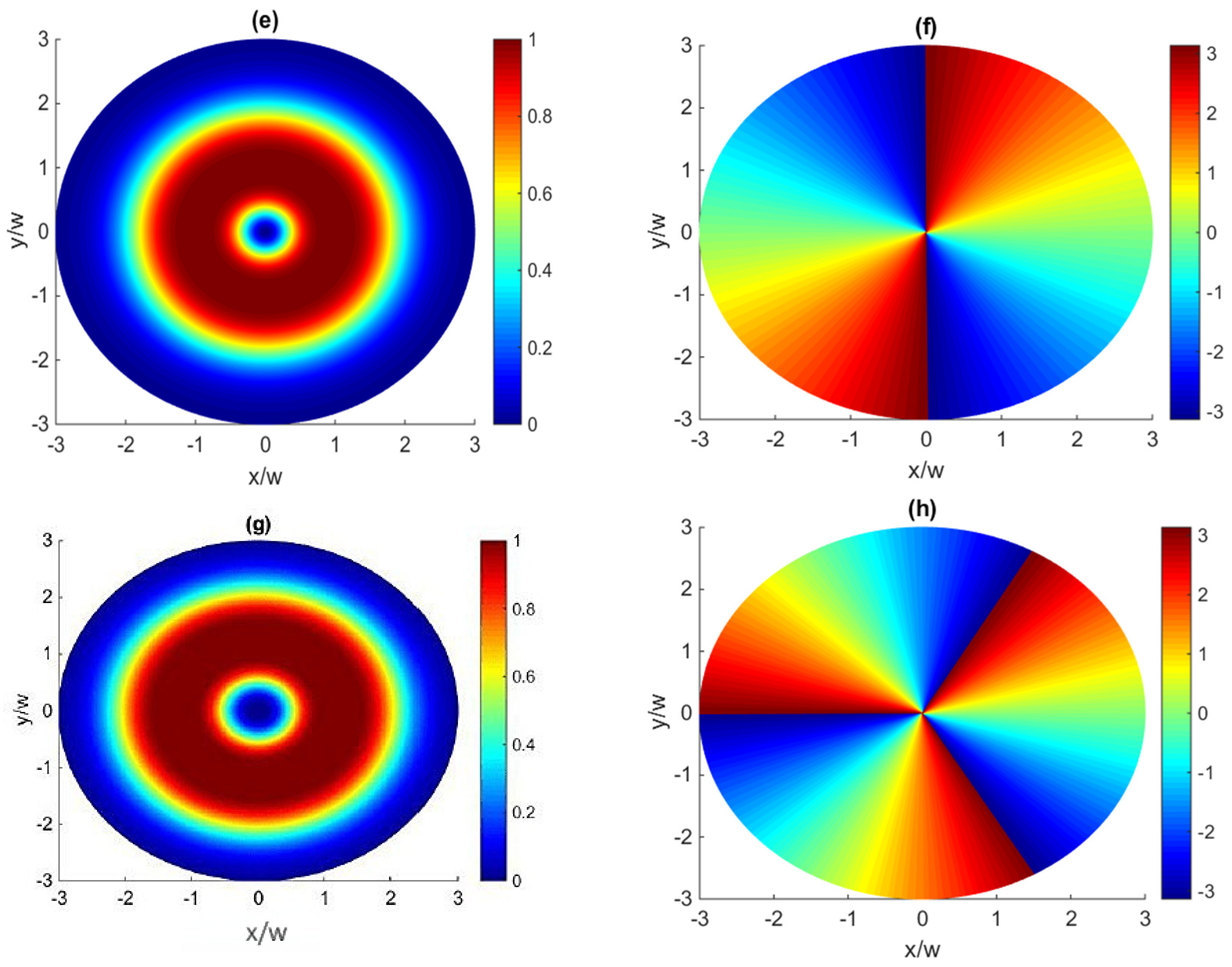
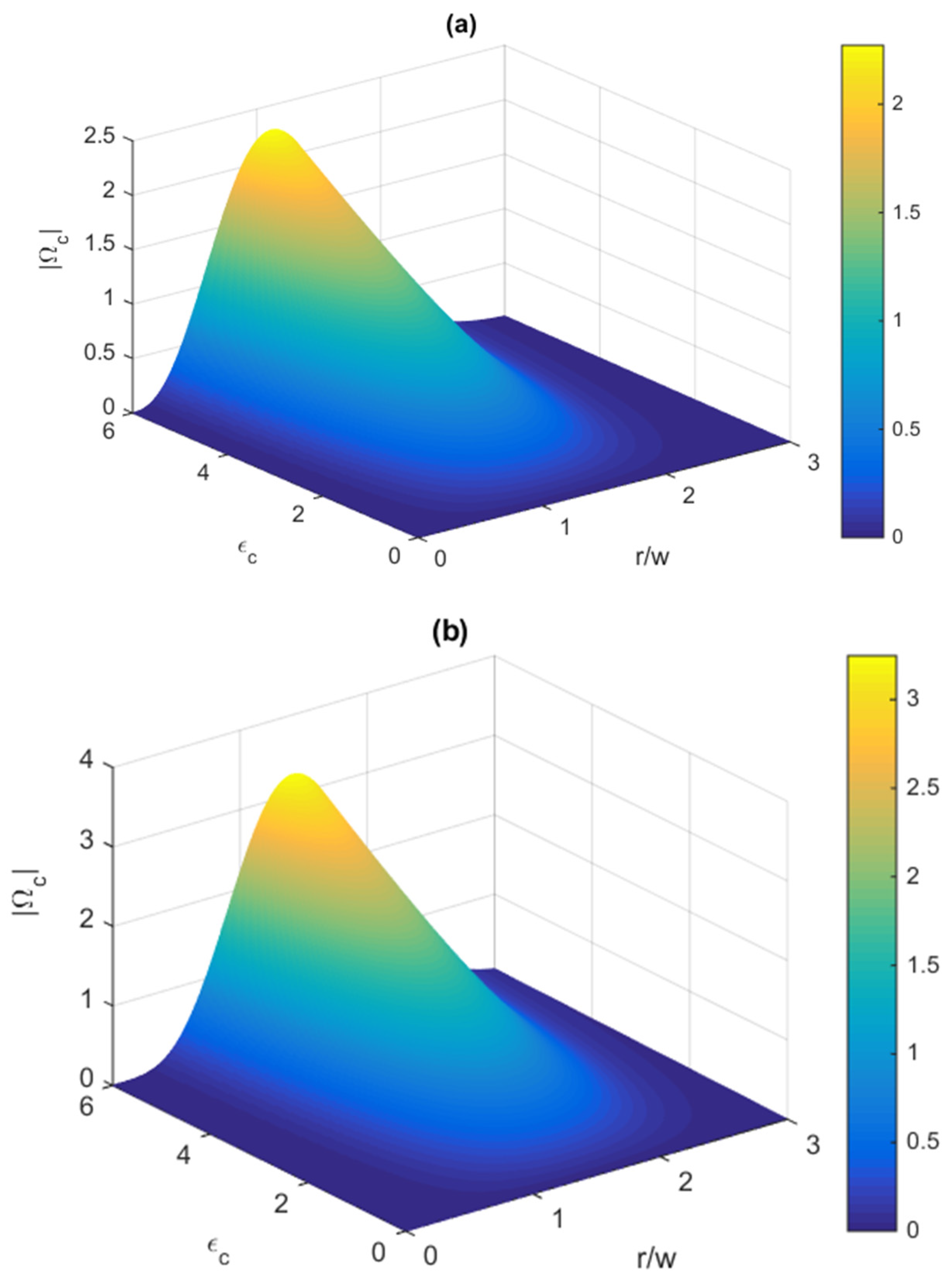
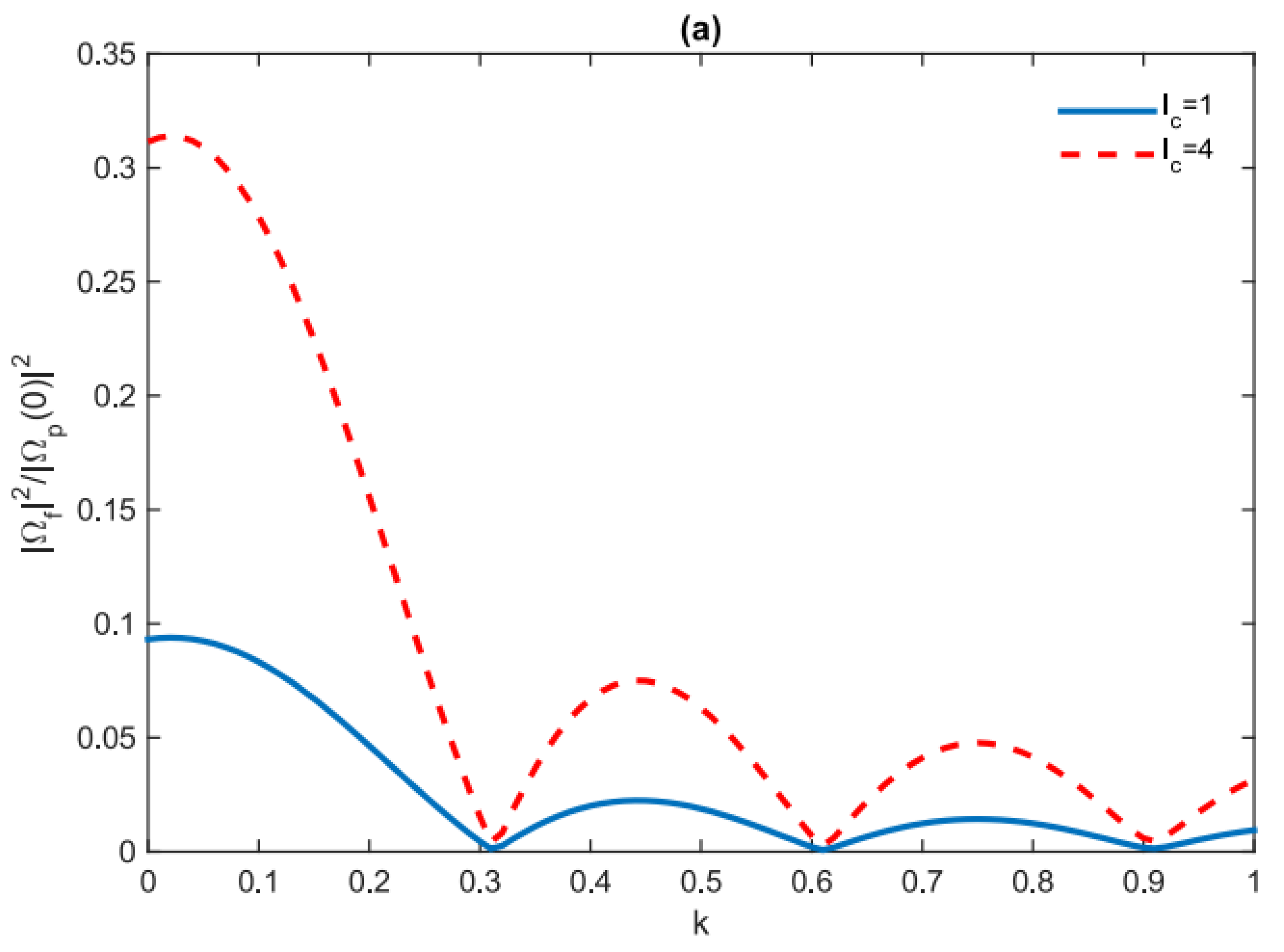
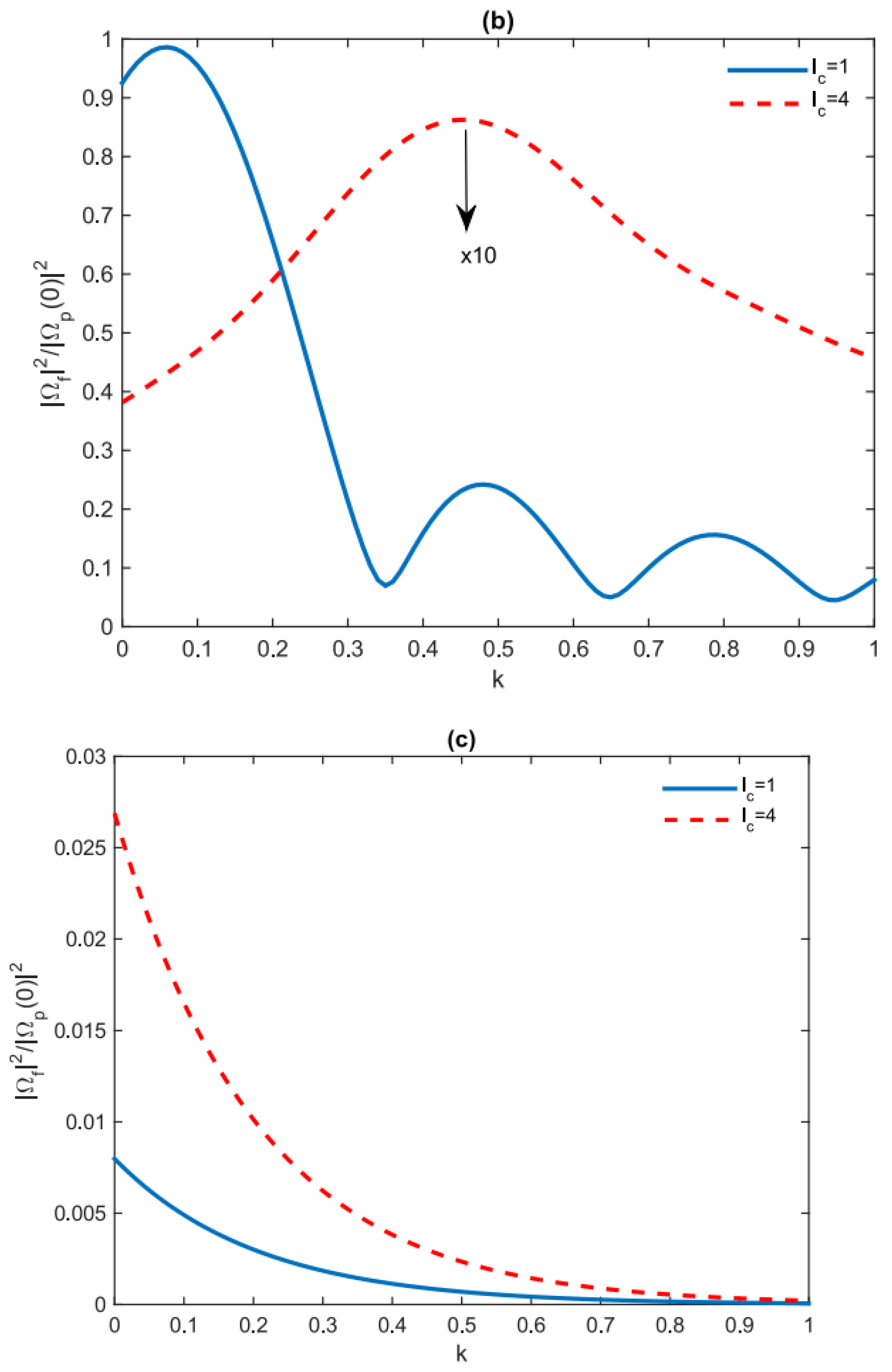
We propose a scheme to exchange optical vortices beyond electromagnetically induced transparency (EIT) but based on four-wave mixing (FWM) in a five-level atomic system consisting of two Λ subsystems linked via a weak driving field. When the laser fields are strong enough, the quantum interference responsible for the EIT in each Λ subsystem is washed out, giving rise to the Autler-Townes splitting (ATS). When only one of the control fields carries an optical vortex, it is shown that the generated FWM field obtains the vorticity of the vortex control. We distinguish between three different regimes, i.e., a pure EIT, a joint EIT-ATS, and a dual-ATS, where the optical angular momentum (OAM) translation can take place. Elaborating on the distinction between three regimes through numerical analysis, we find that the maximum energy conversion efficiency is obtained in the joint EIT-ATS and dual-ATS regimes. The latter is more favorable as the absorption losses vanish as the beam propagates into the atomic cloud. The results may find applications in the implementation of high-efficient frequency and OAM conversion devices for quantum information processing.
Keywords: orbital angular momentum; electromagnetically induced transparency; autler-townes splitting; four-wave mixing orbital angular momentum; electromagnetically induced transparency; autler-townes splitting; four-wave mixing