Article

Crosstalk Reduction in Voxels for a See-Through Holographic Waveguide by Using Integral Imaging with Compensated Elemental Images

Korea Electronics Technology Institute, World Cup buk-ro 54-gil, Mapo-gu, Seoul 03924, Korea
*
Author to whom correspondence should be addressed.
Photonics 2021, 8(6), 217; https://doi.org/10.3390/photonics8060217

Submission received: 22 April 2021 / Revised: 27 May 2021 / Accepted: 6 June 2021 / Published: 11 June 2021
(This article belongs to the Special Issue Materials, Methods and Models for Holographic Optical Elements)

Abstract

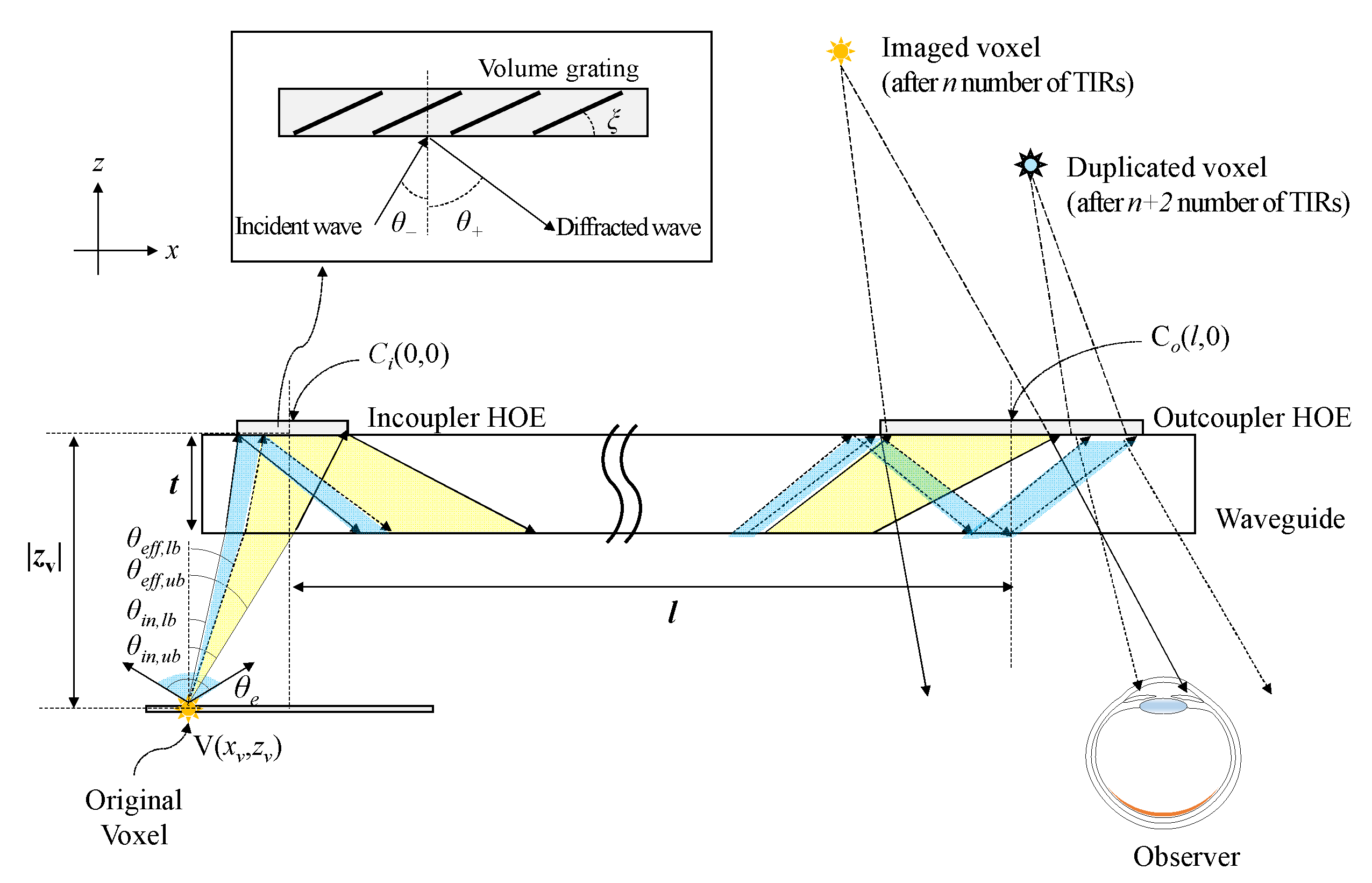
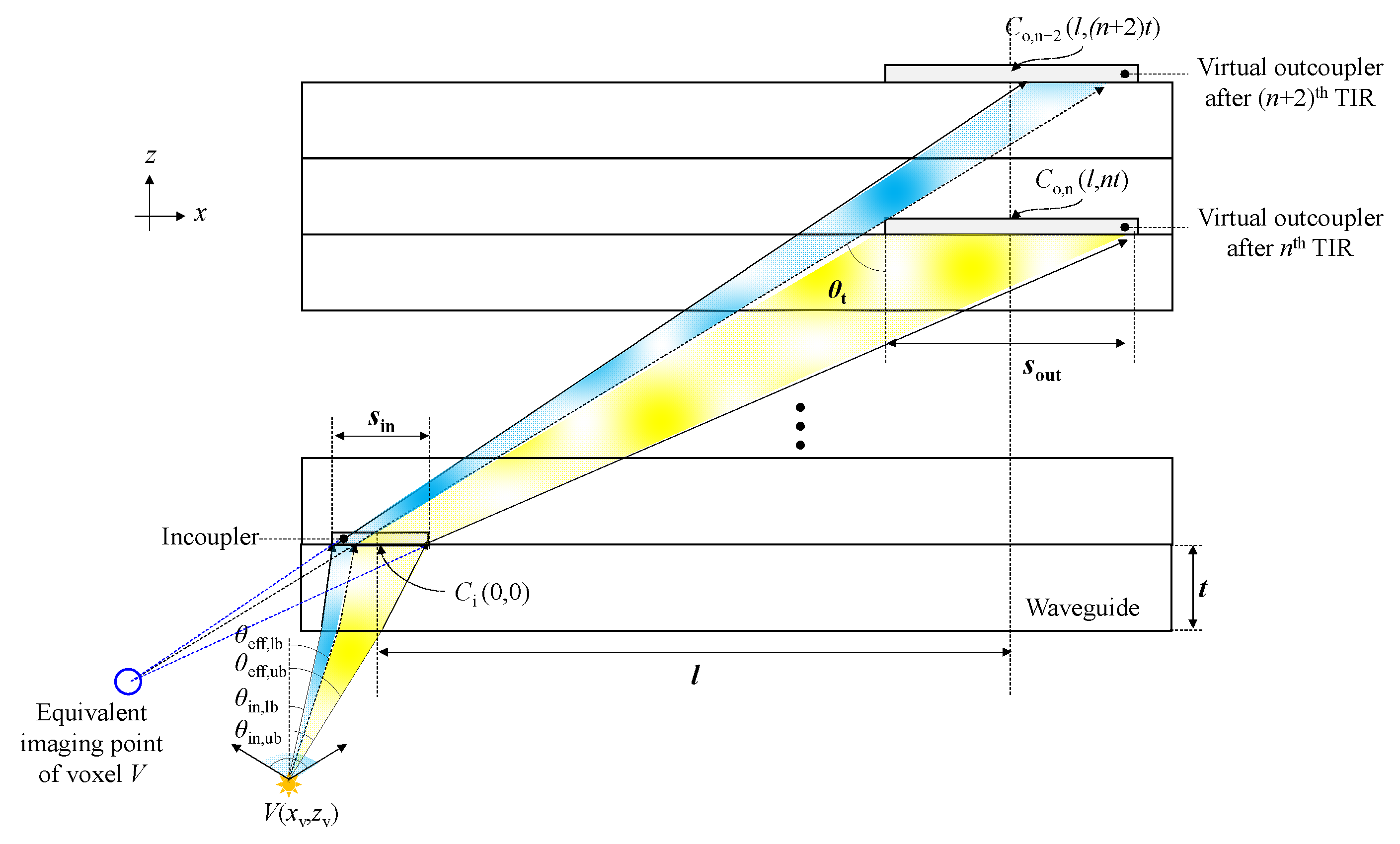
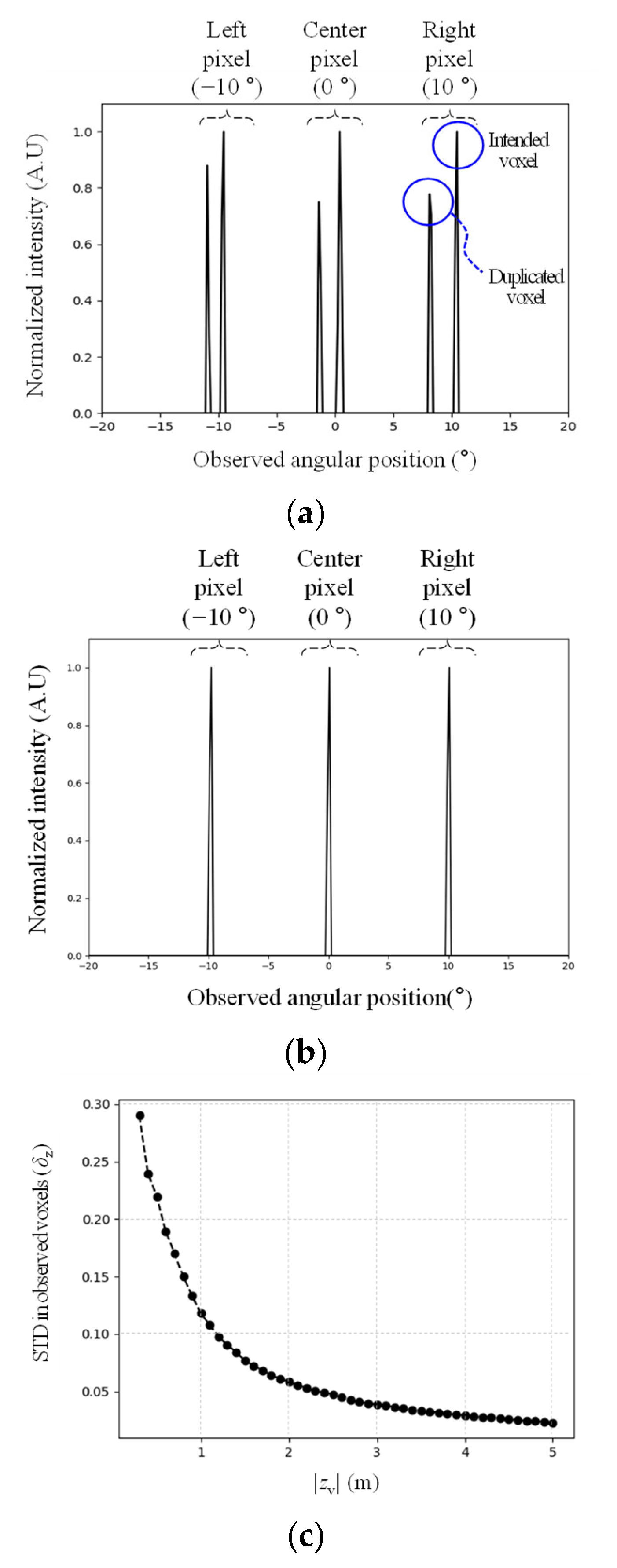
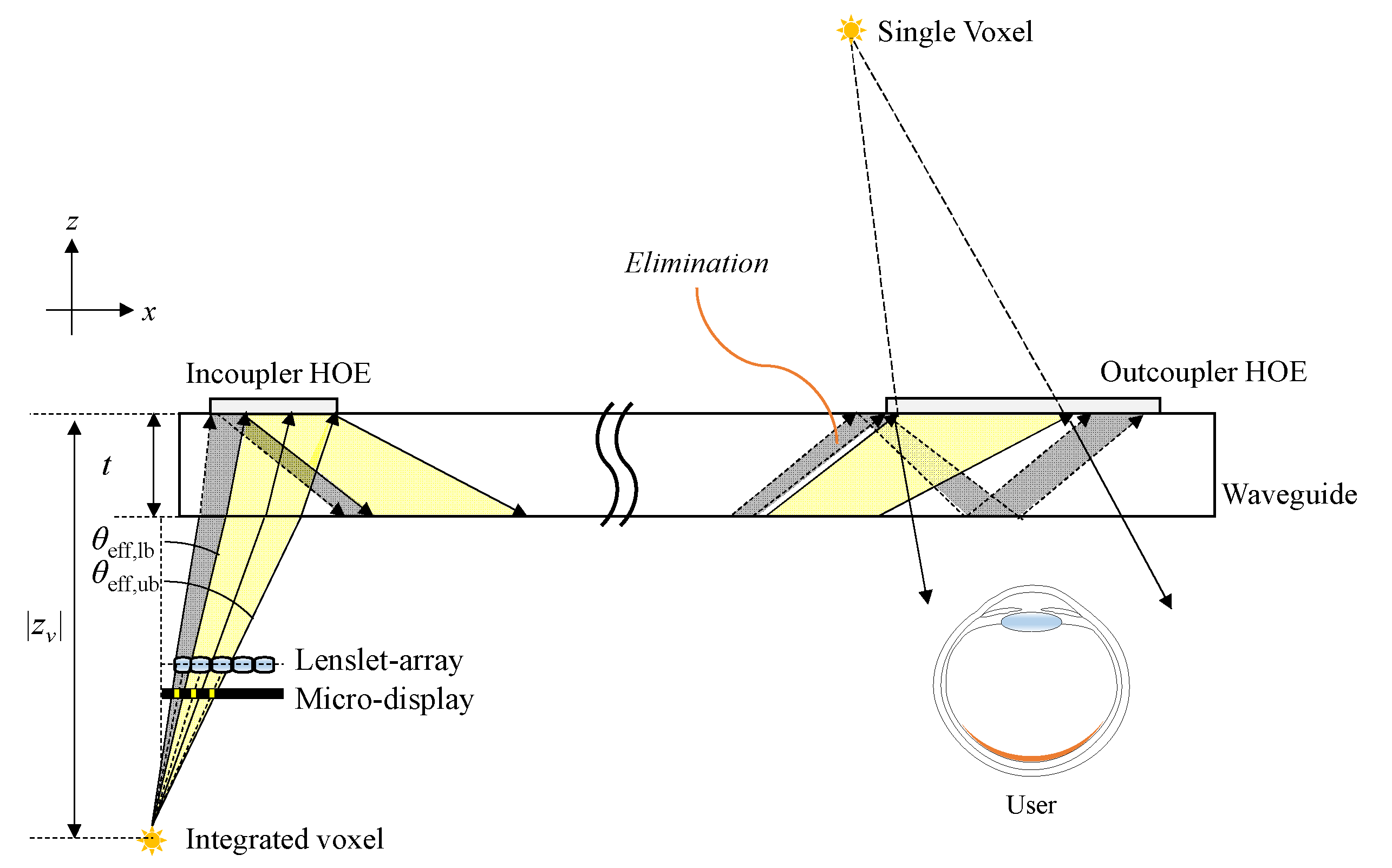
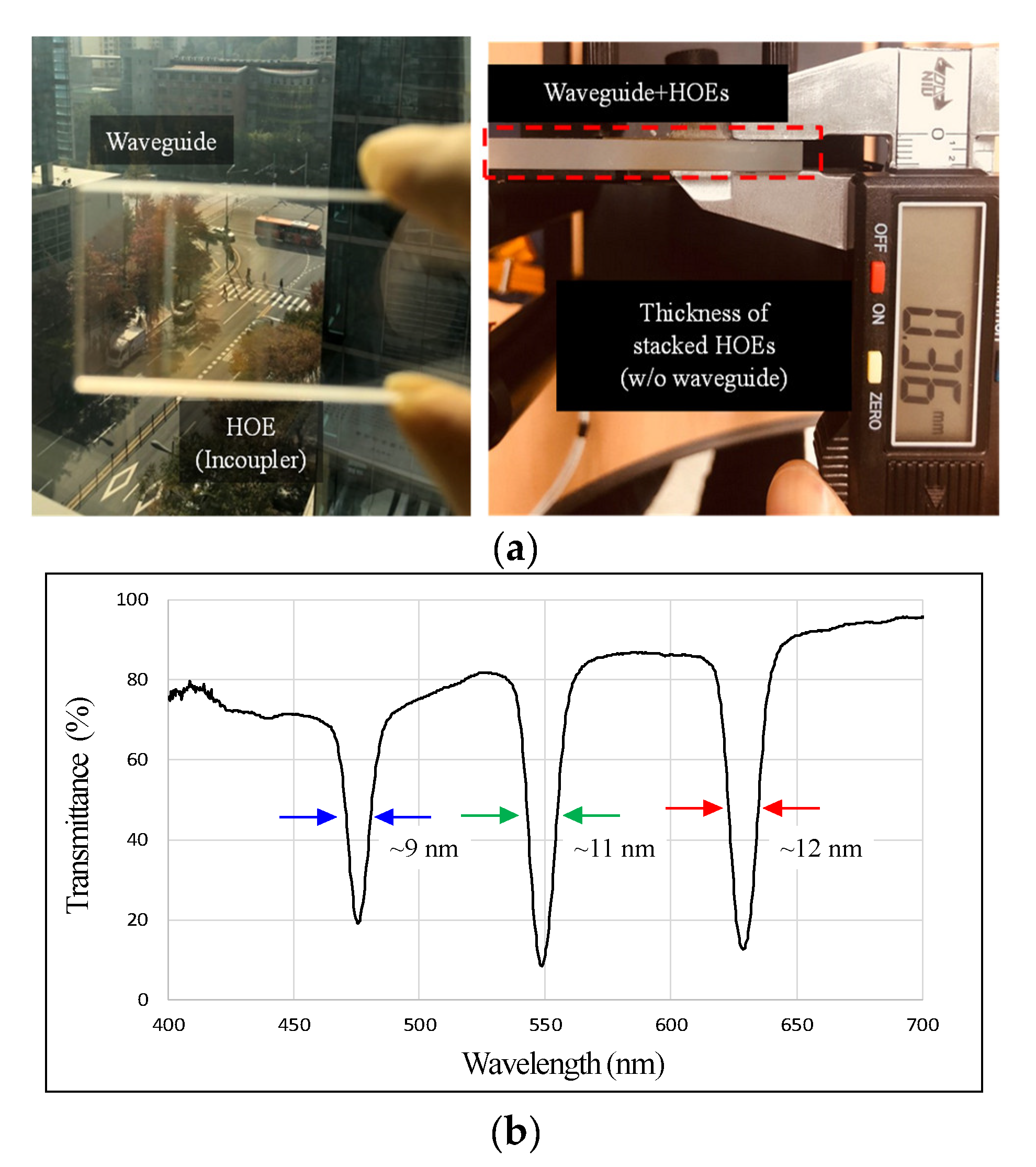
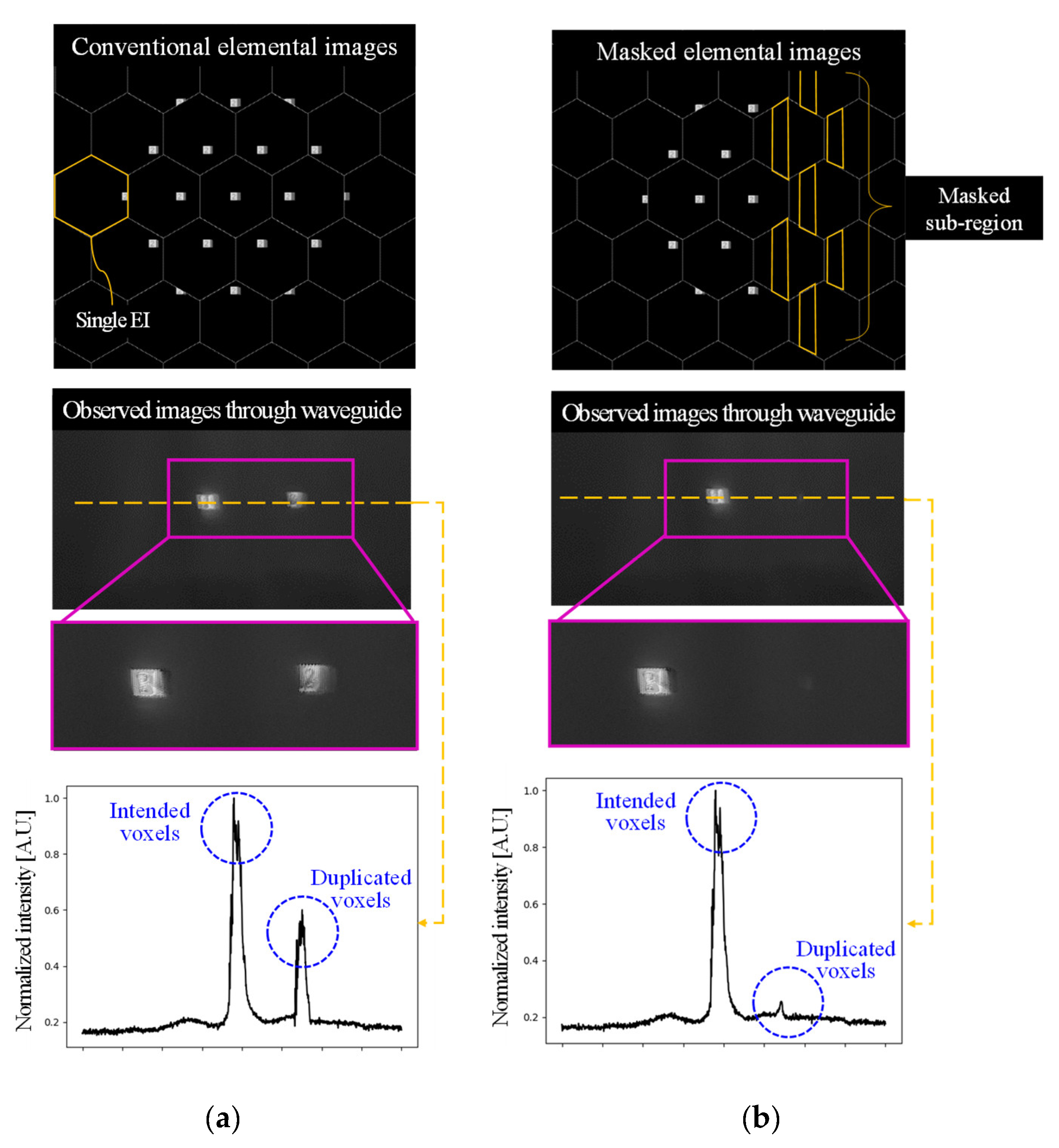
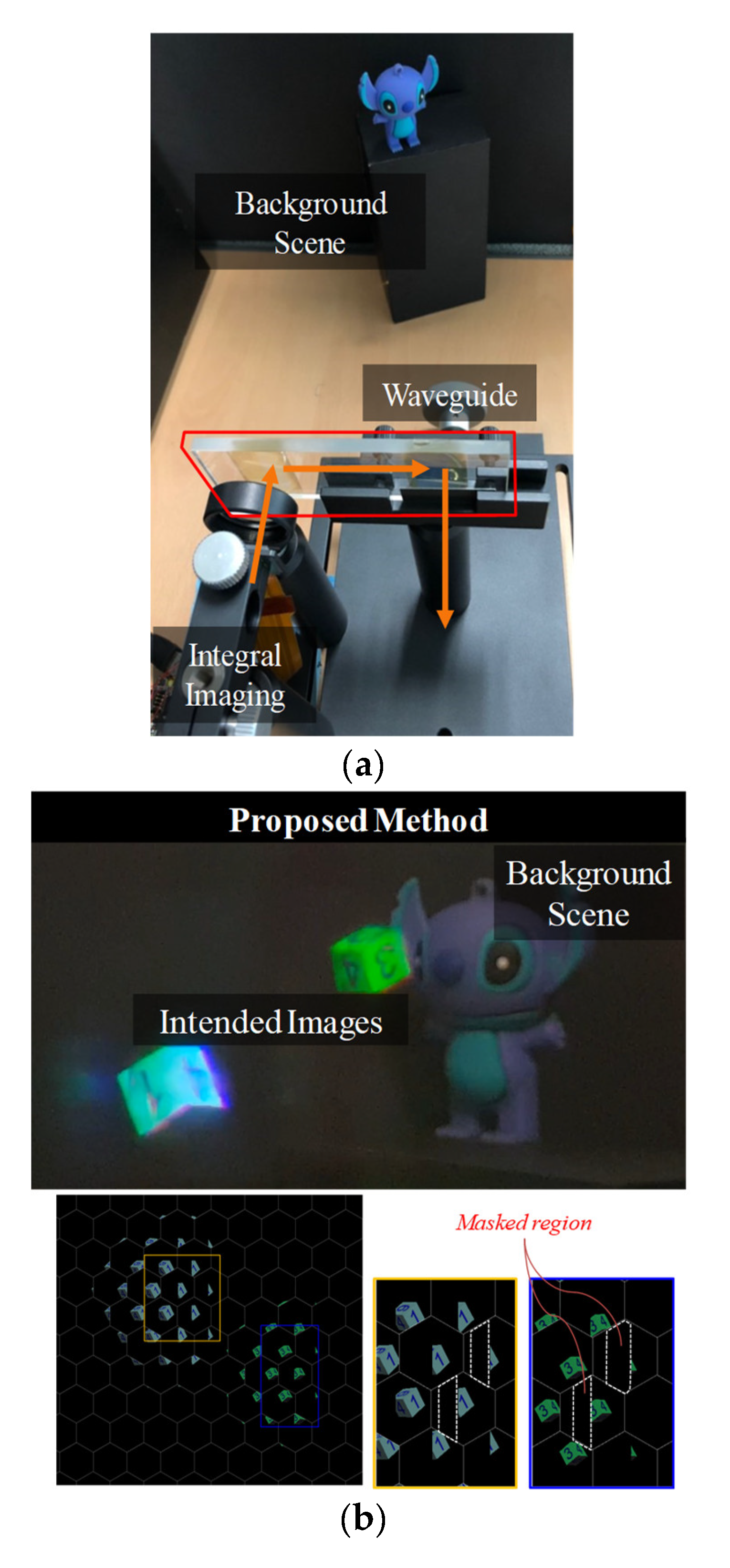
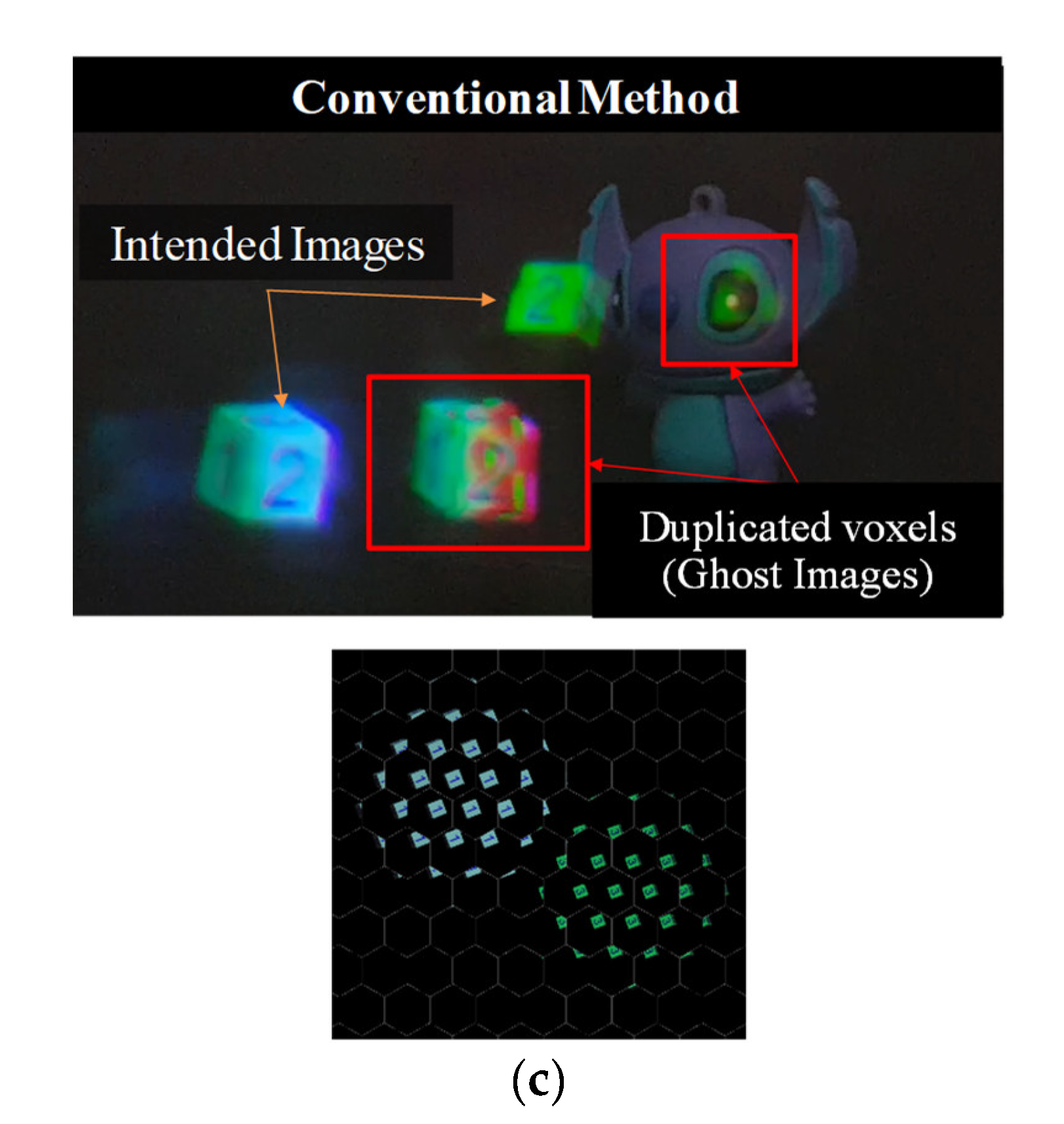
The representation of three-dimensional volumetric pixels, voxels, is an important issue for the near-to-eye displays (NEDs) to solve the vergence-accommodation conflict problem. Although the holographic waveguides using holographic optical element (HOE) couplers are promising technologies for NEDs with the ultra-thin structure and high transparency, most of them have presented only a single and fixed depth plane. In this paper, we analyze the imaging characteristics of holographic waveguides, particularly to represent the arbitrary voxels and investigate the voxel duplication problem arising from the non-collimated light from the voxels. In order to prevent the image crosstalk arising from the voxel duplication, we propose an adjustment method for the emission angle profile of voxels by using the integral imaging technique. In the proposed method, the sub-regions of elemental images, which correspond to the duplicated voxels, are masked in order to optimize the emission angle of integrated voxels. In the experimental verification, a see-through integral imaging system, based on the organic light-emitting diode display and a holographic waveguide with the thickness of 5 mm, was constructed. The fabricated HOE in the waveguide showed high diffraction efficiency of 72.8 %, 76.6%, and 72.5 % for 460 nm, 532 nm, and 640 nm lasers, respectively. By applying the masked elemental images, the proposed method resulted in a reduced crosstalk in the observed voxels by 2.35 times. The full-color experimental results of see-through holographic waveguide with integral imaging are provided, whereby the observed 3D images are presented clearly without the ghost images due to the voxel duplication problem.
Keywords: holographic waveguide; integral imaging; see-through display; augmented reality; autostereoscopy holographic waveguide; integral imaging; see-through display; augmented reality; autostereoscopy