1. Introduction
Over the past decade and a half, metasurfaces have developed into a versatile platform for controlling light within ultrathin planar architectures. By arranging subwavelength meta-atoms with engineered geometries, material compositions, and symmetries, metasurfaces can tailor the amplitude, phase, polarization, reflection, transmission, absorption, and spectral response of optical fields, enabling compact photonic functionalities such as spectral filtering, beam shaping, polarization control, sensing, modulation, and optical information processing [
1,
2,
3,
4,
5]. For many of these functionalities, resonant metasurfaces with high quality factors are particularly important because they concentrate the optical response within narrow spectral windows and produce pronounced amplitude and phase variations near the resonance [
6,
7].
Bound states in the continuum (BICs) provide an effective route to high-
Q resonances in metasurfaces [
8,
9,
10,
11]. In periodic photonic structures, resonant modes can be strongly suppressed from coupling to external radiation channels through symmetry protection, destructive interference among radiation channels, or parameter tuning at special points in momentum space [
8,
9]. A deliberate structural perturbation can partially release such otherwise dark modes into the radiation continuum, yielding externally accessible high-
Q resonances with finite radiative leakage [
12]. In symmetry-protected systems, the perturbation strength provides a direct knob for controlling radiative leakage, and therefore for balancing spectral selectivity and resonant scattering strength [
12].
Resonant metasurfaces become particularly useful when their optical response can be dynamically reconfigured. Because high-
Q resonances are spectrally sharp and dispersive, even a moderate change in the optical properties of the constituent material can induce appreciable resonance shifts and pronounced variations in transmission, reflection, and absorption spectra. This makes the integration of reconfigurable materials an effective route toward active and programmable metasurfaces [
13,
14,
15]. Phase-change chalcogenides such as Ge–Sb–Se–Te (GSST) and Ge–Sb–Te (GST) are attractive in this context because they can be reversibly switched between amorphous, intermediate, and crystalline states, producing large changes in their optical properties [
16,
17,
18,
19]. Their nonvolatile and multi-level optical states enable programmable control of metasurface spectra within a fixed device geometry without continuous power consumption [
16,
20,
21,
22,
23,
24,
25]. Besides phase-change materials, several other tunable platforms have also been explored for reconfigurable metasurfaces and metamaterials. For example, liquid-crystal-loaded metamaterials can provide electrically tunable terahertz responses [
26], while graphene-based tunable metamaterials and metasurfaces enable electrical control through the graphene Fermi level [
27]. More recently, two-dimensional materials have also been used to engineer tunable BIC or quasi-BIC responses. Representative examples include graphene-based high-
Q absorbers employing doubly degenerate quasi-BICs [
28] and borophene-based Friedrich–Wintgen BIC metamaterials [
29]. These platforms offer important routes to active optical control, whereas phase-change chalcogenides provide nonvolatile and multi-level optical states that can be retained without continuous external bias.
Incorporating phase-change materials into high-
Q resonant metasurfaces also introduces an important coupling–loss trade-off. Partially crystalline and crystalline phase-change states generally bring additional optical loss, which can modify the total decay rate and weaken the effective resonant scattering contribution [
19,
30]. For transmission-type phase-change metasurfaces, a large
Q factor by itself does not uniquely determine the depth or robustness of a spectral dip. The useful operating point must preserve sufficient radiative coupling and a favorable balance between radiative and non-radiative decay, so that the resonant scattering contribution can still interfere strongly with the background transmission. This requirement motivates a loss-managed BIC-derived design in which the resonance is intentionally operated in a finite-coupling regime rather than at the ideal BIC limit [
22,
31,
32,
33,
34,
35].
In this work, we propose a loss-managed symmetry-broken Si/Ge2Sb2Se4Te1 (GSST)/Si metasurface for tunable mid-infrared spectral modulation with robust deep transmission suppression across multiple GSST phase states. The metasurface consists of a SiO2 substrate, a Si grating layer, and an upper Si/GSST/Si trilayer with an off-centered air slot. The slot breaks the mirror symmetry of the unit cell and provides controllable radiative coupling for a BIC-derived high-Q resonance, while its finite width reduces the effective GSST filling region and limits excessive material-loss participation. We first identify a sharp transmission resonance in the amorphous GSST state and then verify its BIC-derived origin by tracking the eigenmode evolution as a function of the slot displacement. A subsequent crystalline-state loss-channel analysis shows why the final design provides a finite-coupling operating point with a large resonant amplitude factor and good up/down radiation balance. For the nominal design, the transmission-dip wavelength shifts from about in the amorphous state to about in the crystalline state, corresponding to a tuning range of about . A two-port temporal coupled-mode theory (TCMT) analysis further reveals that the low-transmission state arises from destructive interference between the resonant and background transmission channels. Finally, fabrication tolerance is evaluated by varying the GSST thickness, slot width, and slot displacement, confirming that the deep spectral suppression is not limited to a single finely tuned geometry.
2. Structure Design and Numerical Methods
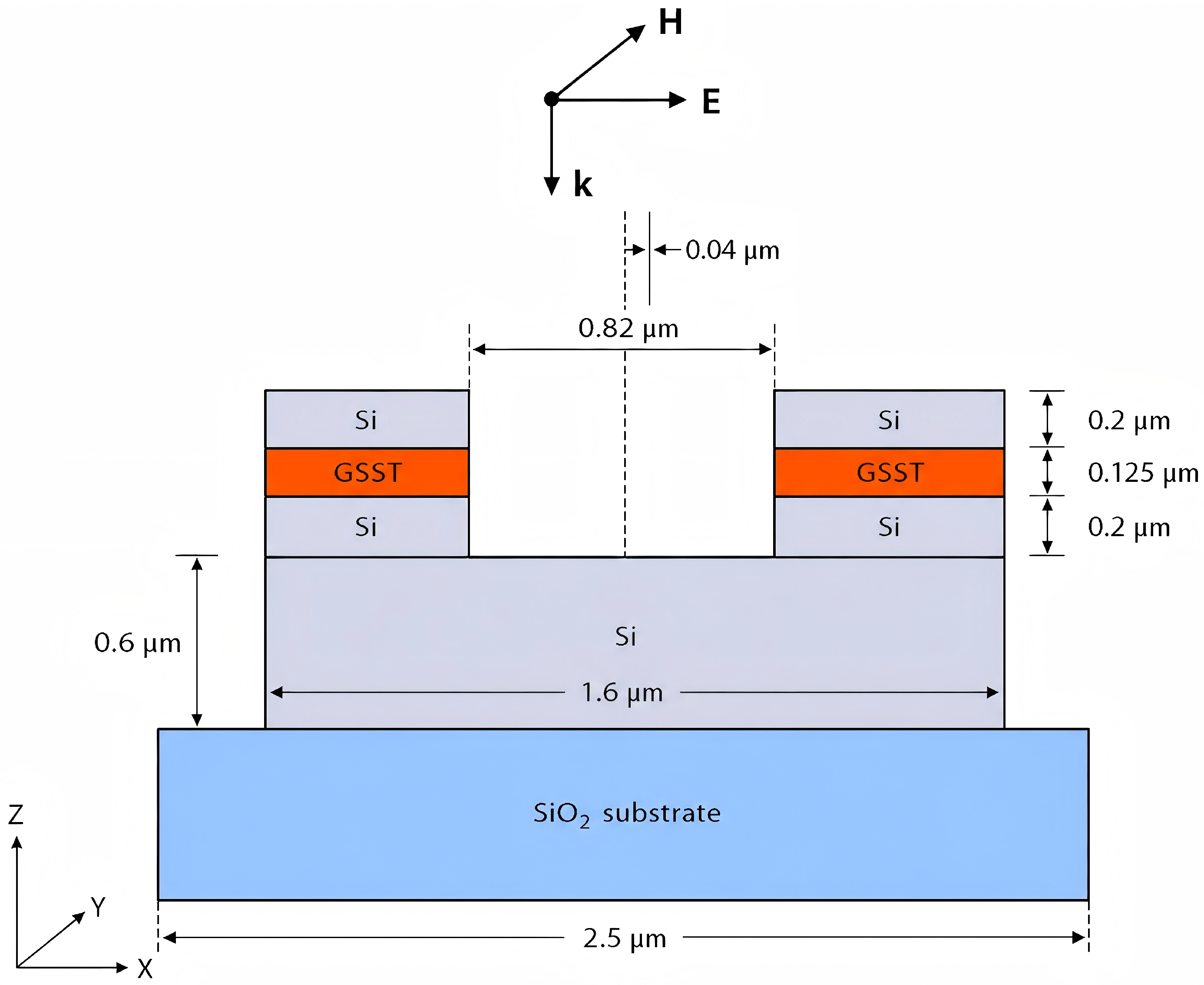
Figure 1 shows the schematic of the proposed one-dimensional Si/Ge
2Sb
2Se
4Te
1 (GSST)/Si metasurface. The structure is periodic along the
x-direction with a period of
and is assumed to be uniform along the
y-direction. The metasurface is constructed on a SiO
2 substrate. A Si grating layer with a thickness of
and a lateral width of
is placed on the substrate. On top of this Si layer, a trilayer stack consisting of Si/GSST/Si is introduced, with thicknesses of
,
, and
, respectively.
An air slot is etched through the upper Si/GSST/Si trilayer to introduce structural asymmetry and to reduce the effective GSST filling region. The slot width is fixed at . The center of the slot is laterally displaced from the center axis of the -wide structure by . In the centered case, the two remaining trilayer sections on the left and right sides of the slot would have equal widths. Thus, the off-centered slot breaks the mirror symmetry of the unit cell with respect to the vertical center axis. This symmetry breaking provides a controllable radiation channel for the BIC-derived high-Q resonance, while the finite slot also limits the GSST volume involved in the resonant mode.
The geometrical parameters are chosen to place the target resonance near while keeping only the zeroth diffraction order open. The period ensures subwavelength operation around the target wavelength, whereas the Si grating and the upper Si/GSST/Si trilayer provide a high-index resonant backbone. The GSST layer is introduced as a thin phase-change perturbation layer, and the air slot is used both to reduce the effective GSST filling region and to provide a controllable symmetry-breaking degree of freedom. After identifying the BIC-derived mode in the centered structure, the slot displacement is selected according to the finite-coupling and loss-channel analyses discussed below.
In the wavelength range considered in this work, Si is treated as a lossless dielectric with refractive index
. The SiO
2 substrate is modeled with a weakly lossy refractive index of
and
. The optical constants of GSST are based on the reported data in Ref. [
22]. For the amorphous state, GSST is modeled as a lossless dielectric with
and
. For the crystalline state, GSST is modeled using representative optical constants near the target resonance wavelength around
, with
and
. Intermediate crystallization states are described using the Lorentz–Lorenz effective-medium relation [
22],
where
denotes the crystallization fraction, with
and
corresponding to amorphous and crystalline GSST, respectively.
The material and numerical parameters used in the simulations are summarized in
Table 1. The material constants are evaluated near the target resonance wavelength around
and treated as phase-state-dependent constants in the narrowband calculations. This treatment is adopted as a narrowband resonance approximation rather than as a full broadband dispersion model. In this wavelength range, Si, SiO
2, and amorphous GSST exhibit weak dispersion, while amorphous GSST has negligible extinction. The crystalline GSST extinction coefficient varies more noticeably over a broader mid-infrared range, but it is represented here by
near the target resonance.
All numerical simulations are performed using the finite-element method. Periodic boundary conditions are applied along the
x-direction, and perfectly matched layers are used in the
z-direction. Unless otherwise specified, the structure is excited by a normally incident wave launched from the air side with the electric field polarized along the
x-direction. The input and output ports are placed at distances larger than
from the metasurface, where
is the local wavelength in the corresponding homogeneous medium. The maximum mesh element size is constrained to be smaller than
, and the entire Si/GSST/Si trilayer is locally refined with a maximum element size of approximately
. The reliability of the port placement and power extraction is further verified by the energy-balance residual
, as listed in
Table 1.
3. Results
3.1. Full-Wave Identification of the Target Resonance in the Nominal Finite-Asymmetry Design
We first examine the full-wave spectral response of the nominal finite-asymmetry metasurface with
. This geometry is used as the operating point in the following analysis; its BIC-derived origin and finite-coupling rationale are examined in the next subsection. The remaining geometrical parameters are those defined in
Figure 1.
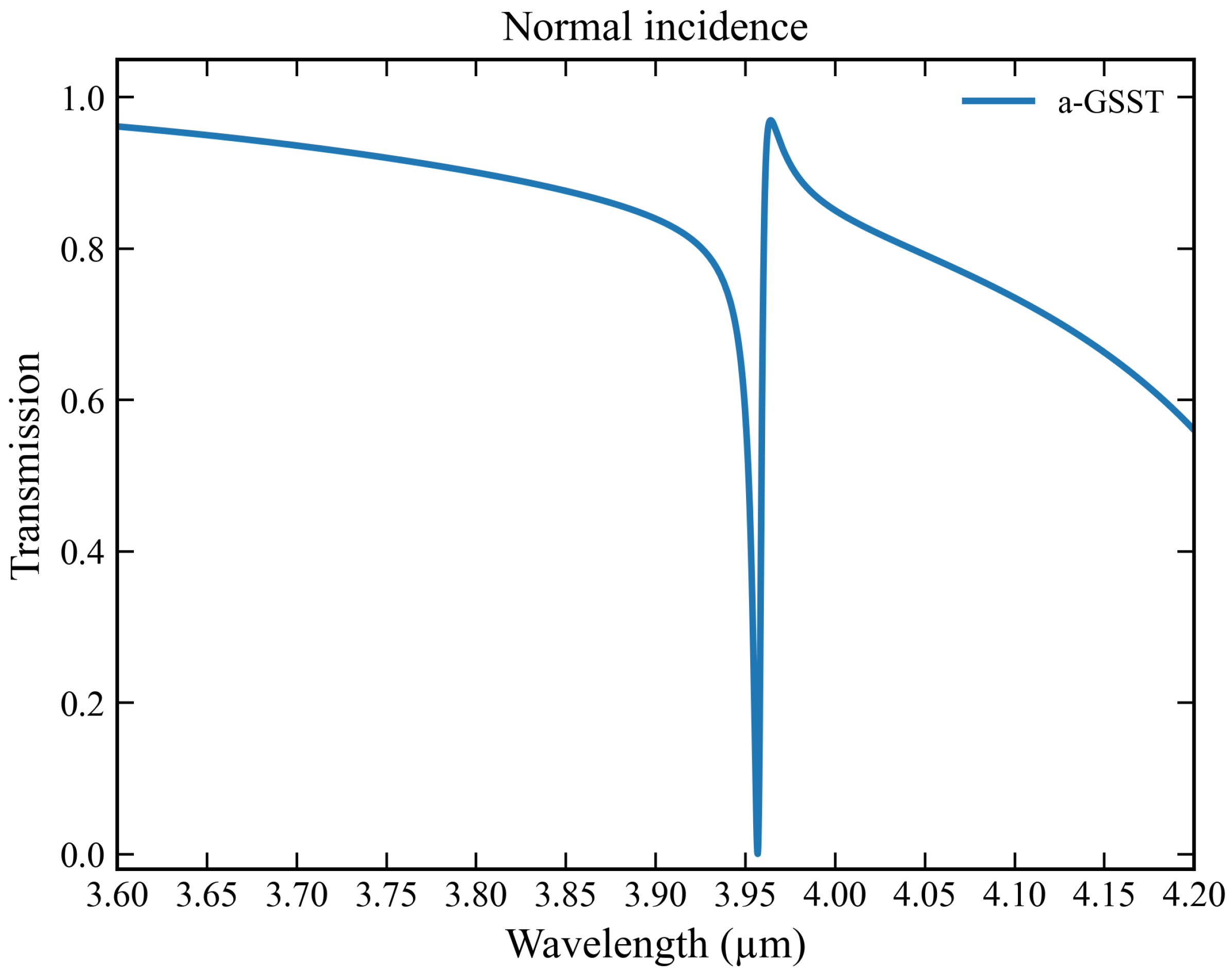
Figure 2 shows the broadband transmission spectrum in the amorphous GSST state. A sharp and spectrally isolated transmission dip appears around
, where the transmission is strongly suppressed to nearly zero. Away from the resonance, the metasurface maintains a high background transmission, indicating that the observed feature arises from a localized resonant response of the structured unit cell rather than from a broadband loss-dominated response.
The spectral profile is asymmetric, with a sharp transmission minimum followed by a narrow recovery peak. This Fano-type line shape indicates interference between a resonant scattering pathway and a non-resonant background transmission pathway. The resonance around is therefore selected as the target mode for the following eigenmode and phase-change analyses. To identify its physical origin and justify the finite-asymmetry operating point, we next track the corresponding eigenmode as the slot displacement is varied.
3.2. BIC-Derived High-Q Resonance and Finite-Coupling Design
To identify the origin of the sharp resonance observed in
Figure 2, we first analyze the eigenmode evolution as a function of the slot displacement
in a lossless configuration. In this analysis, all material losses are neglected and the GSST layer is fixed in the amorphous state. This setting isolates the radiative leakage controlled by symmetry breaking and allows the BIC-derived origin of the resonance to be examined.
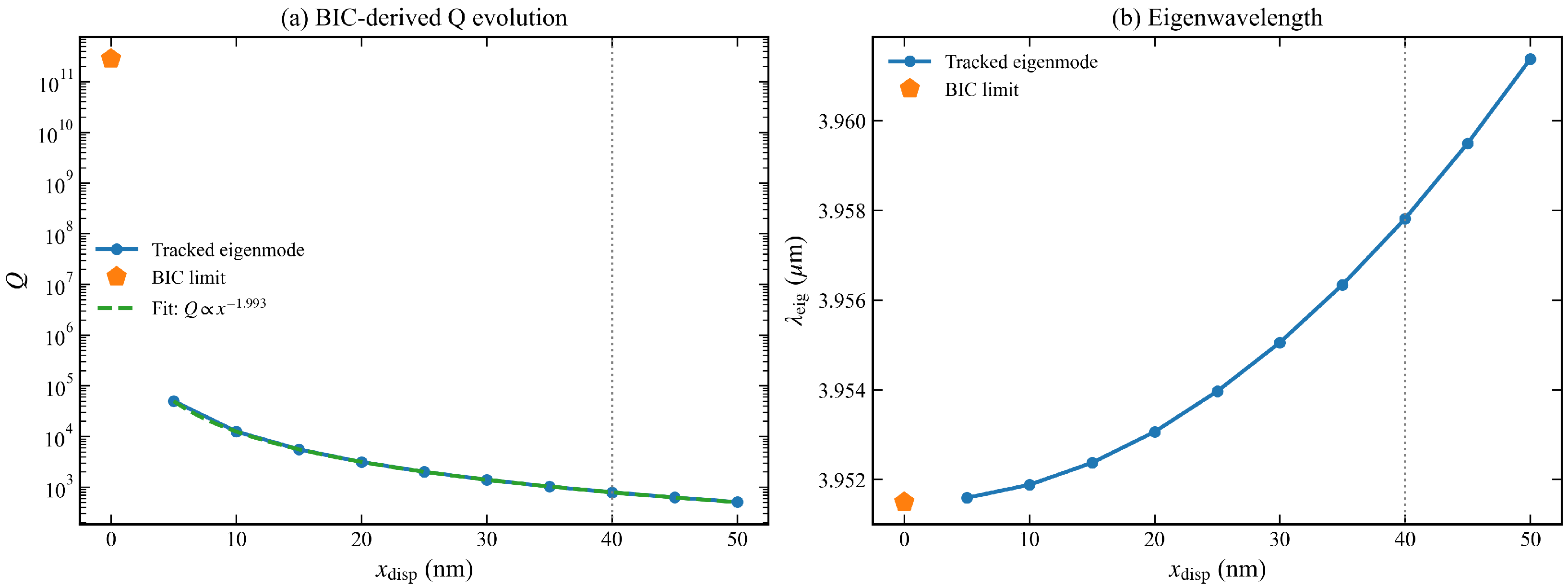
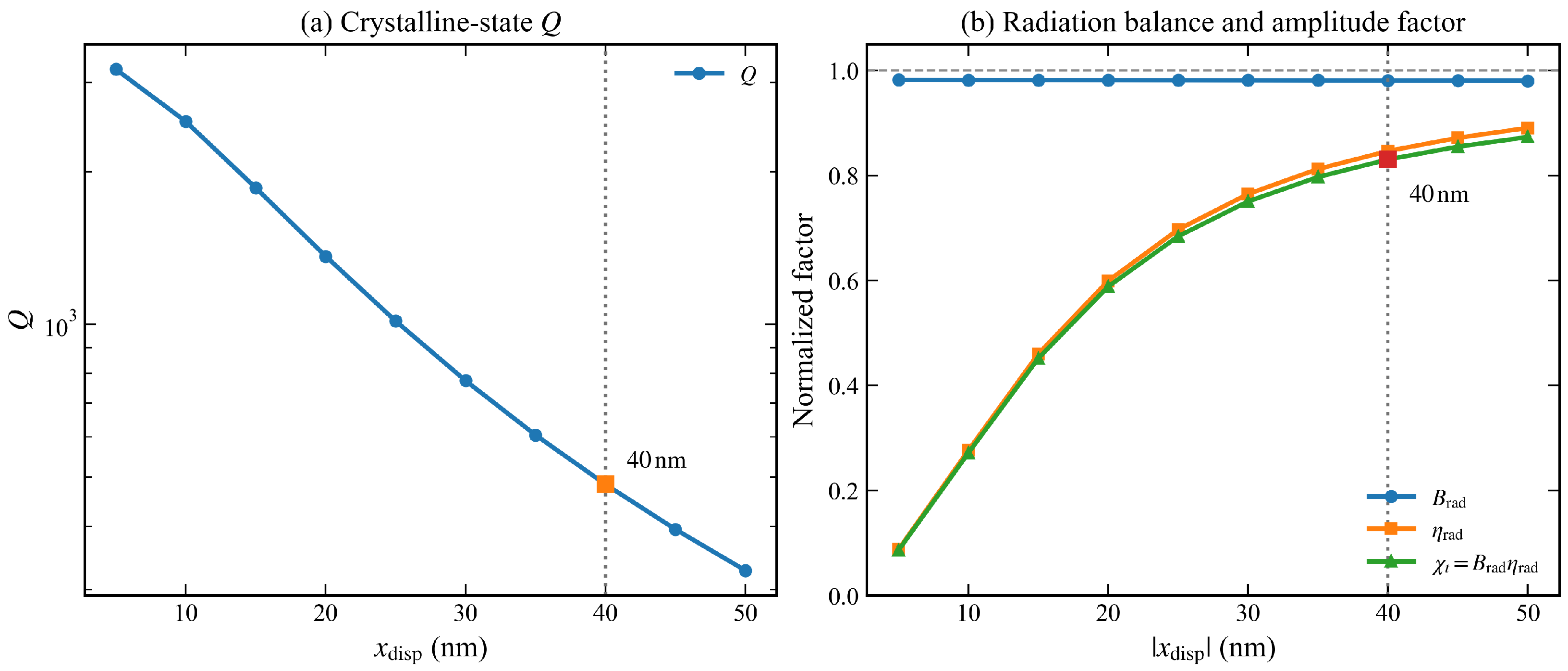
Figure 3 shows the tracked eigenmode branch around
. When
, the slot is centered and the unit cell preserves mirror symmetry. In this symmetric configuration, the target mode is almost completely decoupled from the external radiation channel, giving an extremely large numerical quality factor of
at
. This value represents the BIC limit of the structure in the lossless calculation. Once the slot is laterally displaced, the mirror symmetry is broken and the otherwise dark mode acquires finite radiative leakage, forming an externally accessible high-
Q resonance.
For nonzero displacements, the quality factor decreases rapidly with increasing
. A log–log fit excluding the
BIC-limit point gives
where
is expressed in nm. The fitted exponent is very close to
, consistent with the inverse-square scaling expected for symmetry-protected BIC-derived resonances [
12]. This result confirms that the high-
Q resonance used in this work originates from a symmetry-protected BIC and is released into the radiation continuum by controlled lateral asymmetry.
The eigenwavelength of the tracked branch varies smoothly from approximately
to
as
increases from 5 to 50 nm, confirming that the same resonant branch is continuously followed. The nominal finite-asymmetry design uses
, corresponding to
and
in the lossless amorphous-GSST configuration. This point is marked in
Figure 3 and is evaluated below under lossy crystalline conditions.
To further clarify the symmetry-protected nature of the mode,
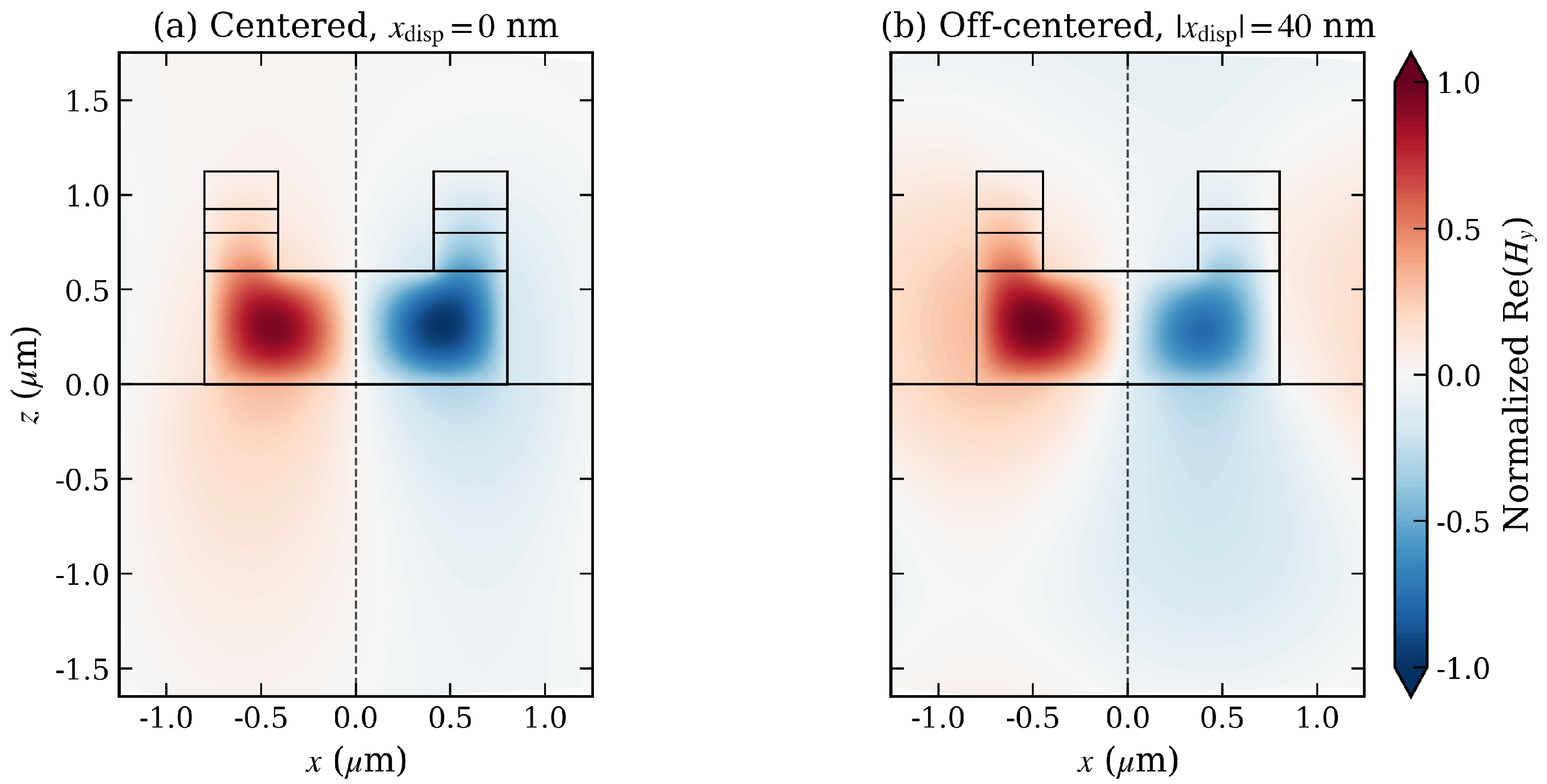
Figure 4 compares the magnetic-field distributions of the centered and off-centered structures. Because the metasurface is one-dimensional and invariant along the
y-direction, the relevant modal symmetry is fully captured by the
x-
z cross-sectional field distribution. In the centered configuration
, the magnetic-field component
exhibits an odd-parity distribution with respect to the vertical mirror plane of the unit cell. The normally incident zeroth-order plane-wave channel is even with respect to this mirror plane, whereas the centered mode is odd; therefore, their modal overlap is suppressed by symmetry, giving the BIC limit in the lossless calculation. When the slot is laterally displaced, the mirror symmetry is broken and the parity protection is relaxed. The mode then acquires finite radiative leakage and becomes an externally accessible quasi-BIC resonance. This field-symmetry picture is consistent with the inverse-square
Q-scaling shown in
Figure 3.
The lossless eigenmode analysis above is used only to identify the BIC-derived origin of the resonance and to isolate the radiative leakage controlled by symmetry breaking. The practical operating point for phase-change operation should instead be evaluated under lossy material conditions. We therefore analyze the eigenmode loss channels in the fully crystalline GSST state, where material absorption is largest and the requirement for maintaining deep transmission suppression is most stringent.
For a transmission dip based on resonant background interference, the relevant issue is whether the resonant contribution can provide a sufficiently large scattering amplitude in the transmission channel to cancel the non-resonant background. Motivated by the temporal coupled-mode theory (TCMT) analysis discussed below, we evaluate three diagnostic quantities:
and
Here,
describes the balance between the upward and downward radiation channels,
represents the radiative fraction of the total decay rate, and
estimates the available resonant transmission amplitude factor. A large
is favored when the upward and downward radiation channels are well balanced and the radiative decay remains sufficiently strong compared with the non-radiative material loss.
As shown in
Figure 5,
remains close to unity over the considered displacement range, indicating well-balanced upward and downward radiation channels. However, when the structure is too close to the BIC limit, the radiative leakage becomes weak compared with the non-radiative loss introduced by crystalline GSST and weakly lossy SiO
2 substrate, leading to small
and
. Increasing
releases the mode farther from the BIC limit and enhances the radiative contribution. At
, the mode maintains
in the crystalline state, while
,
, and
. Within the considered displacement range, larger
values provide stronger radiative coupling, but they also reduce the quality factor and broaden the resonance. Thus,
is selected as a balanced finite-coupling operating point rather than an ultra-high-
Q BIC-limit design.
3.3. Phase-Change Spectral Tuning of the Nominal Metasurface
Based on the BIC-origin and finite-coupling analyses above, we fix the slot displacement at
and investigate the phase-change spectral response of the nominal metasurface. The nominal geometry corresponds to
and
.
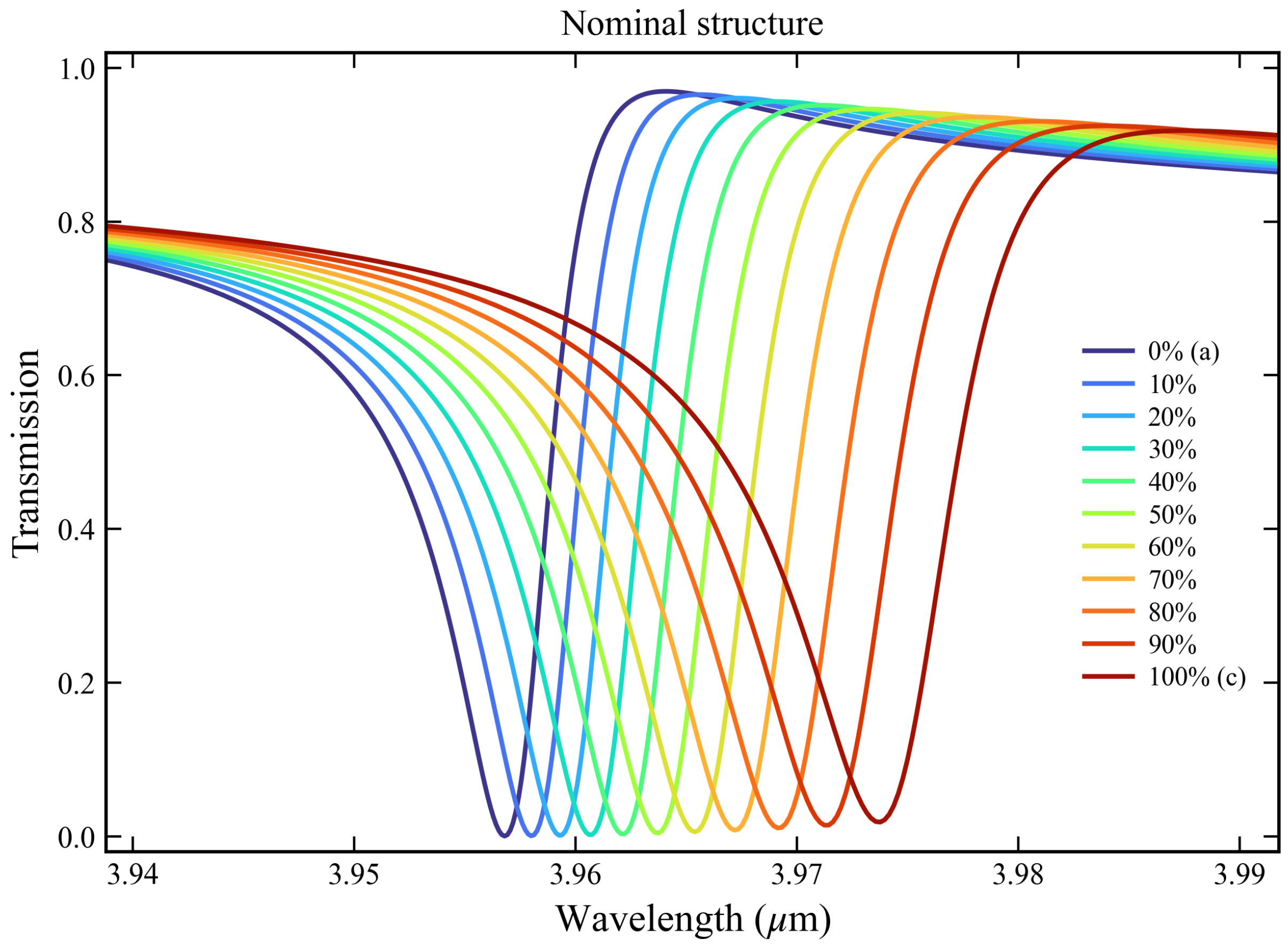
Figure 6 shows the full-wave transmission spectra for different GSST crystallization states.
As the crystallization fraction increases, the refractive index of GSST increases, leading to a continuous redshift of the resonant transmission dip. For the nominal design, the wavelength of the transmission minimum shifts from about
in the amorphous state to about
in the crystalline state, corresponding to a tuning range of about
. During this process, the resonance linewidth and quality factor vary because the GSST optical loss and modal distribution are modified by crystallization [
18,
30]. Nevertheless, the transmission minimum remains deeply suppressed over the entire phase-transition range, indicating that the resonant cancellation mechanism is preserved even when the phase-change material becomes lossy.
The extracted quality factor remains in the range of approximately 483–780. The amorphous-to-crystalline tuning range of about exceeds the broadest resonance linewidth of the nominal structure, indicating that the overall phase-change-induced spectral shift is not masked by linewidth broadening. More importantly, the transmission minimum remains deeply suppressed for all crystallization states, which is essential for robust phase-change spectral modulation based on a BIC-derived high-Q resonance.
3.4. TCMT Analysis of Robust Transmission Suppression
To clarify why the transmission minimum remains deeply suppressed during GSST crystallization, we analyze the complex transmission response using a two-port temporal coupled-mode theory (TCMT). The non-resonant background scattering matrix is written as
where
denotes the background transmission amplitude from the incident port to the transmission port. Near a single resonance, the complex transmission amplitude can be expressed as
where
is the resonant frequency,
and
are the coupling coefficients to the upward and downward radiation channels, and
is the total decay rate. Here,
and
denote the upward and downward radiative decay rates, while
accounts for non-radiative material loss.
The TCMT parameters are determined as follows. The non-resonant background response is extracted from the full-wave spectra in wavelength regions away from the resonance, typically outside a window of approximately six resonance linewidths. The background reflection and transmission are fitted by low-order polynomial functions, and the background transmission amplitude is evaluated at the resonance wavelength. The total decay rate is obtained from the complex eigenfrequency . The relative upward and downward radiative contributions are evaluated from power-flux integrals through the upper and lower selected cut-planes in the homogeneous regions, while the non-radiative contribution is obtained from the material-absorption integral in the lossy regions. These fractional contributions are then multiplied by to obtain , , and .
The phase terms are determined from the standard two-port TCMT constraints. Reciprocity requires
. Energy conservation gives
and
. Since the off-resonant background absorption is weak, the background scattering matrix
C is approximately treated as unitary. Under these assumptions, the phases are obtained from the TCMT relation
where
. Thus, the phases of the resonant coupling coefficients and the background channel are constrained by reciprocity, energy conservation and approximate unitarity of scattering matrix
C.
The resonant amplitude factor in the transmission channel is defined as
Deep transmission suppression therefore requires the resonant contribution to remain comparable in magnitude to the background transmission amplitude
. In addition, the relative phase should allow destructive interference after the frequency-dependent phase rotation of the resonant term. We quantify the intrinsic phase relation by
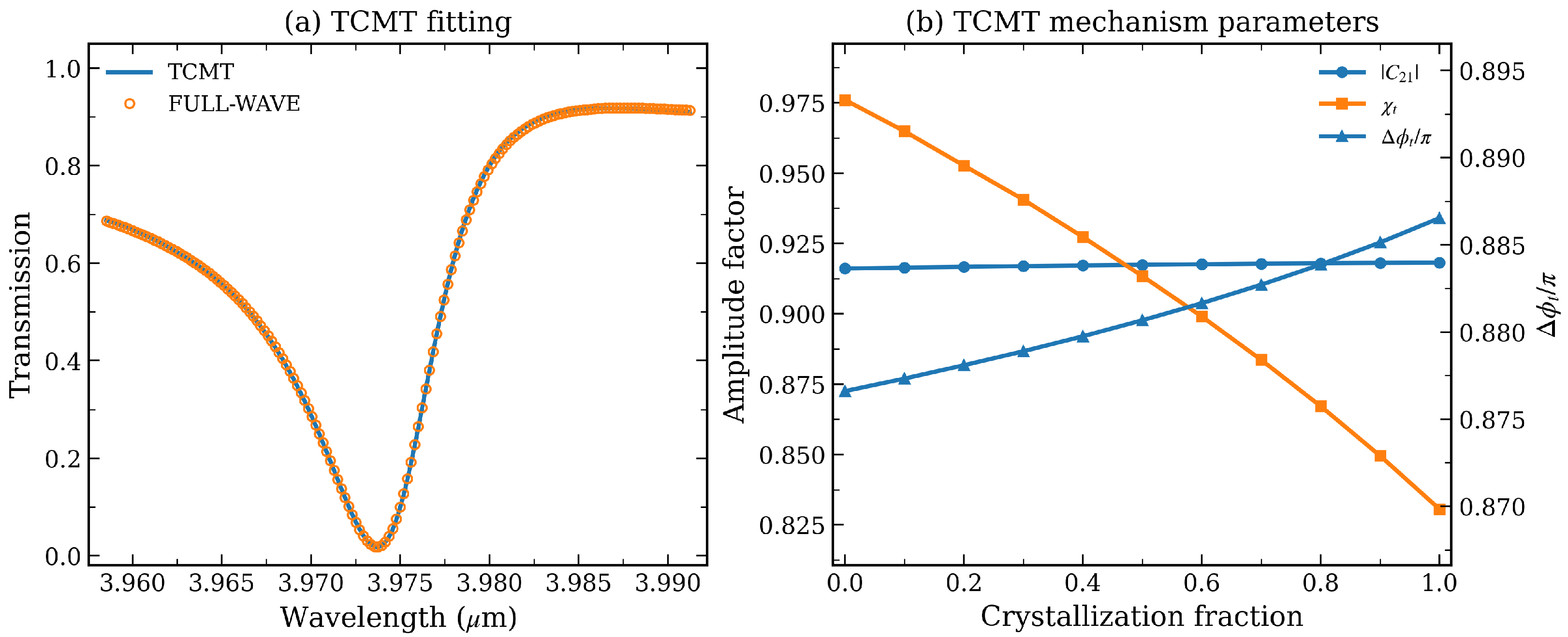
Figure 7a compares the full-wave transmission spectrum with the TCMT reconstruction for the fully crystalline GSST state. The excellent agreement confirms that the single-resonance two-port model captures the dominant resonant response.
Figure 7b summarizes the extracted mechanism parameters for all GSST crystallization states. The background amplitude
remains nearly unchanged, varying only slightly around
–
. The resonant amplitude factor
decreases from approximately
to
as GSST crystallizes, but remains comparable to
throughout the phase-transition range. Meanwhile, the intrinsic phase difference stays close to the destructive-interference condition, with
varying from approximately
to
.
These results show that the resonance retains a strong cancellation capability even in lossy crystalline states. Although crystallization changes the resonance wavelength, linewidth, and material loss, the resonant transmission term remains large enough to balance the background channel, while the relative phase stays close to the anti-phase condition. The frequency-dependent resonant phase then enables the total transmission amplitude to approach zero near the transmission minimum,
Thus, the deep transmission minimum is not caused by absorption alone, but by coherent destructive interference between the resonant scattering channel and the non-resonant background channel. This persistent amplitude–phase cancellation margin also explains why the transmission suppression remains robust under the fabrication variations discussed below.
3.5. Fabrication Tolerance Analysis
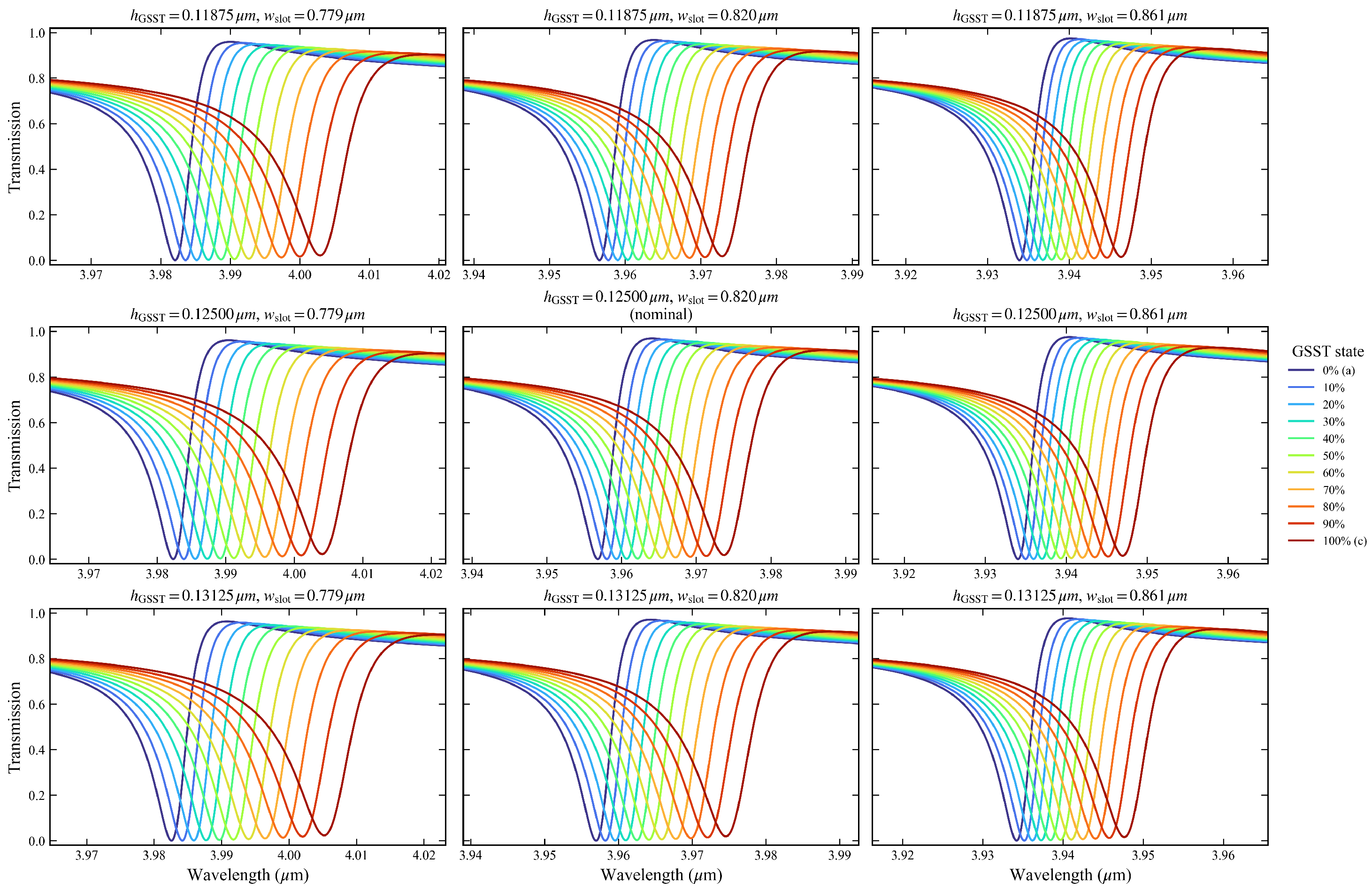
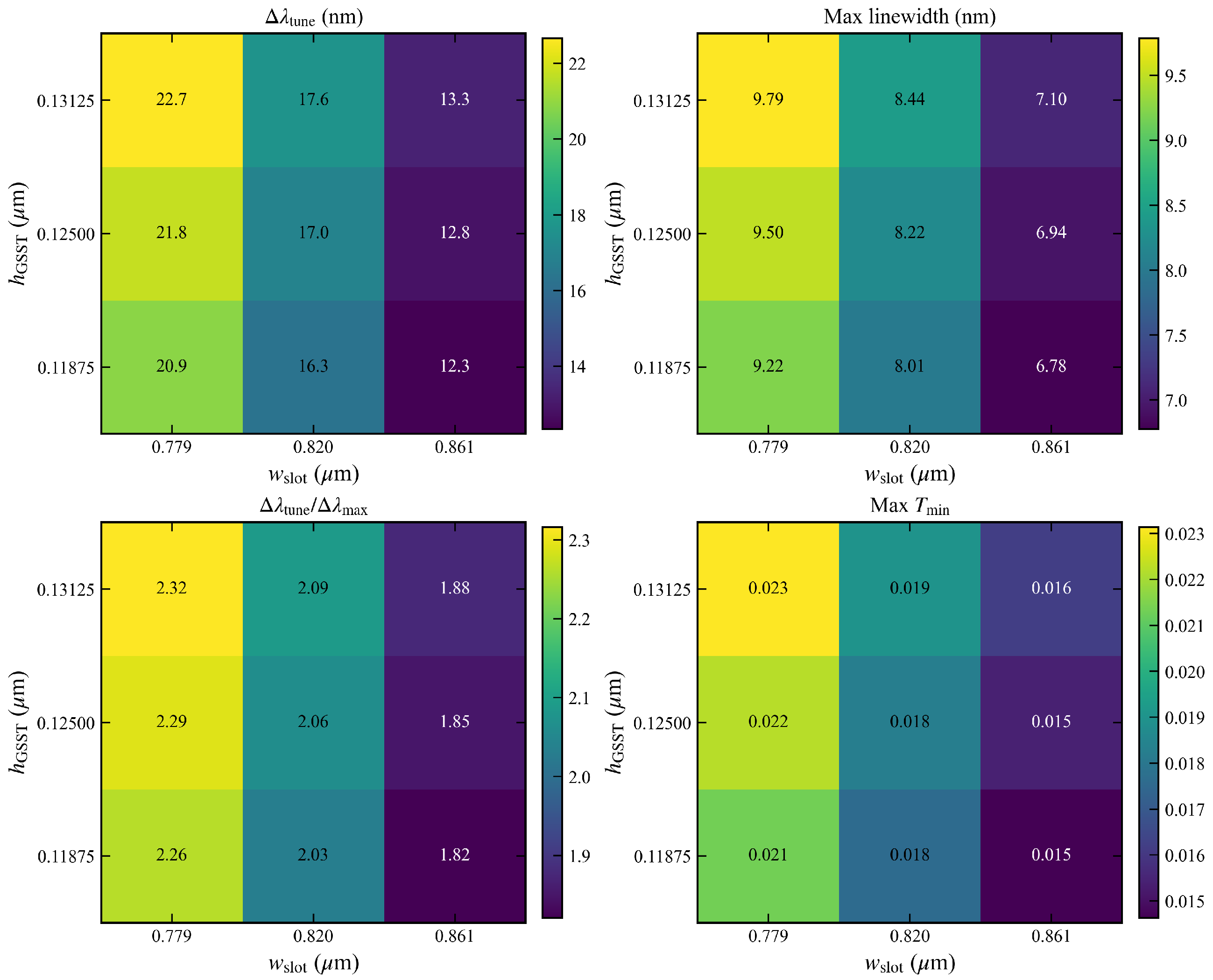
We further evaluate the fabrication tolerance of the proposed design by varying the GSST thickness and the slot width. The GSST thickness is changed from to , corresponding to a variation around the nominal value of . Similarly, the slot width is varied from to , corresponding to a variation around the nominal value of . These two parameters generate nine representative structures.
Figure 8 shows the full-wave transmission spectra for all nine structures over the complete GSST crystallization range. The transmission minimum remains deeply suppressed in every sampled geometry, confirming that the cancellation mechanism is not limited to a single finely optimized structure. At the same time, the absolute resonance position is sensitive to geometric variations. Therefore, the robustness demonstrated here should be understood primarily as the robustness of the suppression depth and cancellation mechanism, rather than as invariance of the resonance wavelength.
To quantify the tolerance behavior,
Figure 9 summarizes the tuning span, the maximum eigenmode linewidth, their ratio, and the largest transmission minimum for each structure. The phase-change tuning span remains in the range of approximately
–
, while the maximum eigenmode linewidth ranges from about
to
. Therefore,
remains larger than unity for all sampled structures and reaches values of approximately
–
. This indicates that the phase-change-induced spectral shift is not masked by linewidth broadening. Meanwhile, the maximum
remains below approximately
, confirming that strong transmission suppression is preserved under the considered dimensional variations.
These tolerance results are consistent with the TCMT analysis in
Figure 7. Since the resonant transmission amplitude remains comparable to the background transmission amplitude and the phase relation remains close to the destructive-interference condition, the device retains a finite cancellation margin. This margin allows the deep transmission minimum to survive moderate variations in GSST thickness and slot width, even though the absolute spectral position of the resonance shifts. For fixed-wavelength operation, post-fabrication calibration may be required; for tunable spectral modulation, however, the persistence of deep suppression across all sampled structures confirms the robustness of the underlying resonant cancellation mechanism.
Because the slot displacement
directly controls the radiative leakage of the BIC-derived mode, we further examine the tolerance of this asymmetry parameter around the nominal design. The nominal structure is recalculated for
, 40, and
, while all other geometrical parameters are kept unchanged. As shown in
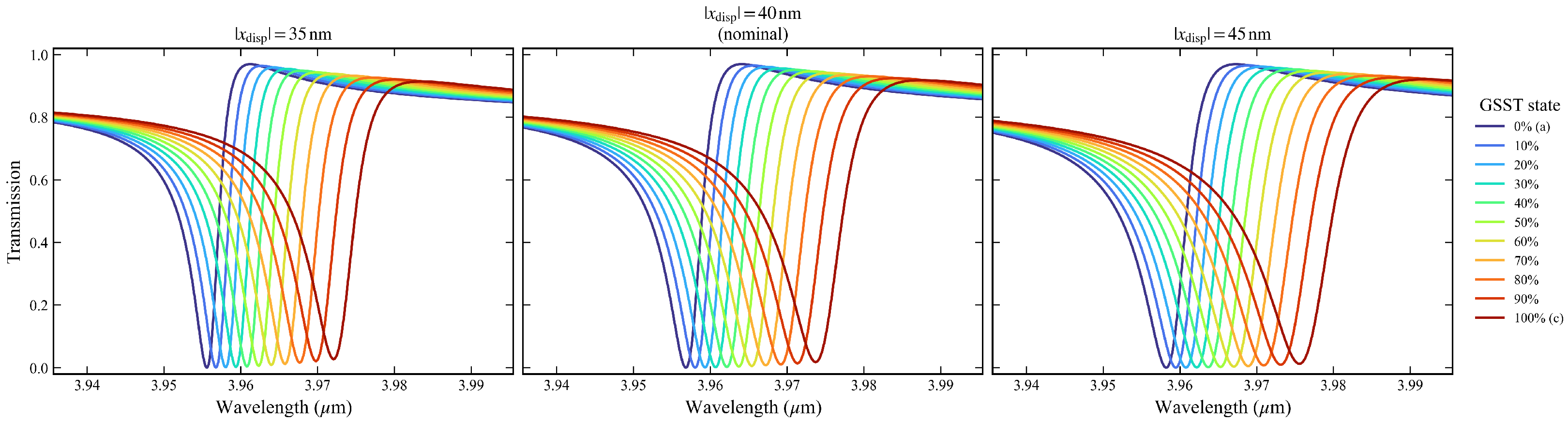
Figure 10, all three cases preserve phase-change-tunable transmission suppression over the GSST crystallization range, but they represent slightly different finite-coupling regimes.
For , the mode is closer to the BIC limit and the eigenmode linewidth is narrower, but the available radiative coupling is weaker and the worst-case transmission minimum is slightly higher. For , the calculated transmission minimum is slightly lower within the tested range, but the resonance linewidth is broader because of stronger radiative leakage. The nominal value is therefore selected as a practical finite-coupling operating point: it satisfies the deep-suppression criterion adopted in this work, with the worst-case transmission minimum below , while retaining a narrower linewidth than the case. These results indicate that moderate deviations of the asymmetry parameter mainly shift and reshape the resonance without destroying the underlying resonant cancellation mechanism.
4. Discussion
The results above establish the proposed metasurface as a loss-managed BIC-derived phase-change platform. Here, loss management does not mean eliminating GSST absorption. Instead, it refers to selecting a finite-radiative-coupling operating regime in which the resonant scattering contribution remains sufficiently strong despite the non-radiative loss mainly introduced by crystalline GSST. The lossless eigenmode analysis identifies the BIC-derived origin of the resonance and shows how the slot displacement controls radiative leakage. The crystalline-state loss-channel analysis then clarifies why the operating point should not be pushed too close to the ideal BIC limit. When the displacement is too small, the mode has a very large radiative quality factor, but the radiative leakage available for resonant scattering becomes weak compared with the material loss. The selected point therefore represents a finite-coupling compromise: it preserves spectral selectivity while maintaining a sufficiently large resonant amplitude factor for transmission cancellation.
The TCMT analysis provides the corresponding interference picture in the driven full-wave response. The transmission minimum is governed by the complex cancellation between the non-resonant background channel and the resonant scattering channel. Across the GSST crystallization range, remains nearly unchanged, remains comparable to the background amplitude, and stays in a range that enables destructive interference after resonant phase rotation. This amplitude–phase cancellation margin explains why the transmission minimum remains deeply suppressed even when the resonance wavelength, linewidth, and material loss vary with crystallization. It also explains why the deep suppression survives moderate variations in GSST thickness, slot width, and slot displacement: the exact resonance position may shift, but the basic cancellation condition is not destroyed.
The off-centered slot plays a dual role in this design. Its lateral displacement releases the symmetry-protected BIC into a radiative high-Q resonance, while its finite width reduces the effective GSST filling region and limits excessive material-loss participation. These two effects are coupled: too little asymmetry suppresses radiative scattering, whereas too much asymmetry broadens the resonance. The useful operating point is therefore not determined by maximizing Q, but by balancing spectral selectivity, radiative coupling, up/down radiation balance, and non-radiative material loss. In this sense, the proposed structure illustrates a general design principle for phase-change high-Q metasurfaces: the radiative channel should be engineered together with the lossy phase-change region so that resonant-background cancellation remains effective across material states.
The choice of GSST is based on the required balance between refractive-index modulation, optical loss, and reversible switching volume in the present high-
Q transmission resonance. GST and GSST are both large-index-contrast chalcogenide PCMs and can effectively perturb resonant metasurface modes. In this work, GSST is adopted because it has been reported to combine large nonvolatile index modulation, broadband low optical loss, and a relatively large reversible switching volume, which is favorable for active metasurfaces requiring strong light–PCM interaction with manageable loss [
22]. This feature is particularly relevant here because the GSST layer thickness is
, and excessive PCM absorption would weaken the resonant scattering contribution in a high-
Q transmission structure. Other low-loss PCMs, such as Sb
2S
3, Sb
2Se
3, and GeSe, are also promising alternatives, but their index contrast, switching characteristics, and optimized spectral/device platforms differ from those of GSST/GST-type materials [
37,
38,
39]. Thus, GSST is selected as a suitable material platform for the present mid-infrared BIC-derived transmission-suppression design, rather than as a universally superior PCM.
In this numerical study, the crystallization fraction
is used as a material-state parameter to sample the GSST phase-change trajectory from the amorphous to the crystalline state. This effective-medium description allows us to evaluate whether the resonant cancellation mechanism remains robust over a continuous change of the GSST optical constants. Experimentally, intermediate GSST states have been accessed by controlling electrical programming conditions, such as pulse voltage or duration, enabling multi-state or quasi-continuous resonance tuning in GSST metasurfaces [
22]. In a practical actively programmed device, the number of reliably distinguishable optical states would depend on the programming scheme, thermal stability, and optical readout precision. Since the present work focuses on the optical resonance mechanism rather than electrothermal programming dynamics, we do not assign a specific experimental bit depth. Instead, the sampled GSST phase states are used to verify that the transmission minimum remains deeply suppressed throughout the phase-change trajectory.
The tolerance analysis further clarifies the meaning of robustness in the present device. The absolute resonance wavelength is sensitive to GSST thickness and slot width, and fixed-wavelength operation would require calibration or geometry compensation. However, the transmission suppression itself remains robust because the resonant cancellation mechanism persists across the sampled structures. For tunable spectral modulation, this distinction is important: robustness should be understood primarily as the persistence of deep suppression and resolvable phase-change tuning, rather than invariance of the resonance wavelength.
For a more direct comparison of transmission-related PCM-assisted tunable metasurfaces,
Table 2 summarizes three representative works that explicitly involve tunable transmission spectra, transmission-state modulation, or BIC-based transmission-dip tuning. These works represent different transmission functions, including high-transmission passband filtering, q-BIC transmission-resonance tuning, and low/high-transmission-state switching. Among them, the Sb
2Se
3-based q-BIC metasurface is particularly close to the present work in that it also employs a PCM-assisted BIC resonance to tune transmission dips. The present work differs by focusing on a lossy GSST mid-infrared platform and on maintaining deep transmission suppression through a loss-managed finite-coupling resonance over multiple phase states and fabrication variations.
The proposed structure is therefore relevant to nonvolatile mid-infrared notch filters, programmable transmission suppressors, tunable sensing windows, and compact spectral modulation elements where maintaining a deep transmission minimum over multiple material states is important.
5. Conclusions
In conclusion, we have proposed a loss-managed BIC-derived GSST metasurface for robust phase-change-tunable mid-infrared transmission suppression. The off-centered air slot in the Si/GSST/Si trilayer simultaneously breaks the mirror symmetry of the unit cell and reduces the effective GSST filling region. Lossless eigenmode analysis confirms the BIC-derived origin of the resonance, with the quality factor following for nonzero slot displacements. A crystalline-state loss-channel analysis further shows that provides a balanced finite-coupling operating point with good up/down radiation balance, a large resonant amplitude factor, and a moderate–high Q under lossy GSST conditions.
With this operating point, full-wave simulations show that GSST crystallization shifts the transmission-dip wavelength from about to about , while the extracted quality factor remains in the range of 483–780 and the transmission minimum remains deeply suppressed. TCMT analysis reveals that the low-transmission state originates from destructive interference between the resonant and background transmission channels, with remaining comparable to and the intrinsic phase relation remaining favorable for resonant cancellation. Fabrication tolerance analysis shows that the deep suppression is maintained for nine representative structures with variations in GSST thickness and slot width, and moderate variations of the slot displacement mainly shift or reshape the resonance without destroying the cancellation mechanism. For all sampled thickness–width structures, the phase-change tuning span exceeds the maximum eigenmode linewidth and the maximum remains below approximately .
These results show that robust phase-change spectral suppression in high-Q metasurfaces requires more than a narrow resonance. The radiative leakage, non-radiative material loss, up/down radiation balance, and resonant background phase relation must be engineered together. The proposed finite-coupling strategy provides a practical route for designing nonvolatile phase-change metasurfaces that maintain deep spectral suppression while allowing tunable mid-infrared resonant responses.