


Abstract
Vertical-External-Cavity Surface-Emitting Lasers (VECSELs) have gained significant attention over the past two decades due to their versatility in a wide range of photonic applications. This review focuses on VECSEL configurations for dual-wavelength emission, highlighting their use in high-resolution spectroscopy, terahertz (THz) generation, and advanced optical communication. We explore recent developments in VECSEL designs, including systems utilizing birefringent crystals for polarization-based frequency separation and configurations with dual-VECSEL chips or dual-gain regions within a single cavity. These two-wavelength VECSELs enable diverse operation modes, including narrow-linewidth, pulsed, multimode, and frequency-converted emission, with high-brightness output, excellent beam quality, and tunable wavelengths. Additionally, the review discusses advancements in dual-frequency VECSELs, with applications in LIDAR systems for environmental monitoring, highly stable optical clocks, and fiber sensors. We examine improvements in cavity design, semiconductor structures, and power stabilization, which have enhanced frequency stability and spectral purity, making VECSELs suitable for precision metrology and sensing applications.
1. Introduction
The invention of lasers has led to a growing range of applications that leverage their unique advantages, driving advancements across science, industry, and medicine. This progress has been fueled by developments in semiconductor technology, miniaturization, and the diversification of gain materials, enabling more compact devices, higher efficiencies, and greater wavelength versatility [1].
Semiconductor lasers are compact and efficient light sources that operate based on the principle of stimulated emission. They are widely used in modern technology, playing a crucial role in everyday life through applications such as optical communication, medical imaging, and consumer electronics [2]. These lasers have significantly impacted everyday life, particularly through their integration into optical devices. Due to their compact size, efficiency, and ease of integration, electrically pumped semiconductor lasers have become widely used in telecommunications applications. Their ability to provide stable and reliable light sources has contributed to their increasing popularity in advanced optical communication systems. Typically, these lasers fall into two main categories: edge emitters, which utilize a p-i-n junction with in-plane gain, and surface emitters, such as vertical-cavity surface-emitting lasers (VCSELs), which feature normal-to-plane emission [2].
Vertical-External-Cavity Surface-Emitting Lasers (VECSELs) share their fundamental structure with surface-emitting semiconductor microcavity lasers [2]. However, unlike conventional VCSELs, they incorporate an external resonator, enhancing their performance. Their open-cavity architecture further enhances their potential across diverse applications, such as passive mode locking, which has been demonstrated to be capable of generating ultrashort pulses [3], multi-GHz repetition rates [4], and high average and peak pulse power [5,6]. This hybrid design merges the advantages of solid-state and gas lasers, offering high-brightness, high-beam-quality light sources across various wavelengths [7].
Optically pumped VECSELs, also known as optically pumped semiconductor lasers (OPSLs), enable high-power operation, with output powers exceeding 100 W demonstrated in 2012 [8]. First realized in 1997 [9], they continue to evolve as versatile light sources due to their flexible design and functional adaptability.
In this paper, we explore the design of dual-wavelength VECSELs, ranging from single-cavity configurations utilizing spectral hole burning to dual-chip systems for independent wavelength generation. We further delve into dual-frequency architectures that employ birefringent crystals to generate closely spaced frequencies for sensing applications. We conclude that the integration of these dual-mode chips into ruggedized architectures facilitates a transition from laboratory prototypes to ‘semiconductor bricks’, integrated, field-deployable units capable of replacing complex optical benches in 6G infrastructure and space-based metrology.
2. VECSEL Operation
The core component of a VECSEL is a semiconductor chip, precisely grown using epitaxy techniques like Metal–Organic Vapor-Phase-Epitaxy (MOVPE) or Molecular-Beam-Epitaxy (MBE). This chip consists of an active semiconductor region, a cap layer, and a highly reflective Bragg mirror. The emission wavelength is primarily determined by the semiconductor material’s bandgap energy. The spectral gain–cavity detuning, a key property of VECSEL chips, can be engineered to enhance the device’s output power. It refers to the spectral gap between the subcavity resonance, where the standing light field’s anti-nodes align with the QW positions, and the material’s gain spectrum [10].
To operate, optically pumped VECSELs typically use a high-power, low-cost pump laser directed at an oblique angle, or, less commonly, electrical pumping via a doped p-i-n structure. Optical pumping is generally preferred due to its ability to provide high brightness, uniform charge-carrier excitation, and the absence of light-absorbing dopants, which can affect performance [7]. The laser resonator is completed with external mirrors, including at least one essential out-coupling mirror that enables mode oscillation and gain while defining the optical output (Figure 1). This design allows VECSELs to maintain excellent beam quality despite the low-quality pump beam, thanks to the vertical-external-cavity structure.
Figure 1.
Schematic representation of a VECSEL and its key components.
The utility of the VECSEL is further multiplied by its external-cavity design, which facilitates intracavity frequency conversion. This allows the device to reach extremes of the electromagnetic spectrum:
- Ultraviolet (244 nm): Achieved through higher-harmonic generation [11].
- Terahertz (THz): Generated via difference-frequency generation [12,13]. Table 1 summarizes the material systems, the spectral ranges and the key advantages of VECSELs.
Table 1.
Summary of VECSEL material systems, spectral ranges, and key advantages.
Ultimately, the synergy of semiconductor bandgap engineering and nonlinear optics allows VECSELs to span almost any desired wavelength for scientific or industrial use, combining the beam quality of solid-state lasers with the flexibility of semiconductors.
2.1. Thermal Management in VECSELs
After fabrication, certain VECSEL configurations require a bonding process to attach the chip to a high-thermal-conductivity mount connected to a cooling circuit. Thermal management is typically achieved using a copper heat sink and a water-cooling system to ensure efficient heat dissipation [7]. Thermal management is a critical factor in VECSEL performance, as heat buildup limits output power due to quantum defect and non-radiative losses, particularly Auger recombination [20,21,22].
Effective heat dissipation strategies, such as optimized pump beam profiles and advanced cooling techniques, have been extensively studied to enhance efficiency.
Two primary heat-spreading approaches exist: Intracavity Heat Spreading (ICHS) and Extracavity Heat Spreading (ECHS). ICHS integrates a transparent heat spreader within the cavity, ensuring efficient cooling but potentially introducing optical losses and spectral artifacts [23,24]. ECHS, in contrast, involves flip-chip bonding the gain chip to a heat spreader, often made of Chemical-Vapor-Deposition (CVD) diamond, enabling superior thermal dissipation [25].
While ECHS is highly effective for GaAs-based VECSELs, material systems with lower thermal conductivity may require trade-offs between DBR thickness and reflectivity.
Ultimately, optimizing thermal resistance and heat flux is crucial for high-power operation, influencing factors such as wavelength stability and loss mechanisms. Different configurations, including alternative pumping schemes and heat-spreader designs, continue to evolve to maximize VECSEL efficiency.
2.2. Dual-Wavelength and Dual-Frequency VECSEL Architectures
Dual-wavelength operation in VECSELs refers to the ability of the laser to emit light simultaneously at two distinctly different optical wavelengths, typically separated by a few nanometers. This phenomenon is desirable for various applications, such as spectroscopy, terahertz generation, and optical sensing. One of the key mechanisms enabling this behavior is spectral hole burning (SHB). SHB occurs when one laser mode saturates the gain medium at a specific wavelength, effectively creating a ‘hole’ in the gain spectrum. This local depletion of gain allows a second mode, at a different wavelength, to reach the threshold and lase as well [26,27]. This process leads to a non-uniform carrier distribution in the quantum well, enabling dual-mode operation. The quantum wells themselves provide a broad gain spectrum, supporting dual-mode lasing under conditions such as SHB or external cavity feedback, due to their tunability and high saturation intensity.
Another approach involves two independent VECSEL chips [28,29] each operating at different frequencies, either sharing an external cavity or operating independently, with the beams combined via nonlinear optical processes or beam combiners.
Dual-frequency VECSEL emission involves designing spatially distinct cavity modes within the same VECSEL structure, using adjusted cavity geometry or birefringent elements to ensure the frequencies stay within the quantum well’s gain bandwidth. Dual-frequency lasers emit two closely spaced optical frequencies, typically within the same wavelength band, separated by MHz to GHz. This configuration is often used in applications such as radio-frequency (RF) signal generation, coherent detection, or high-resolution interferometry. Intracavity birefringent elements, like YVO4 crystals, introduce birefringence, splitting polarization or frequency states, with the separation between frequencies determined by the crystal’s birefringence and orientation [30,31]. Additionally, intracavity interference elements, such as etalons or birefringent filters, selectively stabilize two discrete frequencies while suppressing others.
Although the terms dual-wavelength and dual-frequency VECSELs are sometimes used interchangeably in the literature, they refer to distinct operating regimes distinguished by both spectral separation and physical mechanism. In this review, we adopt the following discrimination criteria to avoid ambiguity.
Dual-wavelength (DW) operation refers to the simultaneous emission of two optical fields separated by distinct wavelengths, typically from several nanometers up to tens of nanometers (or equivalently hundreds of GHz to several THz). DW operation is most often driven by gain competition and saturation effects, such as spectral or spatial hole burning, or by engineered gain profiles (e.g., multi-QW groups or multiple gain chips). The two wavelengths may share polarization and are primarily exploited for nonlinear frequency conversion, such as difference-frequency generation (DFG) or sum-frequency generation (SFG).
In contrast, dual-frequency (DF) operation denotes the emission of two closely spaced optical frequencies within the same gain bandwidth, typically separated by MHz–GHz, and usually within the same nominal wavelength. DF-VECSELs rely on cavity-induced modal splitting, most commonly introduced through birefringent elements that generate two orthogonally polarized cavity modes. Because both modes share the same cavity and gain medium, DF-VECSELs exhibit strong common-mode noise rejection and class A dynamics, making them particularly suitable for microwave photonics and atomic clock applications. Importantly, mechanisms such as birefringence and spectral hole burning are not defining properties of DW or DF operation themselves, but rather enabling mechanisms operating in different regimes. Birefringence is typically associated with DF architectures to stabilize closely spaced frequency pairs, while SHB and spatial gain engineering dominate DW operation where large spectral separations are required. In the remainder of this review, architectures are therefore classified according to the following:
- The spectral separation of the emitted fields.
- The dominant physical mechanism enabling simultaneous oscillation.
- The cavity and gain architecture used to implement this mechanism.
2.3. Comparison of Dual-Frequency VECSEL and Dual-Wavelength VECSEL Architectures
2.3.1. Performance Metrics Based on Application Requirements
In this paper we will be comparing three advanced architectures for dual-wavelength and dual-frequency VECSELs, each tailored to different application domains. The first category includes Z-cavity, V-cavity, and F-cavity designs engineered for THz generation via spatial mode control, grating feedback, and spatial hole burning, enabling stable dual-wavelength output and tunable THz difference frequencies. The second architecture comprises dual-chip systems in serial, T-shaped, or external enhancement cavity configurations, optimized for nonlinear frequency conversion processes like difference-frequency generation (DFG), second-harmonic generation (SHG), and sum-frequency generation (SFG), offering high intracavity powers and broader wavelength separations for THz and visible light generation. The third architecture features dual-frequency VECSELs (DF-VECSELs) using birefringent crystals to generate two orthogonally polarized modes with closely spaced frequencies for microwave photonics, atomic clocks, and fiber sensing. While the designs differ in physical structure and mechanism, they are evaluated against a common set of performance criteria tied to their intended applications. These dual-wavelength and dual-frequency VECSEL architectures are compared within a unified framework as different implementations of two-mode VECSEL systems, optimized for distinct applications yet governed by the same core performance metrics.
2.3.2. Performance and Design Considerations
The following performance criteria are considered:
- Output power/intracavity power: Higher power enables stronger THz output, more efficient DFG/SHG/SFG, and sufficient signal for sensing or clock interrogation (critical for THz communication, spectroscopy, and fiber sensing).
- Spectral linewidth: Narrow linewidths (<1 MHz or sub-100 kHz) ensure coherence and spectral purity, crucial for time-domain spectroscopy, atomic clocks, and coherent communication.
- Frequency/beat-note tunability: Tunability over GHz–THz ranges or specific RF bands (e.g., 9.192 GHz for Cs clocks) supports multi-application flexibility from quantum metrology to THz imaging.
- Wavelength separation: Adjustable dual-wavelength spacing allows control over difference frequencies in DFG-based THz generation and facilitates access to a wider nonlinear optical spectrum.
- Polarization control: Orthogonal or tunable polarization is required for efficient nonlinear interactions (type-I or type-II phase matching) and stable beat-note generation in DF-VECSELs.
- Relative intensity noise (RIN) and frequency noise: Low RIN and minimal frequency drift ensure stable operation in microwave photonics and CPT-based clocks.
- Thermal and long-term stability: Effective heat management and stable frequency output (e.g., <10−14 drift over 10,000 s) are vital for cycle systems, field sensors, and clocks.
- Nonlinear conversion efficiency: High SHG/SFG/DFG efficiency directly determines whether the optical output meets the power and spectral purity requirements of practical THz or visible-light applications.
- Compactness and integration potential: Especially relevant for atomic clocks and portable sensing platforms, compact VECSEL modules must be scalable and field-deployable.
Each design prioritizes these criteria differently, based on the demands of its target application, ranging from high-power, tunable THz generation to ultra-stable dual-frequency sources for timing, sensing, and quantum technologies.
To provide a unified perspective on dual-frequency and dual-wavelength VECSELs, Table 2 presents a conceptual comparison map that visually supports the framework introduced above. The table summarizes the main architectural strategies, key enabling mechanisms, and corresponding application domains discussed throughout this paper. Both dual-wavelength and dual-frequency VECSELs are based on external-cavity architectures and rely on careful control of mode competition, gain balance, and noise. While dual-wavelength systems emphasize large spectral separations optimized for nonlinear optical processes, dual-frequency VECSELs operate with closely spaced, phase-coherent modes, enabling low-noise RF beat-note generation.
Table 2.
Comparison of dual-wavelength and dual-frequency VECSEL architectures.
3. Dual-Wavelength VECSEL Architectures
This section explores the various methods used for simultaneous emission at two distinct wavelengths from a VECSEL system.
3.1. Dual-Wavelength VECSEL Realization Using External Feedback and Multi-Folded Cavities (Optical Design)
The two-color VECSEL presented in this section is designed for THz generation, which has a wide variety of applications such as time domain spectroscopy [32], medical imaging [33], industrial inspection [34], and achieving ultrafast wireless communication [35]. This approach is used due to its key advantages, including the ability to deliver high optical power, maintain a narrow spectral linewidth for high spectral purity, and offer continuous wavelength tunability through adjustments to the cavity or filtering elements [36]. A wide wavelength tunability in VECSELs using external feedback from a diffraction grating was demonstrated in [36].
Continuous tuning of a single-color VECSEL over 10 nm and controlled frequency difference in dual-wavelength emission from 300 GHz to 3.5 THz was achieved. The experimental setup utilized a Z-shaped cavity geometry consisting of a curved and a flat high-reflectivity (HR) mirror, along with a 1% output coupler (OC). A Brewster window (BW) ensured linear polarization. The cavity was folded around the OC, allowing one beam to serve as the laser’s output while the other was directed to a diffraction grating (G) [36]. For two-color emission, a dual-feedback configuration incorporated two additional mirrors to form two Z-cavities, enabling independent control of both lasing wavelengths (Figure 2). The system produced 3 W of output power with high spectral purity and stability, demonstrating potential for applications such as terahertz wave generation. Using a Z-cavity in this setup contributed to improved beam quality, mode stability, power scalability, and overall performance, making it suitable for high-power, tunable laser applications.
Figure 2.
Schematics illustration of the z-shaped laser cavity, composed of a curved high-reflector (HR), a flat HR, and a 1% output coupler (OC). A Brewster window (BW) is inserted to enforce linear polarization. The cavity is folded at the OC so that one beam (Pout) serves as the laser output, while the second beam is directed toward a diffraction grating (G). In the single-wavelength configuration (a), the grating operates in Littrow geometry. The two-color operation (b) is achieved by implementing a dual-feedback arrangement with two additional mirrors. Reproduced with permission from [36], copyright 2012, OPTICA.
A novel multi-folded cavity design to address mode competition and enhance stability was proposed in [27]. While earlier studies [36] relied on external enhancement cavities and precise phase-locking techniques to ensure frequency stability and efficient THz generation, ref. [27] simplified the system by using a cavity design that induced spatial interference, reducing mode competition and stabilizing dual-wavelength emission with minimal complexity. The study presented a dual-wavelength VECSEL that generated 2.6 W of continuous-wave radiation at 1015 nm, with a terahertz difference frequency of 1 THz between the two wavelengths. The multi-folded cavity design reduced mode competition and improved stability by creating spatial interference patterns within the gain medium. This design led to more stable dual-wavelength emission, with minimal amplitude noise and enhanced output power compared to previous approaches. The setup used a fused silica etalon to achieve a 1 THz free spectral range and demonstrated the ability to adjust the difference frequency by tilting the etalon. Dual-wavelength operation was achieved with stable output power, and the F-cavity configuration proved more effective than the V-cavity by minimizing mode competition and ensuring steady performance across a range of pump powers. The results highlighted the utility of the F-cavity design for applications requiring consistent, high-power dual-wavelength emission (Figure 3).
Figure 3.
Schematics of the VECSEL configuration: (a) The V-cavity on the left features a single, perpendicular incidence on the VECSEL chip. (b) The F-cavity on the right includes two reflections over the VECSEL chip at angles α1 and α2 Reproduced with permission from [27], copyright 2017, IEEE.
Table 3 summarizes the findings and compares the V-cavity, F-cavity and Z-cavity setups.
Table 3.
Comparison between V-cavity, F-cavity and Z-cavity.
The study in [26] demonstrated improvements in stability and simplicity for dual-wavelength VECSEL-based THz generation by employing internal cavity design strategies. The VECSEL system generated continuous-wave (CW) THz radiation at 1.9 THz via difference-frequency generation (DFG). Dual-frequency operation was achieved within the VECSEL cavity, where mode competition was minimized by using multiple cavity folds and spatial hole burning (Figure 4). Hole burning on the gain chip enabled a partial spatial decoupling of the two lasing frequencies. Unlike conventional VECSELs, which exhibit negligible spectral hole burning in CW operation, the double-folded cavity (F-cavity) design played a crucial role in reducing mode competition. By folding the circulating laser field twice at different angles (10° and 48°), the overlap of the two wavelengths in the gain medium was minimized, leading to spatial separation of their gain regions [26].
Figure 4.
The described F-cavity, used to minimize mode competition between the two emitted wavelengths. The laser beam is folded multiple times onto the gain chip at different angles, and these multiple folds force each wavelength to interact with a different region of the gain, reducing their spatial overlap and suppressing mode competition. Reproduced with permission from [26], copyright 2020, SPIE.
Temperature-based feedback and active stabilization were employed to reduce noise and maintain a stable power ratio between the two wavelengths, enhancing THz stability. The system achieved 2.1 mW of THz output with reduced intensity noise (from 8% to below 2%) and showed strong potential for stable, high-power THz generation, suitable for spectroscopy and sensing applications. The calculated quantum efficiency of the system was approximately 0.0148%.
A widely used method for selecting dual wavelengths involves the insertion of frequency-selective elements into the external cavity. While standard quartz birefringent filters (BRFs) are common, in [37], it was demonstrated that material selection is critical for achieving high-performance dual-wavelength operation. By utilizing high-birefringence KTP instead of quartz, they achieved sub-THz to tens-of-THz wavelength spacing with a filter thickness of only a few millimeters. This setup achieved a high linearly polarized output power of 3.53 W and was successfully integrated with an intracavity optical parametric oscillator (OPO). This configuration enabled efficient conversion to the mid-infrared (mid-IR) region, yielding 153 mW of idler wave output while avoiding the self-pulsing effects typical of external OPO setups. Furthermore, under strong depletion, the system exhibited a unique ‘hole-burning’ effect, resulting in a multi-wavelength output with up to five equally spaced frequency peaks. Such synchronized sources are highly promising for gas detection, THz technology, and the generation of high-bandwidth mode-locked pulses.
Building on these dual-wavelength engineering approaches, Tsaoussis et al. demonstrated a fundamentally different architecture that extends the concept into the ultrafast regime. Their design employs two independent V-cavities sharing a single gain chip, with each cavity lasing at a different angle and therefore supporting its own mode-locked pulse train. Despite their spatial separation, the two pulse trains remain mutually coherent and carve distinct kinetic holes in the carrier distribution, a behavior confirmed through full Maxwell–semiconductor-Bloch simulations. Experimentally, the system produced stable ~600 fs pulses at slightly different GHz repetition rates with minimal crosstalk, highlighting excellent isolation between the two lasing channels. This dual-comb-like configuration enables compact, coherent multi-source operation, offering strong potential for applications such as dual-comb spectroscopy and time-resolved pump-probe measurements [38].
3.2. Multi-Component Quantum Well Engineering (Internal Design)
The most integrated approach to dual-wavelength emission involves the direct engineering of the semiconductor active region. By growing multiple groups of quantum wells (QWs) with different bandgaps within a single gain chip, researchers can achieve multi-wavelength operation without complex external optics.
- Broad spectral spacing: Zhang et al. [39] demonstrated a single-chip VECSEL using two types of InGaAs QWs to produce a stable 45 nm spacing (967 nm and 1013 nm). This was achieved by strategically positioning the wells within the standing-wave field to balance gain and compensate for thermal drift.
- Self-induced pulsing and dynamics: Building on this architecture, Li et al. [40] utilized a similar single-chip design with QW groups emitting at 975 nm and 978 nm. A unique aspect of this implementation is the use of internal QW absorption dynamics. At specific pump powers, one QW group acts as a dynamic absorber and modulator, triggering self-induced nanosecond pulses (~9 ns) at a 54 MHz repetition rate without the need for an external SESAM. As pump power increases, the system transitions into a stable dual-wavelength CW mode, demonstrating the versatility of QW engineering for both pulsed and continuous-wave applications in optical computing.
- Further advancing the single-chip architecture, Zhang et al. [39] developed a VECSEL capable of switching between 967 nm and 1013 nm. By integrating two sets of InGaAs quantum wells (gain peaks at 930 nm and 980 nm) and matching them with a dual-mode Fabry–Perot cavity, the researchers utilized internal self-heating to shift the gain peaks. By simply varying the pump power, the laser can be toggled between single-wavelength and dual-wavelength modes, achieving a simultaneous output of more than 400 mW.
- The ~45 nm wavelength separation is specifically designed for difference-frequency generation (DFG) to produce terahertz radiation. This compact single-chip approach is presented as a more effective alternative to complex multi-chip setups, providing the high beam quality and power required for specialized applications such as terahertz generation, anti-interference LiDAR, and dual-wavelength interferometry.
3.3. Dual-Wavelength VECSEL Realization Using Intracavity Modal Engineering (Spatial Design)
While the previous sections discuss external-cavity manipulation, another robust approach involves engineering the gain profile directly within a single VECSEL cavity. Recent studies in [41] demonstrated a compact, stable, and highly tunable continuous-wave (CW) terahertz (THz) generation system operating at the advantageous 1064 nm wavelength. This wavelength is particularly significant as it addresses the scarcity of high-efficiency components compared to the more common 1550 nm telecommunications band.
The implementation of this system utilizes a novel dual-frequency VECSEL (DF-VECSEL) that leverages modal gain selection via internal metallic masks and a cylindrical thermal gradient. This combination robustly stabilizes two distinct transverse modes, enabling coherent dual-frequency operation. Key performance metrics include:
- Tuning range: A beat frequency range of 50–900 GHz, controlled primarily by pump power.
- Stability: A beat signal frequency noise four orders of magnitude lower than the optical noise.
- Application: By combining this stable source with a 1064 nm designed plasmonic photomixer, the overall optical-to-THz conversion efficiency is significantly improved, paving the way for more accessible and portable THz applications [41].
3.4. Dual-Wavelength Realization Using Two VECSEL Chips
For applications requiring maximum power or independent control of each wavelength, a two-chip configuration is preferred.
3.4.1. Thermal Management and Frequency Doubling in Two-Chip Cavities
Beyond dual-wavelength emission, the two-chip configuration is a powerful architecture for scaling output power in visible light generation through nonlinear frequency conversion. A notable implementation by [42] utilizes two identical VECSEL chips in a bow-tie ring cavity to generate high-power yellow emission at 589 nm.
The implementation highlights several key advantages of the multi-chip approach:
- Thermal load distribution: By using two chips instead of one, the thermal load is distributed, allowing for higher intracavity power without reaching the thermal rollover point.
- Nonlinear efficiency: The high intracavity power at the fundamental wavelength (1178 nm) enables efficient second-harmonic generation (SHG) using an LBO crystal.
- Performance: The system achieved a maximum average yellow output power of 264 mW with a microsecond-pulsed format, specifically designed for sodium laser guide-star applications.
Wavelength tuning from 576 nm to 602 nm was facilitated by an intracavity birefringent filter (BRF), which also enforced the polarization required for efficient type-I non-critical phase matching. This work demonstrates that the two-chip architecture is not only robust for frequency separation but is essential for high-brightness applications that require efficient nonlinear conversion.
3.4.2. Dual-Chip Architectures for High-Power THz Generation via DFG
In [19], Guoyu et al. presented a different approach for terahertz (THz) generation compared to the previous case [26] using a two-Chip VECSEL configuration allowing for higher intracavity powers and improved THz output compared to single-chip configurations. The key differences are the use of:
- Frequency conversion and output power: Intracavity frequency conversion using a periodically poled lithium niobate (PPLN) crystal for DFG, but the focus is on achieving THz output in a type-I frequency conversion scheme at room temperature. It demonstrates THz output powers up to 650 μW, with intracavity powers exceeding 820 W, which is more focused on power scaling than the stability and noise reduction aspects highlighted previously.
- Wavelength tunability: Tunability of the generated THz output with a 3.5 nm wavelength separation (around 1.025 THz), providing a broader application scope for tunable THz sources.
In [43], the study also focused on dual-wavelength VECSELs for THz generation via difference-frequency generation (DFG), employing phase-locking techniques to achieve narrow-linewidth THz radiation, with applications in precision spectroscopy and radio astronomy. However, in this case, the study incorporated an external enhancement cavity with a buildup cavity for phase-locking. Additionally, advanced thermal management and stabilization techniques were employed, contributing to higher power scaling and improved frequency stability. The VECSELs were optically pumped by an 808 nm fiber-coupled diode laser, with feedback elements like a birefringent filter and etalon ensuring single-frequency operation. THz radiation was produced via difference-frequency generation (DFG) in an external tilted periodically poled lithium niobate (TPPLN) crystal. Polarization alignment of the laser beams is achieved using a thin-film polarizer and a multi-order waveplate.
The buildup cavity, a ring cavity with flat and curved mirrors, locks the VECSELs through a feedback control system, achieving intracavity powers in the hundreds of watts and generating over 110 μW of THz output (Figure 5). The system ensured excellent frequency stability, with phase-locking to the external buildup cavity using the Hänsch–Couillaud technique and further stabilization of one VECSEL to a Zerodur reference cavity, minimizing drift to less than 12 MHz. Linewidth measurements, conducted via a Michelson interferometer and heterodyne detection, confirm sub-100 kHz linewidth.
Figure 5.
Layout of the THz source in [43]—The output of two single-frequency VECSELs is combined using a polarizing beam splitter (PBS). A multi-order-waveplate (MOW) rotates both beams to the same polarization state. The combined beam is guided through an optical isolator and mode-matching lenses (f). To lock the beams to the external resonator containing a nonlinear PPLN crystal, a grating (G) is employed to spatially separate both wavelength components reflected from the cavity. The Hänsch–Couillaud scheme is used to provide error signals for the locking. One of the VECSELs is frequency-stabilized to a reference cavity using an electro-optical modulator (EOM) and the Pound–Drever–Hall locking technique. Reproduced with permission from [43], copyright 2019, SPIE.
In VECSELs, dual-wavelength operation for difference-frequency generation (DFG) and sum-frequency generation (SFG) is typically achieved by incorporating a Fabry–Perot etalon within the cavity [28,29]. However, this approach limits the wavelength separation to just a few nanometers due to the gain bandwidth constraints of a single VECSEL chip. An alternative method was proposed by Hessenius et al. [44] who utilize a T-cavity configuration with two VECSEL chips emitting at different wavelengths. Lukowski et al. have achieved 300 W of intracavity power for difference-frequency generation (DFG) in such a two-chip cavity [45]. However, since the two wavelengths in this setup are orthogonally polarized, it is only suitable for type-II frequency conversion.
In [46], the realized setup enabled linearly polarized dual-wavelength emission with up to 640 W intracavity power, tunable through cavity angle adjustments. Additionally, it facilitated type-I second-harmonic generation (SHG) and sum-frequency generation (SFG) using a LiNbO3 crystal. A V-shaped single-chip cavity was initially employed to investigate the impact of cavity angle on the emission wavelength of a VECSEL chip. It was observed that adjusting the cavity angle induced a blue shift in the emission wavelength. Building on this, a dual-chip VECSEL configuration was designed with cavity angles of 45° and 20°, achieving a 10 nm wavelength spacing, which is difficult to obtain in a single-chip system. This arrangement produced dual-wavelength emission at 1 μm with up to 640 W intracavity power. The two wavelengths exhibited antiphase behavior, suggesting partial gain overlap between the two chips.
In this context, ‘serially’ refers to the sequential arrangement of two distinct gain chips along the optical path within the same laser cavity. Light emitted by the first gain chip interacts with the second, allowing efficient utilization of both gain media within a single cavity. This configuration maintains high intracavity power while enabling dual-wavelength emission. The system further supports intracavity frequency conversion, demonstrating SHG and SFG, with the converted frequencies presented in the inset spectrum of Figure 6 (cyan line).
Figure 6.
Schematic of the two-chip VECSEL setup. Inset: Emission spectrum showing the dual-wavelength output (red) alongside the generated second-harmonic and sum-frequency signals (cyan) [46]. Reproduced with permission from [46], copyright 2016, IEEE.
A two-color collinear Vertical-External-Cavity Surface-Emitting Laser (VECSEL) was developed to generate widely tunable sum-frequency signals in the visible range [46,47]. By optimizing the laser cavity and nonlinear conversion process, the sum-frequency generation (SFG) was achieved with broad tunability and high power stability. This setup enabled efficient nonlinear frequency conversion and has potential applications in precision spectroscopy and imaging. The work involved designing the laser architecture, optimizing wavelength tuning, and enhancing output stability, contributing to the advancement of compact, tunable light sources.
A compact and versatile cavity design for dual-wavelength VECSELs, integrating serially connected gain chips within a single cavity, was presented in [46], which facilitated type-I second-harmonic generation (SHG) and sum-frequency generation (SFG) using a LiNbO3 crystal.
A greater flexibility beyond 10 nm was achieved in [47] instead of cavity angle tuning. This system employed Bragg reflectors (BRFs) and chip selection to control wavelength separation. The resonator included a Brewster-angled BRF, ensuring p-polarization for efficient type-I frequency conversion. Enhanced thermal management is achieved through diamond heat spreaders and a water-cooled copper heat sink, enabling stable operation at over 600 W intracavity power.
Simultaneously pumping both chips broadened the gain bandwidth compared to single-chip operation. Initially, a 1 mm BRF resulted in minimal gain overlap, but replacing it with a 10 mm BRF (matching the 10 nm separation) enabled stable dual-wavelength emission. Similarly to [46], antiphase fluctuations were observed, confirming partial gain overlap. The system successfully demonstrated SHG and SFG using a periodically poled LiNbO3 (PPLN) crystal and explored difference-frequency generation (DFG) for potential THz emission around 3 THz. The setup is shown in Figure 7.
Figure 7.
Showing the drawing of the setup in [47] consisting of two serially connected VECSEL chips enclosed by high-reflectivity (HR) mirrors, with a tunable birefringent filter (BRF) inserted for controlled dual-wavelength emission and polarization selection. The different colors indicate the optical pump paths and the intracavity laser beams associated with the two chips. Reproduced with permission from [47], copyright 2016, IEEE.
Table 4 summarizes the different dual-wavelength VECSEL architectures. While Table 4 provides an overview of reported dual-wavelength VECSEL architectures, a detailed quantitative comparison is presented in Appendix A.
Table 4.
Summary of dual-wavelength VECSEL architectures.
4. Dual-Frequency VECSEL Architectures
Dual-frequency VECSELs (DF-VECSELs) offer a highly tunable solution for generating optically carried single-sideband RF signals with exceptional spectral purity. Their advantage lies in laser class-A dynamics, where the photon lifetime inside the cavity far exceeds the excited carrier lifetime, effectively suppressing common-mode noise. As a result, the beat-note remains highly stable and can be more easily phase-locked to an external reference than independent lasers [48]. This makes DF-VECSELs particularly valuable for applications in microwave photonics, including optical telecommunications, radar, and LiDAR [49], and other applications. Additionally, because both oscillating polarized modes share the same cavity, the frequency difference between them can be adjusted by tuning the intracavity phase anisotropy.
The stability of dual-frequency operation in VECSELs is strongly influenced by the nonlinear coupling constant (C), which governs the interaction between the two lasing modes. Studies on QW-based VECSELs have shown that (C) remains stable (~0.84) across a wide range of frequency separations (45 GHz to 1.35 THz) [50], ensuring correlated phase and intensity fluctuations between the modes. While some designs achieved stable operation without spatially separating the modes [50], other studies introduced a 1 mm spatial separation within the cavity to mitigate strong coupling effects [51]. Both approaches confirm that as long as C remains below unity as discussed in [52], dual-frequency operation remains stable, making VECSELs a robust platform for tunable dual-wavelength emission.
DF-VECSEL operation was achieved at different wavelengths and will be discussed below. The values of C are known to be strongly configuration dependent, and their comparison across different DF-VECSEL implementations therefore requires careful interpretation.
4.1. DF-VECSEL at 1 µm
To achieve DF emission at 1 μm, the described setup in [53] featured a half-VCSEL gain chip at 1 µm, a high-reflectivity concave mirror, and a birefringent crystal to spatially separate polarization modes, reducing coupling and enabling stable dual-frequency oscillation. An etalon was used to enforce single-mode operation, and an additional birefringent crystal allowed frequency tuning. The beat-note frequency was continuously tunable from a few MHz to 3.66 GHz, with a spectral linewidth of 4 kHz. This approach presented a significant advancement in the development of low-noise dual-frequency lasers, particularly for applications in high-precision metrology, microwave photonics, and coherent optical communication.
4.2. DF-VECSEL at 852 nm
The first demonstration of a dual-frequency VECSEL at 852 nm was reported in [54], utilizing a birefringent YVO4 plate to induce dual-frequency, dual-polarization emission for coherent population trapping (CPT) of cesium atoms. The cavity configuration was similar to the cavity described previously in [53]. This work established the fundamental cavity design for DF-VECSELs for the coherent population trapping (CPT) of cesium atoms, which remained unchanged in later developments. However, the active region and fabrication process underwent significant optimization in subsequent research. The improvements included modifications to the semiconductor structure, quantum well composition, and growth techniques, enhancing output power, efficiency, and stability. This laser operated with a pump power density of 7.96 kW/cm2 and a quantum efficiency of 6.33%, while later advancements focused on further optimizing these parameters. These refinements were crucial in improving performance for CPT-based atomic clocks, reducing noise, and ensuring compatibility with high-precision timing applications. In [30], the DF-VECSEL was optimized for coherent population trapping (CPT) of cesium atoms. The VECSEL structure included a 30 λ/4 thick active region with seven 8 nm GaAs quantum wells, supported by a high-reflectivity bottom DBR and a GaAs substrate (Figure 8).
Figure 8.
Figure showing the semiconductor structure design [30]. Colors indicate different semiconductor materials, filled regions (dots) represent the alternating layers of the AlAs/AlGaAs distributed Bragg reflector, while the quantum wells are shown as distinct layers in the active region. Reproduced with permission from [30], copyright 2013, SPIE.
The pump source was a 1.6 W laser diode at 670 nm, focused through an aspherical lens into a 100 μm multimode fiber. The compact cavity was 10 mm long, with a free spectral range of 12 GHz, and the output coupler was mounted on a piezoelectric transducer for cavity tuning. Dual-frequency emission was achieved using a birefringent YVO4 plate, which created two cross-polarized modes with distinct cavity lengths. Under a pump power of 1 W at 670 nm, the laser generated 26 mW at 852.1 nm. The frequency difference between the two modes was approximately 3 GHz and could be tuned by ±1 GHz by adjusting the temperature of the electro-optic crystal (MgO:SLT) (Figure 9).
Figure 9.
Experimental setup for the OP-VECSEL (right) and the laser and pump beam overlap on the chip surface (left) [30]. Different colors are used to distinguish the pump beam and laser emission. The labels o and e denote the ordinary and extraordinary polarizations, respectively, while the arrow and circular/dotted symbols illustrate the emission of two cross-polarized optical frequencies from the same cavity. Reproduced with permission from [30], copyright 2013, SPIE.
Significant improvements were made to enhance DF-VECSEL performance for compact atomic clocks by optimizing the laser architecture, refining the semiconductor gain structure, and thoroughly evaluating noise characteristics [55]. One of the key innovations was the implementation of a dual-frequency, dual-polarization emission scheme with GHz-range tunability via controlled birefringence. This enabled the generation of two optical frequencies separated by the cesium-133 ground-state hyperfine splitting at 9.192 GHz, a crucial requirement for CPT-based atomic clocks. The active region underwent further refinement, incorporating seven 8 nm thick GaAs quantum wells within a distributed Bragg reflector (DBR) structure, improving pump absorption and modal gain. The quantum efficiency was measured at 2.03% with a pump power density of 4.97 kW/cm2, reflecting a more optimized energy conversion compared to earlier implementations. A critical aspect of this work was the comprehensive noise analysis, demonstrating that the relative intensity noise (RIN) was limited to −110 dB/Hz due to pump RIN transfer. Frequency noise measurements revealed that mechanical and thermal fluctuations influenced the linewidth, which reached 1 MHz at 1 s in locked operation. Figure 10 shows the laser stabilization experimental setup.
Figure 10.
Laser stabilization experimental setup. PBS: Polarizer beam splitter; λ 2: half-wave plate; AOM: acousto-optic modulator; FPI: Fabry–Perot interferometer; OSA: optical spectrum analyzer; ESA: electrical spectrum analyzer; PI: proportional integrator servo; PII: proportional with a 2-integration-stage servo, the oscilloscope/FFT: photodetection of the optical signal followed by digital FFT-based spectral analysis, used for laser intensity-noise, frequency-noise, and correlation measurements [55]. Reproduced with permission from [55], copyright 2015, SPIE.
Mode correlation studies have demonstrated strong coupling between cross-polarized modes, leading to a reported 5 dB reduction in RIN at 100 kHz. Beat-note linewidth measurements of dual-frequency VECSELs have shown values around 840 kHz, with theoretical models suggesting potential improvements to 500 kHz by mitigating excess mechanical noise. These findings indicate that dual-frequency VECSELs can achieve the spectral purity and frequency stability necessary for CPT atomic clock applications. Studies have further shown that stabilizing one polarization mode to a Cs atomic birefringence control enables compliance with atomic clock requirements. This body of work underscores the potential of semiconductor-based solutions for miniaturized atomic clocks.
Building upon previous advancements in DF-VECSEL technology, the work in [56] introduced an active optical power stabilization setup using an acousto-optic modulator and feedback loop, achieving a 25 dB RIN reduction for dual-polarization modes and 13 dB for individual modes. A predictive model was developed, aligning well with experimental results, though minor discrepancies remain due to shot noise and detection limitations. These advancements enhanced the spectral purity and stability of DF-VECSELs, marking a significant step toward fully integrated atomic clock prototypes.
The following study [57], focused on updating the design even more, the design of a compact 10 L (10 L refers to a volume of 10 L, which is the internal space occupied by the miniature electro-optical bench. In this case, the dimensions of the enclosure (9.5 × 25 × 43 cm) gave a total volume slightly above 10 L) electro-optical bench for stabilizing a dual-frequency laser in cesium CPT clocks. Although the stabilization bench was designed for operation with a dual-frequency VECSEL, the experimental validation reported in this study was performed using a single-frequency DFB laser source, prior to the integration of the dual-frequency VECSEL. The work was focused on improving the system to simultaneously stabilize optical power and frequency, achieving a 60 dB reduction in frequency noise (with a noise floor of 40 dBHz2/Hz) and 15 dB RIN suppression (floor: −156 dB/Hz). This intermediate validation step allowed the intrinsic performance of the compact electro-optical bench to be characterized independently of the specific noise properties of the dual-frequency laser source. This system integrated miniature silica-based optics, robust bonding, and AOM-based feedback loops for enhanced power and wavelength stabilization (Figure 11). The system reached frequency stability below 10−14 at 10,000 s. These results demonstrate that the developed compact stabilization architecture is compatible with the performance requirements of dual-frequency VECSEL-based cesium CPT clocks.
Figure 11.
Intensity stabilization and frequency locking setup. AOM: Acousto-optic modulator; HWP: half-wave plate; PD: photodiode; BS: beam splitter; PBS: polarization beam splitter. Reproduced with permission from [57], copyright 2022, SPIE.
4.3. DF-VECSEL at Telecom Wavelength
A DF-VECSEL at telecom wavelength was realized in [31,58] for Brillouin fiber sensors. The VCSEL chip was optimized for a low lasing threshold and high output power, with an active region grown on an InP substrate and a GaAs/AlGaAs DBR structure. The chip was then integrated onto a CVD diamond substrate and tuned to a resonance wavelength close to 1550 nm. The VECSEL cavity was designed with a highly reflective output mirror, and the cavity configuration is the same as previously. The cavity length was set to 9 mm, with a mode radius of 40 μm. The laser was pumped using a 980 nm diode, and output power was characterized using a polarizer, optical spectrum analyzer, and electrical spectrum analyzer. Experimental results showed that dual-frequency operation could be achieved with up to 50 mW output power. The stability of the dual-frequency emission was assessed by varying the coupling strength between cavity modes, with a stable frequency difference observed for coupling strengths ranging from 0% to 70%. The beat-note width was measured at approximately 240 kHz, with a drift of around 1 MHz/min due to mechanical vibrations.
Table 5 summarizes the dual-frequency (DF) VECSEL developments described in the text. While Table 5 provides an overview of reported dual-frequency VECSEL architectures, a detailed quantitative comparison is presented in Appendix B.
Table 5.
Overview of dual-frequency VECSEL implementations at different wavelengths.
4.4. Noise Reduction in DF-VECSELs
Studying and optimizing noise in DF-VECSELs at different wavelengths is crucial for improving their performance and stability, particularly in high-precision applications such as atomic clocks, where low noise is vital for maintaining frequency accuracy and spectral purity. The noise characteristics of DF-VECSELs at telecom wavelengths have been extensively studied. One study demonstrated significant noise reduction by using fully in-phase correlated pumping [59]. By polarization-combining two single-mode fibered laser diodes into a single-mode fiber, perfect phase correlation was achieved, resulting in ultra-low noise levels, including relative intensity noise (RIN) below −140 dB/Hz and a 30 dB reduction in beat-note phase noise, approaching the spontaneous emission limit. Key components of the setup included:
- Pump lasers: Two 950 mW, 976 nm polarization-maintaining fibered diodes.
- Polarization combiner: Merged the two pump beams into a single-mode fiber while maintaining phase alignment.
- Single-mode fiber delivery: Ensured in-phase correlation by minimizing modal interference.
- Beam focusing: A telescope lens system delivered the pump light to the DF-VECSEL.
The findings underscored the importance of pump correlation for noise suppression, making DF-VECSELs more suitable for applications in microwave photonics, atomic clocks, and precision optical systems.
Simulations confirmed that increasing the pump correlation amplitude (ξ) reduces beat-note phase noise and minimizes RIN transfer. As ξ approaches 1, noise suppression is maximized, improving laser stability. An alternative approach, using a split single-pump laser, provided high correlation but not full in-phase coherence, leading to partial noise reduction, though it is less effective than fully in-phase pumping [60].
As mentioned previously, the optimization of intensity and phase noise in DF-VECSELs for atomic clocks is important, as these clocks are critical for precision timing applications. However, their miniaturization is constrained by intensity and phase noise in the laser system. In [60], these limitations were addressed through a detailed analysis of noise mechanisms, pumping configurations, and active stabilization techniques. With the same configuration as mentioned previously, the DF-VECSELs operated with two orthogonally polarized modes near 852 nm, driven by a multimode pump laser [61]. The pump power density, calculated as 10.77 kW/cm2, provided a critical parameter for understanding how the pump energy interacts with the gain medium in the DF-VECSEL cavity, directly influencing the efficiency of gain saturation and noise behavior in the laser modes [60].
The system’s dynamics were characterized by pump noise correlations, which significantly impacted the intensity and phase stability of the modes. Two pumping architectures were evaluated: single-spot pumping, where modes experience high cross-saturation and anti-phase noise correlations, and dual-beam pumping, which enhanced in-phase correlations by spatially separating the pump beams. The latter architecture achieved better decoupling of pump noise, thereby reducing its transfer to the laser modes [60]; Figure 12 shows the two pumping architectures. Active noise suppression using feedback mechanisms was implemented to address the intensity and phase noise. Intensity noise, driven by pump fluctuations and mode cross-saturation, degraded clock stability, while phase noise in the beat-note, arising from thermal effects and phase/amplitude coupling, impacted the interrogation of cesium hyperfine transitions. To mitigate intensity noise, a feedback loop was introduced, modulating the pump current based on single-mode or total laser intensity. Dual-beam pumping combined with total-intensity feedback achieved noise reduction below −140 dB/kHz at low frequencies. Phase noise stabilization was accomplished using an Optical Phase-Locked Loop (OPLL), which adjusted intracavity birefringence via an electro-optic crystal. This method effectively reduced phase noise within a 100 kHz bandwidth, improving frequency stability. Experimental results demonstrated that dual-beam pumping outperforms single-spot pumping in noise suppression and stability enhancement. The addition of a lead–lag filter further improved the feedback system’s performance by attenuating high-frequency noise peaks. These advancements enhance the short-term stability of CPT clocks, reinforcing the potential of DF-VECSELs for compact, high-precision atomic clock systems.
Figure 12.
Dual-frequency VECSEL oscillating at 852 nm, implemented with two different pumping schemes labeled ① and ②. Scheme ① (resp. ②) leads to a large (resp. small) value of the coupling constant C between the two modes and a small (resp. large) correlation amplitude ξ between the pump noises seen by the two modes. The schematics illustrate the spatial overlap (scheme ①) or separation (scheme ②) of the two polarized modes and of the pump regions in the active medium. The spectra shown on the right qualitatively represent the resulting intensity-noise correlations between the two modes, highlighting anti-correlated behavior for large C and correlated behavior for small C [60]. Reproduced with permission from [60], copyright 2020, OPTICA.
From [60], Table 6 summarizes the differences between dual-pump and single-pump architectures, highlighting their respective impacts on noise characteristics. At d = 0 (d is the spatial separation between the two modes), the high pump power density and overlapping gain regions led to a strong coupling constant (C) and high noise correlations (~1). As d increased, reduced overlap weakened the coupling constant, decreasing noise correlation and introducing phase shifts at separations of 125–150 µm. In summary, dual-pump lasers significantly enhanced cesium clock performance by improving stability, accuracy, and efficiency. They minimize frequency and intensity fluctuations, enabling precise timekeeping and fine-tuned frequency control. By reducing phase and frequency noise, this approach ensures greater accuracy and energy efficiency, making it essential for ultra-high precision applications. It should be noted that the reported values of the coupling constant (C) and the pump noise correlation amplitude (ξ) are highly dependent on the specific experimental configuration. Their extraction varies with factors such as pumping geometry (single-spot versus dual-spot), spatial mode overlap, cavity length, and the measurement method used (e.g., direct Lamb-coupling measurements or noise spectrum fitting). As no standardized protocol exists, values reported across different DF-VECSEL implementations should be interpreted qualitatively rather than as direct quantitative benchmarks.
Table 6.
Differences between dual-pump and single-pump architectures.
Further noise analysis and mitigation in DF- VECSELs was described in [62,63,64]. The noise behavior, including intensity noise in orthogonally polarized modes and phase noise in their beat-note, was analyzed using a theoretical model based on coupled rate equations. The model considered thermal effects, phase–amplitude coupling, and nonlinear interactions, offering predictive insights validated through experimental data. Pump noise, primarily influencing the intensity and phase noise, was shown to correlate with frequency-dependent effects on laser stability. The key findings revealed that noise mitigation is achievable through:
- Balancing excitation ratios: Minimizing relative intensity noise (RIN) by equalizing the excitation ratios of the two modes.
- Maximizing pump noise correlation (ξ): Increasing ξ to 1 significantly reduces both RIN and phase noise, particularly at low frequencies.
- Optimizing coupling constant (C): Controlling coupling between modes minimizes noise transfer, with reduced coupling favoring anti-phase noise suppression.
Experimental results, including correlation amplitude and phase spectra, were aligned with the theoretical predictions, demonstrating the impact of nonlinear coupling and pump noise on laser dynamics. Notably, RIN exhibited class-A dynamics, with sharper spectral features as cavity length increases, driven by stronger coupling effects. This comprehensive analysis underscored the potential of DF-VECSELs for high-precision applications such as atomic clocks, radar, and RF signal generation. Table 7 summarizes key benefits of dual-pump lasers in Cesium clocks, highlighting how each benefit contributes to the system’s overall performance:
Table 7.
Summary of dual-pump laser advantages [65].
Phase noise in the RF beat-note generated by two orthogonally polarized modes has been studied both experimentally and theoretically [65]. These studies provided insight into the coupling strength between lasing modes and its impact on phase noise. The results indicated that strong mode coupling significantly influences phase noise, particularly at higher frequencies. Adjusting this coupling allows for optimization of the spectral purity of the RF beat-note. At lower frequencies, thermal fluctuations dominate phase noise, whereas at higher frequencies, phase–intensity coupling becomes the primary noise source. An experimental setup using a 1 μm laser, pumped by a 3 W diode laser and featuring a planar-concave cavity with birefringent crystals for polarization control, demonstrated these effects. Phase noise measurements using a spectrum analyzer showed that as the coupling constant increases, phase noise transitions from thermal noise dominance to phase–intensity coupling dominance. A moderate coupling constant (C ≈ 0.35) provided the best balance between spectral purity and oscillation stability [52,65]. Negligible spontaneous emission noise and strong agreement between experimental results and theoretical models were observed in the 10 kHz–20 MHz range.
A DF-VECSEL with ultra-low intensity and beat-note phase noise operating at telecom wavelengths was also demonstrated [65,66]. This system employed two in-phase single-mode fibered laser diodes as the pump source, achieving near-unity noise correlation between modes [65]. The resulting configuration led to a relative intensity noise (RIN) below −140 dB/Hz and a 30 dB reduction in beat-note phase noise, approaching the spontaneous emission limit. Residual phase noise was primarily attributed to incomplete thermal effect cancellation due to unbalanced mode pumping. The external cavity DF-VECSEL design enabled dual-mode operation with cross-polarized laser modes, achieving high spectral purity by generating a single-sideband RF signal with broad tunability and minimal noise. Compared to multimode fiber pumping, single-mode pumping with in-phase pump correlation significantly reduced intensity and phase noise. Additionally, birefringent crystals and etalons in the optimized cavity minimized gain competition, ensuring stable dual-mode oscillation. The experimental setup included two 950 mW single-mode fibered lasers at 976 nm, delivering a total power of 1.8 W. The system demonstrated tunable frequency differences up to 3 GHz, an output power of 15 mW, and low-noise characteristics. From this paper we can summarize the comparison between the multimode fibered pump lasers and the single-mode fibered pump lasers for phase noise and RIN improvement in Table 8.
Table 8.
Comparison between multimode fibered pump lasers and single-mode fibered pump lasers for DF-VECSELs.
A novel noise reduction architecture for dual-frequency VECSELs using correlated multimode pumping was demonstrated in [67]. This approach achieved a 10–20 dB reduction in RF beat-note phase noise over the 10–20 MHz range. The authors proposed a pumping scheme at 852 nm in which a laser diode beam was split to independently pump two modes, ensuring strong in-phase noise correlation and minimizing cross-saturation. This configuration reduced mode coupling and improved phase noise performance by optimizing pump overlap and correlation. The setup incorporated a half-VCSEL chip with quantum wells for efficient pump absorption and class-A dynamics, with orthogonally polarized modes separated by a birefringent crystal (Figure 13). Experimental results showed an 8–15 dB reduction in anti-phase noise compared to in-phase noise, confirming that low coupling constants and fully in-phase pumping effectively suppress gain competition. Correlation analysis indicated strong in-phase noise dominance, with correlation amplitudes exceeding 0.8 up to several MHz, validating the architecture’s ability to suppress anti-phase noise. Additionally, the study explored dominant noise sources, identifying the Henry factor as a key contributor to high-frequency phase noise, while thermal fluctuations played a major role at lower frequencies. Although this architecture significantly reduced beat-note phase noise compared to single-spot pumping, further refinement of thermal noise modeling is necessary for improved accuracy at low frequencies. Table 9 provides a comparative summary of single-pump versus dual-pump architectures with in-phase correlated pumping for DF-VECSELs, highlighting their impact on phase noise and RIN reduction [64].
Figure 13.
Experimental setup for fully in-phase correlated pumping. The cross-polarized ordinary (o) wave and extraordinary (e) wave created by the birefringent crystal (BC) are separately pumped thanks to the amplitude division of a multimode fibered laser diode, ensuring strong in-phase correlation of the pump intensity noise [67]. In the figure, the optical paths of the two orthogonally polarized cavity modes and the two corresponding pump beams are represented by distinct lines. Reproduced with permission from [67], copyright 2018, OPTICA.
Table 9.
Single-Pump vs Dual-Pump Characteristics in DF-VECSELs.
5. Discussion
In the future, the transition of dual-frequency (DF) and dual-wavelength (DW) VECSELs from laboratory research to industrial infrastructure will be defined by their role as a universal, frequency-agile semiconductor platform. While both share the same high-power, external-cavity architecture, they serve distinct but complementary roles in the future technology ecosystem. The primary advantage of DF-VCESELs is the exploitation of class-A dynamical behavior. Unlike traditional solid-state lasers that suffer from relaxation oscillation noise, DF-VECSELs provide the ultra-pure microwave beat-notes required for 6G network synchronization and compact CPT-based atomic clocks [68]. In the future, these will replace complex multi-laser setups with a single-chip source for jitter-free RF photonics.
On the other hand, the advantage of DW VECSELs is the massive intracavity circulating power (hundreds of Watts), which drives efficient nonlinear frequency conversion. By generating two widely spaced wavelengths in one cavity, these devices enable difference-frequency generation (DFG) to reach the mid-infrared ‘molecular fingerprint’ region. This facilitates portable, high-sensitivity sensors for environmental monitoring and non-invasive diagnostics [39].
That is why a review paper is essential now to map the evolution toward Membrane External-Cavity Surface-Emitting Lasers (MECSELs). This shift from modular mirror setups to monolithic ‘semiconductor bricks’ is the key hurdle for ruggedizing these lasers for future field deployment in aerospace and mobile 6 G base stations [69].
In addition to these capabilities, recent developments continue to demonstrate that VECSELs remain one of the most versatile semiconductor laser platforms. Their ability to deliver precise, application-specific wavelengths remains essential for fields such as atomic clocks, quantum computing, and free-space optical links [70], all of which rely on narrow-linewidth, stable, and tunable laser sources. Furthermore, studies highlight how VECSEL architectures naturally support multi-wavelength and frequency-agile operation, enabling simultaneous emission at several wavelengths for atomic and ionic species in advanced quantum systems [70]. These multi-line VECSEL platforms have been shown to provide high power, robustness, and environmental stability, underscoring the continued relevance of DF and DW designs in state-of-the-art quantum technologies. Meanwhile, breakthroughs in nonlinear conversion [71], such as record-brightness visible and mid-IR generation, underline that the intrinsic cavity power and flexible intracavity engineering of VECSELs will remain unmatched advantages moving forward. Together, these developments confirm that the dual-frequency and dual-wavelength VECSEL concepts reviewed here are not only scientifically relevant but represent key enabling technologies whose importance persists and will continue to grow as photonic systems demand higher spectral purity, wavelength agility, and integrable nonlinear functionality.
6. Conclusions
This review has summarized recent advancements in dual-wavelength VECSELs, emphasizing their increasing relevance for both scientific and industrial applications. After providing a historical perspective, it explored the core features that make VECSELs attractive: high brightness, excellent beam quality, wavelength tunability, and flexible design. The review examined key dual-wavelength configurations, including two-color VECSELs, systems based on separate chips, and dual-frequency (DF) designs. Each configuration offers distinct benefits, such as independent wavelength control or efficient frequency generation within a single cavity. Particular attention was given to the role of birefringent crystals and external-cavity architecture in achieving stable and tunable dual-wavelength emission. These innovations are paving the way for new applications in high-resolution spectroscopy, terahertz generation, and advanced optical systems. Continued research and integration efforts are expected to further enhance the performance and versatility of dual-wavelength VECSELs, reinforcing their role in the future of photonic technologies.
Funding
This research received no external funding.
Data Availability Statement
The original contributions presented in this study are included in the article. Further inquiries can be directed to the corresponding author.
Conflicts of Interest
The author declares no conflict of interest.
Appendix A. Quantitative Comparison of Dual-Wavelength (DW) VECSEL Architectures
A quantitative comparison of representative dual-wavelength VECSEL architectures, including output power, wavelength separation, and intracavity power, is provided in Appendix A. Frequency separations are expressed in THz for consistency, intracavity power is reported when nonlinear conversion is the dominant mechanism, and ‘NR’ indicates that the parameter was not explicitly provided in the cited work.
Table A1.
Quantitative comparison of dual-wavelength (DW) VECSEL architectures.
Appendix B. Quantitative Comparison of Dual-Frequency (DF) VECSEL Architectures
A quantitative summary of reported DF-VECSEL performance metrics is presented in Appendix B. Beat-note frequencies are given in GHz for consistency, RIN values represent total intensity noise when specified, and DF-VECSELs emphasize spectral purity and beat-note stability rather than optical power.
Table A2.
Quantitative comparison of dual-frequency (DF) VECSEL architectures.
References
- Gupta, R.K. Handbook of Semiconductors: Fundamentals to Emerging Applications, 1st ed.; CRC Press: Boca Raton, FL, USA, 2024. [Google Scholar]
- Michalzik, R. (Ed.) VCSELs: Fundamentals, Technology and Applications of Vertical-Cavity Surface-Emitting Lasers; Springer Series in Optical Sciences; Springer: Berlin/Heidelberg, Germany, 2013; Volume 166. [Google Scholar]
- Laurain, A.; Kilen, I.; Hader, J.; Perez, A.R.; Ludewig, P.; Stolz, W.; Addamane, S.; Balakrishnan, G.; Koch, S.W.; Moloney, J.V. Modeling and Experimental Realization of Modelocked VECSEL Producing High Power Sub-100 Ps Pulses. Appl. Phys. Lett. 2018, 113, 121113. [Google Scholar] [CrossRef] [Scilit]
- Lorenser, D.; Maas, D.J.H.C.; Unold, H.J.; Bellancourt, A.-R.; Rudin, B.; Gini, E.; Ebling, D.; Keller, U. 50-GHz Passively Mode-Locked Surface-Emitting Semiconductor Laser with 100-mW Average Output Power. IEEE J. Quant. Electron. 2006, 42, 838–847. [Google Scholar] [CrossRef]
- Scheller, M.; Wang, T.-L.; Kunert, B.; Stolz, W.; Koch, S.W.; Moloney, J.V. Passively Modelocked VECSEL Emitting 682 Fs Pulses with 5.1 W of Average Output Power. Electron. Lett. 2012, 48, 588–589. [Google Scholar] [CrossRef] [Scilit]
- Wilcox, K.G.; Tropper, A.C.; Beere, H.E.; Ritchie, D.A.; Kunert, B.; Heinen, B.; Stolz, W. 4.35 kW Peak Power Femtosecond Pulse Mode-Locked VECSEL for Supercontinuum Generation. Opt. Express 2013, 21, 1599–1605. [Google Scholar] [CrossRef] [Scilit] [PubMed]
- Jetter, M.; Michler, P. Vertical External Cavity Surface Emitting Lasers: VECSEL Technology and Applications, 1st ed.; Wiley-VCH: Weinheim, Germany, 2021. [Google Scholar]
- Heinen, B.; Wang, T.L.; Sparenberg, M.; Weber, A.; Kunert, B.; Hader, J.; Koch, S.W.; Moloney, J.V.; Koch, M.; Stolz, W. 106 W Continuous-Wave Output Power from Vertical-External-Cavity Surface-Emitting Laser. Electron. Lett. 2012, 48, 516–517. [Google Scholar] [CrossRef] [Scilit]
- Kuznetsov, M.; Hakimi, F.; Sprague, R.; Mooradian, A. High-Power (>0.5-W CW) Diode-Pumped Vertical-External-Cavity Surface-Emitting Semiconductor Lasers with Circular TEM/Sub 00/ Beams. IEEE Photonics Technol. Lett. 1997, 9, 1063–1065. [Google Scholar] [CrossRef] [Scilit]
- Hader, J.; Hardesty, G.; Hardesty, G.; Yarborough, M.J.; Kaneda, Y.; Moloney, J.V.; Kunert, B.; Stolz, W.; Koch, S.W. Predictive Microscopic Modeling of VECSELs. IEEE J. Quantum Electron. 2010, 46, 810–817. [Google Scholar] [CrossRef] [Scilit]
- Kaneda, Y.; Yarborough, J.M.; Li, L.; Peyghambarian, N.; Fan, L.; Hessenius, C.; Fallahi, M.; Hader, J.; Moloney, J.V.; Honda, Y.; et al. Continuous-Wave All-Solid-State 244 Nm Deep-Ultraviolet Laser Source by Fourth-Harmonic Generation of an Optically Pumped Semiconductor Laser Using CsLiB6O10 in an External Resonator. Opt. Lett. 2008, 33, 1705–1707. [Google Scholar] [CrossRef] [Scilit]
- Scheller, M.; Yarborough, J.M.; Moloney, J.V.; Fallahi, M.; Koch, M.; Koc, S.W. Room Temperature Continuous Wave Milliwatt Terahertz Source. Opt. Express 2010, 18, 27112–27117. [Google Scholar] [CrossRef] [Scilit]
- Paul, J.R.; Scheller, M.; Laurain, A.; Young, A.; Koch, S.W.; Moloney, J.V. Moloney Narrow-Linewidth Single-Frequency Terahertz Source Based on Difference Frequency Generation of Verticalexternal-Cavity Surface-Emitting Lasers in an External Resonance Cavity. Opt. Lett. 2013, 38, 3654–3657. [Google Scholar] [CrossRef] [Scilit]
- Wunderer, T.; Northrup, J.E.; Yang, Z.; Teepe, M.; Strittmatter, A.; Johnson, N.M.; Rotella, P.; Wraback, M. In-Well Pumping of InGaN/GaN Vertical-External-Cavity Surfaceemitting Lasers. Appl. Phys. Lett. 2011, 99, 201109. [Google Scholar] [CrossRef] [Scilit]
- Kuznetsov, M. VECSEL Semiconductor Lasers: A Path to High-Power, Quality Beam and UV to IR Wavelength by Design. In Semiconductor Disk Lasers: Physics and Technology; Wiley VCH: Weinheim, Germany, 2010; pp. 1–71. [Google Scholar]
- Rahim, M.; Arnold, M.; Felder, F.; Behfar, K.; Zogg, H. Midinfrared Lead-Chalcogenide Vertical External Cavity Surface Emitting Laser with Wavelength. Appl. Phys. Lett. 2007, 91, 151102. [Google Scholar] [CrossRef] [Scilit]
- Lindberg, H.; Strassner, A.; Gerster, E.; Larsson, A. 0.8 W Optically Pumped Vertical External Cavity Surface Emitting Laser Operating CW at 1550 Nm. Electron. Lett. 2004, 40, 601–602. [Google Scholar] [CrossRef] [Scilit]
- Butkus, M.; Rautiainen, J.; Okhotnikov, O.G.; Hamilton, C.J.; Malcolm, G.P.A.; Mikhrin, S.S.; Krestnikov, I.L.; Livshits, D.A.; Rafailov, E.U. Quantum Dot Based Semiconductor Disk Lasers for 1–1.3 Μm. IEEE J. Sel. Top. Quantum Electron. 2011, 17, 1763–1771. [Google Scholar] [CrossRef] [Scilit]
- Rantamäki, A.; Sokolovskii, G.S.; Blokhin, S.A.; Dudelev, V.V.; Soboleva, K.K.; Bobrov, M.A.; Kuzmenkov, A.G.; Vasil’ev, A.P.; Gladyshev, A.G.; Maleev, N.A.; et al. Quantum Dot Semiconductor Disk Laser at 1.3 Μm. Opt. Lett. 2015, 40, 3400–3403. [Google Scholar] [CrossRef] [Scilit]
- Zakharian, A.R.; Hader, J.; Moloney, J.V.; Koch, S.W.; Brick, P.; Lutgen, S. Experimental and Theoretical Analysis of Optically Pumped Semiconductor Disk Lasers. Appl. Phys. Lett. 2003, 83, 1313–1315. [Google Scholar] [CrossRef] [Scilit]
- Kemp, A.J.; Valentine, G.J.; Hopkins, J.M.; Hastie, J.E.; Smith, S.A.; Calvez, S. Thermal Management in Vertical-Externalcavity Surface-Emitting Lasers: Finite-Element Analysis of a Heatspreader Approach. IEEE J. Quantum Electron. 2005, 41, 148–155. [Google Scholar] [CrossRef] [Scilit]
- Wang, F.; Wang, X.; Wang, J.; Wei, Z.; Fang, D.; Fang, X. Thermal Analysis of 980 Nm Optically Pumped Verticalexternal-Cavity Surface Emitting Lasers with DBM Structure: Finite Element Method. Opt.-Int. J. Light. Electron. Opt. 2013, 124, 2897–2900. [Google Scholar] [CrossRef] [Scilit]
- Saarinen, E.J.; Puustinen, J.; Sirbu, A.; Mereuta, A.; Caliman, A.; Kapon, E.; Okhotnikov, O.G. Power-Scalable 1.57 Μmmode-Locked Semiconductor Disk Laser Using Wafer Fusion. Opt. Lett. 2009, 34, 3139–3141. [Google Scholar] [CrossRef] [Scilit] [PubMed]
- Bek, R.; Kahle, H.; Schwarzbäck, T.; Jetter, M.; Michler, P. Mode-Locked Red-Emitting Semiconductor Disk Laser with Sub-250 Fs Pulses. Appl. Phys. Lett. 2013, 103, 242101. [Google Scholar] [CrossRef] [Scilit]
- Heinen, B.; Möller, C.; Jandieri, K.; Kunert, B.; Koch, M.; Stolz, W. The Thermal Resistance of High-Power Semiconductor Disk lasers. IEEE J. Quantum Electron. 2015, 51, 2400109. [Google Scholar]
- Bondaz, T.A.G.; Laurain, A.; Moloney, J.V.; McInerney, J.G. Generation and Stabilization of Continuous-Wave THz Emission From a Bi-Color VECSEL in Vertical External Cavity Surface Emitting Lasers (VECSELs). In Proceedings of the Vertical External Cavity Surface Emitting Lasers (VECSELs) X; SPIE: San Francisco, CA, USA, 2020; Proc. SPIE 11263, 112630E. [Google Scholar]
- Scheller, M.; Baker, C.W.; Koch, S.W.; Moloney, J.V.; Jones, R.J. High Power Dual-Wavelength VECSEL Based on a Multiple Folded Cavity. IEEE Phot. Techn. Lett. 2017, 29, 790–793. [Google Scholar] [CrossRef] [Scilit]
- Guoyu, H.; Kriso, C.; Zhang, F.; Wichmann, M.; Stolz, W.; Fedorova, K.A.; Rahimi-Iman, A. Two-Chip Power-Scalable THz-Generating Semiconductor Disk Laser. Opt. Lett. 2019, 44, 4000–4003. [Google Scholar] [CrossRef] [Scilit] [PubMed]
- Lukowski, M.; Hessenius, C.; Meyer, J.; Fallahi, M. Over 10 Watt, Collinear Blue and Green Vertical External Cavity Surface Emitting Laser. In Proceedings of the Vertical External Cavity Surface Emitting Lasers (VECSELs) VI, San Francisco, CA, USA, 13–18 February 2016. [Google Scholar]
- Camargo, F.; Girard, N.; Danet, J.; Baili, G.; Morvan, L.; Dolfi, D.; Holleville, D.; Guérandel, S.; Sagnes, I.; Georges, P.; et al. Tunable High-Purity Microwave Signal Generation from a Dual-Frequency VECSEL at 852 Nm. In Proceedings of the Vertical External Cavity Surface Emitting Lasers (VECSELs) III, San Francisco, CA, USA, 2–7 February 2013. [Google Scholar]
- Chaccour, L.; Aubin, G.; Merghem, K.; Oudar, J.-L.; Khadour, A.; Chatellier, P.; Bouchoule, S. Cross-Polarized Dual-Frequency VECSEL at 1.5 Μm for Fiber-Based Sensing Applications. IEEE Photonics J. 2016, 8, 6805310. [Google Scholar] [CrossRef]
- Grischkowsky, D.; Keiding, S.; van Exter, M.; Fattinger, C. Far-Infrared Time-Domain Spectroscopy with Terahertz Beams of Dielectrics and Semiconductors. J. Opt. Soc. Am. B Opt. Phys. 1990, 7, 2006–2015. [Google Scholar] [CrossRef] [Scilit]
- Siegel, P. Terahertz Technology in Biology and Medicine. IEEE Trans. Microw. Theory Techn. 2004, 52, 2438–2447. [Google Scholar] [CrossRef] [Scilit]
- Federici, J.F.; Schulkin, B.; Huang, F.; Gary, D.; Barat, R.; Oliveira, F.; Zimdars, D. THz Imaging and Sensing for Security Applications—Explosives, Weapons and Drugs. Semicond. Sci. Technol. 2005, 20, 266–280. [Google Scholar] [CrossRef] [Scilit]
- Song, H.; Nagatsuma, T. Present and Future of Terahertz Communications. IEEE Trans. Terahertz Sci. Technol. 2011, 1, 256–263. [Google Scholar] [CrossRef] [Scilit]
- Scheller, M.; Koch, S.W.; Moloney, J.V. Grating-Based Wavelength Control of Single- and Two-Color Vertical-External-Cavity-Surface-Emitting Lasers. Opt. Lett. 2012, 37, 25–27. [Google Scholar] [CrossRef] [Scilit]
- Tsai, S.L.; Cho, C.Y. Generating Dual-Wavelength VECSEL by Selecting Birefringence Filter Material and the Application toward Mid-Infrared Region via Intracavity OPO. Opt. Express 2023, 31, 24555–24565. [Google Scholar] [CrossRef] [Scilit]
- Tsaoussis, S.P.; Addamane, S.; Jones, R.J.; Moloney, J.V. Dual-Wavelength Channel GHz Repetition Rate Mode-Locked VECSEL Cavities Sourced from a Common Gain Medium. Opt. Lett. 2024, 49, 1688–1691. [Google Scholar] [CrossRef] [Scilit] [PubMed]
- Zhang, Z.; Zhang, J.; Du, Z.; Bai, H.; Zhang, J.; Liu, T.; Zhou, Y.; Zhang, X.; Chen, C.; Qin, L.; et al. Single-Chip Switchable Dual-Wavelength Vertical External-Cavity Surface-Emitting Laser. Crystals 2023, 13, 1520. [Google Scholar] [CrossRef] [Scilit]
- Li, Z.; Zhang, J.; Zhang, X.; Zhang, Z.; Zhou, Y.; Ning, Y. Nanosecond Pulse Generation in Optically Pumped Dual-Wavelength Vertical-External-Cavity Surface-Emitting Laser. IEEE Photonics J. 2022, 14, 1523006. [Google Scholar] [CrossRef] [Scilit]
- Abbes, A.; Lu, P.-K.; Nouvel, P.; Pénarier, A.; Varani, L.; Beaudoin, G. 280 GHz Radiation Source Driven by a 1064 nm Continuous-Wave Dual-Frequency Vertical External Cavity Semiconductor Laser. In Proceedings of the 2021 46th International Conference on Infrared, Millimeter and Terahertz Waves (IRMMW-THz), Chengdu, China, 29 August–3 September 2021. [Google Scholar]
- Liu, H.-Y.; Ma, H.-D.; Bian, Q.; Bo, Y.; Cui, D.-F.; Peng, Q.-J. Microsecond Pulsed Yellow Emission by Intracavity Doubled Optically Pumped Two-Chip VECSEL. Laser Phys. Lett. 2023, 20, 045002. [Google Scholar] [CrossRef] [Scilit]
- Scheller, M.; Paul, J.R.; Laurain, A.; Young, A.; Koch, S.W.; Moloney, J.V. Terahertz Generation by Difference Frequency Conversion of Two Single-Frequency VECSELs in an External Resonance Cavity. In Proceedings of the Vertical External Cavity Surface Emitting Lasers (VECSELs) IV, San Francisco, CA, USA, 1–6 February 2014; SPIE: Bellingham, WA, USA, 2014; Volume 8966. [Google Scholar]
- Hessenius, C.; Lukowski, M.; Fallahi, M. High-Power Tunable Two-Wavelength Generation in a Two Chip Co-Linear T-Cavity Vertical External-Cavity Surface-Emitting Laser. Appl. Phys. Lett. 2012, 101, 121110. [Google Scholar] [CrossRef] [Scilit]
- Lukowski, M.; Hessenius, C.; Fallahi, M. Widely Tunable High-Power Two-Color VECSELs for New Wavelength Generation. IEEE J. Sel. Top. Quantum Electron. 2015, 21, 432–439. [Google Scholar] [CrossRef] [Scilit]
- Zhang, F.; Gaafar, M.; Möller, C.; Stolz, W.; Koch, M.; Rahimi-Iman, A. A Serially-Connected Two-Chip VECSEL for Dual-Wavelength Emission. In Proceedings of the 2016 International Conference Laser Optics (LO), St. Petersburg, Russia, 27 June–1 July 2016. [Google Scholar]
- Zhang, F.; Gaafar, M.; Möller, C.; Stolz, W.; Koch, M.; Rahimi-Iman, A. Dual-Wavelength Emission From a Serially Connected Two-Chip VECSEL. IEEE Photonics Technol. Lett. 2016, 28, 927–929. [Google Scholar] [CrossRef]
- Baili, G.; Bretenaker, F.; Alouini, M.; Morvan, L.; Dolfi, D.; Sagnes, I. Experimental Investigation and Analytical Modeling of Excess Intensity Noise in Semiconductor Class-A Lasers. J. Light. Technol. 2008, 26, 952–961. [Google Scholar] [CrossRef] [Scilit]
- Capmany, J.; Novak, D. Microwave Photonics Combines Two Worlds. Nat. Photonics 2007, 1, 319–330. [Google Scholar] [CrossRef] [Scilit]
- Brévalle, G.; Pes, S.; Paranthoën, C.; Perrin, M.; Levallois, C.; Hamel, C.; Mereuta, A.; Caliman, A.; Kapon, E.; Vallet, A.; et al. Direct Measurement of the Spectral Dependence of Lamb Coupling Constant in a Dual Frequency Quantum Well-Based VECSEL. Opt. Express 2019, 27, 21083–21091. [Google Scholar] [CrossRef] [Scilit]
- Brévalle, G.; Pes, S.; Paranthoën, C.; Perrin, M.; Levallois, C.; Hamel, C. Mode Coupling Measurement in Dual-Frequency Quantum Well-Based VECSEL. In Proceedings of the 2019 Compound Semiconductor Week (CSW), Nara, Japan, 19–23 May 2019. [Google Scholar]
- Pal, V.; Trofimoff, P.; Miranda, B.-X.; Baili, G.; Alouini, M.; Morvan, L.; Dolfi, D.; Goldfarb, F.; Sagnes, I.; Ghosh, R.; et al. Measurement of the Coupling Constant in a Two-Frequency VECSEL. Opt. Express 2010, 18, 5008–5014. [Google Scholar] [CrossRef] [Scilit] [PubMed]
- Baili, G.; Morvan, L.; Alouini, M.; Dolfi, D.; Bretenaker, F.; Sagnes, I.; Garnache, A. Experimental Demonstration of a Tunable Dual-Frequency Semiconductor Laser Free of Relaxation Oscillations. Opt. Lett. 2009, 34, 3421–3423. [Google Scholar] [CrossRef] [Scilit]
- Barrientos-Barría, J.; Camargo, F.; Janicot, S.; Sagnes, I.; Garnache, A.; Baili, G.; Morvan, L.; Georges, P.; Lucas-Leclin, G. Dual-Frequency Operation of a Vertical External Cavity Semiconductor Laser for Coherent Population Trapping Cesium Atomic Clocks. In Proceedings of the Conference on Lasers and Electro-Optics Europe and 12th European Quantum Electronics Conference, Munich, Germany, 22–26 May 2011. [Google Scholar]
- Dumont, P.; Danet, J.-M.; Holleville, D.; Guérandel, S.; Baili, G.; Morvan, L.; Pillet, G.; Dolfi, D.; Gozhyk, I.; Beaudoin, G.; et al. Evaluation of the Noise Properties of a Dual-Frequency VECSEL for Compact Cs Atomic Clocks. In Proceedings of the Vertical External Cavity Surface Emitting Lasers (VECSELs) V, San Francisco, CA, USA, 7–12 February 2015; SPIE: Bellingham, WA, USA, 2015; Volume 9349. [Google Scholar]
- Cotxet, J.; Gutty, F.; Baili, G.; Morvan, L.; Dolfi, D.; Guérandel, S. Laser Power Stabilization of a Compact Dual-Frequency VECSEL for a Cesium Clock Optical Bench. In Proceedings of the OPTRO 2022 10th International Symposium on Optronics in Defence and Security, Versailles, France, 1–3 February 2022. [Google Scholar]
- Cotxet, J.; Gutty, F.; Baili, G.; Morvan, L.; Dolfi, D.; Holleville, D.; Guérandel, S.; Guerandel, S. An Innovative Laser Bench for a High-Performance Compact Cesium CPT Clock. In Proceedings of the International Conference on Space Optics—ICSO 2022, Dubrovnik, Croatia, 3–7 October 2022. [Google Scholar]
- Chaccour, L.; Aubin, G.; Merghem, K.; Oudar, J.-L.; Khadour, A.; Chatellier, P.; Bouchoule, S. Dual-Frequency VECSEL at Telecom Wavelength for Sensing Applications. In Proceedings of the International Conference on Optical Communication Systems, Lisbon, Portugal, 26–28 July 2016; SCITEPRESS: Setúbal, Portugal, 2016; pp. 53–58. [Google Scholar]
- Liu, H.; Gredat, G.; De, S.; Fsaifes, I.; Ly, A.; Vatré, R. Noise Reduction in a Dual-Frequency VECSEL at Telecom Wavelength Using Fully Correlated Pumping. In Proceedings of the International Topical Meeting on Microwave Photonics, Toulouse, France, 22–25 October 2018. [Google Scholar]
- Gredat, G.; Liu, H.; Cotxet, J.; Tricot, F.; Baili, G.; Gutty, F.; Goldfarb, F.; Sagnes, I.; Bretenaker, F. Optimization of Laser Dynamics for Active Stabilization of DF-VECSELs Dedicated to Cesium CPT Clocks. J. Opt. Soc. Am. B 2020, 37, 1196–1207. [Google Scholar] [CrossRef] [Scilit]
- Liu, H.; Goldfarb, F.; Guerchi, N.; Chow, C.-H.; Bretenaker, F.; Dumont, P.; Lucas-Leclin, G.; Baili, G.; Sagnes, I.; Beaudoin, G. Noise Measurement and Modeling of a Dual-Frequency VECSEL at Cesium Clock Wavelength. In Proceedings of the International Topical Meeting on Microwave Photonics, Beijing, China, 23–26 October 2017. [Google Scholar]
- Liu, H.; Gredat, G.; Baili, G.; Gutty, F.; Goldfarb, F.; Sagnes, I.; Bretenaker, F. Noise Investigation of a Dual-Frequency VECSEL for Application to Cesium Clocks. J. Light. Technol. 2018, 36, 3882–3891. [Google Scholar] [CrossRef] [Scilit]
- De, S.; Pal, V.; El Amili, A.; Pillet, G.; Baili, G.; Alouini, M.; Sagnes, I.; Ghosh, R.; Bretenaker, F. Intensity Noise Correlations in a Two-Frequency VECSEL. Opt. Express 2013, 21, 2538–5250. [Google Scholar] [CrossRef] [Scilit]
- Liu, H.; Gredat, G.; De, S.; Fsaifes, I.; Ly, A.; Vatré, R.; Baili, G.; Bouchoule, S.; Goldfarb, F.; Bretenaker, F. Ultra-Low Noise Dual-Frequency VECSEL at Telecom Wavelength Using Fully Correlated Pumping. Opt. Lett. 2018, 43, 1794–1797. [Google Scholar] [CrossRef] [Scilit]
- De, S.; El Amili, A.; Fsaifes, I.; Pillet, G.; Baili, G.; Goldfarb, F.; Alouini, M.; Sagnes, I.; Bretenaker, F. Phase noise of the radio frequency beatnote generated by a dual frequency VECSEL. In Proceedings of the 2013 IEEE International Topical Meeting on Microwave Photonics (MWP), Alexandria, VA, USA, 28–31 October 2013; pp. 52–55. [Google Scholar]
- De, S.; Baili, G.; Bouchoule, S.; Alouini, M.; Bretenaker, F. Intensity- and Phase-Noise Correlations in a Dual-Frequency Vertical-External-Cavity Surface-Emitting Laser Operating at Telecom Wavelength. Phys. Rev. A 2015, 91, 053828. [Google Scholar]
- Gredat, G.; Chatterjee, D.; Baili, G.; Gutty, F.; Sagnes, I.; Goldfarb, F.; Bretenaker, F.; Liu, H. Fully–Correlated Multi–Mode Pumping for Low–Noise Dual–Frequency VECSELs. Opt. Express 2018, 20, 26217–26226. [Google Scholar]
- Karuseichyk, S.; Pal, V.; Sahoo, S.; Beaudoin, G.; Sagnes, I.; Bretenaker, F. Investigation of Noise Correlations in the Phase-Locked Class-A VECSEL Array. Opt. Express 2023, 31, 41713–41725. [Google Scholar] [PubMed]
- Kahle, H.; Tatar-Mathes, P.; Rajala, P.; Mircea, G. Membrane External-Cavity Surface-Emitting Lasers (MECSELs): State of the Art in Broadband (>25 THz) Tuning and Antiresonant Gain Structure Design. In Semiconductor Lasers and Laser Dynamics X; Proc. SPIE PC12141, PC1214109; SPIE Photonics Europe: Strasbourg, France, 2022. [Google Scholar]
- Available online: https://compoundsemiconductor.net/article/123488/Vexlum_raises_%E2%82%AC10m_to_scale_laser_fabrication (accessed on 12 February 2026).
- Vertical Cavity Surface-Emitting Laser (VCSEL) Global Market Report; The Business Research Company: London, UK, 2026.
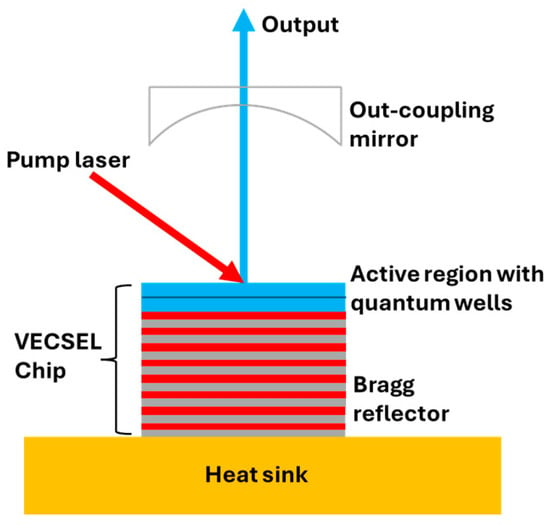
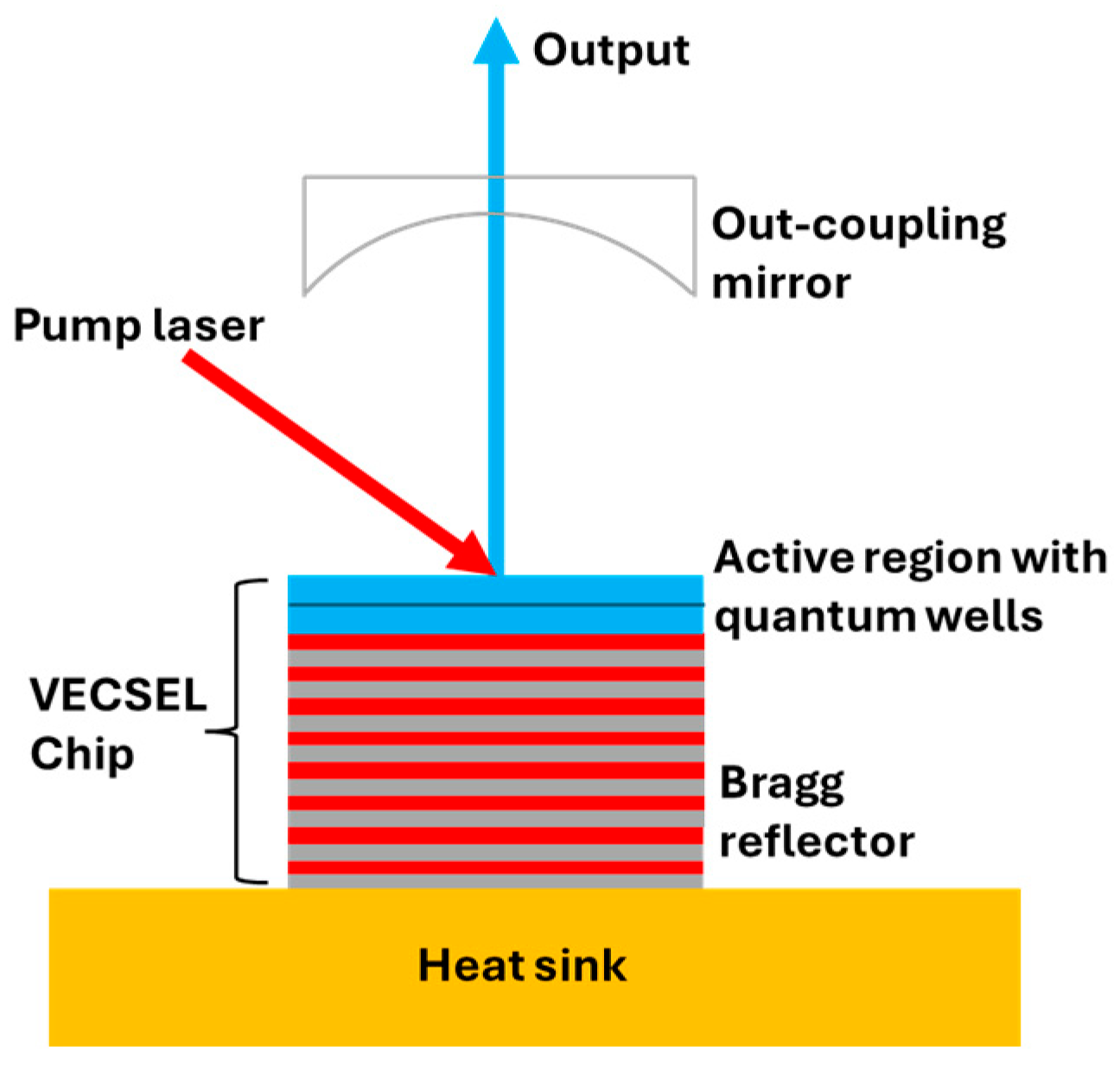
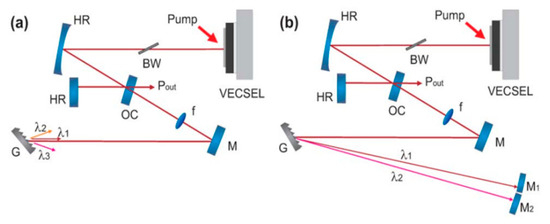
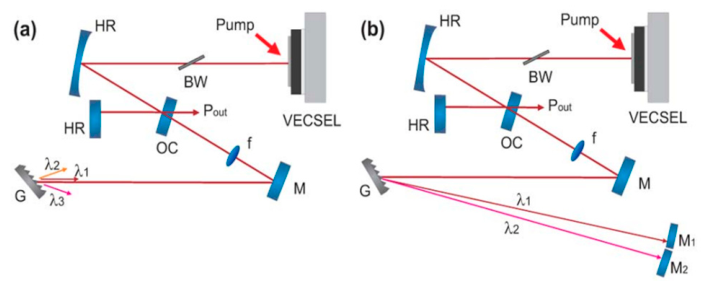
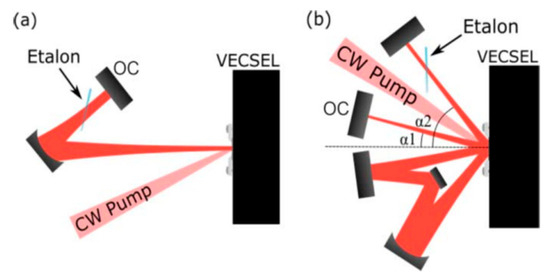
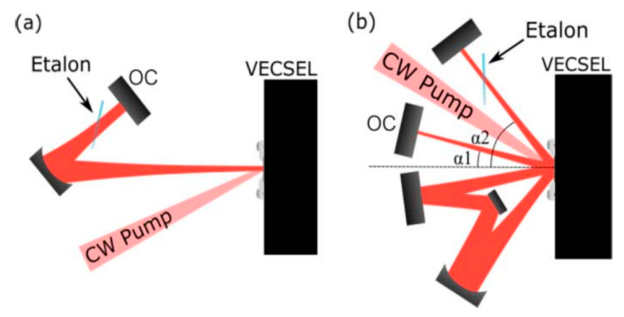
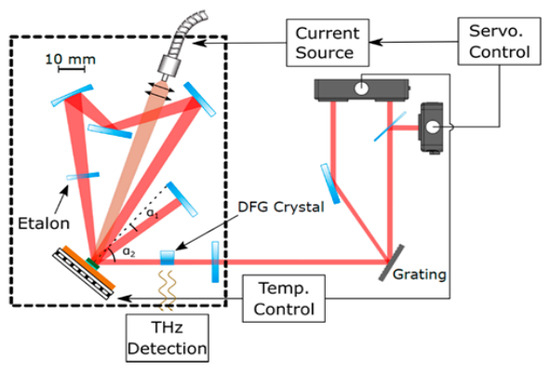
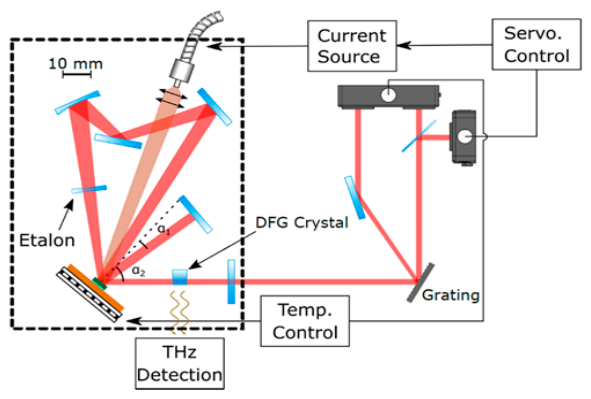
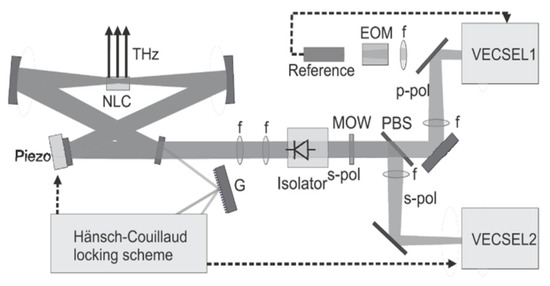
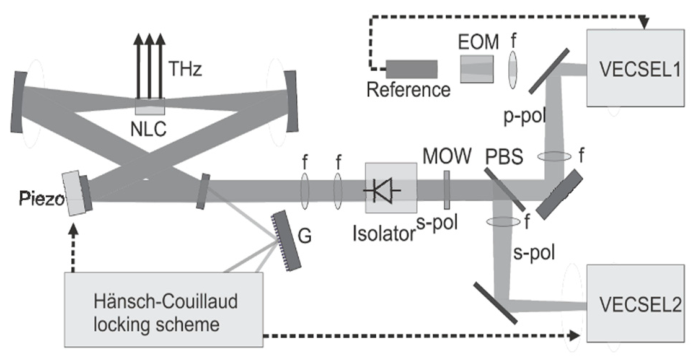
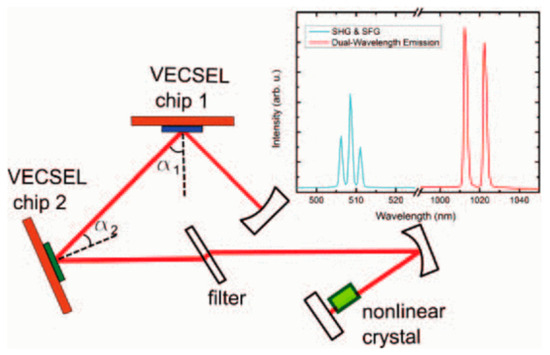
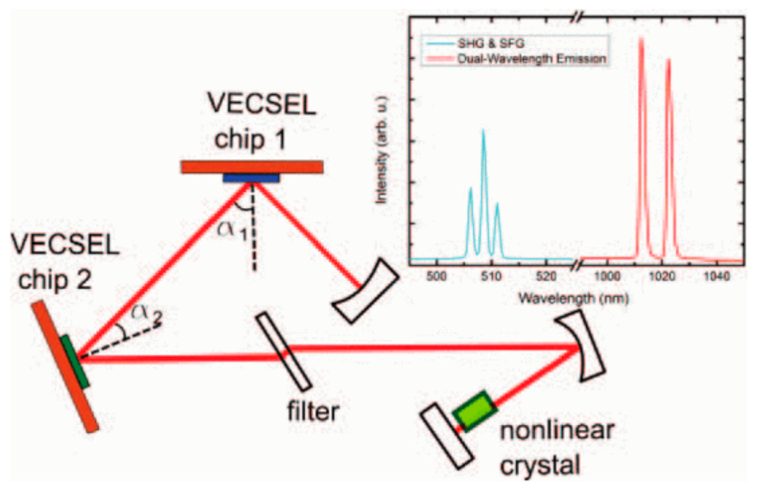
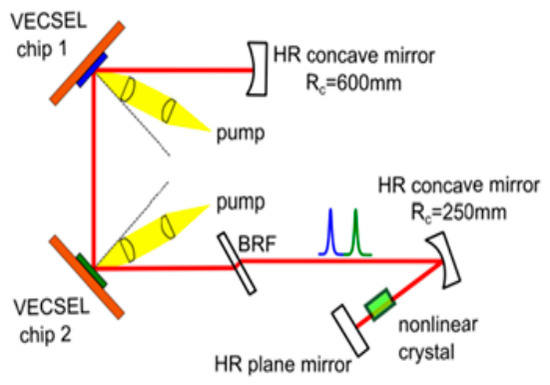
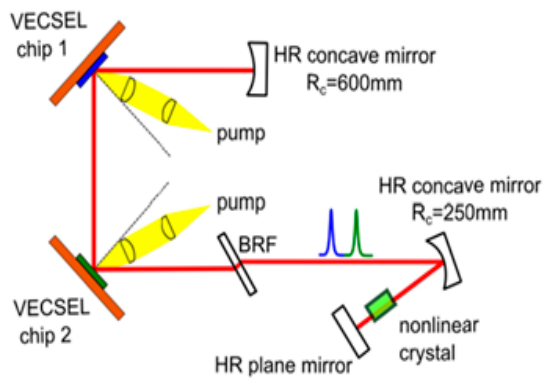
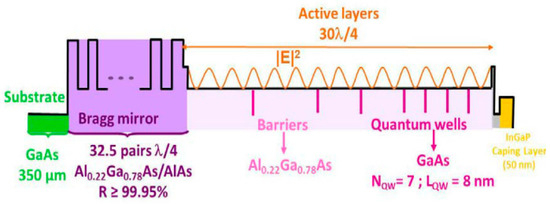
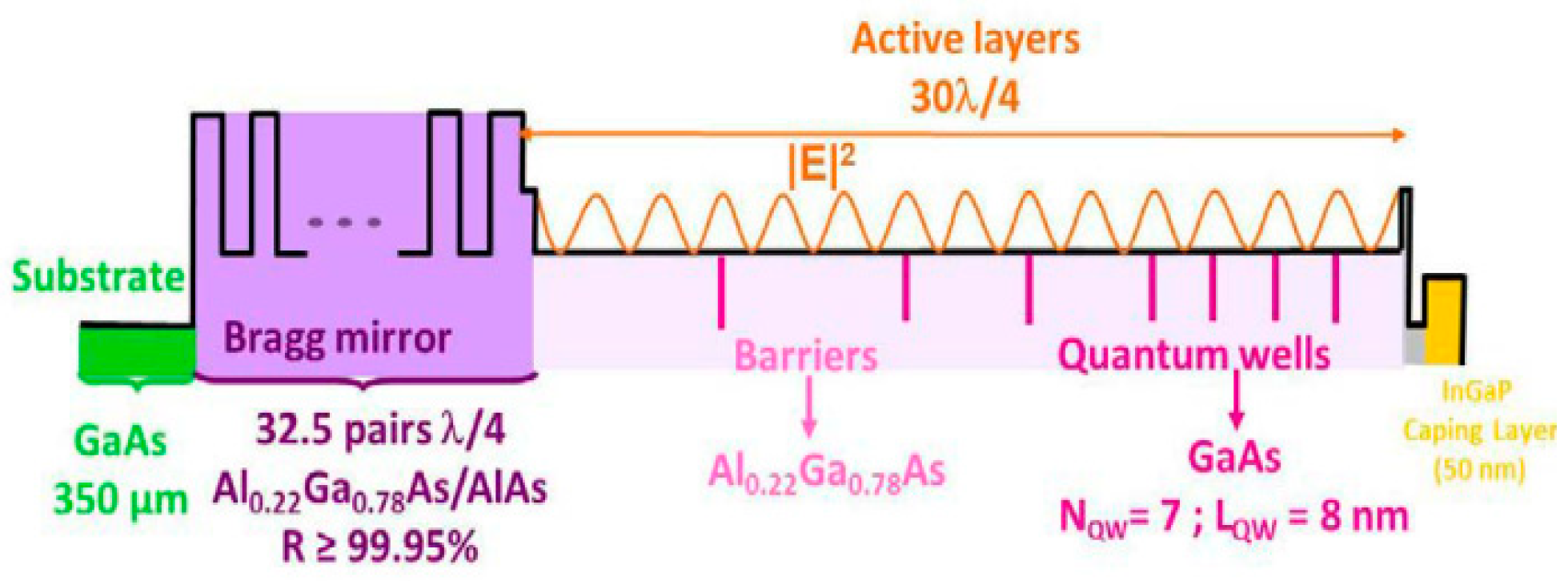
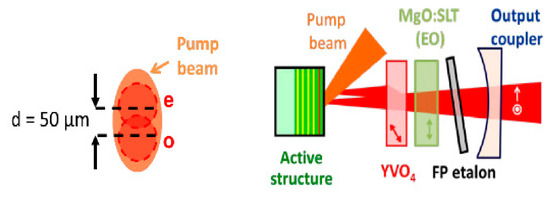
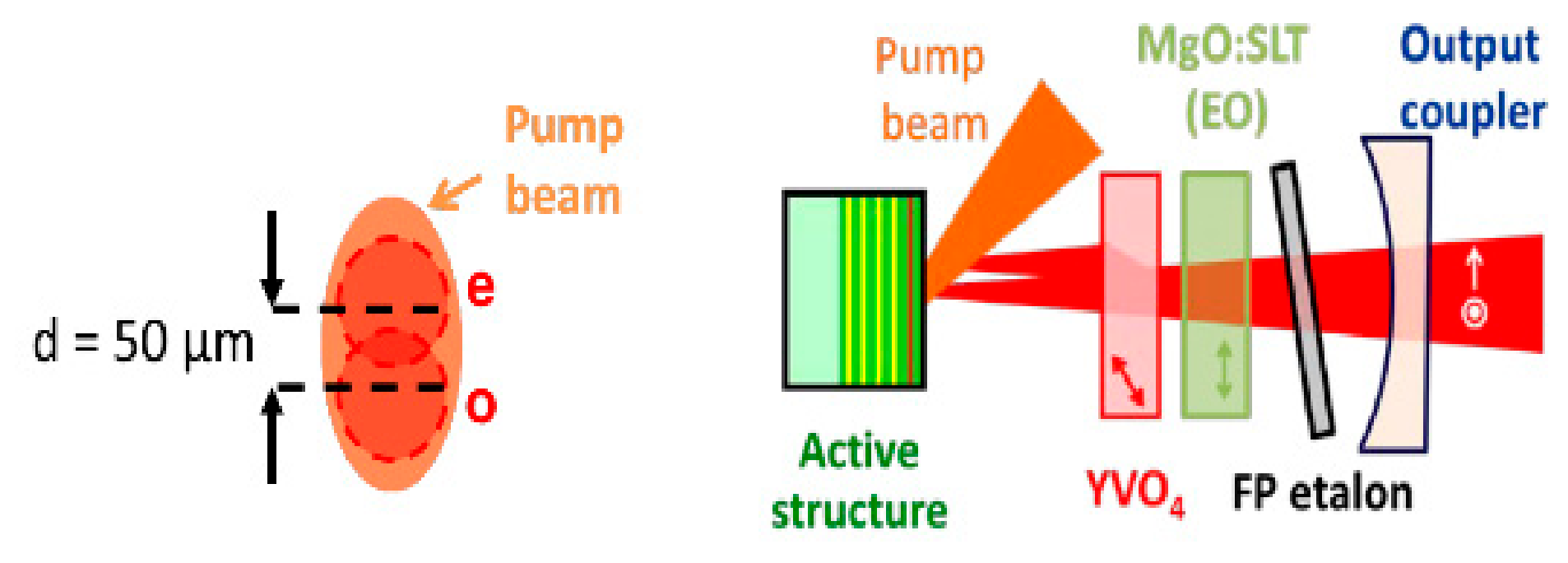
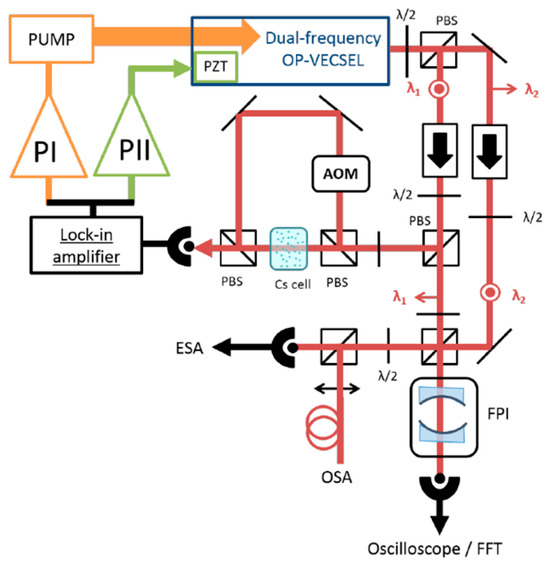
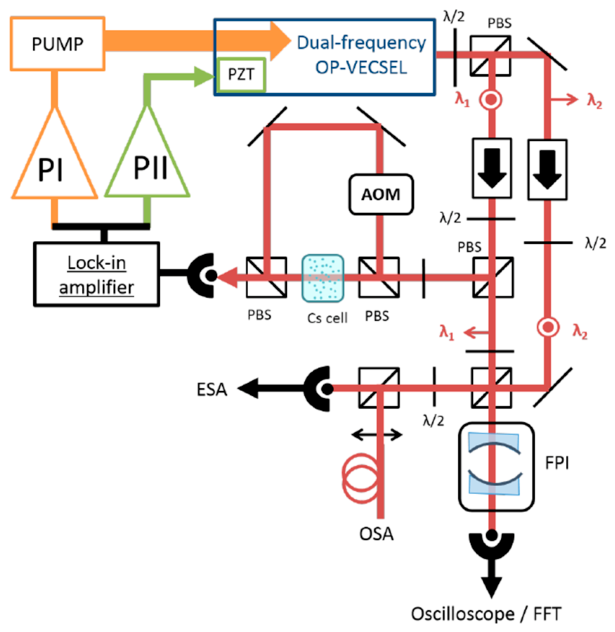
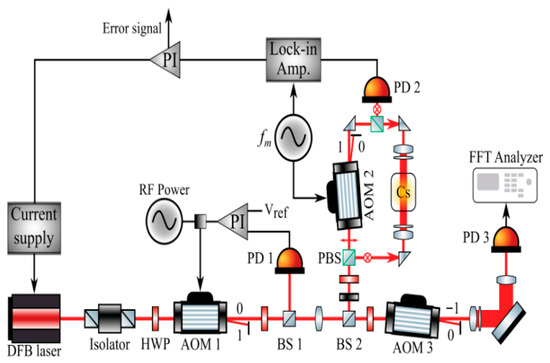
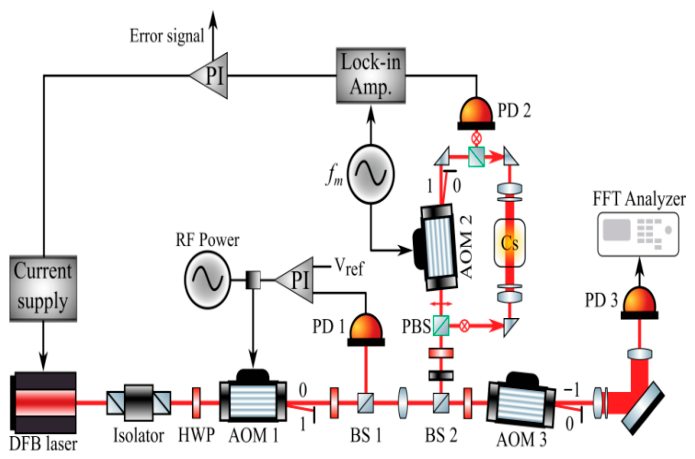
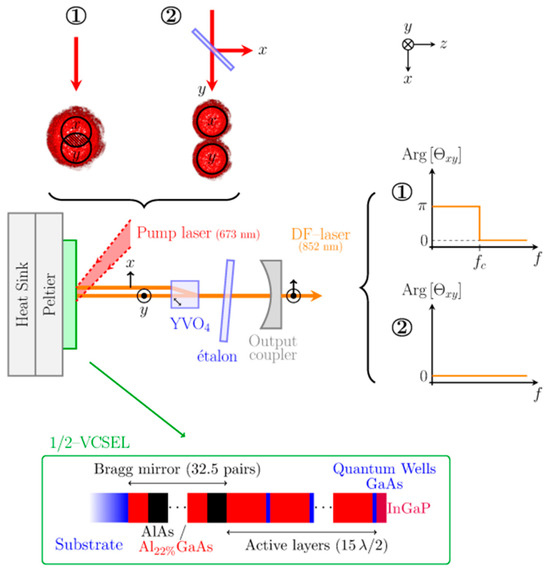
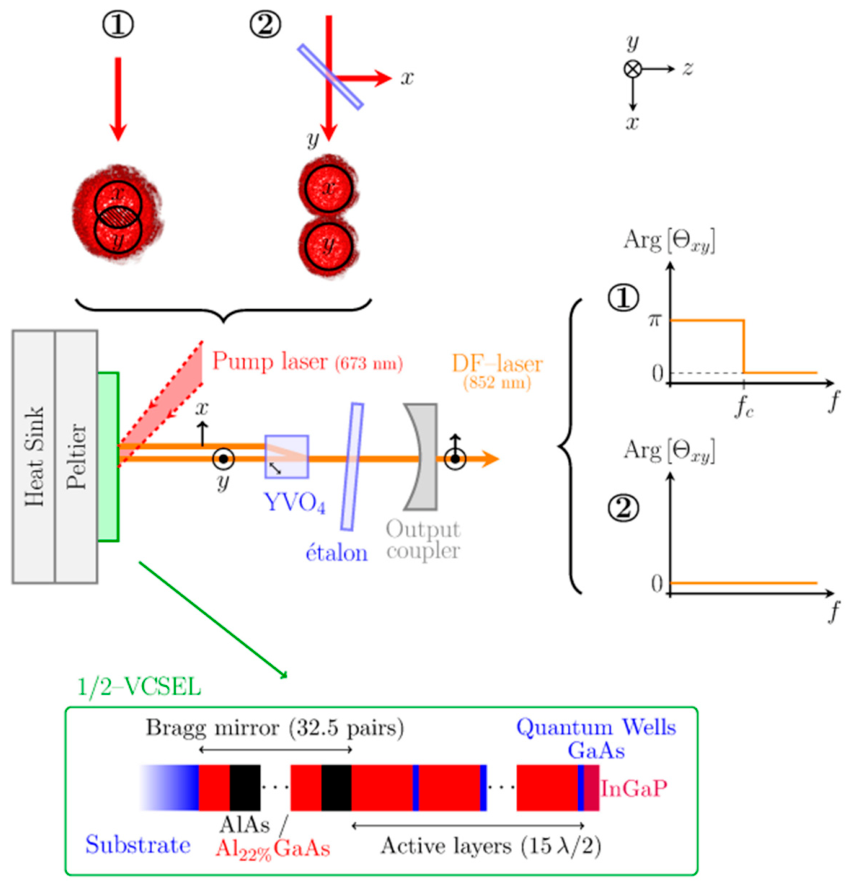
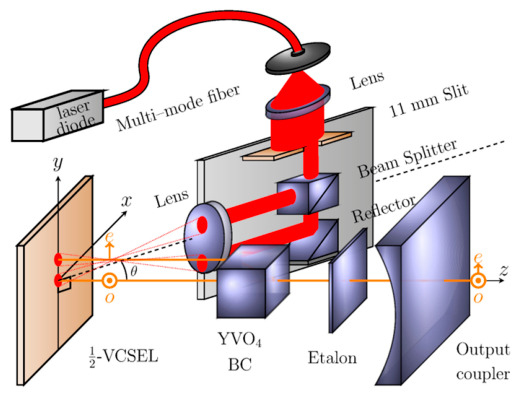
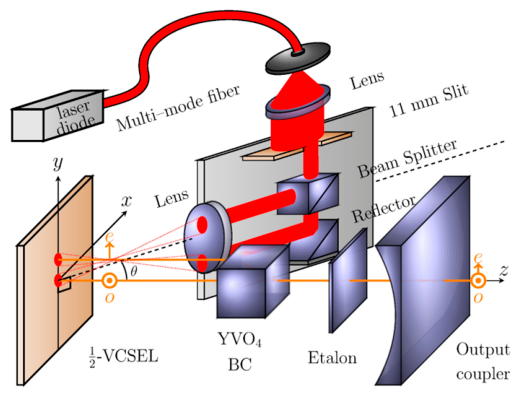

Disclaimer/Publisher’s Note: The statements, opinions and data contained in all publications are solely those of the individual author(s) and contributor(s) and not of MDPI and/or the editor(s). MDPI and/or the editor(s) disclaim responsibility for any injury to people or property resulting from any ideas, methods, instructions or products referred to in the content. |
© 2026 by the author. Licensee MDPI, Basel, Switzerland. This article is an open access article distributed under the terms and conditions of the Creative Commons Attribution (CC BY) license.