1. Introduction
Optical speckle [
1] refers to a granular interference pattern generated when coherent light is scattered from a rough surface or propagates through a random medium. This phenomenon arises due to the random phase variations introduced by scattering events, causing the reflected or transmitted wavefronts to interfere constructively and destructively in space. Speckle patterns are not merely noise; they encode valuable information about the scattering object or medium. Consequently, speckle analysis finds extensive applications in various scientific and engineering fields [
2], including surface roughness measurement [
3], deformation and vibration analysis via speckle interferometry [
4], biomedical imaging (e.g., blood flow monitoring) [
5,
6,
7,
8,
9,
10], and optical information processing [
11,
12,
13,
14,
15]. The statistical properties of speckle are well-described by random wave theory, making it a powerful tool for non-destructive testing and precision metrology.
With the rapid development of commercial spatial light modulators (SLMs), the generation and manipulation of structured light fields have progressed significantly, enabling deterministic control of optical wavefronts and leading to broad applications [
16] in particle manipulation, optical trapping, microscopy, and laser material processing. While these advances primarily focus on shaping deterministic optical fields, some research efforts have recently started to expand into the control of speckle and random light fields [
17,
18,
19,
20]. Owing to the dynamic programmability of modern SLMs, speckle patterns can be actively modulated in time, forming fluctuating speckle fields [
21] that form controllable random optical beams. Such engineered random light fields have enabled a range of emerging applications, including optical imaging (e.g., ghost imaging using super-Rayleigh speckles) [
22,
23,
24,
25,
26,
27,
28], holography [
29,
30,
31], and optical encryption [
32,
33,
34].
Beyond the control of complex coherence and statistical properties of optical speckle fields, recent studies have also explored the manipulation of the geometric morphology of random light fields, for example, through the realization of ring-shaped speckle patterns [
35]. However, the demonstrated geometries remain limited to specific forms [
36,
37], and a general strategy for generating speckle fields with flexible spatial morphologies is still lacking. In this work, we propose a random phase-coded array (RPA) as a general framework for reshaping the statistical properties of speckle patterns. The central idea is to use a phase profile as a deterministic unit cell and construct a spatially periodic array while independently assigning a global random phase to each unit cell. This hybrid structure preserves the intrinsic randomness required for speckle formation, with additional, designable degrees of freedom through the choice of the unit-cell phase-profile. By exploiting this architecture, the speckle pattern can be actively and flexibly reshaped. In particular, the reshaped speckle exhibits random intensity fluctuations, forming a random light field whose ensemble-averaged intensity distribution, referred to here as the statistical envelope, is governed by the Fourier spectrum of the unit cell. This enables intuitive and flexible control over the global structure of speckle fields without sacrificing their inherent randomness. The proposed RPA framework can generate customized random light fields and holds potential for applications in optical information processing, secure optical communication, and optical metrology.
2. Method and Theoretical Model
2.1. Concept of the RPA
Conventional speckle patterns are typically generated by coherent illumination of random phase objects, such as rough surfaces or diffusers, where the phase at each scattering point is generally considered to be uniformly distributed over the interval 0 to . In such configurations, the resulting speckle fields are largely determined by the statistical properties of the random phase distribution and the illumination conditions, offering limited freedom in tailoring the global spatial structure of the speckle pattern. To overcome this constraint and enable more flexible control over speckle geometries, we introduce a structured approach based on a periodic arrangement of phase-modulated elements.
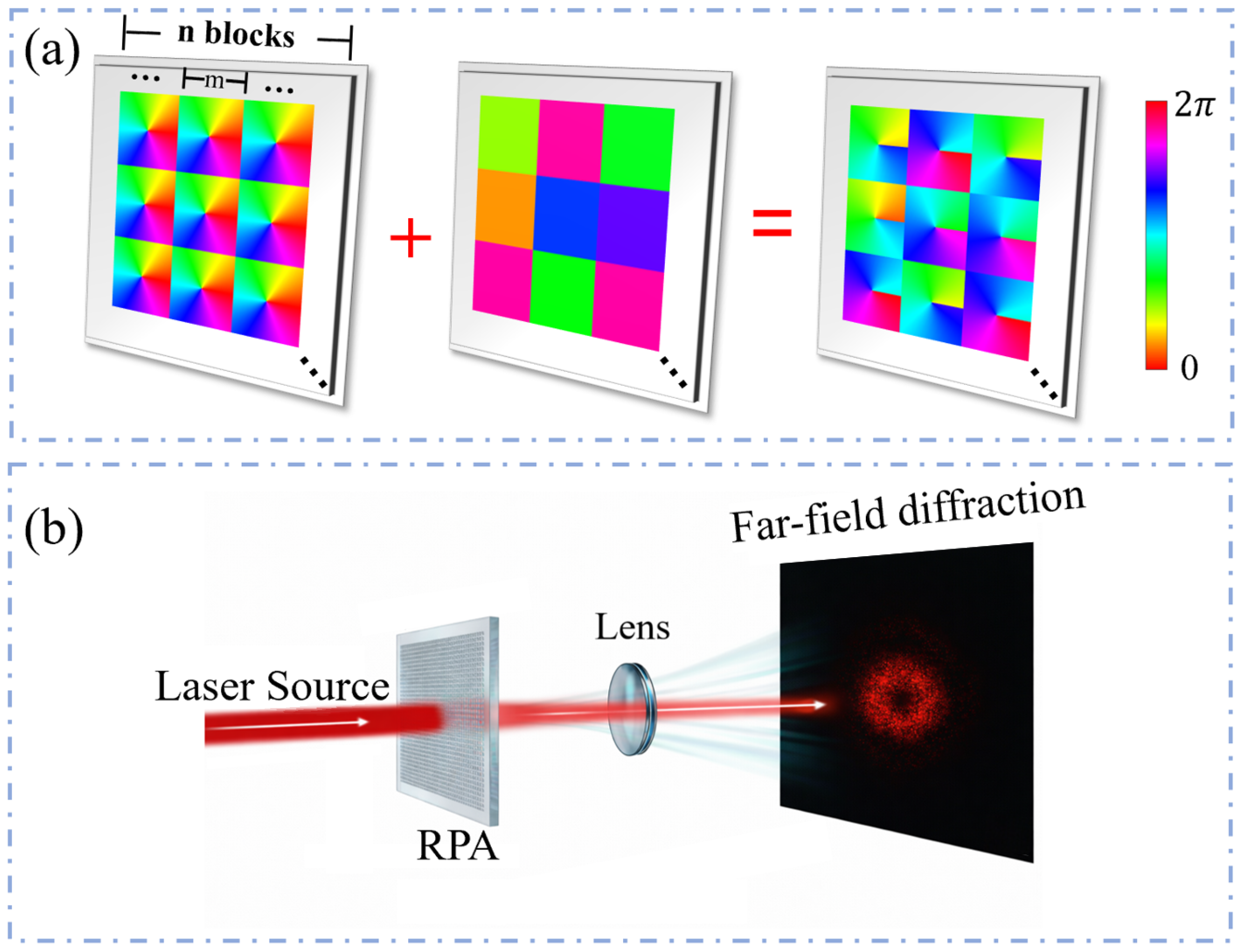
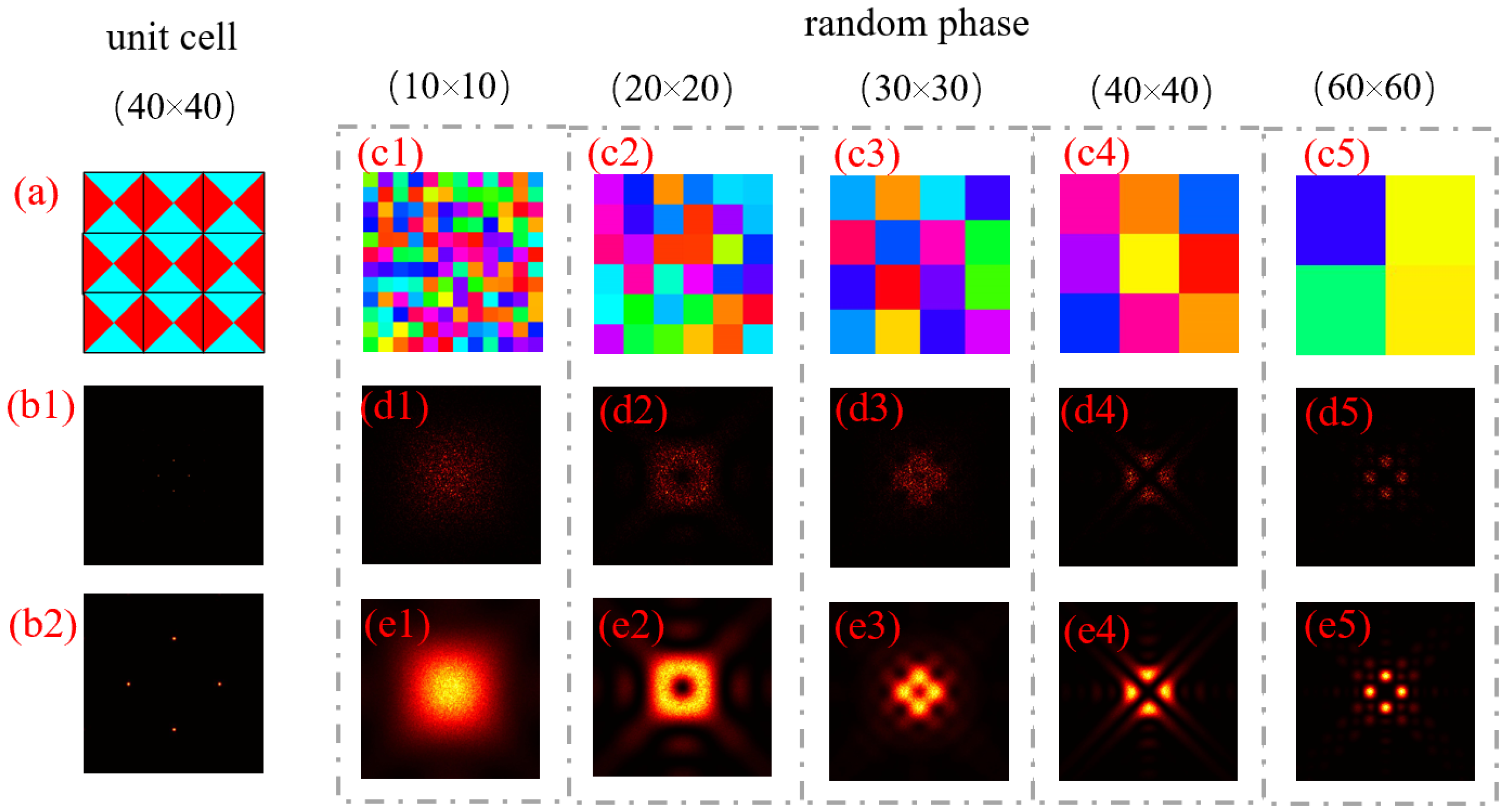
In the proposed scheme, a phase profile is used as the fundamental building block of the system and is treated as a unit cell, as illustrated in
Figure 1a. The unit cell occupies an m × m pixel region in the spatial domain. Identical unit cells are periodically arranged along both the horizontal and vertical directions, with
n cells in each dimension, forming a square array with an overall size of nm × nm pixels.
To introduce controlled randomness, a global random phase is imposed on each unit cell, while the random phases assigned to different unit cells are mutually independent and statistically uncorrelated. The randomness of the resulting speckle field, therefore, originates from the independently assigned random phases among unit cells, whereas the phase profile within the unit cell serves as a deterministic and designable parameter. This combination leads to the formation of an RPA.
As shown in
Figure 1b, the RPA is uniformly illuminated by a coherent beam, and the speckle pattern generated by the RPA is recorded in the far field. In conventional fully developed speckle fields, the statistical properties are typically isotropic, resulting in speckle patterns with no preferred orientation. In contrast, within the RPA framework, directional selectivity can be deliberately introduced through the design of the unit-cell phase profile. For example, one-dimensional phase modulation, elliptically symmetric structures, or oriented spatial-frequency distributions lead to anisotropic Fourier spectra of the unit cell, which in turn give rise to anisotropic speckle patterns in the far field.
To experimentally obtain the corresponding random light fields, we employ the same unit-cell structure while varying the random phase distributions to generate multiple RPAs. By sequentially displaying these RPAs on the SLM, the speckle patterns fluctuate temporally. The ensemble of these fluctuating speckle realizations constitutes the desired random light field associated with the designed unit cell.
2.2. Theoretical Analysis of Far-Field Diffraction
In the phase-modulation plane labeled by the transverse spatial coordinates x and y, let the phase distribution of a single unit cell be
. The corresponding complex amplitude transmittance,
, of the unit cell can be expressed as
An
array of unit cells is constructed by periodically replicating the unit cell, and an independent and identically distributed random phase
is imposed on the
-th unit cell. The overall complex transmittance of the RPA can then be written as
where
and
denote the periodic spacing of the unit cells along the
x and
y directions, respectively.
Under normal illumination by a coherent plane wave with wavelength
, the complex amplitude
at the back focal plane (i.e., the Fourier plane) of a lens with focal length
f can be expressed as
where
and
represent the spatial frequency coordinates corresponding to
x and
y directions in the Fourier domain, respectively.
By invoking the linearity and shift theorem of the Fourier transform, the above expression can be rewritten as
where
is the Fourier spectrum of the unit cell, and the array factor
is given by
The far-field intensity distribution is therefore expressed as
Taking the ensemble average over the random phases and using
the cross-interference terms between different unit cells vanish. Consequently, the ensemble-averaged far-field intensity is proportional to the squared modulus of the unit-cell transfer function,
It should be noted that the above derivation is obtained under ideal assumptions; namely, the inter-cell phases are independent and uniformly distributed over , and the result corresponds to an ensemble average over many realizations. Under these conditions, the cross-interference terms statistically vanish, resulting in an intensity envelope determined by the unit-cell spectrum. The proportionality constant depends on factors such as the number of unit cells and the intensity of illumination.
2.3. Design Scheme for Customized Speckle Shapes
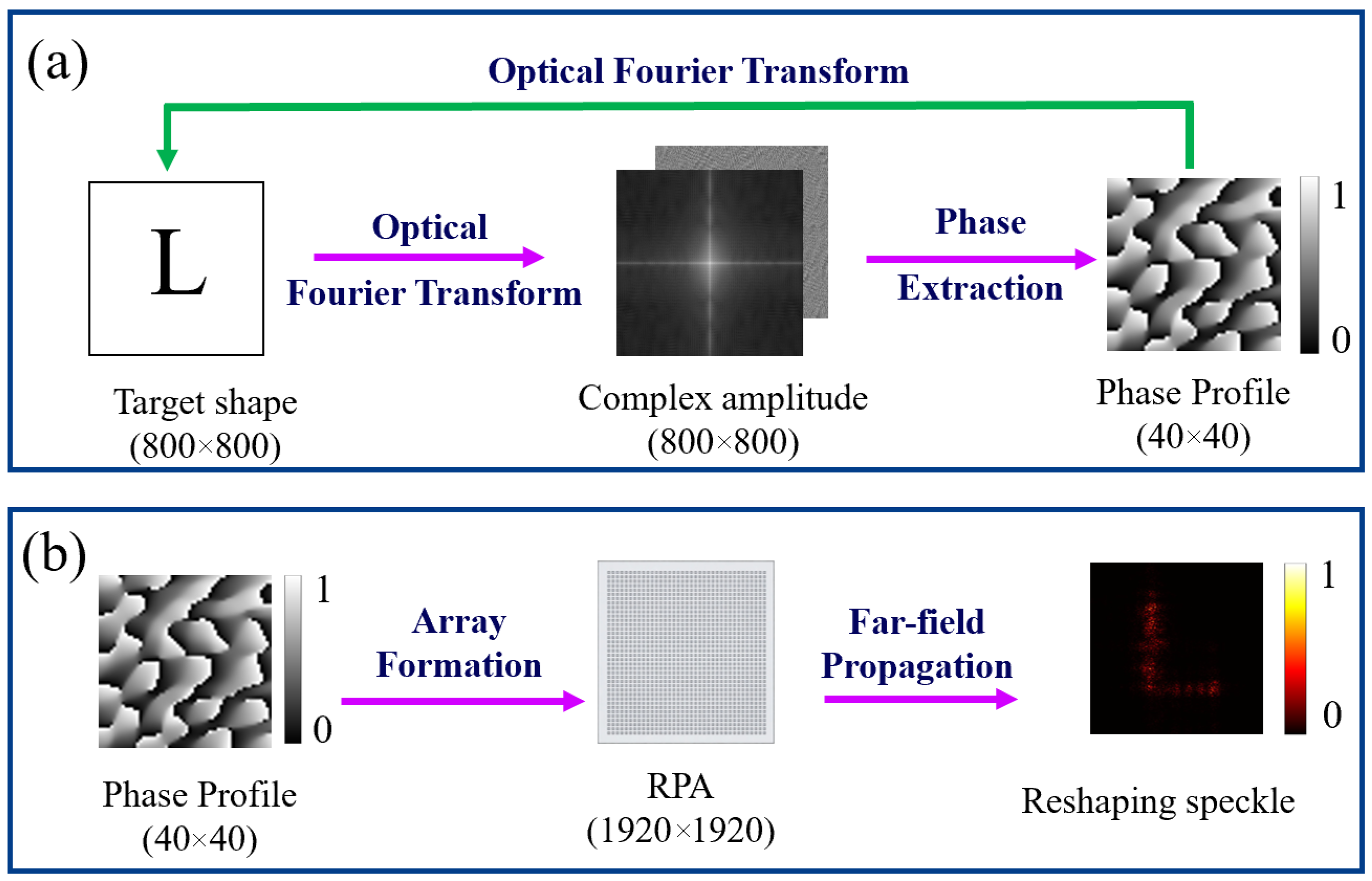
To generate a customized speckle shape, an iterative phase-retrieval procedure, conceptually analogous to the Gerchberg–Saxton (GS) algorithm [
38], is employed to determine the phase profile of the unit cell, as illustrated in
Figure 2a.
For example, an
pixels image of the letter “L” is selected as the target intensity distribution. First, a random phase distribution of size
pixels is generated and then zero-padded to
pixels. An optical Fourier transform is performed to obtain the complex amplitude distribution on the output plane. Its amplitude is then replaced by that of the target image, while the phase component is retained. The updated complex amplitude distribution is subjected to another optical Fourier transform, yielding the complex amplitude on the input plane. From this distribution, only the central
pixels region of the phase is extracted. The procedure of zero-padding the extracted phase, performing a Fourier transform, replacing the amplitude on the output plane with the target amplitude while preserving the phase, and then transforming back to extract the updated input phase is repeated iteratively. Through this iterative loop, the discrepancy between the amplitude distribution on the output plane and the target amplitude is gradually minimized, thereby approximating the desired intensity distribution. After 200 iterations, the phase distribution on the input plane is extracted, and its central
pixels region is taken as the unit cell of the RPA. When the constructed RPA is illuminated with coherent light, as shown in
Figure 1b, a far-field speckle pattern is generated whose overall envelope follows the shape of the letter “L”.
Figure 2b schematically illustrates the generation of speckle patterns by the RPA. A phase profile is first designed as the unit cell and then used to construct the RPA following the procedure shown in
Figure 1a. When illuminated by the optical system depicted in
Figure 1b, the RPA generates a speckle pattern in the far-field plane.
2.4. Dependence of Speckle Characteristics on System Parameters
Having established that the ensemble-averaged far-field intensity distribution is governed by the unit-cell spectrum, we now proceed to analyze the statistical properties of the speckle field. First, we consider the speckle grain size.
Let the illumination field be described by an amplitude window function
. The optical field immediately after the RPA can then be written as
After Fourier transformation by a lens, the complex amplitude at the back focal plane (Fourier plane) is given by
Under the condition of fully developed speckle, the normalized mutual coherence function of the far-field speckle pattern is given by the Fourier transform of the effective source intensity distribution,
where
and
denote the separations between two points in the spatial frequency domain. Because the RPA exhibits a spatially uniform intensity distribution in the ensemble-averaged sense, the above expression indicates that the spatial correlation properties of the far-field speckle pattern are solely determined by the illumination beam profile.
For analytical convenience, we consider the ideal case of Gaussian beam illumination,
where
and
denote the beam waist radii of the amplitude distribution. The corresponding intensity distribution is
. The mutual coherence function can then be evaluated analytically. The total intensity, obtained by integrating
over the entire plane, is given by
while the Fourier transform of the intensity distribution yields
Consequently, the normalized mutual coherence function takes the form
This two-dimensional Gaussian function defines the speckle correlation width through its
decay,
Mapping the spatial frequency coordinates to the Fourier plane yields the speckle grain size
When the Gaussian beam illuminates the entire
pixels RPA region, it is convenient to choose the beam waist such that the intensity drops to
of its peak value at the array boundary
. This condition yields
and the speckle grain size can be approximated as
This result clearly indicates that the speckle grain size is inversely proportional to the illumination beam size.
Beyond the local speckle statistics, the global spatial extent of the speckle pattern is governed by the Fourier spectrum of the unit cell. We now examine how the scaling of the unit-cell size affects the overall speckle morphology while keeping the array size fixed.
As derived in the theoretical analysis, for an RPA constructed from a unit cell with transmittance
, the ensemble-averaged far-field intensity distribution is proportional to the squared magnitude of the Fourier spectrum of the unit cell,
where
denotes the Fourier transform of the unit-cell transmittance.
If the spatial size of the unit cell is scaled from
m to
, where
a is a constant scaling factor, the corresponding transmittance can be written as
. According to the scaling property of the two-dimensional Fourier transform, its spectral representation becomes
This relation indicates that the spectral features of the unit cell contract toward lower spatial frequencies by a factor of
. Since the spatial coordinates in the Fourier plane are proportional to the spatial frequency variables, increasing the unit-cell size leads to a corresponding reduction in the characteristic spatial scale of the far-field speckle pattern, provided that the overall array size remains fixed.
3. Numerical Simulations
We performed numerical simulations to model the speckle field generation process. The wavelength was set to
. The computational window consisted of
pixels. A Gaussian envelope
with
was applied to represent the finite beam profile and normalized prior to propagation. The Gaussian beam was then modulated by the RPA, and the resulting optical field propagation was implemented via an optical Fourier transform using a lens with a focal length of
. The far-field speckle patterns were then obtained by calculating the intensity distribution of the propagated field.
3.1. Illumination Beam Size and Speckle Grain Size
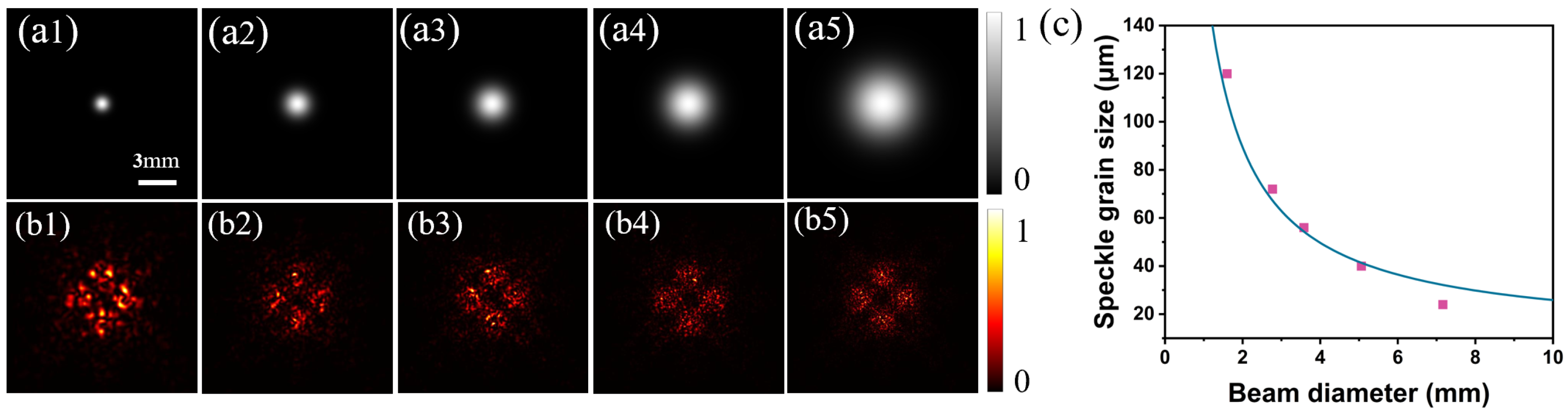
Figure 3(a1–a5) show illumination beams with different diameters, while
Figure 3(b1–b5) display the corresponding far-field speckle patterns.
To quantitatively determine the speckle grain size, an ensemble-averaged second-order intensity correlation analysis was performed. Specifically, 5000 independent speckle realizations were generated for each illumination condition. For a fixed spatial position, the normalized second-order intensity correlation function was calculated as
where
denotes averaging over the 5000 independent realizations. The speckle grain size was defined as the full width at half maximum (FWHM) of the central peak of
. The same ensemble-averaging procedure was applied consistently for all simulated cases. By extracting the speckle grain size using this method, the dependence of speckle size on the illumination beam diameter is summarized in
Figure 3c.
The numerical results agree well with the theoretical analysis, confirming the inverse relationship between speckle grain size and illumination beam size.
3.2. Effect of Unit-Cell Size
As shown in
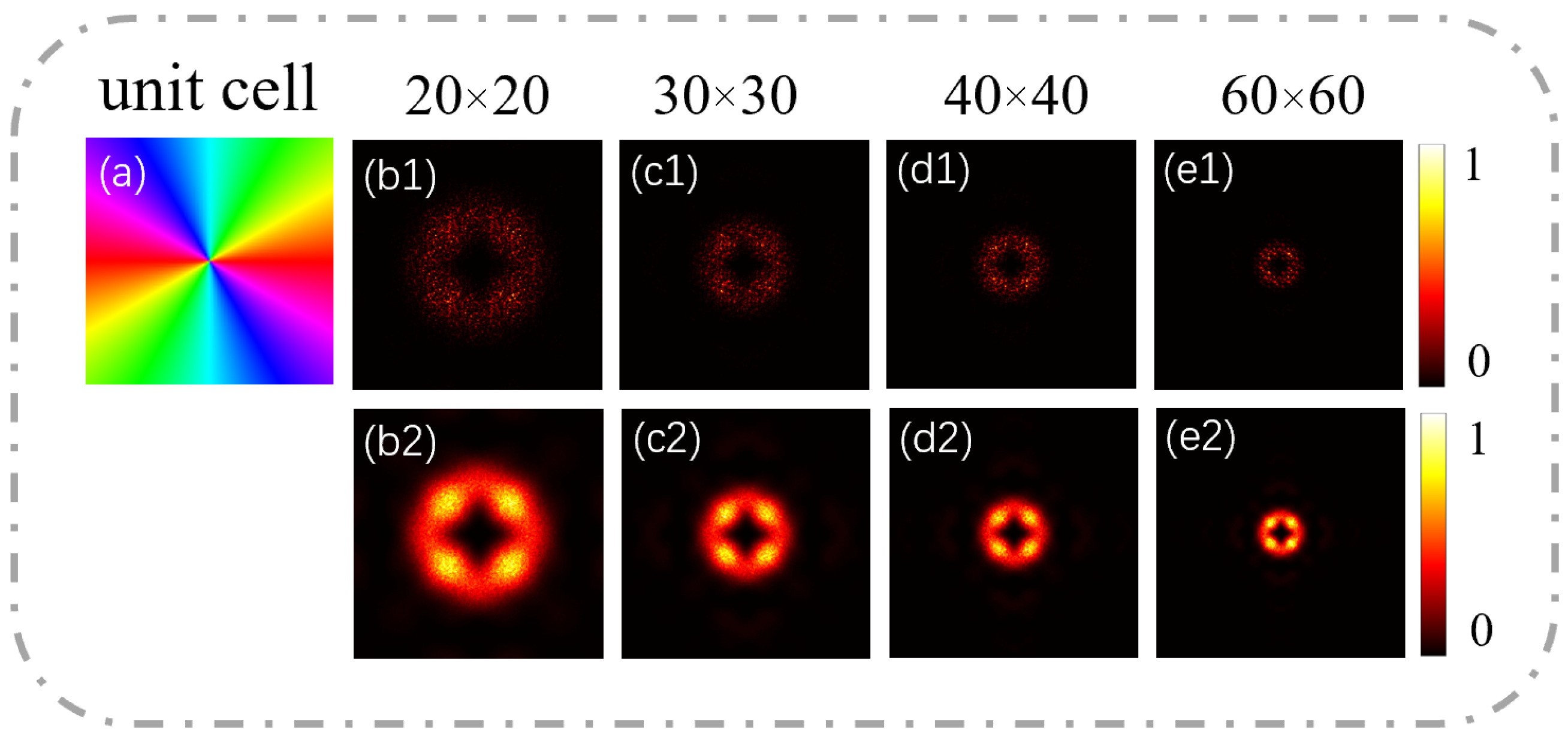
Figure 4, numerical simulations were performed to investigate the influence of the unit-cell size on the random light field generated by the RPA.
A vortex phase distribution with a topological charge of
was first selected as the phase profile, as shown in
Figure 4a. The phase profile was resized to form a
pixel unit cell. With the overall array size set to
pixels, 54 unit cells were arranged along both the horizontal and vertical directions to construct the RPA. Under plane-wave illumination, the far-field speckle pattern is shown in
Figure 4(b1). Subsequently, the unit-cell size was increased to
pixels,
pixels, and
pixels, respectively, while keeping the overall array size fixed at
pixels, the corresponding single-shot reshaped speckles are shown in
Figure 4(c1–e1).
To evaluate the speckle patterns generated by RPAs with different unit-cell sizes, we calculated the local speckle contrast
, where
denotes the standard deviation of the intensity and
represents the mean intensity within a spatially uniform region. For the speckle patterns shown in
Figure 4(b1–e1), the corresponding contrast values are
,
,
, and
, respectively. These values are close to unity, indicating that the speckle patterns generated under different unit-cell sizes are fully developed. In principle, a larger number of unit cells yields speckle statistics that more closely approach the ideal ensemble-averaged behavior. However, in practice, the overall array size is constrained by the finite pixel count of the spatial light modulator, which limits the maximum number of unit cells that can be accommodated. Nevertheless, the measured speckle contrast values demonstrate that, even with this limited array size, the resulting speckle fields exhibit a high degree of randomness, confirming that the finite number of unit cells employed in our experiments is sufficient to achieve fully developed speckle statistics.
Statistical envelopes of random light field obtained by averaging over 100 independent reshaped speckles are shown in
Figure 4(b2–e2). The simulation results clearly demonstrate that increasing the unit-cell size leads to a systematic reduction in the overall spatial scale of the far-field speckle pattern. This behavior is fully consistent with the theoretical analysis based on the Fourier scaling property, thereby confirming the effectiveness of unit-cell size as a key parameter for controlling speckle statistics in the proposed RPA framework.
Interestingly, the scaling behavior observed in the RPA framework remains fundamentally consistent with classical speckle theory. Specifically, the overall size of the illumination beam determines the speckle grain size in the far field, whereas the unit-cell dimension influences the spectral characteristics of the transmitted field and thereby governs the spatial scale of the ensemble-averaged speckle envelope. This separation of roles—where the macroscopic aperture controls the speckle granularity and the microscopic structural element shapes the spectral distribution—is fully consistent with the physical principles underlying conventional speckle formation. These results indicate that the proposed RPA scheme preserves the essential Fourier-optical mechanisms of speckle generation while enabling programmable statistical control.
3.3. Effect of Random Phase Modulation
In the previous subsection, we analyzed how the unit-cell size influences the random light field generated by the RPA. We now extend this analysis to examine the effect of the random phase.
In the preceding analysis, the RPA was constructed by periodically replicating a single unit cell and applying an independent random phase to each unit cell as a whole. In this configuration, the spatial extent of each random phase modulation—denoted as pixels—coincided with the unit-cell size m × m pixels (i.e., ). Here, we instead vary the size of the random phase blocks while keeping the unit-cell size fixed. Specifically, we partition the array into contiguous blocks of size pixels, each assigned an independent random phase, regardless of the unit-cell boundaries, and examine how this affects the resulting random light field.
A phase profile with a size of
pixels is chosen as the unit cell. As shown in
Figure 5a, when no random phase modulation is introduced across the array elements, the far-field diffraction pattern of the periodically replicated structure is shown in
Figure 5(b1). In this case, only four bright spots appear near the center of the spatial-frequency plane, corresponding to the discrete diffraction orders of the coherent array. Due to the low overall intensity, the central region of the diffraction pattern is magnified for clarity by extracting a subregion with one-quarter of the original side length, as shown in
Figure 5(b2). The presence of discrete bright spots indicates that strong coherent interference among array elements dominates the far-field response, preventing the formation of a speckle field and obscuring the spectral information of an individual unit cell.
Next, while keeping the unit-cell size of
pixels, we obtained the random phase modulation patterns (shown in
Figure 5(c1–c5)) with the random phase block sizes of
,
,
,
, and
pixels, respectively. The corresponding single-shot reshaped speckle patterns are shown in
Figure 5(d1–d5), while the global statistical envelopes of the random light field, obtained by averaging over 100 independent realizations, are presented in
Figure 5(e1–e5).
We cropped a central region of
pixels from each speckle pattern shown in
Figure 5(d1–d5). This region is chosen to be larger than the main speckle area while avoiding the inclusion of excessive background that could bias the statistical analysis. Based on these cropped images, we computed both the global speckle contrast and the local speckle contrast. The global contrast is calculated over the entire
pixels region, whereas the local contrast is obtained using a sliding window of
pixels within the speckle region, which characterizes the local intensity fluctuations.
The calculated contrast values are summarized in
Table 1.
In speckle statistics, a fully developed speckle field is characterized by a local contrast close to unity (
), indicating a high degree of randomness in the intensity distribution. As shown in
Table 1, when the random phase block is relatively small, the local speckle contrast remains near 1, suggesting that the intensity distribution progressively approaches that of a fully developed random speckle state. It should be noted that the global contrast is computed over a region that includes the overall intensity envelope; therefore, its values are significantly larger than 1 and vary considerably with the size of random phase blocks. This behavior primarily reflects changes in the global structure of the speckle field rather than its local randomness.
Numerical simulations indicate that when the size of the random phase blocks is smaller than that of the unit cell, the generated speckle patterns tend to approach conventional isotropic speckle fields. This behavior originates from the effective disruption of the microscopic structure of the unit cell, which prevents its Fourier signature from manifesting in the far-field intensity distribution. In contrast, when the size of the random phase blocks exceeds that of the unit cell, the structural information encoded in the RPA is expected to be preserved, leaving open the possibility for such structured speckle to be transmitted through scattering media in future studies.
4. Experimental Results
Experimentally, we observe the reshaped speckle and the corresponding random light fields generated by the RPA. A He-Ne laser operating at a wavelength of 632.8 nm was first spatially filtered and collimated to produce a planar wavefront, and then expanded to a beam diameter of approximately 2 cm. The phase distribution of the RPA was first linearly mapped onto the modulation range of the spatial light modulator to generate the corresponding computer-generated hologram (CGH), with a blazed grating superimposed. The CGH had a resolution of pixels and was loaded onto the central region of a spatial light modulator (Holoeye VIS-016, pixels, pixel pitch 8 µm, Holoeye, Berlin, Germany), which was uniformly illuminated by the expanded beam. Due to the presence of the grating, the information-carrying signal light was diffracted into the diffraction order, thereby spatially separating it from the unmodulated zero-order reflection, including residual reflections originating from pixel gaps. To isolate the desired signal, an aperture was placed at the Fourier plane of the SLM (the back focal plane of the lens), allowing only the diffraction order to pass while effectively blocking the zero-order and other higher-order stray light. The resulting reshaped speckle patterns generated by the RPA were recorded by a CMOS-based camera (MER-231-41U3, pixels, Daheng, Beijing, China).
As shown in
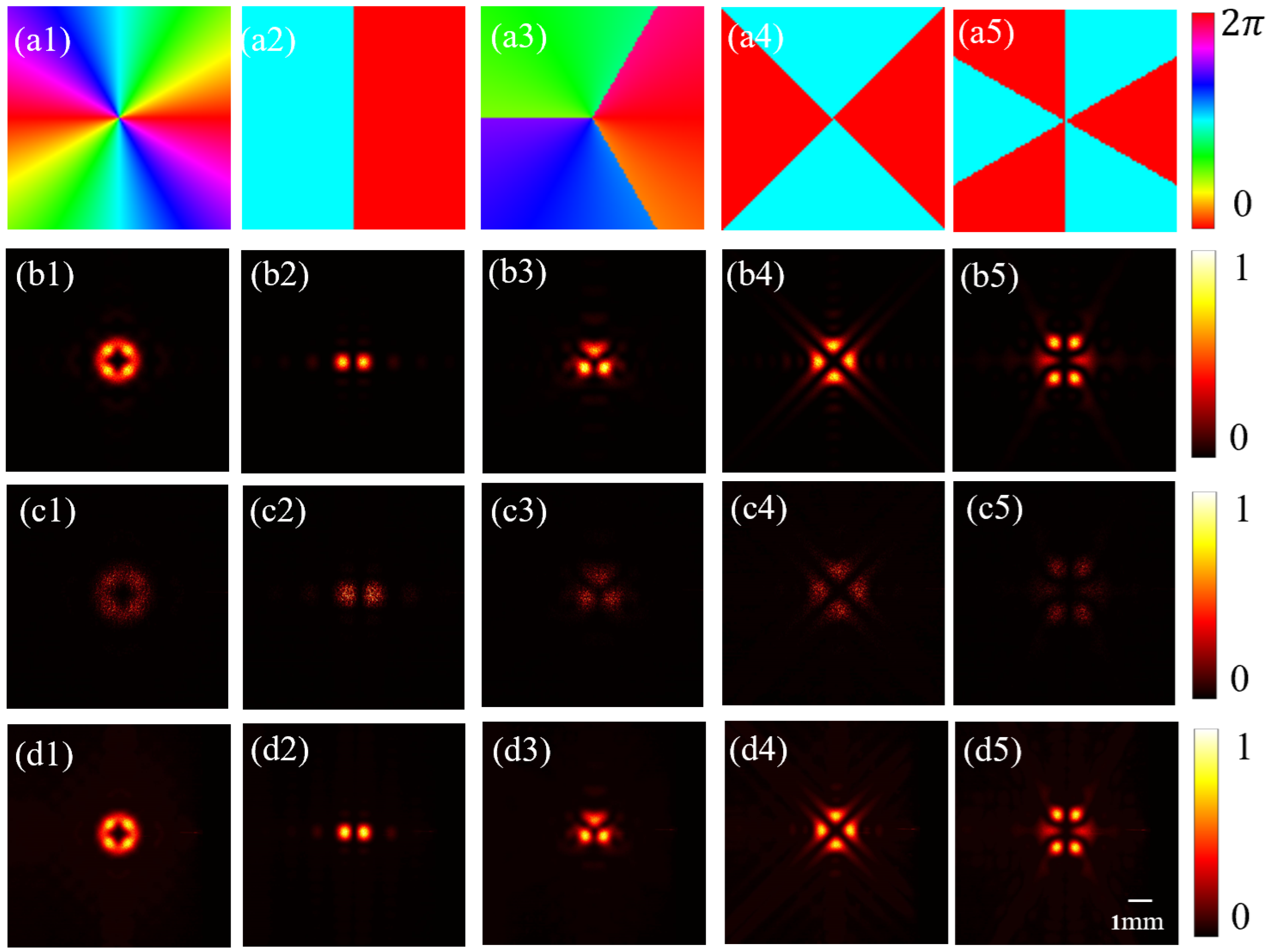
Figure 6(a1–a5), several different phase profiles are selected as input unit cells. Consistent with the scheme illustrated in
Figure 1a, the random phases are uniformly distributed over
, and the size of each random phase block is set equal to that of the unit cell. Following the procedure illustrated in
Figure 1a, each phase profile is periodically replicated and combined with independent random phase modulation to construct the corresponding RPA. The fabricated RPA is then illuminated by a collimated plane wave, and the resulting reshaped speckle patterns are recorded.
The numerical simulation results are presented in
Figure 6b. Specifically, the statistical envelopes of the random light field in
Figure 6(b1) reproduce the Fourier magnitude of the phase profile shown in
Figure 6(a1), and similar correspondence is observed for the remaining cases in
Figure 6(b2–b5). These results indicate that, under ideal conditions, the proposed forward encoding scheme effectively maps the spectral information of the unit cell onto the far-field speckle intensity distribution of the RPA.
Figure 6(c1–c5) show experimental results of single-shot reshaped speckle and
Figure 6(d1–d5) show the global statistical envelope of the random light field obtained by averaging over 100 independent reshaped speckles in experiment.
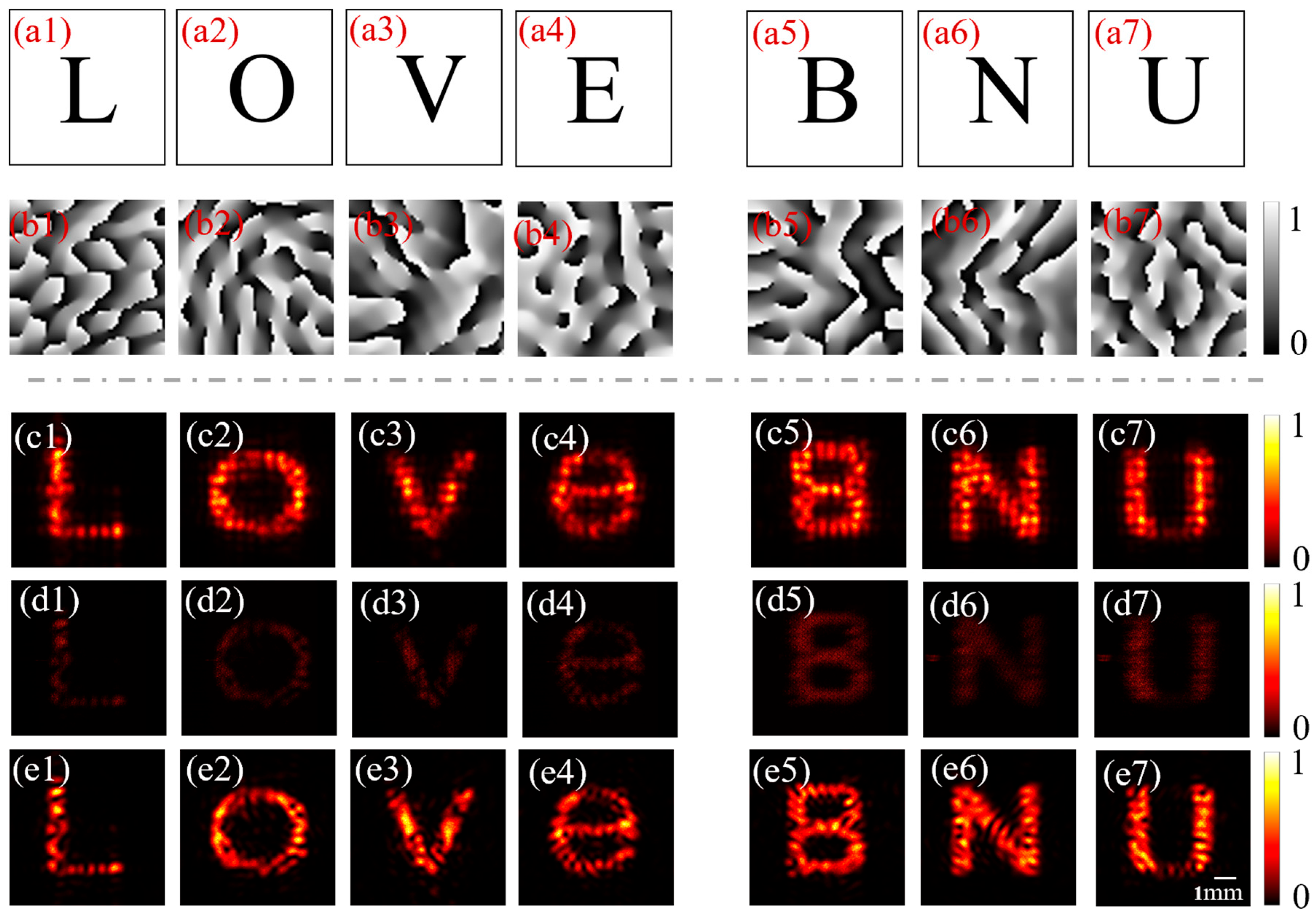
Figure 7 presents the numerical and experimental results of customized speckle patterns and random light fields generated by the RPA through tailored unit-cell designs. The desired target shapes, including the letters
L,
O,
V,
E,
B,
N, and
U, are shown in
Figure 7a. Following the iterative phase-retrieval process illustrated in
Figure 2a, a phase profile is retrieved for each target by extracting the phase component of its Fourier spectrum. The obtained phase profile, shown in
Figure 7b, is then employed as the unit cell to construct the corresponding RPA, which produces a far-field speckle pattern encoding the prescribed target shape.
The numerical simulation results of the global statistical envelope shown in
Figure 7c, obtained by averaging over 100 independent reshaped speckles, demonstrate that the spatial features of the target shapes are consistently reproduced in the far-field intensity distributions, thereby verifying the effectiveness of the inverse design method within the theoretical framework.
Figure 7d,e present the corresponding experimental results, where
Figure 7d shows single-shot reshaped speckle and
Figure 7e shows the global statistical envelope of random light field obtained by averaging over 100 independent reshaped speckles.
To quantitatively evaluate the similarity between the reconstructed patterns and the target geometries, we computed the structural similarity index (SSIM) and peak signal-to-noise ratio (PSNR) [
39]; the results are summarized in
Table 2. These results demonstrate good agreement between the reconstructed patterns and the target geometries.
Good agreement between simulation and experiment is observed, and the prescribed target patterns are clearly reconstructed in the far field. These results confirm that, by combining inverse phase design with the forward diffraction process of the RPA, complex target shapes can be robustly and reproducibly reconstructed in the far field under experimental conditions. This demonstrates the effectiveness and robustness of the proposed approach for optical information encoding and statistical light-field engineering.
5. Discussion and Conclusions
In conclusion, we have proposed and experimentally demonstrated a general framework for speckle reshaping based on an RPA. By employing a deterministic phase profile as a unit cell and assigning independent random global phases to periodically replicated unit cells, the proposed approach effectively combines intrinsic randomness with controllable structural degrees of freedom. This hybrid architecture suppresses unwanted coherent interference while preserving fully developed speckle statistics, thereby enabling flexible and intuitive manipulation of the far-field speckle pattern morphology.
Through rigorous theoretical analysis, we have shown that the ensemble-averaged far-field intensity of the RPA is solely determined by the Fourier spectrum of the unit cell, while the random phase modulation effectively suppresses coherent interference among array elements. This result provides a clear physical interpretation of speckle reshaping in terms of Fourier-domain filtering. Numerical simulations further elucidate the roles of key parameters, including illumination beam size, unit-cell size, and random phase modulation scale, in governing speckle grain size and global intensity envelopes.
Experimental results corroborate the theoretical predictions and numerical simulations, demonstrating that both forward encoding and inverse design strategies can be robustly implemented in practice. In particular, the inverse design approach enables the generation of speckle fields whose statistical envelopes follow prescribed target shapes while maintaining fully developed speckle characteristics at the local scale. Owing to the statistical nature of the proposed method, the encoded information is preserved in the ensemble-averaged sense rather than relying on deterministic wavefront reconstruction, which suggests that such a scheme is inherently robust to phase perturbations and has the potential to be realized through scattering media.
The proposed RPA-based speckle engineering method provides a versatile and intuitive route for tailoring statistical light fields without sacrificing randomness. The programmable nature of RPA enables dynamic reconfiguration of the speckle envelope through electronic updating of the SLM phase patterns. In principle, the reshaping speed is limited by the refresh rate of the SLM, allowing millisecond-scale modulation in typical implementations. This dynamic reconfigurability may be advantageous for applications such as adaptive illumination, optical encryption, and structured light modulation, where rapid switching of statistical light fields is desirable. By encoding structural information into the unit-cell spectrum, the statistical envelope of the speckle field can be shaped in a controllable manner, enabling region-of-interest (ROI) engineering while preserving intrinsic speckle fluctuations. Owing to its simplicity, scalability, and compatibility with phase profile modulation, this approach holds significant potential for applications in optical information processing, secure optical communication, computational imaging, and optical metrology.