


Abstract
Free-space optical (FSO) communication is a promising alternative to radio-frequency (RF) and optical fiber systems due to its high data rates and large bandwidth. However, its performance is highly susceptible to atmospheric conditions such as fog, rain, snow, and haze. This paper analyzes fog-induced signal attenuation in the Morogoro and Mbeya regions of Tanzania using the Kim and Kruse attenuation models. To improve link performance, a quadrature amplitude modulation (QAM) multiple-input multiple-output (MIMO) FSO link was designed and analyzed using OptiSystem 22.0. In Mbeya, light fog conditions with 0.5 km visibility resulted in an attenuation of 32 dB/km, a bit error rate (BER) of 4.5 × 10⁻²³, and a quality factor of 9.79 over a 2.62 km link. In Morogoro, dense fog with 0.05 km visibility led to an attenuation of 339 dB/km, a BER of 1.12 × 10⁻¹⁵, and a maximum link range of 0.305 km. Experimental measurements were further conducted under clear, moderate, and dense fog conditions to systematically evaluate the FSO link performance. The results demonstrated that MIMO techniques significantly enhanced link performance by mitigating fog effects. Moreover, a dedicated application was developed to analyze transmission errors and evaluate system performance metrics. Additionally, a mathematical model of the FSO link was developed to describe and forecast the performance of the MIMO FSO system in atmospheric conditions impacted by fog.
1. Introduction
Nowadays, technology is growing very fast in such a way that we need high-speed internet connectivity with a wider bandwidth [1] for communication. To ensure good performance and high quality in different services such as live video streaming, cloud computing, etc., fast internet is important [2]. FSO provides high-speed data transmission of up to 2.5 Gbps, with very low latency [3]. The system uses a very narrow laser beam to transmit its signal [4], which makes it difficult for other receivers to intercept the signal. In contrast, RF communication signals can be intercepted more easily by receivers operating on the same frequencies [5]. FSO communication is a technology that uses light to transmit information from one point to another through the atmosphere [6].
Although it has advantages, FSO has several disadvantages that can affect its performance and reliability [7]. FSO links are highly susceptible to adverse weather conditions such as rain, fog, smoke, and snow. It also requires a line of sight between the transmitter and the receiver. Any physical obstructions, such as mountains, trees, buildings, or birds, can interrupt the signal and lead to communication failure [8]. In addition, the effective range of an FSO link is limited to a few kilometers due to the effect of light scattering, absorption, and beam divergence [9]. Several researchers have devoted their time and effort to advancing FSO technology, introducing various algorithms and techniques to improve FSO link performance. In [10], the author investigated the characteristics of FSO communication in a foggy environment.
Reference [11] assessed FSO performance in fog and developed a model that considered the impact of fog-induced attenuation on FSO links. Additionally, reference [12] explored FSO performance under various atmospheric conditions such as rain, snow, and haze. The author of [13] investigated the performance of an FSO link by employing the QAM technique under fog, and [14] analyzed the performance of an FSO link at a distance of 1 km using different modulation schemes. Reference [15] designed a model of an FSO system under the effect of rain in the Arusha region, Tanzania, at a range of 3 km to 20 km. Several studies have explored methods to enhance FSO performance under adverse atmospheric conditions. For instance, reference [16] introduced an approach utilizing quasi-cyclic low-density parity-check (QC-LDPC) coding with a simplified bit-flipping decoding algorithm, which significantly reduced BER in fog-impaired channels. In [17], a stochastic gradient-based adaptive wavefront correction technique was proposed, enabling real-time distortion compensation. Similarly, reference [18] addressed fog-induced attenuation by applying machine-learning-based prediction models to enhance link performance and availability. However, the absence of real-time experimental validation in this work limits its generalization and practical deployment across diverse atmospheric and geographical environments.
Despite these contributions, extending transmission distances, achieving higher quality factors, and minimizing BER in FSO links under fog conditions remain challenges. Therefore, this study investigated the impact of fog on FSO links in the Mbeya and Morogoro regions of Tanzania. It aimed to focus on the fog effect because, among all other environmental conditions that may affect the FSO signal, fog has higher attenuation that can reach up to 480 dB/km [19]. To reduce the effects of fog, we proposed a MIMO FSO system along with a BER analysis application. This approach increased the transmission distance, reduced the bit error rate, and improved signal quality under foggy conditions. The proposed solution was assessed through OptiSystem-based simulations and validated with real-world experimental measurements under clear, moderate, and dense fog scenarios.
The remainder of this paper is structured as follows: Section 2 reviews fog attenuation models, Section 3 introduces the MIMO FSO system model, Section 4 discusses fog conditions in Tanzania, Section 5 and Section 6 describe the system design and experimental setup, Section 7 presents results and discussion, and Section 8 concludes with recommendations for future research.
2. Fog Attenuation in FSO Links
Fog is composed of tiny water droplets, ice particles, or a combination of these that forms near ground level [11]. The water droplet size in fog is comparable to the wavelength of infrared (IR) radiation, leading to significant attenuation in FSO links. Fog particles can significantly attenuate the optical signal used for data transmission, thereby affecting the link’s performance. In meteorology, fog is identified when visibility falls below 1 km, and when it is above 1 km and below 5 km, it is haze [17]. Different physical parameters, such as average particle size, liquid water content, and particle density, help classify fog into two types: radiation-convection fog and advection fog.
The Kruse and Kim Models
The Kruse model was developed in 1962 to predict fog attenuation in an FSO link. The Kruse model estimates the attenuation (A) of an optical signal in decibels per kilometer (dB/km) based on the provided visibility data [18].
The mathematical equation for attenuation from visibility is provided by (1):
where λ is the wavelength in nm, is the attenuation, and V is the visibility.
From (1), q can be calculated depending on the particle size distribution, as provided by (2):
As per [16], the Kruse model shows discrepancies when visibility drops below 0.5 km because it only accounts for fog-induced attenuation caused by particles smaller than wavelengths in the visible and infrared ranges of the electromagnetic spectrum. Hence, attaining accurate results for distances less than 0.5 km is challenging. Addressing the Kruse model’s limitations, reference [17] introduced a new model, presented in (3), that takes into account visibility conditions below 0.5 km:
3. MIMO FSO Link
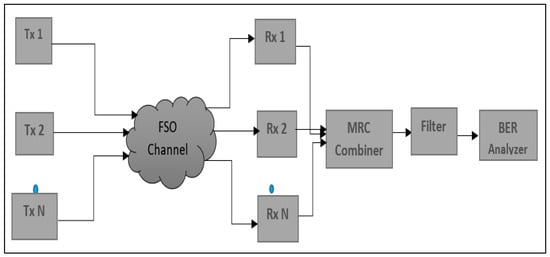
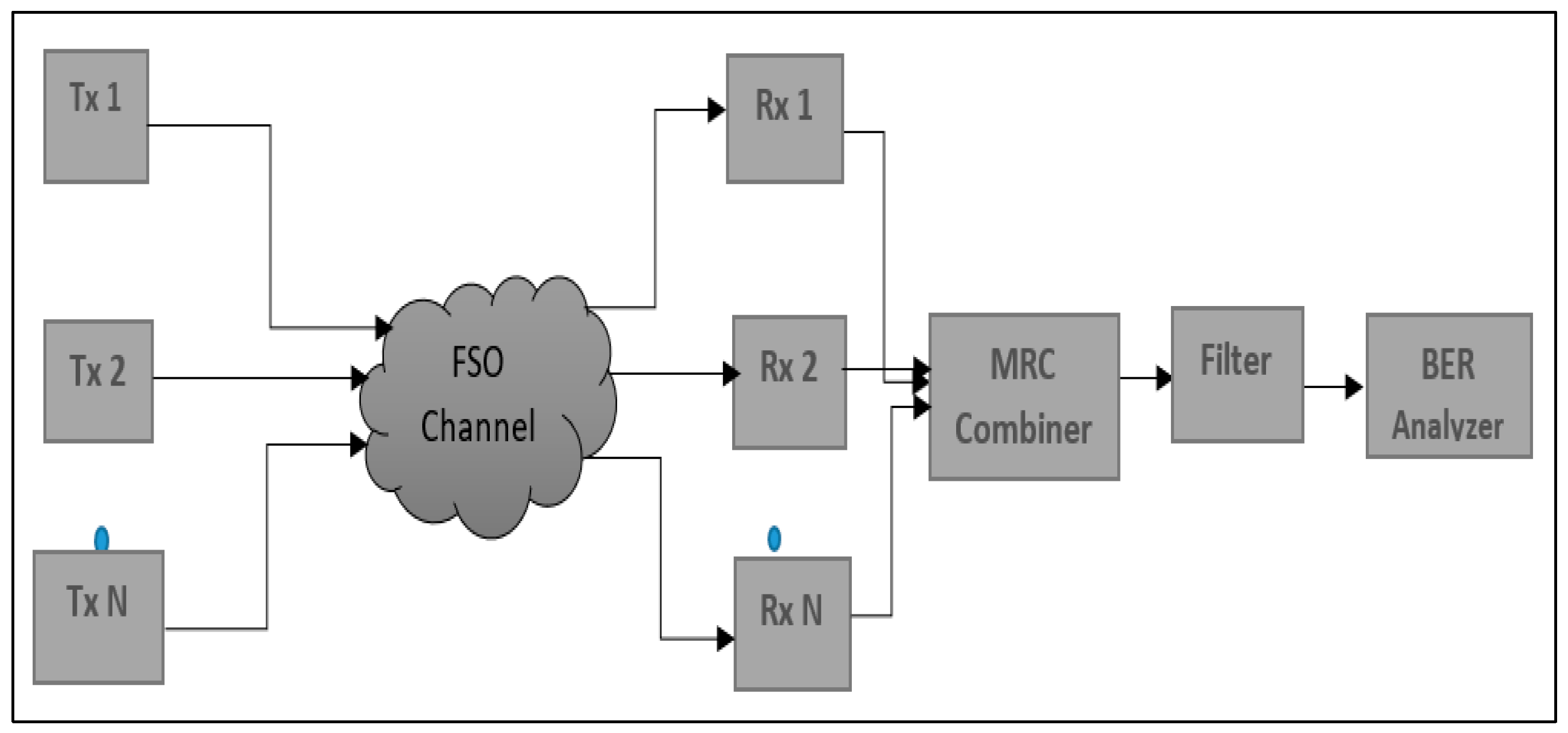
MIMO is a wireless communication technique used to improve the performance of communication systems. In FSO links, MIMO uses multiple transmitters and receivers to transmit data, increasing SNR, diversity gain, distance coverage, and the system’s quality factor [18]. The receivers can receive the transmitted information and use the best combining technique to combine the signal. Figure 1 represents a MIMO FSO link with transmitters and receivers, where a maximum ratio combining technique [19] can be used to combine the transmitters’ outputs.
Figure 1.
A MIMO FSO link block diagram.
MIMO Channel Matrix
A MIMO FSO channel can be represented by a channel matrix, H, where each entry of represents the channel coefficient between the transmitter and the receiver. This channel matrix accounts for path loss, turbulence, and pointing errors, thereby improving performance compared to a single transmitter and receiver [18]. For an system with transmitters and receivers, the system model is provided by Equation (4):
where n represents the noise vector, x denotes the transmitted signal vector, stands for the channel matrix, and represents the received signal vector at the receiver.
y = H. x + n,
In Equation (5), represents the complex channel coefficient between the receive antenna and the transmit antenna, stands for the number of transmitters, and stands for the number of receivers. A MIMO is among the best solutions to improve the performance of an FSO link [20] under fog by increasing the SNR and quality factor.
4. Fog Conditions in Tanzania
Fog in Tanzania is most dominant during the cooler months, mostly from May to August. The regions in Tanzania where fog most frequently forms are Morogoro, Kagera, Bukoba, Njombe, Mbeya, Ruvuma, Arusha, Kilimanjaro, and Songwe. The fog is typically thickest in the early morning and late evening, reducing visibility and affecting transportation, especially on roads, at airports, and on communication links.
This research collected data from 2020 to 2023 across the four regions of Mbeya, Njombe, Morogoro, and Bukoba. Three parameters—temperature, humidity, and visibility—were collected and analyzed. The data screening indicated that Mbeya, Njombe, and Bukoba had relatively similar parameters, especially visibility, as shown in Table 1. Therefore, to avoid duplication, in this work, the results will discuss only two regions: Morogoro and Mbeya. Table 1 clearly shows that for the three years 2020 to 2023, Morogoro was highly affected by fog, where it experienced zero visibility on some days.
Table 1.
Average weather parameters per region.
5. Design of FSO Link
The design of a free-space optical (FSO) communication link is influenced by several parameters, including transmission power, operating wavelength, link distance, and atmospheric attenuation. In this study, attenuation levels for the Morogoro and Mbeya regions were thoroughly evaluated under varying visibility conditions. The values were then employed in the design of FSO links using OptiSystem 22.0, wherein the software was utilized to estimate attenuation across different scenarios.
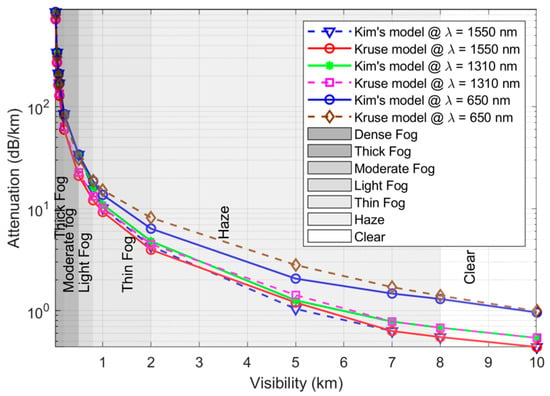
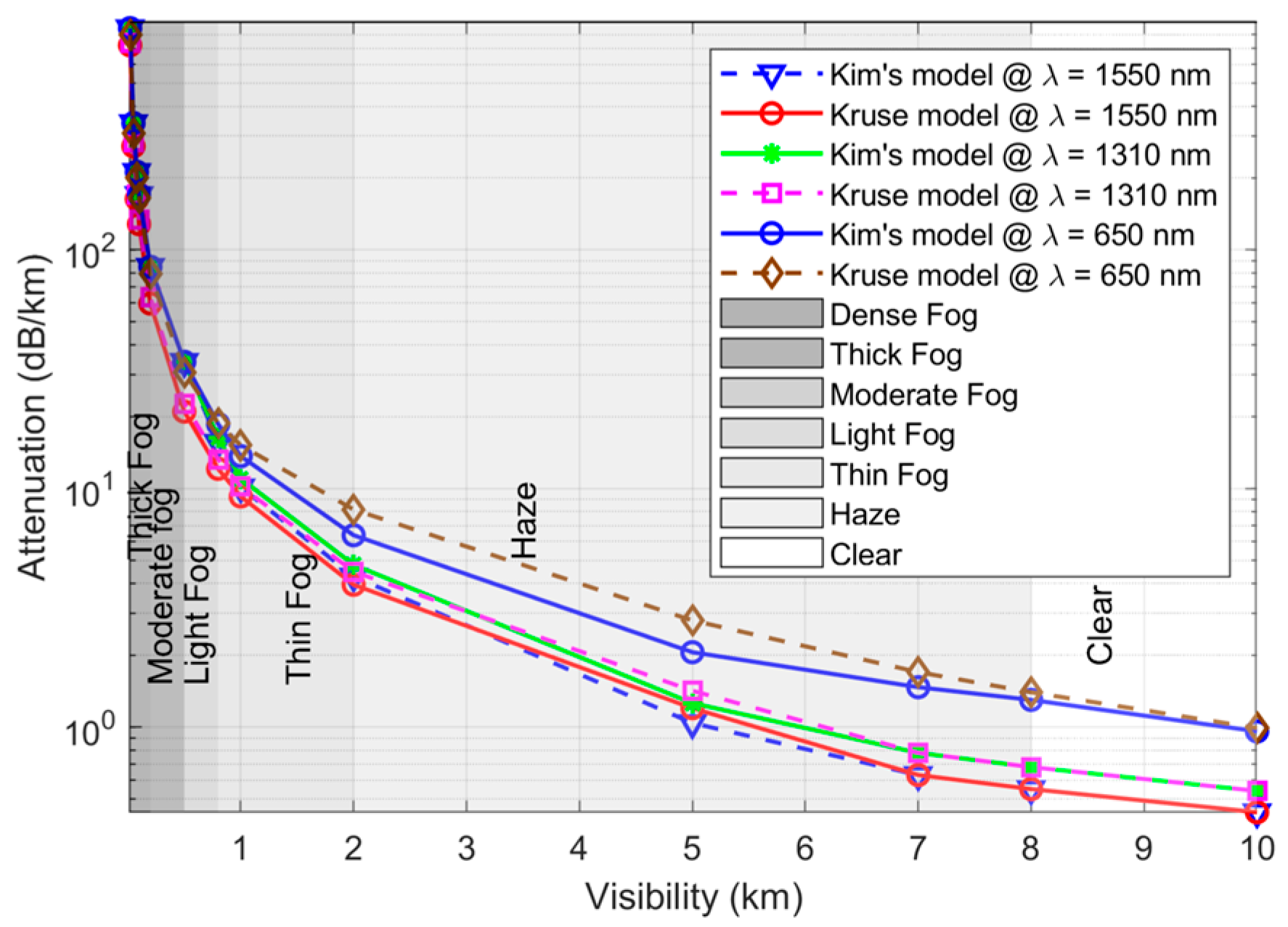
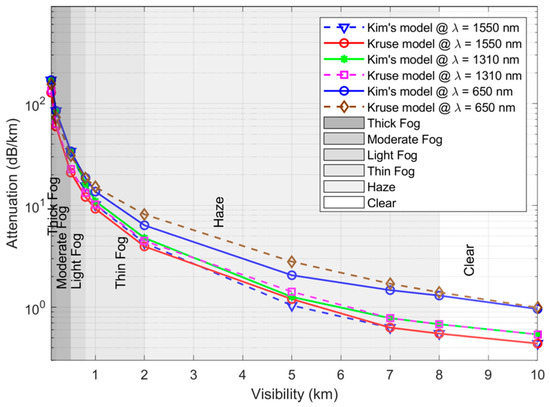
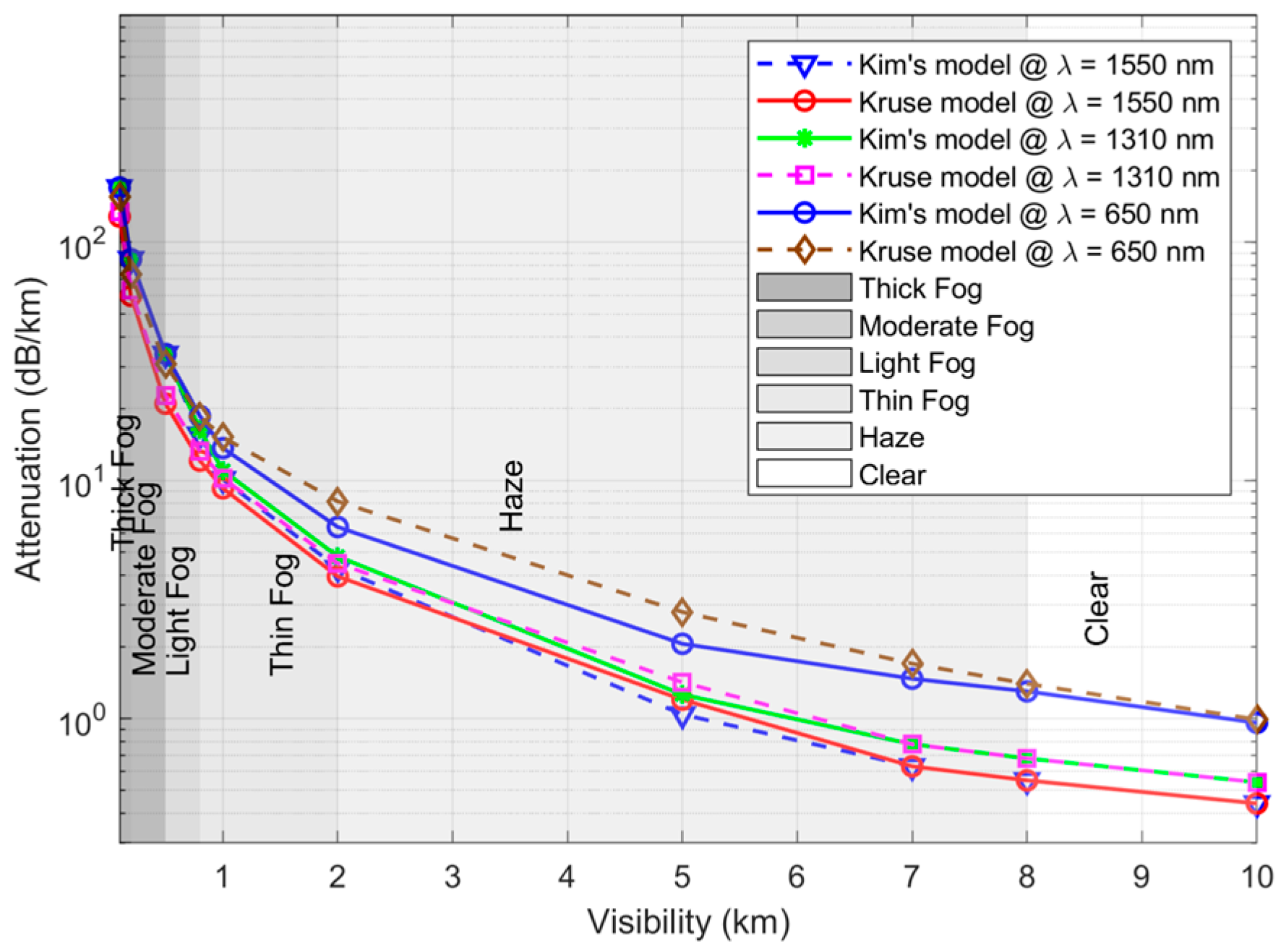
Fog-induced attenuation was calculated by applying Equations (1)–(3), with the Kim and Kruse models serving as the analytical framework. The models were implemented at a particle radius of 1000 nm and operating wavelengths of 650 nm, 1310 nm, and 1550 nm, depending upon the visibility ranges characteristic of each region, as illustrated in Figure 2 and Figure 3. Also, the highest attenuation for the Morogoro region obtained using the Kim model was 849.84 dB/km for all the wavelengths, while the Kruse model provided the highest attenuation, 795.74 dB/km at 650 nm, as shown in Figure 3. Similarly, the highest attenuation for the Mbeya region was constant for all wavelengths at 169.89 dB/km per the Kim model and 155.6 dB/km per the Kruse model, which was obtained at a wavelength of 650 nm, as indicated in Figure 2.
Figure 2.
Fog attenuation in Morogoro.
Figure 3.
Fog attenuation in Mbeya.
For the Morogoro region, the Kim model yielded the highest attenuation value of 849.84 dB/km across all wavelengths, whereas the Kruse model produced a maximum attenuation of 795.74 dB/km at 650 nm.
In contrast, the Mbeya region exhibited comparatively lower attenuation values, with the Kim model reporting a constant maximum of 169.89 dB/km across all wavelengths. The Kruse model, however, indicated a peak attenuation of 155.6 dB/km at 650 nm. These results emphasize the significant variability in atmospheric attenuation between the two regions, highlighting the critical role of visibility conditions and wavelength selection in the design and optimization of FSO communication links [7].
6. Experimental Setup
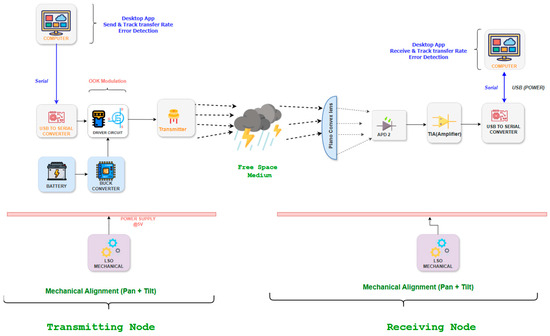
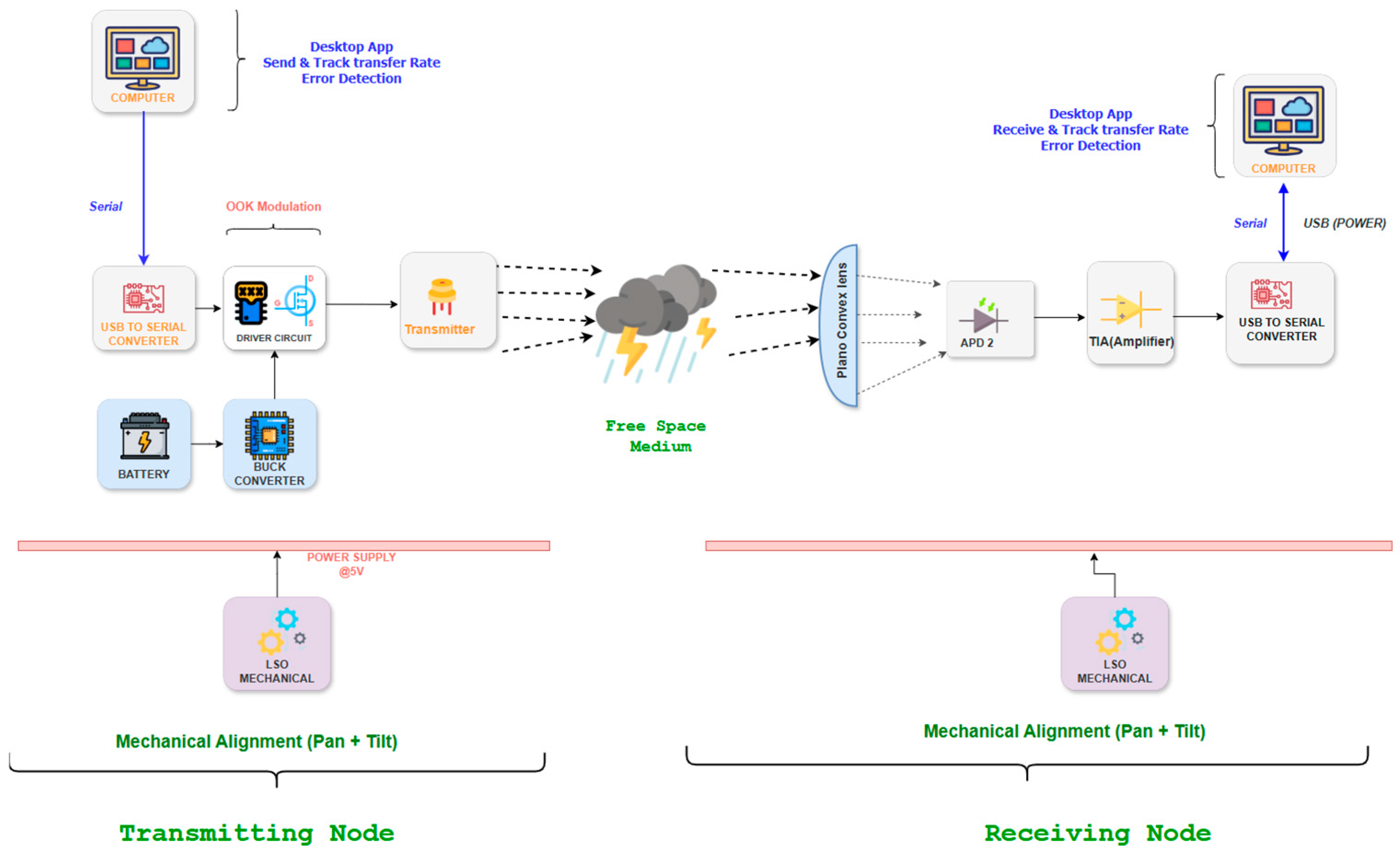
The purpose of this experiment was to assess the performance of an FSO communication system in both SISO and MIMO configurations under clear weather and fog conditions. Various parameters were analyzed, including BER, optical power, data rate, and link coverage, to assess the effectiveness and reliability of the FSO system. As illustrated in Figure 4, the SISO FSO link consisted of a driver circuit, a laser, a lens, an avalanche photodiode (APD), an amplifier, a computer, and an error detection application. The driver circuit of the FSO transmitter was used to modulate and regulate the electrical signal to accurately and efficiently drive the optical source (laser) for the data transmission. The laser was used for converting the electrical signal into an optical signal. Table 2 presents the parameters used for the FSO link design.
Figure 4.
Block diagram of the SISO FSO Link.
Table 2.
Parameters of the FSO link.
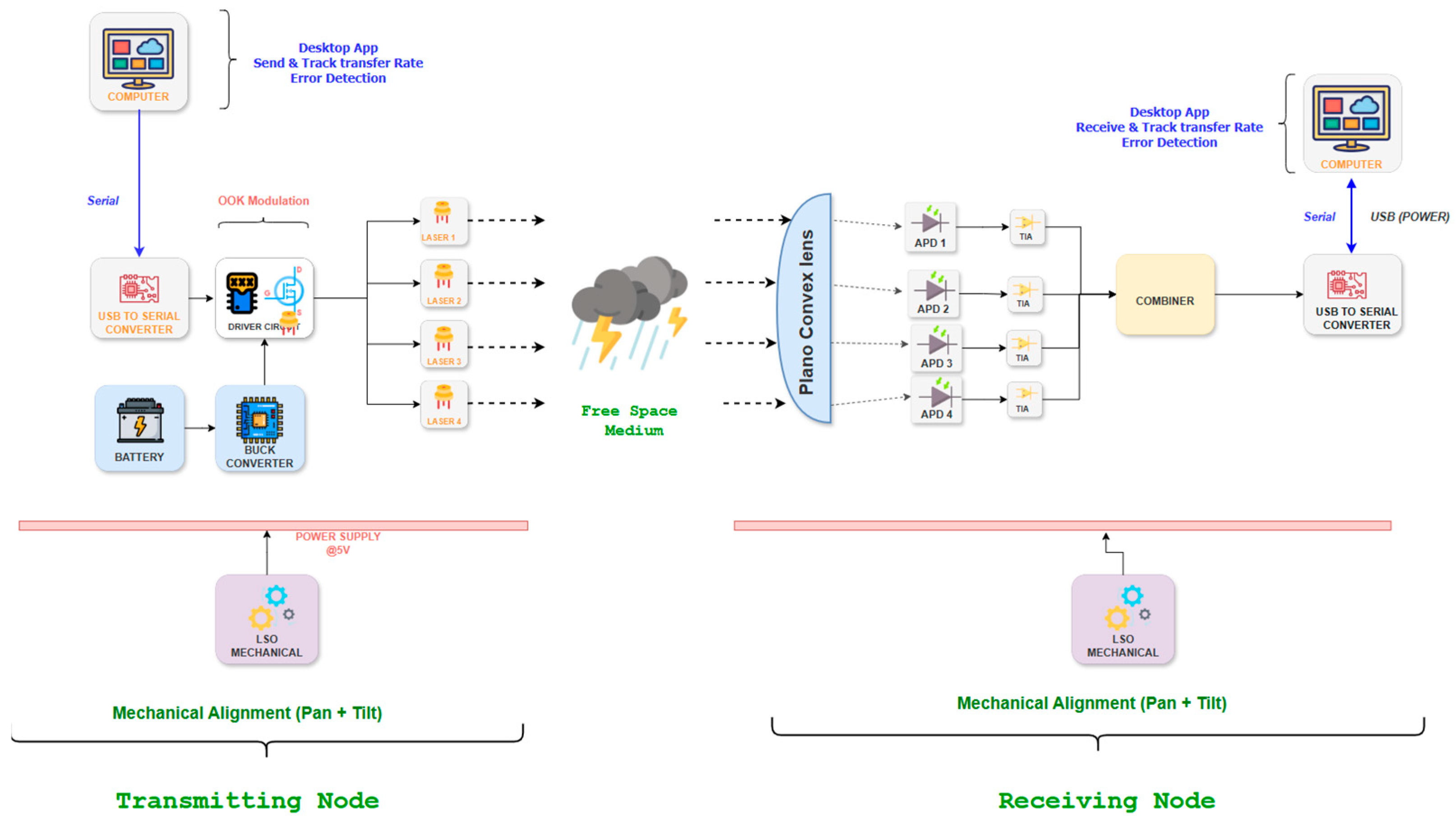
A plano convex lens and a double concave lens played significant roles in gathering and focusing the transmitted light onto the APDs, which improved signal quality and reception efficiency. At the receiver end, the APD was used to convert the optical signal back into an electrical signal. The signal was then amplified using a transimpedance amplifier to increase its strength. A USB-to-serial converter enabled communication between the computer and the setup, while a free-space optical link transmitted information from the transmitter to the receiver. The MIMO setup was similar to the SISO configuration, with the key difference being the use of four lasers for transmission and four APDs at the receiver side, as shown in Figure 5.
Figure 5.
Block diagram of the MIMO FSO Link.
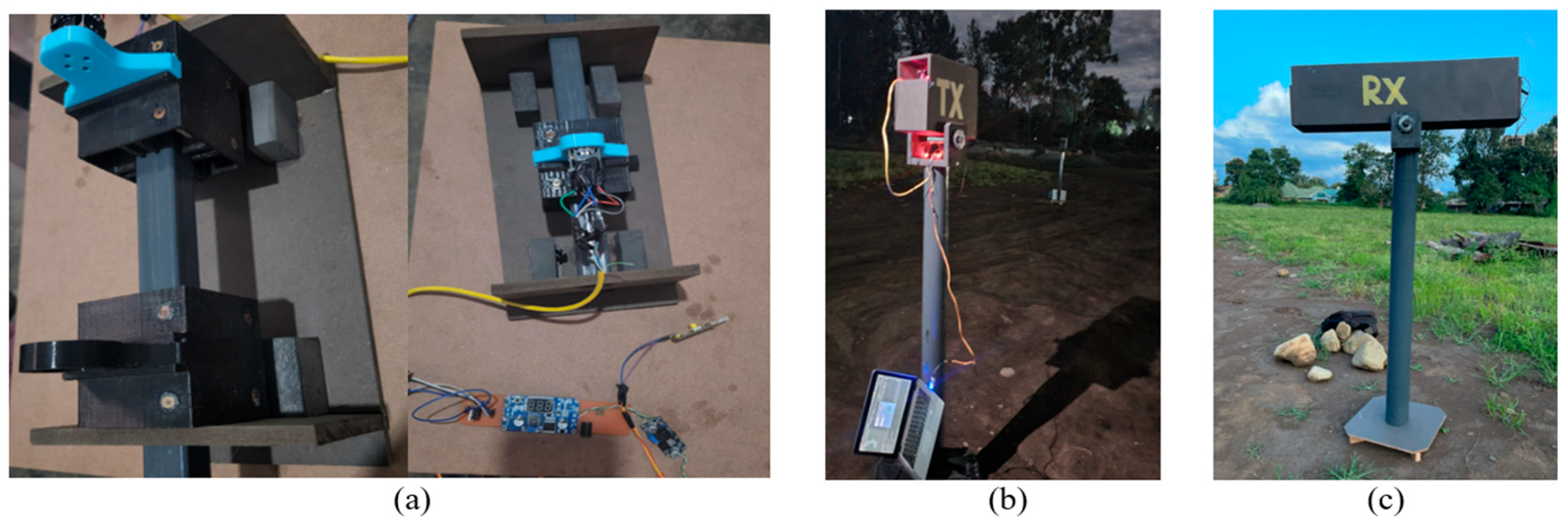
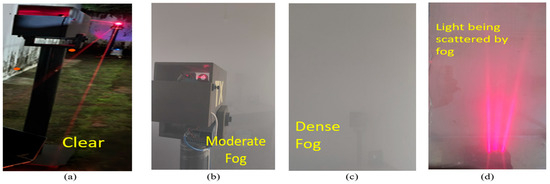
Figure 6 illustrates the inner parts of the FSO transmitter, FSO receiver, and FSO transmitter, while Figure 7 depicts the FSO system under clear, moderate, and dense fog conditions. The setup was first implemented with a single transmitter and receiver, then with two transmitters and two receivers (MIMO 2 × 2), and, finally, with four transmitters and four receivers (MIMO 4 × 4).
Figure 6.
Experimental setup of the FSO link: (a) inner parts of the FSO transmitter, (b) the FSO transmitter, and (c) the FSO receiver.
Figure 7.
The FSO link: (a) clear weather, (b) moderate fog, (c) dense fog, and (d) scattering of light.
7. Results and Discussion
This section discusses all of the results obtained from the simulations and experiments conducted.
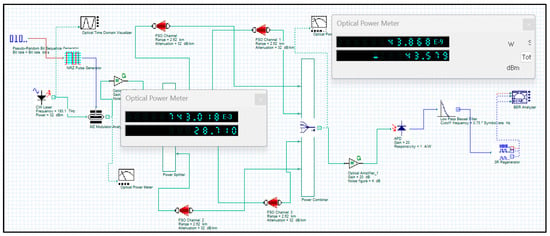
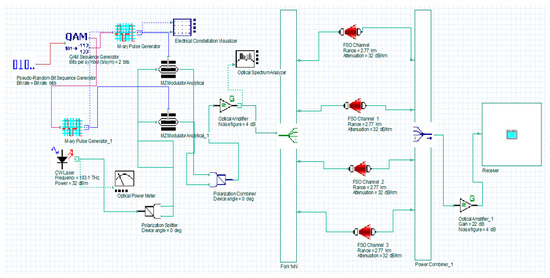
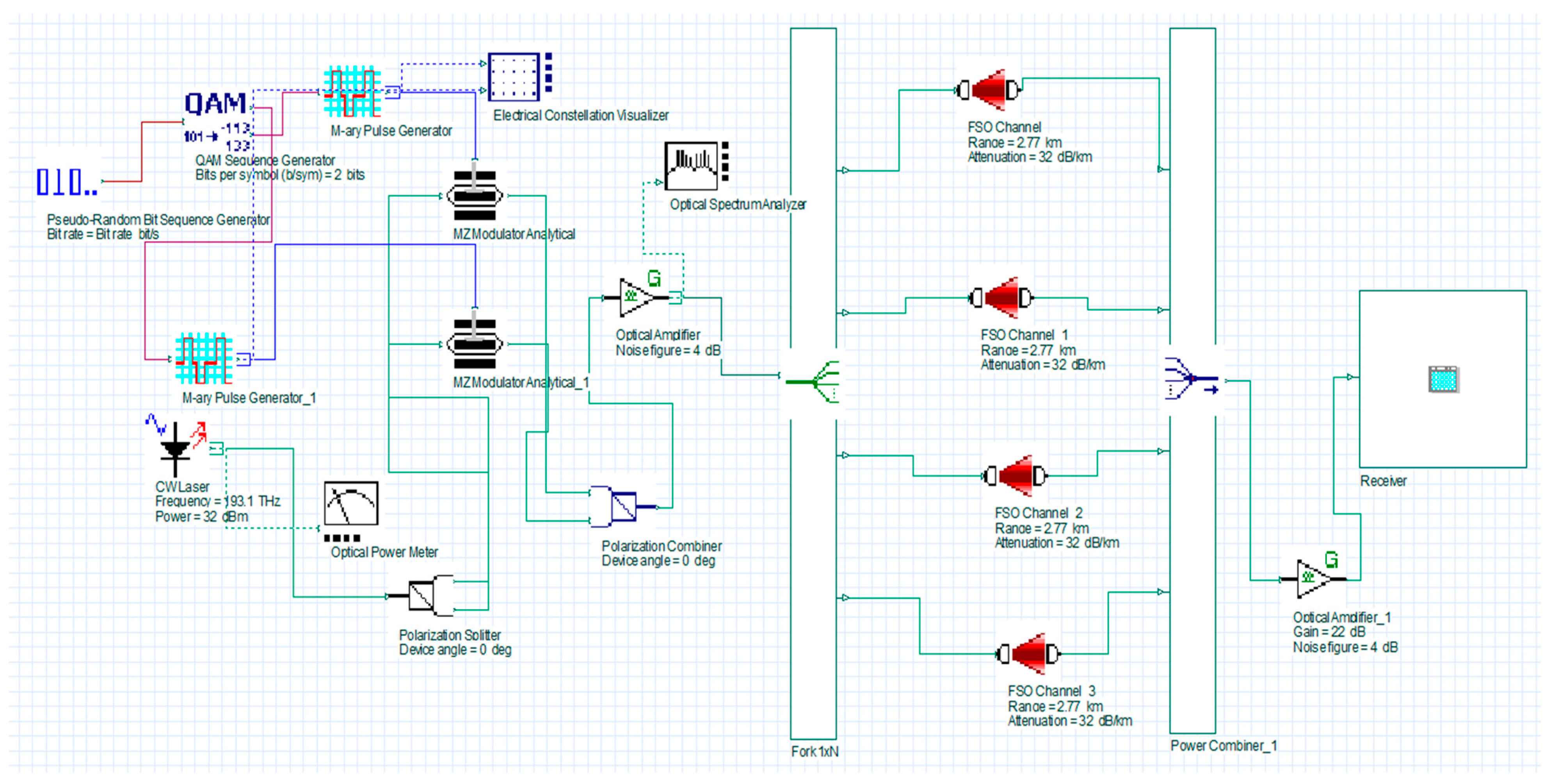
Figure 8 illustrates a system setup using four transmitters and four receivers to enhance the FSO link’s performance by extending its coverage distance. The system setup comprises an optical transmitter, a non-return-to-zero (NRZ) pulse generator, an FSO channel, an optical time-domain visualizer, an optical power meter, an optical receiver, and a BER analyzer. The simulation parameters used are provided in Table 3. Figure 9 illustrates a quadrature amplitude modulation (QAM) -modulated MIMO FSO communication system. A pseudo-random bit sequence (PRBS) was mapped into the QAM symbols using a QAM generator and mapped to in-phase and quadrature (Q) components. These components drove the dual Mach–Zehnder modulators (IQ modulation) fed by a CW laser. The modulated optical signal was split into multiple parallel beams, transmitted through several identical FSO channels (same range and attenuation), and then recombined at the receiver. An optical amplifier boosted the signal before APD detection, followed by low-pass filtering, 3R regeneration, constellation analysis, and BER evaluation. The optical power meters monitored the link losses.
Figure 8.
The 4 × 4 MIMO FSO link for light fog in Mbeya using an NRZ pulse generator.
Table 3.
The FSO link design parameters.
Figure 9.
The 4 × 4 MIMO FSO link for light fog in Mbeya using a QAM sequence generator.
Comparison of NRZ modulation with QAM
Modulation techniques play a key role in determining the reliability, data rate, and error performance of an FSO link. In this study, we compared NRZ and QAM for the FSO links. NRZ is a simple binary modulation scheme where a logical “1” is represented by a high optical intensity and a “0” by a low or zero intensity. QAM is an advanced modulation scheme that encodes information in both amplitude and phase of the optical signal, allowing higher spectral efficiency [21].
NRZ, being a simple binary modulation scheme, is easy to implement but exhibits higher BER and lower spectral efficiency under foggy conditions. In contrast, QAM encodes information in both the amplitude and phase of the optical signal, allowing higher data rates and better tolerance to atmospheric attenuation. The simulation results showed that QAM achieved a lower BER, a higher quality factor, and longer link distances compared to NRZ under identical visibility conditions. Additionally, QAM combined with MIMO architecture further enhanced the link reliability, making it a superior choice for FSO systems in regions with variable fog conditions.
Compared to NRZ (OOK) modulation, QAM offered higher spectral efficiency and higher data rates by encoding multiple bits per symbol.
7.1. Simulation Results
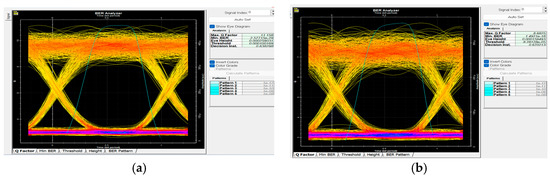
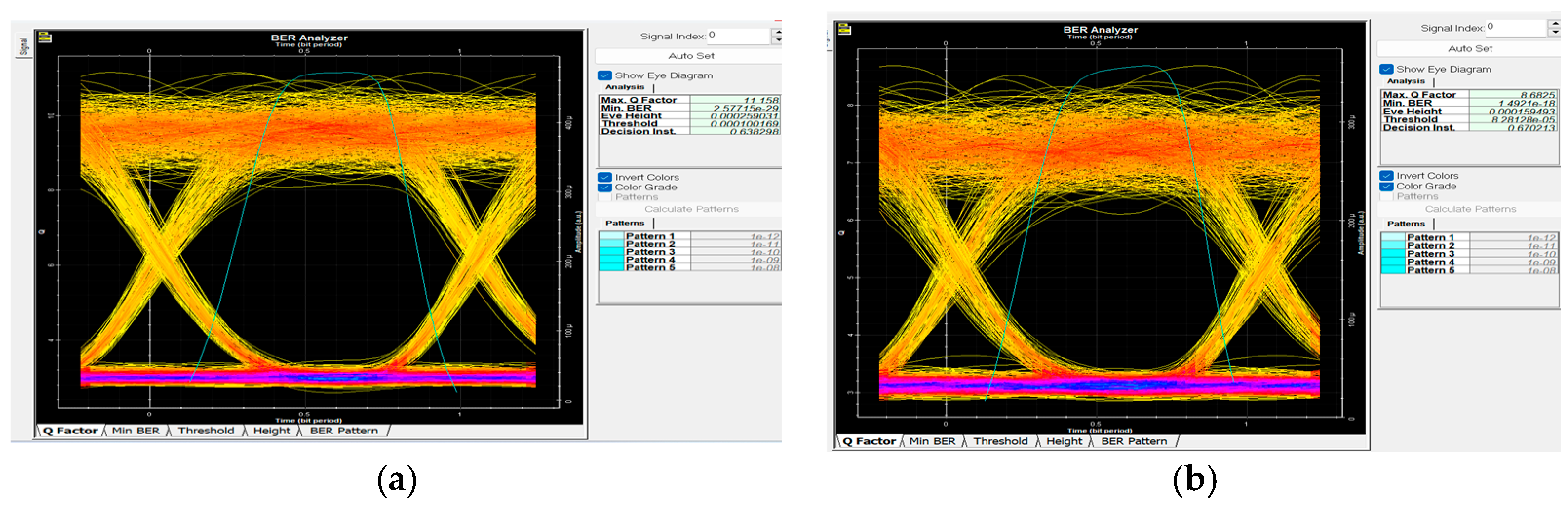
In a past study [1] on a two-channel FSO system over a 2.3 km distance, a quality factor of 8.48 and a BER of 9.7 × 10⁻¹⁸ were presented. However, this work improved the system’s performance by implementing a 4 × 4 MIMO configuration, increasing the distance to 2.62 km. As shown in Figure 10, the BER was reduced significantly to 2.57 × 10⁻²⁹ and the quality factor improved to 9.79. However, the output power from the modulator was reduced from 32 dBm to 28.71 dBm, indicating that the electronic components were not 100% efficient, as some losses occurred during processing, as shown Figure 8.
Figure 10.
BER analysis showing the eye diagram of (a) the 4 × 4 MIMO for light fog in Mbeya and (b) the 4 × 4 MIMO for moderate fog in Morogoro.
Additionally, the impact of distance could be observed via optical power meter 2, where the power was reduced to −43.57 dBm. Therefore, improving the FSO link’s performance required a robust design to mitigate the power losses caused by electronic components, connection losses, environmental constraints, and distance.
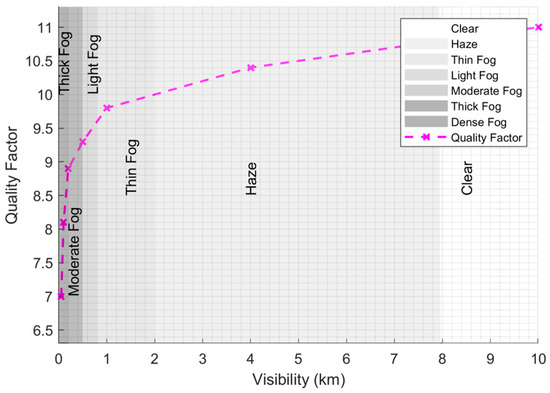
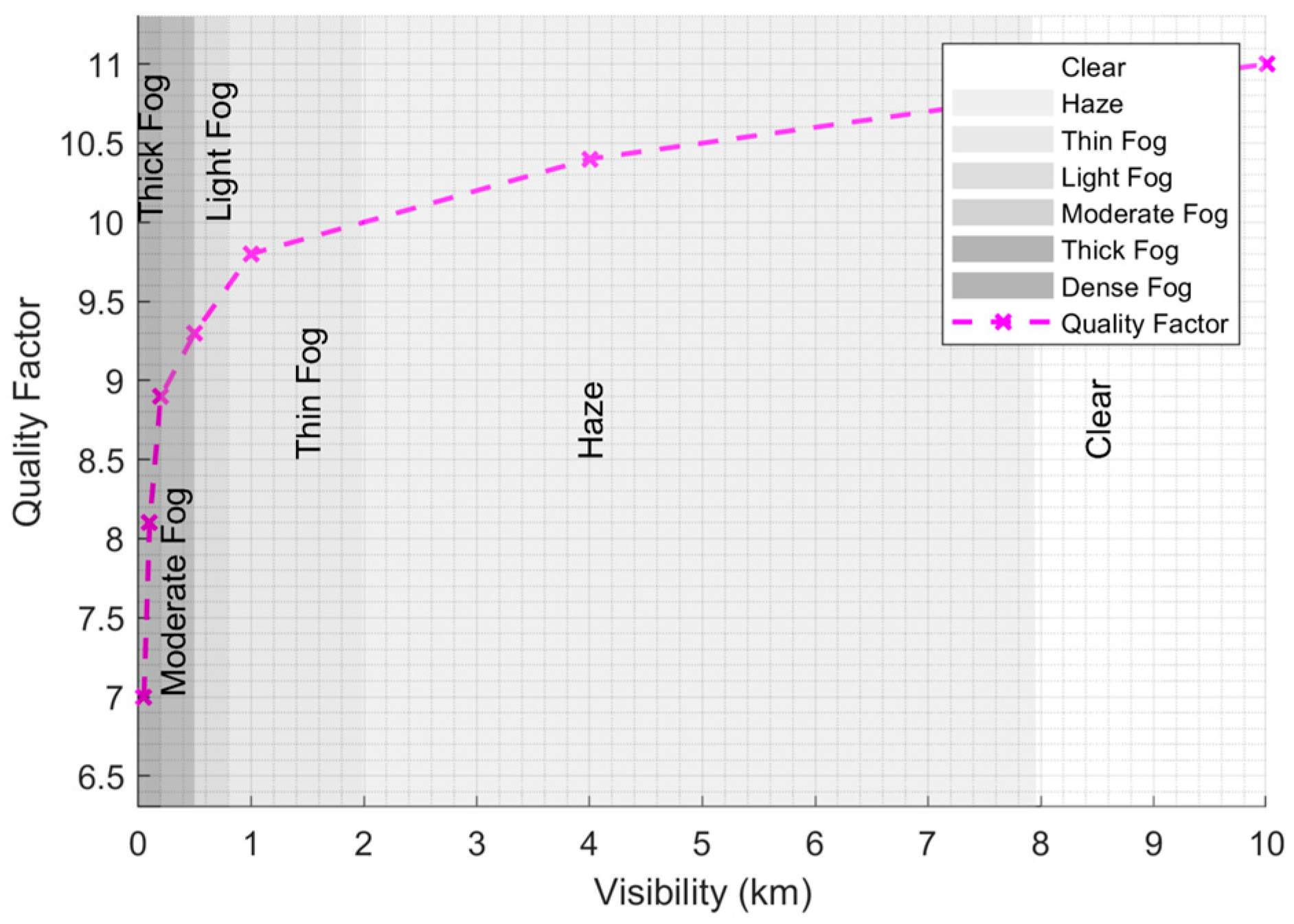
The width and height of the eye-opening indicate the quality of the signal. Figure 10 shows the eye diagram of the system with wider and taller eyes and, hence, the good performance of the FSO link. It also shows a quality factor of 11.15 for an FSO link spanning 2.62 km, with an attenuation of 32 dB/km. The experiment was conducted under varying atmospheric conditions, including light, thin, moderate, thick, and dense fog. The results, illustrated in Figure 11, present the dependence of the FSO link quality factor on atmospheric visibility. Reduced visibility, particularly under dense and thick fog, leads to significant degradation in link performance due to severe scattering and absorption.
Figure 11.
Visibility varies with quality factor.
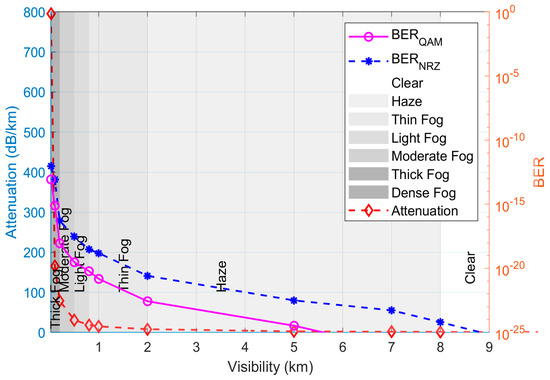
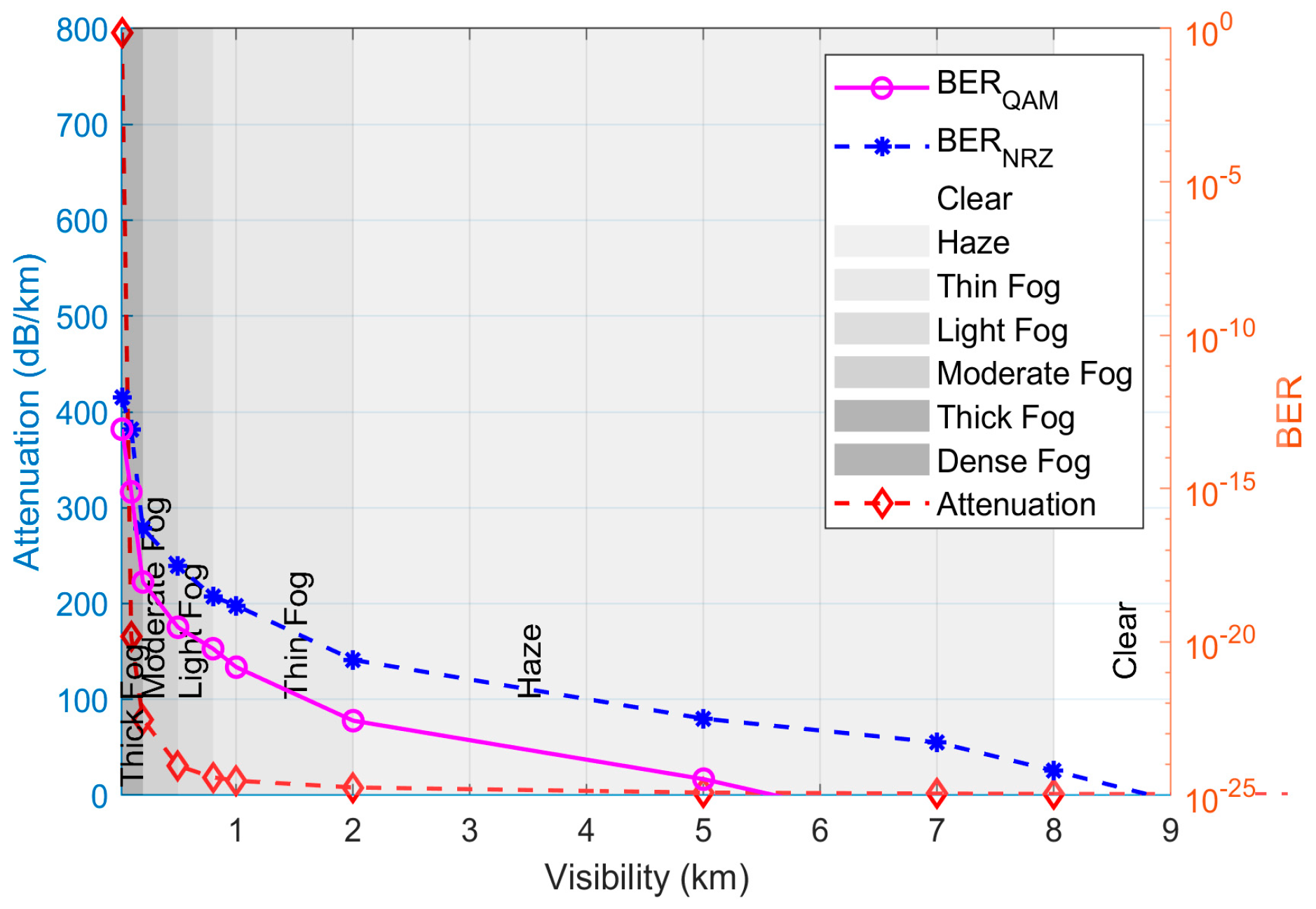
Additionally, Figure 12 illustrates the relationship between visibility, BER, and atmospheric attenuation for an FSO link using QAM and NRZ modulation schemes. As visibility increased (moving from dense fog to clear conditions), the atmospheric attenuation (dB/km) decreased sharply, as indicated by the red dashed curve. Very low visibility values (below 0.5 km), corresponding to thick and dense fog, result in extremely high attenuation, which severely degrades link performance. In contrast, under haze and clear conditions (visibility above 3–5 km), attenuation becomes very small and has a negligible impact on the link. The BER curves showed a similar trend. At low visibility, both modulation schemes experienced high BER values due to severe signal loss caused by fog scattering and absorption. As visibility increased, the BER values decreased rapidly. For all visibility ranges, QAM consistently achieved a lower BER than NRZ, thereby enhancing overall system performance and extending achievable link distance, highlighting its effectiveness in improving communication reliability and efficiency.
Figure 12.
Visibility varies with attenuation and BER.
7.2. Experimental Results
Over 12 m, the SISO system successfully transmitted a signal at a rate of 44.76 Kbps, achieving a bit error rate (BER) of 4.3 × 10⁻⁹, as shown in Table 4. In contrast, the 4 × 4 MIMO configuration transmitted the same signal over a 15 m distance with a very low BER (5.3 × 10⁹) under clear conditions and a BER of 6.3 × 10⁻⁸ when operated under moderate fog using a 780 nm laser diode. These results demonstrate that employing multiple transmitters significantly improves system performance by reducing BER and extending transmission range.
Table 4.
Results of FSO Experiments at Wavelengths of 780 nm and 650 nm.
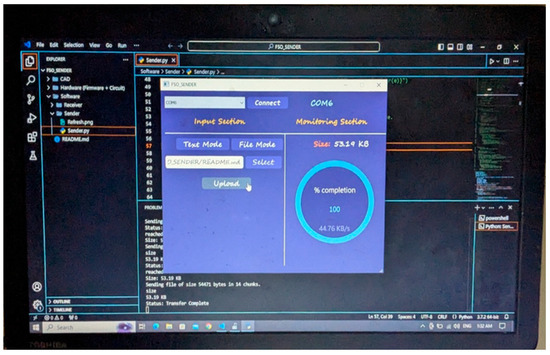
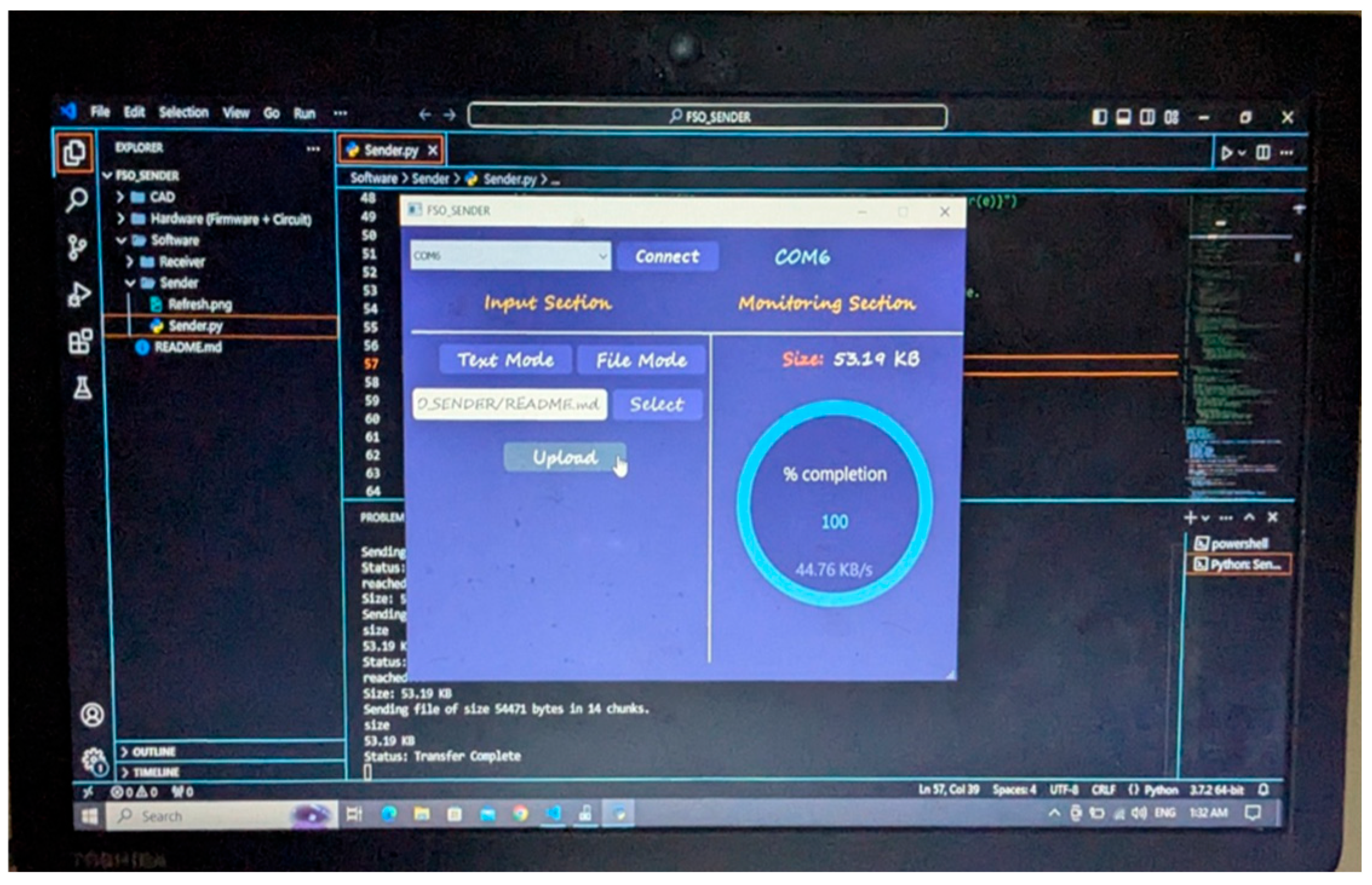
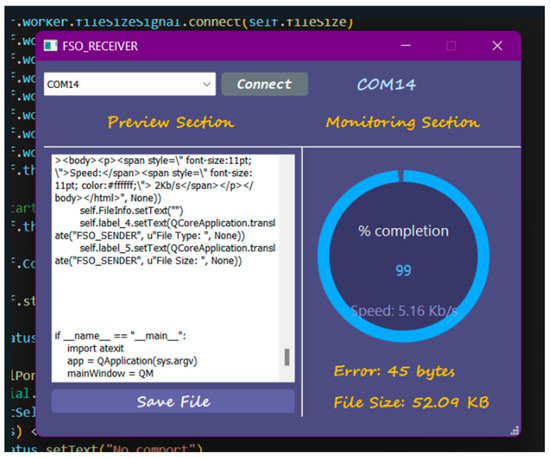
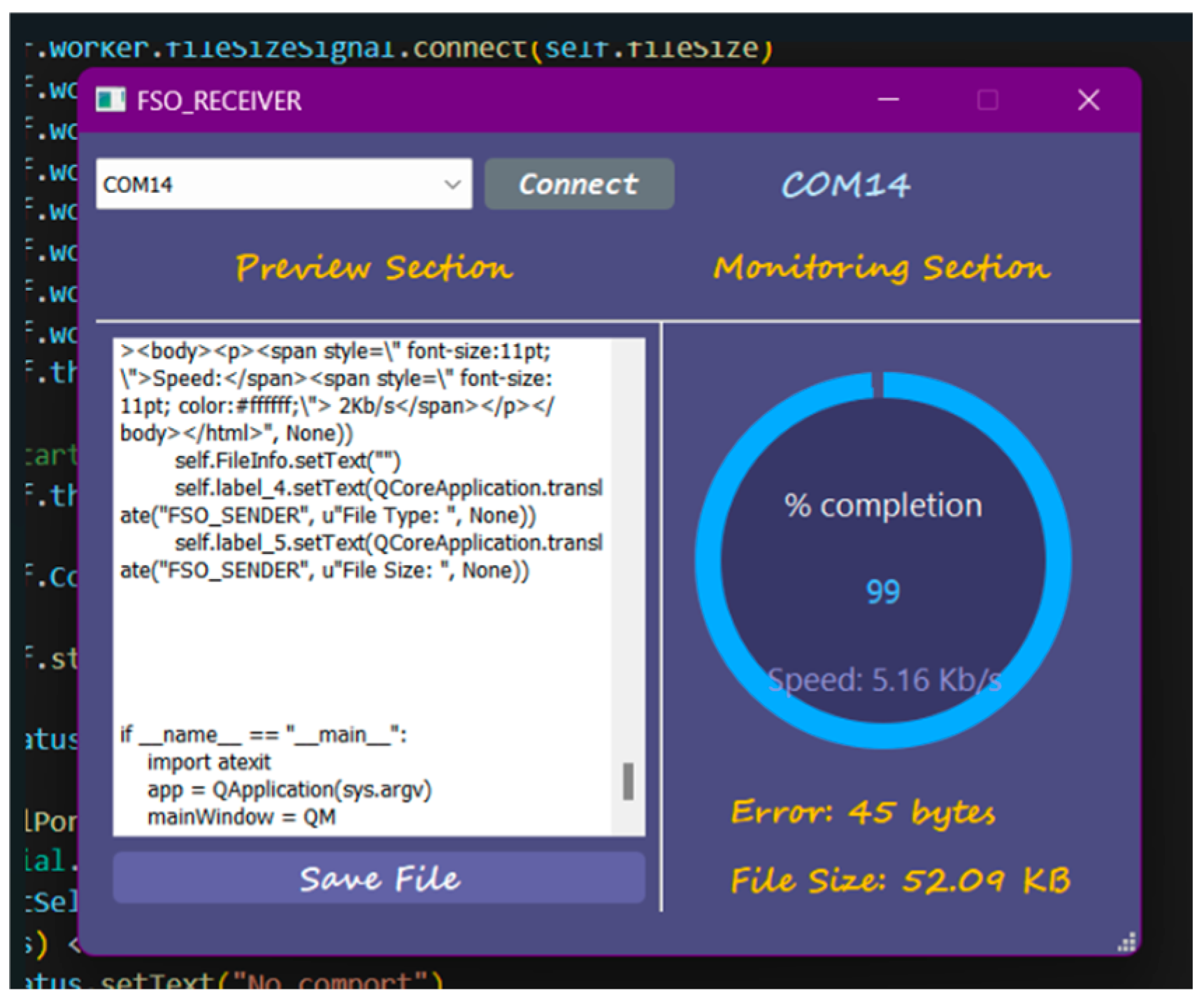
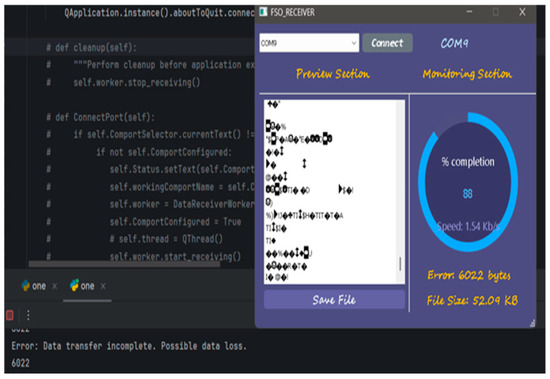
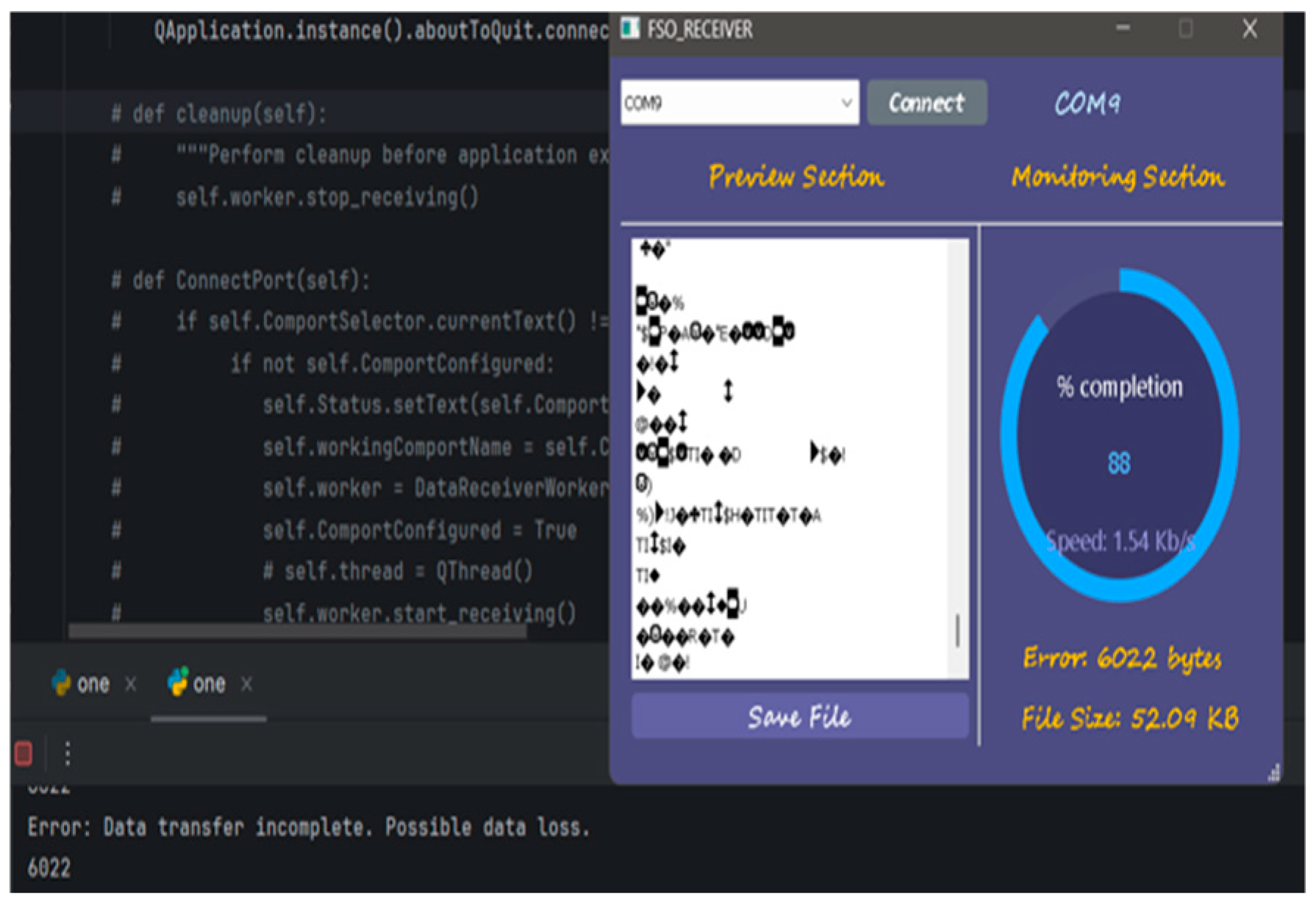
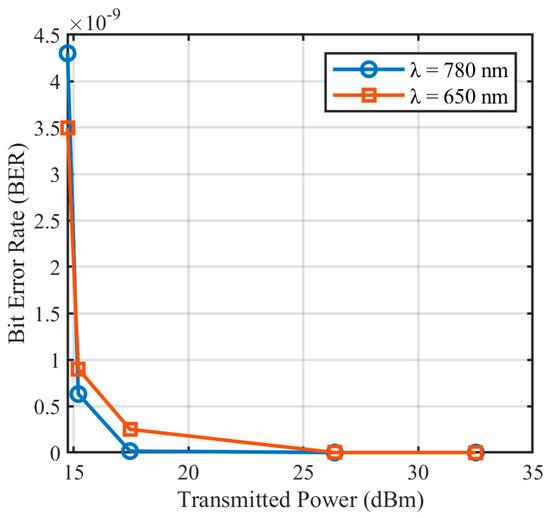
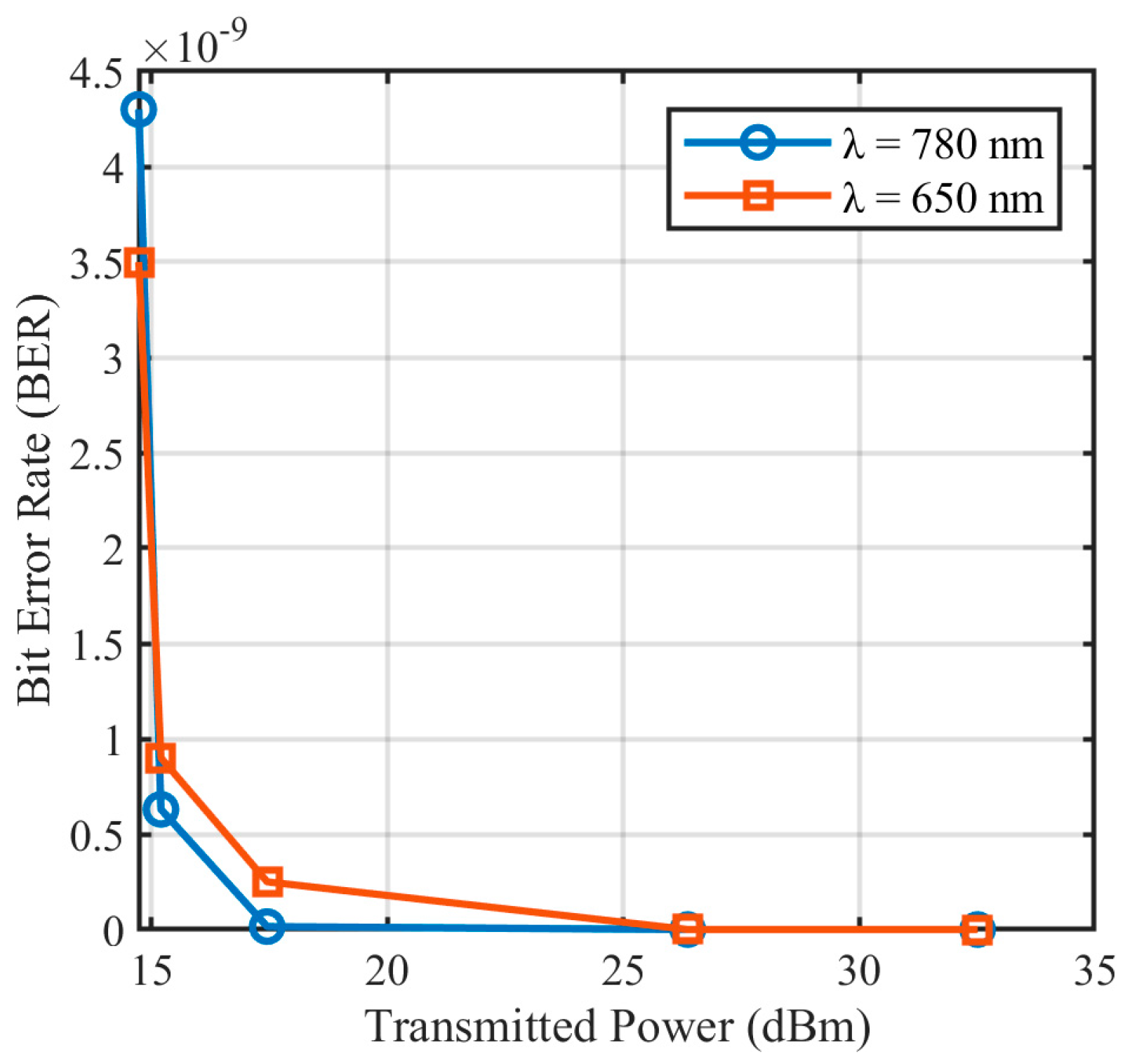
Figure 13 depicts a screen short of the successfully transmitted data of a file size of 53.19 Kbps, and Figure 14 and Figure 15 show the received data under moderate and dense fog conditions, respectively. In Figure 16, the experimental results indicate that the 780 nm laser diode performed better than the 650 nm diode in terms of data rate and BER. The relationship between BER and transmitted power for wavelengths of 650 nm and 780 nm is illustrated in Figure 16. As the transmitted power increased, the BER decreased sharply. At the same power levels, the 780 nm link achieved a lower BER, demonstrating better performance and greater robustness of the channel impairments than the 650 nm link.
Figure 13.
The transmitted data.
Figure 14.
The received data with the MIMO 2 × 2 system (650 nm).
Figure 15.
The received data with the MIMO 4 × 4 system for a dense fog channel (780 nm).
Figure 16.
The transmitted power versus BER.
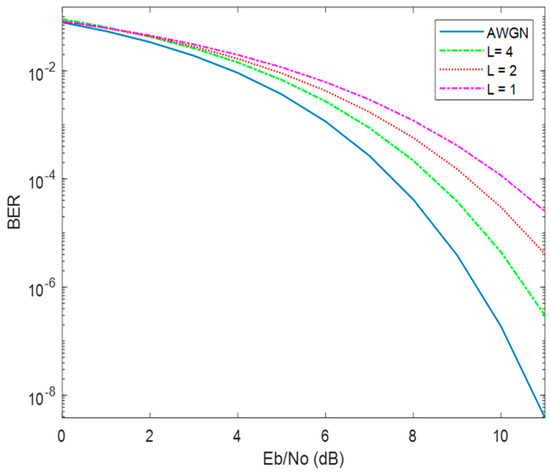
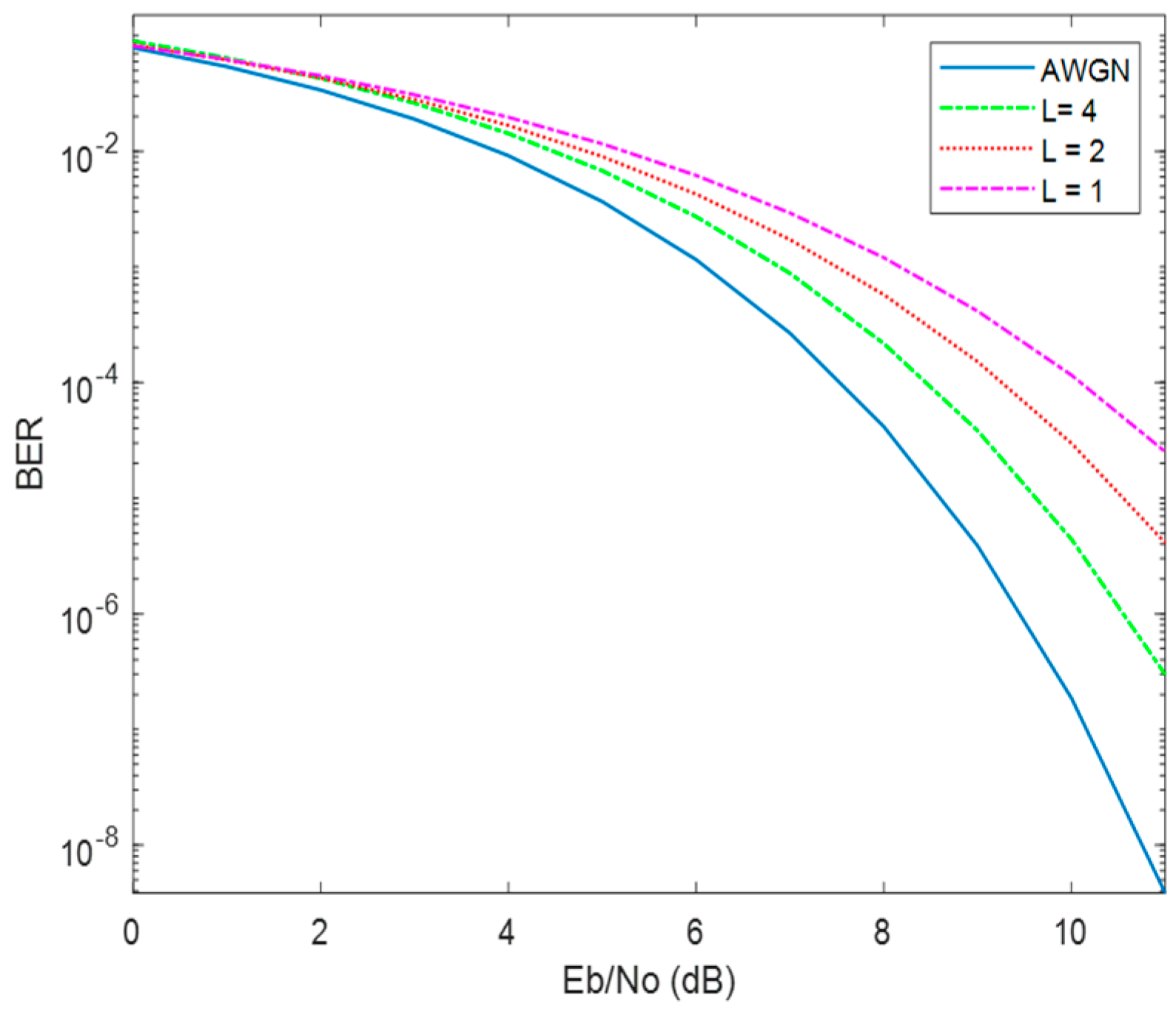
The number of receiving antennas is a critical factor in a system’s performance, particularly in terms of BER and SNR. Figure 17 illustrates that when the number of antennas increases, the SNR improves at the receiving end, resulting in a reduced BER. Therefore, to enhance the performance of the FSO communication system, it is important to incorporate MIMO technology.
Figure 17.
BER versus Eb/No with different numbers of antennas.
Mathematical Model of the 780 nm MIMO 4 × 4 FSO System
The performance of the proposed 780 nm MIMO 4 × 4 FSO system under clear, moderate fog, and dense fog conditions can be described using an optical wireless channel model based on Beer–Lambert attenuation, SNR, and intensity modulation/direct detection (IM/DD). The received optical power after propagating a distance L through fog is modeled by (6):
where L is the distance, is the transmitted optical power, is the received power, and β is the atmospheric attenuation coefficient (m−1).
Using the measured performance of the 780 nm link, the attenuation coefficients were estimated using Equation (7).
The attenuation coefficients derived from the measured 780 nm link in Equation (7) provide realistic channel parameters that reflect moderate and dense fog scenarios.
Signal to Noise Ratio
For IM/DD detection, the electrical SNR is provided by Equation (8):
where is the noise density, is the detector responsivity, and B is the bandwidth.
As fog increases attenuation (), the received power decreases, reducing . The use of MIMO increases , thereby improving the SNR compared to a single-input single-output (SISO) FSO link under the same fog conditions.
Using on-off keying (OOK) modulation with IM/DD, the BER for the MIMO FSO system can be presented using Equation (9):
The MIMO diversity gain effectively increases γ, resulting in a lower BER compared to SISO transmission, particularly under moderate fog conditions. However, under dense fog, the exponential attenuation dominates and BER degradation becomes severe despite MIMO gains, which is consistent with the experimental observations reported in this work.
MIMO Received Power Model
For a MIMO FSO system employing spatial diversity, the total received optical power is the sum of the contributions from all transmitted receiver paths, as shown in Equation (10):
where represents the numbers of transmitters and receivers, respectively. Assuming equal power allocation and independent fading across channels, the MIMO configuration provides diversity gain, improving robustness against fog-induced fading and scattering.
8. Conclusions and Recommendations
This study focused on analyzing the performance of FSO links in foggy conditions, specifically for the Tanzanian regions of Morogoro under dense fog and Mbeya under light fog. By utilizing a 4 × 4 MIMO system, an optical amplifier, a BER analysis application, and QAM modulation, the link’s performance and coverage were significantly improved. As the number of transmitting and receiving antennas increased, the BER decreased and the quality factor improved, resulting in a more efficient system. In the future, we plan to design a massive MIMO FSO link to improve the system’s performance further and extend its coverage distance in the Morogoro and Mbeya regions of Tanzania. Additionally, we aim to conduct real-time experiments using a high-power laser transmitter (5 W, 1550 nm) and integrate the system with a machine-learning model.
Author Contributions
Conceptualization, C.P.T.; methodology, C.P.T.; software, C.P.T.; validation, C.P.T.; formal analysis, C.P.T.; investigation, C.P.T. and S.F.K.; resources, C.P.T. and S.F.K.; data curation, C.P.T.; writing—original draft preparation, C.P.T.; writing—review and editing, C.P.T., S.F.K. and F.U.R.; visualization, C.P.T., S.F.K. and F.U.R.; supervision, S.F.K. and F.U.R.; project administration, C.P.T., S.F.K. and F.U.R.; funding acquisition, C.P.T. All authors have read and agreed to the published version of the manuscript.
Funding
The experimental work was supported by the Higher Education for Economic Transformation (HEET) Project funded by the Government of the United Republic of Tanzania via the Ministry of Education, Science, and Technology and the Mbeya University of Science and Technology.
Institutional Review Board Statement
Not applicable.
Informed Consent Statement
Not applicable.
Data Availability Statement
Data are contained within the article.
Acknowledgments
The authors would like to acknowledge the Higher Education for Economic Transformation (HEET) Project, funded by the Government of the United Republic of Tanzania through the Ministry of Education, Science, and Technology as well as the Mbeya University of Science and Technology for providing financial support for the software licenses, experimental equipment, and optical components used in this work.
Conflicts of Interest
The authors declare no conflicts of interest.
Abbreviations
| APD | Avalanche photodiode |
| BER | Bit error rate |
| CW | Continuous wave |
| DD | Direct detection |
| FSO | Free space optical communication |
| IM | Intensity modulation |
| IR | Infrared radiation |
| LASER | Light amplification by stimulated emission of radiation |
| NRZ | Non-return-to-zero |
| MIMO | Multiple input multiple output |
| QAM | Quadrature amplitude modulation |
| RF | Radio frequency |
| SISO | Single input single output |
| SNR | Signal-to-noise ratio |
| WDM | Wavelength division multiplexing |
References
- Garlinska, M.; Pregowska, A.; Gutowska, I.; Osial, M. Experimental Study of the Free Space Optics Communication System Operating in the 8–12 µm Spectral Range. Electronics 2021, 10, 875. [Google Scholar] [CrossRef] [Scilit]
- Al-gailani, S.A.; Shaddad, R.Q.; Sheikh, U.U. A Survey of Free Space Optics (FSO) Communication Systems, Links, and Networks. IEEE Access 2021, 9, 7353–7373. [Google Scholar] [CrossRef] [Scilit]
- Thakur, A.; Gupta, A.; Singh, H.; Bakshi, S.; Goyal, R.; Singh, G.; Mohan, N.; Singhal, A. Performance evaluation of SS-FSO communication system incorporating different line coding. Opt. Quantum Electron. 2021, 53, 330. [Google Scholar] [CrossRef] [Scilit]
- Israr, A.; Israr, A.; Khan, F.; Khan, F. Optimal Modulation Technique for MIMO FSO Link. Wirel. Pers. Commun. 2019, 109, 695–714. [Google Scholar] [CrossRef] [Scilit]
- Bopardikar, R.; Joseph, C.; Raj, A.A.B. A Review Paper on Hybrid RF/FSO System for Communication. Int. J. Eng. Res. Rev. 2024, 12, 90–115. [Google Scholar] [CrossRef]
- Alakhras, B.; Canbolat, H. Analyzation study of FSO Telecommunication System: Effect of Fog, Rain, and Snow at 1550 nm Wavelength. Int. J. Eng. Tech. 2022, 8, 164–172. Available online: http://www.ijetjournal.org (accessed on 10 August 2025).
- Kamal, M.; Khan, J.; Khan, Y.; Ali, F.; Armghan, A.; Muhammad, F.; Ullah, N.; Alotaibi, S. Free Space Optics Transmission Performance Enhancement for Sustaining 5G High Capacity Data Services. Micromachines 2022, 13, 1248. [Google Scholar] [CrossRef] [Scilit] [PubMed]
- Aboelala, O.; Lee, I.E.; Chung, G.C. A Survey of Hybrid Free Space Optics (FSO) Communication Networks to Achieve 5G Connectivity for Backhauling. Entropy 2022, 24, 1573. [Google Scholar] [CrossRef] [Scilit] [PubMed]
- Hassan, M.M.; Rather, G.M. Free Space Optics (FSO): A Promising Solution to First and Last Mile Connectivity (FLMC) in the Communication Networks. Int. J. Wirel. Microw. Technol. 2020, 10, 1–15. [Google Scholar] [CrossRef] [Scilit]
- Srikanth, S.; Sriram, P.; Kumar, D.S. Performance analysis of OFDM employing free space optical communication system. In Proceedings of the 2015 2nd International Conference on Electronics and Communication Systems (ICECS), Coimbatore, India, 26–27 February 2015; pp. 70–74. [Google Scholar] [CrossRef] [Scilit]
- Esmail, M.A.; Member, S.; Fathallah, H.; Member, S.; Alouini, M. Outdoor FSO Communications Under Fog: Attenuation Modeling and Performance Evaluation Outdoor FSO Communications Under Fog: Attenuation Modeling and Performance Evaluation. IEEE Photonics J. 2016, 8, 1–22. [Google Scholar] [CrossRef] [Scilit]
- Kalesnikau, I.; Pioro, M.; Rak, J.; Ivanov, H.; Fitzgerald, E.; Leitgeb, E. Enhancing Resilience of FSO Networks to Adverse Weather Conditions. IEEE Access 2021, 9, 123541–123565. [Google Scholar] [CrossRef] [Scilit]
- Kaur, S.; Lubana, A. Performance investigation of Ro-FSO link under clear and fog conditions employing machine learning. J. Opt. 2024, 54, 2925–2934. [Google Scholar] [CrossRef] [Scilit]
- Mandal, S.K.; Bera, B.; Dutta, G.G. Free Space Optical(FSO) Communication Link Design under Adverse Weather Condition. In Proceedings of the 2020 International Conference on Computer, Electrical & Communication Engineering (ICCECE), Kolkata, India, 17–18 January 2020. [Google Scholar] [CrossRef] [Scilit]
- Rashid, F.U.; Semakuwa, S.K. Performance Analysis of Free Space Optical Communication Under the Effect of Rain in Arusha Region, Tanzania. Int. J. Eng. Res. Technol. 2014, 3, 1523–1526. [Google Scholar]
- Bai, C.; Wang, J.; Zhou, S.; Rao, R.; Wang, T. Performance of Free Space Optical Communication Link Under Foggy Weather Regarding Different Wavelengths. In Proceedings of the 3rd International Symposium on Automation, Information and Computing ISAIC, Beijing, China, 9–11 December 2022; pp. 385–390. [Google Scholar] [CrossRef] [Scilit]
- Kim, I.I.; Mcarthur, B.; Korevaar, E.; Street, R.; Diego, S. Comparison of laser beam propagation at 785 nm and 1550 nm in fog and haze for optical wireless communications. Proc. SPIE—Int. Soc. Opt. Eng. 2001, 4214, 26–37. [Google Scholar]
- Bhatnagar, M.R.; Ghassemlooy, Z. Performance Analysis of Gamma-Gamma Fading FSO MIMO Links with Pointing Errors. J. Light. Technol. 2016, 34, 2158–2169. [Google Scholar] [CrossRef] [Scilit]
- Vishwakarma, N.; R, S. On the maximal-ratio combining of FSO and RF links over generalized distributions and its applications in hybrid FSO/RF systems. Opt. Commun. 2022, 520, 128542. [Google Scholar] [CrossRef] [Scilit]
- Gupta, Y.K.; Goel, A. EDFA Controlled Spectral Efficient MIMO Free Space Optic Links for Mitigation of Climatic Turbulence Conditions. Wirel. Pers. Commun. 2023, 132, 2563–2585. [Google Scholar] [CrossRef] [Scilit]
- Kaur, A.; Dewra, S. Performance Analysis of Coherent Optical Communication System for M-QAM Higher Modulation Level. J. Opt. Commun. 2016, 37, 371–374. [Google Scholar] [CrossRef] [Scilit]

Disclaimer/Publisher’s Note: The statements, opinions and data contained in all publications are solely those of the individual author(s) and contributor(s) and not of MDPI and/or the editor(s). MDPI and/or the editor(s) disclaim responsibility for any injury to people or property resulting from any ideas, methods, instructions or products referred to in the content. |
© 2026 by the authors. Licensee MDPI, Basel, Switzerland. This article is an open access article distributed under the terms and conditions of the Creative Commons Attribution (CC BY) license.