Article

Design and Analysis of Optomechanical Micro-Gyroscope for Angular-Vibration Detection


School of Information and Communication Engineering, Sichuan Provincial Engineering Research, Center of Communication Technology for Intelligent IoT, University of Electronic Science and Technology of China, Chengdu 611731, China
*
Authors to whom correspondence should be addressed.
Photonics 2024, 11(2), 186; https://doi.org/10.3390/photonics11020186

Submission received: 6 October 2023 / Revised: 13 November 2023 / Accepted: 31 December 2023 / Published: 18 February 2024
(This article belongs to the Section Lasers, Light Sources and Sensors)

Abstract

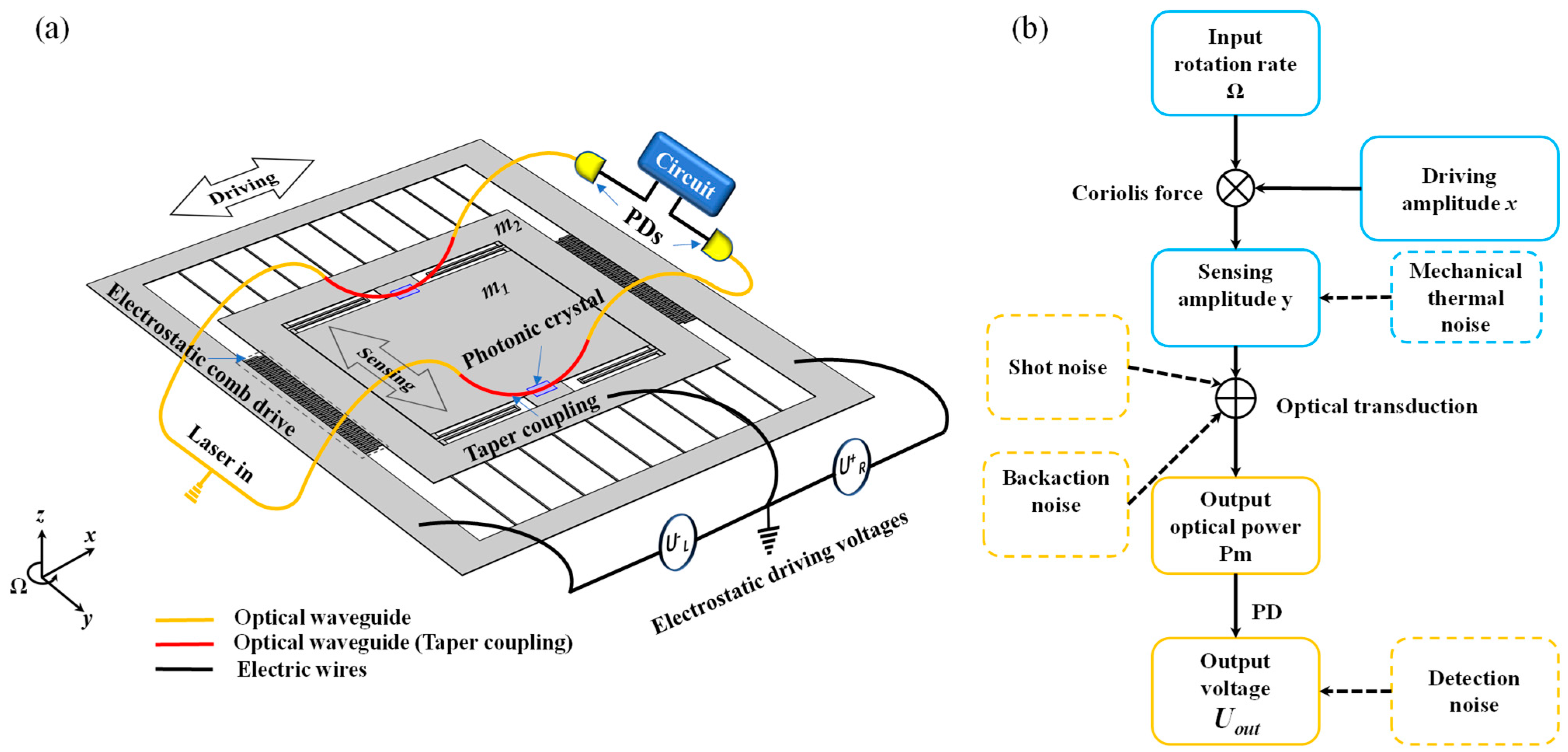
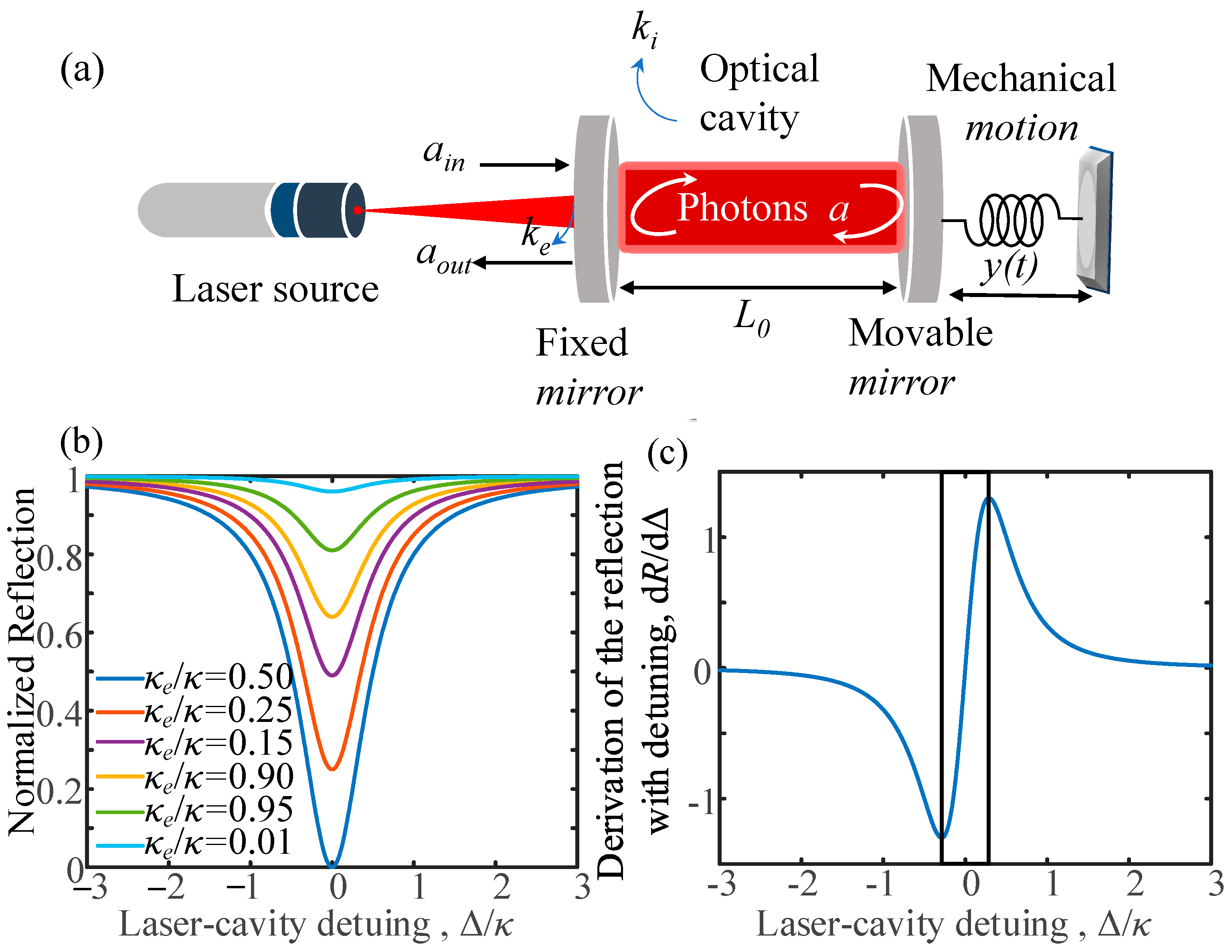
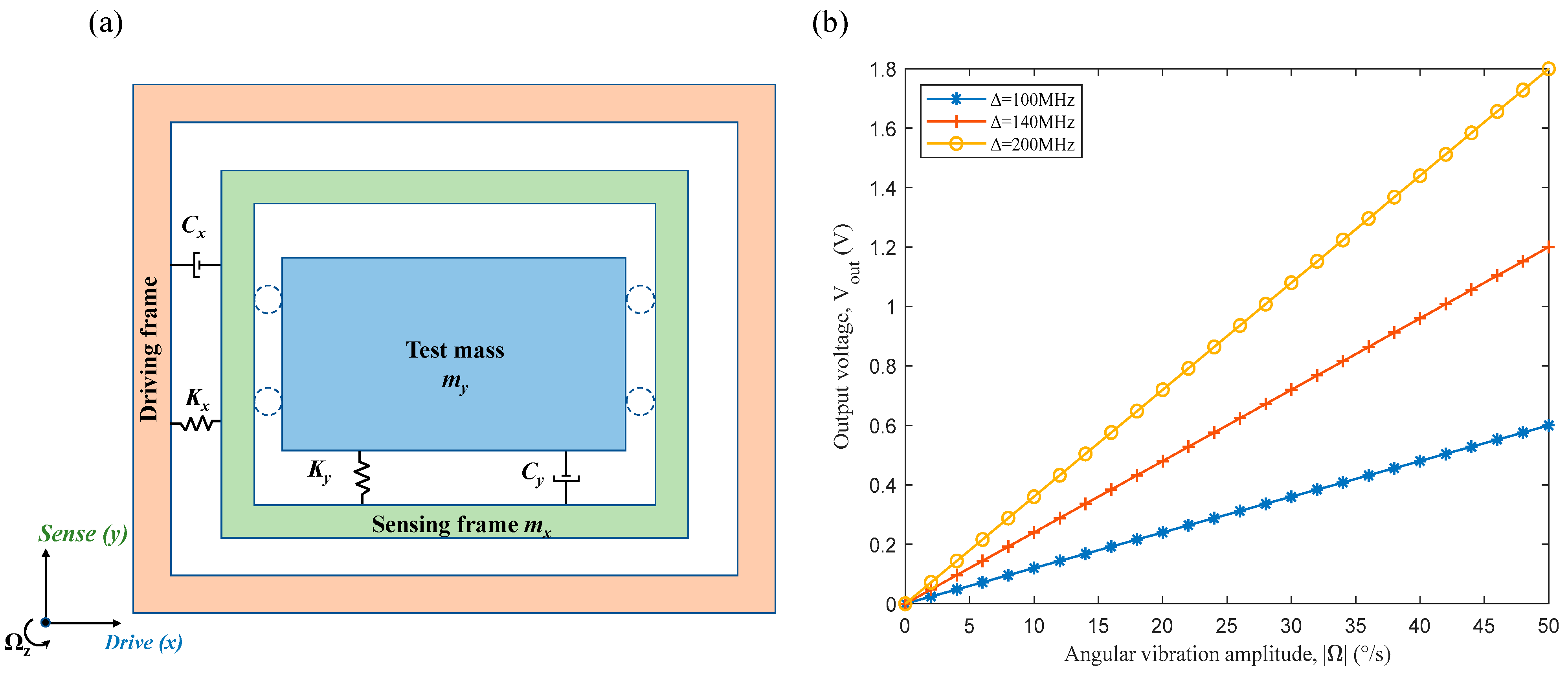
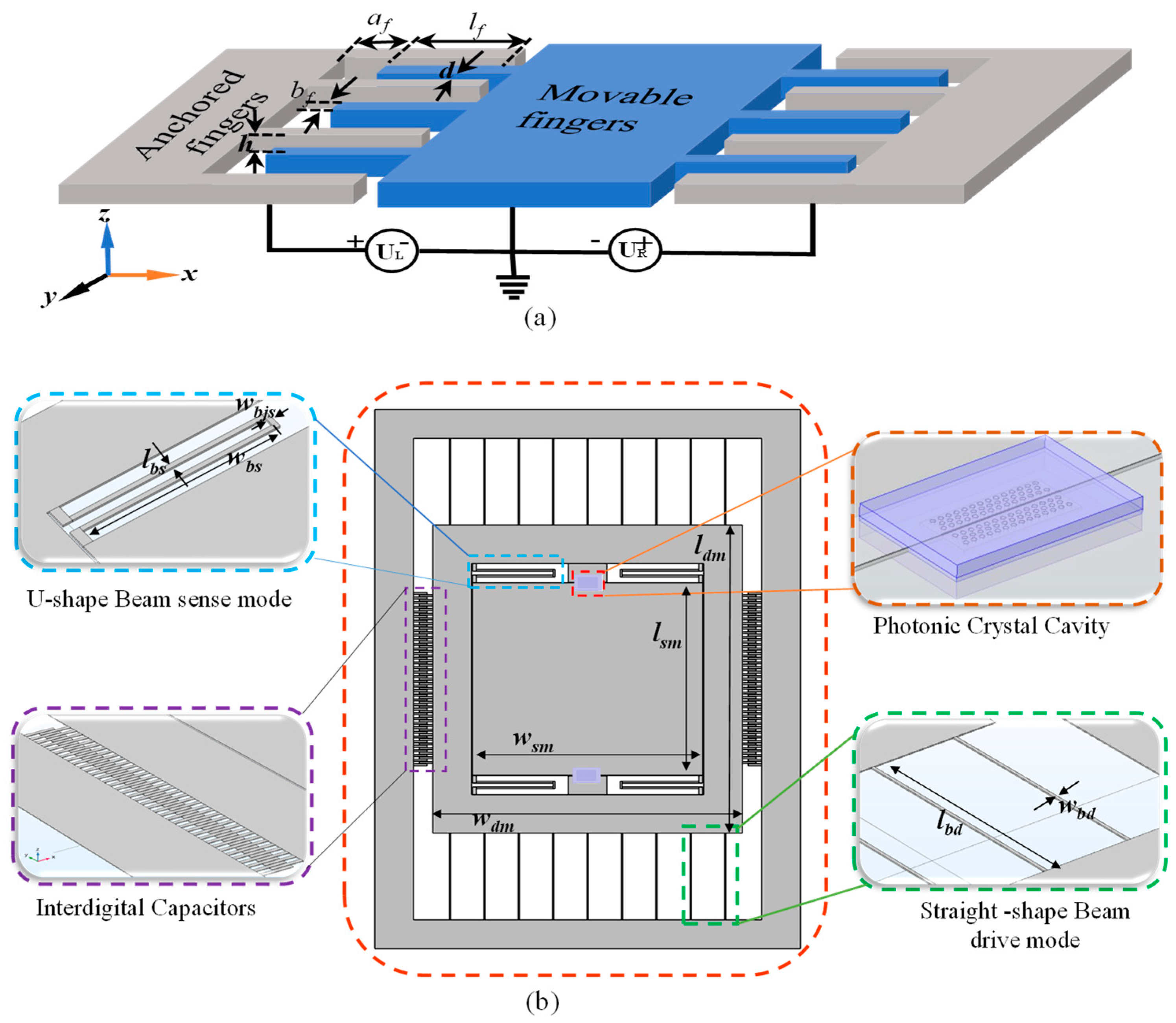
Micro-gyroscopes based on the Coriolis principle are widely employed in inertial navigation, motion control, and vibration analysis applications. Conventional micro-gyroscopes often exhibit limitations, including elevated noise levels and suboptimal performance metrics. Conversely, the advent of cavity optomechanical system technology heralds an innovative approach to micro-gyroscope development. This method enhances the device’s capabilities, offering elevated sensitivity, augmented precision, and superior resolution. This paper presents our main contributions which include a novel dual-frame optomechanical gyroscope, a unique photonic crystal cavity design, and advanced numerical simulation and optimization methods. The proposed design utilizes an optical cavity formed between dual oscillating frames, whereby input rotation induces a measurable phase shift via optomechanical coupling. Actuation of the frames is achieved electrostatically via an interdigitated comb-drive design. Through theoretical modeling based on cavity optomechanics and finite element simulation, the operating principle and performance parameters are evaluated in detail. The results indicate an expected angular rate sensitivity of 22.8 mV/°/s and an angle random walk of 7.1 × 10⁻⁵ °/h1/2, representing superior precision to existing micro-electromechanical systems gyroscopes of comparable scale. Detailed analysis of the optomechanical transduction mechanism suggests this dual-frame approach could enable angular vibration detection with resolution exceeding state-of-the-art solutions.
Keywords: micro-gyroscopes; optomechanical; photonic crystal; angular vibration; dual-frame micro-gyroscopes; optomechanical; photonic crystal; angular vibration; dual-frame