Communication

Spatial Distribution and Composition of Solid Waste Pollution Along the Banks of the Amazon River, Brazil


by
Gabriel dos Anjos Guimarães
1,2,*,
Gysele Maria Morais Costa
2,
Isreele Jussara de Azevedo Rodrigues
1,
Manoel Henrique de Souza Neto
1,
Gustavo Frigi Perotti
1,
Bruno Sampaio Sant’Anna
1 and
Gustavo Yomar Hattori
1
1
Instituto de Ciências Exatas e Tecnologia, Universidade Federal do Amazonas, Rua Nossa Senhora do Rosário, 3863, Tiradentes, Itacoatiara 69103-128, Amazonas, Brazil
2
Instituto de Geociências, Universidade Federal do Pará, Avenida Augusto Corrêa s/n, Guamá, Belém 66075-110, Pará, Brazil
*
Author to whom correspondence should be addressed.
Limnol. Rev. 2026, 26(1), 8; https://doi.org/10.3390/limnolrev26010008
Submission received: 31 January 2026 / Revised: 24 February 2026 / Accepted: 2 March 2026 / Published: 5 March 2026

Abstract

Pollution from solid waste results mainly from improper disposal and inadequate waste management, causing environmental degradation and risks to human health. This study characterized solid waste pollution along the left bank of the Amazon River within the urban segment of Itacoatiara, Brazil. Eleven sampling points were established across upstream, midstream and downstream sections. Solid waste was present at densities ranging from 0 to 0.65 items·m−2, with a mean density of 0.15 ± 0.14 items·m−2. Higher concentrations were observed in the midstream sections of the left bank (0.21 ± 0.16 items·m−2), and statistical analyses showed significant differences among sections. Plastics predominated among all materials (0.50 ± 0.60 items·m−2), and statistical analyses showed significant differences among the types of solid waste, with fragments mainly originating from bags, bottles, and fibers. Plastics were recorded in most sampling sections, with particularly high abundance in the midstream sections of the river (0.98 ± 0.80 items·m−2) and statistical analyses showed significant differences among sections and across material types. According to the general index and the clean coast index, sampling areas ranged from “clean” to “extremely dirty”, with midstream sections most impacted. The plastic abundance index indicated high plastic contamination, and hazardous waste was more frequent in the upstream and midstream sections. The environmental status index classified all sections as both “good” and “bad”, indicating compromised environmental quality and ecological integrity. These results show human pressure on the Amazon River banks and degraded environmental quality, supporting waste management policies, mitigation, monitoring, and environmental education to protect ecosystems and reduce risks to riverside communities.

1. Introduction

Potentially harmful materials and substances are introduced into ecosystems, either intentionally or accidentally [1], as a result of human activities [2]. Pollution from solid waste largely arises from improper disposal and failures in the management of these materials, resulting in severe environmental degradation and serious risks to human health [3]. Solid waste present in the environment is composed mainly of plastics, although it also includes paper, metals, fabrics, wood, glass and other materials [4]. The accumulation of these contaminants interferes with biogeochemical processes and cycles, threatens biodiversity and compromises food and water security, requiring urgent global responses for the development and implementation of sustainable management and mitigation strategies [5]. It is estimated that global solid-waste generation is approximately 2 billion tons per year, and about 33% of this total is discarded in the environment without prior treatment [6,7]. This scenario constitutes an environmental crisis, endangering aquatic ecosystems, livelihoods and human well-being [8,9].
The presence of solid waste has been widely recorded on beaches and in coastal areas around the world [5,10,11,12]. The principal land-based sources include tourism, inefficient or nonexistent solid-waste management and disposal associated with domestic and industrial effluents. Aquatic sources are often related to fishing activities and maritime and river transport [9]. Once introduced into the aquatic environment, these solid waste items can be transported long distances on the surface before sinking or reaching remote areas, depending on their physical characteristics and the hydrodynamic conditions [13]. The environmental impacts resulting from the improper disposal of these materials are significant, compromising essential ecological interactions and posing threats to biodiversity, the integrity of food webs and to human health [14,15].
Despite the scarcity of studies on the composition of solid waste along the banks of Amazonian rivers, the problem has reached critical proportions in the region, where the absence of adequate basic sanitation systems facilitates the transfer of this waste into the Amazon River [16]. The high load of plastics in this river system contributes to the presence of microplastics in surface waters [17] and sediments [18], as well as their accidental ingestion by fish [19], shrimp [20], and aquatic macrophytes [21]. Systematic monitoring of solid waste accumulation in the aquatic environment is therefore essential, not only for evaluating the effectiveness of waste management strategies and supporting mitigation measures, but also for understanding and potentially reducing the plastic content in river waters, sediments, and aquatic biota [16,17].
Conservatively, approximately 182,085 tons of plastic waste are directly discarded into the Brazilian Amazon environment each year [22]; however, when all categories of solid waste are considered, this amount is substantially higher. Cunha and Nagalli [23] evaluated solid waste management in 31 municipalities in the state of Amazonas and reported that none of them implements adequate waste management practices, with waste being disposed of in open dumps, resulting in soil degradation and contamination of aquatic systems. Furthermore, the disposal of waste along the margins of the Amazon River is a recurrent practice [20,21], associated with the lack of effective public policies and the limited operational capacity of solid waste management systems in municipalities such as Itacoatiara [24]. Nevertheless, there remains a critical lack of quantitative and spatially explicit assessments of solid waste along the margins of the Amazon River, particularly in medium-sized urban areas such as Itacoatiara. This represents an important scientific gap, as the absence of detailed baseline information on the distribution and composition of solid waste limits the understanding of contamination dynamics and constrains the development of effective monitoring and management strategies in Amazonian river systems. In this context, the present study aimed to characterize solid-waste pollution along the left bank of the Amazon River, in front of the municipality of Itacoatiara (AM), Brazil, which exhibits characteristics typical of Amazonian cities, and may act as a potential source of contamination for the region’s aquatic ecosystems.

2. Materials and Methods

A single sampling campaign of solid waste was conducted in September 2021 along the left bank of the Amazon River, during the dry season, which is characterized by low precipitation in the region, in an area influenced by intense port activity due to the constant movement of vessels [25]. The municipality of Itacoatiara is located 266 km from the state capital, Manaus, and has an estimated population of 103,598 inhabitants, with a population density of 11.65 inhabitants/km2 [26].
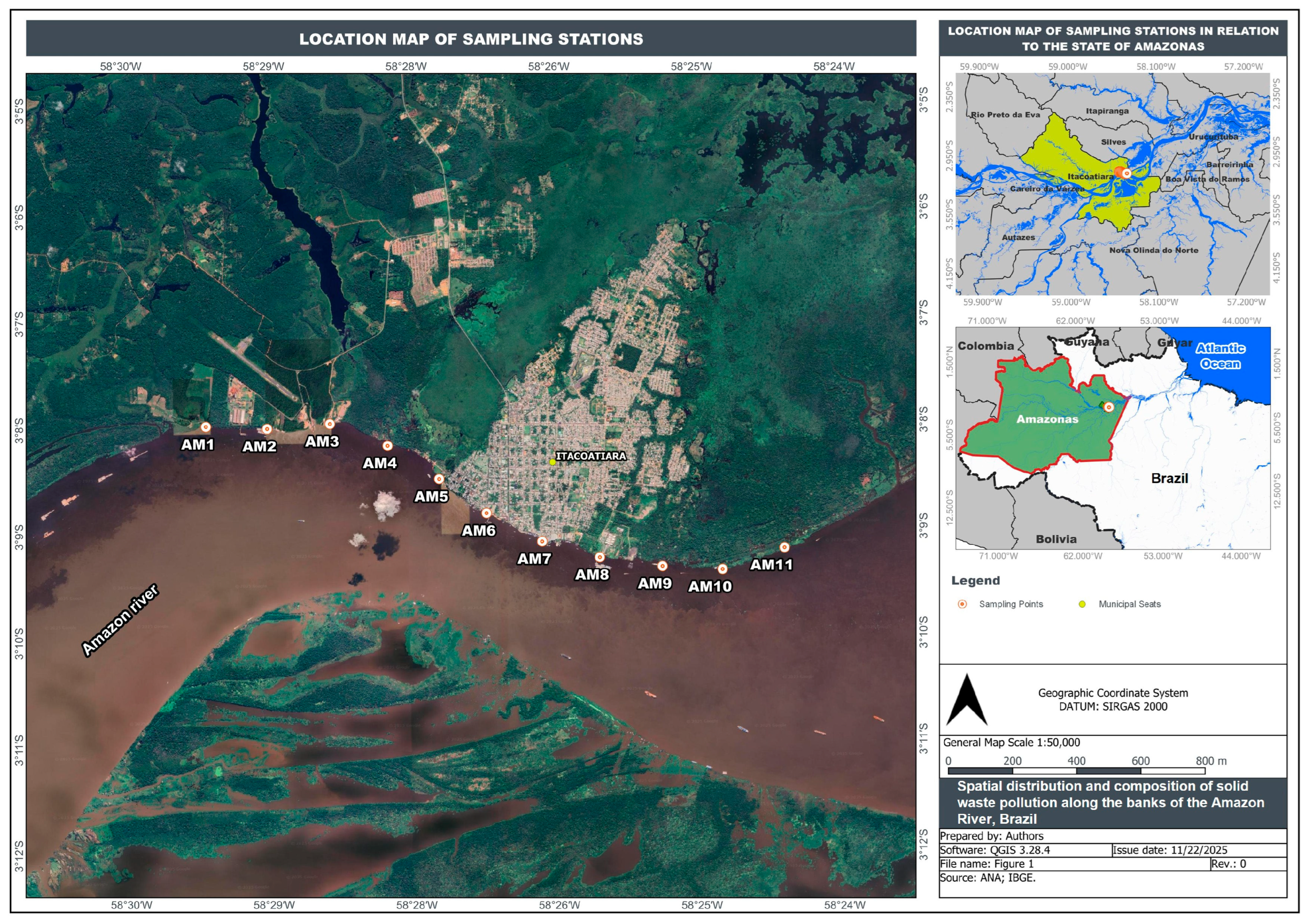
A total of eleven strategically selected sampling stations were established along the Amazon River in Itacoatiara, distributed upstream, midstream, and downstream, with an average spacing of approximately 960 m, covering semi-urban and urban areas (Figure 1). The selection of these points aimed to capture the influence of different anthropogenic activities along the river. To analysis and interpretation, the sampling sections were grouped according to their location and surrounding land-use characteristics: upstream stations (P1–P4) are predominantly influenced by port activities related to the agricultural sector, in addition to nearby farms; midstream stations (P5–P8) represent the urbanized area of the city; and downstream stations (P9–P11) are again affected by port operations. This grouping allows for a meaningful comparison of solid waste distribution across sections exposed to varying types and intensities of anthropogenic pressure. Data collection details are in Table S1.
The collection of solid waste followed a methodology adapted from Ribeiro et al. [10]. At each sampling station, a single 10 m × 2 m (20 m2) transect was established parallel to the bank and at a standardized distance of 5 m from the waterline of the Amazon River. This distance was chosen due to local site characteristics, including stationary boats, numerous rocks that hinder sampling, as well as limitations in available personnel, resources, and infrastructure. All visible solid waste items (≥25 mm) within the transect were collected and stored in plastic bags for subsequent qualitative and quantitative laboratory analysis.
The values of the indices for pollution by solid waste were obtained according to Alkalay et al. [27], using two indicators: the General Index (GI), which considers all the solid waste collected (Equation (1)), and the Clean Coast Index (CCI), which considers only plastics (Equation (2)). For this calculation, a coefficient of K = 20 was adopted, allowing the number of items per sampling station to be expressed in whole numbers. This coefficient is used to ensure comparability with previous studies that applied the same index. The final classification of the indices (GI and CCI) followed the criteria of Alkalay et al. [27].
GI = ∑litter items/area (m2) × K,
CCI = ∑plastic items/area (m2) × K,
Another index used was the Plastic Abundance Index (PAI), which quantifies the abundance of plastic at a given site. The index is calculated as the ratio between the amount of plastic and the base-10 logarithm (log10) of the total items collected in the sampling stations which allows for normalization of highly variable waste data and reduces the influence of extreme values (Equation (3)). For this calculation, a coefficient of K = 20 was adopted, allowing the number of items per area to be expressed as whole numbers and ensuring comparability with previous studies using the same index. The final classification of the PAI followed the criteria of Rangel-Buitrago et al. [28].
PAI = (∑plastic items/log10 ∑total waste)/area (m2) × K,
The Hazardous Solid Waste Index (HSWI) was calculated based on the proportion of hazardous solid waste (glass, metals, and sharp or toxic materials) relative to the total number of items collected, using a log10 of the total items in the sampling stations. This approach allows normalization of highly variable waste data and reduces the influence of extreme values. A coefficient of K = 20 was adopted to express the number of items per area as whole numbers, ensuring comparability with previous studies using the same index [29]. Classification followed the categories proposed by Rangel-Buitrago et al. [30].
HSWI = (∑hazardous items/log10 ∑total waste)/area (m2) × K,
The Environmental Status Index (ESI) was also applied to each sampling station, considering both the quantity and severity of the solid waste. The weights assigned to the solid waste classes (wi) and the classification of the results followed Schulz et al. [31]. In this index, wi represents the simple weight of all solid waste categories found at the study sites, multiplied by the class (xi) based on the presence and abundance of a specific category.
ESI = (∑wi × Xi)/∑Wi,
The abundance of solid waste in each sampling section was estimated based on the number of items collected per transect, standardized by the sampled area (20 m2) and expressed in items per square meter (items·m−2). For each sampling section, minimum, maximum, mean, and standard deviation values were calculated. Comparisons among sections were performed by averaging the values from points characterized as upstream, midstream, and downstream along the left bank of the Amazon River. Differences in solid waste abundance among sampling sections and among waste types were evaluated using a two-way analysis of variance (two-way ANOVA), considering as factors: sampling sections (upstream, midstream, and downstream sections) and waste types (non-ferrous metals, ferrous metals, hazardous waste, plastic, fabric, and glass). When significant differences were detected, Tukey’s post-hoc test was applied to identify pairwise differences among groups. All analyses were performed in R Studio version 4.4.2 (31 October 2024 ucrt) [32], with a significance level set at p < 0.05. This approach ensures that differences are statistically robust while accounting for spatial variability within each section.

3. Results and Discussion

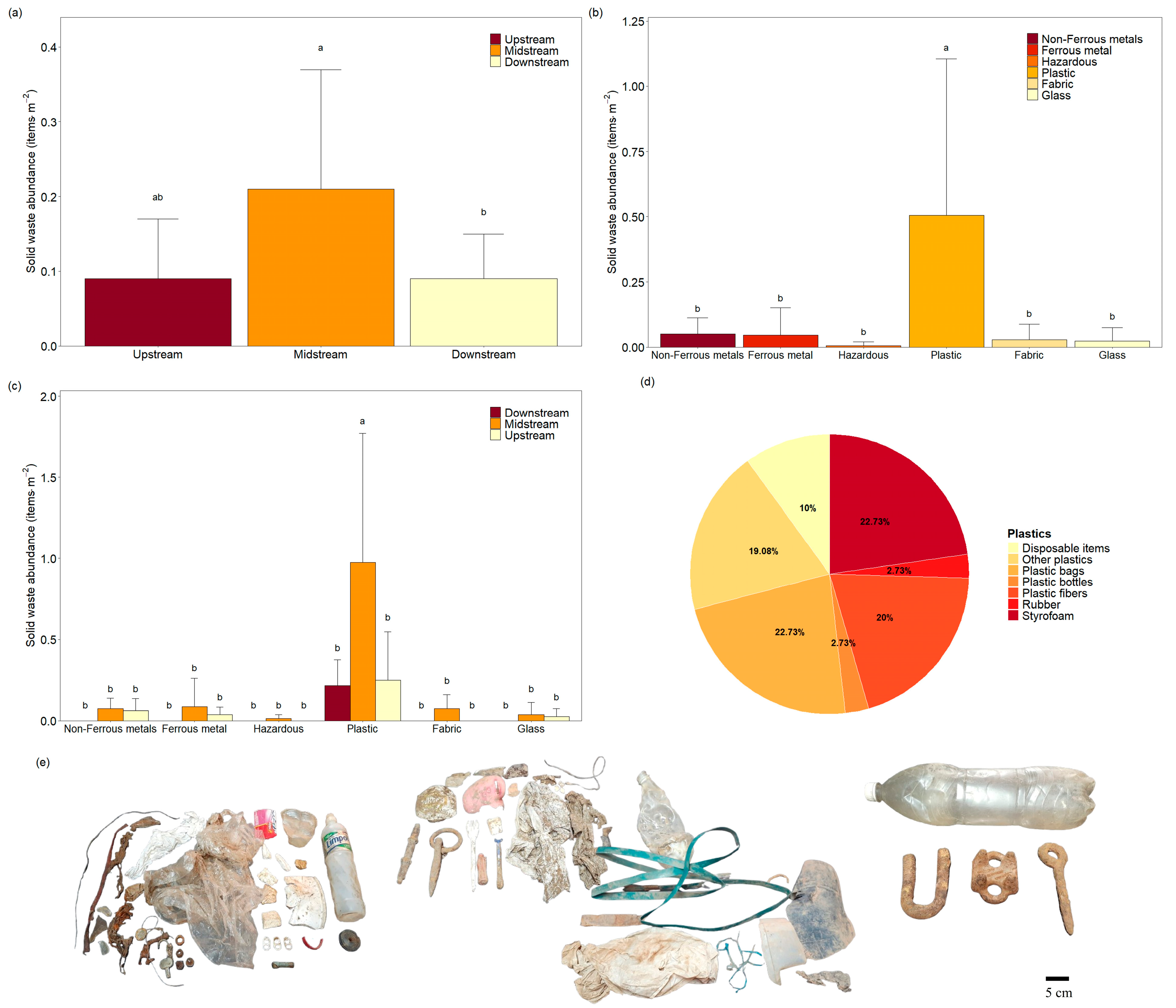
The results of this study reveal the presence and distribution of solid waste pollution along the left bank of the Amazon River in the Itacoatiara region. The mean density per sampling unit, defined as each combination of sampling stations and material type, including zero values, was 0.15 ± 0.14 items·m−2, reflecting the high spatial heterogeneity of solid waste distribution. Individual sampling units ranged from 0 to 0.65 items·m−2. A higher concentration of solid waste was observed in the midstream sections of the left bank of the Amazon River compared to the upstream and downstream sections in front of the urban area of Itacoatiara, ranging from 0.05 to 0.65 items·m−2 with a mean of 0.21 ± 0.16 items·m−2 (Figure 2a). Statistical analysis revealed significant differences in mean concentration among the sections (F = 3.950; Df = 2; p = 0.026), indicating that local anthropogenic pressure influences the dynamics and deposition of solid waste along the riverbank. The concentration observed in this study was higher than that reported by other studies around the world (Table 1). This variation among studies likely reflects differences in hydrodynamic conditions, population density, and waste management practices, factors that directly affect the accumulation and transport of solid materials in coastal and riverine environments [33,34,35].
The presence of solid waste in the investigated areas can be attributed to a combination of anthropogenic and hydrodynamic factors. In the urban region, corresponding to the midstream sections of the left bank, the high concentration of waste is associated with the absence of basic sanitation services, which favors the improper disposal of solid waste and its accumulation in the urbanized areas along the banks of the Amazon River [16]. Moreover, fishing and navigation activities constitute additional sources of pollution, since the irregular discharge of materials directly into the aquatic environment contributes significantly to the waste load observed [20]. From a physical standpoint, the hydrodynamic characteristics of the left bank of the Amazon River, such as flow variation and the formation of recirculation zones, increase its susceptibility to the retention and accumulation of waste [18]. These factors explain the greater presence of solid waste upstream compared with downstream, also reported by Guimarães et al. [21], indicating that these areas function as zones of retention and accumulation of solid waste. Thus, identifying the main sources of solid waste and its retention mechanisms in the Amazon River is essential for supporting environmental management strategies aimed at reducing and mitigating waste pollution in Amazonian waters [29].
The solid waste observed in this study was predominantly composed of plastics (Figure 2b), ranging from 0 to 1.80 items·m−2, with a mean of 0.50 ± 0.60 items·m−2. Statistical analysis revealed significant differences in mean abundance among the types of solid waste (F = 8.330; Df = 5; p < 0.05), highlighting the substantial predominance of plastics in the overall composition of waste accumulated along the left bank of the Amazon River. The dominance of these materials directly reflects the urban land-use characteristics of the region, which is characterized by high population density, limited infrastructure, and inadequate waste management practices that favor irregular disposal. Similar findings were reported by Palmas et al. [36] in intermittent rivers in Sardinia, Italy, indicating that plastics tend to dominate waste flows in human-impacted freshwater systems.
Furthermore, previous studies by Guimarães et al. [20] also reported large amounts of solid waste along this riverbank, reinforcing the persistent nature of the problem. The presence of metals, although less abundant, can be attributed to improper disposal associated with land-based activities, particularly construction [37], and to metallic vessels, which contribute to environmental degradation through corrosion [38]. On the other hand, the high concentration of plastics likely results both from the influx of untreated domestic sewage and from the improper disposal of waste generated by local fishing activities [20,39], highlighting multiple anthropogenic sources that influence the distribution and accumulation of solid materials in this fluvial environment.
Plastics were recorded in most sampling sections, with particularly high abundance in the midstream sections of the river, ranging from 0.05 to 1.80 items·m−2, with a mean of 0.98 ± 0.80 items·m−2 (Figure 2c). Significant differences were observed in waste abundance among sections and across material types (F = 2.083; Df = 10; p = 0.044). The majority of plastics were fragmented, predominantly originating from plastic bags, bottles, and fibers. Plastic bags included shopping and transport bags, whereas bottles encompassed containers for beverages, water, and household products. Fibers derived from synthetic clothing, fishing nets, and ropes. Other plastics comprised flexible packaging, caps, utensils, and small miscellaneous items. Styrofoam, commonly used in food packaging and transport boxes, was frequently found in fragmented form. Rubber items, such as shoe soles and hoses, and disposable items, including cups, cutlery, plates, and food packaging, were present in lower proportions (Figure 2d,e).
The persistence of plastics in the environment is particularly concerning because fragmentation can generate microplastics, facilitating the dispersion of pollutants across multiple environmental matrices in the Amazon River [16,40]. Previous studies have reported the presence of macro- and microplastics in macrophytes along the left bank of the river [21], and microplastics have also been documented in shrimp collected near the sampling stations of the present study [20]. Therefore, the accumulation of plastics along riverbanks may represent a potential source of microplastics and associated contaminants, posing risks to aquatic biota and potentially to human health through trophic transfer [17,19].
Table 1. Distribution of solid waste pollution around the world.
LocationTypeSampling PeriodSampling Area (m2)Site Selection AspectsSolid Waste (Items/m2)Reference
Shantou, Hong KongBeachesDec.–Jan.600Location, morphology, human use0.00019–0.00012[41]
Apr.–May 0.00088–0.00062
Jul.–Aug. 0.00127–0.0013
Oct.–Nov. 0.000418–0.000255
Santa Catarina, BrazilBeachesMar.–Apr.100Geography, beach condition, ports0.07–3.59[42]
Istanbul, TurkeyBeachesAug.–Sep.4Morphology, human impact5.50 ± 4.46[43]
North coast of Indian OceanBeachesMar.–Jun.50Tourism, human activity, pollution0.89 ± 0.201[44]
Central Caribbean coast, ColombiaBeachesNot reported50Economic activity5.11[28]
Northeast IndiaBeachesMonsoon & post-monsoon500Agriculture, fishing, tourism1.10 ± 0.39–0.86 ± 0.32[45]
Southern VietnamBeachesJun.–Aug.5000Tourism, port proximity0.1768–0.4464[46]
Municipalities of Ilha do Maranhão, BrazilBeachesOct.–Nov.5000Access, urban proximity0.19[33]
Banks of the Amazon River, BrazilRiver-bankSep.20Location, land use0.15 ± 0.14This study
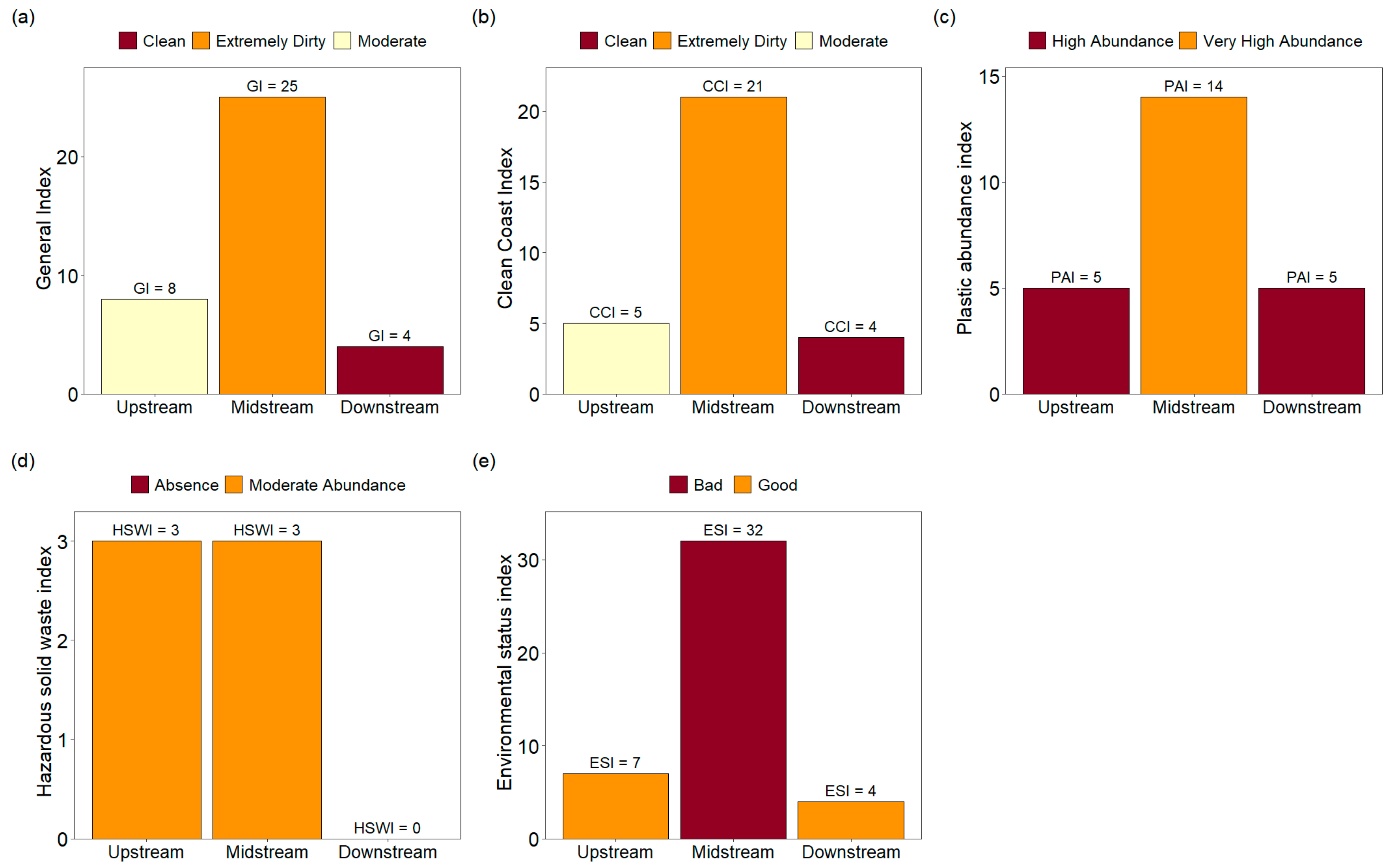
In addition to the characterization of the solid waste, the sampling sections showed conditions ranging between “clean”, “moderate” and “extremely dirty”, as indicated by the GI and CCI (Figure 3a,b). The section located in the midstream sections, which is more exposed to anthropogenic activities, was classified as “extremely dirty” by both indices and presented the highest number of recorded items. This pattern, characterized by a more intense accumulation of solid waste in areas close to urban centers, has been reported in previous studies [34,47]. The sections located upstream and downstream also showed conditions ranging between “dirty” and “extremely dirty”. This result differs from what has been observed in other regions, where areas farther from urban centers tend to be classified as clean [30,47,48]. In the case of the left bank of the Amazon River, the persistence of solid waste in less urbanized stretches may be associated not only with inadequate waste disposal but also with local hydrodynamic characteristics, which favor the retention and deposition of floating materials [21].
The PAI indicated that all the sampling sections exhibited high levels of abundance of plastics (Figure 3c), a trend also reported in various riverine and coastal environments around the world [28,49]. The presence of these materials simultaneously reflects the intensive and widespread use of plastic in the daily lives of the population and the limited effectiveness of public policies aimed at reducing, regulating and controlling the production, commercialization and disposal of these products [50]. In the Amazonian context, this issue is aggravated by structural factors such as the low coverage of sanitation services, the insufficiency of solid-waste collection and treatment systems, and the lack of adequate infrastructure for managing disposable materials. Additionally, the region’s complex hydrological dynamics favor the transport and redistribution of plastics along the rivers, increasing their dispersion and hindering containment and removal efforts. This scenario reinforces the urgency of integrated strategies that combine environmental education programs, mitigation actions, strengthening of municipal waste management and, above all, behavioral changes within the local population [16,40]. The implementation of these measures is essential in order to reduce dependence on plastics and mitigate its environmental and social impacts, as highlighted by studies analyzing regions with similar socio-environmental contexts [28].
Regarding the HSWI, it was observed that the downstream section showed values equal to zero, since no solid waste classified as hazardous was identified. In contrast, the upstream and midstream sections recorded moderate values, being characterized as areas with an abundance of hazardous waste (Figure 3d). A similar situation has already been reported by Rangel-Buitrago et al. [30] in relation to coastal environments. The presence of this type of waste, including glass fragments, metals, sharp objects and items with toxic potential, poses significant risks to human health and the environment. These materials can cause cuts, infections, poisonings and other forms of direct harm to the local population, in addition to affecting fauna through direct contact or indirect contamination processes, such as leaching of chemical substances or accidental ingestion [29,51]. Considering the Amazonian context, such risks are intensified by the strong dependence of riverine populations on natural resources and by the limited availability of health and sanitation services, increasing the socio-environmental vulnerability associated with this type of waste.
The ESI results showed that the upstream and downstream sampling sections were classified as “clean,” whereas the midstream section was classified as “bad,” reflecting the high concentration of solid waste and the associated degradation of environmental quality along the midstream bank of the Amazon River (Figure 3e). An index indicating this condition suggests the presence of an environment conducive to the entry, retention and bioaccumulation of pollutants in aquatic organisms [31]. This relationship had already been documented in the region; Guimarães et al. [20] showed that the high plastic load contributed to the accidental ingestion of these materials by freshwater shrimp of the species Macrobrachium amazonicum. In addition, Guimarães et al. [21] demonstrated the association of plastics with aquatic macrophytes, highlighting the role of these organisms as potential sinks and vectors for pollutant dispersal in ecosystems.
Given this scenario, mitigation strategies become essential to reduce the region’s ecological and social vulnerability. The implementation of efficient solid waste management systems—including regular collection, safe transportation and proper final disposal—combined with active participation of the community in responsible disposal practices and cleanup actions, represents a fundamental step toward containing pollution. Furthermore, the development and effective enforcement of legislation and regulations aimed at controlling environmental pollution have been identified as measures that are capable of mitigating the impacts caused by solid waste in different contexts [30,45]. Therefore, such measures are even more urgently needed in the Amazon region, given the interaction between ecological fragility, complex hydrological dynamics and limited sanitation infrastructure.
Based on the results of this study, it is important to note that solid waste sampling was conducted during a single period, the dry season (September 2021), along the left bank of the Amazon River. The abundance and distribution of solid waste may vary significantly throughout the year due to seasonal factors such as changes in rainfall patterns, fluctuations in water level, hydrodynamic variability, and variations in human activities, including port operations, fishing, and waste disposal [52,53,54]. Therefore, the results presented here represent only a snapshot of solid waste accumulation under dry-season conditions and may not fully capture seasonal variability.
Despite this limitation, the data provide valuable insights into solid waste dynamics under these specific conditions and serve as an important baseline for the region. To quantify and compare these dynamics, five solid waste indices (GI, CCI, PAI, HSWI, and another) were applied. Although originally developed for coastal and beach environments, these indices are based on rigorously collected and characterized field data and provide a relative measure of solid waste pressure, enabling spatial comparisons within the riverine system. Future studies should include multiple sampling campaigns and long-term temporal series with monthly monitoring to better understand the role of riverbanks as retention and accumulation zones for waste and pollutants, as well as to assess the temporal dynamics and transport mechanisms of these materials throughout the year.

4. Conclusions

This study provides the first evidence of solid waste pollution along the left bank of the Amazon River in the municipality of Itacoatiara. Our findings reveal that the midstream sections of the riverbank, adjacent to the urban area, exhibit significantly higher concentrations of solid waste compared to the upstream and downstream sections, highlighting the influence of local anthropogenic pressures on the distribution and deposition of debris. Plastics were pervasive across most sampling sections, particularly in the midstream sections, and were predominantly found in a fragmented state, originating mainly from bags, bottles, and synthetic fibers. Assessment indices indicated conditions ranging from “clean” to “extremely dirty,” with the highest impact observed in the midstream sections. The Plastic Abundance Index confirmed the widespread presence of plastics across all sampling sections, while the Hazardous Solid Waste Index identified moderate concentrations of hazardous materials in the upstream and midstream sections. The Environmental Status Index classified sections as both “good” and “bad,” demonstrating substantial degradation of environmental quality and the integrity of aquatic ecosystems.
These findings underscore the ecological and public-health risks associated with solid waste accumulation. Hazardous materials, including plastics and other dangerous debris, can cause direct harm to humans and wildlife through contact, ingestion, or leaching of toxic substances. In the Amazonian context, these risks are amplified by the strong dependence of riverine populations on natural resources and the limited availability of sanitation services, increasing socio-environmental vulnerability and threatening both biodiversity and human well-being.
To mitigate these impacts, targeted operational strategies are essential. Measures may include prioritized monitoring in midstream zones, source-node sorting and recovery near urban and port areas, and regular cleanup campaigns with measurable indicators of progress. Complementary actions include improving municipal waste management, enforcing environmental regulations, promoting circular economy initiatives, and implementing environmental education programs for local communities. These integrated actions can effectively reduce solid waste pollution, support ecosystem conservation, and minimize risks to human health in the region.

Supplementary Materials

The following supporting information can be downloaded at: https://www.mdpi.com/article/10.3390/limnolrev26010008/s1, Table S1. Characteristics of the sampling stations and transects along the left bank of the Amazon River within the urban segment of Itacoatiara, Brazil.

Author Contributions

Conceptualization, all authors; methodology, all authors; investigation, G.d.A.G.; data curation, G.d.A.G.; formal analysis, G.d.A.G., G.M.M.C., B.S.S. and G.Y.H.; writing—original draft preparation, G.d.A.G.; writing—review and editing, G.d.A.G., G.M.M.C., I.J.d.A.R., M.H.d.S.N., G.F.P., B.S.S. and G.Y.H.; supervision, G.Y.H. All authors have read and agreed to the published version of the manuscript.

Funding

This study was partially funded by the Coordenação de Aperfeiçoamento de Pessoal de Nível Superior—Brazil (CAPES) through a scholarship awarded to Gabriel dos Anjos Guimarães and by the Fundação de Amparo à Pesquisa do Amazonas (FAPEAM) through the Amazonas and PAINTER programs (call No. 062.00875/2020) awarded to Gustavo Yomar Hattori. Gustavo Frigi Perotti acknowledges funding from FAPEAM through the PAINTER program (062.00875/2020), the CT&I—Priority Areas program (01.02.016301.03332/2021-12) and the POSGRAD 2022/2023 program—Technical Support for Graduate Studies. The Conselho Nacional de Desenvolvimento Científico e Tecnológico (CNPq) awarded a grant to Bruno Sampaio Sant’Anna (No. 409910/2016-3).

Data Availability Statement

The datasets generated during and/or analyzed during the current study are available from the corresponding author on request.

Acknowledgments

The authors thank the Programa de Pós-graduação em Ciência e Tecnologia para Recursos Amazônicos (PPGCTRA) and the Instituto de Ciências Exatas e Tecnologia da Universidade Federal do Amazonas (UFAM) for their essential support, which made this study possible. We also thank the Coordination for the Improvement of Higher Education Personnel (CAPES) and the Fundo Brasileiro para a Biodiversidade (FUNBIO, contract No. 13/2023) for the scholarship awarded to Gabriel dos Anjos Guimarães; Fundação de Amparo à Pesquisa do Amazonas (FAPEAM), through the Universal Amazonas Program, for the scholarships awarded to Gustavo Yomar Hattori and Manoel Henrique de Souza Neto; and, through the PAINTER, CT&I—Priority Areas and POSGRAD 2022/2023 programs, for the scholarship awarded to Gustavo Frigi Perotti. The Conselho Nacional de Desenvolvimento Científico e Tecnológico (CNPq) awarded a scholarship to Bruno Sampaio Sant’Anna (No. 409910/2016-3).

Conflicts of Interest

The authors declare no conflicts of interest.

References

  1. Duhec, A.V.; Jeanne, R.F.; Maximenko, N.; Hafner, J. Composition and potential origin of marine debris stranded in the Western Indian Ocean on remote Alphonse Island, Seychelles. Mar. Pollut. Bull. 2015, 96, 76–86. [Google Scholar] [CrossRef]
  2. Cabral, H.; Fonseca, V.; Sousa, T.; Leal, M.C. Synergistic effects of climate change and marine pollution: An overlooked interaction in coastal and estuarine areas. Int. J. Environ. Res. Public Health 2019, 16, 2737. [Google Scholar] [CrossRef]
  3. Anthony, J.; Varalakshmi, S.; Sekar, A.K.; Sivasankarasubbiah, K.T.; Harikrishnan, T.; Rangamaran, V.R.; Gopal, D.; Ramalingam, K. Microplastics pollution in Indian marine environment: Sources, effects and solutions. Front. Mar. Sci. 2024, 11, 1512802. [Google Scholar] [CrossRef]
  4. Asensio-Montesinos, F.; Anfuso, G.; Ramírez, M.O.; Smolka, R.; Sanabria, J.G.; Enríquez, A.F.; Arenas, P.; Bedoya, A.M. Beach litter composition and distribution on the Atlantic coast of Cádiz (SW Spain). Reg. Stud. Mar. Sci. 2020, 34, 101050. [Google Scholar] [CrossRef]
  5. Ponmani, M.; Padmavathy, P.; Manimekalai, D.; Shalini, R.; Ravikumar, T.; Hariharan, G. Spatial variation and pollution indices of anthropogenic marine litter on the beaches in Gulf of Mannar, India. Mar. Pollut. Bull. 2025, 216, 118014. [Google Scholar] [CrossRef]
  6. Chiang, P.F.; Zhang, T.; Claire, M.J.; Maurice, N.J.; Ahmed, J.; Giwa, A.S. Assessment of solid waste management and decarbonization strategies. Processes 2024, 12, 1473. [Google Scholar] [CrossRef]
  7. Rojas, A.R.; Rofner, N.F.; Morales y Chocano, L.; Rodríguez Lichtenheldt, J.R.; Atoche Cornejo, J.P. Systemic model of segregation and transformation of urban solid waste. Clean. Eng. Technol. 2025, 27, 101006. [Google Scholar] [CrossRef]
  8. De-la-Torre, G.E.; Dioses-Salinas, D.C.; Pizarro-Ortega, C.I.; Santillán, L. New plastic formations in the Anthropocene. Sci. Total Environ. 2021, 754, 142216. [Google Scholar] [CrossRef] [PubMed]
  9. Rakib, M.R.J.; Ertaş, A.; Walker, T.R.; Rule, M.J.; Khandaker, M.U.; Idris, A.M. Macro marine litter survey of sandy beaches along the Cox’s Bazar Coast of Bay of Bengal, Bangladesh: Land-based sources of solid litter pollution. Mar. Pollut. Bull. 2022, 174, 113246. [Google Scholar] [CrossRef]
  10. Ribeiro, V.V.; Harayashiki, C.A.Y.; Ertaş, A.; Castro, I.B. Anthropogenic litter composition and distribution along a chemical contamination gradient at Santos Estuarine System—Brazil. Reg. Stud. Mar. Sci. 2021, 46, 101902. [Google Scholar] [CrossRef]
  11. Kaviarasan, T.; Dhineka, K.; Sambandam, M.; Sivadas, S.K.; Sivyer, D.; Hoehn, D.; Pradhan, U.; Mishra, P.; Murthy, M.V.R. Impact of multiple beach activities on litter and microplastic composition, distribution, and characterization along the southeast coast of India. Ocean Coast. Manag. 2022, 223, 106177. [Google Scholar] [CrossRef]
  12. Yona, D.; Nooraini, P.; Putri, S.E.N.; Sari, S.H.J.; Lestariadi, R.A.; Amirudin, A. Spatial distribution and composition of marine litter on sandy beaches along the Indian Ocean coastline in the south Java region, Indonesia. Front. Mar. Sci. 2023, 10, 1220650. [Google Scholar] [CrossRef]
  13. Asensio-Montesinos, F.; Anfuso, G.; Williams, A.T.; Sanz-Lázaro, C. Litter behaviour on Mediterranean cobble beaches, SE Spain. Mar. Pollut. Bull. 2021, 173, 113106. [Google Scholar] [CrossRef]
  14. Rangel-Buitrago, N.; Gracia, A.; Vélez-Mendoza, A.; Mantilla-Barbosa, E.; Arana, V.A.; Trilleras, J.; Arroyo-Olarte, H. Abundance and distribution of beach litter along the Atlantico Department, Caribbean coast of Colombia. Mar. Pollut. Bull. 2018, 136, 435–447. [Google Scholar] [CrossRef]
  15. Arcangeli, A.; Pasanisi, E.; Santini, E.; Crosti, R. A systematic monitoring approach to assess floating marine macro litter in Italian waters: Baseline, thresholds, good environmental status, and mitigation priorities under the EU MSFD. Mar. Pollut. Bull. 2025, 212, 117477. [Google Scholar] [CrossRef] [PubMed]
  16. Morais, L.M.S.; Queiroz, A.F.S.; Brito, B.K.F.; Fenzl, N.; Soares, M.O.; Giarrizzo, T.; Martinelli Filho, J.E. Microplastics in the Amazon biome: State of the art and future priorities. Heliyon 2024, 10, e28851. [Google Scholar] [CrossRef]
  17. Rico, A.; Redondo-Hasselerharm, P.E.; Vighi, M.; Waichman, A.V.; Nunes, G.S.S.; Oliveira, R.; Singdahl-Larsen, C.; Hurley, R.; Nizzetto, L.; Schell, T. Large-scale monitoring and risk assessment of microplastics in the Amazon River. Water Res. 2023, 232, 119707. [Google Scholar] [CrossRef]
  18. Gerolin, C.R.; Pupim, F.N.; Sawakuchi, A.O.; Grohmann, C.H.; Labuto, G.; Semensatto, D. Microplastics in sediments from Amazon rivers, Brazil. Sci. Total Environ. 2020, 749, 141604. [Google Scholar] [CrossRef]
  19. Azevedo, I.J.G.; Moraes, B.R.; Ando, R.A.; Guimarães, G.A.; Perotti, G.F.; Sant’Anna, B.S.; Hattori, G.Y. Microplastics in catfish Pterygoplichthys pardalis (Castelnau, 1855) and Hoplosternum littorale (Hancock, 1828) marketed in Itacoatiara, Amazonas, Brazil. Environ. Biol. Fishes 2024, 107, 107–119. [Google Scholar] [CrossRef]
  20. Guimarães, G.D.A.; de Moraes, B.R.; Ando, R.A.; Sant’Anna, B.S.; Perotti, G.F.; Hattori, G.Y. Microplastic contamination in the freshwater shrimp Macrobrachium amazonicum in Itacoatiara, Amazonas, Brazil. Environ. Monit. Assess. 2023, 195, 434. [Google Scholar] [CrossRef] [PubMed]
  21. Guimarães, G.A.; Pereira, S.A.; Moraes, B.R.; Ando, R.A.; Martinelli Filho, J.E.; Perotti, G.F.; Sant’Anna, B.S.; Hattori, G.Y. The retention of plastic particles by macrophytes in the Amazon River, Brazil. Environ. Sci. Pollut. Res. 2024, 31, 42750–42765. [Google Scholar] [CrossRef]
  22. Giarrizzo, T.; Andrade, M.C.; Schmid, K.; Winemiller, K.O.; Ferreira, M.; Pegado, T.; Chelazzi, D.; Cincinelli, A.; Fearnside, P.M. Amazonia: The new frontier for plastic pollution. Front. Ecol. Environ. 2019, 17, 309–310. [Google Scholar] [CrossRef]
  23. da Cunha, K.C.L.; Nagalli, A. Evaluation of municipal solid waste management in the state of Amazonas. Rev. Caribeña Cienc. Soc. 2023, 12, 2117–2138. [Google Scholar] [CrossRef]
  24. Guimarães, G.d.A.; Reis, G.C.; Costa, G.M.M.; Santos, P.T.C.; Mitouso, D.T.d.S.; Maia, F.d.C.; Pantoja, K.L.G.; Batista, M.M.; Alves, R.C. Análise do saneamento ambiental em um município da Amazônia Central, Brasil. Rev. Bras. Geogr. Física 2025, 18, 1917–1939. [Google Scholar] [CrossRef]
  25. Fearnside, P.M.; Figueiredo, A.M.R.; Bonjour, S.C.M. Amazonian forest loss and the long reach of China’s influence. Environ. Dev. Sustain. 2013, 15, 325–338. [Google Scholar] [CrossRef]
  26. Instituto Brasileiro de Geografia e Estatística (IBGE). Itacoatiara (AM). 2022. Available online: https://www.ibge.gov.br/cidades-e-estados/am/itacoatiara.html (accessed on 1 March 2026).
  27. Alkalay, R.; Pasternak, G.; Zask, A. Clean-coast index—A new approach for beach cleanliness assessment. Ocean Coast. Manag. 2007, 50, 352–362. [Google Scholar] [CrossRef]
  28. Rangel-Buitrago, N.; Mendoza, A.V.; Mantilla-Barbosa, E.; Arroyo-Olarte, H.; Arana, V.A.; Trilleras, J.; Gracia, C.A.; Neal, W.J.; Williams, A.T. Plastic pollution on the Colombian central Caribbean beaches. Mar. Pollut. Bull. 2021, 162, 111837. [Google Scholar] [CrossRef]
  29. Rangel-Buitrago, N.; Gracia, A.C.; Vélez-Mendoza, A.; Carvajal-Florián, A.; Mojica-Martínez, L.; Neal, W.J. Where did this refuse come from? Marine anthropogenic litter on a remote island of the Colombian Caribbean Sea. Mar. Pollut. Bull. 2019, 149, 110611. [Google Scholar] [CrossRef]
  30. Rangel-Buitrago, N.; Vergara-Cortés, H.; Barría-Herrera, J.; Contreras-López, M.; Agredano, R. Marine debris occurrence along Las Salinas beach, Viña del Mar (Chile): Magnitudes, impacts and management. Ocean Coast. Manag. 2019, 178, 104842. [Google Scholar] [CrossRef]
  31. Schulz, M.; Neumann, D.; Fleet, D.M.; Matthies, M. A multi-criteria evaluation system for marine litter pollution based on statistical analyses of OSPAR beach litter monitoring time series. Mar. Environ. Res. 2013, 92, 61–70. [Google Scholar] [CrossRef] [PubMed]
  32. R Core Team. R: A Language and Environment for Statistical Computing; R Foundation for Statistical Computing: Vienna, Austria, 2024. [Google Scholar]
  33. Lima, A.K.S.; Silva, A.C.; Pereira, L.F.; Bezerra, C.M.; Soares, L.S.; Castro, A.C.L.; Marinho, Y.F.; Funo, I.C.S.; Lourenço, C.B. Anthropogenic litter on the macrotidal sandy beaches of the Amazon region. Mar. Pollut. Bull. 2022, 184, 114124. [Google Scholar] [CrossRef] [PubMed]
  34. Rangel-Buitrago, N.; Vélez-Mendoza, A.; Gracia, C.A.; Neal, W.J. The impact of anthropogenic litter on Colombia’s central Caribbean beaches. Mar. Pollut. Bull. 2020, 152, 110909. [Google Scholar] [CrossRef] [PubMed]
  35. Howlader, M.; Shuvo, S.N.A.; Selim, A.; Islam, M.M.; Shaibur, M.R.; Sarwar, S.; Al-Humaidi, J.Y.; Althomali, R.H.; Sadaf, S.; Hasan, M.; et al. Abundance and distribution of anthropogenic marine litter on the beaches of Sonadia Island: An ecologically critical area. Reg. Stud. Mar. Sci. 2024, 77, 103690. [Google Scholar] [CrossRef]
  36. Palmas, F.; Cau, A.; Podda, C.; Musu, A.; Serra, M.; Pusceddu, A.; Sabatini, A. Rivers of waste: Anthropogenic litter in intermittent Sardinian rivers, Italy (Central Mediterranean). Environ. Pollut. 2022, 302, 119073. [Google Scholar] [CrossRef]
  37. Bettencourt, S.; Lucas, C.; Costa, S.; Caeiro, S. Monitoring marine litter on Funchal beaches (Madeira Island): Insights for litter management. Reg. Stud. Mar. Sci. 2023, 63, 102991. [Google Scholar] [CrossRef]
  38. Duong, L.T.; Nguyen, H.T.L.; Nguyen, T.T.H.; Dang, Q.T.; Dao, N.N.; Nguyen, K.T.; Duong, D.C.; Tran, N.T.H.; Nguyen, H.T.; Nguyen, B.Q. Abundance, distribution, and seasonal variation of marine litter on the beaches of central Vietnam. Mar. Pollut. Bull. 2025, 216, 118046. [Google Scholar] [CrossRef]
  39. Oliveira, L.G.; Hattori, G.Y.; Sant’Anna, B.S. Microplastic contamination in bathing areas in the Central Amazon, Itacoatiara, Brazil. Environ. Sci. Pollut. Res. 2023, 30, 117748–117758. [Google Scholar] [CrossRef] [PubMed]
  40. Silva, J.D.S.; Cidade, M.J.A.; Panero, F.D.S.; Ribeiro, L.B.; Rocha, F.O.C.D. Microplastic pollution in the Amazon Basin: Current scenario, advances and perspectives. Sci. Total Environ. 2024, 946, 174150. [Google Scholar] [CrossRef]
  41. Pervez, R.; Jia, C.; Sardar, M.; Lai, Y.; Jattak, Z.U.; Lai, Z. Spatiotemporal trends and index-based assessment of beach litter abundance and pollution status on Shantou beaches, China. Mar. Pollut. Bull. 2025, 221, 118584. [Google Scholar] [CrossRef]
  42. Marin, C.B.; Niero, H.; Zinnke, I.; Pellizzetti, M.A.; Santos, P.H.; Rudolf, A.C.; Beltrão, M.; Waltrick, D.S.; Polette, M. Marine debris and pollution indexes on the beaches of Santa Catarina State, Brazil. Reg. Stud. Mar. Sci. 2019, 31, 100771. [Google Scholar] [CrossRef]
  43. Akarsu, C.; Sönmez, V.Z.; Altay, M.C.; Pehlivan, T.; Sivri, N. The spatial and temporal changes of beach litter on Istanbul (Turkey) beaches as measured by the clean-coast index. Mar. Pollut. Bull. 2022, 176, 113407. [Google Scholar] [CrossRef]
  44. Rupasinghe, H.P.A.; Perera, I.J.J.U.N.; Sandaruwan, R.D.C.; Jayapala, H.P.S.; Bellanthudawa, B.K.A.; Tennakoon, A. Coastal beach ecosystems contaminated by marine litter: Impact on coastal biodiversity, tourism, and environmental sustainability. Environ. Pollut. 2025, 372, 126006. [Google Scholar] [CrossRef] [PubMed]
  45. Mugilarasan, M.; Karthik, R.; Purvaja, R.; Robin, R.S.; Subbareddy, B.; Hariharan, G.; Rohan, S.; Jinoj, T.P.S.; Anandavelu, I.; Pugalenthi, P.; et al. Spatiotemporal variations in anthropogenic marine litter pollution along the northeast beaches of India. Environ. Pollut. 2021, 280, 116954. [Google Scholar] [CrossRef] [PubMed]
  46. Nguyen, D.; Nguyen, M.K.; Pham, M.-T.; Anh, N.T.; Tri, D.V.; Nguyen, H.-L.; Truong, Q.M.; Chung, W.; Nguyen, D.D. Investigating macro marine litter and beach cleanliness along Southern Vietnam beaches. Mar. Pollut. Bull. 2025, 212, 117566. [Google Scholar] [CrossRef]
  47. Mandić, M.; Gvozdenović, S.; Vito, D.; Alfonso, G.; Daja, S.; Ago, B.; Cela, E.; Ivanović, A.; Zoto, A.; Malovrazić, N.; et al. Setting thresholds is not enough: Beach litter as indicator of poor environmental status in the southern Adriatic Sea. Mar. Pollut. Bull. 2022, 177, 113551. [Google Scholar] [CrossRef]
  48. Mugilarasan, M.; Karthik, R.; Robin, R.S.; Subbareddy, B.; Hariharan, G.; Anandavelu, I.; Jinoj, T.P.S.; Purvaja, R.; Ramesh, R. Anthropogenic marine litter: An approach to environmental quality for India’s southeastern Arabian Sea coast. Sci. Total Environ. 2023, 866, 161363. [Google Scholar] [CrossRef] [PubMed]
  49. Perumal, K.; Muthuramalingam, S.; Chellaiyan, S. Marine litter on the beaches of the Kanyakumari, Southern India: An assessment of their abundance and pollution indices. Mar. Pollut. Bull. 2023, 186, 114443. [Google Scholar] [CrossRef]
  50. Fayshal, M.A. Current practices of plastic waste management, environmental impacts, and potential alternatives for reducing pollution and improving management. Heliyon 2024, 10, e40838. [Google Scholar] [CrossRef]
  51. Ribeiro, V.V.; Pinto, M.A.S.; Mesquita, R.K.B.; Moreira, L.B.; Costa, M.F.; Castro, I.B. Marine litter on a highly urbanized beach at Southeast Brazil: A contribution to the development of litter monitoring programs. Mar. Pollut. Bull. 2021, 163, 111978. [Google Scholar] [CrossRef]
  52. Haque, F.; Fan, C. Fate of microplastics under the influence of climate change. iScience 2023, 26, 107649. [Google Scholar] [CrossRef]
  53. Parvez, M.S.; Ullah, H.; Faruk, O.; Simon, E.; Czédli, H. Role of microplastics in global warming and climate change: A review. Water Air Soil Pollut. 2024, 235, 201. [Google Scholar] [CrossRef]
  54. Ramos, S.; Espincho, F.; Rodrigues, S.M.; Pereira, R.; Silva, D.; Rivoira, L.; Perdigão, R.; Almeida, C.M.R. An integrated approach to assessing the potential of plastic fishing gear to release microplastics. Water 2025, 17, 1439. [Google Scholar] [CrossRef]
Figure 1. Sampling stations along the left bank of the Amazon River.
Limnolrev 26 00008 g001
Figure 2. Mean values of solid waste pollution at the sampling stations on the left bank of the Amazon River: (a) Mean abundance of solid waste in the sampled sections; (b) Mean characterization of the sampled waste; (c) Mean distribution of solid waste among the sampled sections; (d) Percentage of plastic types found; (e) Examples of the sampled solid waste. Values sharing the same letter do not differ significantly (p > 0.05; Tukey multiple comparisons of means, 95% family-wise confidence level).
Limnolrev 26 00008 g002
Figure 3. Mean values for the sampling stations classified according to solid waste pollution indices: (a) General Index (GI); (b) Clean Coast Index (CCI); (c) Plastic Abundance Index (PAI); (d) Hazardous Solid Waste Index (HSWI); (e) Environmental Status Index (ESI).
Limnolrev 26 00008 g003
Disclaimer/Publisher’s Note: The statements, opinions and data contained in all publications are solely those of the individual author(s) and contributor(s) and not of MDPI and/or the editor(s). MDPI and/or the editor(s) disclaim responsibility for any injury to people or property resulting from any ideas, methods, instructions or products referred to in the content.