Article

Growth of Chrysopogon zizanioides in Floating Treatment Wetlands with Different Substrates for the Remediation of an Urban River


by
Luis Alfredo Hernández-Vásquez
1,*,
Mauricio Rojas-Ascensión
1,
Sergio Reyes Rosas
1,
Rubén Daniel Hernández Cruz
1,
Miguel Ángel Vega-Ortega
1,
Gregorio Hernández-Salinas
1,
Marco Antonio Benítez-Espíndola
2 and
Luis Carlos Sandoval Herazo
3,4,*
1
Tecnológico Nacional de Mexico, Instituto Tecnológico Superior de Zongolica, Km 4 Carretera a la Compañía S/N, Tepetitlanapa, Zongolica 95005, Veracruz, Mexico
2
Tecnológico Nacional de Mexico, Instituto Tecnológico de Orizaba, Av. Oriente 9 No. 852, Col. E. Zapata, Orizaba 94320, Veracruz, Mexico
3
Facultad de Ingeniería, Universidad de Sucre, Sincelejo 700001, Colombia
4
Wetlands and Environmental Sustainability Laboratory, Division of Graduate Studies and Research, Tecnológico Nacional de Mexico, Instituto Tecnológico Superior de Misantla, Km 1.8 Carretera a Loma Del Cojolite, Misantla 93821, Veracruz, Mexico
*
Authors to whom correspondence should be addressed.
Limnol. Rev. 2026, 26(1), 7; https://doi.org/10.3390/limnolrev26010007
Submission received: 23 January 2026 / Revised: 14 February 2026 / Accepted: 18 February 2026 / Published: 20 February 2026

Abstract

Urban river degradation demands remediation strategies that are both environmentally sustainable and technically feasible. This study evaluated the performance of Floating Treatment Wetlands (FTWs) vegetated with Chrysopogon zizanioides (vetiver) and incorporating four substrate configurations: leaf litter (LL), red volcanic rock (RVR), corn cobs (CC), and a composite mixture of all three, for the rehabilitation of the “Paseo de Los Ahuehuetes” River in Veracruz, Mexico. Over a 182-day monitoring period, in situ water quality parameters and plant growth responses were systematically assessed. The results indicate that substrate selection is a decisive design factor governing the establishment and development of C. zizanioides in FTWs. Among the substrates tested, LL exhibited the most favorable performance, achieving the highest plant survival (82%), enhanced shoot elongation (71.5 ± 12.1 cm), greater root development (49.7 ± 10.0 cm), and the highest relative growth rate (0.028 g g−1 d−1), with statistically significant differences (p < 0.05) compared to CC. Additionally, localized improvements in water quality within the FTW zone were observed, including an increase in dissolved oxygen (2.07%) and a reduction in total dissolved solids (5.65%), likely associated with intensified rhizospheric processes. Overall, these findings identify leaf litter as a low-cost, locally available, and environmentally sustainable substrate that enhances vetiver establishment in FTWs. The study provides practical, evidence-based criteria for the design of nature-based phytoremediation systems aimed at the restoration of urban river ecosystems.

1. Introduction

Surface water bodies are essential for drinking water supply, agricultural production, recreation, and the conservation of aquatic biodiversity. Nevertheless, these ecosystems are increasingly exposed to anthropogenic pressures driven by rapid urbanization, industrial expansion, and inadequate wastewater management. The discharge of untreated or partially treated effluents introduces excessive nutrient and organic loads into rivers and lakes, accelerating eutrophication and triggering progressive ecological degradation [1,2]. These impacts are particularly severe in rapidly developing regions where sanitation infrastructure and integrated water resource management remain insufficient [3]. Consequently, sustainable, low-cost, and energy-efficient treatment alternatives have become a priority, positioning floating treatment wetlands (FTWs) as a promising nature-based approach for improving urban water quality [4].
FTWs are decentralized systems consisting of buoyant platforms that support emergent macrophytes whose roots extend into the water column. The submerged root network enhances contact between water, plant tissues, and microbial biofilms, thereby promoting nutrient uptake and biogeochemical transformations [5]. Previous studies have demonstrated the capacity of FTWs to reduce organic matter, nitrogen, phosphorus, and trace metals in municipal, agricultural, and industrial effluents [6,7]. Their adaptability to fluctuating water levels and diverse hydraulic conditions, coupled with minimal infrastructure requirements, makes them particularly suitable for application in urban rivers and engineered channels [8,9].
The effectiveness of FTWs depends largely on the interaction between vegetation and substrate. Substrates provide mechanical support for plant establishment and influence rhizospheric conditions by regulating porosity, surface area, and ion-exchange capacity. These properties affect oxygen diffusion, microbial colonization, and nutrient retention, thereby shaping plant growth and contaminant transformation processes [10,11]. Although some FTW designs operate without solid media [12], the inclusion of appropriate substrates has been shown to enhance system stability and nutrient removal efficiency. Inorganic materials such as expanded clay can improve phosphorus retention [13], whereas organic substrates may stimulate microbial activity by supplying labile carbon sources [14]. Despite this recognition, comparative evaluations of substrate performance under field conditions remain limited.
Plant selection is equally critical. Species used in FTWs must tolerate pollutant exposure, sustain rapid growth, and adapt to hydrodynamic variability. Chrysopogon zizanioides (vetiver grass) has attracted considerable attention due to its dense and extensive root system, high biomass production, and tolerance to wide pH ranges, salinity, and elevated concentrations of nutrients and metals [15,16,17]. These characteristics have supported its application in diverse phytoremediation contexts, including municipal wastewater treatment and remediation of metal-contaminated waters [18,19,20,21]. However, most investigations have been conducted under controlled or mesocosm conditions, and fewer studies have evaluated vetiver performance in continuously flowing urban rivers [18,22].
Importantly, the interaction between substrate properties and vetiver growth dynamics—such as root development, biomass allocation, and plant stability—remains insufficiently understood in field-scale FTWs. Substrates not only modify water chemistry but also influence rhizospheric redox conditions, microbial communities, and nutrient fluxes, all of which can affect plant performance and system resilience. Moreover, practical considerations related to hydraulic exposure, seasonal variability, and structural stability are seldom addressed in long-term riverine applications [9,23]. These knowledge gaps limit the optimization of substrate–plant configurations for urban water remediation.
In this context, the present study evaluates the growth of Chrysopogon zizanioides cultivated on different substrate types within a field-scale FTW system installed in the “Paseo de Los Ahuehuetes” River, located in the Las Altas Montañas region of Veracruz, Mexico. The objective was to determine how substrate selection influences vetiver survival and growth under real hydraulic and environmental conditions. By comparing inorganic, organic, and composite substrates, this research seeks to provide evidence-based guidance for substrate selection in FTW design, thereby supporting the development of robust plant–substrate configurations for the restoration of degraded urban rivers.

2. Materials and Methods

2.1. Study Site Description

The “Paseo de Los Ahuehuetes’’ River is in the state of Veracruz, Mexico, within a corridor of recognized ecological, historical, and landscape significance in Las Altas Montañas region [24]. The area is characterized by a humid subtropical climate, with mean annual air temperatures ranging from 18 to 20 °C and a well-defined rainy season extending from June to October. During this period, more than 80% of the annual precipitation occurs, with cumulative rainfall typically ranging between 1200 and 1500 mm [25,26].
The river flows through the Cañón del Río Blanco, a designated protected natural area. Despite its environmental and cultural importance, the river has been severely impacted by urban expansion. Continuous discharges of untreated domestic wastewater, together with the accumulation of municipal solid waste along its banks, have resulted in a marked deterioration of water quality. Consequently, the “Paseo de Los Ahuehuetes” River is currently considered one of the most contaminated surface water bodies in Las Altas Montañas region of Veracruz [27]. This persistent degradation has compromised its ecological functions and substantially reduced its potential for recreational and esthetic uses.
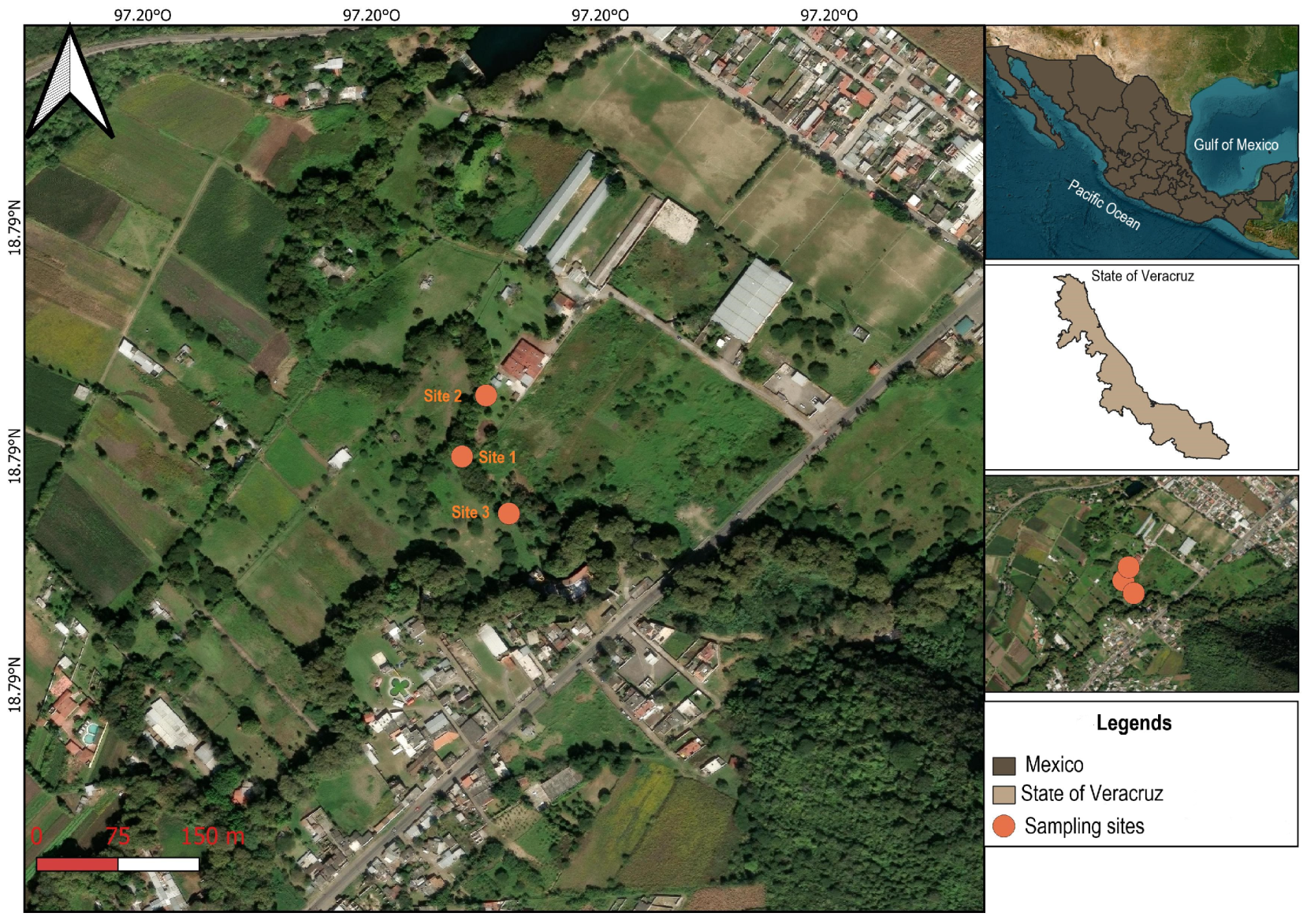
The experimental Floating Treatment Wetlands (FTWs) were installed in a representative reach of the river, where wastewater inputs and hydraulic conditions are characteristic of the system. The exact location of the experimental site is shown in Figure 1.

2.2. Water Sampling and Physicochemical Analysis

Water sampling was conducted over a six-month period, from June to December 2025, corresponding to a total monitoring duration of 182 days. Samples were collected on a weekly basis at three representative locations along the study reach: (Z1) within the section where the FTW systems were installed, (Z2) approximately 1 m upstream of the FTW installations, and (Z3) approximately 1 m downstream of the systems, to evaluate spatial variations in water quality along the treated reach.
All water samples were collected at a consistent depth of 30 cm below the water surface to minimize variability associated with vertical stratification. Sample collection, preservation, and handling were carried out in accordance with the procedures described in Standard Methods for the Examination of Water and Wastewater [28].
Chemical oxygen demand (COD) was determined using the closed reflux colorimetric method (Method 5220 D). In situ measurements of pH, dissolved oxygen (DO), electrical conductivity (EC), total dissolved solids (TDS), and water temperature were obtained using a portable multiparameter probe (HI9829, Hanna Instruments, Woonsocket, RI, USA). Concentrations of ammonium, copper, phosphorus, and iron were quantified using portable colorimetric analyzers (HI700, HI702, HI706, and HI721, respectively, Hanna Instruments, Woonsocket, RI, USA), following the manufacturer’s analytical protocols.

2.3. Design and Installation of Floating Treatment Wetlands (FTWs)

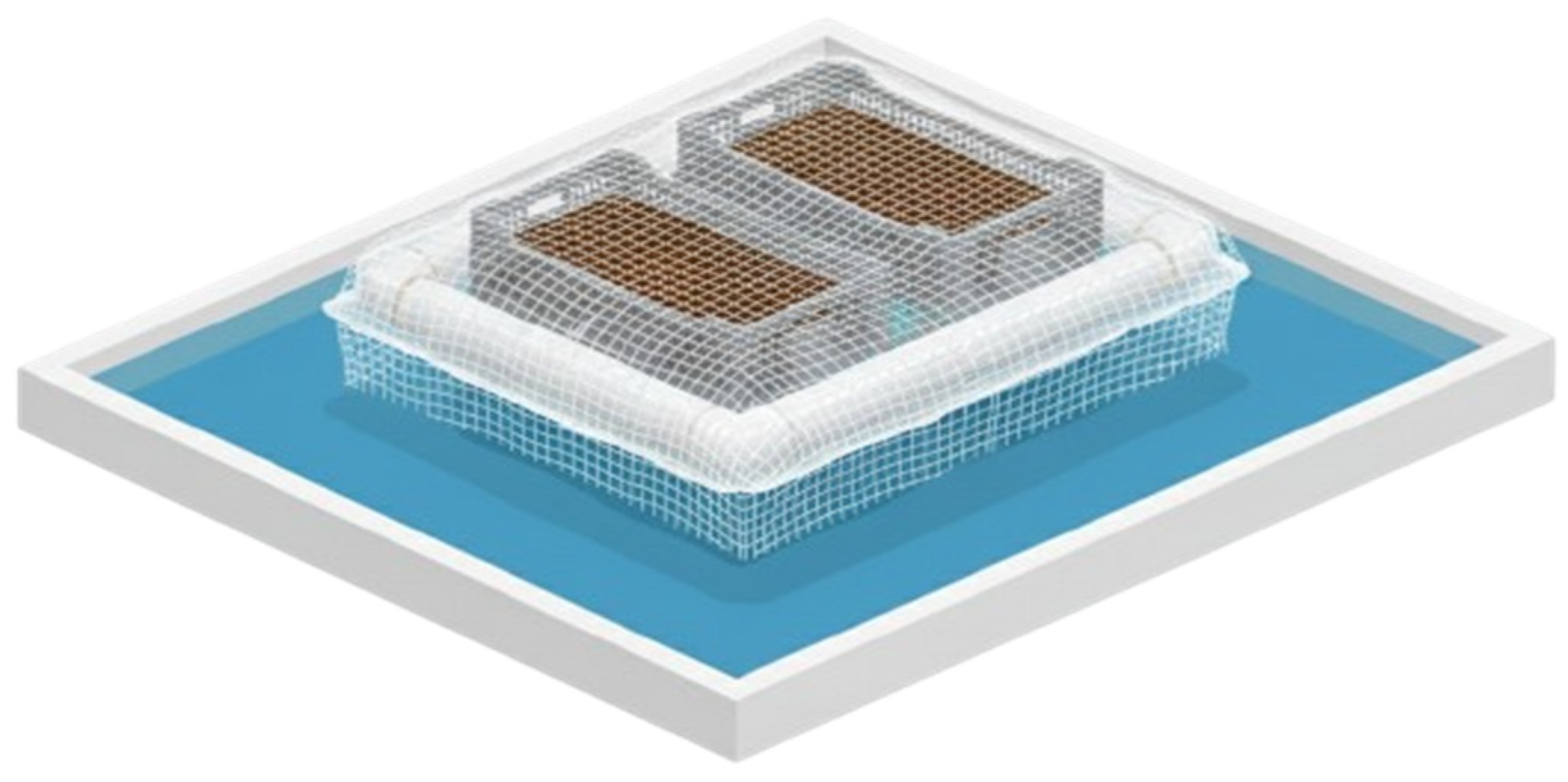
Four independent Floating Treatment Wetland (FTW) units were designed and constructed for this study. Each unit consisted of a rectangular floating platform fabricated from polyvinyl chloride (PVC) pipes with a diameter of 7.6 cm. The platforms measured 115 cm in length and 75 cm in width, resulting in an effective surface area of 0.86 m2 per unit (Figure 2).
The PVC frame provided sufficient buoyancy and mechanical stability under field conditions; additional flotation was achieved by placing polyethylene terephthalate (PET) bottles within the frame. A high-density plastic mesh was securely attached to the frame to support the growth substrate and contain the plant root systems, while allowing unrestricted contact between the roots and the surrounding water column. This configuration facilitated effective root–water interactions, which are essential for nutrient uptake and microbial colonization.
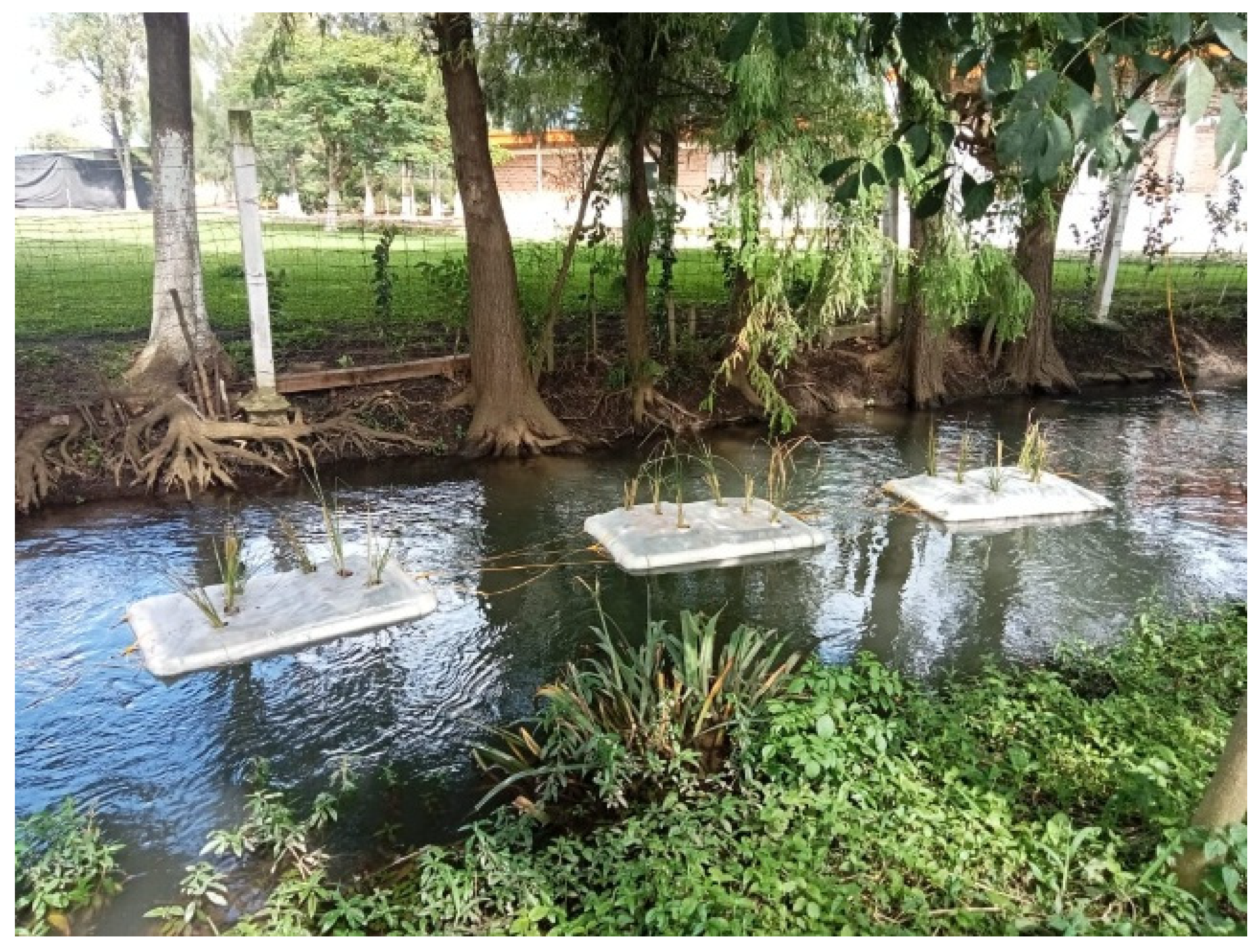
To ensure positional stability and prevent lateral displacement caused by flow variations, each FTW unit was anchored on both sides of the channel using nylon ropes secured to the existing fencing structure (Figure 3). This anchoring system allowed the platforms to remain stationary, accommodating minor water level fluctuations and thus ensuring consistent operational conditions throughout the experimental period.

2.4. Experimental Design and Substrates

The experimental design comprised five Floating Treatment Wetland (FTW) configurations established to evaluate the influence of substrate type on the growth performance of C. zizanioides under field conditions. Each FTW unit consisted of a buoyant platform equipped with two perforated polyethylene containers integrated into the floating matrix. These containers were designed to retain the substrate material while allowing unrestricted root penetration into the surrounding water column and facilitating hydraulic exchange.
Four treatment units were filled with 30 L of substrate each, while one unit was maintained without substrate as a control. Substrate materials were selected based on their local availability, physicochemical properties, structural characteristics, and documented applicability in nature-based water treatment systems. The experimental setup followed a completely randomized design comprising four substrate treatments and one control, each established in triplicate.
The treatments were defined as follows:
  • RVR (Red Volcanic Rock): Tezontle, an inorganic substrate characterized by high porosity, extensive surface area, and mechanical stability, providing structural support and potential sites for microbial colonization.
  • CC (Corn Cob): Dried and crushed corn cobs, representing an organic substrate with high lignocellulosic content and potential release of labile carbon, which may influence rhizospheric processes.
  • LL (Leaf Litter): Air-dried leaf litter collected from Taxodium mucronatum (Montezuma cypress), selected as a naturally occurring organic substrate with high organic matter content and inherent structural heterogeneity.
  • Mixture: A composite substrate consisting of red volcanic rock (33.33%), corn cobs (33.33%), and leaf litter (33.33%) on a volumetric basis, designed to integrate the structural stability of inorganic media with the carbon availability and porosity of organic components.
  • Control: Plants established within the floating structure without any added substrate, allowing direct root exposure to the water column and serving as a baseline condition for comparison.
All FTW units were installed within the same hydraulic reach of the urban river to ensure uniform exposure to flow velocity, water quality, and environmental conditions throughout the experimental period. This design enabled a controlled comparative assessment of inorganic, organic, and composite substrates on plant development, while minimizing confounding effects associated with spatial variability in field conditions.

2.5. Biomass Growth Monitoring

Young, healthy vetiver (C. zizanioides) plants were selected to ensure initial uniformity. The plants had an average initial height of 43.8 ± 2.4 cm, measured from the root system base, and were uniformly distributed among the vegetated FTW units. Prior to installation, all plants underwent a 20-day acclimation period in potable water under controlled light and shade conditions to minimize transplant shock and promote physiological stabilization. Six plants, with an average fresh weight of 10 ± 2.1 g, were placed in each floating system.
Plant growth was monitored over the 182-day experimental period as an indicator of system adaptation, plant vitality, and substrate suitability. Plant height was measured at regular intervals to track shoot development. Additionally, the Relative Growth Rate (RGR) was calculated to quantify biomass accumulation and allow standardized comparisons between substrate treatments. RGR was determined using Equation (1):
RGR   ( g   g 1   d 1 ) = l n ( W 2 ) l n ( W 1 ) t 2 t 1
where W1 and W2 represent the fresh biomass (g) at the initial (t1) and final (t2) sampling times, respectively, and (t2 − t1) corresponds to the elapsed time in days. This approach provides a robust and widely accepted metric for evaluating plant growth performance under different treatment conditions and substrate compositions [20].

2.6. Statistical Data Analysis

Statistical analyses were conducted using GraphPad Prism version 8. Prior to analysis, data were evaluated for compliance with the assumptions of normality and homogeneity of variances. For datasets meeting these assumptions, a one-way analysis of variance (ANOVA) was employed to assess the effect of substrate type on water quality parameters and on the growth responses of plants established in the different FTW treatments.
When statistically significant differences were detected, post hoc multiple comparisons were performed using Tukey’s honestly significant difference (HSD) test to identify pairwise differences among treatments. In all analyses, statistical significance was defined at a 95% confidence level (α = 0.05).

3. Results and Discussion

3.1. River Water Quality

Table 1 summarizes the mean physicochemical characteristics of the ‘’Paseo de Los Ahuehuetes’’ River, monitored across three longitudinally segmented zones during the study period. These parameters provide a baseline characterization of the prevailing limnological conditions along the studied river reach and offer insight into their potential influence on macrophyte performance and associated phytoremediation processes.
pH is a key environmental factor regulating macrophyte growth and the efficiency of biologically mediated remediation mechanisms. Values below 5.0 are considered unfavorable for C. zizanioides, whereas pH levels above 6.5 promote optimal physiological activity and enhanced phytoremediation performance [29]. In the present study, pH values remained within a narrow and slightly alkaline range (7.95–8.18) across all zones. The lowest mean pH was recorded in Zone 1 (7.95 ± 0.03), corresponding to the location of the Floating Treatment Wetlands (FTWs), while slightly higher values were observed downstream in Zones 2 (8.08 ± 0.04) and 3 (8.18 ± 0.16). This gradual longitudinal increase may be associated with plant-mediated rhizofiltration processes. Oxygen release from macrophyte roots can stimulate nitrification, leading to proton production that is subsequently buffered by bicarbonate ions (HCO3) present in the water column, resulting in subtle downstream shifts in pH [30].
Dissolved oxygen (DO) is a fundamental indicator of aquatic ecosystem health and a critical parameter governing the performance of nature-based treatment systems [31,32]. DO concentrations were highest in Zone 1 (6.07 ± 0.34 mg L−1), followed by a slight decline in Zone 2 (5.95 ± 0.38 mg L−1) and a more pronounced decrease in Zone 3 (5.08 ± 0.39 mg L−1). The elevated DO levels observed in Zone 1 are consistent with enhanced photosynthetic activity of vegetation established within the FTWs, which assimilates carbon dioxide and releases oxygen into the surrounding water column, thereby improving local aeration conditions [32]. These spatial patterns suggest that FTWs contribute to localized improvements in oxygen dynamics, with potential cascading benefits for biogeochemical cycling and overall ecosystem functioning.
Electrical conductivity (EC) averaged 356 ± 11.4 µS cm−1 in Zone 1, increased to 386 ± 8.9 µS cm−1 in Zone 2, and subsequently decreased to 352 ± 13.0 µS cm−1 in Zone 3. The increase between Zones 1 and 2 (approximately 8.9%) may reflect transient ion mobilization, hydrological mixing, or localized inputs, whereas the downstream reduction suggests net ion uptake, retention, or transformation processes. The extensive and fibrous root system of C. zizanioides, in conjunction with its associated rhizospheric microbial communities, is known to facilitate the absorption, sequestration, and biogeochemical transformation of dissolved ions, thereby influencing EC dynamics along the river continuum [33].
Total dissolved solids (TDS) exhibited mean concentrations of 166 ± 11.4 mg L−1 in Zone 1, compared with 174 ± 13.4 mg L−1 in Zone 2 and 168 ± 4.5 mg L−1 in Zone 3, located one meter downstream of the FTW system. The reductions observed between Zones 2 and 1 are likely attributable to the combined effects of physical filtration by the dense root network, biological uptake of dissolved constituents by plant tissues, and rhizosphere-mediated microbial processes [34,35]. Collectively, these results highlight the capacity of FTWs to modulate key limnological parameters and to contribute to measurable improvements in water quality within urban riverine environments subjected to chronic anthropogenic pressures.

3.2. Removal of Organic Matter and Nutrients

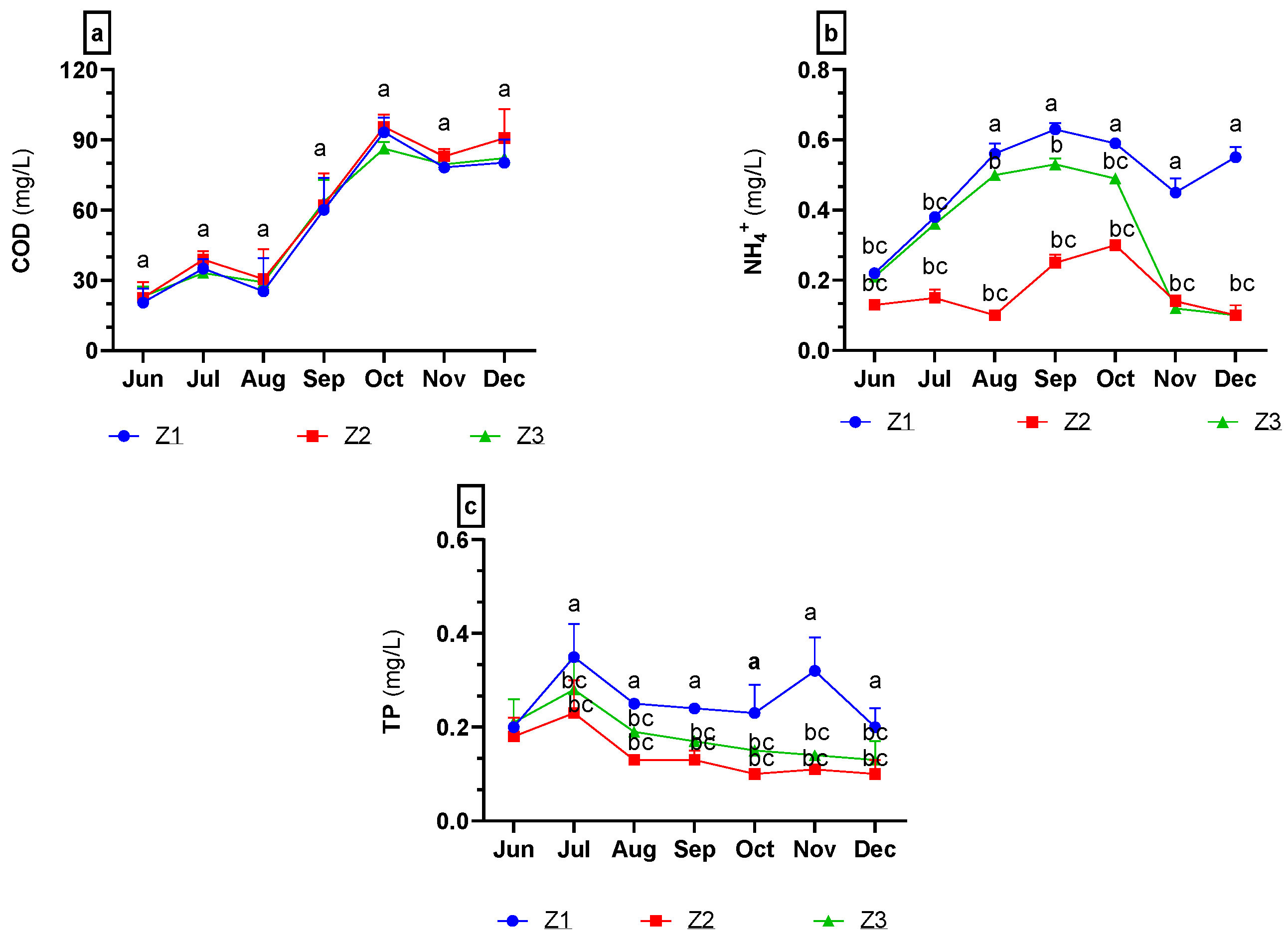
Throughout the study period, the organic load of the ‘’Paseo de Los Ahuehuetes’’ River remained within a moderate range. Figure 4a presents the spatial variation of chemical oxygen demand (COD) along the monitored river reach. Mean COD concentrations were 56.1 ± 29.3 mg L−1 in Zone 1 (FTW installation area), 60.5 ± 30.2 mg L−1 in Zone 2 (1 m upstream of the FTWs), and 56.7 ± 27.5 mg L−1 in Zone 3 (1 m downstream of the systems). An average COD reduction of 7.2% was observed between Zone 2 (control) and Zone 3.
This level of removal is consistent with values reported for floating treatment wetlands operating under low to moderate organic loading and flowing water conditions, where treatment efficiency is often limited by hydrodynamic variability and short hydraulic retention times [36]. One-way analysis of variance (ANOVA) indicated no statistically significant differences in COD concentrations among the sampling zones (p > 0.05), a finding further supported by Tukey’s post hoc test.
Despite the lack of statistical significance, the observed downstream reduction trend suggests that FTWs contributed to the attenuation of organic matter, likely through a combination of physical entrapment within the root network, microbial degradation in the rhizosphere, and plant-associated processes. This interpretation aligns with previous studies highlighting the capacity of FTWs to reduce organic pollution in lotic and urban riverine environments [37].
Ammonium (NH4+) concentrations exhibited a pronounced spatial gradient along the study reach (Figure 4b). The highest mean concentration was observed in Zone 1 (0.48 ± 0.17 mg L−1), followed by a substantial decrease in Zone 3 (0.17 ± 0.09 mg L−1). One-way ANOVA indicated statistically significant differences among zones, and Tukey’s post hoc test identified significant differences specifically between Zones 1 and 2 (p < 0.05). This spatial pattern is consistent with the activation of biologically mediated nitrogen transformation processes within the FTW rhizosphere. The observed reduction in NH4+ is primarily attributable to coupled nitrification–denitrification pathways, whereby ammonium- and nitrite-oxidizing bacteria associated with plant roots sequentially oxidize NH4+ to nitrite and nitrate [34]. The resulting nitrate may subsequently be assimilated by C. zizanioides and incorporated into plant biomass, contributing to overall nitrogen attenuation within the system.
Significant spatial variations in total phosphorus (TP) concentrations were also detected across the study zones (Figure 4c). The highest mean TP concentration was recorded in Zone 1 (0.48 ± 0.14 mg L−1), followed by lower values in Zone 2 (0.17 ± 0.08 mg L−1) and intermediate concentrations in Zone 3 (0.33 ± 0.19 mg L−1). Analysis of variance revealed statistically significant differences, with Tukey’s test indicating differences between Zones 1 and 2 and between Zones 1 and 3, but not between Zones 2 and 3. This pattern confirms the capacity of the FTW system to retain and transform phosphorus under urban riverine conditions. Changes in TP concentrations can be attributed to a combination of processes, including direct plant uptake and rhizosphere-mediated microbial activity. Root-associated microorganisms can accumulate phosphorus intracellularly as polyphosphates or promote its immobilization within rhizospheric biofilms, thereby reducing its bioavailability in the water column [38]. The comparatively elevated TP concentrations observed in Zone 1 likely reflect initial nutrient inputs prior to effective biological assimilation. Collectively, these findings underscore the effectiveness of FTWs as nature-based solutions for nutrient regulation, even under the hydrodynamic variability characteristic of urban rivers.

3.3. Adaptation and Growth of C. zizanioides in Floating Treatment Wetlands

C. zizanioides (vetiver) was selected for this study due to its suitability for rhizofiltration, non-invasive growth habit, and low competitive pressure on native riparian vegetation. This tropical perennial grass is widely recognized for its high tolerance to environmental stressors, including elevated nutrient loads, inorganic contaminants, and fluctuating hydrological conditions, as well as its capacity to establish under variable physicochemical environments [30,39]. Previous studies have demonstrated that C. zizanioides can sustain growth and physiological functionality in waters characterized by high concentrations of nitrogen and phosphorus, organic matter, and dissolved pollutants, including heavy metals, under both static and flowing conditions [30,39]. During the experimental period, conducted under a mean ambient temperature of 18.6 ± 0.23 °C, plant survival reached 82% (41 out of 50 individuals), indicating successful acclimation to the combined hydraulic, thermal, and water quality conditions prevailing at the study site.
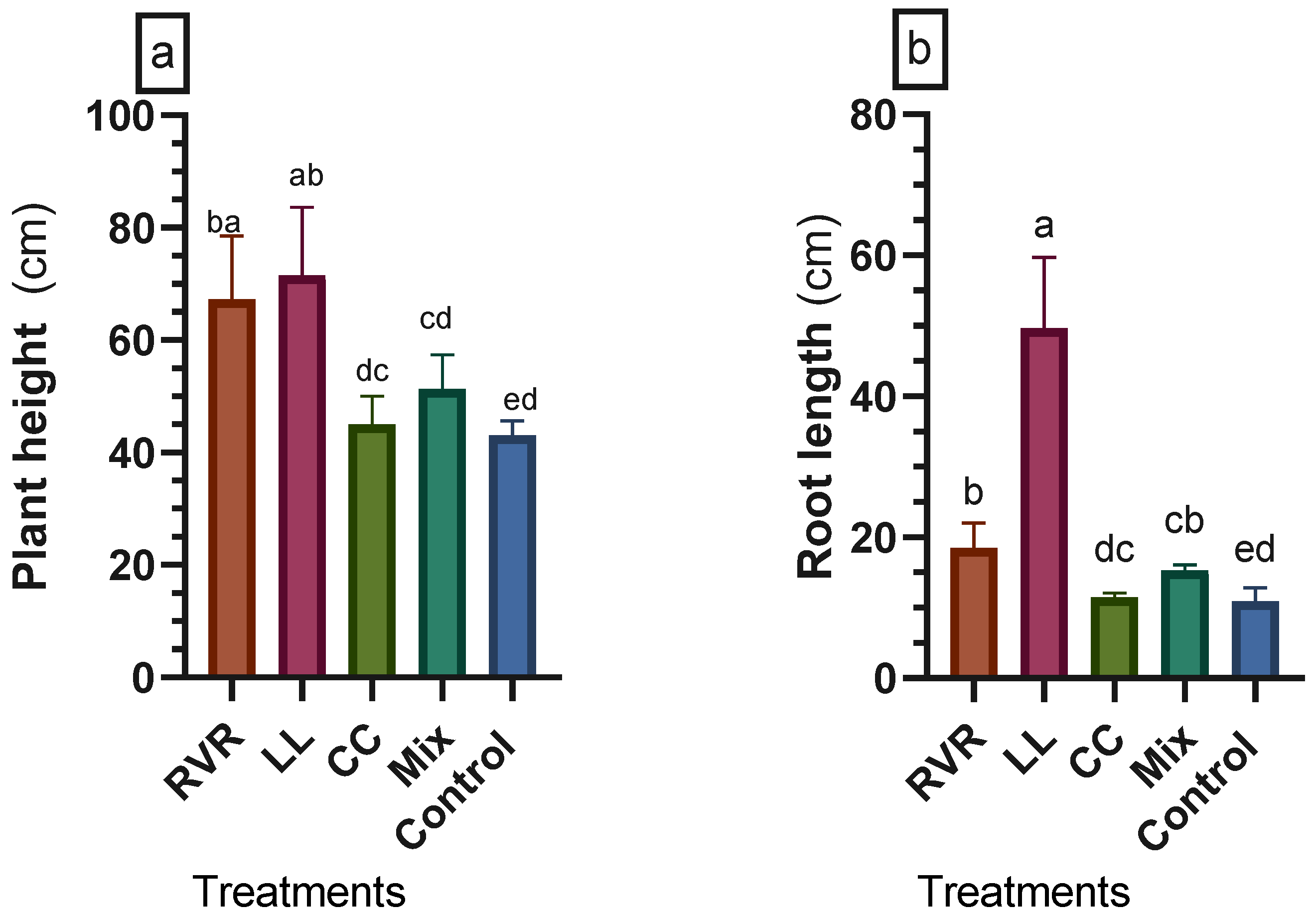
Shoot growth of C. zizanioides, supported by nutrient availability in the river water, varied among Floating Treatment Wetland (FTW) substrate types (Figure 5a). The greatest shoot development was recorded in the leaf litter (LL) substrate, where plants attained a mean height of 71.5 ± 12.1 cm. Slightly lower but comparable growth was observed in red volcanic rock (RVR), with an average height of 67.3 ± 11.2 cm. In contrast, plants grown in the composite Mix substrate and the corn cob (CC) substrate exhibited reduced shoot elongation, reaching mean heights of 51.3 ± 6.1 cm and 45.0 ± 5.0 cm, respectively. Control plants attained an average height of 43.0 ± 2.6 cm. Tukey’s post hoc test identified a statistically significant difference (p < 0.05) only between the LL and CC treatments, whereas differences among the remaining substrates were not statistically significant. Overall, the vigorous aboveground growth observed across treatments is consistent with the well-documented nutrient uptake efficiency and pollutant tolerance of vetiver, further supporting its suitability for phytoremediation in aquatic systems [30].
Root development, a critical determinant of rhizofiltration efficiency and contaminant interception, followed a similarly substrate-dependent pattern (Figure 5b). The longest roots were observed in plants established in the LL substrate (49.7 ± 10.0 cm), markedly exceeding those measured in RVR (18.5 ± 3.5 cm), Mix (15.3 ± 0.8 cm), and CC (11.5 ± 0.6 cm). Control plants developed roots with an average length of 10.9 ± 1.9 cm. In this case, Tukey’s test revealed statistically significant differences among several treatments, highlighting the strong influence of substrate characteristics on belowground growth. The root lengths recorded in this study fall within the range commonly reported for vetiver cultivated under treatment conditions, where root systems typically extend between 10 and 50 cm. Comparable findings were reported by Zereen et al. [39], who observed root lengths of 10–22.5 cm after 45 days in hydroponic systems, and by Nguyen [40], who documented root development ranging from 5 to 30 cm in FTWs treating domestic wastewater over a three-month period. The pronounced root elongation observed in the present study, particularly in the LL substrate, demonstrates strong adaptive capacity and reinforces the potential of C. zizanioides for effective contaminant interception and removal in floating wetland applications.

3.4. Plant Growth Rate and Substrate Evaluation

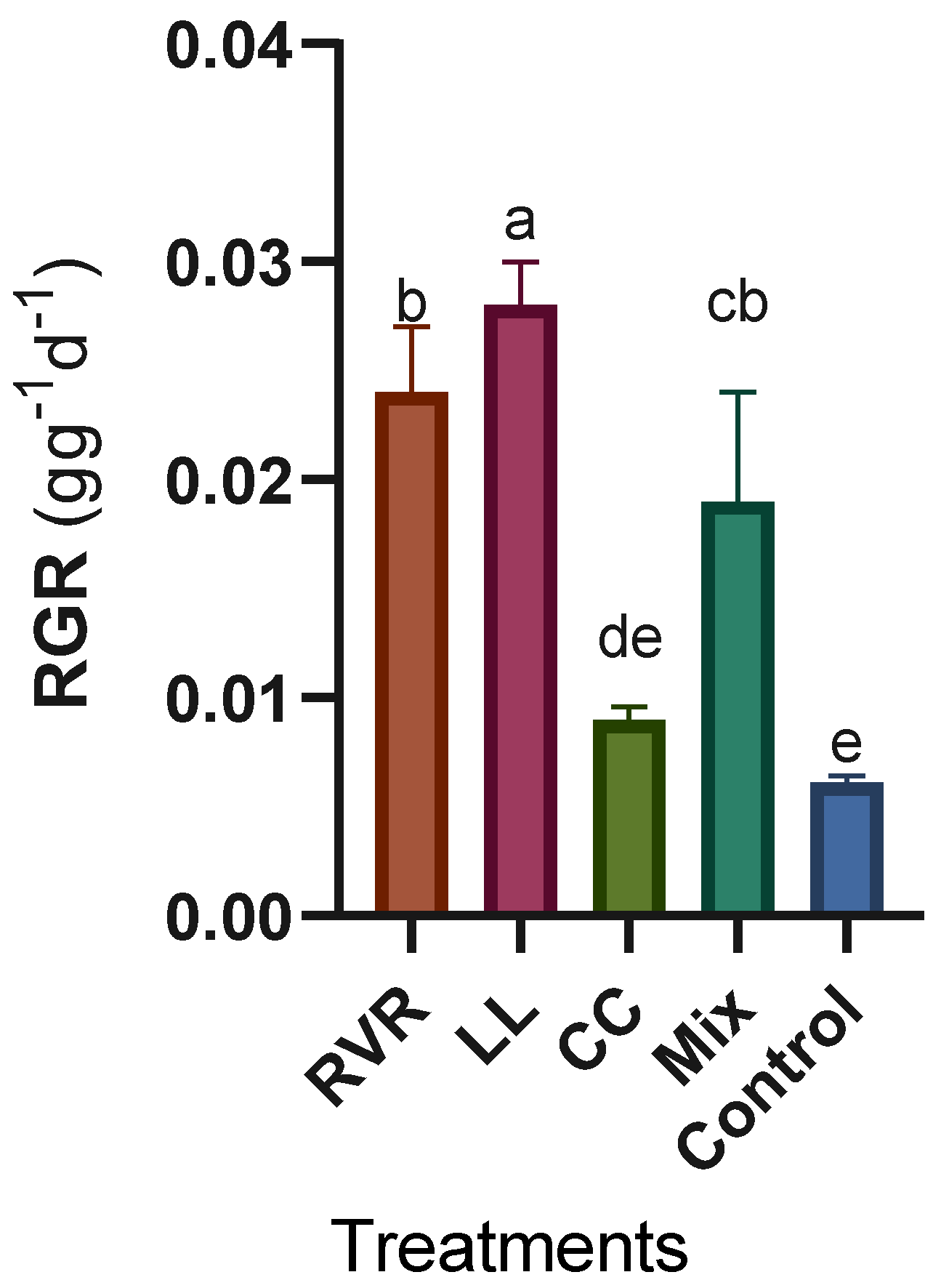
Substrate selection plays a fundamental role in the performance of Floating Treatment Wetlands (FTWs), as it directly regulates plant anchorage, growth dynamics, and root system development. In this study, C. zizanioides showed pronounced differences in relative growth rate (RGR) among the evaluated substrates (Figure 6), highlighting the strong influence of substrate physical structure, porosity, and organic composition on plant performance. Substrates with greater porosity and structural stability improved root aeration, water retention, and nutrient availability, thus promoting greater biomass accumulation. Conversely, substrates with limited structural integrity or reduced pore connectivity limited plant growth.
The highest RGR was recorded in the litter (LL) treatment (0.028 g g−1 d−1), indicating the most favorable conditions for plant development among all treatments. The superior performance of LL can be attributed to its high organic content and porous structure, which likely improved water retention capacity, root penetration, and microbial colonization in the rhizosphere. These properties enhance substrate-root interactions and contribute to better nutrient uptake. Red volcanic rock (RVR) showed the second-highest root growth ratio (RGR), probably due to its characteristic porosity and mechanical stability, which provides effective root anchorage and oxygen diffusion. However, its lower organic content may have limited plant growth compared to LL.
In contrast, plants grown in the Mix composite substrate and the corn cob (CC) substrate showed significantly lower RGR values. These results suggest that not all organic or composite materials provide the appropriate balance of porosity, stability, and water retention necessary to maintain optimal C. zizanioides biomass accumulation under FTW conditions. The control treatment, without substrate, exhibited the lowest growth rate (0.0003 g g−1 d−1), highlighting the essential role of substrates in promoting plant establishment, stability, and root development in floating systems.
Tukey’s post hoc test revealed statistically significant differences between several treatments (p < 0.05), clearly confirming the superior performance of the LL substrate compared to the other treatments. Overall, these findings emphasize that substrate selection is a key factor for plant growth in FTW systems, as substrate porosity, water retention capacity, and structural stability position certain substrates, particularly leaf litter, as more effective media for promoting the growth and development of C. zizanioides.
The contrasting responses observed among substrates can be attributed to their physicochemical properties and functional roles within the FTW system. Although corn cobs (CC) have been reported as an effective solid carbon source for stimulating microbial processes such as denitrification in subsurface flow constructed wetlands [41,42,43], they did not promote C. zizanioides growth under the free-flowing conditions evaluated in this study. This outcome suggests that the benefits of CC are more closely associated with anaerobic microbial activity in saturated media, rather than with the predominantly aerobic conditions, structural stability, and root anchorage required to support effective plant development in FTWs.
By contrast, red volcanic rock (RVR; tezontle) proved to be a reliable inorganic substrate. Its high porosity and large specific surface area, properties extensively documented in subsurface flow wetlands treating complex wastewaters [44], were also advantageous in the FTW configuration. These characteristics facilitate microbial attachment and contaminant retention, promoting the development of an active rhizospheric biofilm that can synergistically enhance nutrient transformation and removal processes [6,45].
The outstanding performance of the leaf litter (LL) substrate, although less frequently reported in FTW applications, can be attributed to its function as an organic growth medium. Comparable lignocellulosic materials, such as straw and wood chips, are known to enhance contaminant retention, provide suitable habitats for microbial communities, and gradually release nutrients that stimulate plant growth [46,47]. As leaf litter decomposes, it supplies soluble organic carbon that sustains microbial activity [48] while simultaneously improving the physical structure of the root environment, thereby promoting aeration and root penetration. The present study provides novel evidence supporting the effectiveness of cypress (Montezuma) leaf litter as a high-performance, low-cost, and environmentally sustainable substrate for vetiver cultivation in FTWs, with clear potential for application in the phytoremediation of urban river systems.

4. Conclusions

This study evaluated, under field conditions in an urban river located in Las Altas Montañas region (Veracruz, Mexico), the influence of four substrate types on the establishment and growth of C. zizanioides (vetiver) in Floating Treatment Wetlands (FTWs). The results demonstrate that substrate selection constitutes a critical design parameter in FTW systems, as it directly affects plant growth dynamics, biomass production, and the overall functional performance of phytoremediation processes.
Among the evaluated substrates, leaf litter (LL) consistently promoted the most favorable plant growth responses. Vetiver plants established in LL exhibited the greatest shoot elongation (71.5 ± 12.1 cm), the most pronounced root development (49.7 ± 10.0 cm), and the highest relative growth rate (0.028 g g−1 d−1). These outcomes are attributed to the organic and porous nature of leaf litter, which enhances moisture retention and aeration within the root zone, while its gradual decomposition supplies nutrients and bioavailable organic carbon that support both plant development and rhizospheric microbial activity.
In contrast, the corn cob (CC) substrate exhibited limited suitability under the floating wetland conditions evaluated, despite its reported effectiveness in subsurface flow treatment systems. This finding underscores the context-dependent performance of substrates and highlights the importance of aligning substrate selection with the specific hydraulic, physicochemical, and ecological conditions of FTWs. Red volcanic rock (RVR) showed satisfactory performance, providing mechanical stability and an adequate surface for microbial colonization, and can therefore be considered a reliable inorganic substrate for FTW applications.
A key contribution of this study is the identification of leaf litter as a low-cost, locally available, and environmentally sustainable substrate for enhancing vetiver growth in floating wetland systems. As a lignocellulosic by-product, leaf litter represents a resource-efficient alternative to commercial media, supporting circular material use while maintaining effective treatment performance. Collectively, these findings provide a robust technical foundation for incorporating organic substrates, particularly leaf litter, into the design of Floating Treatment Wetlands aimed at the remediation and ecological rehabilitation of urban river systems.

Author Contributions

Conceptualization, L.A.H.-V., M.A.B.-E. and L.C.S.H.; methodology, L.A.H.-V., M.R.-A. and R.D.H.C.; formal analysis, L.A.H.-V.; investigation, M.Á.V.-O., G.H.-S. and R.D.H.C.; resources, L.A.H.-V.; data curation, S.R.R., G.H.-S. and M.Á.V.-O.; writing—original draft preparation, L.A.H.-V.; writing—review and editing, S.R.R. and M.A.B.-E.; visualization, L.C.S.H. All authors have read and agreed to the published version of the manuscript.

Funding

This research was supported by the National Technological Institute of Mexico (23904.25-PD).

Data Availability Statement

Data available upon request.

Acknowledgments

Special thanks go to the Tecnológico Nacional de México. The authors acknowledge the use of AI-assisted image generation tools in the development of conceptual illustrations included in this manuscript, specifically Figure 2 and the graphical abstract.

Conflicts of Interest

The authors declare no conflicts of interest.

References

  1. Humanante, J.; Moreno, L.; Grijalva, A.; Saldoya, R.; Suárez, J. Removal efficiency and impact of wastewater treatment systems in urban and rural sectors. Manglar 2022, 19, 177–187. [Google Scholar] [CrossRef]
  2. Moussa, W.N.; Sawadogo, B.; Konate, Y.; Heran, M. Critical state of the art of sugarcane industry wastewater treatment technologies and perspectives for sustainability. Membranes 2023, 13, 709. [Google Scholar] [CrossRef] [PubMed]
  3. Ejiohuo, O.; Onyeaka, H.; Akinsemolu, O.; Nwabor, O.F.; Siyanbola, K.F.; Tamasiga, P.; Al-Sharify, Z.T. Ensuring water purity: Mitigating environmental risks and safeguarding human health. Water Biol. Secur. 2024, 4, 100341. [Google Scholar] [CrossRef]
  4. Colares, G.S.; Dell’Osbel, N.; Wiesel, P.G.; Oliveira, G.A.; Lemos, P.H.Z.; da Silva, F.P.; Lutterbeck, C.A.; Kist, L.T.; Machado, Ê.L. Floating treatment wetlands: A review and bibliometric analysis. Sci. Total Environ. 2020, 714, 136776. [Google Scholar] [CrossRef] [PubMed]
  5. Barco, A.; Bona, S.; Borin, M. Plant species for floating treatment wetlands: A decade of experiments in North Italy. Sci. Total Environ. 2021, 751, 141666. [Google Scholar] [CrossRef]
  6. Sharma, R.; Vymazal, J.; Malaviya, P. Application of floating treatment wetlands for stormwater runoff: A critical review. Sci. Total Environ. 2021, 777, 146044. [Google Scholar] [CrossRef]
  7. Headley, L.; Tanner, C.C. The surface-flow constructed wetland system: An alternative for the tropics. In Wetland Systems: Storm Water Management Control; Begum, S., Ed.; Springer: Berlin, Germany, 2006; pp. 205–226. [Google Scholar]
  8. Feng, J.; Ge, Z.; Yang, Y.; Liu, Y. Performance of hybrid-constructed floating treatment wetlands in purifying urban river water: A field study. Ecol. Eng. 2021, 171, 106372. [Google Scholar] [CrossRef]
  9. Zhong, H.; Hu, N.; Wang, Q.; Chen, Y.; Huang, L. How to select substrate for alleviating clogging in the subsurface flow constructed wetland? Sci. Total Environ. 2022, 828, 154529. [Google Scholar] [CrossRef]
  10. Yang, C.; Zhang, X.; Tang, Y.; Jiang, Y.; Xie, S.; Zhang, Y.; Qin, Y. Selection and optimization of the substrate in constructed wetland: A review. J. Water Process Eng. 2022, 49, 103140. [Google Scholar] [CrossRef]
  11. Sahoo, A.; Chhotaray, S.P.; Meher, I.; Behera, S.P.; Pal, A.; Meena, M.; Swapnil, P.; Yadav, A.; Bhardwaj, R. Phytoremediation for a sustainable future: Integrating plant-based strategies in soil and wastewater remediation. Bioresour. Technol. Rep. 2025, 31, 102266. [Google Scholar] [CrossRef]
  12. Colares, G.S.; Dell’Osbel, N.; Barbosa, C.V.; Lutterbeck, C.; Oliveira, G.A.; Rodrigues, L.R.; Bergmann, C.P.; Lopez, D.R.; Rodriguez, A.L.; Vymazal, J. Floating treatment wetlands integrated with microbial fuel cell for the treatment of urban wastewaters and bioenergy generation. Sci. Total Environ. 2021, 766, 142474. [Google Scholar] [CrossRef] [PubMed]
  13. Cui, H.; Yang, Y.; Ding, Y.; Li, D.; Zhen, G.; Lu, X.; Huang, M.; Huang, X. A novel pilot scale tubular bioreactor-enhanced floating treatment wetland for efficient in situ nitrogen removal from urban landscape water: Long-term performance and microbial mechanisms. Water Environ. Res. 2019, 91, 1498–1508. [Google Scholar] [CrossRef] [PubMed]
  14. Vetiver, Vetiveria zizanioides (L.) Nash: A review on applications in phytoremediation and global market perspectives. Plants 2025, 14, 1435. [CrossRef]
  15. Suelee, S.; Hasan, S.; Kusin, A.; Mohamat-Yusuff, F.; Zulkifli, M. Phytoremediation potential of vetiver grass (Vetiveria zizanioides) for treatment of metal-contaminated water. Water Air Soil Pollut. 2017, 228, 158. [Google Scholar] [CrossRef]
  16. Truong, P.; Truong, D. The Vetiver System for Improving Water Quality: Prevention and Treatment of Contaminated Water and Land, 2nd ed.; The Vetiver Network International: San Antonio, TX, USA, 2021. [Google Scholar]
  17. Badejo, A.A.; Adebayo, A.A.; Fashina, O.O. Phytoremediation of domestic wastewater using vetiver grass (Chrysopogon zizanioides) in a vertical flow constructed wetland. Int. J. Phytoremediation 2018, 20, 849–855. [Google Scholar] [CrossRef]
  18. Das, S.; Sarkar, B.; Vangnai, A.S.; Kumar, N.; Singh, A. Removal of antibiotics and nutrients by vetiver grass (Chrysopogon zizanioides) from secondary wastewater effluent in a plug flow reactor-based constructed wetland. Toxics 2021, 9, 84. [Google Scholar] [CrossRef]
  19. Kiiskila, J.D.; Das, R.; Sarkar, R.; Datta, S. A preliminary study to design a floating treatment wetland for remediating acid mine drainage-impacted water using vetiver grass (Chrysopogon zizanioides). Environ. Sci. Pollut. Res. 2017, 24, 27985–27993. [Google Scholar] [CrossRef]
  20. Zhu, D.; Ryan, M.C.; Gao, H. The role of water and mass balances in treatment assessment of a flooded natural wetland receiving wastewater effluent (Frank Lake, Alberta, Canada). Ecol. Eng. 2019, 137, 34–45. [Google Scholar] [CrossRef]
  21. Tesfa, G.; Terefe, A. Evaluating the efficiency of vetiver grass (Vetiveria zizanioides) for municipal wastewater treatment in Bahir Dar City, Ethiopia. Sci. Rep. 2025, 15, 38700. [Google Scholar] [CrossRef]
  22. Kiiskila, J.; Sarkar, D.; Panja, S.; Sahi, S.; Datta, R. Remediation of acid mine drainage-impacted water by vetiver grass (Chrysopogon zizanioides): A multiscale long-term study. Ecol. Eng. 2019, 129, 97–108. [Google Scholar] [CrossRef]
  23. Peterson, E.W.; Nicodemus, P.; Spooner, E.; Heath, A. The effectiveness of an artificial floating wetland to remove nutrients in an urban stream: A pilot-study in the Chicago River, Chicago, IL USA. Hydrology 2021, 8, 115. [Google Scholar] [CrossRef]
  24. Servicio Meteorológico Nacional (SMN). Normales Climatológicas por Estación. Gobierno de México, 2024. Available online: https://smn.conagua.gob.mx/es/climatologia/informacion-climatologica/normales-climatologicas-por-estado (accessed on 20 December 2025).
  25. Soto, R.; Martínez, L. Caracterización climática e hídrica de la región de las Altas Montañas de Veracruz. Investig. Geogr. 2018, 95, 22–35. [Google Scholar]
  26. Hernandez-Vasquez, J.; Pérez, M.; Torres, L. Assessment of water quality and pollution sources in the Paseo de los Ahuehuetes River: A critical analysis for the Altas Montañas of Veracruz. J. Environ. Manag. 2024, 351, 119845. [Google Scholar] [CrossRef]
  27. APHA; AWWA; WEF. Standard Methods for the Examination of Water and Wastewater, 23rd ed.; American Public Health Association: Washington, DC, USA, 2012. [Google Scholar]
  28. Hunt, R. Plant Growth Curves: The Functional Approach to Plant Growth Analysis; Edward Arnold: London, UK, 1982. [Google Scholar]
  29. Fonseca Largo, K.M.; Ruiz Depablos, J.L.; Espitia-Sarmiento, E.F.; Llugsha Moreta, N.M. Isla flotante artificial con vetiver para el tratamiento de agua contaminada con arsénico: Un estudio a escala real en un embalse altoandino. Water 2020, 12, 3086. [Google Scholar] [CrossRef]
  30. Sudiarto, S.I.A.; Renggaman, A.; Choi, H.L. Floating aquatic plants for total nitrogen and phosphorus removal from treated swine wastewater and their biomass characteristics. J. Environ. Manag. 2019, 231, 763–769. [Google Scholar] [CrossRef]
  31. Arivukkarasu, D.; Sathyanathan, R. A sustainable green solution to domestic sewage pollution: Optimizing floating wetland treatment with different plant combinations and growth media. Water Cycle 2024, 5, 185–198. [Google Scholar] [CrossRef]
  32. Pavlidis, G.; Zotou, I.; Karasali, H.; Marousopoulou, A.; Bariamis, G.; Nalbantis, I.; Tsihrintzis, V.A. Experiments on pilot-scale constructed floating wetlands efficiency in removing agrochemicals. Toxics 2022, 10, 790. [Google Scholar] [CrossRef]
  33. Tara, N.; Iqbal, M.; Khan, Q.M.; Afzal, M. Bioaugmentation of floating treatment wetlands for the remediation of textile effluent. Water Environ. J. 2019, 33, 124–134. [Google Scholar] [CrossRef]
  34. Nawaz, N.; Ali, S.; Shabir, G.; Rizwan, M.; Shakoor, M.B.; Shahid, M.J.; Afzal, M.; Arslan, M.; Hashem, A.; Abd_Allah, E.F.; et al. Bacterial augmented floating treatment wetlands for efficient treatment of synthetic textile dye wastewater. Sustainability 2020, 12, 3731. [Google Scholar] [CrossRef]
  35. Vo, T.; Tran, P.; Dao, T.; Tran, C.; Mai, C.; Hoang, M.; Phan, N.; Vo, T.; Lens, P.N.; Bui, X. Utilizing floating treatment wetlands for canal remediation: A case study from Ho Chi Minh City, Vietnam. Environ. Technol. Innov. 2025, 40, 104354. [Google Scholar] [CrossRef]
  36. Gabr, M.E.; Salem, M.; Mahanna, H.; Mossad, M. Floating wetlands for sustainable drainage wastewater treatment. Sustainability 2022, 14, 6101. [Google Scholar] [CrossRef]
  37. Bauer, L.H.; Arenzon, A.; Molle, N.D.; Rigotti, J.A.; Borges, A.C.A.; Machado, N.R.; Rodrigues, L.H.R. Floating treatment wetland for nutrient removal and acute ecotoxicity improvement of untreated urban wastewater. Int. J. Environ. Sci. Technol. 2021, 18, 3697–3710. [Google Scholar] [CrossRef]
  38. Singh, S.; Sounderajan, S.; Kumar, K.; Fulzele, D.P. Investigation of arsenic accumulation and biochemical response of in vitro developed Vetiveria zizanioides plants. Ecotoxicol. Environ. Saf. 2017, 145, 50–56. [Google Scholar] [CrossRef] [PubMed]
  39. Zereen, I.; Abedin, Z.; Rahman, S.; Pandit, D. Chromium Removal from Tannery Wastewater via a Hydroponic Technique with Vetiver Grass (Vetiveria zizanioides). Appl. Environ. Res. 2025, 47, 2025002. [Google Scholar] [CrossRef]
  40. Nguyen, M.L. Performance of Constructed Wetland on the Removal of Nutrient in Domestic Wastewater Using Chrysopogon Zizanioides. J. Tech. Educ. Sci. 2022, 17, 80–85. [Google Scholar] [CrossRef]
  41. Zou, L.; Xu, J.; Liu, H.; Zhang, M.; Hou, J.; Li, Y. The efficiency of enhanced nitrogen and phosphorus removal in a vertical flow constructed wetland using alkaline modified corn cobs as a carbon source. Environ. Technol. Innov. 2024, 33, 103690. [Google Scholar] [CrossRef]
  42. Martini, A.; Calì, M.; Capoccioni, F.; Martinoli, M.; Pulcini, D.; Buttazzoni, L.; Moranduzzo, T.; Pirlo, G. Corrigendum to “Environmental performance and shell formation-related carbon flows for mussel farming systems” [Sci. Total Environ. 831 (2022) 154891]. Sci. Total Environ. 2024, 946, 169928. [Google Scholar] [CrossRef]
  43. Montoya, A.; Tejeda, A.; Sulbarán-Rangel, B.; Zurita, F. Treatment of tequila vinasse mixed with domestic wastewater in two types of constructed wetlands. Water Sci. Technol. 2023, 87, 3072–3082. [Google Scholar] [CrossRef]
  44. Chi, R.; Wei, Z.; Gong, L.; Zhang, G.; Wen, D.; Li, W. The Study of Nitrogen and Phosphorus Removal Efficiency in Urbanized River Systems Using Artificial Wetland Systems with Different Substrates. Water 2024, 16, 3309. [Google Scholar] [CrossRef]
  45. Afzal, M.; Arslan, M.; Müller, J.A.; Shabir, G.; Islam, E.; Tahseen, R.; Anwar-ul-Haq, M.; Hashmat, A.J.; Iqbal, S.; Khan, Q.M. Floating treatment wetlands as a suitable option for large-scale wastewater treatment. Nat. Sustain. 2019, 2, 863–871. [Google Scholar] [CrossRef]
  46. Oliveira, G.A.; Colares, G.S.; Lutterbeck, C.A.; Dell’Osbel, N.; Machado, Ê.L.; Rodrigues, L.R. Floating treatment wetlands in domestic wastewater treatment as a decentralized sanitation alternative. Sci. Total Environ. 2021, 773, 145609. [Google Scholar] [CrossRef]
  47. Kumwimba, M.N.; Huang, J.; Dzakpasu, M.; Ajibade, F.O.; Li, X.; Sanganyado, E.; Guadie, A.; Şenel, E.; Muyembe, D.K. Enhanced nutrient removal in agro-industrial wastes-amended hybrid floating treatment wetlands treating real sewage: Laboratory microcosm to field-scale studies. Chemosphere 2023, 341, 138703. [Google Scholar] [CrossRef]
  48. Guerrero-Brotons, M.; Gómez, R.; Romaní, A.M.; Fuentes, Y.; Arce, M.I. Bed substrate influences leaf litter decomposition rates and leached dissolved organic matter quality in subsurface flow constructed wetlands. Sci. Total Environ. 2025, 972, 179071. [Google Scholar] [CrossRef]
Figure 1. Study area, zone where the floating wetland was established.
Limnolrev 26 00007 g001
Figure 2. Design of floating treatment wetlands.
Limnolrev 26 00007 g002
Figure 3. Establishment of floating treatment wetlands in the study area.
Limnolrev 26 00007 g003
Figure 4. Illustrates the spatial variation of physicochemical parameters in river water: (a) chemical oxygen demand (COD), (b) ammonium (NH4+), and (c) total phosphorus (TP) across the three study zones: Z1 (FTW installation zone), Z2 (1 m upstream of the treatment systems), and Z3 (1 m downstream of the systems). Different letters indicate statistically significant differences (p < 0.05).
Limnolrev 26 00007 g004
Figure 5. Growth of C. zizanioides in floating wetlands with different substrates: (a) Height of the aerial part; (b) Length of the root system. Values represent the mean ± standard deviation. LL: Leaf litter, RVR: Red Volcanic Rock, Mix: Combination, CC: Corn cob. Different letters indicate statistically significant differences (p < 0.05).
Limnolrev 26 00007 g005
Figure 6. Evaluation of the Relative Growth Rate (RGR) of C. zizanioides in floating treatment wetlands with different substrates. Values represent the mean ± standard deviation. LL: Leaf Litter, RVR: Red Volcanic Rock, Mix: Composite, CC: Corn Cob. Different letters indicate statistically significant differences (p < 0.05).
Limnolrev 26 00007 g006
Table 1. Physicochemical characterization of water in the sampled river.
Parameter (mg/L)Zone 1Zone 2Zone 3
pH7.95 ± 0.038.08 ± 0.048.18 ± 0.16
Dissolved Oxygen6.07 ± 0.345.95 ± 0.385.08 ± 0.39
Electrical Conductivity *356 ± 11.4386 ± 8.9352 ± 13.0
Total Dissolved Solids166 ± 11.4174 ± 13.4168 ± 4.5
Chemical Oxygen Demand56.1 ± 29.360.5 ± 30.256.7 ± 27.5
Total Phosphorus0.26 ± 0.060.14 ± 0.050.18 ± 0.04
Ammonium0.48 ± 0.170.17 ± 0.090.33 ± 0.1
Cromo0.0 0.00.0
Hierro0.00.00.0
Note: The table shows the average values and standard deviation. * µs/cm.
Disclaimer/Publisher’s Note: The statements, opinions and data contained in all publications are solely those of the individual author(s) and contributor(s) and not of MDPI and/or the editor(s). MDPI and/or the editor(s) disclaim responsibility for any injury to people or property resulting from any ideas, methods, instructions or products referred to in the content.