
Growth of Chrysopogon zizanioides in Floating Treatment Wetlands with Different Substrates for the Remediation of an Urban River

 ,
,  ,
,  ,
, 
Abstract
1. Introduction
2. Materials and Methods
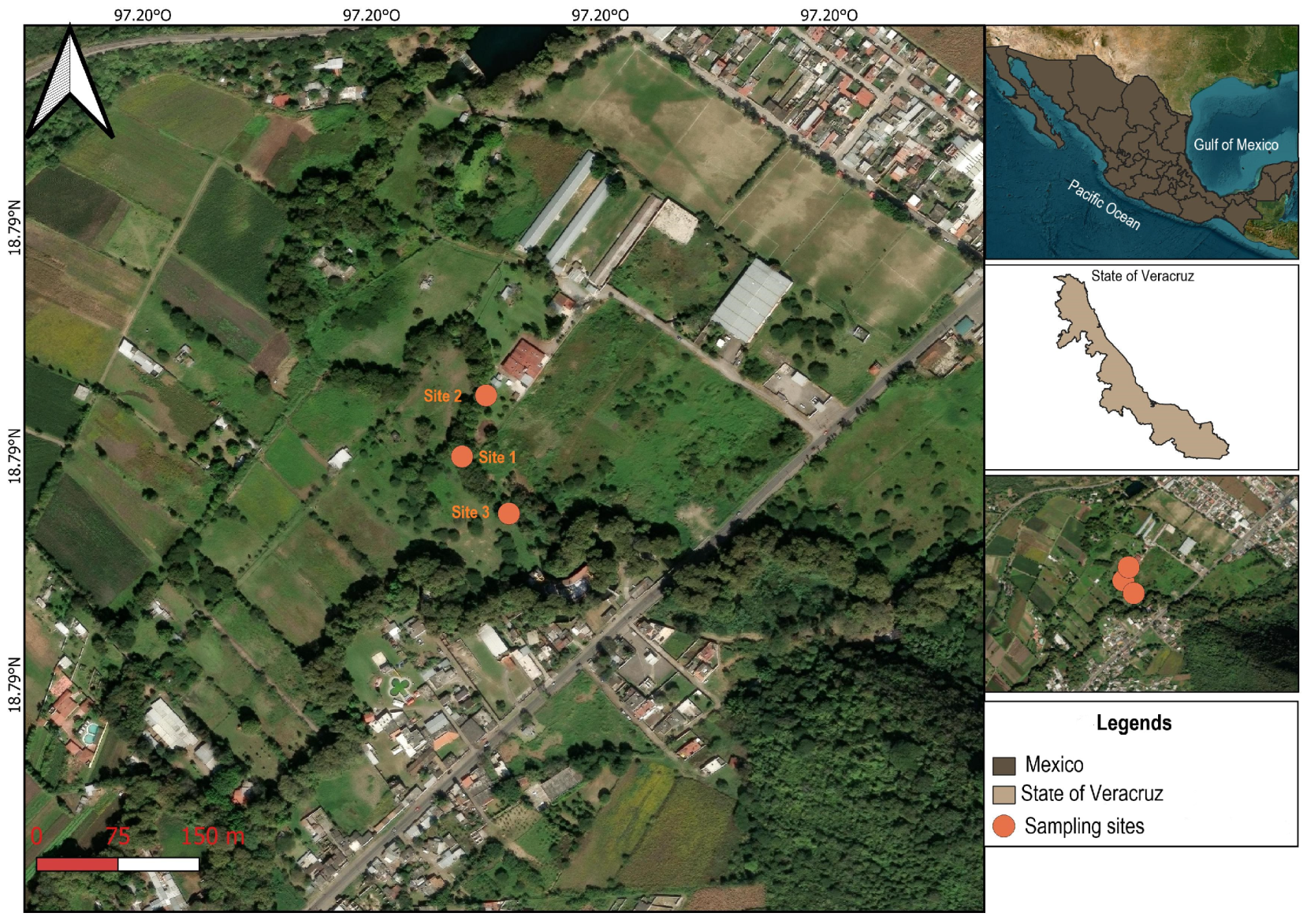
2.1. Study Site Description
2.2. Water Sampling and Physicochemical Analysis
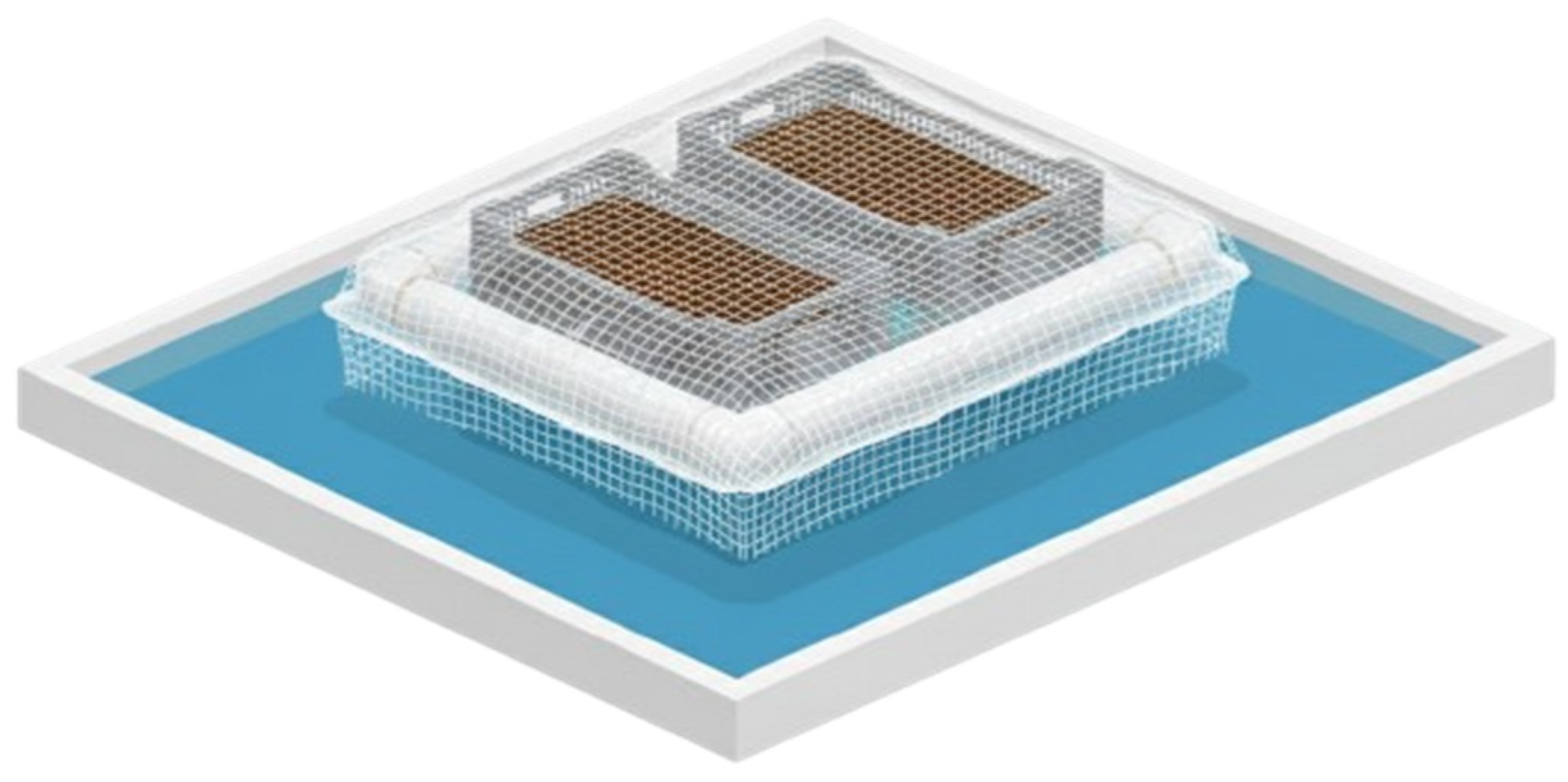
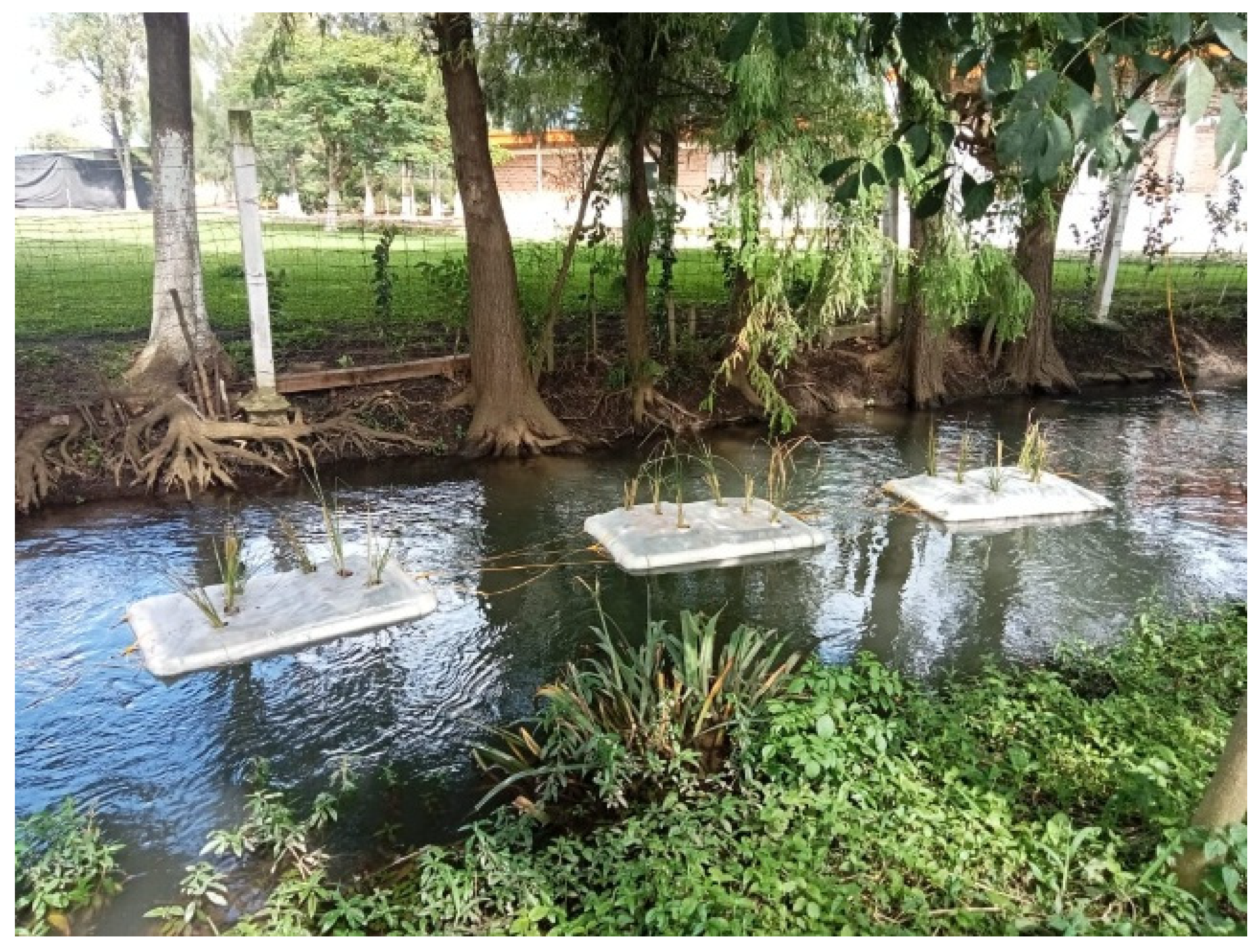
2.3. Design and Installation of Floating Treatment Wetlands (FTWs)
2.4. Experimental Design and Substrates
- RVR (Red Volcanic Rock): Tezontle, an inorganic substrate characterized by high porosity, extensive surface area, and mechanical stability, providing structural support and potential sites for microbial colonization.
- CC (Corn Cob): Dried and crushed corn cobs, representing an organic substrate with high lignocellulosic content and potential release of labile carbon, which may influence rhizospheric processes.
- LL (Leaf Litter): Air-dried leaf litter collected from Taxodium mucronatum (Montezuma cypress), selected as a naturally occurring organic substrate with high organic matter content and inherent structural heterogeneity.
- Mixture: A composite substrate consisting of red volcanic rock (33.33%), corn cobs (33.33%), and leaf litter (33.33%) on a volumetric basis, designed to integrate the structural stability of inorganic media with the carbon availability and porosity of organic components.
- Control: Plants established within the floating structure without any added substrate, allowing direct root exposure to the water column and serving as a baseline condition for comparison.
2.5. Biomass Growth Monitoring
2.6. Statistical Data Analysis
3. Results and Discussion
3.1. River Water Quality
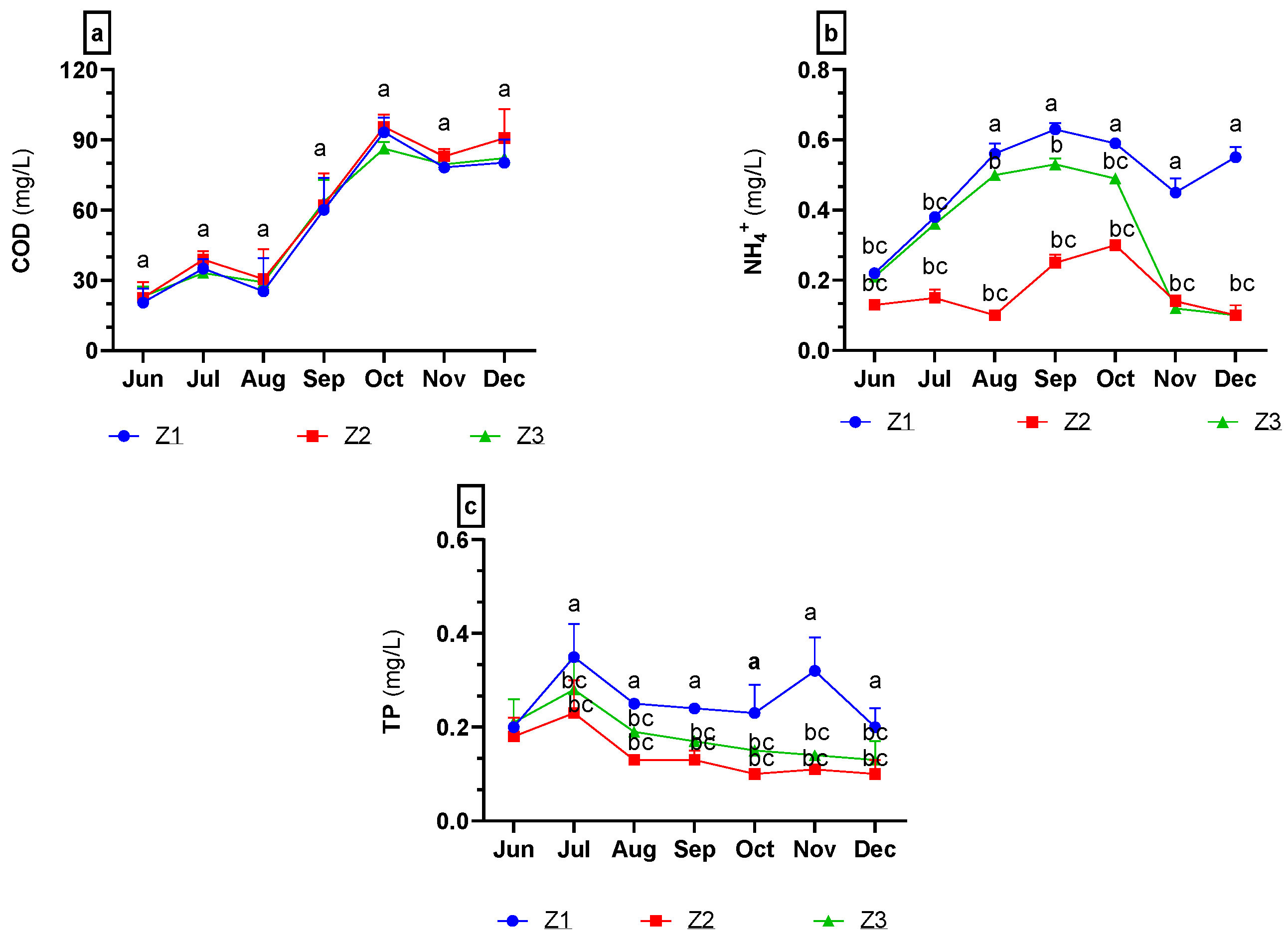
3.2. Removal of Organic Matter and Nutrients
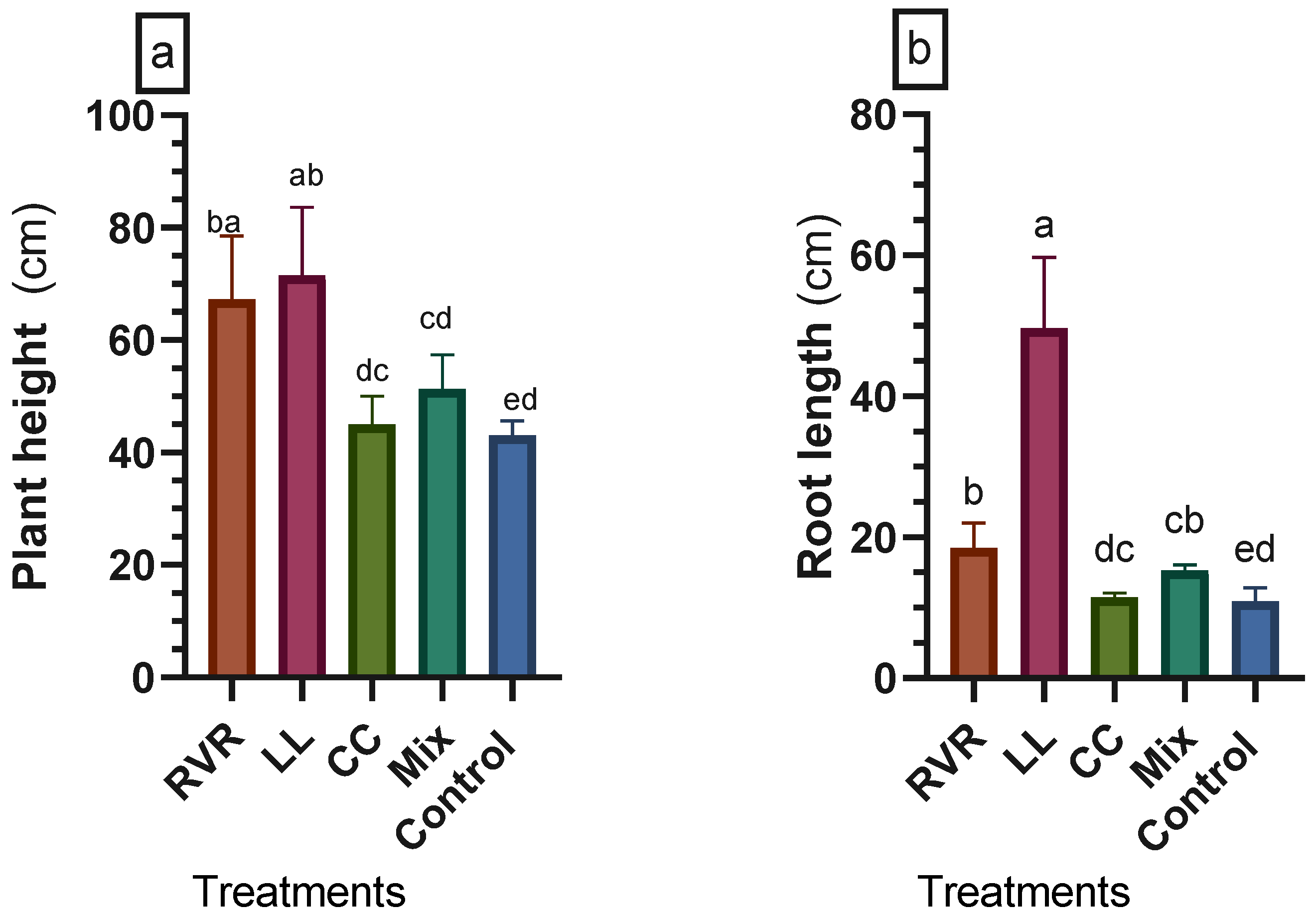
3.3. Adaptation and Growth of C. zizanioides in Floating Treatment Wetlands
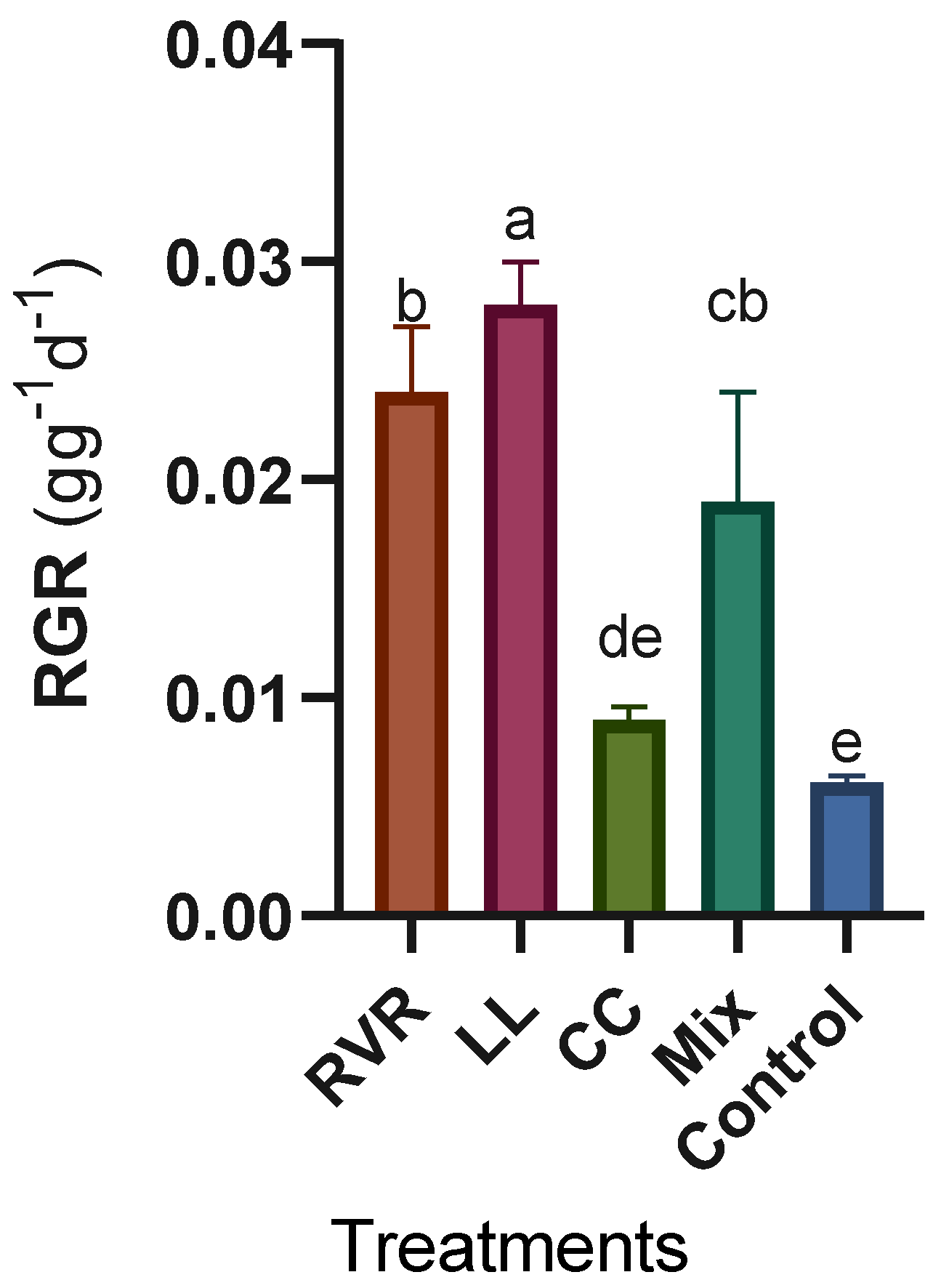
3.4. Plant Growth Rate and Substrate Evaluation
4. Conclusions
Author Contributions
Funding
Data Availability Statement
Acknowledgments
Conflicts of Interest
References
- Humanante, J.; Moreno, L.; Grijalva, A.; Saldoya, R.; Suárez, J. Removal efficiency and impact of wastewater treatment systems in urban and rural sectors. Manglar 2022, 19, 177–187. [Google Scholar] [CrossRef]
- Moussa, W.N.; Sawadogo, B.; Konate, Y.; Heran, M. Critical state of the art of sugarcane industry wastewater treatment technologies and perspectives for sustainability. Membranes 2023, 13, 709. [Google Scholar] [CrossRef] [PubMed]
- Ejiohuo, O.; Onyeaka, H.; Akinsemolu, O.; Nwabor, O.F.; Siyanbola, K.F.; Tamasiga, P.; Al-Sharify, Z.T. Ensuring water purity: Mitigating environmental risks and safeguarding human health. Water Biol. Secur. 2024, 4, 100341. [Google Scholar] [CrossRef]
- Colares, G.S.; Dell’Osbel, N.; Wiesel, P.G.; Oliveira, G.A.; Lemos, P.H.Z.; da Silva, F.P.; Lutterbeck, C.A.; Kist, L.T.; Machado, Ê.L. Floating treatment wetlands: A review and bibliometric analysis. Sci. Total Environ. 2020, 714, 136776. [Google Scholar] [CrossRef] [PubMed]
- Barco, A.; Bona, S.; Borin, M. Plant species for floating treatment wetlands: A decade of experiments in North Italy. Sci. Total Environ. 2021, 751, 141666. [Google Scholar] [CrossRef]
- Sharma, R.; Vymazal, J.; Malaviya, P. Application of floating treatment wetlands for stormwater runoff: A critical review. Sci. Total Environ. 2021, 777, 146044. [Google Scholar] [CrossRef]
- Headley, L.; Tanner, C.C. The surface-flow constructed wetland system: An alternative for the tropics. In Wetland Systems: Storm Water Management Control; Begum, S., Ed.; Springer: Berlin, Germany, 2006; pp. 205–226. [Google Scholar]
- Feng, J.; Ge, Z.; Yang, Y.; Liu, Y. Performance of hybrid-constructed floating treatment wetlands in purifying urban river water: A field study. Ecol. Eng. 2021, 171, 106372. [Google Scholar] [CrossRef]
- Zhong, H.; Hu, N.; Wang, Q.; Chen, Y.; Huang, L. How to select substrate for alleviating clogging in the subsurface flow constructed wetland? Sci. Total Environ. 2022, 828, 154529. [Google Scholar] [CrossRef]
- Yang, C.; Zhang, X.; Tang, Y.; Jiang, Y.; Xie, S.; Zhang, Y.; Qin, Y. Selection and optimization of the substrate in constructed wetland: A review. J. Water Process Eng. 2022, 49, 103140. [Google Scholar] [CrossRef]
- Sahoo, A.; Chhotaray, S.P.; Meher, I.; Behera, S.P.; Pal, A.; Meena, M.; Swapnil, P.; Yadav, A.; Bhardwaj, R. Phytoremediation for a sustainable future: Integrating plant-based strategies in soil and wastewater remediation. Bioresour. Technol. Rep. 2025, 31, 102266. [Google Scholar] [CrossRef]
- Colares, G.S.; Dell’Osbel, N.; Barbosa, C.V.; Lutterbeck, C.; Oliveira, G.A.; Rodrigues, L.R.; Bergmann, C.P.; Lopez, D.R.; Rodriguez, A.L.; Vymazal, J. Floating treatment wetlands integrated with microbial fuel cell for the treatment of urban wastewaters and bioenergy generation. Sci. Total Environ. 2021, 766, 142474. [Google Scholar] [CrossRef] [PubMed]
- Cui, H.; Yang, Y.; Ding, Y.; Li, D.; Zhen, G.; Lu, X.; Huang, M.; Huang, X. A novel pilot scale tubular bioreactor-enhanced floating treatment wetland for efficient in situ nitrogen removal from urban landscape water: Long-term performance and microbial mechanisms. Water Environ. Res. 2019, 91, 1498–1508. [Google Scholar] [CrossRef] [PubMed]
- Vetiver, Vetiveria zizanioides (L.) Nash: A review on applications in phytoremediation and global market perspectives. Plants 2025, 14, 1435. [CrossRef]
- Suelee, S.; Hasan, S.; Kusin, A.; Mohamat-Yusuff, F.; Zulkifli, M. Phytoremediation potential of vetiver grass (Vetiveria zizanioides) for treatment of metal-contaminated water. Water Air Soil Pollut. 2017, 228, 158. [Google Scholar] [CrossRef]
- Truong, P.; Truong, D. The Vetiver System for Improving Water Quality: Prevention and Treatment of Contaminated Water and Land, 2nd ed.; The Vetiver Network International: San Antonio, TX, USA, 2021. [Google Scholar]
- Badejo, A.A.; Adebayo, A.A.; Fashina, O.O. Phytoremediation of domestic wastewater using vetiver grass (Chrysopogon zizanioides) in a vertical flow constructed wetland. Int. J. Phytoremediation 2018, 20, 849–855. [Google Scholar] [CrossRef]
- Das, S.; Sarkar, B.; Vangnai, A.S.; Kumar, N.; Singh, A. Removal of antibiotics and nutrients by vetiver grass (Chrysopogon zizanioides) from secondary wastewater effluent in a plug flow reactor-based constructed wetland. Toxics 2021, 9, 84. [Google Scholar] [CrossRef]
- Kiiskila, J.D.; Das, R.; Sarkar, R.; Datta, S. A preliminary study to design a floating treatment wetland for remediating acid mine drainage-impacted water using vetiver grass (Chrysopogon zizanioides). Environ. Sci. Pollut. Res. 2017, 24, 27985–27993. [Google Scholar] [CrossRef]
- Zhu, D.; Ryan, M.C.; Gao, H. The role of water and mass balances in treatment assessment of a flooded natural wetland receiving wastewater effluent (Frank Lake, Alberta, Canada). Ecol. Eng. 2019, 137, 34–45. [Google Scholar] [CrossRef]
- Tesfa, G.; Terefe, A. Evaluating the efficiency of vetiver grass (Vetiveria zizanioides) for municipal wastewater treatment in Bahir Dar City, Ethiopia. Sci. Rep. 2025, 15, 38700. [Google Scholar] [CrossRef]
- Kiiskila, J.; Sarkar, D.; Panja, S.; Sahi, S.; Datta, R. Remediation of acid mine drainage-impacted water by vetiver grass (Chrysopogon zizanioides): A multiscale long-term study. Ecol. Eng. 2019, 129, 97–108. [Google Scholar] [CrossRef]
- Peterson, E.W.; Nicodemus, P.; Spooner, E.; Heath, A. The effectiveness of an artificial floating wetland to remove nutrients in an urban stream: A pilot-study in the Chicago River, Chicago, IL USA. Hydrology 2021, 8, 115. [Google Scholar] [CrossRef]
- Servicio Meteorológico Nacional (SMN). Normales Climatológicas por Estación. Gobierno de México, 2024. Available online: https://smn.conagua.gob.mx/es/climatologia/informacion-climatologica/normales-climatologicas-por-estado (accessed on 20 December 2025).
- Soto, R.; Martínez, L. Caracterización climática e hídrica de la región de las Altas Montañas de Veracruz. Investig. Geogr. 2018, 95, 22–35. [Google Scholar]
- Hernandez-Vasquez, J.; Pérez, M.; Torres, L. Assessment of water quality and pollution sources in the Paseo de los Ahuehuetes River: A critical analysis for the Altas Montañas of Veracruz. J. Environ. Manag. 2024, 351, 119845. [Google Scholar] [CrossRef]
- APHA; AWWA; WEF. Standard Methods for the Examination of Water and Wastewater, 23rd ed.; American Public Health Association: Washington, DC, USA, 2012. [Google Scholar]
- Hunt, R. Plant Growth Curves: The Functional Approach to Plant Growth Analysis; Edward Arnold: London, UK, 1982. [Google Scholar]
- Fonseca Largo, K.M.; Ruiz Depablos, J.L.; Espitia-Sarmiento, E.F.; Llugsha Moreta, N.M. Isla flotante artificial con vetiver para el tratamiento de agua contaminada con arsénico: Un estudio a escala real en un embalse altoandino. Water 2020, 12, 3086. [Google Scholar] [CrossRef]
- Sudiarto, S.I.A.; Renggaman, A.; Choi, H.L. Floating aquatic plants for total nitrogen and phosphorus removal from treated swine wastewater and their biomass characteristics. J. Environ. Manag. 2019, 231, 763–769. [Google Scholar] [CrossRef]
- Arivukkarasu, D.; Sathyanathan, R. A sustainable green solution to domestic sewage pollution: Optimizing floating wetland treatment with different plant combinations and growth media. Water Cycle 2024, 5, 185–198. [Google Scholar] [CrossRef]
- Pavlidis, G.; Zotou, I.; Karasali, H.; Marousopoulou, A.; Bariamis, G.; Nalbantis, I.; Tsihrintzis, V.A. Experiments on pilot-scale constructed floating wetlands efficiency in removing agrochemicals. Toxics 2022, 10, 790. [Google Scholar] [CrossRef]
- Tara, N.; Iqbal, M.; Khan, Q.M.; Afzal, M. Bioaugmentation of floating treatment wetlands for the remediation of textile effluent. Water Environ. J. 2019, 33, 124–134. [Google Scholar] [CrossRef]
- Nawaz, N.; Ali, S.; Shabir, G.; Rizwan, M.; Shakoor, M.B.; Shahid, M.J.; Afzal, M.; Arslan, M.; Hashem, A.; Abd_Allah, E.F.; et al. Bacterial augmented floating treatment wetlands for efficient treatment of synthetic textile dye wastewater. Sustainability 2020, 12, 3731. [Google Scholar] [CrossRef]
- Vo, T.; Tran, P.; Dao, T.; Tran, C.; Mai, C.; Hoang, M.; Phan, N.; Vo, T.; Lens, P.N.; Bui, X. Utilizing floating treatment wetlands for canal remediation: A case study from Ho Chi Minh City, Vietnam. Environ. Technol. Innov. 2025, 40, 104354. [Google Scholar] [CrossRef]
- Gabr, M.E.; Salem, M.; Mahanna, H.; Mossad, M. Floating wetlands for sustainable drainage wastewater treatment. Sustainability 2022, 14, 6101. [Google Scholar] [CrossRef]
- Bauer, L.H.; Arenzon, A.; Molle, N.D.; Rigotti, J.A.; Borges, A.C.A.; Machado, N.R.; Rodrigues, L.H.R. Floating treatment wetland for nutrient removal and acute ecotoxicity improvement of untreated urban wastewater. Int. J. Environ. Sci. Technol. 2021, 18, 3697–3710. [Google Scholar] [CrossRef]
- Singh, S.; Sounderajan, S.; Kumar, K.; Fulzele, D.P. Investigation of arsenic accumulation and biochemical response of in vitro developed Vetiveria zizanioides plants. Ecotoxicol. Environ. Saf. 2017, 145, 50–56. [Google Scholar] [CrossRef] [PubMed]
- Zereen, I.; Abedin, Z.; Rahman, S.; Pandit, D. Chromium Removal from Tannery Wastewater via a Hydroponic Technique with Vetiver Grass (Vetiveria zizanioides). Appl. Environ. Res. 2025, 47, 2025002. [Google Scholar] [CrossRef]
- Nguyen, M.L. Performance of Constructed Wetland on the Removal of Nutrient in Domestic Wastewater Using Chrysopogon Zizanioides. J. Tech. Educ. Sci. 2022, 17, 80–85. [Google Scholar] [CrossRef]
- Zou, L.; Xu, J.; Liu, H.; Zhang, M.; Hou, J.; Li, Y. The efficiency of enhanced nitrogen and phosphorus removal in a vertical flow constructed wetland using alkaline modified corn cobs as a carbon source. Environ. Technol. Innov. 2024, 33, 103690. [Google Scholar] [CrossRef]
- Martini, A.; Calì, M.; Capoccioni, F.; Martinoli, M.; Pulcini, D.; Buttazzoni, L.; Moranduzzo, T.; Pirlo, G. Corrigendum to “Environmental performance and shell formation-related carbon flows for mussel farming systems” [Sci. Total Environ. 831 (2022) 154891]. Sci. Total Environ. 2024, 946, 169928. [Google Scholar] [CrossRef]
- Montoya, A.; Tejeda, A.; Sulbarán-Rangel, B.; Zurita, F. Treatment of tequila vinasse mixed with domestic wastewater in two types of constructed wetlands. Water Sci. Technol. 2023, 87, 3072–3082. [Google Scholar] [CrossRef]
- Chi, R.; Wei, Z.; Gong, L.; Zhang, G.; Wen, D.; Li, W. The Study of Nitrogen and Phosphorus Removal Efficiency in Urbanized River Systems Using Artificial Wetland Systems with Different Substrates. Water 2024, 16, 3309. [Google Scholar] [CrossRef]
- Afzal, M.; Arslan, M.; Müller, J.A.; Shabir, G.; Islam, E.; Tahseen, R.; Anwar-ul-Haq, M.; Hashmat, A.J.; Iqbal, S.; Khan, Q.M. Floating treatment wetlands as a suitable option for large-scale wastewater treatment. Nat. Sustain. 2019, 2, 863–871. [Google Scholar] [CrossRef]
- Oliveira, G.A.; Colares, G.S.; Lutterbeck, C.A.; Dell’Osbel, N.; Machado, Ê.L.; Rodrigues, L.R. Floating treatment wetlands in domestic wastewater treatment as a decentralized sanitation alternative. Sci. Total Environ. 2021, 773, 145609. [Google Scholar] [CrossRef]
- Kumwimba, M.N.; Huang, J.; Dzakpasu, M.; Ajibade, F.O.; Li, X.; Sanganyado, E.; Guadie, A.; Şenel, E.; Muyembe, D.K. Enhanced nutrient removal in agro-industrial wastes-amended hybrid floating treatment wetlands treating real sewage: Laboratory microcosm to field-scale studies. Chemosphere 2023, 341, 138703. [Google Scholar] [CrossRef]
- Guerrero-Brotons, M.; Gómez, R.; Romaní, A.M.; Fuentes, Y.; Arce, M.I. Bed substrate influences leaf litter decomposition rates and leached dissolved organic matter quality in subsurface flow constructed wetlands. Sci. Total Environ. 2025, 972, 179071. [Google Scholar] [CrossRef]



| Parameter (mg/L) | Zone 1 | Zone 2 | Zone 3 |
|---|---|---|---|
| pH | 7.95 ± 0.03 | 8.08 ± 0.04 | 8.18 ± 0.16 |
| Dissolved Oxygen | 6.07 ± 0.34 | 5.95 ± 0.38 | 5.08 ± 0.39 |
| Electrical Conductivity * | 356 ± 11.4 | 386 ± 8.9 | 352 ± 13.0 |
| Total Dissolved Solids | 166 ± 11.4 | 174 ± 13.4 | 168 ± 4.5 |
| Chemical Oxygen Demand | 56.1 ± 29.3 | 60.5 ± 30.2 | 56.7 ± 27.5 |
| Total Phosphorus | 0.26 ± 0.06 | 0.14 ± 0.05 | 0.18 ± 0.04 |
| Ammonium | 0.48 ± 0.17 | 0.17 ± 0.09 | 0.33 ± 0.1 |
| Cromo | 0.0 | 0.0 | 0.0 |
| Hierro | 0.0 | 0.0 | 0.0 |
Disclaimer/Publisher’s Note: The statements, opinions and data contained in all publications are solely those of the individual author(s) and contributor(s) and not of MDPI and/or the editor(s). MDPI and/or the editor(s) disclaim responsibility for any injury to people or property resulting from any ideas, methods, instructions or products referred to in the content. |
© 2026 by the authors. Licensee MDPI, Basel, Switzerland. This article is an open access article distributed under the terms and conditions of the Creative Commons Attribution (CC BY) license.
Share and Cite
Hernández-Vásquez, L.A.; Rojas-Ascensión, M.; Reyes Rosas, S.; Hernández Cruz, R.D.; Vega-Ortega, M.Á.; Hernández-Salinas, G.; Benítez-Espíndola, M.A.; Sandoval Herazo, L.C. Growth of Chrysopogon zizanioides in Floating Treatment Wetlands with Different Substrates for the Remediation of an Urban River. Limnol. Rev. 2026, 26, 7. https://doi.org/10.3390/limnolrev26010007
Hernández-Vásquez LA, Rojas-Ascensión M, Reyes Rosas S, Hernández Cruz RD, Vega-Ortega MÁ, Hernández-Salinas G, Benítez-Espíndola MA, Sandoval Herazo LC. Growth of Chrysopogon zizanioides in Floating Treatment Wetlands with Different Substrates for the Remediation of an Urban River. Limnological Review. 2026; 26(1):7. https://doi.org/10.3390/limnolrev26010007
Chicago/Turabian StyleHernández-Vásquez, Luis Alfredo, Mauricio Rojas-Ascensión, Sergio Reyes Rosas, Rubén Daniel Hernández Cruz, Miguel Ángel Vega-Ortega, Gregorio Hernández-Salinas, Marco Antonio Benítez-Espíndola, and Luis Carlos Sandoval Herazo. 2026. "Growth of Chrysopogon zizanioides in Floating Treatment Wetlands with Different Substrates for the Remediation of an Urban River" Limnological Review 26, no. 1: 7. https://doi.org/10.3390/limnolrev26010007
APA StyleHernández-Vásquez, L. A., Rojas-Ascensión, M., Reyes Rosas, S., Hernández Cruz, R. D., Vega-Ortega, M. Á., Hernández-Salinas, G., Benítez-Espíndola, M. A., & Sandoval Herazo, L. C. (2026). Growth of Chrysopogon zizanioides in Floating Treatment Wetlands with Different Substrates for the Remediation of an Urban River. Limnological Review, 26(1), 7. https://doi.org/10.3390/limnolrev26010007