
From Expert-Based Evaluation to Data-Driven Modeling: Performance-Based Flood Susceptibility Mapping


Abstract
1. Introduction
2. Materials and Methods
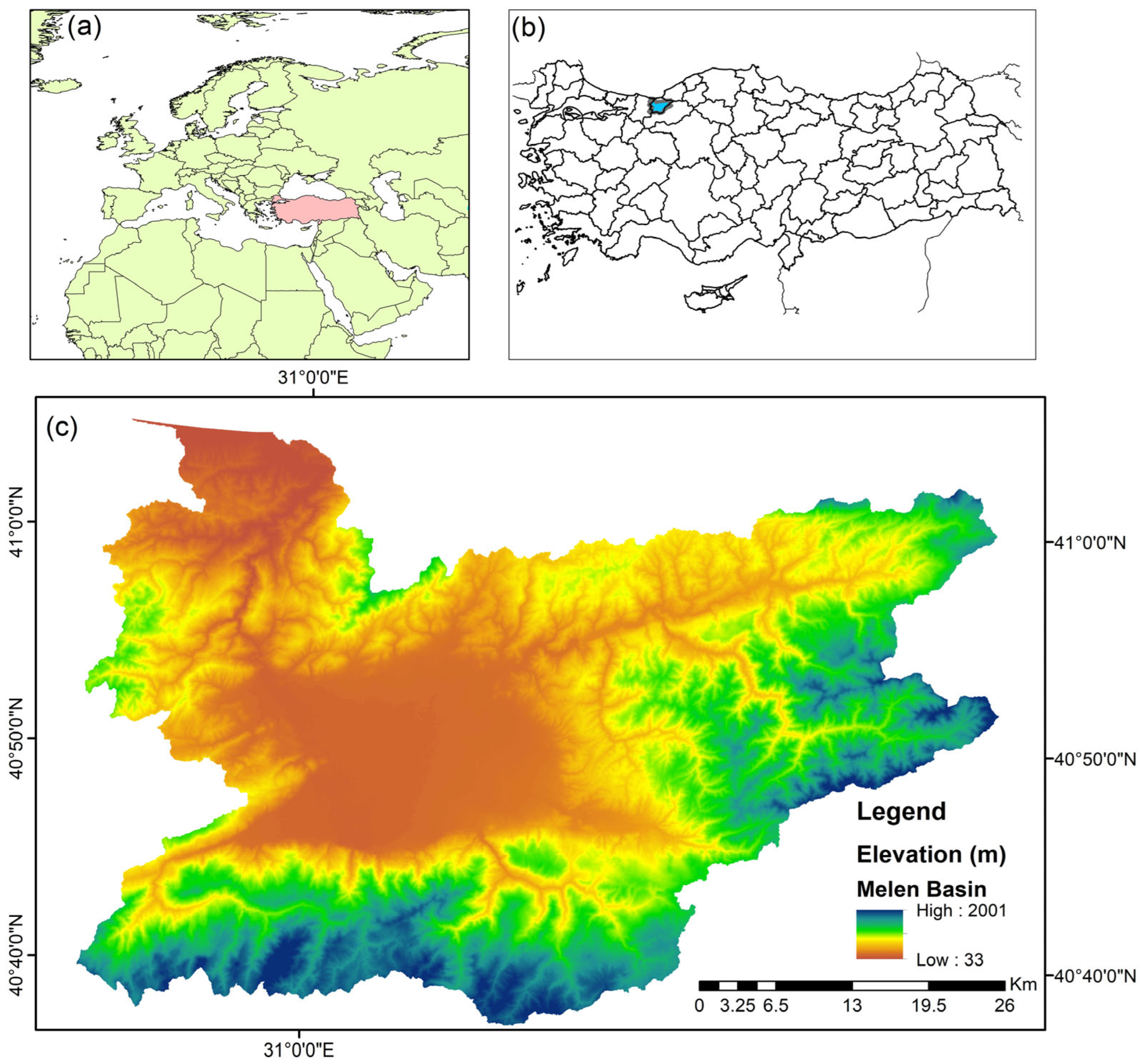
2.1. Study Area
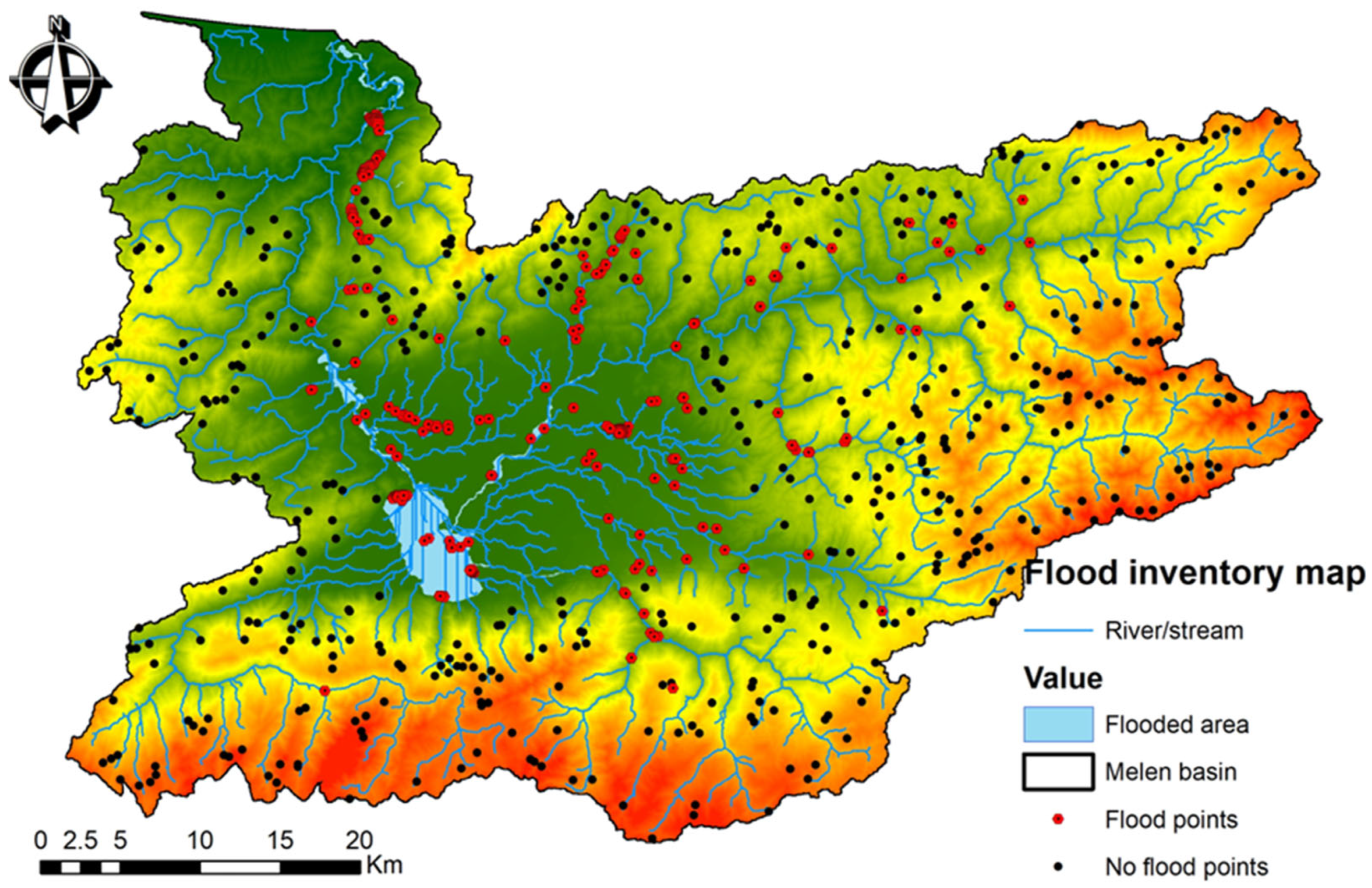
2.2. Preparation of Flood Inventory Map
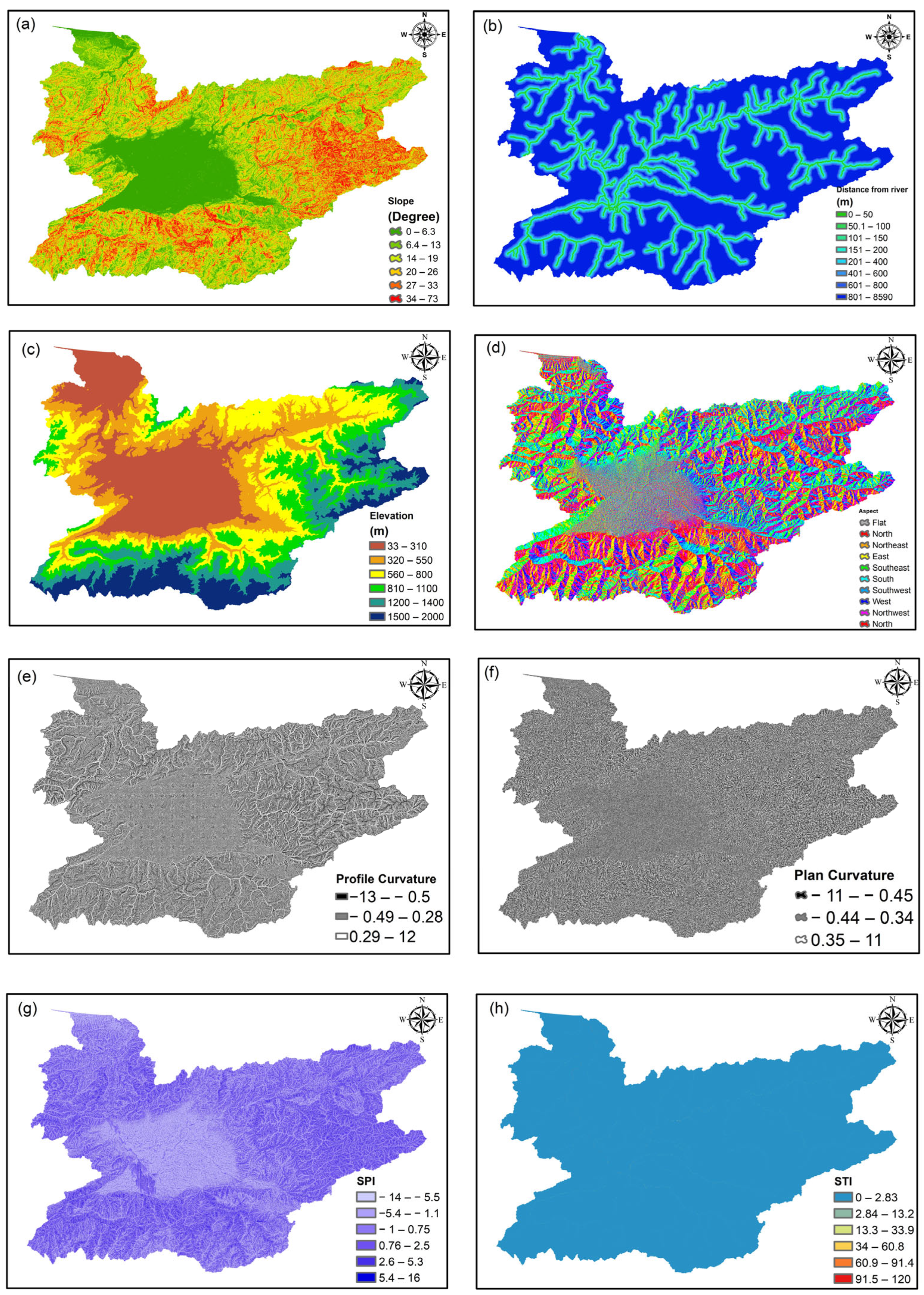
2.3. Flood Conditioning Factors
2.4. Evidential Belief Function (EBF) Model
2.5. Shannon Entropy Method
2.6. Frequency Ratio Method
2.7. Ensemble Models
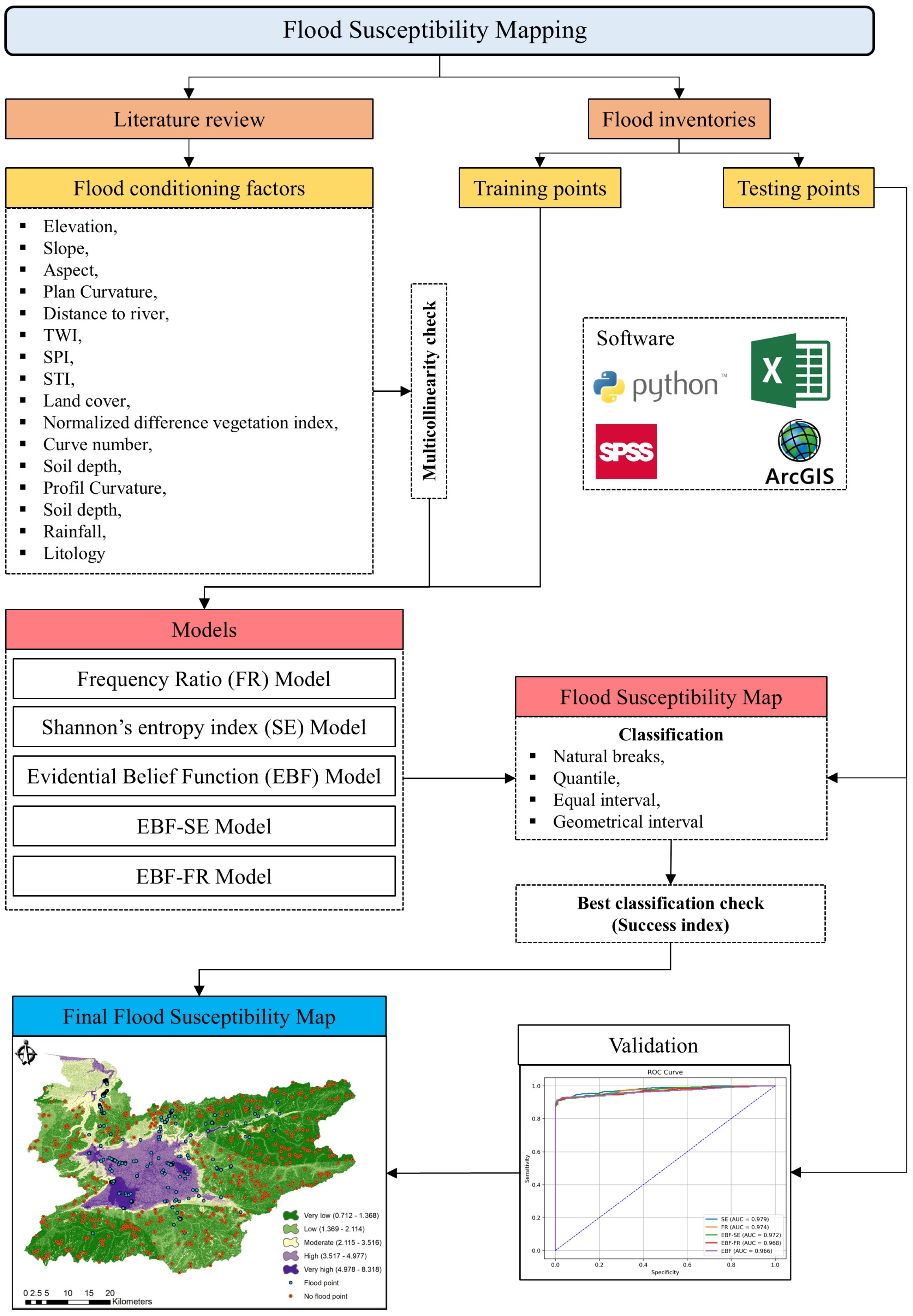
2.8. Selection of Appropriate Factors for Flood Sensitivity Analysis
2.9. Classification of Flood Sensitivity Maps
2.10. Validation of Flood Susceptibility Maps
3. Results
3.1. Multicollinearity Analysis of Factors Affecting Flooding
3.2. Selecting the Classification Method
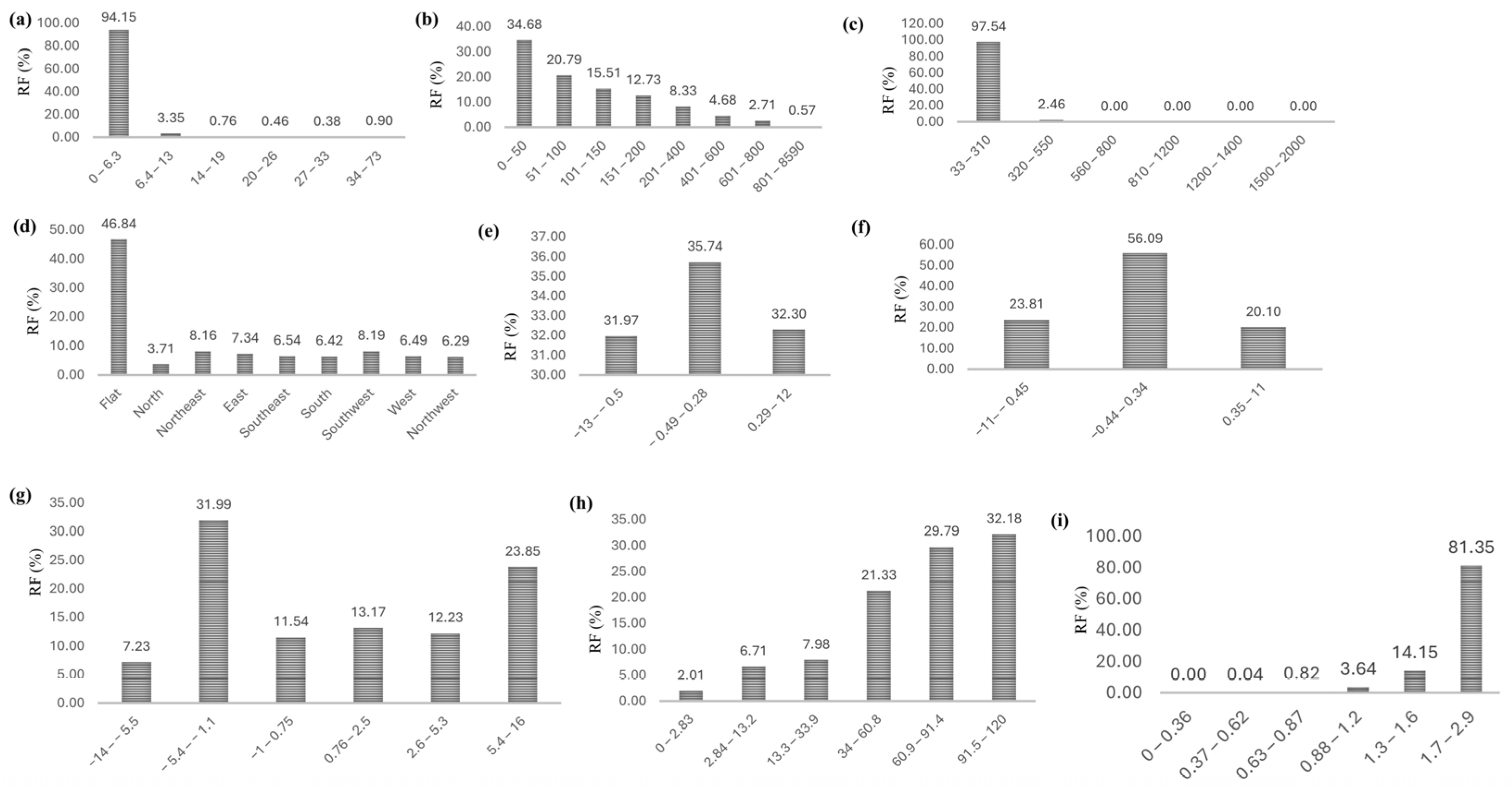
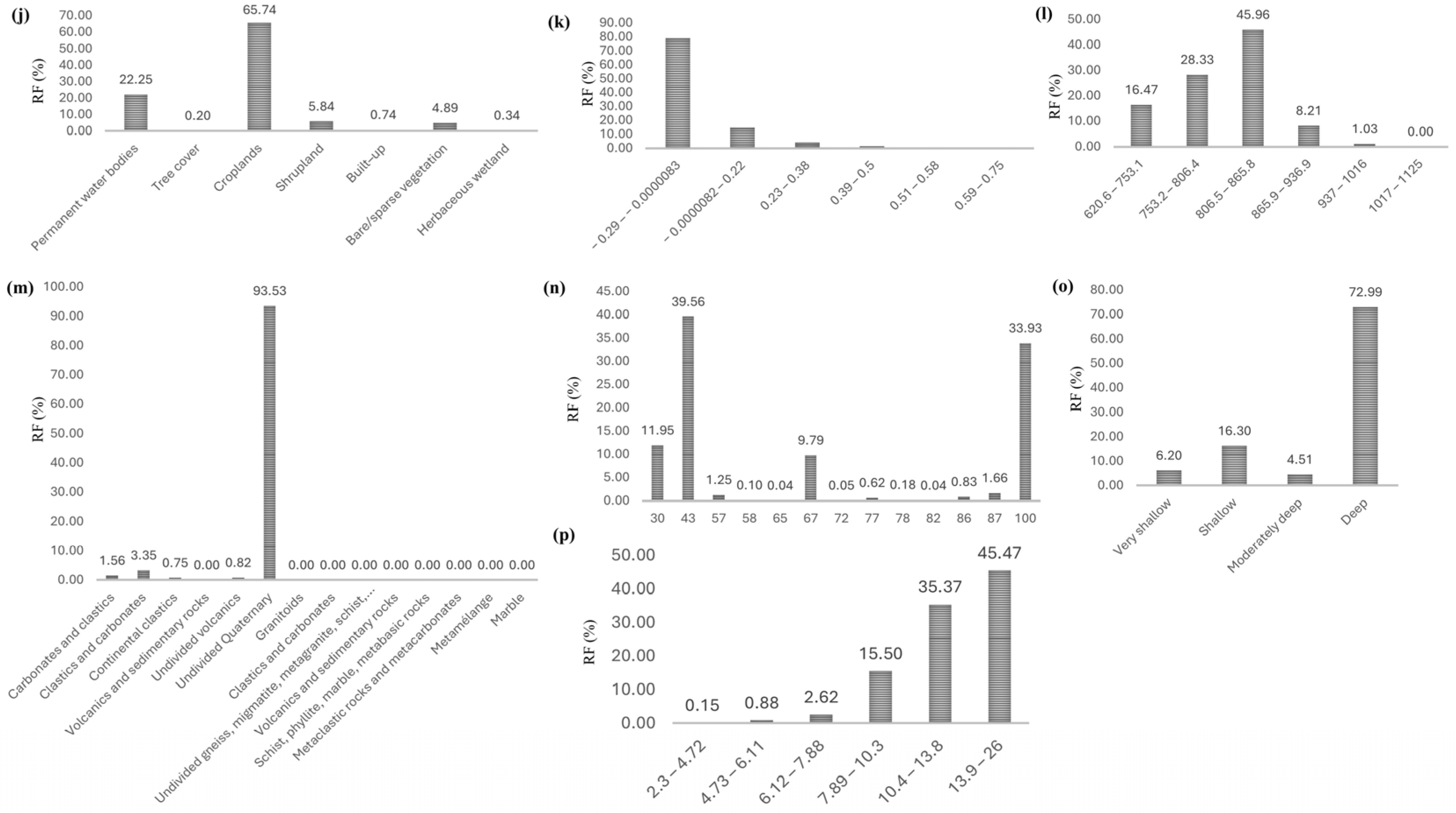
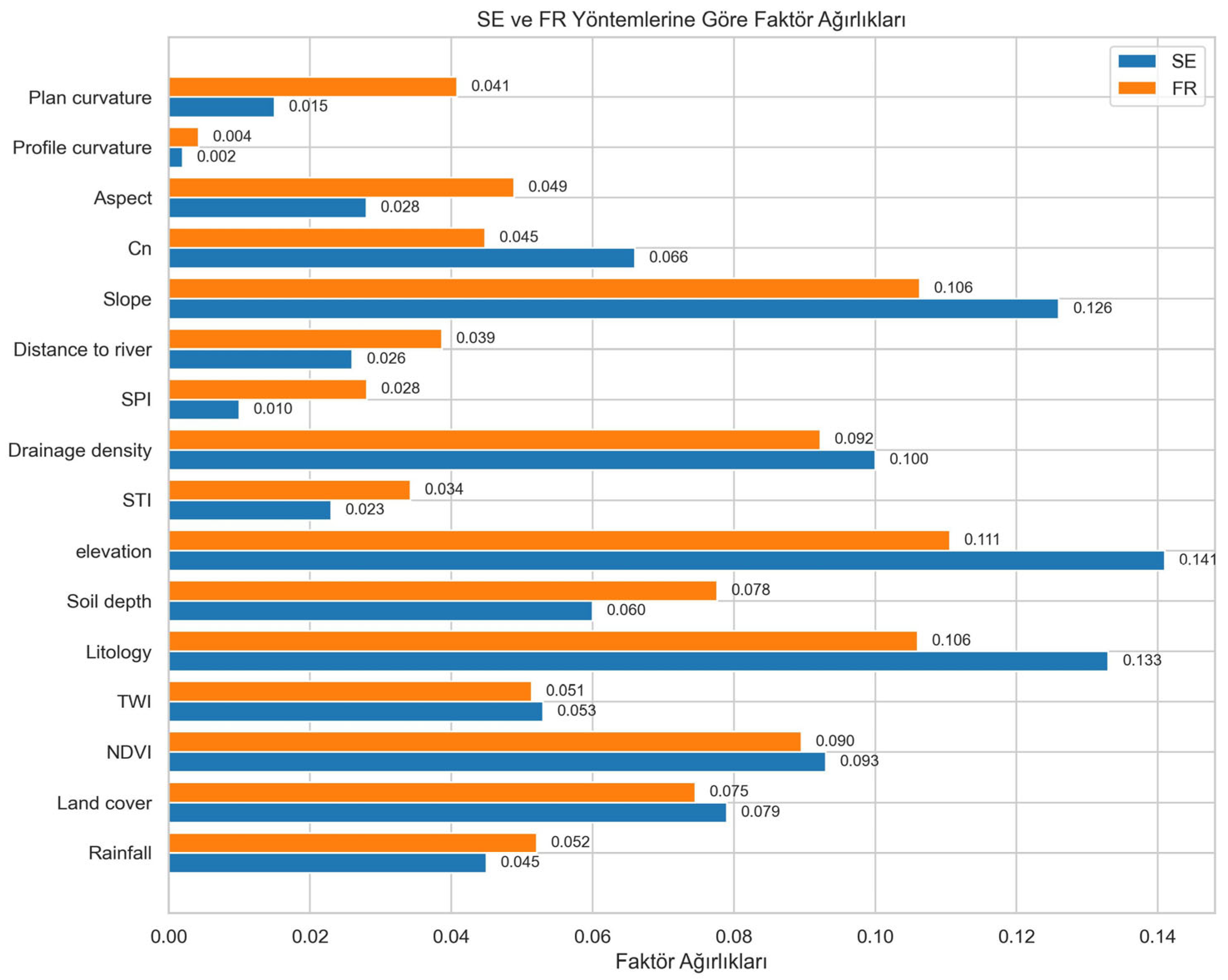
3.3. Flood Conditioning Factors, Weight and Frequency Values
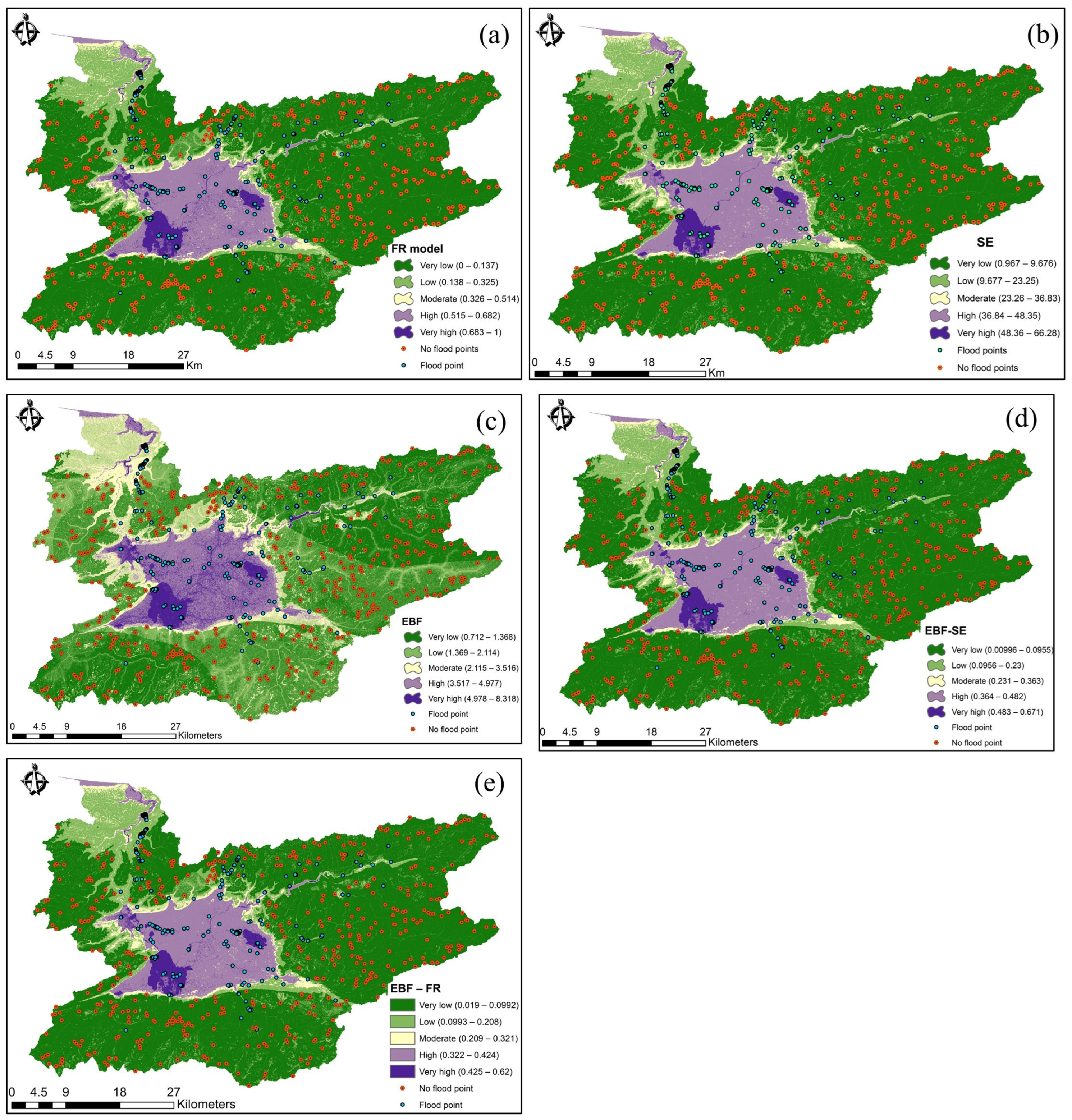
3.4. Melen Basin Flood Susceptibility Maps
3.5. Model Validation Assessment
4. Discussion
Uncertainty Analysis and Limitations
5. Conclusions
Author Contributions
Funding
Data Availability Statement
Acknowledgments
Conflicts of Interest
Abbreviations
| FR | Frequency Ratio |
| SE | Shannon Entropy Index |
| EBF | Evidential Belief Function |
| AUC | Area under the curve |
| ROC | Receiver Operating Characteristic |
| MCDA | Multi-Criteria Decision Analysis |
| GIS | Geographic Information System |
| DST | Dempster-Shafer Theory |
| VIF | Variance Inflation Factor |
| TOL | Tolerance |
| PCC | Pearson Correlation Test |
| SPI | Stream Power Index |
| TWI | Topographic Wetness Index |
| STI | Sediment Transport Index |
References
- Sreeparvathy, V.; Srinivas, V. A fuzzy entropy approach for design of hydrometric monitoring networks. J. Hydrol. 2020, 586, 124797. [Google Scholar] [CrossRef]
- Lee, H.; Calvin, K.; Dasgupta, D.; Krinner, G.; Mukherji, A.; Thorne, P.; Trisos, C.; Romero, J.; Aldunce, P.; Barrett, K. Climate Change 2023: Synthesis Report; Contribution of working groups I, II and III to the sixth assessment report of the intergovernmental panel on climate change; IPCC: Geneva, Switzerland, 2023. [Google Scholar]
- Elkollaly, M.; Sefelnasr, A.; Baig, F.; Elboshy, B.; El-shafie, A.; Ebraheem, A.A.; Sherif, M. Harnessing satellite precision: Flash flood vulnerability mapping in arid wadis. Nat. Hazards 2025, 121, 12767–12793. [Google Scholar] [CrossRef]
- Liu, J.; Wang, J.; Xiong, J.; Cheng, W.; Li, Y.; Cao, Y.; He, Y.; Duan, Y.; He, W.; Yang, G. Assessment of flood susceptibility mapping using support vector machine, logistic regression and their ensemble techniques in the Belt and Road region. Geocarto Int. 2022, 37, 9817–9846. [Google Scholar] [CrossRef]
- Mudashiru, R.B.; Sabtu, N.; Abdullah, R.; Saleh, A.; Abustan, I. A comparison of three multi-criteria decision-making models in mapping flood hazard areas of Northeast Penang, Malaysia. Nat. Hazards 2022, 112, 1903–1939. [Google Scholar] [CrossRef]
- European Environment Agency. European Climate Risk Assessment; European Environment Agency: Copenhagen, Denmark, 2024. [Google Scholar]
- Centre for Research on the Epidemiology of Disasters (CRED). 2024 Disasters in Numbers; CRED: Brussels, Belgium, 2025. [Google Scholar]
- Hall, J.; Arheimer, B.; Borga, M.; Brázdil, R.; Claps, P.; Kiss, A.; Kjeldsen, T.; Kriaučiūnienė, J.; Kundzewicz, Z.W.; Lang, M. Understanding flood regime changes in Europe: A state-of-the-art assessment. Hydrol. Earth Syst. Sci. 2014, 18, 2735–2772. [Google Scholar] [CrossRef]
- Khadraoui, N.; Dahri, N.; Bouamrane, A.; Pham, Q.B.; Abida, H. Flood susceptibility mapping using qualitative and statistical methods in a semi-arid basin: Case of the Manouba–Sijoumi watershed, Northeastern Tunisia. Acta Geophys. 2023, 71, 2307–2323. [Google Scholar] [CrossRef]
- Sun, H.; Yu, Q.; Wang, X.; Zhang, X.; Ruan, X. Exploring sustainable watershed flood risks management: An innovative TFAHP-TOPSIS methodology in the Georges River Basin, Australia. Int. J. Disaster Risk Reduct. 2024, 110, 104626. [Google Scholar] [CrossRef]
- Tehrany, M.S.; Kumar, L.; Shabani, F. A novel GIS-based ensemble technique for flood susceptibility mapping using evidential belief function and support vector machine: Brisbane, Australia. PeerJ 2019, 7, e7653. [Google Scholar] [CrossRef]
- Mudashiru, R.B.; Sabtu, N.; Abdullah, R.; Saleh, A.; Abustan, I. Optimality of flood influencing factors for flood hazard mapping: An evaluation of two multi-criteria decision-making methods. J. Hydrol. 2022, 612, 128055. [Google Scholar] [CrossRef]
- Rahmati, O.; Pourghasemi, H.R. Identification of critical flood prone areas in data-scarce and ungauged regions: A comparison of three data mining models. Water Resour. Manag. 2017, 31, 1473–1487. [Google Scholar] [CrossRef]
- Khosravi, K.; Shahabi, H.; Pham, B.T.; Adamowski, J.; Shirzadi, A.; Pradhan, B.; Dou, J.; Ly, H.-B.; Gróf, G.; Ho, H.L. A comparative assessment of flood susceptibility modeling using multi-criteria decision-making analysis and machine learning methods. J. Hydrol. 2019, 573, 311–323. [Google Scholar] [CrossRef]
- Singh, G.; Pandey, A. Hybrid ensemble modeling for flash flood potential assessment and susceptibility analysis of a Himalayan river catchment. Geocarto Int. 2022, 37, 9132–9159. [Google Scholar] [CrossRef]
- Saravanan, S.; Abijith, D. Flood susceptibility mapping of Northeast coastal districts of Tamil Nadu India using Multi-source Geospatial data and Machine Learning techniques. Geocarto Int. 2022, 37, 15252–15281. [Google Scholar] [CrossRef]
- Pham, B.T.; Luu, C.; Van Phong, T.; Nguyen, H.D.; Van Le, H.; Tran, T.Q.; Ta, H.T.; Prakash, I. Flood risk assessment using hybrid artificial intelligence models integrated with multi-criteria decision analysis in Quang Nam Province, Vietnam. J. Hydrol. 2021, 592, 125815. [Google Scholar] [CrossRef]
- Liuzzo, L.; Sammartano, V.; Freni, G. Comparison between different distributed methods for flood susceptibility mapping. Water Resour. Manag. 2019, 33, 3155–3173. [Google Scholar] [CrossRef]
- Shah, S.A.; Ai, S. Flood susceptibility mapping contributes to disaster risk reduction: A case study in Sindh, Pakistan. Int. J. Disaster Risk Reduct. 2024, 108, 104503. [Google Scholar] [CrossRef]
- Balogun, A.-L.; Sheng, T.Y.; Sallehuddin, M.H.; Aina, Y.A.; Dano, U.L.; Pradhan, B.; Yekeen, S.; Tella, A. Assessment of data mining, multi-criteria decision making and fuzzy-computing techniques for spatial flood susceptibility mapping: A comparative study. Geocarto Int. 2022, 37, 12989–13015. [Google Scholar] [CrossRef]
- Saha, S.; Sarkar, D.; Mondal, P. Efficiency exploration of frequency ratio, entropy and weights of evidence-information value models in flood vulnerabilityassessment: A study of raiganj subdivision, Eastern India. Stoch. Environ. Res. Risk Assess. 2022, 36, 1721–1742. [Google Scholar] [CrossRef]
- Mousavi, S.M.; Ataie-Ashtiani, B.; Hosseini, S.M. Comparison of statistical and MCDM approaches for flood susceptibility mapping in northern Iran. J. Hydrol. 2022, 612, 128072. [Google Scholar] [CrossRef]
- Saaty, T.L. Decision making with the analytic hierarchy process. Int. J. Serv. Sci. 2008, 1, 83–98. [Google Scholar] [CrossRef]
- Esmaili, R.; Karipour, S.A. Comparison of weighting methods of multicriteria decision analysis (MCDA) in evaluation of flood hazard index. Nat. Hazards 2024, 120, 8619–8638. [Google Scholar] [CrossRef]
- Pawar, N.S.; Sharma, K.V. Advanced fuzzy-based landslide prediction in high-risk regions using hybrid and statistical GIS models. Phys. Geogr. 2025, 46, 307–337. [Google Scholar] [CrossRef]
- Plataridis, K.; Mallios, Z. Flood susceptibility mapping using hybrid models optimized with Artificial Bee Colony. J. Hydrol. 2023, 624, 129961. [Google Scholar] [CrossRef]
- Pradhan, B.; Abokharima, M.H.; Jebur, M.N.; Tehrany, M.S. Land subsidence susceptibility mapping at Kinta Valley (Malaysia) using the evidential belief function model in GIS. Nat. Hazards 2014, 73, 1019–1042. [Google Scholar] [CrossRef]
- Nandi, A.; Mandal, A.; Wilson, M.; Smith, D. Flood hazard mapping in Jamaica using principal component analysis and logistic regression. Environ. Earth Sci. 2016, 75, 465. [Google Scholar] [CrossRef]
- Shafizadeh-Moghadam, H.; Valavi, R.; Shahabi, H.; Chapi, K.; Shirzadi, A. Novel forecasting approaches using combination of machine learning and statistical models for flood susceptibility mapping. J. Environ. Manag. 2018, 217, 1–11. [Google Scholar] [CrossRef]
- Wang, Y.; Fang, Z.; Hong, H.; Costache, R.; Tang, X. Flood susceptibility mapping by integrating frequency ratio and index of entropy with multilayer perceptron and classification and regression tree. J. Environ. Manag. 2021, 289, 112449. [Google Scholar] [CrossRef]
- Chen, W.; Hong, H.; Li, S.; Shahabi, H.; Wang, Y.; Wang, X.; Ahmad, B.B. Flood susceptibility modelling using novel hybrid approach of reduced-error pruning trees with bagging and random subspace ensembles. J. Hydrol. 2019, 575, 864–873. [Google Scholar] [CrossRef]
- Tekin, A.C. 1961 yılında Düzce’de yaşanan sel felaketi. J. Univers. Hist. Stud. 2022, 5, 203–216. [Google Scholar] [CrossRef]
- Eastern Anatolia Development Agency. Türkiye City by City; Özyurt Printing Co., Ltd.: Ankara, Turkey, 2019. [Google Scholar]
- Oguz, E.; Oguz, K.; Öztürk, K. Determination of flood susceptibility areas of Düzce region. J. Geomat. 2022, 7, 220–234. [Google Scholar]
- State Planning Agency (SPA). Report on Düzce Province; State Planning Organization: Singapore, 2001. [Google Scholar]
- Ministry of Agriculture and Forestry, M.O.A.A. Western Black Sea Flood Management Plan; Forestry, M.O.A.A: Ankara, Turkey, 2019.
- Wang, Y.; Hong, H.; Chen, W.; Li, S.; Panahi, M.; Khosravi, K.; Shirzadi, A.; Shahabi, H.; Panahi, S.; Costache, R. Flood susceptibility mapping in Dingnan County (China) using adaptive neuro-fuzzy inference system with biogeography based optimization and imperialistic competitive algorithm. J. Environ. Manag. 2019, 247, 712–729. [Google Scholar] [CrossRef] [PubMed]
- Dodangeh, E.; Choubin, B.; Eigdir, A.N.; Nabipour, N.; Panahi, M.; Shamshirband, S.; Mosavi, A. Integrated machine learning methods with resampling algorithms for flood susceptibility prediction. Sci. Total Environ. 2020, 705, 135983. [Google Scholar] [CrossRef] [PubMed]
- Ahmadlou, M.; Al-Fugara, A.K.; Al-Shabeeb, A.R.; Arora, A.; Al-Adamat, R.; Pham, Q.B.; Al-Ansari, N.; Linh, N.T.T.; Sajedi, H. Flood susceptibility mapping and assessment using a novel deep learning model combining multilayer perceptron and autoencoder neural networks. J. Flood Risk Manag. 2021, 14, e12683. [Google Scholar] [CrossRef]
- Costache, R.; Hong, H.; Pham, Q.B. Comparative assessment of the flash-flood potential within small mountain catchments using bivariate statistics and their novel hybrid integration with machine learning models. Sci. Total Environ. 2020, 711, 134514. [Google Scholar] [CrossRef] [PubMed]
- Tehrany, M.S.; Kumar, L. The application of a Dempster–Shafer-based evidential belief function in flood susceptibility mapping and comparison with frequency ratio and logistic regression methods. Environ. Earth Sci. 2018, 77, 490. [Google Scholar] [CrossRef]
- Nachappa, T.G.; Piralilou, S.T.; Gholamnia, K.; Ghorbanzadeh, O.; Rahmati, O.; Blaschke, T. Flood susceptibility mapping with machine learning, multi-criteria decision analysis and ensemble using Dempster Shafer Theory. J. Hydrol. 2020, 590, 125275. [Google Scholar] [CrossRef]
- Akay, H. Flood hazards susceptibility mapping using statistical, fuzzy logic, and MCDM methods. Soft Comput. 2021, 25, 9325–9346. [Google Scholar] [CrossRef]
- Althuwaynee, O.F.; Pradhan, B.; Lee, S. Application of an evidential belief function model in landslide susceptibility mapping. Comput. Geosci. 2012, 44, 120–135. [Google Scholar] [CrossRef]
- Carranza, E.; Woldai, T.; Chikambwe, E. Application of data-driven evidential belief functions to prospectivity mapping for aquamarine-bearing pegmatites, Lundazi district, Zambia. Nat. Resour. Res. 2005, 14, 47–63. [Google Scholar] [CrossRef]
- Anand, A.K.; Pradhan, S.P. Evaluation of bivariate statistical and hybrid models for the preparation of flood hazard susceptibility maps in the Brahmani River Basin, India. Environ. Earth Sci. 2023, 82, 389. [Google Scholar] [CrossRef]
- Poddar, I.; Roy, R. Application of GIS-based data-driven bivariate statistical models for landslide prediction: A case study of highly affected landslide prone areas of Teesta River basin. Quat. Sci. Adv. 2024, 13, 100150. [Google Scholar] [CrossRef]
- Al-Abadi, A.M. The application of Dempster–Shafer theory of evidence for assessing groundwater vulnerability at Galal Badra basin, Wasit governorate, east of Iraq. Appl. Water Sci. 2017, 7, 1725–1740. [Google Scholar] [CrossRef]
- Arabameri, A.; Rezaei, K.; Cerdà, A.; Conoscenti, C.; Kalantari, Z. A comparison of statistical methods and multi-criteria decision making to map flood hazard susceptibility in Northern Iran. Sci. Total Environ. 2019, 660, 443–458. [Google Scholar] [CrossRef]
- Chen, W.; Shahabi, H.; Shirzadi, A.; Li, T.; Guo, C.; Hong, H.; Li, W.; Pan, D.; Hui, J.; Ma, M. A novel ensemble approach of bivariate statistical-based logistic model tree classifier for landslide susceptibility assessment. Geocarto Int. 2018, 33, 1398–1420. [Google Scholar] [CrossRef]
- Es-Smairi, A.; El Moutchou, B.; El Ouazani Touhami, A.; Namous, M.; Mir, R.A. Landslide susceptibility mapping using GIS-based bivariate models in the Rif chain (northernmost Morocco). Geocarto Int. 2022, 37, 15347–15377. [Google Scholar] [CrossRef]
- Yariyan, P.; Avand, M.; Abbaspour, R.A.; Torabi Haghighi, A.; Costache, R.; Ghorbanzadeh, O.; Janizadeh, S.; Blaschke, T. Flood susceptibility mapping using an improved analytic network process with statistical models. Geomat. Nat. Hazards Risk 2020, 11, 2282–2314. [Google Scholar] [CrossRef]
- Shannon, C.E. A mathematical theory of communication. Bell Syst. Tech. J. 1948, 27, 379–423. [Google Scholar] [CrossRef]
- Agrawal, N.; Dixit, J. Assessment of landslide susceptibility for Meghalaya (India) using bivariate (frequency ratio and Shannon entropy) and multi-criteria decision analysis (AHP and fuzzy-AHP) models. All Earth 2022, 34, 179–201. [Google Scholar] [CrossRef]
- Hao, J.; Li, H.; Zhang, C.; Zhang, F.; Liu, D.; Mao, L. An integrated strategy for evaluating flood susceptibility combining deep neural networks with biologically inspired meta-heuristic algorithms. Int. J. Disaster Risk Reduct. 2024, 114, 105003. [Google Scholar] [CrossRef]
- Zhao, H.; Yao, L.; Mei, G.; Liu, T.; Ning, Y. A fuzzy comprehensive evaluation method based on AHP and entropy for a landslide susceptibility map. Entropy 2017, 19, 396. [Google Scholar] [CrossRef]
- Lee, S. Application of logistic regression model and its validation for landslide susceptibility mapping using GIS and remote sensing data. Int. J. Remote Sens. 2005, 26, 1477–1491. [Google Scholar] [CrossRef]
- Rahmati, O.; Zeinivand, H.; Besharat, M. Flood hazard zoning in Yasooj region, Iran, using GIS and multi-criteria decision analysis. Geomat. Nat. Hazards Risk 2016, 7, 1000–1017. [Google Scholar] [CrossRef]
- Ghosh, S.; Carranza, E.J.M.; van Westen, C.J.; Jetten, V.G.; Bhattacharya, D.N. Selecting and weighting spatial predictors for empirical modeling of landslide susceptibility in the Darjeeling Himalayas (India). Geomorphology 2011, 131, 35–56. [Google Scholar] [CrossRef]
- Gharakhanlou, N.M.; Perez, L. Flood susceptible prediction through the use of geospatial variables and machine learning methods. J. Hydrol. 2023, 617, 129121. [Google Scholar] [CrossRef]
- Arora, A.; Pandey, M.; Siddiqui, M.A.; Hong, H.; Mishra, V.N. Spatial flood susceptibility prediction in Middle Ganga Plain: Comparison of frequency ratio and Shannon’s entropy models. Geocarto Int. 2021, 36, 2085–2116. [Google Scholar] [CrossRef]
- Pekel, J.-F.; Belward, A.; Gorelick, N. Global Water Surface Dynamics: Toward a Near Real Time Monitoring Using Landsat and Sentinel Data. In Proceedings of the AGU Fall Meeting Abstracts, New Orleans, LA, USA, 11–15 December 2017; p. GC11C-0742. [Google Scholar]
- Kim, J.H. Multicollinearity and misleading statistical results. Korean J. Anesthesiol. 2019, 72, 558–569. [Google Scholar] [CrossRef] [PubMed]
- Dutta, P.; Deka, S. A novel approach to flood risk assessment: Synergizing with geospatial based MCDM-AHP model, multicollinearity, and sensitivity analysis in the Lower Brahmaputra Floodplain, Assam. J. Clean. Prod. 2024, 467, 142985. [Google Scholar] [CrossRef]
- Li, Y.; Hong, H. Modelling flood susceptibility based on deep learning coupling with ensemble learning models. J. Environ. Manag. 2023, 325, 116450. [Google Scholar] [CrossRef]
- Ozturk, D.; Uzel-Gunini, N. Investigation of the effects of hybrid modeling approaches, factor standardization, and categorical mapping on the performance of landslide susceptibility mapping in Van, Turkey. Nat. Hazards 2022, 114, 2571–2604. [Google Scholar] [CrossRef]
- Guo, J.; Wang, J.; Xu, C.; Song, Y. Modeling of spatial stratified heterogeneity. GISci. Remote Sens. 2022, 59, 1660–1677. [Google Scholar] [CrossRef]
- Baeza, C.; Lantada, N.; Amorim, S. Statistical and spatial analysis of landslide susceptibility maps with different classification systems. Environ. Earth Sci. 2016, 75, 1318. [Google Scholar] [CrossRef]
- Lu, Y.; He, T.; Xu, X.; Qiao, Z. Investigation the robustness of standard classification methods for defining urban heat islands. IEEE J. Sel. Top. Appl. Earth Obs. Remote Sens. 2021, 14, 11386–11394. [Google Scholar] [CrossRef]
- Ajibade, F.O.; Ajibade, T.F.; Idowu, T.E.; Nwogwu, N.A.; Adelodun, B.; Lasisi, K.H.; Opafola, O.T.; Ajala, O.A.; Fadugba, O.G.; Adewumi, J.R. Flood-prone area mapping using GIS-based analytical hierarchy frameworks for Ibadan city, Nigeria. J. Multi-Criteria Decis. Anal. 2021, 28, 283–295. [Google Scholar] [CrossRef]
- Ayalew, L.; Yamagishi, H. The application of GIS-based logistic regression for landslide susceptibility mapping in the Kakuda-Yahiko Mountains, Central Japan. Geomorphology 2005, 65, 15–31. [Google Scholar] [CrossRef]
- Sun, R.; Shi, S.; Reheman, Y.; Li, S. Measurement of urban flood resilience using a quantitative model based on the correlation of vulnerability and resilience. Int. J. Disaster Risk Reduct. 2022, 82, 103344. [Google Scholar] [CrossRef]
- Akgun, A.; Sezer, E.A.; Nefeslioglu, H.A.; Gokceoglu, C.; Pradhan, B. An easy-to-use MATLAB program (MamLand) for the assessment of landslide susceptibility using a Mamdani fuzzy algorithm. Comput. Geosci. 2012, 38, 23–34. [Google Scholar] [CrossRef]
- Bianchini, S.; Confuorto, P.; Intrieri, E.; Sbarra, P.; Di Martire, D.; Calcaterra, D.; Fanti, R. Machine learning for sinkhole risk mapping in Guidonia-Bagni di Tivoli plain (Rome), Italy. Geocarto Int. 2022, 37, 16687–16715. [Google Scholar] [CrossRef]
- Wang, H.; Meng, Y.; Xu, H.; Wang, H.; Guan, X.; Liu, Y.; Liu, M.; Wu, Z. Prediction of flood risk levels of urban flooded points though using machine learning with unbalanced data. J. Hydrol. 2024, 630, 130742. [Google Scholar] [CrossRef]
- Asfaw, W.; Rientjes, T.; Bekele, T.W.; Haile, A.T. Estimating elements susceptible to urban flooding using multisource data and machine learning. Int. J. Disaster Risk Reduct. 2025, 116, 105169. [Google Scholar] [CrossRef]
- Dodangeh, E.; Panahi, M.; Rezaie, F.; Lee, S.; Bui, D.T.; Lee, C.-W.; Pradhan, B. Novel hybrid intelligence models for flood-susceptibility prediction: Meta optimization of the GMDH and SVR models with the genetic algorithm and harmony search. J. Hydrol. 2020, 590, 125423. [Google Scholar] [CrossRef]
- Al-Areeq, A.M.; Saleh, R.A.; Ghaleb, M.; Abba, S.I.; Yaseen, Z.M. Implication of novel hybrid machine learning model for flood subsidence susceptibility mapping: A representative case study in Saudi Arabia. J. Hydrol. 2024, 630, 130692. [Google Scholar] [CrossRef]
- Tehrany, M.S.; Pradhan, B.; Jebur, M.N. Spatial prediction of flood susceptible areas using rule based decision tree (DT) and a novel ensemble bivariate and multivariate statistical models in GIS. J. Hydrol. 2013, 504, 69–79. [Google Scholar] [CrossRef]
- Dai, Z.; Arabameri, A.; Yariyan, P.; Naqvi, H.R.; Nasrin, T. Optimizing Flood Susceptibility Detection Using Ensemble Learning Methods. Water Resour. Manag. 2025, 39, 7109–7132. [Google Scholar] [CrossRef]
- Danso, S.Y.; Ma, Y.; Addo, I.Y. Spatial evaluation of flood susceptibility on a national scale across Ghana using a fuzzy analytic hierarchy process and evidential belief function: An ensemble approach. Acta Geophys. 2025, 73, 4511–4531. [Google Scholar] [CrossRef]
- Ramesh, V.; Iqbal, S.S. Urban flood susceptibility zonation mapping using evidential belief function, frequency ratio and fuzzy gamma operator models in GIS: A case study of Greater Mumbai, Maharashtra, India. Geocarto Int. 2022, 37, 581–606. [Google Scholar] [CrossRef]
- Bui, D.T.; Pradhan, B.; Nampak, H.; Bui, Q.-T.; Tran, Q.-A.; Nguyen, Q.-P. Hybrid artificial intelligence approach based on neural fuzzy inference model and metaheuristic optimization for flood susceptibilitgy modeling in a high-frequency tropical cyclone area using GIS. J. Hydrol. 2016, 540, 317–330. [Google Scholar] [CrossRef]
- Fang, Z.; Wang, Y.; Peng, L.; Hong, H. Predicting flood susceptibility using LSTM neural networks. J. Hydrol. 2021, 594, 125734. [Google Scholar] [CrossRef]
- Khosravi, K.; Nohani, E.; Maroufinia, E.; Pourghasemi, H.R. A GIS-based flood susceptibility assessment and its mapping in Iran: A comparison between frequency ratio and weights-of-evidence bivariate statistical models with multi-criteria decision-making technique. Nat. Hazards 2016, 83, 947–987. [Google Scholar] [CrossRef]
- Prasad, P.; Mandal, S.; Naik, S.S.; Loveson, V.J.; Borah, S.; Chandra, P.; Sudheer, K. Integration of multi-temporal SAR data and robust machine learning models for improvement of flood susceptibility assessment in the southwest coast of India. Appl. Comput. Geosci. 2024, 24, 100189. [Google Scholar] [CrossRef]
- Razavi-Termeh, S.V.; Sadeghi-Niaraki, A.; Ali, F.; Naqvi, R.A.; Choi, S.-M. Cutting-Edge strategies for absence data identification in natural hazards: Leveraging Voronoi-Entropy in flood susceptibility mapping with advanced AI techniques. J. Hydrol. 2025, 648, 132337. [Google Scholar] [CrossRef]
- Danso, S.Y.; Ma, Y.; Addo, I.Y. Delineating flood susceptibility zones using novel ensemble models–An application of evidential belief function, relative frequency ratio, and Shannon entropy. Int. J. Appl. Earth Obs. Geoinf. 2025, 141, 104669. [Google Scholar] [CrossRef]
- Ekmekcioğlu, Ö.; Koc, K.; Özger, M.; Işık, Z. Exploring the additional value of class imbalance distributions on interpretable flash flood susceptibility prediction in the Black Warrior River basin, Alabama, United States. J. Hydrol. 2022, 610, 127877. [Google Scholar] [CrossRef]
- Pandey, M.; Arora, A.; Arabameri, A.; Costache, R.; Kumar, N.; Mishra, V.N.; Nguyen, H.; Mishra, J.; Siddiqui, M.A.; Ray, Y. Flood susceptibility modeling in a subtropical humid low-relief alluvial plain environment: Application of novel ensemble machine learning approach. Front. Earth Sci. 2021, 9, 659296. [Google Scholar] [CrossRef]
- Addis, A. GIS—Based flood susceptibility mapping using frequency ratio and information value models in upper Abay river basin, Ethiopia. Nat. Hazards Res. 2023, 3, 247–256. [Google Scholar] [CrossRef]
- Ashfaq, S.; Tufail, M.; Niaz, A.; Muhammad, S.; Alzahrani, H.; Tariq, A. Flood susceptibility assessment and mapping using GIS-based analytical hierarchy process and frequency ratio models. Glob. Planet. Chang. 2025, 251, 104831. [Google Scholar] [CrossRef]
- Ke, X.; Wang, N.; Xiu, Y.; Dong, Z.; Wang, T. A flash flood susceptibility prediction and partitioning method based on GeoDetector and random forest. Stoch. Environ. Res. Risk Assess. 2025, 39, 1377–1404. [Google Scholar] [CrossRef]
- Patel, S.K.; Ghosh, P.; Sen Gupta, D.; Kumar, A. Flood modeling using GIS-based analytical hierarchy process in Gandak river basin of Indian territory. Nat. Hazards 2025, 121, 16515–16557. [Google Scholar] [CrossRef]
- Salvati, A.; Nia, A.M.; Salajegheh, A.; Ghaderi, K.; Asl, D.T.; Al-Ansari, N.; Solaimani, F.; Clague, J.J. Flood susceptibility mapping using support vector regression and hyper-parameter optimization. J. Flood Risk Manag. 2023, 16, e12920. [Google Scholar] [CrossRef]
- Tang, X.; Li, J.; Liu, M.; Liu, W.; Hong, H. Flood susceptibility assessment based on a novel random Naïve Bayes method: A comparison between different factor discretization methods. Catena 2020, 190, 104536. [Google Scholar] [CrossRef]
- Sarkar, D.; Saha, S.; Mondal, P. GIS-based frequency ratio and Shannon’s entropy techniques for flood vulnerability assessment in Patna district, Central Bihar, India. Int. J. Environ. Sci. Technol. 2022, 19, 8911–8932. [Google Scholar] [CrossRef]
- Ghosh, B. Flood susceptibility assessment and mapping in a monsoon-dominated tropical river basin using GIS-based data-driven bivariate and multivariate statistical models and their ensemble techniques. Environ. Earth Sci. 2023, 82, 28. [Google Scholar] [CrossRef]
- Mirzapour, H.; Haghizadeh, A.; Motlagh, M.S. Evaluating machine learning efficiency and accuracy for real time flash flood mapping. Sci. Rep. 2025, 16, 3975. [Google Scholar] [CrossRef] [PubMed]
- Sharma, A.; Poonia, M.; Rai, A.; Biniwale, R.B.; Tügel, F.; Holzbecher, E.; Hinkelmann, R. Flood susceptibility mapping using GIS-based frequency ratio and Shannon’s entropy index bivariate statistical models: A case study of Chandrapur District, India. ISPRS Int. J. Geo-Inf. 2024, 13, 297. [Google Scholar] [CrossRef]



| Data Format | Data Source | Spatial Resolution | Derived Data | |
|---|---|---|---|---|
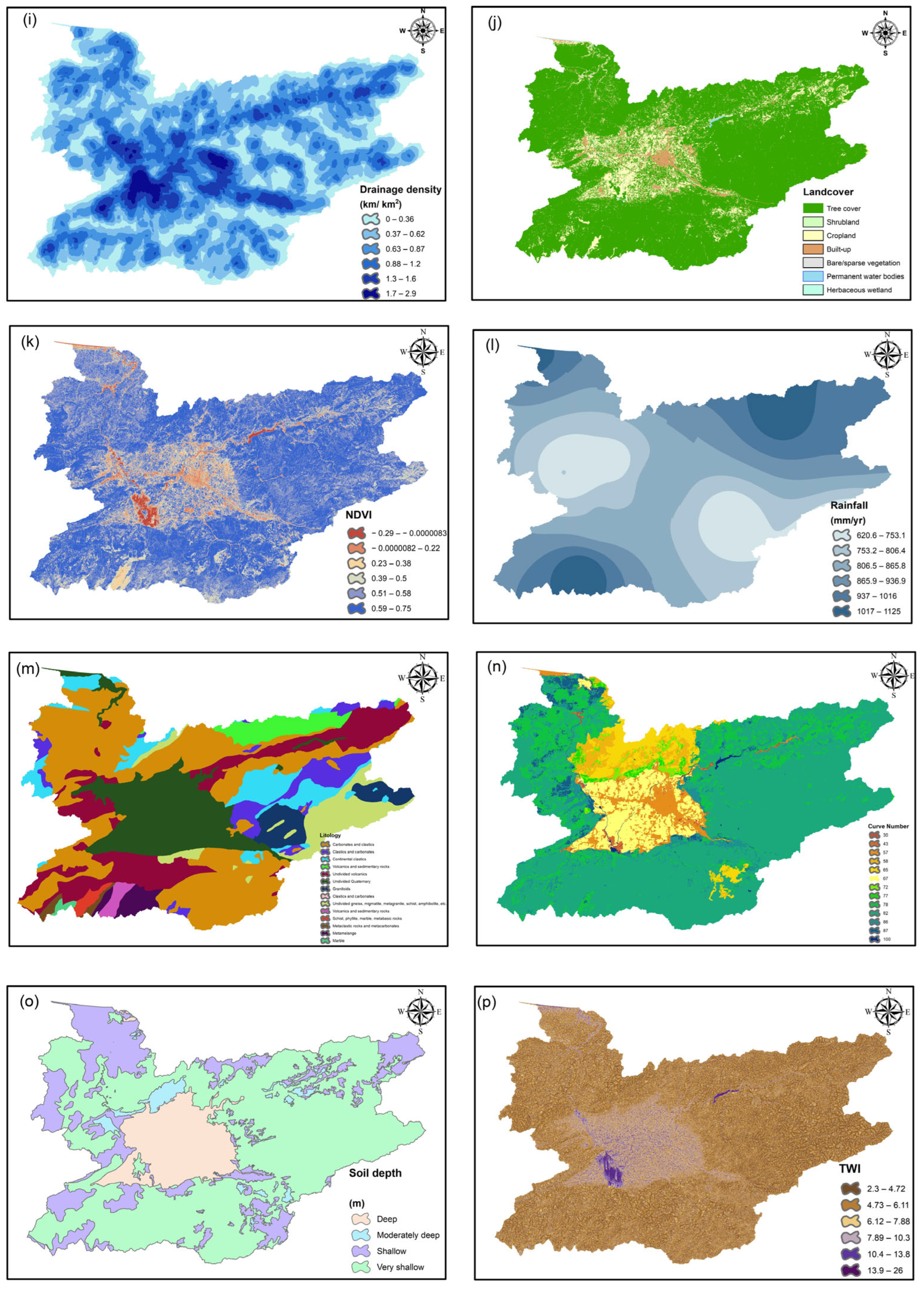
| Digital elevation model (dem) | Raster | Alos Palsar DEM (https://search.asf.alaska.edu/, accessed on 16 February 2024) | 12.5 × 12.5 m | Elevation, Slope, Aspect, Plan curvature, Profile curvature, TWI, SPI, STI |
| Landsat 8 image | Raster | National Academy of Sciences in the USA | 30 × 30 m | Normalized Vegetation Difference Index (NDVI) |
| Sentinel 2 image | Raster | European Space Agency (ESA) | 10 × 10 m | Land cover |
| Digital soil map | Vector | Ministry of Agriculture and Forestry | 1/25.000 | Curve number, Soil depth |
| Flows | Vector | EU-Hydro River Network Database | 2.5 × 2.5 m | Distance from river, Drainage density |
| Rainfall | General Directorate of Meteorology | Long-term average precipitation, | ||
| Geology | Raster | General Directorate of Mineral Exploration and Research | 10 × 10 m | Lithology |
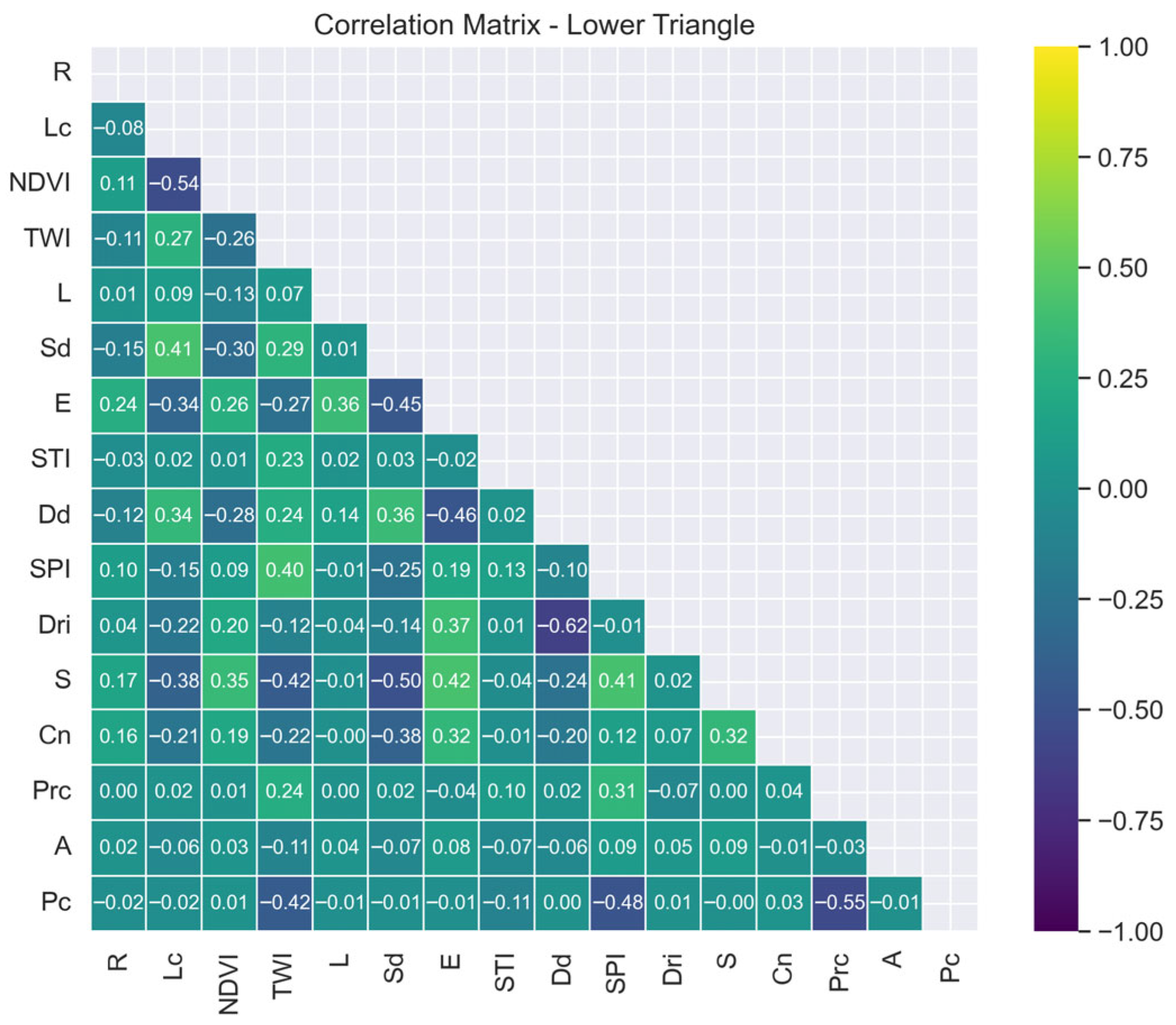
| Conditioning Factors | Variance Inflation Factor Value (VIF) | Tolerance Value (TOL) |
|---|---|---|
| Rainfall (R) | 1.090 | 0.917 |
| Land cover (Lc) | 1.645 | 0.608 |
| Normalized difference vegetation index (NDVI) | 1.508 | 0.663 |
| Topographic wetness index (TWI) | 2.815 | 0.355 |
| Lithology (L) | 1.448 | 0.690 |
| Soil depth (Sd) | 1.696 | 0.590 |
| Elevation (E) | 2.331 | 0.429 |
| Sediment Transport Index (STI) | 1.068 | 0.937 |
| Drainage density (Dd) | 2.097 | 0.477 |
| Stream Power Index (SPI) | 2.822 | 0.354 |
| Distance to river (Dri) | 1.786 | 0.560 |
| Slope (S) | 2.722 | 0.367 |
| Curve number (Cn) | 1.252 | 0.799 |
| Aspect (A) | 1.051 | 0.951 |
| Profile curvature (Prc) | 1.484 | 0.674 |
| Plan curvature (Pc) | 1.848 | 0.541 |
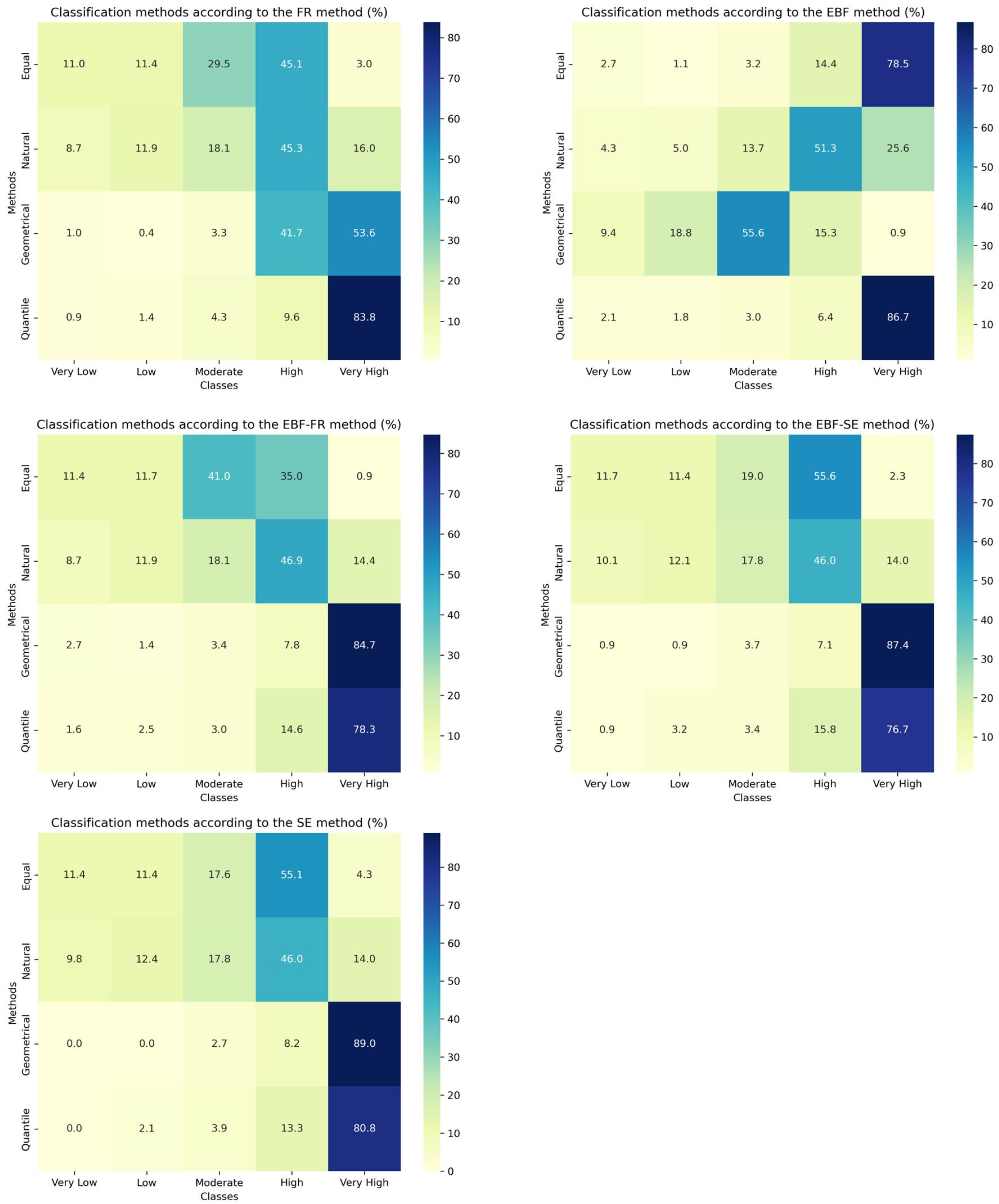
| No | Method | Classification Method | Flood | Non-Flood | Success Index |
|---|---|---|---|---|---|
| 1 | Evidential Belief Function (EBF) | Natural Breaks | 90.6 | 98.8 | 91.8 |
| Quantile | 96.1 | 62.2 | 66.1 | ||
| Geometrical | 71.8 | 100 | 71.8 | ||
| Equal | 96.1 | 62.7 | 66.6 | ||
| 2 | Frequency Ratio (FR) | Natural Breaks | 79.4 | 97.5 | 81.9 |
| Quantile | 97.7 | 61.4 | 63.7 | ||
| Geometrical | 97.7 | 66.1 | 68.4 | ||
| Equal | 77.6 | 100 | 77.6 | ||
| 3 | Shannon Entropy (SE) | Natural Breaks | 91.9 | 97.5 | 94.4 |
| Quantile | 96.3 | 61.2 | 64.9 | ||
| Geometrical | 95.9 | 66.1 | 70.5 | ||
| Equal | 70.3 | 100 | 70.3 | ||
| 4 | Evidential Belief Function (EBF)–Shannon Entropy (SE) | Natural Breaks | 91.9 | 95.9 | 96.0 |
| Quantile | 95.9 | 60.4 | 64.5 | ||
| Geometrical | 95.8 | 61.6 | 65.8 | ||
| Equal | 64.7 | 99.5 | 65.2 | ||
| 5 | Evidential Belief Function (EBF)–Frequency Ratio (FR) | Natural Breaks | 79.4 | 100 | 79.4 |
| Quantile | 95.9 | 64.4 | 68.5 | ||
| Geometrical | 95.9 | 63.6 | 67.7 | ||
| Equal | 76.9 | 100 | 76.9 |
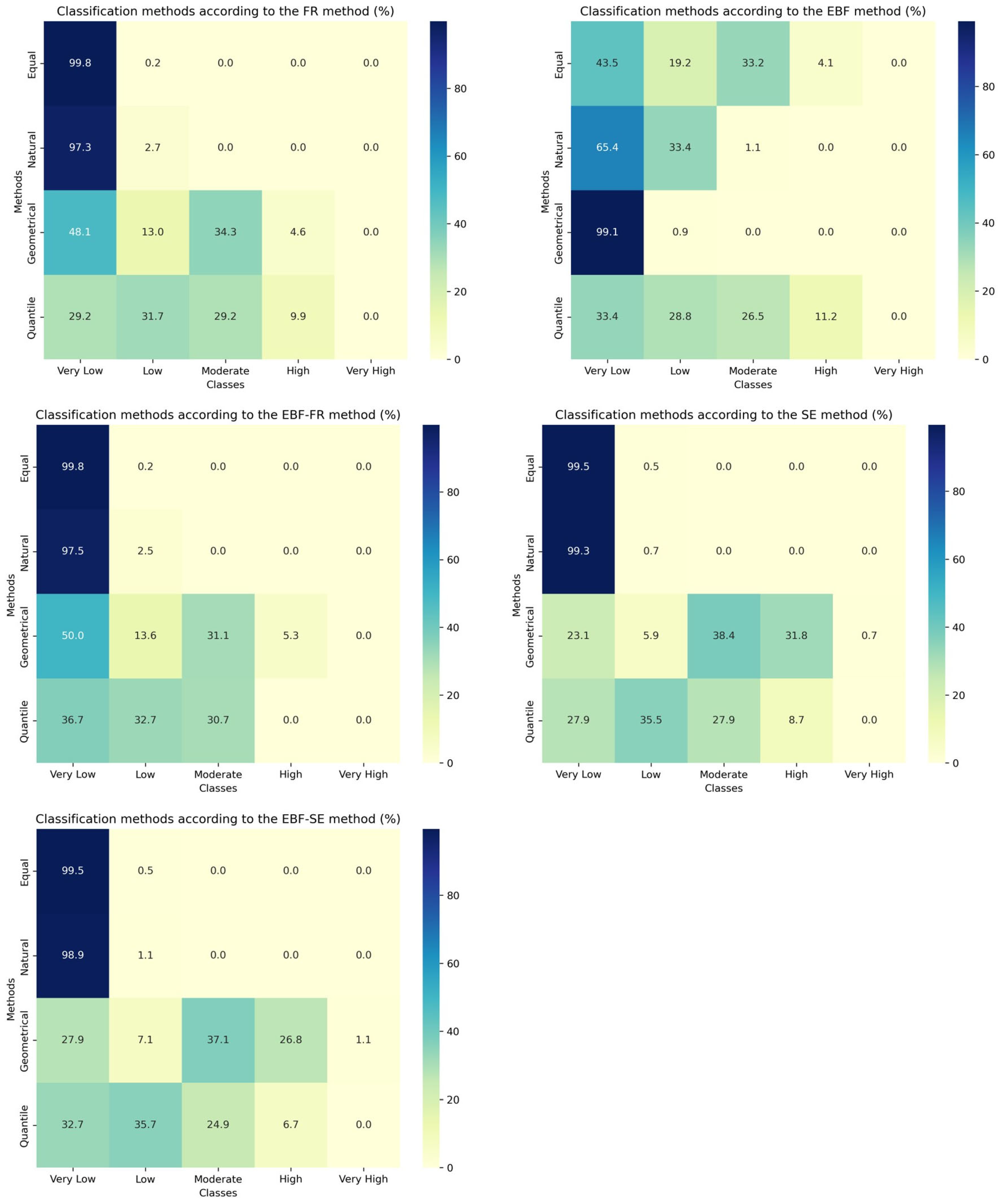
| Method | Criterion | Flood Sensitivity Value Classes | ||||
|---|---|---|---|---|---|---|
| Very Low | Low | Moderate | High | Very High | ||
| Frequency Ratio (FR) | Value range | 0–0.137 | 0.138–0.325 | 0.326–0.514 | 0.515–0.682 | 0.683–1 |
| Area ratio (%) | 69 | 14 | 4 | 12 | 3 | |
| Shannon Entropy (SE) | Value range | 5.505–9.567 | 9.568–13.63 | 13.64–20.29 | 20.3–27.77 | 27.78–46.94 |
| Area ratio (%) | 34 | 37 | 13 | 10 | 6 | |
| Evidential Belief Function (EBF) | Value range | 0.712–1.368 | 1.369–2.114 | 2.115–3.516 | 3.517–4.977 | 4.978–8.318 |
| Area ratio (%) | 43 | 29 | 13 | 11 | 5 | |
| Evidential Belief Function (EBF)–Shannon Entropy (SE) | Value range | 0.0537–0.0924 | 0.0925–0.133 | 0.134–0.198 | 0.199–0.276 | 0.277–0.482 |
| Area ratio (%) | 32 | 39 | 13 | 11 | 5 | |
| Evidential Belief Function (EBF)–Frequency Ratio (FR) | Value range | 0.019–0.0992 | 0.0993–0.208 | 0.209–0.321 | 0.322–0.424 | 0.425–0.62 |
| Area ratio (%) | 68 | 14 | 4 | 12 | 2 | |
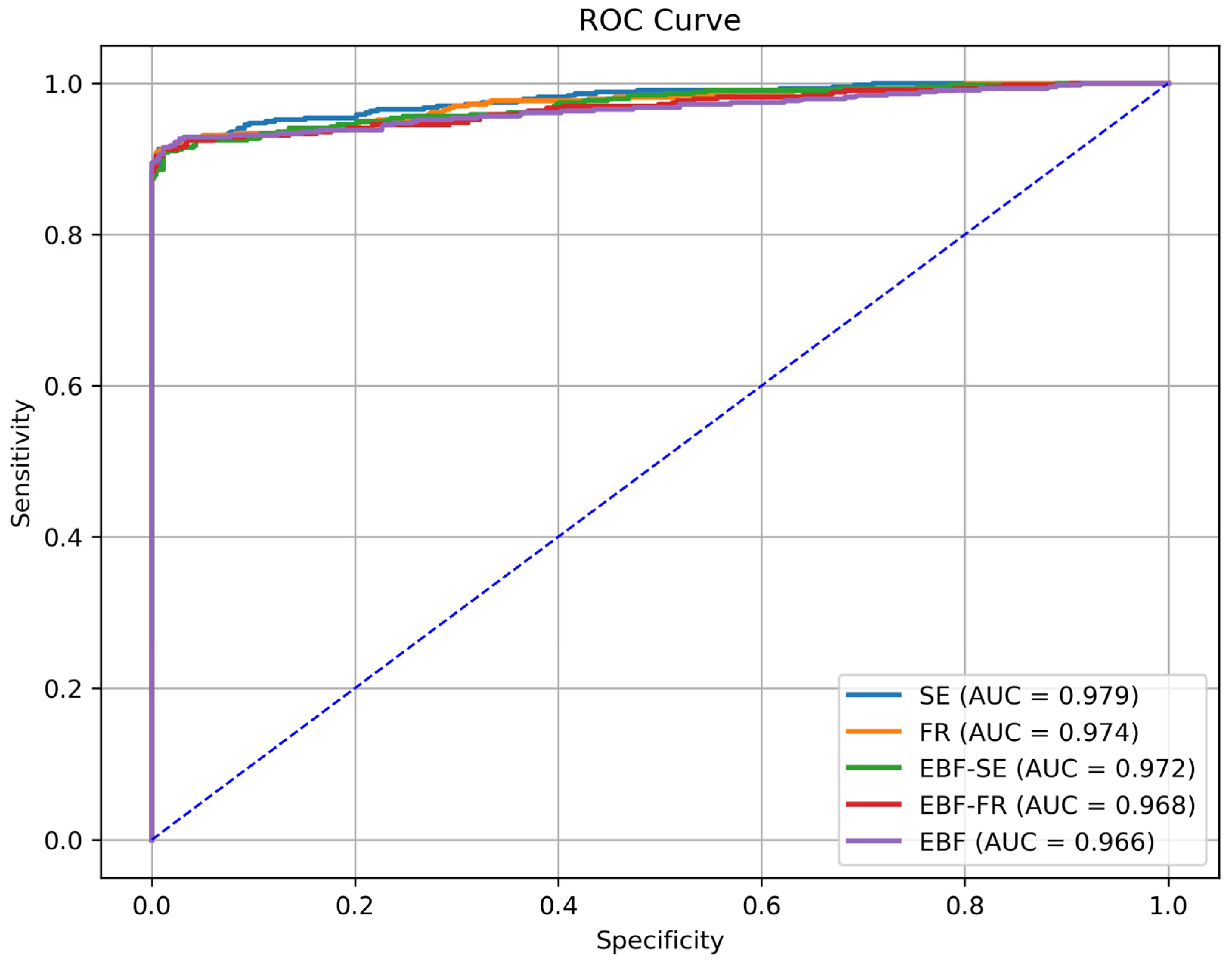
| Primary Methods | Hybrid Models | |||||
|---|---|---|---|---|---|---|
| No | Parameter | EBF | FR | SE | EBF–FR | EBF–SE |
| 1 | Tp | 396 | 347 | 402 | 347 | 340 |
| 2 | Tn | 432 | 437 | 426 | 437 | 437 |
| 3 | Fp | 41 | 90 | 35 | 90 | 97 |
| 4 | Fn | 6 | 0 | 11 | 0 | 0 |
| 5 | Sensitivity | 0.99 | 1.0 | 0.97 | 1.0 | 1.0 |
| 6 | Specifivity | 0.91 | 0.83 | 0.92 | 0.83 | 0.82 |
| 7 | Accuracy | 0.95 | 0.90 | 0.95 | 0.90 | 0.89 |
Disclaimer/Publisher’s Note: The statements, opinions and data contained in all publications are solely those of the individual author(s) and contributor(s) and not of MDPI and/or the editor(s). MDPI and/or the editor(s) disclaim responsibility for any injury to people or property resulting from any ideas, methods, instructions or products referred to in the content. |
© 2026 by the authors. Licensee MDPI, Basel, Switzerland. This article is an open access article distributed under the terms and conditions of the Creative Commons Attribution (CC BY) license.
Share and Cite
Tanrıverdi, M.; Erbesler Ayaşlıgil, T. From Expert-Based Evaluation to Data-Driven Modeling: Performance-Based Flood Susceptibility Mapping. Limnol. Rev. 2026, 26, 6. https://doi.org/10.3390/limnolrev26010006
Tanrıverdi M, Erbesler Ayaşlıgil T. From Expert-Based Evaluation to Data-Driven Modeling: Performance-Based Flood Susceptibility Mapping. Limnological Review. 2026; 26(1):6. https://doi.org/10.3390/limnolrev26010006
Chicago/Turabian StyleTanrıverdi, Mustafa, and Tülay Erbesler Ayaşlıgil. 2026. "From Expert-Based Evaluation to Data-Driven Modeling: Performance-Based Flood Susceptibility Mapping" Limnological Review 26, no. 1: 6. https://doi.org/10.3390/limnolrev26010006
APA StyleTanrıverdi, M., & Erbesler Ayaşlıgil, T. (2026). From Expert-Based Evaluation to Data-Driven Modeling: Performance-Based Flood Susceptibility Mapping. Limnological Review, 26(1), 6. https://doi.org/10.3390/limnolrev26010006