Article

Analysis of the Characteristic Chromatogram and Quantitative Determination of 25 Marker Compounds in the Traditional Chinese Medicine Preparation Qili Qiangxin Capsules by HPLC-DAD-ESI-MS/MS


1
Faculty of Life and Health Science, Northwest University, 229 Taibai Road, Xi’an 710069, China
2
Shaanxi Key Laboratory of Natural Products & Chemical Biology, College of Chemistry & Pharmacy, Northwest A&F University, Yangling 712100, China
*
Authors to whom correspondence should be addressed.
Separations 2026, 13(7), 194; https://doi.org/10.3390/separations13070194
Submission received: 31 May 2026 / Revised: 26 June 2026 / Accepted: 1 July 2026 / Published: 3 July 2026

Abstract

To establish a comprehensive quality control method for Qili Qiangxin Capsules, an HPLC-DAD-ESI-MS/MS approach was developed for characteristic chromatogram analysis, marker compound identification, and multi-compound quantification. Similarity analysis of the characteristic chromatogram was conducted, and 25 characteristic peaks were identified using MS/MS fragment information. Methodological validation (specificity, linearity, precision, stability, repeatability, spiked recovery) was performed, followed by content determination of the 25 marker compounds. Results showed that the similarity of 10 batches of samples was >0.9 (Peak 6 as reference peak). The methodological validation for the quantitative analysis of 25 compounds met the requirements. All 25 compounds exhibited good linearity (R2 > 0.999), with spiked recoveries of 98–103% (RSD < 2.0%). All validation indicators met Chinese Pharmacopoeia requirements. The established method is specific, precise, and stable, enabling simultaneous characteristic chromatogram identification and multi-compound quantification of Qili Qiangxin Capsules. It provides technical support for production quality supervision and clinical medication safety, and offers a reference for quality control of similar traditional Chinese medicine preparations.

1. Introduction

Chronic heart failure (CHF) represents a leading global public health challenge in cardiovascular medicine, featured by high incidence, frequent readmission, and elevated mortality. The therapeutic paradigm for CHF has evolved from symptomatic relief to the dual goal of alleviating clinical manifestations and reversing myocardial remodeling [1,2]. Qili Qiangxin Capsule, a well-established compound traditional Chinese medicine (TCM) officially recorded in the Pharmacopoeia of the People’s Republic of China, is formulated according to the TCM therapeutic principles of “replenishing qi and warming yang, activating blood circulation and dredging collaterals, and inducing diuresis to alleviate edema”. It consists of 11 herbal medicines including Astragali Radix (Astragalus membranaceus (Fisch.) Bge. var. mongholicus (Bge.) Hsiao or Astragalus membranaceus (Fisch.) Bge., AR), Ginseng Radix et Rhizoma (Panax ginseng C.A. Mey., GRR), Aconiti Lateralis Radix Praeparata (Aconitum carmichaelii Debx., ALRP), Salviae Miltiorrhizae Radix et Rhizoma (Salvia miltiorrhiza Bge., SMRR), Descurainiae Semen (Descurainia Sophia (L.) Webb. ex Prantl. or Lepidium apetalum Willd., DS), Alismatis Rhizoma (Alisma orientale (Sam.) Juzep. or Alisma plantago-aquatica Linn., AR), Polygonati Odorati Rhizoma (Polygonatum odoratum (Mill.) Druce, POR), Cinnamomi Ramulus (Cinnamomum cassia Presl, CR), Carthami Flos (Carthamus tinctorius L., CF), Periplocae Cortex (Periploca sepium Bge., PC), Citri Reticulatae Pericarpium (Citrus reticulata Blanco, CRP). Clinically, this preparation effectively relieves chest distress, shortness of breath, and edema in patients with CHF, and attenuates myocardial remodeling by regulating myocardial energy metabolism and inhibiting myocardial fibrosis, thus serving as a key pharmaceutical option in integrative Chinese–Western medicine therapy for CHF [3,4,5,6,7,8].
The therapeutic efficacy of TCM compound preparations arises from the synergistic interactions of multi-herb, multi-compound, and multi-target systems. Consequently, the consistency of their intrinsic quality is directly correlated with clinical efficacy and medication safety. In Qili Qiangxin Capsules, calycosin-7-O-β-D-glucoside and formononetin from AR act as key substances for “invigorating qi and warming yang” [9,10,11]; danshensu, salvianolic acid A, salvianolic acid B, protocatechuic acid, protocatechuic aldehyde, catechin, rosmarinic acid, lithospermic acid from SMRR serve as core compounds for “invigorating blood circulation to unclog collaterals” [12,13,14,15]; narirutin and hesperidin from CRP contribute to “inducing diuresis to reduce edema” [16,17]; hydroxysafflor yellow A, apigenin, quercetin, kaempferol from CF exhibit anti-inflammatory and myocardial microcirculation-regulating effects [18,19,20,21,22]; isovanillin and 4-methoxysalicylaldehyde from PC ensure safety control [23,24]; vanillin and cinnamic acid from CR participate in synergistic regulation [25,26]; and cytidine, adenosine, guanosine, gallic acid, 5-hydroxymethylfurfural are widely distributed nucleosides, phenolic acids, and aldehyde compounds that collectively constitute the systematic pharmacodynamic material basis of the preparation [27,28,29].
Nevertheless, conventional quality control for TCM preparations predominantly relies on single-compound quantification, which fails to cover key active ingredients from multiple herbs or reflect compound–proportion relationships, leading to quality fluctuation and insufficient assurance of batch-to-batch consistency. Current analytical methods for Qili Qiangxin Capsules are limited by narrow indicator coverage and inadequate holistic characterization, which can hardly meet the demand for comprehensive quality control of multi-herb preparations.
Characteristic chromatogram technology, as a core strategy for TCM quality control, enables holistic profiling of chemical compositions via integrity and similarity analysis of chromatographic peaks, compensating for the defects of single-index determination. Coupled with simultaneous multi-marker quantification, it forms an integrated quality control system featuring both characteristic chromatogram profiling and precise quantification. Accordingly, this study established an HPLC-DAD-ESI-MS/MS method to construct the characteristic chromatogram of Qili Qiangxin Capsules and simultaneously quantify 25 key marker compounds covering all major herbal contributors in the formula. Systematic methodological validation was performed, and chemometric analyses including HCA, PCA, and PLS-DA were employed to evaluate quality consistency. This study provides a scientific and reliable tool for raw material screening, manufacturing process optimization, batch-to-batch consistency evaluation, and safe clinical application of Qili Qiangxin Capsules, and establishes a referable paradigm for multi-dimensional quality assessment of analogous TCM compound preparations.

2. Materials

2.1. Instruments

High-performance liquid chromatograph (HPLC): Shimadzu Nexera XR (equipped with an auto-sampler system and a diode array detector (DAD), Shimadzu Corporation, Kyoto, Japan); Chromatographic column: ShimPack Scepter C18 column (4.6 mm × 250 mm, 5 μm, Shimadzu Experimental Apparatus Co., Ltd., Shanghai, China);
HPLC-DAD-ESI-MS/MS system: equipped with an Agilent 6520 Q-TOF mass spectrometer and an Agilent 1200 HPLC system (Agilent Technologies, Santa Clara, CA, USA); Ultrasonic cleaner: KQ-300DA desktop numerical control type (power: 300 W, frequency: 50 kHz, Kunshan Ultrasonic Instrument Co., Ltd., Kunshan, China); Electronic analytical balance: AUW220D (with a precision of 0.01 mg, Shimadzu Enterprise Management Co., Ltd., Shanghai, China); Desktop balance: XY200C (Changzhou Xingyun Electronic Equipment Co., Ltd., Changzhou, China).

2.2. Reagents and Test Samples

Solvents: Methanol, acetonitrile and formic acid (all HPLC grade, Beijing Mairuida Technology Co., Ltd., Beijing, China); water was Wahaha purified water (Shaanxi Wahaha Dairy Co., Ltd., Xianyang, China).
Reference substances: Cytidine (purity 99%, Shanghai Macklin Biochemical Technology Co., Ltd., Shanghai, China), Adenosine (purity 99%, Shanghai Ouzhong Pharmaceutical & Chemical Co., Ltd., Shanghai, China), Guanosine (purity 99%, Shanghai Macklin Biochemical Technology Co., Ltd., Shanghai, China), Gallic acid (purity >98.0%, Chengdu Push Bio-Technology Co., Ltd., Chengdu, China), 5-Hydroxymethylfurfural (purity >95.0%, Chengdu Push Bio-Technology Co., Ltd., Chengdu, China), Danshensu (purity 98%, Baoji Chenguang Biotechnology Co., Ltd., Baoji, China), Protocatechuic acid (purity 98%, Baoji Chenguang Biotechnology Co., Ltd., Baoji, China), Isovanillin (purity 98%, Baoji Chenguang Biotechnology Co., Ltd., Baoji, China), Protocatechuic aldehyde (purity 98%, Baoji Chenguang Biotechnology Co., Ltd., Baoji, China), Catechin (purity ≥98%, Nanjing Sageway Biotechnology Co., Ltd., Nanjing, China), 4-Methoxysalicylaldehyde (purity 98%, Tianjin Wanxiang Hengyuan Technology Co., Ltd., Tianjin, China), Hydroxysafflor yellow A (purity 98%, Baoji Chenguang Biotechnology Co., Ltd., Baoji, China), Vanillin (purity 98%, Baoji Chenguang Biotechnology Co., Ltd., Baoji, China), Calycosin-7-O-β-D-glucoside (purity 98%, Chengdu Alfa Biotechnology Co., Ltd., Chengdu, China), Narirutin (purity ≥97%, National Institutes for Food and Drug Control, Beijing, China), Hesperidin (purity 98%, Baoji Chenguang Biotechnology Co., Ltd., Baoji, China), Rosmarinic acid (purity 98%, Baoji Chenguang Biotechnology Co., Ltd., Baoji, China), Lithospermic acid (purity 98%, Baoji Chenguang Biotechnology Co., Ltd., Baoji, China), Salvianolic acid B (purity 98%, Baoji Chenguang Biotechnology Co., Ltd., Baoji, China), Cinnamic acid (purity ≥99.5%, Sinopharm Chemical Reagent Co., Ltd., Shanghai, China), Salvianolic acid A (purity 98%, Baoji Chenguang Biotechnology Co., Ltd., Baoji, China), Quercetin (purity 98%, Baoji Chenguang Biotechnology Co., Ltd., Baoji, China), Apigenin (purity 98%, Baoji Chenguang Biotechnology Co., Ltd., Baoji, China), Kaempferol (purity 98%, Chengdu Alfa Biotechnology Co., Ltd., Chengdu, China), Formononetin (purity 98%, Baoji Chenguang Biotechnology Co., Ltd., Baoji, China).
Samples: 10 batches of Qili Qiangxin Capsules: S1 (A2304002), S2 (A2308006), S3 (A2312052), S4 (A2403009), S5 (A2405004), S6 (A2408007), S7 (A2408024), S8 (A2409028), S9 (A2411033), S10 (A2412003) (Shijiazhuang Yiling Pharmaceutical Co., Ltd., Shijiazhuang, China).

3. Methods and Results

3.1. Preparation of Solutions

3.1.1. Preparation of Test Solution

Fifteen Qili Qiangxin Capsules were taken, and their contents were poured out, ground into a fine powder, and thoroughly mixed. An amount of 1 g of the mixed powder was accurately weighed and placed in a 150 mL stoppered conical flask. Methanol (50 mL) was added, and the flask was tightly sealed before being weighed. The mixture was subjected to ultrasonic treatment (power: 300 W, frequency: 50 kHz) for 30 min. After cooling to room temperature, the flask was weighed again, and methanol was added to compensate for the weight loss. The solution was shaken well, filtered, and the subsequent filtrate was collected—this was the test solution. The test solution was shaken thoroughly and stored for subsequent use.

3.1.2. Preparation of Mixed Reference Standard Solution

An appropriate amount of the 25 reference substances was accurately weighed and dissolved in methanol to prepare a mixed reference solution with the following concentrations: cytidine 0.175 mg/mL, adenosine 0.186 mg/mL, guanosine 0.150 mg/mL, gallic acid 0.212 mg/mL, 5-hydroxymethylfurfural 0.230 mg/mL, danshensu 0.205 mg/mL, protocatechuic acid 0.206 mg/mL, Isovanillin 0.297 mg/mL, protocatechuic aldehyde 0.218 mg/mL, catechin 0.234 mg/mL, 4-methoxysalicylaldehyde 0.194 mg/mL, hydroxysafflor yellow A 0.213 mg/mL, vanillin 0.204 mg/mL, calycosin-7-O-β-D-glucoside 0.191 mg/mL, narirutin 0.117 mg/mL, hesperidin 0.144 mg/mL, rosmarinic acid 0.116 mg/mL, lithospermic acid 0.218 mg/mL, salvianolic acid B 0.177 mg/mL, cinnamic acid 0.160 mg/mL, salvianolic acid A 0.162 mg/mL, quercetin 0.218 mg/mL, apigenin 0.243 mg/mL, kaempferol 0.236 mg/mL, and formononetin 0.217 mg/mL. The solution was shaken well and stored for subsequent use.

3.1.3. Preparation of Negative Control Solutions

According to the preparation method for Qili Qiangxin Capsules specified in Pharmacopoeia of the People’s Republic of China (Volume I), 2025 edition [3], six blank samples were separately prepared, each lacking one herbal ingredient: AR, CF, PC, CRP, SMRR, and CR. An aliquot (1 g) of each blank sample was accurately weighed, placed into a 150 mL stoppered conical flask, and mixed with 50 mL of methanol. The flask was tightly stoppered, weighed, and subjected to ultrasonic extraction (power 300 W, frequency 50 kHz) for 30 min. After cooling to room temperature, the flask was weighed again, and the weight loss was compensated with methanol. The solution was mixed well and filtered; the successive filtrate was collected to obtain six blank reference solutions, which were shaken well and stored for subsequent use.

3.1.4. Preparation of Blank Control Solution

Excipients (1 g) were accurately weighed and placed in a 150 mL stoppered conical flask. Methanol (50 mL) was added, and the flask was tightly sealed and weighed. The mixture was subjected to ultrasonic treatment (power: 300 W, frequency: 50 kHz) for 30 min, then cooled to room temperature and weighed again. Methanol was added to compensate for the weight loss. The solution was shaken well, filtered, and the subsequent filtrate was obtained as the blank control solution. The blank control solution was shaken thoroughly and stored for use.

3.2. Chromatographic-Mass Spectrometric Conditions

3.2.1. Chromatographic Conditions

Mobile phase: Phase A was 0.1% formic acid aqueous solution, and Phase B was acetonitrile; the gradient elution program is shown in Table 1. Detection wavelength: 281 nm, Flow rate: 0.8 mL/min, Column temperature: 30 °C, Injection volume: 10 μL, Detection time: 95 min (Table 1).

3.2.2. Mass Spectrometry Conditions

An Orbitrap Exploris 120 mass spectrometer coupled with Xcalibur 4.5 software was used to acquire MS and MS/MS data under the information-dependent acquisition (IDA) mode. In each acquisition cycle, the mass range was set at m/z 100–1500. The top four intense precursor ions per cycle were selected for subsequent MS/MS fragmentation. The instrumental parameters were set as follows: sheath gas flow rate, 40 Arb; auxiliary gas flow rate, 15 Arb; ion transfer tube temperature, 350 °C; vaporizer temperature, 350 °C; full MS resolution, 60,000; MS/MS resolution, 15,000; normalized collision energy (NCE), 20, 35, and 50; spray voltage, 5.5 kV (positive ion mode) and −4 kV (negative ion mode); data acquisition duration, 95.0 min.

3.3. Establishment of the Hplc Characteristic Chromatogram

3.3.1. Stability Test

Take the test solution prepared under Section 3.1.1 and determine it under the conditions specified in Section 3.2.1 at 0, 4, 8, 12, 16 and 24 h. The relative standard deviations (RSDs) of the relative retention times (RRTs) and relative peak areas (RPAs) of all common peaks were investigated. The results demonstrated that the RSDs did not exceed 1.59% for the RRTs and 2.48% for the RPAs of each chromatographic peak, which conformed to the technical requirements of the characteristic fingerprint [3]. Results are shown in Table 2.

3.3.2. Repeatability Test

Take 6 samples of the same batch, prepare 6 test solutions according to the preparation method of test solution in Section 3.1.1, and determine them under the conditions in Section 3.2.1. The RSDs of RRTs and RPAs of all common peaks were examined. The results demonstrated that the RSDs of RRTs for each chromatographic peak were less than 0.85%, and the RSDs of RPAs were less than 2.81%, which comply with the technical requirements for characteristic chromatograms [3]. Results are shown in Table 2.

3.3.3. Precision Test

Take the test solution from Section 3.1.1 and inject it continuously for 6 times under the conditions in Section 3.2.1. The RSDs of RRTs and RPAs of all common peaks were evaluated. Results demonstrated that the RSDs of RRTs for each chromatographic peak were all less than 0.91%, and the RSDs of RPAs were all less than 2.50%, which meet the technical requirements for characteristic chromatograms [3]. Results are shown in Table 2.

3.3.4. Establishment of Characteristic Chromatogram

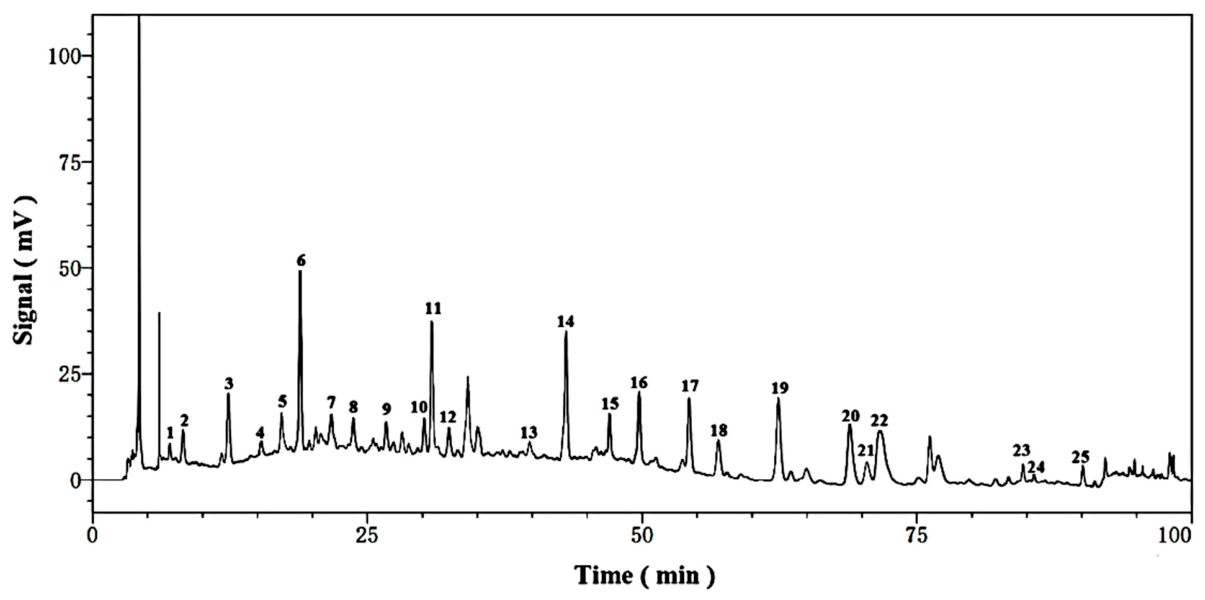
10 batches of Qili Qiangxin Capsules were individually prepared into test solutions in accordance with the preparation method described in Section 3.1.1. Chromatograms were acquired and recorded over a period of 95 min, and all chromatographic peaks were eluted within this time frame. By comparing the chromatograms of the ten batches, 25 characteristic peaks were identified. Peak 6, with a retention time of 18.89 min, showed satisfactory resolution, a relatively large peak area and favorable stability; thus, it was selected as the reference peak. The relative retention times of each peak were as follows: Peak 1: 0.37, Peak 2: 0.44, Peak 3: 0.65, Peak 4: 0.81, Peak 5: 0.91, Peak 6: 1.00, Peak 7: 1.15, Peak 8: 1.26, Peak 9: 1.41, Peak 10: 1.60, Peak 11: 1.63, Peak 12: 1.72, Peak 13: 2.11, Peak 14: 2.28, Peak 15: 2.49, Peak 16: 2.63, Peak 17: 2.87, Peak 18: 3.01, Peak 19: 3.30, Peak 20: 3.65, Peak 21: 3.73, Peak 22: 3.79, Peak 23: 4.48, Peak 24: 4.53, Peak 25: 4.77.
Calculation of Sample Similarity
First, the chromatograms of the 10 batches of Qili Qiangxin Capsules were imported into the 2012 Version “Similarity Evaluation System for Chromatographic Fingerprints of Traditional Chinese Medicines” issued by the National Pharmacopoeia Commission (NPC) of the People’s Republic of China. Next, the “time window” width was set to 0.1 min. Sample 1 was used to generate a reference chromatogram. After multi-point calibration and data matching, a common pattern of the chromatographic characteristic chromatogram was generated. Finally, similarity analysis was performed on the characteristic chromatograms of the 10 batches of samples. Results are shown in Table 3, and the characteristic chromatograms of the 10 batches of samples are presented in Figure 1.
Formulation of the Standard Characteristic Chromatogram
Multiple batches of Qili Qiangxin Capsules were taken, and test solutions were prepared respectively according to the aforementioned preparation method of the test solution. Based on the detected data from the multiple batches, the high-performance liquid chromatography (HPLC) chromatograms of Qili Qiangxin Capsules were established, and the retention time and peak area values of the HPLC peaks were determined. Subsequently, all detected data were collected, and the mean values of relative retention time, mean values of relative peak area, and standard deviation (SD) for each corresponding peak were calculated. These values were respectively divided by the mean retention time and mean peak area of the reference peak to obtain the relative retention time and relative peak area values for the Standard Characteristic Chromatogram. The calculation results were exported to formulate the data for the Standard Characteristic Chromatogram, and the Standard Characteristic Chromatogram was plotted. The Standard Characteristic Chromatogram is shown in Figure 2.

3.4. Quality Analysis of Qili Qiangxin Capsules Based on Chemometrics

3.4.1. Hca

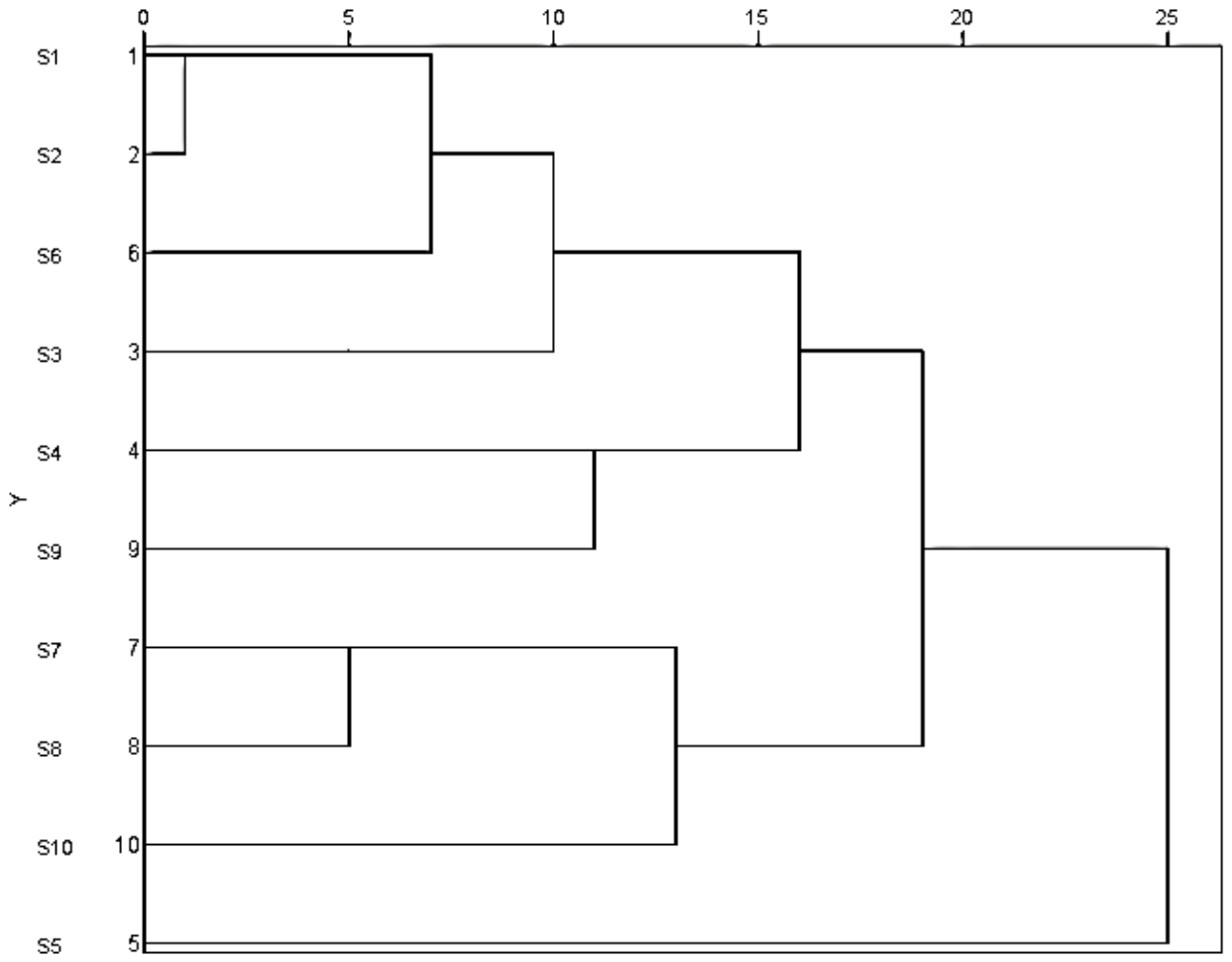
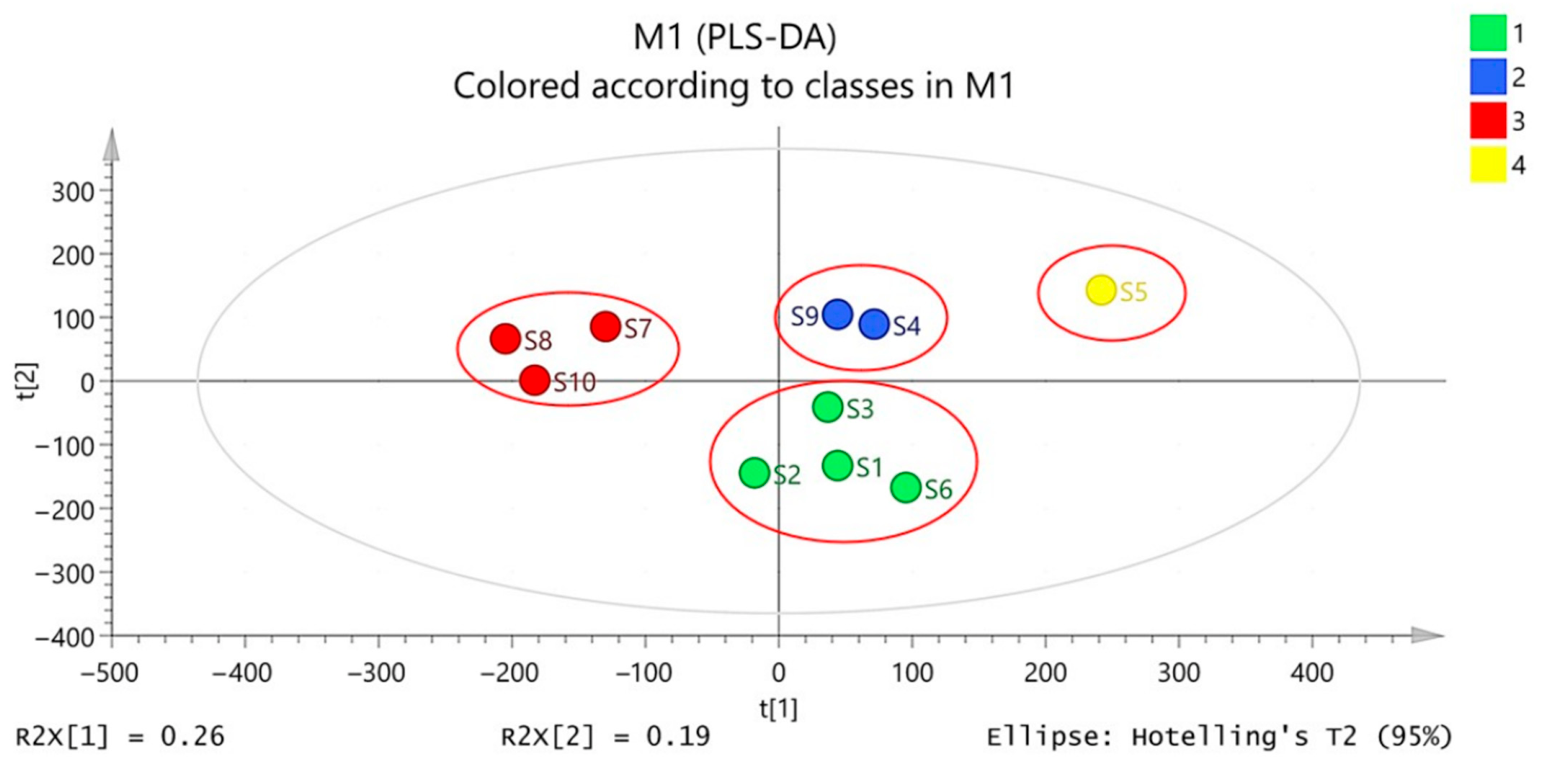
Statistical analysis was performed on ten batches of Qili Qiangxin Capsule samples using SPSS 23.0 software. The normalized peak areas of the 25 characteristic peaks in the reference chromatogram of Qili Qiangxin Capsules were set as variables, and the squared Euclidean distance was employed as the measure for sample differentiation. A hierarchical cluster analysis (HCA) dendrogram of the characteristic chromatograms of the ten batches of Qili Qiangxin Capsules was generated, as shown in Figure 3. When the squared Euclidean distance was set at 15, the ten batches could be clustered into four categories: S1–S3 and S6 were grouped into Cluster I; S4 and S9 into Cluster II; S7, S8 and S10 into Cluster III; and S5 individually into Cluster IV. This clustering result may be attributed to variations in the quality of the raw herbal materials used in different batches of Qili Qiangxin Capsules during production.

3.4.2. Pca

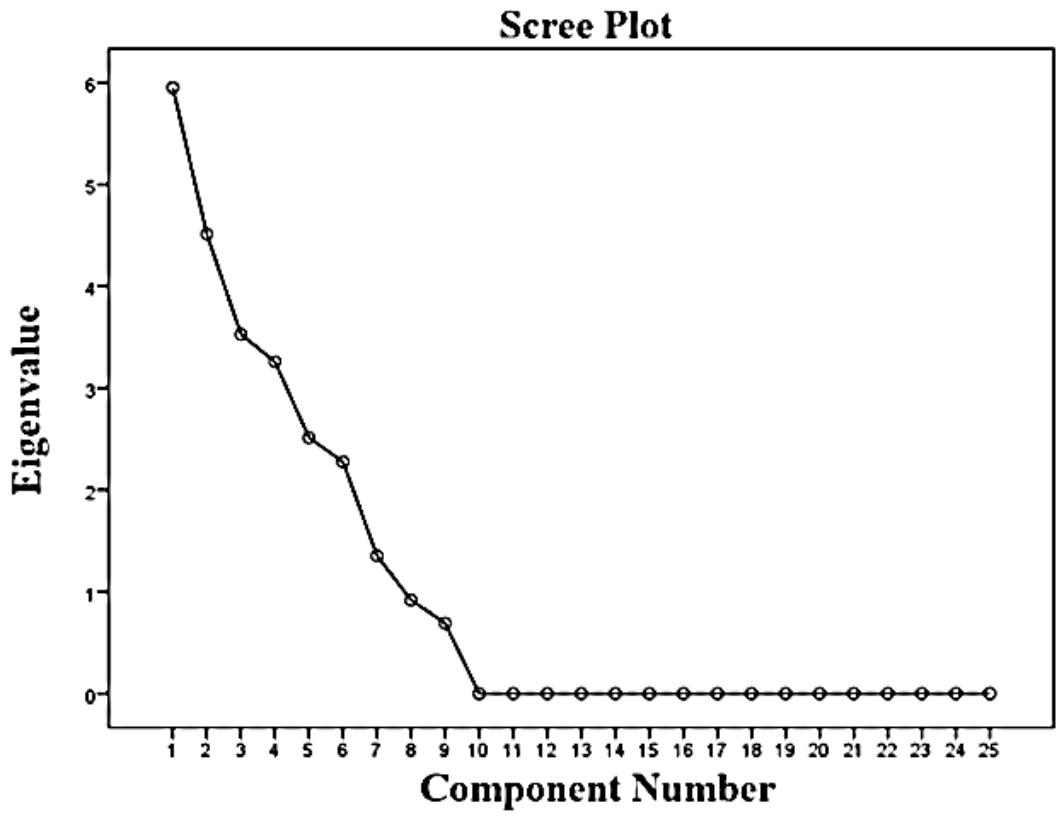
To further compare the quality differences among different batches of Qili Qiangxin Capsules, the peak area data of the 25 common peaks in the characteristic chromatograms of the samples were imported into SPSS 23.0 software for principal compound analysis (PCA). Eigenvalues of correlation coefficients and variance contribution rates were calculated. With eigenvalues >1 as the extraction criterion, the first seven principal compounds were obtained, with a cumulative variance contribution rate of 93.572%, as listed in Table 4. The scree plot further indicated that the first seven compounds decreased steeply, while the remaining compounds tended to be gentle, as shown in Figure 4. Scree Plot of Eigenvalues for 25 Factors in Qili Qiangxin Capsules. The results demonstrated that the first seven principal compounds could represent more than 93% of the information contained in the 25 characteristic peaks of Qili Qiangxin Capsules, showing good representativeness and providing a reliable data foundation for the subsequent research on quality evaluation of this preparation.

3.4.3. Pls-Da

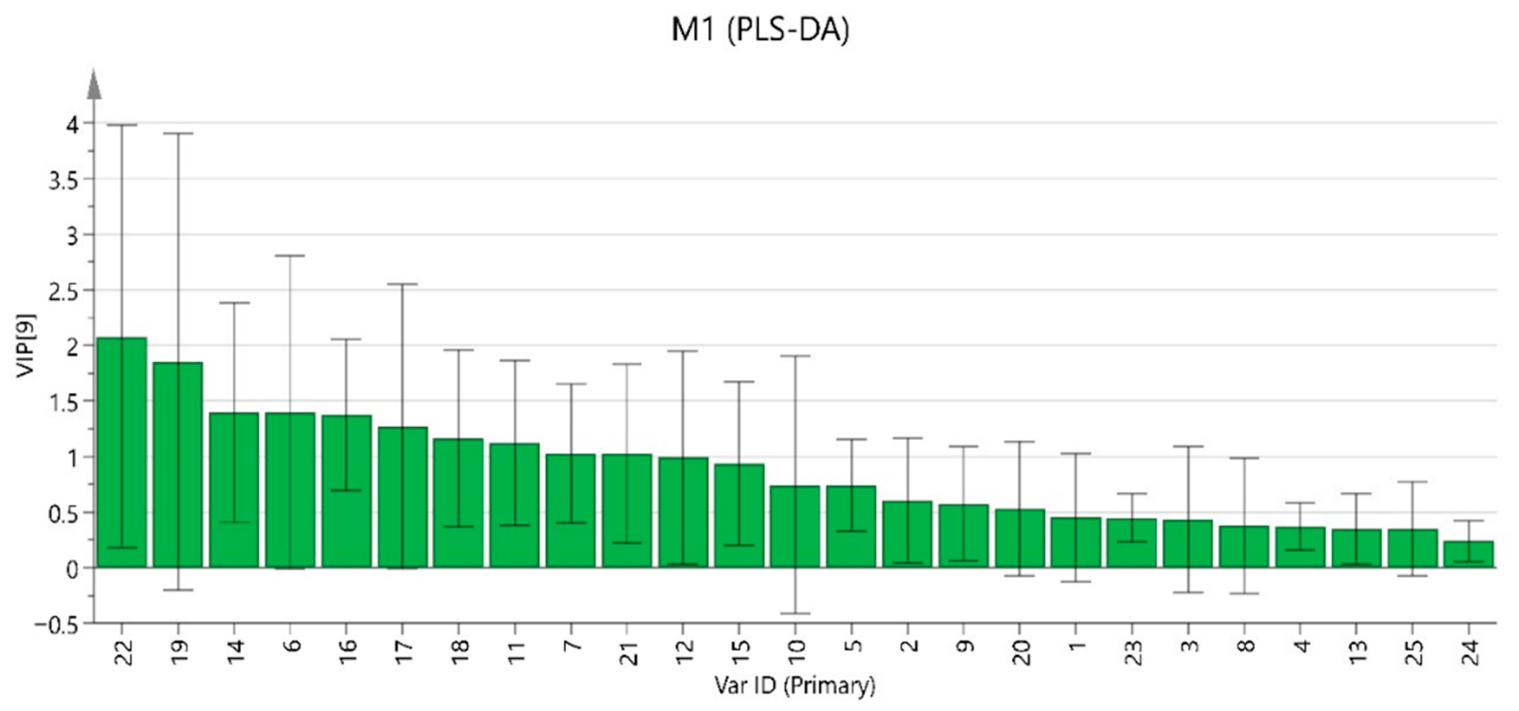
To further investigate the causes of quality differences among Qili Qiangxin Capsule samples and screen compounds with high contribution to the differentiation, partial least squares-discriminant analysis (PLS-DA) was performed using SIMCA 14.1 software on the basis of HCA and PCA. The normalized peak area data of the common peaks from the ten batches of Qili Qiangxin Capsules were imported for automatic fitting to establish the PLS-DA model, as shown in Figure 5. The results showed clear classification of the ten batches, which was consistent with the HCA results. Predictive analysis was conducted using variable importance in projection (VIP) values. With VIP > 1 as the screening criterion, ten differential chemical compounds were identified, namely Peak 22 (quercetin), Peak 19 (salvianolic acid B), Peak 14 (calycosin-7-O-β-d-glucoside), Peak 6 (danshensu), Peak 16 (hesperidin), Peak 17 (rosmarinic acid), Peak 18 (lithospermic acid), Peak 11 (4-methoxysalicylaldehyde), Peak 7 (protocatechuic acid), and Peak 21 (salvianolic acid A), as illustrated in Figure 6. These compounds constitute the key characteristic peaks for distinguishing different batches of Qili Qiangxin Capsule samples and exert a significant influence on the characteristic chromatogram.

3.5. The Correlation Between Medicinal Materials and Characteristic Chromatograms

This section analyzes the correlation between the 25 characteristic peaks in the Qili Qiangxin Capsule characteristic chromatogram and the active compounds of each medicinal material in the prescription. It aims to clarify which medicinal material each characteristic peak originates from, thereby verifying the integrity of the raw material composition in the preparation and providing a basis for tracing the source of quality fluctuations.
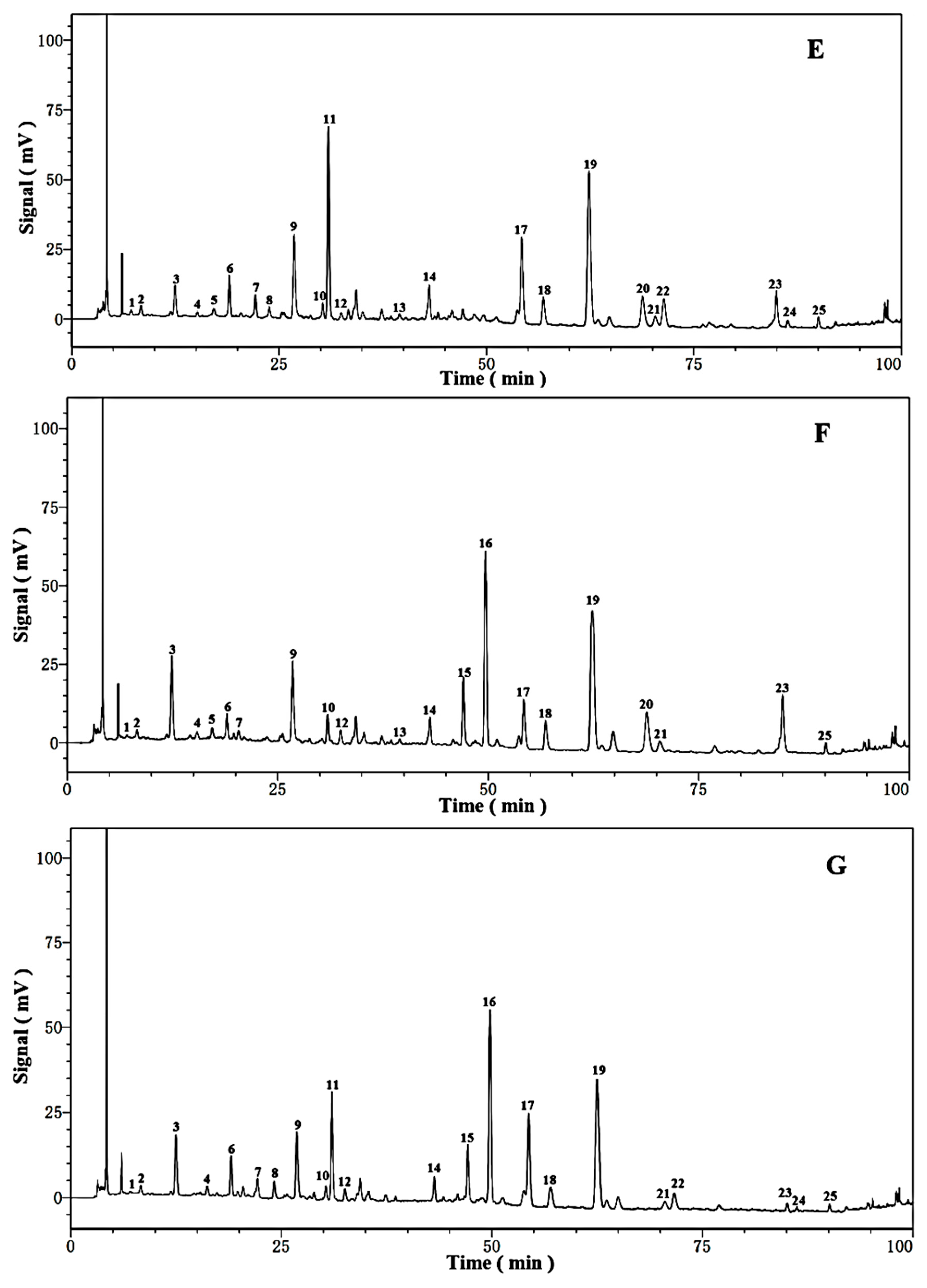
Each herb in the prescription was weighed separately and extracted in accordance with the prescription preparation process of the preparation to obtain extracts for subsequent use. The chromatographic peaks of each extract were assigned with reference to the determination conditions of the standard characteristic chromatogram. The results are shown in Table 5.

3.6. Identification of the Common Peaks by HPLC-DAD-ESI-MS/MS

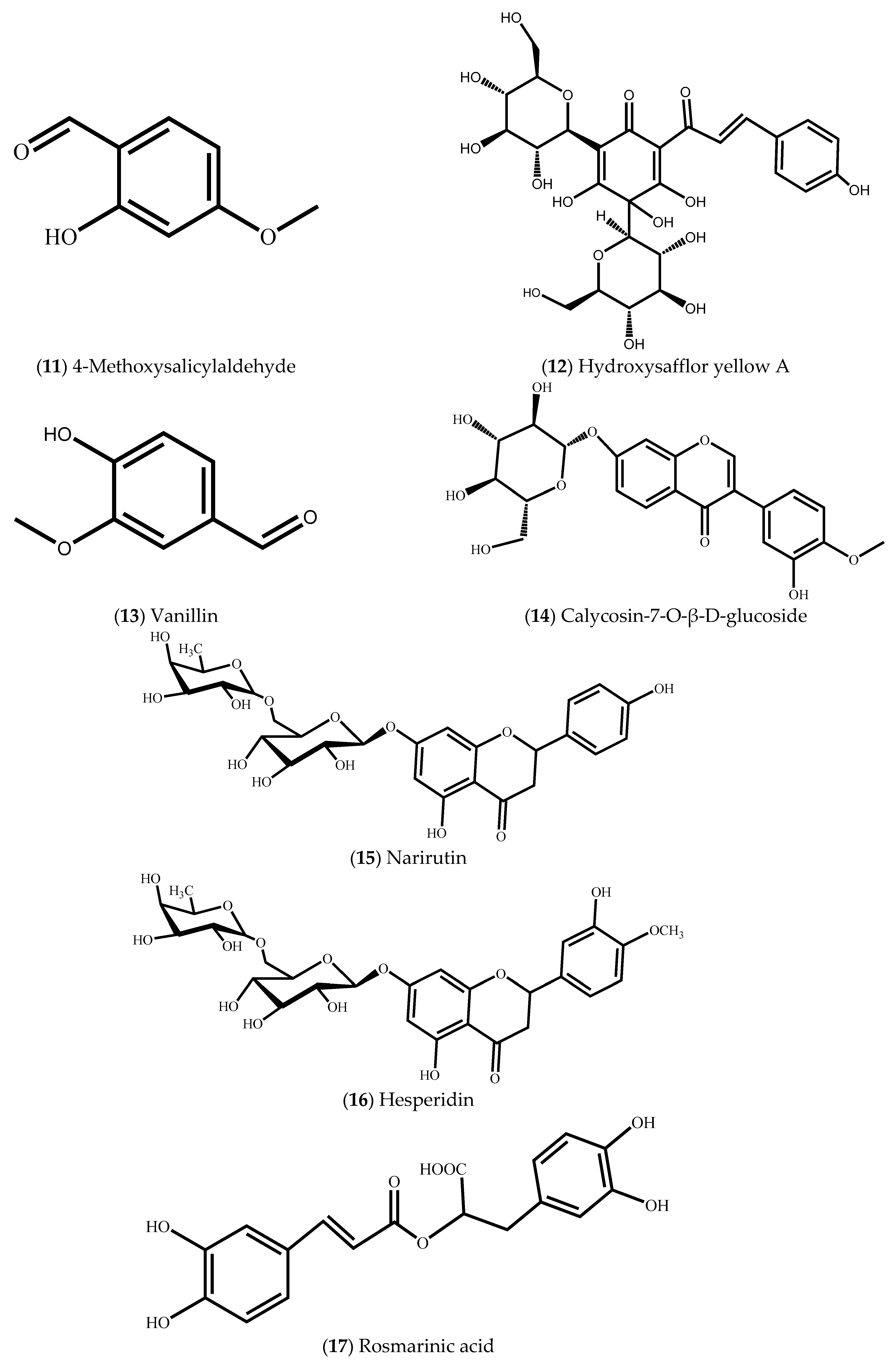
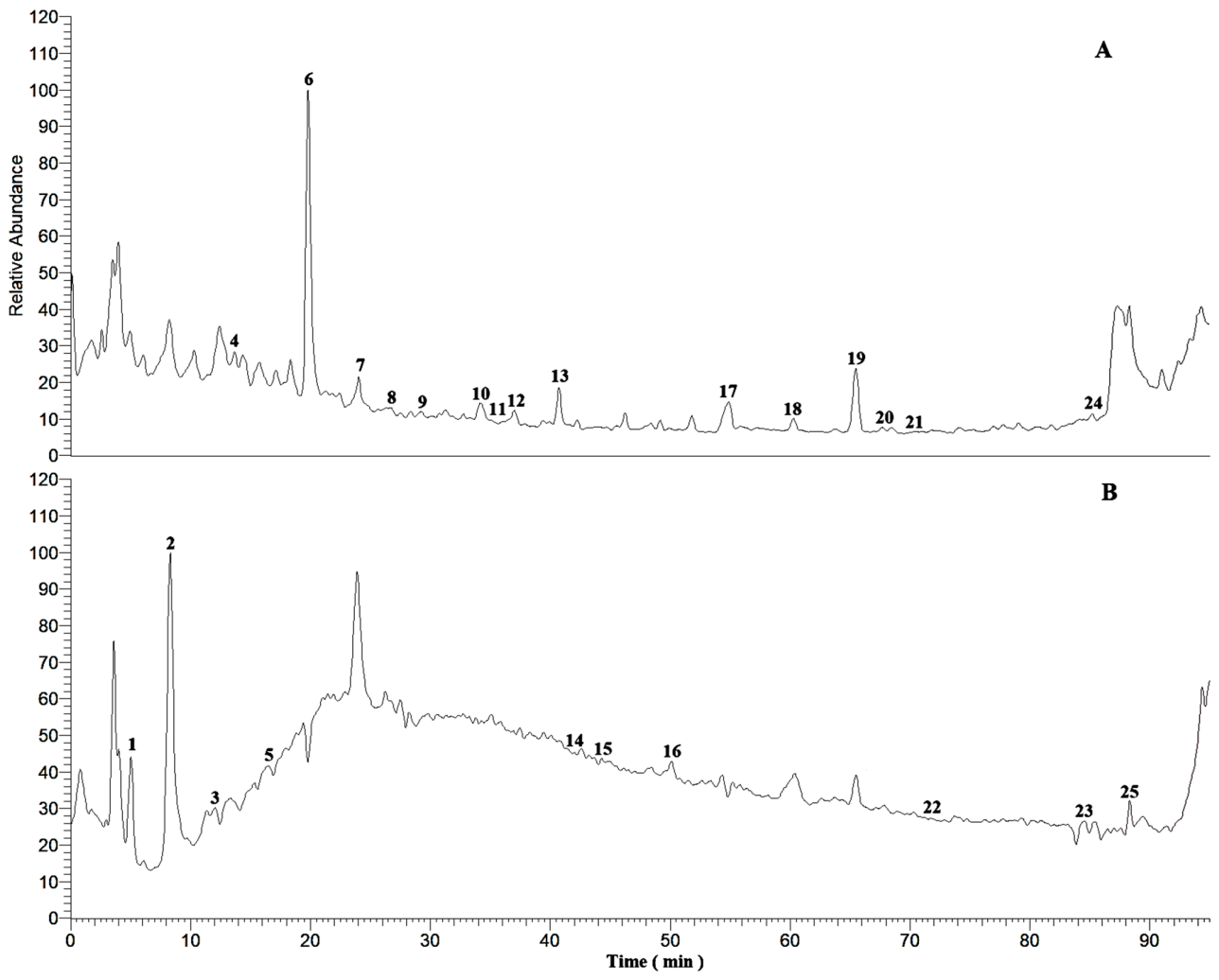
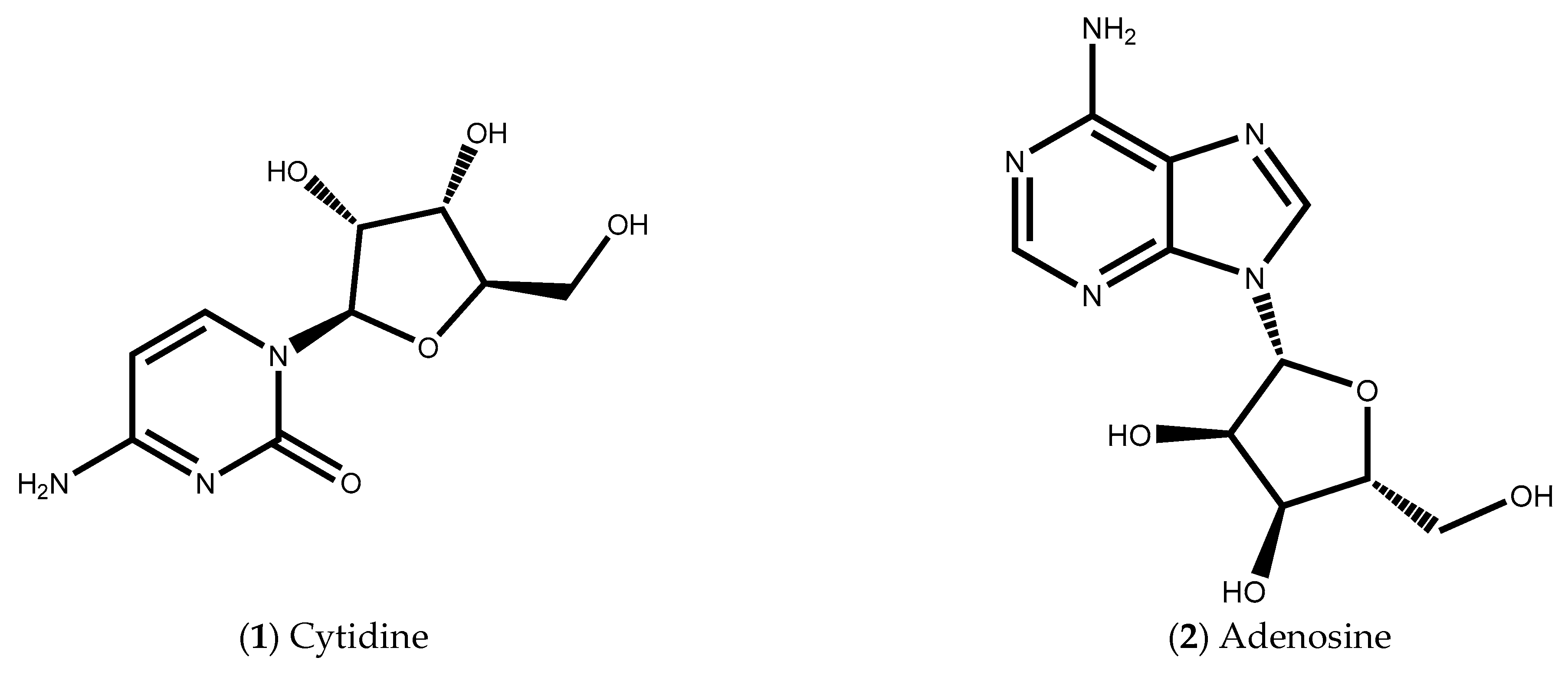
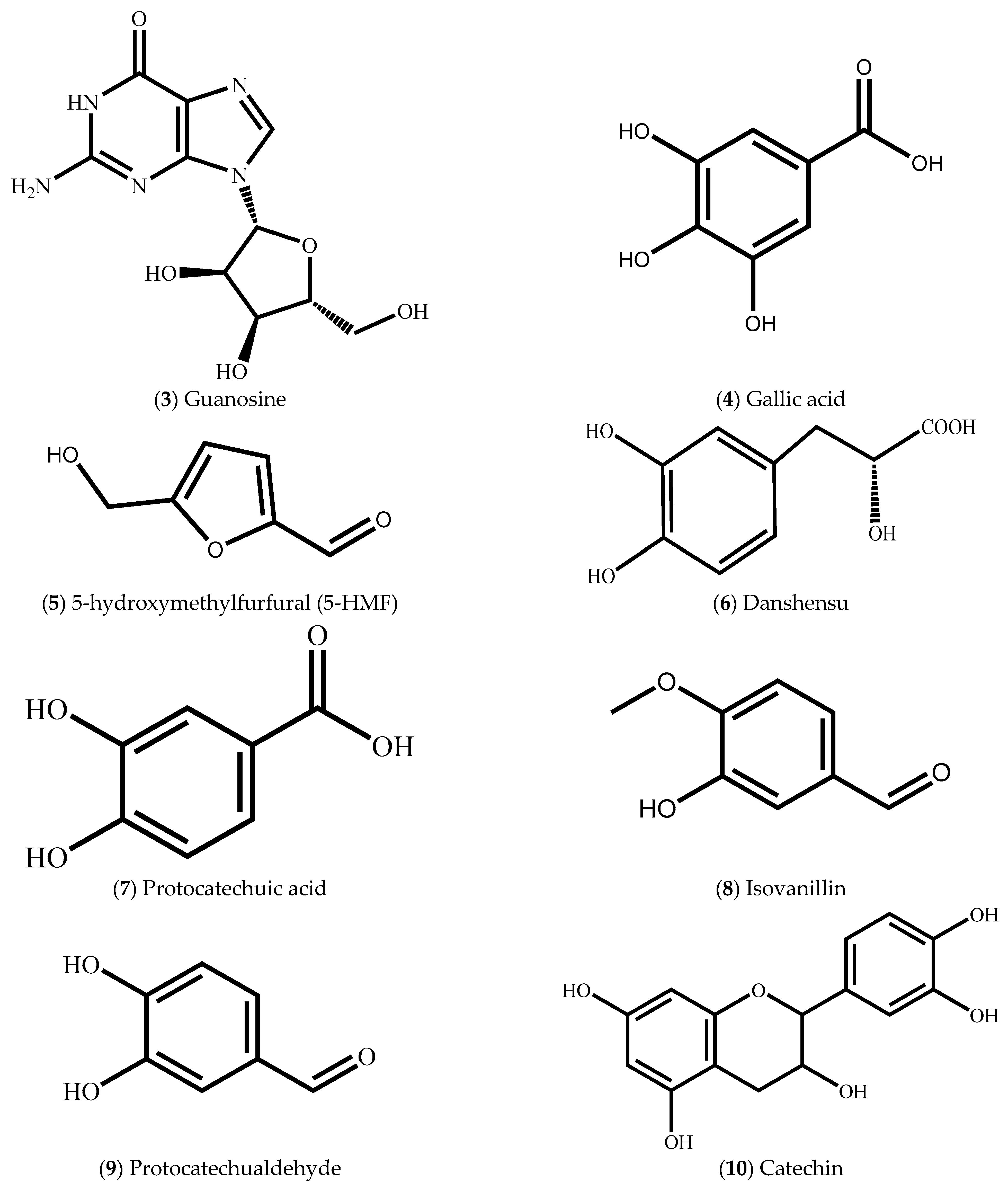
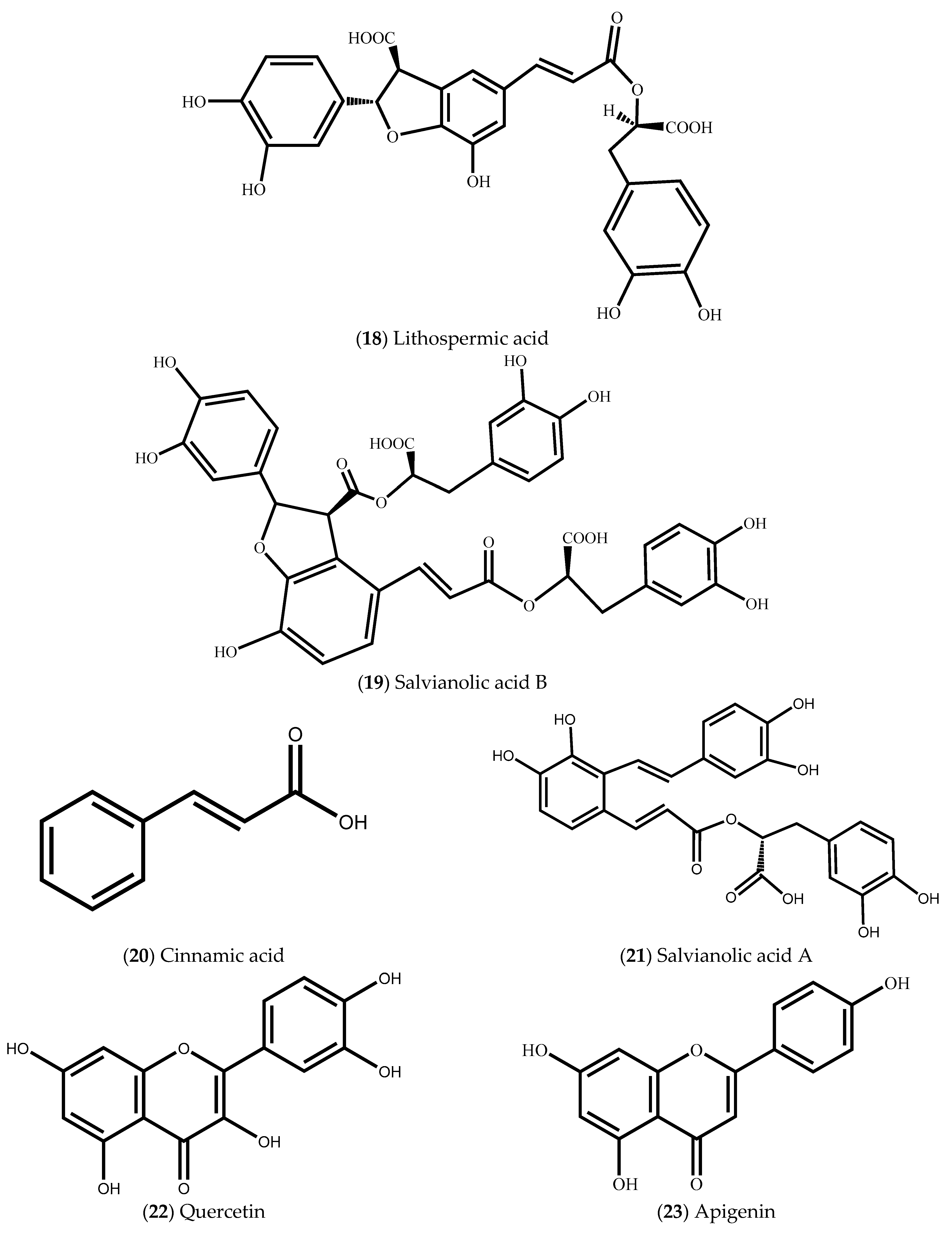
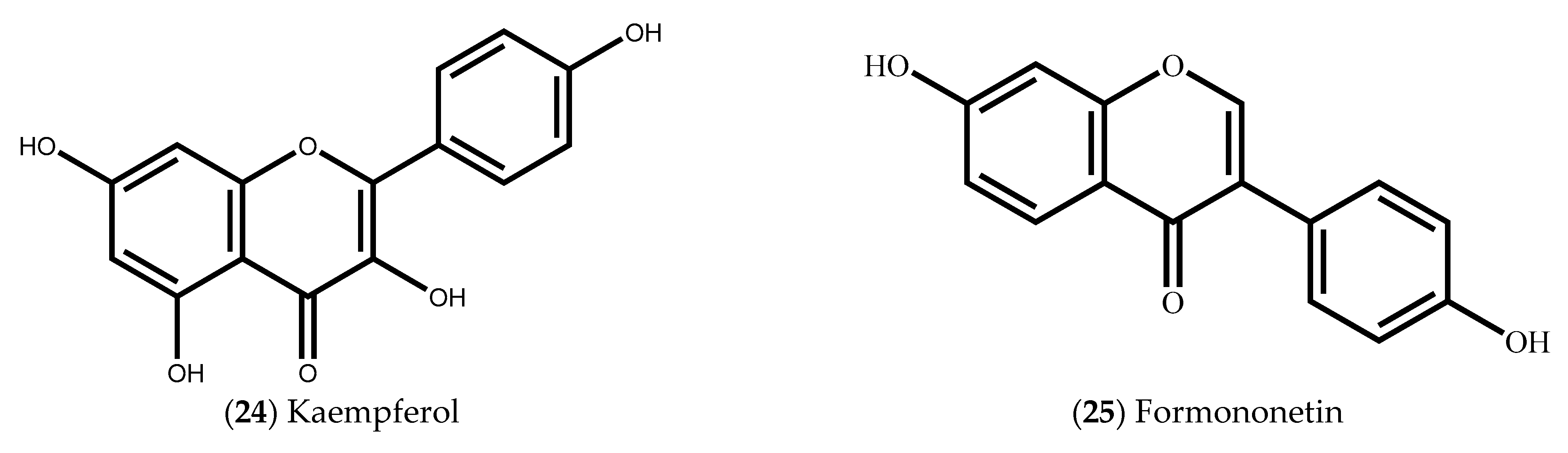
Table 6 displayed the data of MS/MS of the main compounds. All of the compounds were detected in positive and negative mode. The results are shown in Figure 7. According to MS/MS data obtained by collision-induced dissociation, 25 compounds were unambiguously identified by the comparison of their retention times, MS data and UV spectra with the reference constituents. The structures of the 25 compounds are as shown in Figure 8.

3.7. Content Determination of 25 Index Compounds

3.7.1. Specificity Test

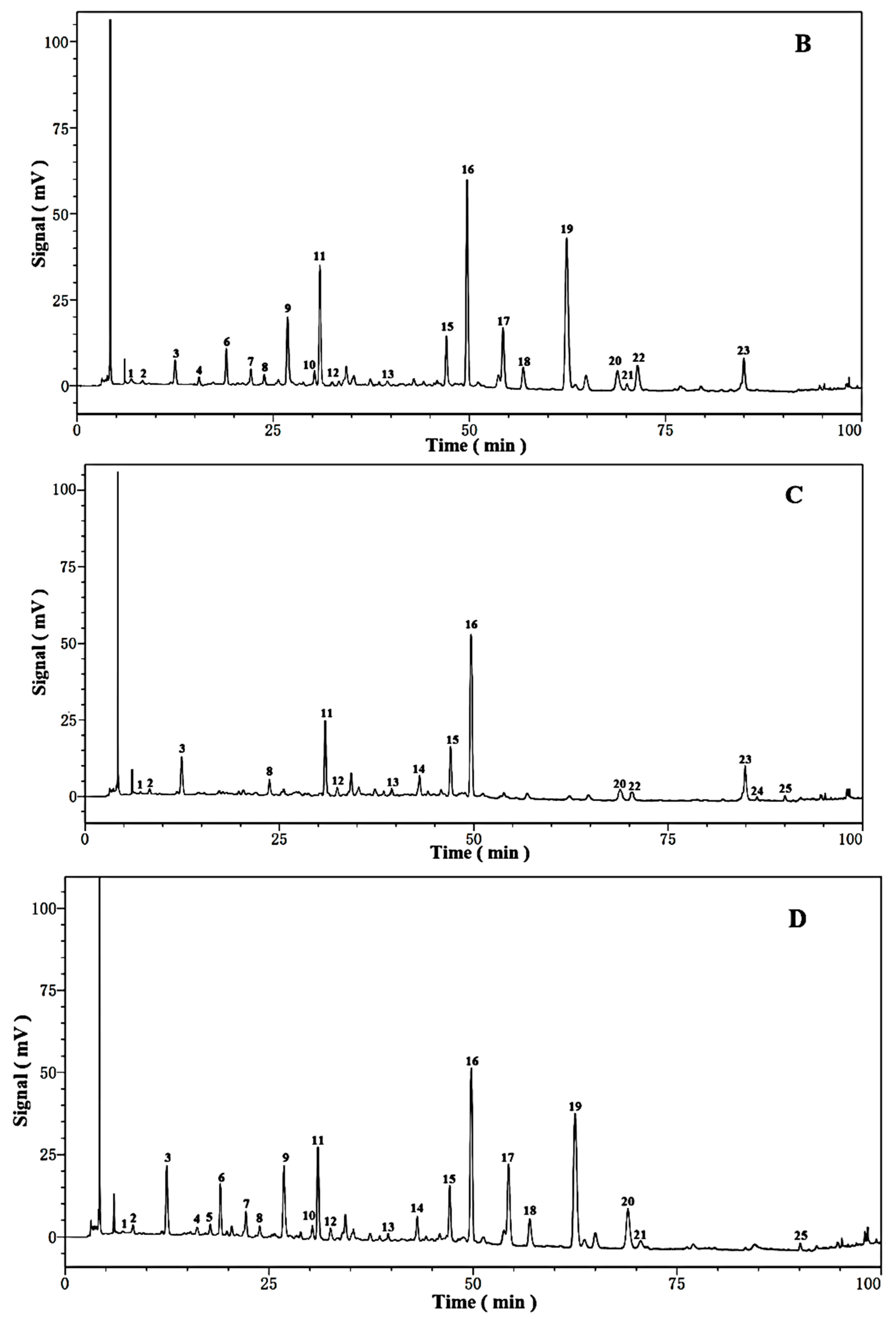
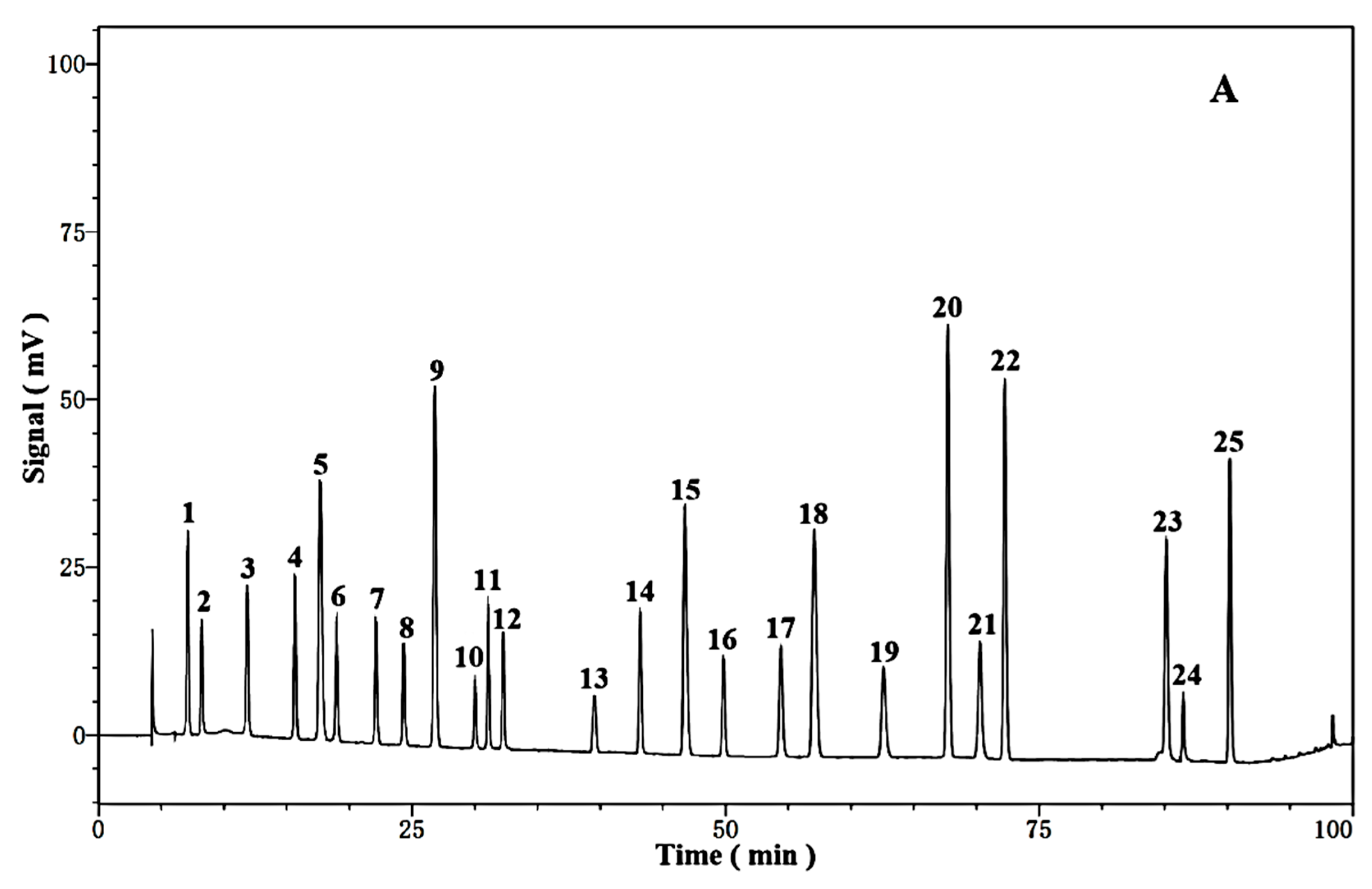
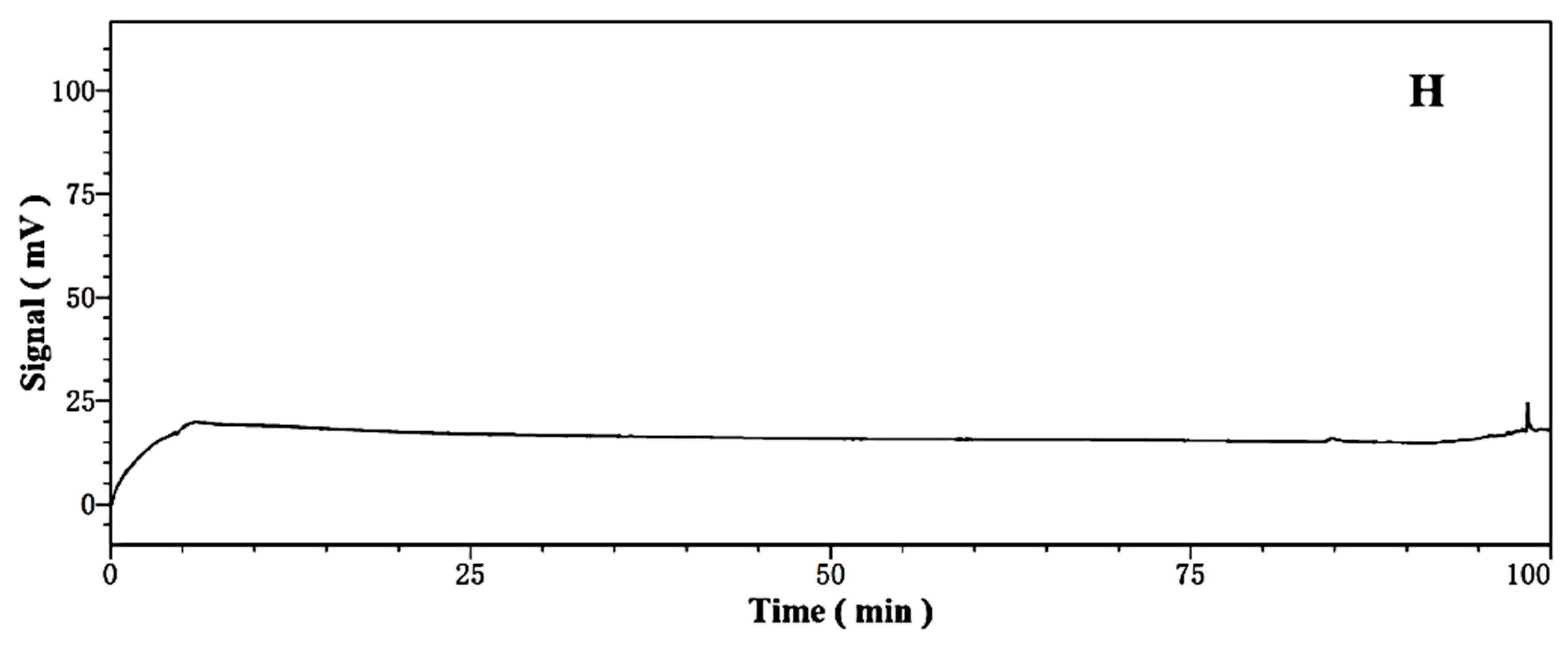
The Test Solution, Mixed Reference Standard Solution, Negative Control Solution, and Blank Solution (all prepared under Section 3.1) were accurately aspirated and injected for determination under the conditions specified in Section 3.2.1. The results are shown in Figure 9. As indicated by the results: The Mixed Reference Standard Solution and Test Solution peaked at the same retention time, with good resolution from other chromatographic peaks. No interference was observed at the corresponding retention times in the Negative Control Solution and Blank Solution.

3.7.2. Linearity Test

An appropriate volume of the Mixed Reference Standard Solution (Section 3.1.2) was accurately aspirated and diluted to 6 different mass concentrations. These solutions were then detected under the conditions specified in Section 3.2.1. Taking the mass concentration of the reference standard as the abscissa (X) and the peak area of each compound as the ordinate (Y), linear equation fitting was performed. The resulting linear regression equations are shown in Table 7. The results indicate that all 25 index compounds exhibited good linearity within their corresponding concentration ranges.

3.7.3. Stability Test

An aliquot of the Test Solution prepared in Section 3.1.1 was accurately pipetted and injected under the conditions described in Section 3.2.1 at 0, 2, 4, 6, 8, 12, and 24 h post-preparation. The results (Table 8) showed that the relative standard deviations (RSDs) of peak areas for all 25 analytes were <2%, indicating that the Test Solution remained stable for 24 h under the tested conditions.

3.7.4. Repeatability Test

Six replicate samples of the drug product (Batch S1: A2304002) were weighed and processed according to the Test Solution preparation method in Section 3.1.1. Each sample was analyzed under the conditions in Section 3.2.1. The RSDs of peak areas for all 25 analytes were <2% (Table 8), confirming that the method has good repeatability.

3.7.5. Precision Test

The Test Solution from Section 3.1.1 was injected six consecutive times under the conditions in Section 3.2.1. The RSDs of the peak areas of the 25 indicator compounds intraday and interday are less than 2% (Table 8), indicating that the precision of the instrument is good.

3.7.6. Spike Recovery Test

Approximately 0.2 g of the drug product (Batch S1: A2304002) was accurately weighed in six replicates. Known amounts of reference standards were spiked into each sample, which were then processed according to Section 3.1.1 and analyzed under the conditions in Section 3.2.1. The recovery rates for all 25 analytes ranged from 98% to 103%, with RSDs of peak areas <2% (Table 8). These results indicate that the method has high accuracy.

3.7.7. Determination of Compound Contents

Ten batches of test solutions of Qili Qiangxin Capsules were taken, and the test samples were prepared according to the preparation method of test solution specified in Section 3.1.1. Injection and determination were performed under the conditions described in Section 3.2.1, and the average content of each compound was calculated. The results are shown in Table 9.

4. Discussion

4.1. Selection of Index Compounds

Qili Qiangxin Capsules is a classic compound traditional Chinese medicine preparation with definite clinical efficacy in the intervention of chronic heart failure, which follows the core therapeutic principles of “replenishing qi and warming yang, activating blood circulation and dredging collaterals, inducing diuresis to alleviate edema”. The quality control of such multi-herb preparations cannot rely on single compound detection, but needs to establish an evaluation system that matches with its material basis and clinical efficacy. Therefore, this study took the correlation between chemical compounds and pharmacological effects as the core, combined with the statutory requirements of the Pharmacopoeia and the source attribution of medicinal materials, and systematically screened 25 index compounds to realize the comprehensive characterization of the quality of Qili Qiangxin Capsules.
SMRR is the core medicinal material for “activating blood circulation and dredging collaterals” in the prescription. Danshensu, protocatechuic acid, protocatechuic aldehyde, catechin, rosmarinic acid, lithospermic acid, salvianolic acid A and salvianolic acid B were selected as its representative compounds. Among them, salvianolic acid B is the mandatory quality control marker of SMRR in the 2025 edition of Pharmacopoeia of the People’s Republic of China [3]. These phenolic acid compounds can jointly improve myocardial microcirculation, inhibit myocardial fibrosis and reduce ventricular remodeling, which are directly related to the core mechanism of Qili Qiangxin Capsules in treating chronic heart failure [12,13,14,15].
AR is the key medicinal material for “replenishing qi and warming yang”. Calycosin-7-O-β-D-glucoside and formononetin, as its characteristic flavonoid compounds, are included in the quality control system of this preparation. These two compounds can enhance myocardial contractility, regulate myocardial energy metabolism and resist oxidative stress injury, which are consistent with the efficacy characteristics of AR in invigorating qi and supporting yang, and provide important material support for the cardiac function improvement of Qili Qiangxin Capsules [30,31].
CRP plays a role in regulating qi and inducing diuresis in the prescription. Narirutin and hesperidin were selected as its quality markers. These two flavonoid glycosides can regulate water and sodium metabolism, improve fluid retention and edema symptoms in patients with heart failure, and correspond to the therapeutic requirement of “inducing diuresis to alleviate edema” of the preparation [32,33,34].
In addition, hydroxysafflor yellow A, quercetin, apigenin and kaempferol from CF can improve microcirculation and resist inflammation, and assist in enhancing the blood activating effect [18,19,20,21,22]; isovanillin and 4-methoxysalicylaldehyde from PC are used as toxicity-related monitoring compounds to ensure the safety of clinical medication [23,24]; vanillin and cinnamic acid from CR participate in the synergistic regulation of warming yang and dredging collaterals [25,26]; cytidine, adenosine, guanosine, gallic acid and 5-hydroxymethylfurfural are widely distributed small molecule compounds in the compound, which are involved in the regulation of cell energy supply and oxidative stress level, and jointly constitute the basic material basis of the overall efficacy [27,28,29].
In conclusion, the 25 index compounds selected in this study cover all main medicinal materials in the prescription, and integrate three types of markers: statutory pharmacopoeia indicators, efficacy-related active compounds and safety-related control compounds. This selection strategy can not only reflect the chemical integrity of Qili Qiangxin Capsules, but also establish a direct correlation between quality characteristics and clinical efficacy, which provides a reasonable and scientific basis for the comprehensive quality evaluation of the preparation.

4.2. Screening of Chromatographic Conditions

4.2.1. Selection of Mobile Phase

Three mobile phases, namely methanol-water system, acetonitrile-water system, and acetonitrile-formic acid aqueous solution system, were selected in the experiment to determine the test solution (as specified in Section 3.1.1) under the conditions described in Section 3.2.1. Results showed that in the chromatograms of the methanol-water system and acetonitrile-water system, the peaks could not be separated, with poor peak shape and fewer peaks appearing. In contrast, the acetonitrile-formic acid aqueous solution system exhibited better separation efficiency, featuring not only good peak shape but also appropriate peak emergence time. Therefore, the acetonitrile-formic acid aqueous solution system was selected; particularly when 0.1% formic acid aqueous solution was used as Phase A, the best quality of chromatographic peaks was obtained.

4.2.2. Optimization of Elution Program

Isocratic elution and gradient elution were compared using the acetonitrile-1% formic acid aqueous solution system. The results indicated that under isocratic elution, only a small number of chromatographic peaks were detected, the retention time was prolonged, and most peaks could not be separated—this was not suitable for the acquisition of overall chemical fingerprints. Thus, to ensure that the chromatogram could fully represent the chemical information of the medicinal materials, maximize the number of detected chemical compounds, and maintain an appropriate analysis time, the gradient elution program was finally adopted.

4.2.3. Determination of Detection Wavelength

Comparative analysis of the liquid chromatography (LC) chromatograms revealed that only a small number of peaks were detected at wavelengths of 230, 254, and 300 nm. Additionally, the ratios of peak height to peak area between the chromatographic peaks were unbalanced, failing to fully reflect the compounds of the preparation. At 281 nm, however, more peaks were detected, and the fingerprint peaks of each compound showed good resolution. Considering the number of chromatographic peaks, baseline stability, and signal response intensity comprehensively, 281 nm was determined as the optimal detection wavelength for the characteristic chromatogram.

4.2.4. Optimization of Flow Rate and Column Temperature

Three different flow rates—0.6 mL/min, 0.8 mL/min, and 1.0 mL/min—were tested for the determination of the test solution (Section 3.1.1) under the conditions in Section 3.2.1. It was found that under 0.8 mL/min, the fingerprint peaks of each compound exhibited the best resolution; therefore, 0.8 mL/min was set as the optimal flow rate for the characteristic chromatogram. Column temperature is a key parameter in HPLC. Variations in column temperature can cause retention time shifts of chromatographic peaks, affecting the separation efficiency of compounds and the similarity comparison of characteristic chromatograms. In this study, column temperatures of 25 °C, 30 °C, and 35 °C were compared. Under the same other chromatographic conditions, the best peak separation was achieved at 30 °C; thus, 35 °C was determined as the optimal column temperature.

5. Conclusions

In this study, an integrated analytical strategy based on HPLC-DAD-ESI-MS/MS was established and fully validated for the holistic quality control of Qili Qiangxin Capsules. This method enabled simultaneous acquisition of characteristic chromatograms, unambiguous identification of 25 marker compounds via diagnostic MS/MS fragmentation, and accurate quantitative determination of all 25 constituents in a single analytical run.
The 25 quantified compounds covered all major herbal materials in the formulation, including statutory pharmacopoeial indicators, efficacy-related bioactive constituents, and safety-associated markers. Systematic optimization of chromatographic conditions achieved efficient separation of constituents with widely varying polarities. Methodological validation demonstrated excellent specificity, linearity (R2 > 0.999), precision, stability, repeatability, and accuracy (recoveries 98–103%, RSD < 2.0%), fully complying with the requirements of the Pharmacopoeia of the People’s Republic of China.
Analysis of 10 batches of commercial capsules revealed high similarity (>0.9) of characteristic chromatograms, indicating acceptable batch-to-batch consistency. Chemometric analyses (HCA, PCA, PLS-DA) revealed minor quality variations related to raw herbal material differences and identified 10 differential compounds as key quality markers. The developed strategy overcomes the limitations of conventional single-compound quality control and enables ingredient-source traceability.
This validated method provides a robust and reliable tool for raw material screening, manufacturing process control, and routine quality supervision of Qili Qiangxin Capsules, thereby guaranteeing the safety and effectiveness of clinical medication. Furthermore, the integrated strategy combining characteristic chromatogram profiling and simultaneous multicompound quantification offers a universal and practical paradigm for the comprehensive quality evaluation of other multi-herb traditional Chinese medicine preparations. Future research may employ UPLC-MS/MS to further improve analytical throughput, identify trace bioactive constituents, and expand the number of sample batches so as to verify the robustness and universality of the proposed method, and ultimately support the continuous upgrading and improvement of quality standards for Qili Qiangxin Capsules.

Author Contributions

X.-W.H.: Writing—original draft, Methodology, Investigation, Formal analysis, and Data curation. X.L., Y.-J.L. and R.-X.S.: Funding acquisition, Formal analysis, Data curation, and Validation. J.-J.R. and Y.-H.X.: Resources and Formal analysis. H.-M.X.: Writing—review and editing and Funding acquisition. S.-W.W.: Project administration, Funding acquisition, Supervision, and Conceptualization. All authors have read and agreed to the published version of the manuscript.

Funding

This research was supported by the Biomedicine Key Laboratory of Shaanxi Province, China (grant number: 2018SZS41), the Administration of Traditional Chinese Medicine of Shaanxi Province, China (grant number: 2021-02-ZZ-001), and the Key Research and Development Plan of Shaanxi Province, China (grant number: 2022SF-138), and the Key Research and Development Project of Shaanxi Province, China (grant number: 2023-ZDLSF-27).

Data Availability Statement

The original contributions presented in this study are included in the article. Further inquiries can be directed to the corresponding author.

Acknowledgments

We would like to thank the Faculty of Life and Health Science, Northwest University, and the Shaanxi Provincial Science and Technology Department for supporting our scientific research and providing financial funding.

Conflicts of Interest

The authors declare no conflicts of interest.

Abbreviations

AR, Astragali Radix; GRR, Ginseng Radix et Rhizoma; ALRP, Aconiti Lateralis Radix Praeparata; SMRR, Salviae Miltiorrhizae Radix et Rhizoma; DS, Descurainiae Semen; AR, Alismatis Rhizoma; POR, Polygonati Odorati Rhizoma; CR, Cinnamomi Ramulus; CF, Carthami Flos; PC, Periplocae Cortex; CRP, Citri Reticulatae Pericarpium; CHF, Chronic Heart Failure; TCM, Traditional Chinese Medicine; RSDs, Relative Standard Deviations; RRTs, Relative Retention Times; RPAs, Relative Peak Areas; HPLC-DAD-ESI-MS/MS, High Performance Liquid Chromatography-Diode Array Detector-Electrospray Ionization-Tandem Mass Spectrometry; HCA, Hierarchical Cluster Analysis; PCA, Principal Compound Analysis; PLS-DA, Partial Least Squares-Discriminant Analysis; UPLC-MS/MS; Ultra Performance Liquid Chromatography-Tandem Mass Spectrometry; LC, Liquid Chromatography; 5-HMF, 5-Hydroxymethylfurfural; NPC, National Pharmacopoeia Commission.

References

  1. Rogers, C.; Bush, N. Heart failure: Pathophysiology, diagnosis, medical treatment guidelines, and nursing management. Nurs. Clin. N. Am. 2015, 50, 787–799. [Google Scholar] [CrossRef] [PubMed]
  2. Shrestha, J.; Done, S. An overview of chronic heart failure. Nurs. Stand. 2023, 38, 43–49. [Google Scholar] [CrossRef] [PubMed]
  3. Pharmacopoeia Commission of the People’s Republic of China. Pharmacopoeia of the People’s Republic of China; China Medical Science Press: Beijing, China, 2025; Volume I, IV. [Google Scholar]
  4. Xing, X.; Guo, J.; Mo, J.; Li, H.; Zhang, H.; Shao, B.; Wang, Y.; Li, H.; Wang, J.; Leung, C.L.; et al. Qili Qiangxin capsules for chronic heart failure: A GRADE-assessed clinical evidence and preclinical mechanism. Front. Cardiovasc. Med. 2023, 9, 1090616. [Google Scholar] [CrossRef] [PubMed]
  5. Li, X.; Zhang, J.; Huang, J.; Ma, A.; Yang, J.; Li, W.; Wu, Z.; Yao, C.; Zhang, Y.; Yao, W.; et al. A multicenter, randomized, double-blind, parallel-group, placebo-controlled study of the effects of qili qiangxin capsules in patients with chronic heart failure. J. Am. Coll. Cardiol. 2013, 62, 1065–1072. [Google Scholar] [CrossRef] [PubMed]
  6. Wang, T.; Hou, B.; Qin, H.; Liang, J.; Shi, M.; Song, Y.; Ma, K.; Chen, M.; Li, H.; Ding, G.; et al. Qili Qiangxin (QLQX) capsule as a multi-functional traditional Chinese medicine in treating chronic heart failure (CHF): A review of ingredients, molecular, cellular, and pharmacological mechanisms. Heliyon 2023, 9, e21950. [Google Scholar] [CrossRef] [PubMed]
  7. Zhu, M.; Chen, L.; Xu, Z.; Xi, X.; Shi, X.; Zhang, Y. Clinical efficacy of Qili Qiangxin Capsule combined with exercise rehabilitation in the treatment of chronic heart failure. Explore 2023, 19, 445–449. [Google Scholar] [CrossRef] [PubMed]
  8. Cui, X.; Zhang, J.; Li, Y.; Sun, Y.; Cao, J.; Zhao, M.; Zhao, Y.; Zhao, X.; He, Y.; Han, A. Effects of Qili Qiangxin capsule on AQP2, V2R, and AT1R in rats with chronic heart failure. Evid.-Based Complement. Altern. Med. 2015, 2015, 639450. [Google Scholar] [CrossRef] [PubMed]
  9. Guan, J.; Wang, L.; Ji, Y.; Zhang, T.; Sang, Y.; Chang, S.; Feng, B.; Zhu, H. UHPLC–MS/MS Method for Quantifying Fangchinoline, Tetrandrine and Calycosin-7-O-β-D-Glucoside of Fangji Huangqi Decoction in Rat Plasma and Its Application to a Pharmacokinetic Study. J. Chromatogr. Sci. 2022, 60, 458–464. [Google Scholar] [CrossRef] [PubMed]
  10. Tsai, C.C.; Wu, H.H.; Chang, C.P.; Lin, C.H.; Yang, H.H. Calycosin-7-O-β-D-glucoside reduces myocardial injury in heat stroke rats. J. Formos. Med. Assoc. 2019, 118, 730–738. [Google Scholar] [CrossRef] [PubMed]
  11. Chen, Q.; Wang, J.; Sun, L.; Ba, B.; Shen, D. Mechanism of Astragalus membranaceus (Huangqi, HQ) for treatment of heart failure based on network pharmacology and molecular docking. J. Cell. Mol. Med. 2024, 28, e18331. [Google Scholar] [CrossRef] [PubMed]
  12. Li, Z.M.; Xu, S.W.; Liu, P.Q. Salvia miltiorrhizaBurge (Danshen): A golden herbal medicine in cardiovascular therapeutics. Acta Pharmacol. Sin. 2018, 39, 802–824. [Google Scholar] [CrossRef] [PubMed]
  13. Zhang, J.; Zhang, Q.; Liu, G.; Zhang, N. Therapeutic potentials and mechanisms of the Chinese traditional medicine Danshensu. Eur. J. Pharmacol. 2019, 864, 172710. [Google Scholar] [CrossRef] [PubMed]
  14. Neves, M.A.D.; Ni, T.T.; Mackeigan, D.T.; Shoara, A.A.; Lei, X.; Slavkovic, S.; Yu, S.Y.; Stratton, T.W.; Gallant, R.C.; Zhang, D.; et al. Salvianolic acid B inhibits thrombosis and directly blocks the thrombin catalytic site. Res. Pract. Thromb. Haemost. 2024, 8, 102443. [Google Scholar] [CrossRef] [PubMed]
  15. Wang, C.; Zhou, J.; Wang, S.; Liu, Y.; Long, K.; Sun, T.; Zhi, W.; Yang, Y.; Zhang, H.; Zhao, Y.; et al. Guanxining injection alleviates fibrosis in heart failure mice and regulates SLC7A11/GPX4 axis. J. Ethnopharmacol. 2023, 310, 116367. [Google Scholar] [CrossRef] [PubMed]
  16. Mitra, S.; Lami, M.S.; Uddin, T.M.; Das, R.; Islam, F.; Anjum, J.; Hossain, M.J.; Emran, T.B. Prospective multifunctional roles and pharmacological potential of dietary flavonoid narirutin. Biomed. Pharmacother. 2022, 150, 112932. [Google Scholar] [CrossRef] [PubMed]
  17. Miles, E.A.; Calder, P.C. Effects of Citrus Fruit Juices and Their Bioactive Components on Inflammation and Immunity: A Narrative Review. Front. Immunol. 2021, 12, 712608. [Google Scholar] [CrossRef] [PubMed]
  18. Feng, X.; Li, Y.; Wang, Y.; Li, L.; Little, P.J.; Xu, S.W.; Liu, S. Danhong injection in cardiovascular and cerebrovascular diseases: Pharmacological actions, molecular mechanisms, and therapeutic potential. Pharmacol. Res. 2019, 139, 62–75. [Google Scholar] [CrossRef] [PubMed]
  19. Lv, Y.; Qian, Y.; Fu, L.; Chen, X.; Zhong, H.; Wei, X. Hydroxysafflor yellow A exerts neuroprotective effects in cerebral ischemia reperfusion-injured mice by suppressing the innate immune TLR4-inducing pathway. Eur. J. Pharmacol. 2015, 769, 324–332. [Google Scholar] [CrossRef] [PubMed]
  20. Park, C.H.; Min, S.Y.; Yu, H.W.; Kim, K.; Kim, S.; Lee, H.J.; Kim, J.H.; Park, Y.J. Effects of apigenin on RBL-2H3, RAW264. 7, and HaCaT cells: Anti-allergic, anti-inflammatory, and skin-protective activities. Int. J. Mol. Sci. 2020, 21, 4620. [Google Scholar] [CrossRef] [PubMed]
  21. Chiang, M.; Tsai, T.; Wang, C. The potential benefits of quercetin for brain health: A review of anti-inflammatory and neuroprotective mechanisms. Int. J. Mol. Sci. 2023, 24, 6328. [Google Scholar] [CrossRef] [PubMed]
  22. Li, S.; Wang, S.; Zhang, L.; Ka, Y.; Zhou, M.; Wang, Y.; Tang, Z.; Zhang, J.; Wang, W.; Liu, W. Research progress on pharmacokinetics, anti-inflammatory and immunomodulatory effects of kaempferol. Int. Immunopharmacol. 2025, 152, 114387. [Google Scholar] [CrossRef] [PubMed]
  23. Deeh, P.B.D.; Watcho, P.; Wang, M. Ethnomedicinal, phytochemical, pharmacological and toxicological profile of Mondia whitei: A review. Fitoterapia 2024, 177, 106119. [Google Scholar] [CrossRef] [PubMed]
  24. Li, Z.T.; Zhang, F.X.; Fan, C.L.; Ye, M.N.; Chen, W.W.; Yao, Z.H.; Yao, X.S.; Dai, Y. Discovery of potential Q-marker of traditional Chinese medicine based on plant metabolomics and network pharmacology: Periplocae Cortex as an example. Phytomedicine 2021, 85, 153535. [Google Scholar] [CrossRef] [PubMed]
  25. Liu, J.; Zhang, Q.; Li, R.L.; Wei, S.J.; Huang, C.Y.; Gao, Y.X.; Pu, X.F. The traditional uses, phytochemistry, pharmacology and toxicology of Cinnamomi ramulus: A review. J. Pharm. Pharmacol. 2020, 72, 319–342. [Google Scholar] [CrossRef] [PubMed]
  26. Luan, F.; Rao, Z.; Peng, L.; Lei, Z.; Zeng, J.; Peng, X.; Yang, R.; Liu, R.; Zeng, N. Cinnamic acid preserves against myocardial ischemia/reperfusion injury via suppression of NLRP3/Caspase-1/GSDMD signaling pathway. Phytomedicine 2022, 100, 154047. [Google Scholar] [CrossRef] [PubMed]
  27. Almeida, R.F.; Comasseto, D.D.; Ramos, D.B.; Hansel, G.; Zimmer, E.R.; Loureiro, S.O.; Ganzella, M.; Souza, D.O. Guanosine anxiolytic-like effect involves adenosinergic and glutamatergic neurotransmitter systems. Mol. Neurobiol. 2017, 54, 423–436. [Google Scholar] [CrossRef] [PubMed]
  28. Jin, L.; Sun, S.; Ryu, Y.; Piao, Z.H.; Liu, B.; Choi, S.Y.; Kim, G.R.; Kim, H.S.; Kee, H.J.; Jeong, M.H. Gallic acid improves cardiac dysfunction and fibrosis in pressure overload-induced heart failure. Sci. Rep. 2018, 8, 9302. [Google Scholar] [CrossRef] [PubMed]
  29. Zhu, L.; Liu, L.; Hou, L.; Wu, L.; Sun, H. Exploring the effective components and mechanism of Shengmaiyin (Dangshen Prescription) on the treatment of chronic heart failure based on chinmedomics strategy. J. Pharm. Biomed. Anal. 2026, 268, 117199. [Google Scholar] [CrossRef] [PubMed]
  30. Liu, Y.; Che, G.; Di, Z.; Sun, W.; Tian, J.; Ren, M. Calycosin-7-O-beta-D-glucoside attenuates myocardial ischemia-reperfusion injury by activating JAK2/STAT3 signaling pathway via the regulation of IL-10 secretion in mice. Mol. Cell. Biochem. 2020, 463, 175–187. [Google Scholar] [CrossRef] [PubMed]
  31. Yu, L.; Zhang, Y.; Chen, Q.; He, Y.; Zhou, H.; Wan, H.; Yang, J. Formononetin protects against inflammation associated with cerebral ischemia-reperfusion injury in rats by targeting the JAK2/STAT3 signaling pathway. Biomed. Pharmacother. 2022, 149, 112836. [Google Scholar] [CrossRef] [PubMed]
  32. Li, C.; Schluesener, H. Health-promoting effects of the citrus flavanone hesperidin. Crit. Rev. Food Sci. Nutr. 2017, 57, 613–631. [Google Scholar] [CrossRef] [PubMed]
  33. Pla-Pagà, L.; Companys, J.; Calderón-Pérez, L.; Llauradó, E.; Solà, R.; Valls, R.M.; Pedret, A. Effects of hesperidin consumption on cardiovascular risk biomarkers: A systematic review of animal studies and human randomized clinical trials. Nutr. Rev. 2019, 77, 845–864. [Google Scholar] [CrossRef] [PubMed]
  34. Pandey, P.; Khan, F.; Ramniwas, S.; Saeed, M.; Ahmad, I. A mechanistic review of the pharmacological potential of narirutin: A dietary flavonoid. Naunyn-Schmiedeberg’s Arch. Pharmacol. 2024, 397, 5449–5461. [Google Scholar] [CrossRef] [PubMed]
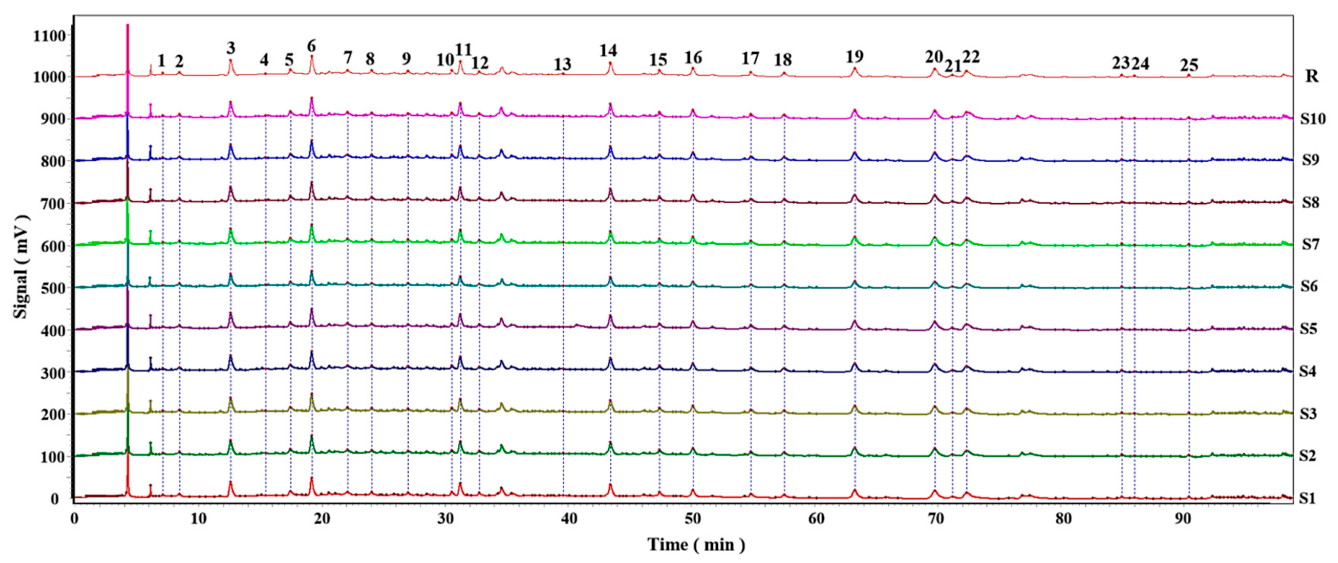
Figure 1. Characteristic Chromatograms of 10 Batches of Qili Qiangxin Capsules.
Separations 13 00194 g001
Figure 2. Standard Characteristic Chromatogram of Qili Qiangxin Capsules.
Separations 13 00194 g002
Figure 3. HCA dendrogram of 10 batches of Qili Qiangxin Capsules.
Separations 13 00194 g003
Figure 4. Scree Plot of Eigenvalues for 25 Factors in Qili Qiangxin Capsules.
Separations 13 00194 g004
Figure 5. PLS-DA Score Plot of 10 Batches of Qili Qiangxin Capsule Samples.
Separations 13 00194 g005
Figure 6. VIP Score Plot of Characteristic Peaks in Qili Qiangxin Capsules.
Separations 13 00194 g006
Figure 7. Total ion chromatogram of Qili Qiangxin Capsules under different ion modes. (A) Negative ion mode. (B) Positive ion mode.
Separations 13 00194 g007
Figure 8. Chemical Structures of 25 Target Compounds.
Separations 13 00194 g008aSeparations 13 00194 g008bSeparations 13 00194 g008cSeparations 13 00194 g008dSeparations 13 00194 g008e
Figure 9. HPLC chromatograms of mixed reference standard solution, negative control samples, and blank control solution. (A) Mixed Reference Standard Solution; (B) Sample without AR; (C) Sample without SMRR; (D) Sample without CF; (E) Sample without CRP; (F) Sample without PC; (G) Sample without CR; (H) Blank Control Solution.
Separations 13 00194 g009aSeparations 13 00194 g009bSeparations 13 00194 g009cSeparations 13 00194 g009d
Table 1. Gradient Elution Program.
Time (min)Mobile Phase A (%)Mobile Phase B (%)
0~5 973
5~17 97~893~11
17~45 89~7511~25
45~65 75~7225~28
65~73 72~6828~32
73~78 68~6532~35
78~88 65~5235~48
88~95 52~048~100
Table 2. Results of Methodological Validation for Characteristic Chromatogram.
Peak No.RSD of Relative Retention Time (%)RSD of Relative Peak Area (%)
Stability
(n = 6)
Reproducibility
(n = 6)
Precision
(n = 6)
Stability
(n = 6)
Reproducibility
(n = 6)
Precision
(n = 6)
10.580.090.291.781.651.05
21.020.070.222.151.510.98
31.480.030.052.371.091.29
40.250.210.371.251.371.36
50.730.350.481.361.562.12
60.000.000.000.000.000.00
70.820.650.740.852.141.63
80.390.770.850.962.721.49
90.470.190.161.572.022.42
101.340.450.392.312.652.16
111.280.080.342.121.310.86
121.120.130.171.741.281.19
131.590.250.362.121.851.56
141.230.180.521.282.341.82
151.280.650.641.562.452.15
160.560.590.371.841.222.34
170.370.850.192.482.750.96
180.890.220.820.562.812.37
190.280.370.780.412.252.12
201.250.680.150.891.631.85
210.020.220.910.921.471.54
220.810.180.081.762.121.23
231.450.120.451.211.752.50
241.310.330.722.341.182.11
251.290.280.872.181.721.87
Table 3. Similarity Evaluation Results of Characteristic Chromatograms for 10 Batches of Samples.
Sample
No.
S1S2S3S4S5S6S7S8S9S10R
S11.000
S20.9971.000
S30.9990.9971.000
S41.0000.9960.9991.000
S50.9990.9960.9990.9991.000
S60.9980.9990.9980.9980.9971.000
S70.9980.9940.9970.9990.9990.9961.000
S80.9980.9950.9980.9990.9990.9961.0001.000
S90.9980.9950.9970.9990.9980.9971.0001.0001.000
S100.9750.9770.9730.9750.9750.9780.9790.9790.9811.000
R0.9990.9970.9990.9990.9990.9990.9990.9990.9990.9821.000
Table 4. Total Variance Explained by Principal Compound Analysis of Qili Qiangxin Capsules.
CompoundInitial EigenvaluesExtraction Sums of Squared LoadingsRotation Sums of Squared Loadings
Total% of VarianceCumulative %Total% of VarianceCumulative %Total% of VarianceCumulative %
15.95123.80623.8065.95123.80623.8065.45321.81321.813
24.51418.05441.8604.51418.05441.8603.52614.10535.918
33.52914.11555.9753.52914.11555.9753.46413.85849.776
43.25813.03469.0093.25813.03469.0093.17012.68162.457
52.51410.05679.0652.51410.05679.0652.99111.96474.420
62.2759.09988.1652.2759.09988.1652.4369.74484.165
71.3525.40893.5721.3525.40893.5722.3529.40793.572
Table 5. Medicinal Material Sources of the 25 Index Compounds in Qili Qiangxin Capsules.
Peak No.CompoundsMedicinal Material Sources
1CytidineAR, GRR, ALRP, SMRR, DS, AR, POR, CR, CF, PC, CRP
2AdenosineAR, GRR, ALRP, SMRR, DS, AR, POR, CR, CF, PC, CRP
3GuanosineAR, GRR, ALRP, SMRR, DS, AR, POR, CR, CF, PC, CRP
4Gallic acidSMRR
55-HydroxymethylfurfuralAR, GRR, CR
6DanshensuSMRR
7Protocatechuic acidSMRR
8IsovanillinPC
9Protocatechuic aldehydeSMRR
10CatechinSMRR
114-MethoxysalicylaldehydePC
12Hydroxysafflor yellow ACF
13VanillinCR
14Calycosin-7-O-β-d-glucosideAR
15NarirutinCRP
16HesperidinCRP
17Rosmarinic acidSMRR
18Lithospermic acidSMRR
19Salvianolic acid BSMRR
20Cinnamic acidCR
21Salvianolic acid ASMRR
22QuercetinCF, PC
23ApigeninCF
24KaempferolCF, PC, AR
25FormononetinAR
Table 6. Characterization of the compounds of Qili Qiangxin Capsules by HPLC-DAD-ESI-MS/MS.
Peak No.tR (min)FormulaIon ModeCalculated Mass (m/z)Measured Mass (m/z)Δ (ppm)Parent Ion (m/z)Major
Fragment Ions
Compound
14.55C9H13N3O5[M + H]+243.08552243.085540.08244.09335113.03441, 112.05109, 95.02454, 69.03441Cytidine
28.38C10H13
N5O4
[M + H]+267.09675267.09625−1.87268.10458136.06232, 119.03577, 113.03441, 92.05074Adenosine
311.31C10H13
N5O5
[M + H]+283.09167283.09160−0.25284.09950152.05723, 135.03068, 113.03441, 108.04569Guanosine
413.28C7H6O5[M − H]170.02152170.021620.59169.01369151.00313, 125.02387, 97.02896, 79.01838Gallic acid
516.29C6H6O3[M + H]+126.03169126.031891.59127.03952109.02895, 97.02895, 81.03404, 53.039135-Hydroxymethylfurfural
619.77C9H10O5[M − H]198.05282198.05215−3.38197.04499179.03442, 153.05516, 135.04459, 109.02895Danshensu
724.04C7H6O4[M − H]154.02661154.02635−1.69153.01878135.00821, 109.02895, 81.03404, 79.01838Protocatechuic acid
826.35C8H8O3[M−H]152.04734152.04725−0.59151.03951136.01604, 122.03678, 108.02113, 93.01805Isovanillin
929.29C7H6O3[M − H]138.03169138.03155−1.01137.02386109.02896, 108.02113, 91.01838, 80.02622Protocatechualdehyde
1034.01C15H14O6[M − H]290.07904290.079391.21289.07121179.03443, 161.02386, 137.02387, 133.02895catechin
1135.12C8H8O3[M − H]152.04734152.047450.72151.03951136.01604, 122.03678, 108.02113, 93.018054-Methoxysalicylaldehyde
1237.055C27H32O16[M − H]612.16903612.16898−0.08611.16120449.10838, 431.09781, 405.11855, 287.05555Hydroxysafflor yellow A
1340.036C8H8O3[M−H]152.04734152.04712−1.45151.03951136.01604, 122.03678, 108.02113, 93.01805Vanillin
1441.556C22H22
O10
[M + H]+446.12130446.12035−2.13447.12913283.06065, 265.05008, 239.07082, 161.04226Calycosin-7-O-β-D-glucoside
1544.26C27H32
O14
[M + H]+580.17921580.17906−0.26581.18704433.11347, 271.07086, 253.06029, 227.08103Narirutin
1650.14C28H34O15[M + H]+610.18977610.18919−0.95611.19760463.12403, 301.08142, 283.07085, 257.09159Hesperidin
1754.97C18H16O8[M − H]360.08452360.084780.72359.07669341.06612, 315.08686, 297.07629, 179.03443Rosmarinic acid
1860.31C27H22O12[M − H]538.11113538.112442.43537.10330493.11347, 357.06104, 313.07121, 179.03443Lithospermic acid
1965.50C36H30
O16
[M − H]718.15338718.153840.64717.14555537.10330, 519.09274, 475.10291, 179.03443Salvianolic
acid B
2067.90C9H8O2[M−H]148.05243148.05232−0.74147.04460119.04969, 103.05477, 77.03912Cinnamic acid
2170.46C26H22O10[M − H]494.12130494.121931.28493.11347449.12365, 295.06066, 251.07083, 179.03443Salvianolic
acid A
2271.62C15H10O7[M + H]+302.04265302.04234−1.03303.05048273.03991, 257.04499, 245.04500, 151.00274Quercetin
2384.95C15H10O5[M + H]+270.05282270.05275−0.26271.06065241.05008, 225.05516, 213.05517, 117.01838Apigenin
2486.87C15H10O6[M − H]286.04774286.048301.96285.03991257.04500, 241.05008, 229.05009, 137.02387Kaempferol
2588.32C16H12O4[M + H]+268.07356268.07277−2.95269.08139252.04226, 239.07083, 224.04735, 132.04460Formononetin
Table 7. Linear equation, range and correlation coefficient.
Peak No.Regression EquationR2Linear Range
(mg/mL)
1y = 10528803.7x + 8390.50.99970.011~0.175
2y = 3297631.2x + 8497.70.99920.024~0.186
3y = 10443365.3x + 441.9 0.99990.010~0.150
4y = 17756583.5x + 27750.70.99940.013~0.212
5y = 24823355.9x + 8457.7 0.99960.007~0.230
6y = 2367804.9x + 1560.6 0.99980.020~0.205
7y = 18351896.2x + 497.90.9998 0.013~0.206
8y = 11517989.9x + 5921.8 0.99900.010~0.297
9y = 55054716.4x + 82536.70.99940.014~0.218
10y = 1476483.5x + 8559.60.99950.020~0.234
11y = 4448424.5x + 4387.90.99950.019~0.194
12y = 4129427.7x + 478.8 0.99940.008~0.213
13y = 3833830.4x − 3060.5 0.99980.009~0.204
14y = 25345076.5x + 8190.5 0.9995 0.012~0.191
15y = 88673621.0x − 13123.80.9999 0.008~0.117
16y = 25092437.4x + 33122.8 0.9997 0.009~0.144
17y = 22203624.8x + 850.2 0.9998 0.008~0.116
18y = 13322489.2x + 7975.4 0.99960.014~0.218
19y = 12117913.8x + 7872.70.99980.011~0.177
20y = 109388569.3x − 66558.10.99980.007~0.160
21y = 14408391.5x − 12794.70.99970.008~0.162
22y = 72015206.6x − 30965.70.99960.007~0.218
23y = 32664886.3x − 45294.10.99950.015~0.243
24y = 7764959.1x − 10838.50.99960.012~0.236
25y = 33746150.3x − 20279.5 0.99950.014~0.217
Note: y: peak area of compounds; x: concentration of compounds.
Table 8. Method Validation Results for Content Determination of 25 Index Compounds.
Peak No.Stability
(n = 7)
RSD (%)
Repeatability
(n = 6)
RSD (%)
Precisions (n = 6)Recovery
(%)
RSD (%)
Intraday RSD (%)Interday RSD (%)
11.151.321.161.34101.291.16
21.231.650.760.9299.810.85
30.780.840.820.9599.860.89
41.241.420.861.12102.231.45
51.860.671.531.75101.491.53
61.340.980.880.99102.151.67
71.571.160.951.32101.271.23
80.391.170.750.8998.980.87
91.341.541.391.7898.331.05
100.840.780.951.0298.291.74
110.711.710.660.81102.720.77
121.651.341.181.4799.711.23
131.311.460.961.16101.891.28
141.251.470.720.9598.571.36
150.761.610.910.97102.340.98
161.220.820.941.31101.521.52
170.580.730.670.82100.380.39
180.970.861.251.5899.161.28
190.681.231.921.9598.350.84
201.641.620.260.8698.520.75
211.371.380.750.9399.231.29
221.861.770.861.22101.271.74
231.450.490.910.97100.850.56
241.730.371.291.7399.750.87
251.921.520.370.8598.371.94
Table 9. Contents of 25 Index Compounds in 10 Batches of Qili Qiangxin Capsules (n = 3, mean ± SD, mg/g).
Peak
No.
Sample No.Average
S1S2S3S4S5S6S7S8S9S10
10.1886 ± 0.00160.1880 ± 0.00230.1873 ± 0.00020.1895 ± 0.00250.1935 ± 0.00320.1885 ± 0.00450.1882 ± 0.00370.1884 ± 0.00820.1878 ± 0.00750.1899 ± 0.00140.1890 ± 0.0018
21.8553 ± 0.01151.8824 ± 0.00821.9351 ± 0.00831.8884 ± 0.02121.8925 ± 0.02091.8975 ± 0.00691.8473 ± 0.01921.9289 ± 0.00841.9519 ± 0.00731.8774 ± 0.00361.8957 ± 0.0339
31.3319 ± 0.01221.3368 ± 0.00581.3494 ± 0.00351.3435 ± 0.01171.3401 ± 0.00641.3541 ± 0.00381.3241 ± 0.00851.3472 ± 0.00891.3380 ± 0.00291.3691 ± 0.00341.3434 ± 0.0125
40.1254 ± 0.00310.1243 ± 0.00870.1250 ± 0.00720.1241 ± 0.00580.1268 ± 0.00710.1261 ± 0.00640.1267 ± 0.00150.1258 ± 0.00740.1244 ± 0.00630.1252 ± 0.00530.1254 ± 0.0010
50.3436 ± 0.00280.3430 ± 0.00190.3444 ± 0.00680.3431 ± 0.00720.3451 ± 0.00150.3303 ± 0.00120.3417 ± 0.00380.3434 ± 0.00510.3437 ± 0.00310.3288 ± 0.00680.3407 ± 0.0060
613.1232 ± 0.042113.2228 ± 0.020513.2019 ± 0.017613.2434 ± 0.034113.1432 ± 0.012913.2173 ± 0.012113.2196 ± 0.037213.2725 ± 0.053613.4369 ± 0.009213.2038 ± 0.027313.2285 ± 0.0853
70.4563 ± 0.00240.4646 ± 0.00760.4525 ± 0.00510.4484 ± 0.00730.4398 ± 0.00630.4476 ± 0.00580.4611 ± 0.00310.4663 ± 0.00420.4586 ± 0.00230.4671 ± 0.00660.4562 ± 0.0091
80.6666 ± 0.00970.6670 ± 0.00810.6996 ± 0.00530.6719 ± 0.00380.6842 ± 0.00520.6854 ± 0.00320.6732 ± 0.00240.6929 ± 0.00350.6937 ± 0.00370.6914 ± 0.01120.6826 ± 0.0121
90.0945 ± 0.00210.0961 ± 0.00130.0952 ± 0.00120.0952 ± 0.00420.0943 ± 0.00120.0932 ± 0.00760.0981 ± 0.00360.0932 ± 0.00610.0976 ± 0.00210.0928 ± 0.00340.0950 ± 0.0018
104.0060 ± 0.05154.0470 ± 0.0214 4.2055 ± 0.01644.0504 ± 0.00424.1136 ± 0.04554.1278 ± 0.00723.9823 ± 0.00814.0115 ± 0.00324.1112 ± 0.02124.0086 ± 0.03764.0664 ± 0.0708
115.8357 ± 0.02175.8330 ± 0.01525.8783 ± 0.00425.8862 ± 0.02255.9532 ± 0.00715.9108 ± 0.03285.8762 ± 0.01835.8121 ± 0.02535.8322 ± 0.00425.8173 ± 0.02115.8635 ± 0.0455
121.5917 ± 0.02251.6202 ± 0.00541.6055 ± 0.00941.6213 ± 0.02421.6867 ± 0.01071.6458 ± 0.01411.5895 ± 0.00721.5974 ± 0.01421.6141 ± 0.01281.5914 ± 0.01571.6164 ± 0.0303
130.9446 ± 0.00050.9512 ± 0.00310.9586 ± 0.00520.9632 ± 0.00230.9550 ± 0.00150.9517 ± 0.00370.9632 ± 0.00420.9597 ± 0.00870.9512 ± 0.00340.9505 ± 0.00160.9549 ± 0.0061
141.1181 ± 0.00511.1248 ± 0.00751.1349 ± 0.00341.1256 ± 0.00661.1453 ± 0.00551.1248 ± 0.00421.1328 ± 0.00211.1256 ± 0.00111.1130 ± 0.00451.1131 ± 0.00681.1258 ± 0.0100
150.0973 ± 0.00050.1013 ± 0.00620.0984 ± 0.00330.0985 ± 0.00310.0961 ± 0.00090.1005 ± 0.00850.1011 ± 0.00410.0993 ± 0.00740.0989 ± 0.00310.1016 ± 0.00670.0993 ± 0.0018
160.6596 ± 0.00850.6574 ± 0.00610.6550 ± 0.00410.6668 ± 0.00180.6702 ± 0.00240.6720 ± 0.00260.6516 ± 0.00120.6487 ± 0.00150.6738 ± 0.00180.6525 ± 0.00310.6608 ± 0.0092
170.7333 ± 0.00820.7401 ± 0.00980.7453 ± 0.00350.7619 ± 0.00590.7384 ± 0.01180.7389 ± 0.00310.7591 ± 0.00650.7716 ± 0.00610.7429 ± 0.00360.7387 ± 0.00420.7470 ± 0.0126
180.7710 ± 0.00210.7639 ± 0.01080.7870 ± 0.00710.7938 ± 0.00250.7882 ± 0.00320.7668 ± 0.00740.7962 ± 0.00660.7836 ± 0.00430.7820 ± 0.00510.7836 ± 0.00420.7816 ± 0.0110
192.1369 ± 0.02122.1080 ± 0.01052.1302 ± 0.02332.1698 ± 0.01312.1777 ± 0.02192.0990 ± 0.00512.1406 ± 0.00632.1302 ± 0.01342.1740 ± 0.00612.1262 ± 0.00742.1393 ± 0.0270
200.2214 ± 0.00130.2203 ± 0.00170.2158 ± 0.00510.2208 ± 0.00320.2172 ± 0.00240.2175 ± 0.00060.2177 ± 0.00510.2219 ± 0.00420.2168 ± 0.00070.2134 ± 0.00190.2183 ± 0.0027
210.4714 ± 0.00520.4578 ± 0.00310.4818 ± 0.00190.4561 ± 0.00280.4512 ± 0.00450.4723 ± 0.00360.4706 ± 0.00170.4747 ± 0.00110.4601 ± 0.00690.4554 ± 0.00430.4651 ± 0.0102
220.4505 ± 0.00090.4513 ± 0.00170.4548 ± 0.00320.4521 ± 0.00250.4584 ± 0.00160.4504 ± 0.00150.4616 ± 0.00310.4628 ± 0.00290.4561 ± 0.00160.4620 ± 0.00240.4560 ± 0.0049
230.0865 ± 0.00130.0860 ± 0.00090.0867 ± 0.00180.0875 ± 0.00140.0860 ± 0.00520.0882 ± 0.00210.0892 ± 0.00370.0863 ± 0.00640.0870 ± 0.00160.0861 ± 0.00270.0870 ± 0.0011
240.1492 ± 0.00250.1497 ± 0.00080.1484 ± 0.00150.1480 ± 0.00230.1489 ± 0.00130.1482 ± 0.00170.1479 ± 0.00210.1552 ± 0.00780.1498 ± 0.00480.1426 ± 0.00260.1488 ± 0.0030
250.1082 ± 0.00180.1085 ± 0.00230.1086 ± 0.00210.1089 ± 0.00150.1081 ± 0.00270.1074 ± 0.00160.1075 ± 0.00740.1072 ± 0.00190.1084 ± 0.00150.1123 ± 0.00890.1080 ± 0.0023
Disclaimer/Publisher’s Note: The statements, opinions and data contained in all publications are solely those of the individual author(s) and contributor(s) and not of MDPI and/or the editor(s). MDPI and/or the editor(s) disclaim responsibility for any injury to people or property resulting from any ideas, methods, instructions or products referred to in the content.