1. Introduction
Fidaxomicin, a unique macrocyclic antibiotic, plays a critical role in the clinical treatment of severe
Clostridioides difficile infections [
1,
2,
3]. It is a fermentation-derived antibiotic obtained from
Dactylosporangium aurantiacum and is characterized by an 18-membered macrocyclic ester structure. The stability of its pharmacological activity and the reliability of its clinical efficacy are directly dependent on product purity and precise control of related impurities. In addition, fidaxomicin is susceptible to hydrolytic degradation and shows limited chemical stability outside an appropriate pH range, which means that prolonged concentration, solvent exchange, and intermediate handling may increase the risk of product degradation. Therefore, the development of efficient and cost-effective separation and purification processes for fidaxomicin is of great practical significance for promoting its industrial application and maximizing its clinical value [
4,
5].
Preparative chromatography, owing to its high tunability of operating parameters and operational flexibility, has become a mainstream technology in pharmaceutical separation and purification and serves as a core unit operation in fidaxomicin refining processes [
6,
7,
8]. However, chromatographic purification of fidaxomicin is constrained by the insufficient selectivity of single mobile-phase systems. When methanol/water is employed, the removal efficiency for certain strongly retained impurities is limited; conversely, the use of acetonitrile/water often leads to co-elution of another class of impurities with physicochemical properties similar to those of the target compound. This inherent selectivity limitation significantly restricts both the purification efficiency and the achievable purity of fidaxomicin.
Currently, dual-step separation and purification represent the mainstream strategy for addressing the above-mentioned challenges. By sequentially eluting with methanol/water and acetonitrile/water systems, effective removal of different classes of impurities can be achieved [
9]. However, this strategy requires concentration of the intermediate product obtained after the first separation step, which not only increases operational complexity and process duration but may also induce degradation of the target compound during concentration and introduce additional contamination risks. Consequently, the development of a novel chromatographic technique capable of integrating the selectivity advantages of different mobile phases while avoiding intermediate processing steps has become a key requirement for improving fidaxomicin purification efficiency and reducing production costs.
Two-dimensional chromatography provides a feasible approach to meet this requirement by enabling on-line integration of two sequential separation steps. In a typical configuration, the first-dimensional chromatographic system employs methanol/water (or acetonitrile/water) to remove part of the impurities, after which the fraction containing the target compound is transferred on-line to the second-dimensional chromatographic system via heart-cutting, where further purification is performed using acetonitrile/water (or methanol/water) [
10,
11,
12]. Nevertheless, this technique still suffers from notable limitations. First, band broadening of the target compound frequently occurs during first-dimensional separation, resulting in dilution of the target fraction and increased difficulty in the second-dimensional separation. Second, both chromatographic dimensions are operated in a single-pass, non-recycling mode, such that the target compound experiences only a limited effective column length. For fidaxomicin crude products containing isomeric impurities with very similar physicochemical properties, the theoretical plate number provided by a limited column length is often insufficient to achieve the desired separation.
Despite the aforementioned limitations, the fully reversed-phase separation mode of two-dimensional chromatography and the concept of on-line transfer of intermediate products remain of considerable reference value [
13,
14,
15]. Accordingly, this study aims to construct a highly integrated dual-step separation scheme based on twin-column recycling chromatography. The core feature of this approach is the realization of spatial integration, whereby dual-step separations that conventionally require two independent chromatographic systems (dual space) are integrated into a single twin-column recycling system (single space). By regulating the recycling elution environment, this integrated strategy creates selectivity differences analogous to those of two-dimensional separation: impurities are selectively removed under a specific solvent environment while the target compound is retained within the system, followed by mobile-phase switching to establish a second-dimensional elution environment for deep removal of the remaining impurities. More importantly, the proposed system enables extension of the effective column length without increasing column pressure, thereby significantly enhancing the separation capability for critical impurities [
16].
It should be noted that when conventional twin-column recycling chromatography is applied to complex fermentation-derived products such as fidaxomicin, the target compound band tends to undergo continuous broadening due to axial dispersion and nonlinear adsorption effects, leading to a simultaneous decrease in separation efficiency and product concentration [
17,
18]. To address this issue, a spatial step-gradient solvent strategy is introduced in this study. By injecting a modifier (e.g., pure water) between the two chromatographic columns, a stable solvent-strength gradient is established along the upstream and downstream columns [
19,
20]. As the target compound migrates from the upstream strong-solvent environment to the downstream weak-solvent environment, the migration velocity of the trailing edge exceeds that of the leading edge, resulting in a pronounced band compression effect. This effect effectively suppresses band broadening during the recycling process while simultaneously enabling on-line enrichment of the target compound [
21,
22,
23,
24].
Meanwhile, this study further explores a system integration strategy based on the two binary mobile phases, in which the core solvents of the binary systems (methanol, acetonitrile, and water) are mixed in defined proportions to construct a single ternary solvent system, with the aim of achieving complete separation of all impurities in a one-step process.
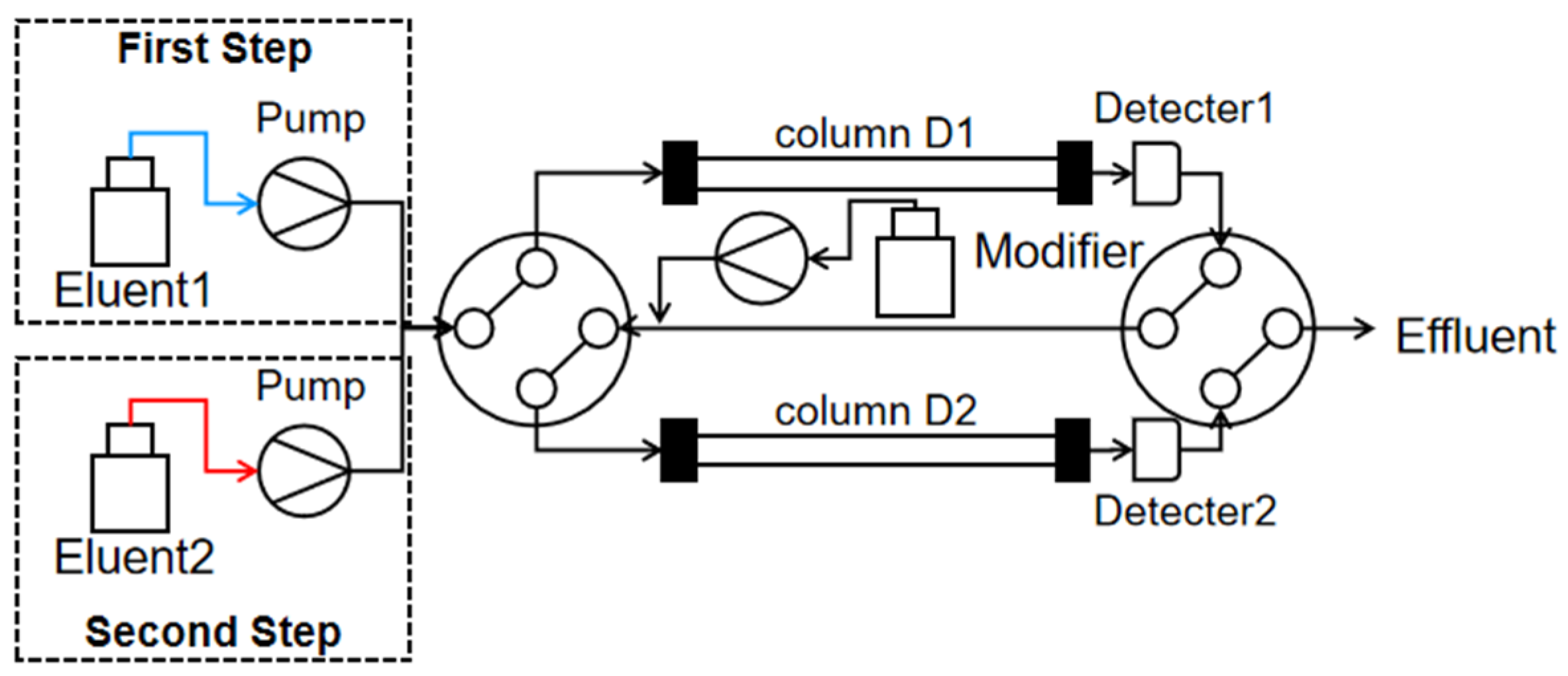
In summary, a twin-column recycling chromatographic separation system based on a spatial step-gradient solvent strategy is constructed in this work (
Figure 1), and two purification strategies—namely spatial integration and system integration—are employed for the separation and purification of crude fidaxomicin fermentation products. The results demonstrate that the developed separation techniques and processes exhibit good applicability to fidaxomicin purification, providing a novel, comprehensive, and reliable technological route and solution for the development of green and cost-effective purification processes for fidaxomicin.
2. Experimental
2.1. Materials
Crude fidaxomicin was provided by Beijing Aonuo Technology Co., Ltd. (Beijing, China). Methanol (analytical grade, purity ≥ 99.5%) and acetonitrile (analytical grade, purity ≥ 99.5%) were purchased from Sinopharm Chemical Reagent Co., Ltd. (Shanghai, China). Purified water used in the experiments was a commercial product supplied by Hangzhou Wahaha Group Co., Ltd. (Hangzhou, China).
2.2. Sample Analysis
Qualitative and quantitative analyses of all samples were performed using high-performance liquid chromatography (HPLC). The analyses were conducted on an i-Chrom 5100 HPLC system (Dalian Elite Analytical Instruments Co., Ltd., Dalian, China) equipped with an XBridge R-C18 column (5 μm, 4.6 × 250 mm; Waters, Milford, MA, USA). The detection wavelength was set at 228 nm. The mobile phase consisted of phase A and phase B mixed at a volume ratio of 70:30, where phase A was a 1.0 mg/mL sodium hydrogen phosphate solution prepared in methanol/water (80/20, v/v) and adjusted to pH 7.0 with aqueous ammonia, and phase B was pure acetonitrile. The flow rate was maintained at 1.0 mL/min.
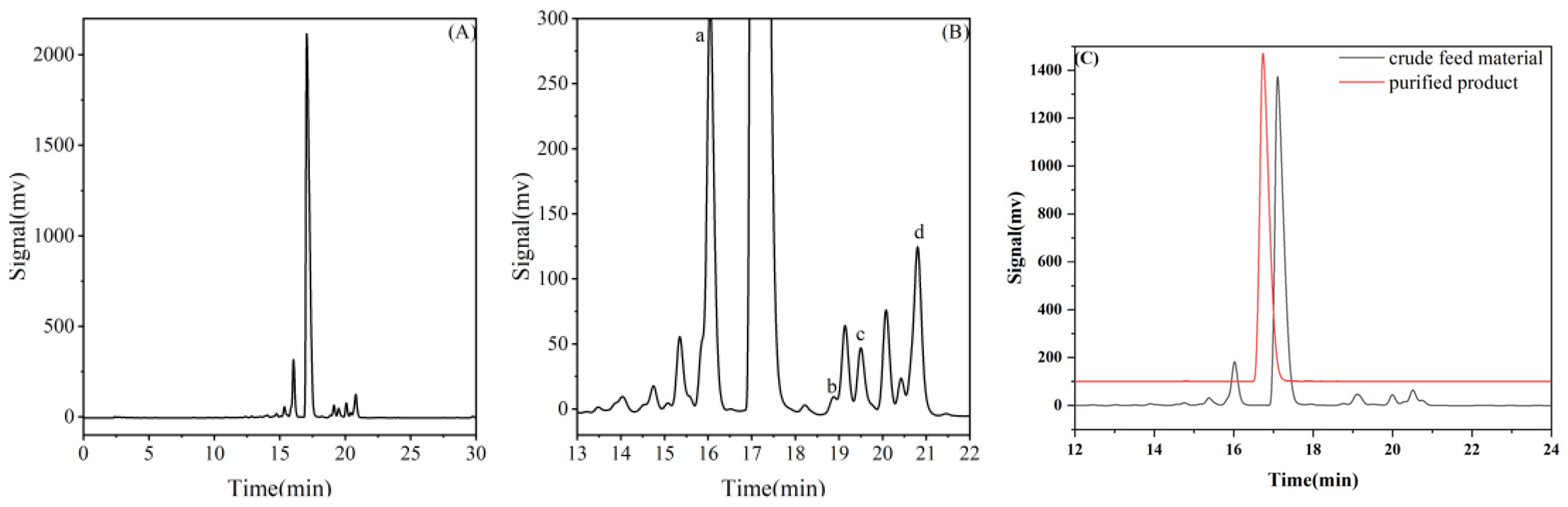
Figure 2 shows the HPLC chromatogram of the crude fidaxomicin sample, in which the target compound eluted at 17.1 min with a content of 75.53%. In addition, the overlaid chromatograms of the crude feed material and purified product are presented in
Figure 2C, providing a direct comparison of the chromatographic profiles before and after purification. Preliminary studies identified impurities a (retention time: 16.29 min), b (18.89 min), c (19.64 min), and d (20.95 min) as the major difficult-to-separate impurities, with contents of 8.11%, 0.27%, 1.33%, and 3.48%, respectively. In this study, the main impurity peaks adjacent to fidaxomicin were labeled as a, b, c, and d according to their elution order for chromatographic discussion, since the focus of this work was process development and separation behavior rather than complete structural identification of all impurity components. The purification targets of this study were defined as follows: fidaxomicin purity ≥ 99.5%, content of each individual impurity < 0.1%, and overall recovery ≥ 70%.
2.3. Separation Equipment
The solvent-gradient twin-column recycling chromatography system was supplied by Beijing Aonuo Technology Co., Ltd. The system consisted of three LC2000 high-pressure constant-flow pumps for delivering the feed solution, modifier, and eluent, respectively; two two-position four-port valves for switching the connection configuration of the two chromatographic columns; and two UV2000 ultraviolet detectors installed downstream of each column to monitor concentration changes in the eluted components in real time. Preparative C8 columns (10 μm, 10 × 250 mm) were also provided by Beijing Aonuo Technology Co., Ltd. In the present twin-column recycling setup, the extra-column volume in the internal circulation loop was minimized by using short connecting tubing and compact valve connections, and its effect on the overall separation was considered negligible relative to the total column volume.
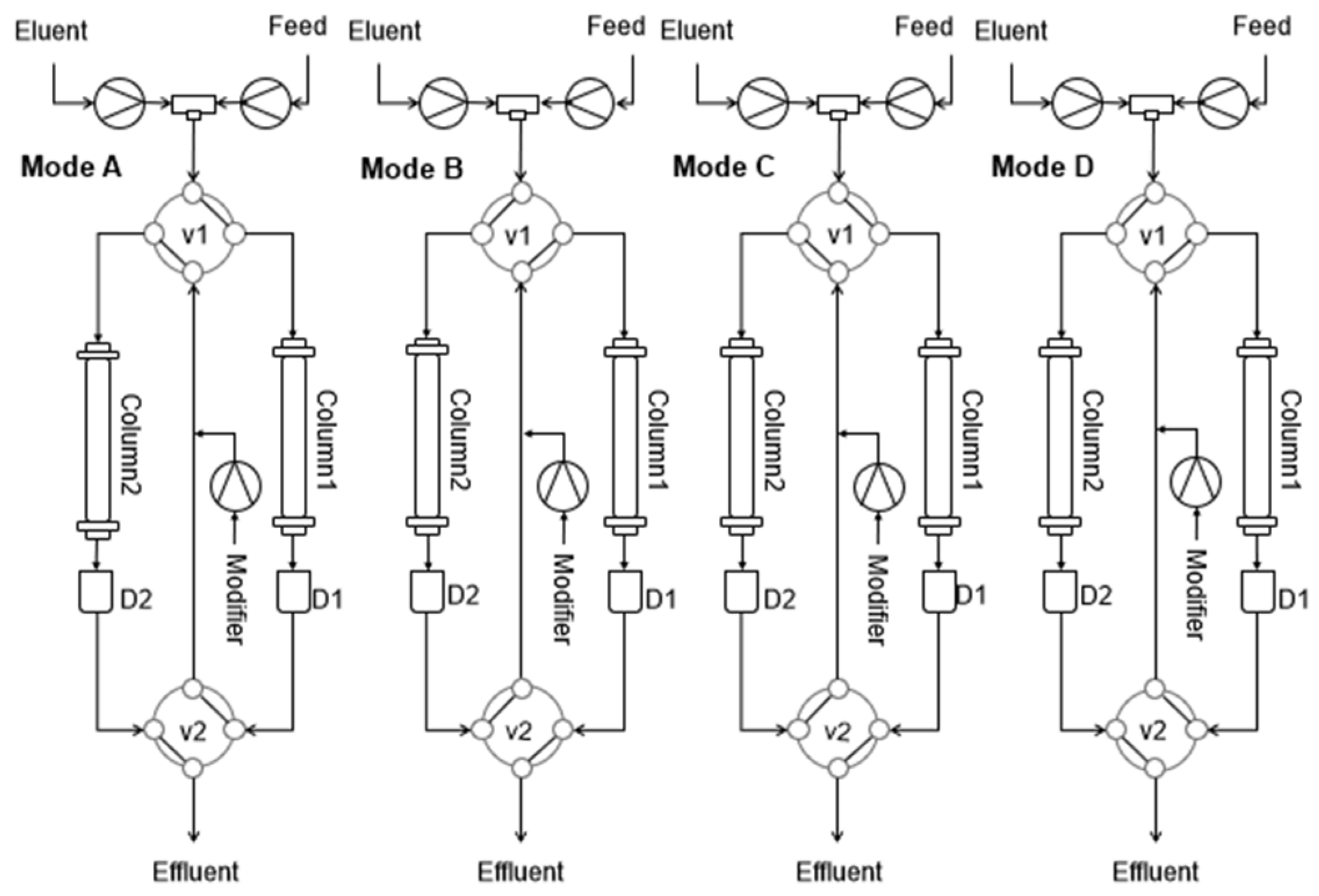
Through programmed valve control, the chromatographic system can be switched among four operating modes, denoted as modes A, B, C, and D (
Figure 3), enabling cyclic separation and precise fraction cutting of the target compound and impurities. The core functions of each mode are described as follows: (i) mode A (column 1 → column 2 in series) and mode B (column 2 → column 1 in series) are alternately applied to allow the eluent to flow sequentially through the two columns in series, thereby extending the effective column length and enhancing separation of the target compound; (ii) mode C (single operation of column 1) and mode D (single operation of column 2) are independent single-column elution modes, which are used to elute the separated components retained in an individual column. By switching between mode C (or D) and mode A (or B), on-line heart-cutting can be achieved, selectively retaining the target fraction within the system. For example, in mode C, the early-eluting impurities are discharged from the system at the outlet of column 1; when the target compound approaches the outlet of column 1, the system switches to mode A to transfer the target compound to column 2; after the target compound has completely entered column 2, the system switches back to mode C to elute the late-eluting impurities retained in column 1.
3. Separation Process and Process Design
3.1. Single-Column Chromatographic Separation
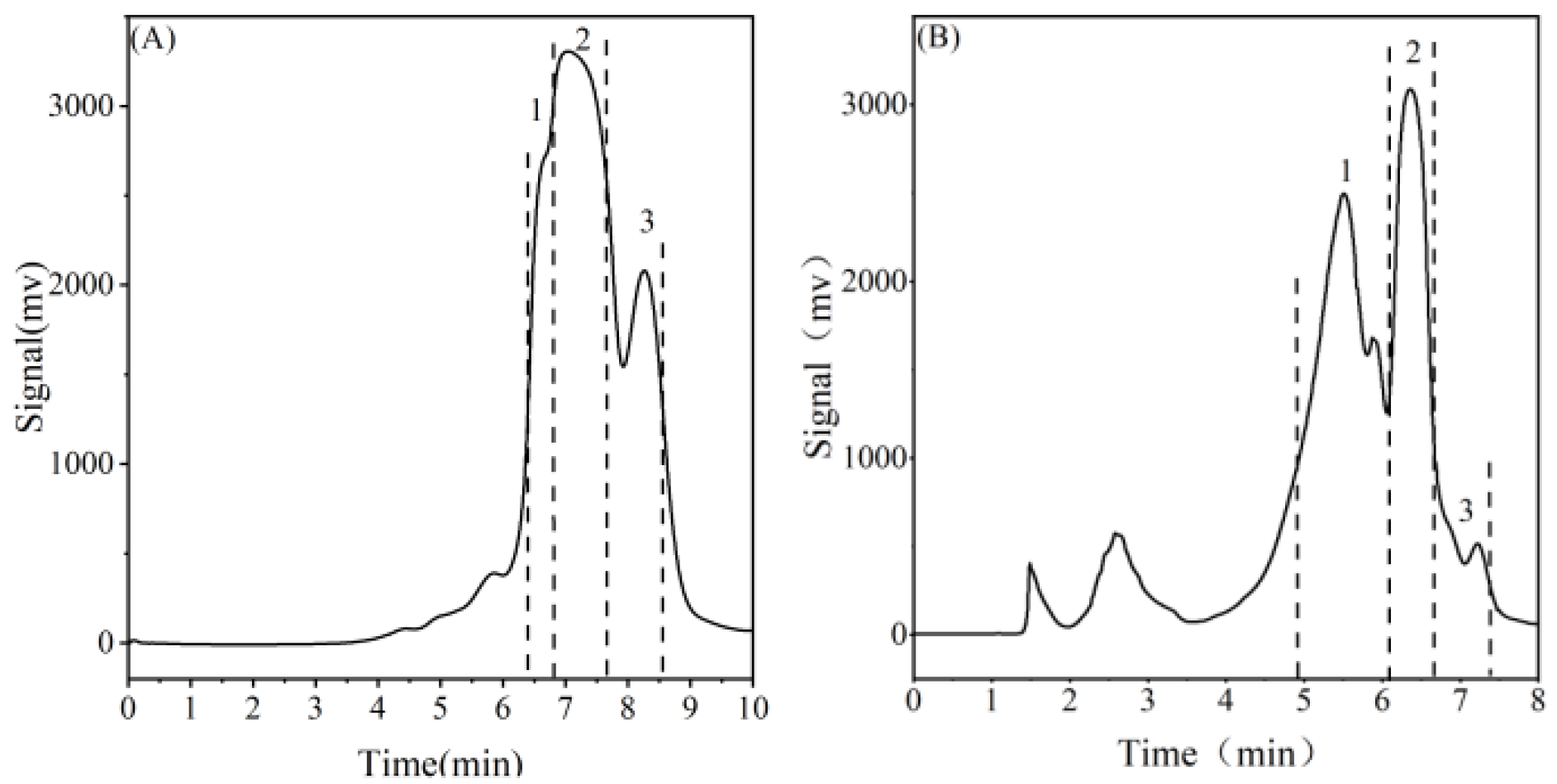
To clarify the separation performance of a single chromatographic system toward impurities, single-column separation experiments were first conducted. Specifically, 1 mL of the fidaxomicin feed solution was injected into a single preparative C8 column, and elution was performed using either methanol/water (80/20,
v/
v) or acetonitrile/water (70/30,
v/
v) as the mobile phase at a flow rate of 4 mL/min. The corresponding elution profiles obtained with the two mobile phases are shown in
Figure 4A and
Figure 4B, respectively.
During elution with each mobile phase, three fractions were collected according to peak shape and subsequently analyzed by off-line HPLC to determine their compositions. The results showed that the target compound was mainly concentrated in fraction 2, whereas fractions 1 and 3 primarily contained related impurities. Further analysis revealed that methanol/water and acetonitrile/water exhibited highly complementary separation selectivity toward the key impurities a–d (as summarized in
Table 1). The methanol/water system enabled effective separation of impurities b and d from the target compound, but showed pronounced co-elution of impurities a and c with the target compound. Accordingly, the purity of fidaxomicin in fraction 2 obtained with methanol/water was only 96.07%, with impurities a and c still present at 1.20% and 0.61%, respectively. In contrast, the acetonitrile/water system allowed efficient separation of impurities a and c, while failing to prevent co-elution of the target compound with certain impurities b and d. Under this condition, the purity of fidaxomicin in fraction 2 was 97.68%, while impurities b and d remained at 0.38% and 1.08%, respectively. These results confirm that, although the target compound could be enriched in fraction 2 under both binary mobile-phase systems, the corresponding product-containing fractions still failed to meet the preset product specifications (fidaxomicin purity ≥ 99.5% and each individual impurity < 0.1%). Therefore, neither binary mobile phase alone can independently achieve the desired purification target for crude fidaxomicin.
These results clearly demonstrate the limitations of a single binary solvent system in handling complex fermentation-derived crude fidaxomicin, as it is difficult to satisfy the separation requirements for all critical impurities under a single chromatographic condition. This implies that, when a conventional single-column chromatographic mode is employed, co-elution of the target compound with certain impurities is unavoidable regardless of which binary mobile phase is selected. Alternatively, purification based on dual-step single-column sequential elution (i.e., performing two independent single-column separations sequentially using the two mobile phases) would significantly increase solvent consumption and equipment operating costs, and may also reduce product recovery due to repeated sample transfer and concentration steps. These drawbacks further highlight the necessity of developing integrated separation processes.
3.2. Spatial-Integration-Oriented Twin-Column Recycling Chromatographic Separation Process
Considering that a single binary mobile phase cannot completely remove all key impurities present in crude fidaxomicin, and that the dual-step single-column sequential elution discussed in
Section 3.1 suffers from high cost and low recovery, a solvent-gradient recycling chromatographic process oriented toward spatial integration was developed in this study. Through precise valve control, dual-step separations are integrated into a single twin-column system, enabling sequential switching of binary mobile phases combined with recycling elution. This integrated approach allows completion of the entire separation process without any offline sample transfer. In this section, the detailed process and operational procedure are described for the case in which methanol/water (80/20,
v/
v) is used as the first-stage mobile phase and acetonitrile/water (70/30,
v/
v) as the second-stage mobile phase.
First stage (methanol/water mobile phase stage).
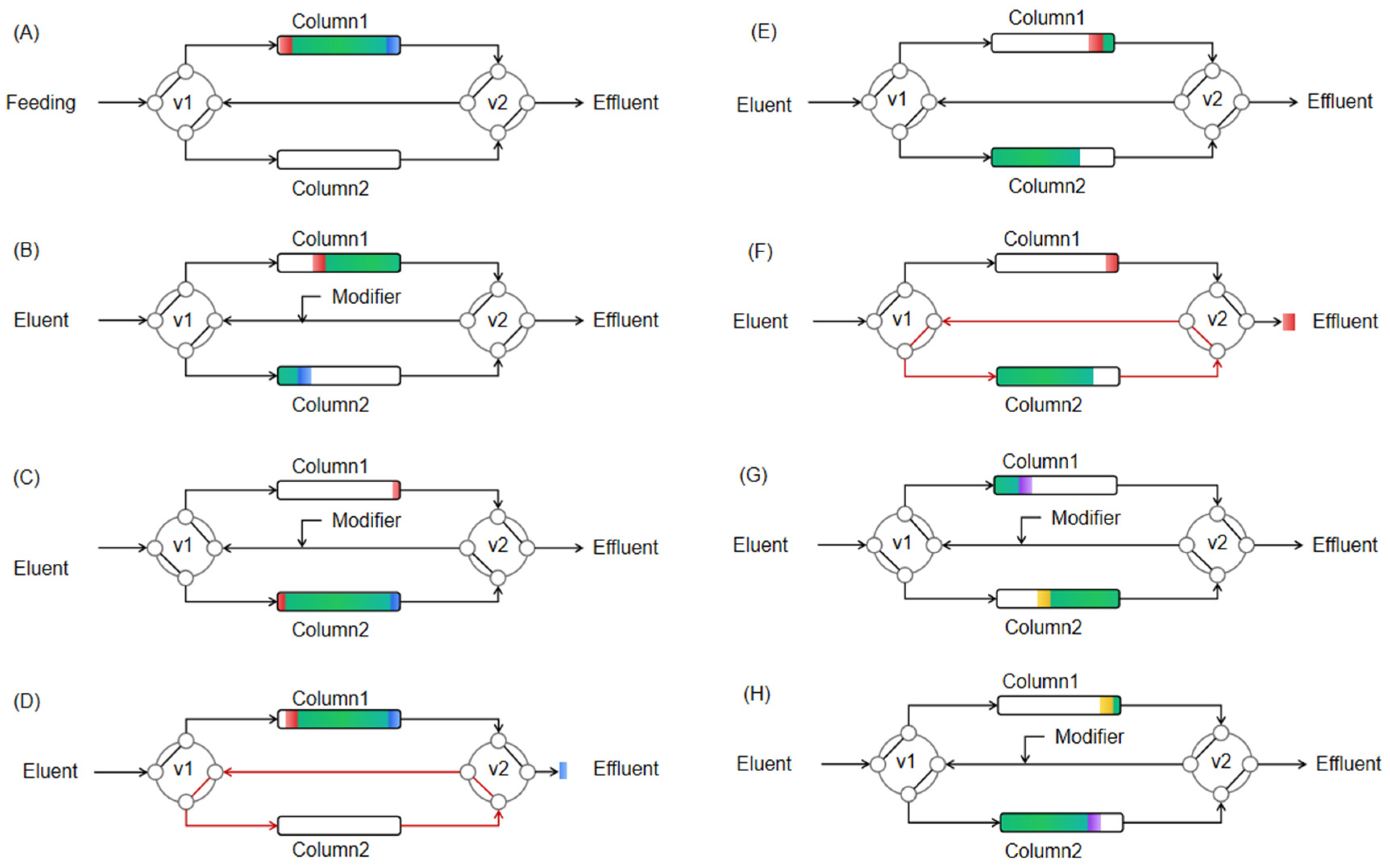
The primary objective of the first stage is to exploit the selectivity of the methanol/water system to remove impurities b and d through recycling elution combined with precise fraction cutting. The specific operation is as follows. After the fidaxomicin feed solution is injected into the twin-column recycling chromatographic system (
Figure 5A), elution with the methanol/water mobile phase is initiated, transferring the separated components from column 1 to column 2 (
Figure 5B). Subsequently, the valve configuration is switched to elute the components from column 2 back to column 1 (
Figure 5C). This alternating recycling operation is repeated to enhance separation between the target compound and impurities b and d. Once sufficient separation between the target compound and impurities b and d is achieved, the valve configuration is switched to disconnect the two columns, allowing the early-eluting impurity d retained in the upstream column to be discharged from the system (
Figure 5D). The valves are then switched again to reconnect the columns in series, transferring and retaining the target compound in the downstream column (
Figure 5E). Finally, the columns are disconnected once more to completely elute the late-eluting impurity
b remaining in the upstream column (
Figure 5F), thereby completing impurity removal in the first stage. Here, “sufficient separation” refers to the operational state in which the impurity-containing leading-edge and trailing-edge fractions can be removed by on-line heart-cutting under the dynamic switching criterion, while the retained target fraction can ultimately meet the preset product specifications.
Second stage (acetonitrile/water mobile phase stage).
The primary objective of the second stage is to exploit the complementary selectivity of the acetonitrile/water system to separate the target compound from the remaining impurities a and c. After impurities b and d are completely discharged during the first stage, the mobile phase of the system is switched to acetonitrile/water (70/30,
v/
v), and the alternating twin-column series recycling mode is restored (i.e., alternating between the column 1 → column 2 and column 2 → column 1 series configurations, corresponding to
Figure 5G,H). Through continuous recycling elution, deep separation between the target compound and impurities a and c is progressively enhanced until the target compound reaches the preset purity requirement.
It should be emphasized that during the recycling separation in both stages (i.e., alternating between
Figure 5B,C in the first stage, and between
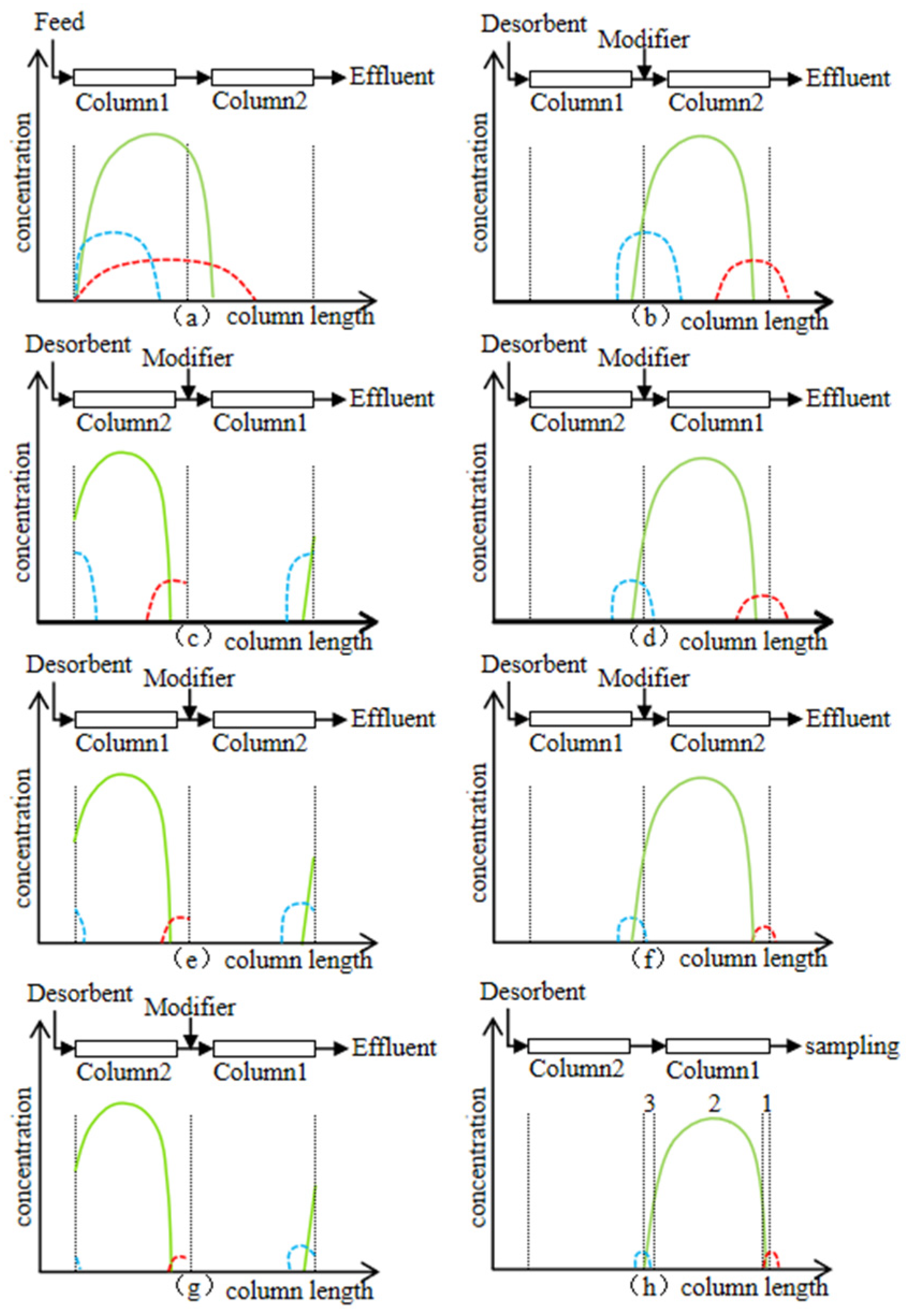
Figure 5G,H in the second stage), pure water is continuously injected as a modifier through a dedicated channel at the connection between the two columns. This operation establishes a stable solvent-strength gradient along the upstream and downstream columns. As the target compound migrates from the upstream strong-solvent environment to the downstream weak-solvent environment, the migration velocity of the trailing edge exceeds that of the leading edge, thereby generating a pronounced band compression effect. This effect effectively counteracts target band broadening caused by axial dispersion and nonlinear adsorption during recycling, while simultaneously maintaining both separation efficiency and target compound concentration. For clearer presentation, the operating sequence and the associated band-compression effect during solvent-gradient twin-column recycling chromatography are schematically illustrated in
Figure 6.
3.3. Evaluation Metrics for Separation Performance
Separation performance was quantitatively evaluated using purity (Pu), recovery (Y), solvent consumption (SC), and productivity (Pr). Purity was defined as the percentage of fidaxomicin in the collected product fraction based on off-line HPLC peak-area normalization. Recovery, solvent consumption, and productivity were calculated according to Equations (1)–(3), respectively:
Here,
and
denote the concentration and volume of the target product fraction, respectively, while
and
represent the concentration and volume of the feed solution.
is the volume of the effluent stream.
and
correspond to the volumes of the fractions cut from the leading edge (blue front-impurity region in
Figure 5D) and the trailing edge (red rear-impurity region in
Figure 5F) of the main chromatographic band, respectively. In Equation (3),
is the total run time and
is the column volume. Fractions not meeting the product specifications (fidaxomicin purity ≥ 99.5% and each individual impurity < 0.1%) were regarded as overlap or impurity-containing fractions and were excluded from target product collection.
3.4. Dynamic Control of Valve Switching
During twin-column recycling chromatographic separation, operating parameters such as flow rate and temperature often exhibit slight fluctuations due to external environmental influences and equipment performance. As a result, ideal steady-state operating conditions are difficult to maintain over extended periods, leading to fluctuations in the migration velocity of the target compound. Under such conditions, conventional valve switching strategies based on fixed switching cycles are prone to component loss or incomplete transfer caused by variations in the migration behavior of the target compound. To address these issues, a dynamic switching strategy based on real-time signal monitoring was adopted in this study. The core advantage of this strategy is that it does not rely on stable operating conditions; instead, valve switching is regulated solely according to whether the target compound has reached a predefined “designated position.” This approach effectively mitigates the adverse effects induced by operating-condition fluctuations, significantly enhances process stability and product recovery, and reduces manual intervention as well as dependence on operator experience, thereby laying a foundation for process automation and intelligent control.
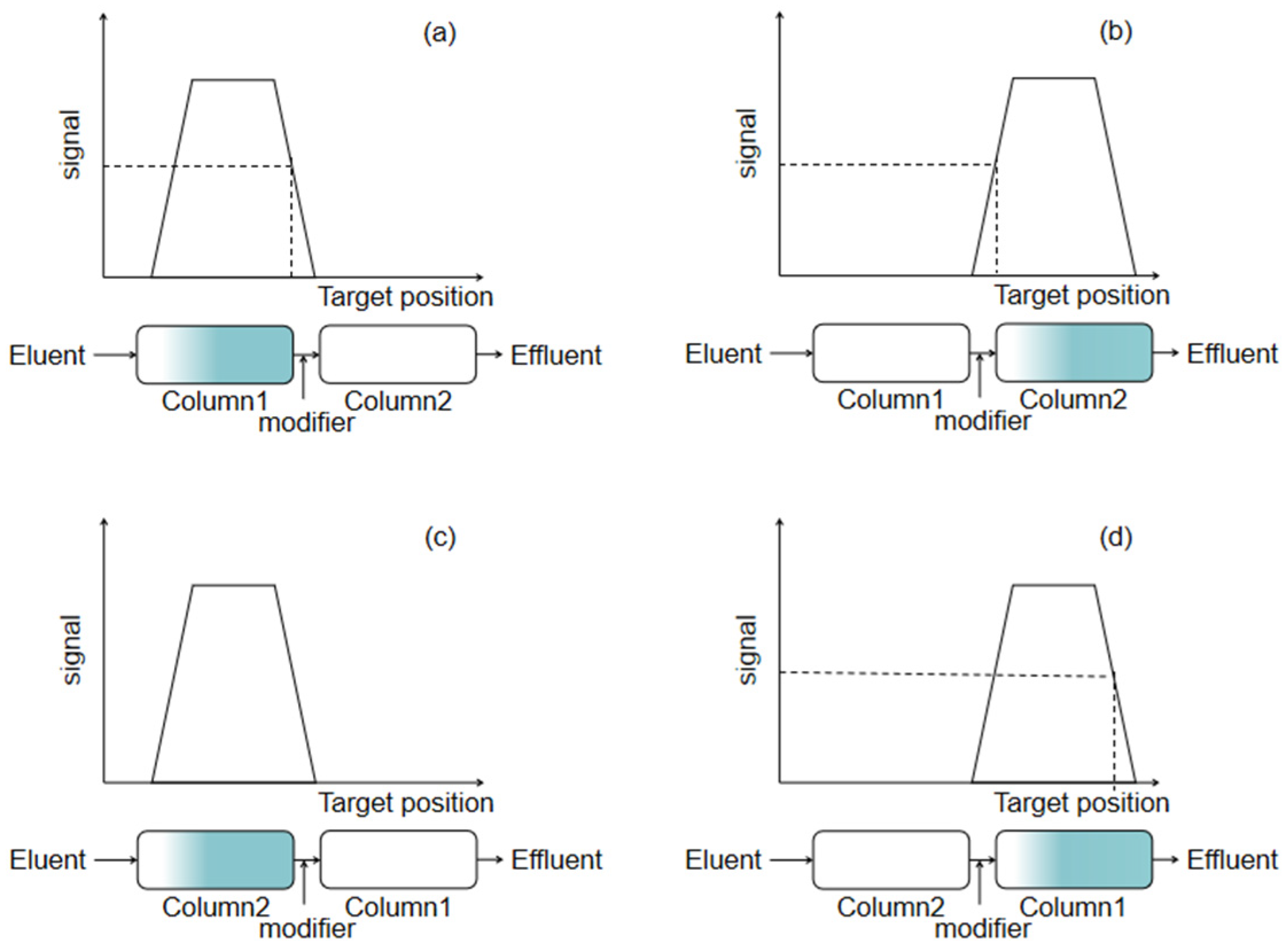
In this strategy, the real-time UV signal from the detector located at the outlet of column 1 was used as the sole and unified criterion for valve switching. Automatic switching was triggered when the detector signal of the target compound rose above or decayed below the preset threshold of 2500, corresponding to the leading-edge rise criterion and trailing-edge decay criterion, respectively. The specific operational procedure, as illustrated in
Figure 7, is described as follows. When the detector signal at the outlet of column 1 (upstream) rises to the leading-edge threshold (
Figure 7a), the target compound is considered to begin entering column 2 (downstream). When the signal intensity subsequently decays to the trailing-edge threshold (
Figure 7b), the target compound is deemed to have been completely eluted from column 1 into column 2, and the system immediately switches the upstream and downstream positions of columns 1 and 2, initiating transfer of the target compound from column 2 (upstream) to column 1 (downstream) (
Figure 7c). When the detector at the outlet of column 1 again detects the leading-edge signal of the target compound reaching the preset threshold (
Figure 7d), this indicates that the target compound has completed one full recycling cycle and returned to the outlet of column 1, and the system executes the switching command to restore column 1 as the upstream column, thereby entering the next recycling separation cycle.
4. Results and Discussion
Three sets of twin-column recycling chromatographic experiments were conducted in this study for the separation and purification of fidaxomicin. The operating conditions and corresponding analytical results are summarized in
Table 2.
4.1. Separation Performance of the Spatial Integration Strategy (Binary Mobile-Phase Switching)
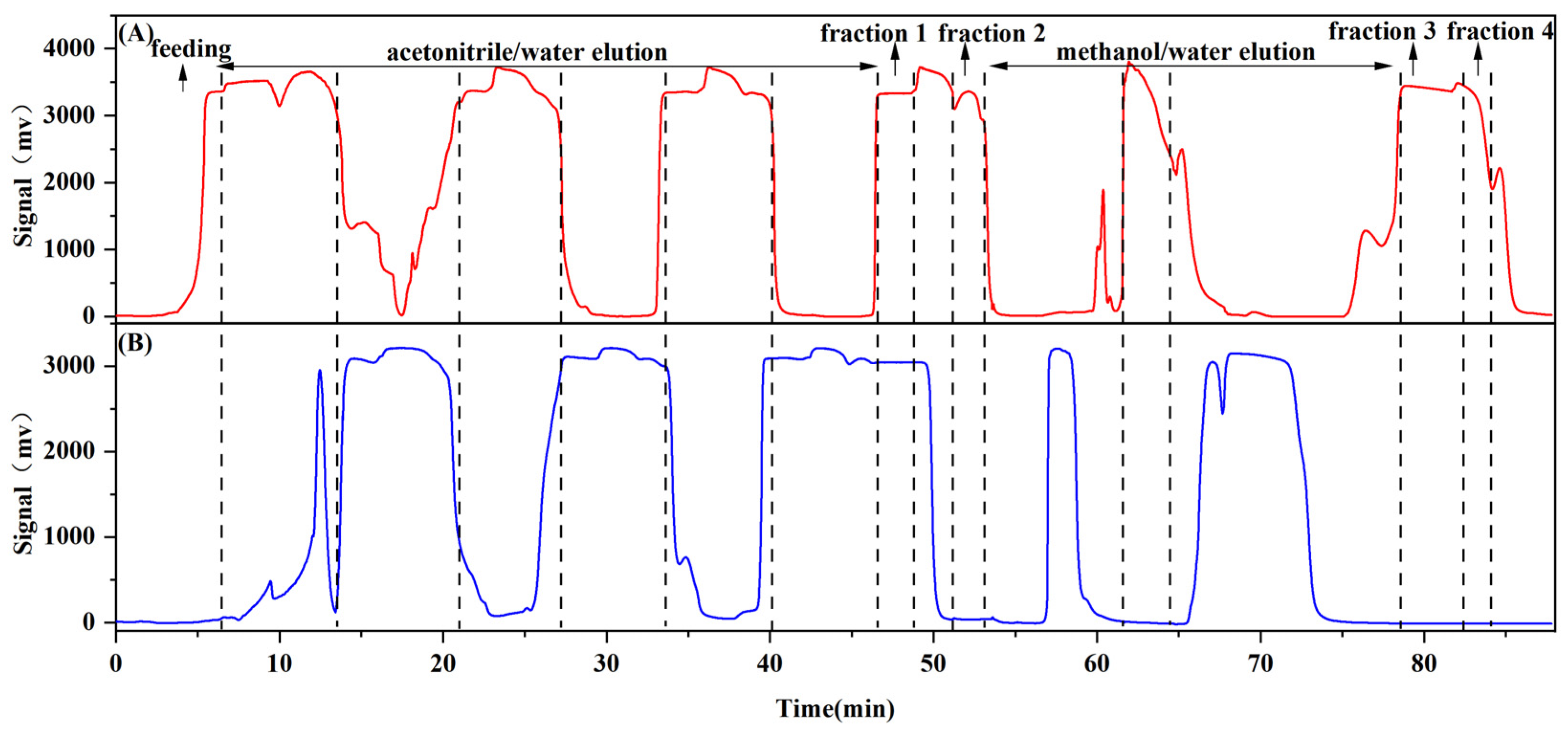
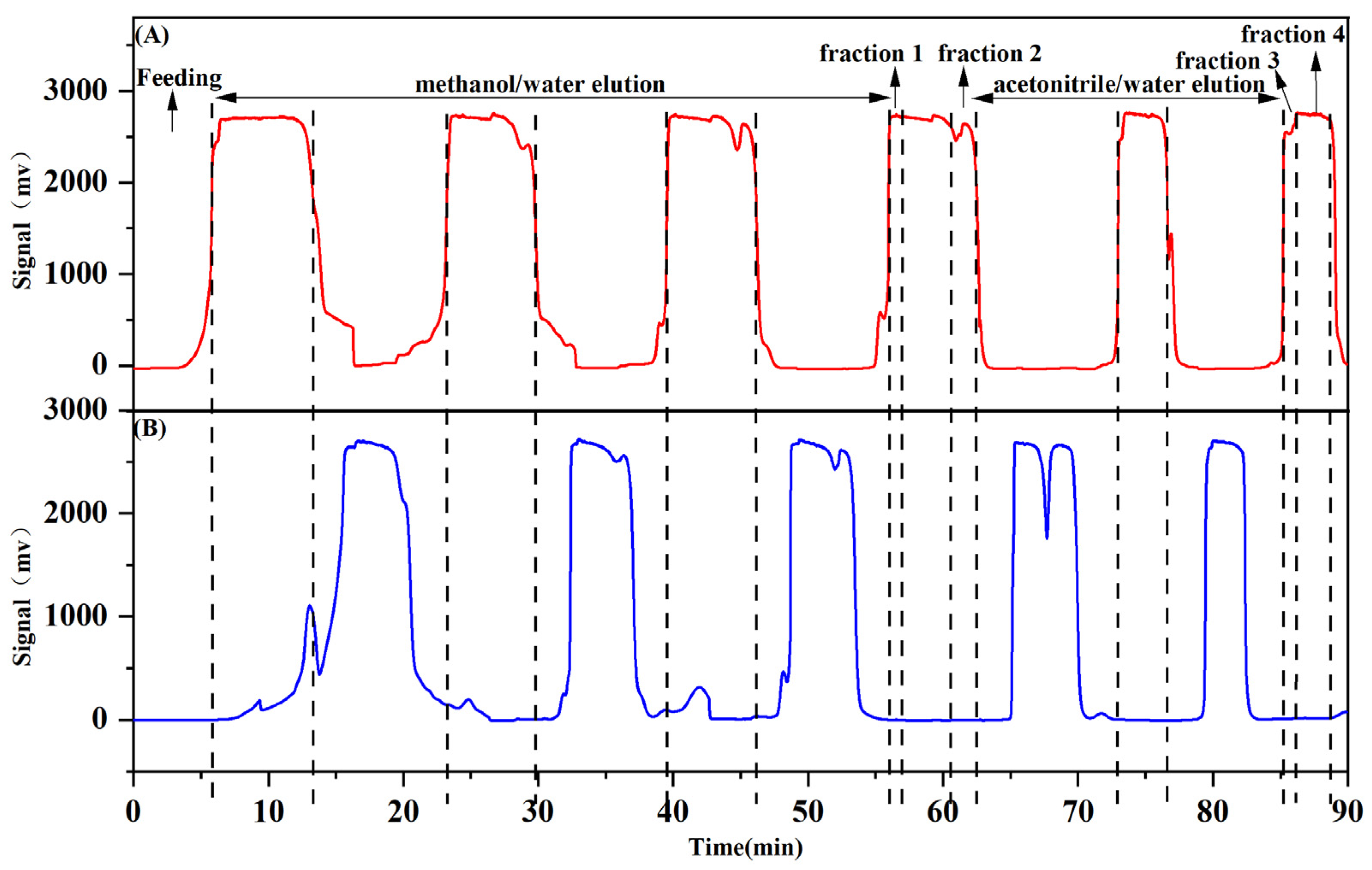
The real-time elution profiles obtained in Run 1 are shown in
Figure 8. After completion of sample loading, the first-stage separation was performed using methanol/water (80/20,
v/
v) as the mobile phase. Based on the dynamic switching strategy proposed in
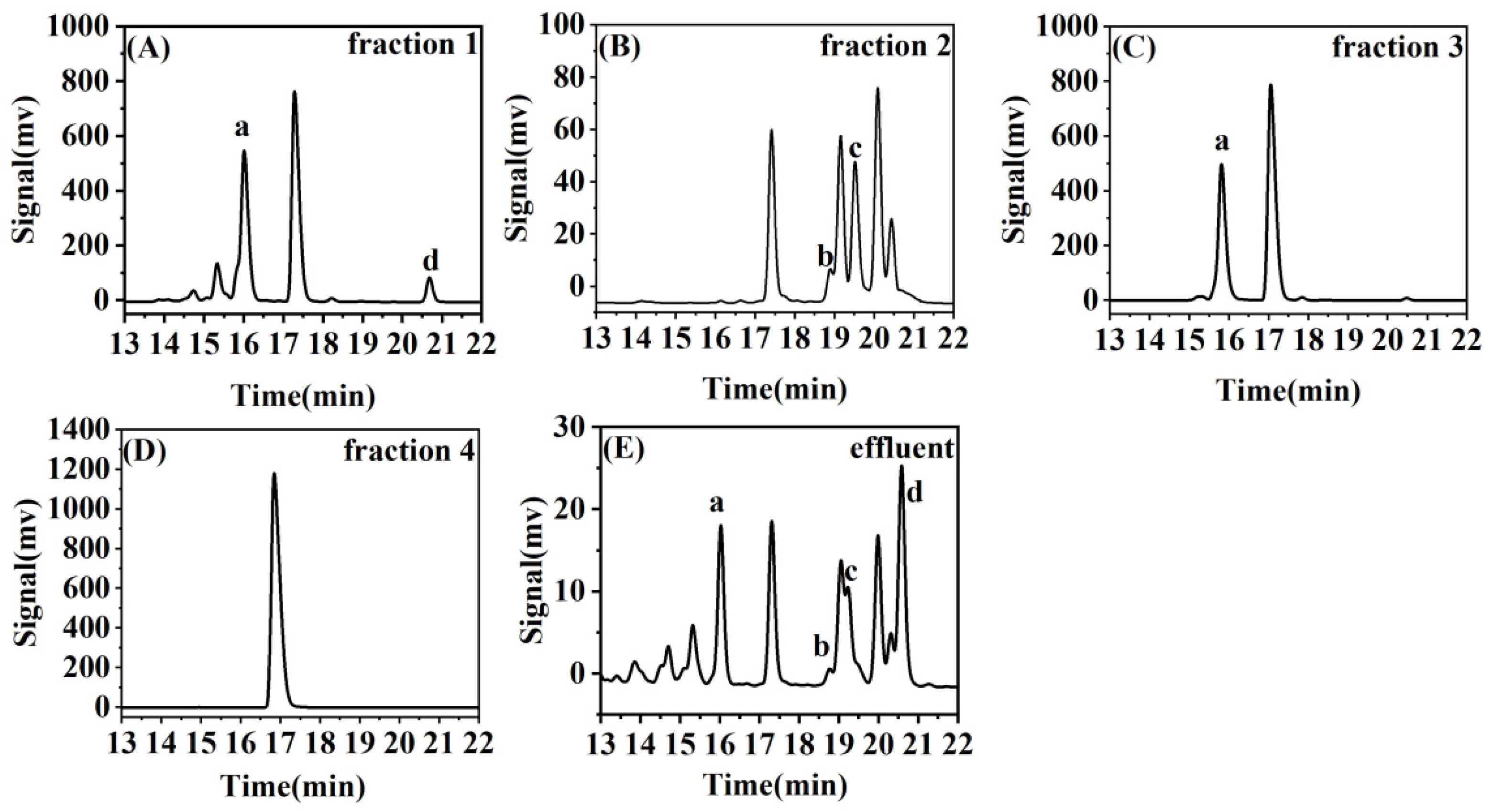
Section 3.4, effective separation between the target compound and the adjacent impurities b and d was achieved after six switching cycles. Through on-line heart-cutting, the leading impurity d (
Figure 9A) and the trailing impurity b (
Figure 9B) were sequentially removed, while the target compound was transferred and retained in the downstream column. It should be noted that although impurity a appeared in the front-impurity fraction, it was not completely removed and still largely overlapped with the target compound band, necessitating further separation using the acetonitrile/water system.
After impurities b and d were completely eliminated, the system operation was temporarily paused and the mobile phase was switched to acetonitrile/water (70/30,
v/
v) to initiate the second separation stage. Following an additional three switching cycles, the remaining impurities a and c were effectively separated. According to the real-time signal response of the detector at the outlet of column 1 (downstream), impurity fraction 3 (
Figure 9C, mainly containing impurity a) and target fraction 4 (
Figure 9D) were collected separately. HPLC analysis confirmed that fraction 4 met the product specifications, achieving a purity as high as 99.9%, an overall recovery of 75.27%, and a productivity of 307.22 g·L
−1·day
−1. Only 2.42% of the target compound was detected in the effluent discharged during the entire separation process (
Figure 9E), while the remaining loss (approximately 22%) mainly resulted from fraction cutting of impurity-containing streams.
To further verify the flexibility and reliability of the spatial integration strategy, the elution sequence of the two mobile phases was adjusted in Run 2. Specifically, acetonitrile/water (70/30,
v/
v) was first employed as the mobile phase for six switching cycles, followed by switching to methanol/water (80/20,
v/
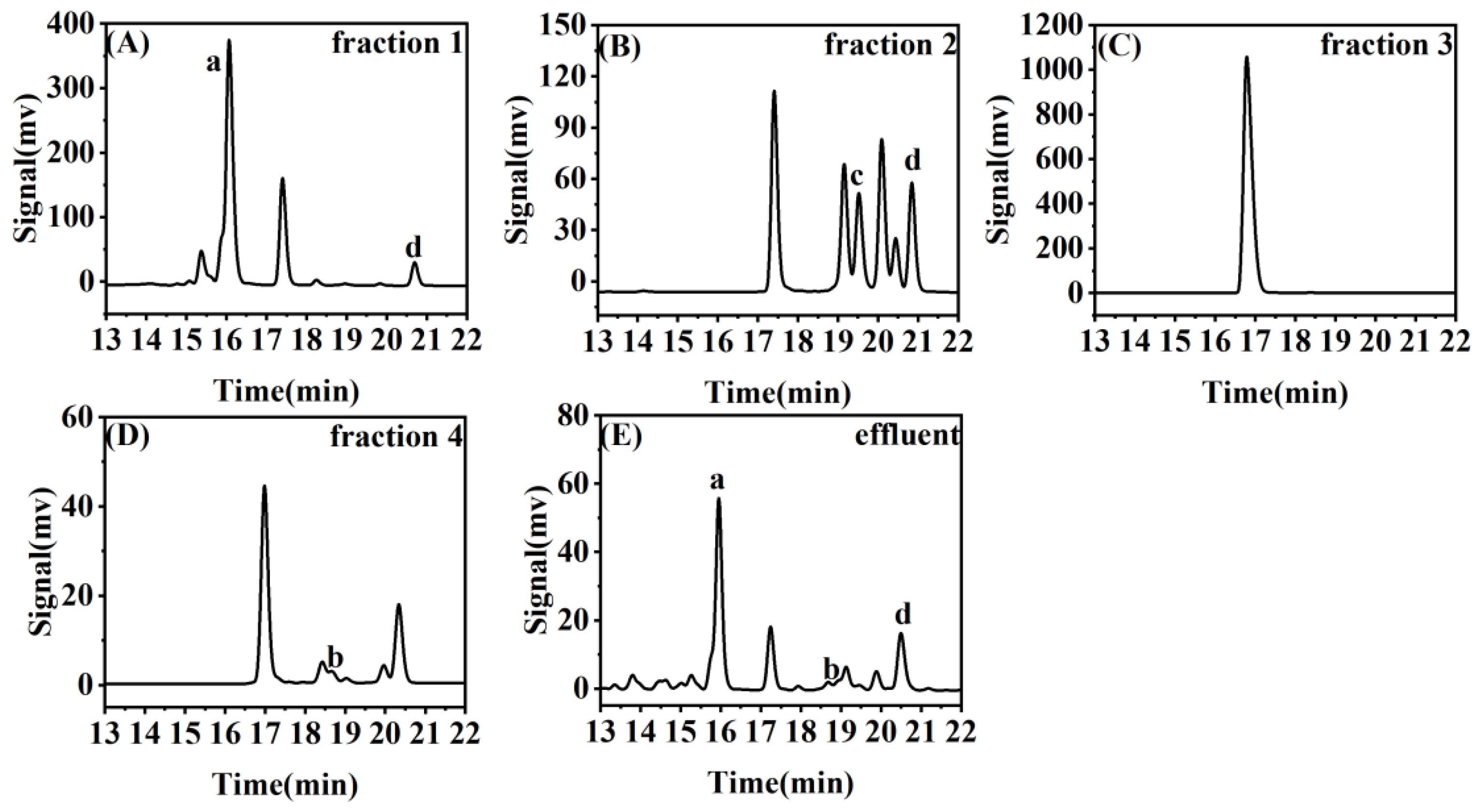
v) for an additional three switching cycles. The real-time elution profiles for the entire process are shown in
Figure 10. After completion of the first-stage elution, effective separation was achieved between the target compound and the front impurity
a (fraction 1,
Figure 11A) as well as the rear impurity
c (fraction 2,
Figure 11B). On-line heart-cutting was then performed via valve switching to remove the impurities on both sides, while selectively retaining and transferring the target compound to the downstream column.
After switching the mobile phase to initiate the second stage, elution was continued for three additional switching cycles. Under these elution conditions, impurity d exhibited significantly weaker retention than the target compound and behaved as an early-eluting component during the switching cycles. Consequently, impurity d was not retained and was discharged from the system outlet into the effluent during this process (
Figure 11E). Ultimately, the target compound fraction 3 (
Figure 11C) and impurity fraction 4 (
Figure 11D) were collected from the system outlet. HPLC analysis revealed that impurity fraction 4 mainly contained impurity b, whereas fraction 3 corresponded to fidaxomicin with a purity of 99.9%, an overall recovery of 78.77%, and a productivity of 328.82 g·L
−1·day
−1.
The results obtained from Run 1 and Run 2 collectively demonstrate the effectiveness and flexibility of the spatial integration strategy. By integrating dual-step separations into a single twin-column system, this strategy avoids the two-dimensional redundancy and interface dead-volume effects inherent to conventional two-dimensional chromatography. In combination with the complementary selectivity of the two mobile phases, targeted removal of different types of difficult-to-separate impurities can be achieved. In addition, the band compression effect induced by the introduction of pure water as a modifier effectively suppresses band broadening during recycling elution, allowing the target compound to maintain a high concentration and narrow band profile. This not only improves the accuracy of impurity cutting but also provides critical support for efficient transfer of the target compound between the two separation stages, contributing to the relatively high productivities achieved in Runs 1 and 2.
4.2. Separation Performance of the System Integration Strategy (One-Step Separation with a Ternary Mobile Phase)
To explore a more simplified separation scheme for fidaxomicin that does not require mobile-phase switching, the feasibility of the system integration strategy was evaluated in Run 3. In this approach, the two binary solvent systems, methanol/water and acetonitrile/water, were combined in defined proportions to construct a single ternary mobile phase composed of methanol/acetonitrile/water (37.5/37.5/25,
v/
v/
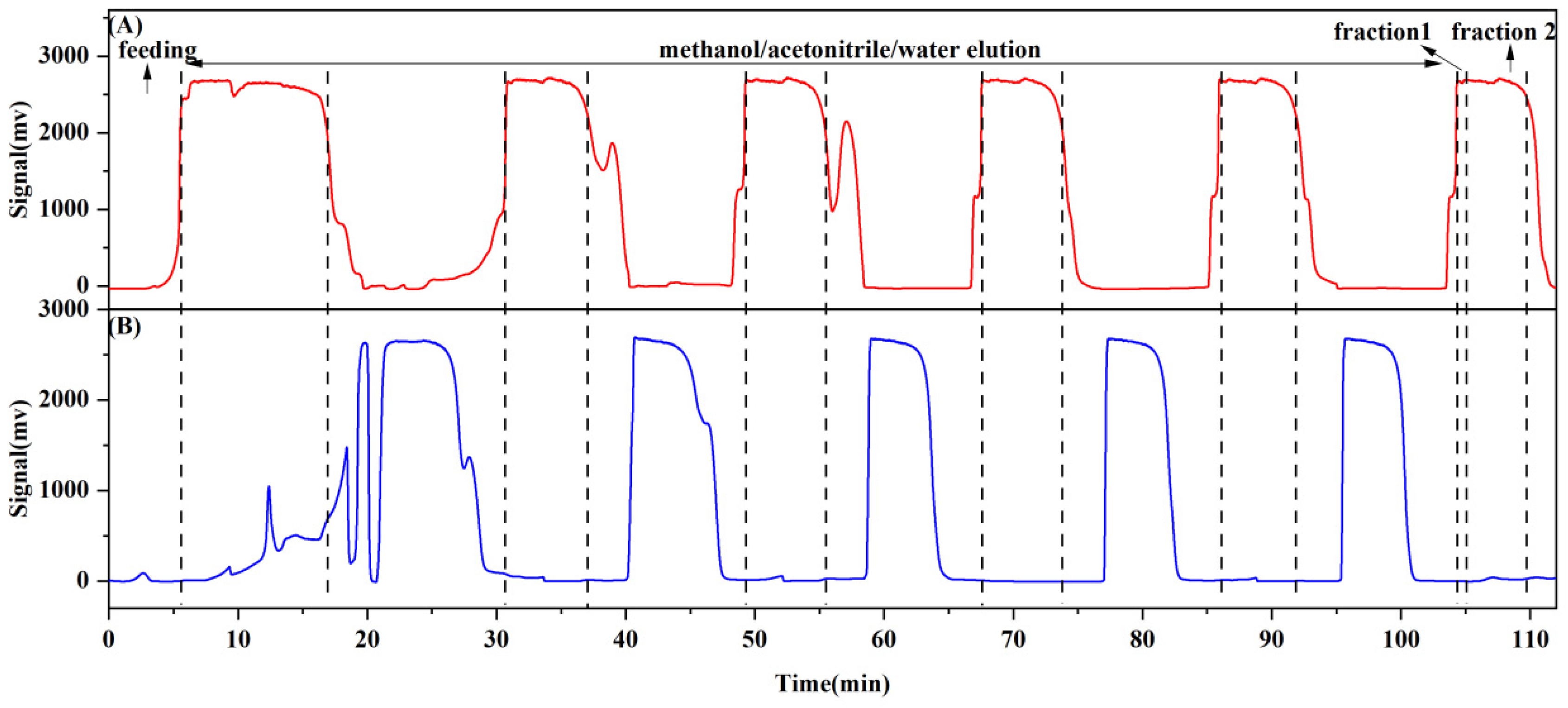
v). The separation performance of this system was then assessed. The real-time elution profiles (
Figure 12) show that, as elution proceeded, various impurities were gradually separated from the leading and trailing edges of the main chromatographic band. The results indicate that, under continuous elution using the single ternary mobile phase and applying the dynamic switching strategy described in
Section 3.4 for ten switching cycles, effective separation between the target compound and all key impurities was achieved.
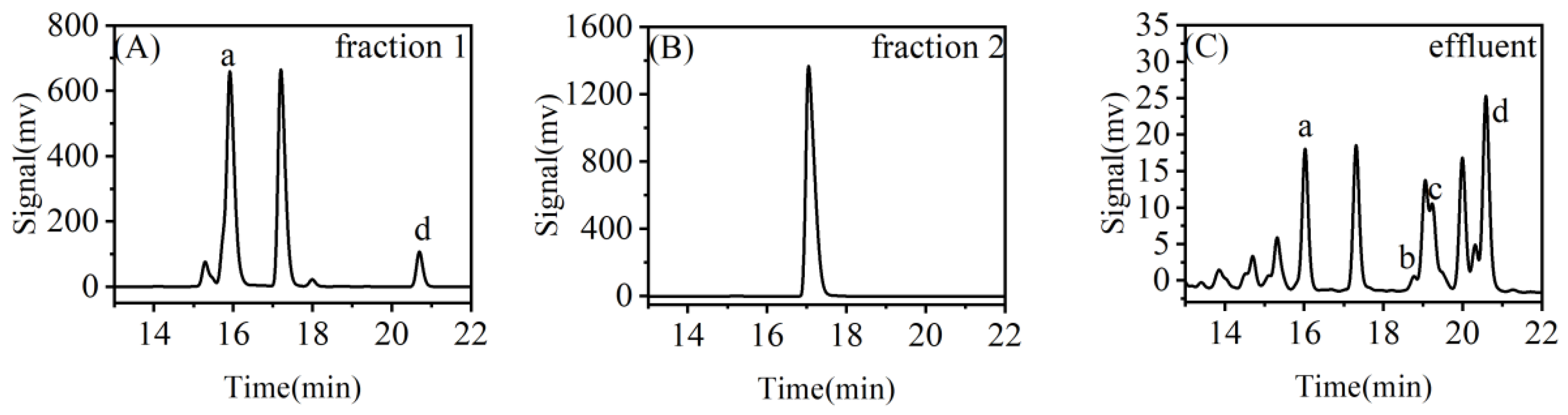
Detailed HPLC analysis clarified the composition of each collected fraction. The front impurities were effectively enriched in fraction 1 (
Figure 13A), while the target compound was individually collected as fraction 2 (
Figure 13B), exhibiting a purity of 99.9%, a recovery of 70.41%, and a productivity of 246.33 g·L
−1·day
−1. The remaining impurities were primarily concentrated in the effluent discharged during the recycling elution process (
Figure 13C).
4.3. Comparison of Separation Performance Between Spatial Integration and System Integration Strategies
As demonstrated in the preceding sections, both the spatial integration strategy and the system integration strategy were capable of achieving the preset purification target for crude fidaxomicin, affording a product purity of 99.9% with each individual impurity below 0.1%. However, owing to their different integration principles, the two strategies showed distinct performance characteristics in terms of recovery, solvent consumption, productivity, operational complexity, and potential applicability. Specifically, the spatial integration strategy (Runs 1 and 2) afforded recoveries of 75.27–78.77%, solvent consumptions of 704–720 mL·g−1, and productivities of 307.22–328.82 g·L−1·day−1, whereas the system integration strategy (Run 3) gave a recovery of 70.41%, a solvent consumption of 896 mL·g−1, and a productivity of 246.33 g·L−1·day−1. These results indicate that, although both strategies were effective for fidaxomicin purification, the spatial integration strategy exhibited superior overall preparative performance.
The main advantage of the system integration strategy lies in its operational simplicity. By combining the two binary solvent systems into a single ternary mobile phase, the entire purification process can be completed without mobile-phase switching, which simplifies system operation and avoids transient disturbances associated with solvent exchange. This feature is beneficial for rapid laboratory-scale preparation and contributes to stable process implementation. Nevertheless, the quantitative results show that this strategy was accompanied by lower recovery, higher solvent consumption, and lower productivity than the spatial integration strategy. In addition, the use of a ternary solvent system may increase the complexity of solvent recovery and reuse, which could reduce its economic attractiveness for larger-scale applications.
In contrast, the spatial integration strategy takes advantage of the complementary selectivity of methanol/water and acetonitrile/water by integrating two sequential separation stages into a single twin-column recycling system. This design enables targeted removal of different classes of difficult-to-separate impurities while avoiding intermediate offline transfer of the partially purified product. As reflected by the higher recoveries, lower solvent consumptions, and higher productivities obtained in Runs 1 and 2, this strategy provides better overall process efficiency and is therefore more attractive for preparative and potential scale-up applications. In particular, Run 2 gave the best overall performance among the three runs, with a recovery of 78.77%, a solvent consumption of 704 mL·g−1, and a productivity of 328.82 g·L−1·day−1, indicating that the order of binary mobile-phase switching can influence process efficiency even when the final product purity remains unchanged.
At the same time, the spatial integration strategy imposes higher requirements on process control. Accurate valve switching and precise impurity cutting are essential to prevent impurity carryover or unnecessary target loss, and the compatibility of the two mobile phases during switching must also be carefully considered to avoid peak distortion or transfer instability. Therefore, although the spatial integration strategy exhibited better quantitative performance in the present study, its practical implementation depends on precise control of the switching and fractionation operations. Overall, the results suggest that the system integration strategy is more suitable for simplified laboratory operation, whereas the spatial integration strategy is more advantageous when higher recovery, lower solvent consumption, and higher productivity are required.
5. Conclusions
In this study, two step-gradient twin-column recycling chromatographic strategies, namely spatial integration and system integration, were developed for the purification of crude fidaxomicin. Both strategies enabled efficient removal of the difficult-to-separate impurities and afforded fidaxomicin with a purity of 99.9% and each individual impurity below 0.1%.
Among the two strategies, spatial integration showed better overall preparative performance, giving recoveries of 75.27–78.77%, solvent consumptions of 704–720 mL·g−1, and productivities of 307.22–328.82 g·L−1·day−1. In contrast, system integration provided a simpler one-step operation, but with a lower recovery of 70.41%, a higher solvent consumption of 896 mL·g−1, and a lower productivity of 246.33 g·L−1·day−1. These results indicate that system integration is more suitable for simplified laboratory preparation, whereas spatial integration is more advantageous when higher process efficiency is required.
Overall, this work demonstrates the feasibility of integrating complementary solvent selectivity into a twin-column recycling chromatographic platform for fidaxomicin purification, and may provide a useful reference for the preparative separation of other complex fermentation-derived products.