Article

Dehydration Characteristics of Viscous Fine Coal in Compound Force-Field with Vibration and Airflow

1
State Power Construction Investment Inner Mongolia Energy Co., Ltd., Ordos 017209, China
2
Dadi Engineering Development (Group) Co., Ltd., Beijing 100102, China
3
School of Chemical Engineering and Technology, China University of Mining and Technology, Xuzhou 221116, China
*
Author to whom correspondence should be addressed.
Separations 2026, 13(4), 117; https://doi.org/10.3390/separations13040117
Submission received: 7 January 2026 / Revised: 31 January 2026 / Accepted: 10 February 2026 / Published: 15 April 2026
(This article belongs to the Special Issue Research Progress of Gas–Solid Fluidized Dry Separation)

Abstract

The paper utilizes the synergy of vibration and hot air flow to form a composite force field, and low-quality fine coal with viscous moisture is subjected to ash removal. The vibration signals of the bed surface at different positions are collected online using an accelerometer, and the dominant force affecting the vibration behavior of the bed is analyzed using signal time-domain analysis. By examining the impact of the synergy between vibration and airflow on the ash removal effect of low-quality, viscous moisture coal, the response of the drying and sorting behavior of low-quality fine coal to this synergy is elucidated. Based on the study of the experimental results of dehydration and ash removal of −6 + 1 mm fine coal, under the synergy of temperature and load force field, when the air flow temperature is 90 °C, v = 0.65 m/s, and f = 20 Hz, the collision force range between particles is 120 nN–370 N, which is different from that between particles. The liquid bridge force is large, which can achieve the fracture of liquid bridges between particles and strengthen the loose fluidization of particles. In addition, based on the study of the vibration characteristics of the bed surface at different positions, the vibration along the y-axis direction plays a dominant role in the density segregation behavior of the bed particles. With the increase in gas velocity and vibration frequency, the ash content of the selected clean coal exhibits a trend of first decreasing and then increasing. At the same time, the ash segregation degree initially increases and then decreases. Moreover, under the conditions of v = 0.65 m/s and f = 20 Hz, the separation effect of fine coal is the best. The separation accuracy E values of 1–6 mm without fine particles are 0.06 g/cm3, and the ash content of the clean coal is 12.55%.

1. Introduction

As China’s primary energy source, coal serves as the foundation for sustained economic development and acts as the ballast and stabilizer for energy security [1,2]. Clean and efficient coal utilization represents a critical national strategic imperative. Relevant ministries have successively proposed advancing clean and efficient coal washing and processing, as well as incorporating the promotion of clean and efficient utilization of fossil fuels, such as coal, into the key development objectives of the national 14th Five-Year Plan [3]. However, China faces a poor coal resource endowment, with vast reserves of low-quality coal characterized by high ash content and susceptibility to muddification, accounting for approximately 40% of total coal reserves. These primarily include lignite, long-flamed coal, and weakly coking coal [4]. Currently, China’s coal strategy centers on the western regions, where arid and water-scarce natural conditions constrain the clean and efficient utilization of coal resources [5]. This necessitates urgent research into clean and efficient methods for sorting and upgrading low-quality coal. Coal sorting removes impurities, enhances quality, meets user specifications, and reduces pollution and carbon emissions. Historically, China has relied primarily on wet methods, which are unsuitable for arid regions or low-rank coals, such as lignite, that slurry upon contact with water [6,7]. Dry separation, which does not require water, can effectively reduce coal ash content and increase calorific value [8,9]. With the development and application of coal mining technologies and methods, the quality of raw coal has become highly variable, with increased proportions of low-quality coal characterized by high ash and moisture content. Traditional dry separation methods often fail to effectively reduce the minimum particle size for separation, resulting in heat value loss due to the mismatched refined coal. Furthermore, the dry sorting process is constrained by excessively high moisture content and small particle size in raw coal, where coal particle adhesion degrades sorting efficiency. Consequently, sorting sticky, wet, low-quality fine-grained coal has become a significant challenge for efficient dry coal sorting, which limits the application of large-scale dry sorting across all particle sizes. Addressing the difficulty of fine coal separation in conventional fluidized beds, researchers worldwide have proposed introducing external force fields into standard gas–solid fluidized beds to create externally forced fluidized beds for fine coal separation [10,11,12,13]. They have systematically investigated characteristics such as bed fluidization, separation efficiency, and moisture migration during the fine coal separation process. Wei Lubin et al. [14] studied the migration patterns of external water in raw coal within vibrating fluidized beds, analyzed the effects of physical properties and operating parameters on fine coal separation efficiency, and established a mathematical model for heat and mass transfer in hot fluidized beds. Lü Bo et al. [15] studied the transport process of external water in coal within the bed layer, elucidating the migration and diffusion patterns of external water during the separation process. The China University of Mining and Technology proposed an integrated method for desulfurization and dewatering of low-quality coal in a vibrating fluidized bed, reducing the raw coal ash content by 17.09%, removing 25.72% of the moisture, and increasing the calorific value of the product by 2500 kcal/kg after treatment [16]. To prevent agglomeration caused by introduced external water, this study eliminated the de-mediuming step for post-selection clean coal. Instead, a composite force field combining vibration and airflow was employed to deash sticky, wet, low-quality fine coal. This study investigates the variation patterns of external water content in coal under different temperature conditions, reveals the response mechanisms of liquid bridge forces in viscous-wet particles and their synergistic interactions with temperature and load force fields, and analyzes the deliming effectiveness of low-quality fine coal under various operating conditions. By integrating mechanical signal analysis methods, it uncovers the response patterns of deliming in low-quality fine coal under the synergistic action of vibration and hot airflow, thereby achieving effective separation and quality enhancement of low-quality fine coal through a composite force field of vibration and airflow.

2. Experimental System and Materials

2.1. Experimental System

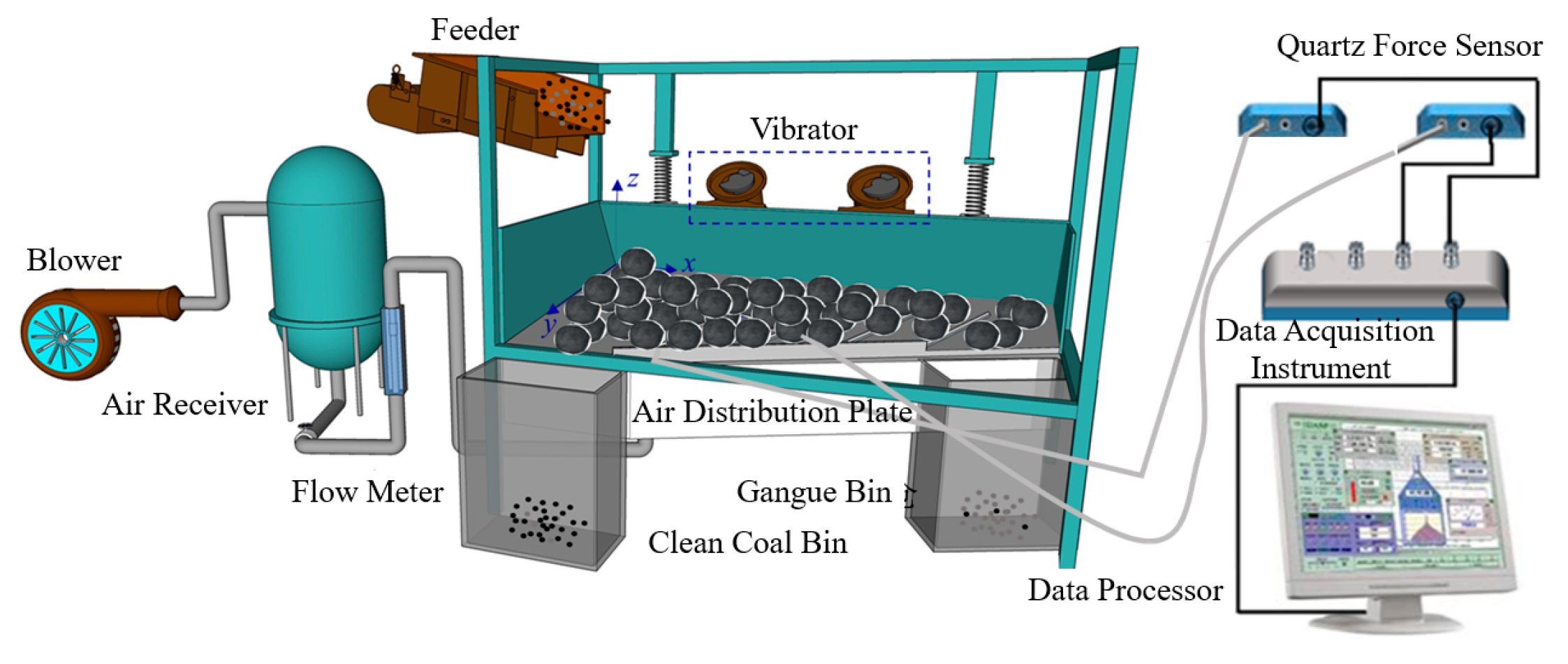
The experimental system for vibrating airflow-assisted force field separation of low-grade coal in this study is shown in Figure 1. A Roots blower and electromagnetic vibrating table introduce heated airflow and vibrational energy into different regions of the bed layer. By regulating the distribution intensity of heated airflow and vibration across distinct bed zones, uniform and stable fluidization of particles is maintained from the feed end to the discharge end. The Reynolds number (Re) was calculated based on the superficial gas velocity (v), particle diameter (dp), and gas properties to characterize the flow regime:
R e = ρ g v d p μ g
where ρg is gas density and μg is dynamic viscosity. The Re values ranged from 15 to 45, indicating transitional flow conditions in the vibrated fluidized bed. This parameter facilitates comparison with similar studies and enhances the interpretation of momentum transfer mechanisms.
Simultaneously, the synergistic action of vibration and airflow enables stepwise separation of bed particles. The coal sorting duration is 5 min. Upon completion, high-density gangue is discharged from the bed’s tail end, while low-density clean coal exits from the bed’s head end. Additionally, acceleration sensor probes are installed at equal intervals (10 cm) across the bed’s transverse position. During testing, varying fluidization states are created by adjusting parameters such as gas velocity, vibration frequency, and vibration amplitude. When the particle bed achieves stable fluidization under the synergistic effects of multiple parameters, vibration signals are measured at different bed locations [17]. Signal acquisition lasts for 2 min, followed by time-domain analysis of the vibration signals using signal processing methods.

2.2. Test Materials

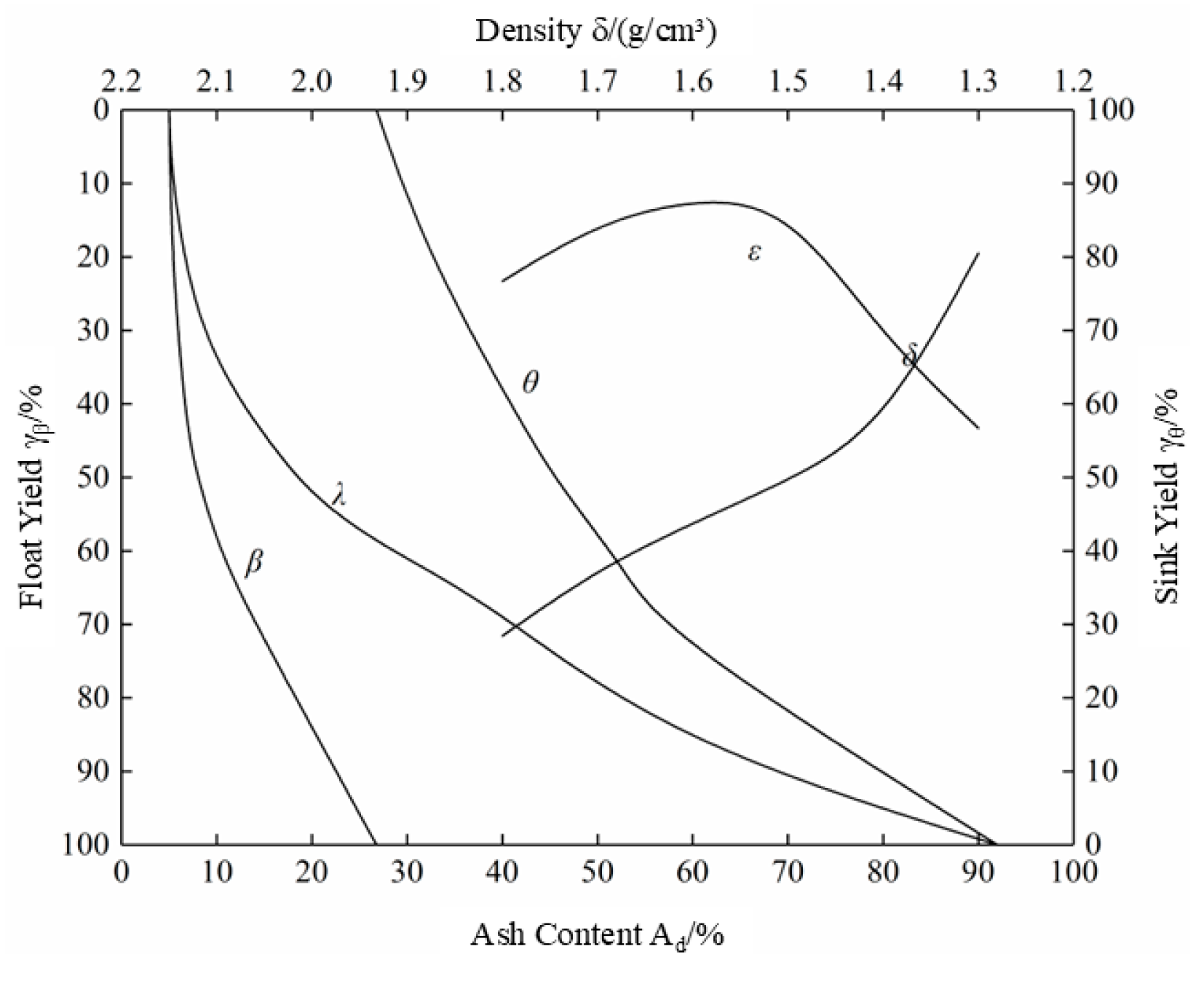
The sorting test utilized 6-1 mm grade brown coal as the feed sample, with an ash content of 34.16% and total moisture of 28.02%. By conducting flotation tests on fine coal particles using an XFD-type laboratory flotation machine under collectorless conditions, the recoverability curve for 6-1 mm fine coal is shown in Figure 2. In Figure 2, δ represents density (g/cm3), and γ represents cumulative yield (%). Based on this curve, particles with a density grade below 1.66 g/cm3 were designated as clean coal. When the ash content of the concentrate was set at 8.5%, the theoretical concentrate yield was 59.50%, the gangue yield was 40.50%, and the theoretical separation density was 1.64 g/cm3. While XRD analysis could provide further insight into the mineral phases, such characterization was not conducted within the scope of the present study, which primarily focuses on the fluid-dynamic and mechanical aspects of dehydration and separation in the compound force field. The separation performance and ash reduction efficiency are evaluated based on the density-based analysis and the direct measurement of process parameters as detailed in subsequent sections.

2.3. Evaluation Indicators

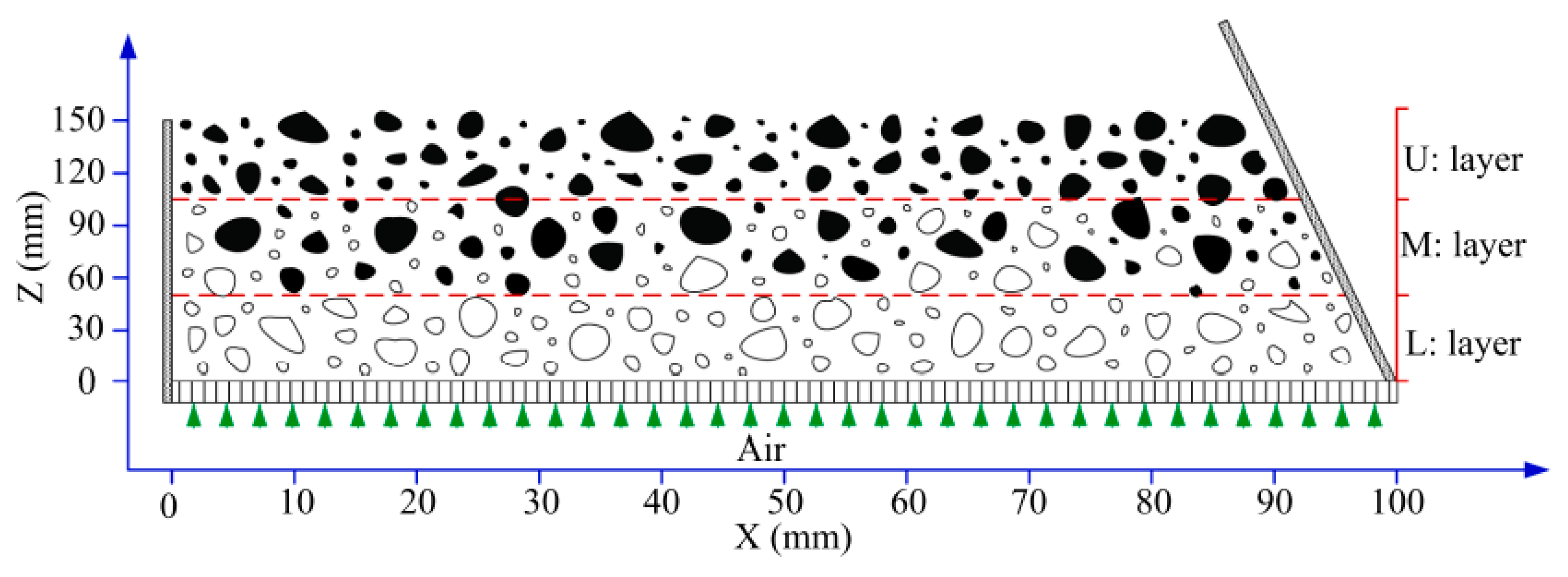
The vibrating airflow synergistic sorting bed facilitates dehydration and ash reduction of sticky, wet, low-quality coal by regulating airflow and applying vibration. Airflow output differs across various regions of the bed surface. As a result, both surface moisture content and ash distribution of low-grade coal particles vary significantly across different bed zones during sorting. To assess the upgrading process of particles in these zones, the sorting bed was divided into three equal sections from the feed end to the tailings end. Five measurement points were selected uniformly within each section, and sequential sampling was conducted to determine the yield, ash content, and surface moisture content for each section, as shown in Figure 3.
The ash separation efficiency index (S) was employed to evaluate the sorting effectiveness of low-quality coal [18], with the ash separation efficiency formula shown in (1):
S = 1 n 1 i = 1 n ( A i / A 0 1 ) 2
where Ai denotes the ash content of the coal sample in layer i, %; A0 denotes the ash content of the feed coal sample, %; n denotes the number of samples. This index indicates the degree of deviation in ash content between the product from each sampling section of the bed and the feed coal sample. A higher ash separation index value indicates better sorting efficiency.
The sorting efficiency of the composite dry sorting bed is evaluated using the potential deviation Ep. The calculation equation for potential deviation, Ep, is as follows:
E P = 1 2 δ 75 δ 25
δ25 and δ75 represent the coal density of the 25% and 75% distribution in the post-sorting heavy product, respectively.

2.4. Measurement of Interparticle Forces

Interparticle adhesion forces (liquid bridge forces) were estimated using a combined imaging and force reconstruction approach based on particle shape and moisture content. Collision forces were measured directly using embedded quartz piezoelectric force sensors (Kistler 9215A) at strategic locations within the bed. The sensors were calibrated prior to experiments, and signals were recorded at 10 kHz. Data processing included noise filtering and peak force extraction to obtain average collision forces under steady-state conditions.

3. Experimental Results and Analysis

3.1. Variation Patterns of Coal External Moisture Content Under Temperature Fields

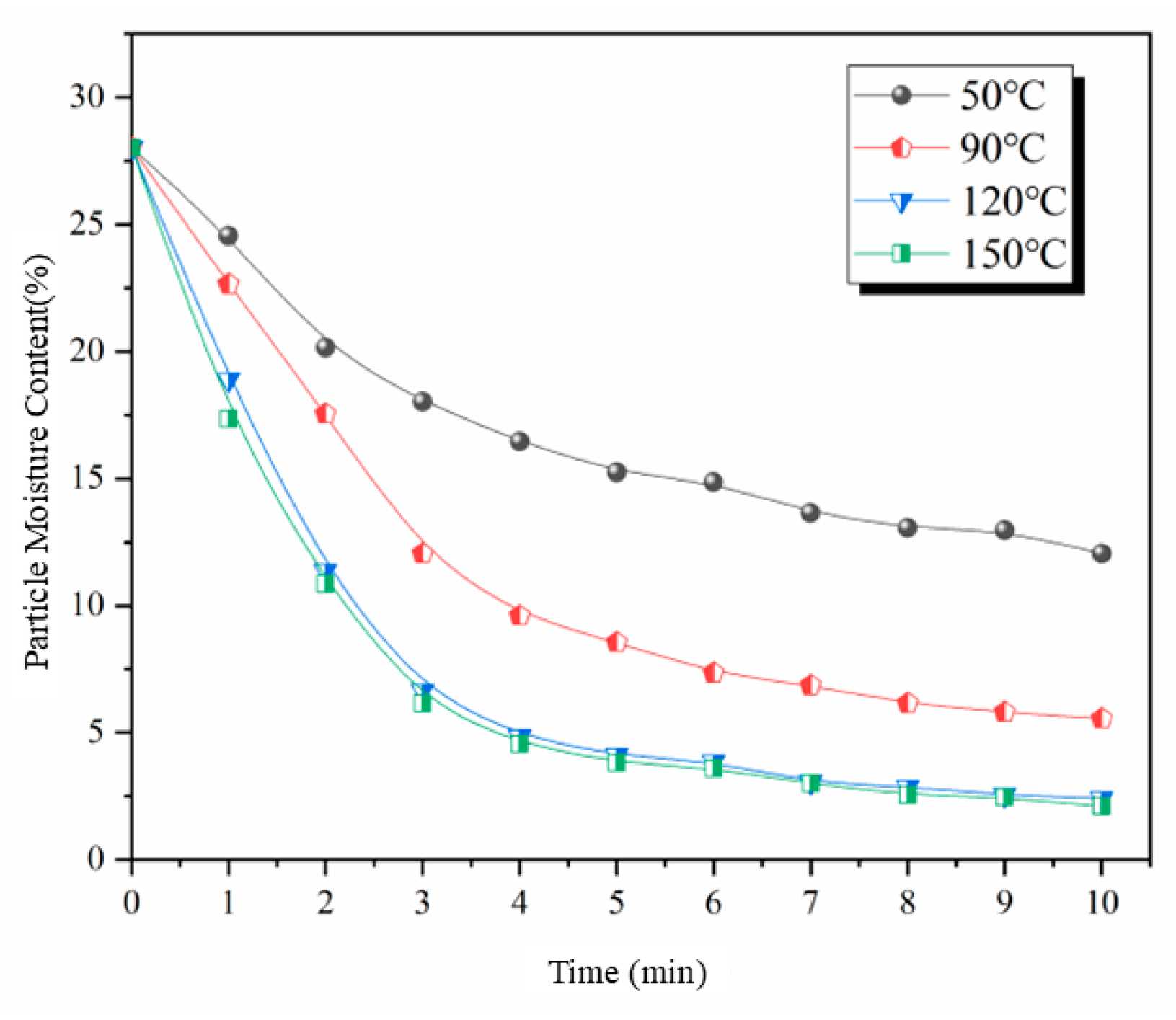
The Reynolds number (Re) calculated in Section 2.1 indicates transitional flow conditions, which influence heat and mass transfer within the bed. Higher gas velocities (and thus higher Re) enhance convective heat transfer, contributing to more efficient moisture removal. Hot air serves as the heat source for removing external moisture from coal in fluidized beds. At a constant gas velocity, increasing the inlet air temperature provides more heat for coal dehydration, thereby accelerating the drying rates. However, excessive drying can damage the internal pore structure of particles, thereby altering the chemical properties of coal. Therefore, the required hot air temperature for coal drying is particularly critical. Figure 4 illustrates the variation in external water content and dehydration rate of coal particles at different hot air temperatures. As shown in Figure 4, when the inlet air temperature is 50 °C and the drying time is 5 min, the moisture content of the coal particles is 15.24%. When the inlet air temperature is 90 °C and the drying time is 5 min, the moisture content of the coal particles is 8.55%. At an inlet air temperature of 120 °C and a drying time of 5 min, the coal particle moisture content was 4.10%. At an inlet air temperature of 150 °C and a drying time of 5 min, the coal particle moisture content was 3.82%. An excessively low inlet air temperature resulted in insufficient heat transfer to the coal particles within the bed, leading to poor drying efficiency of the pore water inside the particles. Higher inlet air temperatures result in lower moisture content and faster drying rates for brown coal particles within the same drying time. As the inlet air temperature increases, the heat absorbed by particles within the bed per unit time rises. Surface moisture vaporizes first, creating a moisture concentration gradient with the particle interior. Heat transfer to the interior forms a temperature gradient. This serves as the primary driving force for moisture migration outward through pores within the brown coal particles. However, excessively high inlet air temperatures accelerate coal dehydration too rapidly, causing the rapid destruction of the pore structure within the coal particles. Furthermore, as drying time increases, the rate of moisture removal from the coal gradually decreases.

3.2. Variation in Interparticle Adhesion Forces at Different External Water Contents

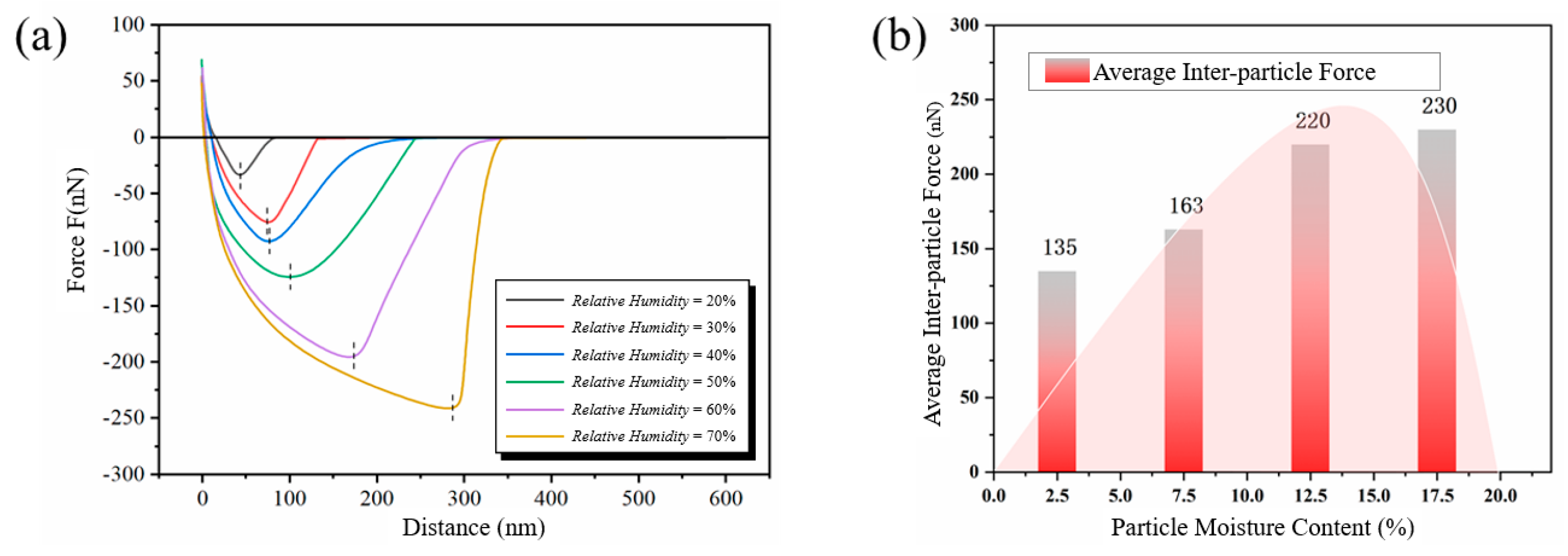
The presence of surface moisture on wet particles causes agglomeration, altering the fluid dynamics of gas–solid two-phase flow and significantly affecting the stability of the flow field distribution in gas–solid separation fluidized beds. Liquid bridge forces dominate the adhesion between wet particles, influencing the disaggregation behavior of particle clusters and exhibiting a close correlation with particle surface humidity. Figure 5 illustrates the evolution of interparticle liquid bridge forces under varying relative humidity conditions. The force increases with moisture content due to enhanced capillary effects. The peak force (FAdmax) occurs at a separation distance where the liquid bridge is fully developed but not yet ruptured. As shown in Figure 5a, the overall interparticle liquid bridge force exhibits an increasing trend with rising relative humidity. Furthermore, as the separation distance between particles increases, the interparticle liquid bridge force first increases and then decreases. This trend determines the existence of a maximum liquid bridge force value, FAdmax, during particle separation, as depicted in Figure 5b. The magnitude of FAdmax and the peak separation distance Dpeak both increase with rising relative humidity. For coal particles with a moisture content between 20–10%, the average interparticle force is 225 nN; for 10–5% moisture content, it is 160 nN; and for moisture content < 5%, it is 105 nN.

3.3. Variation in Interparticle Collision Forces Under Different Operating Parameters

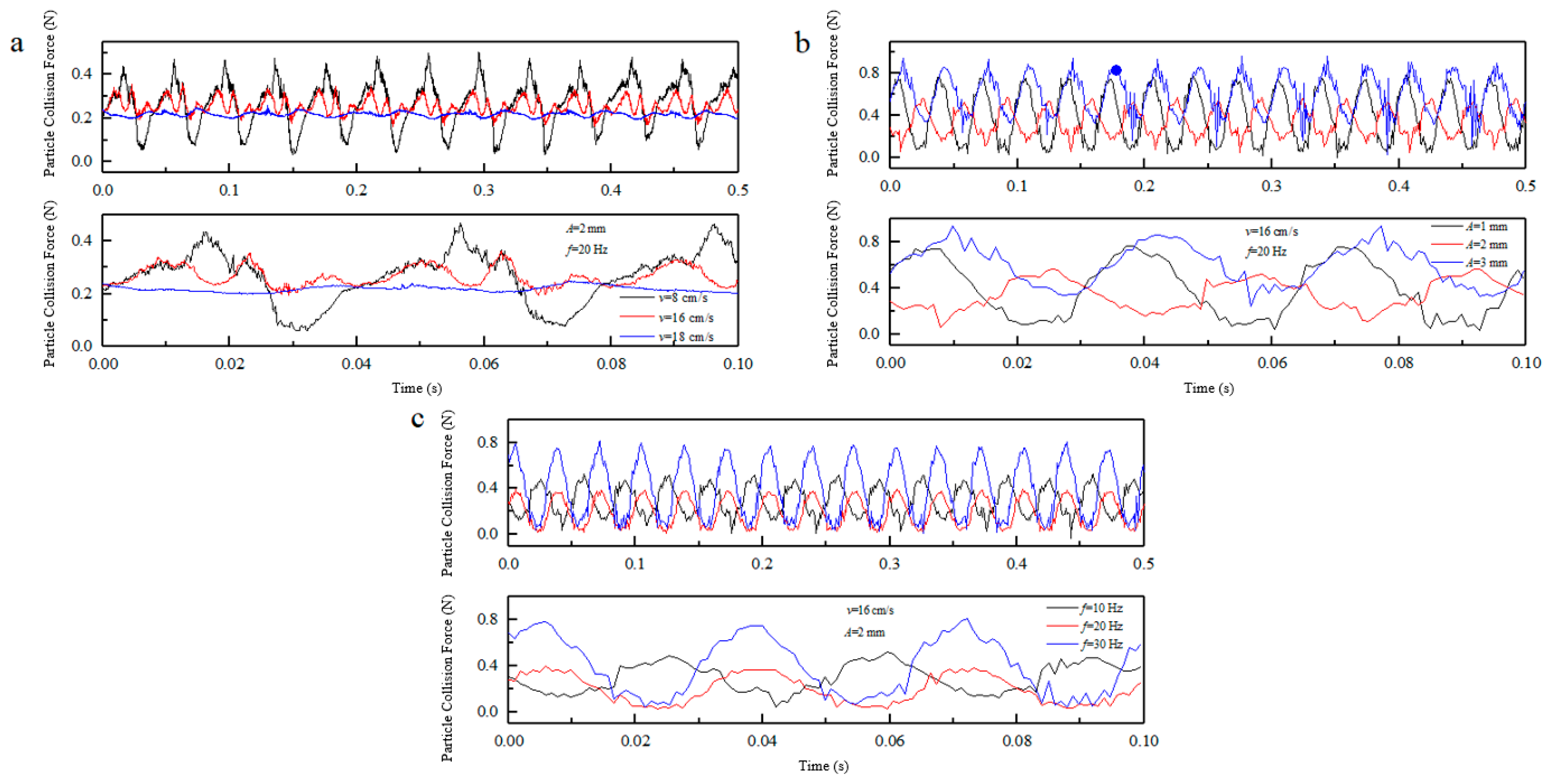
Particle collisions under a composite force field can effectively disrupt liquid bridge forces between sticky, wet fine coal particles, enhancing the loosening of sticky particles and promoting density segregation of fine coal particles. By measuring the collision forces between particles in a vibrating gas flow, the motion characteristics of particles within the bed can be quantitatively analyzed. To this end, quartz force sensors were employed to measure collision forces between local particles in the bed, reflecting the intensity of particle motion within the bed. Figure 6 illustrates the time-domain signals of interparticle collision stresses under various operating conditions, along with their locally magnified schematic diagrams. The time-domain signal characteristics in Figure 6 are explicitly tied to the physical interpretation of particle motion damping with increasing gas velocity and energizing with higher vibration frequency. As shown in Figure 6a, with increasing gas velocity, the amplitude of the time-domain signal for interparticle collision forces exhibits a decreasing trend, and the collision forces tend to stabilize. As gas velocity increases, the collision probability between particles decreases. Vibration energy transmission through instantaneous particle collisions weakens, resulting in reduced vibration energy acquisition by bed particles. This causes the measured particle collision force to decrease as the gas velocity increases. As the vibration parameters increase, the particle collision force signal exhibits an increasing trend, accompanied by heightened fluctuations, as shown in Figure 6b,c.
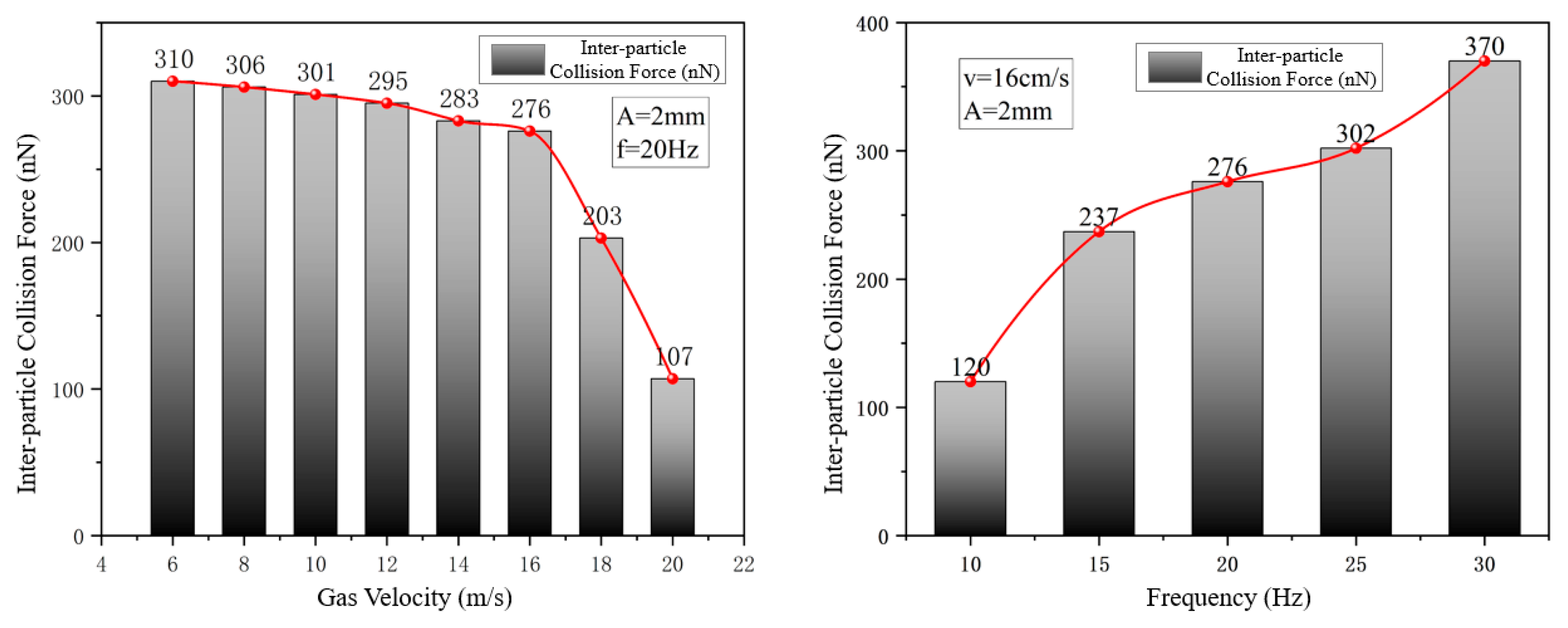
Figure 7 presents the influence of various operating parameters on the collision force between bed particles. The discussion of Figure 7 now more clearly states the critical condition where “interparticle collision force surpasses the liquid bridge force,” which is key to understanding particle loosening. The results indicate that increasing gas velocity leads to a reduction in collision force, decreasing from 310 nN to 107 nN. In contrast, as vibration frequency rises, the interparticle collision force increases from 120 nN to 370 nN. Higher vibration frequencies introduce greater vibrational energy into the bed, which enhances particle collision behavior. When the interparticle collision force surpasses the interparticle liquid bridge force, particle loosening and stratification are intensified.

3.4. Vibration Characteristics at Different Locations in the Bed Layer

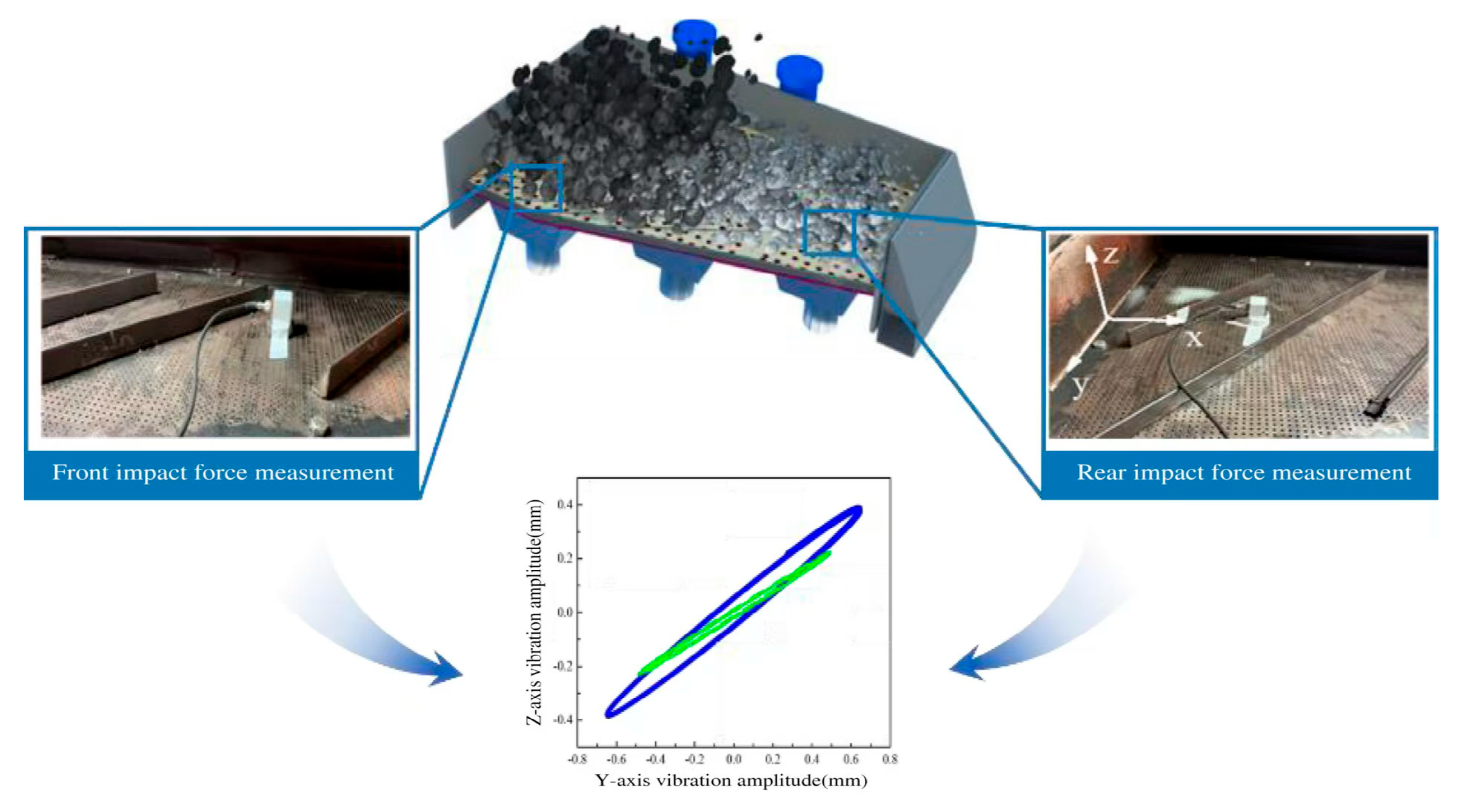
Vibration is a key factor promoting particle stratification and segregation within the bed layer. To reveal the impact of vibrational energy on particle motion behavior at different locations within the bed layer, high-precision accelerometers were installed at the front and rear sections of the bed. Vibration signals from these distinct positions were collected and subjected to low-pass filtering to obtain effective bed layer time-domain vibration signals. When vibration energy generated by the vibration motor is transmitted to the bed surface, it is redistributed based on the bed surface structure and installation, resulting in different accelerations across distinct bed regions. Specifically, the acceleration along the y-axis in the front section of the bed is approximately 40% higher than that in the rear section, as shown in Figure 8. By plotting the displacement trajectories of measurement points along the y and z axes, it is observed that particles in the front section of the bed surface exhibit elliptical motion, indicating that particles in this region flip and migrate under the influence of vibration, contributing to stratification. In contrast, the particle trajectories in the rear section of the bed layer are approximately linear, suggesting that the vibrational energy in this area primarily facilitates the rapid transport of gangue toward the discharge end.
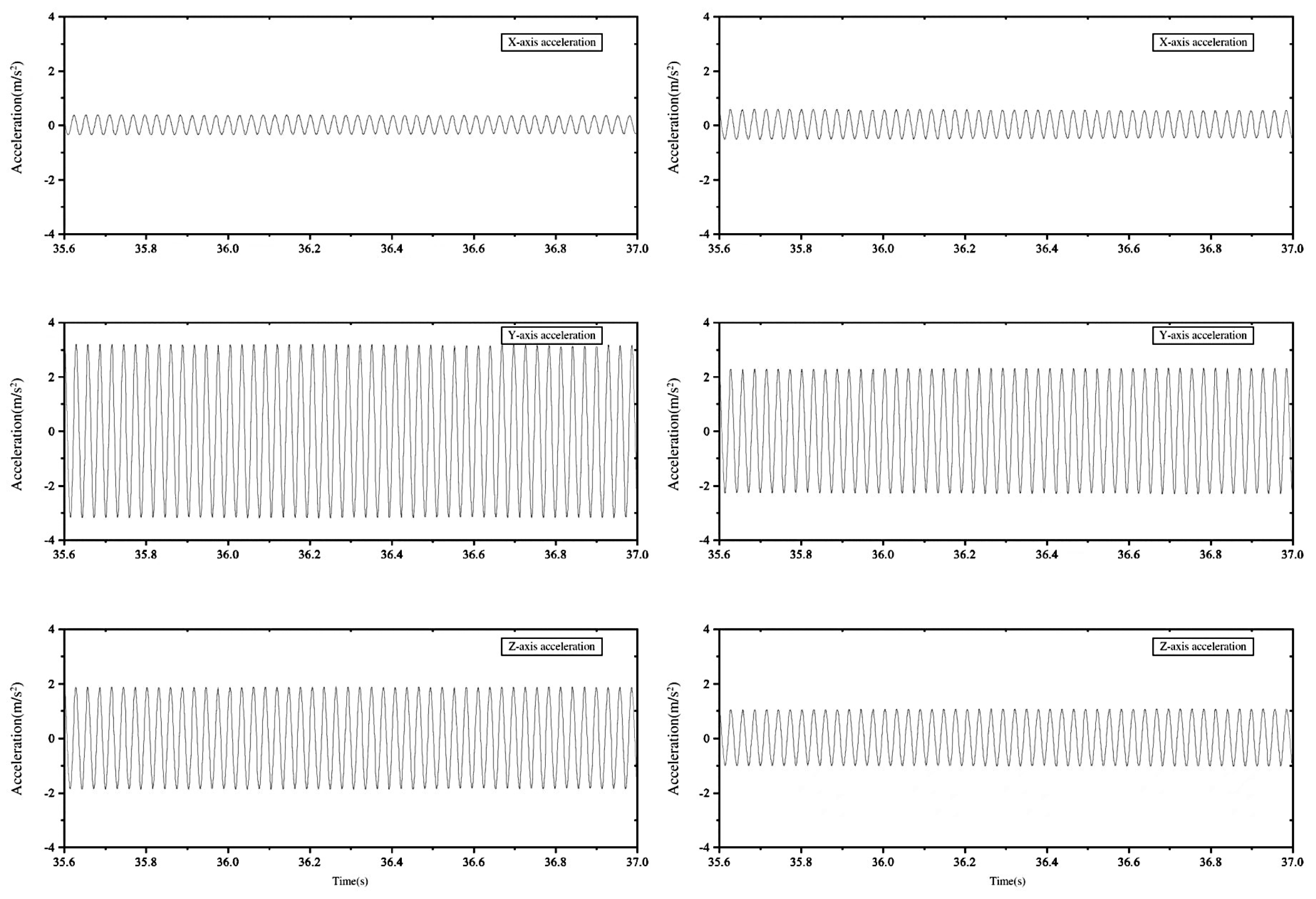
To investigate the significance of forces exerted by different vibration directions on particle motion behavior within the bed layer, the vibration acceleration in the x, y, and z directions at measurement points in the front and rear sections of the bed layer was further analyzed, as shown in Figure 9. The acceleration at both points along the x-axis was negligible, while the acceleration along the y-axis and z-axis was relatively large. Under vibration, the bed surface exhibited periodic sinusoidal motion. Analysis of accelerations in different directions at the front and rear sections revealed that at the front section, the amplitudes of acceleration along the y-axis and z-axis were 3.05 m/s2 and 1.75 m/s2, respectively. In the rear section, the amplitudes of the y-axis and z-axis accelerations are 2.35 m/s2 and 1.15 m/s2, respectively. The y-axis acceleration at the measurement point is significantly greater than the z-axis acceleration, indicating that the y-axis vibration dominates the density separation behavior of bed particles, which is a central finding of the study.
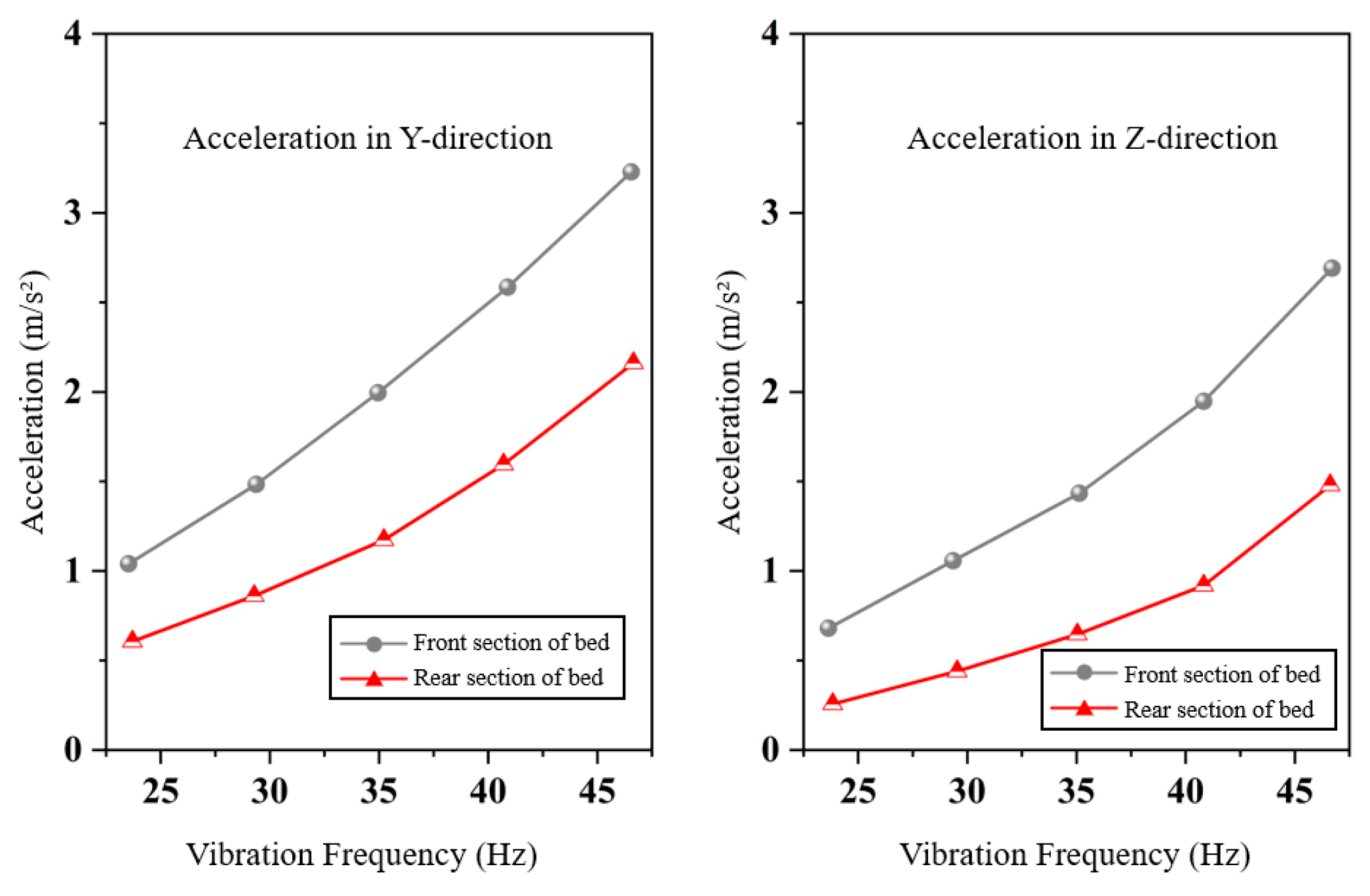
To further investigate the impact of vibration on the acceleration of the bed surface motion, the vibration behavior of the bed surface along the x and y axes under different vibration frequencies was analyzed. As the vibration frequency gradually increased from 25 Hz to 45 Hz, the y-axis acceleration amplitude at the front section of the bed ranged from 1.65 m/s2 to 5.15 m/s2, while the z-axis acceleration ranged from 0.95 m/s2 to 3.55 m/s2. As shown in Figure 10, the rear section of the bed exhibited y-axis acceleration amplitude ranging from 1.15 m/s2 to 4.35 m/s2, while z-axis acceleration ranged from 0.45 m/s2 to 2.45 m/s2. At the same frequency, the acceleration in the front section of the bed is significantly greater than that in the rear section, and the vibration energy of the bed surface gradually decreases from the front to the rear section. This result indicates that the bed surface in the front section is the primary region for coal stratification and separation, while the vibration in the rear section mainly provides energy for gangue discharge.

3.5. Dehydration Characteristics of Particles at Different Positions in the Bed Layer

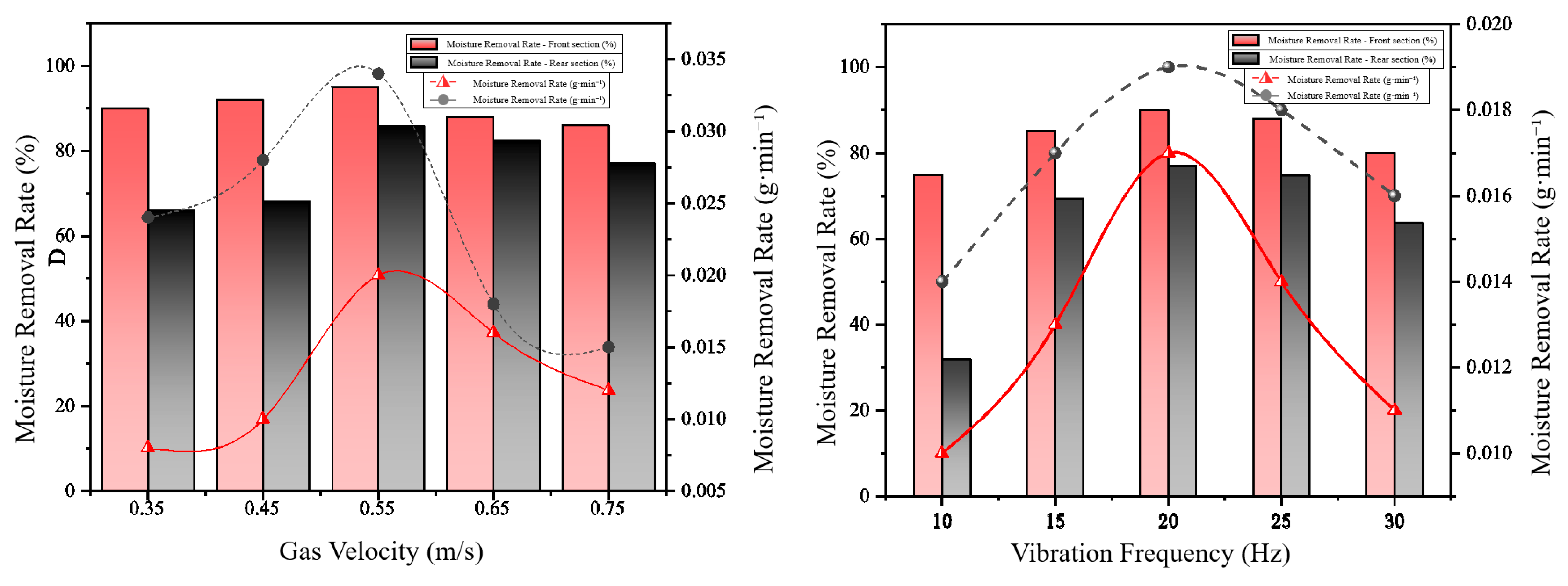
Material undergoes dehydration and descaling through the synergistic action of vibration and airflow. Vibration provides energy to drive particle movement, while airflow input enhances material loosening and reduces surface moisture. By adjusting the airflow distribution and vibration parameters in different regions of the sorting bed, the separation and quality improvement of particles within the bed layer are enhanced. By measuring the dehydration amount of particles at the front and rear sections of the bed layer and the dehydration amount within 60-s intervals, the dehydration rate and the dehydration rate of particles at different operating conditions were obtained, as shown in Figure 11. The horizontal axis represents the operating gas velocity and vibration frequency, the left vertical axis shows the dehydration rate after particle dehydration completion, and the right vertical axis indicates the dehydration rate of the particles. The dehydration rate shows a clear increasing trend with gas velocity up to an optimum point (v = 0.65 m/s), beyond which the rate plateaus. The observed relationship was consistent across experimental replicates, indicating a robust effect of gas velocity on moisture removal within the tested range. Gas velocity is a key factor influencing particle drying in fluidized beds. As gas velocity and vibration frequency increase, the dehydration rate and the dehydration rate of particles in both the front and rear sections of the bed gradually increase. Particles in the front section exhibit a higher dehydration rate than those in the rear section, but their dehydration rate is lower than that of the rear section particles. Observations from experiments reveal that at low gas velocities, the gas flow struggles to loosen densely packed particle clusters on the bed surface. Consequently, the gas cannot effectively penetrate inter-particle gaps to act on the particle surfaces and remove surface moisture. As the gas velocity increases, the dehydration rate of particles in the front section of the bed gradually increases. The dehydration rate first increases and then decreases. With the increase in gas velocity, the air flow entering the bed increases, enhancing the gas’s ability to carry away surface moisture from the particles. Consequently, both the amount of moisture removed per unit time and the dehydration rate on the particle surfaces significantly increase. Compared to particles in the front section, those in the rear section undergo more thorough moisture removal after a period of migration. While the total moisture removed from rear-section particles is relatively smaller, their thinner layer thickness and greater looseness result in a higher moisture removal rate. Under vibration, particle collision frequency increases, and inter-particle migration intensifies. Under the vibrating bed force, upper-layer particles slide toward the discharge edge along the surface layer due to the thrust from the backing plate and gravitational force. This creates a counter-rotating spiral motion throughout the material layer. The continuous cyclic movement of particles significantly enhances moisture removal from their surfaces.

3.6. Ash Separation Characteristics of Coal Particles

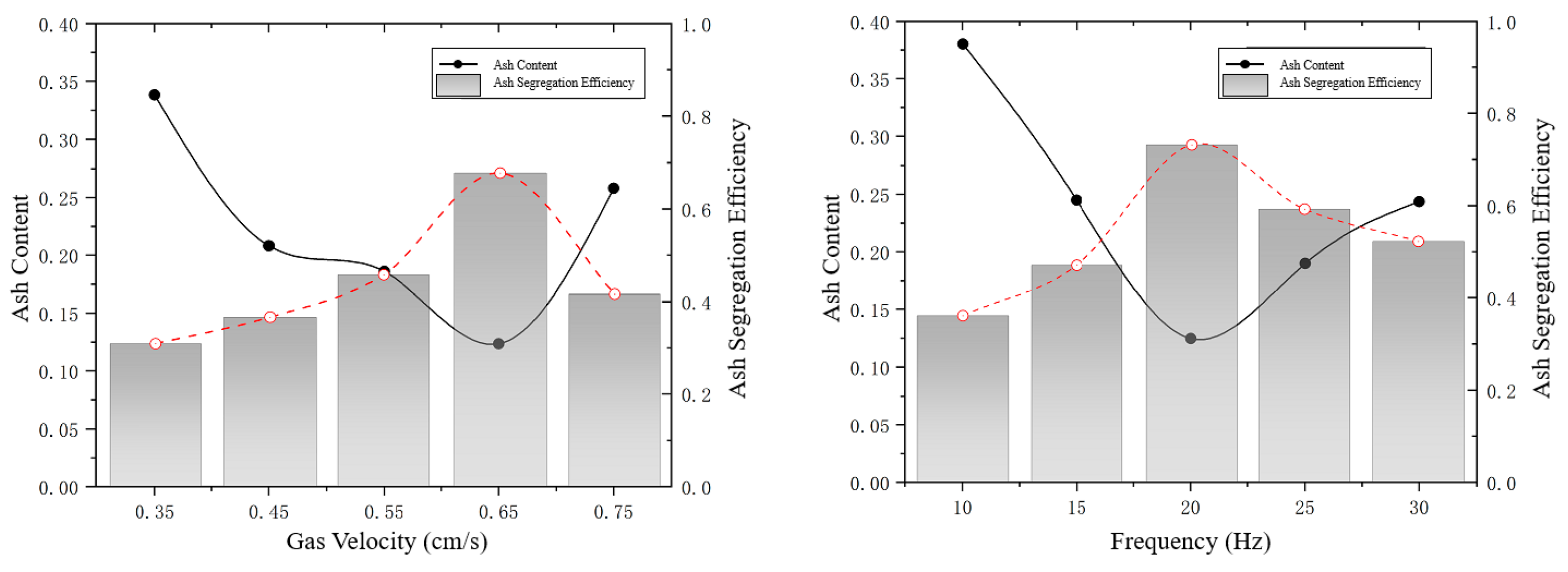
Coal particles segregate by density under the combined force field of vibration and airflow, enabling effective separation of low-density refined coal particles and high-density gangue particles. Figure 12 shows the ash content and segregation degree distribution of coal particles after sorting under different operating conditions of air velocity and vibration frequency. Note: “Ash content analysis width” refers to the standard deviation of ash content across repeated trials, indicating separation consistency. The horizontal axis represents various operating parameters, the left vertical axis indicates the ash content of refined coal post-sorting, and the right vertical axis denotes the segregation degree. As shown in the figure, with increasing gas velocity and vibration frequency, the ash content of the cleaned coal first decreases and then increases, while the ash separation degree first increases and then decreases. The reason is as follows: at low gas velocities, the gas flow acting on the bed surface cannot uniformly permeate the particle bed layer, leading to significant particle agglomeration that hinders fluidization. At this point, the gas force acting on the particles is relatively weak, the bed layer has poor looseness, and the coal and gangue components cannot be effectively separated based on density. This results in a low ash separation degree value for particles at low gas velocities. As gas velocity increases, the gas flow acting on the bed intensifies, enhancing the force exerted on bed particles. Combined with the introduction of vibration, the combined effect of gas force and inter-particle buoyancy overcomes the particles’ self-gravity. This significantly enhances the stratification and separation behavior between high- and low-density particles, achieving optimal separation of low-grade fine coal particles—that is, the ash separation efficiency reaches its maximum value. When the gas velocity or vibration frequency reaches its maximum, the separated particle fractions within the bed become severely disturbed, causing the refined coal and gangue particles to re-mix. This deteriorates the separation efficiency of fine coal particles.
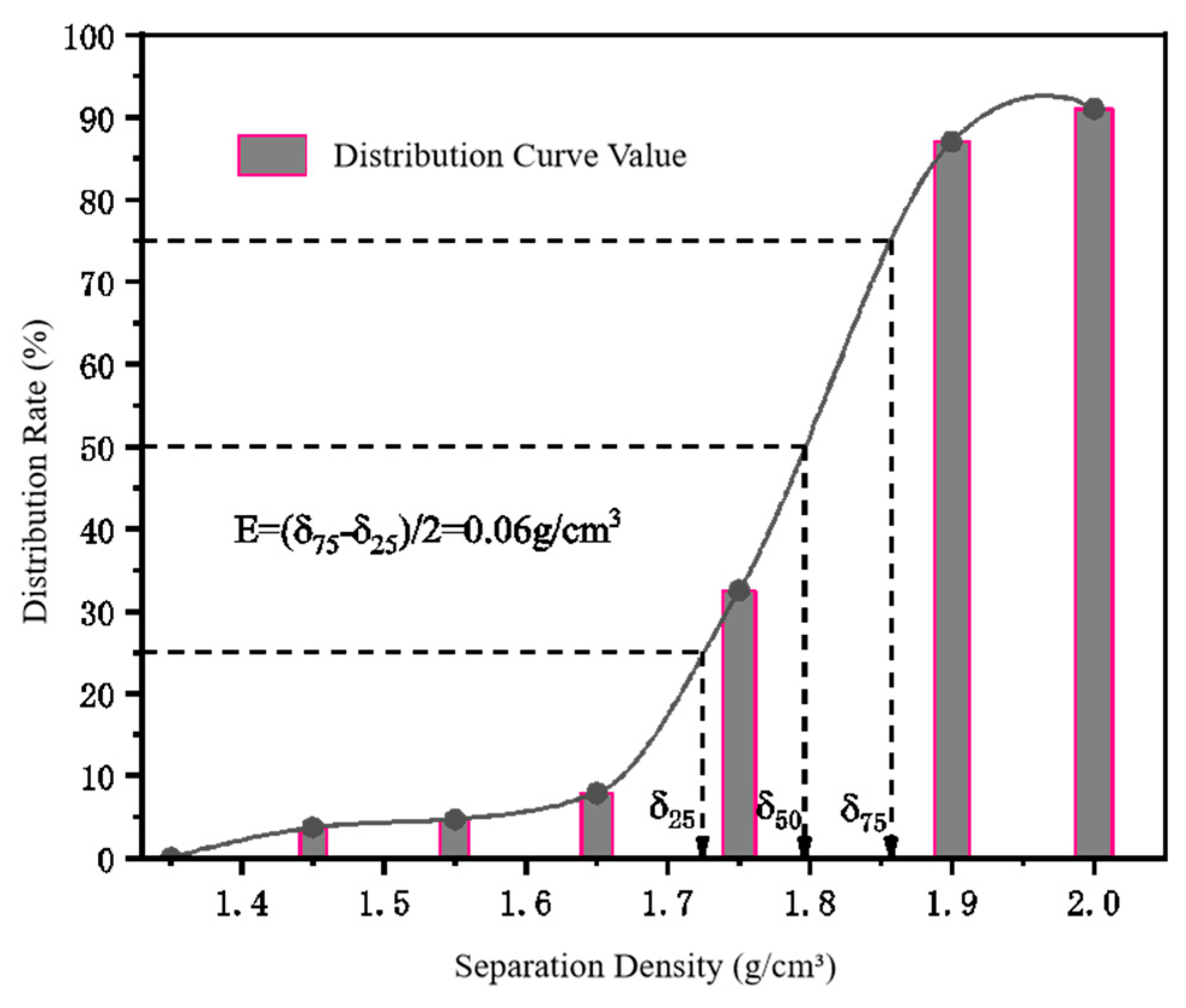
Based on the above analysis, sorting experiments were conducted on 6-1 mm fine coal particles under optimal vibrating airflow operating parameters of v = 0.65 m/s and f = 20 Hz. The potential deviation E value was adopted as the evaluation metric for coal sorting effectiveness. The product distribution curve and misplaced material curve for the 6-1 mm fine coal are shown in Figure 13. The separation accuracy E value for the 6-1 mm fine coal was 0.06 g/cm3, with an actual separation density of 1.66 g/cm3 and a clean coal ash content of 12.55%. The test results indicate that the fine coal has met the requirements for ash reduction and quality improvement after separation.

4. Discussion

The synergistic effect of vibration and heated airflow creates a dynamic environment conducive to both drying and density-based separation of fine, moist coal. The observed reduction in interparticle adhesion forces with decreasing moisture content (Figure 5) is consistent with capillary force models. The collision forces generated under optimal conditions (v = 0.65 m/s, f = 20 Hz) exceed typical liquid bridge forces for moist coal, explaining the effective breaking of agglomerates.
The dominance of the y-axis vibration in promoting segregation (Figure 9 and Figure 10) aligns with the “Brazil nut effect” enhanced by directional kinetic energy input. The front bed region, with higher acceleration, acts as the primary stratification zone, while the rear region facilitates gangue conveyance—a design feature beneficial for continuous operation.
The non-monotonic trends in ash content and separation efficiency with increasing gas velocity or vibration frequency (Figure 12) highlight the existence of an optimum fluidization regime. Excessive kinetic energy input leads to re-mixing, a phenomenon also reported in vibrated fluidized beds for other particulate systems.
The achieved separation precision (Ep = 0.06 g/cm3) and clean coal ash content (12.55%) demonstrate the potential of this compound force-field approach for upgrading low-quality fine coal, particularly in water-scarce regions. Future work could focus on scaling up the system and optimizing energy efficiency, and could include XRD or SEM-EDS analysis for more detailed phase identification.

5. Conclusions

(1) The synergistic interaction between temperature and load force field is a key factor influencing coal particle dehydration in fluidized beds. At an air temperature of 90 °C, under conditions of v = 0.65 m/s and f = 20 Hz, the interparticle collision force ranges from 120 nN to 370 nN. This force exceeds the interparticle liquid bridge force, enabling liquid bridge rupture and enhancing particle dispersion and fluidization.
(2) Bed surface vibration behavior varies across different bed locations. The bed surface in the front section exhibits elliptical motion, while the rear section shows near-linear motion. Vibration along the y-axis dominantly influences particle density segregation within the bed. Furthermore, acceleration in the front section is significantly greater than in the rear section, and bed surface vibration energy gradually decreases from the front to the rear section.
(3) Analysis of ash content and ash separation efficiency in the post-selection product of fine coal revealed that with increasing gas velocity and vibration frequency, the ash content of the selected coal first decreased, then increased, while the ash separation efficiency first increased, then decreased. Furthermore, the best separation effect for fine coal was achieved under conditions of v = 0.65 m/s and f = 20 Hz, with a separation precision E value of 0.06 g/cm3 for particles 1–6 mm free of fine coal, and a coal ash content of 12.55%.

Author Contributions

Conceptualization, J.Z., M.S., M.Z., L.Z., Y.Z. (Yingguang Zuo), L.W. and Y.Z. (Yadong Zhang); Methodology, J.Z., M.S., M.Z., L.Z., Y.Z. (Yingguang Zuo), L.W. and Y.Z. (Yadong Zhang); Software, Y.Z. (Yadong Zhang), Validation; Formal analysis, Y.Z. (Yadong Zhang); Writing—original draft, Y.Z. (Yadong Zhang); Writing—review & editing, Y.Z. (Yadong Zhang). All authors have read and agreed to the published version of the manuscript.

Funding

This work was supported by the National Natural Science Foundation of China [52304306], Jiangsu ProvincialNatural Science Foundation Youth Fund Project [BK20231073] and National Key R&D Plan of China [No.2025YFE0220200].

Data Availability Statement

The original contributions presented in this study are included in the article. Further inquiries can be directed to the corresponding author.

Conflicts of Interest

Authors Jun Zhang, Ming Shao, Lin Zhang, Yingguang Zuo, and Lijun Wang were employed by the State Power Construction Investment Inner Mongolia Energy Co., Ltd., and Dadi Engineering Development (Group) Co., Ltd. Author Minghan Zhou was employed by the Dadi Engineering Development (Group) Co., Ltd. The remaining authors declare that the research was conducted in the absence of any commercial or financial relationships that could be construed as a potential conflict of interest.

Abbreviations

SAsh separation efficiency index. A higher value indicates better separation performance
AiAsh content of the coal sample from the i-th layer in the bed (%)
A0Ash content of the feed coal sample (%)
nNumber of sampling layers
EPProbable error (g/cm3). A measure of separation sharpness; a lower value indicates higher precision
δ25Density (g/cm3) at which 25% of the material reports to the heavy product
δ75Density (g/cm3) at which 75% of the material reports to the heavy product
FAdmax Maximum capillary adhesion force between particles (nN)
DpeakParticle separation distance at which FAdmax is achieved
vAirflow velocity (m/s)
fVibration frequency (Hz)
ReReynolds number, Re = ρgvdp/μg (dimensionless)
dpParticle diameter

References

  1. National Energy Administration. Guiding Opinions on Energy Work in 2022; National Energy Administration: Beijing, China, 2022.
  2. Zhao, J.Y.; Wang, X.X.; Qi, L.; Zhao, Z.Q.; Wang, F.W.; Wen, J.L.; Dai, H.X. Progress in the Theory and Technology of High-Gradient Magnetic Separation. Conserv. Util. Miner. Resour. 2024, 44, 117–126. [Google Scholar]
  3. National Development and Reform Commission; National Energy Administration. Modern Energy System Planning for the 14th Five-Year Plan; National Development and Reform Commission, National Energy Administration: Beijing, China, 2022.
  4. Xia, Y.K.; Li, G.M. Current situation and prospects of power coal dry separation technology in China. Clean Coal Technol. 2017, 23, 21–29. [Google Scholar]
  5. Zhao, Y.; Zhang, Y.; Zhou, E.; Zhou, C.; Dong, L.; Zhang, B.; Duan, C. Research progress and prospect of clean and efficient dry coal separation. J. China Univ. Min. Technol. 2022, 51, 607–616. [Google Scholar]
  6. Zhang, B.; Zhou, C.; Chen, Z.; Zhao, Y. Effect of coal particle swarm properties on the fluidization characteristics and coal beneficiation in a dense-phase gas-solid fluidized bed. Particuology 2017, 35, 108–118. [Google Scholar] [CrossRef]
  7. Zhu, R.; Zhao, Y.M.; Zhao, P.F.; Luo, Y.F.; Wang, H.K.; He, L.H.; Tan, M.B.; Wang, H.; Yhang, Z.F. Bed fluidization characteristics and separating effect of fine coal in an air-dense medium fluidized bed. J. China Coal Soc. 2016, 41, 203–210. [Google Scholar]
  8. Zhao, Y.M.; Li, G.M.; Jia, Z.F.; Zhang, B.; Dong, L. Theory of modularized dry coal beneficiation and its application based on an air dense medium fluidized bed. J. China Coal Soc. 2014, 39, 1566–1571. [Google Scholar]
  9. Wei, Z.K. Study on dry coal preparation technology of air dense medium fluidized bed. Clean Coal Technol. 2010, 16, 41–44. [Google Scholar]
  10. Sahu, A.K.; Tripathy, A.; Biswal, S.K.; Parida, A. A study on the dynamic stability of medium in an air-dense medium fluidised bed separator. Fuel 2005, 58, 103–107. [Google Scholar]
  11. Zhang, Y.D.; Wang, X.Y.; Dong, H.X.; Yang, Y.; Zhao, Y.; Jiang, Y.; Zhu, R.; Yang, X. Study on key factors affecting the separation of fine coal in a vibrated fluidized bed. J. China Coal Soc. 2016, 41, 3128–3135. [Google Scholar]
  12. Dong, L.; Zhang, B.; Zhang, Y.; Zhao, Y.; Zhou, E.; Lv, P.; Duan, C. Kinetic characteristics of the particles in a dense-phase pulsed fluidized bed for dry beneficiation. Can. J. Chem. Eng. 2017, 95, 1133–1140. [Google Scholar] [CrossRef]
  13. Yu, X.; Luo, Z.; Li, H.; Gan, D. Effect of vibration on the separation efficiency of oil shale in a compound dry separator. Fuel 2020, 214, 242–253. [Google Scholar] [CrossRef]
  14. Wei, L.B.; Liang, S.H.; Wei, R.H.; Wang, X.H.; Zeng, M. Characteristics of separation with a new style airdense medium fluidized bed. J. China Univ. Min. Technol. 2011, 40, 733–736. [Google Scholar]
  15. Lv, B.; Fu, Y.; Luo, Z.; Zhang, B.; Qin, X.; Zhu, X. Moisture transfer of wet coal and its effect on fluidization behavior in a gas–solid separation bed. Powder Technol. 2019, 352, 126–135. [Google Scholar] [CrossRef]
  16. Zhao, Y.M.; Liu, X.J.; Liu, K.L.; Luo, Z.F.; Wu, W.C.; Song, S.L.; Tang, L.G. Fluidization Characteristics of a Gas-Paigeite-Powder Bed to be Utilized for Dry Coal Beneficiation. Int. J. Coal Prep. Util. 2013, 31, 149–160. [Google Scholar] [CrossRef]
  17. Van Ommena, J.R.; Sasic, S.; Van der Schaaf, J.; Gheorghiu, S.; Johnsson, F.; Coppens, M.O. Time-series analysis of pressure fluctuations in gas–solid fluidized beds—A review. Int. J. Multiph. Flow 2011, 37, 403–428. [Google Scholar] [CrossRef]
  18. Yang, X.; Zhao, Y.; Luo, Z.; Song, S.; Duan, C.; Dong, L. Fine coal dry cleaning using a vibrated gas-fluidized bed. Fuel Process. Technol. 2013, 106, 338–343. [Google Scholar] [CrossRef]
Figure 1. Structure of the experimental apparatus.
Separations 13 00117 g001
Figure 2. Sink and float testing result of 6-1 mm fine coal.
Separations 13 00117 g002
Figure 3. Schematic diagram of test measurement points.
Separations 13 00117 g003
Figure 4. Variation law of external water on particles under different hot air temperatures.
Separations 13 00117 g004
Figure 5. Adhesion force between particles under different external water content. (a) Variation of interparticle liquid bridge force with relative humidity; (b) Maximum adhesion force FAdmax and peak separation distance Dpeak under different relative humidity conditions.
Separations 13 00117 g005
Figure 6. Time domain signal of particle collision force in bed under different operating conditions. (a) Time-domain signal of particle collision force under different gas velocities; (b) Time-domain signal of particle collision force under different vibration frequencies; (c) Time-domain signal of particle collision force under different vibration amplitudes.
Separations 13 00117 g006
Figure 7. Variation in particle collision force in the bed under different operating parameters.
Separations 13 00117 g007
Figure 8. Schematic diagram of vibration measurement in the front and rear sections of the bed.
Separations 13 00117 g008
Figure 9. Schematic diagram of vibration measurement in the front and rear sections of the bed.
Separations 13 00117 g009
Figure 10. Variation law of acceleration in different directions of the bed under different parameters.
Separations 13 00117 g010
Figure 11. Dehydration characteristics of bed particles at different positions.
Separations 13 00117 g011
Figure 12. Separation characteristics of fine coal particles under a composite force field.
Separations 13 00117 g012
Figure 13. Partition curves of 6-1 mm fine coal separation.
Separations 13 00117 g013
Disclaimer/Publisher’s Note: The statements, opinions and data contained in all publications are solely those of the individual author(s) and contributor(s) and not of MDPI and/or the editor(s). MDPI and/or the editor(s) disclaim responsibility for any injury to people or property resulting from any ideas, methods, instructions or products referred to in the content.