
A Review of Research Progress on Intelligent Cyclone–Filtration-Integrated Equipment for High-Suspended-Solids Mine Water Treatment


Abstract
1. Introduction
2. Literature Review Methodology
3. Mechanisms of Fine Particle Separation in Swirling Flow and Filtration
3.1. Characteristics and Flow Regimes of High-SS Mine Water
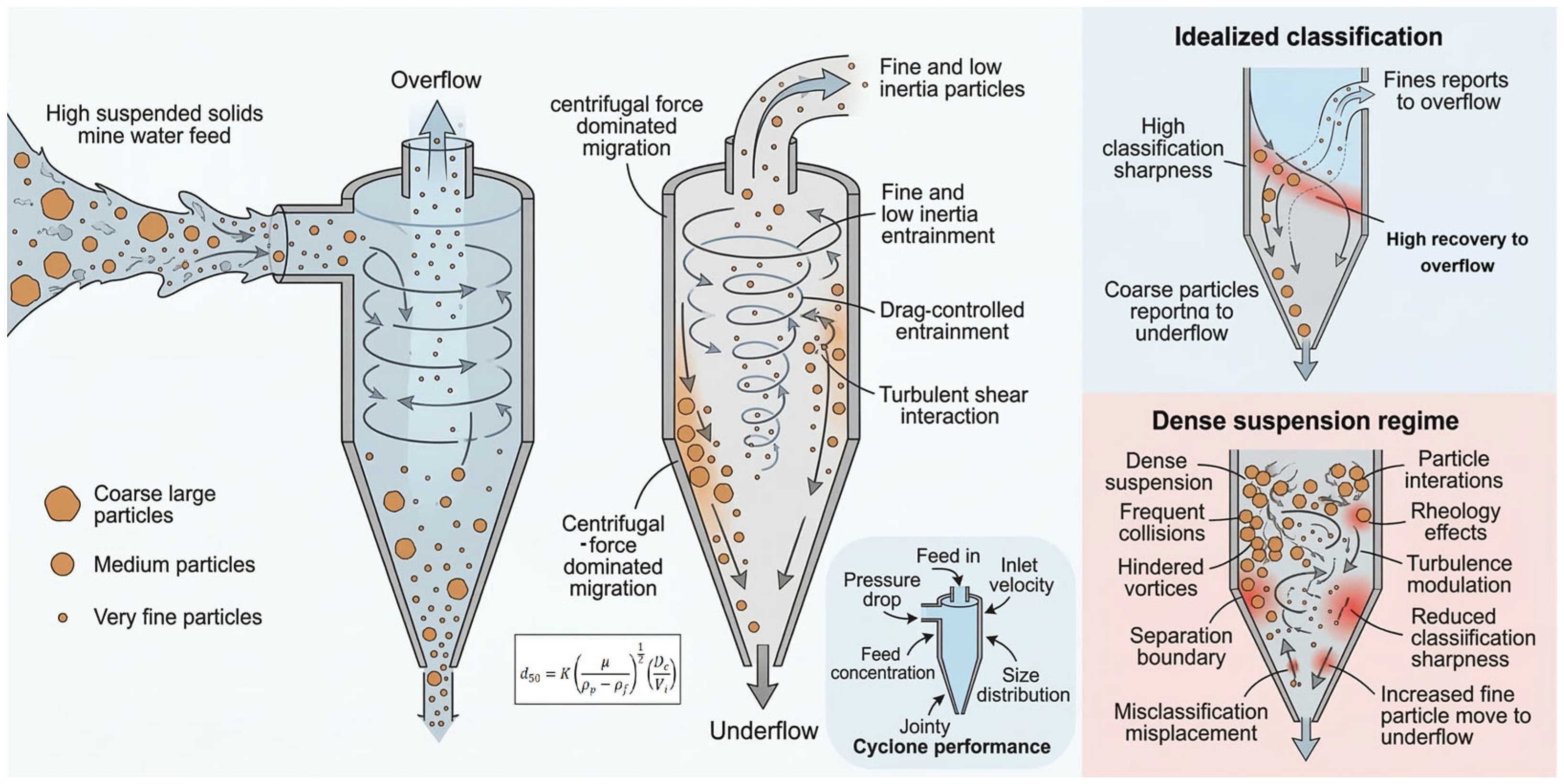
3.2. Particle Motion and Classification Mechanism in the Cyclone Separation Process
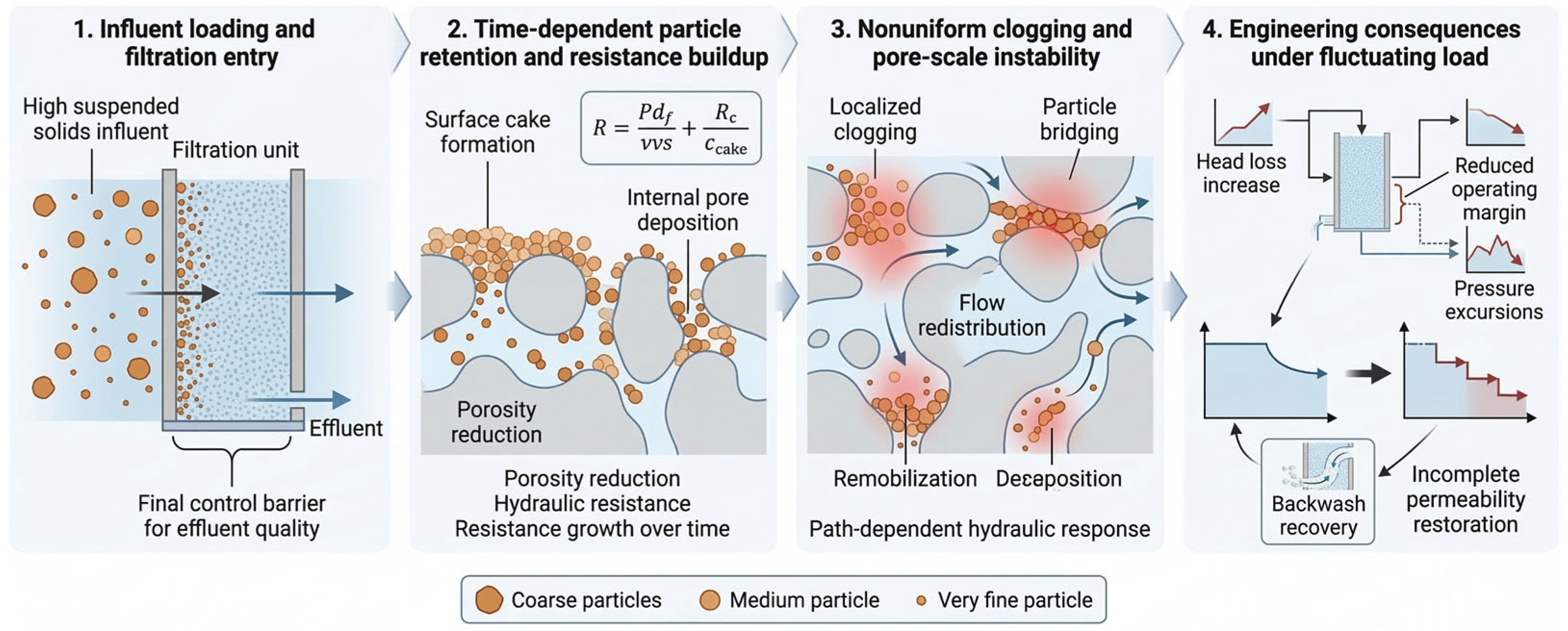
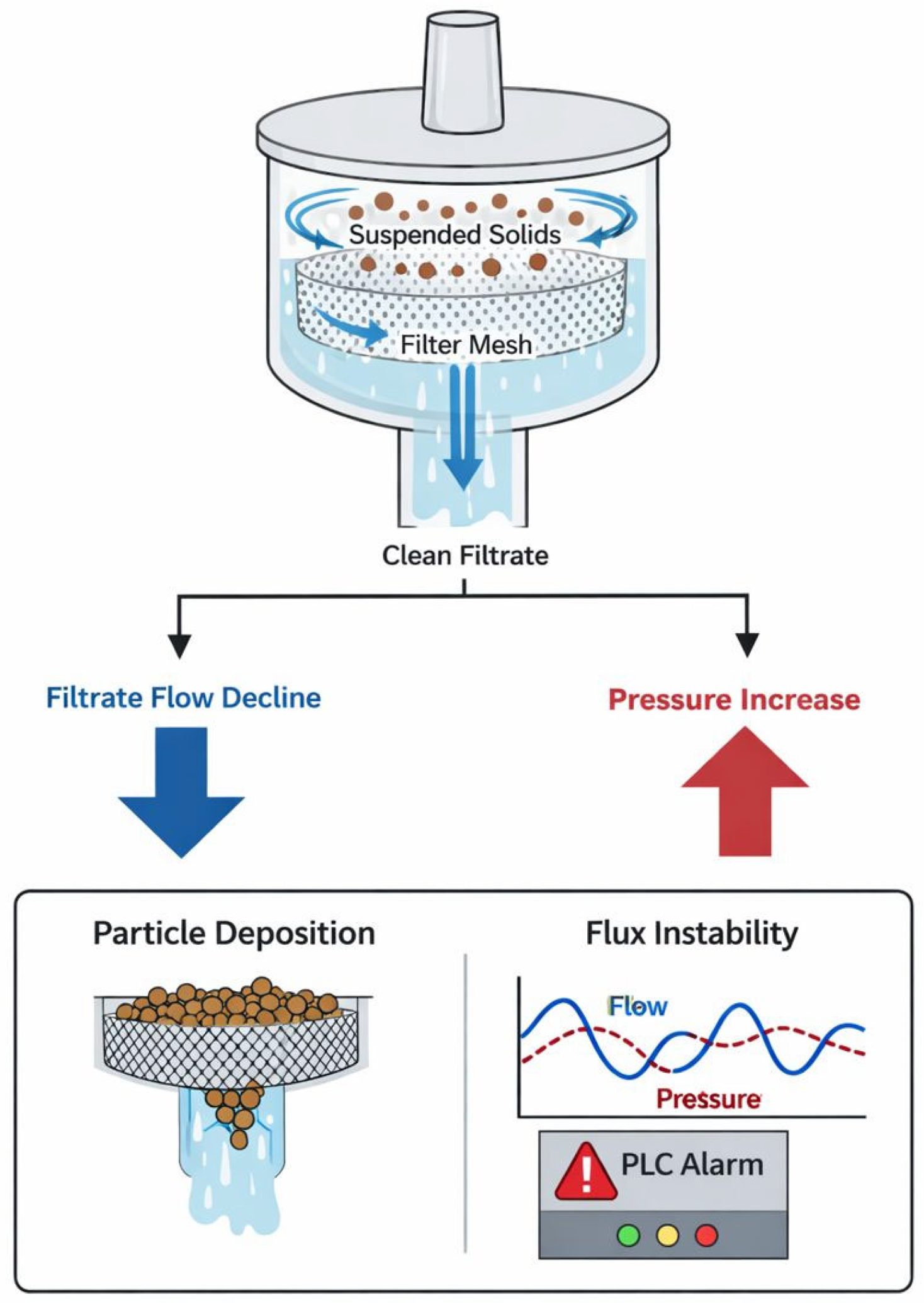
3.3. Load Evolution and Clogging Mechanisms in Filtration Processes
3.4. Implications of Mechanistic Understanding for Integrated System Design
4. Structure and Engineering Implementation of Integrated Swirl Flow and Filtration Equipment
4.1. Engineering Motivation and Overall Approach of Integrated Structural Design
4.2. Typical Integrated Configurations and Their Structural Characteristics
4.3. Engineering Implementation of Wear-Resistant and Anti-Clogging Structures
4.4. Self-Cleaning Mechanism and System Operation in Coordination
4.5. The Impact of Structural Integration on System Stability
5. Progress in the Application of Automation and Intelligent Control in Integrated Equipment
5.1. Control Objectives and Management Boundaries Under Operational Fluctuations
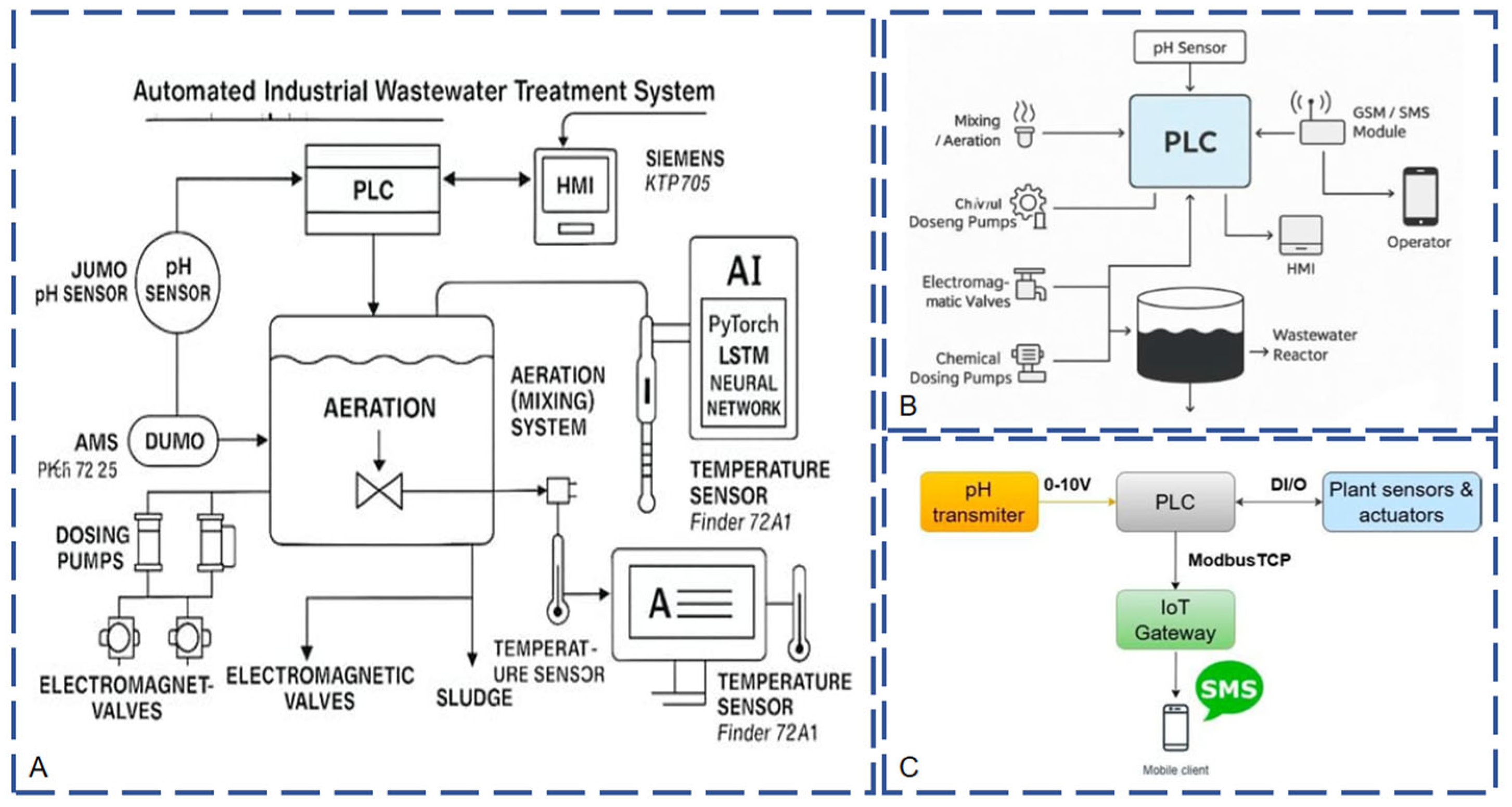
5.2. Minimum Perceptual Layer and PLC Rule-Based Closed-Loop Control
5.3. Operational Boundaries and Incremental Value of Data-Driven and Intelligent Control
6. Current Status of Engineering Applications and Performance Evaluation Comparison
6.1. Engineering Application Scenarios and Typical Operating Modes
6.2. Representative Plant-Scale Case Study
6.3. Performance Differences Under Different Technological Approaches
6.4. Engineering Trade-Offs Regarding Energy Consumption, Land Use, and Operation and Maintenance Requirements
6.5. Common Problems Revealed in Engineering Applications
7. Conclusions and Perspectives
Author Contributions
Funding
Data Availability Statement
Conflicts of Interest
References
- Li, L.; Liu, S.; Ke, X.; Dong, Z.; Huang, L. Anammox in treatment of coal chemical wastewater: A review. J. Min. Sci. Technol. 2025, 10, 351–362. [Google Scholar] [CrossRef]
- Matebese, F.; Mosai, A.K.; Tutu, H.; Tshentu, Z.R. Mining wastewater treatment technologies and resource recovery techniques: A review. Heliyon 2024, 10, e24730. [Google Scholar] [CrossRef] [PubMed]
- Li, L.; Xu, H.; Zhang, Q.; Zhan, Z.; Liang, X.; Xing, J. Estimation methods of wetland carbon sink and factors influencing wetland carbon cycle: A review. Carbon Res. 2024, 3, 50. [Google Scholar] [CrossRef]
- Kacaribu, A.A.; Aisyah, Y.; Febriani; Darwin. Development of wastewater treatment methods for palm oil mill effluent (POME): A comprehensive review. Resour. Chem. Mater. 2025, 4, 100130. [Google Scholar] [CrossRef]
- Miller, K.D.; Bentley, M.J.; Ryan, J.N.; Linden, K.G.; Larison, C.; Kienzle, B.A.; Katz, L.E.; Wilson, A.M.; Cox, J.T.; Kurup, P.; et al. Mine Water Use, Treatment, and Reuse in the United States: A Look at Current Industry Practices and Select Case Studies. ACS EST Eng. 2022, 2, 391–408. [Google Scholar] [CrossRef]
- Zhijie, W.; Peng, P.; Jie, Z.; Jinghu, S.; Long, T. Water-source heat pump in governance of heat hazard in deep mines—An example of Jinfeng Gold Mine, Guizhou. J. Green Mine 2024, 2, 344–356. [Google Scholar] [CrossRef]
- Xia, S.; Song, Z.; Zhao, X.; Li, J. Review of the recent advances in the prevention, treatment, and resource recovery of acid mine wastewater discharged in coal mines. J. Water Process Eng. 2023, 52, 103555. [Google Scholar] [CrossRef]
- Guoqiang, Y.; Jun, C.; Longxiang, B.; Zhihai, W. Research status and development trend of surface hydration of fine particles in coal slime water. J. Green Mine 2025, 3, 53–68. [Google Scholar] [CrossRef]
- Ali, P.; Mehdi, R.A.; Mohammad, M.S. Advancement factors in sludge dewatering technology for wastewater treatment from engineering and economic perspectives: A review. Environ. Funct. Mater. 2024, 3, 171–186. [Google Scholar] [CrossRef]
- Mara Gonçalves, S.; Guimarães Morimoto, M.; Antonio de Souza Barrozo, M.; Gustavo Martins Vieira, L. Effect of solids concentration and operational variables on the performance of a geometrically optimized concentrator hydrocyclone employing a pseudoplastic fluid. Miner. Eng. 2024, 218, 109046. [Google Scholar] [CrossRef]
- Zhang, F.; Bournival, G.; Ata, S. Overview of fine coal filtration. Part II: Filtration aiding treatments and reagents. Sep. Purif. Technol. 2025, 353, 128584. [Google Scholar] [CrossRef]
- Bradley, D. The Hydrocyclone; Elsevier: London, UK, 1965; ISBN 978-0-08-010399-0. [Google Scholar] [CrossRef]
- Cavalcante, D.C.M.; Magalhães, H.L.F.; Neto, S.R.F.; Gomez, R.S.; Delgado, J.M.P.Q.; Lima, A.G.B.; Vasconcelos, D.B.T.; Silva, M.J.V.; Farias, D.O.; Queiroz, S.F.A.M.; et al. Hydrodynamic Evaluation of a Filtering Hydrocyclone for Solid Particle/Water Separation. Membranes 2024, 14, 171. [Google Scholar] [CrossRef]
- Liu, L.; Sun, Y.; Zhao, L.; Wang, Y.; Kleinmeyer, Z.; Yang, Q.; Rosso, D. Mini-hydrocyclones in water: State-of-the-art. Green Chem. Eng. 2026, 7, 17–37. [Google Scholar] [CrossRef]
- Fernandes del Pozo, D.; Ahmad, A.; Rehman, U.; Verliefde, A.; Nopens, I. A novel CFD model to predict effluent solids concentration and pressure drop in deep bed granular filters for water treatment. Sep. Purif. Technol. 2022, 295, 121232. [Google Scholar] [CrossRef]
- Spellman, C.D.; Burton, Z.T.; Ikuma, K.; Strosnider, W.H.J.; Tasker, T.L.; Roman, B.; Goodwill, J.E. Continuous co-treatment of mine drainage with municipal wastewater. J. Environ. Manag. 2024, 354, 120282. [Google Scholar] [CrossRef]
- Kavaliauskas, Ž.; Blažiūnas, G.; Šajev, I.; Iljinas, A.; Gimžauskaitė, D. Development and Optimization of an Automated Industrial Wastewater Treatment System Using PLC and LSTM Neural Network. Appl. Sci. 2025, 15, 8990. [Google Scholar] [CrossRef]
- Yin, S.; Wei, C.; Liu, Y.; Zhu, D. Spatial distribution of composition and chemodiversity of surface water dissolved organic matter (DOM) over the upper reach of the Changjiang River. Carbon Res. 2025, 4, 58. [Google Scholar] [CrossRef]
- Duran-Ros, M.; Pujol, J.; Pujol, T.; Cufí, S.; Graciano-Uribe, J.; Arbat, G.; Ramírez de Cartagena, F.; Puig-Bargués, J. Efficiency of Backwashing in Removing Solids from Sand Media Filters for Drip Irrigation Systems. Agriculture 2024, 14, 1570. [Google Scholar] [CrossRef]
- Kaittan, K.H.; Mohammed, S.J. Wastewater Aeration process based Cloud-SCADA/PLC System. In Proceedings of the 2024 4th International Conference of Science and Information Technology in Smart Administration (ICSINTESA), Balikpapan, Indonesia, 12–13 July 2024; pp. 742–747. [Google Scholar] [CrossRef]
- Cairone, S.; Hasan, S.W.; Choo, K.-H.; Lekkas, D.F.; Fortunato, L.; Zorpas, A.A.; Korshin, G.; Zarra, T.; Belgiorno, V.; Naddeo, V. Revolutionizing wastewater treatment toward circular economy and carbon neutrality goals: Pioneering sustainable and efficient solutions for automation and advanced process control with smart and cutting-edge technologies. J. Water Process Eng. 2024, 63, 105486. [Google Scholar] [CrossRef]
- Xiang, F.; Ming, Y. Artificial intelligence applications in coal mining technology. J. Green Mine 2025, 3, 63–72. [Google Scholar] [CrossRef]
- Parsa, Z.; Dhib, R.; Mehrvar, M. Dynamic Modelling, Process Control, and Monitoring of Selected Biological and Advanced Oxidation Processes for Wastewater Treatment: A Review of Recent Developments. Bioengineering 2024, 11, 189. [Google Scholar] [CrossRef]
- Zhang, C.; Zhao, G.; Su, P.; Xiao, N.; Zhang, Y.; Shen, Z. Treatment and utilization of coal mine water based on "deep ground-underground-surface ground" linkage system. J. Min. Sci. Technol. 2024, 9, 1–12. [Google Scholar] [CrossRef]
- Jiang, B.; Li, J.; Ma, L.; Wu, M.; Su, C.; Li, J. Investigation of the suspended solids removal from mine water by the rock accumulation effect in the underground reservoir of coal mines. Coal Sci. Technol. 2024, 52, 352–361. [Google Scholar] [CrossRef]
- Chen, H.; Chen, S.; Zhang, W.; Wang, X.; Zou, G.; Liu, Y.; Chen, P.; Fu, X.; Zhang, L. 3D geological radar and its applications in coalfield fault fracture zones. J. Min. Sci. Technol. 2025, 10, 1029–1041. [Google Scholar] [CrossRef]
- Hua, M.; Zou, G.; Liu, Y.; Liu, J.; Liu, Z. Ultrasonic wave propagation characteristics in pore-fracture structure of deep coal under coupled thermo-pressure conditions. J. Min. Sci. Technol. 2025, 10, 1042–1054. [Google Scholar] [CrossRef]
- Li, L.; Liang, T.; Zhao, M.; Lv, Y.; Song, Z.; Sheng, T.; Ma, F. A review on mycelial pellets as biological carriers: Wastewater treatment and recovery for resource and energy. Bioresour. Technol. 2022, 355, 127200. [Google Scholar] [CrossRef] [PubMed]
- Gonçalves, S.M.; Ullmann, G.; Morimoto, M.G.; de Souza Barrozo, M.A.; Vieira, L.G.M. Effect of rheology and solids concentration on hydrocyclones performance: A study involving the design variables of an optimized hydrocyclone. J. Pet. Sci. Eng. 2022, 210, 110019. [Google Scholar] [CrossRef]
- Pan, Q.; Wang, C.; Zhan, P.; Zhao, F.; Dai, H.; Hu, Y.; Hu, F.; Peng, X. Generation and regulation of high-valent metal species in advanced oxidation processes. Environ. Funct. Mater. 2025, 4, 1–10. [Google Scholar] [CrossRef]
- Wei, X.; Zhang, S.; Han, Y.; Wolfe, F.A. Characterization and Treatment of Mine Drainage. Water Environ. Res. 2018, 90, 1899–1922. [Google Scholar] [CrossRef] [PubMed][Green Version]
- Wang, H.; Chai, G.; Yang, H.; Li, K.; Chen, K.; Xue, Y.; Li, J.; Wang, Z.; Jiang, C.; Li, H.; et al. Impact of Acid Mine Drainage on Water Quality in Receiving Watersheds and Associated Potential Adverse Effects. Process Saf. Environ. Prot. 2025, 203, 107905. [Google Scholar] [CrossRef]
- Wang, J.; Zhang, S.; He, C.; She, Z.; Pan, X.; Li, Y.; Shao, R.; Shi, Q.; Yue, Z. Source Identification and Component Characterization of Dissolved Organic Matter in an Acid Mine Drainage Reservoir. Sci. Total Environ. 2020, 739, 139732. [Google Scholar] [CrossRef]
- Du, W.; Shi, K.; Wang, B.; Tang, H.; Jiang, Q.; Zhou, X.; Sun, G.; Xue, J. Sulfate Reduction Performance and Microbial Community Structure in an Upflow Anaerobic Sludge Blanket (UASB) Reactor: Effects of the Low COD/SO42−. J. Ind. Saf. 2026; in press. [CrossRef]
- Butler, B.A.; Ford, R.G. Evaluating Relationships Between Total Dissolved Solids (TDS) and Total Suspended Solids (TSS) in a Mining-Influenced Watershed. Mine Water Environ. 2018, 37, 18–30. [Google Scholar] [CrossRef] [PubMed]
- Leiva, W.H.; Piceros, E.; Robles, P.A.; Jeldres, R.I. Impact of hydrodynamic conditions on the structure of clay-based tailings aggregates flocculated in freshwater and seawater. Miner. Eng. 2022, 176, 107313. [Google Scholar] [CrossRef]
- Wang, L.; Cao, Y.; Wei, J.; Bai, S. Structure-activity relationship of self-immobilized mycelial pellets and their functions in wastewater treatment. Bioresour. Technol. 2025, 430, 132558. [Google Scholar] [CrossRef] [PubMed]
- Lu, M.; Zhao, L.; Peng, Z.; Zhang, S.; Jiang, M. Research progress on the influence of structural and operating parameters on the enhanced separation performance of mini-hydrocyclones. Chem. Eng. Res. Des. 2024, 208, 81–93. [Google Scholar] [CrossRef]
- Plitt, L.R. A Mathematical Model of The Hydrocyclone Classifier; Canadian Institute of Mining, Metallurgy and Petroleum: Westmount, QC, Canada, 1976; Available online: https://onemine.org/documents/a-mathematical-model-of-the-hydrocyclone-classifier (accessed on 5 January 2026).
- Vakamalla, T.R.; Mangadoddy, N. Numerical Simulation of Industrial Hydrocyclones Performance: Role of Turbulence Modelling. Sep. Purif. Technol. 2017, 176, 23–39. [Google Scholar] [CrossRef]
- Gençoğlan, C.; Şahan, H.; Gençoğlan, S. Determination of Separation Efficiency of Hydrocyclone Used Pre-Filter in Micro Irrigation at Different Inlet Velocities and Sand Diameters. J. Agric. Sci. 2023, 29, 60–67. [Google Scholar] [CrossRef]
- Endres, E.; Dueck, J.; Neesse, T. Hydrocyclone Classification of Particles in the Micron Range. Miner. Eng. 2012, 31, 42–45. [Google Scholar] [CrossRef]
- Zhao, Q.; Cui, B.; Ji, A.; Song, T.; Shen, Y. Experimental and numerical study of the effect of particle size distribution on hydrocyclone classification. Adv. Powder Technol. 2024, 35, 104398. [Google Scholar] [CrossRef]
- Su, T.; Zhang, Y. Effect of the Axially Inserted Solid Rod on the Flow Field Characteristics and Separation Performance of a Hydrocyclone. ACS Omega 2022, 7, 24208–24218. [Google Scholar] [CrossRef] [PubMed]
- Marthinussen, S.-A.; Chang, Y.-F.; Balakin, B.; Hoffmann, A.C. Removal of Particles from Highly Viscous Liquids with Hydrocyclones. Chem. Eng. Sci. 2014, 108, 169–175. [Google Scholar] [CrossRef]
- Pimentel de Sá da Silva, D.; Morimoto, M.; Silva, D.; Barrozo, M.; Vieira, L. Effect of Operational and Geometric Variables in Hydrocyclones to Improve Separation Efficiency and Reduce Energy Consumption: A Review and New Insights. Miner. Process. Extr. Metall. Rev. 2024, 47, 39–70. [Google Scholar] [CrossRef]
- Xu, Y.; Ye, J.; Song, X.; Yu, J. Classification of Ultrafine Particles Using a Novel 3D-Printed Hydrocyclone with an Arc Inlet: Experiment and CFD Modeling. ACS Omega 2023, 8, 998–1016. [Google Scholar] [CrossRef]
- Vakamalla, T.R.; Mangadoddy, N. Comprehensive Dense Slurry CFD Model for Performance Evaluation of Industrial Hydrocyclones. Ind. Eng. Chem. Res. 2021, 60, 12403–12418. [Google Scholar] [CrossRef]
- Liu, X.; Chen, J.; Cui, H.; Ma, X.; Zhang, H.; Shan, Y. Novel Efficiency Calculation Model Based on Fine Particle Tracking Behavior. Processes 2024, 12, 1710. [Google Scholar] [CrossRef]
- Zahoor, A.; Liu, X.; Liu, Y.; Liu, S.; Yi, W.; Sajnani, S.; Tai, L.; Tahir, N.; Abdoulaye, B.; Mahaveer; et al. Agricultural lignocellulose biochar material in wastewater treatment: A critical review and sustainability assessment. Environ. Funct. Mater. 2025, 4, 117–137. [Google Scholar] [CrossRef]
- Raut, S.S.; Kumari, D.; Singh, S.; Pandey, D.; Daverey, A.; Dutta, K. Fabrication of different magnetic biochar from Citrus limetta peels for Cr (VI) adsorption: Characterisation, and performance. Resour. Chem. Mater. 2025, 4, 100118. [Google Scholar] [CrossRef]
- Cui, L.; Wang, W.; Quan, G.; Wang, H.; Hina, K.; Hussain, Q.; Liu, Y.; Yan, J. Biochar-induced charosphere microenvironment modulates soil cadmium bioavailability and wheat uptake. Sustain. Carbon Mater. 2026, 2, e004. [Google Scholar] [CrossRef]
- Han, G.; Kwon, T.-H. Effect of Seepage Velocity on Pore Clogging Growth Behavior and Its Effect on Permeability Reduction During Fines Migration in Porous Media. Water Resour. Res. 2023, 59, e2022WR033537. [Google Scholar] [CrossRef]
- Hamraoui, L.; Bergani, A.; Ettoumi, M.; Aboulaich, A.; Taha, Y.; Khalil, A.; Neculita, C.M.; Benzaazoua, M. Towards a Circular Economy in the Mining Industry: Possible Solutions for Water Recovery through Advanced Mineral Tailings Dewatering. Minerals 2024, 14, 319. [Google Scholar] [CrossRef]
- Kuzmina, L.I.; Osipov, Y.V.; Pesterev, A.R. Deep Bed Filtration Model for Cake Filtration and Erosion. Appl. Math. Mech. 2024, 45, 355–372. [Google Scholar] [CrossRef]
- Cao, W.; Jing, H.; Araya, D.T.; Zhao, W. Optimization of microwave-assisted pyrolysis parameters for sugarcane bagasse biochar using response surface methodology. Sustain. Carbon Mater. 2026, 2, e003. [Google Scholar] [CrossRef]
- Okaybi, W.; Roman, S.; Soulaine, C. Progressive colloidal clogging mechanism by dendritic build-up in porous media. Soft Matter 2025, 21, 5687–5698. [Google Scholar] [CrossRef] [PubMed]
- Li, L.; Yan, P.; Huang, L.; Zhan, Z.; Zhang, J.; Li, X.; Chai, W.; Tang, Q.; Shen, Z. Preparation and application of ceramic membranes incorporating graphite tailings for oil wastewater treatment. Chem. Eng. J. 2026, 527, 171733. [Google Scholar] [CrossRef]
- Lin, J.-Y.; Wu, R.-M. Three Output Membrane Hydrocyclone: Classification and Filtration. Molecules 2019, 24, 1116. [Google Scholar] [CrossRef]
- Nunes, S.A.; Magalhães, H.L.F.; de Farias Neto, S.R.; Lima, A.G.B.; Nascimento, L.P.C.; Farias, F.P.M.; Lima, E.S. Impact of Permeable Membrane on the Hydrocyclone Separation Performance for Oily Water Treatment. Membranes 2020, 10, 350. [Google Scholar] [CrossRef]
- Zhang, M.; Yang, M.; Wang, J.; Huang, H. Simulation and experiment of turbulent particle motions in a hydrocyclone membrane filtration cell optimized for low-fouling water filtration. Sep. Purif. Technol. 2023, 306, 122719. [Google Scholar] [CrossRef]
- Kassymbekov, Z.; Akmalaiuly, K.; Kassymbekov, G. Application of Hydrocyclones to Improve Membrane Technologies for Urban Wastewater Treatment. J. Ecol. Eng. 2021, 22, 148–155. [Google Scholar] [CrossRef]
- Salvador, F.; Ascendino, G.; Faria, E.; Barrozo, M.; Vieira, L. Geometric optimization of filtering cylindrical hydrocyclones. Powder Technol. 2020, 381, 611–619. [Google Scholar] [CrossRef]
- Abfertiawan, M.S.; Hasan, F.; Handajani, M.; Syafila, M.; Gunawan, F.; Djali, F. High Total Suspended Solid (TSS) Removal for Coal Mining Water Using Electrocoagulation. IOP Conf. Ser. Earth Environ. Sci. 2023, 1169, 012020. [Google Scholar]
- GB 8978-1996; Integrated Wastewater Discharge Standard. State Environmental Protection Administration of China: Beijing, China, 1996.
- Li, L.; Chai, W.; Kang, J.; Liu, J.; Xing, J.; Li, G.; Zhan, Z. Utilization of graphite tailings and coal gangue in the preparation of foamed ceramics. Int. J. Appl. Ceram. Technol. 2025, 22, e15012. [Google Scholar] [CrossRef]
- Zhang, S.; Wu, Q.; Ji, H. Research on zero discharge treatment technology of mine wastewater. Energy Rep. 2022, 8, 275–280. [Google Scholar] [CrossRef]
- Tsamoutsoglou, K.; Kechagias, A.; Katzourakis, V.E.; Chrysikopoulos, C.V.; Gikas, P. Investigation and efficiency estimation of a hydrocyclone for the treatment of primary municipal wastewater. J. Environ. Manag. 2025, 380, 125134. [Google Scholar] [CrossRef] [PubMed]
- Yang, D.; Wang, L.; Bai, S. Enhancement of alfalfa growth resistance by arbuscular mycorrhiza and earthworm in molybdenum-contaminated soils: From the perspective of soil nutrient turnover. Environ. Res. 2025, 267, 120714. [Google Scholar] [CrossRef] [PubMed]
- Wills, B.A.; Finch, J.A. Wills’ Mineral Processing Technology: An Introduction to the Practical Aspects of Ore Treatment and Mineral Recovery; Elsevier: Amsterdam, The Netherlands, 2015. [Google Scholar]
- Ekechukwu, O.; Maryjane, O.; Taimoor, A.; Hawez, H.K. Recent Developments in Hydrocyclone Technology for Oil-in-Water Separation from Produced Water. Energies 2024, 17, 3181. [Google Scholar] [CrossRef]
- César, S.D.; De Jager, D.; Njoya, M. The Role of Hydrocyclone and Induced Gas Flotation Technologies in Offshore Produced Water Deoiling Advancements. Pet. Res. 2025, 10, 342–351. [Google Scholar] [CrossRef]
- Vieira, L.G.; Barbosa, E.A.; Damasceno, J.J.; Barrozo, M.A. Performance Analysis and Design of Filtering Hydrocyclones. Braz. J. Chem. Eng. 2005, 22, 143–152. [Google Scholar] [CrossRef]
- Liu, P.; Chen, B.; Hou, D.; Jiang, Z.; Yan, Z.; Han, Z. Study on the Separation Performance of a Two Cylindrical Section Hydrocyclone under Various Height Ratios. ACS Omega 2024, 9, 21569–21579. [Google Scholar] [CrossRef]
- Singh, V.; Kumar, S.; Mohapatra, S.K. Modeling of erosion wear of sand water slurry flow through pipe bend using CFD. J. Appl. Fluid Mech. 2019, 12, 679–687. [Google Scholar] [CrossRef]
- Liu, P.; Song, Y.; Jiang, L.; Yang, X.; Zhang, Y.; Li, X.; Zhang, R. Numerical study on the wall wear of hydrocyclones and experimental verification. Adv. Powder Technol. 2023, 34, 104243. [Google Scholar] [CrossRef]
- Xiong, Z.; Xu, J.; Liu, C. Interaction effects of inlet velocity and apex diameter on the separation performance of two-stage cone hydrocyclones. Powder Technol. 2023, 422, 118446. [Google Scholar] [CrossRef]
- Wu, Z.; Zheng, G.; Li, S. Prediction of Erosion of a Hydrocyclone Inner Wall Based on CFD-DPM. Fluids 2025, 10, 266. [Google Scholar] [CrossRef]
- Combrink, S. Characterisation of Wear in Natural Rubber and Polyurethane Hydrocyclones Used for Minerals Processing Applications. Master’s Thesis, University of Pretoria, Pretoria, South Africa, 2020. [Google Scholar]
- Liu, P.; Chen, B.; Hou, D.; Yang, X.; Zhang, W.; Lu, Y. Designing the Spigot Structure of Hydrocyclones to Reduce Fine Particle Misplacement in Underflow. Water 2024, 16, 1070. [Google Scholar] [CrossRef]
- Razali, M.C.; Wahab, N.A.; Sunar, N.; Shamsudin, N.H. Existing Filtration Treatment on Drinking Water Process and Concerns Issues. Membranes 2023, 13, 285. [Google Scholar] [CrossRef] [PubMed]
- Öztürk, D.; Bernardi, F.; Cogan, N.G.; Gupta, K.; Chellam, S. Optimization of surface water microfiltration with hydraulic and chemically enhanced backwashing. J. Membr. Sci. 2025, 717, 123550. [Google Scholar] [CrossRef]
- Li, L.; Han, J.; Huang, L.; Liu, L.; Qiu, S.; Ding, J.; Liu, X.; Zhang, J. Activation of PMS by MIL-53(Fe)@AC composites contributes to tetracycline degradation: Properties and mechanisms. Surf. Interfaces 2024, 51, 104521. [Google Scholar] [CrossRef]
- Chaaben, A.; Ellouze, F.; Ben Amar, N.; Rapaport, A.; Heran, M.; Harmand, J. Evaluation of the Genericity of an Adaptive Optimal Control Approach to Optimize Membrane Filtration Systems. Membranes 2025, 15, 157. [Google Scholar] [CrossRef]
- Kaykhaii, S.; Herrmann, I.; Hedström, A.; Nordqvist, K.; Heidfors, I.; Viklander, M. Enhancing stormwater treatment through ultrafiltration: Impact of cleaning chemicals and backwash duration on membrane efficiency. Water Reuse 2023, 13, 634–646. [Google Scholar] [CrossRef]
- Sim, J.; Kim, J. Cyclone-integrated automated filtration system for washing machines: Enhancing microfiber capture efficiency. Process Saf. Environ. Prot. 2025, 200, 107267. [Google Scholar] [CrossRef]
- Sun, Z.; Liao, Y.; Zhang, Y.; Sun, S.; Kan, Q.; Wu, Z.; Yu, L.; Dong, Z.; Wang, Z.; He, R.; et al. Sustainable carbon materials in environmental and energy applications. Sustain. Carbon Mater. 2025, 1, e007. [Google Scholar] [CrossRef]
- Ali, M.; Yekeen, N.; Ali, M.; Pal, N.; Al Kobaisi, M.; Keshavarz, A.; Hoteit, H. Nanofluid-assisted enhanced sealing containment of caprocks for efficient geological CO2 storage. Int. J. Coal Sci. Technol. 2026, 13, 8. [Google Scholar] [CrossRef]
- Wei, J.; Li, X.; Liu, Y.; Zhang, H.; Chen, C.; Tian, Y.; Li, H.; Gao, M. The effect of thermal stresses on coal cracks evolution induced by a supercritical carbon dioxide jet. Int. J. Coal Sci. Technol. 2026, 13, 5. [Google Scholar] [CrossRef]
- Li, J.; Li, P.; Han, P.; Cheng, Z.; Li, J.; Zhang, T.; Chen, D.; Zheng, Y.; Zeng, N.; Zhang, G. Advances in the design of urban CO2 emission monitoring networks: A review. Carbon Res. 2026, 5, 3. [Google Scholar] [CrossRef]
- Vuuren, M.; Aldrich, C.; Auret, L. Detecting changes in the operational states of hydrocyclones. Miner. Eng. 2011, 24, 1532–1544. [Google Scholar] [CrossRef]
- Dianyu, E.; Xu, G.; Cui, J.; Ye, Q.; Tan, C.; Zou, R.; Yu, A.; Kuang, S. Prediction of instantaneous flow characteristics of hydrocyclone with long short-term memory network based on computational fluid dynamics data. Powder Technol. 2024, 439, 119668. [Google Scholar] [CrossRef]
- Ye, Q.; Kuang, S.; Duan, P.; Zou, R.; Yu, A. Fast prediction and control of air core in hydrocyclone by machine learning to stabilize operations. J. Environ. Chem. Eng. 2024, 12, 111699. [Google Scholar] [CrossRef]
- Wang, A.-J.; Li, H.; He, Z.; Tao, Y.; Wang, H.; Yang, M.; Savic, D.; Daigger, G.T.; Ren, N. Digital Twins for Wastewater Treatment: A Technical Review. Engineering 2024, 36, 21–35. [Google Scholar] [CrossRef]
- Rodríguez-Alonso, C.; Pena-Regueiro, I.; García, Ó. Digital Twin Platform for Water Treatment Plants Using Microservices Architecture. Sensors 2024, 24, 1568. [Google Scholar] [CrossRef]
- Li, W.; Shen, J.; Ma, Z.; Pan, W.; Wang, Q.; Li, C. The migration and deposition patterns of coal fines and their initiation mechanisms during the gas–water two-phase flow stage in coalbed methane wells. Int. J. Coal Sci. Technol. 2025, 12, 83. [Google Scholar] [CrossRef]
- Nagpal, M.; Siddique, M.A.; Sharma, K.; Sharma, N.; Mittal, A. Optimizing wastewater treatment through artificial intelligence: Recent advances and future prospects. Water Sci. Technol. 2024, 90, 731–757. [Google Scholar] [CrossRef]
- Shyu, H.Y.; Castro, C.J.; Bair, R.A.; Lu, Q.; Yeh, D.H. Development of a Soft Sensor Using Machine Learning Algorithms for Predicting the Water Quality of an Onsite Wastewater Treatment System. ACS Env. Au 2023, 3, 308–318. [Google Scholar] [CrossRef] [PubMed]
- Newhart, K.B.; Klanderman, M.C.; Hering, A.S.; Cath, T.Y. A Holistic Evaluation of Multivariate Statistical Process Monitoring in a Biological and Membrane Treatment System. ACS EST Water 2024, 4, 913–924. [Google Scholar] [CrossRef] [PubMed]
- Zhang, Y.; Fu, Y.; Ren, Z.; Li, Y.; Feng, Y.; Leong, Z.H.; Pan, J. Building a knowledge-based machine learning loop framework to optimize biochar for anaerobic digestion performance. Carbon Res. 2025, 4, 71. [Google Scholar] [CrossRef]
- Zhang, Y.; Wang, J.; Guo, Z.; Fang, K. LSTM-based rockburst risk prediction model incorporating attention mechanism and convolutional neural networks and its applications. J. Min. Sci. Technol. 2025, 10, 1150–1162. [Google Scholar] [CrossRef]
- Ching, P.M.L.; So, R.H.Y.; Morck, T. Advances in soft sensors for wastewater treatment plants: A systematic review. J. Water Process Eng. 2021, 44, 102367. [Google Scholar] [CrossRef]
- Liu, X.; Gong, Z.; Zhang, X. Research on Anomaly Detection in Wastewater Treatment Systems Based on a VAE-LSTM Fusion Model. Water 2025, 17, 2842. [Google Scholar] [CrossRef]
- Kini, K.R.; Harrou, F.; Madakyaru, M.; Sun, Y. Enhancing fault detection in wastewater treatment plants: A multi-scale principal component analysis approach with the Kantorovich distance. Environ. Sci. Water Res. Technol. 2025, 11, 1215–1232. [Google Scholar] [CrossRef]
- Wang, X.; Wei, W.; Yoo, C.; Liu, H. Data-driven fault detection and diagnosis methods in wastewater treatment systems: A comprehensive review. Environ. Res. 2025, 268, 120822. [Google Scholar] [CrossRef] [PubMed]
- Yang, Y.; Zhao, Y.; Wu, X. Integrated Soft-Sensor Model for Wastewater Treatment Process with Collaborative Calibration Strategy. Electronics 2025, 14, 4506. [Google Scholar] [CrossRef]
- Fang, G.; Huang, D.; Wu, Z.; Chen, Y.; Li, Y.; Liu, Y. Effluent quality soft sensor for wastewater treatment plant with ensemble sparse learning-based online next generation reservoir computing. Water Res. X 2024, 25, 100276. [Google Scholar] [CrossRef] [PubMed]
- Liu, Y.-F.; Hu, H.-Y.; Li, J.-Y.; Wang, H.; Zhao, Y.; Wang, J.; Wu, Y.-B.; Li, Y.-J.; Zhang, G.-Y.; Sun, Q.-Q.; et al. An air-stable single-crystal layered oxide cathode based on multifunctional structural modulation for high-energy-density sodium-ion batteries. Sci. China Chem. 2024, 67, 4242–4250. [Google Scholar] [CrossRef]
- Tejaswini, E.S.S.; Panjwani, S.; Seshagiri Rao, A. Design of hierarchical control strategies for biological wastewater treatment plants to reduce operational costs. Chem. Eng. Res. Des. 2020, 161, 197–205. [Google Scholar] [CrossRef]
- Ivan, H.L.; Zaccaria, V. Exploring the effects of faults on the performance of a biological wastewater treatment process. Water Sci. Technol. 2024, 90, 474–489. [Google Scholar] [CrossRef]
- Giustolisi, O. Digital transition, digital twin and digital water: History, concepts and overview for the application to aqueducts. Digit. Water 2023, 1, 2313975. [Google Scholar] [CrossRef]
- Ghorbani Bam, P.; Rezaei, N.; Roubanis, A.; Austin, D.; Austin, E.; Tarroja, B.; Takacs, I.; Villez, K.; Rosso, D. Digital Twin Applications in the Water Sector: A Review. Water 2025, 17, 2957. [Google Scholar] [CrossRef]
- Pedersen, A.; Borup, M.; Brink-Kjær, A.; Christiansen, L.; Mikkelsen, P. Living and Prototyping Digital Twins for Urban Water Systems: Towards Multi-Purpose Value Creation Using Models and Sensors. Water 2021, 13, 592. [Google Scholar] [CrossRef]
- Yang, W.; Li, H. Machine Learning in Wastewater Treatment: A Comprehensive Bibliometric Review. ACS EST Water 2025, 5, 511–524. [Google Scholar] [CrossRef]
- Zhang, D.; Liu, J.; Wang, H.; Wang, Y. Advancing carbon-neutral wastewater treatment: Artificial intelligence-driven strategies for emission mitigation and process optimization. Environ. Res. 2026, 290, 123449. [Google Scholar] [CrossRef]
- Zamfir, F.-S.; Carbureanu, M.; Mihalache, S.F. Application of Machine Learning Models in Optimizing Wastewater Treatment Processes: A Review. Appl. Sci. 2025, 15, 8360. [Google Scholar] [CrossRef]
- Alex, J.; Benedetti, L.; Copp, J.; Gernaey, K.; Jeppsson, U.; Nopens, I.; Pons, M.-N.; Rieger, L.; Rosen, C.; Steyer, J.-P. Benchmark Simulation Model No. 1 (BSM1); IWA Task Group on Benchmarking of Control Strategies for WWTPs; International Water Association: London, UK, 2008. [Google Scholar]
- Zhang, S.; Wang, H.; He, X.; Guo, S.; Xia, Y.; Zhou, Y.; Liu, K.; Yang, S. Research progress, problems and prospects of mine water treatment technology and resource utilization in China. Crit. Rev. Environ. Sci. Technol. 2020, 50, 331–383. [Google Scholar] [CrossRef]
- Partin, A.K. Hydrocyclone Implementation at Two Wastewater Treatment Facilities to Promote Overall Settling Improvement. Ph.D. Thesis, Virginia Polytechnic Institute and State University, Blacksburg, VA, USA, 2019. [Google Scholar]
- Farghaly, M.G.; Attia, H.; Saleh, H.A.; Ramadan, A.M.; Abdel Khalek, M.A. A Combined Hydrocyclone-Electrocoagulation Treatment for Different Types of Industrial Wastewater. Physicochem. Probl. Miner. Process. 2021, 57, 143–155. [Google Scholar] [CrossRef]
- Xiao, F.; Mo, R. Study on Creep Energy Dissipation and Damage Deformation Characteristics of Rock Under Unloading Confining Pressure. Rock Mech. Rock Eng. 2025. [Google Scholar] [CrossRef]
- Younger, P.; Banwart, S.; Hedin, R. Mine water hydrology. In Mine Water: Hidrology, Pollution, Remediation; Springer: Dordrecht, The Netherlands, 2002; Volume 5. [Google Scholar]
- Li, S.; Liao, J.; Zhang, Z.; Xu, G. Catalytic decomposition of methane over Fe2O3-Al2O3 catalysts with high iron contents and at high CH4 space velocities. Resour. Chem. Mater. 2025, 4, 100123. [Google Scholar] [CrossRef]
- Weiss, M.; Cloos, K.C.; Helmers, E. Energy efficiency trade-offs in small to large electric vehicles. Environ. Sci. Eur. 2020, 32, 46. [Google Scholar] [CrossRef]



| Parameter | Typical Range | Notes | Reference |
|---|---|---|---|
| TSS | 1–100 g·L−1 | Can exceed tens g·L−1 during peak inflow | Wei et al. (2018) [31] |
| pH | 2–9 | Acidic in sulfide oxidation systems | Hao et al. (2025) [32] |
| Fe | 1–500 mg·L−1 | Dominant dissolved metal | Jin et al. (2020) [33] |
| Mn | 0.1–50 mg·L−1 | Often persistent after neutralization | Du et al. (2025) [34] |
| Sulfate | 200–3000 mg·L−1 | From pyrite oxidation | Butler et al. (2018) [35] |
| Total dissolved solids | 500–5000 mg·L−1 | Varies by geology | Wei et al. (2018), Du et al. (2025) [31,34] |
| Key Characteristic | Representative Quantitative Range | Effect on Separation Behavior | Effect on Filtration Behavior |
|---|---|---|---|
| High-solids concentration | Suspended solids typically 1–100 g·L−1 (occasionally higher in peak inflow) | Particle interactions dominate, separation boundaries become unstable | Rapid resistance buildup and reduced recoverability |
| Broad particle size distribution | Particle size commonly 1–500 μm, with significant fine fraction <10 μm | Diffuse cut size and increased fine particle misplacement | Simultaneous surface and internal clogging |
| Non-dilute rheology | Apparent viscosity often 2–10× that of water depending on solids loading | Deviation from classical flow assumptions | Nonlinear head loss growth |
| Strong temporal variability | Solids concentration fluctuations often >50% within short operating periods | Time dependent and history sensitive separation performance | Unsteady fouling dynamics and fluctuating operating margins |
| Configuration Type | Structural Coupling Feature | Representative Studies | Reported Operational Outcomes/ Comparative Metrics | Main Advantage | Key Structural Risk |
|---|---|---|---|---|---|
| Conventional series arrangement | Cyclone and filtration units installed as independent modules | Wills & Finch, (2016) [70] | Cyclone removes 40–80% coarse solids, reduces filtration load | Clear separation, flexible control | Large footprint, limited buffering |
| Shared pressure vessel integration | Cyclone and filter housed within a common shell | Liu et al. (2024) [14] | Reduces system footprint by 30%, improved hydraulic continuity | Compact, fewer external pipes | Stronger internal coupling, less isolation |
| Tightly coupled integrated design | Minimal hydraulic distance between cyclone underflow and filter feed | Ekechukwu et al. (2024) [71] | 15–25% increase in throughput, mitigates membrane fouling | Short flow paths, high density | Internal short-circuiting under fluctuating loads |
| Filtering hydrocyclone-based design | Filtration elements embedded within swirling flow | Vieira et al. (2005); César et al. (2025) [72,73] | Intercepts fine particles early, reduces filtration burden by 20–40% | Early capture, load redistribution | Higher complexity, limited operational data |
| Monitored Variable | Indicative System State | Primary Control Action | Control Objective |
|---|---|---|---|
| Cyclone pressure drop | Rapid change in feed load or internal flow resistance | Adjust feed or activate bypass | Prevent separation instability |
| Underflow discharge state | Onset of abnormal regimes such as roping | Regulate spigot or discharge flow | Maintain stable solids removal |
| Overflow turbidity or solids proxy | Increased fine particle carryover | Reduce filtration load or trigger protection | Protect downstream filtration |
| Filter pressure-drop growth rate | Accelerating clogging and reduced recoverability | Initiate backwash or cleaning sequence | Avoid irreversible fouling |
| Persistent abnormal state | Sustained deviation beyond defined limits | Degraded operation or protective shutdown | Ensure equipment safety and recoverability |
Disclaimer/Publisher’s Note: The statements, opinions and data contained in all publications are solely those of the individual author(s) and contributor(s) and not of MDPI and/or the editor(s). MDPI and/or the editor(s) disclaim responsibility for any injury to people or property resulting from any ideas, methods, instructions or products referred to in the content. |
© 2026 by the authors. Licensee MDPI, Basel, Switzerland. This article is an open access article distributed under the terms and conditions of the Creative Commons Attribution (CC BY) license.
Share and Cite
Xiao, S.; Li, L. A Review of Research Progress on Intelligent Cyclone–Filtration-Integrated Equipment for High-Suspended-Solids Mine Water Treatment. Separations 2026, 13, 107. https://doi.org/10.3390/separations13040107
Xiao S, Li L. A Review of Research Progress on Intelligent Cyclone–Filtration-Integrated Equipment for High-Suspended-Solids Mine Water Treatment. Separations. 2026; 13(4):107. https://doi.org/10.3390/separations13040107
Chicago/Turabian StyleXiao, Shengbing, and Lixin Li. 2026. "A Review of Research Progress on Intelligent Cyclone–Filtration-Integrated Equipment for High-Suspended-Solids Mine Water Treatment" Separations 13, no. 4: 107. https://doi.org/10.3390/separations13040107
APA StyleXiao, S., & Li, L. (2026). A Review of Research Progress on Intelligent Cyclone–Filtration-Integrated Equipment for High-Suspended-Solids Mine Water Treatment. Separations, 13(4), 107. https://doi.org/10.3390/separations13040107