Article

HPLC-DAD Determination of Hydroquinone, Salicylic Acid, and Niacinamide in Skin-Whitening Products: Method Validation and Safety Evaluation

by
Khadejah D. Otaif
Department of Physical Sciences, Chemistry Division, College of Science, Jazan University, Jazan 82817-2820, Saudi Arabia
Separations 2026, 13(3), 94; https://doi.org/10.3390/separations13030094
Submission received: 14 February 2026 / Revised: 10 March 2026 / Accepted: 12 March 2026 / Published: 14 March 2026
(This article belongs to the Section Chromatographic Separations)

Abstract

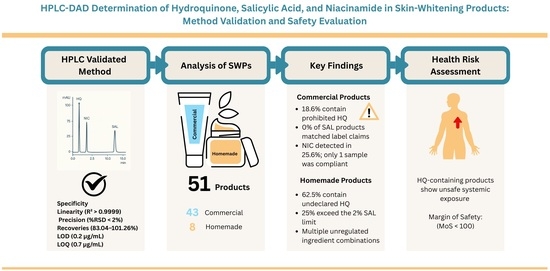
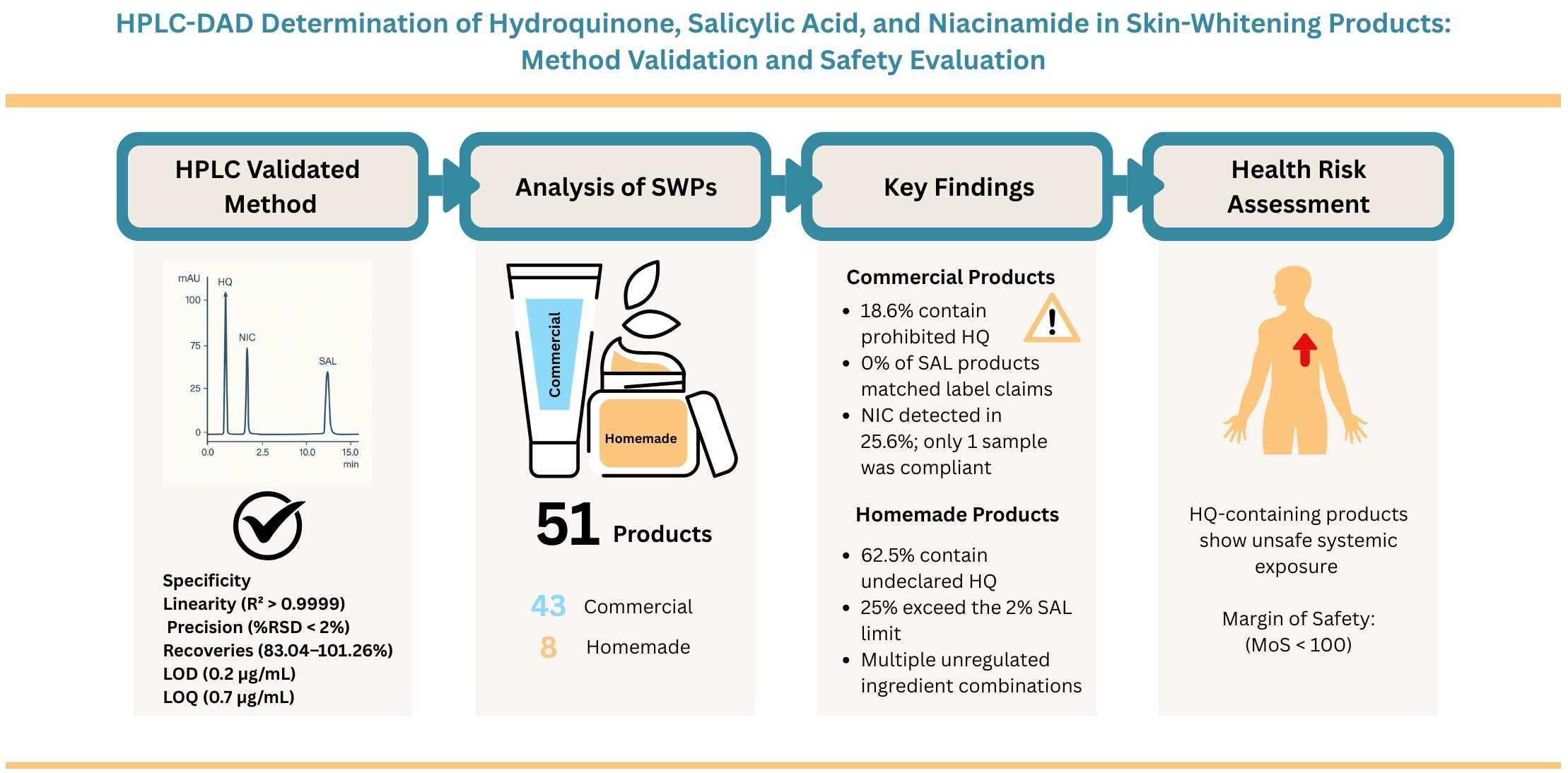
Skin-whitening products (SWPs) are widely used, yet many contain prohibited or misdeclared depigmenting agents posing safety concerns. This study developed and validated a sensitive and reliable HPLC-DAD method for the simultaneous determination of hydroquinone (HQ), salicylic acid (SAL), and niacinamide (NIC) in commercial and homemade SWPs. Validation followed ICH Q2(R1), demonstrating good specificity, linearity (R2 > 0.9999), method precision (%RSD < 2%), and LOD/LOQ values of 0.2 and 0.7 µg/mL for all analytes. Recoveries of 97.48–99.83% for HQ, 99.37–101.26% for NIC, and 83.04–95.38% for SAL were also obtained. Analysis of 51 products revealed major discrepancies between declared and measured contents. HQ was detected in 18.60% of commercial samples despite its prohibition in OTC cosmetic formulations; none of the SAL-containing products matched their labels, and NIC appeared in 25.58% of samples, with only one sample compliant with its declared content. Homemade products showed undeclared HQ in 62.50% of samples, 25% of samples exceeded the 2% permitted SAL limit, and unregulated multi-ingredient combinations. Risk assessment showed all HQ-containing commercial products and several homemade formulations posed unacceptable systemic exposure risks (MoS < 100). Overall, the proposed method provides a practical and accessible approach for routine quality control and market surveillance of cosmetic products.

Graphical Abstract

1. Introduction

Skin-whitening products (SWPs) are widely used worldwide, particularly in regions where individuals predominantly have Fitzpatrick skin phototypes III–V [1,2]. Several cross-sectional studies have reported substantial use of SWPs in different populations [3,4,5]. In Saudi Arabia, the reported prevalence of SWP use among females reached 43.3% in 2018 [6] and increased to 81.4% in a more recent study [7], highlighting the widespread use of these products and the need for monitoring their composition and safety.
Skin whitening typically involves the use of chemical agents that reduce melanin levels in the skin, resulting in decreased pigmentation and a lighter complexion [8]. These products are used both for medical treatment of hyperpigmentation disorders—such as melasma, post-inflammatory hyperpigmentation, ephelides, and lentigines—and for purely cosmetic purposes. While medical use is generally supervised, the cosmetic market for such products has expanded considerably due to increasing consumer demand for an even skin tone and enhanced beauty [8,9,10].
SWPs incorporate various active ingredients acting through different depigmenting mechanisms, including phenolic compounds, alpha-hydroxy acids, vitamins, and botanical extracts [11,12]. In this context, the present study focuses on hydroquinone, salicylic acid, and niacinamide, which were selected due to their widespread use as skin-lightening agents, the need for regulatory safety evaluation, and the analytical challenge of their simultaneous determination by HPLC–DAD in SWPs.
Hydroquinone (1,4-dihydroxybenzene; HQ) is a simple phenolic compound [13] that has long been considered the gold standard for the treatment of hyperpigmentation since its dermatological introduction in the 1960s. Its skin-lightening effect is primarily attributed to the inhibition of tyrosinase, the key enzyme involved in melanin biosynthesis, resulting in reduced pigmentation [9]. Despite its high efficacy, HQ is associated with several safety concerns. Acute adverse effects are primarily related to skin sensitization, which may lead to contact dermatitis, while prolonged or inappropriate use may result in exogenous ochronosis, characterized by permanent blue-black or grey-brown skin discoloration [12,14]. These safety concerns have prompted strict regulatory control worldwide.
Consequently, the HQ use is prohibited in general cosmetic products in the European Union under Regulation (EC) No. 1223/2009, with limited exceptions for specific applications [15]. In the United States, HQ is no longer permitted in over-the-counter (OTC) cosmetic products and is classified as a prescription drug following regulatory revisions under the CARES Act of 2020 [16,17]. Similarly, the Saudi Food and Drug Authority (SFDA) prohibits HQ in cosmetic products, allowing its use only under medical supervision as a pharmaceutical preparation [18].
Salicylic acid (beta-hydroxy acid; SAL) promotes epidermal turnover and exfoliation of pigmented keratinocytes, facilitating the gradual removal of darkened skin layers [12]. SAL is permitted in cosmetic products under strict regulatory limits. In the European Union, the United States, and Saudi Arabia, its concentration is restricted to a maximum of 2% in skin formulations, except for body lotion (0.5%) [15,19,20,21]. Higher concentrations (20–30%) are restricted to medical chemical peels under professional supervision, as they may cause local skin and eye irritation and, at high exposures, systemic salicylism (e.g., tinnitus, nausea, dizziness) [19].
Niacinamide (nicotinamide; NIC), the amide form of vitamin B3, is a widely used and safe ingredient in skin-lightening formulations. Its primary mechanism is the inhibition of melanosome transfer from melanocytes to keratinocytes, thereby limiting pigment deposition in the upper layers of the skin [22,23]. Topical NIC is most commonly used at 2–5%. Clinical studies demonstrate that topical application at 4–5% reduces hyperpigmentation and brown spots, with efficacy comparable to 4% HQ but with fewer adverse effects [23,24]. In addition, NIC provides anti-inflammatory benefits such as dermatitis and acne vulgaris, enhances skin barrier function [22,25].
There are established reference methods for the determination of these active ingredients (i.e., HQ, SAL, NIC) separately in cosmetics and pharmaceutical products, provided by recognized authorities such as the United States Pharmacopeia (USP) and AOAC International. These official methods include techniques such as high-performance liquid chromatography (HPLC) and UV–Vis spectrophotometry, alongside classical approaches such as titration [26,27,28,29]. The existence of such standardized protocols is critical for safeguarding consumer health, facilitating international harmonization, and minimizing the risks associated with substandard or adulterated cosmetic and pharmaceutical formulations [29]. Because cosmetic formulations represent complex matrices containing multiple active ingredients, research has focused on developing and validating analytical methods capable of simultaneously quantifying these components in finished products. High-performance and ultra-high-performance liquid chromatography (HPLC and UHPLC) remain the preferred techniques due to their high sensitivity, excellent resolution, and good reproducibility, making them well suited for multi-component analysis within such complex matrices. For instance, UHPLC-PDA/MS methods have been developed for the detection of hydroquinone, niacinamide, salicylic acid, arbutin, and other active agents, demonstrating high separation efficiency and sensitivity [30,31]. Similarly, several HPLC-based approaches have been reported for simultaneous analysis of whitening ingredients. For example, an HPLC-DAD method was developed for the determination of hydroquinone, hydrocortisone acetate and tretinoin [32], while another method targeted hydroquinone with its ethers and corticosteroids [33]. Arbutin, hydroquinone, niacinamide, ascorbyl glucoside, ethyl ascorbyl ether and adenosine were also investigated [34]. In addition, salicylic acid together with arbutin and corticosteroids were analyzed [35]. Additional HPLC-UV protocols have also been described for multi-component quantification, such as arbutin, niacinamide, and 3-O-ethyl ascorbic acid in the presence of parabens [34], and methods capable of determining up to nine whitening agents—including hydroquinone, niacinamide, kojic acid, and arbutin—in a single injection [36].
To the best of our knowledge, no validated HPLC-DAD method is currently available for the simultaneous determination of HQ, SAL, and NIC. This limitation is particularly relevant given that HPLC remains more widely accessible and cost-effective than UHPLC in many routine quality-control laboratories.
Beyond that, concerns also arise from the increasing circulation of non-compliant commercial products and unlicensed homemade whitening formulations. The latter are often marketed online or through social media platforms and are sold without proper labeling or any form of safety evaluation. Such practices expose consumers to considerable risks, including the use of prohibited or undeclared ingredients, contamination, and unsafe concentrations of active substances.
Therefore, this study was designed with four main objectives: (i) to develop and validate a reliable HPLC-DAD method for the precise determination of three widely used skin-whitening agents—HQ, SAL, and NIC—in different types of SWPs; (ii) to apply the validated method to commercial and unlicensed homemade products marketed in Saudi Arabia; (iii) to detect and quantify the target analytes in these products and evaluate their compliance with regulatory requirements in terms of prohibited substances, permitted limits, and declared label claims; and (iv) to assess the potential health risks associated with the detected levels through an exposure-based health risk assessment. Overall, this work aims to provide a simple and accessible HPLC–DAD approach suitable for routine simultaneous determination of depigmenting agents in complex cosmetic matrices. Furthermore, it sheds light on the safety and quality of SWPs available in the Saudi market and highlights the risks associated with unregulated manufacturing and marketing practices.

2. Materials and Methods

2.1. Materials and Reagents

All chemicals used in this study were of HPLC or analytical grade and were employed without further purification. Hydroquinone (CAS No. 123–31-9, ≥99%) was purchased from Merck (Hohenbrunn, Germany). Salicylic acid (CAS No. 69-72-7, 99.5–100.5%) and methanol (HPLC grade) were obtained from Sigma-Aldrich (St. Louis, MO, USA). Nicotinamide (CAS No. 98-92-0, ≥99%) was supplied by Across Organics (Geel, Belgium). Ultrapure Type I water used for mobile-phase preparation and for preparing standard and sample solutions was produced using a Direct-3 purification system (Millipore, Darmstadt, Germany).
Stock solutions (1000 mg/L) of hydroquinone, salicylic acid, and nicotinamide were prepared separately. A mixed solution (500 mg/L) of the three analytes was prepared and subsequently diluted with 50% (v/v) methanol/water to obtain calibration standards in the concentration range of 0.96–240 mg/L. The oil-in-water (O/W) emulsion blank matrix (CREMA BASE IDROFILA, AIESI Hospital Service, Naples, Italy) is a commercially available neutral hydrophilic base cream. The matrix was used as supplied without further modification. The ingredient list provided by the manufacturer is: Aqua, Cetearyl Alcohol, Ethylhexyl Stearate, Paraffinum Liquidum, Glycerin, Glyceryl Stearate, Ceteareth-20, Cera Alba, Propylene Glycol, Dimethicone, Xanthan Gum, Phenoxyethanol, and Ethylhexylglycerin. The matrix does not contain active depigmenting agents and contains commonly used cosmetic excipients, thereby providing a representative complex cosmetic matrix for method validation purposes.

2.2. Collection and Preparation of SWPs

Fifty-one samples of SWPs were collected from commercial online stores or homemade products marketed by individuals in Saudi Arabia. Samples were selected based on their availability, claimed skin-whitening effects, declared or suspected presence of regulated active ingredients, and to cover different dosage forms commonly used by consumers. The characteristics and claims of the analyzed products are summarized in Table 1.
Samples were extracted according to EN 16956:2017 [37]. A 0.5 g portion of each sample was accurately weighed into a 100 mL volumetric flask. Subsequently, 50 mL of the extraction solution (50% v/v methanol/water) was added, and the mixture was shaken until a homogeneous suspension was obtained. The flask was placed in a water bath at 60 °C for 5 min to enhance solubility and then shaken again. After cooling to room temperature, the solution was made up to volume with the extraction mixture. The resulting extract was filtered through a 0.45 µm nylon syringe filter into an HPLC vial and analyzed within 24 h. Samples containing high analyte levels were appropriately diluted with the extraction solution prior to injection to ensure that the measured concentrations fell within the validated calibration range. All real samples were analyzed in triplicate through three independent extractions, and the results are reported as the mean of the three measurements.

2.3. Instrumentation and Chromatographic Conditions

Method development, validation, and sample analysis were carried out using a Shimadzu LC-20A HPLC system (Shimadzu, Kyoto, Japan) equipped with an LC-20AD pump, DGU-20A5R degassing unit, SIL-20A autosampler, CTO-20A column oven, and SPD-M20A photodiode array detector (DAD). The system was controlled and chromatographic data were processed using LCsolution software (version 1.25).
A biphenyl column with core–shell silica particles (Restek Raptor™, 50 × 3.0 mm, 2.7 µm; Restek, Bellefonte, PA, USA) was used for the separation of the analytes. The mobile phase consisted of 0.01% formic acid in water (A) and methanol (B). Separation was achieved using a gradient elution at a flow rate of 0.5 mL/min, with an injection volume of 5 µL. The gradient was programmed from 0% to 70% methanol over 10 min, during which hydroquinone and nicotinamide eluted. This was followed by a 5 min isocratic hold at 70% methanol to elute salicylic acid. The column was then re-equilibrated with 0% methanol for 15 min before the next injection. The column temperature was maintained at 25 °C. The DAD recorded spectra between 190–400 nm, and chromatograms were extracted at 274 nm for quantification. Peak purity and spectrum similarity were evaluated using the PDA detector and LCsolution software. Peak purity was checked using the LCsolution purity function with a 1 nm interval and background compensation enabled, while a noise spectrum was defined from a chromatographic region free of analyte peaks. Spectrum similarity was assessed by analyzing authentic standards individually, storing their UV spectra in the LCsolution spectral library, and comparing the spectra of the corresponding peaks in samples. Quantification was based on six-point linear calibration curves constructed from mixed standard solutions in the range of 0.96–240 mg/L.

2.4. Method Validation

The developed HPLC method was validated according to the International Conference on Harmonisation (ICH) Q2(R1) guidelines to confirm its reliability for quantitative analysis [38]. The validation parameters included, specificity, linearity, precision, accuracy, limit of detection (LOD) and limit of quantification (LOQ). Specificity was assessed by analyzing both blank matrix and spiked blank matrix samples and comparing their chromatographic profiles with those of a mixed standard solution containing the three analytes. Linearity was assessed using six calibration levels within the range of 0.96–240 mg/L for all analytes. Linear regression analysis, ANOVA, Mandel tests, and confidence band calculations were performed using OriginPro software (Version 2025b, OriginLab Corporation, MA, USA). Accuracy was confirmed by recovery experiments, in which a blank matrix was spiked with the whitening agents at three concentration levels and analyzed in five replicates. The validation samples were prepared as described in Section 2.2, and the concentrations were determined using the calibration curves. For spiked solutions containing high analyte levels, appropriate dilutions were applied prior to analysis to ensure that the measured concentrations were within the validated calibration range. %Recovery values were obtained using the conventional equation [39]:
% R e c o v e r y = M e a s u r e d   c o n c e n t r a t i o n T h e o r e t i c a l   c o n c e n t r a t i o n × 100
Precision was evaluated through instrumental precision and method precision repeatability analyses. Method repeatability was assessed for both blank matrix-spiked samples and real SWPs. The limits of detection (LOD) and quantification (LOQ) were estimated using the signal-to-noise (S/N) approach. A series of diluted standard solutions of each analyte (0.1, 0.2, 0.4, 0.8, and 1.0 mg/L) was prepared and analyzed under the optimized chromatographic conditions. The signal-to-noise ratio was determined manually from the chromatograms using a baseline region adjacent to the analyte peak. The baseline noise was measured as the difference between the highest and lowest baseline points within this region, and the signal was measured as the peak height from the midpoint of the baseline noise band to the apex of the analyte peak. The lowest concentration giving an approximate S/N ratio of 3:1 was taken as the LOD. The LOQ was subsequently estimated from the conventional 10:1 S/N criterion.

2.5. Non-Carcinogenic Health Risk Assessment

The non-carcinogenic health risk associated with dermal exposure to HQ- and SAL-containing whitening products was assessed following the standard cosmetic safety evaluation framework recommended by the EU Scientific Committee on Consumer Safety (SCCS) [40]. The assessment consisted of estimating the systemic exposure dose (SED), identifying the toxicological reference values (NOAEL), calculating the Margin of Safety (MoS), and interpreting the risk according to SCCS acceptance criteria. The SED was calculated according to Equation (2):
SED = E product × C 100 × D A p 100
where Eproduct (mg/kg bw/day) represents the estimated daily exposure per kilogram of body weight, derived from the amount of product applied and the frequency of use. It was calculated using standardized cosmetic exposure values from the RIVM Cosmetics Fact Sheet, as applied within the SCCS safety assessment framework. The parameter C (%) denotes the measured concentration of the ingredient in the tested formulation, while DAp (%) corresponds to the dermal absorption percentage under realistic-use conditions [40]. For face creams, an application amount of 0.8 g per application and a frequency of two applications per day were used, yielding a total daily applied dose of 1.6 g/day, in accordance with the RIVM Cosmetics Fact Sheet [41]. Dermal absorption factors of 50% for HQ and 60% for SAL were applied as recommended by SCCS [21,42].
The toxicological reference values were the No-Observed-Adverse-Effect Levels (NOAEL), selected as 20 mg/kg bw/day for hydroquinone [42] and 75 mg/kg bw/day for salicylic acid [21]. The Margin of Safety (MoS) was calculated as [40]:
MoS = NOAEL SED
In line with SCCS criteria, a MoS ≥ 100 indicates an acceptable level of safety for cosmetic use, whereas MoS < 100 reflects an insufficient safety margin and a potential health concern.

3. Results and Discussion

3.1. Method Development

Since SWPs are commonly formulated with diverse compositions and mixtures of active agents, it was considered worthwhile to develop a reliable and simple HPLC method for the detection and quantification of the most common ones, namely the prohibited HQ, the restricted SAL, the permitted NIC. The chromatographic conditions were established after evaluating several stationary phases and mobile-phase systems for the simultaneous separation of HQ, NIC, and SAL. Initial experiments on a C18 column (Thermo Accucore™ C18 100 × 2.1 mm, 2.6 µm; Thermo Fisher Scientific, Waltham, MA, USA) using methanol/water at different organic compositions showed poor retention and separation of HQ and NIC, while SAL produced a broad and severely tailed peak. The addition of formic acid improved the peak shape of SAL but did not adequately resolve the poor retention of HQ and NIC. Similar behavior was observed on a polar-embedded reversed-phase column (Thermo AcclaimTM RSLC Polar Advantage, 2.1 × 50 mm, 2.2 µm; Thermo Fisher Scientific, Waltham, MA, USA), where HQ and NIC still exhibited weak retention and SAL showed broad or split peaks at the examined conditions. A biphenyl column (Restek Raptor™, 50 × 3.0 mm, 2.7 µm) was subsequently investigated because it provided more favorable selectivity for the target analytes. Different mobile-phase systems, including methanol/water, acetonitrile/water, and acidified methanol/water containing either formic acid or acetic acid, were examined. These experiments showed that HQ and NIC were insufficiently retained at higher organic content, whereas SAL was more strongly retained. In addition, the retention of NIC and SAL was strongly affected by mobile-phase acidity, and formic acid provided better peak shape and retention control than acetic acid. Therefore, optimization was continued on the biphenyl column using methanol/water with formic acid. During the optimization stage, a three-solvent configuration (methanol, water, and 1% formic acid in water) was used to allow fine adjustment of the effective formic acid concentration. Approximately 42 gradient experiments were performed to optimize the separation. The final gradient was designed to start at 0% methanol to improve the retention of HQ, while the later increase in methanol allowed elution of SAL within a reasonable analysis time. After identifying the optimum acidity conditions, the corresponding formic acid concentration was prepared directly in the aqueous mobile phase (solvent A), and the final method was implemented using a two-solvent system consisting of aqueous formic acid solution (A) and methanol (B). This approach provided the best compromise between retention, selectivity, peak shape, and analysis time.
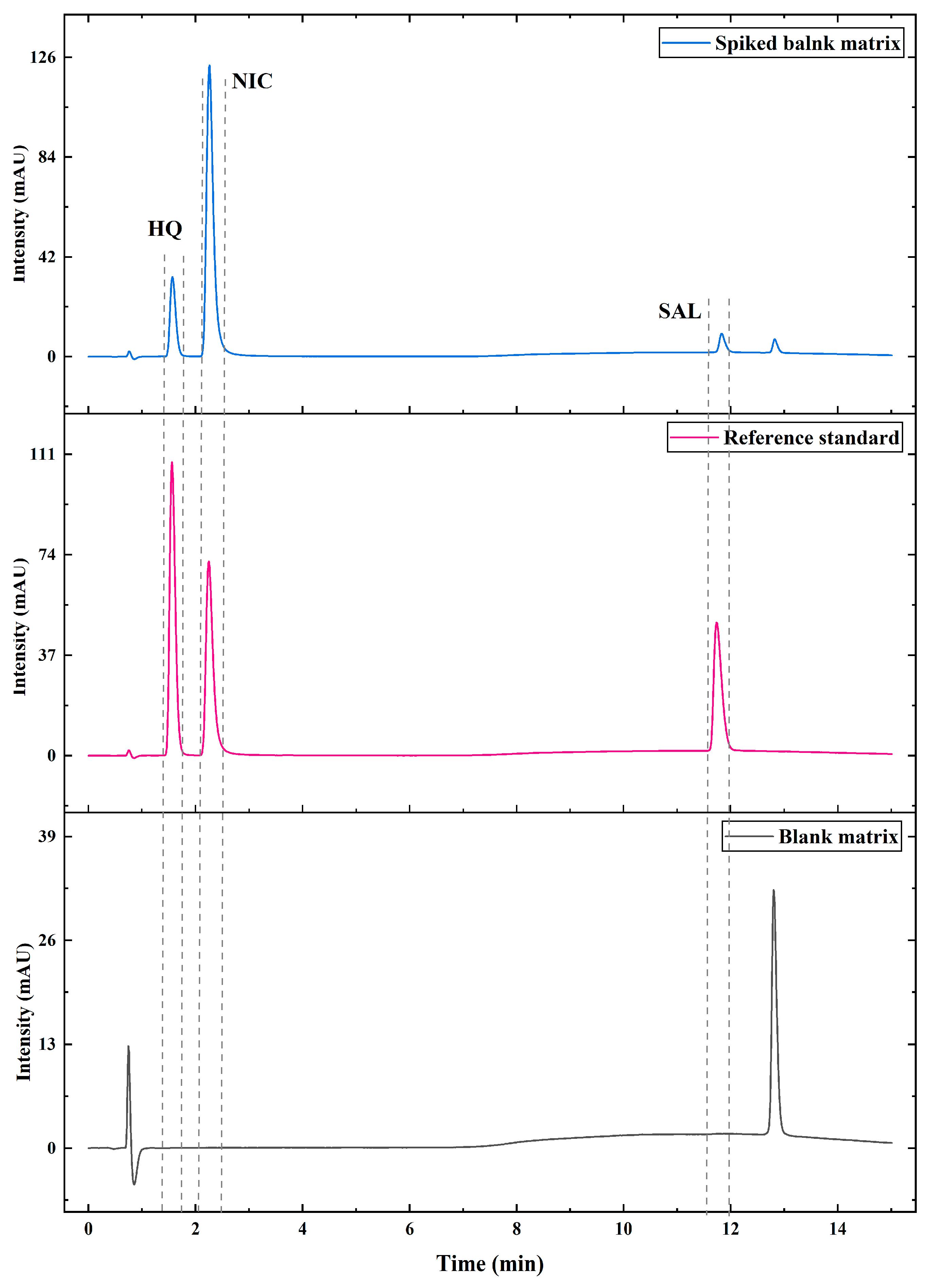
The developed method provided baseline separation of the three analytes within a 15 min programmed elution. The retention times (tR) of HQ, NIC, and SAL were 1.56, 2.22, and 11.77 min, respectively.

3.2. Method Validation

The specificity of the developed HPLC method was evaluated by analyzing a blank matrix (W/O emulsion) commonly used as a cosmetic base, which contained the same excipients as the formulation matrix but without the active ingredients. The chromatogram of the blank matrix was compared with that of the standard solution and showed no interfering peaks at the retention times of the three targeted analytes, indicating that the excipients did not interfere with the detection of the analytes (Figure 1). Furthermore, spiked blank matrix samples were analyzed, and the retention times and UV spectra obtained using the DAD detector matched those of the corresponding standard compounds, confirming both the identity and purity (≥0.99) of the peaks. These results demonstrate the specificity of the developed method for the intended analysis. For each analyzed product, specificity was further verified during routine analysis using the DAD UV spectra. To confirm peak identity and the absence of matrix interference, peak purity and spectrum similarity were checked for analyte peaks in all samples’ chromatograms. Representative HPLC-DAD chromatograms obtained from selected commercial and homemade cosmetic matrices are provided in the Supplementary Materials (Figures S1 and S2).
The six-point linearity assessment demonstrated excellent linearity, with calibration curves showing correlation coefficients (R2 > 0.9999) for all analytes, meeting the ICH Q2(R1) recommendations. In addition, regression ANOVA confirmed the statistical significance of the linear models (p < 0.0001). Mandel test indicated no significant deviation from linearity (p > 0.05), confirming the adequacy of the linear model across the studied range. Detailed regression statistics, ANOVA results, and Mandel test parameters are provided in Table S1 (Supplementary Materials). The 95% confidence bands around the regression line were narrow, further supporting model stability and consistent with homoscedastic behavior (Figure S3).
Using the signal-to-noise (S/N) approach, the LOD (S/N = 3:1) was established at 0.2 µg/mL for HQ, NIC, and SAL, while the LOQ (S/N = 10:1) was determined to be 0.7 µg/mL for all analytes.
The accuracy of the developed HPLC method was evaluated by assaying spiked blank matrix samples at three concentration levels, each analyzed in five replicates (n = 5). The recovery values of the developed method fall within the acceptable range [43], ranging from 97.48–99.83% for HQ, 99.37–101.26% for NIC, and 83.04–95.38% for SAL, as presented in Table 2. In addition, % recovery was evaluated together with 95% confidence intervals (95% CI) and the difference from the accepted true value (100%) at each spike level. The relatively narrow confidence intervals indicate low variability among replicates and stable estimation of the mean recovery. For HQ and NIC, the true value (100%) was contained within the corresponding confidence intervals, confirming the absence of significant systematic bias. For SAL, a consistent negative bias was observed across the tested levels (0.5–2%), as the true value fell outside the confidence intervals; however, recoveries remained within accepted validation limits (80–120%), indicating practical analytical acceptability.
Following accuracy evaluation, the precision of the developed method was investigated. Both instrumental precision and method precision (repeatability) were evaluated. Instrumental precision, which reflects the variability of the analytical system—mainly the instrument—was assessed by injecting three calibration levels (0.96, 48 and 240 mg/L) in seven replicates [44,45]. As shown in Table 3, the %RSD values for both retention time and peak area were below 1% for the three analytes at higher concentration levels, indicating excellent instrumental precision. Acceptable precision was also achieved at 0.96 mg/L, close to the LOQ, with %RSD values of 0.040–0.432 for retention time and 3.237–8.648 for peak area.
According to the ICH guidelines [38], method precision should be assessed using a minimum of nine determinations covering the specified range (e.g., three concentrations × three replicates each) or at least six determinations at 100% of the test concentration. In this study, repeatability was examined using fifteen determinations of spiked blank matrix samples at three concentration levels (five replicates each). As shown in Table 2, the maximum assay %RSD obtained was 2.79%, which is well within the commonly accepted limit (≤5%) for complex cosmetic matrices [46,47]. For further verification, five selected real samples were analyzed [36] in five replicates, yielding %RSD < 2%, confirming the high repeatability of the developed method (Table 4).

3.3. Characteristics and Labeling Evaluation of SWPs

The analyzed SWPs marketed in Saudi Arabia displayed diverse declared origins, with China (39.22%) and Saudi Arabia (21.57%) representing the largest proportions (Table 1, Figure S4). Cream formulations predominated (66.7%), followed by serums (17.6%), while smaller proportions included lotions, gels, solutions, oils, and sprays. In addition, 15.7% of the samples were homemade preparations marketed locally without standardized manufacturing information.
Labeling evaluation revealed variable compliance with essential cosmetic labeling requirements (Table 5). While most products displayed basic information such as product name and country of origin (92.16%), only 47.06% provided an ingredient list in INCI format. Several products lacked complete manufacturer details or full ingredient disclosure, and all homemade formulations were unlabeled. Regarding declared depigmenting agents, 27.45% of the products claimed to contain NIC, 21.57% SAL, and 17.73% HQ, despite regulatory restrictions applicable to HQ-containing cosmetic products.

3.4. Quantitative Determination and Compliance with Declared Content

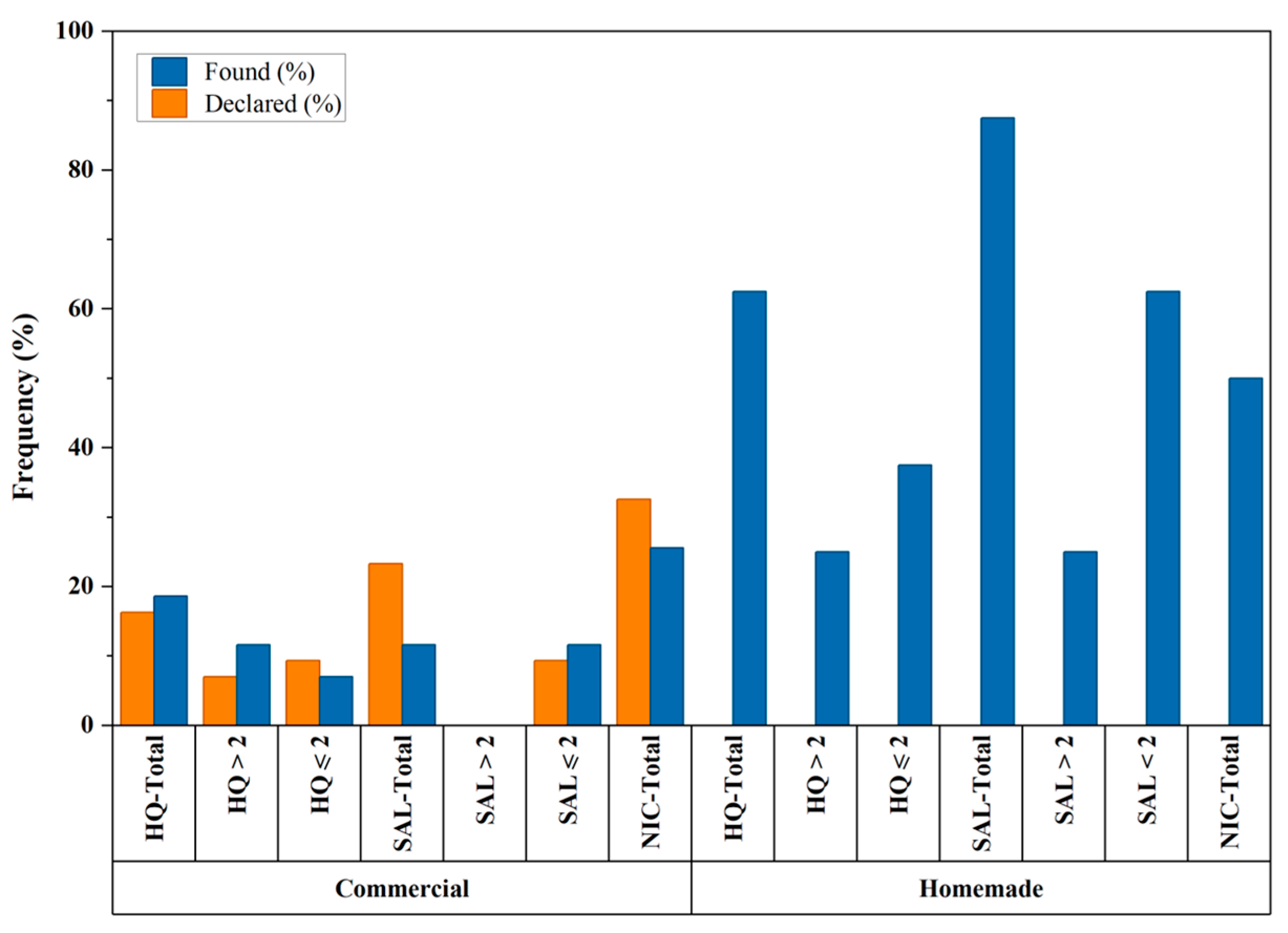
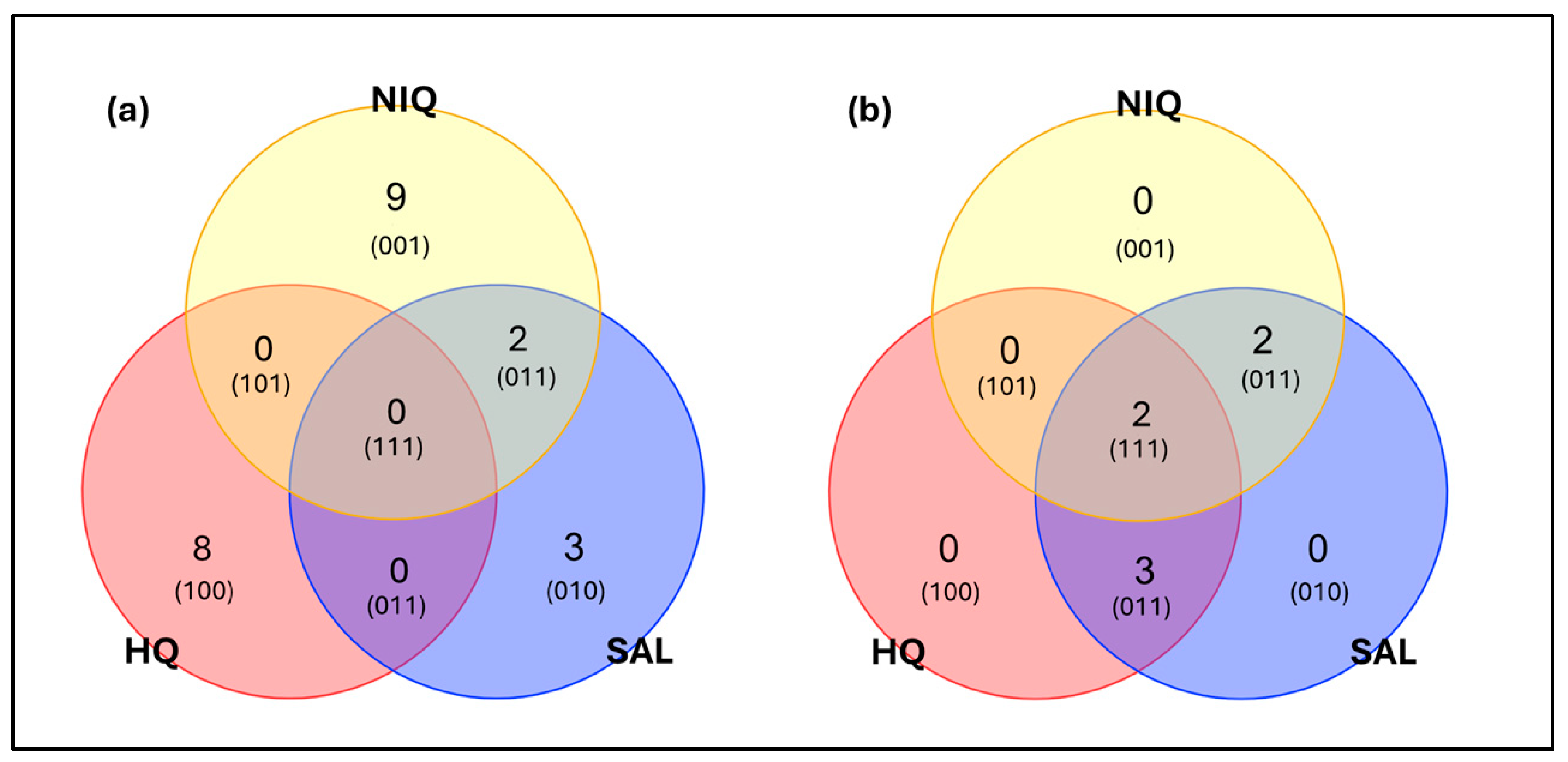
The validated method was applied to 51 SWPs to quantify HQ, SAL, and NIC. Detailed concentrations are provided in Table 6, and distribution patterns are illustrated in Figure 2.
Marked discrepancies were observed between declared and measured HQ contents. Although only a limited number of commercial products declared HQ, analytical detection revealed a slightly higher prevalence, including undeclared cases. HQ concentrations exceeded 2% in several products, reaching a maximum of 5.07% (S37). In addition, certain products (S20 and S37) contained substantially higher HQ levels than declared, whereas S16 did not disclose HQ despite containing concentrations above 2%. Only one cosmetic product (S38) demonstrated quantitative agreement with its labeled HQ content. Although pharmaceutical samples (S1–S4) were analytically consistent with their declared strengths, their OTC availability remains inconsistent with regulatory restrictions.
SAL labeling inconsistencies were even more pronounced. While several products declared SAL, only about half of them were analytically confirmed. All detected concentrations were below the 2% regulatory limit; however, none matched their declared values quantitatively. Seven products declared SAL but contained no detectable amounts, whereas one undeclared case was identified (S13). Moreover, the very low concentrations detected (≤0.29%) are insufficient to achieve exfoliating activity and are more consistent with preservative-level use [31], suggesting potential formulation or labeling inaccuracies.
For NIC, discrepancies between labeling and analytical findings were also evident. Although declared in multiple products, the detection frequency was lower, and several declared products contained no measurable NIC, including S48, which declared 10%. Only one product (S45) demonstrated quantitative agreement with its labeled content. Overall, NIC concentrations varied considerably across products, reflecting substantial variability in formulation practices.
In comparison with previous reports, the prevalence of HQ in the present study (18.60%) is comparable to values reported by Gimeno et al. (16.78%) [33] and Wang et al. (16.95%) [36], although lower than that observed in certain African markets (51.72%) [49]. For SAL, the detection frequency observed here (11.63%) was markedly lower than those reported by Desmedt et al. (54.60%) [31] and Shams et al. (87.88%) [35]. NIC detection in the present study (25.58%) falls between previously reported extremes, ranging from 5.52% to 53.33% [31,50]. Collectively, these findings reflect substantial regional variability in formulation practices and regulatory enforcement.
Non-compliance was particularly evident among homemade products, none of which listed active ingredients. Nevertheless, HQ and SAL were frequently detected. HQ was identified despite its regulatory prohibition in cosmetics, and SAL exceeded the regulatory 2% limit in certain cases. NIC was detected less frequently and at comparatively lower levels.

3.5. Distribution and Co-Occurrence of Active Ingredients in SWPs

The distribution and co-occurrence patterns of HQ, SAL, and NIC are illustrated in Figure 3. In commercial products, most samples contained a single active ingredient, and no sample exhibited simultaneous presence of all three actives. Binary combinations were rare, indicating that commercial formulations generally rely on isolated use of whitening agents.
In contrast, homemade products displayed more complex mixing patterns, with frequent binary and even ternary combinations of HQ, SAL, and NIC. Notably, HQ was never detected alone in homemade samples but was consistently combined with other actives. These findings suggest less standardized formulation practices in unregulated preparations compared with commercially manufactured products. The combination pattern was also reported by Yaméogo et al. [49], who found that 41.38% of samples contained binary combinations. Similarly, Desmedt et al. [31] reported that 2.04% of samples contained three whitening agents.

3.6. Regulatory and Safety Concerns Related to the Analyzed Samples

The labeling assessment (Section 3.2) revealed substantial variability in compliance among the analyzed SWPs. Missing or inaccurate INCI ingredient lists hinder consumer awareness and limit regulatory verification of product safety [51]. In particular, inadequate labeling may omit essential warnings for regulated ingredients such as SAL and HQ [52]. Discrepancies between declared and experimentally measured concentrations (Section 3.3) highlight serious mislabeling and misbranding concerns [51]. Several products contained HQ or SAL at concentrations above 2%, raising potential safety concerns. Although NIC is generally considered safe up to 10% according to the Cosmetic Ingredient Review (CIR) [53], the markedly elevated level observed in sample S45 (21.14%) exceeds commonly studied ranges and warrants safety consideration. Despite regulatory restrictions, HQ-containing cosmetics remain commercially available. A review of the EU Safety Gate database [54] identified 35 alerts for HQ-containing cosmetic products between January and October 2025, underscoring persistent regulatory challenges.
Homemade samples (S27–S34), frequently marketed via social media, presented additional risks due to the absence of quality control and labeling transparency. Our findings revealed undeclared actives, illegal HQ, excessive SAL, and inconsistent NIC incorporation. Multi-ingredient combinations were frequently observed in homemade products (Section 3.5). From a safety perspective, combinations such as SAL–NIC may provide complementary dermatological benefits [55,56]. In contrast, HQ–SAL pairings may increase irritation and post-inflammatory hyperpigmentation due to enhanced HQ penetration, making this combination unsuitable for routine cosmetic use [57,58].

3.7. Health Risk Assessment

The SED and MoS calculations clearly differentiated between formulations with acceptable and unacceptable safety margins among both commercial and homemade products (Table 7). For HQ-containing products, some homemade products and all commercial products exhibited MoS values below the SCCS safety threshold of 100, indicating insufficient systemic safety margins under the conservative twice-daily exposure scenario. A sensitivity analysis assuming once-daily application was also performed. As SED is proportional to application frequency, MoS values doubled; however, five HQ-containing samples (S1, S3, S20, S37, and S34) remained below the safety threshold, indicating that the insufficient safety margins were largely concentration-dependent and not solely attributable to exposure frequency assumptions. In contrast, SAL-containing products generally exhibited MoS values well above 100, indicating low systemic concern under the conservative twice-daily exposure scenario, despite concentration-related regulatory non-compliance observed in some samples. These findings align with previous assessments reporting MoS values below 100 for HQ in illegal SWPs [59] and acceptable systemic exposure estimates for SAL [60].
For homemade products, the absence of formal labeling, usage instructions, and declared ingredient information limits the availability of product-specific exposure data. Nevertheless, as these products were marketed as facial whitening creams, the standardized RIVM/SCCS screening-level facial exposure scenario was applied to ensure methodological consistency and comparability. This represents a conservative default assumption under conditions of incomplete labeling.
Collectively, the results underscore the importance of continued regulatory monitoring and increased consumer awareness regarding the systemic safety of SWPs available on the market.

4. Conclusions

This study confirmed the suitability of the developed HPLC-DAD method for the simultaneous determination of hydroquinone, salicylic acid, and niacinamide in a wide range of cosmetic matrices. The validated method demonstrated reliable analytical performance and was successfully applied to the analysis of a diverse set of 51 commercial and homemade SWPs.
The analytical results revealed notable discrepancies between declared and measured contents in several commercial and homemade products, as well as the presence of undeclared or prohibited ingredients, particularly in homemade formulations. In addition, the health risk assessment indicated that several HQ-containing products may expose users to systemic risks exceeding accepted safety thresholds (MoS < 100), underscoring the relevance of quantitative verification beyond label claims.
Overall, these findings highlight the importance of accurate ingredient declaration and effective post-market control of finished cosmetic products to ensure consumer safety. The proposed HPLC-DAD method provides a practical and reliable tool for routine quality control, market surveillance, and regulatory monitoring of SWPs.

Supplementary Materials

The following are available online at https://www.mdpi.com/article/10.3390/separations13030094/s1, Figure S1: HPLC–DAD chromatogram of a commercial cream sample S21 illustrating method specificity. The similarity and peak purity indices for NIC were both 0.999, Figure S2: HPLC–DAD chromatogram of a homemade cream sample S28 illustrating method specificity. The similarity and peak purity indices were as follows: HQ (similarity 0.997, peak purity index 0.999), NIC (similarity 0.948, peak purity index 0.935), and SAL (similarity 0.987, peak purity index 0.942, Table S1: Statistical evaluation of calibration linearity for HQ, SAL, and NIC.), Figure S3: Calibration curves with 95% confidence bands for (a) HQ, (b) NIC, and (c) SAL, Figure S4: Distribution of the analyzed samples by manufacturer’s origin.

Funding

This research received no external funding.

Institutional Review Board Statement

Not applicable.

Informed Consent Statement

Not applicable.

Data Availability Statement

The original contributions presented in this study are included in the article and the Supplementary Materials. Further inquiries can be directed to the corresponding author.

Conflicts of Interest

The author declares no conflicts of interest.

References

  1. Rocio, J.; Pittet, J.C.; Sachdev, M.; Kovylkina, N.; Deloche Bensmaine, C.; Passeron, T. Evaluation of the Efficacy of a Serum Containing Niacinamide, Tranexamic Acid, Vitamin C, and Hydroxy Acid Compared to 4% Hydroquinone in the Management of Melasma. J. Cosmet. Dermatol. 2025, 24, e70097. [Google Scholar] [CrossRef] [PubMed]
  2. Dobosz, M.; Radziwon, J.; Cubała, W.J. Worldwide internet trends in the public interest related to skin whitening and bleaching creams. J. Cosmet. Laser Ther. 2024, 26, 26–30. [Google Scholar] [CrossRef] [PubMed]
  3. Owusu-Agyei, M.; Agyei, M.; Ogunleye, T.A. Skin-lightening practices among shoppers in select markets in Kumasi, Ghana: A cross-sectional survey. JAAD Int. 2020, 1, 104–110. [Google Scholar] [CrossRef] [PubMed]
  4. Banala, M.; Mamidipaka, A.; Ogunleye, T. Skin-Lightening Product Use Among South Asian Americans: Cross-Sectional Survey Study. JMIR Dermatol. 2023, 6, e49068. [Google Scholar] [CrossRef]
  5. Palepu, S.; Sindgi, V.M.; Srikrishnan, A.K.; Kovarik, C. Insights Into Skin-Lightening Practices of Hijra and Transgender Communities in India. JMIR Dermatol. 2025, 8, e66822. [Google Scholar] [CrossRef]
  6. Alanzi, M.E.; Alghamdi, R.A.; Alsharif, O.M.; Alghamdi, K.S.; El Sayed, S.M. Health Knowledge, Cosmetic Interests, Attitude, and the Need for Health Education Regarding the Use of Topical Bleaching Agents Among Women in West Saudi Arabia: A Cross-Sectional Study. J. Cosmet. Sci. 2018, 69, 101–120. [Google Scholar]
  7. Alahmadi, M.; AlShehri, S.; Almajhad, A.; Alfakher, R.; Alsulami, A.; Alghamdi, S.; Hakami, S. Knowledge, Attitude and Practice Towards Skin-Lightening Products Among Females of the General Population in Saudi Arabia. Majmaah J. Health Sci. 2025, 13, 47. [Google Scholar] [CrossRef]
  8. Nordin, F.N.M.; Aziz, A.; Zakaria, Z.; Wan Mohamed Radzi, C.W.J. A systematic review on the skin whitening products and their ingredients for safety, health risk, and the halal status. J. Cosmet. Dermatol. 2021, 20, 1050–1060. [Google Scholar] [CrossRef]
  9. Nautiyal, A.; Wairkar, S. Management of hyperpigmentation: Current treatments and emerging therapies. Pigment Cell Melanoma Res. 2021, 34, 1000–1014. [Google Scholar] [CrossRef]
  10. Pollock, S.; Taylor, S.; Oyerinde, O.; Nurmohamed, S.; Dlova, N.; Sarkar, R.; Galadari, H.; Manela-Azulay, M.; Chung, H.S.; Handog, E.; et al. The dark side of skin lightening: An international collaboration and review of a public health issue affecting dermatology. Int. J. Womens Dermatol. 2021, 7, 158–164. [Google Scholar] [CrossRef]
  11. Wawrzyńczak, A. Cosmetic and Pharmaceutic Products with Selected Natural and Synthetic Substances for Melasma Treatment and Methods of Their Analysis. Cosmetics 2023, 10, 86. [Google Scholar] [CrossRef]
  12. Juliano, C.C.A. Spreading of Dangerous Skin-Lightening Products as a Result of Colourism: A Review. Appl. Sci. 2022, 12, 3177. [Google Scholar] [CrossRef]
  13. Giner, R.M.; Ríos, J.L.; Máñez, S. Antioxidant Activity of Natural Hydroquinones. Antioxidants 2022, 11, 343. [Google Scholar] [CrossRef] [PubMed]
  14. Araojo, R.; Browning-McNee, L.A.; Katz, L.M.; Manga, P.; Michele, T.; Lee, C.S.; Santiago, Y.; Hsieh, J.; Welch, T. Advancing Health Equity: Efforts to Expand Education on Skin Lightening Products. Public Health Rep. 2024, 139, 401–404. [Google Scholar] [CrossRef] [PubMed]
  15. European Parliament; Council of the European Union. Regulation (EC) No. 1223/2009 of the European Parliament and of the Council of 30 November 2009 on Cosmetic Products; European Union: Brussels, Belgium, 2009; Available online: https://eur-lex.europa.eu/legal-content/EN/TXT/?uri=CELEX:32009R1223 (accessed on 25 September 2025).
  16. Food and Drug Administration (FDA). Skin Product Safety-Fact Sheet; Food and Drug Administration (FDA): Silver Spring, MD, USA, 2024. Available online: https://www.fda.gov/SkinFacts (accessed on 25 September 2025).
  17. United States Congress. Coronavirus Aid, Relief, and Economic Security Act (CARES Act); United States Congress: Washington, DC, USA, 2020. Available online: https://www.congress.gov/bill/116th-congress/house-bill/748 (accessed on 25 September 2025).
  18. Saudi Food and Drug Authority (SFDA). Prohibited Ingredients List in Cosmetic Products, SFDA (n.d.). Available online: https://www.sfda.gov.sa/en/ProhibitedIngredientsList (accessed on 25 September 2025).
  19. Johnson, W.; Zhu, J.; Bergfeld, W.F.; Donald, B.; Hill, R.A.; Klaassen, C.D.; Liebler, D.C.; Marks, J.G.; Shank, R.C.; Slaga, T.J.; et al. Amended Safety Assessment of Salicylic Acid and Salicylates as Used in Cosmetics. Int. J. Toxicol. 2025, 44, 5S–57S. [Google Scholar] [CrossRef]
  20. Saudi Food and Drug Authority (SFDA). Restricted Ingredients List in Cosmetic Products, SFDA (n.d.). Available online: https://www.sfda.gov.sa/index.php/en/RestrictedSubstancesList (accessed on 27 September 2025).
  21. Scientific Committee on Consumer Safety (SCCS). Opinion on Salicylic Acid (SCCS/1646/22); Scientific Committee on Consumer Safety (SCCS): Luxembourg, 2023. [Google Scholar]
  22. Somboon, K.; Chng, C.P.; Huang, C.; Gupta, S. Enhancing Niacinamide Skin Penetration via Other Skin Brightening Agents: A Molecular Dynamics Simulation Study. Int. J. Mol. Sci. 2025, 26, 1555. [Google Scholar] [CrossRef]
  23. Boo, Y.C. Mechanistic basis and clinical evidence for the applications of nicotinamide (Niacinamide) to control skin aging and pigmentation. Antioxidants 2021, 10, 1315. [Google Scholar] [CrossRef]
  24. Navarrete-Solís, J.; Castanedo-Cázares, J.P.; Torres-Álvarez, B.; Oros-Ovalle, C.; Fuentes-Ahumada, C.; González, F.J.; Martínez-Ramírez, J.D.; Moncada, B. A double-blind, randomized clinical trial of niacinamide 4% versus hydroquinone 4% in the treatment of melasma. Dermatol. Res. Pract. 2011, 2011, 379173. [Google Scholar] [CrossRef]
  25. Crous, C.; Pretorius, J.; Petzer, A. Overview of popular cosmeceuticals in dermatology. Ski. Health Dis. 2024, 4, e340. [Google Scholar] [CrossRef]
  26. United States Pharmacopeia, Monograph: Hydroquinone. USP 31-NF 26, M38736, (n.d.). Available online: http://www.uspbpep.com/usp31/v31261/usp31nf26s1_m38736.asp (accessed on 2 October 2025).
  27. United States Pharmacopeia, Monograph: Hydroquinone (USP 29-NF 24, M38720), (n.d.). Available online: http://www.pharmacopeia.cn/v29240/usp29nf24s0_m38720.html (accessed on 2 October 2025).
  28. United States Pharmacopeia, Monograph: Niacinamide (USP 29-NF 24, M56570), (n.d.). Available online: http://www.pharmacopeia.cn/v29240/usp29nf24s0_m56570.html (accessed on 2 October 2025).
  29. AOAC International. Official Method 961.14. Niacin and Niacinamide in Drugs and Foods. In Official Methods of Analysis of AOAC International, 15th ed.; AOAC International: Washington, DC, USA, 1990. [Google Scholar]
  30. Desmedt, B.; Rogiers, V.; Courselle, P.; De Beer, J.O.; De Paepe, K.; Deconinck, E. Development and validation of a fast chromatographic method for screening and quantification of legal and illegal skin whitening agents. J. Pharm. Biomed. Anal. 2013, 83, 82–88. [Google Scholar] [CrossRef]
  31. Desmedt, B.; Van Hoeck, E.; Rogiers, V.; Courselle, P.; De Beer, J.O.; de Paepe, K.; Deconinck, E. Characterization of suspected illegal skin whitening cosmetics. J. Pharm. Biomed. Anal. 2014, 90, 85–91. [Google Scholar] [CrossRef]
  32. Ibrahim, F.; El-Din, M.K.S.; El-Deen, A.K.; Shimizu, K. A new HPLC-DAD method for the concurrent determination of hydroquinone, hydrocortisone acetate and tretinoin in different pharmaceuticals for melasma treatment. J. Chromatogr. Sci. 2019, 57, 495–501. [Google Scholar] [CrossRef]
  33. Gimeno, P.; Maggio, A.F.; Bancilhon, M.; Lassu, N.; Gornes, H.; Brenier, C.; Lempereur, L. HPLC-UV method for the identification and screening of hydroquinone, ethers of hydroquinone and corticosteroids possibly used as skin-whitening agents in illicit cosmetic products. J. Chromatogr. Sci. 2016, 54, 343–352. [Google Scholar] [CrossRef]
  34. Jeon, J.S.; Kim, H.T.; Kim, M.G.; Oh, M.S.; Hong, S.R.; Yoon, M.H.; Cho, S.M.; Shin, H.C.; Shim, J.H.; Ramadan, A.; et al. Simultaneous determination of water-soluble whitening ingredients and adenosine in different cosmetic formulations by high-performance liquid chromatography coupled with photodiode array detection. Int. J. Cosmet. Sci. 2016, 38, 286–293. [Google Scholar] [CrossRef] [PubMed]
  35. Shams, A.; Khan, I.U.; Iqbal, H. Analysis of salicylic acid, arbutin and corticosteroids in skin whitening creams available in Pakistan using chromatographic techniques. Int. J. Cosmet. Sci. 2016, 38, 421–428. [Google Scholar] [CrossRef] [PubMed]
  36. Wang, Y.H.; Avonto, C.; Avula, B.; Wang, M.; Rua, D.; Khan, I.A. Quantitative determination of α-arbutin, β-arbutin, kojic acid, nicotinamide, hydroquinone, resorcinol, 4-methoxyphenol, 4-ethoxyphenol, and ascorbic acid from skin whitening products by HPLC-UV. J. AOAC Int. 2015, 98, 5–12. [Google Scholar] [CrossRef] [PubMed]
  37. European Committee for Standardization. Cosmetics—Analytical Methods—HPLC/UV Method for the Identification and Assay of Hydroquinone, Ethers of Hydroquinone and Corticosteroids in Skin Whitening Cosmetic Products; European Committee for Standardization: Brussels, Belgium, 2017. [Google Scholar]
  38. International Conference on Harmonisation (ICH), ICH Harmonised Tripartite Guideline: Validation of Analytical Procedures—Text and Methodology Q2(R1); International Council for Harmonisation (ICH): Geneva, Switzerland, 2005.
  39. Bhujbal, S.; Rupenthal, I.D.; Agarwal, P. Development and validation of a stability-indicating HPLC method for assay of tonabersat in pharmaceutical formulations. Methods 2024, 231, 178–185. [Google Scholar] [CrossRef]
  40. Scientific Committee on Consumer Safety (SCCS). SCCS Notes of Guidance for the Testing of Cosmetic Ingredients and Their Safety Evaluation-12th Revision; Scientific Committee on Consumer Safety (SCCS): Luxembourg, 2023. [Google Scholar]
  41. Bremmer, H.J.; de Lodder, L.C.H.P.; van Engelen, J.G.M. Defaults for Cosmetics, in: Cosmetics Fact Sheet: To Assess the Risks for the Consumer—Updated Version for ConsExpo 4; National Institute for Public Health and the Environment (RIVM): Bilthoven, The Netherlands, 2006. Available online: https://www.ncbi.nlm.nih.gov/books/NBK563321 (accessed on 23 November 2025).
  42. Scientific Committee on Consumer Safety (SCCS). Opinion on α-arbutin (SCCS/1552/15); European Commission: Brussels, Belgium, 2015. [Google Scholar]
  43. Food and Drug Administration Office of Regulatory Affairs Quality. ORA Lab Manual Vol. II—Methods, Method Verification and Validation (ORA-LAB.5.4.5); Food and Drug Administration Office of Regulatory Affairs Quality: Silver Spring, MD, USA, 2023. [Google Scholar]
  44. Marson, B.M.; Concentino, V.; Junkert, A.M.; Fachi, M.M.; Vilhena, R.O.; Pontarolo, R. Validation of analytical methods in a pharmaceutical quality system: An overview focused on HPLC methods. Quim. Nova 2020, 43, 1190–1203. [Google Scholar] [CrossRef]
  45. Raposo, F.; Ibelli-Bianco, C. Performance parameters for analytical method validation: Controversies and discrepancies among numerous guidelines. TrAC Trends Anal. Chem. 2020, 129, 115913. [Google Scholar] [CrossRef]
  46. Maharaj, D.; Mohammed, T.; Mohammed, A.; Addison, L. Enhanced digestion of complex cosmetic matrices for analysis of As, Hg, Cd, Cr, Ni, and Pb using triton X-100. MethodsX 2021, 8, 101241. [Google Scholar] [CrossRef]
  47. Qadir, M.A.; Ahmed, M.; Shafiq, M.I.; Ali, A.; Sadiq, A. Analytical method for the identification and assay of Kojic Acid, Methylparaben, and Propylparaben in cosmetic products using UPLC: Application of ISO 12787:2011 standard. J. AOAC Int. 2016, 99, 1191–1196. [Google Scholar] [CrossRef] [PubMed]
  48. Saudi Food and Drug Authority (SFDA). Implementing Regulations of the Cosmetic Products Law- Issued by Royal Decree No. M/49 dated 18/6/1436H; Saudi Food and Drug Authority (SFDA): Riyadh, Saudi Arabia, 2015. Available online: https://www.sfda.gov.sa/ar/regulations/62872 (accessed on 2 October 2025).
  49. Yaméogo, B.G.J.; Ilboudo, L.S.B.A.; Ouédraogo, N.A.; Belem, M.; Nikiema, O.; Goumbri, B.W.; Sombié, B.C.; Zimé-Diawara, H.; Kabré, E.; Semdé, R. Analysis of Depigmenting Substances of Interest (Hydroquinone, Kojic Acid, and Clobetasol Propionate) Contained in Lightening Cosmetic Products Marketed in Burkina Faso. Cosmetics 2023, 10, 154. [Google Scholar] [CrossRef]
  50. Jeon, J.S.; Lee, M.J.; Yoon, M.H.; Park, J.A.; Yi, H.; Cho, H.J.; Shin, H.C. Determination of Arbutin, Niacinamide, and Adenosine in Functional Cosmetic Products by High-Performance Liquid Chromatography. Anal. Lett. 2014, 47, 1650–1660. [Google Scholar] [CrossRef]
  51. U.S. Food and Drug Administration (FDA). Code of Federal Regulations Title 21, Part 701—Cosmetic Labeling; U.S. Food and Drug Administration (FDA): Silver Spring, MD, USA, 2024.
  52. U.S. Food and Drug Administration. Title: 21 CFR Part 740—Cosmetic Product Warning Statements; U.S. Food and Drug Administration (FDA): Silver Spring, MD, USA, 2025.
  53. Cosmetic Ingredient Review (CIR). Final report of the safety assessment of niacinamide and niacin. Int. J. Toxicol. 2005, 24, 1–31. [Google Scholar] [CrossRef]
  54. European Commission. EU Safety Gate—Rapid Alert System for Dangerous Non-Food Products; European Commission: Brussels, Belgium, 2025; Available online: https://ec.europa.eu/safety-gate-alerts/screen/search (accessed on 25 November 2025).
  55. Xiong, Y.; Jiang, X.; Lai, W.; Gao, X.; You, Y.; Huang, Y.; Li, X.; Zhang, J.; Tao, S.; Chen, J.; et al. Supramolecular salicylic acid combined with niacinamide in chloasma: A randomized controlled trial. Clin. Exp. Dermatol. 2024, 49, 1330–1337. [Google Scholar] [CrossRef]
  56. Olejniczak, A.; Stachowiak, W.; Ziental, D.; Długaszewska, J.; Rzemieniecki, T.; Wysokowski, M.; Jesionowski, T.; Niemczak, M. Unraveling the Potential of Vitamin B3-Derived Salts with a Salicylate Anion as Dermal Active Agents for Acne Treatment. Mol. Pharm. 2024, 21, 4634–4647. [Google Scholar] [CrossRef]
  57. Arif, T. Salicylic acid as a peeling agent: A comprehensive review. Clin. Cosmet. Investig. Dermatol. 2015, 8, 455–461. [Google Scholar] [CrossRef]
  58. Chang, Y.F.; Lee, T.L.; Oyerinde, O.; Desai, S.R.; Aljabban, A.; Bay, C.P.; Bain, P.A.; Chung, H.J. Efficacy and safety of topical agents in the treatment of melasma: What’s evidence? A systematic review and meta-analysis. J. Cosmet. Dermatol. 2023, 22, 1168–1176. [Google Scholar] [CrossRef]
  59. Desmedt, B.; Ates, G.; Courselle, P.; De Beer, J.O.; Rogiers, V.; Hendrickx, B.; Deconinck, E.; De Paepe, K. In Vitro Dermal Absorption of Hydroquinone: Protocol Validation and Applicability on Illegal Skin-Whitening Cosmetics. Ski. Pharmacol. Physiol. 2017, 29, 300–308. [Google Scholar] [CrossRef]
  60. Labib, R.; Bury, D.; Boisleve, F.; Eichenbaum, G.; Girard, S.; Naciff, J.; Leal, M.; Wong, J. A kinetic-based safety assessment of consumer exposure to salicylic acid from cosmetic products demonstrates no evidence of a health risk from developmental toxicity. Regul. Toxicol. Pharmacol. 2018, 94, 245–251. [Google Scholar] [CrossRef] [PubMed]
Figure 1. HPLC chromatograms of blank matrix, standard (120 mg/L), and spiked blank matrix (4% HQ, 20% NIC, and 2% SAL, w/w), demonstrating method specificity.
Separations 13 00094 g001
Figure 2. Distribution of the analyzed samples based on the declared versus experimentally detected depigmenting agents.
Separations 13 00094 g002
Figure 3. Venn diagrams showing the distribution and co-occurrence patterns of HQ, SAL, and NIC in (a) commercial and (b) homemade SWPs. The numbers shown in each region indicate the number of samples exhibiting the corresponding combination of analytes. The binary codes in parentheses represent the presence (1) or absence (0) of HQ, SAL, and NIC, respectively (e.g., 100 = HQ only; 011 = SAL + NIC; 111 = HQ + SAL + NIC).
Separations 13 00094 g003
Table 1. Summary of characteristics, claimed functions, and declared depigmenting ingredients of the analyzed skin-whitening products *.
Sample CodeManufacturer’s OriginDosage FormClaimed PropertiesActive Depigmenting Ingredients
S1Saudi ArabiaCreamPro-Whitening creamHydroquinone (4%)
S2Saudi ArabiaCreamPro-Whitening creamHydroquinone (2%)
S3Saudi ArabiaCreamBleaching of hyperpigmented skin conditionsHydroquinone (4%)
S4IndiaCreamDepigmenting agentHydroquinone (2%)
S5ChinaCreamWhite radiance & plumbing, dark spot corrector, evens skin toneNiacinamide (8%), α-Arbutin
S6ChinaCreamNiacinamide whitening creamNiacinamide (high conc.), α-Arbutin, 3-O-Ethyl Ascorbic Acid
S7PakistanCreamSkin LightnerNiacinamide, α-Arbutin, Kojic Acid Dipalmitate
S8ChinaCreamExquisite skin texture, refines pores and improves blackheadsSalicylic Acid
S9ChinaCreamSalicylic acid careful pore creamSalicylic Acid
S10ChinaCreamSalicylic acid acne treatment creamSalicylic Acid (0.3%), Niacinamide
S11PakistanCreamRemoves dark circles, ance, wrinkles, freckles and other signs of ageingKojic Acid Dipalmitate
S12EnglandCreamWhitening beauty creamNo ingredients declared on the label
S13ThailandCreamWhitening cream with UV protectionNiacinamide, Ascorbic Acid, Glutathione
S14Not specifiedCreamWhitening creamNone
S15UAECreamWhitening, removes dark circles, acne, wrinkles freckles and other signs of agingKojic Acid Diplmitate
S16TogoCreamWhitening body creamKojic Acid, Ascorbic Acid
S17ChinaCreamVitamin C Brightening cream3-O-Ethyl Ascorbic Acid
S18ChinaCreamWhitening creamKojic Acid, Ascorbic Acid, Lactic Acid
S19China (Taiwan)CreamBeauty cream, effectively removes freckels, discolorations and dark circlesArbutin
S20Ivory CoastCreamLitening Beauty creamHydroquinone (max. 2%)
S21UAECreamWhitening face creamNiacinamide, α-Arbutin, Kojic Acid Dipalmitate
S22ChinaCreamWhitening cream
Dark spot corrector
Niacinamide, 3-O-Ethyl Ascorbic Acid
S23EgyptCreamSpotless face cream, for spots and teenage skin problemsLactic Acid
S24ChinaCreamWhitening CreamNone
S25ThailandCreamPearl creamAscorbic Acid
S26ChinaCreamWhitening creamTranexamic Acid, Arbutin
S27Homemade–Saudi ArabiaCreamNo LabelNo Label
S28Homemade–Saudi ArabiaCreamWhitening creamNo ingredients declared on the label
S29Homemade–Saudi ArabiaCreamNo LabelNo Label
S30Homemade–Saudi ArabiaCreamNo LabelNo Label
S31Homemade–Saudi ArabiaCreamWhitening creamNo ingredients declared on the label
S32Homemade–Saudi ArabiaCreamNo LabelNo Label
S33Homemade–Saudi ArabiaCreamWhitening creamNo ingredients declared on the label
S34Homemade–Saudi ArabiaCreamWhitening creamNo ingredients declared on the label
S35ChinaLotionWhitening skinNiacinamide, Arbutin, 3-O-Ethyl Ascorbic Acid
S36ChinaLotionWhitening SkinNiacinamide, Arbutin, 3-O-Ethyl Ascorbic Acid
S37PhilippinesSolutionAnti-acne, depigmenting agentHydroquinone (4%), Tretinone
S38PhilippinesSolutionAnti-hyperpigmentation, anti-acneHydroquinone (2%), Tretinone
S39IndiaGelAnti ance gel, helps to reduce acne, promotes even skin toneSalicylic Acid (1%), Niacinamide, Retinol, Glycolic Acid
S40ChinaGelSalicylic acid remove acne gel, soothing, anti rednessSalicylic Acid
S41ChinaSerumAcne removing, essence serumSalicylic Acid (2%)
S42ChinaSerumExfoliation, anti-acneSalicylic Acid (2%), Betaine Salicylate
S43ChinaSerumPore refiningSalicylic Acid
S44Not specifiedSeumShrink poresSalicylic Acid
S45KoreaSerumNot specifiedNiacinamide (20%), Arbutin
S46Not specifiedSerumBrightening primer serumNiacinamide, 3-O-Ethyl Ascorbic Acid
S47ChinaSerumWhitening and BrighteningNiacinamide, 3-O-Ethyl Ascorbic Acid
S48ChinaSerumMoisturing, brightening, shrink pores, anti-acneNiacinamide (10%)
S49Not specifiedSerumAcne treatment & anti agingNiacinamide
S50ChinaOilRemove acne blackheads, cleans the old dead skin, promotes the renewal of epidermal cellsSalicylic Acid
S51ChinaSprayRepair and smooth back acne, whiteheads, blackheadsSalicylic Acid
* Information as stated on product labels or package inserts.
Table 2. Accuracy (recovery, %) and precision (%RSD) of the developed HPLC method (n = 5).
AnalyteAnalyte (% w/w)Theoritical Conc. (mg/L)Measured Conc. (mg/L)Recovery (%)Recovery %RSD aAssay %RSD b95% CI
HQ15049.23 ± 0.6398.46 ± 1.271.291.29100.04–97.19
210097.48 ± 1.3397.48 ± 1.331.371.3799.13–96.15
4200199.67 ± 1.5299.83 ± 2.082.082.08102.41–97.75
NIC5250253.15 ± 2.57101.26 ± 1.031.021.02102.54–100.23
10500496.85 ± 4.2399.37 ± 0.850.850.85100.43–98.52
2010001008.09 ± 5.10100.81 ± 0.510.510.51101.44–100.30
SAL0.52520.76 ± 0.5883.04 ± 2.322.792.7985.92–80.72
15045.16 ± 1.0790.32 ± 2.132.362.3692.96–88.19
210095.38 ± 0.8695.38 ± 0.860.910.9196.45–94.52
a Calculated from %Recovery values across five replicates. b Repeatability (%RSD) of measured concentrations.
Table 3. Instrumental precision at three concentration levels under optimized chromatographic conditions (n = 7).
AnalyteInjected C.%RSD
Retention Time (min)Peak Area
HQ0.960.4328.648
480.2250.075
2400.3870.122
NIC0.960.1763.237
480.3440.192
2400.7260.178
SAL0.960.0405.039
480.0280.114
2400.1200.172
Table 4. Repeatability of the developed HPLC method for different skin-whitening formulations (n = 5).
Sample CodeAnalyte% (w/w)%RSD
S1HQ3.96 ± 0.041.04
S5NIC6.06 ± 0.020.40
SAL0.11 ± 0.0010.59
S39NIC0.059 ± 6.77 e−41.15
SAL0.044 ± 6.71 e−41.53
Table 5. Compliance rate of the analyzed samples with essential cosmetic labeling criteria a.
Labeling InformationNumber of Samples Displaying the StatementCompliance (%)
Product name4792.16
Manufacturer’s identity3772.55
Manufacturer’s address3160.78
Country of origin4792.16
Expiration date4180.39
Product function4588.24
Product warnings4078.43
Ingredient list in INCI format b2447.06
Batch number or Manufacturing date4078.43
Net content4078.43
a Compliance criteria based on SFDA [48] and EU Regulation [15]. b INCI: International Nomenclature of Cosmetic Ingredients.
Table 6. Content of HQ, NIC, and SAL (% w/w) in the analyzed SWPs compared with label claims.
Sample CodeContent, %(w/w) a,b
( x ¯ ± S D )
Label Claim %(w/w)Percentage of the Declared Label Value (%)
HQNICSAL
S13.9602 ± 0.0413NDNDHQ: 499.00
S22.0331 ± 0.0145NDNDHQ: 2101.66
S33.9969 ± 0.0098NDNDHQ: 499.92
S42.0251 ± 0.0149NDNDHQ: 2101.25
S5ND6.0632 ± 0.0242NDNIC: 875.79
S6ND1.9626 ± 0.0041NDNIC: Qualitative claim only c-
S7NDNDNDNIC: Qualitative claim only-
S8NDNDNDSAL: Qualitative claim only-
S9NDNDNDSAL: Qualitative claim only-
S10NDND0.0222 ± 0.0017NIC: Qualitative claim only-
SAL: 0.37.41
S11NDNDND--
S12NDNDND--
S13ND0.0478 ± 0.01240.1055 ± 0.0355NIC: Qualitative claim only-
SAL: not declared-
S14NDNDND--
S15NDNDND--
S162.4921 ± 0.0145NDNDHQ: not declared-
S17NDNDND--
S18NDNDND--
S19NDNDND--
S204.4514 ± 0.0275NDNDHQ: 2222.57
S21ND1.3621 ± 0.0028NDNIC: Qualitative claim only-
S22NDNDND--
S23NDNDND--
S24NDNDND--
S25NDNDND--
S26NDNDND--
S271.0700 ± 0.0200ND0.0341 ± 0.0007HQ: not declared-
SAL: not declared-
S282.1080 ± 0.09000.2262 ± 0.00961.0108 ± 0.0472HQ: not declared-
NIC: not declared-
SAL: not declared-
S29ND0.0951 ± 0.00500.0130 ± 0.0009NIC: not declared-
SAL: not declared-
S30NDNDND--
S310.3147 ± 0.00341.7395 ± 0.00452.1937 ± 0.0020HQ: not declared-
NIC: not declared-
SAL: not declared-
S32ND0.3885 ± 0.00144.1757 ± 0.0125NIC: not declared-
SAL: not declared-
S330.2283 ± 0.0019ND0.4320 ± 0.0008HQ: not declared-
SAL: not declared-
S343.2526 ± 0.0175ND1.00 ± 0.11HQ: not declared-
SAL: not declared-
S35ND0.2993 ± 0.0016NDNIC: Qualitative claim only-
S36ND0.4986 ± 0.0040NDNIC: Qualitative claim only-
S375.0682 ± 0.0304NDNDHQ: 4126.71
S382.0256 ± 0.0048NDNDHQ: 2101.28
S39ND0.0590 ± 0.00070.0438 ± 0.0007NIC: Qualitative claim only-
SAL: 14.38
S40NDND0.1543 ± 0.0012SAL: Qualitative claim only-
S41NDND0.2934 ± 0.0001SAL: 214.67
S42NDNDNDSAL: 2-
S43ND0.5540 ± 0.0018NDNIC: not declared-
SAL: Qualitative claim only-
S44NDNDNDSAL: Qualitative claim only-
S45ND21.1431 ± 0.0478NDNIC: 20105.72
S46NDNDNDNIC: Qualitative claim only-
S47ND0.3343 ± 0.0005NDNIC: Qualitative claim only-
S48NDNDNDNIC: 10-
S49ND0.2862 ± 0.0021NDNIC: Qualitative claim only-
S50NDNDNDSAL: Qualitative claim only-
S51NDNDNDSAL: Qualitative claim only-
a ND, not detected (LOD for all analytes = 0.2 µg/mL, corresponding to 0.004% w/w); b Peak identity and purity were confirmed using DAD UV spectra; c Qualitative claim only = active ingredient declared on label without quantitative value.
Table 7. Estimated systemic exposure dose (SED) and margin of safety (MoS) for HQ and SAL in SWPs, calculated based on measured concentrations and standardized cosmetic exposure scenarios (RIVM/SCCS).
Sample CodeSED-HQ
(mg/kg/day)
MoS-HQSample CodeSED-SAL (mg/kg/day)MoS-SAL
Commercial SWPs
S10.519438.51S100.003521428.17
S20.266675.01S130.01664517.18
S30.524238.16S390.006910882.41
S40.265675.31S400.02433087.54
S160.326861.19S410.04621624.50
S200.583834.26
S370.664730.09
S380.265775.29
Homemade SWPs
Sample CodeSED-HQ (mg/kg/day)MoS-HQSED-SAL (mg/kg/day)MoS-SAL
S270.1403142.520.005413975.44
S280.276572.340.1591471.47
S29--0.002036658.65
S310.0413484.740.3452217.24
S32--0.6572114.13
S330.0299667.890.06801103.26
S340.426646.890.1577475.61
Disclaimer/Publisher’s Note: The statements, opinions and data contained in all publications are solely those of the individual author(s) and contributor(s) and not of MDPI and/or the editor(s). MDPI and/or the editor(s) disclaim responsibility for any injury to people or property resulting from any ideas, methods, instructions or products referred to in the content.