1. Introduction
l-menthol, a naturally occurring cyclic monoterpene alcohol [
1], is recognized as one of the most important flavors currently [
2]. As estimated recently, its global production is more than 34,000 metric tons [
3], and its demand is still increasing. It is widely used in candies, chewing gums, cigarettes, cosmetics and pharmaceuticals [
4,
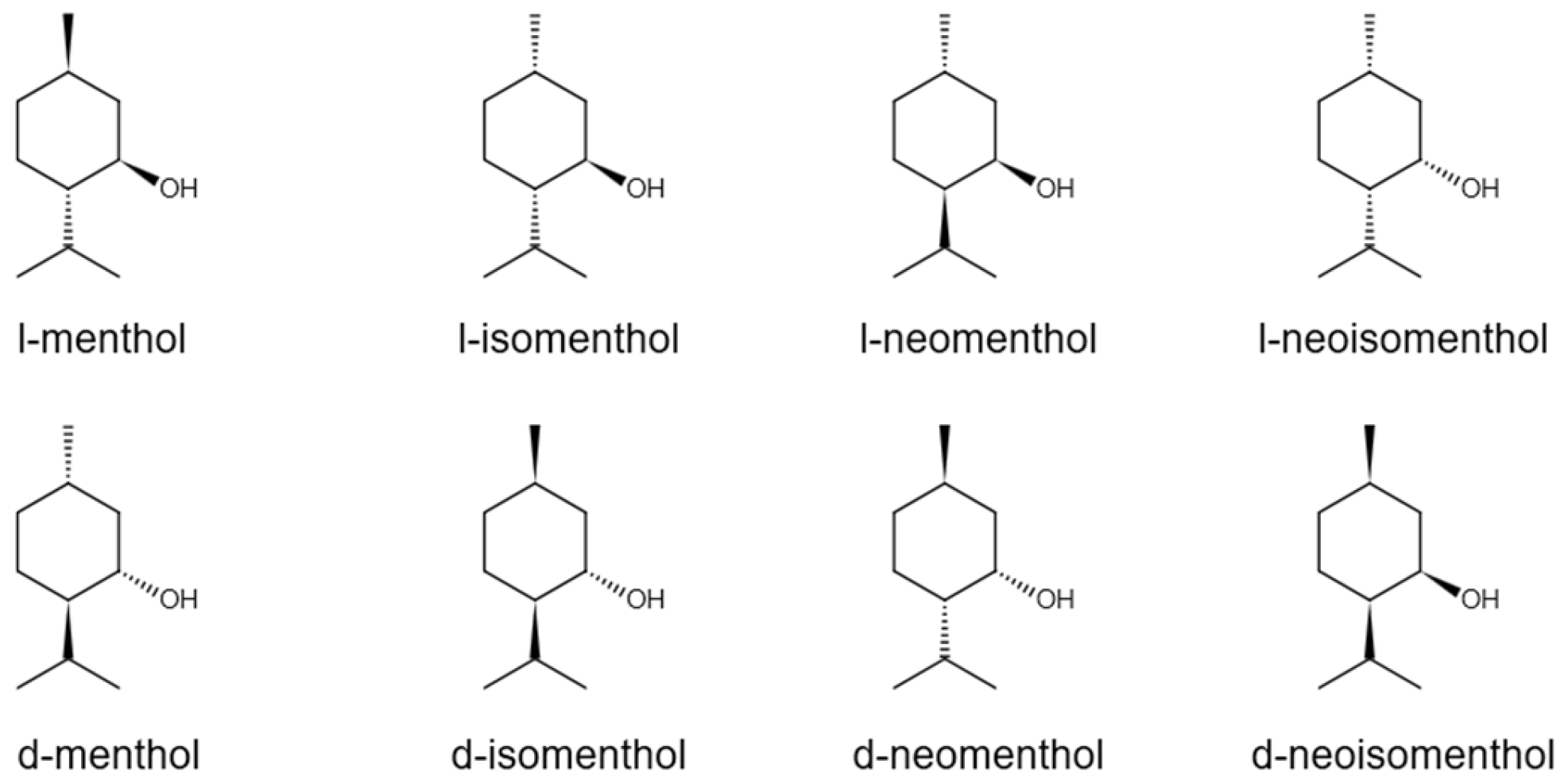
5]. l-menthol contains three chiral centers in its molecular structure, which leads to seven other optical isomers, including d-menthol, d,l-isomenthol, d,l-neomenthol and d,l-neoisomenthol, as shown in
Figure 1. These isomers display an unpleasant smell and are less effective for inducing the cooling sensation when applied to the body’s skin [
2,
3]. Though d,l-menthol is also marketed since it shows no toxicity [
6,
7], it is less desirable than l-menthol.
As a natural product, l-menthol is present in mint with almost absolute optical purity [
1]. In the past, isolation from corn mint oil was the only approach for the production of l-menthol [
3]. The price of l-menthol fluctuates violently due to the surging demand and unstable yield. This has promoted the development in synthesis of optically pure l-menthol. Approximately 60% of the l-menthol in the end-use market is derived from chemical synthesis at present [
3]. Symrise, Takasago and BASF are the main suppliers of synthetic l-menthol in the world [
3,
4].
The Symrise process uses thymol as the starting material. A mixture of the four racemic pairs, containing approximately 60% d,l-menthol, 26% d,l-neomenthol, 12% d,l-isomenthol and 2% d,l-neoisomenthol, is obtained by hydrogenation of thymol [
8]. l-menthol is subsequently isolated from this mixture after a series of achiral and chiral separation procedures. Achiral separation gives d,l-menthol by distillation, followed by chiral separation of d,l-menthol using the preferential crystallization method to give enantiomerically pure l-menthol as the final product. In the chiral separation process, d,l-menthol is first esterified to give d,l-menthylbenzoate. The racemic esters are then resolved by seeding optically pure ester crystals into the supersaturated solution of d,l-menthylbenzoate. Finally, d-menthol and l-menthol are obtained after hydrolysis [
9]. d-menthol, along with the other three racemates, is recycled to the hydrogenation section to re-establish the thermodynamic equilibrium [
8]. The enantio-separation of racemic menthol is complex, comprising esterification, enantioselective crystallization and hydrolysis. The esterification is essential because enantiomerically pure d-menthol and l-menthol can not be obtained simply by seeding in racemic menthol solutions [
3]. Moreover, the operating conditions of preferential crystallization should be strictly controlled. Enzymatic catalysis may be an alternative strategy for the chiral separation of racemic menthol [
10,
11,
12,
13,
14].
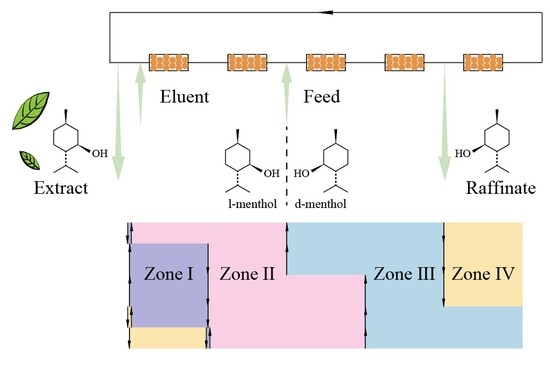
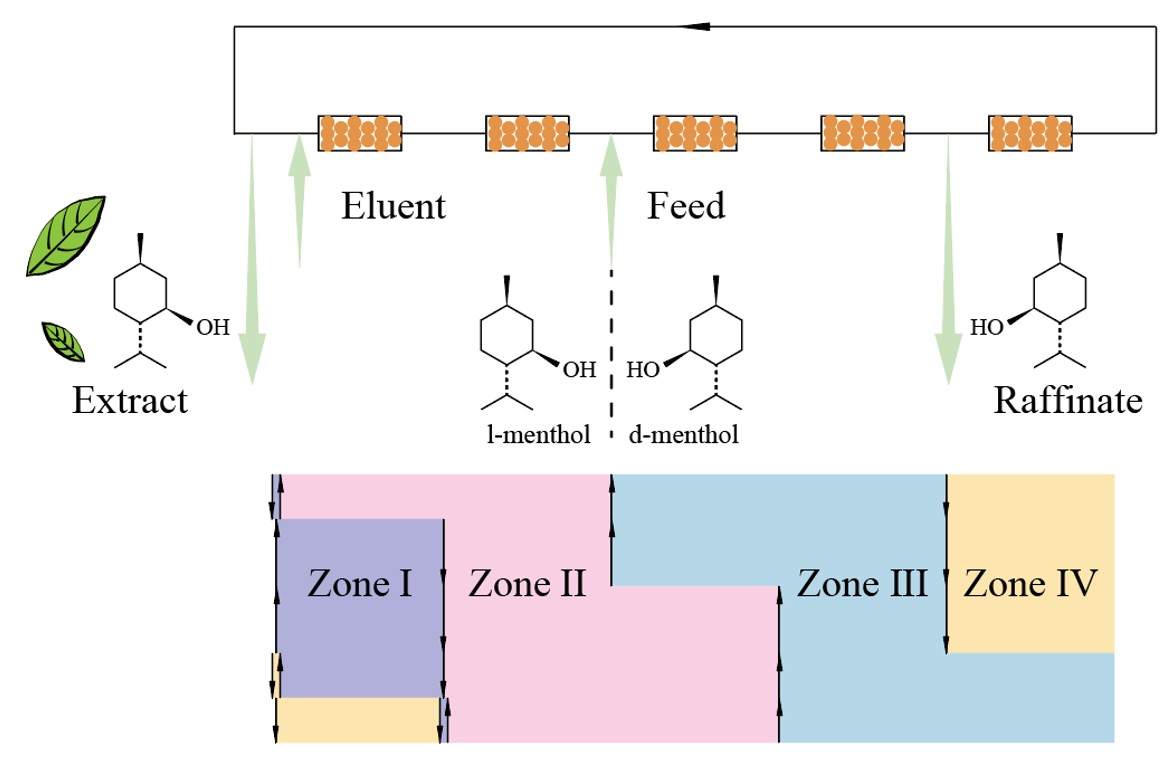
Chromatography is a promising technique for chiral separation [
15,
16,
17,
18,
19], with simulated moving bed (SMB) as its continuous form [
20,
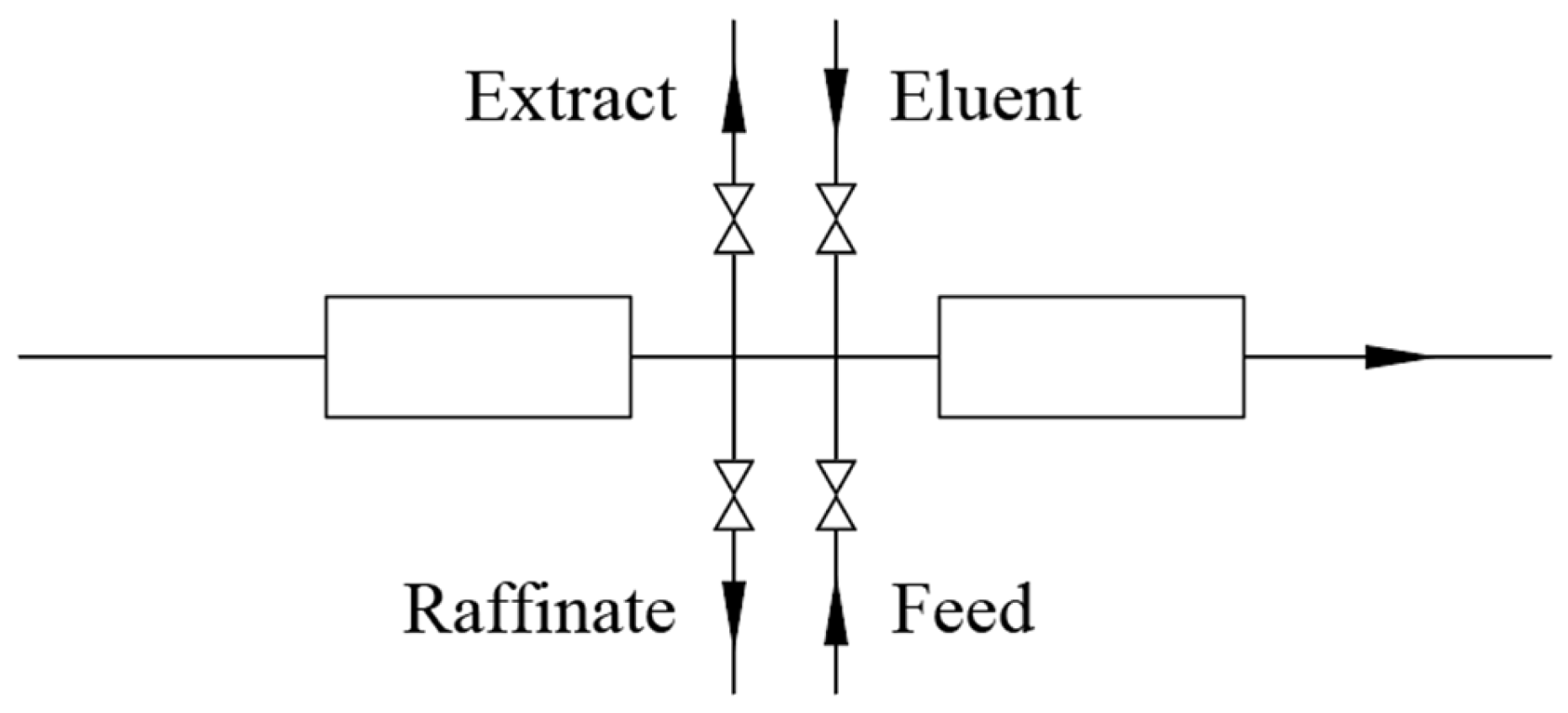
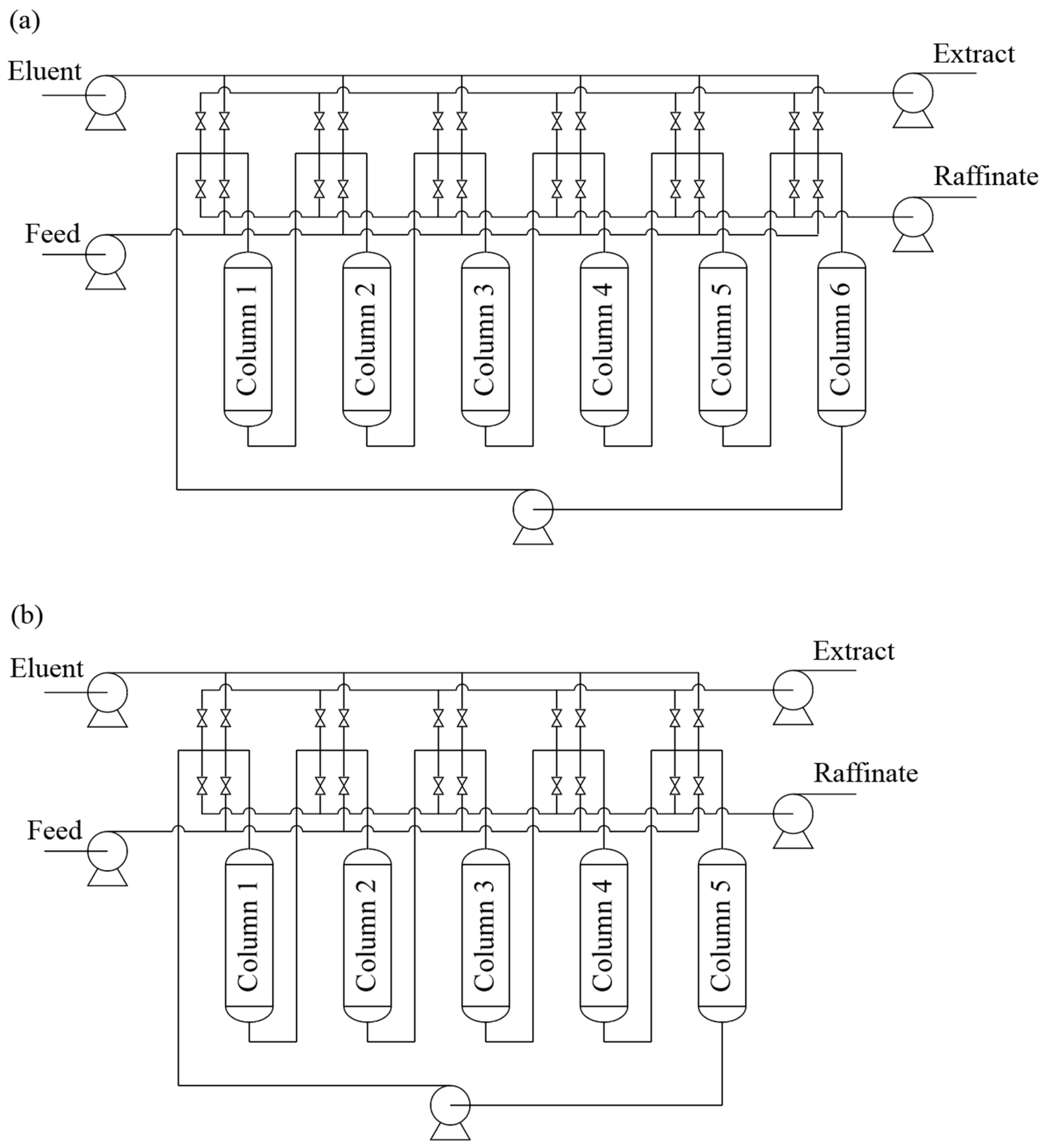
21]. Several fixed beds packed with adsorbent particles are connected in series in an SMB unit, with four inlet and outlet lines, eluent, feed, raffinate and extract, connected between the columns. With periodical switching of these inlet and outlet lines in the direction of fluid flow in this technique, the countercurrent contact of the fluid and adsorbent particles in the true moving bed (TMB) concept is achieved to reinforce the mass transfer. Higher productivity and less solvent consumption compared with batch chromatography make it an attractive method used in sugar refinement [
22,
23], medicine manufacturing [
24,
25,
26] and biological production purifications [
27,
28,
29] since firstly proposed by Universal Oil Products (UOP) in 1961.
A variety of non-conventional modes of SMB were proposed to further improve the performance of SMB [
30,
31], including Varicol [
32,
33,
34], Modicon [
35,
36], Powerfeed [
37,
38], partial-discard [
39,
40], outlet stream fractionation and feed-back [
41,
42], and solvent gradient [
43,
44]. Among these variants, Varicol was proposed and industrialized by NOVASEP.
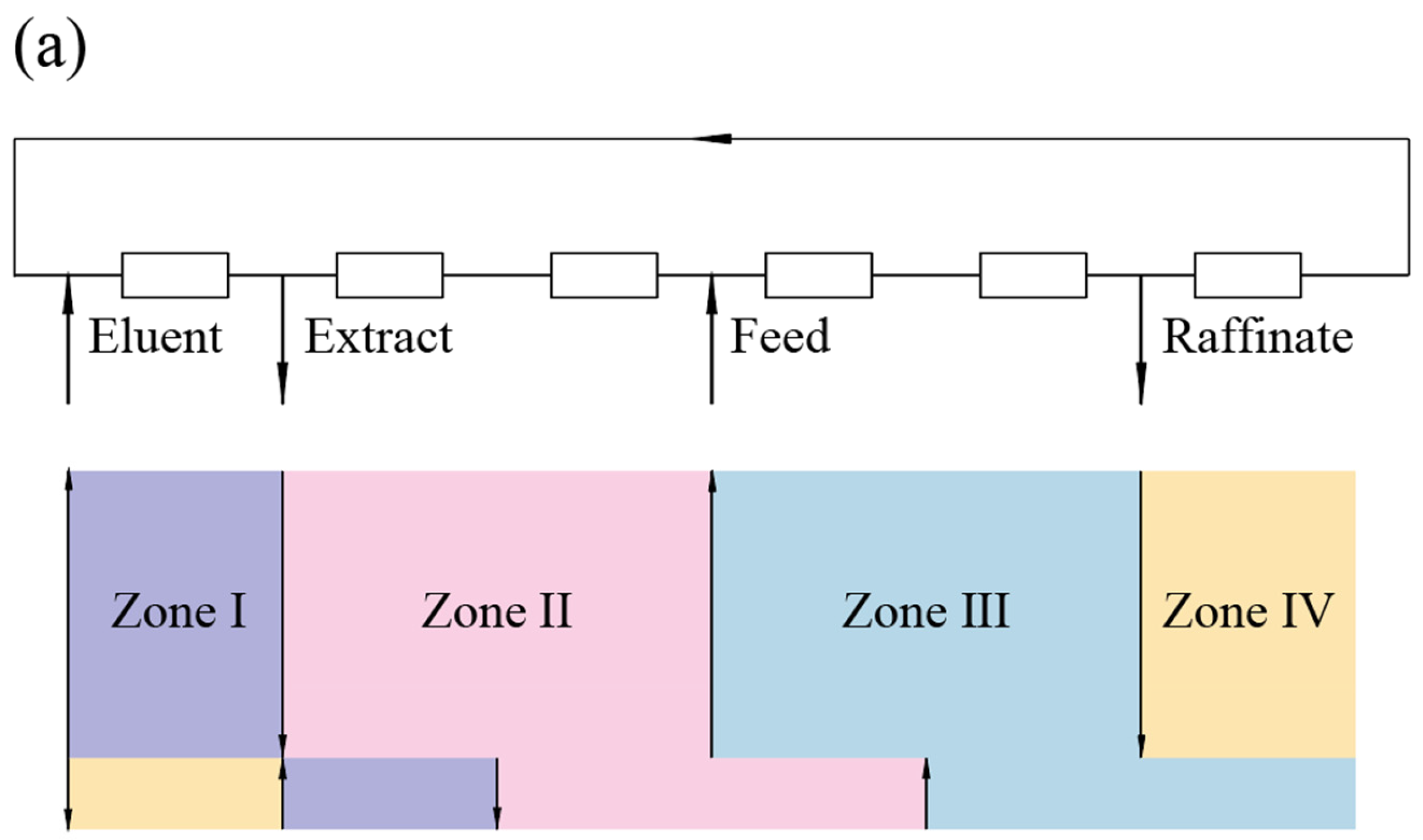
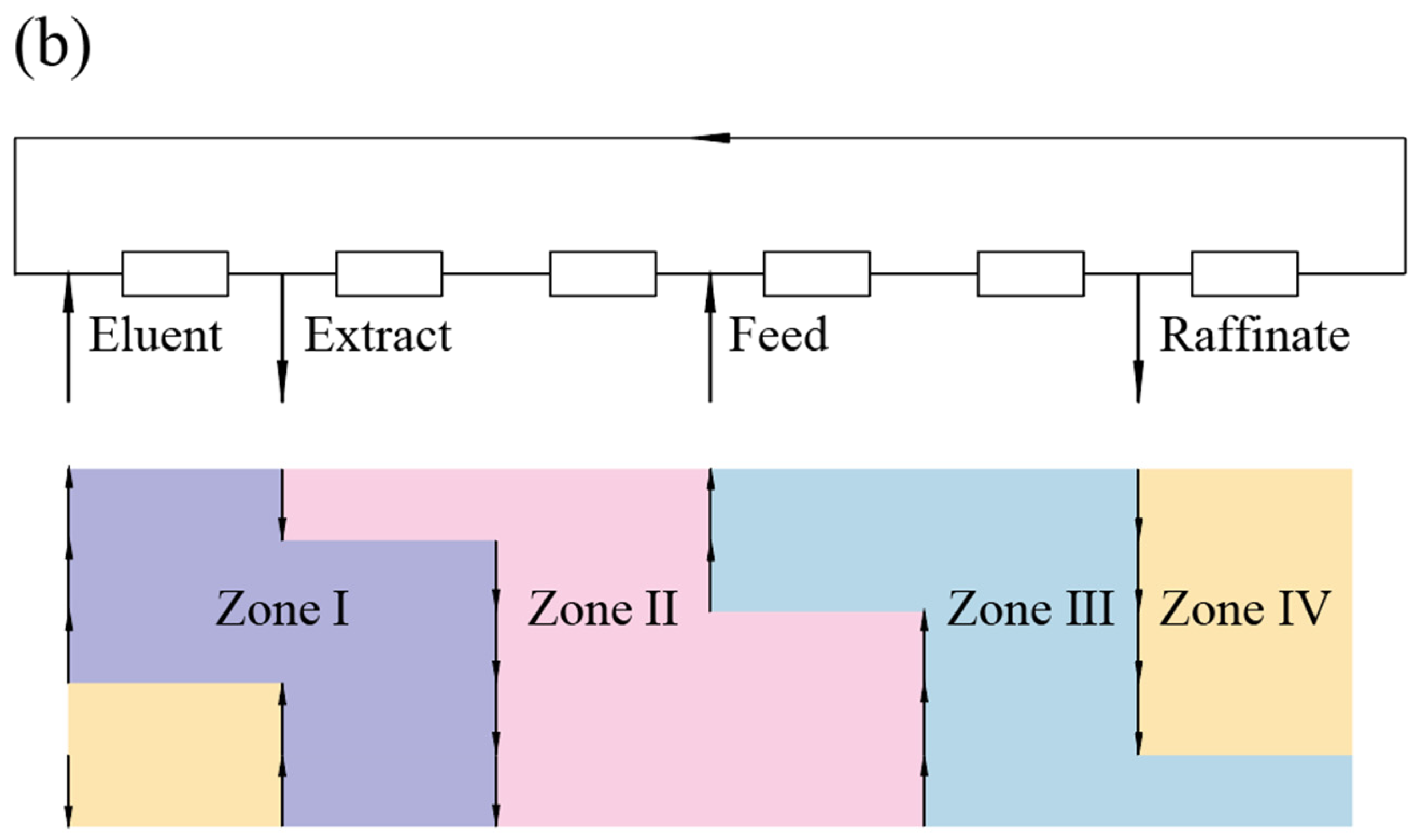
Figure 2 compares the difference between conventional SMB and VARICOL in operation mode by taking a specific shifting scheme as an example. For both conventional SMB and VARICOL, packed columns located between different inlet and outlet lines have different functions in separation, and thus can be divided into four zones. Zone I is located between the eluent line and the extract line, and is responsible for the regeneration of the stationary phase. Zone II is located between the extract line and the feed line, and is responsible for the purification of the more-adsorbed component. Zone III is located between the feed line and the raffinate line, and is responsible for the purification of the less-adsorbed component. Zone IV is located between the raffinate line and the eluent line, and is responsible for the regeneration of the mobile phase. Conventional SMB and VARICOL have the same position of inlet and outlet lines, and thereby, the same initial column configurations. In the conventional SMB process, all the inlet and outlet ports shift in the direction of fluid flow for a column simultaneously every particular time interval, namely a switching period. The column configuration remains constant as 1/2/2/1 during the operation. In contrast, in a VARICOL process, the inlet and outlet ports shift asynchronously. The period is further divided into subintervals by these individual shifting, and the column configuration varies within a period. After a quarter of a period as the first subinterval, the extract line shifts downstream for a column, with the column configuration changing into 2/1/2/1. Subsequently, after a quarter of a period as the second subinterval, the feed line shifts downstream for a column, with the column configuration changing into 2/2/1/1. Then, after a quarter of a period as the third subinterval, the eluent line shifts downstream for a column, with the column configuration changing into 1/2/1/2. Finally, after a quarter of a period as the fourth subinterval, the raffinate line shifts downstream for a column, with the column configuration changing back into 1/2/2/1. With this shifting scheme, VARICOL process has an average column configuration of 1.5/1.75/1.5/1.25.
The asynchronous shifting of the inlet and outlet ports offers a greater degree of freedom for the operation of the VARICOL process. Consequently, with the same column numbers, the VARICOL process can achieve better separation performance than the conventional SMB process under suitable design. This also gives rise to a possibility of achieving the same purities for extract and raffinate with a reduced number of columns using the VARICOL process [
32,
45,
46]. SMB separation process with fewer columns is beneficial for the following reasons [
20]. First of all, fewer fixed beds, tubes and valves are used for the equipment setup, and therefore, less device cost and extra-column dead volume. Moreover, a smaller amount of adsorbent is required, especially for chiral separation, because of the high price of the chiral stationary phase. In addition, fewer packing and re-packing efforts are essential. Packed columns should have equivalent hydrodynamic characteristics to ensure symmetry. However, the packing procedure can be irreproducible. Therefore, the packing procedure is always very tedious and time-consuming, and re-packing should be performed for the columns with poor reproductivity.
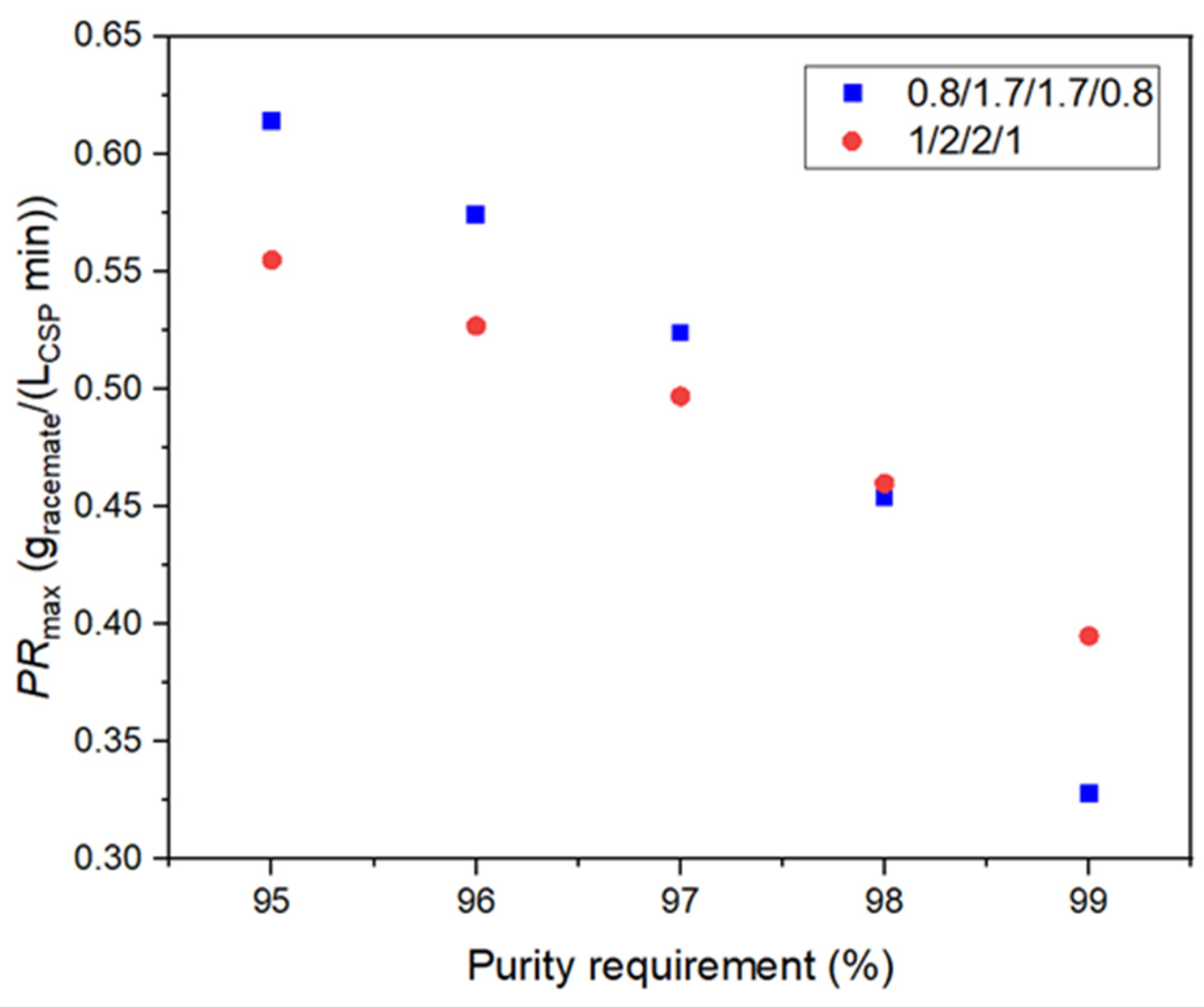
In our previous work, the conventional simulated moving bed technique was used for the resolution of menthol racemate, and menthol enantiomers with purity above 99.0% can be obtained [
47]. Considering the high demand for l-menthol, improving the productivity of the SMB unit is of great importance. This work aims to explore the potential of the VARICOL process for the enantioseparation of the racemic menthol at a reduced product purity target, taking into account the diverse application purposes of l-menthol. Amylose 3,5-dimethylphenylcarbamate coated on silica gel was used as the chiral stationary phase, with n-hexane/2-propanol (95/5,
v/
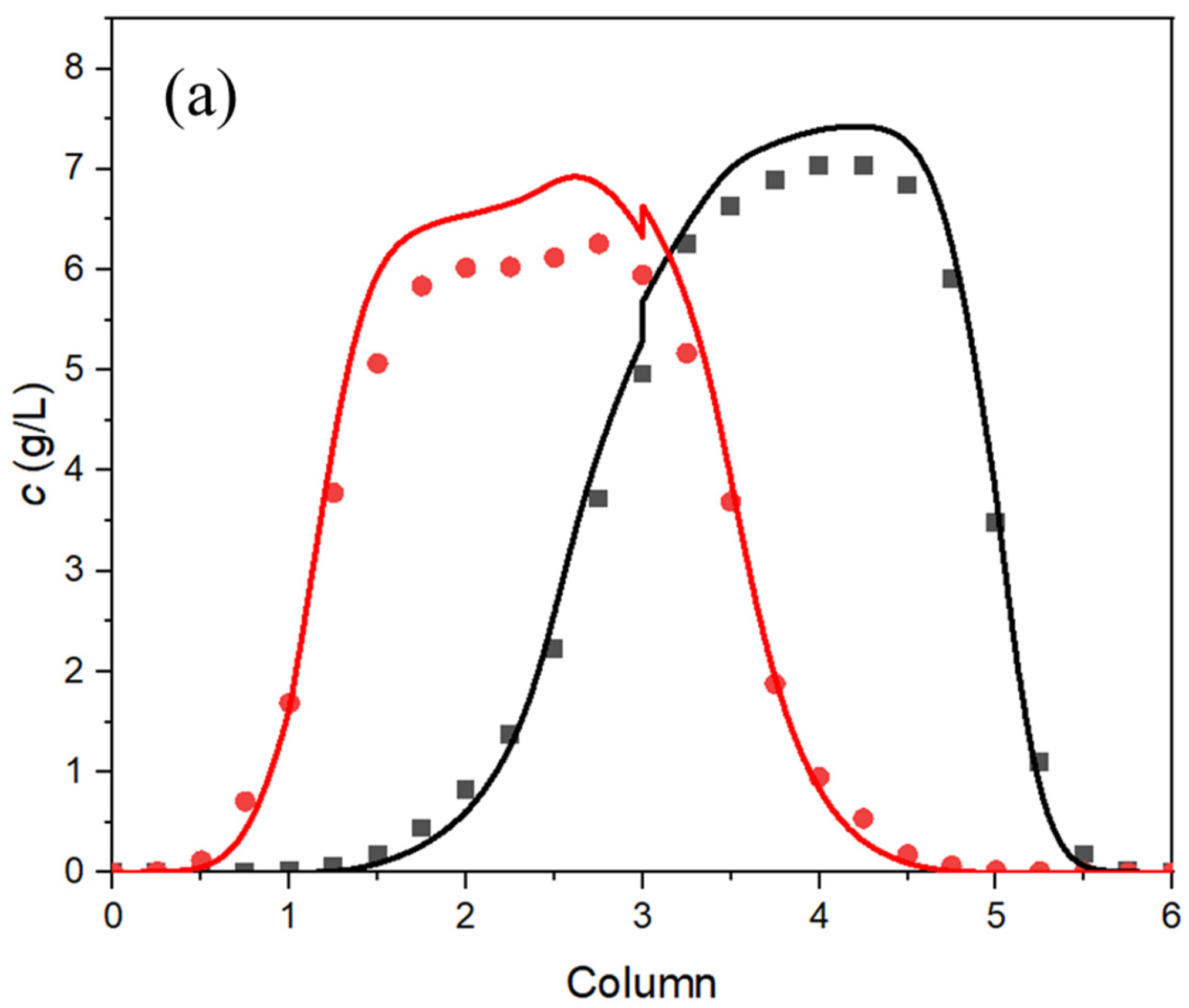
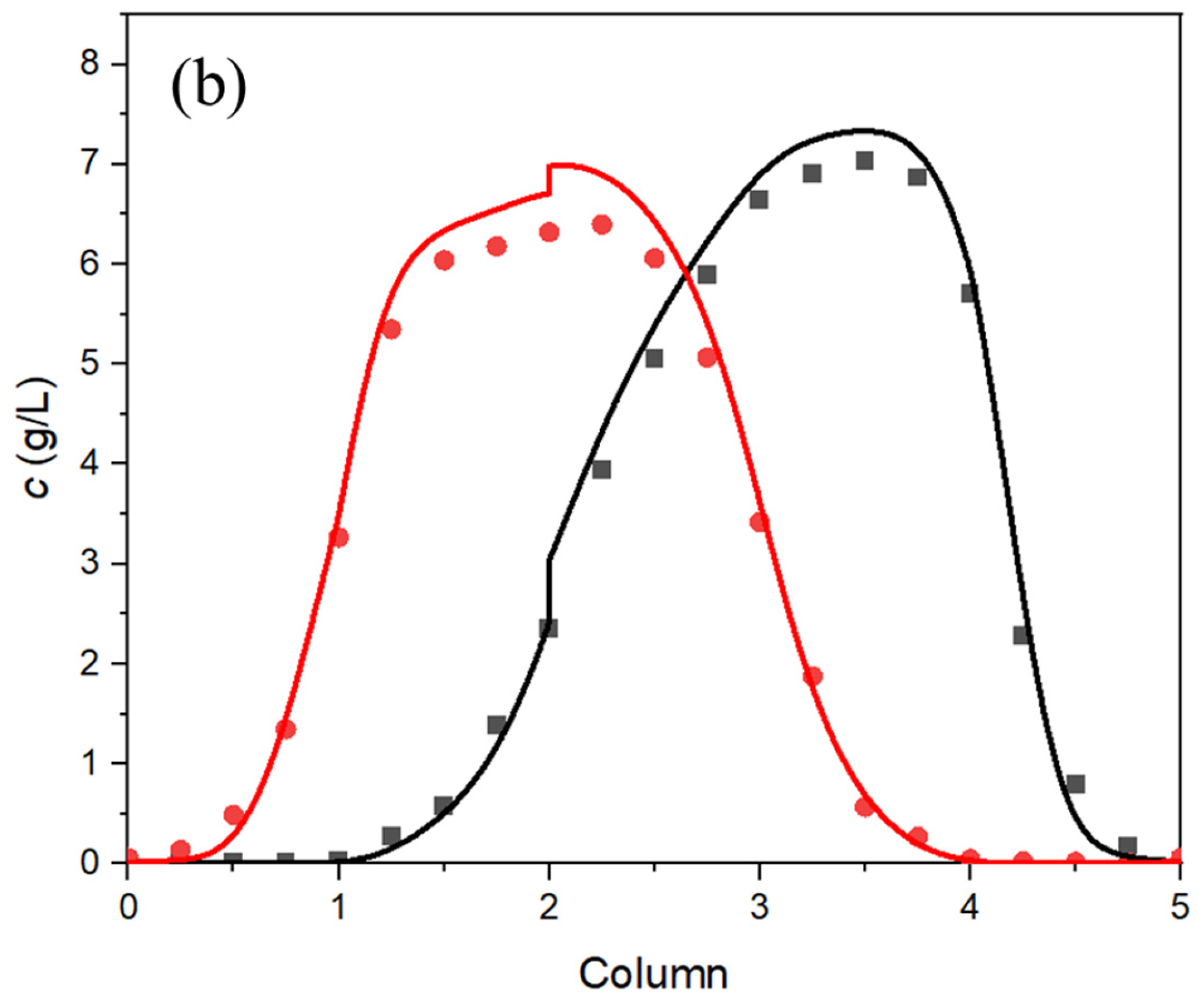
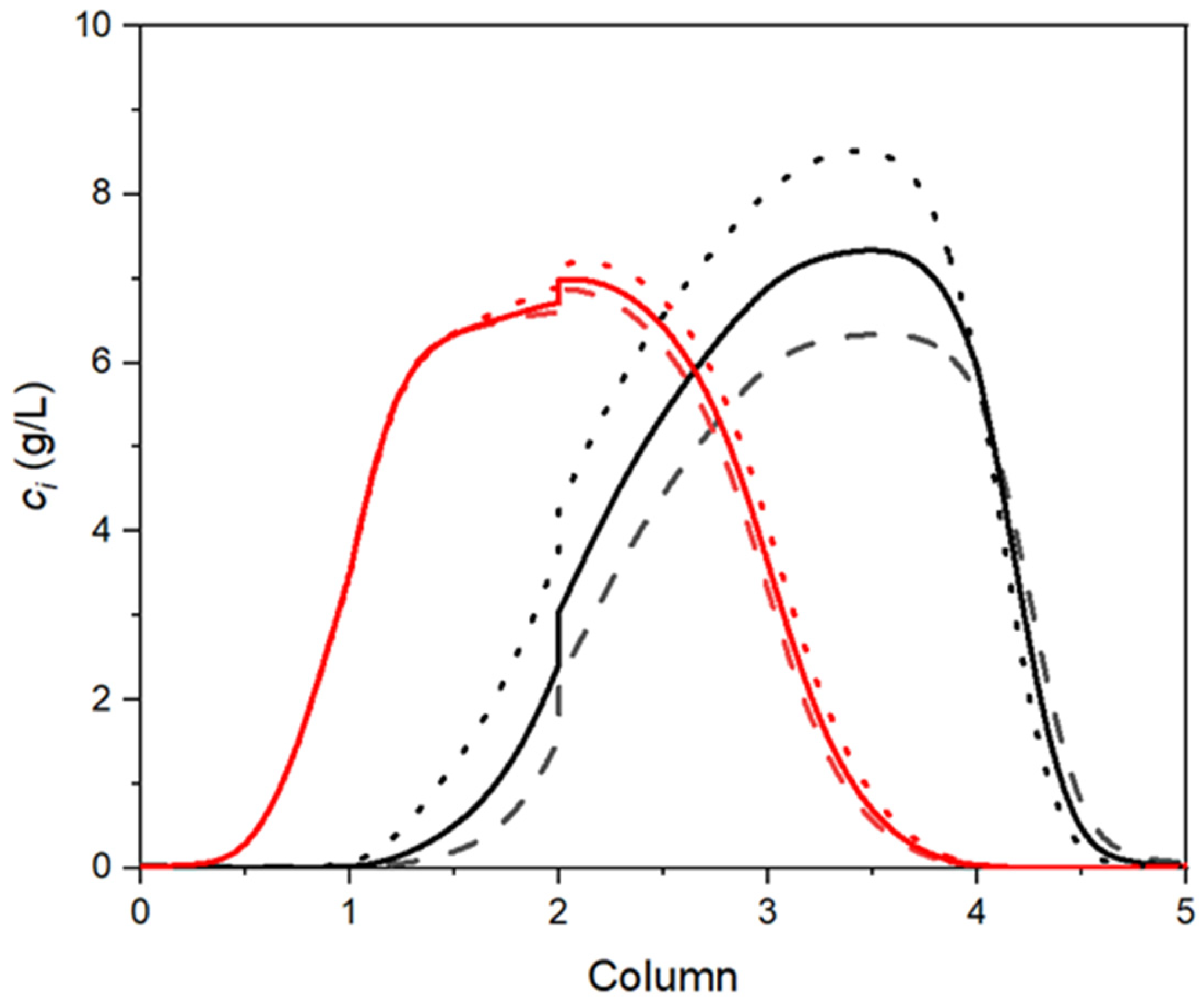
v) serving as the mobile phase. Mathematical models were developed to describe the dynamics of the VARICOL process, where mass transfer resistance and axial dispersion were taken into account. The separation regions of the VARICOL processes were estimated by simulations. The superiority of the VARICOL process in terms of separation performance compared with conventional SMB was investigated. Experiments were carried out for the resolution of racemic menthol by conventional SMB and VARICOL process respectively, and the predicted separation performance was compared with the experimental results.
2. Theoretical Analysis
2.1. Mathematical Models of the VARICOL Process
Mathematical modeling is an effective approach for the understanding and design of the SMB separation process. The SMB process can be modeled by two strategies: the TMB strategy and the SMB strategy [
22,
48]. The first one makes an analogy between the SMB and TMB processes, considering the movement of the solid phase in the opposite direction of the liquid phase [
25,
49,
50]. The steady state of the TMB operation is predicted by a set of ordinary differential equations. The second one describes the real intermittent behavior of the SMB process, considering the periodical shifting of the injection and collection lines [
51,
52]. The cyclic steady state of the SMB operation is predicted by a set of partial differential equations. Less computation time is required for the TMB strategy, yet acceptable prediction results can be obtained by the TMB strategy only when the column numbers in each zone are at least two, because of the great deviation between the SMB process and TMB process with low total column numbers [
53]. The SMB strategy is used in this paper because the total column numbers considered in the current work are five or six. Mass transfer and axial dispersion are taken into account in the model, which contains the following equations [
52,
54].
Mass balance over a volume element in the liquid phase is as follows:
Mass balance over a volume element in the solid phase is as follows:
where the subscript
(
= 1, 2) refers to the species in the racemate, with 1 and 2 representing the less-retained and more-retained enantiomers, d-menthol and l-menthol, respectively, and the subscript
(
= 1, 2, …,
) refers to the column number.
is the total column number.
and
are the concentrations in the liquid phase and solid phase, respectively.
is the saturated solid phase concentration corresponding to the liquid phase concentration.
is the bulk porosity of the fixed bed.
is the superficial velocity.
is the axial dispersion coefficient.
is the overall mass transfer coefficient.
is the particle diameter of the chiral stationary phase.
is the axial coordination of the SMB column.
is the time variable.
The binary adsorption isotherm of the menthol enantiomer can be described by the modified linear + Langmuir model [
47].
where
is the Henry parameter for the linear adsorption site, while
and
are the Langmuir parameters for the non-linear adsorption site.
The superficial velocity is as follows:
where the subscript
(
= I, II, III, IV) refers to the zone number in the VARICOL unit.
is the flow rate in the packed bed.
is the column diameter.
The axial dispersion can be estimated by the Peclet number:
where
is the Peclet number, which is a dimensionless number.
is the column length.
Initial conditions for the partial differential equations are as follows:
Boundary conditions for the partial differential equations are as follows:
where
is the inlet concentration of the packed bed.
Mass balance between two connected columns is given for different cases.
When no stream enters or exits between the two columns,
When only one stream enters or exits between the two columns,
When two streams enter and exit between the two columns, the following occurs.
The eluent port and extract port gather at the same node when Zone I contains no column. The mass balance of this node can not be obtained simply by combining Equations (11)–(15) because of the special design of the node, which will be introduced in
Section 3.1 of this article.
When Zone IV contains no column, the raffinate port and eluent port gather at the same node.
where
,
,
and
are the flow rates of desorbent, extract, feed and raffinate, respectively.
and
are the concentrations in the extract and raffinate stream, respectively.
2.2. Numerical Solving of the Model Equations
The mathematical model describing the dynamics of the VARICOL process consists of partial differential equations and nonlinear algebraic equations. gPROMS software with version 4.0.0, developed by Process System Enterprise, was applied to numerically solve the equations. The axial domains of all columns were discretized by orthogonal collocation on finite elements method (OCFEM) with third order over uniform grids. In our preliminary works, different interval numbers ranging from 10 to 100 were used for numerical solvation, and the effect of interval number on prediction accuracy and CPU time was studied. An interval number of 60 for discretization was selected, since it can minimize the computation efforts while ensuring the prediction accuracy of internal concentration profiles. The absolute and relative tolerance were set as 10−5.
2.3. VARICOL Separation Performance Parameters
Parameters, including purity, productivity and solvent consumption, were defined for performance evaluation.
The purity of the extract is defined as the mass percentage of the more-adsorbed species in both enantiomers contained in the extract stream over a cycle during cyclic steady state. The purity of the raffinate is defined as the mass percentage of the less-adsorbed species in both enantiomers contained in the raffinate stream over a cycle during cyclic steady state.
The productivity is defined as the amount of racemate resolved by the VARICOL process per volume of chiral stationary phase per unit of time.
where
is the volume of the column.
The solvent consumption is defined as the total volume of solvent used in both inlet streams per amount of racemate resolved by the VARICOL process.
2.4. Design of the VARICOL Process
To obtain relatively optimized separation performance, flow rates in each zone and shifting scheme, including initial column configurations and individual shifting time for all ports, should be suitably designed. In the VARICOL process, the shifting of an inlet or outlet port can be either upstream or downstream. If an inlet or outlet line is shifted upstream for one column, a downstream shifting for two columns is required for it in the period to ensure that the initial position of this line in the next period is a column downstream. Therefore, the simplest shifting schemes contain only a downstream movement of one column for all ports. It has been found that, among the possible shifting schemes with the same average column configurations, the simplest shifting scheme presents the best separation performance [
55]. Though more than one simplest shifting scheme corresponds to a specific average column configuration, they are actually equivalent because they give the same product purities [
55,
56]. Thus, only the VARICOL process with the simplest shifting scheme is studied in this work, and the average column numbers in each zone can be used as decision variables for shifting scheme operation [
56,
57]. In this research, only symmetric average column configurations are considered. In other words, the average column number of Zone I and Zone IV is set to the same value, and the average column number of Zone II and Zone III is set to the same value as well in the VARICOL process.
Flow rate ratio
is a dimensionless parameter [
58], defined as
The relationship between the SMB process and the corresponding TMB process is shown in the following:
where
and
are the flow rates of fluid and adsorbent particles in the corresponding TMB process, respectively.
is the period time of the SMB process.
To ensure the complete regeneration of the chiral stationary phase in Zone I and the eluent in Zone IV, the values of
and
were chosen by
where
,
,
,
, and
are the adsorption isotherm parameters in the modified linear + Langmuir model, and
is the safety margin. Herein, the value of
is set at 1.25 to fix the flow rate of Zone I and Zone IV, and thereby, the eluent flow rate is fixed [
48,
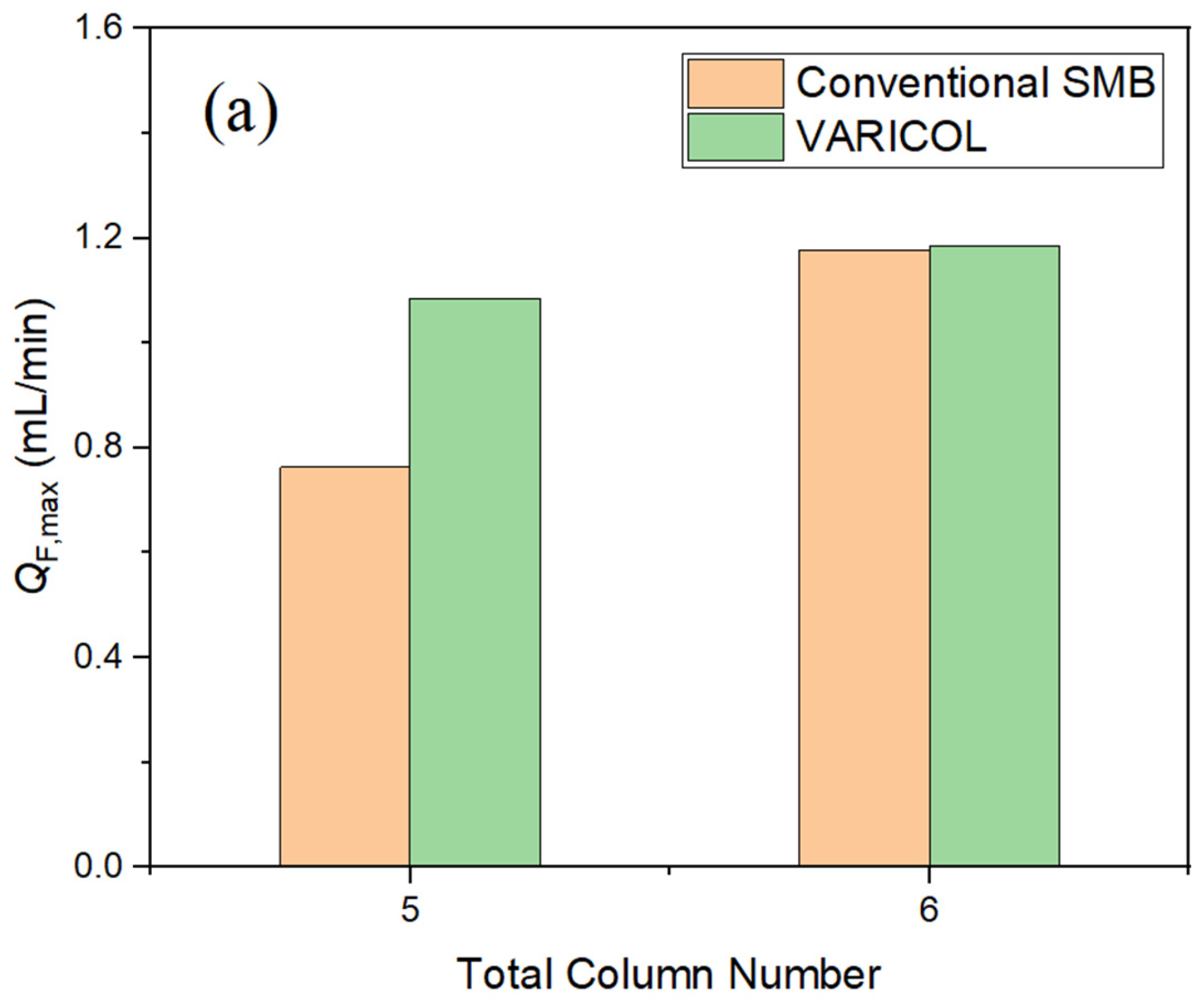
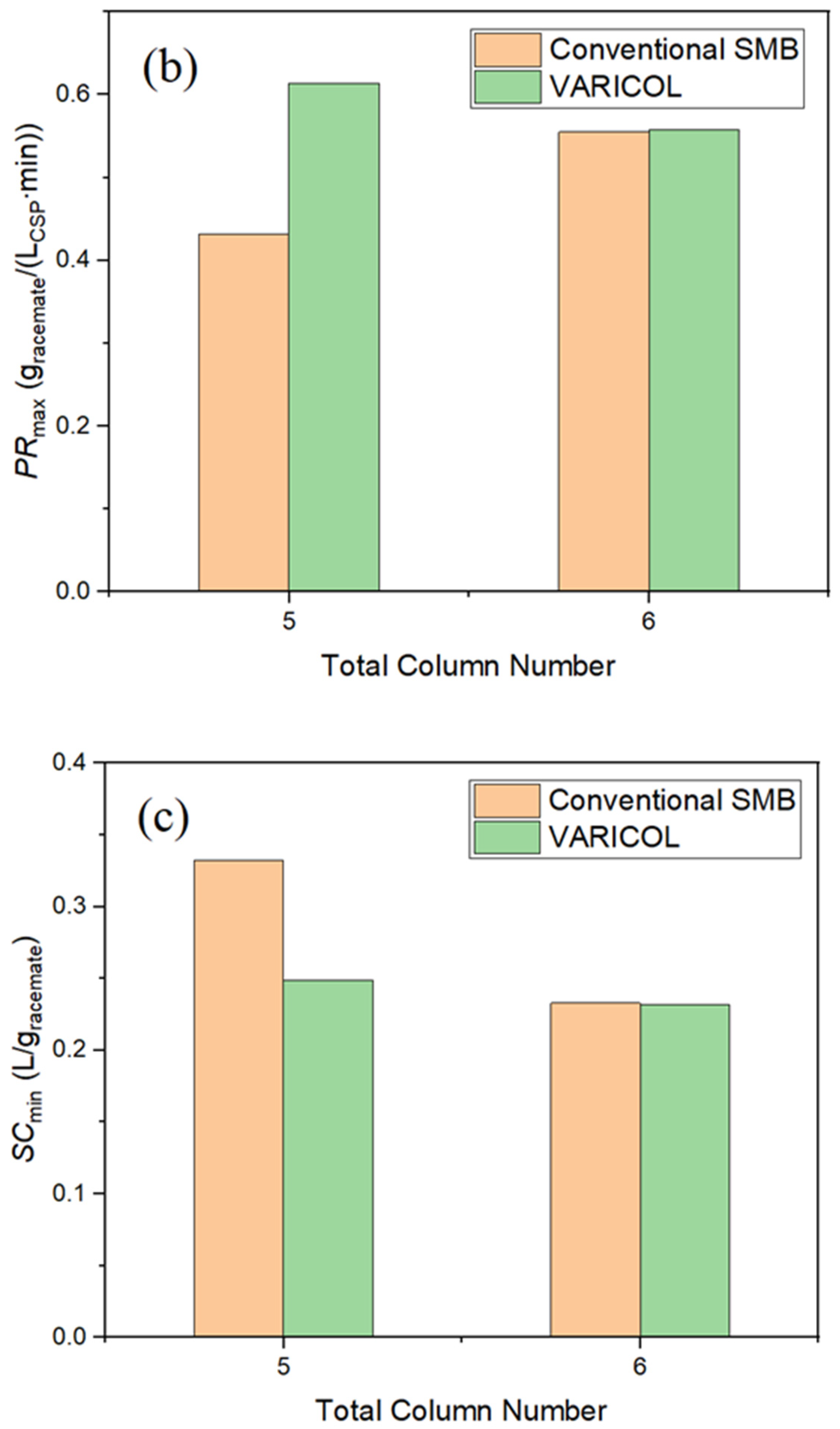
59]. From the definition of productivity and solvent consumption shown in Equations (27) and (28), in an SMB unit with fixed column numbers, with a higher flow rate of the feed stream, the productivity rises and solvent consumption drops. The multi-objective optimization containing productivity and solvent consumption as objective functions can thus be transformed to a single-objective optimization for maximizing the feed flow rate of the VARICOL unit. In our future research for optimizing the operation conditions of the VARICOL process, the effect of the value for
mI and
mIV on the productivity and solvent consumption should be further investigated.
The parameters related to adsorption equilibrium and kinetics at 25 °C were measured in our previous work [
47], as listed in
Table 1. Structure and operation designs are summarized in
Table 2. The switching period and feed concentrations were set according to our previous work [
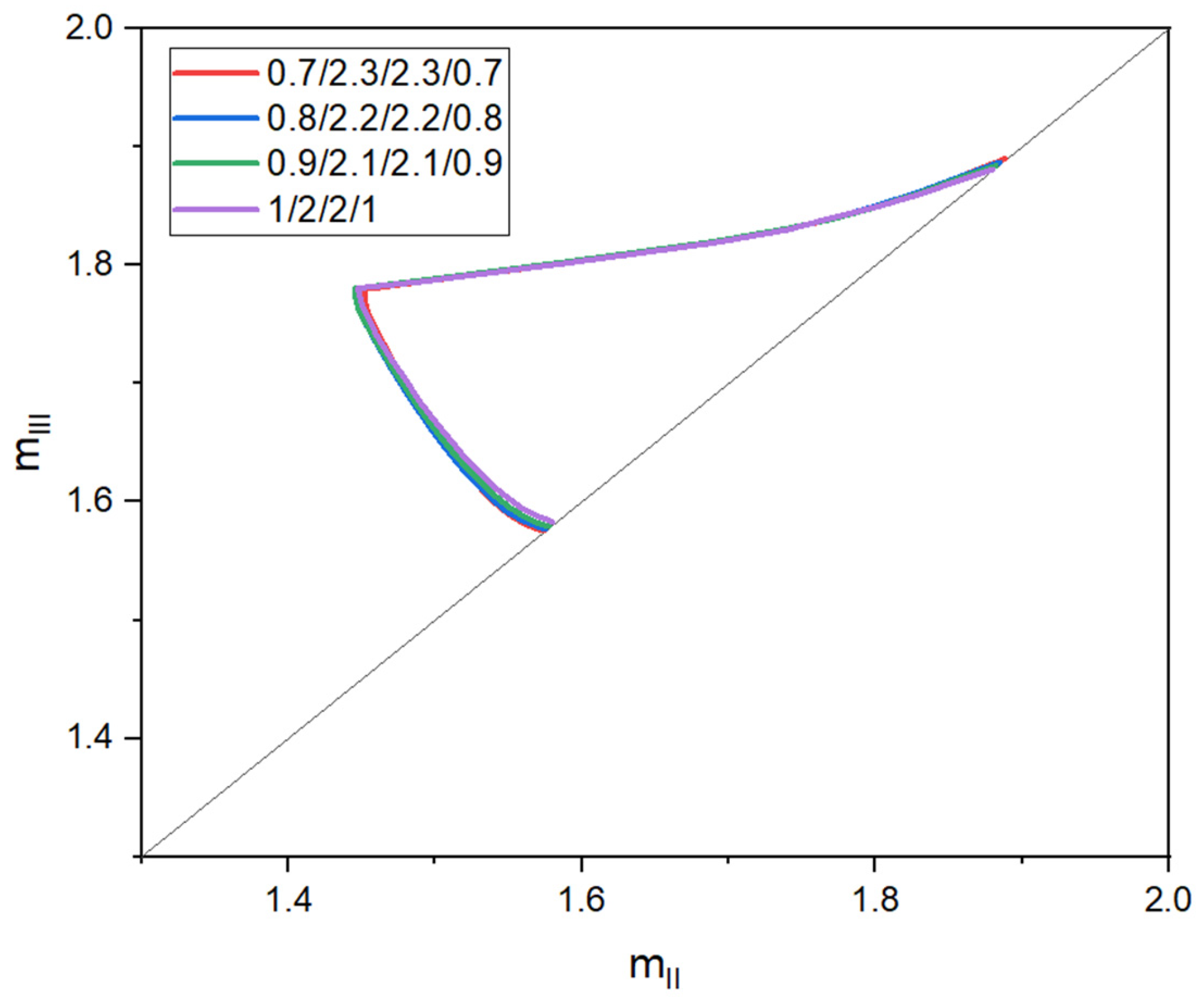
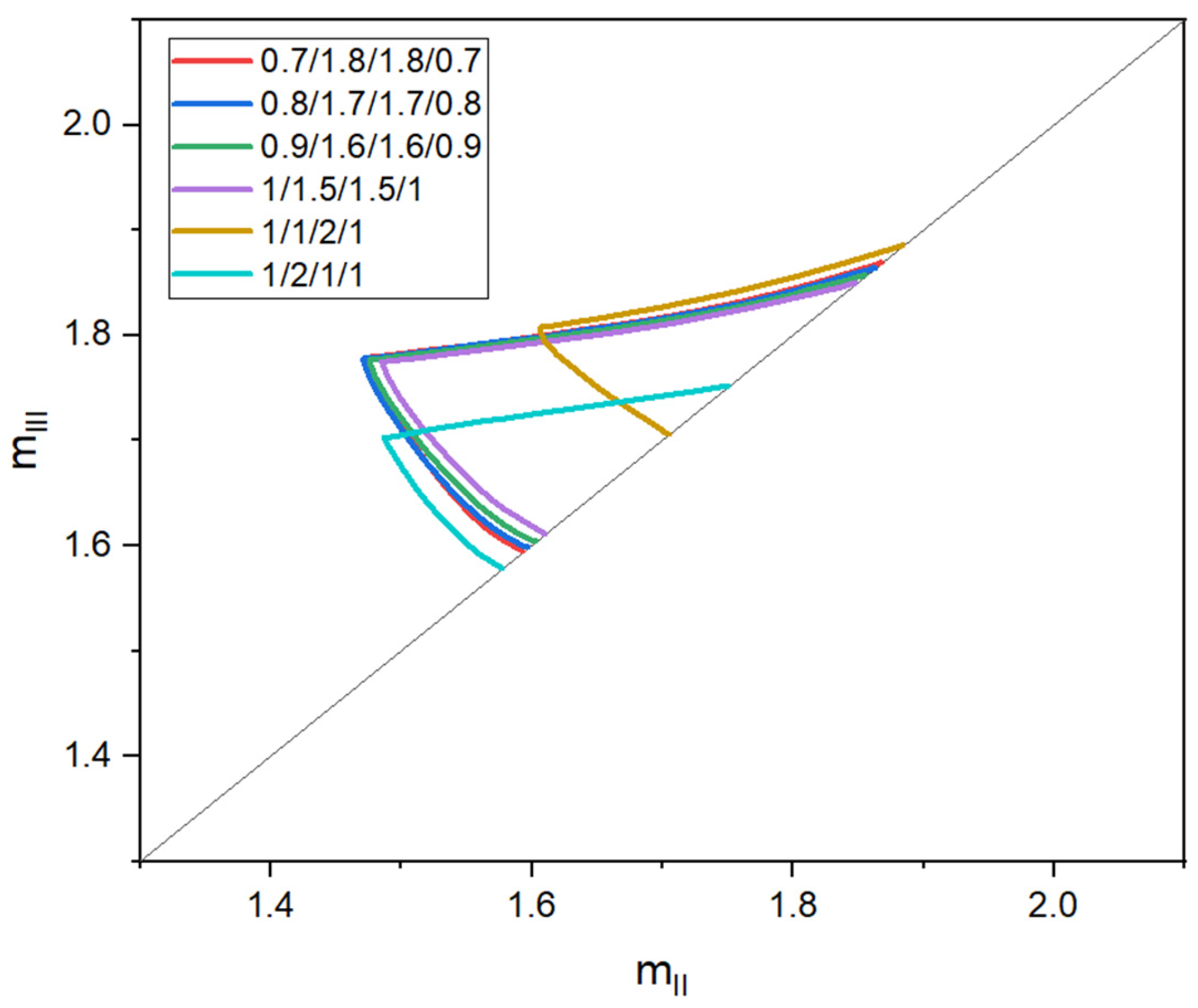
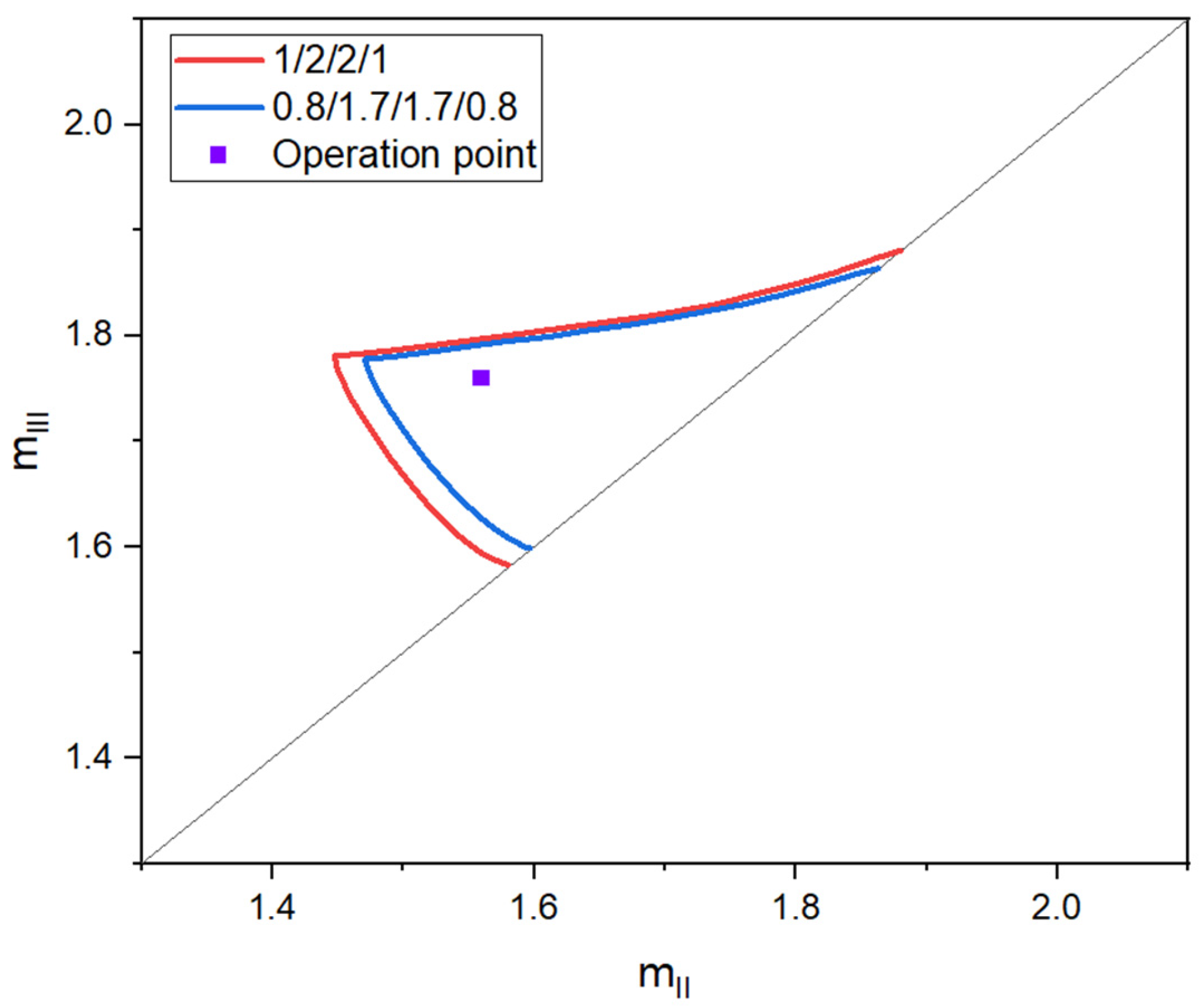
47]. The purity requirement of both extract and raffinate was set at 95.0%. Separation regions for different average column configurations were obtained after simulating the VARICOL process with different pairs of (
).
2.5. Definitions of the Ports Shifting
To better describe the shifting of the four inlet and outlet ports in a simplest shifting scheme, a series of parameters is defined [
55,
56,
60].
The shifting time of the ports can be normalized by the switching period,
where
(
= D, X, F, R) refers to the inlet and outlet lines, with D, X, F, and R representing the desorbent, extract, feed, and raffinate, respectively.
is the switching time of the ports within a period, and
is the normalized switching time.
Constraints of the normalized switching time are as follows:
It should be noted that at least one of the four normalized switching times must be 1, which symbolizes the finish of the period. When all the normalized switching times of the inlet and outlet lines are 1, the process becomes a conventional SMB process. Therefore, the conventional SMB process can be regarded as a special case of the VARICOL process.
The differences in the normalized switching time for two neighboring lines are given as
With these definitions, the difference between the normalized switching time of any two ports can be described:
The constraints for these parameters can be inferred from Inequality (35):
The relationship between the initial column configuration and the average column configuration can be given by
where
is the average column number over a period, and
is the initial column number at the beginning of a period.
In both the initial column configuration and average column configuration, the sum of the column numbers in all zones should be the total column numbers.
2.6. Derivation of the Shifting Scheme
To simulate or operate a VARICOL unit, the shifting scheme, including the initial column numbers in each zone and the shifting time for each port, should be derived from the average column configurations.
From Equations (48)–(51) and Inequalities (42)–(44) and (47), it can be inferred that, for the zones possessing integer average column numbers, their initial column numbers at the beginning of a period must be equal to their average column number. Moreover, for the zones that have rational average column numbers, which are fraction numbers, their initial column numbers are the nearest lower integer or nearest upper integer of the average column numbers,
or
, respectively. Meanwhile, the constraints for the initial column numbers in all zones, shown as Equation (52), must be fulfilled when the total column number is fixed. Thus, among the
zones with rational average column numbers, the initial column numbers in
zones should be assigned as
, and the initial column numbers in
zones should be assigned as
. This leads to an option number for the nearest integer combinations of
The option quantity of the nearest integer combinations for different zone numbers with rational average column numbers and the difference between the total column number and the sum of the nearest lower integer of the average column numbers are summarized in
Table 3.
However, among these nearest integer combinations, some may not make physical sense when used as an initial column configuration, because they may not fulfill the Inequalities (45) and (46).
For all the obtained nearest integer combinations, the difference of the normalized switching time for two neighboring lines, , and , can be determined by Equations (48)–(50). The value of and can be further calculated, and the integer combinations that do not fulfill Inequalities (45) and (46) can be excluded.
For all the remaining possible initial column configuration options, the switching time of the four inlet and outlet lines giving the desired average column configuration should also be determined.
As explained before, the maximum value of the normalized switching time for the four ports must be 1. From Equations (36), (39), and (41), the normalized switching time of the eluent port can be determined by
The normalized switching time for other inlet and outlet ports can be determined by Equations (36)–(38) [
56].