
Review

Towards Greener Sample Preparation: A Review on Micro-QuEChERS Advances and Applications in Food, Environmental, and Biological Matrices

by
Athina Papadopoulou
1,
Vasiliki Boti
2,3 and
Christina Nannou
1,*
1
Hephaestus Laboratory, School of Chemistry, Faculty of Sciences, Democritus University of Thrace, GR-65404 Kavala, Greece
2
Department of Chemistry, University of Ioannina, GR-45110 Ioannina, Greece
3
Unit of Environmental, Organic and Biochemical High-Resolution Analysis–Orbitrap-LC–MS, University of Ioannina, GR-45110 Ioannina, Greece
*
Author to whom correspondence should be addressed.
Separations 2025, 12(12), 339; https://doi.org/10.3390/separations12120339
Submission received: 31 October 2025 / Revised: 10 December 2025 / Accepted: 11 December 2025 / Published: 14 December 2025

Abstract

This review provides a comprehensive evaluation of recent advances in miniaturized Quick, Easy, Cheap, Effective, Rugged, and Safe (QuEChERS) sample preparation techniques applied across food, environmental, and biological matrices. Covering developments within 2020–2025, it focuses on analytical performance, environmental impact, and alignment with principles of sustainable and green analytical chemistry. Central to this review is the significant reduction in solvent and sample volumes achieved through miniaturization, thus decreasing the reagent consumption and hazardous waste generation. The integration of eco-friendly extraction solvents and sorbent materials enhances selectivity and reduces the environmental footprint. These methods are often coupled with high-resolution mass spectrometers, enabling sensitive, multi-residue, and suspect analysis. Challenges associated with complex matrices, low analyte concentrations, and the need for robust clean-up procedures are addressed through innovative hybrid workflows and advanced materials, e.g., polymeric electrospun fibers and deep eutectic solvents. The growing adoption of greener protocols is highlighted. Moreover, it underscores their potential to improve routine analytical workflows while reducing environmental burden. Future research should focus on the development of sustainable sample preparation with improved sensitivity, broader applicability, and minimal ecological impacts. This comprehensive assessment supports the ongoing transformation of analytical chemistry towards more sustainable practices without compromising analytical reliability and efficacy.

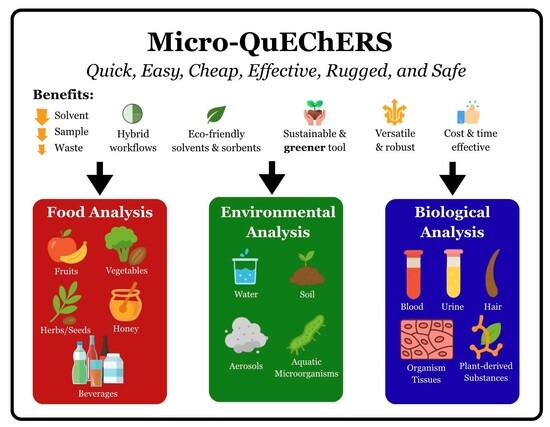
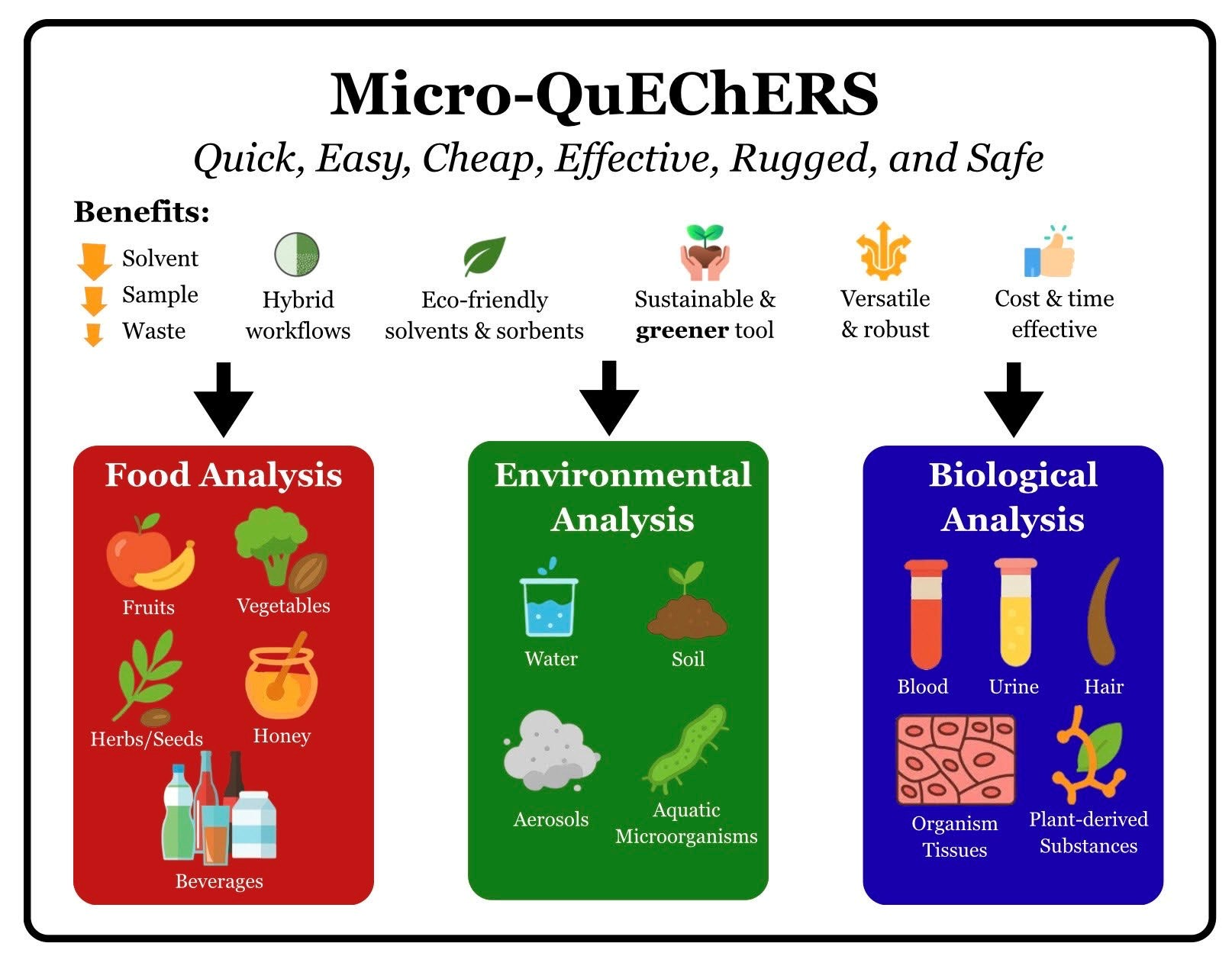
Graphical Abstract

1. Introduction

In recent years, the rapid expansion of food safety assessments, environmental monitoring, and biological research has placed unprecedented demands on the field of analytical chemistry. To address these needs, methods are required to ensure not only excellent performance but also reduced costs, time, labor, sample and reagent requirements, and environmental impacts.
In this sense, the QuEChERS method, an acronym for “Quick, Easy, Cheap, Effective, Rugged, and Safe,” has emerged as one of the most significant sample preparation techniques of the past two decades. Originally developed in 2003 by Anastassiades et al. [1] for the analysis of pesticide residues in vegetables and fruits, QuEChERS has gained popularity owing to its speed, simplicity, effectiveness, and environmental friendliness. Moreover, QuEChERS overcomes many of the limitations of conventional extraction techniques, such as liquid–liquid extraction (LLE) and solid-phase extraction (SPE), which often rely on large chemical requirements, including toxic organic solvents, demanding manual labor, ineffective clean-up performance, extensive steps prior to analysis, and time-consuming workflows [2].
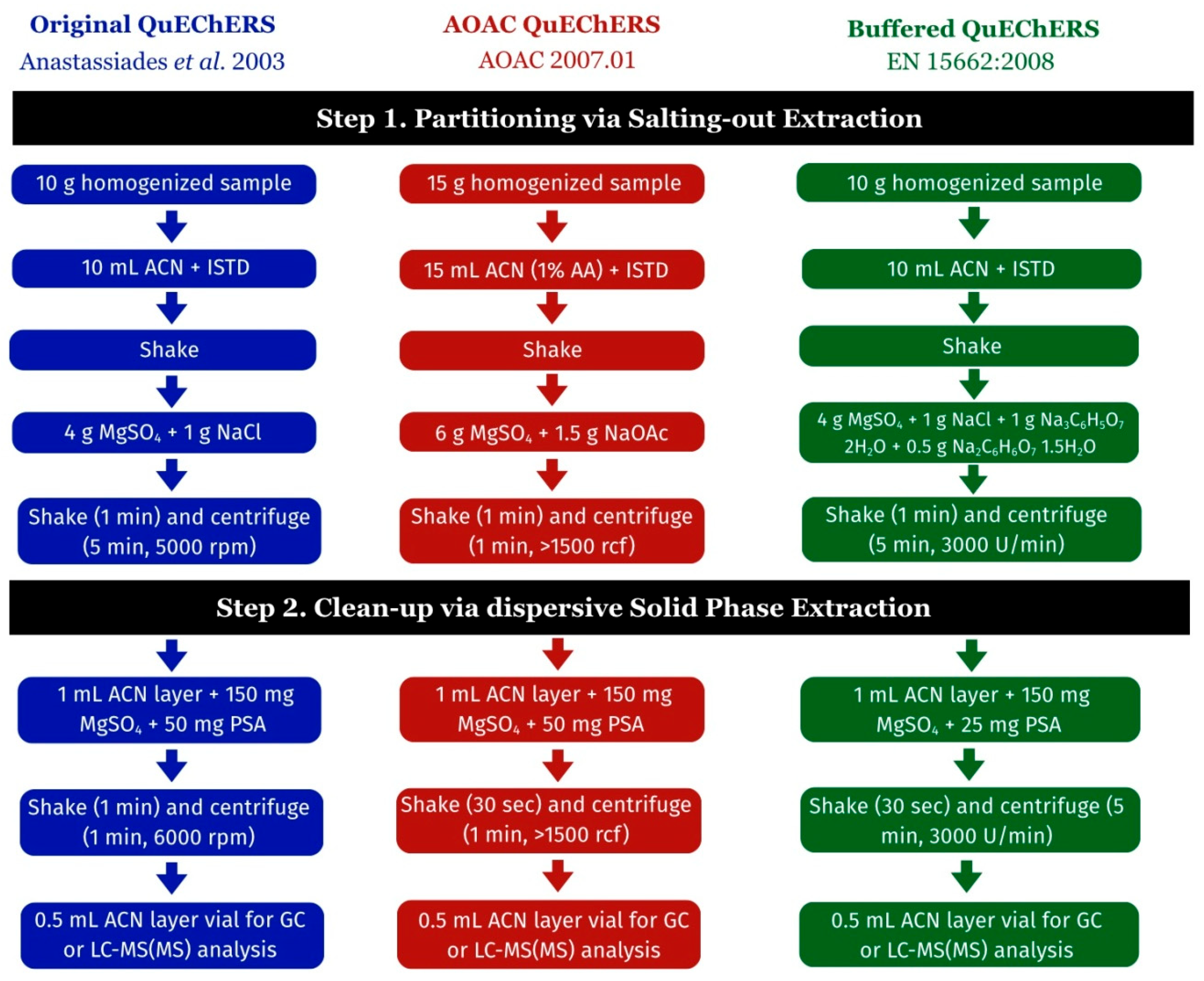
This simple procedure involves only a few steps: sample homogenization, partitioning via salting-out extraction, and dispersive solid-phase extraction (d-SPE) clean-up prior to analysis. Its straightforward design, minimal bench space and equipment prerequisites, and compatibility with advanced chromatographic techniques make QuEChERS an appealing tool for both experienced analysts and beginners in the field [3]. Additionally, its versatility across numerous analytes and matrices has led to the development of other (buffered) variations in QuEChERS, including the Standard Method EN 15662:2008 of the European Committee for Standardization [4] and the Official Method 2007.01 of the Association of Official Analytical Chemists, AOAC International [5]. Figure 1 illustrates a schematic of the three primary QuEChERS methods.
Despite these advantages, the conventional QuEChERS approach has several limitations. Specifically, although QuEChERS eliminates the majority of matrix interferences from the sample, residual matrix components may still be present, particularly in complex matrices, thus complicating the analysis and compromising accuracy. Moreover, QuEChERS generates a large amount of solvent and sorbent waste, which, once in contact with hazardous analytes, must be treated as contaminated material and therefore discarded [6]. Another limitation of conventional QuEChERS is the quantity of matrix needed (10–15 g); it may not be the ideal choice for scarce or limited in availability samples, such as biological samples. At the same time, QuEChERS does not account for the pre-concentration of the final extract and leads to lower enrichment factors compared to traditional techniques such as SPE or ultrasound-assisted extraction [3,6]. These disadvantages have led to the miniaturization of this technique, giving rise to micro-QuEChERS (μ-QuEChERS) methods that retain the major strengths of the original approach while simultaneously addressing its challenges.
Miniaturization of QuEChERS offers numerous advantages. Minimizing the sample and reagent requirements results in significant reductions in waste generation, lower costs, and faster extractions. In many studies, μ-QuEChERS has been proven to lower the environmental footprint, thus ensuring greener extraction protocols and alignment with the principles of green analytical chemistry (GAC) principles [7,8]. Miniaturization enhances sensitivity by minimizing matrix effects (due to less sample material) and enables compatibility with modern, high-throughput workflows, while also facilitating analysis even when the sample quantity is limited and analytes are at trace levels.
However,, the miniaturized nature of the method often results in analytical challenges, such as low pre-concentration factors, which can be a critical issue in trace analysis of complex matrices, such as environmental and biological samples. Moreover, the performance of the approach is highly dependent on the physico-chemical properties of the analytes, with non-polar and planar compounds often exhibiting lower recoveries. Additionally, matrix effects, for instance, lipids in dairy products, pigments in herbs, and proteins in biological fluids, may significantly hamper process efficiency and careful optimization of clean-up steps is required. The need for protocol adaptation based on analyte and matrix characteristics further complicates standardization efforts and may limit broad applicability.
Careful optimization of QuEChERS ensures not only efficient miniaturization, but also acceptable analytical performance when applied to routine monitoring. The successful application of this method to real samples further confirms its effectiveness. These benefits highlight μ-QuEChERS as a reliable, versatile, and sustainable sample preparation method with significant potential for future applications in multiple research domains.
To the best of our knowledge, this study is the first to provide a comprehensive analysis of the applications of miniaturized QuEChERS approaches across food, environmental, and biological samples. Nevertheless, some previous reviews have addressed aspects of QuEChERS miniaturization [2,6], mostly as a subset of QuEChERS adaptations or within the broader context of green sample preparation techniques, underscoring the need for a specialized and systematic approach.
This review aims to provide an overview of the μ-QuEChERS approach over the past five years (2020–2025). It thoroughly examined its advancements, variations, advantages over traditional methods, and contributions to the field of green analytical chemistry. By emphasizing both success and ongoing challenges, this review seeks to encourage further development and adoption of miniaturized sample preparation techniques in line with the evolving needs of food, environmental, and biological analysis.

2. Literature Survey

A structured literature search was conducted in September 2025 using the Scopus database to gain general insight into the current research trends regarding the application of μ-QuEChERS approaches in food, environmental, and biological analyses. Scopus was selected as the primary database owing to its broad and curated coverage of peer-reviewed publications in analytical chemistry, and especially environmental and food science, with consistent indexing of titles, abstracts, and keywords, which is essential for reproducible bibliometric analysis. Furthermore, only full research articles were included, whereas review articles, conference papers, book chapters, editorials, notes, and data papers were excluded to emphasize the papers providing complete methodological descriptions, validation data, and performance characteristics. In this sense, the literature was retrieved by conducting a search using specific keywords, such as “Miniaturiz* QuEChERS” OR “μ-QuEChERS” OR “μQuEChERS” OR “micro QuEChERS” OR “microQuEChERS.” Only research publications from the past five years (2020–2025) were analyzed, leading to the identification of 55 articles (titles, abstracts, and/or keywords) across the three matrix categories. Particular emphasis was placed on covering an extensive range of matrices and analytes extracted using this method. A targeted cross-check using complementary databases (Web of Science and PubMed) with the same search terms did not identify additional eligible research articles for 2020–2025 that were not already captured.
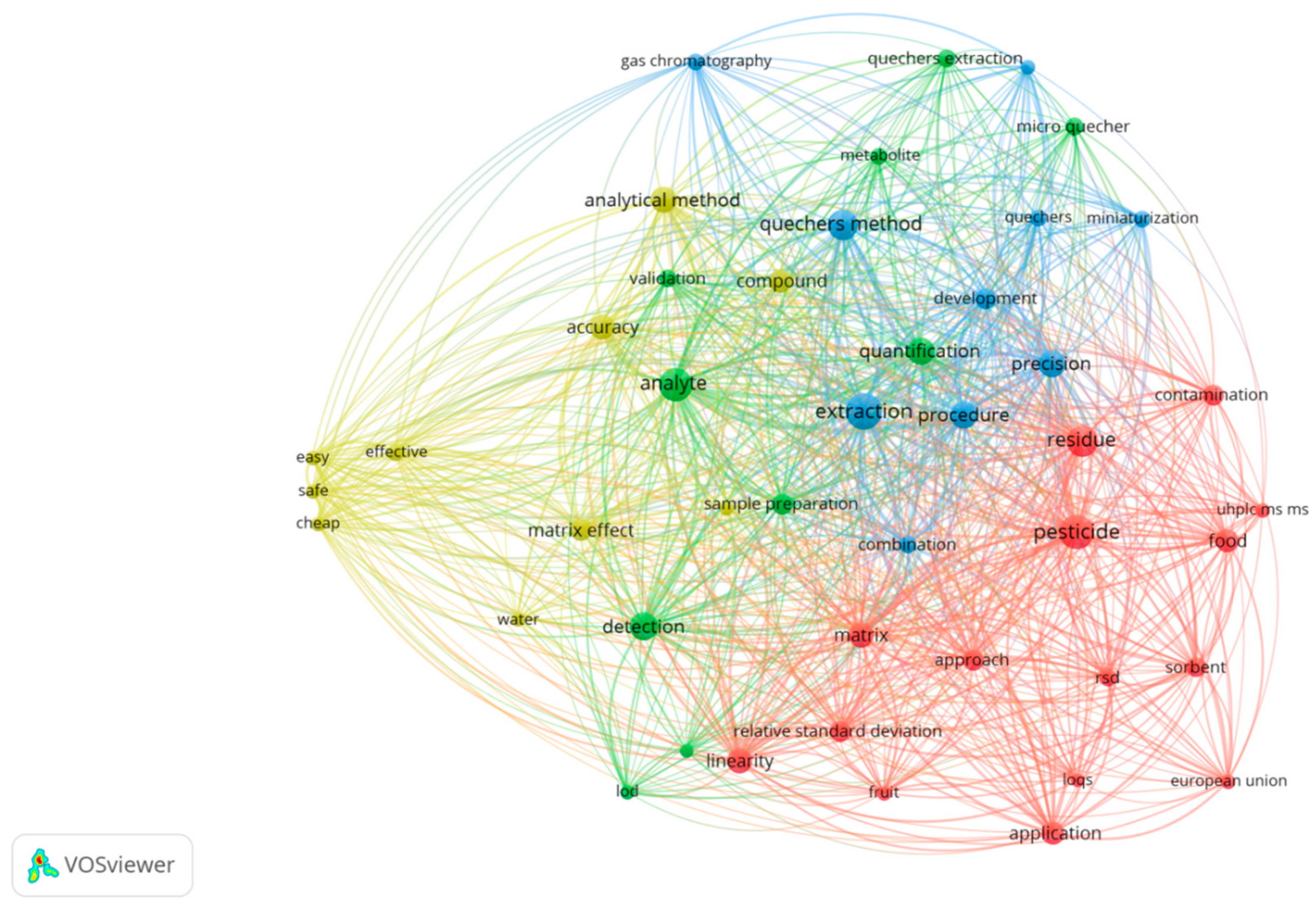
Finally, the search results, including citation information, bibliographic details, abstracts, and keywords, were exported in the RIS format for conducting bibliometric analysis using VOSviewer software (version 1.6.20), developed by Van Eck and Waltman [9]. Figure 2 presents a network diagram of the keyword co-occurrence analysis. The methodological details of the search parameters applied to the VOSviewer are presented in Table S1.
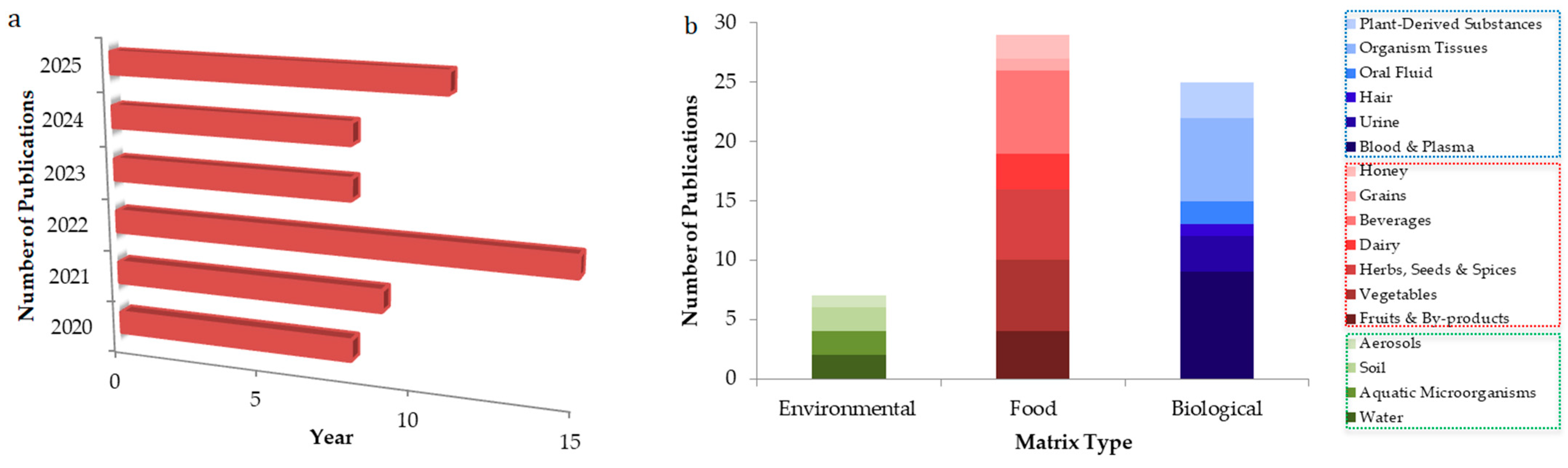
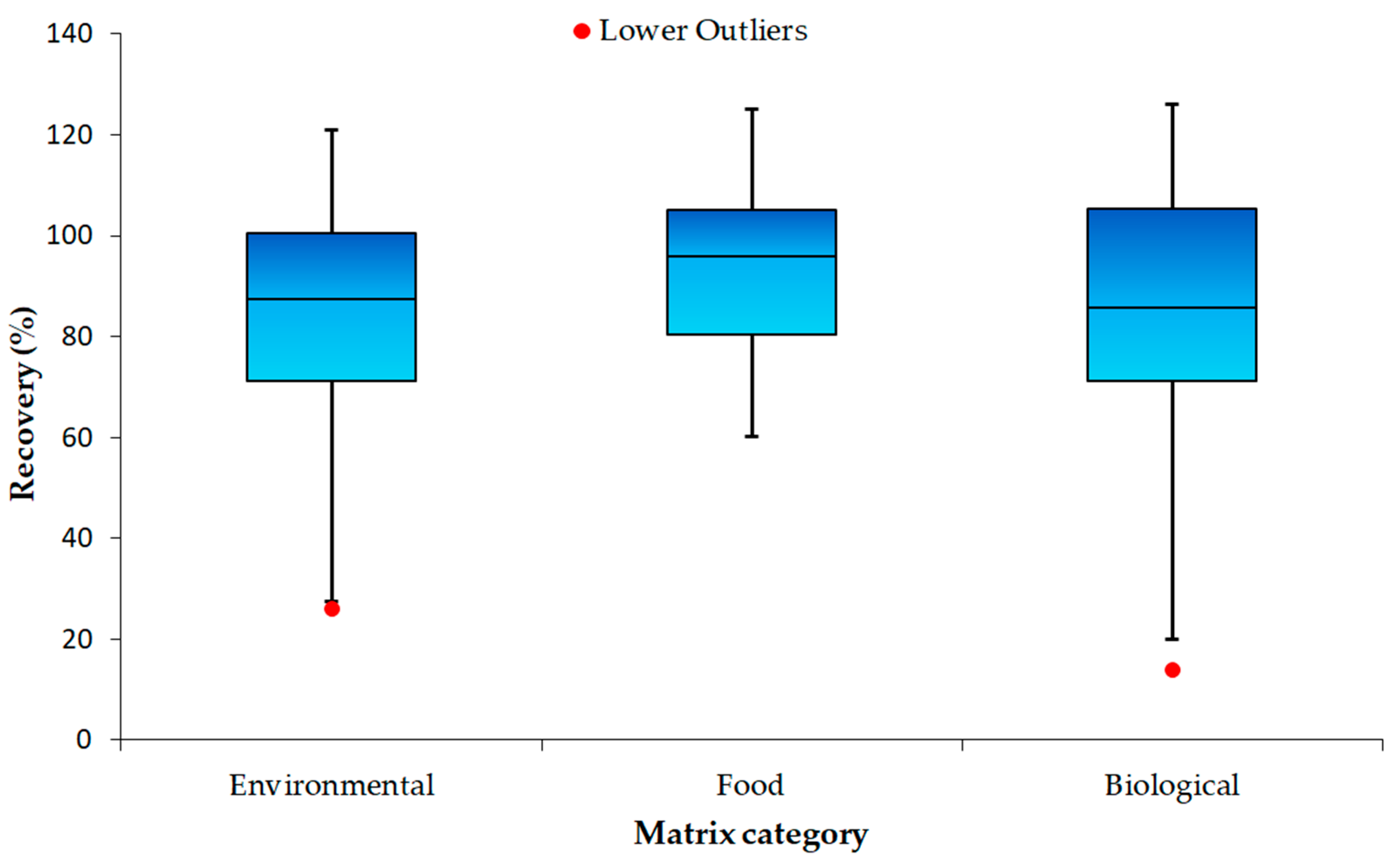
An overview of the different recoveries and publication trends regarding environmental, food, and biological articles that have employed μ-QuEChERS is shown in Figure 3 and Figure 4. Recovery distributions across environmental, food, and biological samples were compared using the Kruskal–Wallis test, which revealed no statistically significant differences (H = −0.26764, p > 0.05, Table S2).

3. Application of μ-QuEChERS in Food Samples

The QuEChERS method is widely applied in food analysis, primarily to safeguard human health by detecting harmful substances with less focus on bioactive compounds. Driven by consumer interest and food industry growth, miniaturized QuEChERS approaches have been developed for rapid and efficient residue screening across diverse food matrices. Table 1 summarizes the key trends, while the detailed extraction parameters and performance data for all studies are provided in Supplementary Table S3.
In the last five years, the majority of μ-QuEChERS applications have been used to determine pesticide residues in various commodities [8,10,11,12,13,14,15,16,17,18,19]. Following this group of organic contaminants are alkaloids [20,21,22,23], mycotoxins [24,25], antibiotics [26], anticonvulsants and antipsychotics [27], photoinitiators [28], amides [29], bisphenols [30], and polycyclic aromatic hydrocarbons (PAHs) [31]. Additionally, certain bioactive compounds, such as phenolic acids and flavonoids, have been included in food analysis using μ-QuEChERS approaches [32,33,34,35,36].

3.1. Fruits, Vegetables, and Derived Products

Micro-QuEChERS approaches have demonstrated strong analytical performance for fruits and vegetables because of their high water content, which facilitates efficient extraction [8,13,16,17,19,22,34]. González-Gómez et al. [22] reported high recoveries (90–100%) and low limits of detection (LODs: 0.6–0.7 ng/g) for the quantification of tropane alkaloids in leafy vegetables using high-pressure liquid chromatography-tandem mass spectrometry (HPLC-MS/MS). The methodology applied reduced reagent requirements 10-fold compared with conventional QuEChERS. This highlights that μ-QuEChERS is a suitable, robust, green, state-of-the-art microextraction technique for targeted pesticide monitoring.
In terms of greenness and sustainability, several steps have been taken not only to reduce solvent and sample consumption but also to introduce new materials as eco-friendly alternatives. In this manner, Sereshti et al. [13] synthesized new polymeric deep eutectic solvent (DES)-based fibrous electrospun nanofibers, which when applied in μ-QuEChERS (5 mg) for multiclass pesticide analysis in edible vegetables, reduced the environmental impact, cost, and time. Yamasaki et al. [8] emphasized greener workflows by eliminating cryogenic milling and demonstrated sufficient homogeneity with ambient comminution. Simultaneously, Guo et al. [19] developed a novel μ-QuEChERS-dissolvable layered double hydroxide (LDH) micro-solid phase extraction (μ-SPE) method coupled with HPLC-MS/MS for the detection of sulfonylurea herbicides in wolfberries, which achieved high sensitivity (LODs: 0.01–0.5 ng/g) and good recoveries (80–97%).

3.2. Herbs and Seeds

Herbs, spices, and seeds are matrices that are nutritionally rich and analytically challenging, owing to their high polyphenol content. In addition to pesticide and toxin monitoring [15,20,21], various studies have incorporated μ-QuEChERS protocols to evaluate bioactive compounds such as polyphenols and stilbenes [33,35,36]. Izcara et al. [33] developed high-throughput μ-QuEChERS coupled with ultra-high-performance liquid chromatography with a photodiode array detector (UHPLC-PDA) approach to determine 12 bioactive secondary metabolites (BASMs) in edible flowers. The proposed methodology allowed for smaller amounts of sample (0.5 g) and chemicals (2 mL of solvent, 0.575 g of salts), achieved satisfactory analytical performance (recovery: 76–118%, LODs: 0.001–0.220 mg/L), and met the GAC principles. Extending this approach to other foodstuffs [35,36] highlights these commodities as valuable sources of bioactive compounds with potent antioxidant and anti-inflammatory properties.
Importantly, to improve sustainability, novel sorbents (e.g., mesostructured silica, 25 mg) have been employed for the cleanup of pyrrolizidine alkaloids in aromatic herbs. The proposed method by Izcara et al. [21] reached recoveries of 73–105% and LODs of 0.1–7.5 μg/kg, emphasizing this technology as a promising alternative for sample preparation. These findings illustrate the adaptability of this method for both food safety monitoring and nutritional quality assessment.

3.3. Diary, Honey, and Grains

Among the diverse foods examined using μ-QuEChERS, dairy, honey, and grains stand out because of their nutritional value, widespread consumption, and challenging matrices (lipids, proteins, and sugars) that can pose analytical challenges. Despite these limitations, μ-QuEChERS has demonstrated strong versatility in this context, providing accurate and sensitive monitoring of antibiotics in bovine milk [26], anticonvulsants and antipsychotics in human breast milk [27], and amides in infant formulas [29].
Their performance can be further improved by simple additives (e.g., Na2EDTA in milk [26]) and sustainable clean-up alternatives, such as rice husk bioadsorbents [27], advanced sorbents, such as zirconium dioxide and C18-based sorbents (Z-Sep+) [18,29], and polymeric DES-based fibrous electrospun nanofibers [12]. These unique materials enhance sensitivity and accuracy but also reduce environmental footprint, since they utilize only 0.3–0.5 g of sample and less than 0.8 g of sorbents, therefore delivering substantial reagent savings compared to conventional QuEChERS. Nevertheless, challenging matrices, such as honey and infant formulas, often require additional clean-up (two-step dSPE and derivatization) or hybrid workflows (μ-QuEChERS/dispersive liquid–liquid microextraction, DLLME) [29,30]. These modifications improve sample cleanup and performance; however, they increase the time and labor required. Overall, μ-QuEChERS demonstrated robustness for these matrices, although broader inter-laboratory validation is required to ensure reproducibility and operational greenness.
Table 1. Summary of the recent literature (2020–2025) reporting on the application of miniaturized QuEChERS approaches in food samples.
Sample (Amount)AnalytesExtraction SolventsAnalytical TechniqueRecovery (%)Ref.
Grape pomace (0.5 g)Phenolic Compounds, Anthocyanins1 mL EA, 1 mL ACN (0.1%, v/v, FA)UHPLC-PDA81–116[32]
Leafy vegetables (0.1 g)Tropane Alkaloids, Atropine, Scopolamine1 mL ACN, 0.5 mL H2OLC-(QqQ)-MS/MS 90–100[22]
Potatoes (0.1 g)Chlorpropham1 mL ACNUHPLC-PDA94.5–125[11]
Edible vegetables
(0.5 g)
10 Pesticides1 mL ACN (1%, v/v, AA)GC–MS75–105[13]
Red peppers (1 g)Phenolic acids, Flavonoids1 mL ACN (1%, v/v, AA)LC-(QqQ)-MS/MS-[34]
Fruit by-product extracts (0.1 g)105 Pesticides1 mL ACNLC-(QTrap)-MS/MS 90–107[16]
Spinach, orange, red grape (0.5 g)12 Pesticides0.5 mL ACN (1%, v/v, AA)LC-(QqQ)-MS/MS 68–102[8]
Lettuce (0.5 g)Chlorpyrifos1 mL EAGC-MS/MS94.3–96.8[17]
Wolfberry (1 g)7 Sulfonylurea Herbicides5 mL ACN, 2 mL H2OLC-(QqQ)-MS/MS 80.1–97.1[19]
Oregano (0.2 g)21 Pyrrolizidine Alkaloids1 mL H2O, 1 mL ACNLC-(IT)-MS/MS 77–96[20]
Saffron (0.1 g)88 Pesticides1 mL ACN (1%, v/v, AA), 1 mL H2OLC-(QqQ)-MS/MS 70–107[15]
Edible flowers (0.5 g)12 BASMs1 mL ACN, 1 mL EA (0.1%, v/v, FA)UHPLC-PDA76–118[33]
Herbs (0.2 g)21 Pyrrolizidine Alkaloids1 mL H2O, 1 mL ACNUHPLC-(IT)-MS/MS73–105[21]
Passion fruit seeds (0.625 g)2 Stilbenes (piceatannol, resveratrol)1.875 mL H2O, 2.5 mL ACN (1%, v/v, AA)UHPLC-(QqQ)-MS/MS -[35]
Eugenia uniflora L. (0.5 g)6 Polyphenols1 mL ACN, 1 mL EA (0.1%, v/v, FA)UHPLC-PDA75–117[36]
Bovine Milk (0.5 mL)3 Antibiotics0.5 mL ACN (1%, v/v, AA), 0.5 mL NA2EDTAHPLC98.5–108.6[26]
Honey (1.5 g)9 Bisphenols3 mL ACN, 3 mL H2OLC-(QqQ)-MS/MS 85.9–104.4[30]
Breast milk (0.99 mL)Anticonvulsants, Antipsychotics2 mL ACNLC-DAD-[27]
Beebread (0.3 g)267 Pesticides, Metabolites, PCBs1 mL ACN (5%, v/v, FA), 0.7 mL H2OLC-(QTrap)-MS/MS
GC-MS/MS
98[18]
Infant formula (2 mL)Acetamide, Acrylamide, Glycidamide2 mL ACN, 0.08 mL chloroformGC–(Q)-MS 91.0–110.1[29]
Cereal flour (0.5 g)16 Pesticides1 mL H2O, 3 mL acetoneGC–(MSD)-MS71–118[12]
Red wine (2 mL)90 Pesticides2 mL ACN (1%, v/v, AA)LC-(QqQ)-MS/MS 70–120[10]
Apple juice (0.1 g)Patulin1 mL ACN (1%, v/v, AA)LC-(QqQ)-MS/MS 92–103[25]
Juice (0.4 mL)16 PIs0.4 mL ACNLC-(QqQ)-MS/MS93.1–110.1[28]
Milk (0.4 mL)0.8 mL ACN66.8–114.6
Ayahuasca beverages (1 mL)Indole Alkaloids1.5 mL ACN (1%, v/v, AA)HPLC-DAD60.2–88.0[23]
Coffee, tea (0.25 g)Ochratoxin-A0.5 mL H2O, 2 mL ACNLC-(QqQ)-MS/MS 84.48–100.59[24]
Tea (0.5 g)Pesticides1.5 H2O, 2.5 mL of ChCl–PEG (1:4) DESGC-(MSD)-MS70.2–105.2[14]
Coffee, Tea (0.2 g)15 PAHs1 mL ACN, 1 mL H2OGC–(MSD)-MS90–103[31]

3.4. Beverages

Beverages represent an ideal application field for μ-QuEChERS because their homogeneous nature facilitates small-volume sampling and efficient extraction for high-throughput routine monitoring, with reduced matrix interference. Recent examples include wine [10], juice [25,28], coffee, and tea [14,24,31]. Across these commodities, researchers have achieved impressive sensitivity and accuracy, as demonstrated by Chen et al. [28], who analyzed photoinitiators in juices and milk using μ-QuEChERS and ultra-performance liquid chromatography-tandem mass spectrometry (UPLC-MS/MS). The downsized extraction involved the extraction of 0.4 mL of sample with acetonitrile (ACN: 0.4–0.8 mL) and partitioning salts (MgSO4, NaCl), with a specific clean-up step for milk samples using an Oasis PRiME HLB cartridge. The use of unispray (USI), a novel atmospheric-pressure ionization source, improves signal intensity, sensitivity, recovery, and signal-to-noise ratio, as highlighted in other studies [37]. With high recoveries (93.1–110.1% for juice, 66.8–114.6% for milk) and the lowest reported LODs (0.001–2.18 ng/mL) among all examined food studies, the suggested methodology demonstrated exceptional analytical performance [28].
Environmental friendliness and sustainability have also been emphasized, as in the case of Soltani and Sereshti [17], who developed a modified DES-based μ-QuEChERS with three-dimensional graphene aerogel nanocomposite (graphene@Fe3O4). In that study, ChC–PEG (choline chloride–polyethylene glycol) DES as the extraction solvent demonstrated the best extraction capacity, whereas ChCl–urea DES as the clean-up sorbent enhanced dispersibility and selectivity. Once optimized, the method was applied to the analysis of pesticides in tea samples using gas chromatography-mass spectrometry (GC-MS), obtaining good results in terms of recovery (70–105%) and sensitivity (limits of quantification, LOQs: 0.70–1.90 μg/kg).

3.5. Common Solvents, Sorbents, and Analytical Techniques in Food Analysis

ACN remains the most widely used extraction solvent in food analysis, either alone [8,10,11,13,16,23,25,27,28,34] or in mixtures with water [15,18,19,20,21,22,24,30,31,35], ethyl acetate [32,33,36], acetone [12], or chloroform [29]. It is often acidified with formic acid (FA) [18,32,33,36] or acetic acid (AA) [8,10,13,15,23,25,26,34,35] to improve recovery. Solvent volumes range between 0.4 and 4 mL, although larger portions for mini-QuEChERS have also been reported (6–7 mL) [19,30]. Most analyzed samples range between 0.1 and 1.5 g (0.4–2 mL for liquid matrices), which represents an 85–90% reduction compared to conventional QuEChERS protocols. For beverages, their high polyphenol and acidic profiles necessitate acidified conditions (1% acetic acid) and acetate-buffered salt mixtures (MgSO4:NaOAc, 4:1) to stabilize the pH and enhance partitioning [10,23].
For partitioning, anhydrous MgSO4 is most common, combined with NaCl (4:1) [15,26,27,28,30,31], citrate (4:1:1:0.5) [11,16,20,21,22,25,32,33,36] and acetate (4:1) [8,10,15,23,34,35] buffers, depending on the matrix. For specific cases, Na2SO4 [12] and NH4HCO2 [18] have also been used. Different commercial sorbents have been tested for cleanup. Standard choices include MgSO4 [10,11,15,16,17,18,20,21,22,23,24,27,31,32,33,34,35,36], primary secondary amine (PSA) [10,11,15,16,17,18,19,20,21,22,23,31,32,33,34,35,36], octadecylsilane (C18) [10,11,24,30,31], and graphitized carbon black (GCB) [15,18,19,24,34,35]. More specialized sorbents, such as Z-Sep+ [18,29] and LDH [19] have been introduced for foods high in fat, sugar, and pigments (milk, beebread, and wolfberry, respectively). Furthermore, novel materials, such as fibrous electrospun polymers [12,13], bioabsorbents [27], mesostructured silicas [21], and nanocomposites [17] further enhance selectivity and sustainability.
The instrumentation used for food analysis depends on the analyte and matrix studied. These requirements are very demanding and require coupling of HPLC [19,22,25], UHPLC [10,15,16,20,21,24,30,34,35], and GC [12,13,14,17,18,29,31] with sensitive detection systems, mostly MS/MS and sometimes MS (for GC). The different analyzers include triple quadrupole (QqQ) [8,10,15,19,22,24,25,28,30,34,35], quadrupole ion trap (QTrap) [16,18], single quadrupole (Q) [29], mass selective detectors (MSD) [12,14,31], and ion traps (ITs) [20,21], which are operated in either electrospray (ESI) or electron impact (EI) modes. UHPLC-MS/MS is the most widely adopted technique for multi-residue food contaminant analysis, followed by GC-MS(MS), as it facilitates the simultaneous determination of a wide range of polar and volatile residues (e.g., pesticides). Less sensitive but more accessible techniques, such as (UHP)LC-PDA, have also been applied for targeted analysis [11,23,27,32,33,36], particularly for polyphenols, given their ultraviolet absorbance. These combinations provide a sensitive, selective, and reliable quantification of contaminants and bioactive molecules across food matrices.
Conclusively, μ-QuEChERS favors high water content matrices (fruits, vegetables, and beverages), since water facilitates their efficient extraction and ensures phase separation. However, matrices with high lipid, protein, or pigment content (e.g., dairy, herbs, seeds) pose challenges, often requiring additional clean-up steps or hybrid workflows to achieve satisfactory recovery and sensitivity.

4. Application of μ-QuEChERS in Environmental Samples

While μ-QuEChERS has shown promise for food and biological applications, and has been extensively explored, its application in environmental matrices remains limited compared to conventional approaches. Only a limited number of studies have applied miniaturized QuEChERS workflows to environmental matrices such as water [31,38], environmental solids [24,39], aerosols [40], and aquatic organisms [41,42]. This literature gap is attributed to the fact that μ-QuEChERS typically involves small sample volumes and, therefore, leads to lower pre-concentration factors. Environmental samples require high preconcentrations because of their complex matrices and trace-level analytes, whereas food and biological samples usually contain concentrations that are orders of magnitude higher. For example, the analysis of PAHs in water samples is difficult because of their very low concentrations (ng/mL to pg/mL) [43,44]. More specifically, typical enrichment factors for PAHs in water samples using μ-QuEChERS range from 10 to 50, whereas conventional SPE can achieve factors of 100–1000 [31,40,44]. This limitation is particularly challenging for trace contaminants, which often require higher enrichment to meet regulatory detection limits. This necessitates efficient extraction and cleanup as well as additional enrichment procedures and high-throughput analytical techniques. Furthermore, to compensate for the above-mentioned limitations, recent studies have explored hybrid workflows, such as coupling μ-QuEChERS with dispersive liquid–liquid microextraction (DLLME) [29,30] or solid-phase microextraction (SPME) [17], which can boost enrichment factors to 100–200. Additionally, the use of advanced sorbents [12,13,17,21,27] and automated systems [24] has been investigated to improve sensitivity and throughput, although these approaches are not yet widely adopted.
Nevertheless, recent studies have provided valuable insights into both the potential and current bottlenecks in adapting micro-QuEChERS to complex and heterogeneous environmental matrices. Table 2 summarizes the key trends, while the detailed extraction parameters and performance data for all studies are provided in Supplementary Table S4.
Taken together, these initiatives seek to maintain the analytical performance while achieving broad analyte coverage, lower reagent requirements, greener method profiles, and compatibility with environmental matrices.

4.1. Water, and Aquatic Microorganisms

The aquatic environment is undoubtedly one of the most heavily polluted ecosystems, mostly containing contaminants from agricultural, urban, and industrial waste. These compounds have proven to be very harmful, even at low concentrations, to aquatic habitats and related species, while severely impacting drinking water supply [45]. Therefore, the environmental monitoring of chemicals, such as pesticides and PAHs, is crucial because it serves as an early warning system to protect human health and ecosystems and provides essential data for evaluating pollution reduction measures.
In water analysis, specifically PAH determination, μ-QuEChERS alone is often insufficient, which necessitates its coupling with secondary methods (e.g., DLLME) to compensate for low pre-concentration factors before GC-MS(MS) analysis [31,41]. Additional clean-up steps are essential to remove matrix interferences, improve extract purification and pre-concentration, and consequently meet the validation criteria.
Similar modifications were observed during the pesticide monitoring. García-Cansino et al. [38] compared μ-QuEChERS-dSPE with μ-SPEed for pesticide analysis of wastewater before UPLC-PDA. The μ-SPEed is faster, greener, less laborious, and covers more analytes. Nevertheless, μ-QuEChERS-dSPE is cheaper, more available, and enables the simultaneous determination of pesticides with higher sensitivity. This highlights the importance of tailoring the extraction methods to specific matrices and analytes to achieve optimal results.
Table 2. Summary of the recent literature (2020–2025) reporting on the application of miniaturized QuEChERS approaches in environmental samples.
Sample (Amount)AnalytesExtraction SolventsAnalytical TechniqueRecovery (%)Ref.
River water
(0.2 g)
15 PAHs1 mL ACN, 1 mL H2OGC–(MSD)-MS90–103[31]
Wastewater (0.5 mL)8 Pesticides1 mL of EA, 1 mL ACN (0.1%, v/v FA)LC-PDA66.1–99.9[38]
Gammarus fossarum (0.125 g)40 Micropollutants0.25 mL ACN
(1%, v/v,
FA), 0.25 mL HEX, 0.2 mL H2O
LC-(QqQ)-MS/MS 71–90[42]
Crustacean gammarids (0.2 g dw)5 PAHs2 mL H2O, 2 mL ACNGC–QqQ-MS/MS 72–104[41]
Environmental solidsPharmaceuticals,
Amphiphilic Surfactants
1.25 mL ACNLC-(IT, Q)-MS 26–59[39]
Soil (0.25 g)Ochratoxin-A0.5 mL H2O, 2 mL ACNLC-(QqQ)-MS/MS 84.48–100.59[24]
Powder aerosol
particles (10
mg)
14 PAHs0.4 mL
ACN/DCM
(7:1, v/v)
HPLC-FLD85–121[40]

4.2. Environmental Solids, and Aerosols

Sediments in aquatic ecosystems combine biological, physical, and chemical processes, all of which affect system function. Their diverse compositions make them valuable indicators of water quality and essential components of environmental studies [45]. In soil, μ-QuEChERS often eliminates matrix effects and maintains an acceptable sensitivity. However, the recoveries can vary widely across analyte groups because of the highly heterogeneous nature of the matrix. This is important in multiresidue analysis because it highlights a recurring conflict between extraction efficiency and broad analyte coverage. Despite these limitations, μ-QuEChERS exhibits significant potential for scale-up, as comparable recoveries for amphiphilic analytes indicate that its applicability can be significantly extended by optimization [39].
Jing et al. [40] optimized μ-QuEChERS for PAH determination in cyclone-collected aerosol particles using an I-optimal design and a 2-factor interaction [2FI] model. The optimal solvent and salt combinations (can–dichloromethane, 7:1; Na2SO3:NaCl, 1:1; Na2SO3:PSA, 2:1) provided extraction efficiencies comparable to Soxhlet extraction while reducing hazardous solvent use, time, and cost by 97%. The use of ACN–dichloromethane improved PAH extraction through improved solubilization of less polar analytes, whereas the cyclone-collected powder format minimized filter-related losses (adsorption and volatilization) and simplified handling. These results highlight the high-throughput analytical capability, adaptability, and versatility of μ-QuEChERS.
Following green chemistry principles, automation of sample preparation represents a major breakthrough [3]. Prakasham et al. [24] proposed a novel in-syringe micro-QuEChERS-based fast mycotoxin extraction (FaMEx) technique prior to UHPLC-MS/MS analysis of ochratoxin-A in soil. This approach involved an automated plunger device with a dual-syringe setup for semi-automated extraction and clean-up. The proposed FaMEx method was simple, cost- and time-efficient, demonstrated excellent results (recoveries: 84.48–100.59%, LODs: 0.29 ng/g), and was applied to environmental samples for mycotoxin analysis.

4.3. Common Solvents, Sorbents, and Analytical Techniques in Environmental Analysis

Among the extraction solvents used in environmental analysis, ACN prevails, either alone [39] or in mixtures with water [24,31,41], hexane [42], dichloromethane [40], and ethyl acetate [38], and is often acidified with formic acid [38,42]. Acidic pH conditions enhance analyte dissolution in the extraction phase and improve recovery [46], whereas matrix hydration facilitates solvent access to the sample [3]. The solvent and sample amounts for μ-QuEChERS ranged between 0.4 and 4 mL and 0.125–0.5 g (or mL), respectively, which are significantly less than those reported in standard QuEChERS protocols (2.5- to 25-fold less solvent and 20- to 80-fold less sample). Nonetheless, even lower amounts of atmospheric aerosol particles (10 mg) have been tested for monitoring air pollution [40].
The salts commonly used for extraction include anhydrous MgSO4 for phase separation and drying [31,38,39,41,42], NaCl for salting-out [31,38,39,40,41,42], and citrate buffer [38,42]. Other salts such as Na2SO4 [40], NH4OAc [42], and NaOAc [39] have also been utilized. In terms of clean-up sorbents, popular options include MgSO4 [24,31,38,39,41,42], Na2SO4 [40], PSA [31,38,39,40,42], C18 [24,31,41], and GCB [24,42], which help reduce matrix interferences. Additionally, extraction syringes and SPE cartridges [24] have been used.
Instrumentation for environmental sample analysis involves various chromatographic techniques including GC [31,41], HPLC [40,42], LC [39], UPLC [38], and UHPLC [24], coupled with different detectors. GC is usually paired with QqQ-MS/MS with EI ionization [31,41]. HPLC and UHPLC are mainly linked to QqQ-MS/MS in both positive and negative ESI modes [24,42], whereas LC interfaces with IT and Q detectors using ESI+ [39]. Additionally, conventional systems such as photodiode arrays (PDA) [38] and fluorescence (FLD) detectors [5] have been applied. These systems enable sensitive and selective determination of analytes in environmental matrices.
Overall, it is evident that μ-QuEChERS is less effective for environmental samples, particularly water and soil, due to the low concentrations and strong matrix effects. The limited pre-concentration factors of μ-QuEChERS often impose coupling with secondary enrichment techniques (e.g., DLLME) to achieve the required sensitivity. Despite these challenges, μ-QuEChERS has shown promise for air and aerosol analysis, where miniaturization and rapid processing are advantageous.

5. Application of μ-QuEChERS in Biological Samples

In recent years, the use of miniaturized QuEChERS approaches in clinical settings has been steadily expanding, whereas conventional sample preparation techniques have been losing ground, as they remain time-consuming, labor-intensive, and dependent on numerous steps prior to analysis. In addition to providing simpler, faster, and streamlined workflows, μ-QuEChERS allows the simultaneous determination of a wide range of analytes, including drugs, pharmaceuticals, pesticides, neurotransmitters, and environmental pollutants. Related studies on micro-QuEChERS methods for the extraction of various compounds from biological matrices are summarized in Table 3, while Table S5 presents the detailed extraction parameters and performance data.
Biological samples included bodily fluids (blood, plasma, urine, and saliva), DNA (hair, nails, and skin cells), tissues (muscle, liver, and adipose), and plant-derived substances (pollen and guttation fluid). These matrices are typically complex because of their high levels of endogenous compounds, such as proteins, lipids, salts, and carbohydrates, all of which can cause significant matrix effects and interfere with the target analytes. Moreover, substantial losses can occur due to analyte degradation, thereby increasing the preparation time. The invasive nature of sample withdrawal, particularly for blood, poses notable challenges [47].
Table 3. Summary of the recent literature (2020–2025) reporting on the application of miniaturized QuEChERS approaches in biological samples.
Sample (Amount)AnalytesExtraction SolventsAnalytical TechniqueRecovery (%)Ref.
Whole animal blood (0.25 mL)360 Environmental Pollutants0.5 mL ACN (1%, v/v, FA)UHPLC–MS/MS GC–MS/MS 76.6–119.5[48]
Postmortem blood (0.1 mL)28 Psychotropic Drugs0.3 mL ACN, 0.2 mL H2OLC–(QqQ)-MS/MS 85.9–116[49]
Blood plasma Acid, Base, Neutral, Amphiphilic Species1.25 mL ACNLC-(Q)-MS65.4–85.8[39]
Whole blood (0.2 mL)Hexahydrocannabinol Enantiomers0.5 mL ACNGC-MS/MS 81.7–110[50]
Oral fluid (0.2 mL)85–107
Urine (0.2 mL)98.2–116.9
Whole blood (0.25 mL)15 Psychotropic Drugs, Metabolites0.5 mL ACNUPLC–(QqQ)-MS/MS71.9–87.7[51]
Human blood serum (0.2 mL)85 POPs1 mL EA–hexane–acetone, 1:1:2GC–(QqQ)-MS/MS 49.6–77.1[52]
Whole blood (1 mL)10 Neonicotinoid Insecticides, 1 Metabolite2 mL ACNLC-Q Orbitrap HRMS78.3–119.9[53]
Postmortem blood (0.25 mL)20 Antidepressants0.5 mL ACNLC-(QqQ)-MS/MS81.8–96.6[54]
Human plasma (0.2 mL)9 Tyrosine Kinase Inhibitors1.5 mL ACNLC–(QqQ)-MS/MS 47.85–95.01[55]
Urine (0.4 mL)Methamphetamine0.4 mL ACNGC-MS 100.5 ± 2.33[56]
Oral fluid (0.1 mL)Methylphenidate, Analog Ethylphenidate, Ritalinic acid0.3 mL ACNLC-(QqQ)-MS/MS83.9–97.4[57]
Hair (1 mL)Ketamine,
Norketamine
1 mL ACN (5%, v/v, FA)GC-(QqQ)-MS/MS 47–76 (KET)
14–27 (NKET)
[58]
Urine (0.5 mL)15 Pesticide Metabolites100 µL HCl, 0.5 mL ACNLC-(QTrap)-MS/MS 80–120[59]
Fish muscle tissue (1 g)24 Pesticides1 mL ACNLC-(QqQ)-MS 70–120[7]
Bat muscle tissue (0.25 g)48 Pesticides1.4 mL ACN, 0.2 mL hexaneGC-MS35.3–97.6[60]
Bat liver tissue (0.1 g)209 Pesticides, POPs0.1 mL H2O, 0.19 mL ACN (1%, v/v, AA)GC-(QqQ)-MS/MS 34.0–116.3[61]
Anuran liver tissue (0.5 g)8 Pesticides1.5 mL ACNHPLC-DAD
LC-(QqQ)-MS/MS
91–110[62]
Mouse brain (25 μL)Neurotransmitters450 μL borate buffer (50 mM, pH = 10), 300 μL DNS in ACN (10 mM), 100 μL FA (10%)LC-MS/MS 84.2–110.0[63]
Mouse adipose tissue (0.2 mL)Phenolic Compounds (raspberry ketone-related)0.6 mL ACN (4%, v/v, FA)UHPLC-QqQ-MS/MS 73–105 (extraction) 71–96 (EMR clean-up)[64]
Cetacean blubber (50 mg)7 Phthalates1 mL ACNGC-(Q)-MS40–100[65]
Maize guttation fluid (1 g)140 Insecticides1 mL ACN (1%, v/v, FA)LC-(QTrap)-MS/MS48–126[66]
Orange pollen (0.1 g)6 Pesticides0.5 mL H2O, 1 mL ACNUPLC–(QqQ)-MS/MS 81–115[67]
Africanized honey bees (0.3 g)Thiamethoxam, Imidacloprid5 mL ACN (1%, v/v, AA)UPLC-(QqQ)-MS/MS64.5–99.7[68]

5.1. Blood, and Plasma

Miniaturized QuEChERS workflows in blood analysis are very advantageous, since they dramatically reduce blood volume requirements (0.1–0.25 mL), thus minimizing the invasive nature of blood sampling and enabling analysis when sample availability is limited. Representative applications in blood include multiresidue biomonitoring [48,52], focused drug panels [49,50,51,54], clinical pharmacokinetics [39,55], and targeted pesticide analysis [53].
In these studies, μ-QuEChERS workflows were proven to be versatile, allowing simultaneous screening of a wide range of analytes. Rial-Berriel et al. [48] screened 360 persistent organic pollutants (POPs) in wildlife blood, whereas Lee et al. [52] quantified 85 POPs in human blood serum using LC-MS/MS and GC-MS/MS. The integration of μ-QuEChERS with several analytical techniques is vital for multiclass analysis to account for diverse analytes.
To illustrate the practical benefits of μ-QuEChERS in blood analysis, Rodrigues et al. [49] developed a micro-QuEChERS/LC-MS/MS method for the analysis of 28 psychotropic drugs in post-mortem blood. Their approach reduced the sample volume to 0.1 mL, run time to just 8.5 min, and achieved excellent recoveries (85.9–116%) and low LODs/LOQs (1 ng/mL). Similar results were obtained by Campêlo et al. [54], who optimized the same methodology using the design of experiments (DoE) regarding QuEChERS reagent ratios and applied it to the screening of 20 antidepressants in post-mortem blood samples. The authors found that ACN (0.5 mL) as the solvent, NaOAc:MgSO4 (100 mg, 1:4) as the partitioning salt, and PSA:MgSO4 (175 mg, 1:6) as the clean-up salt provided the most efficient extraction among the tested combinations. These satisfactory analytical parameters highlight μ-QuEChERS as an interesting alternative for forensic laboratory routine.

5.2. Urine, Hair, and Oral Fluid

In clinical and forensic toxicology arrays, bodily fluids, such as urine and oral fluid, as well as other types of DNA samples, such as hair, are preferred matrices for the detection and quantification of pharmaceutical substances [50,56,57,58,59], because they allow for non-invasive methods of sample collection. However, in some cases, the complexity of the sample requires its combination with other sample preparation steps such as enzymatic deconjugation or the application of additional extraction techniques [50,59]. Fišerová et al. [59] highlighted the importance of establishing a three-step procedure that combines enzyme deconjugation, SPE, and QuEChERS to screen 15 pesticides in human urine. After unsatisfactory recovery rates from deconjugation (β-glucuronidase)/SPE (Oasis HLB cartridges) and μ-QuEChERS (0–6% and 57–105%, respectively), the authors decided to merge all three methods. This approach, combined with LC-MS/MS, proved to be sensitive, selective, robust, and reproducible, achieving recovery rates between 71% and 118% and LODs between 0.02 and 0.87 ng/mL. Similarly, Di Trana et al. [50] used enzyme hydrolysis (β-glucuronidase) and derivatization (N, O-bis (trimethylsilyl)trifluoroacetamide,BSTFA) to analyze hexahydrocannabinol epimers in whole blood, urine, and oral fluid (the latter did not undergo hydrolysis). The μ-QuEChERS/GC-MS/MS procedure exhibited good validation parameters (recovery: 81.7–116.9%, LOQs: 1 ng/mL) in all matrices and was applied to 10 real samples.

5.3. Organism Tissues

Micro-QuEChERS adaptations have been successfully applied to animal tissues, including the brain [63], liver [61,62], muscle [7,60], and adipose [64,65], some of which can act as bioindicators of environmental quality.
In this context, multi-residue pesticide analysis remains prevalent [60,61,62], demonstrating the flexibility of this method. Nevertheless, in some cases, matrix–analyte variability sometimes results in inconsistent outcomes, as reported by Schanzer et al. [61], where 7/55 analytes exhibited recoveries below 70%. The authors linked the reduced peak areas of certain compounds to the use of GCB during dSPE. Nevertheless, the recoveries were sufficient for method validation as they remained above the SANTE 11312/2021 [69] threshold (>30%).
Beyond pesticides, recent innovations have expanded μ-QuEChERS to metabolomic applications. Iwasaki et al. [63] introduced a novel, miniaturized, and tableted QuEChERS approach to determine neurotransmitters in the mouse brain (25 μL). QuEChERS tablets were designed using response surface methodology (RSM) and optimized using design of experiments (DoE). The optimal formulation tablets included a mix of NaCl, MgSO4, corn starch, and talc (0.3 g, 13:52:35:1) and the use of dansyl chloride derivatization (300 μL) of dansyl chloride in ACN), borate buffer (450 μL), 10% formic acid (100 μL) and internal standards (25 μL) prior to LC-MS/MS analysis. The method achieved excellent recoveries (84–110%) and high sensitivities (LODs: 0.006–1000 μM), with the potential to be applied to human samples, thereby avoiding painful sample collection.
Similarly, Yuan et al. [64] developed and validated a micro-QuEChERS/UHPLC-QqQ-MS/MS method with high-throughput enhanced matrix removal (EMR) for raspberry ketone-related phenolic compounds in mouse adipose tissues. The integration of EMR-lipids with the reversed-phase C18 sorbent eliminated 66% of the total lipids and minimized analyte loss during drying and reconstitution. This workflow supported the accurate quantification of 26 compounds in a highly lipophilic matrix, increasing the recovery values from 3 to 105% (prior to EMR clean-up) to 71–96% (post-EMR clean-up). These innovations demonstrate that alterations to the micro-QuEChERS method can extend its application beyond contaminant monitoring in biomedical research.

5.4. Common Solvents, Sorbents, and Analytical Techniques in Biological Analysis

In biological analysis, ACN remains the prevalent extraction solvent for μ-QuEChERS [7,39,48,49,50,51,53,54,55,56,57,58,62,64,65,66,67,68], typically used in volumes between 0.3 and 2 mL, often acidified with formic [48,58,64,66] or acetic acid [61,68]. Combinations of ACN with water [49,61,67], ethyl acetate, acetone, and hexane have also been explored [52,60]. Usually, internal standards (IS) are utilized to correct for accuracy and instrumental errors, as well as buffers for pH stability. Moreover, hydrolysis with beta-glucuronidase (Helix pomatia) for the release of conjugated metabolites (e.g., glucuronides) prior to extraction from urine has also been employed [50,59,64]. Special solvent choices include hydrochloric acid prior to ACN extraction (for urine preservation) [59] and derivatization with BSTFA and dansyl chloride to improve the volatility and sensitivity [50,63].
For partitioning, anhydrous MgSO4 is most commonly employed, generally combined with NaOAc [39,48,49,54,57,61,68] or NaCl [7,50,52,56,59,62,64,67], in ratios of 4:1. Other combinations have also been examined, such as citrate buffers (MgSO4:NaCl–citrate buffers, 4:1:1:0.5) for pesticides [51,66], corn starch and talc (NaCl:MgSO4–corn starch–talc, 13:52:35:1) for neurotransmitters [63], or only NH4HCO2 for phthalates [65]. Conventional sorbents include MgSO4 [7,39,51,54,58,59,60,61,65,67,68], PSA [39,51,52,53,54,58,60,61,62,65,67,68], C18 [7,51,53,59,60,61,62,64,65,67,68], and GCB [61], often combined in specific ratios (e.g., PSA:C18:MgSO4, 1:1:6). Other unusual alternatives have also been utilized, including additional solvent extraction [52,56], EMR-lipid plates [64], and graphene oxide [66], to retain matrix interference compounds. It should be noted that some applications have omitted the clean-up stage [48,49,55,57,63]; in these cases, sample preparation consists only of solvent extraction and salt partitioning.
Regarding the analytical techniques utilized in biological matrices, LC-(QqQ)-MS/MS is the preferred technique for multiclass pharmaceutical analysis, mostly in combination with ESI source in positive mode [7,49,54,57,62,63]. Other commonly used techniques include UPLC [51,55,67,68], UHPLC [48,64], and GC [48,50,52,56,58,60,61,65] usually with MS/MS; diverse analyzers, such as Q [39,65], QqQ [7,49,51,52,54,55,57,58,61,62,64,67,68], QTrap [59,66]; and ion sources, such as ESI [7,39,48,49,51,54,55,57,59,62,63,64,66,67,68], EI [48,50,52,56,58,61], and APCI [52]. Advanced state-of-the-art analytical techniques, such as UPLC-Q-exactive orbitrap high-resolution mass spectrometry (HRMS), have also been integrated with micro-QuEChERS [53], although to a lesser extent. Orbitrap HRMS outperforms low-resolution MS methods by enabling target and non-target screening of numerous analytes in one run and distinguishing isobaric compounds, even in complex matrices [70], all of which make it an emerging choice for various applications.
According to the findings reported herein, μ-QuEChERS is particularly useful for biological samples with limited availability, such as tissues and biofluids. However, the presence of proteins and other interfering compounds can complicate extraction and clean-up, requiring careful optimization of sorbent selection and extraction conditions. The method’s miniaturization is especially beneficial for rare or precious samples.
Overall, μ-QuEChERS is a promising tool for food, environmental, and clinical analyses, with wider applicability, cleaner extracts, and flexibility in terms of sample extraction volumes [39,53].

6. Greenness of the Reported μ-QuEChERS Methods

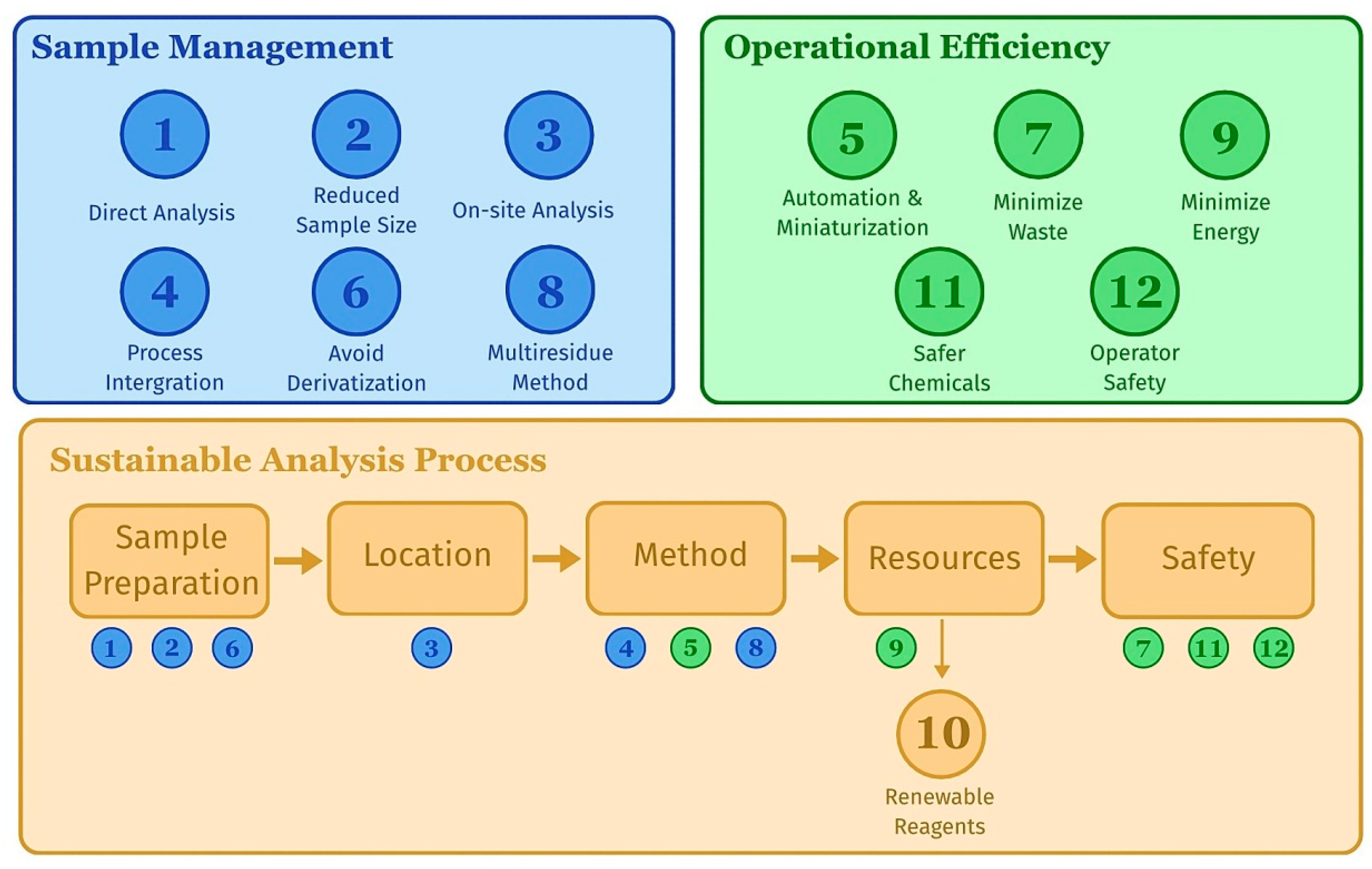
Sustainability has become an increasingly important consideration among analytical chemists, who are continuously making efforts to minimize the negative impacts of their laboratory practices on both the environment and the operator. In this context, the 12 GAC principles have emerged as catalysts for the development of analytical chemistry and have been widely accepted by public, industrial, and academic communities to create more environmentally friendly techniques in various research fields. These 12 principles, proposed by Gałuszka et al. [71], are widely defined under the SIGNIFICANCE acronym (Figure 5). Their main focus axes encompass the minimization of (a) chemical substances, (b) energy consumption, (c) waste generation, and (d) operator risks [71]. These GAC cornerstones have led to the miniaturization of sample pretreatment methods, which achieve a balance between improving environmental friendliness and ensuring acceptable, if not better, analytical performance. Converting from traditional sample preparation techniques, such as LLE and SPE, to miniaturized formats, such as μ-QuEChERS, can reduce sample, solvent, energy, time, cost requirements, waste generation, and potential personnel hazards while providing simplified and improved workflows.
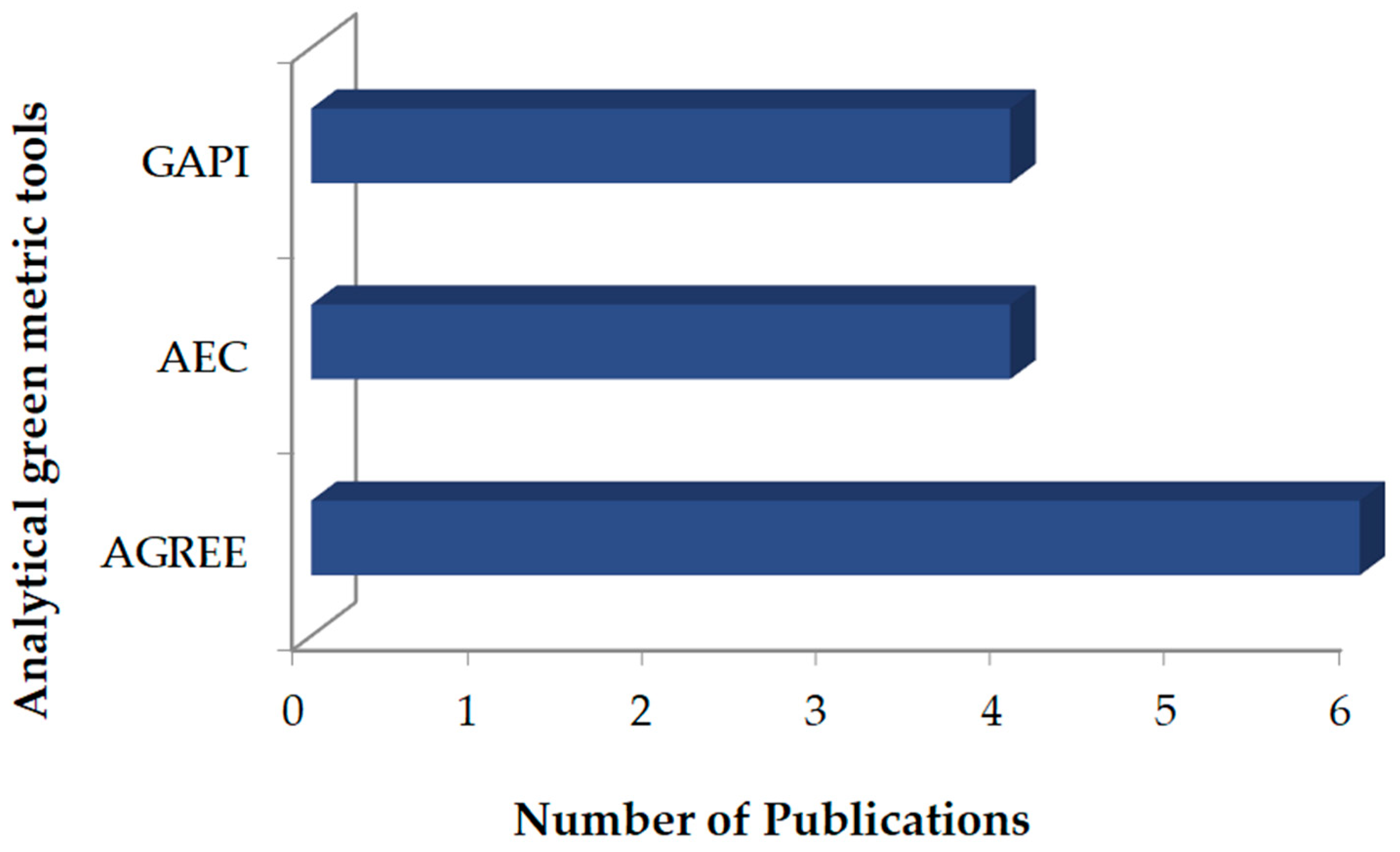
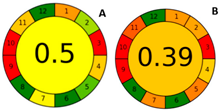
Several metrics have been developed for evaluating the relative greenness of analytical methods, such as the Analytical Eco-Scale [72], Green Analytical Procedure Index (GAPI) [73], and Analytical GREEnness (AGREE) [74]. These tools have been increasingly applied to publications utilizing miniaturized QuEChERS workflows to assess their compliance with GAC principles (Figure 6) [7,8,12,13,14,27,30,31,38,60]. The results indicate that μ-QuEChERS scores are more favorable than those of conventional extraction techniques, confirming their greener profile (Table 4).
It is noteworthy that miniaturization primarily reduces solvent and sample volumes, but genuine “green” methods also consider the environmental impact of solvents, sorbents, and energy use. Achieving an actual “green” performance by applying the μ-QuEChERS requires more than simply reducing solvent and sample volumes. Acetonitrile, while effective, has higher toxicity compared to ethyl acetate and deep eutectic solvents. Waste volumes can be significantly reduced through miniaturization, but the overall environmental impact depends on the choice of solvents and sorbents. The use of less hazardous solvents, such as (natural) deep eutectic solvents, polymeric electrospun fibers, and biosolvents is a promising alternative. However, such an implementation often requires further validation and may not be universally applicable. Moreover, the selection of sorbents (e.g., PSA, GCB, Z-Sep+) can influence both extraction efficiency and environmental impact, as some materials may over-retain certain analytes or introduce new waste streams. Harmonization of green metrics (e.g., AGREE, Eco-Scale) is essential to objectively evaluate the environmental footprint of different protocols and ensure that “green” claims are substantiated by quantitative data. Statistical evaluation of result variability is also crucial to ensure repeatability and reproducibility, which are key components of sustainable analytical practices. Energy consumption should also be considered, with automated systems showing potential for further reduction in energy use.
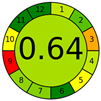
For instance, Yamasaki et al. [8] applied AGREE analysis to three variants of the QuEChERS approach: standard QuEChERS (15 g test portion), mini-QuEChERS (2 g test portion), and micro-QuEChERS (0.5 g test portion). The AGREE scores for each QuEChERS protocol were 0.47, 0.54, and 0.56, respectively. The assessment results are presented in a clock-like pictogram with an overall score ranging from 0 to 1, a red-yellow-green color scale, and the degree of conformity of the evaluated procedure to each of the 12 GAC principles. Considering that the closer the AGREE score is to 1, the greener the methodology is, it can be concluded that miniaturization enhances the sustainability of pesticide residue analysis. Nevertheless, even miniaturization to a sample size of 2 g considerably reduced solvent use and chemical waste, making the process more environmentally friendly. This superiority of μ-QuEChERS in terms of greenness compared to standard QuEChERS has been further corroborated by other studies [7].
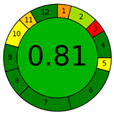
Even better AGREE scores have been reported by studies employing more sustainable materials, such as rice husks (AGREE score: 0.81) [27], DES-based fibrous electrospun nanofibers (AGREE score: 0.64) [13], and diethyl carbonate (AGREE score: 0.61) [31], which indicate their potential as more sustainable alternatives for green chemistry applications.
Examination of the greenness of μ-QuEChERS with other tools, such as the Analytical Eco-Scale, has been comparably satisfactory, achieving scores above 70 [12,14,30,60]. The Analytical Eco-Scale quantifies green analysis by setting an ideal score of 100. Deviations in the analytical procedure, such as reagent use, occupational hazards, energy consumption, and waste generation, incur penalty points that are subtracted from 100 to determine the final score. In this system, scores for green analysis are categorized as follows: above 75 is ‘excellent,’ from 50 to 75 is ‘acceptable,’ and below 50 is ‘inadequate’ [71]. Therefore, these results highlight μ-QuEChERS as a sustainable sample pre-treatment method with excellent green potential.
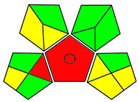
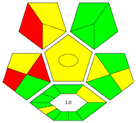
Furthermore, in addition to AGREE and Analytical Eco-Scale tools, the Green Analytical Procedure Index (GAPI) is frequently used to evaluate the green features of analytical methods. It is a semi-quantitative method that provides a comprehensive overview of the entire analytical method, from sample collection to final analysis [73]. It measures 15 parameters across five categories: sample collection, sample preparation, reagents and solvents, instrumentation, and overall method assessment [14]. The results are then depicted as a pictogram consisting of five pentagons, which are color-coded based on environmental impact (green for low, yellow for medium, and red for high). This approach has been recently expanded with the creation of the Complex-GAPI tool, which also evaluates processes prior to analysis and thereby offers a more thorough assessment of greenness [75,76]. In this context, the GAPI pictograms for μ-QuEChERS exhibited a lower estimated environmental impact than those of the previous QuEChERS methods [12,13,14,60]. These results indicate that μ-QuEChERS is an excellent compromise between analytical performance and environmental sustainability, serving as a model for the development of future environmentally responsible sample preparation methods.

7. Conclusions and Future Perspectives

Currently, the demand for multi-residue analysis of complex samples and trace-level analytes has necessitated the development of more effective pretreatment techniques, particularly those that align with the principles of green analytical chemistry. The growing emphasis on sustainability has caused a shift from conventional extraction methods to miniaturized formats, owing to their numerous benefits. In this sense, μ-QuEChERS has gained increasing attention over the years because of its simplicity, speed, cost and time effectiveness, ease of use, and environmentally friendly nature. The development of μ-QuEChERS techniques has made tremendous progress in sample preparation toward efficiency, environmental responsibility, and miniaturization. Because it utilizes 50–99% less solvent and sorbents and 80–99% less sample, it significantly reduces the requirements compared with conventional QuEChERS or similar procedures. Indicatively, SPME offers excellent sensitivity and minimal solvent use but can be less robust for complex matrices. DLLME provides rapid pre-concentration but may require toxic solvents. MSPD is effective for solid samples but can be labor-intensive. μ-SPE offers high-throughput and automation potential but may have limited applicability for certain analytes. Hence, the choice of the optimal technique depends on the specific requirements of the analysis, including sensitivity, matrix complexity, and environmental impact. Overall, μ-QuEChERS stands out for its versatility and rapid workflow, but its limitations in pre-concentration and matrix effects must be carefully considered. Nevertheless, this field remains fragmented, with differences in extraction parameters, clean-up sorbents, and matrix-specific modifications restricting technique comparability and standardization even with the increasing number of research.
This review assessed recent studies (2020–2025) that have applied μ-QuEChERS approaches in food, environmental, and biological fields. In these domains, μ-QuEChERS has demonstrated remarkable results, featuring high accuracy, high sensitivity, and lower environmental footprint. The variability in recoveries observed across different studies can be attributed to several key factors. Physico-chemical properties of analytes, such as polarity, logP, and functional groups, significantly influence extraction efficiency, with non-polar and planar analytes often showing lower recoveries in high-water-content matrices. Water content strongly affects salting-out behavior and phase separation, impacting the efficiency of analyte partitioning. Clean-up sorbent selection, particularly combinations of PSA and GCB, can lead to over-retention of planar or polar analytes, further affecting recovery. Salt composition (citrate vs. acetate buffering) plays a crucial role in pH-dependent extraction efficiency, while matrix complexity, such as lipids in dairy, pigments in herbs, and proteins in biological fluids, can introduce additional variability. According to the reported findings, pesticide residues in high-water-content fruits and vegetables (such as spinach, lettuce, and berries) regularly generate recoveries of 70–110% under AOAC-like extraction conditions, demonstrating that this protocol is among the most repeatable applications of μ-QuEChERS. Using comparable extraction and salt compositions, several studies have shown recoveries of 90–100% and reproducibility below 10% for tropane alkaloids in leafy plants. μ-QuEChERS processes using C18 or Z-Sep+ sorbents have demonstrated good reproducibility for bisphenol analysis in honey and dairy matrices. Lastly, mycotoxin detection in tea and coffee utilizing μ-QuEChERS methods supported by a syringe or vortex has proven reliable, with quick cleanup and consistent sorbent loading reported in multiple experiments. Because they combine robustness, broad applicability, and consistent recovery, these matrix–analyte combinations are priority candidates for early standardization efforts. Among the various μ-QuEChERS formats, those employing PSA, C18, and GCB sorbents in combination with acetonitrile and citrate buffer consistently demonstrate the best analytical performance, particularly for pesticide residues in vegetables and antibiotics in dairy matrices. These formats offer high recoveries, low LOD/LOQ, and significant solvent savings.
Although μ-QuEChERS has demonstrated efficacy in food analysis for a variety of pollutants, its regulatory adoption is restricted by its lack of real-world validation. Its potential for monitoring trace-level contaminants in environmental matrices is evident; however, there is currently a lack of information on the robustness of the technology and the reproducibility of recovery. Miniaturized methods for biological matrices are still in their infancy and frequently need extra purification steps to handle matrix complexity.
Its versatility in the analysis of diverse analyte classes, from its origins in pesticides to emerging contaminants, pharmaceutical compounds, and bioactive molecules, indicates its potential as a valuable tool for food safety assessments, environmental monitoring, and biological research. Moreover, this adaptability makes μ-QuEChERS suitable for both suspect screening and non-target analysis because its straightforward design prevents the loss of unknown compounds prior to analysis. This makes it highly compatible with advanced analytical workflows and enables the detection and identification of both known and unknown contaminants in various matrices.
Several innovations have been introduced to further improve performance, such as variations in solvent and salt formulations, the use of sustainable novel materials (deep eutectic solvents, bioabsorbents, electrospun polymers, and nanocomposites), and high-throughput instrumentation (UHPLC-MS/MS and LC-Orbitrap-HRMS). Nevertheless, certain limitations remain, including the need for additional clean-up procedures and hybrid workflows for challenging matrices, which may prolong the preparation time. Moreover, given its low preconcentration factors, μ-QuEChERS remains underutilized in environmental samples. Despite being a major benefit, the versatility of μ-QuEChERS also leads to a lack of harmonization across applications. Although green metrics, such as AGREE, GAPI, and the Analytical Eco-Scale, provide valuable insights into method sustainability, their use is not yet systematic or consistent across studies.
Future work should concentrate on (i) creating standardized frameworks for μ-QuEChERS validation, (ii) exploring novel sorbents and bio-based solvents with improved eco-compatibility and selectivity, and (iii) integrating μ-QuEChERS with cutting-edge detection technologies, such as ambient ionization and HRMS. Reproducibility could be enhanced and parameter selection further optimized with the use of chemometric and machine learning methods.
Ultimately, the transformation of μ-QuEChERS from a promising laboratory tool into a standardized and sustainable analytical approach will require coordinated efforts among analytical chemists, environmental scientists, and regulatory bodies. Enhancing these collective efforts will help position μ-QuEChERS as a fundamental tool for routine analytical workflows across food, environmental, and biological applications, while ensuring not only analytical excellence but also environmental responsibility.

Supplementary Materials

The following supporting information can be downloaded at: https://www.mdpi.com/article/10.3390/separations12120339/s1, Table S1: VOSviewer parameters for bibliographic mapping, Table S2: Kruskal-Wallis test; Table S3: Summary of recent literature on miniaturized QuEChERS applications in food samples, including sample amount, analytes, extraction solvents, partitioning salts, clean-up methods, analytical techniques, recovery ranges, and LODs/LOQs; Table S4: Summary of recent literature on miniaturized QuEChERS applications in environmental samples, including sample amount, analytes, extraction solvents, partitioning salts, clean-up methods, analytical techniques, recovery ranges, and LODs/LOQs; Table S5: Summary of recent literature on miniaturized QuEChERS applications in biological samples, including sample amount, analytes, extraction solvents, partitioning salts, clean-up methods, analytical techniques, recovery ranges, and LODs/LOQs.

Author Contributions

Conceptualization, C.N.; methodology, C.N.; investigation, A.P.; resources, C.N.; data curation, A.P.; writing—original draft preparation, A.P.; writing—review and editing, V.B. and C.N.; supervision, C.N. All authors have read and agreed to the published version of the manuscript.

Funding

This research received no external funding.

Data Availability Statement

The original contributions presented in this study are included in the article/Supplementary Materials. Further inquiries can be directed to the corresponding author.

Conflicts of Interest

The authors declare no conflicts of interest.

Abbreviations

The following abbreviations are used in this manuscript:
3DGA-Fe3O4Three-Dimensional Graphene Aerogel
AAAcetic Acid
AA-DLLMEAir-Assisted Dispersive Liquid–Liquid Microextraction
ACActivated Carbon
ACNAcetonitrile
AGREEAnalytical GREEnness
AOACAssociation of Official Analytical Chemists
APCIAtmospheric Pressure Chemical Ionization
BASMsBioactive Secondary Metabolites
BSTFAN,O-Bis(trimethylsilyl)trifluoroacetamide
C18Octadecylsilane
ChCl:PEGCholine Chloride:Polyethylene Glycol DES
DADDiode Array Detector
DCMDichloromethane
DECDiethyl Carbonate
DESDeep Eutectic Solvents
DLLMEDispersive Liquid–Liquid Microextraction
DNSDansyl Chloride
DoEDesign of Experiments
d-SPEdispersive Solid-Phase Extraction
dwDried Weight
EAEthyl Acetate
EIElectron Ionization
EMREnhanced Matrix Removal
ESIElectrospray Ionization
FAFormic Acid
FaMExFast Mycotoxin Extraction
FLDFluorescence Detector
GACGreen Analytical Chemistry
GAPIGreen Analytical Procedure Index
GCGas Chromatography
GCBGraphitized Carbon Black
HESIHeated Electrospray Ionization
HEXHexane
HPLCHigh-Performance Liquid Chromatography
HRMSHigh-Resolution Mass Spectrometry
ITIon Trap
LCLiquid Chromatography
LDHLayered Double Hydroxide
LLELiquid–Liquid Extraction
LODLimit of Detection
LOQLimit of Quantification
LP-MSLarge Pore Mesostructured Silicas
LP-MS-NH2Amino-modified Large Pore Mesostructured Silicas
MeOHMethanol
MSMass Spectrometry
MSDMass Selective Detector
MS/MSTandem Mass Spectrometry
NaOAcSodium Acetate
NH4OAcAmmonium Acetate
PA6/PAA:ArgPolyamide 6/Polyacrylic Acid:Arginine
PA6/[PHEMA]:[TD]Polyamide 6/Poly(2-hydroxyethylmethacrylate):1-tetradecanol
PAHsPolycyclic Aromatic Hydrocarbons
PDAPhotodiode Array Detector
PIsPhotoinitiators
POPsPersistent Organic Pollutants
PSAPrimary Secondary Amine
QSingle Quadrupole
QqQTriple Quadrupole
QTrapQuadrupole Ion Trap
QuEChERSQuick, Easy, Cheap, Effective, Rugged, Safe
RSMResponse Surface Methodology
SPESolid-Phase Extraction
UHPLCUltra-High-Performance Liquid Chromatography
UPLCUltra-Performance Liquid Chromatography
USIUniSpray Ionization
Z-Sep+Zirconium dioxide and C18-based sorbent
μ-QuEChERSMiniaturized Quick, Easy, Cheap, Effective, Rugged, Safe
μ-SPEMicro Solid-Phase Extraction

References

  1. Anastassiades, M.; Lehotay, S.J.; Štajnbaher, D.; Schenck, F.J. Fast and Easy Multiresidue Method Employing Acetonitrile Extraction/Partitioning and “Dispersive Solid-Phase Extraction” for the Determination of Pesticide Residues in Produce. J. AOAC Int. 2003, 86, 412–431. [Google Scholar] [CrossRef]
  2. Perestrelo, R.; Silva, P.; Porto-Figueira, P.; Pereira, J.A.M.; Silva, C.; Medina, S.; Câmara, J.S. QuEChERS—Fundamentals, Relevant Improvements, Applications and Future Trends. Anal. Chim. Acta 2019, 1070, 1–28. [Google Scholar] [CrossRef]
  3. Santana-Mayor, A.; Rodríguez-Ramos, R.; Herrera-Herrera, A.V.; Socas-Rodríguez, B.; Rodríguez-Delgado, M.A. Updated Overview of QuEChERS Applications in Food, Environmental and Biological Analysis (2020–2023). TrAC Trends Anal. Chem. 2023, 169, 117375. [Google Scholar] [CrossRef]
  4. BS EN 15662:2008; Foods of Plant Origin: Determination of Pesticide Residues Using GC-MS and/or LC-MS/MS Following Acetonitrile Extraction/Partitioning and Cleanup by Dispersive SPE-QuEChERS-Method. British Standards Institution: London, UK, 2008; ISBN 978-0-580-58441-1.
  5. AOAC International. AOAC Official Method 2007.01 Pesticide Residues in Foods by Acetonitrile Extraction and Partitioning with Magnesium Sulfate: Gas Chromatography/Mass Spectrometry and Liquid Chromatography/Tandem Mass Spectrometry. In Official Methods of Analysis of AOAC International; Oxford University Press: New York, NY, USA, 2007; ISBN 978-0-19-761013-8. [Google Scholar]
  6. Kokosa, J.M. The Role of Liquid Phase Microextraction in Plant and Animal Food Analysis. Explor. Foods Foodomics 2024, 2, 275–312. [Google Scholar] [CrossRef]
  7. Fures, E.A.; De Castro Da Silva, M.; Volcão, L.M.; Sarzi, J.S.; Inticher, J.; Dugatto, J.S.; Reynalte-Tataje, D.A.; Da Costa Cabrera, L. Optimization and Validation of a Micro-QuEChERS Method Coupled with LC–MS for the Analysis of Pesticides in Fish Tissue. Environ. Monit. Assess. 2025, 197, 846. [Google Scholar] [CrossRef]
  8. Yamasaki, Y.; Aloisi, I.; Mol, H. Miniaturization of the QuEChERS Method in Fruits and Vegetables without Cryogenic Milling: Approach to Greener Analysis of Pesticide Residues. Food Addit. Contam. Part A 2025, 42, 902–913. [Google Scholar] [CrossRef] [PubMed]
  9. Van Eck, N.J.; Waltman, L. Software Survey: VOSviewer, a Computer Program for Bibliometric Mapping. Scientometrics 2010, 84, 523–538. [Google Scholar] [CrossRef]
  10. Bernardi, G.; Kemmerich, M.; Adaime, M.B.; Prestes, O.D.; Zanella, R. Miniaturized QuEChERS Method for Determination Pesticide Residues in Wine by Ultra-High Performance Liquid Chromatography Coupled to Tandem Mass Spectrometry. Anal. Methods 2020, 12, 2682–2692. [Google Scholar] [CrossRef] [PubMed]
  11. Gomes, T.M.; Perestrelo, R.; Câmara, J.S. µQuEChERS Combined with UHPLC-PDA as a State-of-the-Art Analytical Approach for Quantification of Chlorpropham in Potato. Separations 2022, 9, 77. [Google Scholar] [CrossRef]
  12. Sereshti, H.; Mohammadi, Z.; Soltani, S.; Najarzadekan, H. A Green Miniaturized QuEChERS Based on an Electrospun Nanofibrous Polymeric Deep Eutectic Solvent Coupled to Gas Chromatography-Mass Spectrometry for Analysis of Multiclass Pesticide Residues in Cereal Flour Samples. J. Mol. Liq. 2022, 364, 120077. [Google Scholar] [CrossRef]
  13. Sereshti, H.; Rad, N.M.; Soltani, S.; Taghizadeh, M. Polymerized Natural Acrylic Acid-Arginine Deep Eutectic Solvent Electrospun Nanofibers Impregnated in Polycaprolactam: Applied in Green Micro-Quick Easy Cheap Effective Rugged and Safe/Gas Chromatography-Mass Spectrometry of Multiclass Pesticides in Edible Vegetables. Microchem. J. 2024, 199, 110105. [Google Scholar] [CrossRef]
  14. Soltani, S.; Sereshti, H. A Green Alternative QuEChERS Developed Based on Green Deep Eutectic Solvents Coupled with Gas Chromatography-Mass Spectrometry for the Analysis of Pesticides in Tea Samples. Food Chem. 2022, 380, 132181. [Google Scholar] [CrossRef]
  15. Mahdavi, V.; Eslami, Z.; Golmohammadi, G.; Tajdar-oranj, B.; Keikavousi Behbahan, A.; Mousavi Khaneghah, A. Simultaneous Determination of Multiple Pesticide Residues in Iranian Saffron: A Probabilistic Health Risk Assessment. J. Food Compos. Anal. 2021, 100, 103915. [Google Scholar] [CrossRef]
  16. Mateus, A.R.S.; Barros, S.C.; Pena, A.; Sanches-Silva, A. Miniaturized QuEChERS Extraction (μ-QuEChERS) Combined with HPLC-MS/MS as New Analytical Method for Determination of 105 Residues of Pesticides in Fruit by-Products Extracts. Food Chem. 2025, 481, 143898. [Google Scholar] [CrossRef]
  17. Valdés, C.; Silva-Neto, C.M.; Salas, C.; Muñoz-Quezada, M.T.; Mamani, M.; Araujo, R.O. What Can Insects Tell Us about the Use of Pesticides? The Detection and Quantification of Chlorpyrifos via QuEChERS and HEADSPACE-SPME Methods Using GC/MS/MS. Agronomy 2023, 14, 21. [Google Scholar] [CrossRef]
  18. Kiljanek, T.; Niewiadowska, A.; Małysiak, M.; Posyniak, A. Miniaturized Multiresidue Method for Determination of 267 Pesticides, Their Metabolites and Polychlorinated Biphenyls in Low Mass Beebread Samples by Liquid and Gas Chromatography Coupled with Tandem Mass Spectrometry. Talanta 2021, 235, 122721. [Google Scholar] [CrossRef]
  19. Guo, X.; Ren, T.; Ji, J.; Yang, Y.; Di, X. An Alternative Analytical Strategy Based on QuEChERS and Dissolvable Layered Double Hydroxide Dispersive Micro-Solid Phase Extraction for Trace Determination of Sulfonylurea Herbicides in Wolfberry by LC–MS/MS. Food Chem. 2022, 396, 133652. [Google Scholar] [CrossRef]
  20. Izcara, S.; Casado, N.; Morante-Zarcero, S.; Sierra, I. A Miniaturized QuEChERS Method Combined with Ultrahigh Liquid Chromatography Coupled to Tandem Mass Spectrometry for the Analysis of Pyrrolizidine Alkaloids in Oregano Samples. Foods 2020, 9, 1319. [Google Scholar] [CrossRef] [PubMed]
  21. Izcara, S.; Casado, N.; Morante-Zarcero, S.; Pérez-Quintanilla, D.; Sierra, I. Miniaturized and Modified QuEChERS Method with Mesostructured Silica as Clean-up Sorbent for Pyrrolizidine Alkaloids Determination in Aromatic Herbs. Food Chem. 2022, 380, 132189. [Google Scholar] [CrossRef] [PubMed]
  22. González-Gómez, L.; Morante-Zarcero, S.; Pereira, J.A.M.; Câmara, J.S.; Sierra, I. Improved Analytical Approach for Determination of Tropane Alkaloids in Leafy Vegetables Based on μ-QuEChERS Combined with HPLC-MS/MS. Toxins 2022, 14, 650. [Google Scholar] [CrossRef]
  23. Gonçalves, J.; Rosado, T.; Barroso, M.; Restolho, J.; Fernández, N.; Luís, Â.; Gallardo, E.; Duarte, A.P. Comparative Study of Sample Preparation Procedures to Determine the Main Compounds in Ayahuasca Beverages by QuEChERS and High-performance Liquid Chromatography Analysis. Phytochem. Anal. 2024, 35, 1371–1382. [Google Scholar] [CrossRef] [PubMed]
  24. Prakasham, K.; Gurrani, S.; Shiea, J.-T.; Wu, M.-T.; Wu, C.-F.; Ku, Y.-J.; Tsai, T.-Y.; Hua, H.-T.; Lin, Y.-J.; Huang, P.-C.; et al. Rapid Identification and Analysis of Ochratoxin-A in Food and Agricultural Soil Samples Using a Novel Semi-Automated In-Syringe Based Fast Mycotoxin Extraction (FaMEx) Technique Coupled with UHPLC-MS/MS. Molecules 2023, 28, 1442. [Google Scholar] [CrossRef]
  25. Câmara, J.S.; Fernandes, P.; Barros, N.; Perestrelo, R. An Improved Analytical Approach Based on μ-QuEChERS Combined with LC-ESI/MS for Monitoring the Occurrence and Levels of Patulin in Commercial Apple Juices. Separations 2023, 10, 149. [Google Scholar] [CrossRef]
  26. Christinne Pereira De Brito, I.; Luís Da Silva Santos, H.; Ellen Oliveira Santos, K.; Augusto De Albuquerque Fernandes, S. Modification and Validation of Miniaturized QuEChERS Method for Multi-Residual Determination of Antibiotics in Milk from a Tropical Region. Microchem. J. 2024, 207, 112025. [Google Scholar] [CrossRef]
  27. Cardoso, L.C.; Ugalde, G.A.; Almeida, T.M.D.; Reis, J.D.S.; Dalan, M.O.D.S.; Reginato, F.Z.; Rodrigues, B.D.O.C.; Silva, C.D.B.D.; Duarte, F.A.; Abaide, E.R.; et al. Use of Rice Husk as a Biosorbent for Analytical Purposes: Physicochemical, Morphological Characterization and Application in Human Breast Milk. ACS Omega 2025, 10, 24200–24213. [Google Scholar] [CrossRef]
  28. Chen, H.-C.; Huang, Y.-F.; Hsieh, C.-S.; Liu, Y.-J. Determining the Trace-Level Photoinitiators in Juices and Milk from Various Types of Packages in Taiwan by a Micro-QuEChERS-Based UPLC-MS/MS. Food Chem. 2022, 388, 132929. [Google Scholar] [CrossRef]
  29. Custodio-Mendoza, J.A.; España Fariñas, M.P.; Ares-Fuentes, A.M.; Kurek, M.A.; Carro Díaz, A.M. A Miniaturized QuEChERS-DLLME Method for Simultaneous Determination of Acetamide, Acrylamide, and Glycidamide in Infant Formula Using GC–MS. Adv. Sample Prep. 2024, 12, 100141. [Google Scholar] [CrossRef]
  30. Potortì, A.G.; Litrenta, F.; Sgrò, B.; Di Bella, G.; Albergamo, A.; Ben Mansour, H.; Beltifa, A.; Benameur, Q.; Lo Turco, V. A Green Sample Preparation Method for the Determination of Bisphenols in Honeys. Green Anal. Chem. 2023, 5, 100059. [Google Scholar] [CrossRef]
  31. Kamal El-Deen, A.; Shimizu, K. Modified μ-QuEChERS Coupled to Diethyl Carbonate-Based Liquid Microextraction for PAHs Determination in Coffee, Tea, and Water Prior to GC–MS Analysis: An Insight to Reducing the Impact of Caffeine on the GC–MS Measurement. J. Chromatogr. B 2021, 1171, 122555. [Google Scholar] [CrossRef]
  32. Abreu, T.; Luís, C.; Câmara, J.S.; Teixeira, J.; Perestrelo, R. Unveiling Potential Functional Applications of Grape Pomace Extracts Based on Their Phenolic Profiling, Bioactivities, and Circular Bioeconomy. Biomass Conv. Bioref. 2025. [Google Scholar] [CrossRef]
  33. Izcara, S.; Perestrelo, R.; Morante-Zarcero, S.; Câmara, J.S.; Sierra, I. High Throughput Analytical Approach Based on μQuEChERS Combined with UHPLC-PDA for Analysis of Bioactive Secondary Metabolites in Edible Flowers. Food Chem. 2022, 393, 133371. [Google Scholar] [CrossRef] [PubMed]
  34. Rodrigues, C.A.; Zomer, A.P.L.; Rotta, E.M.; Visentainer, J.V.; Maldaner, L. A μ-QuEChERS Method Combined with UHPLC-MS/MS for the Analysis of Phenolic Compounds in Red Pepper Varieties. J. Food Compos. Anal. 2022, 112, 104647. [Google Scholar] [CrossRef]
  35. Zomer, A.P.L.; Rodrigues, C.A.; Rotta, E.M.; Vilela Junqueira, N.T.; Santos, O.O.; Visentainer, J.-V.; Maldaner, L. Investigation of the Potential of Commercial and Wild Passiflora Seed Species as Stilbenes Sources. J. Agric. Food Chem. 2025, 73, 15046–15055. [Google Scholar] [CrossRef]
  36. Gonçalves, J.; Hontman, N.; Perestrelo, R.; Câmara, J.S. A Comparative Study of the Biological Properties of Eugenia Uniflora L. Fruits and Leaves Related to the Prevention of Cardiovascular Diseases. Life 2025, 15, 147. [Google Scholar] [CrossRef]
  37. Galani, J.H.Y.; Houbraken, M.; Van Hulle, M.; Spanoghe, P. Comparison of Electrospray and UniSpray, a Novel Atmospheric Pressure Ionization Interface, for LC-MS/MS Analysis of 81 Pesticide Residues in Food and Water Matrices. Anal. Bioanal. Chem. 2019, 411, 5099–5113. [Google Scholar] [CrossRef]
  38. García-Cansino, L.; García, M.Á.; Marina, M.L.; Câmara, J.S.; Pereira, J.A.M. Simultaneous Microextraction of Pesticides from Wastewater Using Optimized μSPEed and μQuEChERS Techniques for Food Contamination Analysis. Heliyon 2023, 9, e16742. [Google Scholar] [CrossRef]
  39. Townsend, R.; Van Keulen, G.; Desbrow, C.; Godfrey, A.R. An Investigation of the Utility of QuEChERS for Extracting Acid, Base, Neutral and Amphiphilic Species from Example Environmental and Clinical Matrices. Anal. Sci. Adv. 2020, 1, 152–160. [Google Scholar] [CrossRef] [PubMed]
  40. Jing, W.; Nakano, K.; Shen, Z.; Okuda, T. Optimization of the QuEChERS Extraction Method to Determine Polycyclic Aromatic Hydrocarbons (PAHs) in Powder Aerosol Particles Collected by Cyclone. Environ. Technol. Innov. 2023, 31, 103141. [Google Scholar] [CrossRef]
  41. Nagyová, S.; Tölgyessy, P.; Laurenčík, M.; Kirchner, M. Miniaturized QuEChERS Based Sample Preparation Method Combined with Gas Chromatography–Tandem Mass Spectrometry for the Determination of Selected Polycyclic Aromatic Hydrocarbons in Crustacean Gammarids. Microchem. J. 2022, 173, 107011. [Google Scholar] [CrossRef]
  42. Duny, M.; Cortéjade, A.; Wiest, L.; Nicolas, M.; Vulliet, E. Single Injection LC-MS/MS Analytical Method for the Quantification of Diverse Families of Micropollutants, Including PFAS and Organotins, in Gammarus Fossarum. J. Chromatogr. A 2024, 1720, 464778. [Google Scholar] [CrossRef]
  43. Câmara, J.S.; Perestrelo, R.; Berenguer, C.V.; Andrade, C.F.P.; Gomes, T.M.; Olayanju, B.; Kabir, A.; Rocha, C.M.R.; Teixeira, J.A.; Pereira, J.A.M. Green Extraction Techniques as Advanced Sample Preparation Approaches in Biological, Food, and Environmental Matrices: A Review. Molecules 2022, 27, 2953. [Google Scholar] [CrossRef]
  44. Soursou, V.; Campo, J.; Picó, Y. Revisiting the Analytical Determination of PAHs in Environmental Samples: An Update on Recent Advances. Trends Environ. Anal. Chem. 2023, 37, e00195. [Google Scholar] [CrossRef]
  45. Brondi, S.H.G.; De Macedo, A.N.; Vicente, G.H.L.; Nogueira, A.R.A. Evaluation of the QuEChERS Method and Gas Chromatography–Mass Spectrometry for the Analysis Pesticide Residues in Water and Sediment. Bull. Environ. Contam. Toxicol. 2011, 86, 18–22. [Google Scholar] [CrossRef] [PubMed]
  46. Acosta-Dacal, A.; Rial-Berriel, C.; Díaz-Díaz, R.; Bernal-Suárez, M.D.M.; Luzardo, O.P. Optimization and Validation of a QuEChERS-Based Method for the Simultaneous Environmental Monitoring of 218 Pesticide Residues in Clay Loam Soil. Sci. Total Environ. 2021, 753, 142015. [Google Scholar] [CrossRef] [PubMed]
  47. Greco, V.; Locatelli, M.; Savini, F.; Grazia, U.D.; Montanaro, O.; Rosato, E.; Perrucci, M.; Ciriolo, L.; Kabir, A.; Ulusoy, H.I.; et al. New Challenges in (Bio)Analytical Sample Treatment Procedures for Clinical Applications. Separations 2023, 10, 62. [Google Scholar] [CrossRef]
  48. Rial-Berriel, C.; Acosta-Dacal, A.; Zumbado, M.; Luzardo, O.P. Micro QuEChERS-Based Method for the Simultaneous Biomonitoring in Whole Blood of 360 Toxicologically Relevant Pollutants for Wildlife. Sci. Total Environ. 2020, 736, 139444. [Google Scholar] [CrossRef] [PubMed]
  49. Rodrigues, T.B.; Morais, D.R.; Gianvecchio, V.A.P.; Aquino, E.M.; Cunha, R.L.; Huestis, M.A.; Costa, J.L. Development and Validation of a Method for Quantification of 28 Psychotropic Drugs in Postmortem Blood Samples by Modified Micro-QuEChERS and LC–MS-MS. J. Anal. Toxicol. 2021, 45, 644–656. [Google Scholar] [CrossRef]
  50. Di Trana, A.; Sprega, G.; Kobidze, G.; Taoussi, O.; Lo Faro, A.F.; Bambagiotti, G.; Montanari, E.; Fede, M.S.; Carlier, J.; Tini, A.; et al. QuEChERS Extraction and Simultaneous Quantification in GC-MS/MS of Hexahydrocannabinol Epimers and Their Metabolites in Whole Blood, Urine, and Oral Fluid. Molecules 2024, 29, 3440. [Google Scholar] [CrossRef]
  51. Da Silva, C.P.; Dal Piaz, L.P.P.; Gerbase, F.E.; Müller, V.V.; Lizot, L.D.L.F.; Antunes, M.V.; Linden, R. Simple Extraction of Toxicologically Relevant Psychotropic Compounds and Metabolites from Whole Blood Using mini-QuEChERS Followed by UPLC–MS/MS Analysis. Biomed. Chromatogr. 2021, 35, e5142. [Google Scholar] [CrossRef]
  52. Lee, J.E.; Oh, H.B.; Im, H.; Han, S.B.; Kim, K.H. Multiresidue Analysis of 85 Persistent Organic Pollutants in Small Human Serum Samples by Modified QuEChERS Preparation with Different Ionization Sources in Mass Spectrometry. J. Chromatogr. A 2020, 1623, 461170. [Google Scholar] [CrossRef]
  53. Zhang, J.; Liu, J.; Wang, Y.; Wang, Y.; Yang, R.; Zhou, X. Simultaneous Determination of Ten Neonicotinoid Insecticides and a Metabolite in Human Whole Blood by QuEChERS Coupled with UPLC-Q Exactive Orbitrap High-Resolution Mass Spectrometry. J. Chromatogr. B 2023, 1222, 123689. [Google Scholar] [CrossRef]
  54. Campêlo, J.D.M.; Rodrigues, T.B.; Costa, J.L.; Santos, J.M. Optimization of QuEChERS Extraction for Detection and Quantification of 20 Antidepressants in Postmortem Blood Samples by LC-MS/MS. Forensic Sci. Int. 2021, 319, 110660. [Google Scholar] [CrossRef]
  55. Jiang, W.; Zhao, T.; Zhen, X.; Jin, C.; Li, H.; Ha, J. Rapid Determination of 9 Tyrosine Kinase Inhibitors for the Treatment of Hepatocellular Carcinoma in Human Plasma by QuEChERS-UPLC-MS/MS. Front. Pharmacol. 2022, 13, 920436. [Google Scholar] [CrossRef]
  56. Aulia, S.; Primaharinastiti, R.; Purwanto, D.A. Development and Validation GC/MS Method for Methamphetamine Analysis in Urine by Miniaturization QuEChERS. Sci. Technol. Indones. 2023, 8, 451–460. [Google Scholar] [CrossRef]
  57. Chinaglia, K.D.O.; Arantes, A.C.F.; Cunha, K.F.D.; Campos, E.G.D.; Kahl, J.M.M.; Rodrigues, L.C.; Costa, J.L. Development of Analytical Method for the Determination of Methylphenidate, the Analog Ethylphenidate and Their Metabolite Ritalinic Acid in Oral Fluid Samples by Micro-QuEChERS and Liquid Chromatography–Tandem Mass Spectrometry. J. Chromatogr. B 2022, 1205, 123330. [Google Scholar] [CrossRef]
  58. Pelixo, R.; Barroso, M.; Rosado, T.; Gallardo, E. Determination of Ketamine and Norketamine in Hair Samples by μ-QuEChERS and Gas Chromatography Coupled to Tandem Mass Spectrometry. Microchem. J. 2025, 213, 113770. [Google Scholar] [CrossRef]
  59. Fišerová, P.S.; Kohoutek, J.; Degrendele, C.; Dalvie, M.A.; Klánová, J. New Sample Preparation Method to Analyse 15 Specific and Non-Specific Pesticide Metabolites in Human Urine Using LC-MS/MS. J. Chromatogr. B 2021, 1166, 122542. [Google Scholar] [CrossRef]
  60. Guimarães Torquetti, C.; Maciel d’Auriol-Souza, M.; Coelho André, L.; Bittencourt Guimarães, A.T.; Soto-Blanco, B. Miniaturized QuEChERS Extraction Method for the Detection of Multi-Residue Pesticides in Bat Muscle Tissue. Sci. Rep. 2022, 12, 7164. [Google Scholar] [CrossRef] [PubMed]
  61. Schanzer, S.; Kröner, E.; Wibbelt, G.; Koch, M.; Kiefer, A.; Bracher, F.; Müller, C. Miniaturized Multiresidue Method for the Analysis of Pesticides and Persistent Organic Pollutants in Non-Target Wildlife Animal Liver Tissues Using GC-MS/MS. Chemosphere 2021, 279, 130434. [Google Scholar] [CrossRef] [PubMed]
  62. Lima, I.; Santos, A.; Vieira, A.; Gondim, P.; Cascon, P.; Faria, A. Monitoring Pesticide Residues in Anuran Liver Tissue: A Proposal for the Sample Preparation Method. J. Braz. Chem. Soc. 2025, 36, e-20240094. [Google Scholar] [CrossRef]
  63. Iwasaki, Y.; Matsumoto, H.; Okumura, M.; Inoue, H.; Kaji, Y.; Ando, C.; Kamei, J. Determination of Neurotransmitters in Mouse Brain Using Miniaturized and Tableted QuEChERS for the Sample Preparation. J. Pharm. Biomed. Anal. 2022, 217, 114809. [Google Scholar] [CrossRef]
  64. Yuan, B.; Zhao, D.; Lyu, W.; Yin, Z.; Kshatriya, D.; Simon, J.E.; Bello, N.T.; Wu, Q. Development and Validation of a Micro-QuEChERS Method with High-Throughput Enhanced Matrix Removal Followed with UHPLC-QqQ-MS/MS for Analysis of Raspberry Ketone-Related Phenolic Compounds in Adipose Tissues. Talanta 2021, 235, 122716. [Google Scholar] [CrossRef] [PubMed]
  65. Sambolino, A.; Rodriguez, M.; La Fuente, J.D.; Arbelo, M.; Fernández, A.; Kaufmann, M.; Cordeiro, N.; Dinis, A. Optimization and Validation of a Micro–QuEChERS Method for Phthalates Detection in Small Samples of Cetacean Blubber. MethodsX 2024, 12, 102502. [Google Scholar] [CrossRef] [PubMed]
  66. Hrynko, I.; Łozowicka, B.; Kaczyński, P. Development of Precise Micro Analytical Tool to Identify Potential Insecticide Hazards to Bees in Guttation Fluid Using LC–ESI–MS/MS. Chemosphere 2021, 263, 128143. [Google Scholar] [CrossRef] [PubMed]
  67. Almeida, G.B.; Ferreira, J.A.; Barizon, R.R.M.; Queiroz, S.C.N.; Bottoli, C.B.G. Determination of Neonicotinoids and Other Residues in Orange Pollen by Micro-QuEChERS and UHPLC–MS/MS. Green Anal. Chem. 2025, 12, 100223. [Google Scholar] [CrossRef]
  68. Barbosa-Medina, A.M.; Maciel, E.V.S.; Dos Santos, D.M.; Lanças, F.M.; Vieira, E.M. Neonicotinoids Exposure Assessment in Africanized Honey Bees (Apis mellifera L.) by Using an Environmentally-Friendly Sample Preparation Technique Followed by UPLC-MS/MS. J. Environ. Sci. Health Part B 2022, 57, 252–262. [Google Scholar] [CrossRef]
  69. European Commission. Guidance Document on Pesticide Analytical Methods for Risk Assessment and Post-Approval Control and Monitoring Purposes. 2021. Available online: https://food.ec.europa.eu/system/files/2021-03/pesticides_ppp_app-proc_guide_res_mrl-guidelines-2020-12830.pdf (accessed on 30 October 2025).
  70. Nannou, C.I.; Boti, V.I.; Albanis, T.A. Trace Analysis of Pesticide Residues in Sediments Using Liquid Chromatography–High-Resolution Orbitrap Mass Spectrometry. Anal. Bioanal. Chem. 2018, 410, 1977–1989. [Google Scholar] [CrossRef]
  71. Gałuszka, A.; Migaszewski, Z.; Namieśnik, J. The 12 Principles of Green Analytical Chemistry and the SIGNIFICANCE Mnemonic of Green Analytical Practices. TrAC Trends Anal. Chem. 2013, 50, 78–84. [Google Scholar] [CrossRef]
  72. Gałuszka, A.; Migaszewski, Z.M.; Konieczka, P.; Namieśnik, J. Analytical Eco-Scale for Assessing the Greenness of Analytical Procedures. TrAC Trends Anal. Chem. 2012, 37, 61–72. [Google Scholar] [CrossRef]
  73. Płotka-Wasylka, J. A New Tool for the Evaluation of the Analytical Procedure: Green Analytical Procedure Index. Talanta 2018, 181, 204–209. [Google Scholar] [CrossRef]
  74. Pena-Pereira, F.; Wojnowski, W.; Tobiszewski, M. AGREE—Analytical GREEnness Metric Approach and Software. Anal. Chem. 2020, 92, 10076–10082. [Google Scholar] [CrossRef] [PubMed]
  75. Karageorgou, E.G.; Kalogiouri, N.P.; Samanidou, V.F. Green Approaches in High-Performance Liquid Chromatography for Sustainable Food Analysis: Advances, Challenges, and Regulatory Perspectives. Molecules 2025, 30, 3573. [Google Scholar] [CrossRef] [PubMed]
  76. Płotka-Wasylka, J.; Wojnowski, W. Complementary Green Analytical Procedure Index (ComplexGAPI) and Software. Green Chem. 2021, 23, 8657–8665. [Google Scholar] [CrossRef]
Figure 1. Schematic of the 3 primary QuEChERS protocols (Original [1], AOAC 2007.01 [5], EN 15662:2008 [4]).
Separations 12 00339 g001
Figure 2. VOSviewer network visualization of keyword co-occurrence map.
Separations 12 00339 g002
Figure 3. Box and whisker plot illustrating the variation in recoveries for environmental, food, and biological samples (No statistically significant differences were observed among environmental, food, and biological samples; Error bars represent standard deviation).
Separations 12 00339 g003
Figure 4. Distribution of publications based on (a) year and (b) matrix category (No statistically significant differences were observed among environmental, food, and biological samples).
Separations 12 00339 g004
Figure 5. The 12 GAC principles, reconstructed according to Gałuszka et al. [71].
Separations 12 00339 g005
Figure 6. Distribution of publications that have applied analytical green metric tools in μ-QuEChERS.
Separations 12 00339 g006
Table 4. Comparative evaluation of analytical green metric tools used for miniaturized QuEChERS procedures.
AnalysisAGREE (Prep)Analytical Eco-Scale(Complex) GAPIReference
PAHs–River waterSeparations 12 00339 i001--[31]
Pesticides-WastewaterSeparations 12 00339 i002
A. μ-SPEed, B. μ-QuEChERS
--[38]
Pesticides-Spinach, orange, red grapeSeparations 12 00339 i003
A. standard QuEChERS, B. mini-QuEChERS, C. micro-QuEChERS
--[8]
Bisphenols-Honey 79/100 [30]
Anticonvulsants, Antipsychotics-Breast milkSeparations 12 00339 i004--[27]
Pesticides-Tea-77/100Separations 12 00339 i005[14]
Pesticides-Fish muscle tissueSeparations 12 00339 i006
A. micro-QuEChERS, B. standard QuEChERS
--[7]
Pesticides–
Bat muscle tissue
-80/100Separations 12 00339 i007[60]
Pesticides-Cereal flour-72/100Separations 12 00339 i008[12]
Pesticides-Edible vegetablesSeparations 12 00339 i009-Separations 12 00339 i010[13]
Disclaimer/Publisher’s Note: The statements, opinions and data contained in all publications are solely those of the individual author(s) and contributor(s) and not of MDPI and/or the editor(s). MDPI and/or the editor(s) disclaim responsibility for any injury to people or property resulting from any ideas, methods, instructions or products referred to in the content.