
Numerical Analysis and Experimental Study on the Classification of Fine Particles Using a Hydrocyclone with Multiple Vortex Finders

 ,
,
Abstract
1. Introduction
2. Mathematical Model
2.1. Physical Model
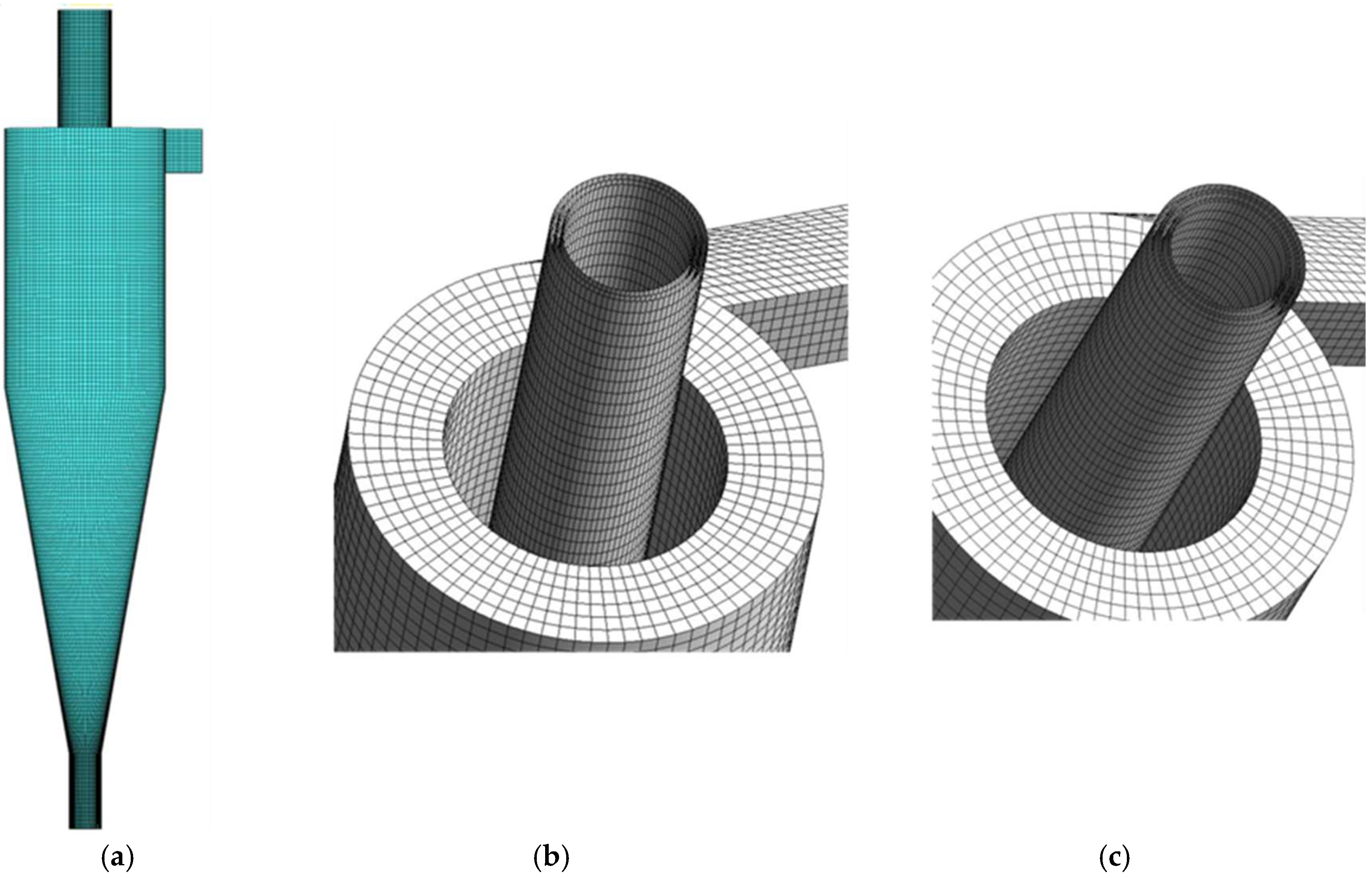
2.2. Grid Generation and Boundary Condition Settings
2.3. Model Validation
3. Results and Discussion
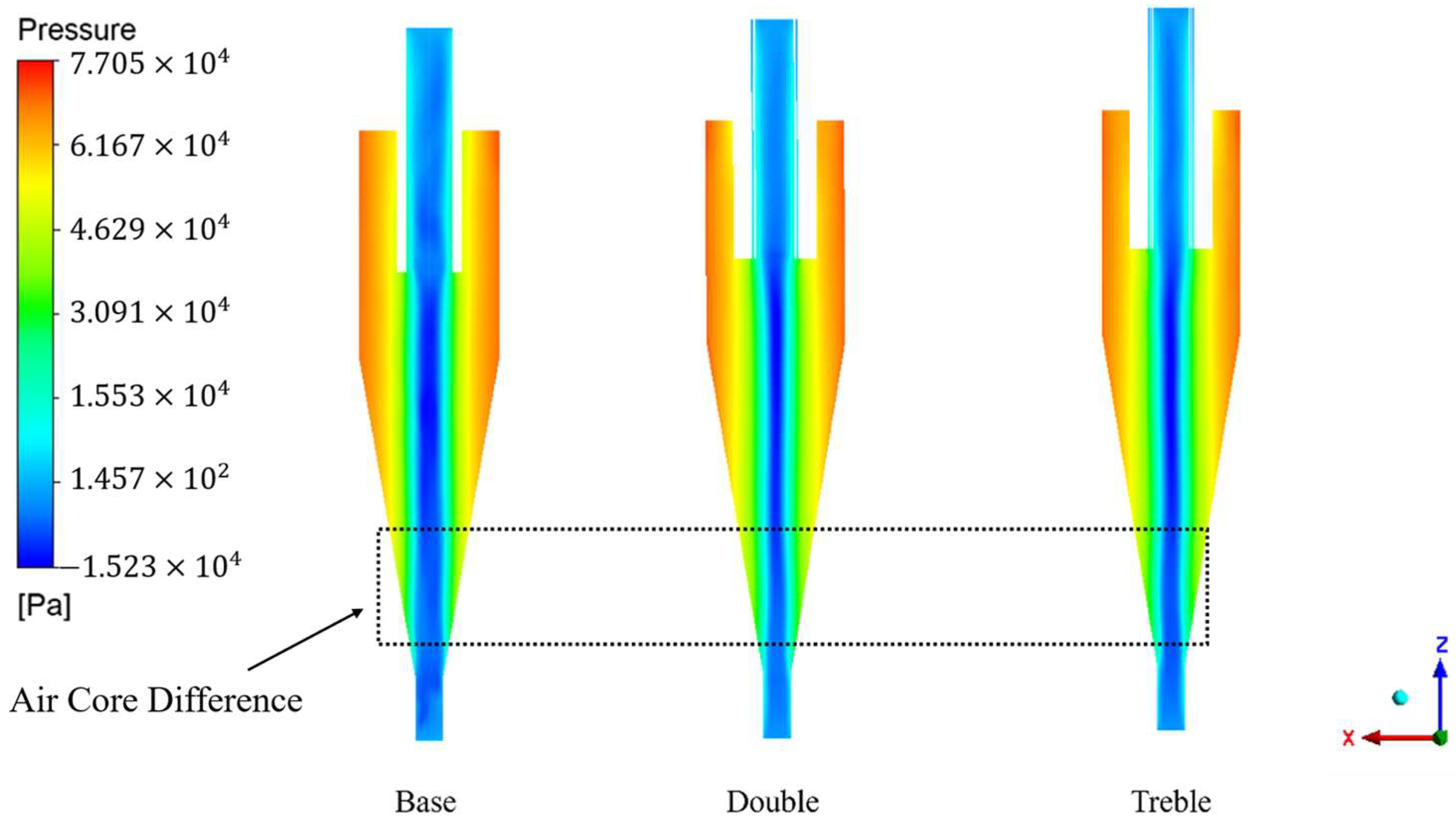
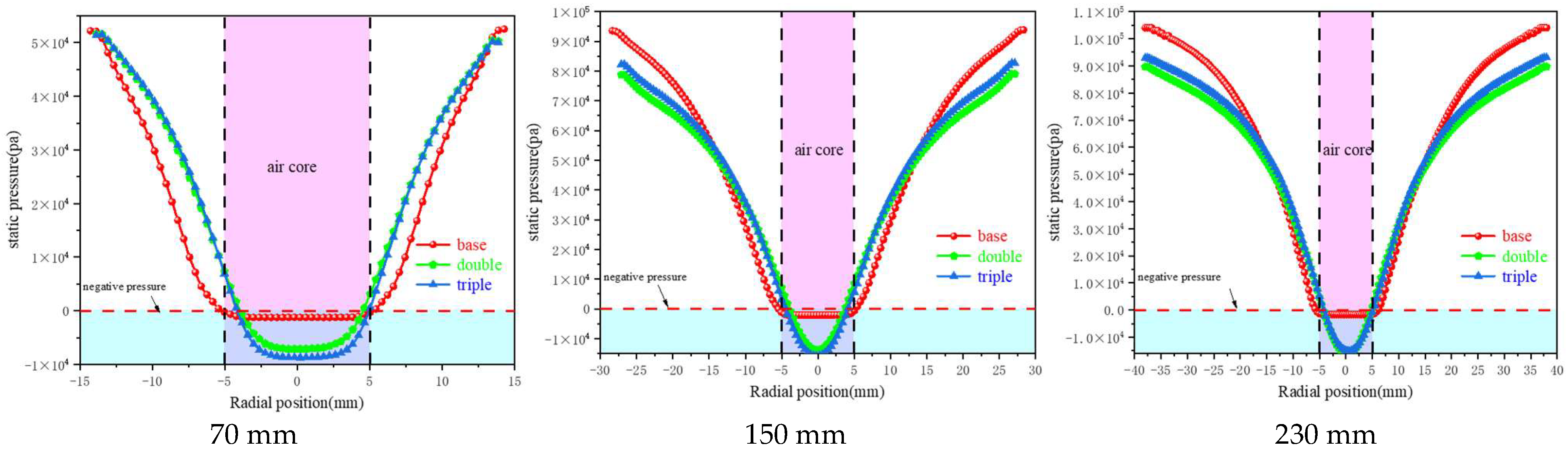
3.1. Static Pressure
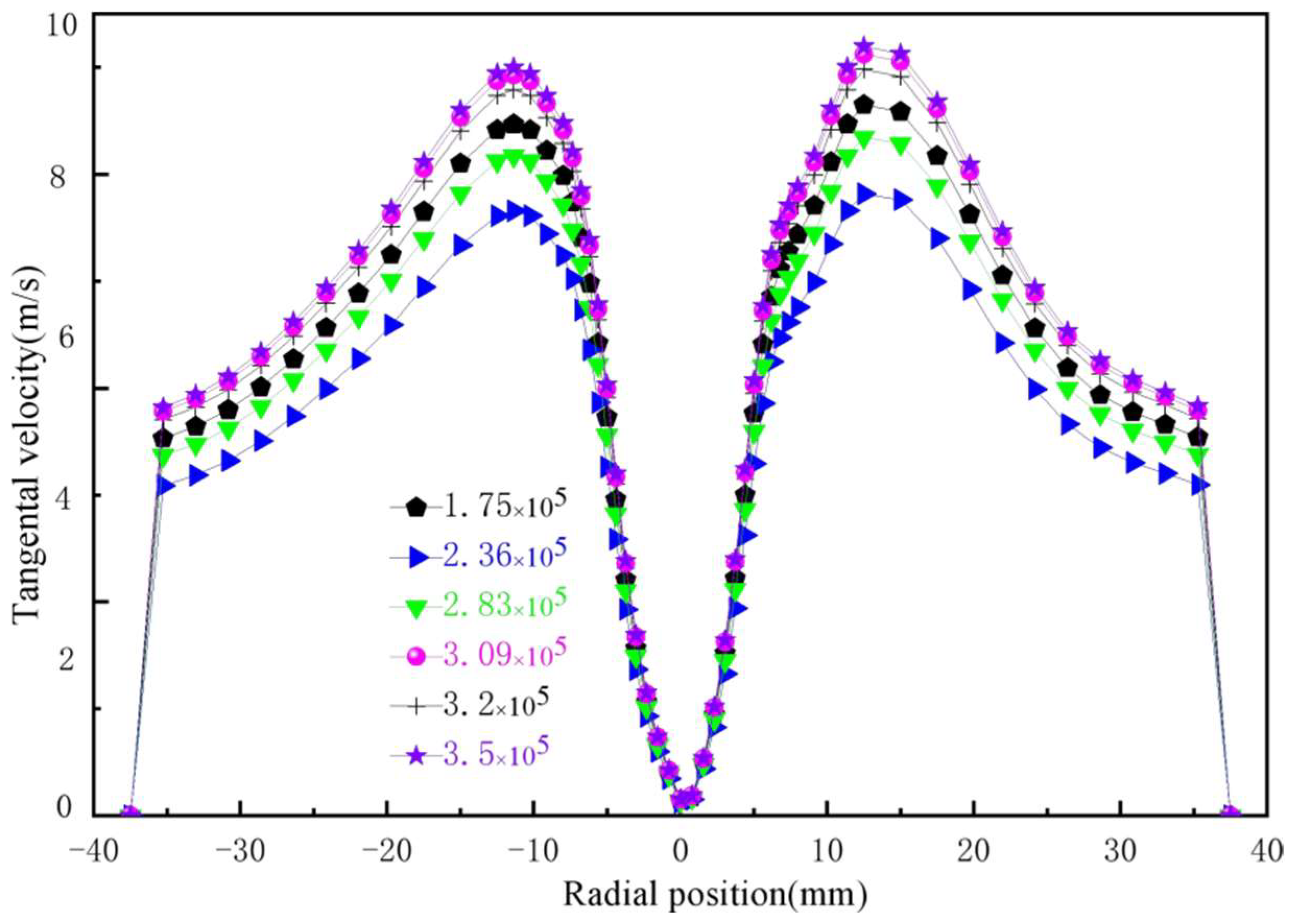
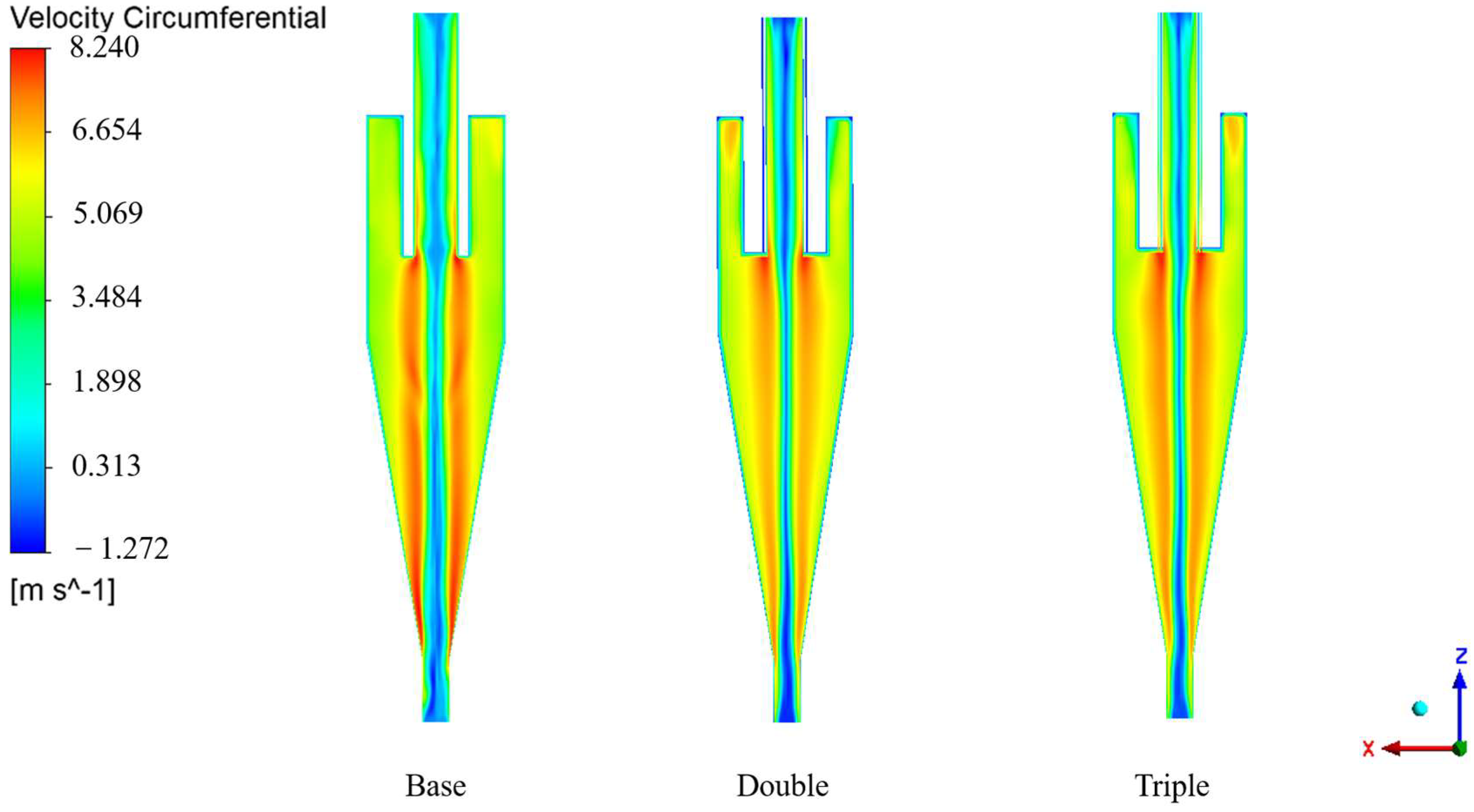
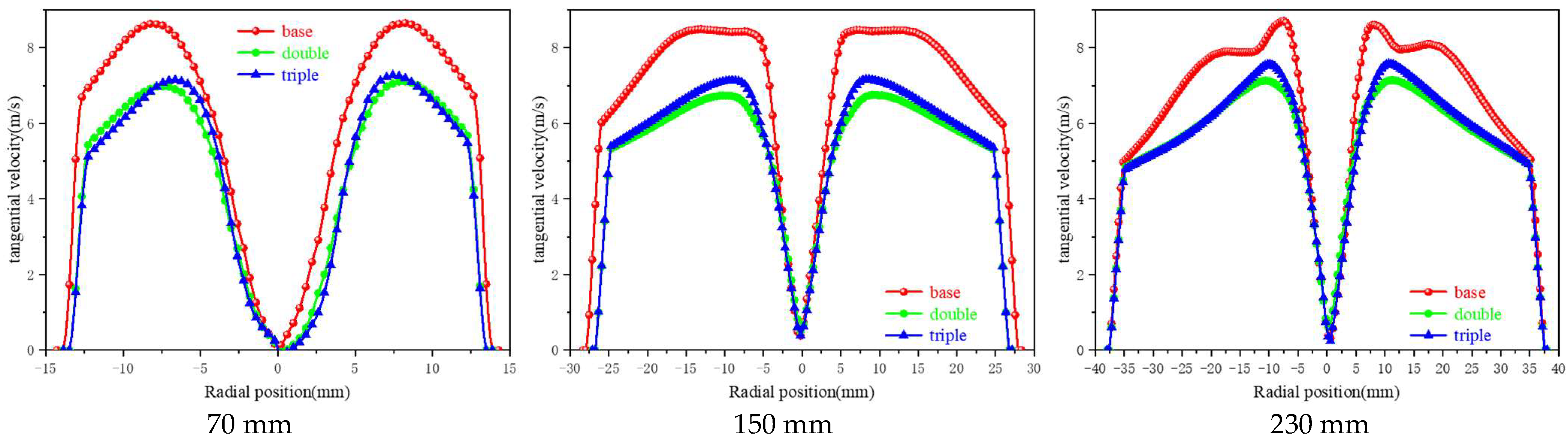
3.2. Tangential Velocity
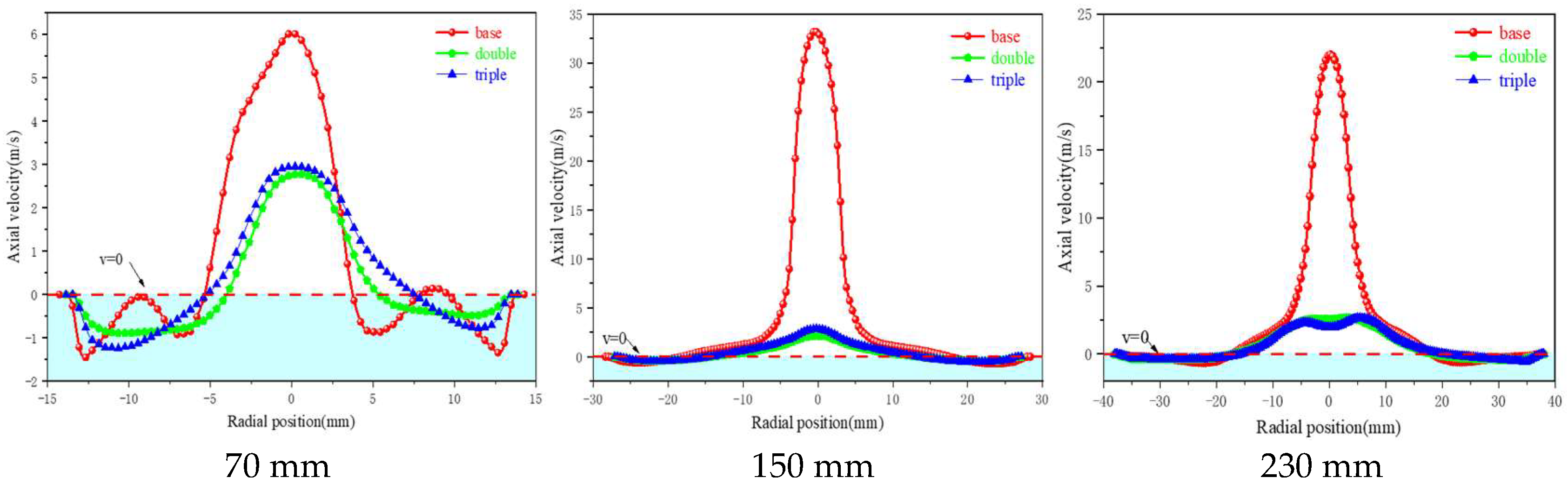
3.3. Axial Velocity
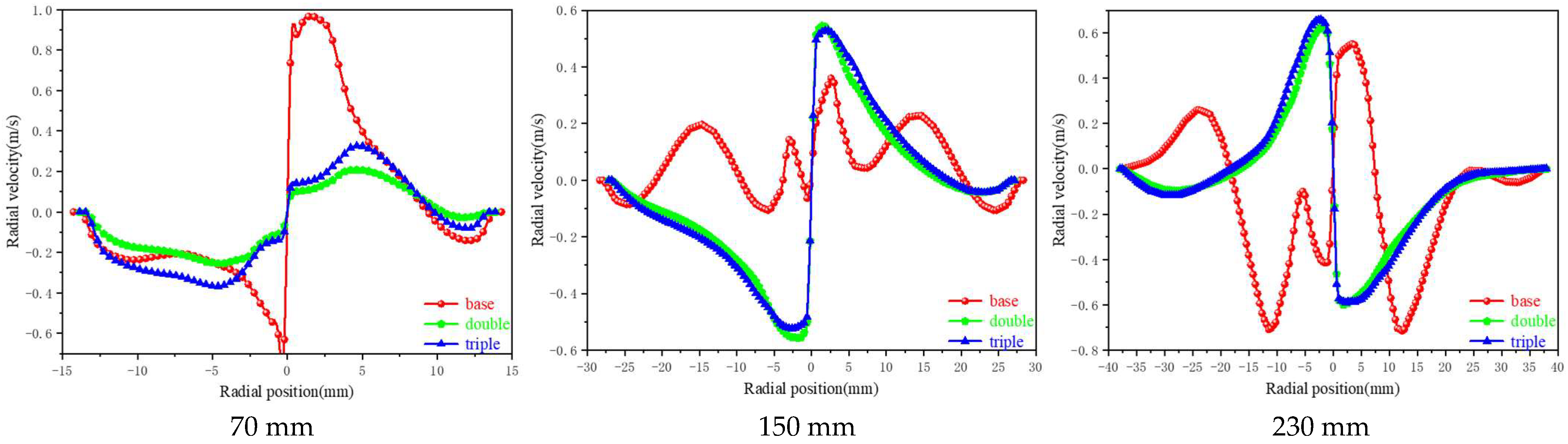
3.4. Radial Velocity
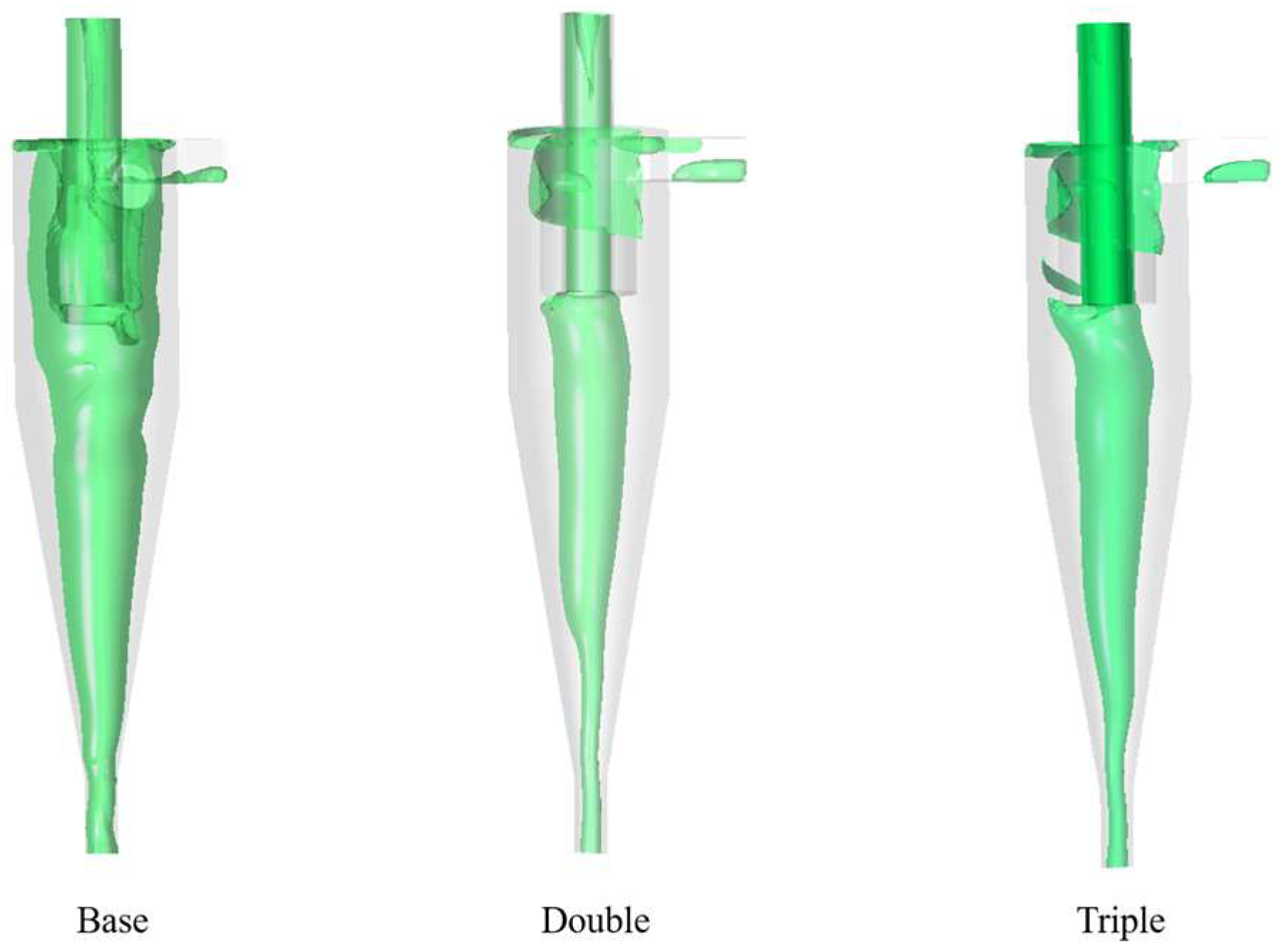
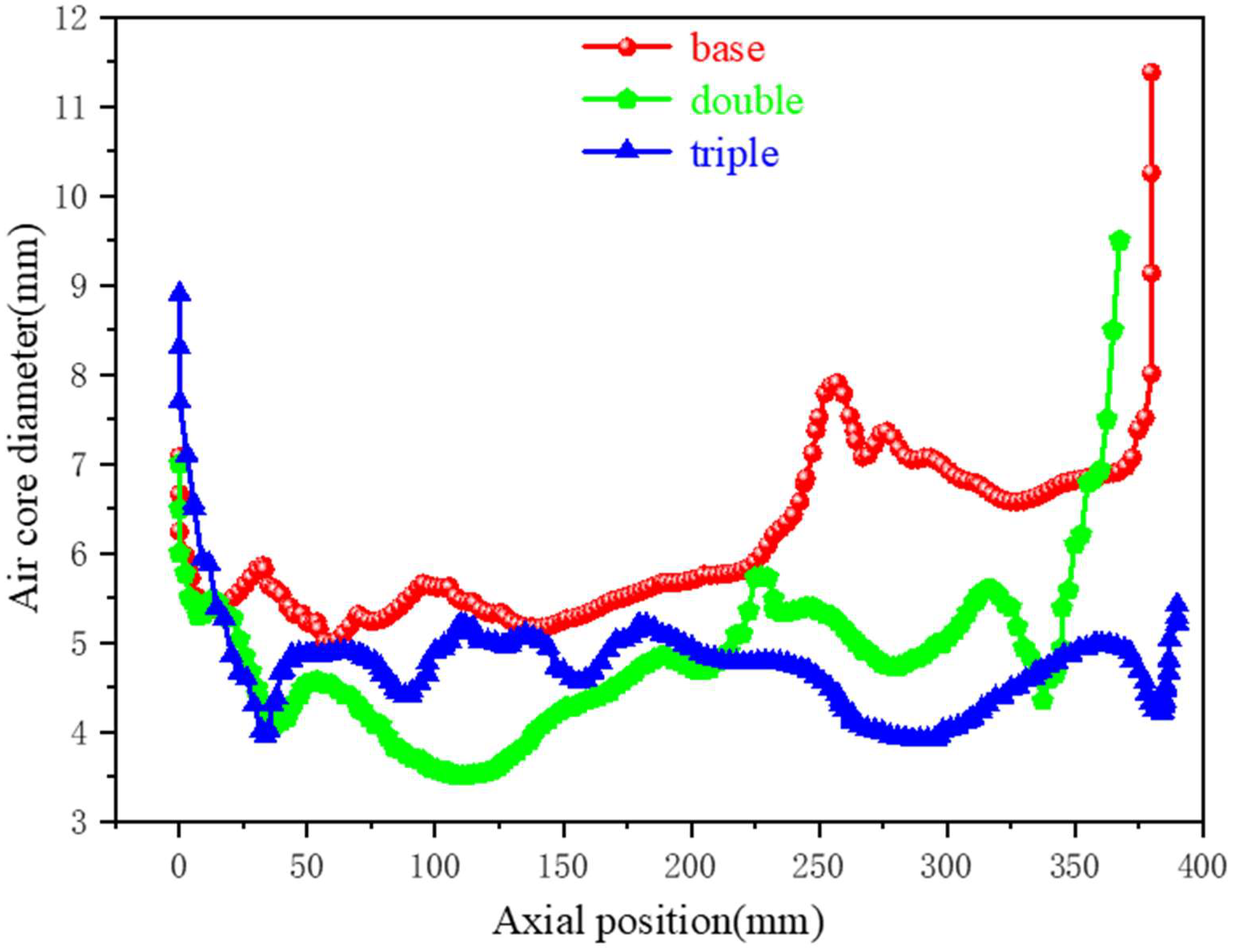
3.5. Air Core
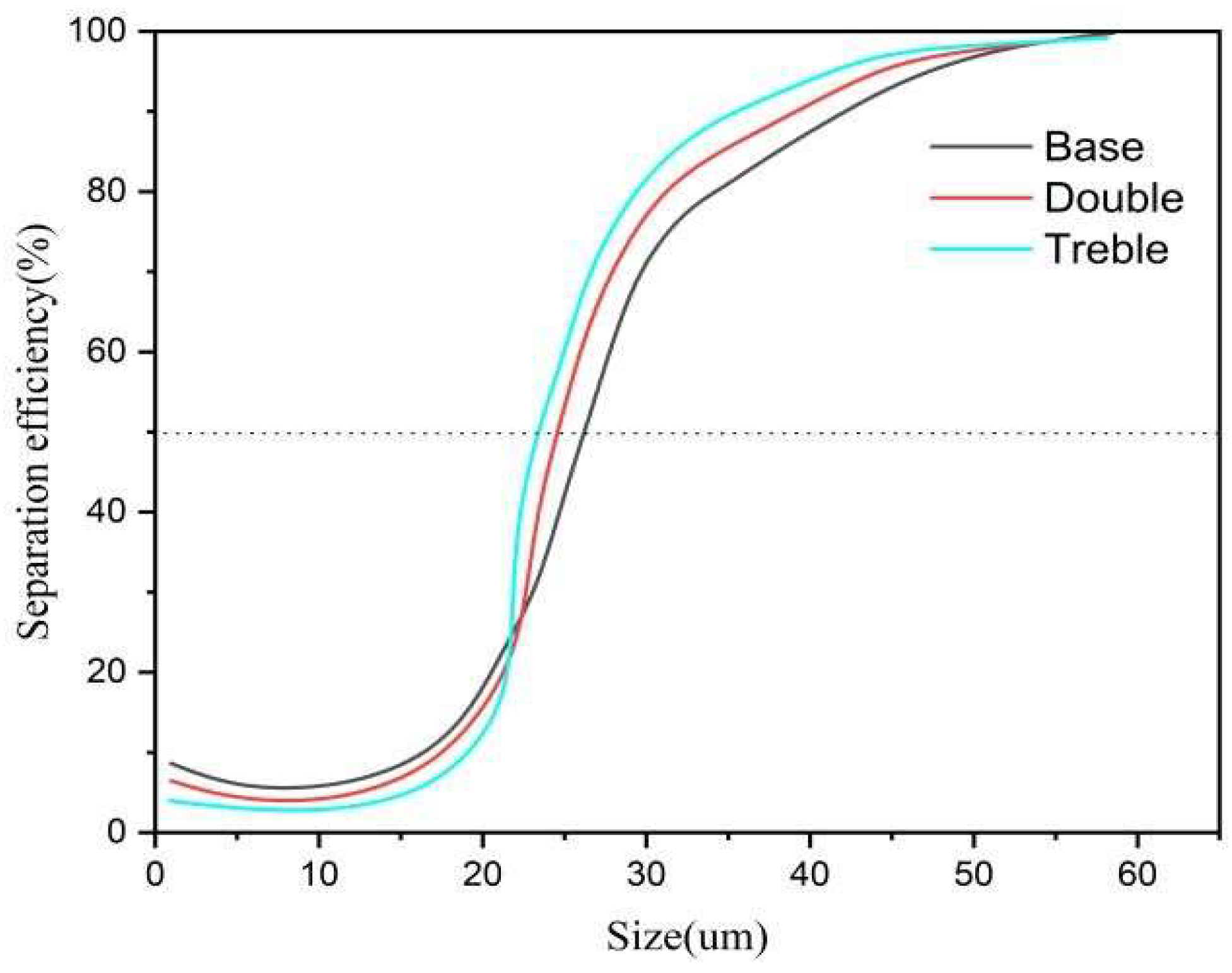
3.6. Efficiency Curve
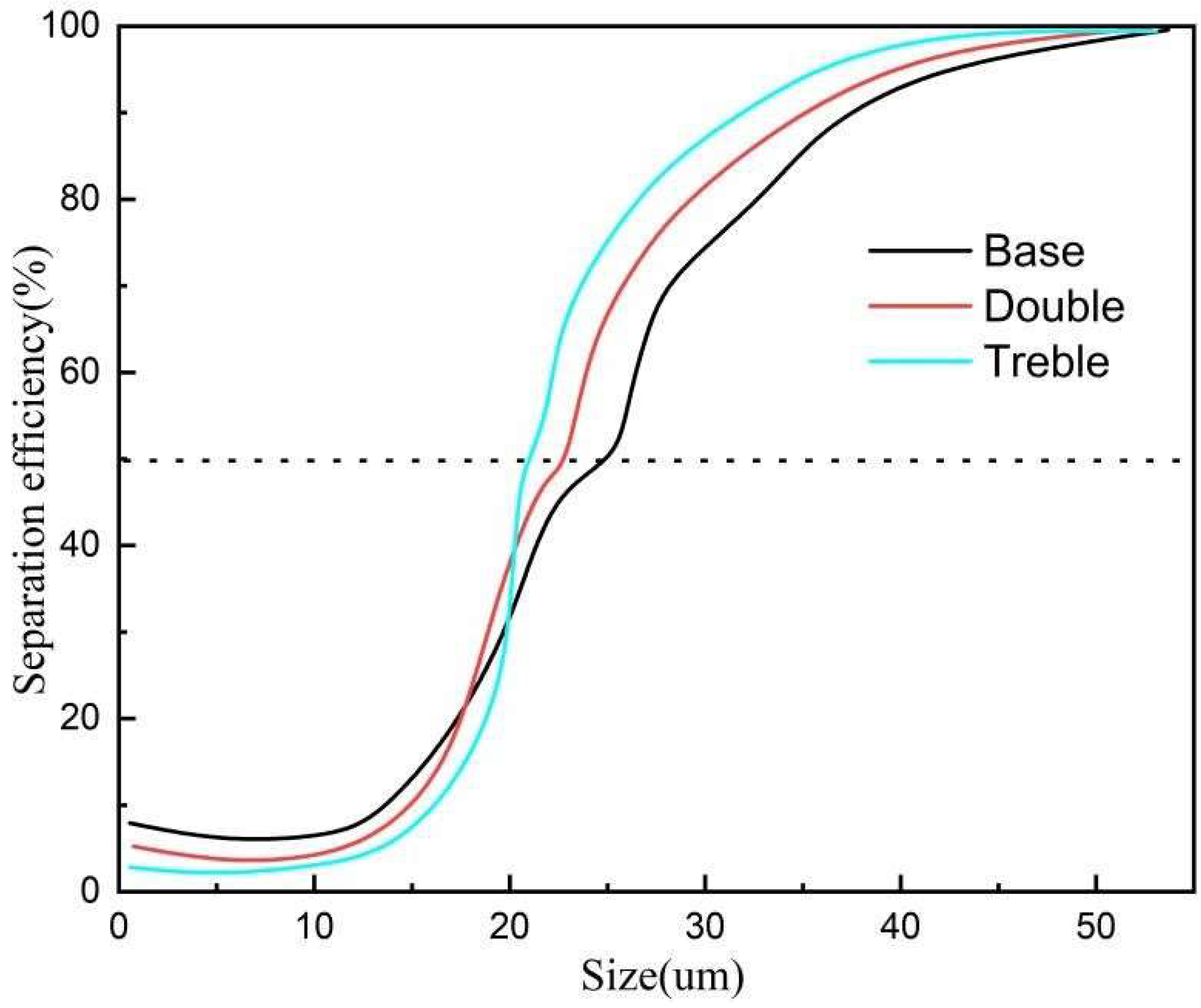
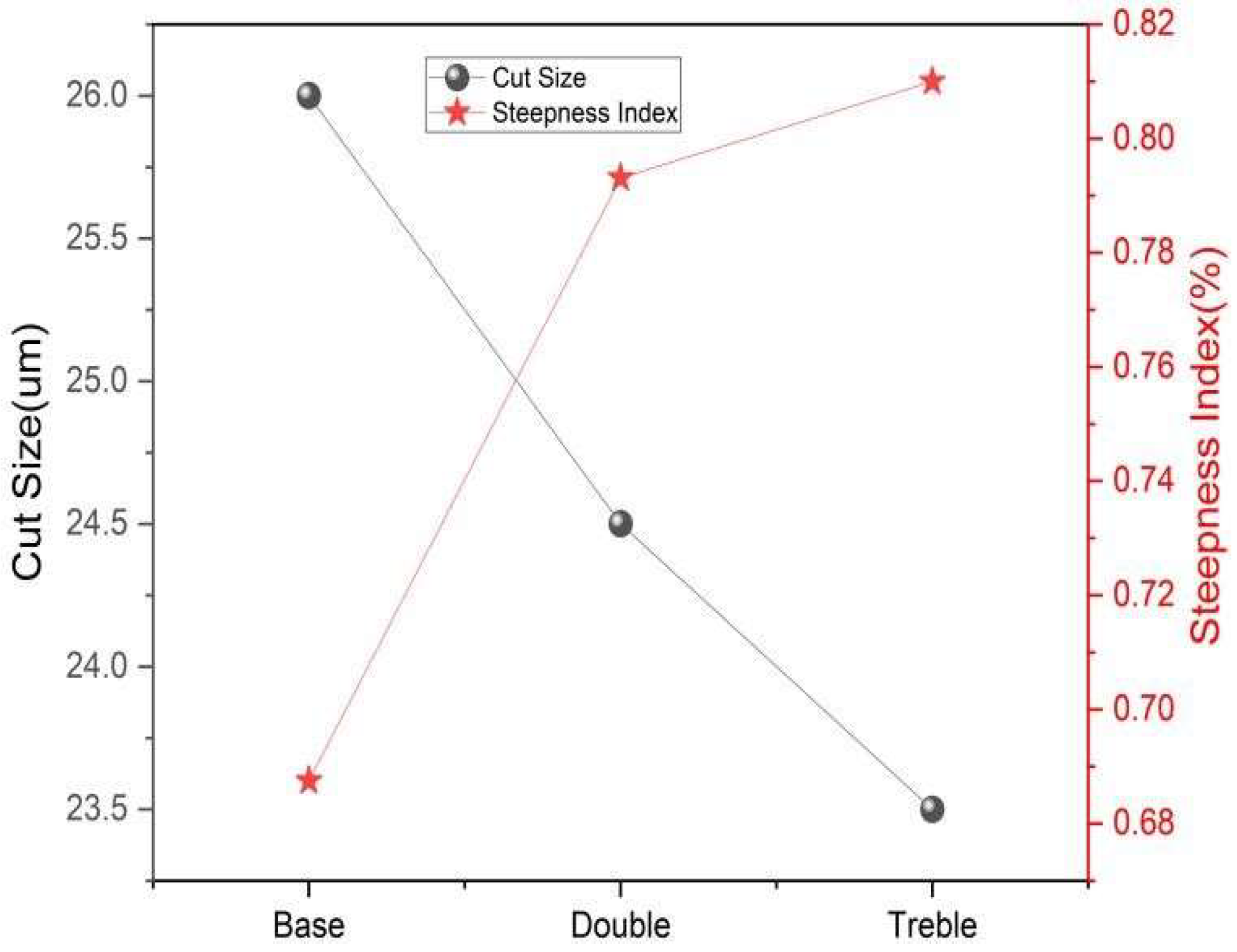
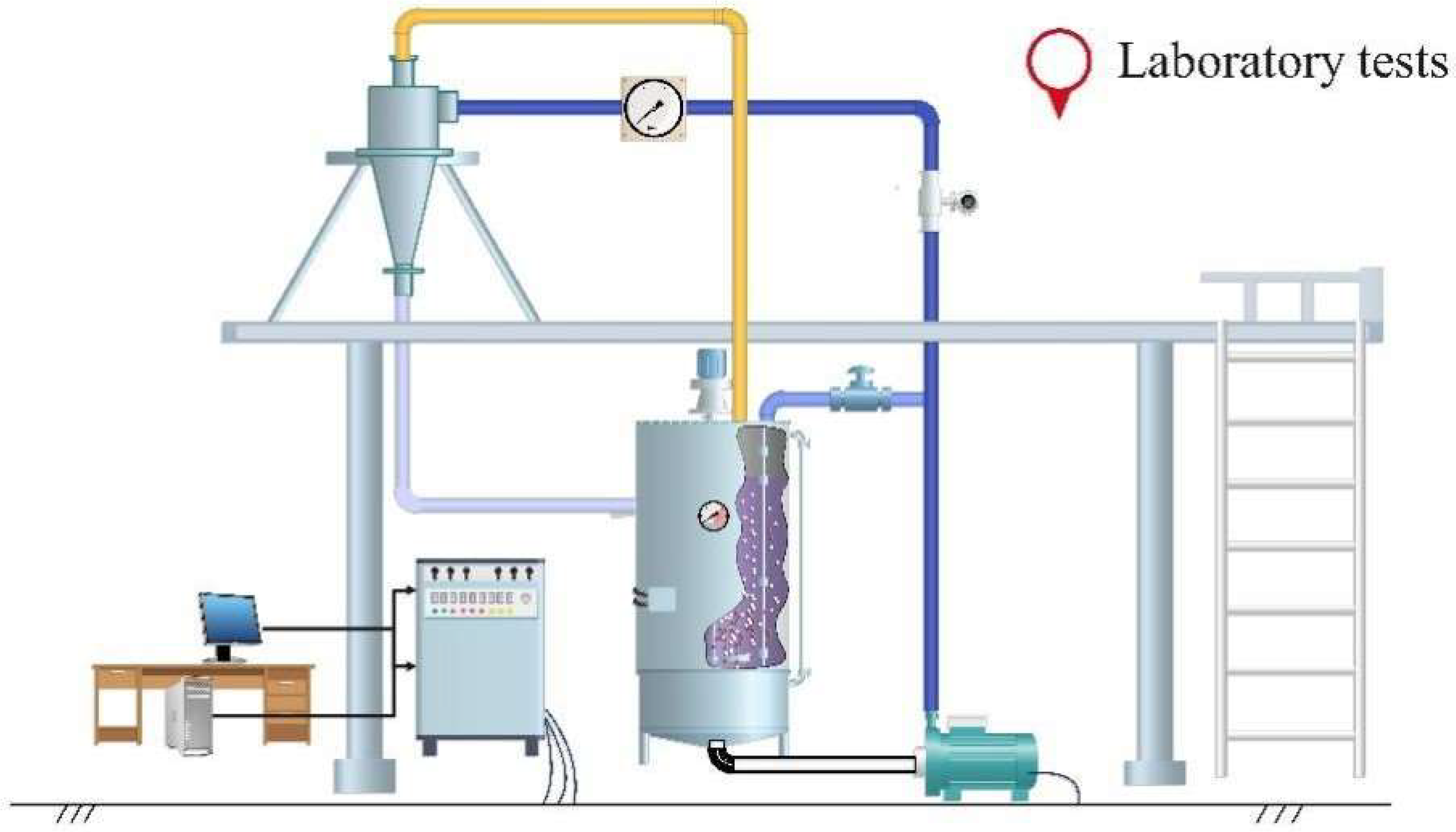
4. Experimental Investigation and Numerical-Experimental Consistency Validation
5. Conclusions
- The use of a hydrocyclone with triple vortex finders can achieve higher classification accuracy for fine particles of various sizes compared to conventional methods. Additionally, it can be employed in a parallel configuration to achieve high-efficiency separation, effectively addressing the issue of low concentrate recovery rates caused by excessive grinding of qualified products.
- The pressure and velocity fields within the hydrocyclone with triple vortex finders exhibit greater stability compared to those with a single vortex finder. This results in smoother particle movement within the hydrocyclone, while the LZVV shifts inward, allowing fine particles to migrate more easily toward the inner swirling flow, thereby reducing the carryover of fine particles in the underflow. Meanwhile, the diameter of the air core is minimized, and the “throat-like” bulge within the vortex finder disappears, which reduces the impact of convergence on the particles.
- Experimental analysis indicates that the content of fine particles in the underflow structure with triple vortex finders decreased by 4.36 percentage points compared to the single vortex finder. The mass efficiency improved by 18.85 percentage points, while the volumetric efficiency did not show a significant decrease. This demonstrates that it is possible to effectively enhance particle classification accuracy while ensuring classification efficiency.
Author Contributions
Funding
Institutional Review Board Statement
Informed Consent Statement
Data Availability Statement
Conflicts of Interest
References
- Mustafa, A.K.Q. Hydrocyclone flow characteristics and measurements. Flow Meas. Instrum. 2020, 73, 101741. [Google Scholar] [CrossRef]
- Liu, P.K.; Chu, L.Y.; Wang, J.; Yu, Y.F. Enhancement of hydrocyclone classification efficiency for fine particles by introducing a volute chamber with a pre-sedimentation function. Chem. Eng. Technol. 2008, 31, 474–478. [Google Scholar] [CrossRef]
- Chu, L.Y.; Yu, W.; Wang, G.J.; Zhou, X.-T.; Chen, W.-M.; Dai, G.-Q. Enhancement of hydrocyclone separation performance by eliminating the air core. Chem. Eng. Process. 2004, 43, 1441–1448. [Google Scholar] [CrossRef]
- Liu, L.; Zhao, L.X.; Sun, Y.; Gao, S.; Jiang, M.; Jiang, M.; Rosso, D. Separation performance of hydrocyclones with medium rearrangement internals. J. Environ. Chem. Eng. 2021, 9, 105642. [Google Scholar] [CrossRef]
- Huang, A.N.; Maeda, N.; Shibata, D.; Fukasawa, T.; Yoshida, H.; Kuo, H.-P.; Fukui, K. Influence of a laminarizer at the inlet on the classification performance of a cyclone separator. Sep. Purif. Technol. 2017, 174, 408–416. [Google Scholar] [CrossRef]
- Yang, Q.; Wang, H.-L.; Liu, Y.; Li, Z.-M. Solid/liquid separation performance of hydrocyclones with different cone combinations. Sep. Purif. Technol. 2010, 74, 271–279. [Google Scholar] [CrossRef]
- Wu, Z.; Liang, Z.; Li, P.; Li, F.; Yang, H. Effect of Vortex Finder Wall Thickness on Internal Flow Field and Classification Performance in a Hydrocyclone. Separations 2025, 12, 149. [Google Scholar] [CrossRef]
- Hwang, K.J.; Chou, S.P. Designing vortex finder structure for improving the particle separation efficiency of a hydrocyclone. Sep. Purif. Technol. 2017, 172, 76–84. [Google Scholar] [CrossRef]
- Li, T.; Su, B.; Huang, Y.; Wang, Y.; Lv, W.; Xiang, M.; Li, H. Optimization of vortex finder length of the mini-hydrocyclone. Powder Technol. 2025, 465, 121262. [Google Scholar] [CrossRef]
- Amani, A.; Shamloo, A.; Vatani, P.; Ebrahimi, S. Particles Focusing and Separation by a Novel Inertial Microfluidic Device: Divergent Serpentine Microchannel. Ind. Eng. Chem. Res. 2022, 61, 152369. [Google Scholar] [CrossRef]
- Pietro, B.; Marco, M. Selective dissolution process featuring a classification device for the removal of fines in crystallization: Experiments. Ind. Eng. Chem. Res. 2021, 60, 15752–15765. [Google Scholar] [CrossRef]
- Otto, A.; Rauh, S.; Ihlenfeldt, S.; Radons, G. Stability of milling with non-uniform pitch and variable helix tools. Int. J. Adv. Manuf. Technol. 2017, 89, 2613–2625. [Google Scholar] [CrossRef]
- Insperger, T.; Stepan, G. Updated semi-discretization method for periodic delay-differential equations with discrete delay. Int. J. Numer. Methods Eng. 2004, 61, 117–141. [Google Scholar] [CrossRef]
- Zhao, B.T.; Shen, H.G.; Kang, Y.M. Development of a symmetrical spiral inlet to improve cyclone separator performance. Powder Technol. 2004, 145, 47–50. [Google Scholar] [CrossRef]
- Frausto, J.J.; Ballantyne, G.R.; Runge, K.; Powell, M.S.; Wightman, E.M.; Evans, C.L.; Gonzalez, P.; Gomez, S. The effect of screen versus cyclone classification on the mineral liberation properties of a polymetallic ore. Miner. Eng. 2021, 169, 106930. [Google Scholar] [CrossRef]
- Sun, R.; Hou, F.; Ding, Y.; Geng, K.; Yang, Q. Design and performance evaluation of soil washing on heavy metal contaminated soil by hydrocyclone. Chin. J. Environ. Eng. 2018, 12, 1208–1217. [Google Scholar]
- Hsieh, K.T.; Rajamani, K. Phenomenological model of hydrocyclone: Model development and verification for single-phase flow. Int. J. Miner. Process. 1988, 22, 223–237. [Google Scholar] [CrossRef]
- Delgadillo, J.A. Modelling of 75- and 250-mm Hydrocyclones and Exploration of Novel Designs Using Computational Fluid Dynamics. Ph.D. Thesis, The University of Utah, Salt Lake City, UT, USA, 2006. [Google Scholar]
- Li, X.; Li, D.; Zhang, G.; Lu, Z.Y. Study on real-time control of humanoid robot using EMGs. China Mech. Eng. 2006, 17, 488–492. [Google Scholar]
- Wang, G.; Li, D.; Qian, X.; Shi, Q.; Zhang, Q. Developing of a new dexterous three fingered hand. Chin. J. Mech. Eng. 1997, 33, 71–75. [Google Scholar]
- Olga, V.; Bongers, R.M.; Van, D. Functionality of i-LIMB and i-LIMB pulse hands: Case report. J. Rehabil. Res. Dev. 2013, 50, 1123–1128. [Google Scholar]
- Flores-Luna, R.I.; Dorador-González, J.; Espinosa-Bautista, A. Prosthesis analysis based on TRIZ. Key Eng. Mater. 2013, 572, 135–138. [Google Scholar] [CrossRef]
- Jacobsen, S.C.; Wood, J.E.; Knutti, D.F.; Biggers, K.B. The UTAH/M.I.T. dextrous hand: Work in progress. Int. J. Robot. Res. 1984, 3, 21–50. [Google Scholar] [CrossRef]
- Bridgwater, L.B.; Ihrke, C.A.; Diftler, M.A.; Abdallah, M.E.; Radford, N.A.; Rogers, J.M. The robonaut 2 hand-designed to do work with tools. In Proceedings of the 2012 IEEE International Conference on Robotics and Automation, St. Paul, MN, USA, 14–18 May 2012; pp. 3425–3430. [Google Scholar]
- Hands, D.; Robot, S. Developments in dextrous hands for advanced robotic applications, 2004. In Proceedings of the World Automation Congress, Seville, Spain, 28 June–1 July 2004. [Google Scholar]
- Kochan, A. Shadow delivers first hand. Ind. Robot. 2005, 32, 15–16. [Google Scholar] [CrossRef]
- Ji, L.; He, L.; Chu, K.; Kuang, S. How Particles with Sizes Close to Cut Size Affect the Multiphase Flows and Performance of Hydrocyclones. Ind. Eng. Chem. Research. 2021, 60, 18477–18489. [Google Scholar] [CrossRef]
- Hsieh, K.T. Phenomenological Model of the Hydrocyclone. Ph.D. Thesis, The University of Utah, Salt Lake City, UT, USA, 1988. [Google Scholar]
- Hou, D.; Cui, B.; Zhao, Q.; Wei, D.; Song, Z.; Feng, Y. Research on the structure of the cylindrical hydrocyclone spigot to mitigate the misplacement of particles. Powder Technol. 2021, 387, 61–71. [Google Scholar] [CrossRef]
- Vakamalla, T.R.; Mangadoddy, N. The dynamic behaviour of a large-scale 250-mm hydrocyclone: A CFD study. Asia-Pac. J. Chem. Eng. 2019, 14, e2287. [Google Scholar] [CrossRef]
- Ye, J.; Xu, Y.; Song, X.; Yu, J. Numerical modelling and multi objective optimization of the novel hydrocyclone for ultra-fine particles classification. Chem. Eng. Sci. 2019, 207, 1072–1084. [Google Scholar] [CrossRef]
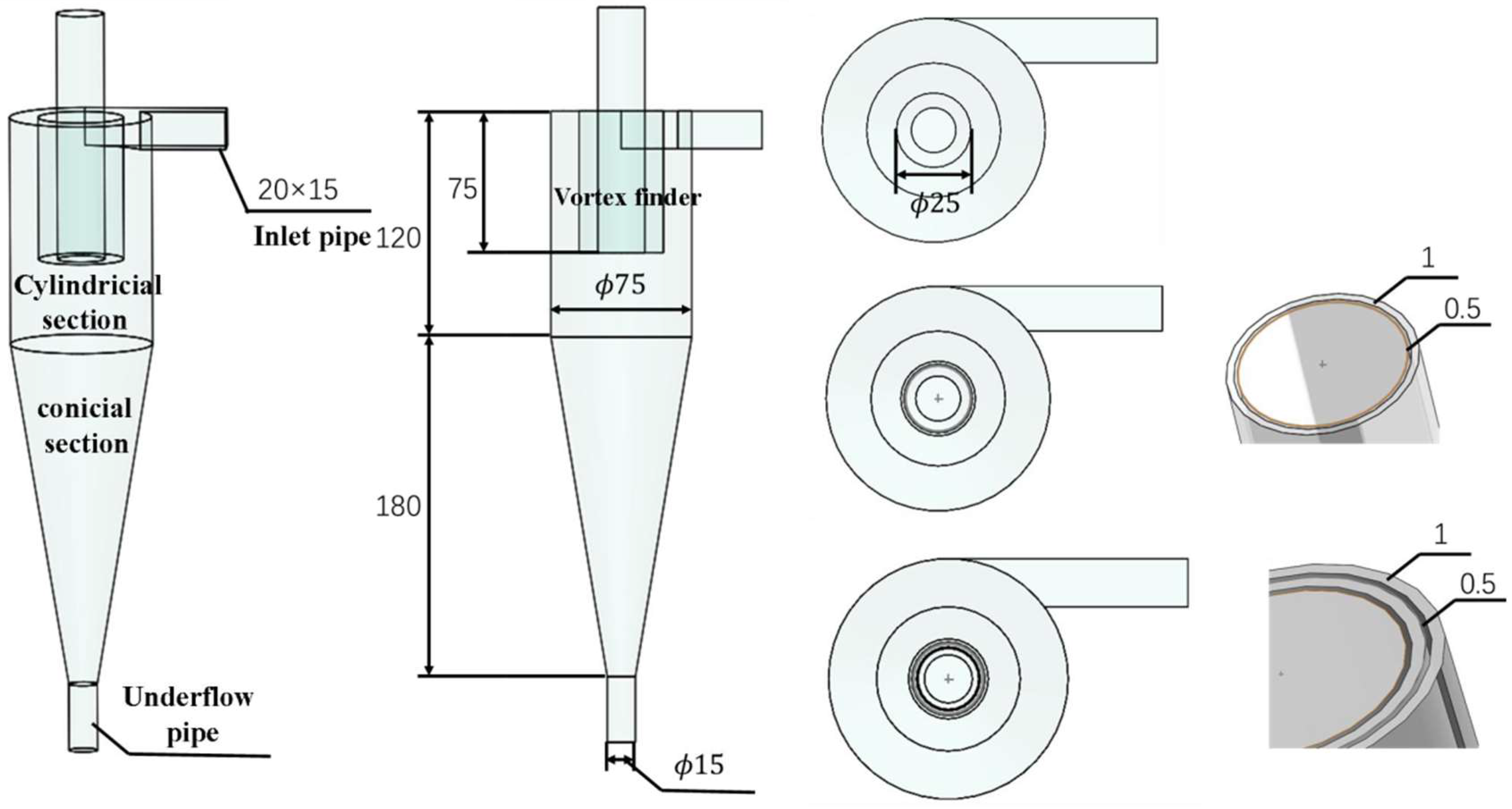







| Parameter | Value |
|---|---|
| Diameter of the body | 75 mm |
| Inlet size | 25 mm |
| Vortex finder length | 75 mm |
| Diameter of apex | 15 mm |
| Length of cylindrical part | 211 mm |
| Length of conical part | 79 mm |
| Diameter of the First Vortex Finder | 25 mm |
| Diameter of the Second Vortex Finder | 23.5 mm |
| Diameter of the Third Vortex Finder | 22 mm |
| Size/µm | Volume Fraction/% |
|---|---|
| 1 µm | 0.38 |
| 5 µm | 1.26 |
| 10 µm | 0.96 |
| 15 µm | 1.31 |
| 20 µm | 1.02 |
| 25 µm | 0.12 |
| 30 µm | 0.93 |
| 35 µm | 1.58 |
| Size/µm | Interval/% | Positive Cumulative Content/% |
|---|---|---|
| 0~10 | 2.56 | 10.53 |
| 10~21 | 15.63 | 18.19 |
| 21~29 | 40.35 | 58.54 |
| 29~52 | 28.62 | 87.16 |
| >52 | 12.84 | 100 |
| Underflow Content of −20 µm (%) | Overflow Content of −20 µm (%) | Quality Efficiency (%) | Quantity Efficiency (%) | |
|---|---|---|---|---|
| Base | 18.13 | 36.38 | 31.28 | 82.23 |
| Double | 15.22 | 41.62 | 45.62 | 81.53 |
| Triple | 12.11 | 49.19 | 50.13 | 81.16 |
Disclaimer/Publisher’s Note: The statements, opinions and data contained in all publications are solely those of the individual author(s) and contributor(s) and not of MDPI and/or the editor(s). MDPI and/or the editor(s) disclaim responsibility for any injury to people or property resulting from any ideas, methods, instructions or products referred to in the content. |
© 2025 by the authors. Licensee MDPI, Basel, Switzerland. This article is an open access article distributed under the terms and conditions of the Creative Commons Attribution (CC BY) license (https://creativecommons.org/licenses/by/4.0/).
Share and Cite
Li, F.; Huang, G.; Zou, C.; Fu, Y.; Li, J.; Ma, B.; Wang, Y.; Zhang, C. Numerical Analysis and Experimental Study on the Classification of Fine Particles Using a Hydrocyclone with Multiple Vortex Finders. Separations 2025, 12, 318. https://doi.org/10.3390/separations12110318
Li F, Huang G, Zou C, Fu Y, Li J, Ma B, Wang Y, Zhang C. Numerical Analysis and Experimental Study on the Classification of Fine Particles Using a Hydrocyclone with Multiple Vortex Finders. Separations. 2025; 12(11):318. https://doi.org/10.3390/separations12110318
Chicago/Turabian StyleLi, Feng, Guodong Huang, Chaoqi Zou, Yuting Fu, Jiawei Li, Baocong Ma, Yanchao Wang, and Chenglei Zhang. 2025. "Numerical Analysis and Experimental Study on the Classification of Fine Particles Using a Hydrocyclone with Multiple Vortex Finders" Separations 12, no. 11: 318. https://doi.org/10.3390/separations12110318
APA StyleLi, F., Huang, G., Zou, C., Fu, Y., Li, J., Ma, B., Wang, Y., & Zhang, C. (2025). Numerical Analysis and Experimental Study on the Classification of Fine Particles Using a Hydrocyclone with Multiple Vortex Finders. Separations, 12(11), 318. https://doi.org/10.3390/separations12110318