
Behçet-like Syndromes: A Comprehensive Review

 , ,
, , 
Simple Summary
Abstract
1. Introduction
2. Methods
3. Results
Characteristics of Patients with Behçet-like Syndrome
4. Discussion
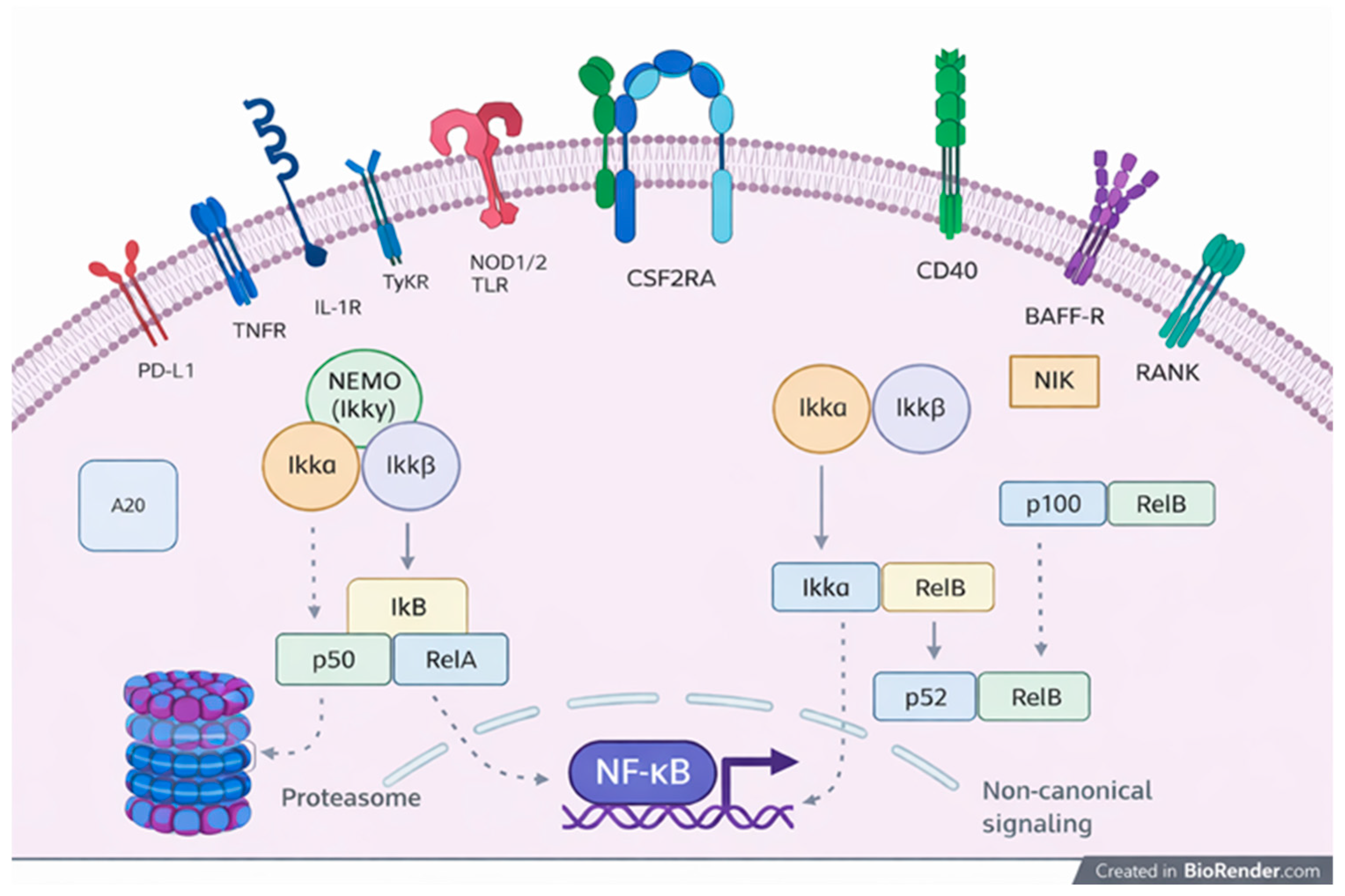
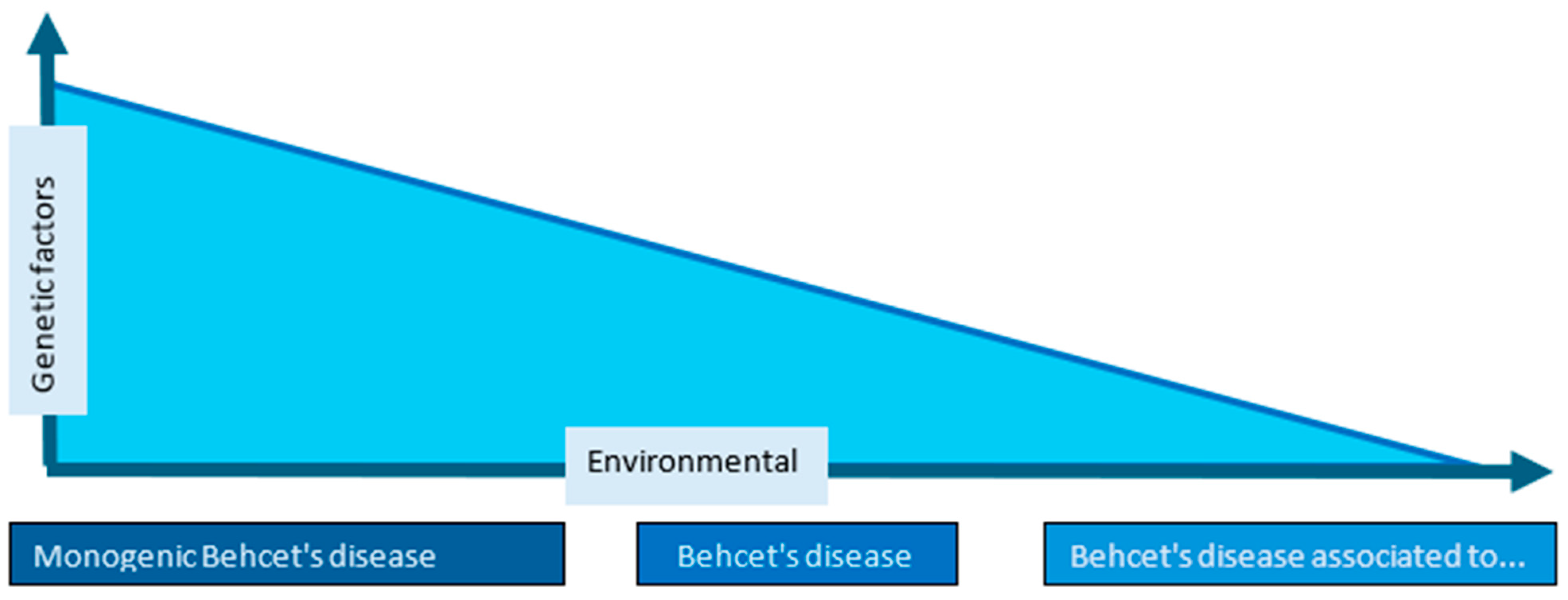
4.1. Genetically Related Behçet-like Syndrome
4.2. Infection-Related Behçet-like Syndrome
4.3. Myeloproliferative Disorders-Related Behçet-like Syndrome
4.4. BLS, Paradoxical Reactions, and BD Exacerbations Induced by Biological Therapies
4.5. Strengths and Limitations
4.6. Practical Recommendations for Clinicians
5. Conclusions
Author Contributions
Funding
Data Availability Statement
Conflicts of Interest
References
- Perazzio, S.F.; Allenspach, E.J.; Eklund, K.K.; Varjosalo, M.; Shinohara, M.M.; Torgerson, T.R.; Seppänen, M.R.J. Behçet disease (BD) and BD-like clinical phenotypes: NF-κB pathway in mucosal ulcerating diseases. Scand. J. Immunol. 2020, 92, e12973. [Google Scholar] [CrossRef] [Scilit] [PubMed]
- Koba, S.; Sekioka, T.; Takeda, S.; Miyagawa-Hayashino, A.; Nishimura, K.; Imashuku, S. Acute Monocytic Leukemia Masquerading Behçet’s Disease-Like Illness at Onset in an Elderly Female. Case Rep. Hematol. 2016, 2016, 4231276. [Google Scholar] [CrossRef] [Scilit] [PubMed] [PubMed Central]
- Yazici, Y.; Hatemi, G.; Bodaghi, B.; Cheon, J.H.; Suzuki, N.; Ambrose, N.; Yazici, H. Behçet syndrome. Nat. Rev. Dis. Primers. 2021, 7, 67. [Google Scholar] [CrossRef] [Scilit] [PubMed]
- Dincses, E.; Yurttas, B.; Esatoglu, S.N.; Melikoglu, M.; Hamuryudan, V.; Seyahi, E. Secukinumab induced Behçet’s syndrome: A report of two cases. Oxf. Med. Case Rep. 2019, 2019, omz041. [Google Scholar] [CrossRef] [Scilit] [PubMed] [PubMed Central]
- Ishikawa, Y.; Sasaki, R.; Ishiwata, A.; Hatakeyama, S.; Matsumura, M.; Sato, T. A case of Behçet’s-like disease associated with trisomy 8-positive myelodysplastic syndrome carrying MEFV E148Q variant presented with periodic fever. Mod. Rheumatol. Case Rep. 2023, 7, 470–474. [Google Scholar] [CrossRef] [Scilit] [PubMed]
- Zhang, D.; Su, G.; Zhou, Z.; Lai, J. Clinical characteristics and genetic analysis of A20 haploinsufficiency. Pediatr. Rheumatol. Online J. 2021, 19, 75. [Google Scholar] [CrossRef] [Scilit] [PubMed] [PubMed Central]
- Hatemi, G.; Seyahi, E.; Fresko, I.; Talarico, R.; Uçar, D.; Hamuryudan, V. Behçet’s syndrome: One year in review 2024. Clin. Exp. Rheumatol. 2024, 42, 1999–2007. [Google Scholar] [CrossRef] [Scilit] [PubMed]
- Taskiran, E.Z.; Sonmez, H.E.; Kosukcu, C.; Tavukcuoglu, E.; Yazici, G.; Esendagli, G.; Batu, E.D.; Kiper, P.O.S.; Bilginer, Y.; Alikasifoglu, M.; et al. A Novel Missense LIG4 Mutation in a Patient with a Phenotype Mimicking Behçet’s Disease. J. Clin. Immunol. 2019, 39, 99–105. [Google Scholar] [CrossRef] [Scilit] [PubMed]
- Kiafar, M.; Faezi, S.T.; Kasaeian, A.; Baghdadi, A.; Kakaei, S.; Mousavi, S.A.; Nejadhosseinian, M.; Shahram, F.; Ghodsi, S.Z.; Shams, H.; et al. Diagnosis of Behçet’s disease: Clinical characteristics, diagnostic criteria, and differential diagnoses. BMC Rheumatol. 2021, 5, 2. [Google Scholar] [CrossRef] [Scilit] [PubMed] [PubMed Central]
- Nara, K.; Kurokawa, M.S.; Chiba, S.; Yoshikawa, H.; Tsukikawa, S.; Matsuda, T.; Suzuki, N. Involvement of innate immunity in the pathogenesis of intestinal Behçet’s disease. Clin. Exp. Immunol. 2008, 152, 245–251. [Google Scholar] [CrossRef] [Scilit] [PubMed] [PubMed Central]
- Dong, X.; Liu, L.; Wang, Y.; Yang, X.; Wang, W.; Lin, L.; Sun, B.; Hou, J.; Ying, W.; Hui, X.; et al. Novel Heterogeneous Mutation of TNFAIP3 ina Chinese Patient with Behçet-Like Phenotype and Persistent EBV Viremia. J. Clin. Immunol. 2019, 39, 188–194. [Google Scholar] [CrossRef] [Scilit] [PubMed]
- Zhou, Q.; Wang, H.; Schwartz, D.M.; Stoffels, M.; Park, Y.H.; Zhang, Y.; Yang, D.; Demirkaya, E.; Takeuchi, M.; Tsai, W.L.; et al. Loss-of-function mutations in TNFAIP3 leading to A20 haploinsufficiency cause an early-onset autoinflammatory disease. Nat. Genet. 2016, 48, 67–73. [Google Scholar] [CrossRef] [Scilit] [PubMed] [PubMed Central]
- Adeeb, F.; Dorris, E.R.; Morgan, N.E.; Lawless, D.; Maqsood, A.; Ng, W.L.; Killeen, O.; Cummins, E.P.; Taylor, C.T.; Savic, S.; et al. A Novel RELA Truncating Mutation in a Familial Behçet’s Disease-like Mucocutaneous Ulcerative Condition. Arthritis Rheumatol. 2021, 73, 490–497. [Google Scholar] [CrossRef] [Scilit] [PubMed]
- Chen, Y.; Huang, H.; He, Y.; Chen, M.; Seidler, U.; Tian, D.; Xiao, F. A20 Haploinsufficiency in a Chinese Patient with Intestinal Behcet’s Disease-Like Symptoms: A Case Report. Front. Immunol. 2020, 11, 1414. [Google Scholar] [CrossRef] [Scilit] [PubMed] [PubMed Central]
- An, J.W.; Pimpale-Chavan, P.; Stone, D.L.; Bandeira, M.; Dedeoglu, F.; Lo, J.; Bohnsack, J.; Rosenzweig, S.; Schnappauf, O.; Dissanayake, D.; et al. Case report: Novel variants in RELA associated with familial Behcet’s-like disease. Front. Immunol. 2023, 14, 1127085. [Google Scholar] [CrossRef] [Scilit] [PubMed] [PubMed Central]
- Eyre, S.; Hinks, A.; Bowes, J.; Flynn, E.; Martin, P.; Wilson, A.G.; Morgan, A.W.; Emery, P.; Steer, S.; Hocking, L.J.; et al. Overlapping genetic susceptibility variants between three autoimmune disorders: Rheumatoid arthritis, type 1 diabetes and coeliac disease. Arthritis Res. Ther. 2010, 12, R175. [Google Scholar] [CrossRef] [Scilit] [PubMed] [PubMed Central]
- Tsuchida, N.; Kirino, Y.; Soejima, Y.; Onodera, M.; Arai, K.; Tamura, E.; Ishikawa, T.; Kawai, T.; Uchiyama, T.; Nomura, S.; et al. Haploinsufficiency of A20 caused by a novel nonsense variant or entire deletion of TNFAIP3 is clinically distinct from Behçet’s disease. Arthritis Res. Ther. 2019, 21, 137. [Google Scholar] [CrossRef] [Scilit] [PubMed] [PubMed Central]
- Baldini, L.; Di Sabatino, F.; Bodrero, E.; Dellepiane, M.; Covizzi, C.; La Selva, R.; Montin, D.; Licciardi, F. NeMO mutations: A rare cause of monogenic Behçet-like disease. Rheumatology 2021, 60, e92–e94. [Google Scholar] [CrossRef] [Scilit] [PubMed]
- Dimopoulou, C.; Lundgren, J.D.; Sundal, J.; Ullum, H.; Aukrust, P.; Nielsen, F.C.; Marvig, R.L. Variant in ERAP1 promoter region is associated with low expression in a patient with a Behçet-like MHC-I-opathy. J. Hum. Genet. 2020, 65, 325–335. [Google Scholar] [CrossRef] [Scilit] [PubMed]
- van Well, G.T.J.; Kant, B.; van Nistelrooij, A.; Sirma Ekmekci, S.; Henriet, S.V.; Hoppenreijs, E.; van Deuren, M.; van Montfrans, J.; Nierkens, S.; Gül, A.; et al. Phenotypic variability including Behçet’s disease-like manifestations in DADA2 patients due to a homozygous c.973-2A>G splice site mutation. Clin. Exp. Rheumatol. 2019, 37, 142–146. [Google Scholar] [PubMed]
- Rösler, B.; Heinhuis, B.; Wang, X.; Silvestre, R.; Joosten, L.A.B.; Netea, M.G.; Arts, P.; Mantere, T.; Lefeber, D.J.; Hoischen, A.; et al. Mimicking Behçet’s disease: GM-CSF gain of function mutation in a family suffering from a Behçet’s disease-like disorder marked by extreme pathergy. Clin. Exp. Immunol. 2021, 204, 189–198. [Google Scholar] [CrossRef] [Scilit] [PubMed] [PubMed Central]
- Calleja Algarra, A.; Aragón Miguel, R.; Andrés Lencina, J.J.; Pinilla Martín, B.; Vico Alonso, C.; Rodríguez Peralto, J.L.; Ortiz Romero, P.L.; Rivera Díaz, R. Behçet’s-like disease during secukinumab treatment: New paradoxical reaction? J. Dtsch. Dermatol. Ges. 2021, 19, 116–118. [Google Scholar] [CrossRef] [Scilit] [PubMed]
- Avcı, C.; Akın, G.; Akarsu, S.; Lebe, B. Pyoderma gangrenosum and Behçet’s-like disease induced by secukinumab: A paradoxical drug reaction. J. Dermatolog. Treat. 2023, 34, 2235040. [Google Scholar] [CrossRef] [Scilit] [PubMed]
- Barrado-Solís, N.; Rodrigo-Nicolás, B.; De la Morena-Barrio, I.; Pérez-Pastor, G.; Sanchis-Sánchez, C.; Tomás-Cabedo, G.; Valcuende-Cavero, F. Report of two cases of Behçet’s disease developed during treatment with secukinumab. J. Eur. Acad. Dermatol. Venereol. 2020, 34, e587–e589. [Google Scholar] [CrossRef] [Scilit] [PubMed]
- Shiga, H.; Fukuda, S.; Iijima, K. Interleukin-17A Inhibitor-induced Crohn’s Disease/Behçet’s Disease-like Lesions. Inflamm. Bowel Dis. 2017, 23, E38–E39. [Google Scholar] [CrossRef] [Scilit] [PubMed]
- Endoh, M.; Yokozeki, H.; Maruyama, R.; Matsunaga, T.; Katayama, I.; Nishioka, K. Incontinentia pigmenti and Behçet’s disease: A case of impaired neutrophil chemotaxis. Dermatology 1996, 192, 285–287. [Google Scholar] [CrossRef] [Scilit] [PubMed]
- Márquez Balbás, G.; González-Enseñat, M.A.; Vicente, A.; Creus-Vila, L.; Antón, J.; Umbert-Millet, P. Incontinentia pigmenti and bipolar aphthosis: An unusual combination. ISRN Dermatol. 2011, 2011, 814186. [Google Scholar] [CrossRef] [Scilit] [PubMed] [PubMed Central]
- Buskila, D.; Gladman, D.D.; Gilmore, J.; Salit, I.E. Behçet’s disease in a patient with immunodeficiency virus infection. Ann. Rheum. Dis. 1991, 50, 115–116. [Google Scholar] [CrossRef] [Scilit] [PubMed] [PubMed Central]
- Chen, D.; Zhou, M.; Xu, A.; Zheng, J.; Lu, L. Behcet’s-like disease in a patient treated with Ixekizumab for chronic plaque psoriasis. Scand. J. Rheumatol. 2022, 51, 336–337. [Google Scholar] [CrossRef] [Scilit] [PubMed]
- Thomas, S.; Bae, C.; Joy-Ann, T.; Traverse, W. Behcet’s-like syndrome following pembrolizumab: An immune-related adverse event associated with programmed death receptor-1 inhibitor therapy. J. Oncol. Pharm. Pract. 2020, 26, 995–999. [Google Scholar] [CrossRef] [Scilit] [PubMed]
- Fukui, S.; Takizawa, Y.; Kubota, N.; Okamoto, T.; Hishima, T. Tuberculous lymphadenitis and the appearance of Behçet’s disease-like symptoms. Intern. Med. 2014, 53, 805–808. [Google Scholar] [CrossRef] [Scilit] [PubMed]
- Shinoda, K.; Hayashi, R.; Taki, H.; Hounoki, H.; Makino, T.; Nomoto, K.; Shimizu, T.; Tobe, K. Pseudo-Behçet’s disease associated with tuberculosis: A case report and review of the literature. Rheumatol. Int. 2014, 34, 1471–1474. [Google Scholar] [CrossRef] [Scilit] [PubMed]
- Sharma, A.; Dogra, S.; Pinto, B.; Sharma, K.; Singh, R.; Dhir, V.; Sharma, S.K.; Kakkar, N.; Radotra, B.; Singh, S. Poncet’s disease presenting as Pseudo-Behçet’s disease. Int. J. Rheum. Dis. 2013, 16, 483–485. [Google Scholar] [CrossRef] [Scilit] [PubMed]
- Zhang, L.; Xu, Y.; Peng, Y.; Yan, B.; Liu, Y. Behçet’s disease-like syndrome secondary to microbial infection: A case report and review of the literature. Int. J. Clin. Exp. Pathol. 2015, 8, 13619–13624. [Google Scholar] [PubMed] [PubMed Central]
- Yamaoka, T.; Takahashi, S.; Ijuin, K.; Nagai, H.; Kumagai, S. A case of pemphigus vulgaris with folliculitis-like nodules, genital and oral ulcers difficult to differentiate from Behçet’s disease. Clin. Exp. Rheumatol. 2023, 41, 2128. [Google Scholar] [CrossRef] [Scilit] [PubMed]
- Venzor, J.; Hua, Q.; Bressler, R.B.; Miranda, C.H.; Huston, D.P. Behçet’s-like syndrome associated with idiopathic CD4+ T-lymphocytopenia, opportunistic infections, and a large population of TCR alpha beta+ CD4- CD8- T cells. Am. J. Med. Sci. 1997, 313, 236–238. [Google Scholar] [CrossRef] [Scilit] [PubMed]
- Park, B.M.; Ahn, J.S.; Lee, J.B.; Won, Y.H.; Yun, S.J. Chronic active Epstein-Barr virus infection-associated hydroa vacciniforme-like eruption and Behçet’s-like orogenital ulcers. Dermatology 2013, 226, 212–216. [Google Scholar] [CrossRef] [Scilit] [PubMed]
- Obama, K.; Yamamoto, H.; Inoue, H. Behçet’s disease-like clinical manifestations of chronic lymphocytic leukemia during good response to ibrutinib. EJHaem 2023, 4, 859–860. [Google Scholar] [CrossRef] [Scilit] [PubMed] [PubMed Central]
- Koguchi-Yoshioka, H.; Inokuma, D.; Kanda, M.; Kondo, M.; Kikuchi, K.; Shimizu, S. Behçet’s disease-like symptoms associated with myelodysplastic syndrome with trisomy 8: A case report and review of the literature. Acta Derm. Venereol. 2014, 94, 355–356. [Google Scholar] [CrossRef] [Scilit] [PubMed]
- Tagini, F.; Carrel, L.; Fallet, B.; Gachoud, D.; Ribi, C.; Monti, M. Behçet’s-like adverse event or inaugural Behçet’s disease after SARS-CoV-2 mRNA-1273 vaccination? Rheumatology 2022, 61, e112–e113. [Google Scholar] [CrossRef] [Scilit] [PubMed] [PubMed Central]
- Tanaka, N.; Sakuraba, H.; Hiraga, H.; Mayama, K.; Kikuchi, H.; Kishida, D.; Akemoto, Y.; Hasui, K.; Ota, S.; Watanabe, R.; et al. Long-term maintenance of the mucosal healing induced by azacitidine therapy in a patient with intestinal Behçet’s-like disease accompanied with myelodysplastic syndrome involving trisomy 8. Immunol. Med. 2019, 42, 135–141. [Google Scholar] [CrossRef] [Scilit] [PubMed]
- Wang, S.; Broder, N.; Marchetta, P.; Nowatzky, J. Myelodysplastic syndrome presenting as a Behçet’s-like disease with aortitis. BMJ Case Rep. 2018, 2018, bcr2017220649. [Google Scholar] [CrossRef] [Scilit] [PubMed] [PubMed Central]
- Mori, Y.; Iwamoto, F.; Kuno, T.; Kobayashi, S.; Yoshida, T.; Yamaguchi, T.; Takano, S.; Kondo, T.; Kirito, K.; Enomoto, N. Trisomy 8-positive Polycythemia Vera Complicated with Intestinal Behçet’s-like Disease: A New Perspective for a Clinical Approach. Intern. Med. 2022, 61, 1713–1719. [Google Scholar] [CrossRef] [Scilit] [PubMed] [PubMed Central]
- Oka, S.; Ono, K.; Nohgawa, M. The acquisition of trisomy 8 associated with Behçet’s-like disease in myelodysplastic syndrome. Leuk. Res. Rep. 2020, 13, 100196. [Google Scholar] [CrossRef] [Scilit] [PubMed] [PubMed Central]
- Takahashi, N.; Hanajiri, R.; Suzuki, M.; Anan, C.; Inagaki, A.; Kishida, D.; Ozawa, S.; Kohri, S.; Kamiya, N.; Sato, M.; et al. Myelodysplastic syndrome with trisomy 8 presenting periodic fever and multiple MEFV gene variants outside exon 10: A case report. Nagoya J. Med. Sci. 2023, 85, 195–203. [Google Scholar] [CrossRef] [Scilit] [PubMed] [PubMed Central]
- Endo, M.; Sekikawa, A.; Tsumura, T.; Maruo, T.; Osaki, Y. A Case of Myelodysplastic Syndrome with Intestinal Behçet’s Disease-Like Symptoms Treated by Prednisolone and Azacitidine. Am. J. Case Rep. 2015, 16, 827–831. [Google Scholar] [CrossRef] [Scilit] [PubMed] [PubMed Central]
- Sugata, K.; Enomoto, Y.; Sugiyama, H.; Fujita, A.; Miyake, F.; Asano, Y.; Yoshikawa, T. Single episode of Behcet’s disease-like symptoms caused by herpes simplex virus reactivation. Pediatr. Int. 2009, 51, 577–578. [Google Scholar] [CrossRef] [Scilit] [PubMed]
- Krečak, I.; Šupe, M.; Ilić, I.; Gverić-Krečak, V. Behçet-like syndrome associated with aplastic anemia successfully treated with mycophenolate mofetil. Ann. Hematol. 2021, 100, 2411–2413. [Google Scholar] [CrossRef] [Scilit] [PubMed]
- Matsumoto, Y.; Ota, K.; Yamada, H. Gastrointestinal: Intestinal Behçet’s disease- like ulcers associated with myelodysplastic syndrome with monosomy 7. J. Gastroenterol. Hepatol. 2019, 34, 310. [Google Scholar] [CrossRef] [Scilit] [PubMed]
- Wesner, N.; Drevon, L.; Guedon, A.; Fraison, J.B.; Terrier, B.; Trad, S.; Kahn, J.E.; Aouba, A.; Gillard, J.; Ponsoye, M.; et al. Gastrointestinal Behcet’s-like disease with myelodysplastic. Lymphoma 2019, 60, 1782–1788. [Google Scholar] [CrossRef] [Scilit] [PubMed]
- Liu, Z.; Yang, C.; Bai, X.; Shen, K.; Qiao, L.; Wang, Q.; Yang, H.; Qian, J. Clinical features and prognosis of patients with gastrointestinal Behçet’s disease-like syndrome and myelodysplastic syndrome with and without trisomy 8. Semin. Arthritis Rheum. 2022, 55, 152039. [Google Scholar] [CrossRef] [Scilit] [PubMed]
- Takada, H.; Nomura, A.; Ishimura, M.; Ichiyama, M.; Ohga, S.; Hara, T. NEMO mutation as a cause of familial occurrence of Behçet’s disease in female patients. Clin. Genet. 2010, 78, 575–579. [Google Scholar] [CrossRef] [Scilit] [PubMed]
- Juan, C.K.; Shen, J.L.; Yang, C.S.; Liu, K.L.; Chen, Y.J. Flare-up of incontinentia pigmenti in association with Behçet disease. J Dtsch. Dermatol. Ges. 2015, 13, 154–156. [Google Scholar] [CrossRef] [Scilit] [PubMed]
- Lin, H.K.; Fu, L.S. Concurrence of Incontinentia Pigmenti and Behçet’s Disease. J. Chin. Med. Assoc. 2010, 73, 275–278. [Google Scholar] [CrossRef] [Scilit] [PubMed]
- Choudhary, S.; Srivastava, A.; Varadharajan, A.; Choudhary, R. Multiple cutaneous and mucocutaneous lesions as manifestations of pseudo-Behçet’s disease. BMJ Case Rep. 2023, 16, e255669. [Google Scholar] [CrossRef] [Scilit] [PubMed] [PubMed Central]
- Davatchi, F. Diagnosis/Classification Criteria for Behcet’s Disease. Patholog. Res. Int. 2012, 2012, 607921. [Google Scholar] [CrossRef] [Scilit] [PubMed] [PubMed Central]
- Di Cianni, F.; Sulis, A.; Italiano, N.; Moretti, M.; Urban, M.L.; Ferro, F.; Emmi, G.; Cutolo, M.; Mosca, M.; Talarico, R. The impact of environmental factors on aetiopathogenesis and clinical manifestations of Behçet’s syndrome. Clin. Exp. Rheumatol. 2024, 42, 2008–2013. [Google Scholar] [CrossRef] [Scilit] [PubMed]
- Zhang, L.W.; Wu, J. Incontinentia Pigmenti. J. Cutan. Med. Surg. 2024, 28, 210. [Google Scholar] [CrossRef] [Scilit] [PubMed]
- Blonska, M.; Lin, X. NF-κB signaling pathways regulated by CARMA family of scaffold proteins. Cell Res. 2011, 21, 55–70. [Google Scholar] [CrossRef] [Scilit] [PubMed] [PubMed Central]
- Badran, Y.R.; Dedeoglu, F.; Leyva Castillo, J.M.; Bainter, W.; Ohsumi, T.K.; Bousvaros, A.; Goldsmith, J.D.; Geha, R.S.; Chou, J. Human RELA haploinsufficiency results in autosomal-dominant chronic mucocutaneous ulceration. J. Exp. Med. 2017, 214, 1937–1947. [Google Scholar] [CrossRef] [Scilit] [PubMed] [PubMed Central]
- Shigemura, T.; Kaneko, N.; Kobayashi, N.; Kobayashi, K.; Takeuchi, Y.; Nakano, N.; Masumoto, J.; Agematsu, K. Novel heterozygous C243Y A20/TNFAIP3 gene mutation is responsible for chronic inflammation in autosomal-dominant Behçet’s disease. RMD Open 2016, 2, e000223. [Google Scholar] [CrossRef] [Scilit] [PubMed] [PubMed Central]
- Papadopoulou, C.; Omoyinmi, E.; Standing, A.; Pain, C.E.; Booth, C.; D’Arco, F.; Gilmour, K.; Buckland, M.; Eleftheriou, D.; Brogan, P.A. Monogenic mimics of Behçet’s disease in the young. Rheumatology 2019, 58, 1227–1238. [Google Scholar] [CrossRef] [Scilit] [PubMed]
- Hattori, A.; Tsujimoto, M. Endoplasmic reticulum aminopeptidases: Biochemistry, physiology and pathology. J. Biochem. 2013, 154, 219–228. [Google Scholar] [CrossRef] [Scilit] [PubMed]
- Khoshbakht, S.; Başkurt, D.; Vural, A.; Vural, S. Behçet’s Disease: A Comprehensive Review on the Role of HLA-B*51, Antigen Presentation, and Inflammatory Cascade. Int. J. Mol. Sci. 2023, 24, 16382. [Google Scholar] [CrossRef] [Scilit] [PubMed] [PubMed Central]
- Zhang, L.; Yu, H.; Zheng, M.; Li, H.; Liu, Y.; Kijlstra, A.; Yang, P. Association of ERAP1 Gene Polymorphisms with Behçet’s Disease in Han Chinese. Invest. Ophthalmol. Vis. Sci. 2015, 56, 6029–6035. [Google Scholar] [CrossRef] [Scilit] [PubMed]
- Lee, P.Y.; Davidson, B.A.; Abraham, R.S.; Alter, B.; Arostegui, J.I.; Bell, K.; Belot, A.; Bergerson, J.R.E.; Bernard, T.J.; Brogan, P.A.; et al. Evaluation and Management of Deficiency of Adenosine Deaminase 2: An International Consensus Statement. JAMA Netw. Open. 2023, 6, e2315894. [Google Scholar] [CrossRef] [Scilit] [PubMed]
- Glaser, R.L.; Goldbach-Mansky, R. The spectrum of monogenic autoinflammatory syndromes: Understanding disease mechanisms and use of targeted therapies. Curr. Allergy Asthma Rep. 2008, 8, 288–298. [Google Scholar] [CrossRef] [Scilit] [PubMed] [PubMed Central]
- Eglin, R.P.; Lehner, T.; Subak-Sharpe, J.H. Detection of RNA complementary to herpes-simplex virus in mononuclear cells from patients with Behçet’s syndrome and recurrent oral ulcers. Lancet 1982, 2, 1356–1361. [Google Scholar] [CrossRef] [Scilit] [PubMed]
- Yazici, H.; Seyahi, E.; Hatemi, G.; Yazici, Y. Behçet syndrome: A contemporary view. Nat. Rev. Rheumatol. 2018, 14, 107–119, Erratum in Nat. Rev. Rheumatol. 2018, 14, 119. https://doi.org/10.1038/nrrheum.2018.3. [Google Scholar] [CrossRef] [Scilit] [PubMed]
- Chen, G.; Zeng, W.; Miyazato, A.; Billings, E.; Maciejewski, J.P.; Kajigaya, S.; Sloand, E.M.; Young, N.S. Distinctive gene expression profiles of CD34 cells from patients with myelodysplastic syndrome characterized by specific chromosomal abnormalities. Blood 2004, 104, 4210–4218. [Google Scholar] [CrossRef] [Scilit] [PubMed]
- Fraison, J.B.; Mekinian, A.; Grignano, E.; Kahn, J.E.; Arlet, J.B.; Decaux, O.; Denis, G.; Buchdahl, A.L.; Omouri, M.; Maigne, G.; et al. Efficacy of Azacitidine in autoimmune and inflammatory disorders associated with myelodysplastic syndromes and chronic myelomonocytic leukemia. Leuk. Res. 2016, 43, 13–17. [Google Scholar] [CrossRef] [Scilit] [PubMed]
- Sánchez-Abarca, L.I.; Gutierrez-Cosio, S.; Santamaría, C.; Caballero-Velazquez, T.; Blanco, B.; Herrero-Sánchez, C.; García, J.L.; Carrancio, S.; Hernández-Campo, P.; González, F.J.; et al. Immunomodulatory effect of 5-azacytidine (5-azaC): Potential role in the transplantation setting. Blood 2010, 115, 107–121. [Google Scholar] [CrossRef] [Scilit] [PubMed]
- Estey, E.H. Epigenetics in clinical practice: The examples of azacitidine and decitabine in myelodysplasia and acute myeloid leukemia. Leukemia 2013, 27, 1803–1812. [Google Scholar] [CrossRef] [Scilit] [PubMed]
- Handa, T.; Arai, Y.; Mitani, K. Myelodysplastic syndrome associated with intestinal tract-type Behçet disease characterized by an esophageal ulcer. Rinsho Ketsueki 2004, 45, 1135–1137. (In Japanese) [Google Scholar] [PubMed]
- Tada, Y.; Koarada, S.; Haruta, Y.; Mitamura, M.; Ohta, A.; Nagasawa, K. The association of Behçet’s disease with myelodysplastic syndrome in Japan: A review of literature. Clin. Exp. Rheumatol. 2006, 24, S115–S119, Erratum in Clin. Exp. Rheumatol. 2007, 25, 507–508. [Google Scholar] [PubMed]
- Ostojic, A.; Vrhovac, R.; Verstovsek, S. Ruxolitinib: A new JAK1/2 inhibitor that offers promising options for treatment of myelofibrosis. Future Oncol. 2011, 7, 1035–1043. [Google Scholar] [CrossRef] [Scilit] [PubMed] [PubMed Central]
- Liu, E.; Aslam, N.; Nigam, G.; Limdi, J.K. Tofacitinib and newer JAK inhibitors in inflammatory bowel disease-where we are and where we are going. Drugs Context 2022, 11, 1–17. [Google Scholar] [CrossRef] [Scilit] [PubMed] [PubMed Central]
- Narazaki, T.; Shiratsuchi, M.; Tsuda, M.; Tsukamoto, Y.; Muta, H.; Masuda, T.; Kimura, D.; Takamatsu, A.; Nakanishi, R.; Oki, E.; et al. Intestinal Behçet’s Disease with Primary Myelofibrosis Involving Trisomy 8. Acta Haematol. 2019, 142, 253–256. [Google Scholar] [CrossRef] [Scilit] [PubMed]
- Ishii, A.; Tsukamoto, S.; Mishina, T.; Izumi, S.; Nagai, Y.; Yamazaki, M.; Hino, Y.; Kayamori, K.; Oshima-Hasegawa, N.; Muto, T.; et al. Successful allogeneic bone marrow transplantation after massive gastrointestinal bleeding in a patient with myelodysplastic syndrome associated with intestinal Behçet-like disease. Leuk. Res. Rep. 2021, 16, 100278, Erratum in Leuk. Res. Rep. 2022, 17, 100309. https://doi.org/10.1016/j.lrr.2022.100309. [Google Scholar] [CrossRef] [Scilit] [PubMed] [PubMed Central]
- Xu, H.; Liu, M.; Cao, J.; Li, X.; Fan, D.; Xia, Y.; Lu, X.; Li, J.; Ju, D.; Zhao, H. The Dynamic Interplay between the Gut Microbiota and Autoimmune Diseases. J. Immunol. Res. 2019, 2019, 7546047. [Google Scholar] [CrossRef] [Scilit] [PubMed] [PubMed Central]
- Mendez Luque, L.F.; Blackmon, A.L.; Ramanathan, G.; Fleischman, A.G. Key Role of Inflammation in Myeloproliferative Neoplasms: Instigator of Disease Initiation, Progression. and Symptoms. Curr. Hematol. Malig. Rep. 2019, 14, 145–153. [Google Scholar] [CrossRef] [Scilit] [PubMed] [PubMed Central]
- Calcinotto, A.; Brevi, A.; Chesi, M.; Ferrarese, R.; Garcia Perez, L.; Grioni, M.; Kumar, S.; Garbitt, V.M.; Sharik, M.E.; Henderson, K.J.; et al. Microbiota-driven interleukin-17-producing cells and eosinophils synergize to accelerate multiple myeloma progression. Nat. Commun. 2018, 9, 4832. [Google Scholar] [CrossRef] [Scilit] [PubMed] [PubMed Central]
- Mattioli, I.; Bettiol, A.; Saruhan-Direskeneli, G.; Direskeneli, H.; Emmi, G. Pathogenesis of Behçet’s Syndrome: Genetic, Environmental and Immunological Factors. Front. Med. 2021, 8, 713052. [Google Scholar] [CrossRef] [Scilit] [PubMed] [PubMed Central]
- Nanke, Y.; Yago, T.; Kotake, S. The Role of Th17 Cells in the Pathogenesis of Behcet’s Disease. J. Clin. Med. 2017, 6, 74. [Google Scholar] [CrossRef] [Scilit] [PubMed] [PubMed Central]
- Leccese, P.; Alpsoy, E. Behçet’s Disease: An Overview of Etiopathogenesis. Front. Immunol. 2019, 10, 1067. [Google Scholar] [CrossRef] [Scilit] [PubMed] [PubMed Central]
- Pavelka, K. Targeted and biological drugs in the treatment of inflammatory rheumatic diseases. Vnitr. Lek. 2021, 67, 195–200. [Google Scholar] [CrossRef] [Scilit] [PubMed]
- Puig, L. Paradoxical Reactions: Anti-Tumor Necrosis Factor Alpha Agents, Ustekinumab, Secukinumab, Ixekizumab, and Others. Curr. Probl. Dermatol. 2018, 53, 49–63. [Google Scholar] [CrossRef] [Scilit] [PubMed]
- Messina, F.; Piaserico, S. The dark side of the moon: The immune-mediated adverse events of IL-17A/IL-17R inhibition. J. Dermatolog. Treat. 2022, 33, 2443–2454. [Google Scholar] [CrossRef] [Scilit] [PubMed]
- Di Scala, G.; Bettiol, A.; Cojan, R.D.; Finocchi, M.; Silvestri, E.; Emmi, G. Efficacy of the anti-IL 17 secukinumab in refractory Behçet’s syndrome: A preliminary study. J Autoimmun. 2019, 97, 108–113. [Google Scholar] [CrossRef] [Scilit] [PubMed]
- Dick, A.D.; Tugal-Tutkun, I.; Foster, S.; Zierhut, M.; Melissa Liew, S.H.; Bezlyak, V.; Androudi, S. Secukinumab in the treatment of noninfectious uveitis: Results of three randomized, controlled clinical trials. Ophthalmology 2013, 120, 777–787. [Google Scholar] [CrossRef] [Scilit]
- Baxi, S.; Yang, A.; Gennarelli, R.L.; Khan, N.; Wang, Z.; Boyce, L.; Korenstein, D. Immune-related adverse events for anti-PD-1 and anti-PD-L1 drugs: Systematic review and meta-analysis. BMJ 2018, 360, k793. [Google Scholar] [CrossRef] [Scilit] [PubMed] [PubMed Central]
- Koné-Paut, I.; Shahram, F.; Darce-Bello, M.; Cantarini, L.; Cimaz, R.; Gattorno, M.; Anton, J.; Hofer, M.; Chkirate, B.; Bouayed, K.; et al. Consensus classification criteria for paediatric Behçet’s disease from a prospective observational cohort: PEDBD. Ann. Rheum. Dis. 2016, 75, 958–964. [Google Scholar] [CrossRef] [Scilit] [PubMed]



| No | References | Nationality/Ethnicity | Study Population | Genetic Hallmark | HLA B51 Prevalence | Clinical Associations Discussed |
|---|---|---|---|---|---|---|
| 1 | [13] | Irish | 5 pts | RELA haploinsufficiency | nr | RELA Truncating Mutation Mucocutaneous Ulcerative Condition |
| 2 | [15] | Canadian | 15 pts | RELA haploinsufficiency | nr | RELA haploinsufficiency and mucocutaneous ulceration and autoinflammation |
| 3 | [18] | na | 10 pts | NEMO mutation | na | NeMO mutations: a rare cause of monogenic Behçet-like disease |
| 4 | [14] | Chinese | 2 pts | A20 Haploinsufficiency | nr | A20 Haploinsufficiency and Intestinal Behcet’s Disease-Like Symptoms |
| 5 | [19] | Danese | 1 pt | ERAP1 mutation | no | Oral involvement, but also involvement of the lower part of the GI tract, including duodenum and colon, where biopsies showed granuloma |
| 6 | [11] | Chinese | 1 pt | A20 Haploinsufficiency | nr | TNFAIP3 mutation and autoimmune syndrome resembling Behçet’s disease |
| 8 | [20] | Turkish | 2 pts | ADA2 | no | Phenotypic variability, including Behçet’s disease-like manifestations, in DADA2 patients due to a homozygous c.973-2A > G splice-site mutation |
| 9 | [21] | Dutch | 1 pt | CSF2 gene (c.130A > C, p.N44H | yes | GM-CSF gain-of-function mutation in a family suffering from a Behçet’s disease-like disorder |
| 10 | [8] | Turkish | 1 pt | homozygous p.Arg871His (c.2612G > A) mutation in LIG4. | yes | LIG4 Mutation in a Patient with a Phenotype Mimicking Behçet’s Disease |
| 11 | [22] | NR | 1 pt | NR | yes | Behçet’s-like disease during secukinumab treatment: new paradoxical reaction |
| 12 | [23] | NR | 1 pt | NR | yes | Pyoderma gangrenosum and Behçet’s-like disease induced by secukinumab: a paradoxical drug reaction |
| 13 | [24] | Nr | 1 pt | Nr | Yes | Two cases of Behçet’s disease developed during treatment with secukinumab |
| 14 | [24] | Nr | 1 pt | Nr | No | Two cases of Behçet’s disease developed during treatment with secukinumab |
| 15 | [25] | Nr | 1 pt | Nr | No | Interleukin-17A inhibitor-induced Crohn’s disease/Behçet’s disease-like lesions |
| 16 | [12] | Caucasica e Turca | 11 pts | A20 Haploinsufficiency | yes (in some patients) | Loss-of-function mutations in TNFAIP3 leading to A20 haploinsufficiency cause an early-onset autoinflammatory disease |
| 17 | [26] | nr | 1 pts | NEMO | yes | Incontinentia pigmenti and Behçet’s disease |
| 18 | [27] | nr | 1 pts | NEMO | no | Incontinentia pigmenti and bipolar aphthosis: an unusual combination |
| 19 | [8] | nr | 1 pts | LIG4 | yes | A Novel Missense LIG4 Mutation in a Patient with a Phenotype Mimicking Behçet’s Disease |
| 20 | [28] | African | 1 pt | nr | no | Behcet’s disease in a patient with immunodeficiency virus infection. |
| 21 | [29] | nr | 1 pt | nr | no | Behcet’s-like disease in a patient treated with Ixekizumab for chronic plaque psoriasis |
| 22 | [4] | Nr | 1 pts | nr | yes | Secukinumab-induced syndrome: a report of two cases |
| 23 | [4] | Nr | 1 pts | nr | no | Secukinumab-induced syndrome: a report of two cases |
| 24 | [30] | nr | 1 pt | nr | ne | Behcet’s-like syndrome following pembrolizumab |
| 25 | [31] | Japanese | 1 pt | nr | no | Tuberculous Lymphadenitis and the Appearance of Behçet’s Disease-like Symptoms |
| 26 | [32] | nr | 1 pt | nr | no | Pseudo-Behcet’s disease associated with tuberculosis |
| 27 | [33] | nr | 1 pt | nr | nr | Poncet’s disease presenting as pseudo-Behçet’s disease |
| 27 | [34] | Chinese | 1 pt | nr | no | Behçet’s disease-like syndrome secondary to TB infection |
| 27 | [35] | nr | 1 pts | nr | nr | Pemphigus vulgaris |
| 28 | [36] | nr | 1 pts | nr | nr | Behcet’s-like syndrome, idiopathic CD4+ T-lymphocytopenia |
| 29 | [37] | Korean | 1 pts | nr | no | Chronic Active Epstein–Barr Virus Infection- |
| 30 | [38] | nr | 1 | nr | nr | Behçet’s disease-like clinical manifestations of chronic lymphocytic leukemia during good response to ibrutinib |
| 31 | [2] | Japanese | 1 pts | nr | no | Behçet’s disease-like illness associated with acute monocytic leukemia |
| 32 | [39] | nr | 1 | 47, XY, +8 karyotype | no | Behçet’s Disease-like Symptoms Associated with Myelodysplastic Syndrome with Trisomy 8: A Case Report and Review of the Literature |
| 33 | [40] | Caucasian | 1 pt | nr | no | Behçet’s-like adverse event or inaugural Behçet’s disease after SARS-CoV-2 mRNA-1273 vaccination? |
| 34 | [41] | nr | 1 pt | 47, XX, +8 | no | Intestinal Behçet’s-like disease accompanied with myelodysplastic syndrome involving trisomy 8 |
| 35 | [7] | nr | 1 pt | 47, XX, +8, −20, −21, | no | Myelodysplastic syndrome associated with intestinal Behçet’s-like disease |
| 36 | [42] | Hispanic | 1 pt | loss of chromosomes 3, 5, 9, 12 and 20 | no | Myelodysplastic syndrome presenting as a Behçet’s-like disease with aortitis |
| 37 | [43] | nr | 1 pt | trisomy 8 and 9 | no | Trisomy 8-positive Polycythemia Vera Complicated with Intestinal Behçet’s-like Disease |
| 40 | [44] | Japanese | 1 pt | karyotic analysis showed 47, XX, der (1:18)(q10;q10), inv (9) (p12q13) (14/20 cells), 46, XX, inv (9) (p12q13) (6/20 cells) | no | Trisomy 8 associated with Behçet’s-like disease in myelodysplastic syndrome |
| 41 | [45] | nr | 1 pt | 47, XY, +8 in 1 out of 20 cells | no | Refractory Intestinal Behçet-Like Disease Associated with Trisomy 8 Myelodysplastic Syndrome |
| 42 | [46] | Japanese | 1 pt | complex karyotype abnormality including trisomy 8 | no | A Case of Myelodysplastic Syndrome with Intestinal Behçet’s Disease-Like Symptoms |
| 43 | [47] | Japanese | 1 pt | nr | yes | Single episode of Behcet’s disease-like symptoms caused by herpes simplex virus reactivation |
| 44 | [5] | Japanese | 1 pt | E148Q variant of MEFV gene and trisomy 8 | nr | A case of Behçet’s-like disease associated with trisomy 8–positive myelodysplastic syndrome carrying MEFV E148Q variant presented with periodic fever |
| 45 | [17] | Japanese | 4 pts | HA20 Haploinsufficiency | nr | Haploinsufficiency of A20 caused by a novel nonsense variant or entire deletion of TNFAIP3 is clinically distinct from Behçet’s disease |
| 46 | [48] | nr | 1 pt | 46XX | no | Behçet’s-like syndrome associated with aplastic anemia |
| 47 | [49] | nr | 1 pt | monosomy 7 | nr | Intestinal Behçet’s disease-like ulcers associated with myelodysplastic syndrome with monosomy 7 |
| 48 | [50] | na | 11 pts | trisomy 8 | na | Behcet’s-like disease in myelodysplastic syndrome |
| 49 | [51] | na | 11 pts | trisomy 8 (13 pts) | na | Behcet disease-like syndrome and Myelodysplastic syndrome |
| 50 | [52] | nr | 2 pts | NEMO mutation | no | NEMO mutation as a cause of familial occurrence of Behçet’s disease in female patients |
| 51 | [53] | nr | 2 pts | NEMO mutation | nr | Flare-up of incontinentia pigmenti in association with Behçet’s disease |
| 52 | [54] | nr | 3 pts | NEMO mutation | nr | Concurrence of Incontinentia Pigmenti and Behçet’s Disease. |
| 53 | [55] | nr | 1 pt | nr | nr | Multiple cutaneous and mucocutaneous lesions as manifestations of pseudo-Behçet’s disease |
| Age of Onset | 25 (IQR 11–48) |
| Gender | 61% female |
| Ethnicity | 53% non-European |
| Underlying genetic disorder | 70% |
| HLA-B51 Haplotype | 10% |
| Clinical manifestations | % |
| Fever | 56 |
| Skin lesions | 68 |
| Articular involvement | 43 |
| Oral aphthosis | 88 |
| Genital aphthosis | 57 |
| Pathergy | 11 |
| Thrombosis | 16 |
| Ocular lesion | 19 |
| Central Nervous System | 14 |
| Intestinal Bowel Disease | 43 |
| Treatment | % |
| Glucocorticoids | 65 |
| cDMARDs | 32 |
| bDMARDs | 22 |
| AlloHTC | 2 |
| Etiology | % |
| Monogenic disease | 32 |
| Hematological disease | 45 |
| Paradoxical reaction | 9 |
| Infectious disease | 8 |
| Miscellaneous | 6 |
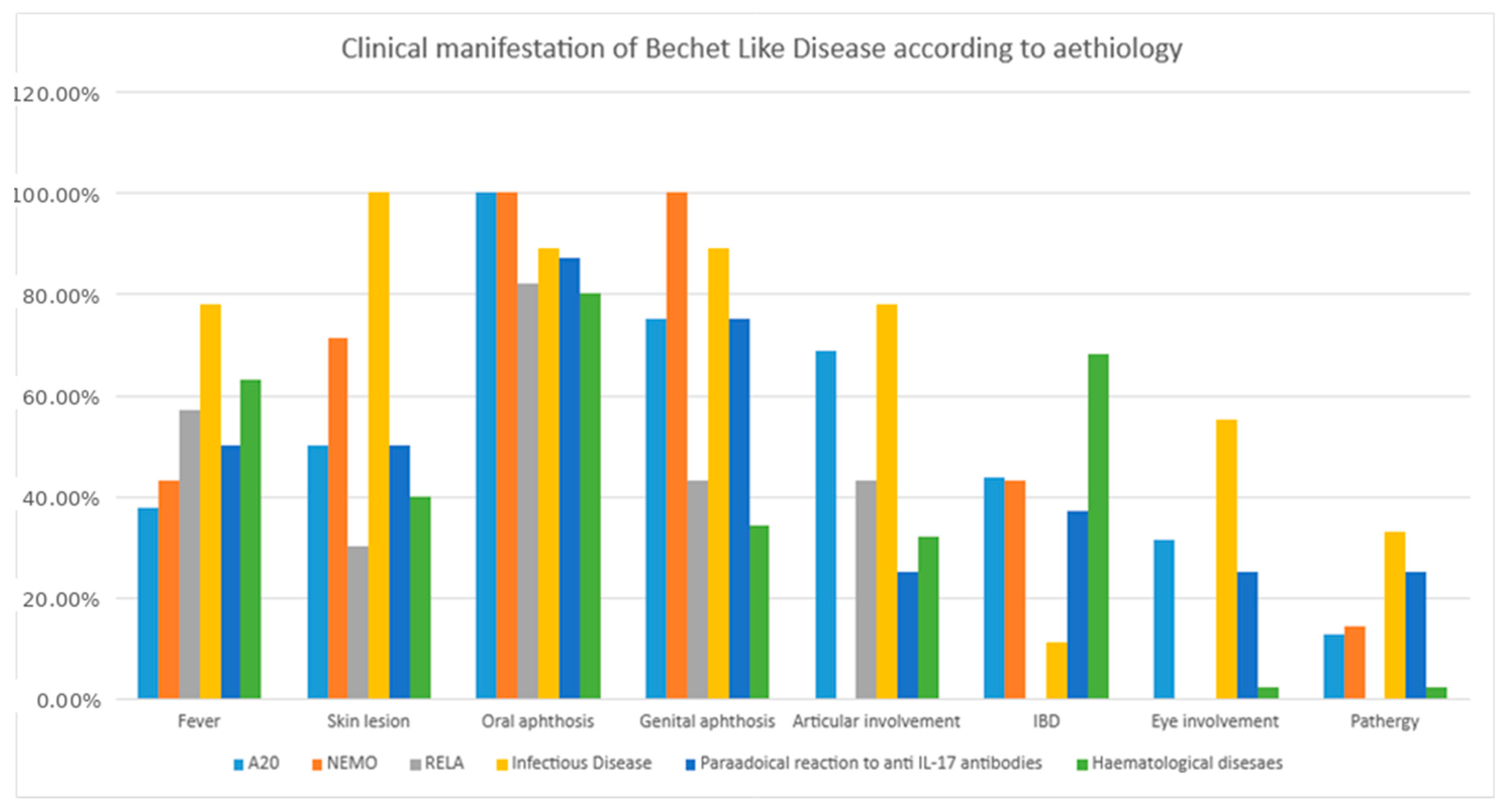
| A20 | NEMO | RELA | Hematologic Neoplastic Diseases | Infections | Paradoxical Reactions | |
|---|---|---|---|---|---|---|
| Ocular lesions | 31% | 0% | 0% | 2% | 55% | 25% |
| Genital aphthosis | 75% | 100% | 43% | 34% | 89% | 75% |
| Oral aphthosis | 100% | 100% | 82% | 80% | 89% | 87% |
| Skin lesions | 50% | 71% | 30% | 40% | 100% | 50% |
| Neurological manifestations | 19% | 0% | 14% | 5% | 11% | 0% |
| Vascular manifestations | 12.5% | 0% | 0% | 13% | 0% | 12% |
| Positive pathergy test | 12.5% | 14% | 0% | 2% | 33% | 25% |
| Intestinal Bowel Disease | 43.75% | 43% | 0% | 68% | 11% | 37% |
| Articular lesion | 68.50% * | 0% | 43% | 32% | 78% | 25% |
| Fever | 37.50% | 43% | 57% | 63% | 78% | 50% |
Disclaimer/Publisher’s Note: The statements, opinions and data contained in all publications are solely those of the individual author(s) and contributor(s) and not of MDPI and/or the editor(s). MDPI and/or the editor(s) disclaim responsibility for any injury to people or property resulting from any ideas, methods, instructions or products referred to in the content. |
© 2026 by the authors. Published by MDPI on behalf of the European Society of Dermatopathology. Licensee MDPI, Basel, Switzerland. This article is an open access article distributed under the terms and conditions of the Creative Commons Attribution (CC BY) license.
Share and Cite
Mancuso, G.; Salvadè, I.; Ogna, A.; Balestra, B.; Beltraminelli, H. Behçet-like Syndromes: A Comprehensive Review. Dermatopathology 2026, 13, 7. https://doi.org/10.3390/dermatopathology13010007
Mancuso G, Salvadè I, Ogna A, Balestra B, Beltraminelli H. Behçet-like Syndromes: A Comprehensive Review. Dermatopathology. 2026; 13(1):7. https://doi.org/10.3390/dermatopathology13010007
Chicago/Turabian StyleMancuso, Gaia, Igor Salvadè, Adam Ogna, Brenno Balestra, and Helmut Beltraminelli. 2026. "Behçet-like Syndromes: A Comprehensive Review" Dermatopathology 13, no. 1: 7. https://doi.org/10.3390/dermatopathology13010007
APA StyleMancuso, G., Salvadè, I., Ogna, A., Balestra, B., & Beltraminelli, H. (2026). Behçet-like Syndromes: A Comprehensive Review. Dermatopathology, 13(1), 7. https://doi.org/10.3390/dermatopathology13010007