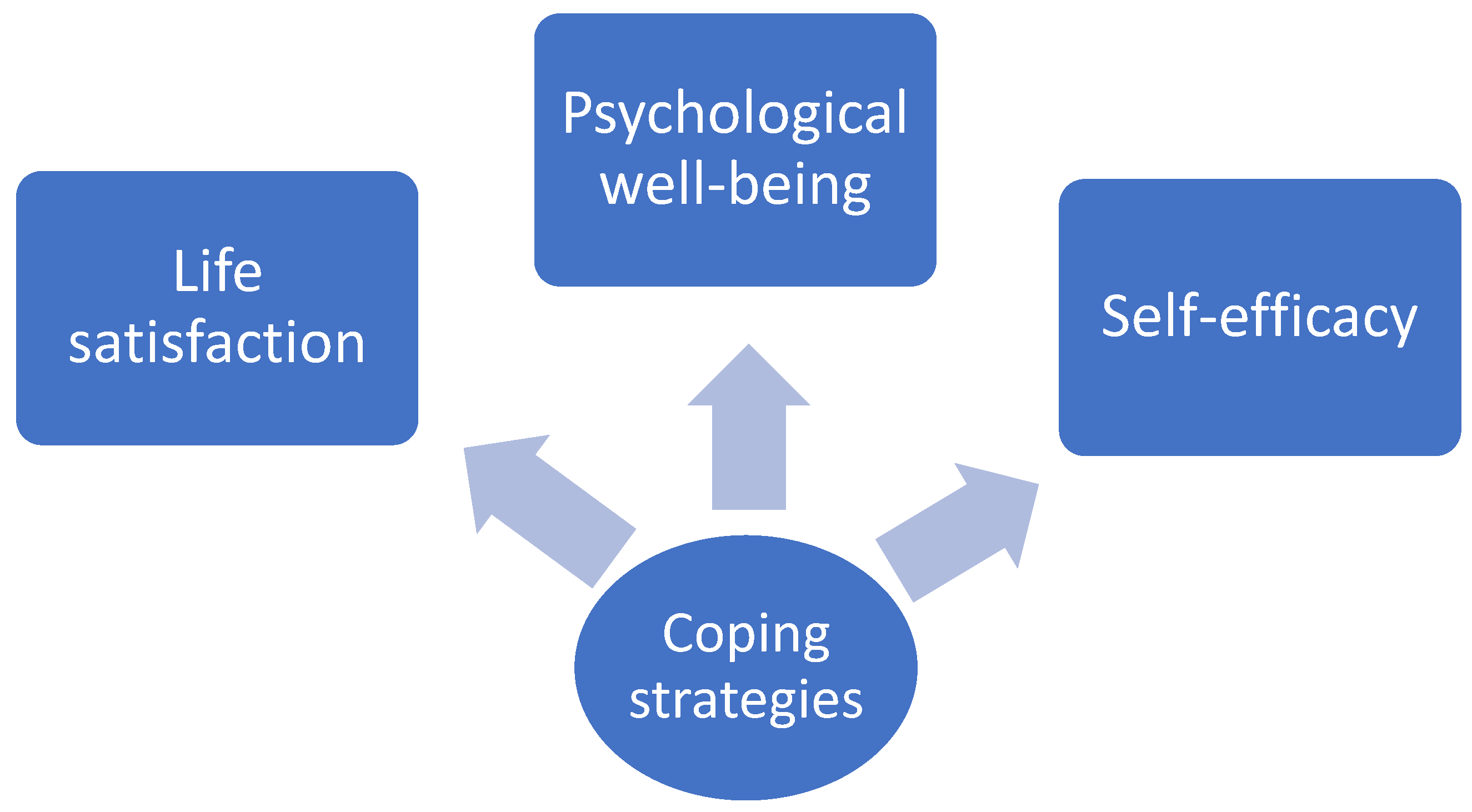

Are Coping Strategies with Well-Being in Deaf and Blind Parents Related?

Abstract
Share and Cite
Indiana, M.L.; Sagone, E.; Fichera, S.L.O. Are Coping Strategies with Well-Being in Deaf and Blind Parents Related? Eur. J. Investig. Health Psychol. Educ. 2021, 11, 1422-1439. https://doi.org/10.3390/ejihpe11040102
Indiana ML, Sagone E, Fichera SLO. Are Coping Strategies with Well-Being in Deaf and Blind Parents Related? European Journal of Investigation in Health, Psychology and Education. 2021; 11(4):1422-1439. https://doi.org/10.3390/ejihpe11040102
Chicago/Turabian StyleIndiana, Maria Luisa, Elisabetta Sagone, and Salvatore Luciano Orazio Fichera. 2021. "Are Coping Strategies with Well-Being in Deaf and Blind Parents Related?" European Journal of Investigation in Health, Psychology and Education 11, no. 4: 1422-1439. https://doi.org/10.3390/ejihpe11040102
APA StyleIndiana, M. L., Sagone, E., & Fichera, S. L. O. (2021). Are Coping Strategies with Well-Being in Deaf and Blind Parents Related? European Journal of Investigation in Health, Psychology and Education, 11(4), 1422-1439. https://doi.org/10.3390/ejihpe11040102