Article

Monitoring E. coli Cell Integrity by ATR-FTIR Spectroscopy and Chemometrics: Opportunities and Caveats

by
Jens Kastenhofer
,
Julian Libiseller-Egger
,
Vignesh Rajamanickam
and
Oliver Spadiut
*
Research Group Integrated Bioprocess Development, Research Division Biochemical Engineering, Institute of Chemical, Environmental and Bioscience Engineering, TU Wien, Gumpendorfer Strasse 1a, 1060 Vienna, Austria
*
Author to whom correspondence should be addressed.
Processes 2021, 9(3), 422; https://doi.org/10.3390/pr9030422
Submission received: 5 February 2021 / Revised: 20 February 2021 / Accepted: 22 February 2021 / Published: 26 February 2021
(This article belongs to the Special Issue Model Validation Procedures)

Abstract

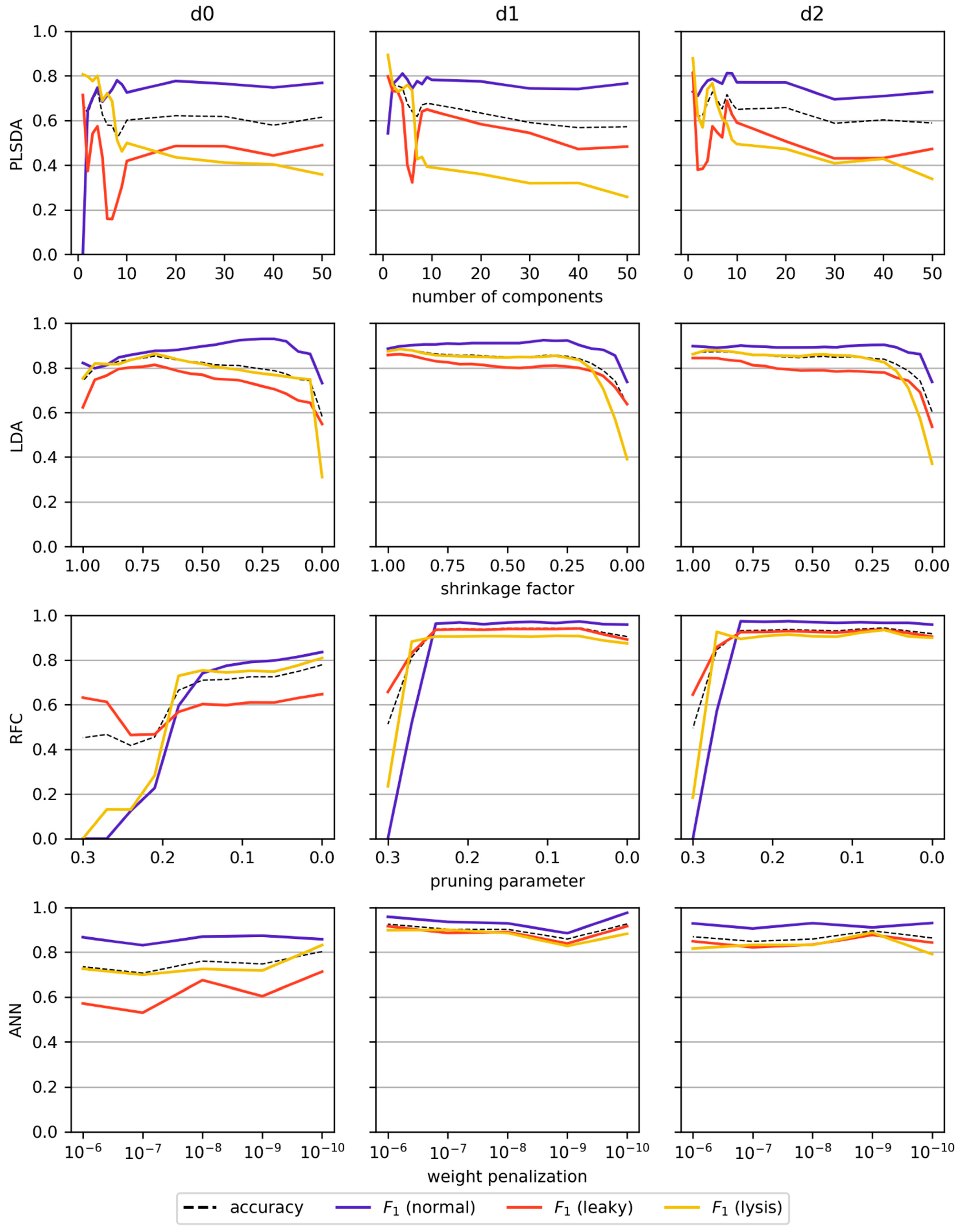
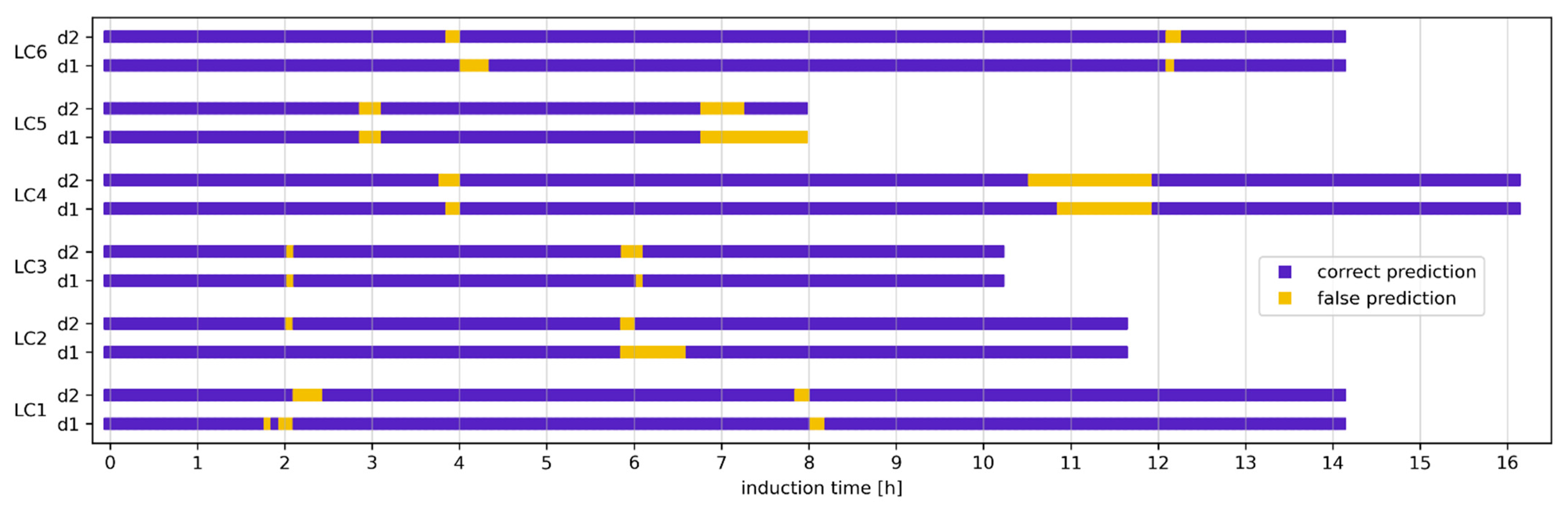
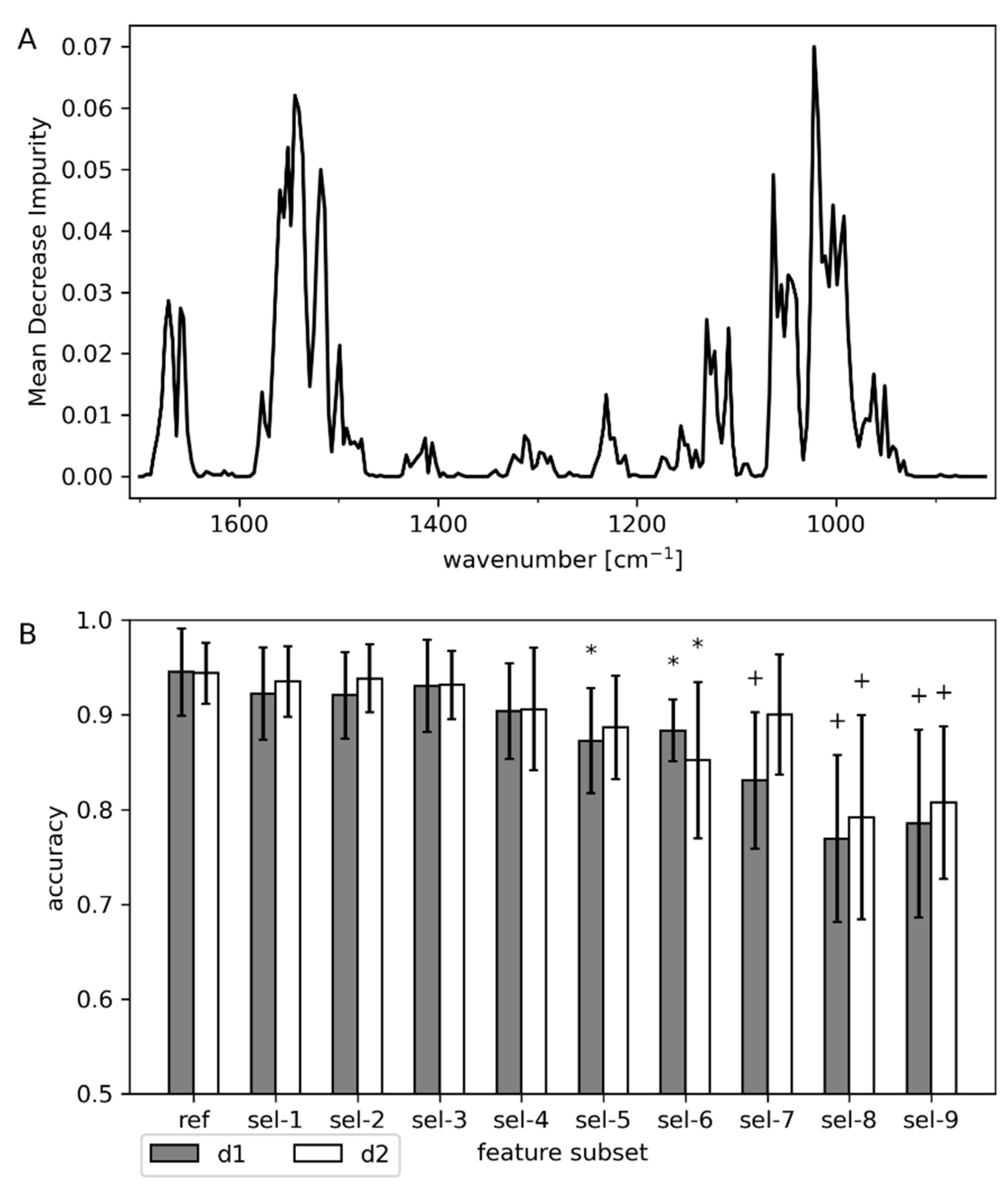
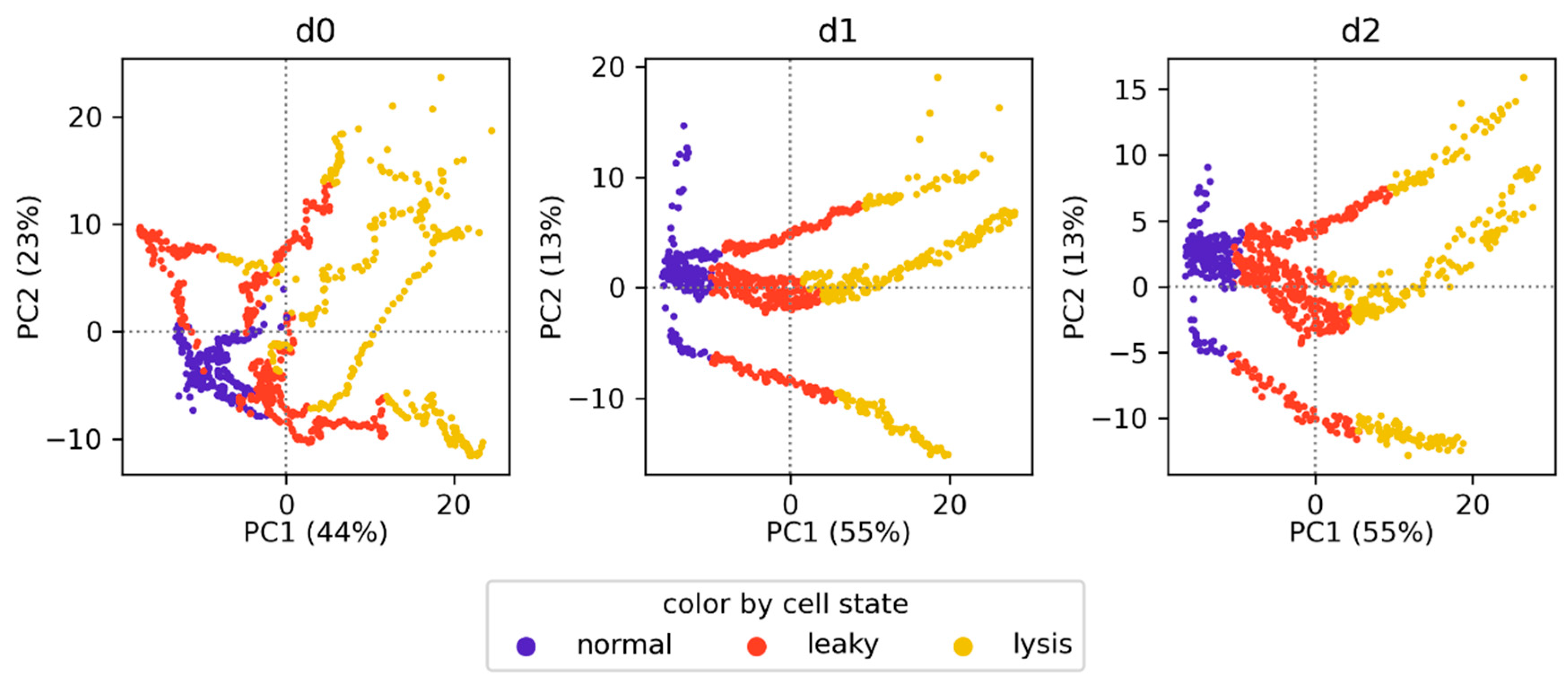
During recombinant protein production with E. coli, the integrity of the inner and outer membrane changes, which leads to product leakage (loss of outer membrane integrity) or lysis (loss of inner membrane integrity). Motivated by current Quality by Design guidelines, there is a need for monitoring tools to determine leakiness and lysis in real-time. In this work, we assessed a novel approach to monitoring E. coli cell integrity by attenuated total reflection Fourier-transform infrared (ATR-FTIR) spectroscopy. Various preprocessing strategies were tested in combination with regression (partial least squares, random forest) or classification models (partial least squares discriminant analysis, linear discriminant analysis, random forest, artificial neural network). Models were validated using standard procedures, and well-performing methods were additionally scrutinized by removing putatively important features and assessing the decrease in performance. Whereas the prediction of target compound concentration via regression was unsuccessful, possibly due to a lack of samples and low sensitivity, random forest classifiers achieved prediction accuracies of over 90% within the datasets tested in this study. However, strong correlations with untargeted spectral regions were revealed by feature selection, thereby demonstrating the need to rigorously validate chemometric models for bioprocesses, including the evaluation of feature importance.
Keywords: bioprocess monitoring; ATR-FTIR spectroscopy; quality by design; process analytical technology; chemometrics; machine learning bioprocess monitoring; ATR-FTIR spectroscopy; quality by design; process analytical technology; chemometrics; machine learning