Review

Thermal Stability of Ionic Liquids: Current Status and Prospects for Future Development
State Key Laboratory of Chemical Engineering, School of Chemical Engineering, East China University of Science and Technology, Shanghai 200237, China
*
Author to whom correspondence should be addressed.
Processes 2021, 9(2), 337; https://doi.org/10.3390/pr9020337
Submission received: 22 January 2021 / Revised: 8 February 2021 / Accepted: 9 February 2021 / Published: 12 February 2021

Abstract

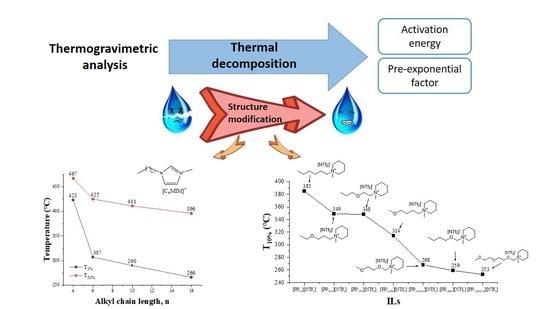
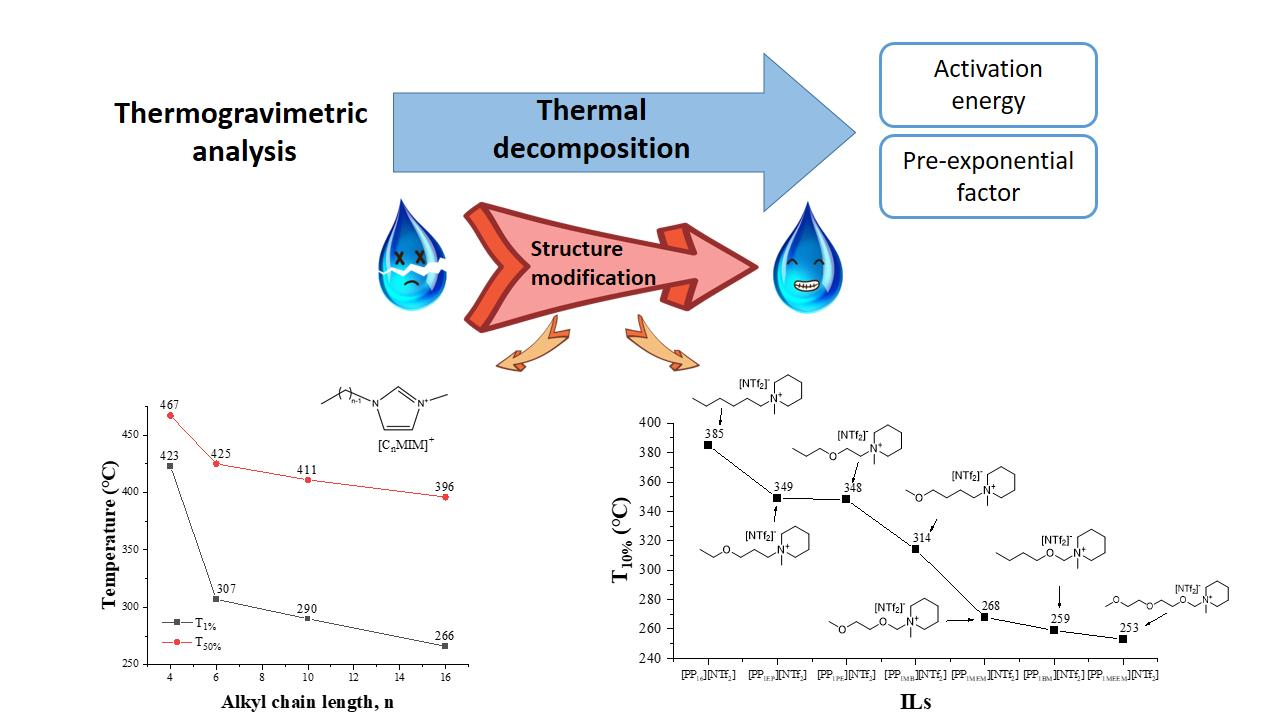
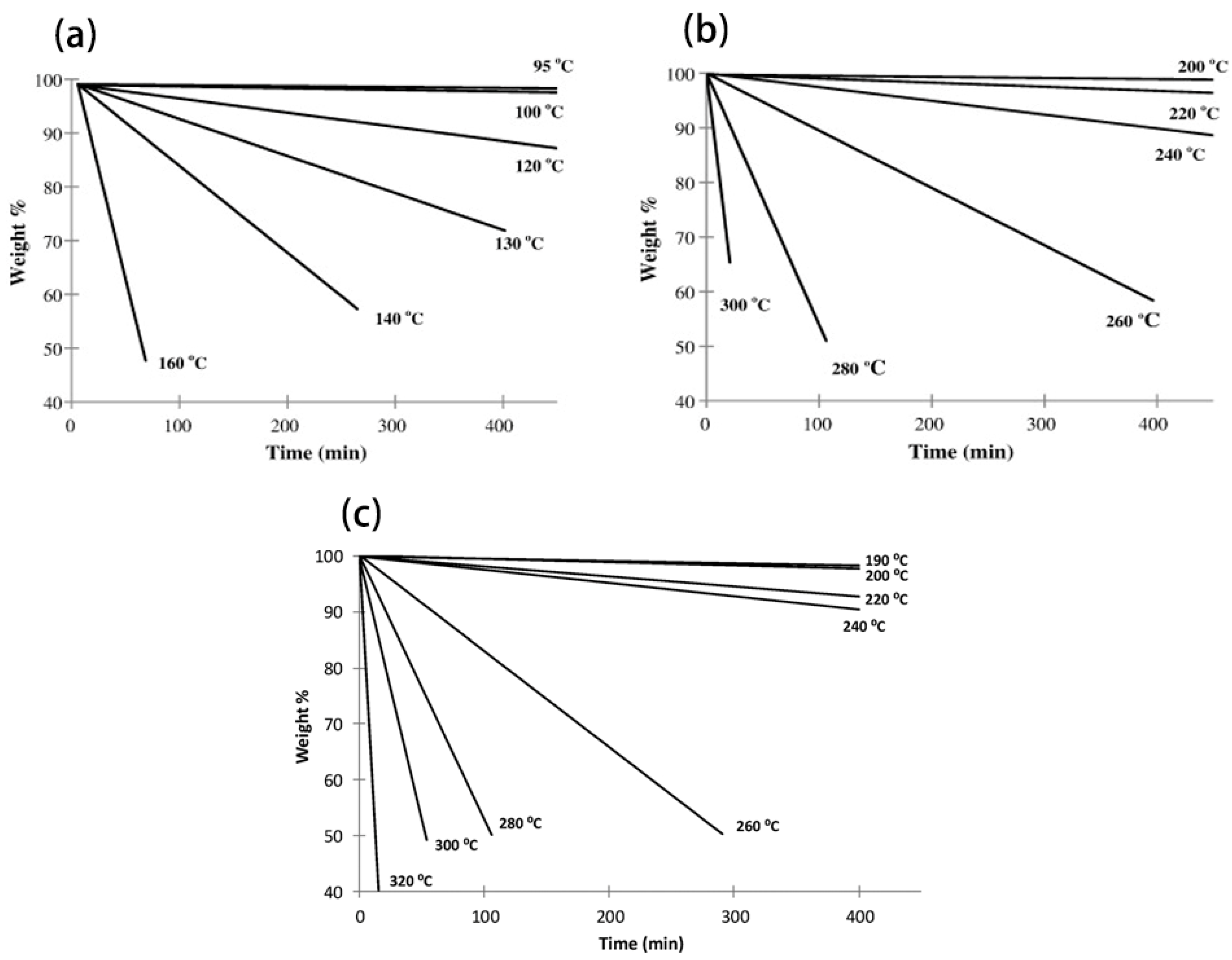
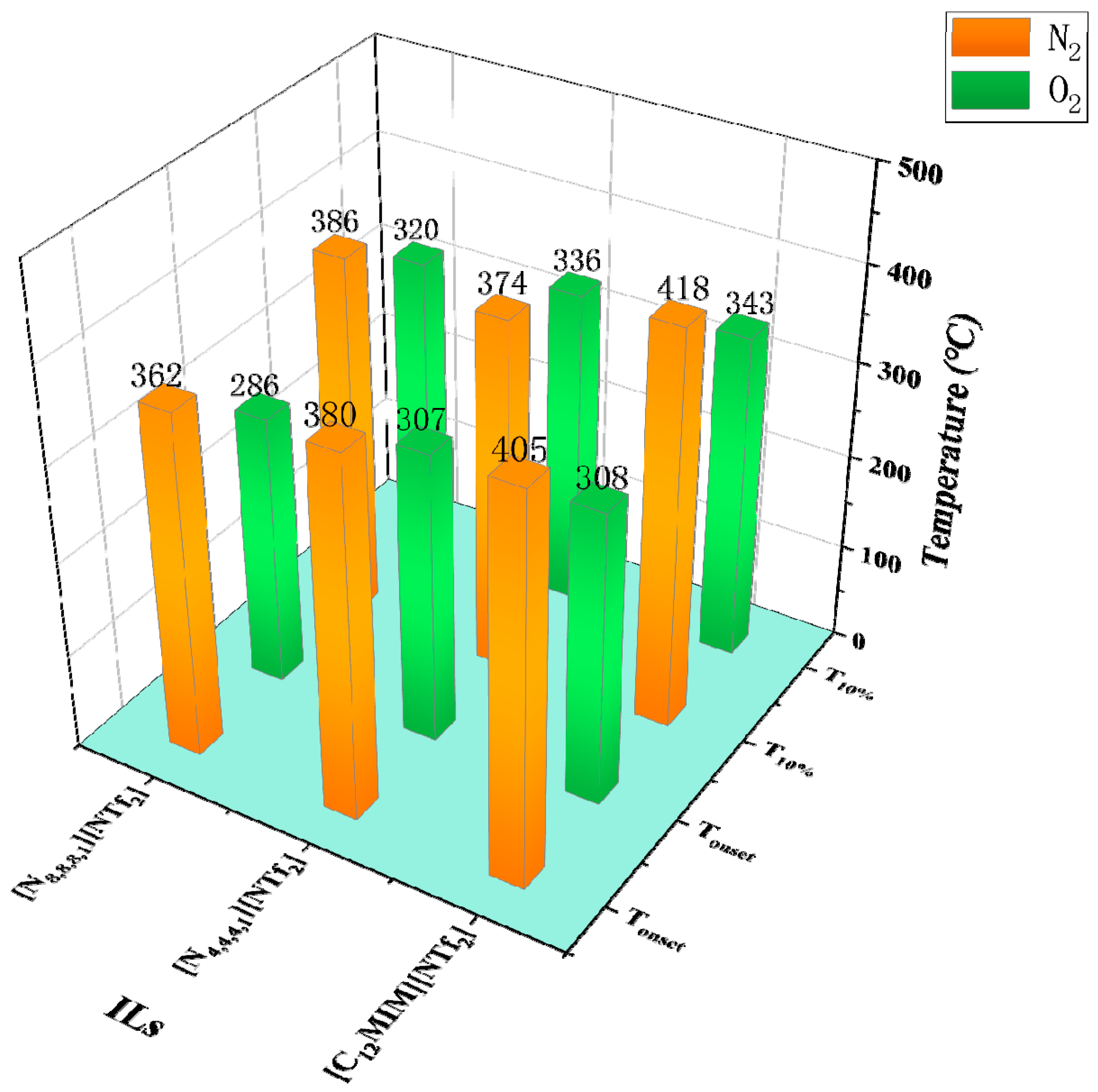
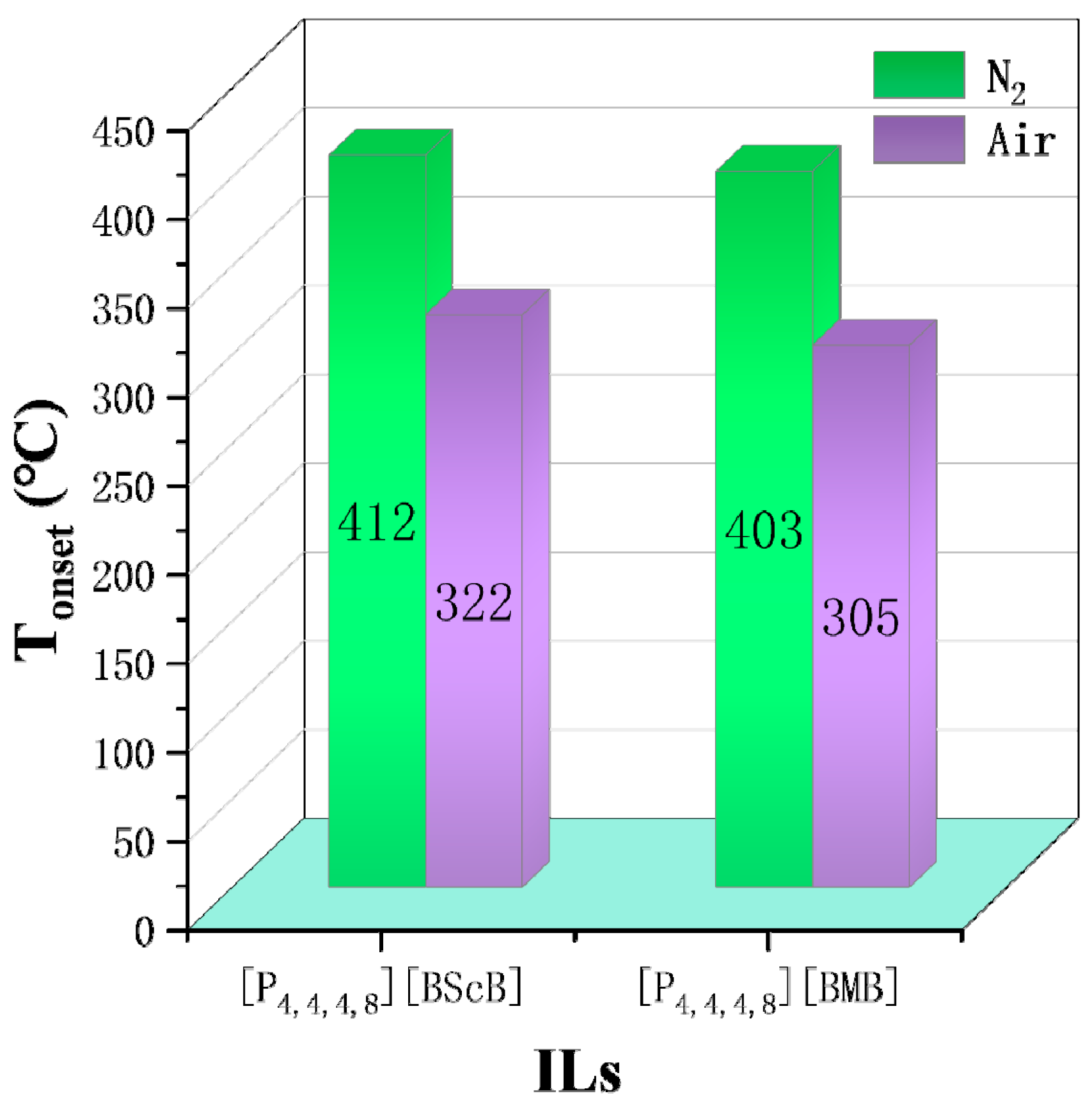
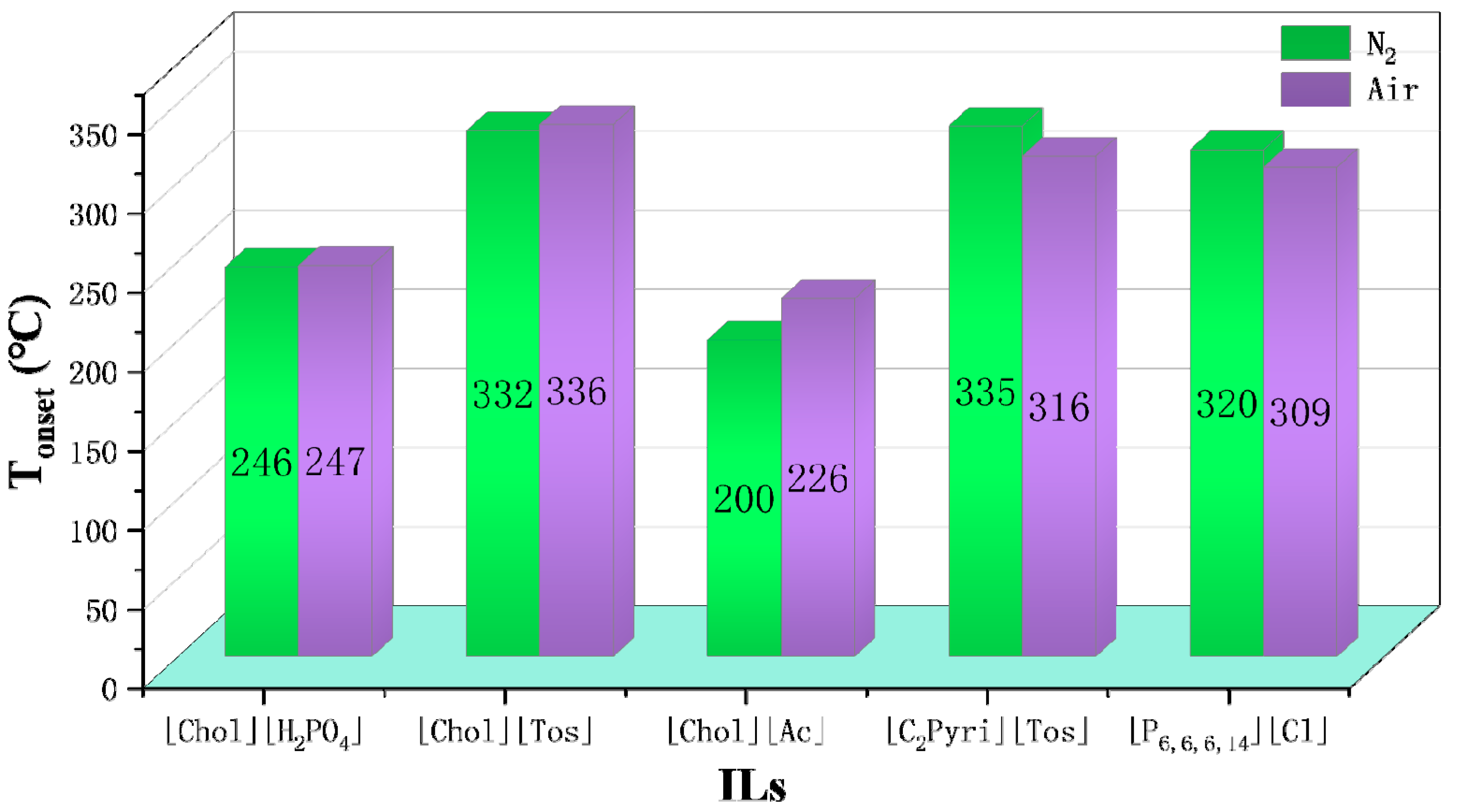
Ionic liquids (ILs) are the safest solvent in various high-temperature applications due to their non-flammable properties. In order to obtain their thermal stability properties, thermogravimetric analysis (TGA) is extensively used to analyze the kinetics of the thermal decomposition process. This review summarizes the different kinetics analysis methods and finds the isoconversional methods are superior to the Arrhenius methods in calculating the activation energy, and two tools—the compensation effect and master plots—are suggested for the calculation of the pre-exponential factor. With both parameters, the maximum operating temperature (MOT) can be calculated to predict the thermal stability in long-term runnings. The collection of thermal stability data of ILs with divergent cations and anions shows the structure of cations such as alkyl side chains, functional groups, and alkyl substituents will affect the thermal stability, but their influence is less than that of anions. To develop ILs with superior thermal stability, dicationic ILs (DILs) are recommended, and typically, [C4(MIM)2][NTf2]2 has a decomposition temperature as high as 468.1 °C. For the convenience of application, thermal stability on the decomposition temperature and thermal decomposition activation energy of 130 ILs are summarized at the end of this manuscript.
Keywords: ionic liquid; thermal stability; thermal decomposition kinetics; dicationic ionic liquid ionic liquid; thermal stability; thermal decomposition kinetics; dicationic ionic liquid
Graphical Abstract