Article

Comparison of Exergy and Advanced Exergy Analysis in Three Different Organic Rankine Cycles

by
Shahab Yousefizadeh Dibazar
1,
Gholamreza Salehi
2 and
Afshin Davarpanah
3,*
1
Energy System Engineering Department, Petroleum University of Technology, Abadan, Iran
2
Department of Mechanical Engineering, Central Tehran Branch, Islamic Azad University, Tehran, Iran
3
Department of Mathematics, Aberystwyth University, Aberystwyth SY23 3BZ, UK
*
Author to whom correspondence should be addressed.
Processes 2020, 8(5), 586; https://doi.org/10.3390/pr8050586
Submission received: 17 April 2020 / Revised: 6 May 2020 / Accepted: 9 May 2020 / Published: 14 May 2020
(This article belongs to the Special Issue Chemical Process Design, Simulation and Optimization)

Abstract

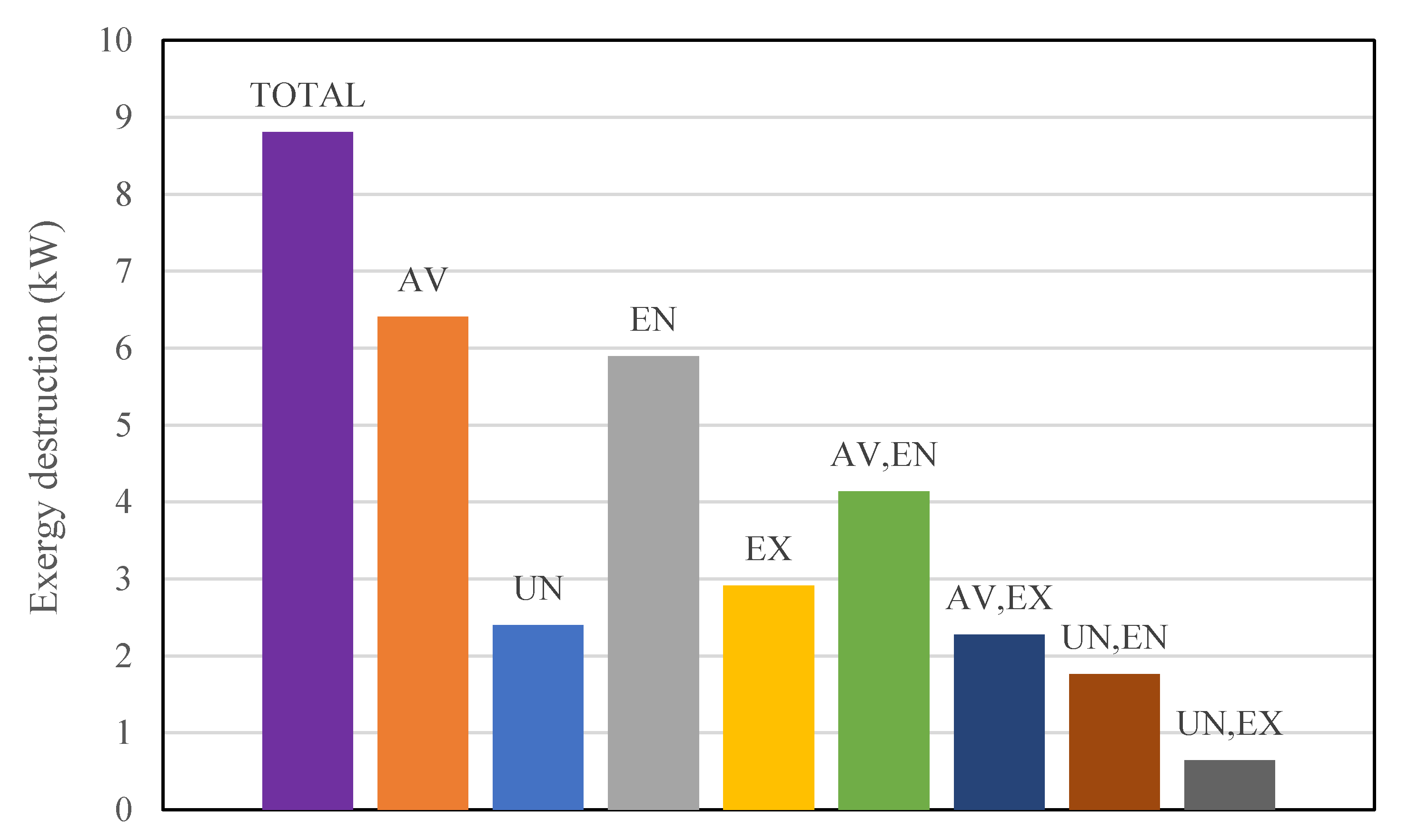
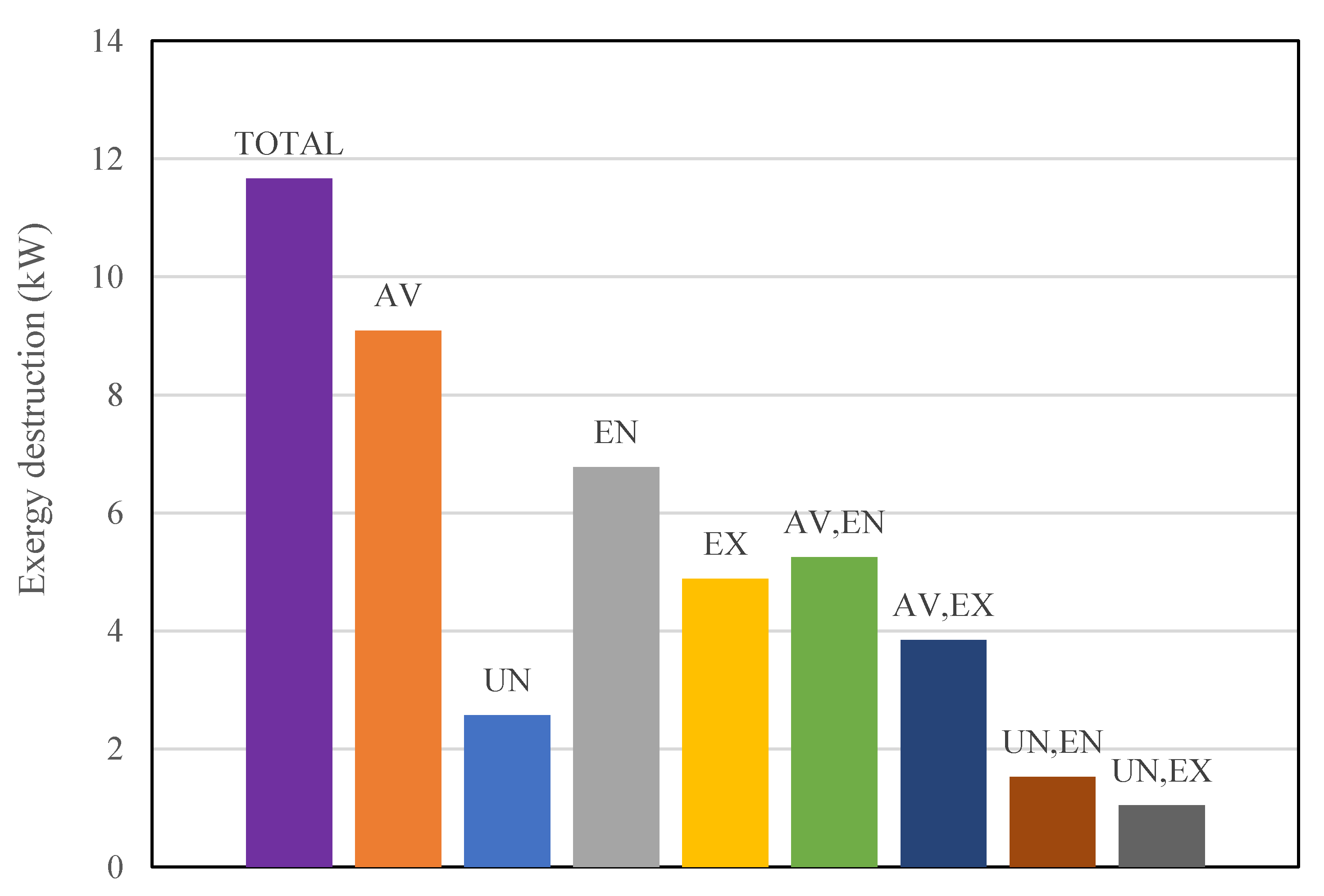
Three types of organic Rankine cycles (ORCs): basic ORC (BORC), ORC with single regeneration (SRORC) and ORC with double regeneration (DRORC) under the same heat source have been simulated in this study. In the following, the energy and exergy analysis and the advanced exergy analysis of these three cycles have been performed and compared. With a conventional exergy analysis, researchers can just evaluate the performance of components separately to find the one with the highest amount of exergy destruction. Advanced analysis divides the exergy destruction rate into unavoidable and avoidable, as well as endogenous and exogenous, parts. This helps designers find more data about the effect of each component on other components and the real potential of each component to improve its efficiency. The results of the advanced exergy analysis illustrate that regenerative ORCs have high potential for reducing irreversibilities compared with BORC. Total exergy destruction rates of 4.13 kW (47%) and 5.25 kW (45%) happen in avoidable/endogenous parts for SRORC and DRORC, respectively. Additionally, from an advanced exergy analysis viewpoint, the priority of improvement for system components is given to turbines, evaporators, condensers and feed-water heaters, respectively.
Keywords: exergy; advanced exergy analysis; organic Rankine cycle; regenerative cycle exergy; advanced exergy analysis; organic Rankine cycle; regenerative cycle