Article

A Study on the Water/Polymer Co-Flooding Seepage Law and Reasonable Polymer Injection Volume in Offshore Oilfields

1
Petroleum Exploration and Production Research Institute, SINOPEC, Beijing 100083, China
2
Institute of Unconventional Oil and Gas Science & Technology, China University of Petroleum, Beijing 102249, China
3
MOE Key Laboratory of Enhanced Oil Recovery, Northeast Petroleum University, Daqing 163318, China
*
Authors to whom correspondence should be addressed.
Processes 2020, 8(5), 515; https://doi.org/10.3390/pr8050515
Submission received: 25 March 2020 / Revised: 22 April 2020 / Accepted: 24 April 2020 / Published: 27 April 2020

Abstract

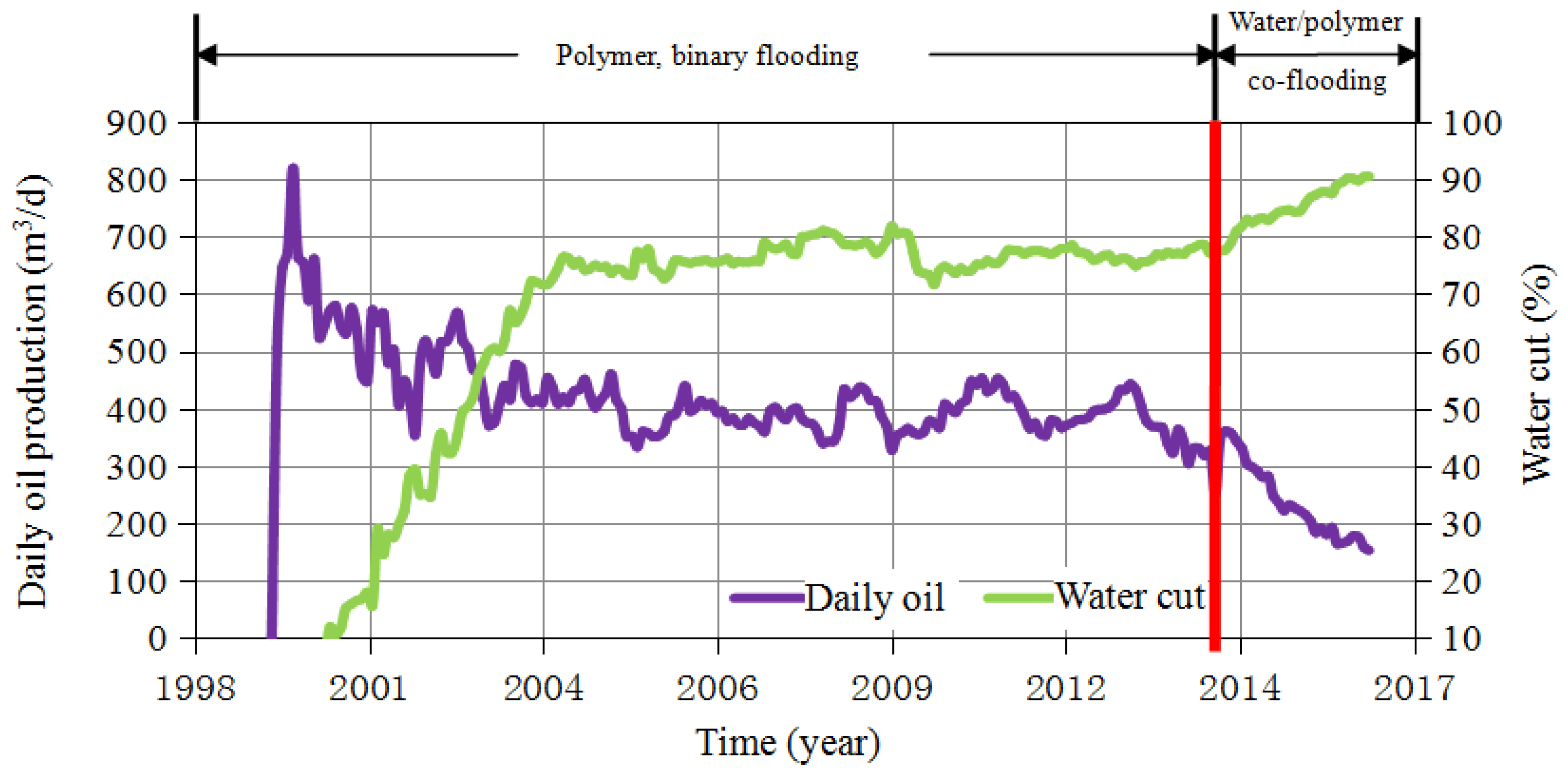
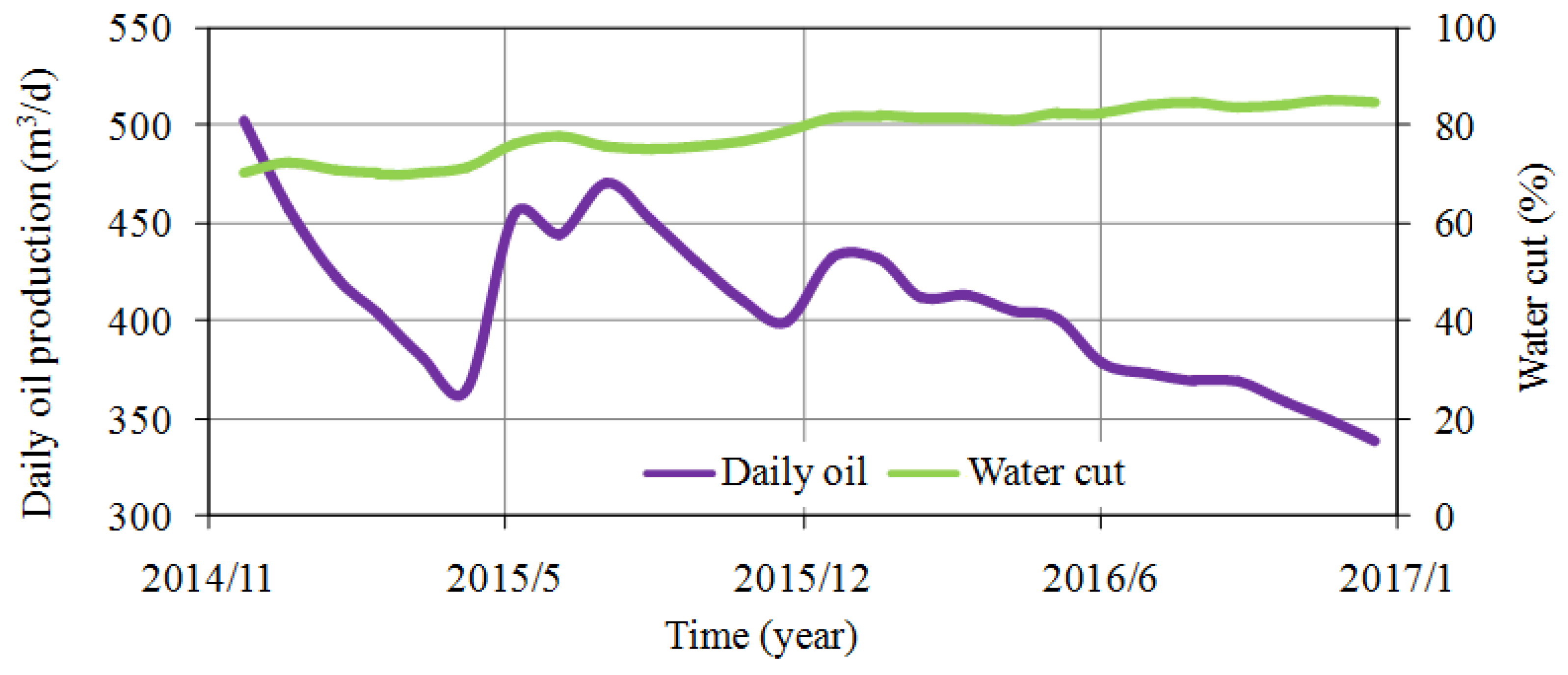
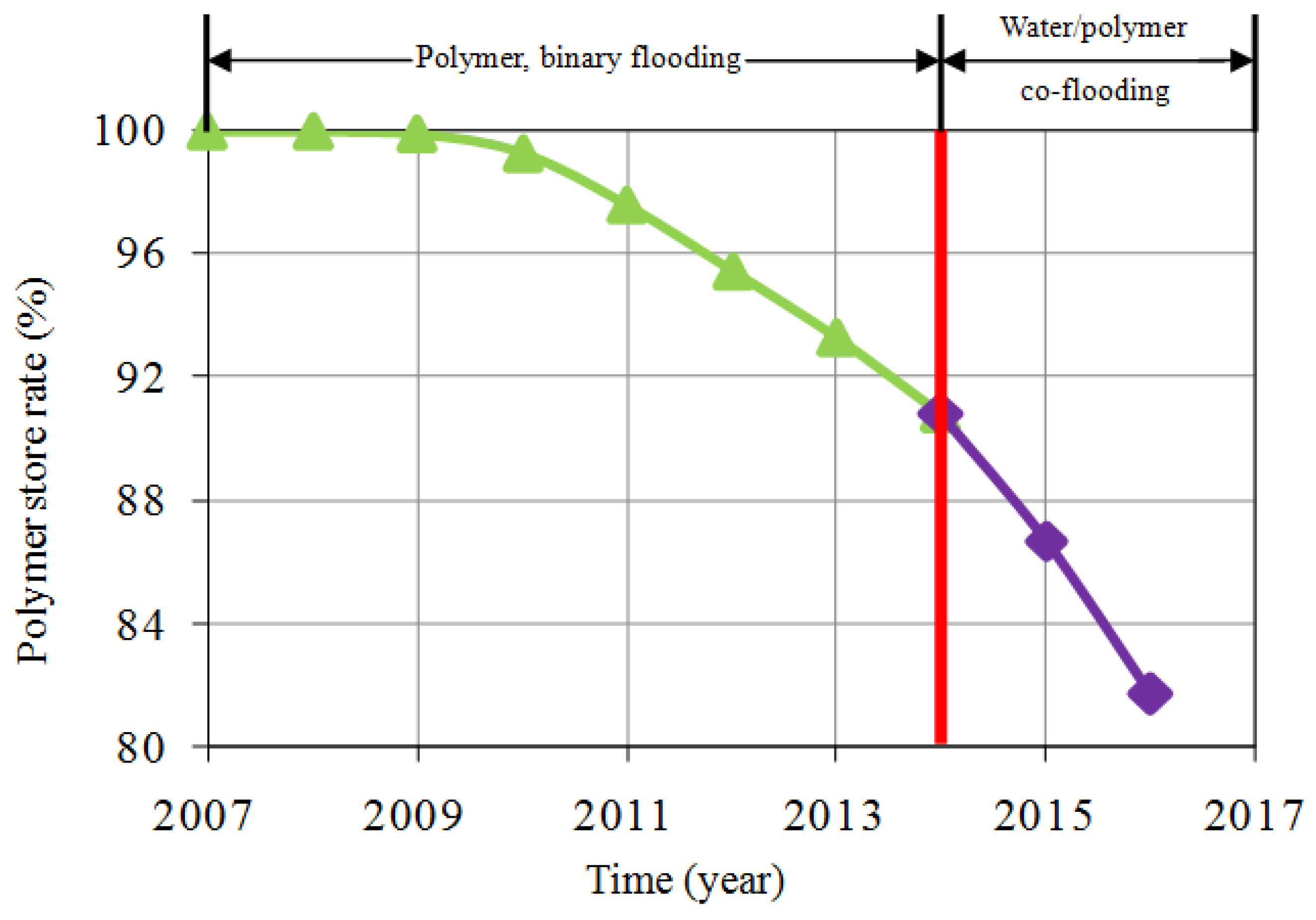
To analyze the water/polymer co-flooding seepage law in offshore oilfields, we took the Jinzhou 9-3 oilfield as an example, analyzed the dynamic characteristics of water/polymer co-flooding, and then applied streamline simulation and tracer simulation technology to obtain the water/polymer co-flooding seepage law. The interference degree of the water/polymer co-flooding was quantified, and the accuracy of the seepage law was tested. Finally, a reasonable polymer injection volume was obtained using the economic law. The results demonstrated that the water-cut of the Jinzhou 9-3 oilfield in the water/polymer co-flooding stage was high, the annual decrease of polymer store ratio increased by 2.02 times, and the swept area of polymer was limited to some extent. Mutual interference existed in the water/polymer flooding, and the oil increment of per ton polymer decreased by 36.5%. In the late stage of the water/polymer co-flooding, the utilization rate of water and polymer was low, and the plane swept area and vertical swept volume were small. If the oil price was 50 dollars/bbl, when the output-input ratio was set at 1, the reasonable polymer injection volume was 0.59 PV, and the continuous polymer injection volume was 0.29 PV in the water/polymer co-flooding stage. The study results could improve the development benefit of the Jinzhou 9-3 oilfield, and they could also provide the references for the development of the same type oilfield.
Keywords: water/polymer co-flooding; seepage law; polymer injection volume; offshore oilfield water/polymer co-flooding; seepage law; polymer injection volume; offshore oilfield