Article

Effect of Pressure and Surfactants with Different IFT and Wettability Alteration Abilities on Imbibition Oil Recovery in Tight Sandstone Reservoir Under High Pressure


1
National Engineering Laboratory for Exploration and Development of Low-Permeability Oil & Gas Fields, Xi’an 710081, China
2
Oil and Gas Technology Research Institute, PetroChina Changqing Oilfield Company, Xi’an 710081, China
3
College of Petroleum Engineering, Yangtze University, Jingzhou 434025, China
*
Author to whom correspondence should be addressed.
Processes 2026, 14(9), 1494; https://doi.org/10.3390/pr14091494
Submission received: 23 March 2026 / Revised: 11 April 2026 / Accepted: 25 April 2026 / Published: 5 May 2026

Abstract

The water huff-n-puff imbibition oil recovery technique has been recognized as an important approach to supplementing formation energy and recovering the remaining oil, attracting increasing attention. To further improve imbibition efficiency, a surfactant-aided huff-n-puff imbibition technique under high pressure was proposed. However, the imbibition mechanisms under high pressure, particularly under variable pressurization modes, remain insufficiently understood. In this study, the effects of different pressurization methods (constant vs. variable pressure) and surfactant types on imbibition behavior were systematically investigated. The results show that, compared with spontaneous imbibition, high-pressure imbibition increases oil recovery by 7–10% and the imbibition rate by 1–2 times, with the variable pressurization mode demonstrating a more pronounced enhancement. Surfactant selection should not pursue ultra-low interfacial tension (IFT) alone; instead, the wettability alteration ability is more critical. An optimal IFT–wettability synergy window is identified, through which the best imbibition performance is achieved when the IFT ranges from 10−2 to 10−1 mN/m and the contact angle ranges from 30° to 60°. Furthermore, the slug injection mode provides a synergistic effect with high-pressure variable pressurization and surfactant action. Compared with high-pressure formation water imbibition, surfactant-aided imbibition increases oil recovery by 10.44% and the imbibition rate by three times. These findings provide a deeper understanding of the key factors governing imbibition behavior and support the application of surfactant-aided huff-n-puff imbibition under high pressure in tight sandstone reservoirs.

1. Introduction

With the continuous breakthrough of oil and gas exploration and development technology, the focus of exploration and development has shifted from traditional conventional oil and gas reservoirs to unconventional oil and gas resources. With the development of horizontal wells and volumetric fracturing technology, unconventional reservoirs such as ultra-low-permeability and tight oil reservoirs have shown great potential under the existing economic and technological conditions [1,2,3]. Depletion development methods after fracturing have usually been adopted to recover oil from ultra-low-permeability reservoirs. However, the depletion and high declining rate of production limited the effective exploitation of ultra-low-permeability sandstone oil reservoirs. Some researchers estimated that, for ultra-low permeability reservoirs with medium porosity of about 20% and permeability of µD to mD, the crude oil recovery may amount to 5–15% [4]. Thus, it is of vital importance to explore new techniques to delay the decline rate and improve oil recovery.
The water flooding or gas flooding technique is an important way to supplement formation energy and develop efficiently in fractured ultra-low-permeability oil reservoirs [5,6]. However, due to the existence of natural fractures or secondary fractures, the water channeling or gas channeling phenomenon is very serious at the stage of the water injection or gas injection period. Conventional water flooding or gas flooding is unsatisfactory, as expected, resulting in a large amount of remaining oil unrecovered in the matrix rock block [7]. Thus, it is crucial to recover the remaining oil and improve the development effect of the tight reservoirs.
In recent years, the water huff-n-puff imbibition oil recovery technique has been proposed to recover the remaining oil and has attracted increasing attention. Spontaneous imbibition has been considered one of the important mechanisms for tight oil reservoirs to enhance oil recovery, which can play a significant role in recovering the tremendous amount of oil that remains in the matrix [8,9,10,11,12]. Spontaneous imbibition is defined as the wetting phase imbibing into the porous media and the non-wetting phase being spontaneously expelled under the force of capillary pressure and gravity. The spontaneous imbibition of water into water-wet sandstone or carbonate reservoir has been identified as having a positive effect on improving oil recovery. The spontaneous imbibition process is time-consuming, and the imbibition rate and recovery are low, so improving the imbibition efficiency in ultra-low-permeability sandstone reservoir by adding surfactant is considered; this approach could change rock surface wettability and reduce interfacial tension [13,14,15,16]. Alvarez J.O. found that a wettability change in unconventional liquid reservoirs (ULRs) can improve fracture treatment performance and enhance oil recovery by changing the capillary force when converting intermediate and oil-wet reservoirs to water-wet reservoirs [17,18,19,20,21]. Schechter reported that the imbibition recovery was affected by a decrease in IFT and observed that recovery increased with a decrease in IFT (Alvarez et al., 2016) [17,22,23,24,25]. Derong Xu found that an appropriate IFT reduction, such as 10−1 mN/m levels, could play an important role in imbibition-enhancing oil recovery. Excessively low IFTs, such as less than 10−2 mN/m, were not suitable for improving imbibition recovery; this is due to a significant decrease in capillary pressure [26,27,28,29,30]. Liangbin Dou believes that, for imbibition, there is an optimal interfacial tension to obtain the maximum crude oil recovery [31,32]. Heng Zheng believes that higher interfacial tension can accelerate the initial imbibition, while, under the in situ conditions after hydraulic fracturing, a certain interfacial tension is required to achieve imbibition [33]. However, there is some controversy about which is more important, wettability or interfacial tension. Therefore, it is necessary to carry out assessments of different wettability alteration abilities and interfacial tension on the imbibition effect and clarify its importance.
The water huff-n-puff imbibition oil recovery technique has been applied in the Chang 8 oil reservoir of Sinopec North China Petroleum Bureau, and it achieved certain effects. Moreover, to improve imbibition oil recovery efficiency, the surfactant-aided huff-n-puff imbibition oil recovery technique under high pressure was proposed and applied. Previous field tests have found that different pressures and surfactants will affect the imbibition effect. External differential pressure is a key factor affecting the degree of spontaneous imbibition. Chen Wang found that the imbibition efficiency and imbibition rate of the core samples have a positive correlation with the experimental pressure [2]. However, the imbibition law of water huff-n-puff imbibition oil recovery under high pressure is not clear enough. Therefore, in this study, a series of experiments, including spontaneous imbibition and forced imbibition under high pressure, were carried out. The effects of different pressurization modes and surfactants on forced imbibition were studied by the mass method, which guided the improvement of tight oil recovery by forced imbibition in specific tight reservoirs.

2. Experimental Section

2.1. Rock and Fluid Properties

Chang 8 natural outcrop cores were selected for imbibition experiments. The ionic composition and TDS of Chang 8 simulated formation water are shown in Table 1. The oil used in the experiment is the simulated oil of Chang 8 reservoir prepared by degassed crude oil and kerosene with a ratio of 1:3.5, and the simulated oil viscosity is 4.58 mPa·s at 30 °C.

2.2. Oil Saturation and Cores Aging

A vacuum-pressure saturation device was used to saturate the rock core with oil. The experimental procedure was as follows: (1) The core was dried in an oven at 90 °C. Additionally, the change in its weight with time was monitored. When the weight did not change with time, we assumed that the core plug was dry. The weight was then recorded as dry weight. (2) The length and diameter of the core were measured. The porosity and permeability of the core were measured by a combined porosity and permeability tester. (3) The core was vacuumed for 2 days, pressurized at 10 MPa, and saturated with oil for 3 days again. (4) After the core was saturated with simulated oil, it was aged at the reservoir temperature of 65 °C for 7 days. (5) Before imbibition, the cores were taken out from the oil and weighed after excess oil was wiped off the surface; then, a measurement of the saturated oil volume was obtained.

2.3. Contact-Angle and IFT Measurements

Surfactants exert an important effect on imbibition, so it is necessary to measure their contact angle and interfacial tension. The contact-angle measurement was carried out by the Kruss oil–water–solid contact-angle measuring instrument based on the lying drop method to measure the contact angle at the perimeter of the oil–water–solid three-phase; thus, a measurement of the wettability characterizing the solid surface was obtained. The quartz sheet was immersed in the surfactant solution, the quartz sheet was fixed in the container, and then an elbow syringe was used to inject a drop of about 1.0 µL oil into the lower surface of the quartz sheet. To ensure the reliability of the test results, four oil drops were injected into the lower surface of the quartz sheet in the experiment, and the average value of the contact angle was identified. Due to the existence of wetting lag, the oil droplets were allowed to stand under the quartz sheet for about 30 min during the experiment; then, the final shape of the oil droplets was photographed with a high-resolution camera. Finally, the contact angle was calculated using relevant software.
A Texas-500c interfacial tension meter (USA KINO Industry Co. Ltd., Boston, MA, USA) was used to measure the oil–water interfacial tension through the rotating drop method. The rotating speed was 5000 r·min-1, and the measuring temperature was 65 °C. The principle of the spin drop method is to fill the sample tube with a high-density phase (surfactant solution) and then inject a drop of a low-density phase (crude oil) into the high-density phase. The sample tube rotates, driven by the motor. Under the action of centrifugal force, the crude oil is on the central axis of the sample tube and is stretched and deformed to form an oil column. The diameter of the cylinder is related to the interfacial tension. (Under the same conditions, the smaller the oil column diameter, the lower the interfacial tension.) Then, the IFT was calculated with the equipment software.

2.4. Spontaneous Imbibition Under Atmospheric Pressure

In this study, the mass method was used to perform spontaneous imbibition experiments. The experimental procedures were carried out as follows: (1) One end of the core sample was hung on a precision electronic balance (Sartorius, Göttingen, Germany), while the other end of the core sample was immersed in the formation brine. (2) Water imbibition into the core occurred and expelled oil. Then, the weight change of the core sample was monitored as a function of the imbibition time. (3) The spontaneous imbibition data was transferred to the computer, and the imbibition recovery was calculated by the following equations.
Imbibition production
w i w 0 = ρ w ρ o Δ V o
Saturated oil volume
V o i = ϕ π d 2 L S o i 4
Imbibition recovery
R i = Δ V o V o i = 4 w i w 0 ϕ π d 2 L S o i ρ w ρ o × 100 %

2.5. Forced Imbibition Under High Pressure

The experimental procedures of imbibition under high pressure were as follows: (1) One end of the core sample was hung on the hook of the reactor, while the other end of the core sample was immersed in the imbibition agent. (2) The reactor was pressurized, the pressure was released at regular intervals, the core was taken out, and it was weighed. (3) According to the quality difference of cores at different times, the imbibition recovery under high pressure was calculated. In this way, measurements of the imbibition recovery under different pressures could be obtained.
R = m t m i ρ w ρ o V

3. Results and Discussion

3.1. Spontaneous Imbibition Oil Recovery by Formation Water

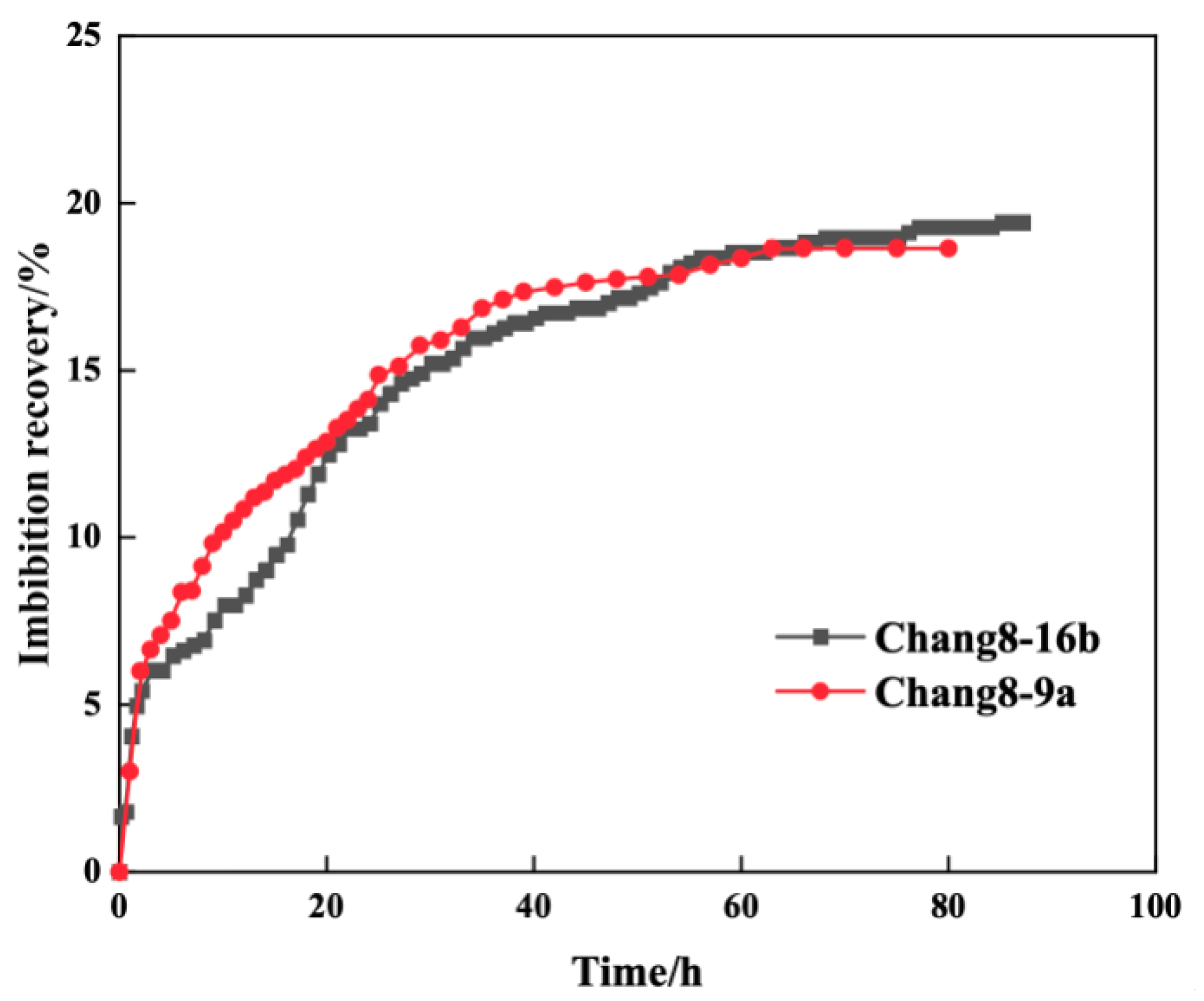
Two groups of formation water imbibition experiments were carried out under atmospheric pressure to provide the basis for subsequent experiments.
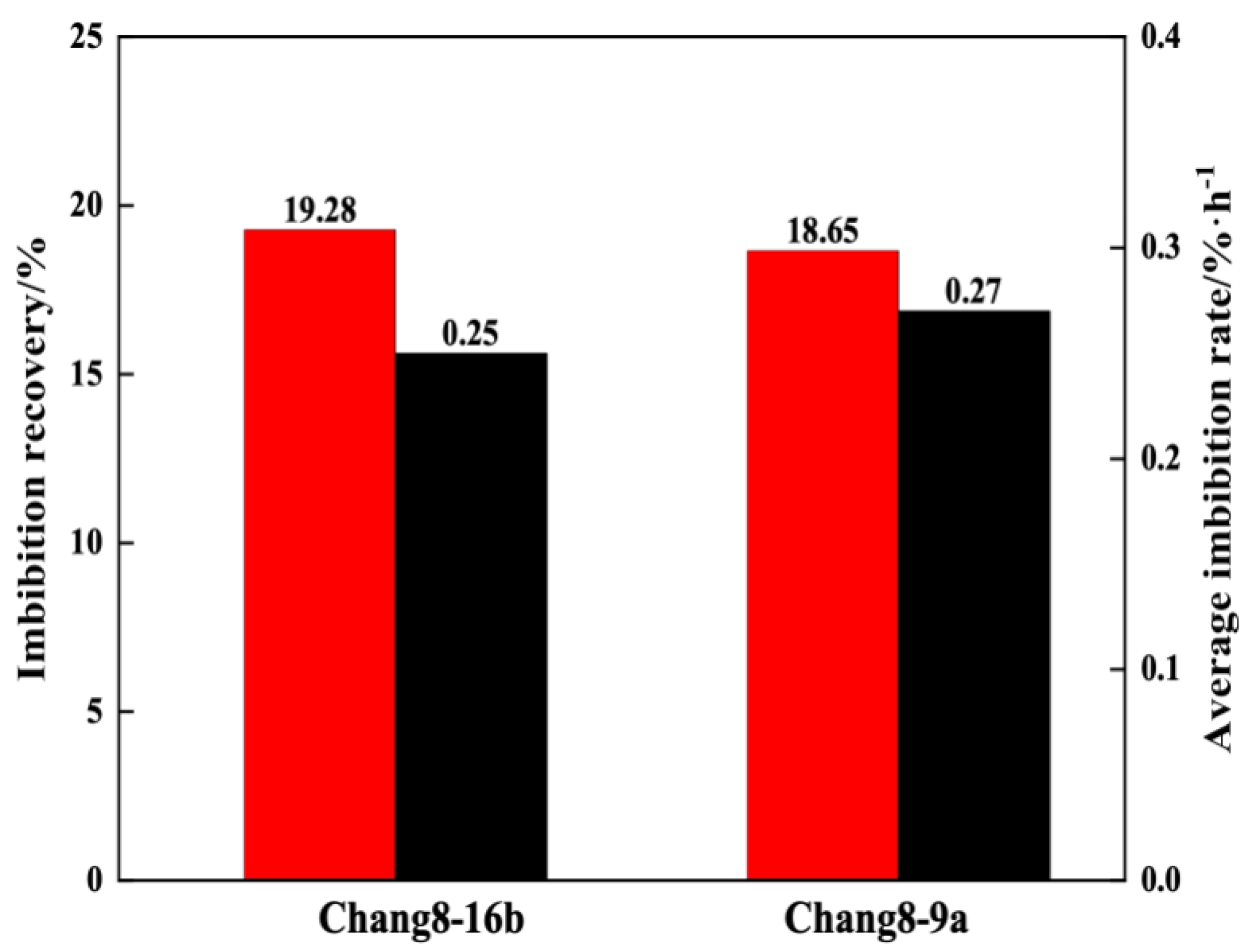
As shown in Figure 1 and Figure 2, the imbibition oil recovery under atmospheric pressure ranged from 18.65% to 19.28%, with an average imbibition rate of 0.25 to 0.27 percent per hour. These low values indicate that spontaneous imbibition alone cannot effectively recover oil in tight sandstone reservoirs. The main reason is the lack of external differential pressure, which is needed to overcome capillary resistance in narrow pore-throat networks. This result is consistent with literature values for similar tight reservoirs, such as fifteen to twenty-two percent recovery in Chang 7 reservoirs, but is much lower than forced imbibition results. For field application, external pressure ranging from 0.5 to 5.0 MPa should be applied to exceed the capillary entry pressure of the Chang 8 reservoirs. This baseline helps operators design field pilots and evaluate the benefits of high-pressure huff-n-puff or surfactant slug injection.

3.2. Forced Imbibition Oil Recovery by Formation Water

The experimental research on the imbibition of tight cores mainly focuses on the imbibition under atmospheric pressure, without considering the imbibition under the influence of external fluid pressure. And the imbibition recovery was low under atmospheric pressure. Meanwhile, the influence of pressure on imbibition was not clear. To better clarify the influence of pressure on imbibition, according to the actual situation of single and multiple imbibitions in the mine, two experiments examining the constant pressure mode and the variable pressure mode were designed using the mass method to simulate the imbibition process under differential pressure. These experiments were conducted to study whether increasing the differential pressure could provide imbibition recovery and improve the imbibition rate.

3.2.1. Constant Pressurization Mode

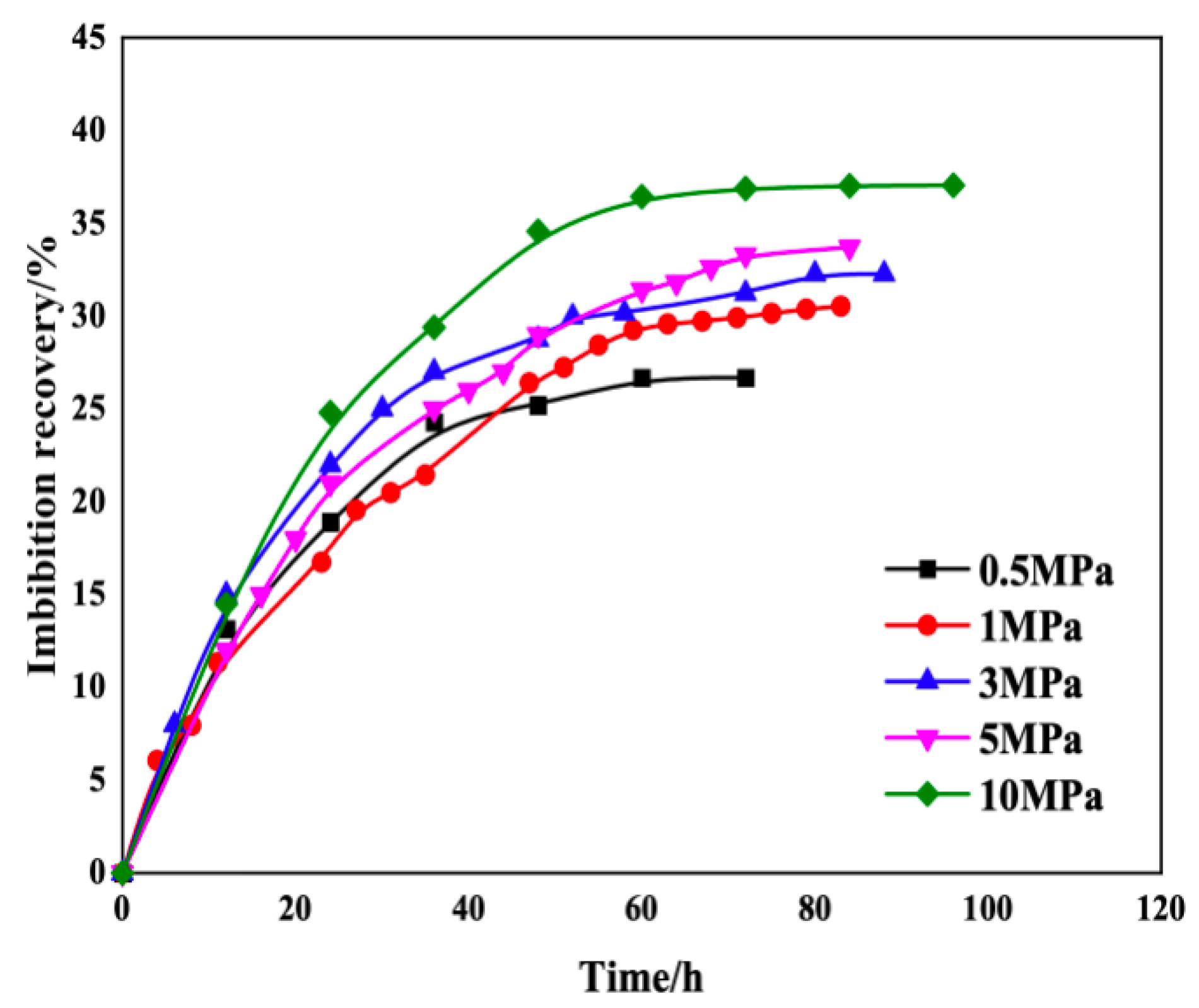
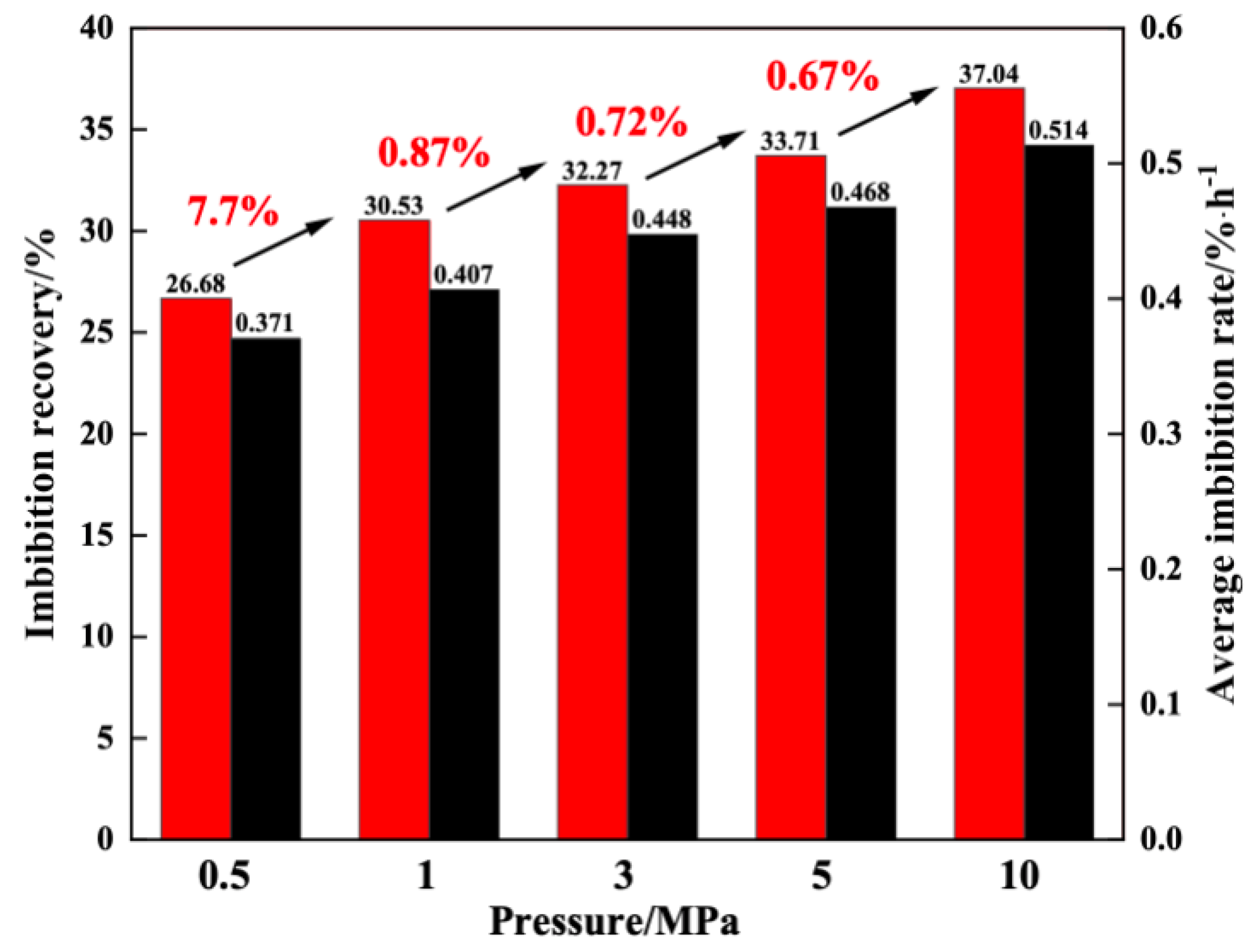
To clarify the influence of the constant pressure difference on imbibitions’ oil recovery effect, five core samples were selected and subjected to constant pressure imbibition experiments at 0.5 MPa, 1 MPa, 3 MPa, 5 MPa, and 10 MPa. The basic physical parameters of the core are shown in Table 2, and the experimental results are shown in Figure 3 and Figure 4.
It can be seen from Figure 3 that the imbibition recovery of all cores was higher than that under atmospheric pressure. Under high pressure, all cores were imbibed with formation water in the reactor. The core sample was subjected to an imbibition experiment at 0.5 MPa, and the final recovery was 26.68%, reaching the peak recovery in about 80 h, and then the recovery tended to be stable. The core sample was subjected to an imbibition experiment at 1 MPa, and the final imbibition recovery was 30.53%, which was significantly higher than 19.28% under atmospheric pressure. Therefore, the effect of pressure on imbibition was great. Meanwhile, the peak value was reached after imbibition under 1 MPa for about 80 h, and then the recovery tended to be stable.
The core sample was subjected to an imbibition experiment at 3 MPa, and the final imbibition recovery was 32.27%. The core sample was subjected to an imbibition experiment at 5 MPa, and the final imbibition recovery was 33.71%. It can be seen from the above two groups of data that the pressure was positively correlated with imbibition, but it was not the case that the higher the pressure, the better. With the increase in pressure, the increase in imbibition oil recovery was reduced, which meant that, although excessive pressure could improve oil recovery, the increase in costs was not comparable to the loss to reduce the input–output ratio. With the consideration of the larger pressure range, 5 MPa was selected to supplement forced imbibition, which was the same as the previous 10 MPa test method. A 4 h dense sampling point was selected. After 75 h of the high-pressure 5 MPa imbibition test, the core recovery was stable at 33.71%. The core sample was subjected to an imbibition experiment at 10 MPa, and the final recovery factor of imbibition was 37.04%. The core sample was subjected to an imbibition experiment at 10 MPa, and the recovery reached the peak within 72 h. After the subsequent 12 h of high-pressure imbibition, the recovery increased by only 0.06%.
Compared with the imbibition experiment under atmospheric pressure, the imbibition recovery of high pressure was significantly higher. It showed that the application of differential pressure could promote the progress of imbibition. Under the action of external differential pressure, it could promote the flow of formation water to the core, it accelerated the displacement speed of oil–water imbibition, and it improved imbibition recovery. Meanwhile, the overall imbibition rate of the five core samples also has a positive correlation with pressure. In other words, the greater the pressure, the higher the efficiency of the imbibition rate. Therefore, during the implementation of the single-round imbibition huff and puff test in the mine, the effect of single-round imbibition huff and puff oil production could be improved by increasing the differential pressure.

3.2.2. Variable Pressurization Mode

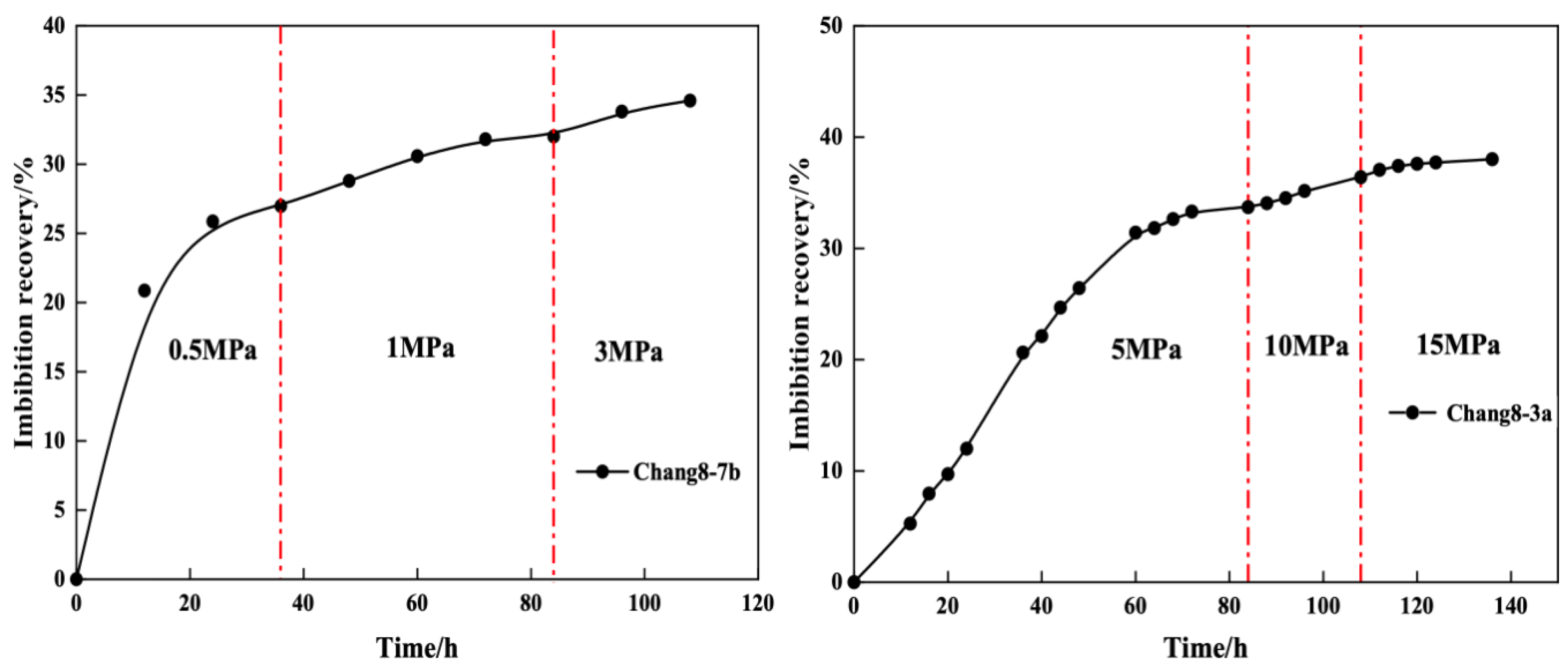
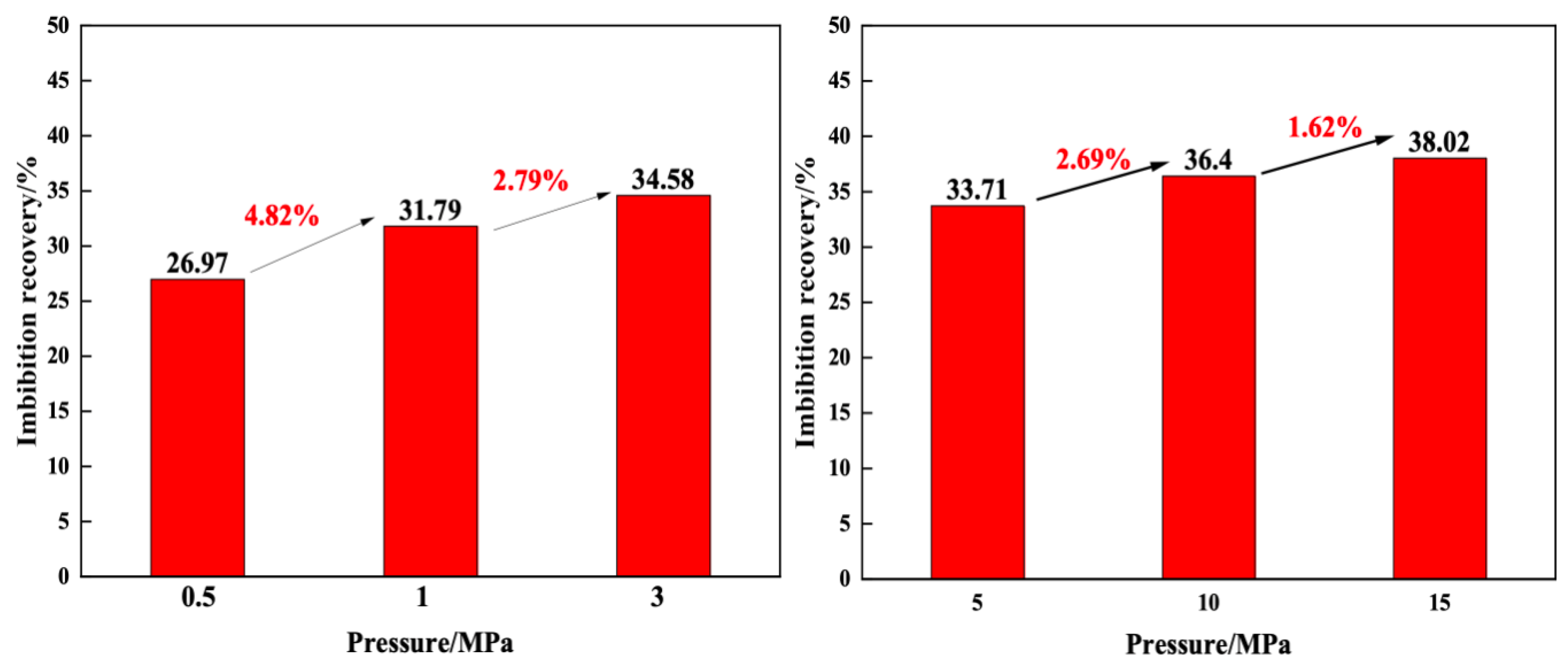
In order to clarify the effect of increasing the differential pressure on the oil production effect of multiple rounds of imbibition huff and puff, the low-amplitude-pressurization (0.5–1–3 MPa) and high-amplitude-pressurization (5–10–15 MPa) imbibition experiments were designed, respectively, under the variable pressurization imbibition mode. The core physical parameters used in the variable pressurization imbibition experiment are shown in Table 3, and the experimental results are shown in Figure 5 and Figure 6.
According to the analysis of the experimental results in Figure 5 and Figure 6 above, the core sample was subjected to an imbibition experiment in the low amplitude pressurization mode, and the imbibition recovery of core Chang 8-7b under 0.5 MPa pressure was 26.97%. After the pressure difference was increased to 1 MPa, the imbibition recovery increased to 31.79%. After the pressure difference was increased to 3 MPa again, the imbibition recovery reached 34.58%. The pressure increased from 0.5 MPa to 3 MPa, and the imbibition recovery increased by 7.61%. The core sample was subjected to an imbibition experiment at the high amplitude pressurization mode, and the imbibition recovery of core Chang 8-3a under 5 MPa pressure was 33.71%. After the differential pressure was increased to 10 MPa, the imbibition recovery increased to 36.4%. After the differential pressure was increased to 15 MPa again, the imbibition recovery reached 38.02%. From 5.0 MPa to 15.0 MPa, the imbibition recovery increased by 4.31%.
Both the low-amplitude-pressurization mode and the high-amplitude-pressurization mode can effectively improve the effect of subsequent multiple rounds of imbibition huff and puff and improve imbibition recovery by increasing differential pressure. However, in the low-amplitude-pressurization mode, the increase in imbibition recovery is the greatest. With the continuous increase in pressure, the increase was unchanged or changed little, indicating that the continuous increase in pressure did not necessarily ensure a high increase in imbibition recovery and the imbibition rate. Combined with the previous field permeability test results, when the construction process conditions allow, the effect of differential pressure in the range of 1~5 MPa is the best.

3.3. Surfactant-Aided Spontaneous Imbibition Oil Recovery

3.3.1. IFT and Wettability Evaluation of Surfactant

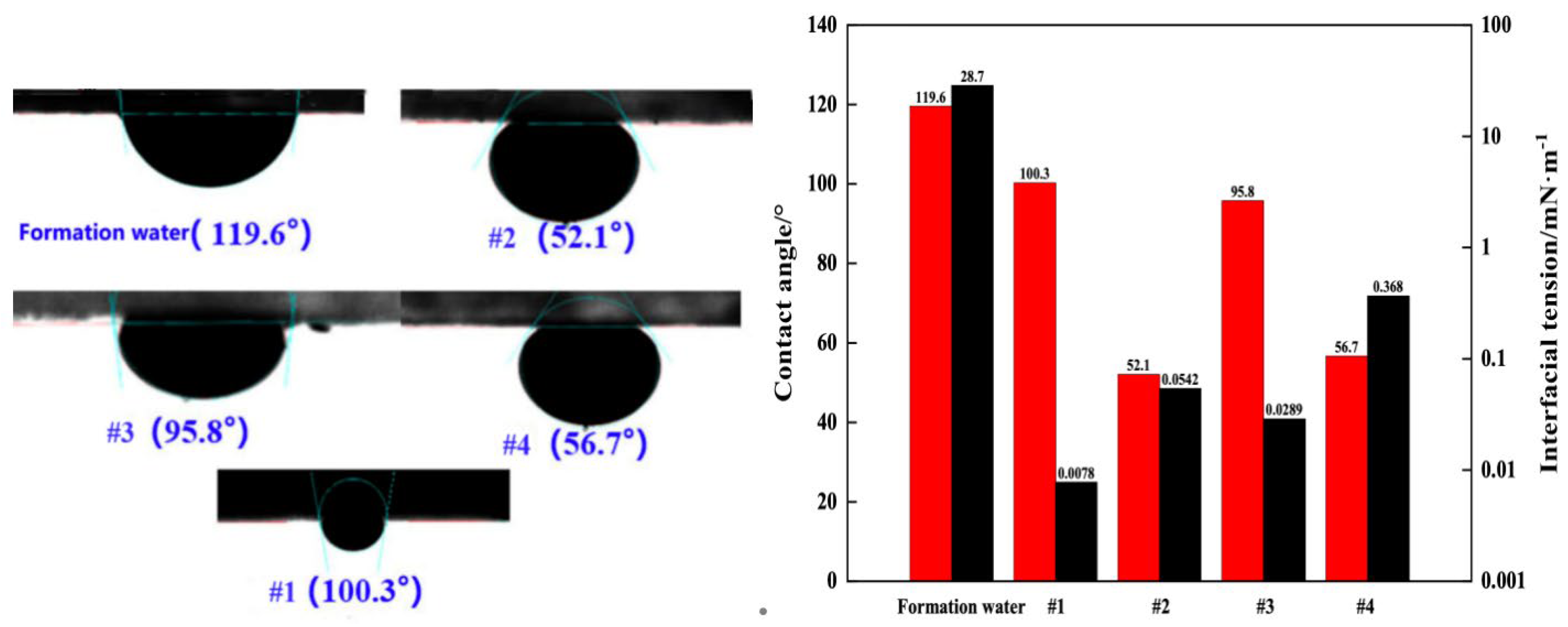
Previous studies have confirmed that surfactants could change rock wettability, reduce oil–water interfacial tension, promote the migration of injected media to the deep matrix, and then improve the swept volume of matrix crude oil. Surfactants increase the hydrophilic properties of the rock surfaces and promote spontaneous imbibition. Four kinds of surfactants were evaluated under atmospheric pressure, and the surfactant with the better effect was selected for the high-pressure imbibition experiment.
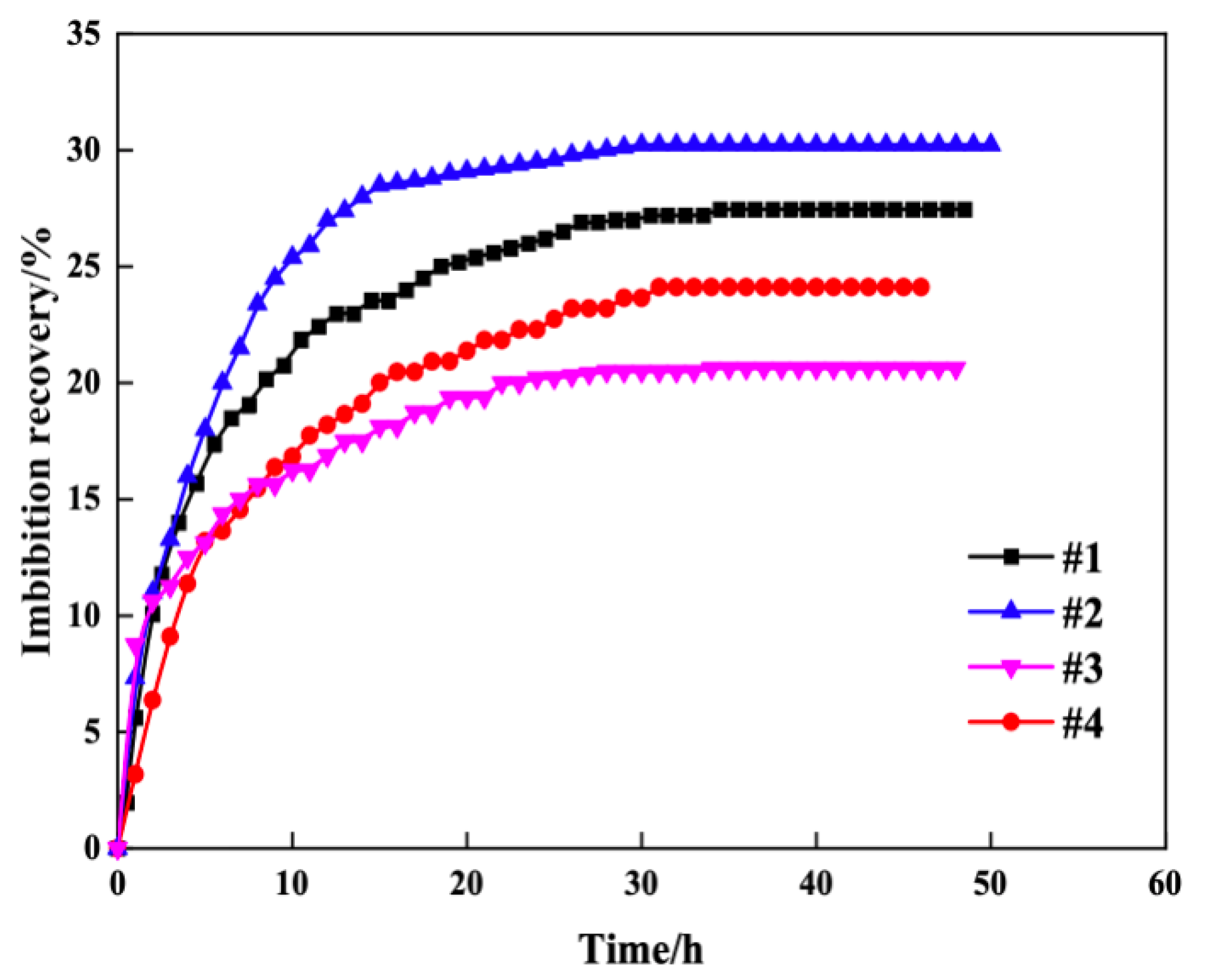
The experimental results are shown in Table 4 and Figure 7. The results indicate that surfactant #4’s interfacial tension level was 10−1 mN/m, and the interfacial tension level of surfactants #2 and #3 was 10−2 mN/m. Additionally, the surfactant #1 interfacial tension level was 10−3 mN/m, which constituted ultra-low interfacial tension. Surfactants #2 and #4 exhibited a better ability to change wettability, while #1 and #3 demonstrated a poor ability to change wettability.

3.3.2. Spontaneous Imbibition Oil Recovery by Surfactant

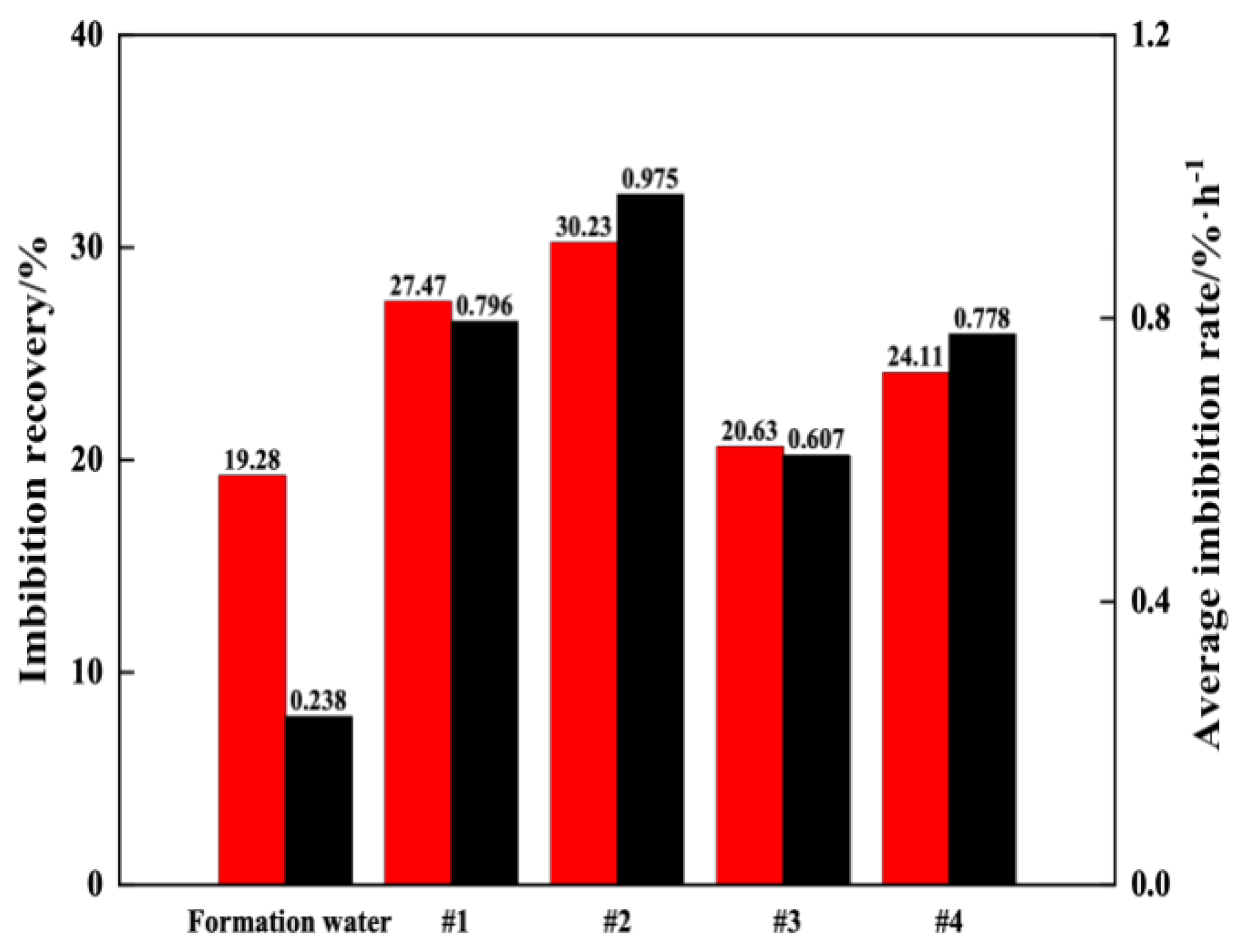
Based on the control ability to reduce oil–water interfacial tension and wettability, four 0.3% surfactants with different control abilities were selected to study the core permeation effect of surfactants under different permeation modes.
As shown in Figure 8 and Figure 9, under the conditions of similar wettability changeability and different interfacial tension, the differences in increment recovery between #1 and #3 and between #2 and #4 were 6.84% and 6.12%, respectively. Under the conditions of similar interfacial tension and different wettability changing abilities, the difference in the recovery increment between #2 and #3 was 9.6%. Therefore, it showed that the influence of the wettability of the surfactant was higher than that of the interfacial tension. The imbibition agent should have both low interfacial tension and a wettability control ability, and it could play a synergistic role in achieving the best imbibition recovery and imbibition rate. It could be seen that the recovery rate and average recovery rate of the #2 imbibition agent were the highest. Subsequently, the #2 imbibition agent was selected for the imbibition effect study under the high-pressure imbibition mode. In addition, the choice of surfactant should not pursue ultra-low interfacial tension but pay attention to the ability to change wettability. The best results are obtained when the oil–water interfacial tension and the contact angle of the surfactant range from 10−2 to 10−1 mN/m and from 30° to 60°, respectively.

3.4. Surfactant-Aided Imbibition Oil Recovery Under High Pressure

In order to analyze the imbibition effect of a surfactant under the high-pressure imbibition mode, and whether pressurization and the surfactant have a synergetic effect on imbibition, a comparison experiment examining the high-pressure imbibition effect between formation water and the surfactant and an imbibition experiment for the surfactant were designed, respectively.

3.4.1. Comparison of Water and Surfactant-Aided Imbibition

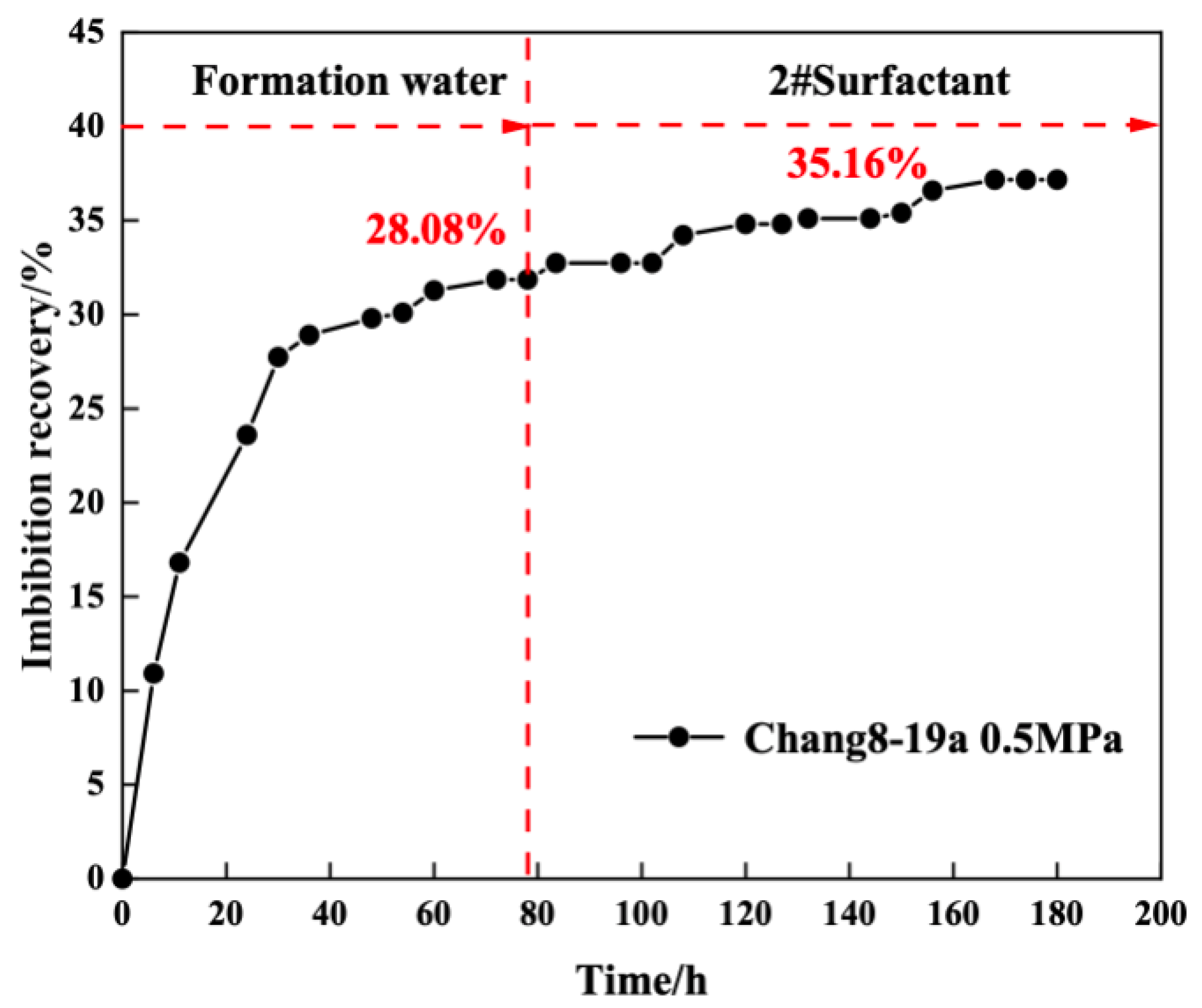
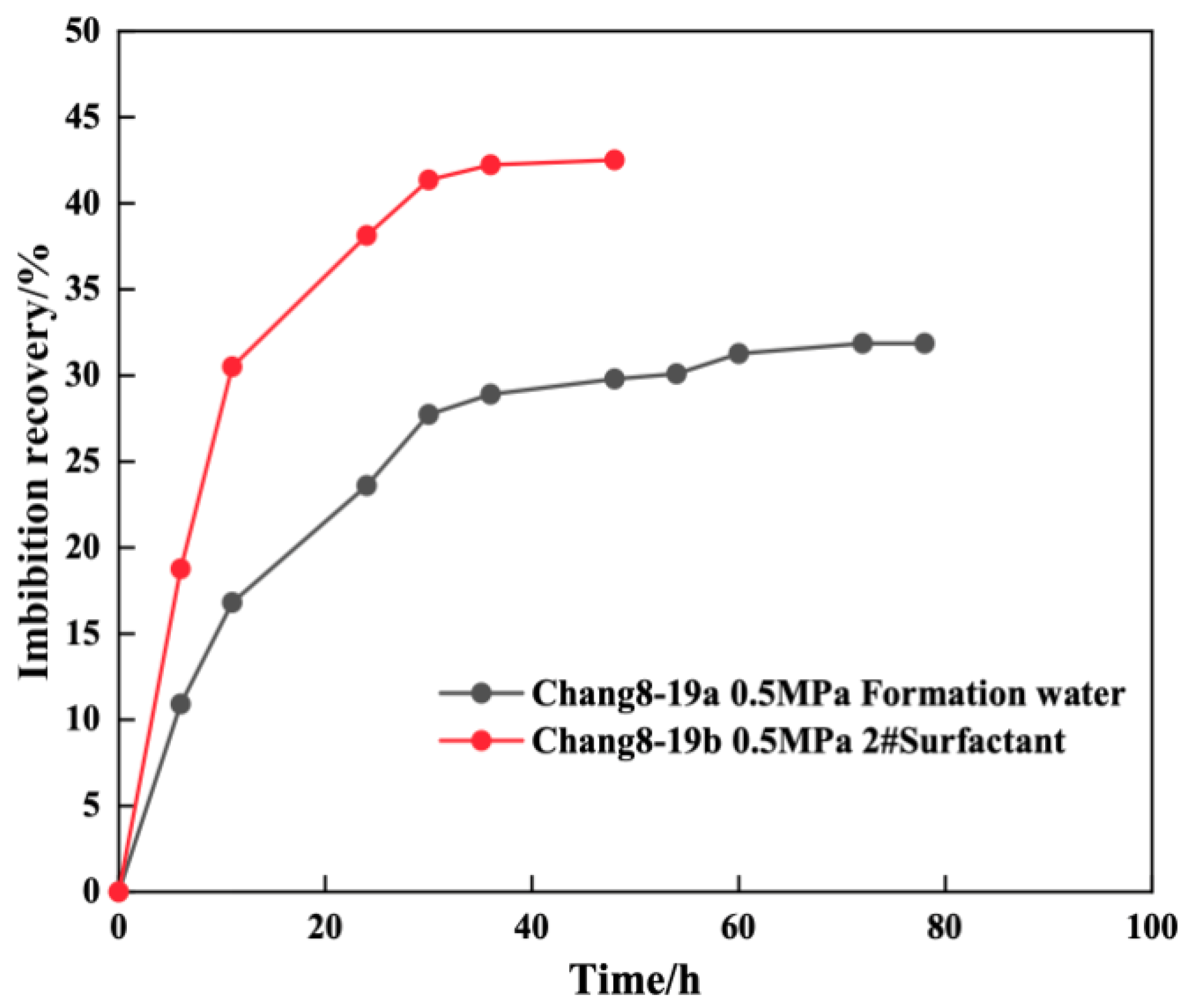
In order to verify the imbibition effect of the surfactant #2 under high pressure, a 0.5 MPa forced imbibition experiment was carried out to compare it with the recovery rate of formation water. Meanwhile, whether the imbibition and oil recovery could occur again after the high-pressure formation water imbibition was completed and replaced with the #2 surfactant was verified. The experimental results are shown in Figure 10.
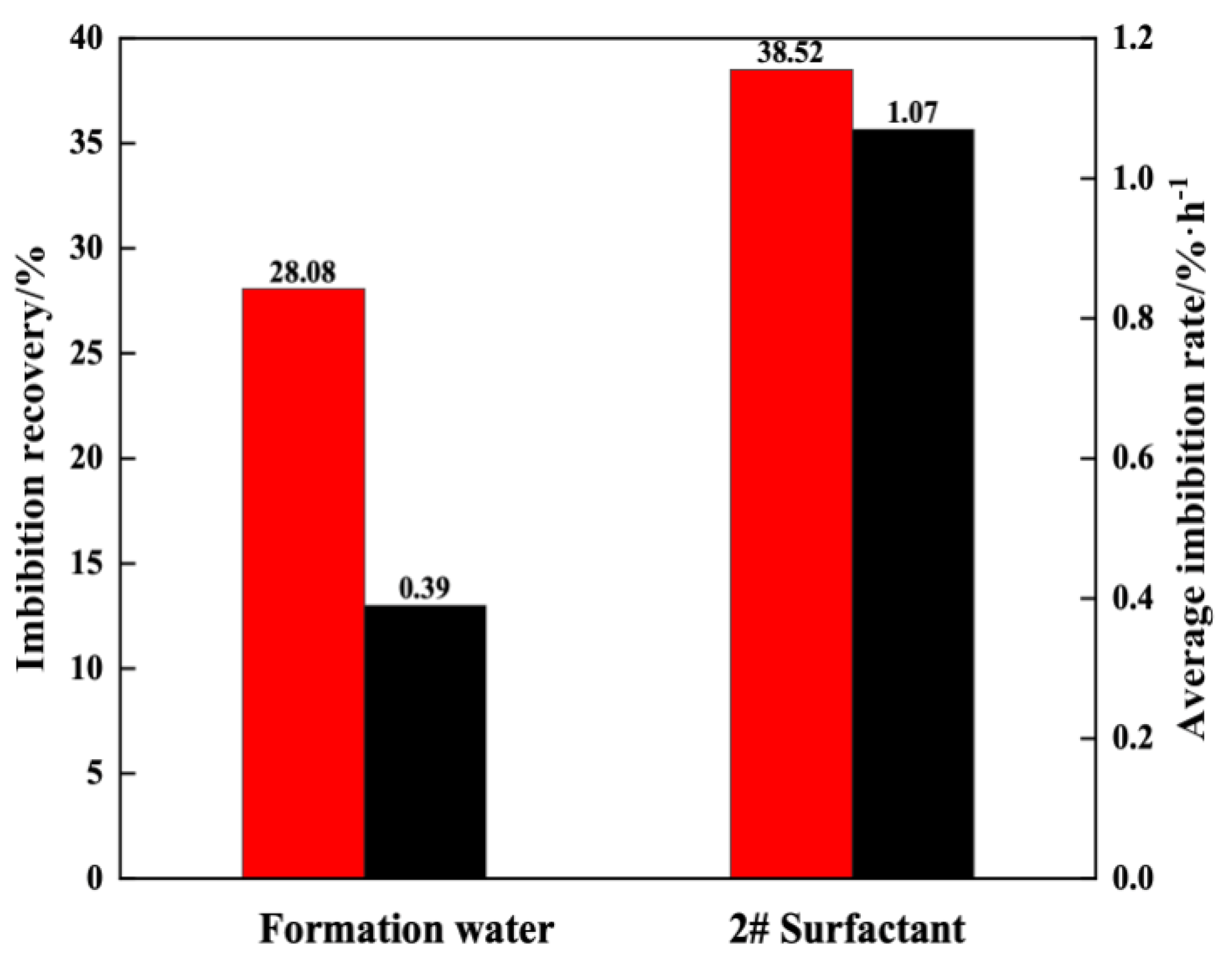
According to the analysis of the above experimental results, the core sample was subjected to an imbibition experiment at 0.5 MPa pressure, the formation water imbibition recovery was 28.08%, and the imbibition rate was 0.39%/h. Then, the imbibition recovery of the #2 surfactant was 38.52%, and the imbibition rate was 1.07%/h. The comparison results are shown in Figure 11. Under the same differential pressure, the imbibition recovery of the surfactant was higher than that of the formation water. Compared with the high-pressure imbibition of the formation water, the imbibition recovery was increased by 10.44%, and the imbibition rate was increased by 3 times.

3.4.2. The Surfactant-Aided Imbibition Oil Recovery After Water Imbibition

In order to illustrate the imbibition effect under the imbibition huff and puff slug injection mode, the imbibition effect experiment of surfactant was carried out based on the high-pressure formation water imbibition experiment of the same core. The results are shown in Figure 12.
According to the analysis of the experimental results in Figure 12, the core sample was subjected to an imbibition experiment at 0.5 MPa, and the imbibition recovery of formation water imbibition was 28.08%. After, the imbibition liquid was changed to #2 surfactant, which improved the imbibition recovery to 35.16%. The experimental results showed that a 0.3% concentration of the #2 surfactant could increase imbibition recovery by 7.08%, based on the high-pressure imbibition of formation water. With the extension of the imbibition time, the swept volume of the formation water in core pores was no longer increasing. But when the surfactant was replaced, the dominant channel of water flow had not been fully formed, which could have made the surfactant enter the area where the formation water had not been swept. The surfactant could not only significantly improve the oil washing efficiency but also effectively increase the swept volume. Thus, under the high-pressure imbibition mode, the surfactant slug huff and puff injection mode could still improve the imbibition effect, based on the high-pressure imbibition of formation water.

4. Conclusions

Based on simulating high-pressure conditions, imbibition experiments with different pressurization modes and surfactants for improving rock imbibition recovery were carried out. Its influence on the imbibition behavior of tight reservoirs was studied. Some of the noteworthy conclusions are as follows:
  • Compared with spontaneous pressure, under the condition of high pressure of 0.5 MPa, the formation water imbibition recovery rate was increased by 7~10%, the imbibition rate was increased by 1~2 times, the average imbibition recovery rate increased by 8.97%, and the imbibition rate increased by 0.137%/h.
  • Under the constant pressurization and imbibition mode, with the increase in the pressurization amplitude (external pressure difference), the imbibition recovery factor and imbibition rate increased. When the pressure difference increases from 0.5 MPa to 10 MPa, the imbibition recovery factor increases from 26.68% to 37.04%, and the imbibition rate increases from 0.371%/h to 0.514%/h. It shows that, under the action of an external pressure difference, the formation water flows into the core, oil and water imbibition displacement is accelerated, and the imbibition recovery factor and imbibition rate are improved. Therefore, during the implementation of a single round of the imbibition huff and puff test in the field, the effect of single-round imbibition huff and puff oil recovery can be improved by increasing the pressure difference.
  • In the low-amplitude-pressurization mode, the differential pressure is increased from 0.5 MPa to 3 MPa, and the imbibition recovery rate is increased by 7.61%. Under the high-amplitude-pressurization mode, the imbibition recovery rate increased by 4.31% under the pressure difference of 5.0 MPa to 15.0 MPa. To increase the pressure difference step by step, whether it is the low-amplitude boosting mode or the high-amplitude boosting mode that is used, by increasing the pressure difference, it can effectively improve the effect of subsequent multiple imbibition huff and puff and improve the imbibition recovery factor.
  • Under the conditions of similar wettability changeability and different interfacial tension, the differences in the recovery increment between #1 (ultra-low interfacial tension and a weak ability to control wettability) and #3 (low interfacial tension and a weak ability to control wettability) and between #2 (low interfacial tension and a strong wettability control ability) and #4 (high interfacial tension and a strong wettability control ability) are 6.84% and 6.12%, respectively. Under the conditions of a similar interfacial tension and a different wettability changing ability, the difference in the recovery increment between #2 and #3 is 9.6%. Therefore, it showed that the influence of the wetting ability of the absorbent was higher than that of the interfacial tension. In addition, the choice of surfactant should not pursue ultra-low interfacial tension but pay attention to the ability to change wettability. The best results are obtained when the oil–water interfacial tension and the contact angle of the surfactant range from 10−2 to 10−1 mN/m and from 30° to 60°, respectively.
  • Under the condition of high pressure of 0.5 MPa, the formation water imbibition recovery rate was 28.08%, the imbibition effect could still be improved through replacement with #2 surfactant (low interfacial tension and a strong wettability control ability), and the imbibition recovery factor can be increased by 7.08%.

Author Contributions

Validation, H.H.; formal analysis, T.W. (Teng Wang); investigation, T.W. (Tianjiang Wu); resources, H.H.; data curation, B.W.; writing—original draft, H.H. and J.C.; writing—review and editing, T.W. (Teng Wang) and Z.L.; project administration, T.W. (Tianjiang Wu) and B.W. All authors have read and agreed to the published version of the manuscript.

Funding

This work was supported by the National Natural Science Foundation of China (No. 51704036).

Data Availability Statement

The original contributions presented in this study are included in the article. Further inquiries can be directed to the corresponding author.

Conflicts of Interest

Authors Tianjiang Wu, Teng Wang, Baoqiang Wu, Jiajun Chen and Zhuojun Liu are employed by PetroChina Changqing Oilfield Company. The remaining author declares that the research was conducted in the absence of any commercial or financial relationships that could be construed as a potential conflict of interest.

References

  1. Gao, L.; Yang, Z.; Shi, Y. Experimental study on spontaneous imbibition characteristics of tight rocks. Adv. Geo-Energy Res. 2018, 2, 292–304. [Google Scholar] [CrossRef] [Scilit]
  2. Wang, C.; Gao, H.; Gao, Y.; Fan, H. Influence of pressure on spontaneous imbibition in tight sandstone reservoirs. Energy Fuels 2020, 34, 9275–9282. [Google Scholar] [CrossRef] [Scilit]
  3. Cheng, Z.; Ning, Z.; Yu, X.; Wang, Q.; Zhang, W. New insights into spontaneous imbibition in tight oil sandstones with NMR. J. Pet. Sci. Eng. 2019, 179, 455–464. [Google Scholar] [CrossRef] [Scilit]
  4. Wang, L.; Tian, Y.; Yu, X.; Wang, C.; Yao, B.; Wang, S.; Winterfeld, P.H.; Wang, X.; Yang, Z.; Wang, Y.; et al. Advances in improved/enhanced oil recovery technologies for tight and shale reservoirs. Fuel 2017, 210, 425–445. [Google Scholar] [CrossRef] [Scilit]
  5. Zhang, Z.; Huang, B.; Zhang, L.; Zhou, G.; Liu, Y.; Li, C.; Du, D. Experimental Study on the EOR Performance of Imbibition and Huff and Puff in Fractured Tight Oil Reservoirs. Lithosphere 2021, 2021, 3765068. [Google Scholar] [CrossRef] [Scilit]
  6. Di, S.; Cheng, S.; Wei, C.; Bai, W.; Shang, R.; Cao, N.; Zhang, Y. Study on the Production Mode of Horizontal Well from Water Huff and Puff to Segmented Injection and Production in Tight Reservoir. Geofluids 2021, 2021, 1–10. [Google Scholar] [CrossRef] [Scilit]
  7. Mandal, A.; Ojha, K. Profile Modification and Water Shutoff. In Enhanced Oil Recovery: Mechanisms, Technologies and Feasibility Analyses; CRC Press: Boca Raton, FL, USA, 2023; pp. 316–319. [Google Scholar]
  8. Mason, G.; Morrow, N.R. Developments in spontaneous imbibition and possibilities for future work. J. Pet. Sci. Eng. 2013, 110, 268–293. [Google Scholar] [CrossRef] [Scilit]
  9. Babadagli, T. Scaling of Cocurrent and Countercurrent Capillary Imbibition for Surfactant and Polymer Injection in Naturally Fractured Reservoirs. SPE J. 2001, 6, 465–478. [Google Scholar] [CrossRef] [Scilit]
  10. Fischer, H.; Morrow, N.R. Spontaneous imbibition with matched liquid viscosities. In Proceedings of the SPE Annual Technical Conference and Exhibition, Dallas, TX, USA, 9–12 October 2005. [Google Scholar]
  11. Hatiboglu, C.U.; Babadagli, T. Experimental and visual analysis of co- and counter-current spontaneous imbibition for different viscosity ratios, interfacial tensions, and wettableilities. J. Pet. Sci. Eng. 2010, 70, 214–228. [Google Scholar] [CrossRef] [Scilit]
  12. Javaheri, A.; Dehghanpour, H.; Wood, J. Imbibition oil recovery from tight rocks with dual-wettability pore-network a montney case study. In Proceedings of the SPE Unconventional Resources Conference, Calgary, AB, Canada, 15–16 February 2017. [Google Scholar]
  13. Kathel, P.; Mohanty, K.K. Wettability alteration in a tight oil reservoir. Energy Fuels 2013, 27, 6460–6468. [Google Scholar] [CrossRef] [Scilit]
  14. Li, A.; Fan, T.; Zhao, L. Experimental study of spontaneous imbibition in low permeability core of fractured reservoir. Pet. Geol. Recovery Effic. 2011, 18, 67–69. [Google Scholar]
  15. Li, S.; Liu, W.; Zhang, H.; Xiao, H. Experimental study of spontaneous imbibition in low-permeability reservoir. Acta Pet. Sin. 2007, 28, 109–112. [Google Scholar]
  16. Lu, T.; Li, Z.; Zhou, Y.; Zhang, C. Enhanced oil recovery of low-permeability cores by sio2 nanofluid. Energy Fuels 2017, 31, 5612–5621. [Google Scholar] [CrossRef] [Scilit]
  17. Alvarez, J.O.; Schechter, D.S. Wettability Alteration and Spontaneous Imbibition in Unconventional Liquid Reservoirs by Surfactant Additives. SPE Reserv. Evaluation Eng. 2016, 20, 107–117. [Google Scholar] [CrossRef] [Scilit]
  18. Nguyen, D.; Wang, D.; Oladapo, A.; Zhang, J.; Sickorez, J.; Butler, R.; Mueller, B. Evaluation of surfactants for oil recovery potential in shale reservoirs. In Proceedings of the SPE Improved Oil Recovery Symposium, Tulsa, OK, USA, 12–16 April 2014. [Google Scholar]
  19. Polat, C. Insights into the solution of counter-current spontaneous imbibition for tight unconventional reservoirs. J. Pet. Sci. Eng. 2021, 201, 108505. [Google Scholar] [CrossRef] [Scilit]
  20. Qi, Z.; Han, M.; Fuseni, A.; Alsofi, A.; Zhang, F.; Peng, Y.; Cai, H. Laboratory study on surfactant induced spontaneous imbibition for carbonate reservoir. In Proceedings of the SPE Asia Pacific Oil & Gas Conference and Exhibition, Perth, Australia, 25–27 October 2016. [Google Scholar]
  21. Ruth, D.W.; Mason, G.; Morrow, N.; Li, Y. The effect of fluid viscosities on counter-current spontaneous imbibition. In Proceedings of the Society of Core Analysts Symposium, Abu Dhabi, United Arab Emirates, 5–9 October 2004; pp. 1–13. [Google Scholar]
  22. Tang, Y.; Kang, Y.; Liu, X.; You, L. Experimental research on flooding oil by water imbibition in tight sandstone oil reservoir. Acta Geol. Sin. 2015, 89, 415–416. [Google Scholar] [CrossRef] [Scilit]
  23. Tong, Z.; Xie, X.; Morrow, N.R. Scaling of viscosity ratio for oil recovery by imbibition from mixed-wet rocks. Petrophysics 2002, 338–346. [Google Scholar]
  24. Xu, J.; Ma, L. Spontaneous imbibition in fractured low permeability reservoir. Pet. Geol. Recovery Effic. 2015, 22, 111–114. [Google Scholar]
  25. You, Q.; Wang, H.; Zhang, Y.; Liu, Y.; Fang, J.; Dai, C. Experimental study on spontaneous imbibition of recycled fracturing flow-back fluid to enhance oil recovery in low permeability sandstone reservoirs. J. Pet. Sci. Eng. 2018, 166, 375–380. [Google Scholar] [CrossRef] [Scilit]
  26. Xu, D.; Li, Z.; Bai, B.; Chen, X.; Wu, H.; Hou, J.; Kang, W. A systematic research on spontaneous imbibition of surfactant solutions for low permeability sandstone reservoirs. J. Pet. Sci. Eng. 2021, 206, 109003. [Google Scholar] [CrossRef] [Scilit]
  27. Zhao, M.; Lv, W.; Li, Y.; Dai, C.; Wang, X.; Zhou, H.; Wu, Y. Study on the synergy between silica nanoparticles and surfactants for enhanced oil recovery during spontaneous imbibition. J. Mol. Liq. 2018, 261, 373–378. [Google Scholar] [CrossRef] [Scilit]
  28. Akbarabadi, M.; Saraji, S.; Piri, M.; Dan, G.; Delshad, M. Nano-scale experimental investigation of in-situ wettability and spontaneous imbibition in ultra-tight reservoir rocks. Adv. Water Resour. 2017, 107, 160–179. [Google Scholar] [CrossRef] [Scilit]
  29. Zhou, F.; Chen, W. Study on spontaneous imbibition experiment of low permeability core. Complex Hydrocarb. Reserv. 2009, 2, 54–56. [Google Scholar]
  30. Tu, J.; Sheng, J.J. Effect of pressure on imbibition in shale oil reservoirs with wettability considered. Energy Fuels 2020, 34, 4260–4272. [Google Scholar] [CrossRef] [Scilit]
  31. Dou, L.; Xiao, Y.; Gao, H.; Wang, R.; Liu, C.; Sun, H. The study of enhanced displacement efficiency in tight sandstone from the combination of spontaneous and dynamic imbibition. J. Pet. Sci. Eng. 2021, 199, 108327. [Google Scholar] [CrossRef] [Scilit]
  32. Cai, J.C.; Yu, B.M. Advances in studies of spontaneous imbibition in porous media. Adv. Mech. 2012, 42, 735–754. [Google Scholar]
  33. Zheng, H.; Liao, R.; Cheng, N.; Shi, S. Microscopic mechanism of fracturing fluid imbibition in stimulated tight oil reservoir. J. Pet. Sci. Eng. 2021, 202, 108533. [Google Scholar] [CrossRef] [Scilit]
Figure 1. Variation in formation water imbibition recovery with time under atmospheric pressure.
Processes 14 01494 g001
Figure 2. Histogram of formation water imbibition recovery and average imbibition rate under atmospheric pressure imbibition mode.
Processes 14 01494 g002
Figure 3. Variation in imbibition recovery with time under constant pressure.
Processes 14 01494 g003
Figure 4. Histogram of final imbibition recovery and average imbibition rate under constant pressure.
Processes 14 01494 g004
Figure 5. Variation in imbibition recovery with time under different pressurization modes.
Processes 14 01494 g005
Figure 6. Histogram of imbibition recovery under different pressurization modes.
Processes 14 01494 g006
Figure 7. Oil–water interfacial tension and contact angle of different imbibition agent.
Processes 14 01494 g007
Figure 8. Variation in imbibition recovery with time for different surfactants.
Processes 14 01494 g008
Figure 9. Imbibition recovery and average imbibition rates of different surfactants.
Processes 14 01494 g009
Figure 10. Variation in formation water and surfactant imbibition recovery with time under high pressure.
Processes 14 01494 g010
Figure 11. Comparison of imbibition recovery and average imbibition rate of formation water and surfactant under high pressure.
Processes 14 01494 g011
Figure 12. Verify whether the surfactant can continue to imbibe after the completion of water imbibition.
Processes 14 01494 g012
Table 1. Ionic composition of the reservoir brine.
Cation/mg·L−1Anion/mg·L−1Total Dissolved Solids (TDS)/mg·L−1
Na+Ca2+Mg2+SO42−HCO3Cl
12,90011,37011045017040,00065,000
Table 2. Basic physical parameters of core (spontaneous imbibition test).
Pressure
/MPa
Imbibition AgentCore
Number
Length
/cm
Diameter
/cm
Porosity
/%
Permeability
/mD
0.1Formation waterChang 8-16b4.9102.53414.601.468
0.1Formation waterChang 8-26a4.9022.53013.431.468
0.1Formation waterChang 8-9a4.9422.53613.631.310
0.1#1Chang 8-28a4.9442.52813.551.29
0.1#2Chang 8-30b4.9222.53814.891.35
0.1#3Chang 8-6b4.9122.53014.811.32
0.1#4Chang 8-30a4.9242.53613.981.35
Table 3. Basic physical parameters of core (forced imbibition test).
Pressure
/MPa
Imbibition AgentCore
Number
Length
/cm
Diameter
/cm
Porosity
/%
Permeability
/mD
Test
0.5Formation waterChang 8-9b4.9422.52414.121.310Constant pressurization mode
1Formation waterChang 8-29b5.0402.53013.831.265
3Formation waterChang 8-4a4.9262.53013.411.340
5Formation waterChang 8-3a4.9302.54014.601.348
10Formation waterChang 8-13a4.9402.54014.761.330
0.5–1–3Formation waterChang 8-7b4.9382.52813.701.290Variable pressurization mode
5–10–15Formation waterChang 8-3a4.9302.54014.601.348
0.5Formation waterChang 8-19a4.9122.54414.141.519Forced Imbibition
Surfactant-aided Forced Imbibition
0.5#2Chang 8-19b5.0682.54814.601.310
0.5Formation water #2Chang 8-19a4.9122.54414.141.519
Table 4. Basic data under different surfactant types.
Imbibition AgentSurfactant TypeInterfacial Tension
/mN·m−1
Interfacial Tension LevelContact Angle
Wettability
Control Ability
Formation water/28.710.0~30.0119.6——
#1—ultra-low interfacial tension and weak control ability of wettabilityAnionic0.00780.001~0.01100.3Weak
#2—low interfacial tension and strong wettability control abilityNonionic0.05420.01~0.152.1Strong
(30~60°)
#3—low interfacial tension and weak ability to control wettabilityCationic0.0289 95.8Weak
#4—high interfacial tension and strong wettability control abilityZwitterionic0.3680.1~1.056.7Strong
Disclaimer/Publisher’s Note: The statements, opinions and data contained in all publications are solely those of the individual author(s) and contributor(s) and not of MDPI and/or the editor(s). MDPI and/or the editor(s) disclaim responsibility for any injury to people or property resulting from any ideas, methods, instructions or products referred to in the content.