Effect of Pressure and Surfactants with Different IFT and Wettability Alteration Abilities on Imbibition Oil Recovery in Tight Sandstone Reservoir Under High Pressure

 ,
,
Abstract
1. Introduction
2. Experimental Section
2.1. Rock and Fluid Properties
2.2. Oil Saturation and Cores Aging
2.3. Contact-Angle and IFT Measurements
2.4. Spontaneous Imbibition Under Atmospheric Pressure
- ①
- Imbibition production
- ②
- Saturated oil volume
- ③
- Imbibition recovery
2.5. Forced Imbibition Under High Pressure
3. Results and Discussion
3.1. Spontaneous Imbibition Oil Recovery by Formation Water
3.2. Forced Imbibition Oil Recovery by Formation Water
3.2.1. Constant Pressurization Mode
3.2.2. Variable Pressurization Mode
3.3. Surfactant-Aided Spontaneous Imbibition Oil Recovery
3.3.1. IFT and Wettability Evaluation of Surfactant
3.3.2. Spontaneous Imbibition Oil Recovery by Surfactant
3.4. Surfactant-Aided Imbibition Oil Recovery Under High Pressure
3.4.1. Comparison of Water and Surfactant-Aided Imbibition
3.4.2. The Surfactant-Aided Imbibition Oil Recovery After Water Imbibition
4. Conclusions
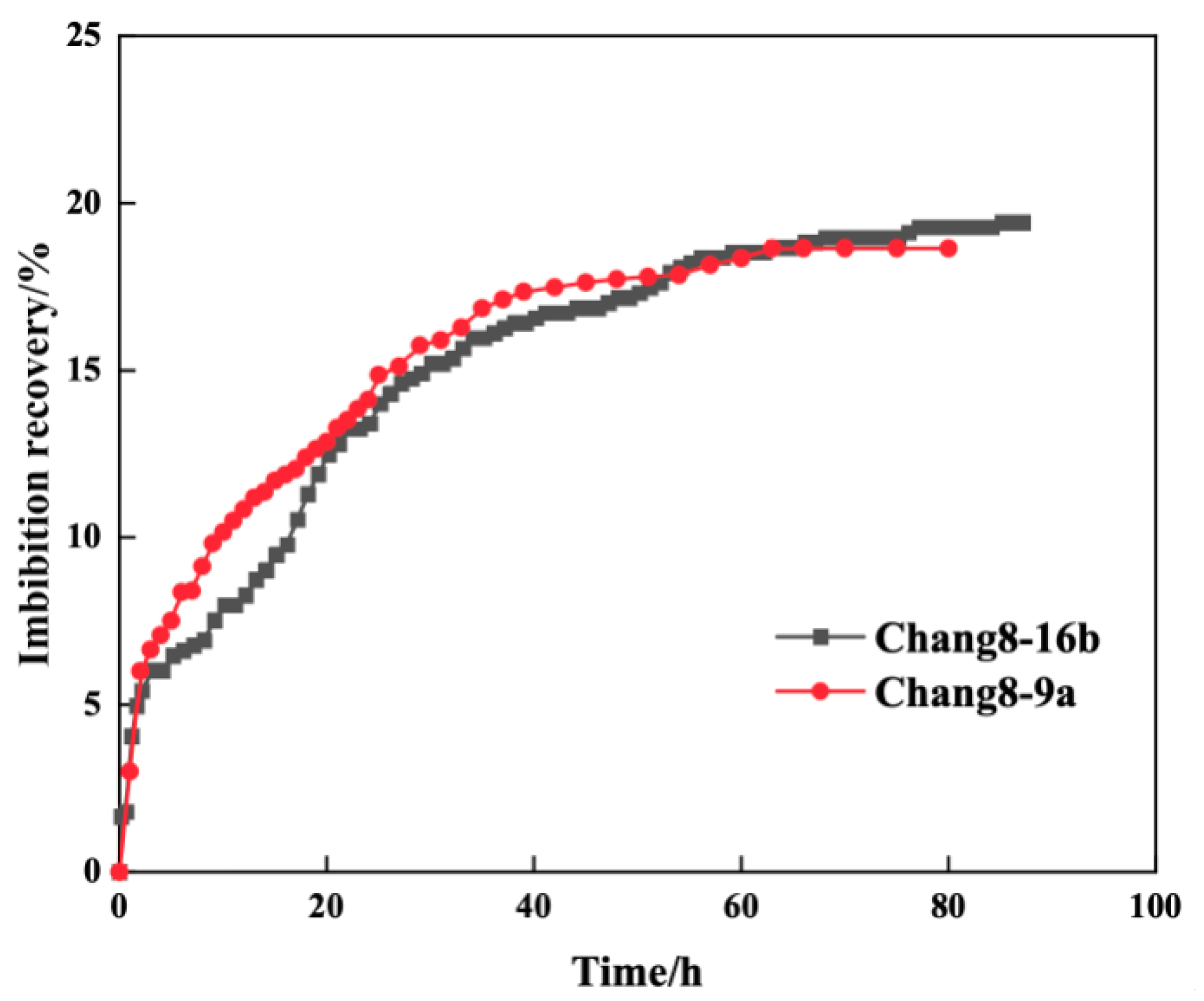
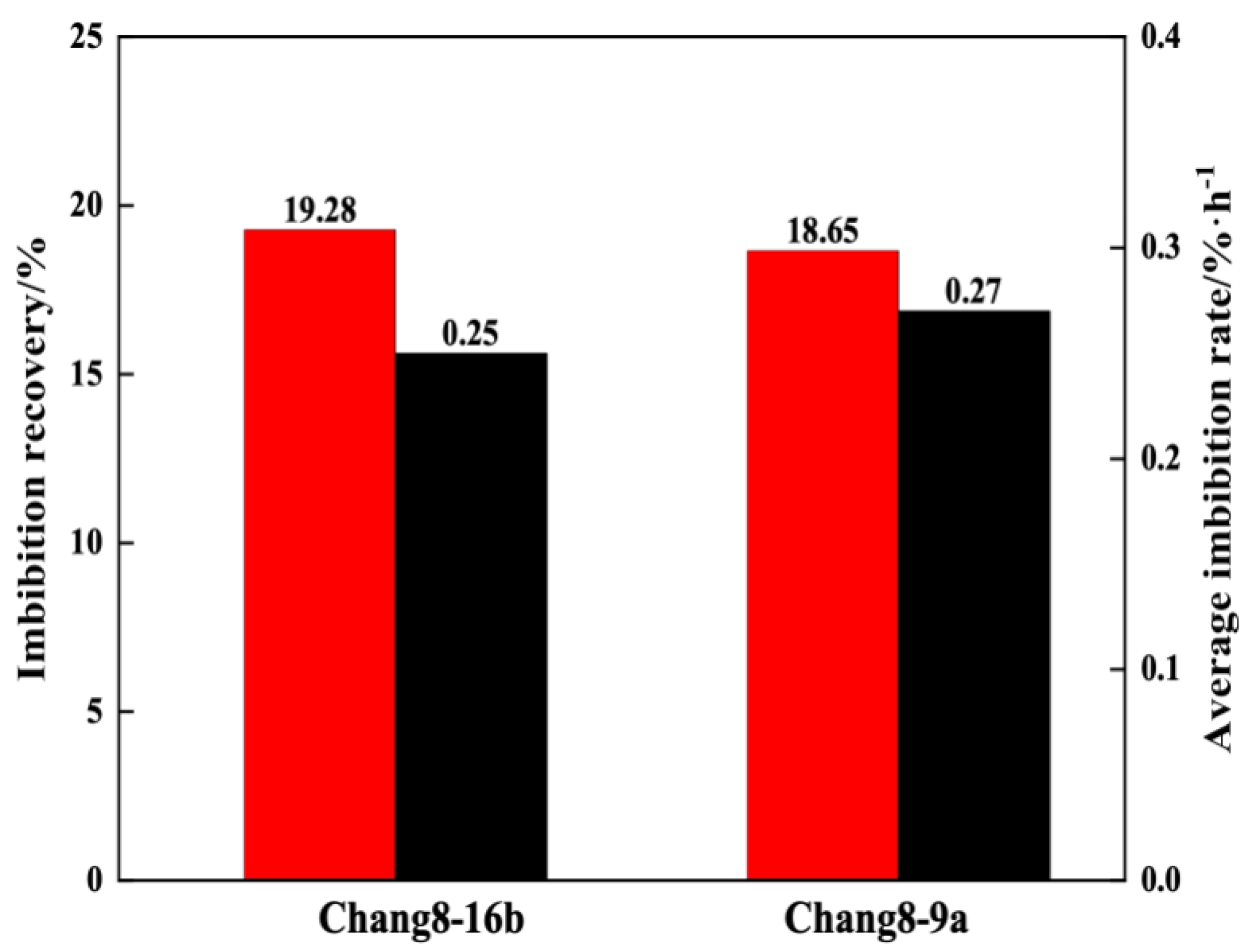
- Compared with spontaneous pressure, under the condition of high pressure of 0.5 MPa, the formation water imbibition recovery rate was increased by 7~10%, the imbibition rate was increased by 1~2 times, the average imbibition recovery rate increased by 8.97%, and the imbibition rate increased by 0.137%/h.
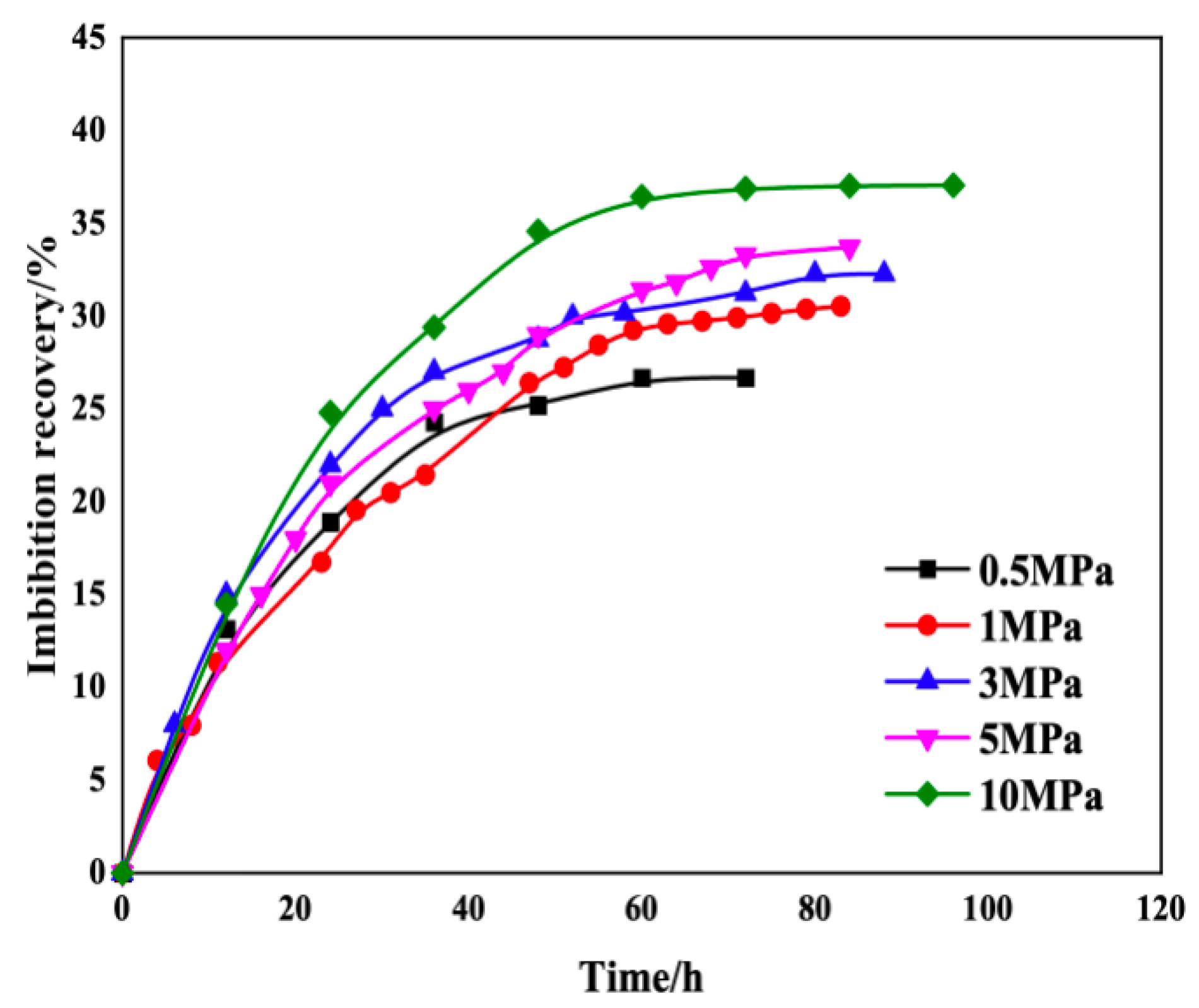
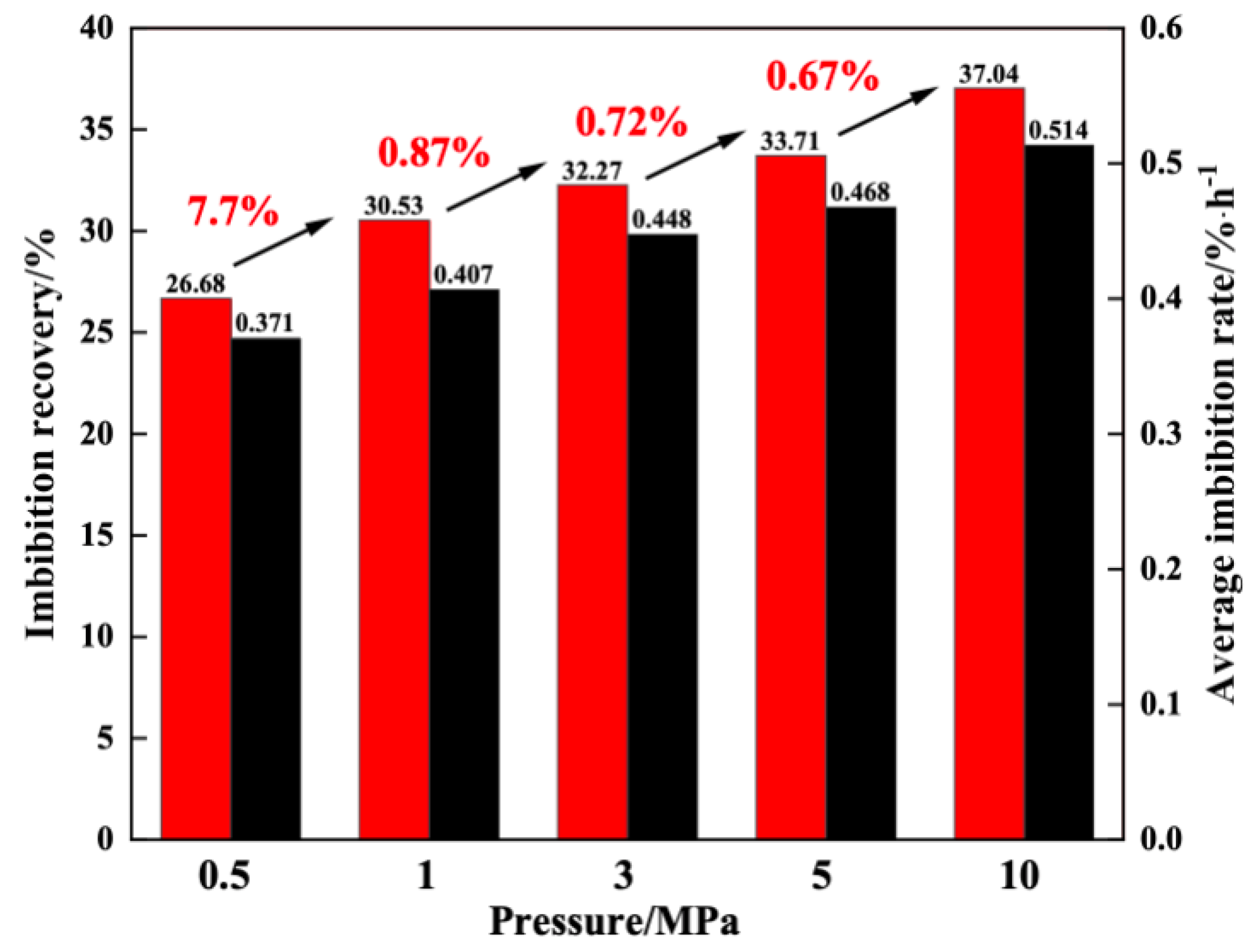
- Under the constant pressurization and imbibition mode, with the increase in the pressurization amplitude (external pressure difference), the imbibition recovery factor and imbibition rate increased. When the pressure difference increases from 0.5 MPa to 10 MPa, the imbibition recovery factor increases from 26.68% to 37.04%, and the imbibition rate increases from 0.371%/h to 0.514%/h. It shows that, under the action of an external pressure difference, the formation water flows into the core, oil and water imbibition displacement is accelerated, and the imbibition recovery factor and imbibition rate are improved. Therefore, during the implementation of a single round of the imbibition huff and puff test in the field, the effect of single-round imbibition huff and puff oil recovery can be improved by increasing the pressure difference.
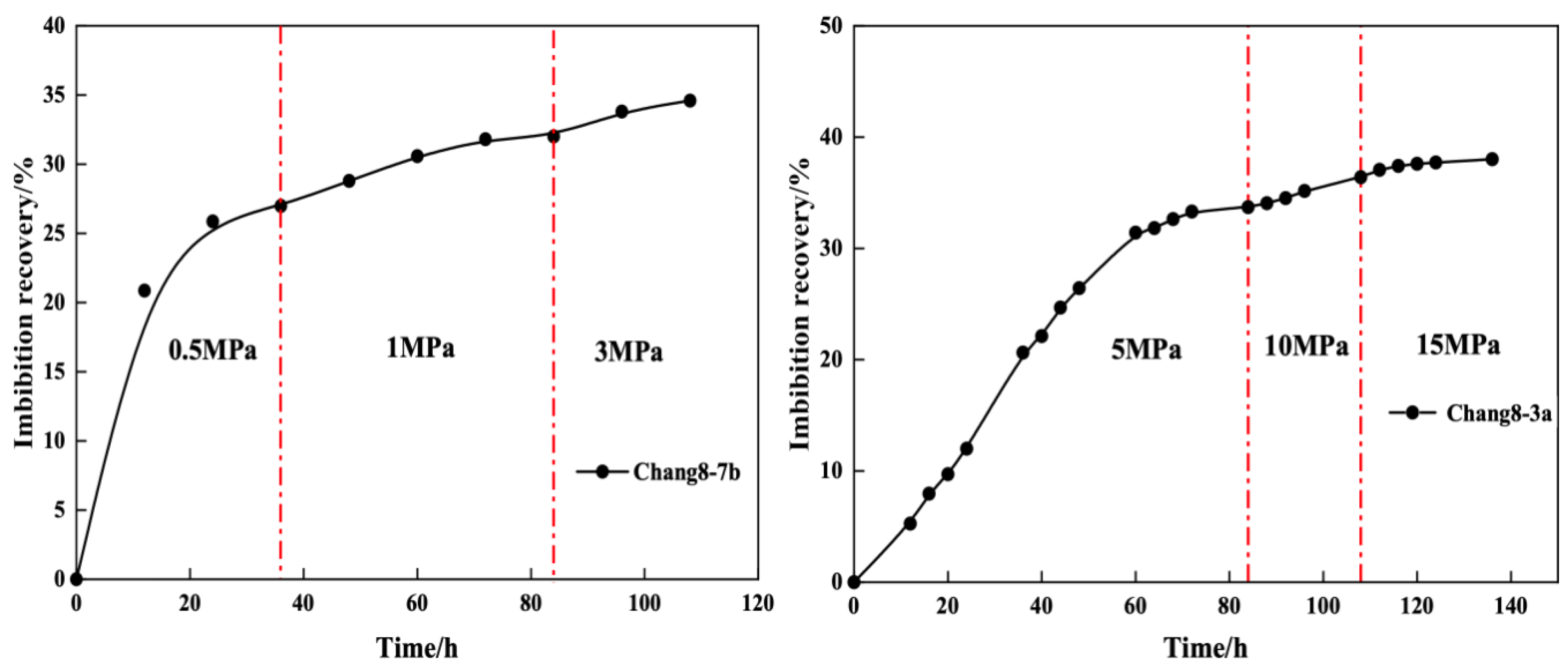
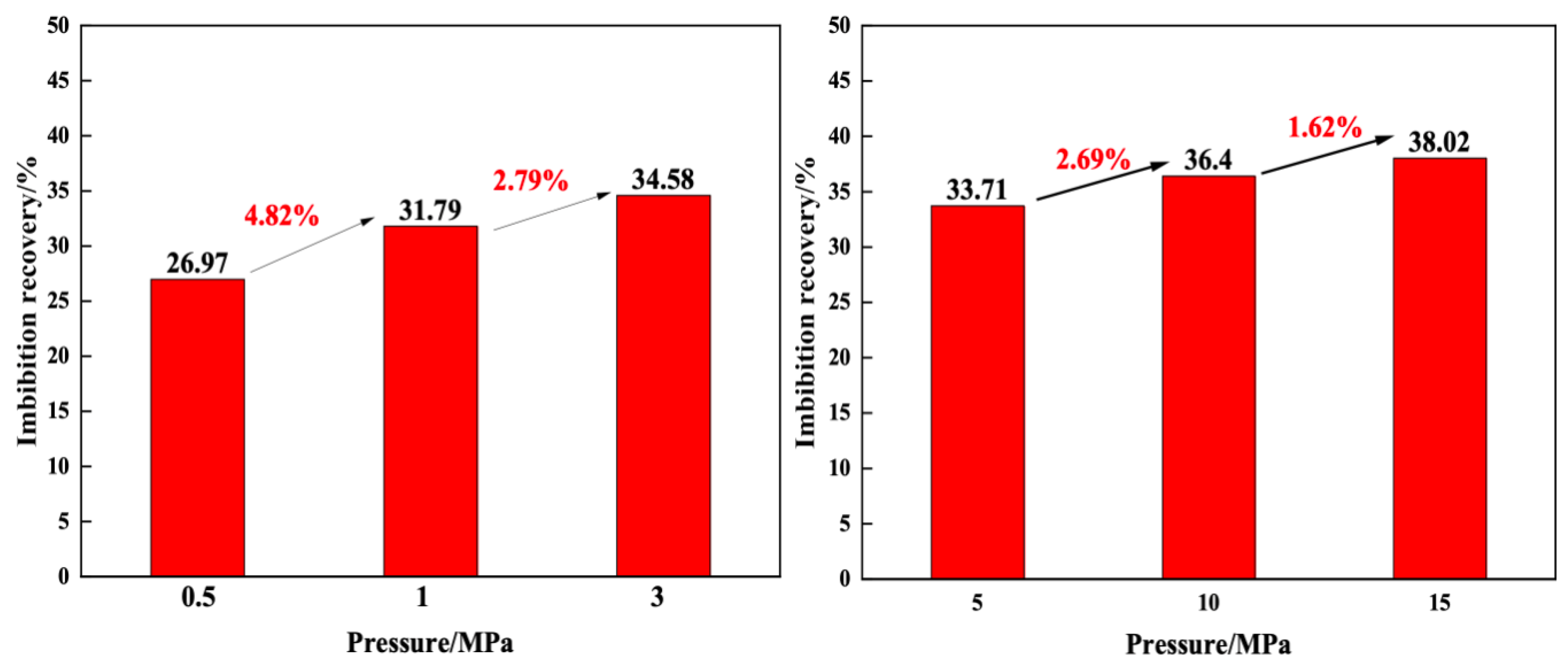
- In the low-amplitude-pressurization mode, the differential pressure is increased from 0.5 MPa to 3 MPa, and the imbibition recovery rate is increased by 7.61%. Under the high-amplitude-pressurization mode, the imbibition recovery rate increased by 4.31% under the pressure difference of 5.0 MPa to 15.0 MPa. To increase the pressure difference step by step, whether it is the low-amplitude boosting mode or the high-amplitude boosting mode that is used, by increasing the pressure difference, it can effectively improve the effect of subsequent multiple imbibition huff and puff and improve the imbibition recovery factor.
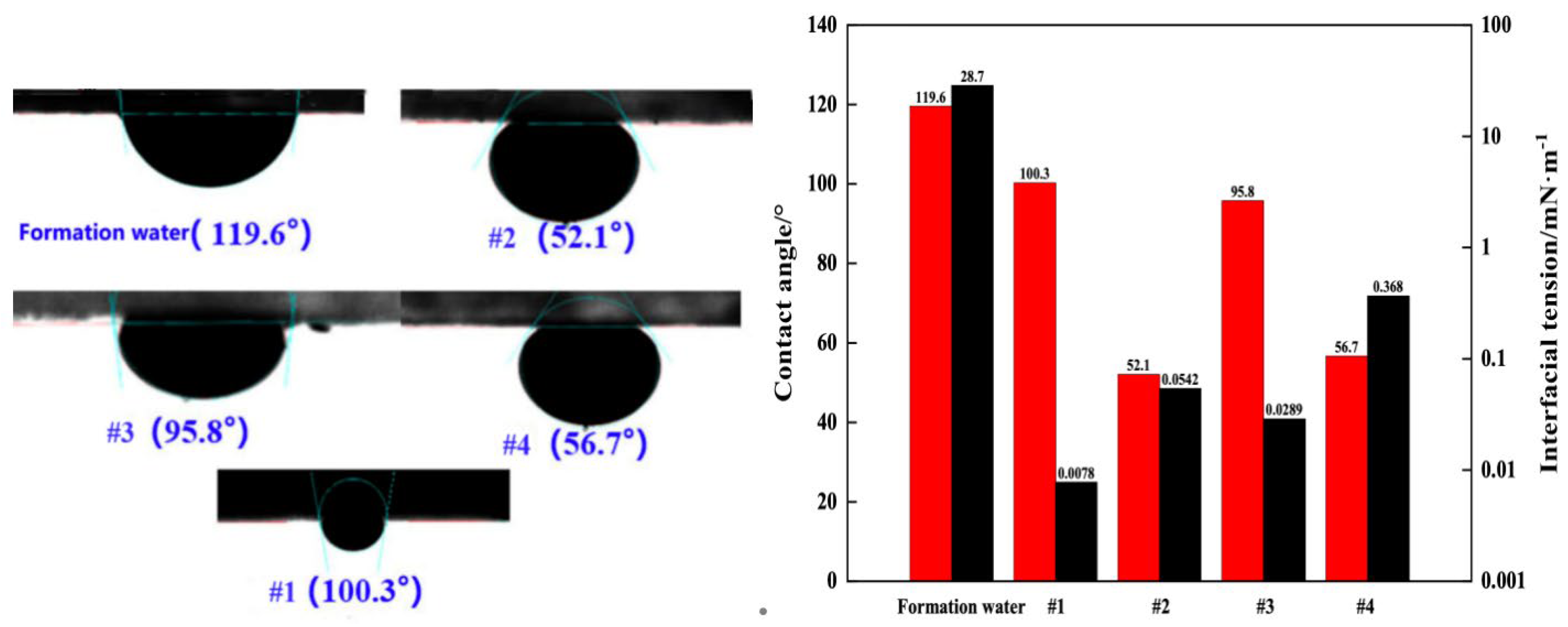
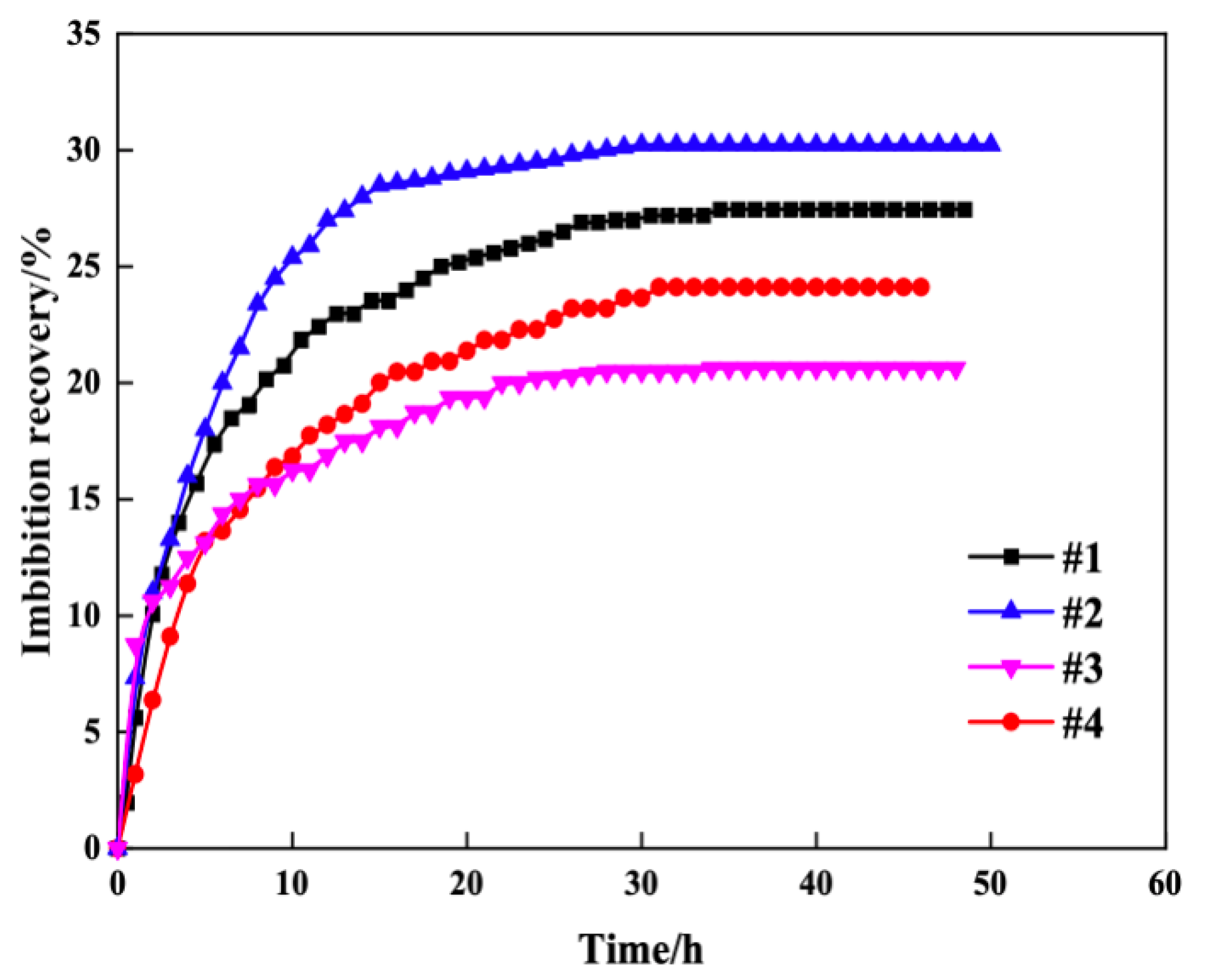
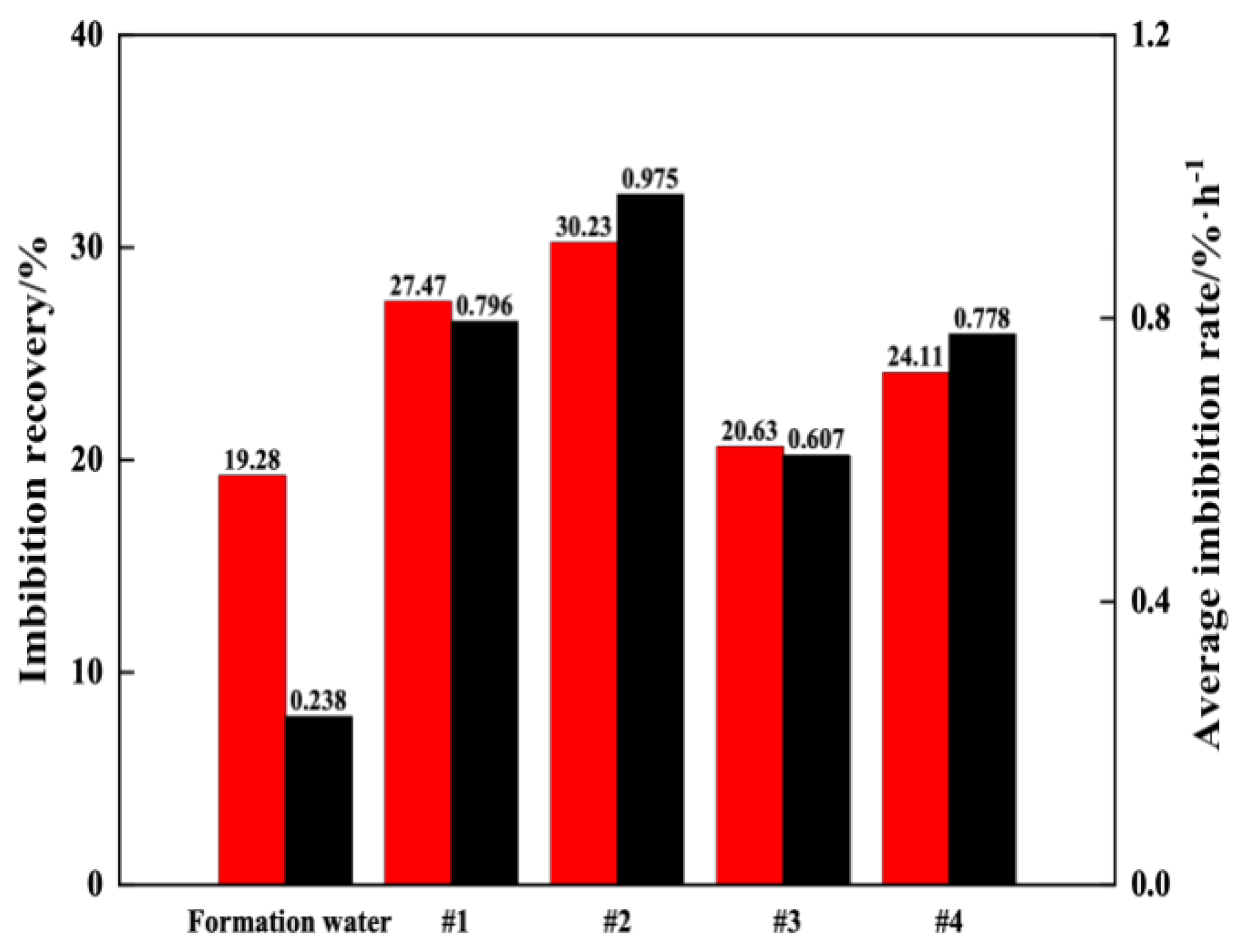
- Under the conditions of similar wettability changeability and different interfacial tension, the differences in the recovery increment between #1 (ultra-low interfacial tension and a weak ability to control wettability) and #3 (low interfacial tension and a weak ability to control wettability) and between #2 (low interfacial tension and a strong wettability control ability) and #4 (high interfacial tension and a strong wettability control ability) are 6.84% and 6.12%, respectively. Under the conditions of a similar interfacial tension and a different wettability changing ability, the difference in the recovery increment between #2 and #3 is 9.6%. Therefore, it showed that the influence of the wetting ability of the absorbent was higher than that of the interfacial tension. In addition, the choice of surfactant should not pursue ultra-low interfacial tension but pay attention to the ability to change wettability. The best results are obtained when the oil–water interfacial tension and the contact angle of the surfactant range from 10−2 to 10−1 mN/m and from 30° to 60°, respectively.
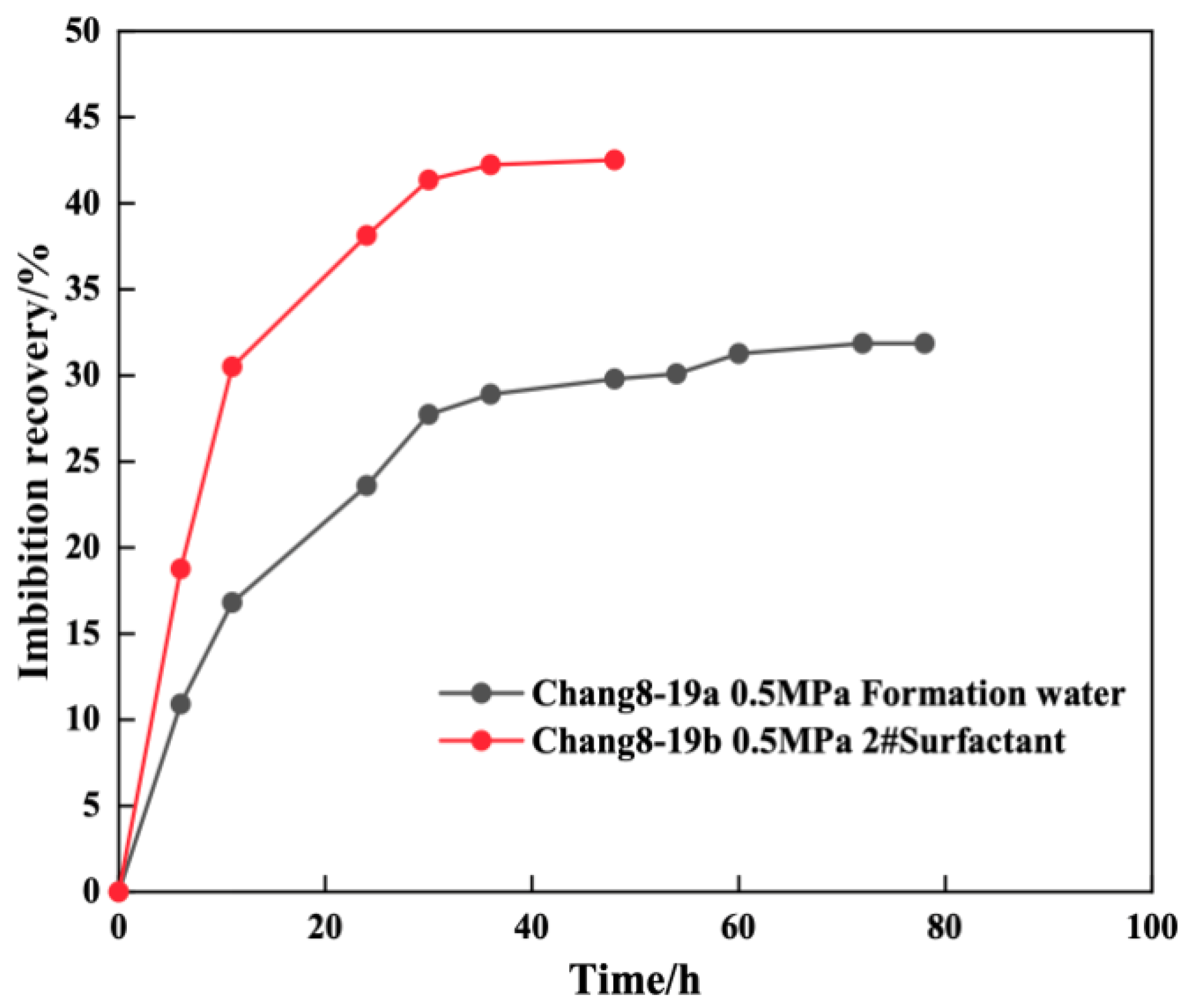
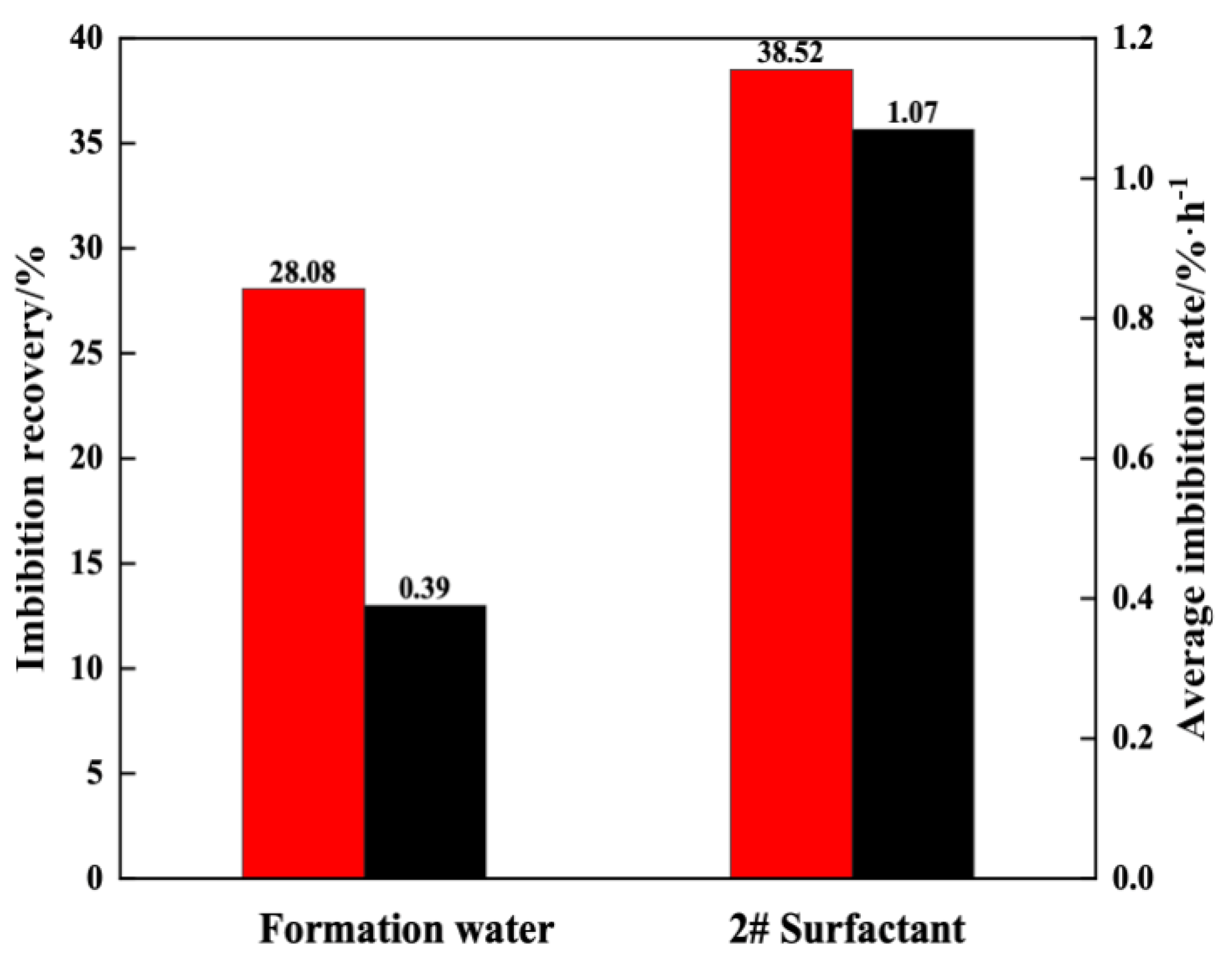
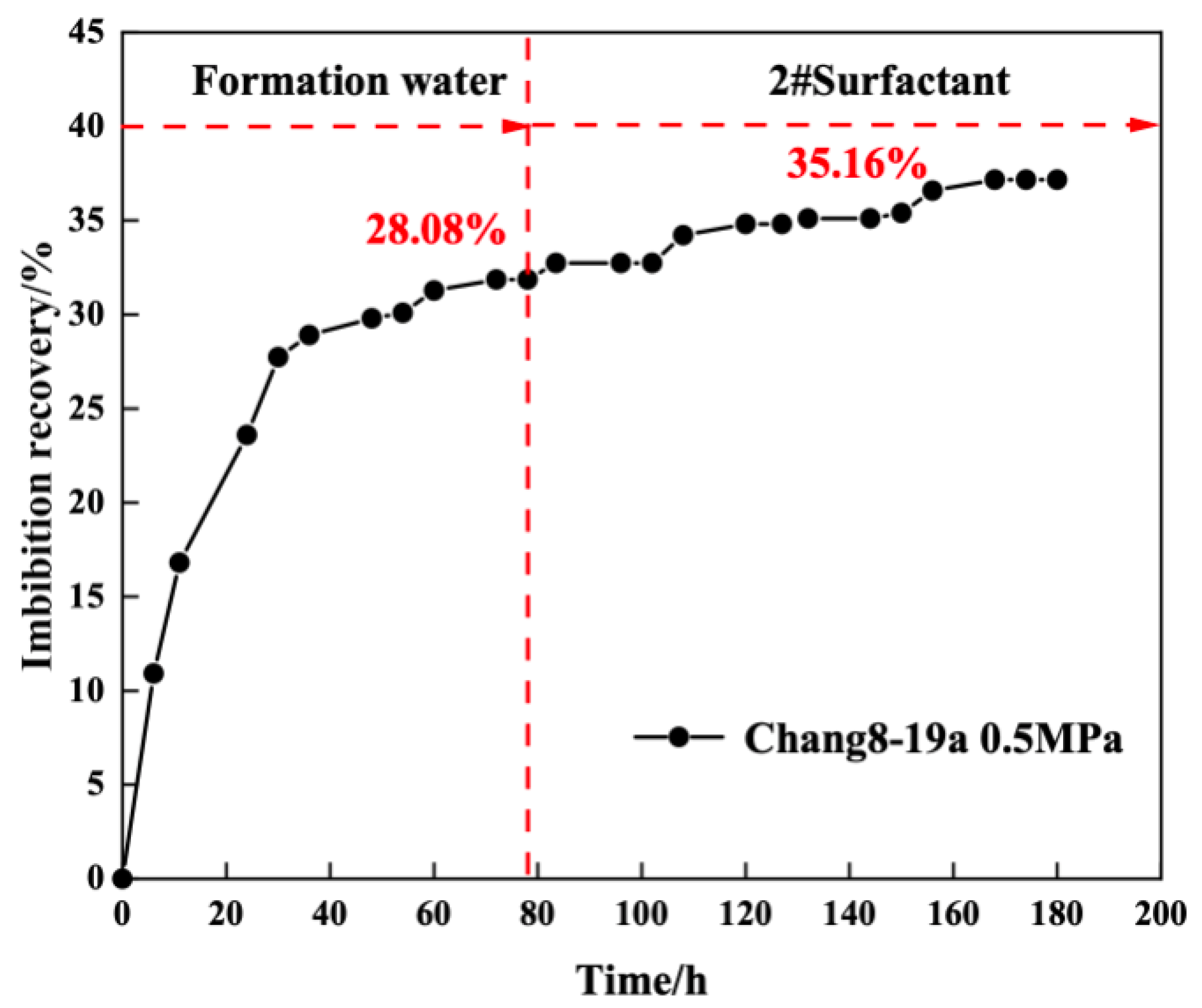
- Under the condition of high pressure of 0.5 MPa, the formation water imbibition recovery rate was 28.08%, the imbibition effect could still be improved through replacement with #2 surfactant (low interfacial tension and a strong wettability control ability), and the imbibition recovery factor can be increased by 7.08%.
Author Contributions
Funding
Data Availability Statement
Conflicts of Interest
References
- Gao, L.; Yang, Z.; Shi, Y. Experimental study on spontaneous imbibition characteristics of tight rocks. Adv. Geo-Energy Res. 2018, 2, 292–304. [Google Scholar] [CrossRef] [Scilit]
- Wang, C.; Gao, H.; Gao, Y.; Fan, H. Influence of pressure on spontaneous imbibition in tight sandstone reservoirs. Energy Fuels 2020, 34, 9275–9282. [Google Scholar] [CrossRef] [Scilit]
- Cheng, Z.; Ning, Z.; Yu, X.; Wang, Q.; Zhang, W. New insights into spontaneous imbibition in tight oil sandstones with NMR. J. Pet. Sci. Eng. 2019, 179, 455–464. [Google Scholar] [CrossRef] [Scilit]
- Wang, L.; Tian, Y.; Yu, X.; Wang, C.; Yao, B.; Wang, S.; Winterfeld, P.H.; Wang, X.; Yang, Z.; Wang, Y.; et al. Advances in improved/enhanced oil recovery technologies for tight and shale reservoirs. Fuel 2017, 210, 425–445. [Google Scholar] [CrossRef] [Scilit]
- Zhang, Z.; Huang, B.; Zhang, L.; Zhou, G.; Liu, Y.; Li, C.; Du, D. Experimental Study on the EOR Performance of Imbibition and Huff and Puff in Fractured Tight Oil Reservoirs. Lithosphere 2021, 2021, 3765068. [Google Scholar] [CrossRef] [Scilit]
- Di, S.; Cheng, S.; Wei, C.; Bai, W.; Shang, R.; Cao, N.; Zhang, Y. Study on the Production Mode of Horizontal Well from Water Huff and Puff to Segmented Injection and Production in Tight Reservoir. Geofluids 2021, 2021, 1–10. [Google Scholar] [CrossRef] [Scilit]
- Mandal, A.; Ojha, K. Profile Modification and Water Shutoff. In Enhanced Oil Recovery: Mechanisms, Technologies and Feasibility Analyses; CRC Press: Boca Raton, FL, USA, 2023; pp. 316–319. [Google Scholar]
- Mason, G.; Morrow, N.R. Developments in spontaneous imbibition and possibilities for future work. J. Pet. Sci. Eng. 2013, 110, 268–293. [Google Scholar] [CrossRef] [Scilit]
- Babadagli, T. Scaling of Cocurrent and Countercurrent Capillary Imbibition for Surfactant and Polymer Injection in Naturally Fractured Reservoirs. SPE J. 2001, 6, 465–478. [Google Scholar] [CrossRef] [Scilit]
- Fischer, H.; Morrow, N.R. Spontaneous imbibition with matched liquid viscosities. In Proceedings of the SPE Annual Technical Conference and Exhibition, Dallas, TX, USA, 9–12 October 2005. [Google Scholar]
- Hatiboglu, C.U.; Babadagli, T. Experimental and visual analysis of co- and counter-current spontaneous imbibition for different viscosity ratios, interfacial tensions, and wettableilities. J. Pet. Sci. Eng. 2010, 70, 214–228. [Google Scholar] [CrossRef] [Scilit]
- Javaheri, A.; Dehghanpour, H.; Wood, J. Imbibition oil recovery from tight rocks with dual-wettability pore-network a montney case study. In Proceedings of the SPE Unconventional Resources Conference, Calgary, AB, Canada, 15–16 February 2017. [Google Scholar]
- Kathel, P.; Mohanty, K.K. Wettability alteration in a tight oil reservoir. Energy Fuels 2013, 27, 6460–6468. [Google Scholar] [CrossRef] [Scilit]
- Li, A.; Fan, T.; Zhao, L. Experimental study of spontaneous imbibition in low permeability core of fractured reservoir. Pet. Geol. Recovery Effic. 2011, 18, 67–69. [Google Scholar]
- Li, S.; Liu, W.; Zhang, H.; Xiao, H. Experimental study of spontaneous imbibition in low-permeability reservoir. Acta Pet. Sin. 2007, 28, 109–112. [Google Scholar]
- Lu, T.; Li, Z.; Zhou, Y.; Zhang, C. Enhanced oil recovery of low-permeability cores by sio2 nanofluid. Energy Fuels 2017, 31, 5612–5621. [Google Scholar] [CrossRef] [Scilit]
- Alvarez, J.O.; Schechter, D.S. Wettability Alteration and Spontaneous Imbibition in Unconventional Liquid Reservoirs by Surfactant Additives. SPE Reserv. Evaluation Eng. 2016, 20, 107–117. [Google Scholar] [CrossRef] [Scilit]
- Nguyen, D.; Wang, D.; Oladapo, A.; Zhang, J.; Sickorez, J.; Butler, R.; Mueller, B. Evaluation of surfactants for oil recovery potential in shale reservoirs. In Proceedings of the SPE Improved Oil Recovery Symposium, Tulsa, OK, USA, 12–16 April 2014. [Google Scholar]
- Polat, C. Insights into the solution of counter-current spontaneous imbibition for tight unconventional reservoirs. J. Pet. Sci. Eng. 2021, 201, 108505. [Google Scholar] [CrossRef] [Scilit]
- Qi, Z.; Han, M.; Fuseni, A.; Alsofi, A.; Zhang, F.; Peng, Y.; Cai, H. Laboratory study on surfactant induced spontaneous imbibition for carbonate reservoir. In Proceedings of the SPE Asia Pacific Oil & Gas Conference and Exhibition, Perth, Australia, 25–27 October 2016. [Google Scholar]
- Ruth, D.W.; Mason, G.; Morrow, N.; Li, Y. The effect of fluid viscosities on counter-current spontaneous imbibition. In Proceedings of the Society of Core Analysts Symposium, Abu Dhabi, United Arab Emirates, 5–9 October 2004; pp. 1–13. [Google Scholar]
- Tang, Y.; Kang, Y.; Liu, X.; You, L. Experimental research on flooding oil by water imbibition in tight sandstone oil reservoir. Acta Geol. Sin. 2015, 89, 415–416. [Google Scholar] [CrossRef] [Scilit]
- Tong, Z.; Xie, X.; Morrow, N.R. Scaling of viscosity ratio for oil recovery by imbibition from mixed-wet rocks. Petrophysics 2002, 338–346. [Google Scholar]
- Xu, J.; Ma, L. Spontaneous imbibition in fractured low permeability reservoir. Pet. Geol. Recovery Effic. 2015, 22, 111–114. [Google Scholar]
- You, Q.; Wang, H.; Zhang, Y.; Liu, Y.; Fang, J.; Dai, C. Experimental study on spontaneous imbibition of recycled fracturing flow-back fluid to enhance oil recovery in low permeability sandstone reservoirs. J. Pet. Sci. Eng. 2018, 166, 375–380. [Google Scholar] [CrossRef] [Scilit]
- Xu, D.; Li, Z.; Bai, B.; Chen, X.; Wu, H.; Hou, J.; Kang, W. A systematic research on spontaneous imbibition of surfactant solutions for low permeability sandstone reservoirs. J. Pet. Sci. Eng. 2021, 206, 109003. [Google Scholar] [CrossRef] [Scilit]
- Zhao, M.; Lv, W.; Li, Y.; Dai, C.; Wang, X.; Zhou, H.; Wu, Y. Study on the synergy between silica nanoparticles and surfactants for enhanced oil recovery during spontaneous imbibition. J. Mol. Liq. 2018, 261, 373–378. [Google Scholar] [CrossRef] [Scilit]
- Akbarabadi, M.; Saraji, S.; Piri, M.; Dan, G.; Delshad, M. Nano-scale experimental investigation of in-situ wettability and spontaneous imbibition in ultra-tight reservoir rocks. Adv. Water Resour. 2017, 107, 160–179. [Google Scholar] [CrossRef] [Scilit]
- Zhou, F.; Chen, W. Study on spontaneous imbibition experiment of low permeability core. Complex Hydrocarb. Reserv. 2009, 2, 54–56. [Google Scholar]
- Tu, J.; Sheng, J.J. Effect of pressure on imbibition in shale oil reservoirs with wettability considered. Energy Fuels 2020, 34, 4260–4272. [Google Scholar] [CrossRef] [Scilit]
- Dou, L.; Xiao, Y.; Gao, H.; Wang, R.; Liu, C.; Sun, H. The study of enhanced displacement efficiency in tight sandstone from the combination of spontaneous and dynamic imbibition. J. Pet. Sci. Eng. 2021, 199, 108327. [Google Scholar] [CrossRef] [Scilit]
- Cai, J.C.; Yu, B.M. Advances in studies of spontaneous imbibition in porous media. Adv. Mech. 2012, 42, 735–754. [Google Scholar]
- Zheng, H.; Liao, R.; Cheng, N.; Shi, S. Microscopic mechanism of fracturing fluid imbibition in stimulated tight oil reservoir. J. Pet. Sci. Eng. 2021, 202, 108533. [Google Scholar] [CrossRef] [Scilit]



| Cation/mg·L−1 | Anion/mg·L−1 | Total Dissolved Solids (TDS)/mg·L−1 | ||||
|---|---|---|---|---|---|---|
| Na+ | Ca2+ | Mg2+ | SO42− | HCO3− | Cl− | |
| 12,900 | 11,370 | 110 | 450 | 170 | 40,000 | 65,000 |
| Pressure /MPa | Imbibition Agent | Core Number | Length /cm | Diameter /cm | Porosity /% | Permeability /mD |
|---|---|---|---|---|---|---|
| 0.1 | Formation water | Chang 8-16b | 4.910 | 2.534 | 14.60 | 1.468 |
| 0.1 | Formation water | Chang 8-26a | 4.902 | 2.530 | 13.43 | 1.468 |
| 0.1 | Formation water | Chang 8-9a | 4.942 | 2.536 | 13.63 | 1.310 |
| 0.1 | #1 | Chang 8-28a | 4.944 | 2.528 | 13.55 | 1.29 |
| 0.1 | #2 | Chang 8-30b | 4.922 | 2.538 | 14.89 | 1.35 |
| 0.1 | #3 | Chang 8-6b | 4.912 | 2.530 | 14.81 | 1.32 |
| 0.1 | #4 | Chang 8-30a | 4.924 | 2.536 | 13.98 | 1.35 |
| Pressure /MPa | Imbibition Agent | Core Number | Length /cm | Diameter /cm | Porosity /% | Permeability /mD | Test |
|---|---|---|---|---|---|---|---|
| 0.5 | Formation water | Chang 8-9b | 4.942 | 2.524 | 14.12 | 1.310 | Constant pressurization mode |
| 1 | Formation water | Chang 8-29b | 5.040 | 2.530 | 13.83 | 1.265 | |
| 3 | Formation water | Chang 8-4a | 4.926 | 2.530 | 13.41 | 1.340 | |
| 5 | Formation water | Chang 8-3a | 4.930 | 2.540 | 14.60 | 1.348 | |
| 10 | Formation water | Chang 8-13a | 4.940 | 2.540 | 14.76 | 1.330 | |
| 0.5–1–3 | Formation water | Chang 8-7b | 4.938 | 2.528 | 13.70 | 1.290 | Variable pressurization mode |
| 5–10–15 | Formation water | Chang 8-3a | 4.930 | 2.540 | 14.60 | 1.348 | |
| 0.5 | Formation water | Chang 8-19a | 4.912 | 2.544 | 14.14 | 1.519 | Forced Imbibition Surfactant-aided Forced Imbibition |
| 0.5 | #2 | Chang 8-19b | 5.068 | 2.548 | 14.60 | 1.310 | |
| 0.5 | Formation water #2 | Chang 8-19a | 4.912 | 2.544 | 14.14 | 1.519 |
| Imbibition Agent | Surfactant Type | Interfacial Tension /mN·m−1 | Interfacial Tension Level | Contact Angle /° | Wettability Control Ability |
|---|---|---|---|---|---|
| Formation water | / | 28.7 | 10.0~30.0 | 119.6 | —— |
| #1—ultra-low interfacial tension and weak control ability of wettability | Anionic | 0.0078 | 0.001~0.01 | 100.3 | Weak |
| #2—low interfacial tension and strong wettability control ability | Nonionic | 0.0542 | 0.01~0.1 | 52.1 | Strong |
| (30~60°) | |||||
| #3—low interfacial tension and weak ability to control wettability | Cationic | 0.0289 | 95.8 | Weak | |
| #4—high interfacial tension and strong wettability control ability | Zwitterionic | 0.368 | 0.1~1.0 | 56.7 | Strong |
Disclaimer/Publisher’s Note: The statements, opinions and data contained in all publications are solely those of the individual author(s) and contributor(s) and not of MDPI and/or the editor(s). MDPI and/or the editor(s) disclaim responsibility for any injury to people or property resulting from any ideas, methods, instructions or products referred to in the content. |
© 2026 by the authors. Licensee MDPI, Basel, Switzerland. This article is an open access article distributed under the terms and conditions of the Creative Commons Attribution (CC BY) license.
Share and Cite
Wu, T.; Wang, T.; He, H.; Wu, B.; Chen, J.; Liu, Z. Effect of Pressure and Surfactants with Different IFT and Wettability Alteration Abilities on Imbibition Oil Recovery in Tight Sandstone Reservoir Under High Pressure. Processes 2026, 14, 1494. https://doi.org/10.3390/pr14091494
Wu T, Wang T, He H, Wu B, Chen J, Liu Z. Effect of Pressure and Surfactants with Different IFT and Wettability Alteration Abilities on Imbibition Oil Recovery in Tight Sandstone Reservoir Under High Pressure. Processes. 2026; 14(9):1494. https://doi.org/10.3390/pr14091494
Chicago/Turabian StyleWu, Tianjiang, Teng Wang, Hong He, Baoqiang Wu, Jiajun Chen, and Zhuojun Liu. 2026. "Effect of Pressure and Surfactants with Different IFT and Wettability Alteration Abilities on Imbibition Oil Recovery in Tight Sandstone Reservoir Under High Pressure" Processes 14, no. 9: 1494. https://doi.org/10.3390/pr14091494
APA StyleWu, T., Wang, T., He, H., Wu, B., Chen, J., & Liu, Z. (2026). Effect of Pressure and Surfactants with Different IFT and Wettability Alteration Abilities on Imbibition Oil Recovery in Tight Sandstone Reservoir Under High Pressure. Processes, 14(9), 1494. https://doi.org/10.3390/pr14091494