1. Introduction
The transition from fossil-based polymers to materials derived from renewable and recycled feedstocks is a central route to lowering the carbon footprint of polymer products and enabling circular–economy pathways. Poly(ethylene terephthalate) (PET) is produced at a very large scale and is widely collected as post-consumer waste; however, significant fractions of recovered PET remain underutilized due to contamination, mixed streams, or property downgrading during mechanical recycling [
1]. Chemical upcycling routes—particularly alcoholysis/glycolysis—have therefore attracted sustained interest because they convert waste PET into reactive oligomers that can be repurposed as building blocks for higher-value thermoset resins [
2].
A well-established strategy is PET glycolysis to obtain hydroxyl-terminated glycolysates, followed by polycondensation with unsaturated anhydrides (commonly maleic anhydride) to form unsaturated polyester resins (UPRs) that can be crosslinked via free-radical reactions. This approach is attractive because it directly embeds recycled aromatic segments from PET into a thermoset backbone while enabling tunable resin viscosity and crosslink density through the choice of diols, anhydrides, and reactive diluents [
3]. In recent work, propylene glycol has been demonstrated as an effective alcoholysis agent for PET, producing intermediates that can be polycondensed into UPRs for subsequent curing and application-driven property tailoring [
4].
In parallel with feedstock circularity, there is strong industrial momentum toward curing technologies that reduce energy consumption and volatile emissions. UV curing is particularly compelling because it enables rapid, on-demand network formation at ambient or moderately elevated temperatures, often in solvent-free formulations. In most commercial implementations, UV curing proceeds via photoinitiated free-radical polymerization of carbon–carbon double bonds to create a crosslinked network, supporting fast line speeds and simplified processing relative to thermal curing [
5]. However, UV curing of radical systems is frequently limited by oxygen inhibition: oxygen rapidly scavenges propagating radicals to form less-reactive peroxy radicals, slowing polymerization and reducing conversion—especially near surfaces—unless mitigated by formulation and processing strategies [
6]. These constraints are highly relevant for UV-curable polyester systems, where network vitrification and oxygen competition can also promote cure heterogeneity under air [
7].
Beyond resin synthesis and cure, the selection of fillers and modifiers increasingly determines whether circular thermosets can meet demanding mechanical and safety requirements. Lignin, the most abundant aromatic biopolymer and a major byproduct of pulping, has emerged as a promising platform for sustainable composite design. Its high aromaticity and carbon content favor char formation during burning, which can enhance flame resistance through condensed-phase mechanisms (protective char layers that slow heat and mass transfer) [
8]. At the same time, “technical” lignin is chemically heterogeneous and often shows limited compatibility with hydrophobic polymer matrices, leading to dispersion challenges and brittle behavior when used as an inert particulate filler.
To improve lignin reactivity and compatibility with polymer matrices, many studies have focused on lignin functionalization [
9]. Introducing (meth)acrylate or other vinyl groups converts lignin from an inert filler into a co-reactive component for UV-curable networks; Kraft lignin methacrylation, for example, enables more effective incorporation into photocurable formulations [
10]. Because lignin strongly absorbs UV light, additional modifications (e.g., reduction/acylation) have been used to lower UV absorbance and improve curing [
11], and photocurable resins with >30 wt.% lignin have been demonstrated in vat photopolymerization [
12]. Despite promising results with acryloyl-modified Kraft lignin (K
rL-A) in PET-derived UPRs, structure–property relationships in UV-curable UPR networks remain insufficiently understood [
4]. Differences in UV curing chemistry and crosslink-density development can produce mechanical trends distinct from conventional curing, motivating this study on K
rL-A as a vinyl-reactive bio-filler in UV-curable b-UPR and its links to mechanical and UL-94V performance.
Recent work on lignin-derived flame-retardant systems illustrates how tailored lignin modification (including incorporation of heteroatoms such as phosphorus) can substantially improve UL-94 ratings and reduce heat and smoke release, highlighting the broader design space for lignin-enabled flame resistance [
13,
14]. In UV-cured systems, flame-retardant performance is often pursued through reactive network design (e.g., incorporating elements that promote intumescence or radical quenching), and the literature continues to emphasize practical hurdles in UV-curable unsaturated resins such as oxygen inhibition, viscosity, shrinkage stress, and network non-uniformity [
15].
Despite these advances, comparatively fewer studies combine (i) UPRs synthesized from recycled PET-derived glycolysates, (ii) UV-curable processing for rapid, energy-efficient crosslinking, and (iii) lignin that is chemically modified to be vinyl-reactive, enabling covalent participation in the curing network rather than acting solely as an inert filler. This combination is scientifically attractive because it can simultaneously address sustainability (high recycled/renewable content), manufacturability (UV cure), and performance (mechanical reinforcement/toughness tuning and improved flame resistance). In particular, acryloyl- (or methacryloyl-) modified lignin offers a route to improved interfacial compatibility and stress transfer in UPR matrices through co-reactive bonding, while retaining lignin’s aromatic, char-promoting character that may enhance UL-94 behavior [
16].
In modern materials science, the development of new polymer composites is increasingly governed by the principles of sustainability and green chemistry. A critical aspect of this transition is the implementation of precise metrics to evaluate technological processes, where the E-factor remains a cornerstone for quantifying waste prevention and process efficiency [
17,
18]. Recent advancements highlight the integration of the circular economy through the chemical and mechanical recycling of polymers, such as polyethylene terephthalate (PET), which significantly reduces the reliance on virgin petrochemical resources [
19]. Furthermore, the incorporation of technical lignin into polymer matrices has emerged as a high-value valorization strategy, leveraging its inherent properties to mitigate greenhouse gas (GHG) emissions and enhance the environmental profile of UV-curable systems [
20,
21]. In this context, determining the bio-renewable content (BRC) becomes essential, as it directly indicates the degree of substitution of fossil-based raw materials with sustainable alternatives. The integration of these indicators provides a comprehensive insight into the sustainability of the developed technology, confirming the synergistic effect of using recycled materials and natural polymers to reduce the overall carbon footprint without compromising mechanical performance [
22].
The novelty of the present study lies in the development of a dual-cured UV-curable biobased unsaturated polyester composite based on recycled PET and reinforced with acryloyl-modified Kraft lignin as a co-reactive bio-filler. In contrast to previously reported lignin-containing unsaturated polyester systems, the present work combines lignin functionalization with a dual-curing approach, in which rapid UV-induced network formation is complemented by post-curing to improve conversion in a highly filled, light-absorbing system. This strategy allows the study to address not only filler reactivity and interfacial compatibility, but also the combined effects of formulation and curing mode on mechanical properties, flame retardancy, and sustainability performance.
Accordingly, the present work targets UV-curable, biobased unsaturated polyester composites derived from recycled PET and formulated with bio-derived acryloyl-modified Kraft lignin as a vinyl-reactive filler. By integrating structural verification of the synthesized resin (FTIR/NMR) with mechanical testing (tensile, hardness), microstructure analysis (SEM), and flammability assessment (UL-94), the study aims to clarify how lignin loading and reactive functionality control network formation, dispersion/morphology, and the resulting structure–property relationships. Such understanding is essential for designing circular, UV-curable thermosets that achieve balanced stiffness–toughness performance while improving fire safety in a halogen-free, bio-enabled manner [
2].
3. Results and Discussion
3.1. Structure Confirmation of the UV-bUPR Resin
3.1.1. FTIR Analysis
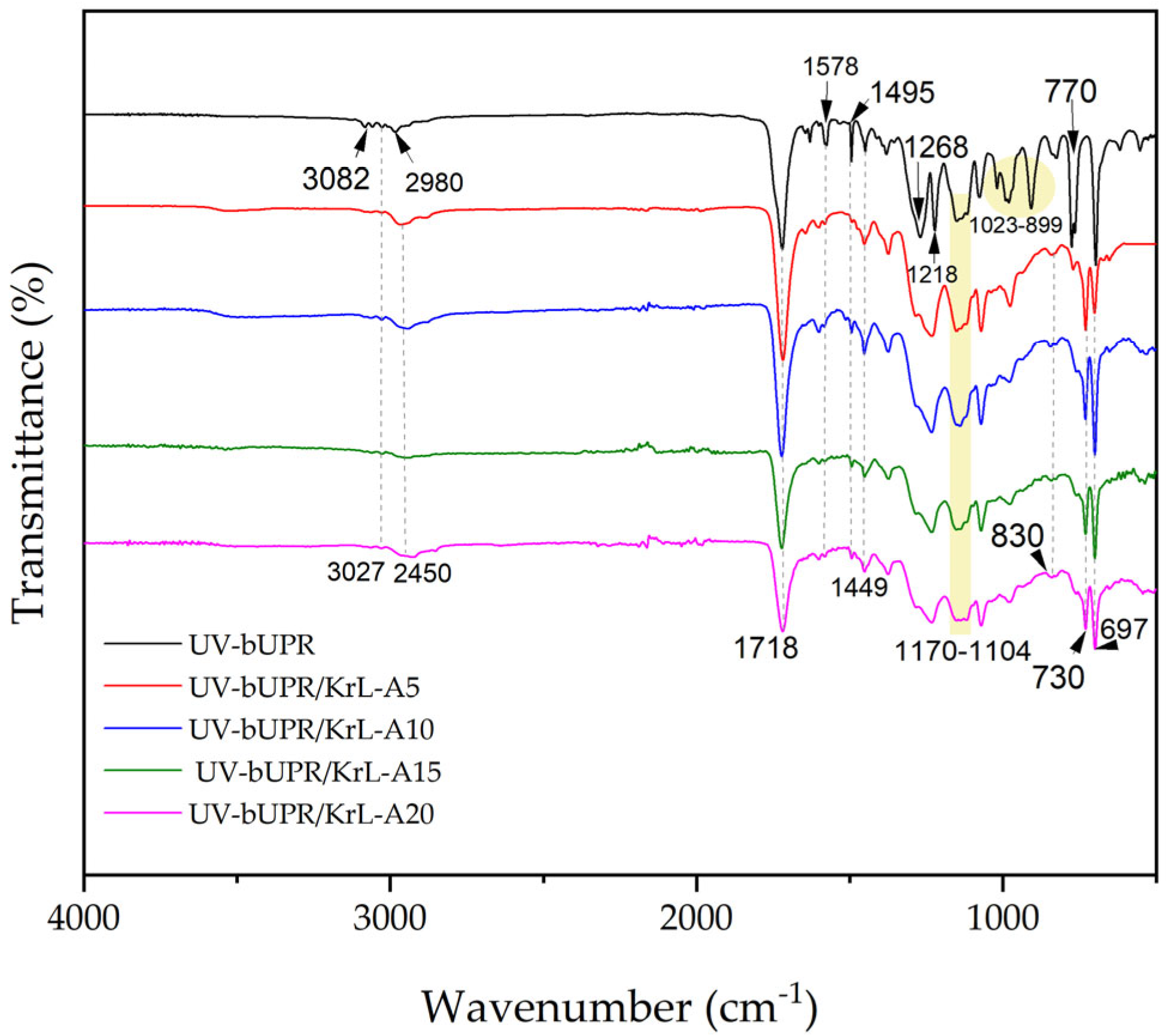
The successful synthesis of the UV-curable biobased unsaturated polyester resin (UV-bUPR) was first verified by FTIR and NMR spectroscopy. The FTIR spectra of the synthesized UV-bUPR resin and the K
rL-A filler are presented in
Figure 1.
The FTIR spectra of UV-cured unsaturated polyester resins (UV-bUPR) and their composites with modified kraft lignin (UV-bUPR/K
rL-A) clearly indicate structural changes and the successful incorporation of the lignin additive into the polymer matrix. In all samples (
Figure 1), a characteristic intense absorption band is observed at around 1718 cm
−1, corresponding to the stretching vibration of the ester carbonyl group (C=O), confirming the formation of the polyester backbone [
4]. This result is consistent with the literature, where the formation of the polyester network is evidenced by the appearance of an ester carbonyl peak (~1739 cm
−1), accompanied by C–O–C stretching vibrations in the 1150–1300 cm
−1 region. The spectra also exhibit bands in the 1268–1012 cm
−1 region, which can be attributed to C–O and C–O–C stretching vibrations, further confirming the presence of ester and ether functional groups within the crosslinked structure. This region, particularly pronounced in the modified samples, indicates the contribution of lignin and possible interactions between lignin hydroxyl groups and the polyester matrix. The band observed at ~1023 cm
−1 in the neat UV-bUPR spectrum in
Figure 1. is attributed to C–O–C stretching vibrations of the polyester backbone, while its broadening and intensity changes in lignin-containing samples indicate additional contributions from lignin-derived oxygen functionalities and possible intermolecular interactions.
The aromatic structure in
Figure 1. of lignin and terephthalate units is confirmed by the presence of bands around 1495 cm
−1 and 1449 cm
−1, which correspond to aromatic ring vibrations. The intensity of these bands increases with increasing lignin content (from A5 to A20), clearly indicating the successful incorporation of the lignin component into the composite. The bands at approximately 770 cm
−1, as well as in the 730–697 cm
−1 range, are assigned to out-of-plane deformation vibrations of aromatic C–H bonds, characteristic of terephthalate and maleic units, as in our previous paper [
4]. These vibrations become more pronounced with higher lignin content, confirming an increased presence of aromatic structures. The presence of unsaturated bonds in
Figure 1, which are essential for UV crosslinking, is confirmed by the appearance of weaker signals around 1600 cm
−1 (C=C) and in the 980–920 cm
−1 region, attributed to out-of-plane vibrations of =C–H bonds in maleate units. This indicates that the double bonds are preserved and available for photoinitiated polymerization.
Signals attributable to allyl functionalities are also observed in the spectra, confirming the successful chemical modification of lignin and the introduction of additional UV-reactive sites into the resin. A particularly notable increase in the intensity of the band around 800 cm
−1 (≈830 cm
−1) in
Figure 2. In previous work [
4], it is confirmed that the introduction of acryloyl ester groups into the K
fL-A system further enhances the reactivity and crosslinking ability of the material.
The contents of phenolic and hydroxyl groups in KrL-A decreased to 1.95 and 1.75 mmol/g, respectively, compared to 2.6 and 2.1 mmol/g for KrL, confirming the successful consumption of reactive hydroxyl groups during the acrylation process. This result is consistent with the grafting of acrylate functionalities onto the lignin structure, which is further supported by the significant increase in iodine value and improved compatibility with the polymer matrix.
3.1.2. NMR Analysis
NMR spectroscopy further supported the proposed chemical structure. The
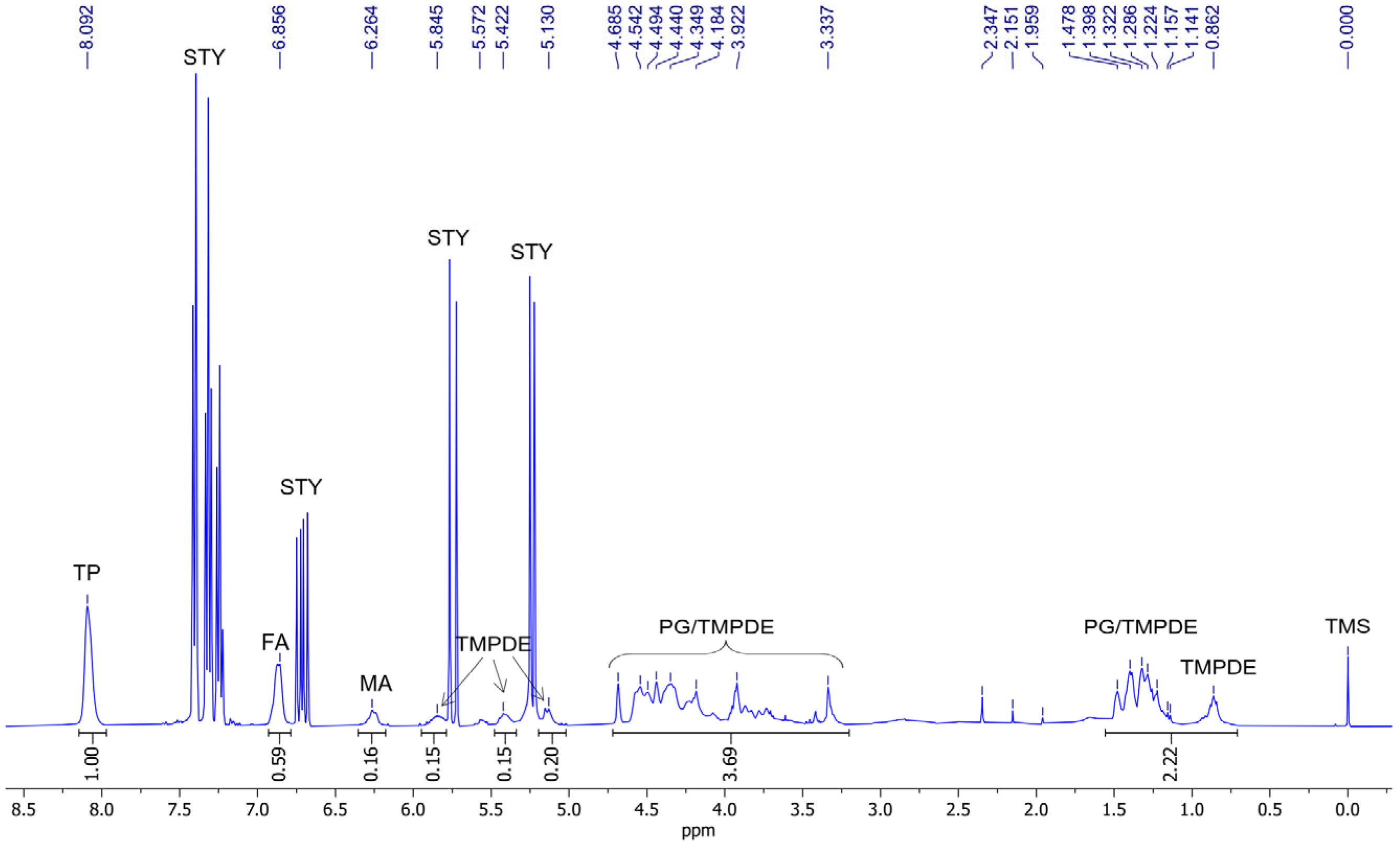
1H NMR spectrum of the obtained resin confirms the formation of an unsaturated polyester system in the presence of styrene as a reactive diluent (
Figure 2). The aromatic region between 7.2 and 7.5 ppm is assigned to the aromatic protons of styrene. Signals detected at 6.71, 5.74, and 5.24 ppm are assigned to the vinyl protons of styrene. In this region, the signals of vinyl protons from TMPDE overlap with those of styrene. A more downfield signal observed at 8.09 ppm is attributed to the aromatic protons of terephthalate moieties (TP), providing clear evidence for the incorporation of PET-derived fragments into the polyester structure.
The presence of these resonances indicates that styrene remains present in the resin, consistent with its role as a reactive diluent in unsaturated polyester formulations. The resonances expected for maleate (MA)/fumarate (FA) unsaturation appear at 6.26 and 6.86 ppm, respectively.
Broad signals in the 3.34–4.68 ppm region are attributed to –OCH2– groups in the polyester backbone, arising from glycol constituents such as propylene glycol (PG) and TMPDE. Additional signals in the 3.3–4.0 ppm range are assigned to methylene and methine protons adjacent to oxygen atoms, further supporting the formation of the polyester network. In the aliphatic region, signals at 0.86–1.48 ppm are associated with methyl and methylene groups originating mainly from PG and TMPDE.
Overall, the observed signals in the 1H NMR spectrum are in good agreement with the proposed structure of an unsaturated polyester resin synthesized from PET-derived terephthalate units, glycols, and maleic components, with styrene acting as the reactive diluent. The observed spectral pattern therefore supports the successful incorporation of recycled PET fragments into the polyester resin structure.
The
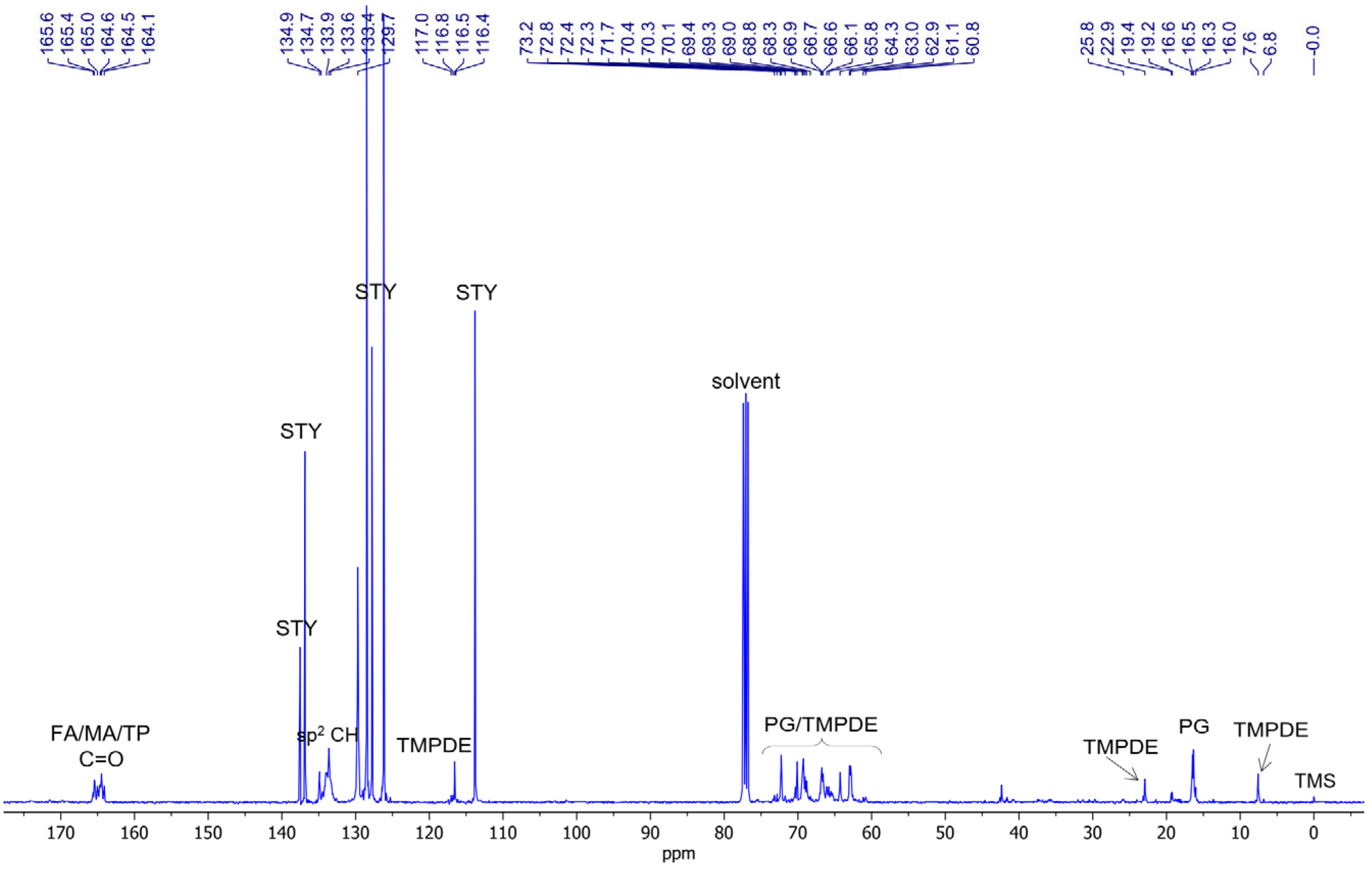
13C NMR spectrum of the resin is consistent with the formation of an unsaturated polyester system containing PET-derived structural units and styrene as a reactive diluent. The spectrum exhibits characteristic signals of ester carbonyl carbons, aromatic and vinyl carbons, as well as oxygenated aliphatic carbons, in agreement with the proposed composition based on PET, propylene glycol (PG), maleic anhydride component (MA), TMPDE, and styrene (STY) (
Figure 3).
Signals observed in the 164.1–165.6 ppm region are assigned to ester carbonyl carbons (C=O) of FA/MA and TP moieties, characteristic for polyester structures. These signals confirm the presence of unsaturated ester groups originating from PET-derived terephthalate units and maleate/fumarate-derived moieties. The occurrence of several closely spaced signals in this region indicates multiple ester environments, as expected for a polyester synthesized from several monomeric components.
Distinct signals at 113.8 and 136.9 ppm are characteristic of the terminal vinyl carbon of styrene, while the signals at 126.2, 127.8, 128.5, and 137.5 ppm correspond to substituted aromatic carbons of styrene. The presence of these signals confirms the presence of residual styrene in the sample, consistent with an uncured or partially reacted resin system.
The region between 126 and 137 ppm contains a series of intense signals attributed to aromatic and olefinic carbons in maleate/fumarate and terephthalate. Due to significant overlap in this spectral range, precise differentiation of individual contributions is not straightforward; however, the overall pattern is fully consistent with the proposed resin structure.
A broad set of signals in the 62.9–72.3 ppm range is assigned to carbons bonded to oxygen within glycol and polyester segments. These resonances are typical of –OCH2– and –OCH– carbons derived from PG, TMPDE, and PET-based fragments. The multiplicity of signals in this region indicates several nonequivalent oxygen-containing aliphatic environments, reflecting the structural heterogeneity of the polyester network. Additional signals in the 6.8–25.8 ppm region are attributed to aliphatic methyl carbons originating from PG (~16 ppm) and methyl and methylene groups from TMPDE (~7 and ~23 ppm) structural units. These resonances further support the incorporation of aliphatic diol components into the resin backbone.
Overall, the 13C NMR spectrum is in good agreement with the proposed structure and confirms the presence of ester functionalities, PET-derived terephthalate units, oxygenated aliphatic segments from glycols, and dissolved styrene. These spectral data provide strong evidence for the successful formation of the targeted unsaturated polyester resin.
3.2. Incorporation of Acryloyl-Modified Kraft Lignin into the UV-bUPR Matrix
After confirming the resin structure, acryloyl-modified Kraft lignin (K
rL-A) was introduced as a vinyl-reactive bio-filler to fabricate UV-bUPR/K
rL-A composites at loadings of 0–20 wt.%. Visually, increasing lignin content led to darker color/increased opacity, consistent with lignin’s intrinsic chromophores, which can influence UV-light penetration during curing. Despite this potential challenge, the prepared formulations could be processed into defect-minimized specimens after (mixing/degassing conditions), indicating that the UV-curable system tolerates moderate K
rL-A levels under the selected processing window. The efficiency of the UV-curing process in these systems is expected to depend strongly on filler loading, light penetration, and radical reactivity within the formulation. Oxygen inhibition is a well-known limitation of free-radical photopolymerization, as oxygen can react with initiating and propagating radicals, leading to decreased monomer conversion and reduced curing efficiency, particularly in surface layers of UV-cured systems. Although oxygen inhibition was not directly quantified in this study, its effect in UV-curable systems is well established in the literature [
43]. This effect may become more pronounced in lignin-containing systems because lignin contains chromophoric structures that strongly absorb UV radiation, thereby reducing light penetration and limiting curing depth. Consequently, increasing lignin content may negatively affect the uniformity of network formation, especially at higher filler loadings. Nevertheless, acryloyl modification of lignin and using a dual-cure system compensates for these limitations by introducing reactive vinyl groups capable of participating in the photopolymerization process, which improves interfacial integration with the resin matrix and promotes the formation of a more homogeneous crosslinked structure [
44]. This is reflected in improved mechanical properties of UV-bUPR/K
rL composites in relation to b-UPR/K
fL-A composites (
Table S2) [
4,
9].
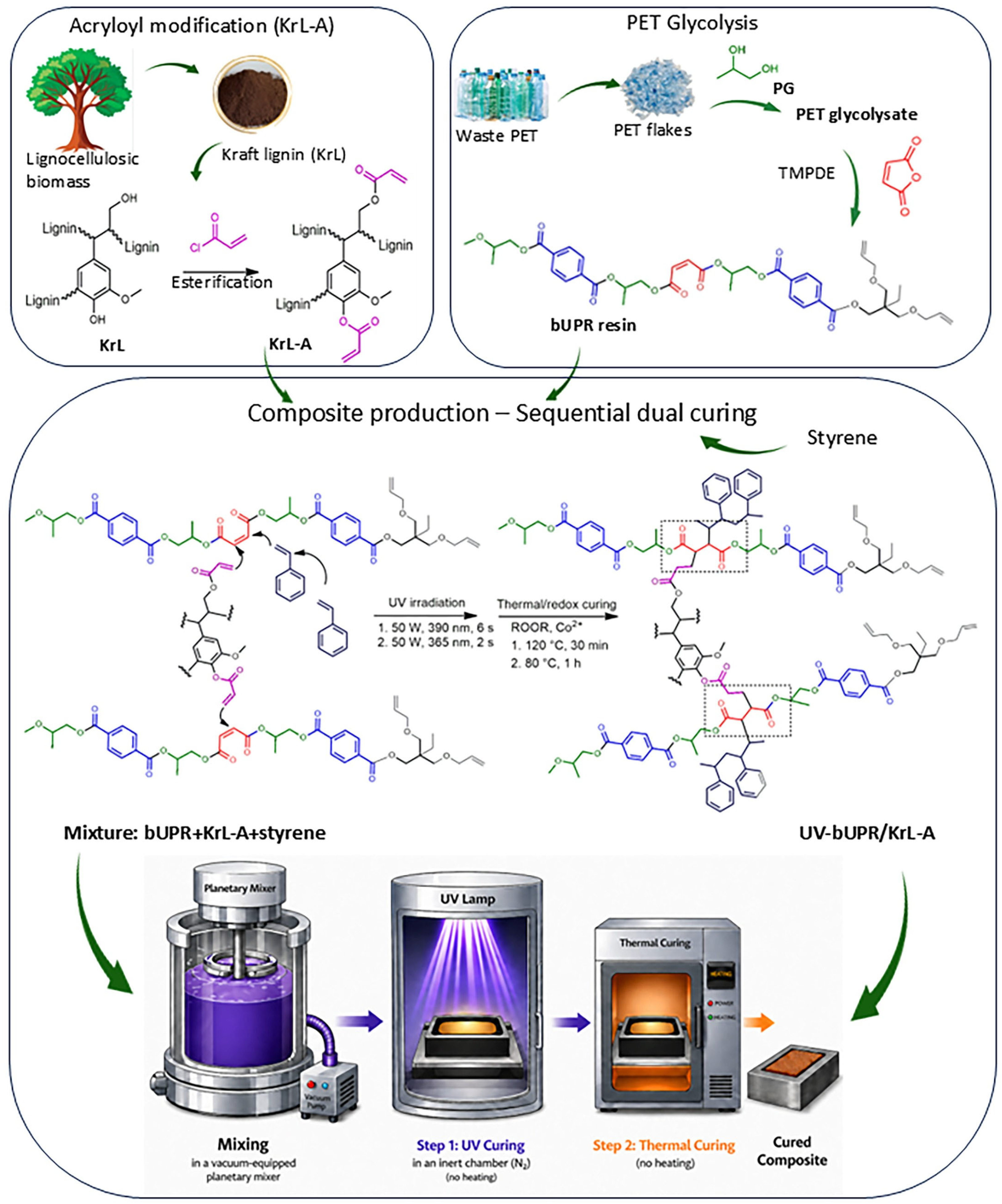
A schematic representation of the proposed reaction pathway and dual-curing mechanism is shown in
Figure 4. The modification of Kraft lignin with acryloyl chloride introduces reactive vinyl groups onto the lignin structure, enabling its participation in free-radical polymerization. During UV curing, photo initiator-generated radicals initiate the polymerization of unsaturated bonds present in the polyester resin, styrene, and the acryloyl-functionalized lignin (K
rL-A), leading to rapid network formation.
However, due to the strong UV absorption of lignin and potential oxygen inhibition effects, complete curing cannot be achieved solely through UV irradiation. Therefore, a subsequent thermal/redox curing step is employed, which generates additional radicals and promotes further crosslinking in regions with limited UV penetration. This dual-curing approach ensures a more homogeneous and highly crosslinked network structure.
Importantly, the acryloyl-modified lignin acts as a co-reactive component rather than an inert filler, becoming covalently integrated into the polymer network. This contributes to improved interfacial compatibility, enhanced mechanical performance, and increased char formation, which is beneficial for flame retardancy.
Importantly, the role of KrL-A in this system differs from that of an inert particulate filler: the acryloyl groups provide reactive vinyl sites that can participate in the photoinitiated free-radical curing of the UPR matrix. This co-reactive behavior is expected to improve interfacial adhesion and stress transfer, while simultaneously reducing the likelihood of filler migration or debonding. Therefore, the composite performance should reflect not only lignin dispersion and loading, but also the extent to which KrL-A is covalently integrated into the cured network. In the following sections, mechanical testing, DMA, and SEM are discussed together to clarify how lignin content and morphology govern the stiffness–strength–toughness balance, and how these structural features relate to the observed flammability performance.
3.3. Mechanical Properties of the UV-bUPR Composites
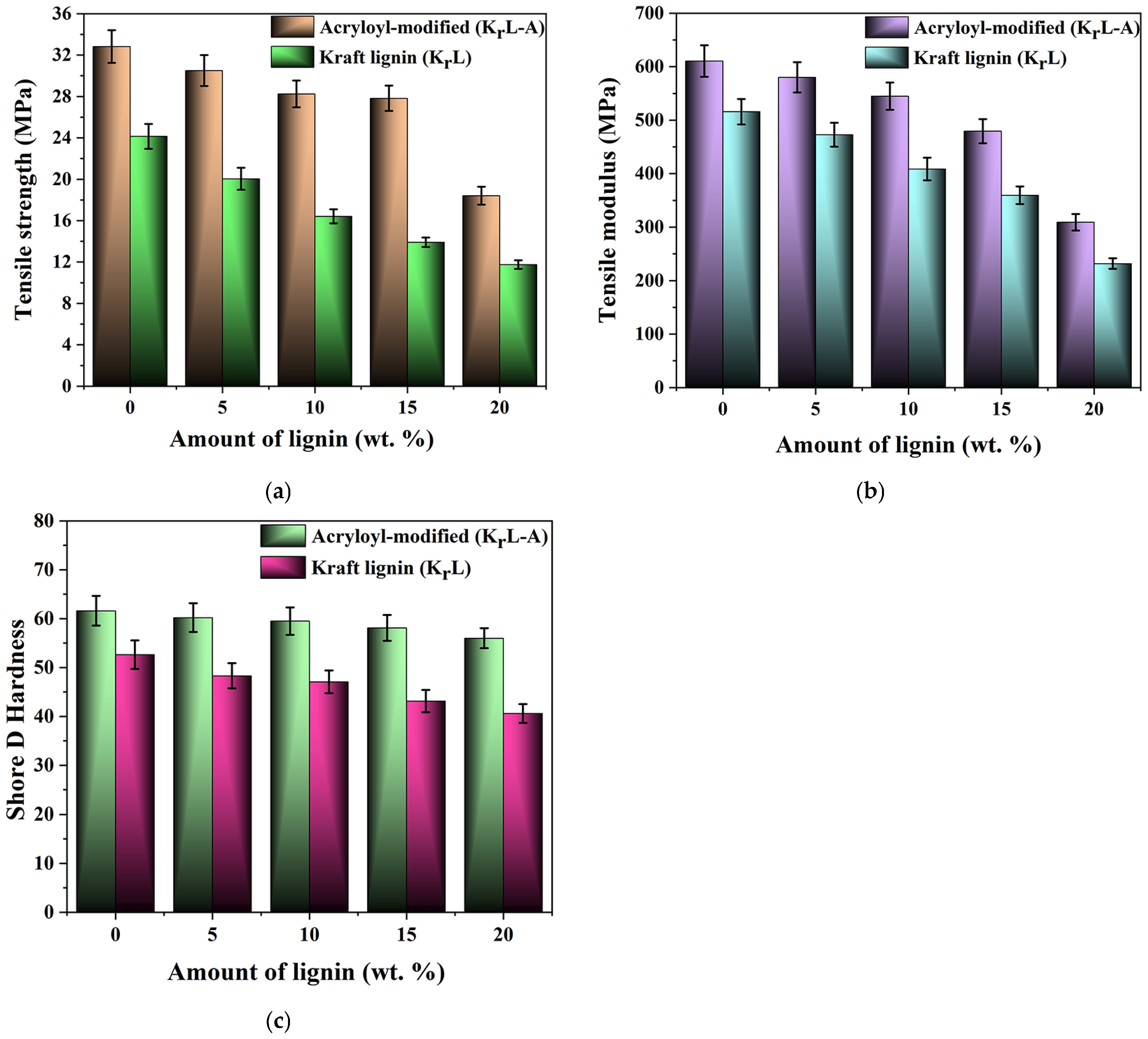
By examining the mechanical behavior of the composite materials, tensile strength, elastic modulus, and Shore D hardness were obtained, as shown in
Figure 5. The results demonstrate that modifying lignin influences the performance of unsaturated polyester resin (UV-bUPR) composites.
Samples containing unmodified lignin exhibited lower tensile strength, reduced elongation at break, and brittle fracture behavior. This is consistent with the limited compatibility of raw lignin with hydrophobic polyester matrices, where poor interfacial adhesion leads to stress concentration and premature failure [
45].
In contrast, composites reinforced with modified lignin showed significant improvements in tensile and flexural strength, modulus of elasticity, and overall toughness. The modification introduces reactive functional groups (e.g., hydroxyl, epoxy, or acryl groups) that participate in crosslinking with the polyester network, resulting in enhanced interfacial bonding and more efficient stress transfer [
4,
46,
47].
The replacement of styrene with the phosphorus-containing monomer TAP20 resulted in a moderate reduction in mechanical performance (approximately 10%) [
48]. For the UV-bUPR/TAP20/K
rL series, the tensile strength was 12.50 MPa (15 wt.%) and 11.20 MPa (20 wt.%), with hardness values between 72 and 74 Shore D. This decline is attributed to lower cross-linking density and poor interfacial adhesion of the unmodified lignin [
49]. While crosslink density was not directly measured, the observed curing behavior and mechanical response suggest differences in network structure that may contribute to the reduced performance. In contrast, the UV-bUPR/TAP20/K
rL-A15 sample showed a significantly higher tensile strength of 25.00 MPa and hardness of 78 Shore D. The acryloyl modification of lignin (K
rL-A) facilitated covalent bonding with the matrix, effectively compensating for the plasticizing effect of the flame retardant. However, further increasing the K
rL-A content to 20 wt.% led to a slight drop in strength (21.50 MPa) due to particle saturation [
50]. Overall, the K
rL-A/TAP20 system provides an optimal balance between mechanical integrity and enhanced flame resistance [
51].
The decrease in performance at higher KrL-A loading can be attributed to several factors related to network formation and phase behavior. At increased lignin content, reduced compatibility between the modified lignin and the polyester matrix may lead to microphase heterogeneity and localized agglomeration. This can hinder uniform stress transfer and negatively affect mechanical properties.
In addition, the presence of rigid lignin structures may restrict chain mobility during curing, thereby limiting effective crosslinking and resulting in a less homogeneous network. Consequently, the overall curing efficiency and network integrity are reduced, which is reflected in the observed decline in performance at higher filler loadings.
Determination of hardness further supports the mechanical analysis. Composites with unmodified lignin exhibited lower hardness values, reflecting weaker resistance to indentation and a less compact structure. This correlates with the observed brittle fracture behavior and poor dispersion of lignin particles. By contrast, modified lignin significantly increased hardness, indicating a denser and more homogeneous composite structure. The improved hardness can be attributed to stronger interfacial bonding and better stress distribution within the matrix. These results align with previous studies, where chemically modified lignin enhanced both mechanical integrity and surface hardness of UPR composites [
52,
53]. Siharova et al. also reported that lignin-filled UPR composites exhibited improved hardness when lignin was surface-modified, confirming the importance of chemical treatment [
54].
Ngo et al. [
52] demonstrated that kraft and sulfite lignin improved tensile and impact properties of UV-bUPR composites only when chemically modified, while unmodified lignin reduced performance due to poor adhesion. Similarly, Knežević et al. reported that acrylic-functionalized lignin incorporated into UV-bUPR composites improved mechanical integrity and reduced flammability [
53]. More recently, Siharova et al. emphasized that lignin-filled UV-bUPR composites exhibited enhanced mechanical and thermal stability when lignin was surface-modified [
54].
The mechanical results clearly demonstrate that chemical modification of lignin is necessary to achieve better mechanical performance in UV-bUPR composites. While untreated lignin serves largely as a filler with minimal strengthening effect, modified lignin enables the production of sustainable composites with enhanced mechanical properties.
3.4. SEM Fracture Morphology and Structure–Property Correlations
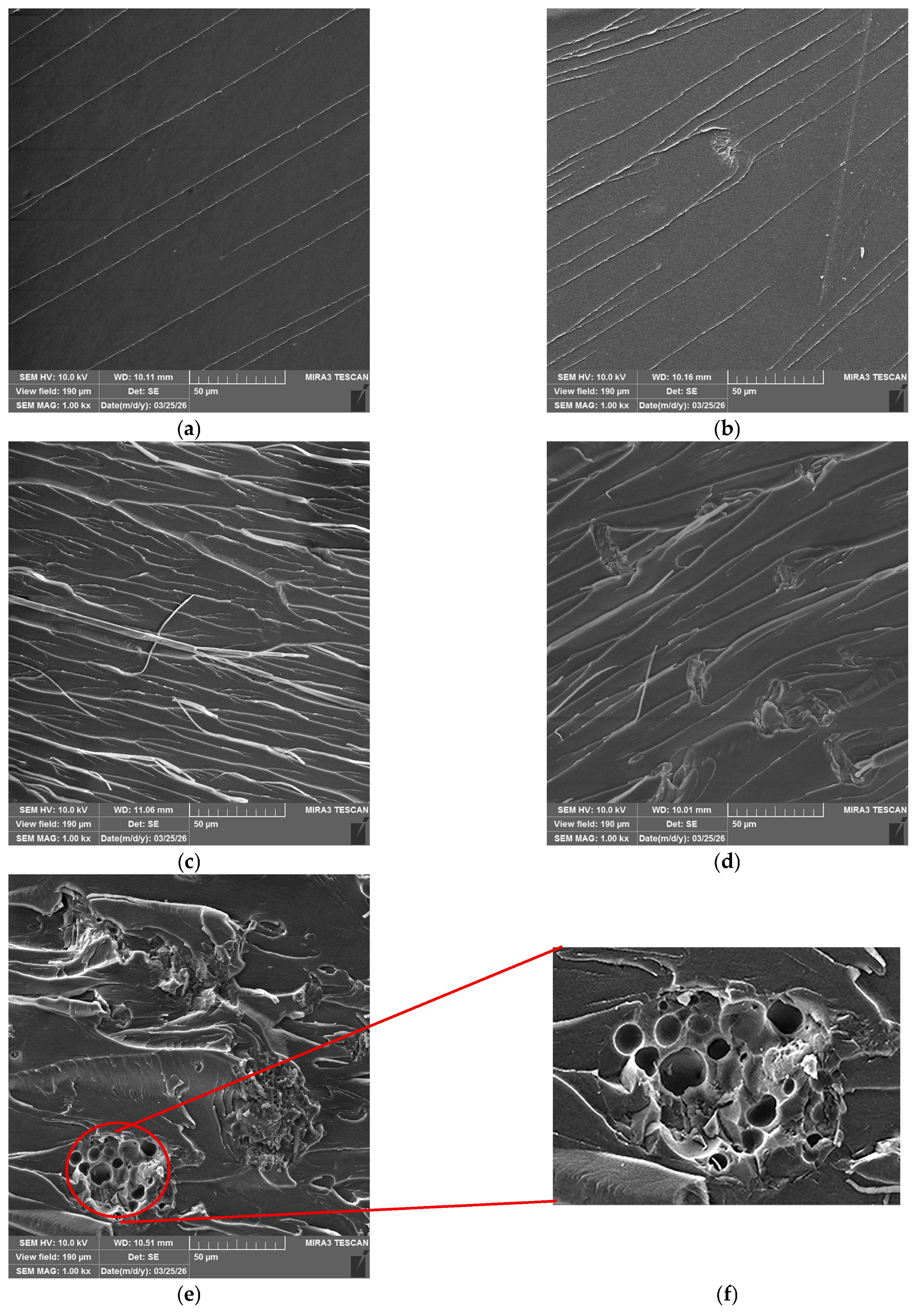
To provide a deeper understanding of the mechanical behavior and reinforcement efficiency of the composites, SEM analysis was performed on the fracture surfaces of the neat matrix and both modified and unmodified lignin-filled samples (
Figure 6). The examination of the fractographic features is crucial for identifying the correlation between the filler-matrix interfacial adhesion and the resulting mechanical properties [
42].
The SEM micrograph of the neat matrix (
Figure 6a) reveals a characteristic smooth and planar fracture surface, indicating a typical brittle failure with low energy absorption. However, with the introduction of acryloyl lignin (5–15 wt.%,
Figure 6b,c), a significant transition in surface topography is observed. The surfaces become increasingly rough, characterized by dense crack-deflection patterns and ‘river-like’ markings. This increased roughness suggests that the functionalized lignin particles effectively act as obstacles to crack propagation, forcing a more tortuous path and enhancing the energy dissipation [
42,
49,
55].
At higher magnification, the interface between the acryloyl-modified lignin (K
rL-A) and the matrix exhibits a high degree of integration, with no visible gaps. This seamless contact is a result of the acryloyl groups creating a robust covalent bridge with the polyester network, ensuring efficient stress transfer. In contrast, the unmodified lignin composites (
Figure 6d,e) reveal larger aggregates and localized filler detachment, indicating weaker interactions. A particularly interesting feature in
Figure 6f shows internal cavities within a lignin particle; for K
rL-A, the improved resin wetting allows for partial infiltration of the polymer into these pores, creating a ‘mechanical interlocking’ effect that further stabilizes the nanostructure.
In contrast, the composites containing unmodified lignin (
Figure 6d,e) exhibit a markedly different morphology. The presence of large filler agglomerates, micro-voids, and clear ‘pull-out’ traces indicates poor interfacial wetting and weak adhesion (
Figure 6f) [
55,
56]. These structural defects serve as stress concentrators, directly leading to the sharp decline in mechanical integrity observed in the data. For instance, at 15 wt.% unmodified lignin, the tensile strength of the composite (13.91 MPa) is nearly 50% lower compared to that of composites containing acryloyl-modified lignin (27.82 MPa).
Finally, at high filler loadings (up to 20 wt.%), SEM images reveal a saturation effect where macro-agglomeration dominates the microstructure. This morphological degradation is reflected in the substantial drop of the Young’s modulus to 309.2 MPa, confirming that the disruption of the polymer network continuity is the primary factor limiting the performance of these composites at higher concentrations [
49].
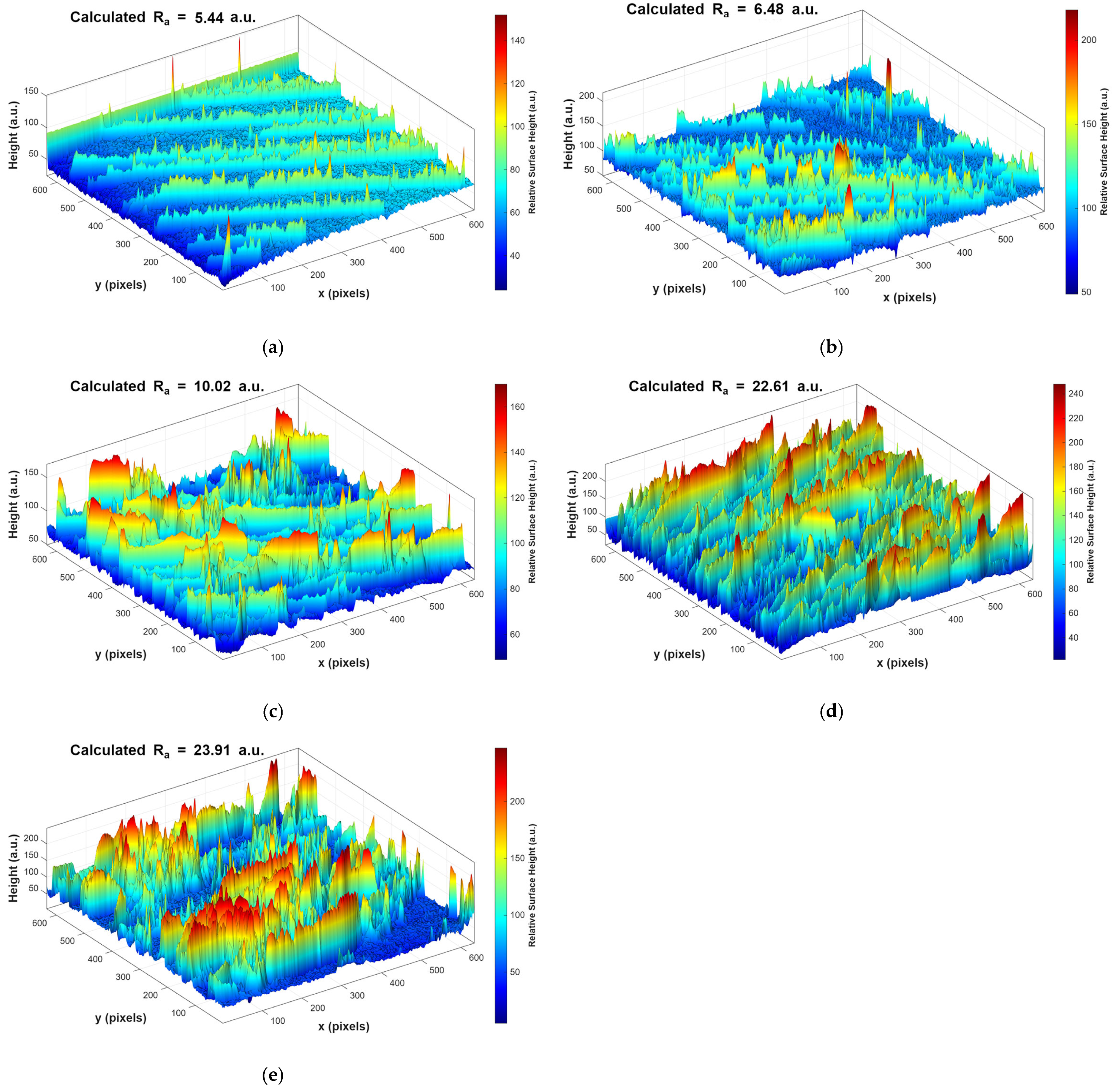
The 3D surface topography reconstruction (
Figure 7) reveals significant differences in fracture mechanisms depending on the filler type and loading.
Interestingly, the highest arithmetic average roughness (R
a) was recorded for the 15 wt.% unmodified lignin composite (
Figure 7e). This peak in roughness, exceeding that of the modified systems, can be attributed to the formation of large lignin agglomerates at higher loadings due to poor interfacial compatibility [
47]. These aggregates act as significant physical obstacles, forcing the crack to deviate sharply around them, resulting in a highly irregular and rugged fracture surface. In contrast, the acryloyl-modified lignin composites (
Figure 7b,c) exhibited a more controlled and uniform increase in roughness compared to the neat matrix (
Figure 7a). The modification improves the filler-matrix adhesion, leading to a more homogenous distribution and a ‘finer’ topographic profile. This suggests that while 15 wt.% unmodified lignin creates the highest geometric roughness due to structural defects and clustering, the modified systems provide a more balanced reinforcement, as evidenced by the Shore D hardness trends and overall composite integrity [
42].
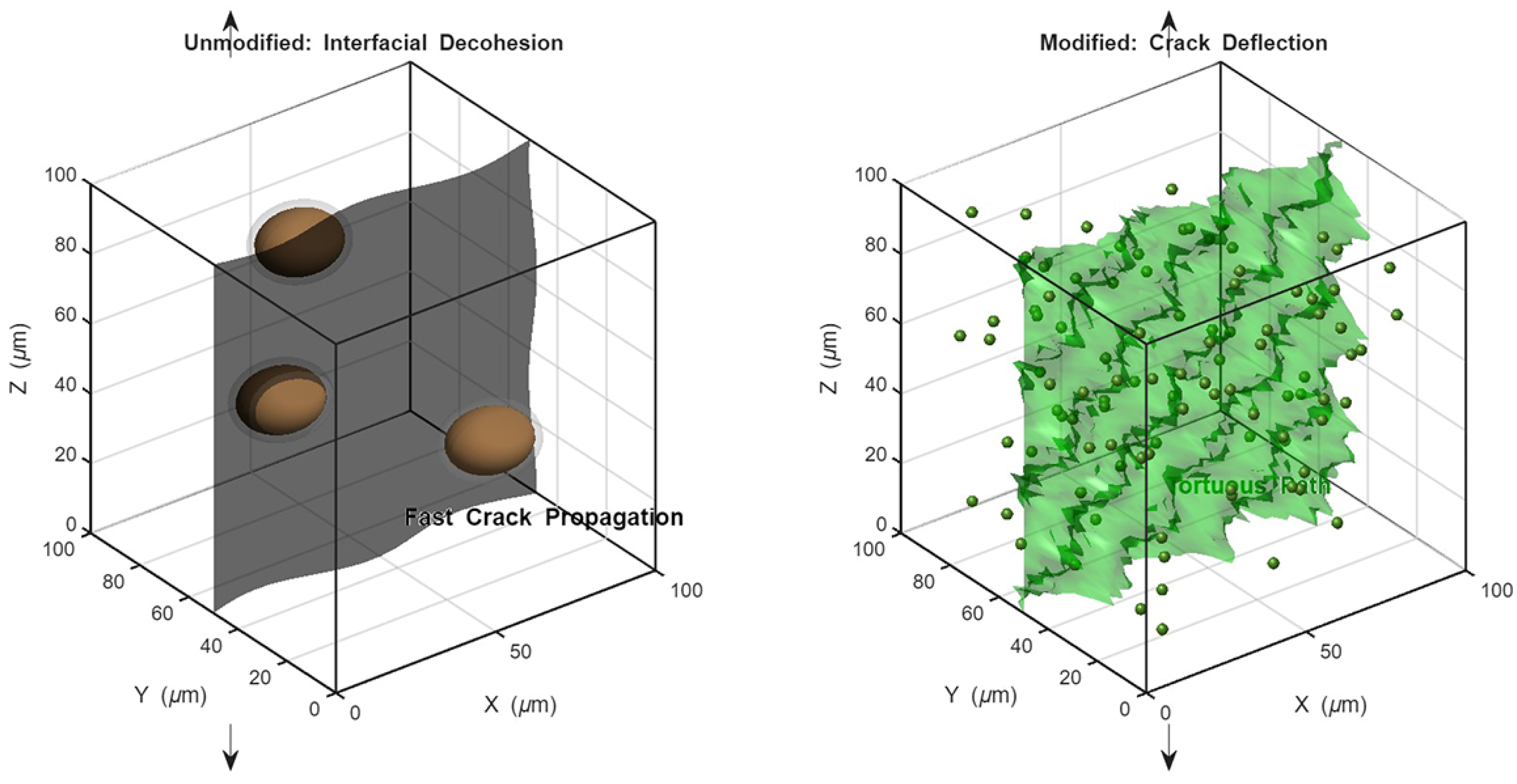
To further elucidate the reinforcement efficiency of the acryloyl-modified lignin, a 3D fractographical simulation was developed based on the SEM observations (
Figure 8).
In the unmodified system, the presence of macro-agglomerates and associated interfacial voids creates a path of least resistance. The crack propagates rapidly through these structural defects with minimal deflection, leading to the observed ‘interfacial decohesion’ and a significant drop in tensile strength (down to 13.91 MPa for 15 wt.%).
In contrast, the modified system exhibits a fundamentally different failure mode. The superior dispersion of acryloyl–lignin particles act as a dense network of obstacles. As the crack front encounters these well-bonded particles, it is forced to deflect and bifurcate, creating a highly tortuous path. This mechanism significantly increases the effective fracture surface area and energy dissipation, which directly correlates with the 100% improvement in tensile strength compared to the unmodified counterparts. This 3D spatial analysis confirms that the mechanical integrity is governed more by the homogeneity of the filler network than by the absolute statistical roughness values.
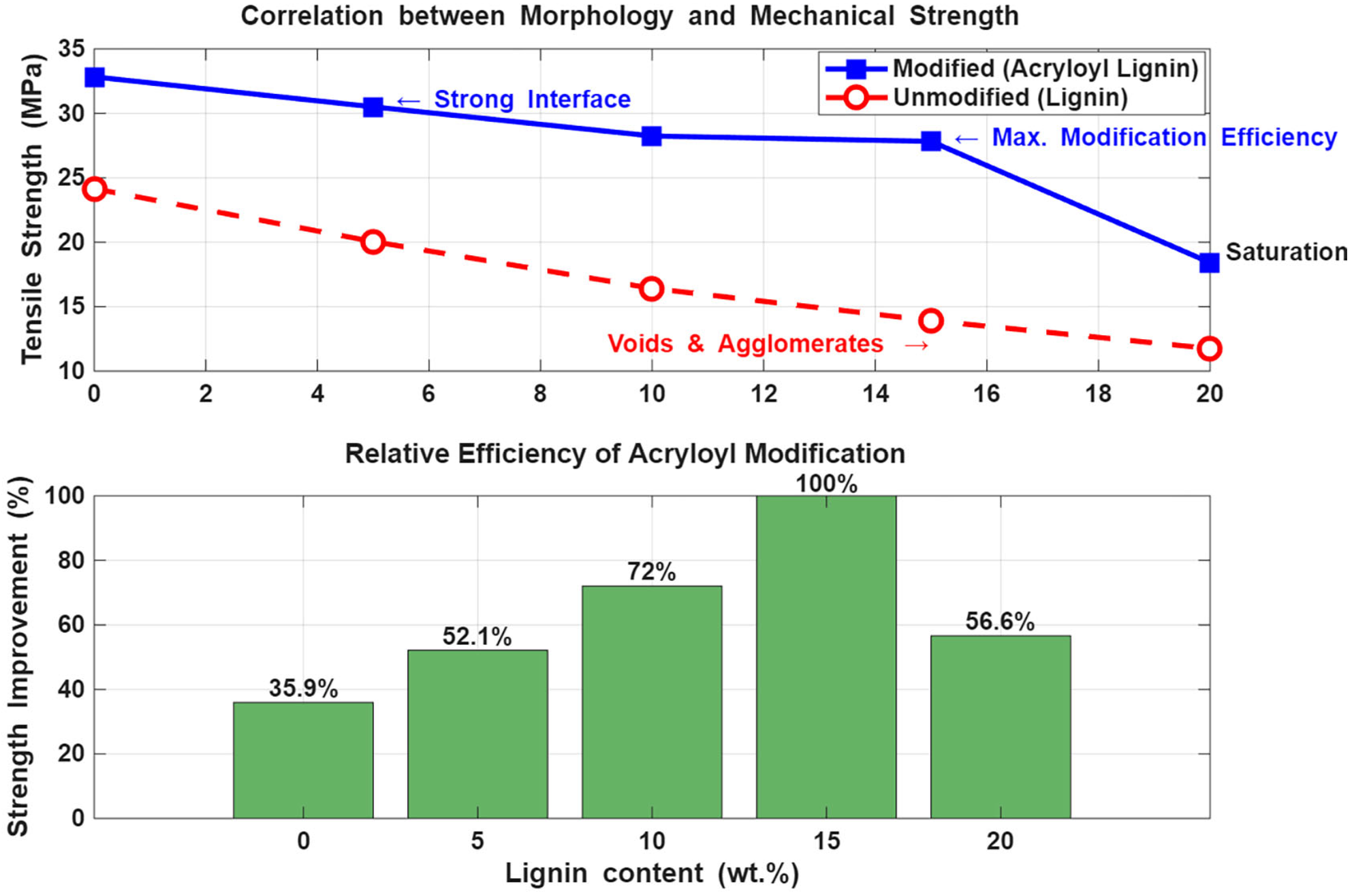
The synergistic relationship between the surface modification and the resulting mechanical performance is quantitatively illustrated in
Figure 9.
The upper plot displays the tensile strength as a function of filler loading, where the distinct divergence between the two series is annotated with key microstructural mechanisms. The “Strong Interface” maintained in the acryloyl-modified system prevents the rapid strength loss seen in the unmodified series, where “Voids and Agglomerates” act as premature failure sites.
A critical observation is the “Max Modification Efficiency” reached at 15 wt.%. At this specific threshold, the lower bar chart reveals that the acryloyl functionalization provides a 100% improvement in tensile strength compared to the unmodified lignin composite (27.83 MPa vs. 13.91 MPa). These peak highlights the optimal balance where the chemical treatment most effectively compensates for the increased filler surface area. Finally, both plots converge toward a “Saturation” point at 20 wt.%, where the physical overcrowding of particles leads to a breakdown of the polymer network continuity, regardless of the surface treatment applied.
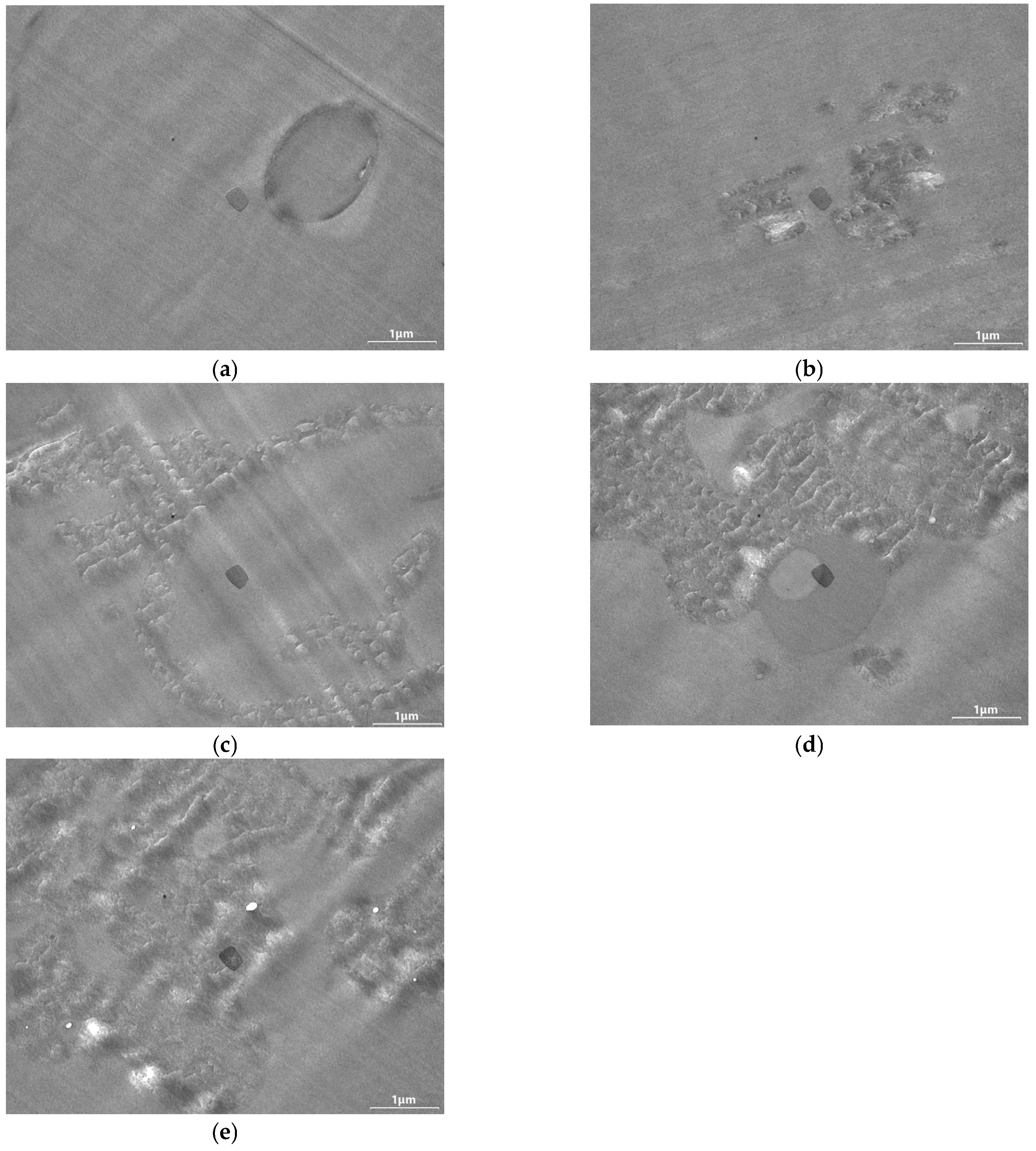
3.5. TEM Morphology
The nanostructural organization and the quality of filler dispersion within the UV-curable unsaturated polyester matrix were further elucidated using Transmission Electron Microscopy (TEM), as presented in
Figure 10. This analysis was crucial to confirm the effectiveness of lignin functionalization on the final composite morphology.
The TEM micrographs of the K
rL-A reinforced systems (
Figure 10a) reveal a highly homogeneous distribution of the lignin particles at the nanoscale. Unlike the unmodified Kraft lignin, which typically tends to aggregate due to its high surface energy and poor compatibility with the hydrophobic resin, the acryloyl-modified lignin appears well-integrated within the polymer network. The absence of large-scale clusters and the presence of a seamless interface between the K
rL-A and the polyester matrix suggest that the reactive vinyl groups facilitated robust covalent cross-linking during the UV-curing process.
In contrast, the micrographs of the composites containing unmodified lignin (
Figure 10b) display noticeable structural inhomogeneity. These samples are characterized by distinct phase separation and localized filler-rich domains, which act as stress concentrators and explain the somewhat lower toughness compared to the functionalized analogues. Therefore, the visual evidence presented in
Figure 10 directly supports the mechanical findings and the 3D surface topography analysis, confirming that the chemical valorization of Kraft lignin is a key factor in achieving a stabilized and high-performance bio-composite nanostructure.
3.6. Thermal Stability and Degradation Behavior of UPE/KrL-A Composites
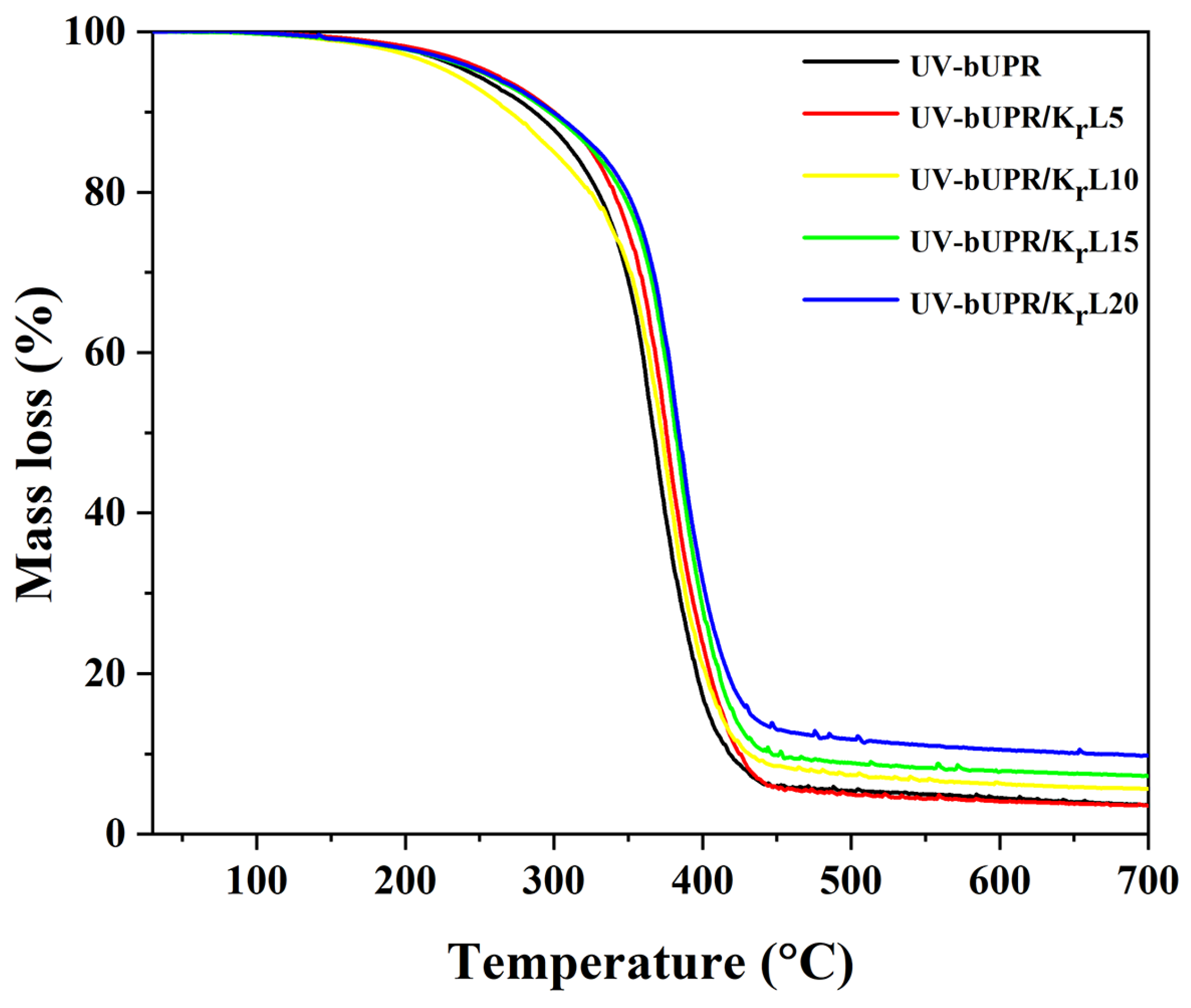
The influence of K
rL-A reinforcement on the thermal durability of biobased UPE composites was assessed through TGA and DTG analyses. The resulting thermal parameters—specifically the onset of decomposition (T
5), the temperature at 10 wt.% loss (T
10), the peak degradation temperature (T
max), and the solid residue (char yield) at 600 °C are illustrated in
Figure 11.
The thermograms indicate that the degradation process for all samples follows a multi-step pathway. A minor initial weight loss up to 150 °C is observed, likely due to the release of trapped moisture and volatile residues. However, the most significant weight loss occurs between 300 °C and 450 °C. This stage is dominated by the thermal cleavage of the polymer network’s cross-links and the concurrent breakdown of the lignin’s complex molecular structure [
57].
It is evident that the addition of K
rL-A enhances the thermal stability of the b-UPR matrix, as seen by the gradual shift in T
5 and T
max toward higher temperatures. This improvement can be linked to the chemical compatibility between the acryloyl functional groups of the modified lignin and the polyester resin. Such interactions likely result in a more robust and densely interconnected 3D network, which effectively restricts chain segment mobility and slows the diffusion of decomposition gases [
58].
Furthermore, the char yield at 600 °C showed a clear upward trend with increasing K
rL-A content. Because lignin is inherently rich in aromatic structures, it acts as a significant carbon source that facilitates the development of a stable carbonaceous char layer during heating [
59]. This layer serves as a protective physical barrier, mitigating heat transfer and oxygen diffusion into the bulk of the material. This observation is consistent with the self-extinguishing behavior recorded during UL-94 testing [
60]. While the DTG profiles suggest that the fundamental degradation mechanism remains largely unchanged, the reduction in the maximum decomposition rate confirms that the modified lignin functions as an effective thermal stabilizer in these biobased systems.
3.7. Comparative Analysis of Mechanical Performance and Reinforcement Mechanisms
To address the mechanistic correlations between the composite components, the mechanical properties of the synthesized b-UPR and its resulting composites were evaluated in the context of existing literature. As summarized in
Table S2 (Supplementary Material) [
61,
62,
63,
64,
65,
66,
67,
68], the tensile strength and elastic modulus of the developed materials are comparable to, or in some cases slightly lower than, traditional petroleum-based systems, yet they significantly outperform standard recycled PET resins [
69].
A critical observation in this study is the influence of lignin concentration on the network integrity. In the absence of modification, increasing lignin content typically leads to a sharp decline in tensile strength, which is consistent with the findings of Ngo et al. [
52]. This trend is often attributed to poor interfacial wetting and the formation of filler aggregates that act as stress concentrators. However, our results demonstrate that when lignin is added in quantities below 15 wt.%, the mechanical integrity is preserved. Rather than inducing excessive brittleness, the incorporation of lignin at these levels enhances the deformation ability of the material, making it more suitable for the production of durable goods.
The superior performance of the b-UPR/K
fL-A series compared to unmodified analogues can be explained by the chemical compatibility between the components. While literature reports on fillers like waste coffee grounds (SCG) [
70] or silica particles [
71] show varied impacts on tensile strength due to structural differences, the acryloyl groups on our functionalized lignin facilitate covalent integration into the polyester matrix. This suppresses the agglomeration effects observed in PET/diamine systems [
72] or high-loading CNT composites [
73], where particles often act as defects rather than reinforcements.
Nevertheless, certain discontinuities in mechanical properties were identified at maximum filler loadings (detailed in
Table S2). These are likely governed by the differences in crosslinking reactivity between the bio-based matrix and the lignin fragments. The slightly lower modulus observed at higher concentrations suggests that while the material becomes more flexible, the overall crosslink density may be affected by the steric hindrance of the lignin macromolecule. Future optimization will therefore focus on defragmenting K
rL to obtain lower-molecular-weight fractions with higher content of reactive functionalities, further bridging the gap between high sustainability (over 64% bio-recycled content) and high-performance engineering requirements.
3.8. Flammability Test Results (UL-94V)
The UV-bUPR composites formulated using a polymer matrix with two series of composites produced with 20 wt.% TAP and 20 wt.% styrene and 15 wt.% and 20 wt.% of KrL and KrL-A filler, i.e., UV-bUPR/TAP20/KrL15, UV-bUPR/TAP20/KrL20, UV-bUPR/TAP20/KrL-A15 and UV-bUPR/TAP/KrL-A20, were of special interest in the flammability test. The obtained results indicate a significant influence of the matrix composition on the material’s flame-retardant properties. Composites based on a styrene matrix, as well as samples containing only kraft lignin, exhibited poorer flame resistance and were classified as UL-94 V-2, with an average after flame time of approximately 29 s and a total flaming time of up to 250 s. The results showed good statistical consistency, as indicated by low standard deviation values.
In contrast, composites containing TAP showed significantly improved flame resistance and were classified in the UL-94 V-1 category, which is characterized by shorter after flame times and the absence of dripping and cotton ignition. A similar claim is shown in [
74]. The improved performance can be attributed to the presence of phosphorus in TAP, which promotes the formation of a protective char layer and inhibits flame propagation through a condensed-phase mechanism [
48].
The enhanced mechanical performance of the modified systems can be attributed to improved stress transfer and stronger interfacial interactions resulting from the covalent incorporation of acryloyl-modified lignin into the polymer network. The presence of reactive vinyl groups enables lignin to participate in the curing process, thereby reducing stress concentration points and hindering crack initiation. Furthermore, the more homogeneous network structure contributes to improved resistance to crack propagation, resulting in increased tensile strength and overall mechanical stability. In addition to mechanical reinforcement, lignin also contributes to the flame-retardant behavior of the composites. The aromatic structure of lignin promotes char formation during thermal degradation, which acts as a protective barrier, limiting heat transfer and reducing the release of flammable volatiles. This condensed-phase mechanism enhances the flame resistance of the material and improves its overall fire performance. In addition to the dominant effect of TAP, lignin likely contributes to flame resistance through its aromatic structure and inherent char-forming ability, which further stabilizes the condensed phase during burning. Therefore, the improved UL-94 performance is most likely the result of a synergistic effect, in which TAP acts as the primary flame-retardant component, while KrL-A supports char formation and structural integrity of the protective layer. Among all samples with excess TAP, the composite containing 20 wt.% KrL-A and 20 wt.% TAP exhibited the best flame-retardant properties. This sample showed the shortest after flame time and the most stable char formation, indicating a pronounced synergistic effect between the lignin filler and the TAP matrix. The sample self-extinguished after 3 s during the first flame application and after 22 s during the second, allowing it to be classified as high-flame-resistant (V-0). For samples with lower contents of KrL-A, i.e., 15 wt.%, self-extinguishing was also observed after 8 s during the first flame application, while the after-flame time after the second application was 40 s. Although these TAP-based samples were also classified in the V-1 category, they exhibited slightly lower flame-retardant performance compared to the sample with a higher content of KrL-A, which can be attributed to the improved compatibility of KrL-A with the b-UPR matrix. Specifically, the iodine number increased from 5 for KrL to 42 for KrL-A, indicating the successful introduction of acrylate functionalities and enhanced interaction with the polymer network.
FTIR analysis (
Figure 1 and
Figure S2) of the investigated samples was performed to confirm the chemical composition and the successful incorporation of all components within the studied complex. The identified characteristic absorption bands indicate the formation of a complex crosslinked structure containing functional groups that can significantly influence the combustion mechanism. The presence of aromatic and phosphorus-containing structures (TAP) promotes the formation of a protective char layer during thermal degradation, which is consistent with the observed improvement in flame retardancy in the UL-94 test.
3.9. Evaluation of the Success of the Implementation of the Sustainable Concept
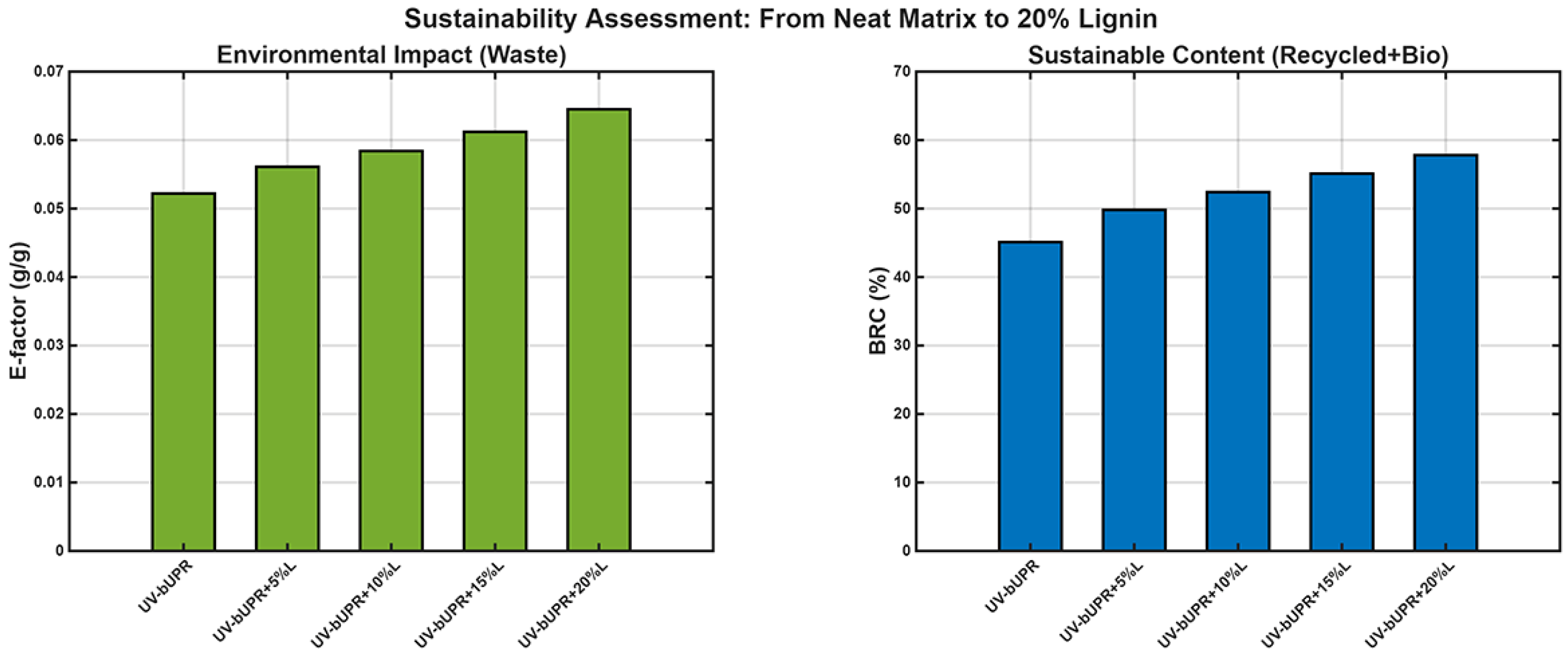
The environmental impact and resource efficiency of the synthesized UV-curable composites were quantitatively evaluated through the Environmental Factor (E-factor) and the Bio-renewable and Recycled Content (BRC) [
17,
75,
76,
77,
78]. The data, consolidated in
Figure 12, demonstrates a clear correlation between the integration of acryloyl-modified lignin and the enhancement of the materials’ ecological profile.
The neat UV-bUPR matrix exhibited an exceptionally low E-factor of 0.0522 g/g, underscoring the high atomic efficiency of the glycolytic conversion of waste PET into functional resin. Upon the incorporation of modified lignin (5–20 wt.), a marginal increase in the E-factor was observed, reaching 0.0645 g/g for the 20% loading. This slight upward trend is inherently linked to the multi-step chemical functionalization required to graft acryloyl moieties onto the lignin backbone. Nevertheless, these values remain significantly below conventional industrial benchmarks for unsaturated polyester synthesis, characterizing the entire fabrication process as a highly efficient, low-waste (green) synthetic route [
79].
Although direct comparison with fully standardized industrial benchmarks is not always straightforward due to differences in formulation strategies, solvent recovery, and system boundaries, the obtained E-factor values can still be placed in a meaningful literature context. Classical industrial benchmarks indicate typical E-factor ranges of <1–5 for bulk chemicals, 5–50 for fine chemicals, and 25–100 for pharmaceuticals [
80]. In polymer-related literature, an E-factor of 1.5 has been reported for a representative polyester synthesis, while recent work on unsaturated polyester resins derived from depolymerized polyester reported E-factor values of 0.41–0.46, decreasing to 0.1–0.13 when solvent recovery was considered [
81]. In this context, the low E-factor values obtained in the present study indicate a material-efficient process and support the environmental relevance of combining recycled PET with renewable lignin [
80].
Furthermore, the BRC analysis reveals a substantial advancement in the utilization of non-fossil resources. While the baseline UV-bUPR matrix possesses a sustainable fraction of 45.1% (owing to its recycled PET origin), the addition of 20 wt.% lignin elevates the total sustainable content to approximately 58% [
82]. This indicates that more than half of the composite’s mass is derived from circular and renewable feedstocks. The results suggest a synergistic sustainability effect, where lignin serves not merely as a reinforcing filler but as a strategic agent for de-fossilization [
83]. The linear increase in BRC without a prohibitive rise in waste generation confirms that these lignin-reinforced systems offer a viable, high-performance alternative to traditional petroleum-based polymers, aligning with the core principles of the circular economy and green engineering [
84].
4. Conclusions
A UV-curable biobased unsaturated polyester resin (UV-bUPR) was successfully synthesized from PET glycolysate, biobased propylene glycol, maleic anhydride, and trimethylolpropane diallyl ether, and its structure was confirmed by FTIR and NMR spectroscopy. The results demonstrated that the chemical nature of the lignin filler strongly influenced the performance of the developed composites. Unmodified Kraft lignin (KrL) caused a deterioration in tensile properties with increasing filler loading, which was associated with limited compatibility with the polyester matrix, weak interfacial adhesion, and the formation of agglomerates and structural defects. In contrast, acryloyl-modified lignin (KrL-A) showed improved compatibility with the UV-bUPR matrix, leading to better dispersion, stronger filler–matrix interactions, and enhanced mechanical performance. The most pronounced effect of lignin functionalization was observed at 15 wt.% filler loading, where the tensile strength of the modified composite reached 27.83 MPa, compared with 13.91 MPa for the corresponding unmodified system. SEM analysis supported these findings by revealing a more homogeneous morphology and a transition from defect-dominated brittle fracture to a more tortuous crack-propagation mechanism in the KrL-A-filled composites. At the same time, flammability testing showed that flame resistance depended strongly on matrix composition and filler content. Composites containing triallyl phosphate (TAP) exhibited markedly improved UL-94 performance compared with styrene-based systems, while the best flame-retardant behavior was achieved for the sample containing 20 wt.% KrL-A, which reached the V-0 classification. This result indicates a synergistic contribution of TAP and modified lignin, where TAP acts as the primary flame-retardant component, and KrL-A additionally supports char formation and stabilization of the protective condensed phase. Overall, the study confirms that lignin functionalization is an effective strategy for improving both the mechanical performance and fire resistance of UV-curable polyester composites based on recycled and biobased constituents.
In summary, the life cycle assessment (LCA) metrics demonstrate that the synergy between chemically recycled PET and high-loading bio-renewable lignin (up to 20 wt.%) yields an advanced composite system that achieves a sustainability threshold of nearly 60% while maintaining a negligible environmental footprint (E-factor < 0.07), thereby providing a robust framework for the development of high-performance, eco-efficient polymers for industrial applications.





 ,
,