Super-Resolution Enhancement of Fiber-Optic LF-DAS for Closely Spaced Fracture Monitoring During Hydraulic Fracturing

Abstract
1. Introduction
2. Materials and Methods
2.1. Resolution Enhancement Model for Neighbor-Well LF-DAS
- Negligible fiber–formation slip: No significant relative slip is assumed between the fiber-optic cable and the surrounding formation, and the measured LF-DAS response is therefore regarded as a valid representation of the true formation strain-rate response;
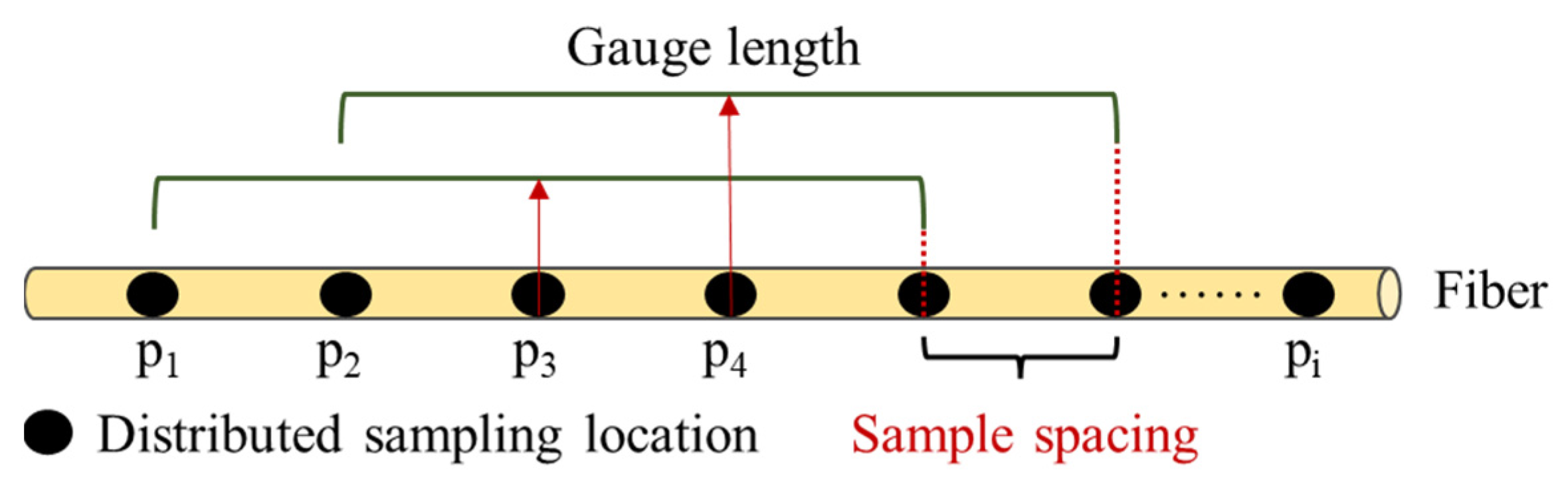
- Gauge-length averaging: The measurement at each sensing channel is assumed to be equivalent to the axial strain-rate average over the gauge-length interval centered at that channel location;
- Integer relationship between gauge length and sensor spacing: The gauge length is assumed to be an integer multiple of the sample spacing.
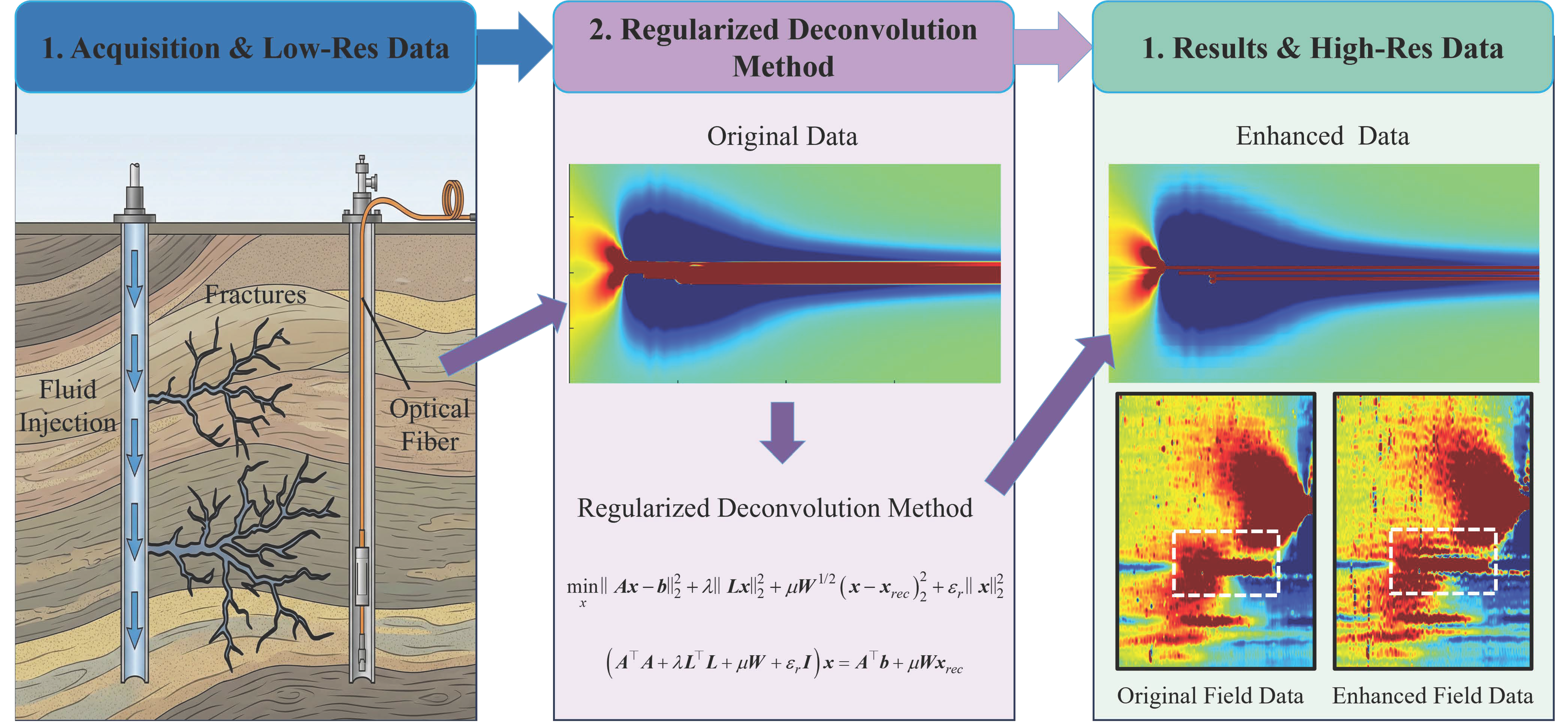
- Second-order difference Tikhonov regularization is employed to suppress high-frequency noise and stabilize the ill-posed solution;
- Recursive prior information is incorporated to provide physically consistent weak constraints in end segments and low-coverage regions;
- Observability-based weighting W is constructed according to segment-level coverage, such that prior constraints are strengthened in poorly covered regions while data fidelity dominates in well-covered regions, thereby improving robustness and interpretability under high-noise conditions.
| Algorithm 1. Regularized inversion method. |
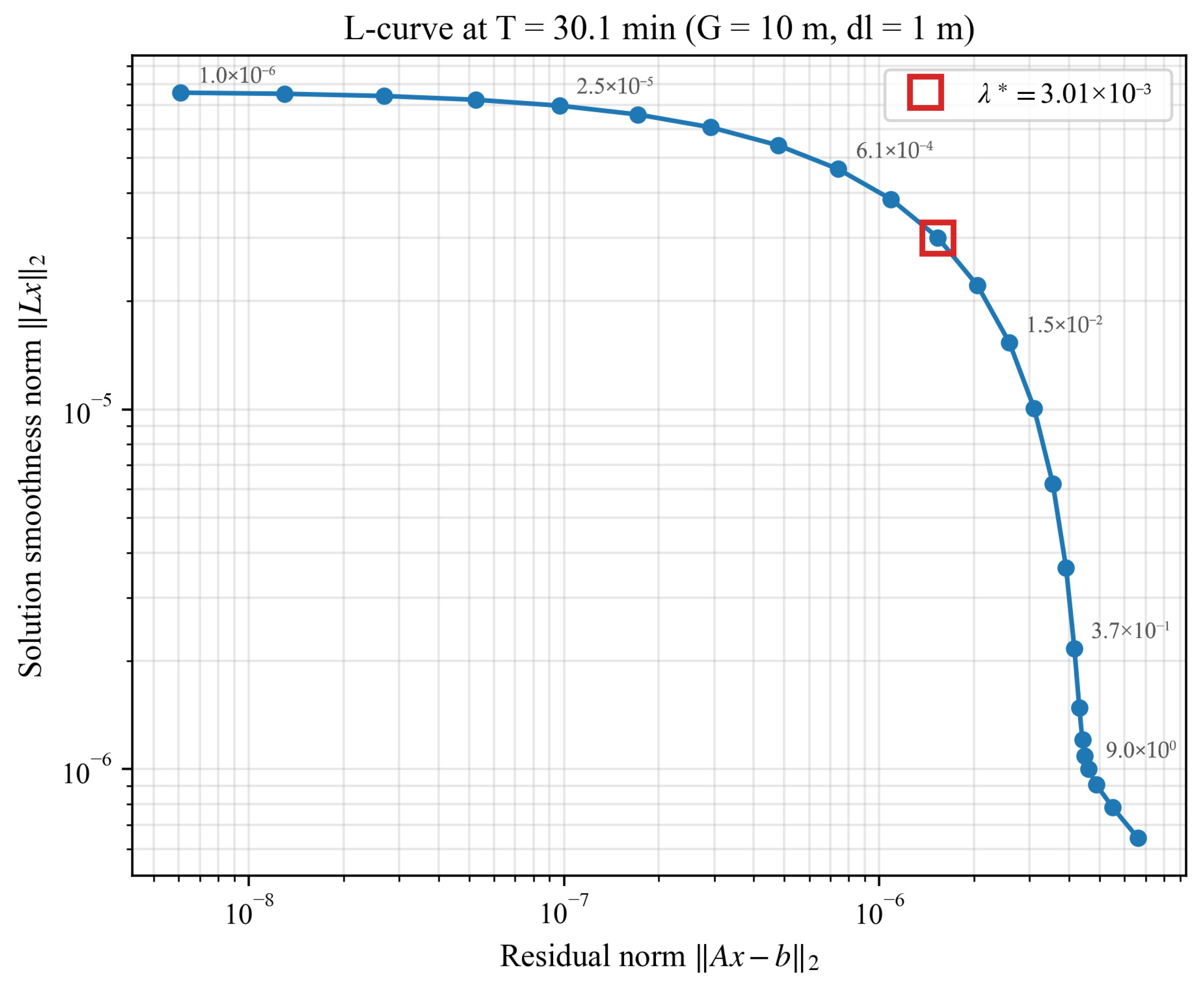
| Input: measurements b ∈ RM, gauge length G, sample spacing dl, initial channels K (default 3), smoothing weight λ (from L-curve, Figure 4), ridge stabilizer ε Output: high-resolution strain-rate field x ∈ℝ^ Ntot, where Ntot = (Lmax − Lmin)/dl 1. Build the gauge-averaging overlap matrix A (M × Ntot) from the acquisition geometry. Normalize A row-wise so that each row sums to 1. 2. Initialize the leading K channels by least-squares: Alead xlead = blead. 3. for i = K, K + 1, …, M − 1 (near-to-far propagation pass): Identify sub-segments covered by channel i but not yet estimated; Update the contiguous block on the propagation side so that the gauge-averaged value over channel i matches observation bi. end for 4. for i = M – K + 1, …, 1 (far-to-near propagation pass): Repeat step 3 in the opposite direction. end for 5. Fuse the two passes by segment-wise averaging. Fill remaining incomplete sub-segments by nearest-neighbor interpolation. 6. (Optional, recommended if SNR < 20 dB) Apply wavelet pre-denoising along the fiber axis: db4 basis, soft thresholding, MAD-based universal threshold. 7. Assemble the Tikhonov normal equations: where is the fused propagation-pass estimate from step 5. 8. Solve for x∗ via sparse Cholesky factorization. return x∗ |
2.2. Efficient Semi-Analytical Forward Model for Clustered Fractures
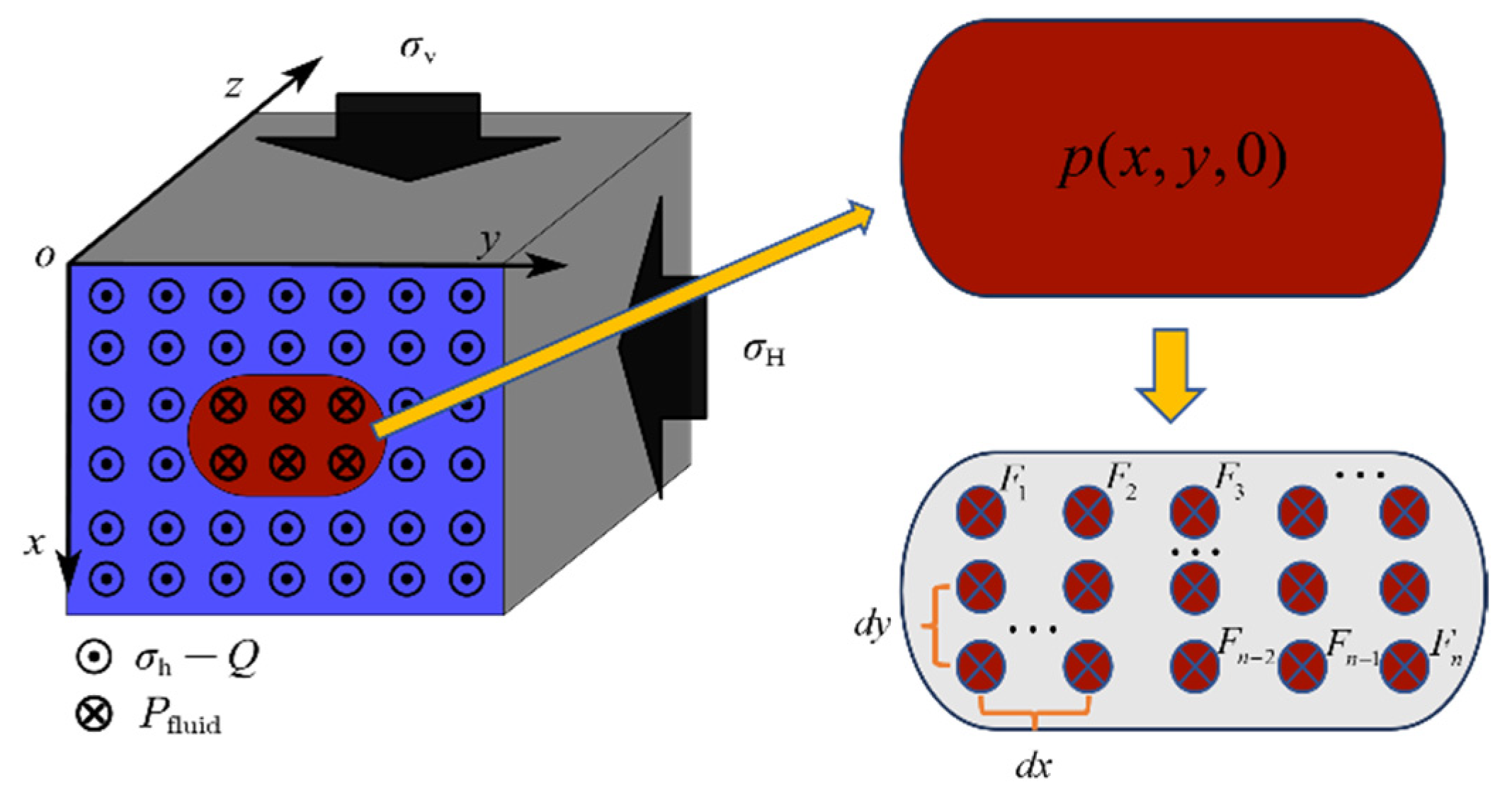
- The reservoir is modeled as a homogeneous, isotropic, linear elastic medium;
- Perfect mechanical coupling is assumed between the formation and the fiber-optic monitoring well, with no relative slip at the interface;
- Body forces are neglected;
- The in situ stress state prior to fracturing is taken as the reference configuration, with the initial displacement and strain fields assumed to be zero.
3. Validation
3.1. Multi-Fracture Benchmark
3.2. Noise Sensitivity
3.3. Baseline Comparison with a Wiener Filter
4. Discussion
- (1)
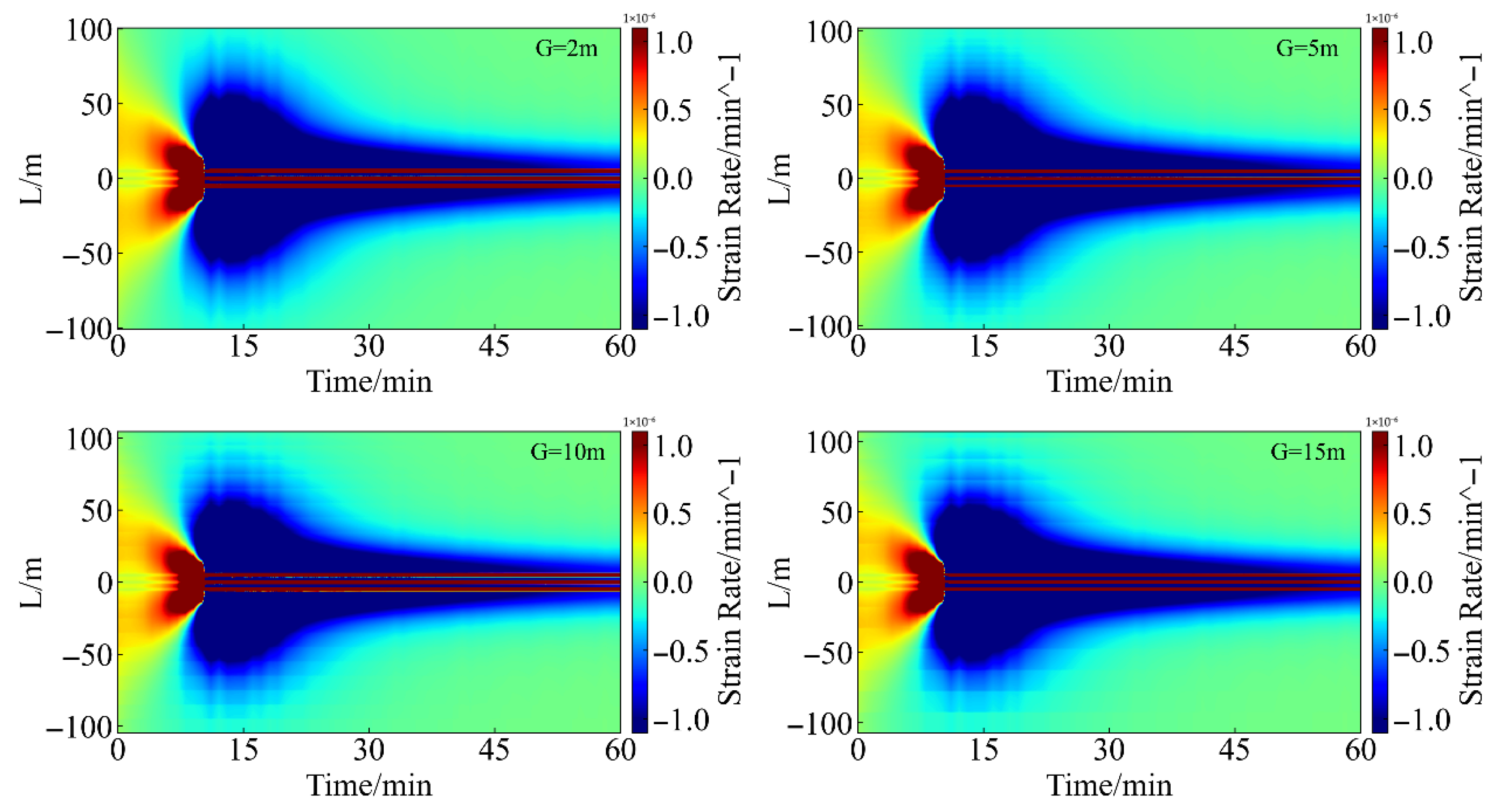
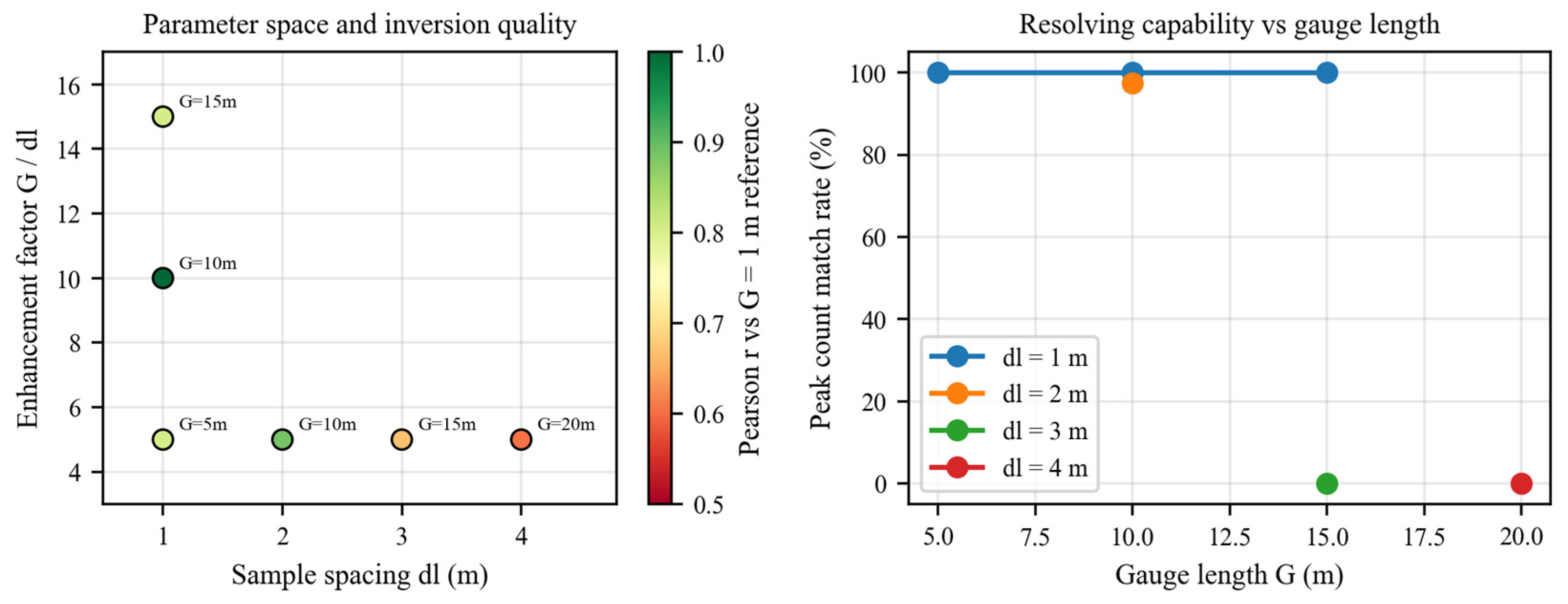
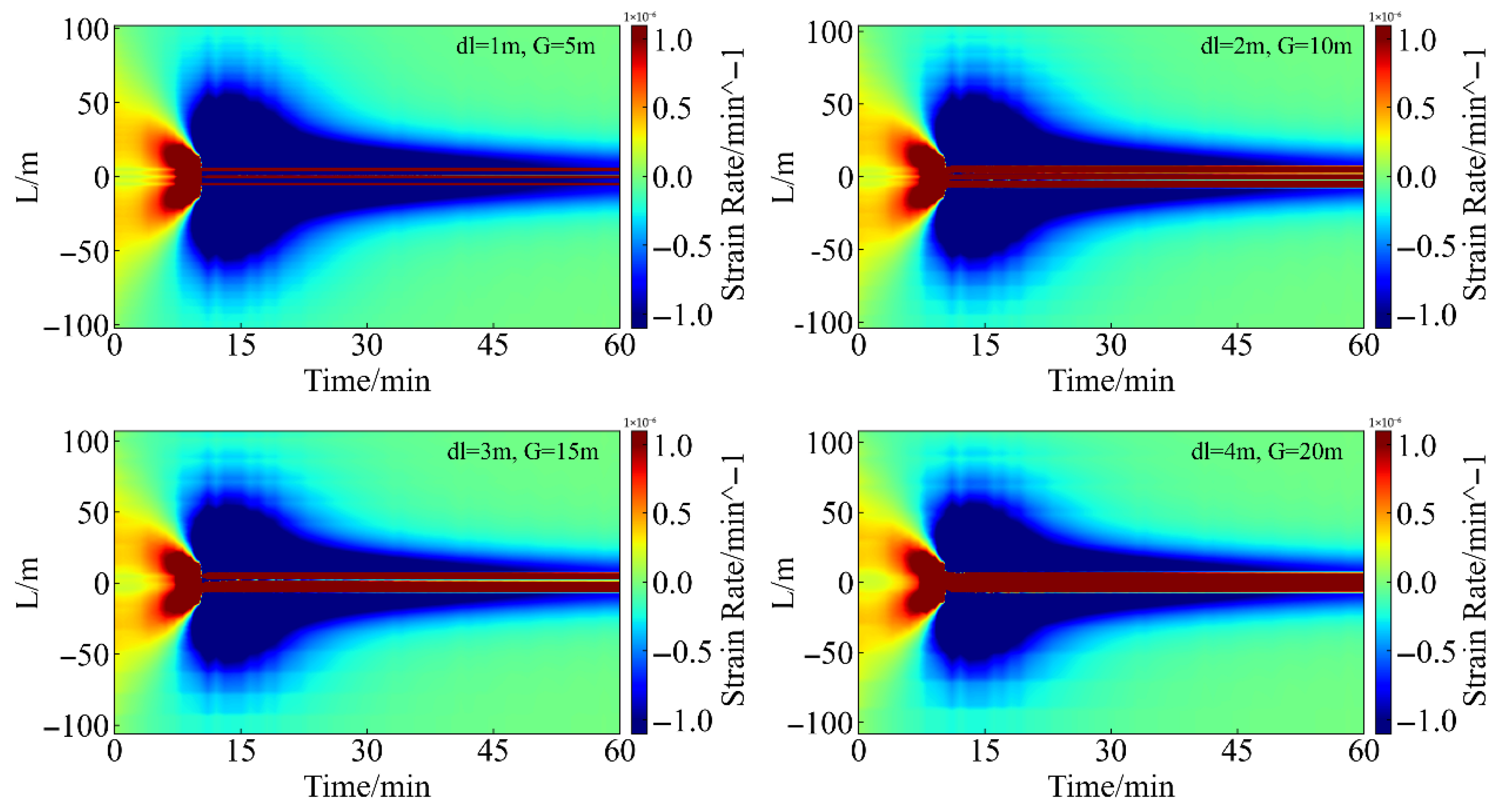
- For a fixed sample spacing of dl = 1 m, the Pearson correlation between the inverted strain-rate field and the reference stays in the 0.80–1.00 range across the three gauge lengths tested (G = 5, 10, 15 m), and the peak-count match rate is 100% in every case. This confirms that, once the sample spacing is small enough, the regularized inversion method is essentially insensitive to the choice of gauge length.
- (2)
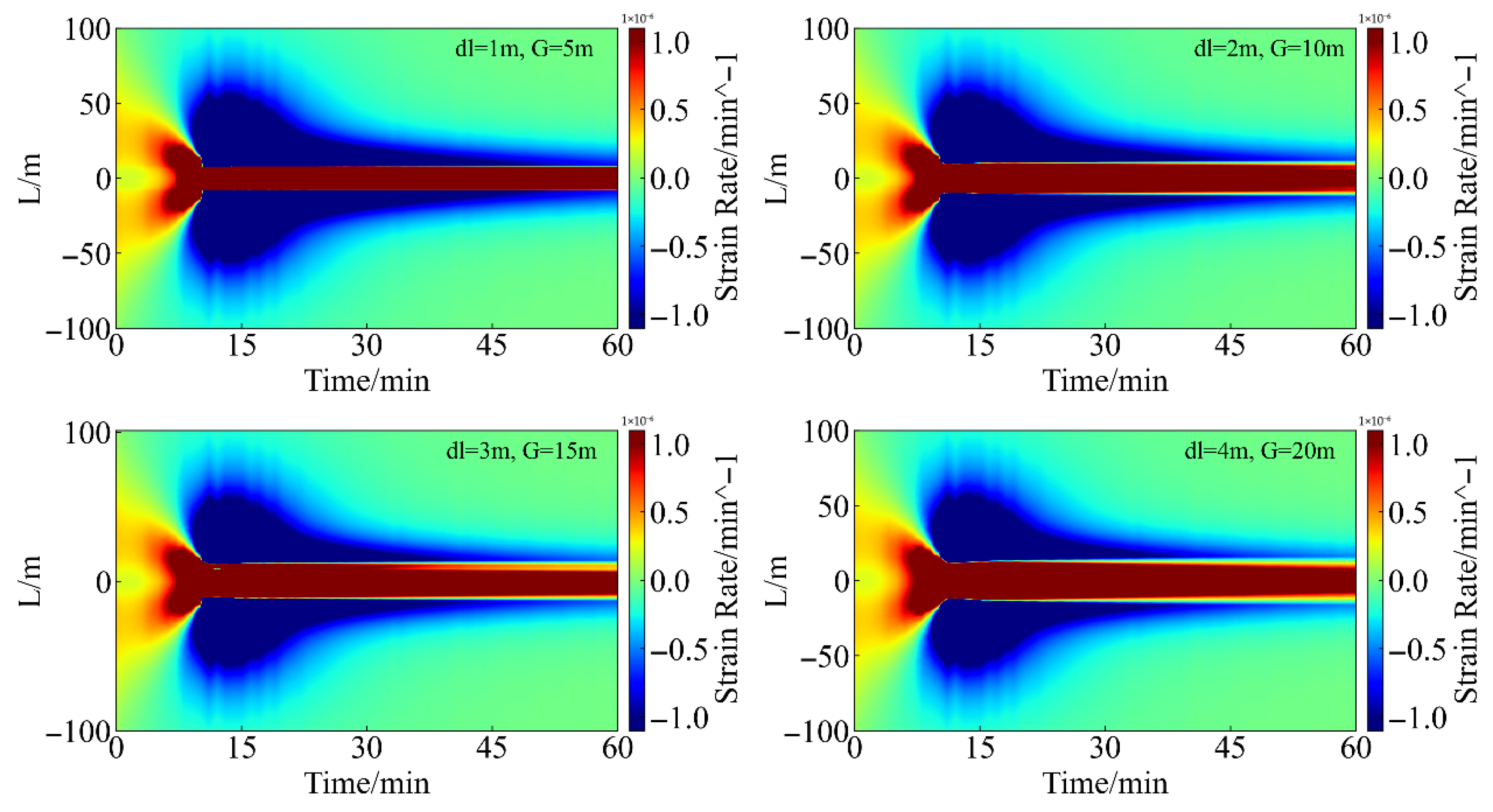
- For a fixed enhancement factor of G/dl = 5, the Pearson correlation grows monotonically as dl decreases (Pearson r ≈ 1 − 0.1 dl). The peak count match rate jumps from 0% at dl = 4 m (G = 20 m) to 100% at dl = 1 m (G = 5 m). The best and worst combinations differ by a factor of 1.7, with the gain almost entirely attributable to the smaller dl.
- (1)
- Prioritize dl over G. Within the SNR budget of the interrogator, choose the smallest possible dl. Increasing G to maintain SNR is acceptable because the spatial averaging induced by G can be largely undone by the regularized inversion method.
- (2)
- Keep G as an integer multiple of dl so that the overlap matrix A remains sparse and well-conditioned, and aim for an enhancement factor G/dl in the range 5–10. The typical “sweet spot” for clustered-fracture monitoring is dl ≈ 1 m and G/dl in this range, corresponding to an effective resolution of about 1 m at no additional acquisition cost.
5. Field Application
6. Conclusions
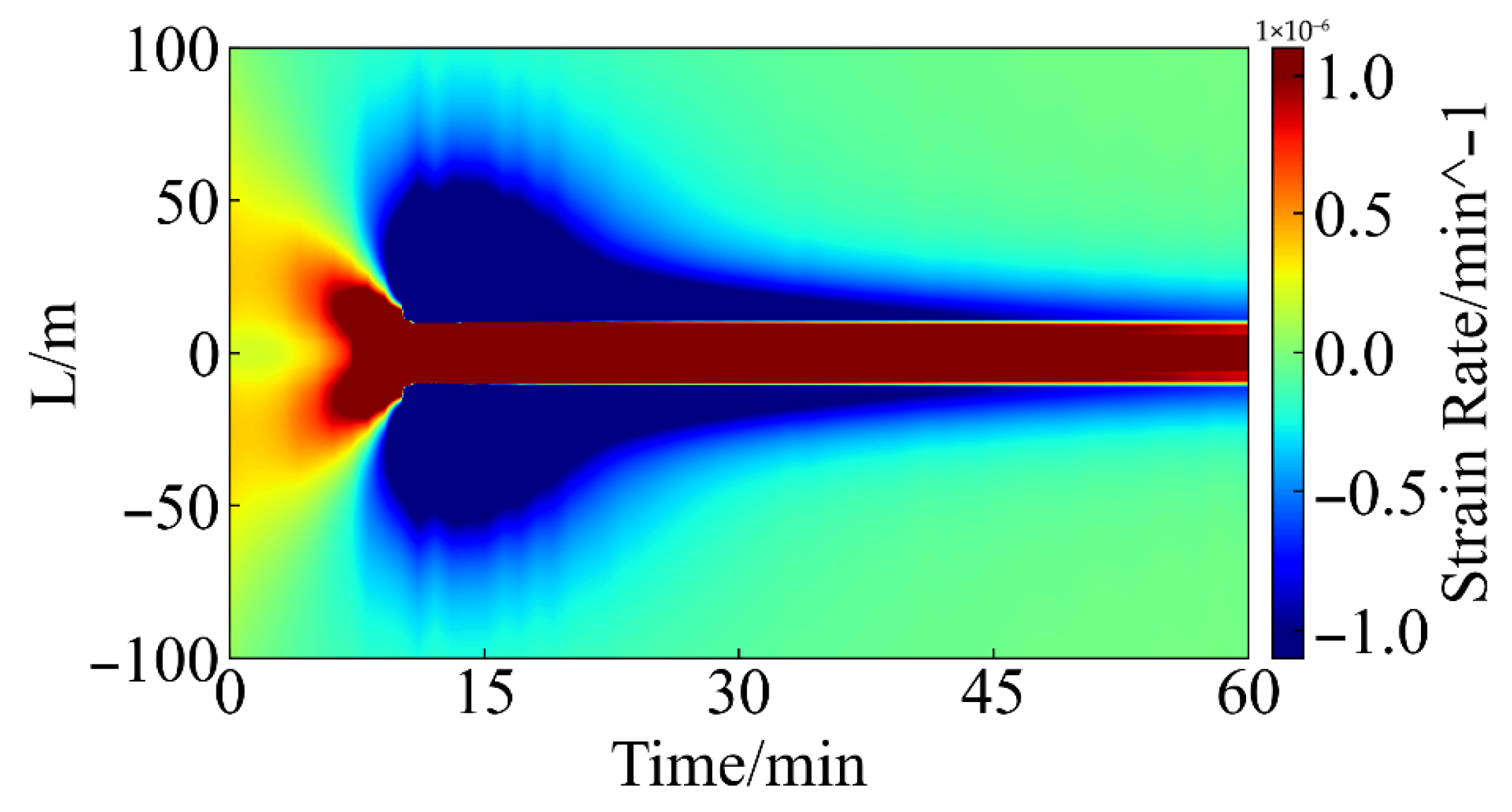
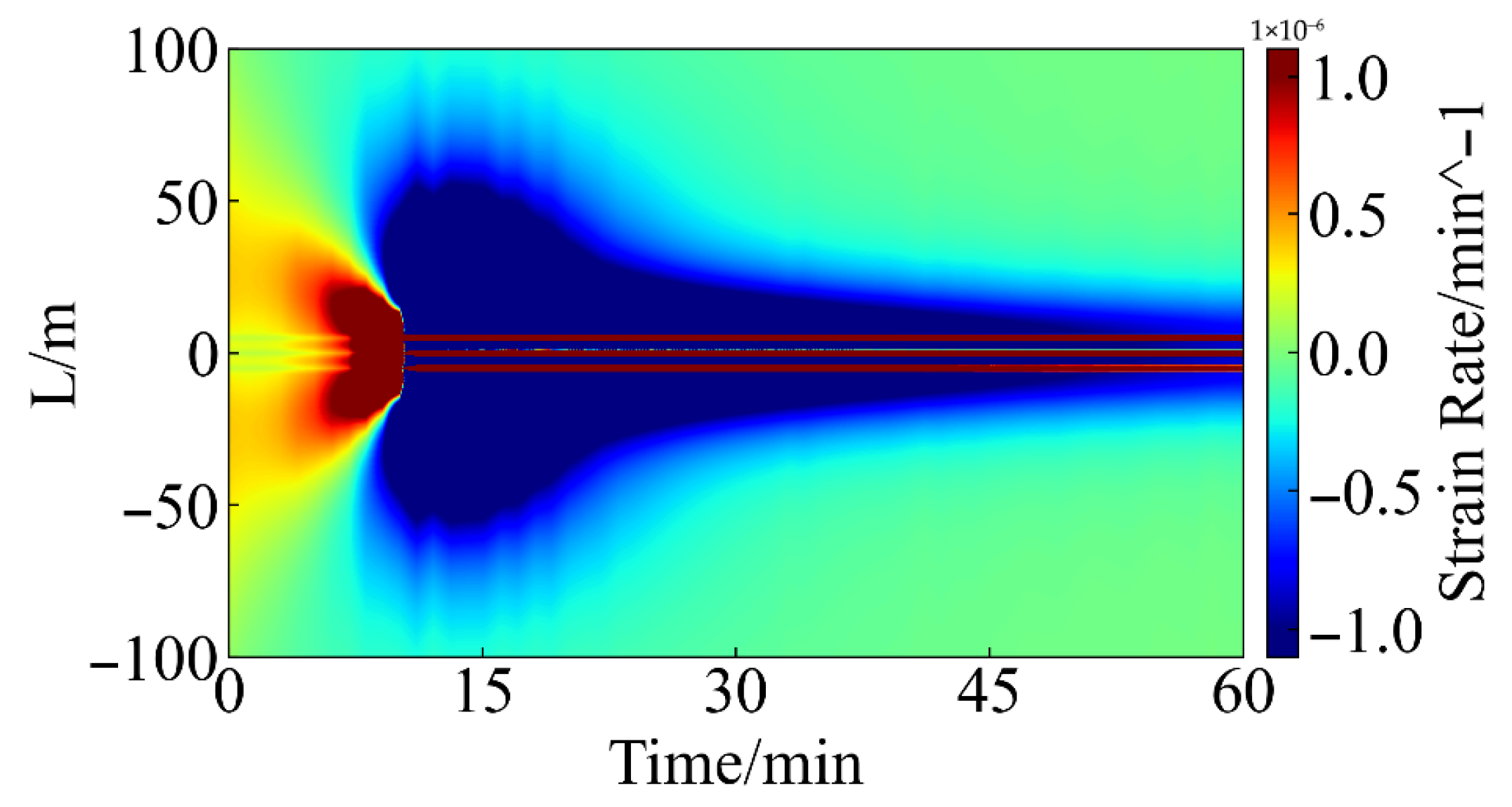
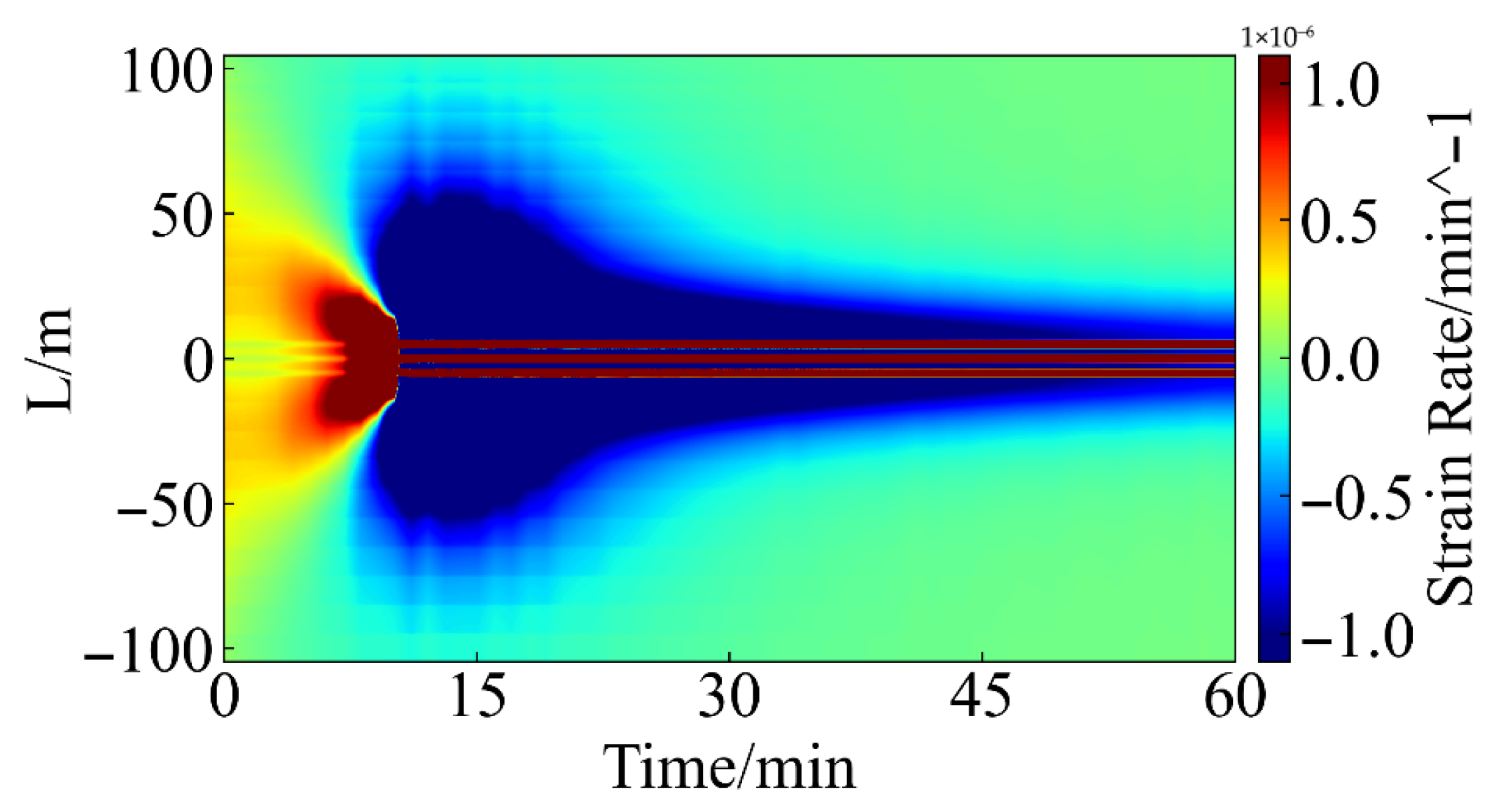
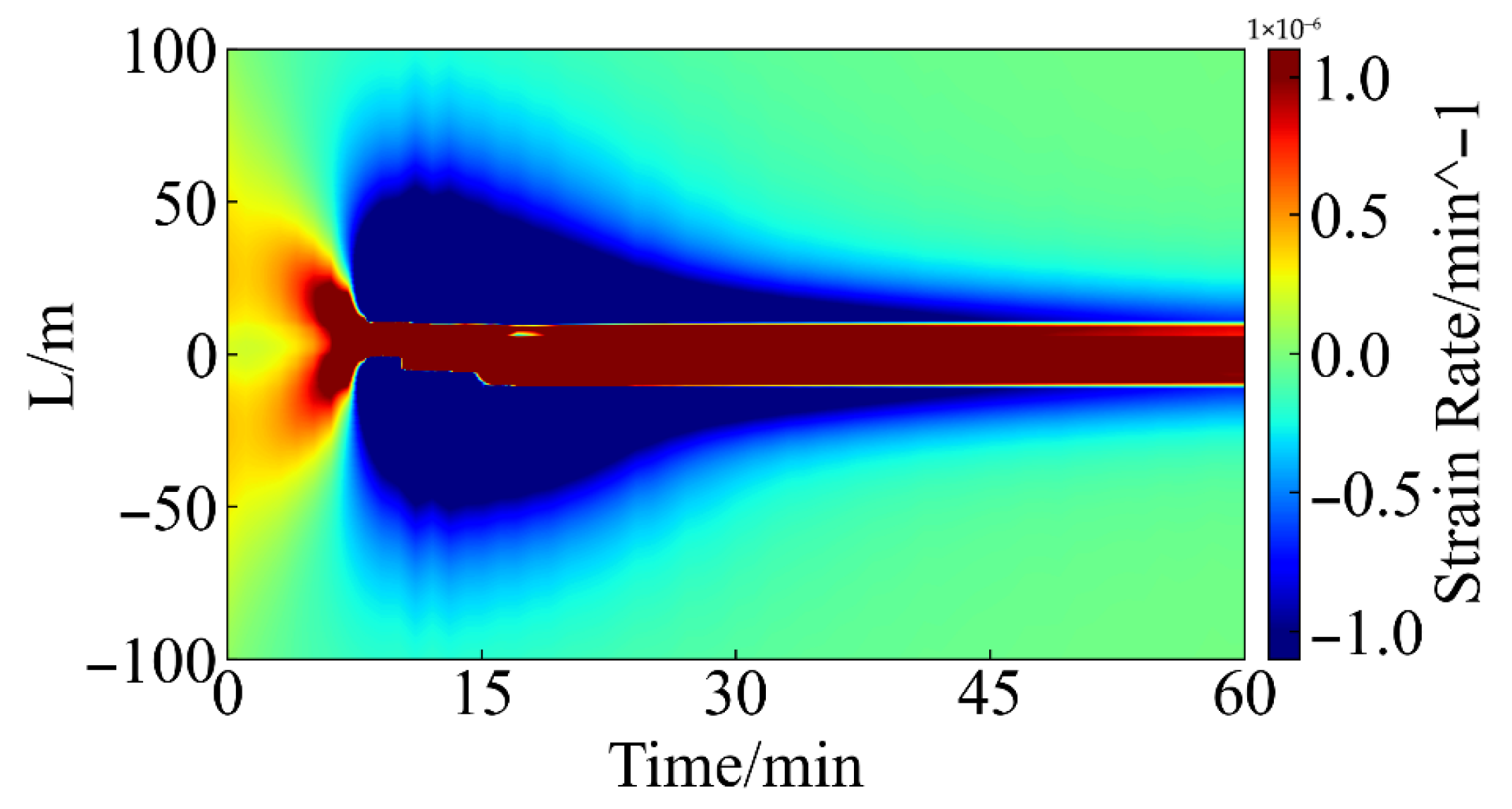
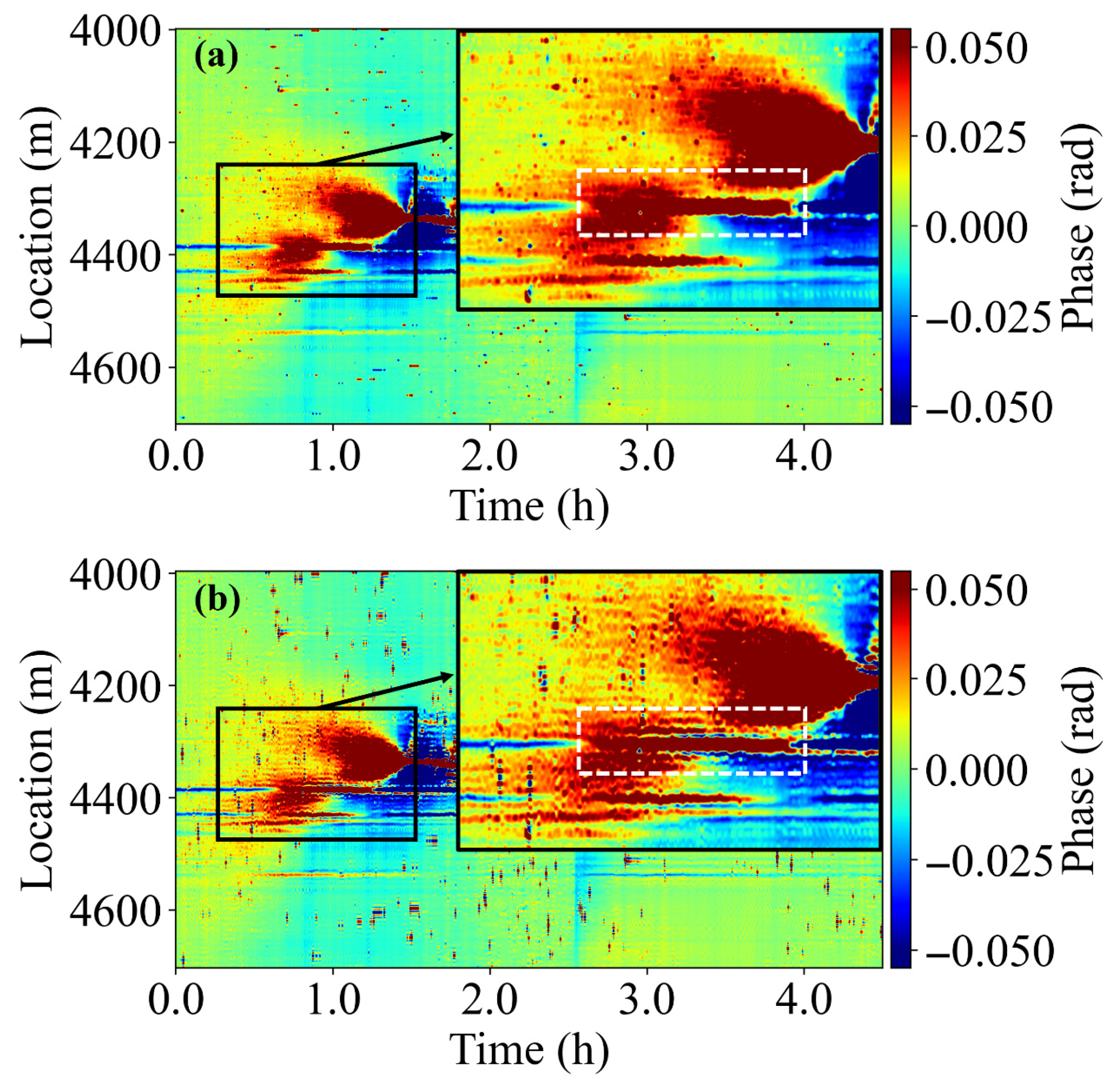
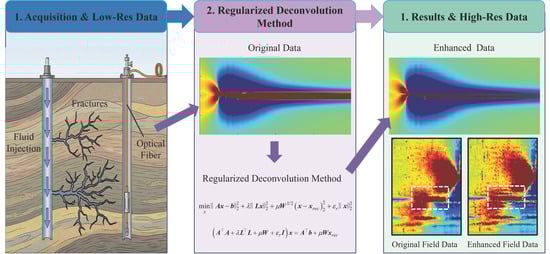
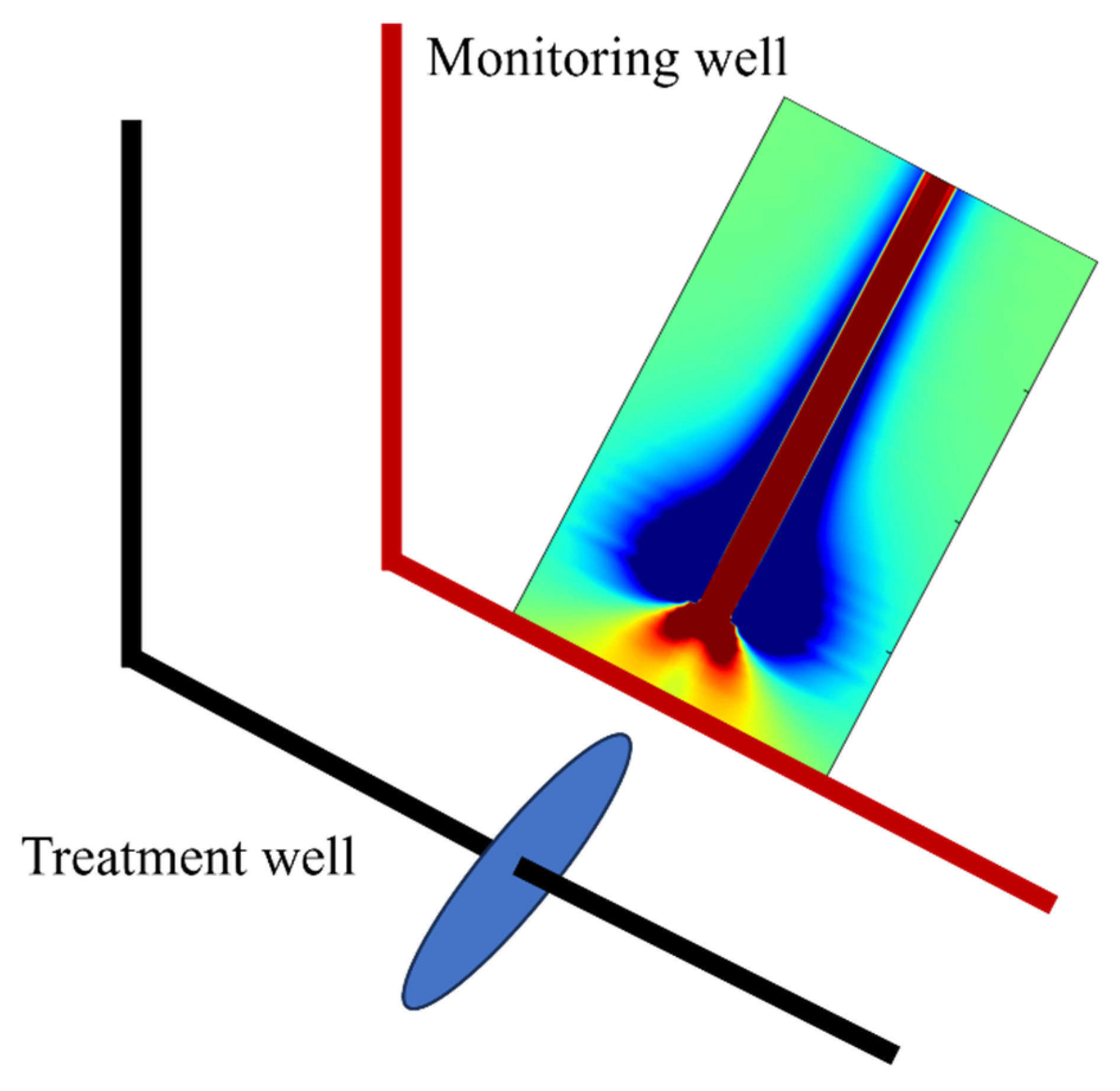
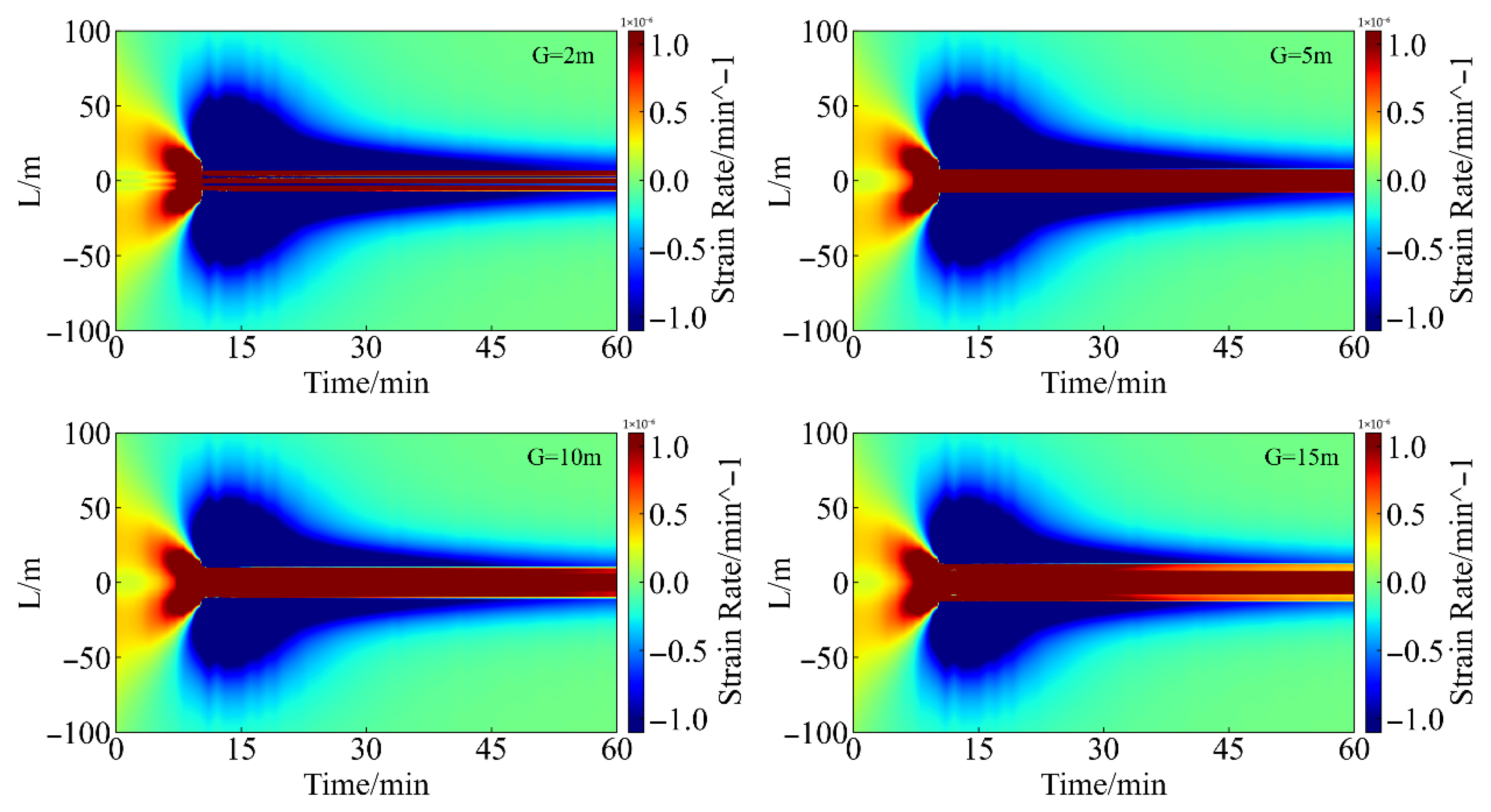
- During the monitoring of vertical hydraulic fracture propagation using fiber-optic measurements in a horizontal neighbor-well, the neighbor-well LF-DAS data exhibit a characteristic tensile “heart-shaped” strain-rate pattern as the fracture front progressively approaches and intersects the monitoring well. This signature serves as an effective indicator of fracture hit. Following fracture hit, a stable tensile band is formed at the corresponding spatial location along the fiber. Under coupled multi-fracture propagation conditions, however, the spatial averaging effect introduced by the fiber-optic gauge length significantly degrades the resolving capability of the original LF-DAS data, making it difficult to distinguish the independent propagation behavior of individual fractures and thereby obscuring fracture numbers and geometric information;
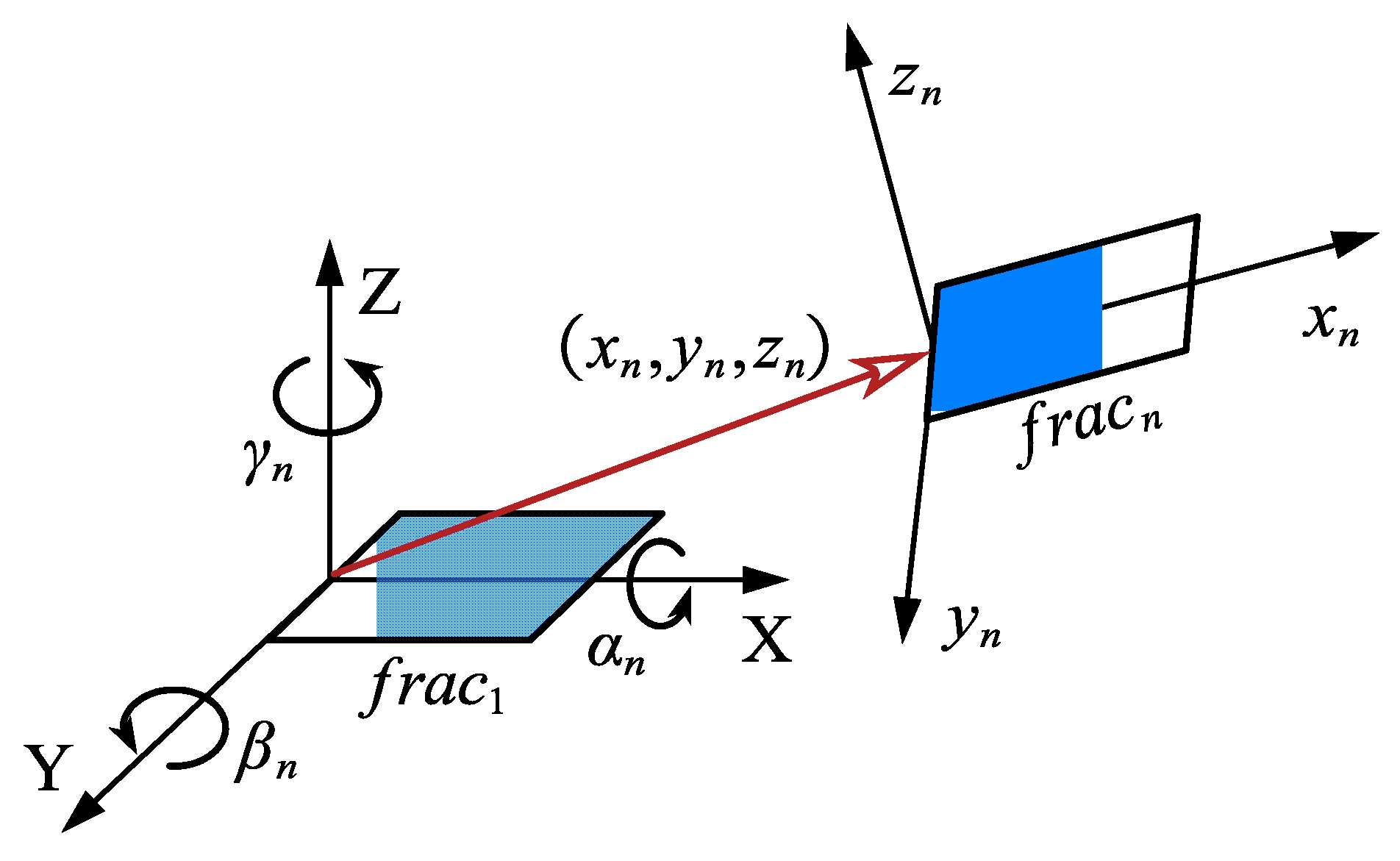
- The efficient multi-fracture neighbor-well fiber-optic strain forward model developed based on the Boussinesq half-space solution does not require spatial discretization of the computational domain. By employing coordinate transformation and stress (displacement) superposition, the fiber-optic strain responses induced by multiple fractures can be computed directly. As a result, the model maintains high computational efficiency even under conditions involving closely spaced fractures and a large number of fractures, effectively avoiding the rapid increase in computational cost associated with local mesh refinement in conventional grid-based methods;
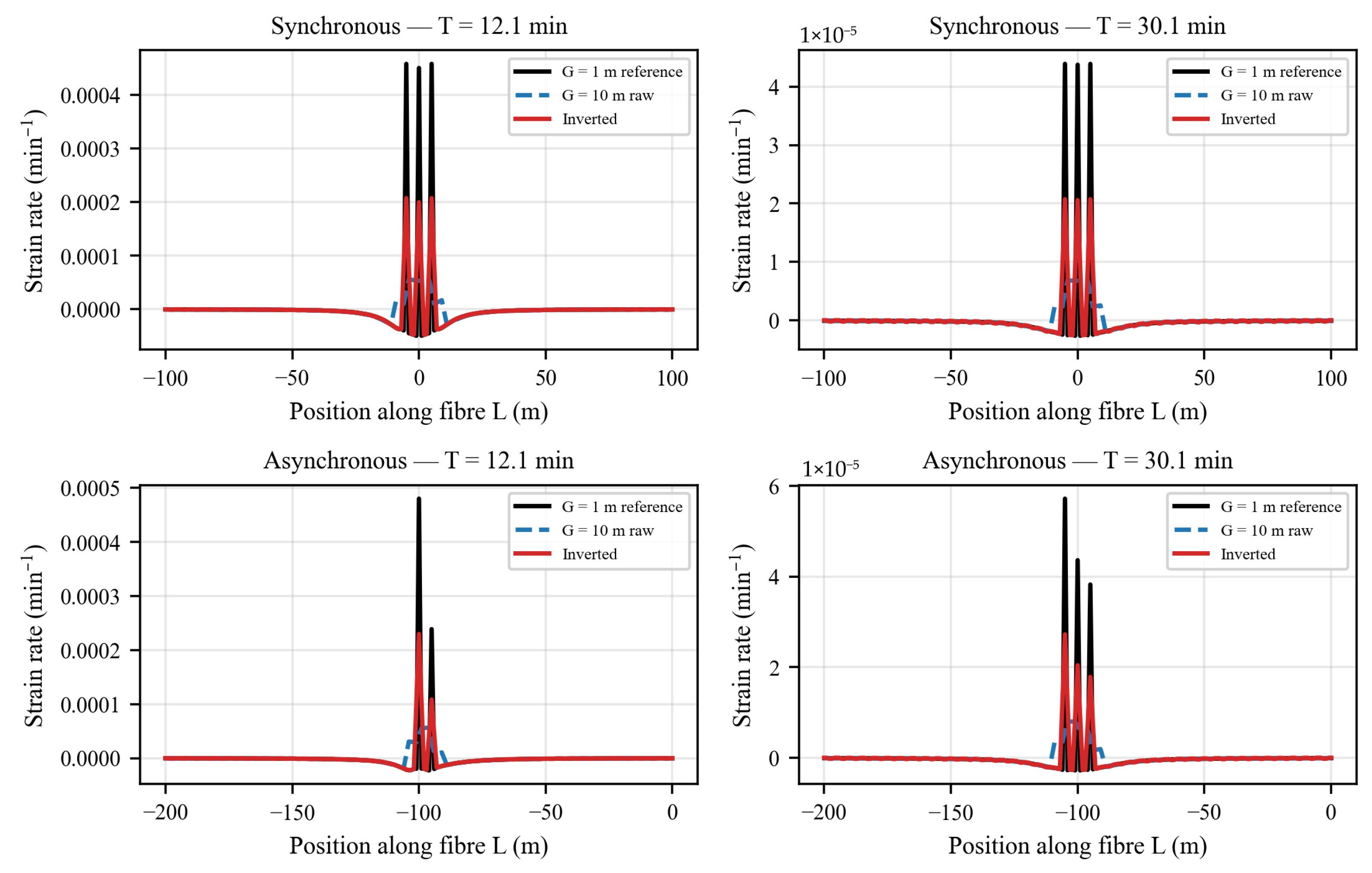
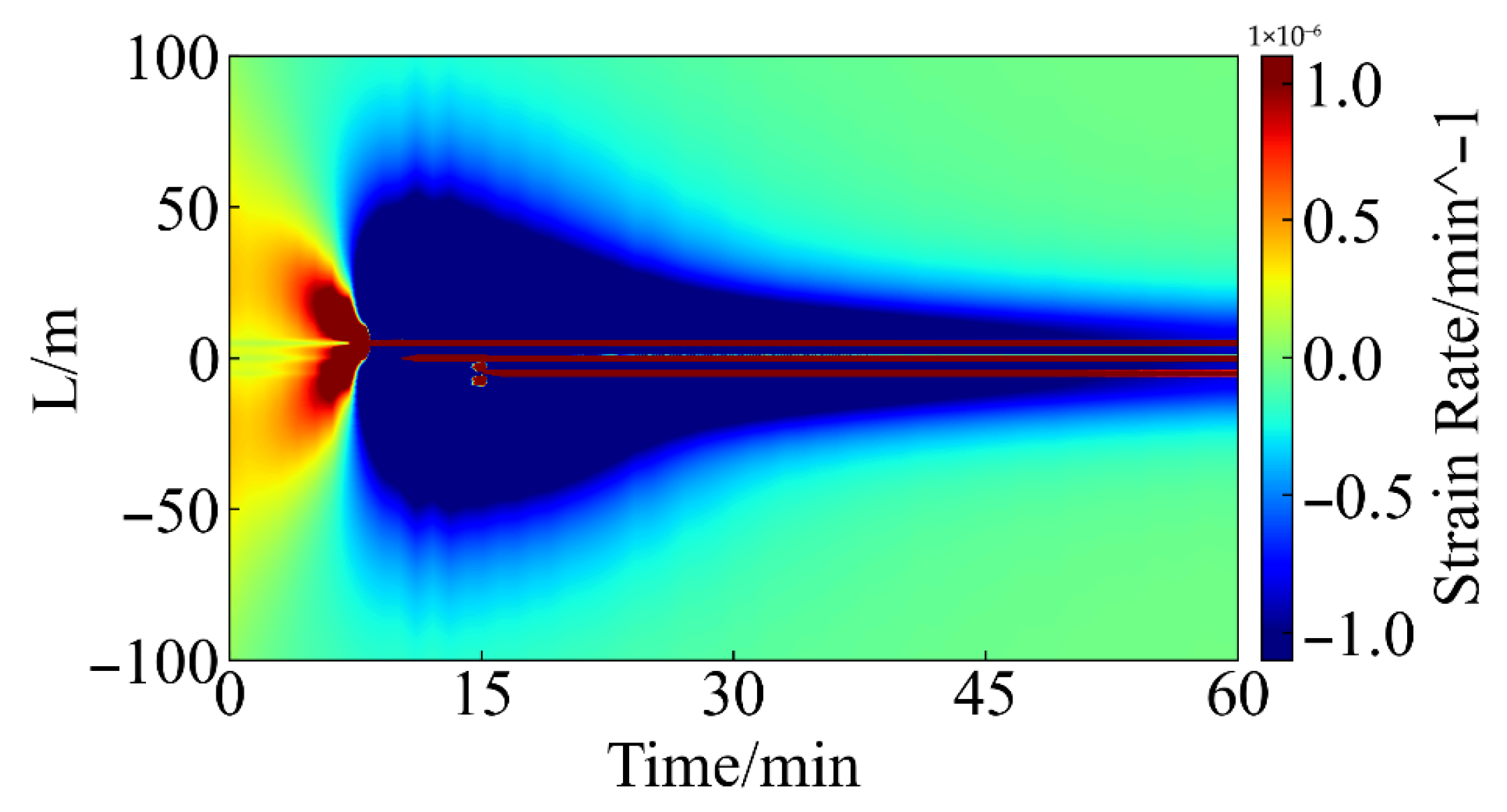
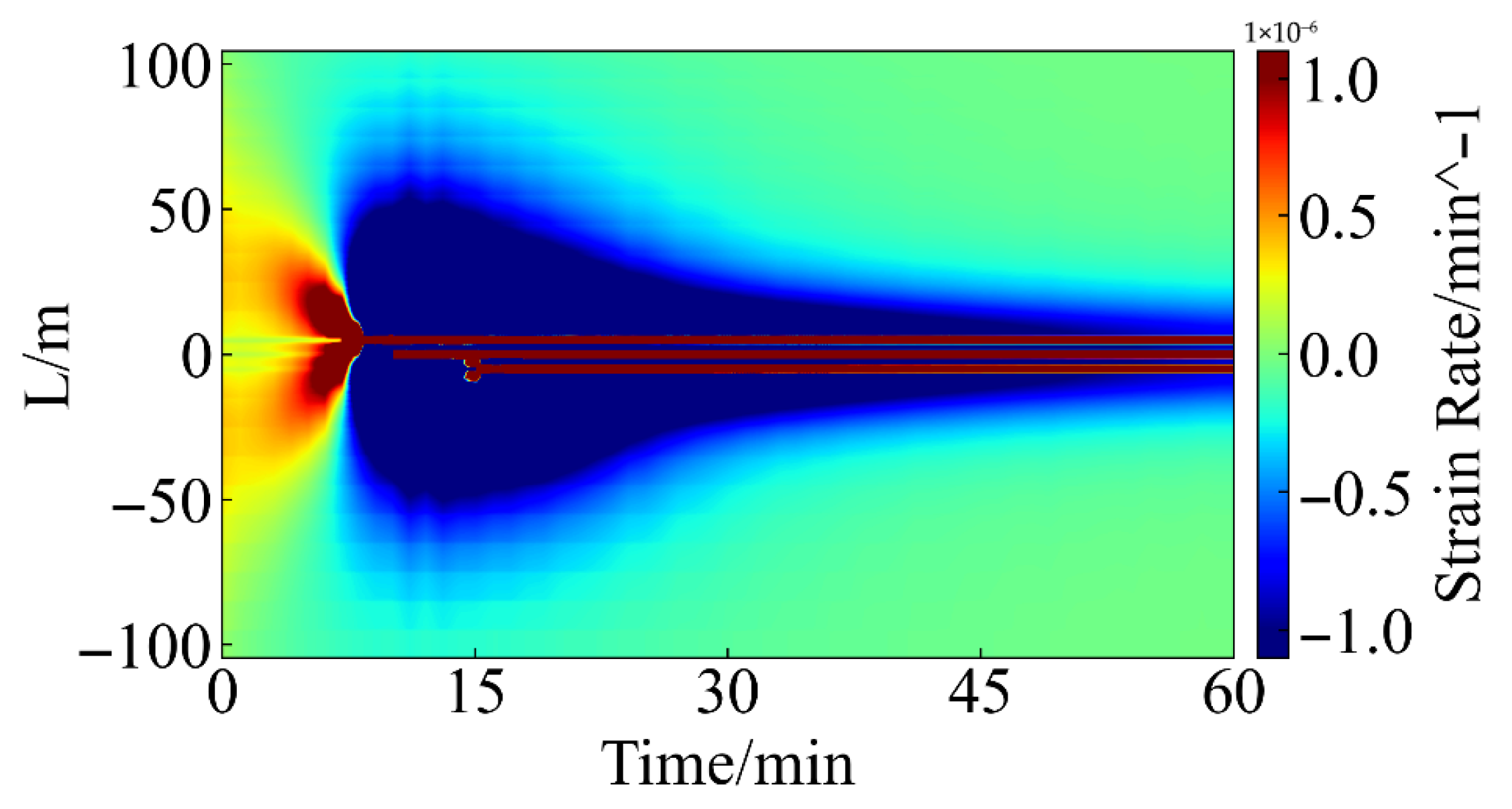
- Numerical validation and parameter-sensitivity analyses of multi-fracture neighbor-well fiber-optic strain responses demonstrate that the proposed LF-DAS resolution enhancement method can stably and accurately invert the spatial characteristics of closely spaced multi-fracture propagation. The resolution enhancement factor is governed by the ratio between the gauge length and the sample spacing (G/dl), whereas the ultimate achievable resolution is primarily controlled by the sample spacing. Specifically, a smaller sample spacing yields a higher upper limit of inversion accuracy attainable by the resolution enhancement method.
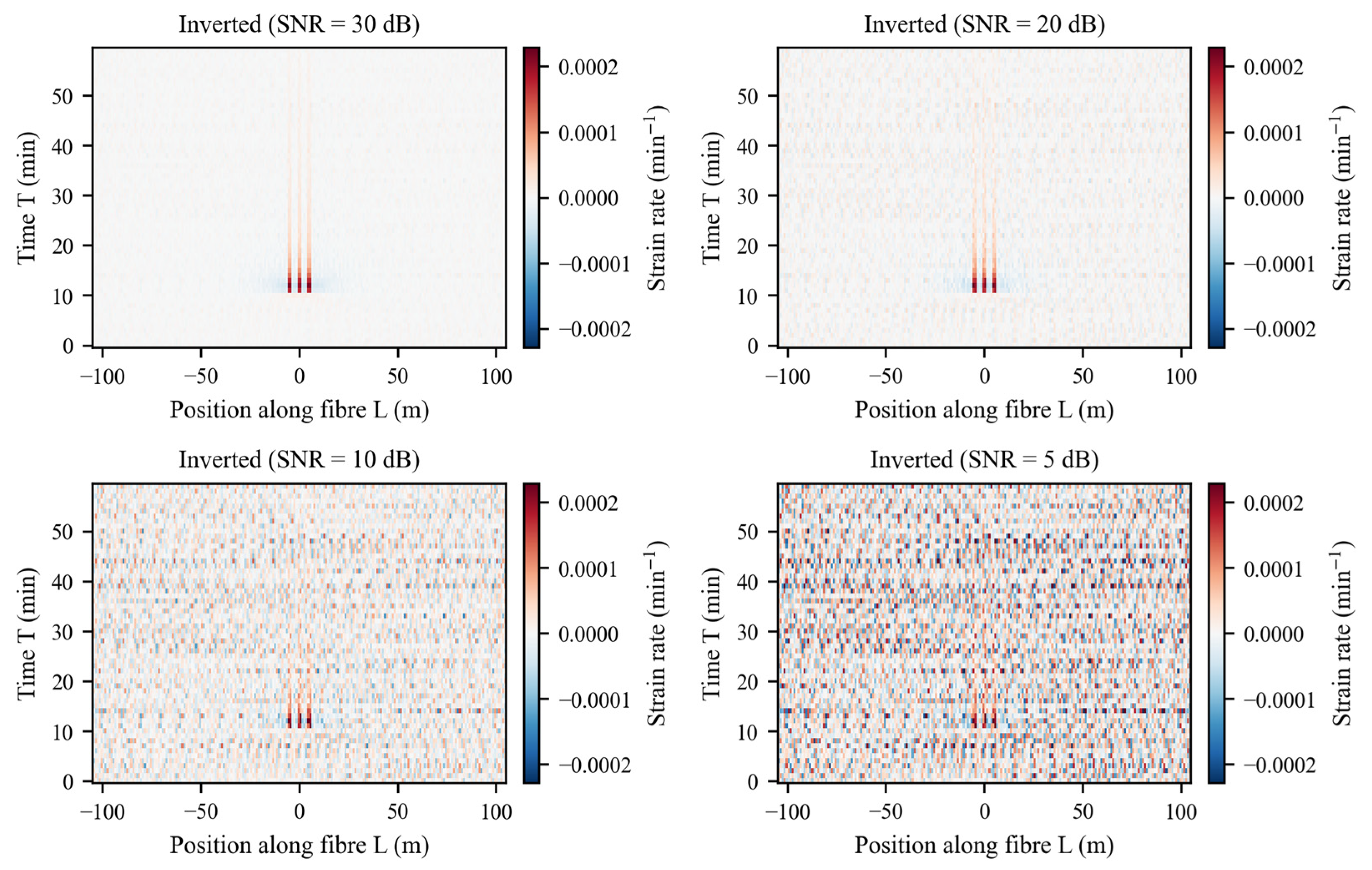
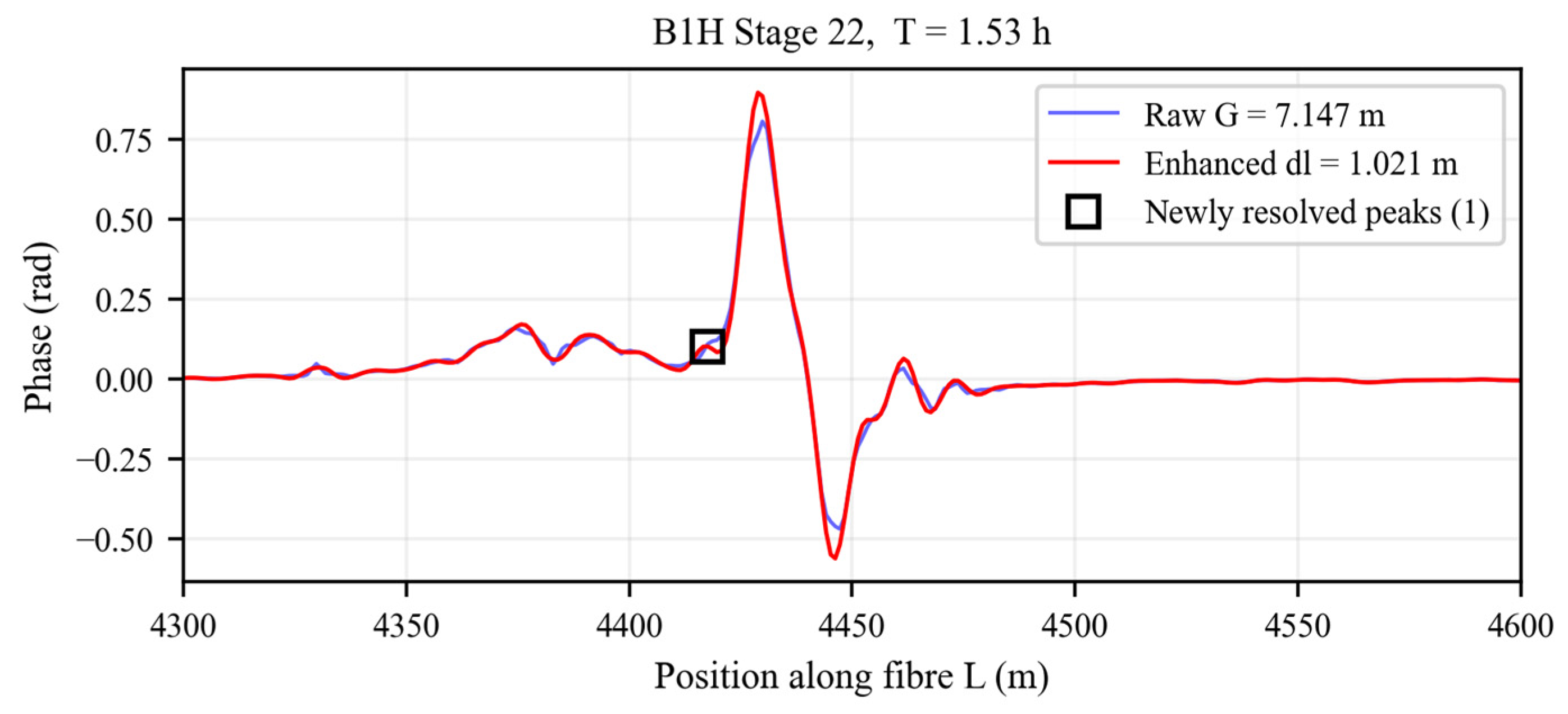
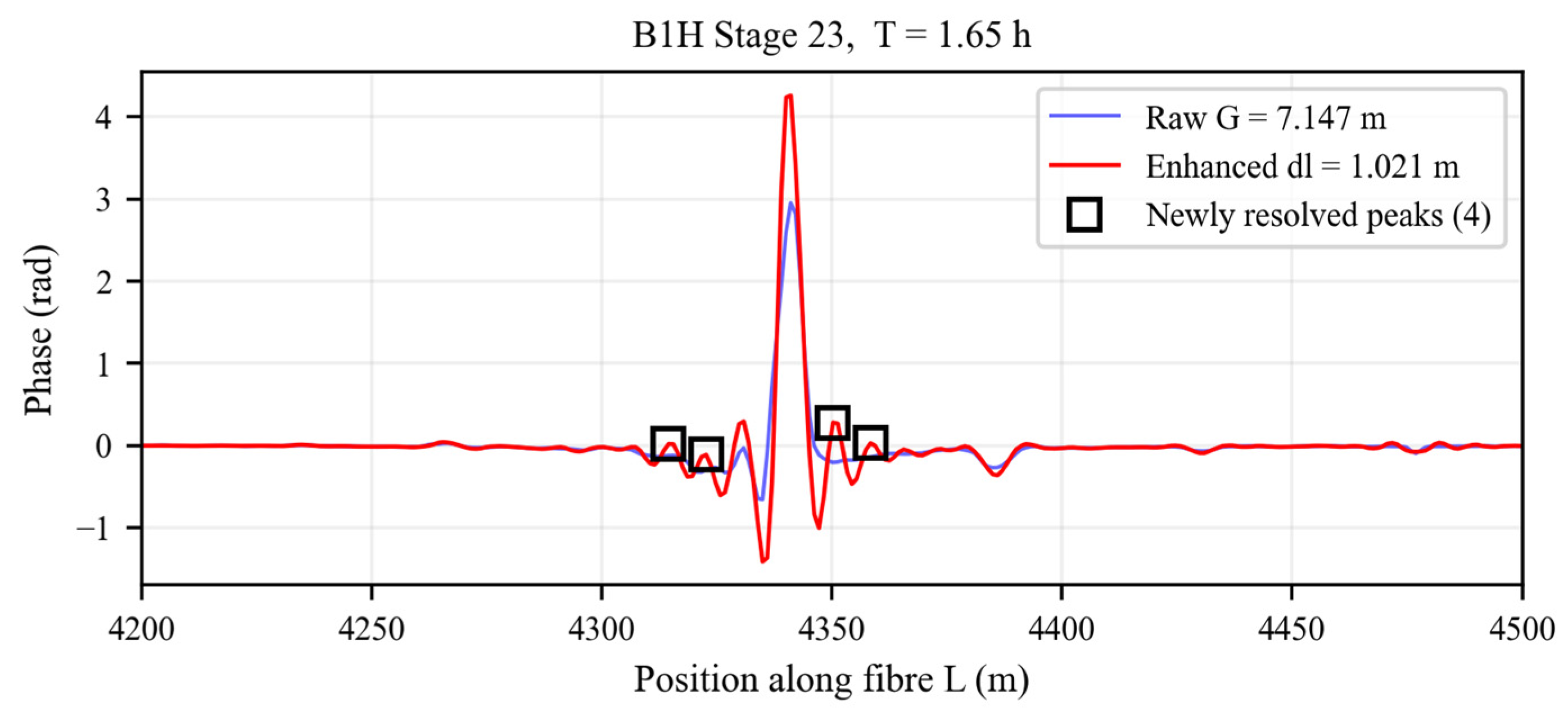
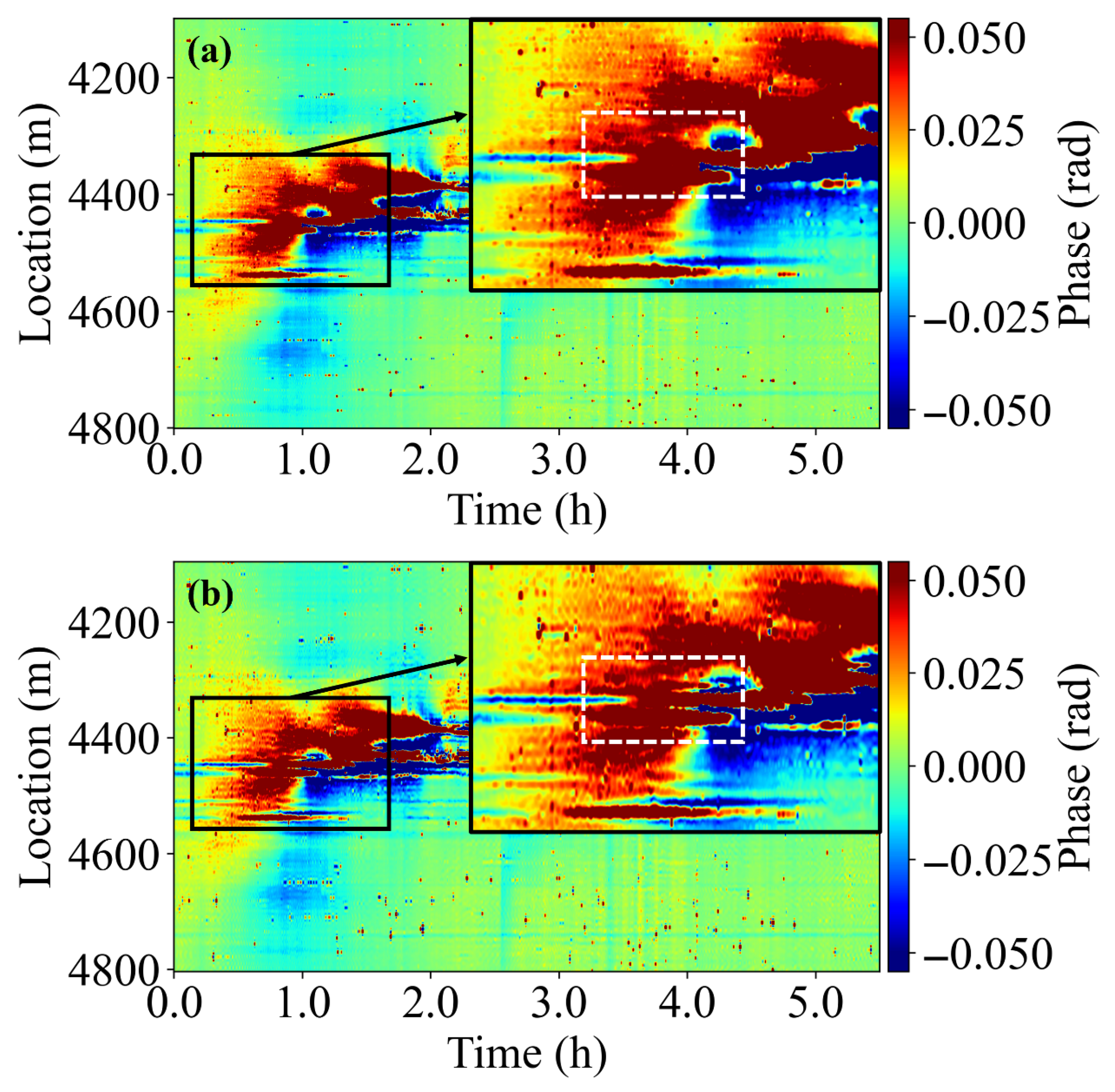
- The results demonstrate that the regularized-inversion-based resolution enhancement method for neighbor-well LF-DAS data exhibits strong applicability in both numerical benchmarks and field datasets characterized by high noise levels. The method significantly improves the spatial resolving capability of neighbor-well fiber-optic measurements, thereby enhancing the accuracy of interpreting fracture numbers and propagation processes. It provides a reliable theoretical foundation and practical technical support for refined interpretation of neighbor-well fiber-optic data under complex fracture configurations, such as clustered fracture systems.
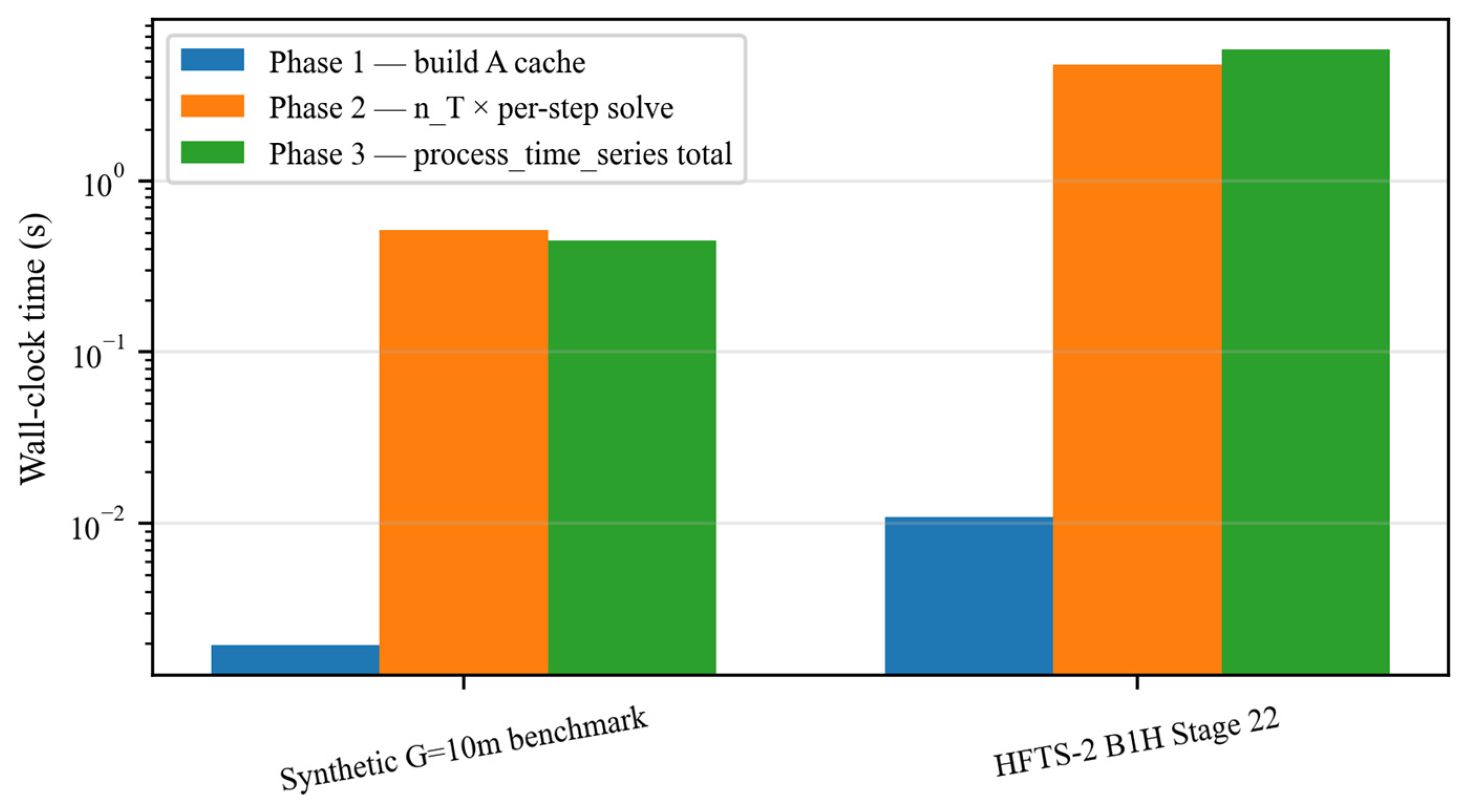
- From an engineering perspective, the proposed method is a pure post-processing workflow that requires no modification to the fiber cable, interrogator, or acquisition procedure. With a per-time-step computational cost of only 5–8 ms, it can be readily integrated into real-time LF-DAS monitoring loops for rapid fracture-diagnostic interpretation.
Author Contributions
Funding
Data Availability Statement
Conflicts of Interest
References
- Wang, S.; Chen, M.; Lv, J.; Zhang, K.; Hao, Y.; Yao, B. Study on the Evolution Characteristics of Fiber-Optic Strain Induced by the Propagation of Bedding Fractures in Hydraulic Fracturing. Pet. Sci. 2024, 21, 4219–4229. [Google Scholar] [CrossRef] [Scilit]
- Ju, Y.; Song, J.; Wan, C.; Liu, P.; Tian, Y. Quantitative Visualization of 3D Stress Field Evolution during Hydraulic Fracturing in Reservoir Rocks Using 3D-Printed Models and Digital Photoelasticity Techniques. Theor. Appl. Fract. Mech. 2025, 139, 105071. [Google Scholar] [CrossRef] [Scilit]
- Liu, X.; Jin, Y.; Lin, B.; Zhang, Q.; Wei, S. An Integrated 3D Fracture Network Reconstruction Method Based on Microseismic Events. J. Nat. Gas Sci. Eng. 2021, 95, 104182. [Google Scholar] [CrossRef] [Scilit]
- Hou, B.; Zhang, Q.; Liu, X.; Pang, H.; Zeng, Y. Integration Analysis of 3D Fractures Network Reconstruction and Frac Hits Response in Shale Wells. Energy 2022, 260, 124906. [Google Scholar] [CrossRef] [Scilit]
- Yin, P.-F.; Yang, S.-Q.; Gao, F.; Tian, W.-L.; Zeng, W. Numerical Investigation on Hydraulic Fracture Propagation and Multi-Perforation Fracturing for Horizontal Well in Longmaxi Shale Reservoir. Theor. Appl. Fract. Mech. 2023, 125, 103921. [Google Scholar] [CrossRef] [Scilit]
- Wang, S.; Chen, M.; Chang, Z.; Zhang, Q.; Lv, J.; Cui, Z.; Hou, B. Experimental Study on Indoor Multi-Cluster Fracturing Based on Distributed Fibre-Optical Monitoring; OnePetro: The Woodlands, TX, USA, 2023. [Google Scholar]
- Kumar, A.; Sharma, M.M. Diagnosing Hydraulic Fracture Geometry, Complexity, and Fracture Wellbore Connectivity Using Chemical Tracer Flowback. Energies 2020, 13, 5644. [Google Scholar] [CrossRef] [Scilit]
- Mahmoud, A.; Gowida, A.; Aljawad, M.S.; Al-Ramadan, M.; Ibrahim, A.F. Advancement of Hydraulic Fracture Diagnostics in Unconventional Formations. Geofluids 2021, 2021, 4223858. [Google Scholar] [CrossRef] [Scilit]
- Sui, W.; Wen, C.; Sun, W.; Li, J.; Guo, H.; Yang, Y.; Song, J. Joint Application of Distributed Optical Fiber Sensing Technologies for Hydraulic Fracturing Monitoring. Nat. Gas Ind. 2023, 43, 87–103. [Google Scholar] [CrossRef]
- Wang, Y.; Wu, Z.; Wang, F. Research Progress of Applying Distributed Fiber Optic Measurement Technology in Hydraulic Fracturing and Production Monitoring. Energies 2022, 15, 7519. [Google Scholar] [CrossRef] [Scilit]
- Zhou, T.; Zhang, K.; Huang, Z.; Wang, H.; Huang, X.; Hu, J.; Ku, H. A DAS-Based Approach for Predicting Liquid Flow Velocity in Pipelines. Photonics 2026, 13, 225. [Google Scholar] [CrossRef] [Scilit]
- Zhang, K.; Ku, H.; Wang, S.; Zhang, M.; He, X.; Lu, H. Distributed Acoustic Sensing: A Promising Tool for Finger-Band Anomaly Detection. Photonics 2024, 11, 896. [Google Scholar] [CrossRef] [Scilit]
- Jin, G.; Roy, B. Hydraulic-Fracture Geometry Characterization Using Low-Frequency DAS Signal. Lead. Edge 2017, 36, 975–980. [Google Scholar] [CrossRef] [Scilit]
- Sang, Y.; Sui, W.; Zeng, B.; Song, Y.; Huang, H.; Guo, H.; Yang, Y.; Song, J.; Du, G. Far-Field Strain Analysis for Fiber-Optic Monitoring of Hydraulic Fracturing in a Deep Naturally Fractured Shale Reservoir. Nat. Gas Ind. 2024, 44, 56–67. [Google Scholar] [CrossRef]
- Liu, Y.; Wu, K.; Jin, G.; Moridis, G. Rock Deformation and Strain-Rate Characterization during Hydraulic Fracturing Treatments: Insights for Interpretation of Low-Frequency Distributed Acoustic-Sensing Signals. SPE J. 2020, 25, 2251–2264. [Google Scholar] [CrossRef] [Scilit]
- Liu, Y.; Wu, K.; Jin, G.; Moridis, G.; Kerr, E.; Scofield, R.; Johnson, A. Fracture-Hit Detection Using LF-DAS Signals Measured during Multifracture Propagation in Unconventional Reservoirs. SPE Reserv. Eval. Eng. 2021, 24, 523–535. [Google Scholar] [CrossRef] [Scilit]
- Hao, Y.; Chen, M.; Wang, S. Research on the Mechanism of LF-DAS Fiber-Optic Strain Rate Evolution and Automatic Interpretation Method for Multivariate Monitoring Wells. Eng. Fract. Mech. 2025, 322, 111178. [Google Scholar] [CrossRef] [Scilit]
- Ugueto, G.; Wu, K.; Jin, G.; Zhang, Z.; Haffener, J.; Mojtaba, S.; Ratcliff, D.; Bohn, R.; Chavarria, A.; Wu, Y.; et al. A Catalogue of Fiber Optics Strain-Rate Fracture Driven Interactions. In Proceedings of the SPE Hydraulic Fracturing Technology Conference and Exhibition, The Woodlands, TX, USA, 31 January–2 February 2023; OnePetro: The Woodlands, TX, USA, 2023; p. D021S003R001. [Google Scholar]
- Gale, J.F.W.; Elliott, S.J.; Laubach, S.E. Hydraulic Fractures in Core from Stimulated Reservoirs: Core Fracture Description of HFTS Slant Core, Midland Basin, West Texas. In Proceedings of the 6th Unconventional Resources Technology Conference, Houston, TA, USA, 23–25 July 2018. [Google Scholar] [CrossRef] [Scilit]
- Raterman, K.T.; Farrell, H.E.; Mora, O.S.; Janssen, A.L.; Gomez, G.A.; Busetti, S.; McEwen, J.; Friehauf, K.; Rutherford, J.; Reid, R.; et al. Sampling a Stimulated Rock Volume: An Eagle Ford Example. SPE Reserv. Eval. Eng. 2018, 21, 927–941. [Google Scholar] [CrossRef] [Scilit]
- Ciezobka, J. Overview of Hydraulic Fracturing Test Site 2 in the Permian Delaware Basin (HFTS-2). In Proceedings of the 9th Unconventional Resources Technology Conference; American Association of Petroleum Geologists: Houston, TX, USA, 2021. [Google Scholar]
- Gale, J.F.W.; Elliott, S.J.; Rysak, B.G.; Ginn, C.L.; Zhang, N.; Myers, R.D.; Laubach, S.E. Fracture Description of the HFTS-2 Slant Core, Delaware Basin, West Texas; OnePetro: The Woodlands, TX, USA, 2021. [Google Scholar]
- Hartog, A.H. An Introduction to Distributed Optical Fibre Sensors; CRC Press: Boca Raton, FL, USA, 2017; ISBN 978-1-315-11901-4. [Google Scholar]
- Bahrampour, A.R.; Maasoumi, F. Resolution Enhancement in Long Pulse OTDR for Application in Structural Health Monitoring. Opt. Fiber Technol. 2010, 16, 240–249. [Google Scholar] [CrossRef] [Scilit]
- Liu, Y.; Jin, G.; Wu, K.; Moridis, G. Hydraulic-Fracture-Width Inversion Using Low-Frequency Distributed-Acoustic-Sensing Strain Data—Part I: Algorithm and Sensitivity Analysis. SPE J. 2021, 26, 359–371. [Google Scholar] [CrossRef] [Scilit]
- Liu, Y.; Jin, G.; Wu, K.; Moridis, G. Hydraulic-Fracture-Width Inversion Using Low-Frequency Distributed-Acoustic-Sensing Strain Data Part II: Extension for Multifracture and Field Application. SPE J. 2021, 26, 2703–2715. [Google Scholar] [CrossRef] [Scilit]
- Tan, Y.; Wang, S.; Rijken, M.C.M.; Hughes, K.; Ning, I.L.C.; Zhang, Z.; Fang, Z. Geomechanical Template for Distributed Acoustic Sensing Strain Patterns during Hydraulic Fracturing. SPE J. 2021, 26, 627–638. [Google Scholar] [CrossRef] [Scilit]
- Ramos Gurjao, K.G.; Gildin, E.; Gibson, R.; Everett, M. Investigation of Strain Fields Generated by Hydraulic Fracturing with Analytical and Numerical Modeling of Fiber Optic Response. SPE Reserv. Eval. Eng. 2022, 25, 367–379. [Google Scholar] [CrossRef] [Scilit]
- Srinivasan, A.; Liu, Y.; Wu, K.; Jin, G.; Moridis, G.J. Geomechanical Modeling of Fracture-Induced Vertical Strain Measured by Distributed Fiber Optic Strain Sensing. SPE Prod. Oper. 2022, 38, 537–551. [Google Scholar] [CrossRef] [Scilit]
- Leggett, S.; Chen, M. Evaluation of a Rapid Diagnostic Tool to Estimate Geometry Evolution of Multiple Simultaneously Propagating Fractures from Cross-Well Fiber Optic Strain Measurements. SPE J. 2024, 29, 5991–6003. [Google Scholar] [CrossRef] [Scilit]
- Tu, Z.; Hu, X.; Bai, J.; Zhang, T.; Lai, W.; Zhou, F. Characterize Fracture Geometry and Propagation with Low Frequency Distributed Acoustic Sensing Strain Data. Eng. Fract. Mech. 2024, 298, 109947. [Google Scholar] [CrossRef] [Scilit]
- Chen, J.; Leung, J.Y.; van der Baan, M. Characterization of Low-Frequency Distributed Acoustic Sensing Signals in Hydraulic Fracturing Stimulation—A Coupled Flow-Geomechanical Simulation Approach. Geomech. Energy Environ. 2024, 39, 100574. [Google Scholar] [CrossRef] [Scilit]
- Ma, Y.; Eaton, D.W.; Wang, C.; Aklilu, A. Characterizing Hydraulic Fracture Growth Using Distributed Acoustic Sensing-Recorded Microseismic Reflections. Geophysics 2023, 88, WC47–WC57. [Google Scholar] [CrossRef] [Scilit]
- Kang, C.; Ashry, I.; Yang, B.; Birnie, C.; Wamriew, D.; Diallo, E.M.; Ma, B.; Wei, C.; Ravasi, M.; Ooi, B.S.; et al. Real-Time Monitoring of Lab-Scale Hydraulic Fracturing Using Fiber-Optic Distributed Acoustic Sensing (DAS). In Proceedings of the Unconventional Imaging, Sensing, and Adaptive Optics 2025; Bose-Pillai, S.R., Dolne, J.J., Kalensky, M., Eds.; SPIE: San Diego, CA, USA, 2025; p. 12. [Google Scholar]
- Hansen, P.C. Analysis of Discrete Ill-Posed Problems by Means of the L-Curve. SIAM Rev. 1992, 34, 561–580. [Google Scholar] [CrossRef] [Scilit]
- Mao, Y.; Chen, M.; Sui, W.B.; He, L.; Zhu, J.H. Semi-analytical forward model for hydraulic fracture propagation monitoring using distributed fiber optics in adjacent wells. Pet. Sci. Bull. 2025, 10, 778–790. [Google Scholar] [CrossRef]
- Bakku, S.K. Fracture Characterization from Seismic Measurements in a Borehole. Ph.D. Thesis, Massachusetts Institute of Technology, Cambridge, MA, USA, 2015. [Google Scholar]
- Karrenbach, M.; Kahn, D.; Cole, S.; Ridge, A.; Boone, K.; Rich, J.; Silver, K.; Langton, D. Hydraulic-Fracturing-Induced Strain and Microseismic Using in Situ Distributed Fiber-Optic Sensing. Lead. Edge 2017, 36, 837–844. [Google Scholar] [CrossRef] [Scilit]
- Boussinesq, J. Application des Potentiels à L’étude de l’équilibre et du Mouvement des Solides Élastiques: Principalement Au Calcul des Déformations et des Pressions que Produisent, dans ces Solides, des Efforts Quelconques Exercés sur une Petite Partie de Leur Surface Ou de Leur Intérieur: Mémoire Suivi de Notes Étendues sur Divers Points de Physique, Mathematique et D’analyse; Nineteenth Century Collections Online: Science, Technology, and Medicine, Part I; Gauthier-Villars: Paris, France, 1885. [Google Scholar]
- Sneddon, I.N. The Distribution of Stress in the Neighbourhood of a Crack in an Elastic Solid. Proc. R. Soc. Lond. A 1946, 187, 229–260. [Google Scholar] [CrossRef] [Scilit]
- Perkins, T.K.; Kern, L.R. Widths of Hydraulic Fractures. J. Pet. Technol. 1961, 13, 937–949. [Google Scholar] [CrossRef] [Scilit]
- Maity, D.; Ciezobka, J. A Systematic Interpretation of Subsurface Proppant Concentration from Drilling Mud Returns: Case Study from Hydraulic Fracturing Test Site (HFTS-2) in Delaware Basin. In Proceedings of the 9th Unconventional Resources Technology Conference; American Association of Petroleum Geologists: Houston, TX, USA, 2021. [Google Scholar]
- Vissotski, A.; Singh, A.; Rijken, P.; Reverol, R. Analysis of Completion Design Impact on Cluster Efficiency and Pressure-Based Well Communication in HFTS-2 Delaware Basin. In Proceedings of the 9th Unconventional Resources Technology Conference; American Association of Petroleum Geologists: Houston, TX, USA, 2021. [Google Scholar]
- Wang, J.; Tan, Y.; Rijken, P.; Liu, X.; Singh, A.; Li, Y. Observations and Modeling of Fiber-Optics Strain on Hydraulic Fracture Height Growth in HFTS-2. In Proceedings of the 9th Unconventional Resources Technology Conference; American Association of Petroleum Geologists: Houston, TX, USA, 2021. [Google Scholar]
- Zakhour, N.; Jones, M.; Zhao, Y.; Orsini, K.; Sahni, V. HFTS-2 Completions Design and State-of-the-Art Diagnostics Results. In Proceedings of the 9th Unconventional Resources Technology Conference; American Association of Petroleum Geologists: Houston, TX, USA, 2021. [Google Scholar]
- Zhang, Z.; DiSiena, J.; Bevc, D.; Ning, I.L.C.; Tan, Y.; Swafford, L.; Craven, M.; Hughes, K.; Vissotski, A. Hydraulic Fracture Characterization by Integrating Multidisciplinary Data from the Hydraulic Fracturing Test Site 2 (HFTS-2). In Proceedings of the 9th Unconventional Resources Technology Conference; American Association of Petroleum Geologists: Houston, TX, USA, 2021. [Google Scholar]
- Zhao, Y.; Bessa, F.; Sahni, V.; Pudugramam, S.; Liu, S. Key Learnings from Hydraulic Fracturing Test Site-2 (HFTS-2), Delaware Basin. In Proceedings of the 9th Unconventional Resources Technology Conference; American Association of Petroleum Geologists: Houston, TX, USA, 2021. [Google Scholar]
- Wang, J.; Tan, Y.; Rijken, M.; Liu, X.; Singh, A.; Li, Y. Observations and Modeling of Fiber Optic Strain on Hydraulic Fracture Height Growth in Hydraulic Fracturing Test Site 2 (HFTS-2). SPE J. 2022, 27, 1109–1122. [Google Scholar] [CrossRef] [Scilit]










| Symbol | Name | Value | Description |
|---|---|---|---|
| G | Gauge length | 10 m (synthetic)/7.147 m (HFTS-2) | Spatial averaging window of a single LF-DAS channel |
| dl | Sample spacing | 1 m (synthetic)/1.021 m (HFTS-2) | Along-fiber separation between consecutive channels |
| N = G/dl | Sub-segments per window | 10 (synthetic)/7 (HFTS-2) | Number of high-resolution sub-segments per channel |
| K | Number of initial channels | 3 | Near-end seed size for the propagation passes |
| λ | Tikhonov smoothing weight | ≈3.01 × 10⁻³ | Weight of the ‖Lx‖2 smoothness term |
| ε | Ridge stabilizer | 1 × 10⁻¹⁰ | Numerical conditioning term |
| Prior weighting exponents | 1.0, 0.5 | Coverage and noise normalization exponents | |
| Reference noise scale | 1 × 10⁻⁸ s−1 | Normalization reference for the adaptive prior weight | |
| Wavelet pre-denoising | db4, soft, MAD | Optional | Recommended when SNR < 20 dB |
| Elastic Modulus (GPa) | Poisson’s Ratio | Injection Rate (m3/min) | Pumping Duration (min) | Fracturing-Fluid Viscosity (mPa·s) | Leakoff Coefficient (m/s0.5) | Fixed Fracture Height (m) |
|---|---|---|---|---|---|---|
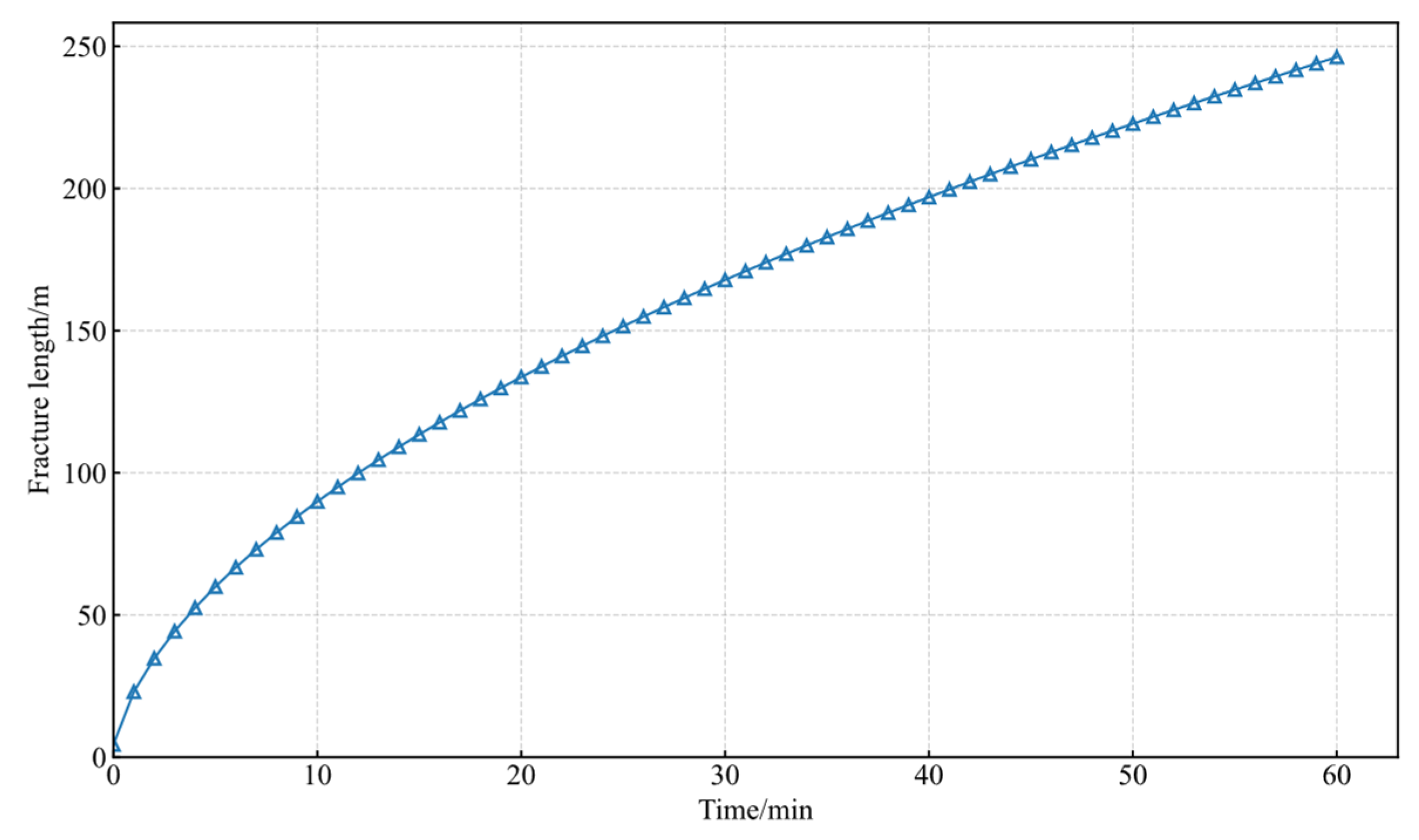
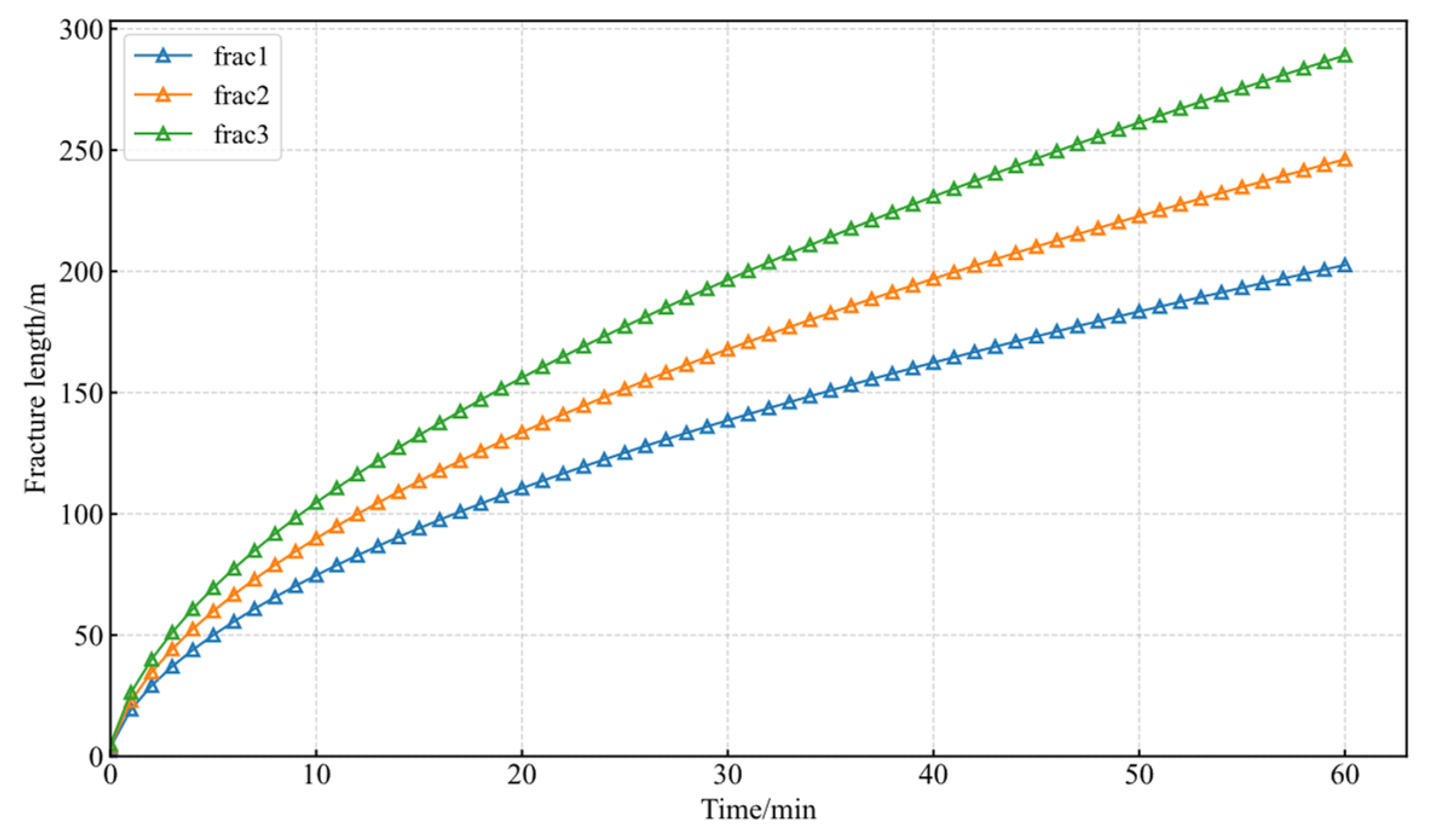
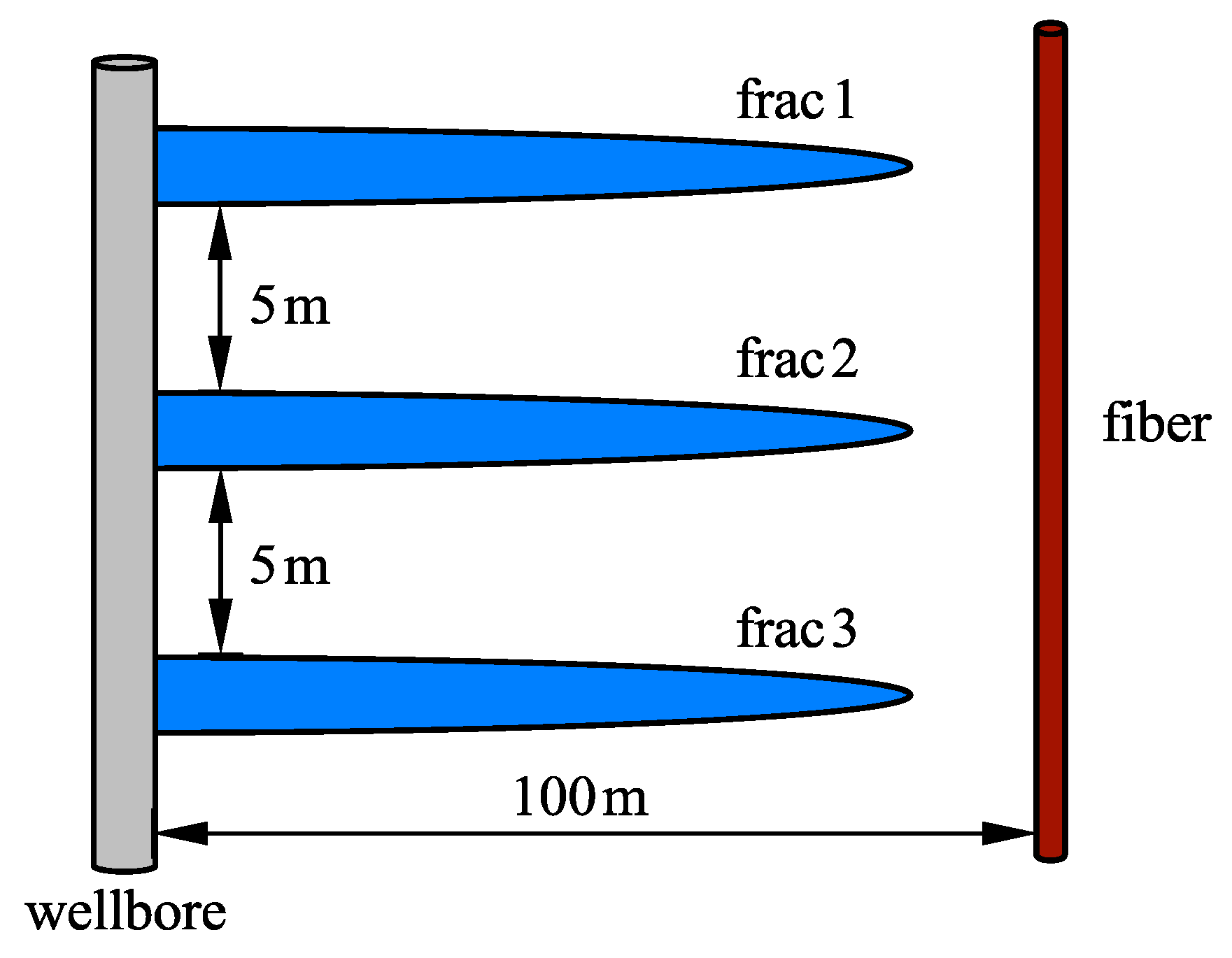
| 21.4 | 0.26 | 3.2 | 60 | 5 | 0.00009 | 20 |
| Case | Method | RMSE (s−1) | MAE (s−1) | Pearson r | Peak Count Match (%) | Peak Position MAE (m) |
|---|---|---|---|---|---|---|
| Synchronous | Raw G = 10 m | 1.25 × 10⁻⁵ | 3.48 × 10⁻⁶ | 0.293 | 32 | 0.95 |
| Synchronous | Regularized inversion | 9.05 × 10⁻⁶ | 1.09 × 10⁻⁶ | 0.802 | 100 | 0.50 |
| Asynchronous | Raw G = 10 m | 1.18 × 10⁻⁵ | 3.31 × 10⁻⁶ | 0.285 | 13 | — |
| Asynchronous | Regularized inversion | 8.51 × 10⁻⁶ | 1.03 × 10⁻⁶ | 0.808 | 95 | — |
| SNR (dB) | Self-Cons. RMSE (s−1) | Self-Cons. R2 | Strict R2 (vs. G = 1 m) | Strict Pearson r (vs. G = 1 m) | Peak Count Match (%) |
|---|---|---|---|---|---|
| 30 | 1.33 × 10⁻⁸ | 1.000 | 0.563 | 0.777 | 71 |
| 20 | 3.22 × 10⁻⁸ | 1.000 | 0.380 | 0.624 | 24 |
| 10 | 9.95 × 10⁻⁸ | 0.999 | −1.453 | 0.294 | 3 |
| 5 | 1.77 × 10⁻⁷ | 0.999 | −5.859 | 0.175 | 3 |
| Scenario | Method | RMSE (s−1) | MAE (s−1) | Pearson r | Peak Count Match (%) |
|---|---|---|---|---|---|
| Clean (no noise) | Proposed | 9.05 × 10⁻⁶ | 1.09 × 10⁻⁶ | 0.802 | 100 |
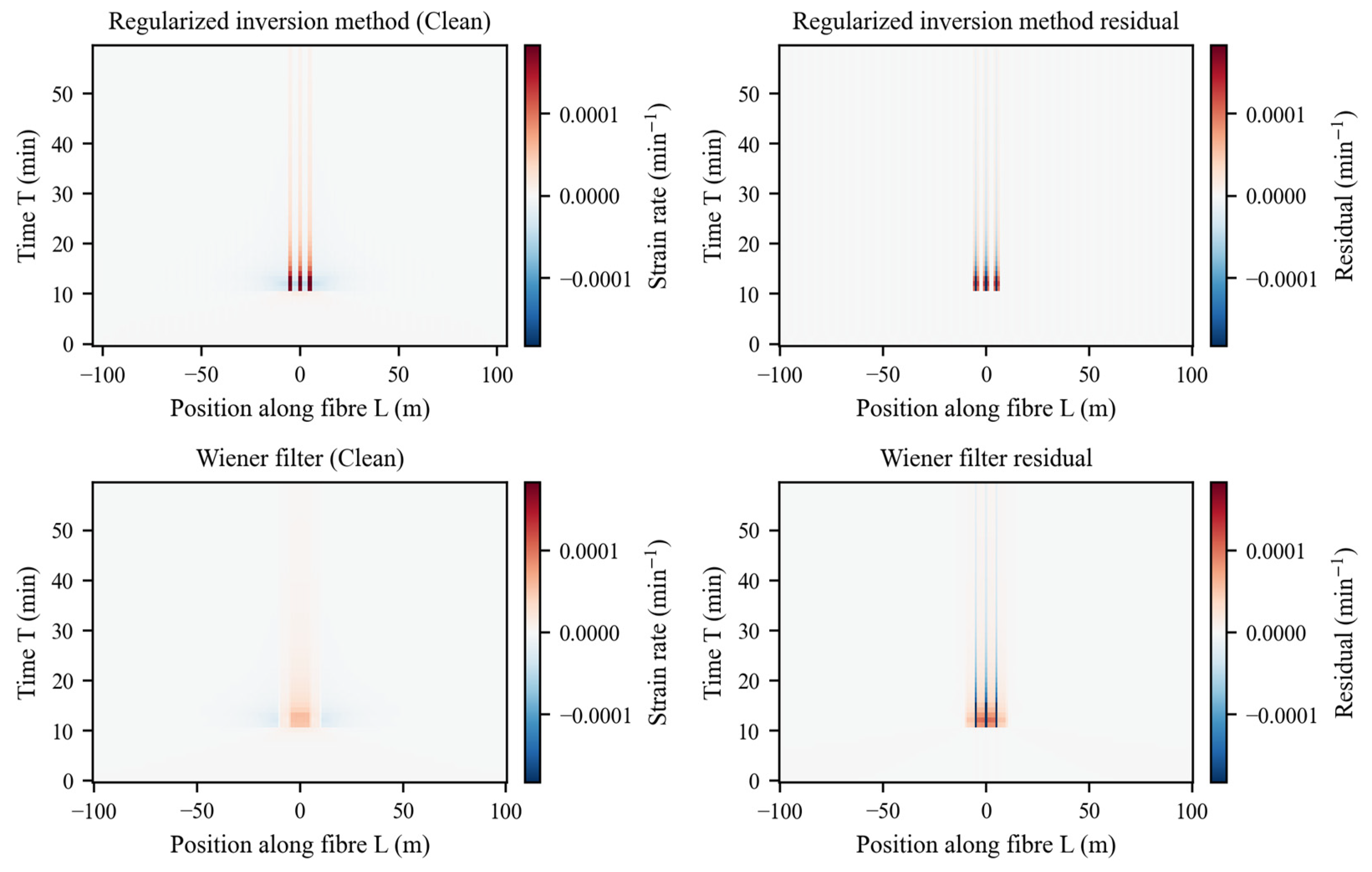
| Clean (no noise) | Wiener | 1.34 × 10⁻⁵ | 1.65 × 10⁻⁶ | 0.296 | 68 |
| SNR = 20 dB (+wavelet) | Proposed | 1.10 × 10⁻⁵ | 1.84 × 10⁻⁶ | 0.671 | 66 |
| SNR = 20 dB (+wavelet) | Wiener | 1.34 × 10⁻⁵ | 1.78 × 10⁻⁶ | 0.297 | 29 |
| SNR = 15 dB (+wavelet) | Proposed | 1.18 × 10⁻⁵ | 2.05 × 10⁻⁶ | 0.578 | 55 |
| SNR = 15 dB (+wavelet) | Wiener | 1.34 × 10⁻⁵ | 1.90 × 10⁻⁶ | 0.297 | 34 |
| SNR = 10 dB (+wavelet) | Proposed | 1.28 × 10⁻⁵ | 2.33 × 10⁻⁶ | 0.429 | 42 |
| SNR = 10 dB (+wavelet) | Wiener | 1.34 × 10⁻⁵ | 2.11 × 10⁻⁶ | 0.295 | 21 |
| G (m) | dl (m) | G/dl | Eff. Resolution (m) | Pearson r (Inverted) | Peak Match (Inverted, %) | Peak Match (Raw, %) | RMSE (s−1) |
|---|---|---|---|---|---|---|---|
| 5 | 1 | 5 | 1 | 0.8030 | 100 | 0 | 9.02 × 10⁻⁶ |
| 10 | 1 | 10 | 1 | 1.0000 | 100 | 32 | 1.40 × 10⁻⁷ |
| 10 | 2 | 5 | 2 | 0.8880 | 97 | 32 | 3.66 × 10⁻⁶ |
| 15 | 1 | 15 | 1 | 0.8028 | 100 | 0 | 9.02 × 10⁻⁶ |
| 15 | 3 | 5 | 3 | 0.6692 | 0 | 5 | 5.88 × 10⁻⁶ |
| 20 | 4 | 5 | 4 | 0.6040 | 0 | 5 | 6.25 × 10⁻⁶ |
| Dataset | n_T | n_L | Load Time (s) | A Cache Build (ms) | Per-Step Solve (ms) | Full-Stage Runtime (s) | Throughput (Steps/s) |
|---|---|---|---|---|---|---|---|
| Synthetic G = 10 m benchmark | 60 | 201 | 1.14 | 2.13 | 7.59 | 0.44 | 137 |
| HFTS-2 B1H Stage 22 | 1981 | 688 | 2.52 | 21.84 | 5.23 | 17.64 | 112 |
Disclaimer/Publisher’s Note: The statements, opinions and data contained in all publications are solely those of the individual author(s) and contributor(s) and not of MDPI and/or the editor(s). MDPI and/or the editor(s) disclaim responsibility for any injury to people or property resulting from any ideas, methods, instructions or products referred to in the content. |
© 2026 by the authors. Licensee MDPI, Basel, Switzerland. This article is an open access article distributed under the terms and conditions of the Creative Commons Attribution (CC BY) license.
Share and Cite
Mao, Y.; Chen, M.; Sui, W.; Li, J.; Wang, S.; Hao, Y. Super-Resolution Enhancement of Fiber-Optic LF-DAS for Closely Spaced Fracture Monitoring During Hydraulic Fracturing. Processes 2026, 14, 1380. https://doi.org/10.3390/pr14091380
Mao Y, Chen M, Sui W, Li J, Wang S, Hao Y. Super-Resolution Enhancement of Fiber-Optic LF-DAS for Closely Spaced Fracture Monitoring During Hydraulic Fracturing. Processes. 2026; 14(9):1380. https://doi.org/10.3390/pr14091380
Chicago/Turabian StyleMao, Yu, Mian Chen, Weibo Sui, Jiaxin Li, Su Wang, and Yalong Hao. 2026. "Super-Resolution Enhancement of Fiber-Optic LF-DAS for Closely Spaced Fracture Monitoring During Hydraulic Fracturing" Processes 14, no. 9: 1380. https://doi.org/10.3390/pr14091380
APA StyleMao, Y., Chen, M., Sui, W., Li, J., Wang, S., & Hao, Y. (2026). Super-Resolution Enhancement of Fiber-Optic LF-DAS for Closely Spaced Fracture Monitoring During Hydraulic Fracturing. Processes, 14(9), 1380. https://doi.org/10.3390/pr14091380