Article

Influence of Ash Content on Nanopore Heterogeneity in Deep Coal Seams
1
Huabei Geosteering & Logging Company of Sinopec Matrix Corporation, Zhengzhou 450042, China
2
Sinopec Key Laboratory of Well Logging, Zhengzhou 450042, China
3
Sinopec Key Laboratory of Measurement and Control While Drilling, Zhengzhou 450042, China
4
No. 1 Geological Team of Shandong Provincial Bureau of Geology and Mineral Resources, Jinan 250013, China
5
The First Exploration Team of Shandong Coalfield Geologic Bureau, Qingdao 266427, China
6
College of Earth Sciences & Engineering, Shandong University of Science and Technology, Qingdao 266590, China
*
Author to whom correspondence should be addressed.
Processes 2026, 14(9), 1357; https://doi.org/10.3390/pr14091357
Submission received: 4 March 2026 / Revised: 23 March 2026 / Accepted: 8 April 2026 / Published: 23 April 2026

Abstract

Understanding the impact of ash on nanopore heterogeneity is crucial for evaluating deep coalbed methane (CBM) reservoirs. This study investigates the Benxi Formation coal Seam 8 in the Nalinhe Block, Ordos Basin. Based on proximate analysis, samples were categorized by ash yield (Aad%). Pore structures were characterized using low-temperature nitrogen adsorption (<2 nm) and carbon dioxide adsorption (2–100 nm). Fractal theory was employed to quantitatively assess pore heterogeneity across different scales. The results indicate that ash content significantly constrains the development of both micropores (<2 nm) and mesopores (2–100 nm), with the most pronounced effect on micropores in the 0.3–0.6 nm range. Ash, primarily derived from kaolinite, occludes pores, reducing pore volume and specific surface area, thereby diminishing methane adsorption capacity. Notably, pore heterogeneity is found to decrease with increasing pore volume. These findings provide valuable insights for the efficient exploration and development of deep CBM resources in the Nalinhe and Suide blocks.

1. Introduction

The Nalinhe and Suide blocks, as key areas for deep coalbed methane (CBM) exploration in coal seam 8 of the Benxi Formation along the eastern margin of the Ordos Basin, are of great significance for promoting efficient CBM development in this region [1,2,3]. The Nalinhe Block is dominated by deep coal seams, with burial depths generally exceeding 3000 m. The coal rocks exhibit well-developed micropores and a favorable fracture system, displaying coexistence characteristics of adsorbed gas and free gas. The Nalinhe 1H well achieved a high industrial gas flow rate of 54,000 m3/d during production testing, confirming its enormous resource potential. The Suide block exhibits an accumulation model characterized by “continuous hydrocarbon generation and source–reservoir integration,” with CBM occurring primarily in adsorbed form, supplemented by free gas. Current efforts in this block focus on deepening the understanding of gas production patterns, optimizing production technologies, and drawing on the successful experience of the Nalinhe Block to promote the application of multi-factor well location optimization and precision steering technologies. The differences in reservoir characteristics and exploration practices between the two blocks complement each other, providing important support for deepening the understanding of pore–fracture structure development mechanisms in deep coal seams of the Ordos Basin and for optimizing development technology strategies [4,5,6].
The pore–fracture structure of deep coal seams is the core geological factor controlling the adsorption, desorption, and seepage behaviors of coalbed methane (CBM) [7]. Previous scholars have conducted a series of pore structure characterization studies focusing on coal seam 8 of the Benxi Formation in the Ordos Basin. Through experimental methods such as high-pressure mercury intrusion, low-temperature nitrogen adsorption, and carbon dioxide adsorption, researchers have revealed the controlling effect of the thermal evolution degree on pore development in coal reservoirs, identifying vitrinite reflectance as a key parameter affecting pore structure [8,9,10]. Meanwhile, the influence of mineral composition on pore structure has received increasing attention. Studies have shown that clay minerals (especially kaolinite) in the ash can physically fill organic pores, significantly inhibiting the development of micropores and mesopores, thereby reducing the specific surface area and methane adsorption capacity of the coal [11,12]. Xiao et al. [13] applied fractal theory to comparatively analyze the pore fractal characteristics of coal samples with different ash contents, discovering that ash is an important factor controlling the heterogeneity of the pore–fracture distribution. In addition, the pore blocking effect caused by clay minerals has also been proven to alter pore connectivity, thereby affecting gas migration efficiency [14,15].
Despite the significant progress made in previous studies, the following research gaps remain to be addressed. First, existing research has primarily focused on deep CBM exploration hotspots such as the Daning–Jixian Block, whereas the Nalinhe and Suide blocks, as emerging exploration areas, lack systematic and meticulous multi-scale characterization of the pore–fracture structure in their deep coal seams. Considering the differences in sedimentary environments, tectonic evolution, and coal compositions among different blocks, directly applying existing knowledge may lead to deviations in reservoir evaluation. Second, although the impact of ash on pore development has been preliminarily recognized, the controlling mechanisms of ash content on pore development at different scales specifically in the study area—particularly in the Nalinhe Block—remain unclear.
To address the aforementioned research gaps, this study targets the deep coal seam 8 of the Benxi Formation in the Nalinhe Block, Ordos Basin. Based on the basic compositional analysis of the coal samples, the specimens were classified according to their ash content. Low-temperature nitrogen adsorption (2–100 nm) and carbon dioxide adsorption (<2 nm) techniques were comprehensively employed to meticulously characterize the pore volumes, and fractal theory was applied to quantitatively delineate the heterogeneity characteristics of pores across different size ranges. Specifically, this study aims to (1) reveal the constraining mechanisms of ash yield on pore volumes across different pore sizes; (2) elucidate the controlling effect of ash on the heterogeneity of pore structures; and (3) clarify the response characteristics of methane adsorption capacity under the influence of ash. The findings are expected to provide a solid theoretical foundation for the efficient exploration and development of deep CBM in the Nalinhe and Suide blocks.

2. Geological Setting and Experiments Methods

2.1. Geological Setting

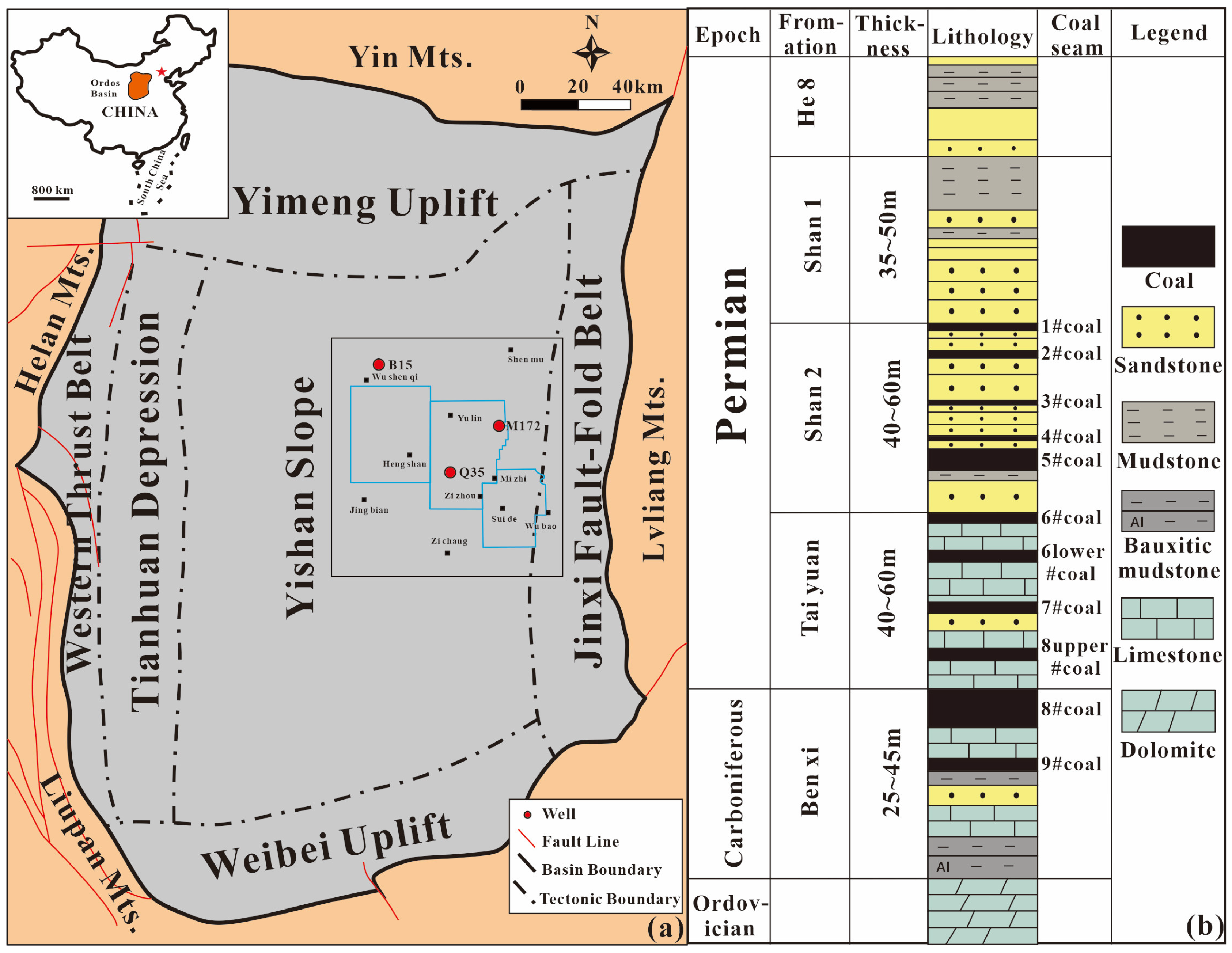
The Ordos Basin is a large multi-cycle cratonic basin characterized by integral subsidence and depression migration, with a total area of approximately 370,000 km2 and a stable tectonic background (Figure 1). The sedimentary strata within the basin are completely developed, ranging from the Proterozoic to the Cenozoic [16,17,18]. The Upper Paleozoic strata, from bottom to top, consists of the Upper Carboniferous Benxi Formation (C2b), the Lower Permian Taiyuan Formation (P1t) and Shanxi Formation (P1s), the Middle Permian Shihezi Formation (P2h), and the Upper Permian Shiqianfeng Formation (P3sh). This set of strata encompasses depositional systems including shallow marine, marine–continental transitional, and continental facies. Among them, the Benxi Formation is one of the primary coal-bearing strata in the Upper Paleozoic, formed under extensive accommodation space and favorable coal-forming conditions (Figure 1b).
The target coal seam in the study area is coal seam 8, which occurs at the top of the Ben-1 member of the Benxi Formation, with a thickness of 2–16 m and stable development across the region. Its lithology is dominated by dark gray mudstone, siltstone, fine- to coarse-grained quartz sandstone, and coal seams, with thin limestone interbeds locally present. In the study area, the coal seam generally ranges from 5 to 12 m in thickness and exhibits multiple short-term sedimentary cycles controlled by sea-level fluctuations. A parting is commonly developed in the middle-upper and middle-lower sections of coal seam 8, indicating environmental evolution and sedimentary hiatus in the peat flat during the depositional period [19,20].
Figure 1. Geological overview of the study area (a) geographical location of the study area; (b) stratigraphic column of the study area. [21].
Processes 14 01357 g001

2.2. Sample Preparation and Experimental Methods

This study employs experimental techniques such as low-temperature CO2 adsorption and low-temperature N2 adsorption to characterize the pore structure of coal across the full scale. Following the national standards GB/T 6948-2008 [22], GB/T 8899-1998 [23], and GB/T 212-2008 [24], determinations were conducted on 12 research samples for maceral components, industrial components, and vitrinite reflectance. This approach enables a systematic characterization of the coal’s metamorphic degree, material composition characteristics, and genetic types [25].
Proximate Analysis: The analysis was conducted in accordance with the national standard GB/T 212-2008. The coal samples were pulverized to a particle size of 60–80 mesh, and the determinations of moisture (M), ash (A), volatile matter (V), and fixed carbon (FC) were performed using a 5E-MAG6700 automatic proximate analyzer (manufactured by Changsha Kaiyuan Instrument Co., Ltd., Changsha, China) under laboratory conditions of 24 °C and 40% relative humidity. The repeatability limits for moisture, ash, and volatile matter are 0.20%, 0.20%, and 0.50%, respectively, according to GB/T 212-2008 [26].
Maceral Composition and Reflectance Determination: The procedures were conducted in accordance with the national standards GB/T 8899-1998 “Methods for Determining Maceral Groups and Minerals in Coal” and GB/T 6948-2008 “Microscopic Method for Determining Vitrinite Reflectance in Coal.” After preparing the coal samples as polished blocks, maceral composition and oil immersion reflectance (Ro) were measured using an Axio Imager optical microscope equipped with a photometer (manufactured by ZEISS, Oberkochen Germany). The counting error for maceral composition is within ±5% based on 500 points per sample, and the standard deviation for vitrinite reflectance is ≤0.05% [27].
LPN2 GA Experiment: This study employed the low-temperature nitrogen adsorption method to characterize the pore structure of coal samples. The samples were pulverized to a particle size of 40–60 mesh, followed by drying and degassing pretreatment at 77 K. Nitrogen adsorption/desorption tests were conducted using a Micromeritics ASAP 2460 analyzer (manufactured by Micromeritics (Shanghai) Instrument Co., Ltd., Shanghai, China). Based on the obtained adsorption isotherms, the specific surface area was calculated using the BET model, while the pore size distribution and pore volume were analyzed using the BJH model. This method is primarily suitable for characterizing mesoporous structures within the range of 2–100 nm, with repeatability within ±2% for BET specific surface area and within ±3% for BJH pore volume [28].
LPCO2 GA Experiment: The CO2 adsorption method was employed to characterize the microporous structure of the samples. The samples were ground to a particle size of 40–60 mesh and subjected to drying and degassing pretreatment at 273.15 K. Testing was then performed using a Micromeritics ASAP 2460 analyzer (manufactured by Micromeritics (Shanghai) Instrument Co., Ltd., Shanghai, China). The relative pressure (P/P0) range was set from 0 to 0.1, with an equilibrium pressure interval of 10 s, to obtain the CO2 adsorption isotherms. Based on the collected data, the pore size distribution and pore volume were calculated using the density functional theory (DFT) model. This method is primarily used to analyze microporous structural parameters smaller than 2 nm, with repeatability for DFT pore volume within ±3% and temperature controlled at 273.15 K ± 0.05 K.

2.3. Fractal Theories

Fractal dimension is a key parameter for characterizing the heterogeneity of pore structures in porous materials. Its essence lies in using adsorbents to adsorb gases with varying molecular diameters, combined with numerical models to obtain adsorption data across multiple scales. Based on the fitting relationship between adsorption capacity and pressure, fractal parameters are derived to describe the irregularity of pore structures. This has significant implications for the adsorption, desorption, and migration behavior of gases within such materials.
Frenkel–Halsey–Hill (FHH): Based on capillary condensation theory, this model is commonly employed to analyze gas adsorption behavior on adsorbent surfaces, particularly for characterizing adsorption at the mesoporous scale. Utilizing data from low-temperature nitrogen adsorption experiments, the model enables the analysis of fractal characteristics of materials across different relative pressure ranges. When the relative pressure P/P0 is below 0.45, nitrogen molecules primarily undergo monolayer and multilayer adsorption, yielding the fractal dimension D1, which reflects the roughness of the pore surface. Conversely, when the relative pressure P/P0 reaches or exceeds 0.45, capillary condensation of nitrogen occurs, and the derived fractal dimension D2 characterizes the complexity of the pore spatial structure. Generally, higher values of D1 and D2 indicate a rougher surface and more intricate internal pore architecture within the mesopores of coal [28].
ln V V 0 = C + A ln [ ln ( P 0 P ) ]
Here, V/V0 represents the relative adsorption quantity at equilibrium pressure P, where P0 denotes the saturation vapor pressure of the adsorbed gas (MPa), P is the equilibrium pressure during adsorption (MPa), D is the fractal dimension, and C is a constant.
V-S model: This model is commonly used to calculate the fractal dimension of micropores, with the basic assumption that the pores are approximated as spherical. Based on the correlation between pore volume and specific surface area, the corresponding fractal dimension is derived [28].
ln S r = ln ( S 0 K S ) + C ln r
where Sr represents the total specific surface area in m2.g−1; Ds denotes the slope of the equation and is dimensionless; r stands for the pore radius in nm; the surface fractal dimension Ds is then calculated as Ds = C + 3 for the micropore filling regime or Ds = 2 + C for the thermodynamic model, according to the applicable fitting range.

3. Results and Discussion

3.1. Basic Geological Characteristics

As shown in Table 1, the maceral composition of the selected samples is dominated by vitrinite (ranging from 34.3% to 85.2%, with an average of 64.49%), followed by inertinite (ranging from 0% to 44.33%, with an average of 21.42%) and mineral components (ranging from 0.82% to 28.4%, with an average of 9.19%), while liptinite (ranging from 0% to 24.67%, with an average of 4.68%) is the least abundant. The Ro,max values range from 1.48 to 2.28, indicating a relatively high thermal maturity, which classifies the coal as medium- to high-rank.
Based on the ash content (Aad%), the samples are divided into two categories. Type A samples have an Aad% higher than 20%, ranging within a specified interval, while Type B samples have an Aad% lower than 20%. In terms of industrial composition, fixed carbon (FCad, %) (ranging from 39.49% to 82.81%, with an average of 67.04%) is the highest, whereas moisture content (0.35–1.73%, with an average of 0.66%) is the lowest.
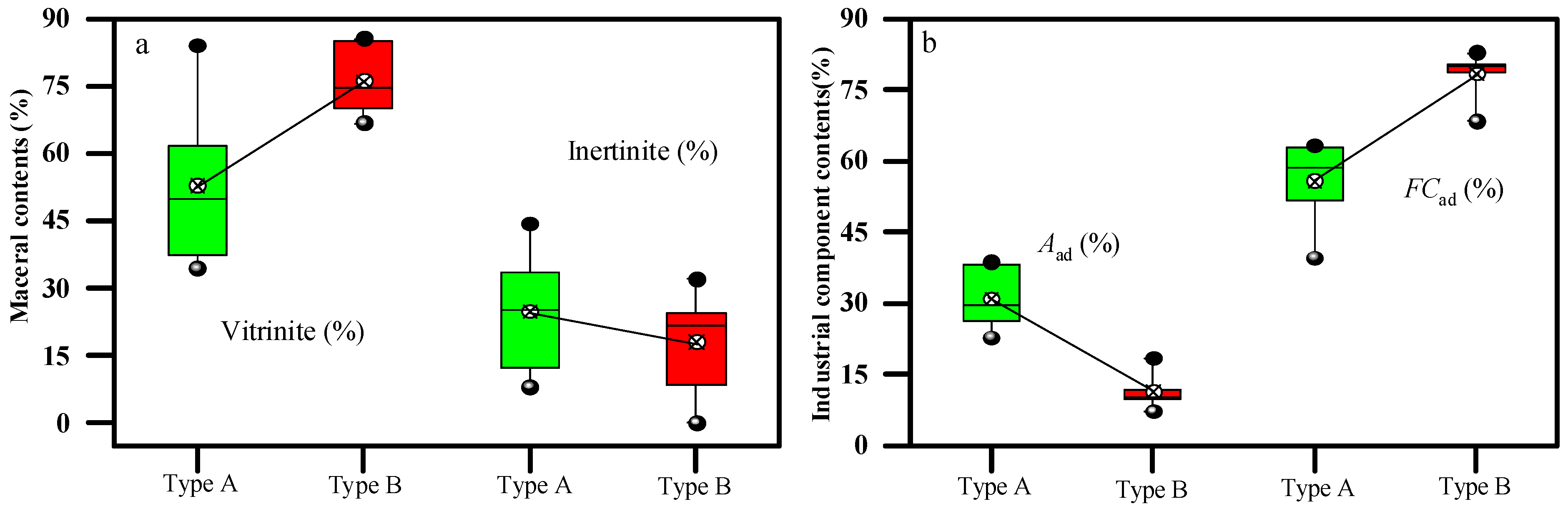
Figure 2 shows a comparison of the similarities in the mineral composition of the samples. Figure 2a shows that the vitrinite content of Type A samples is generally lower than that of Type B. However, Type A samples exhibit greater variability in distribution, which suggests differences in their sedimentary environments or material sources. The inertinite content of Type A samples is slightly higher than that of Type B, showing an opposite trend to vitrinite content, which is primarily attributed to their distinct genetic origins. Figure 2b indicates that the ash content of Type A samples is higher than that of Type B and displays stronger variability. In contrast, Type B samples exhibit higher FCad, %. Furthermore, comparing Figure 2a,b reveals that samples with higher vitrinite content generally show lower Aad%, which is associated with increased organic matter, whereas Aad% is predominantly composed of inorganic minerals.

3.2. Microporous Structure of All Samples with Different Ash Content

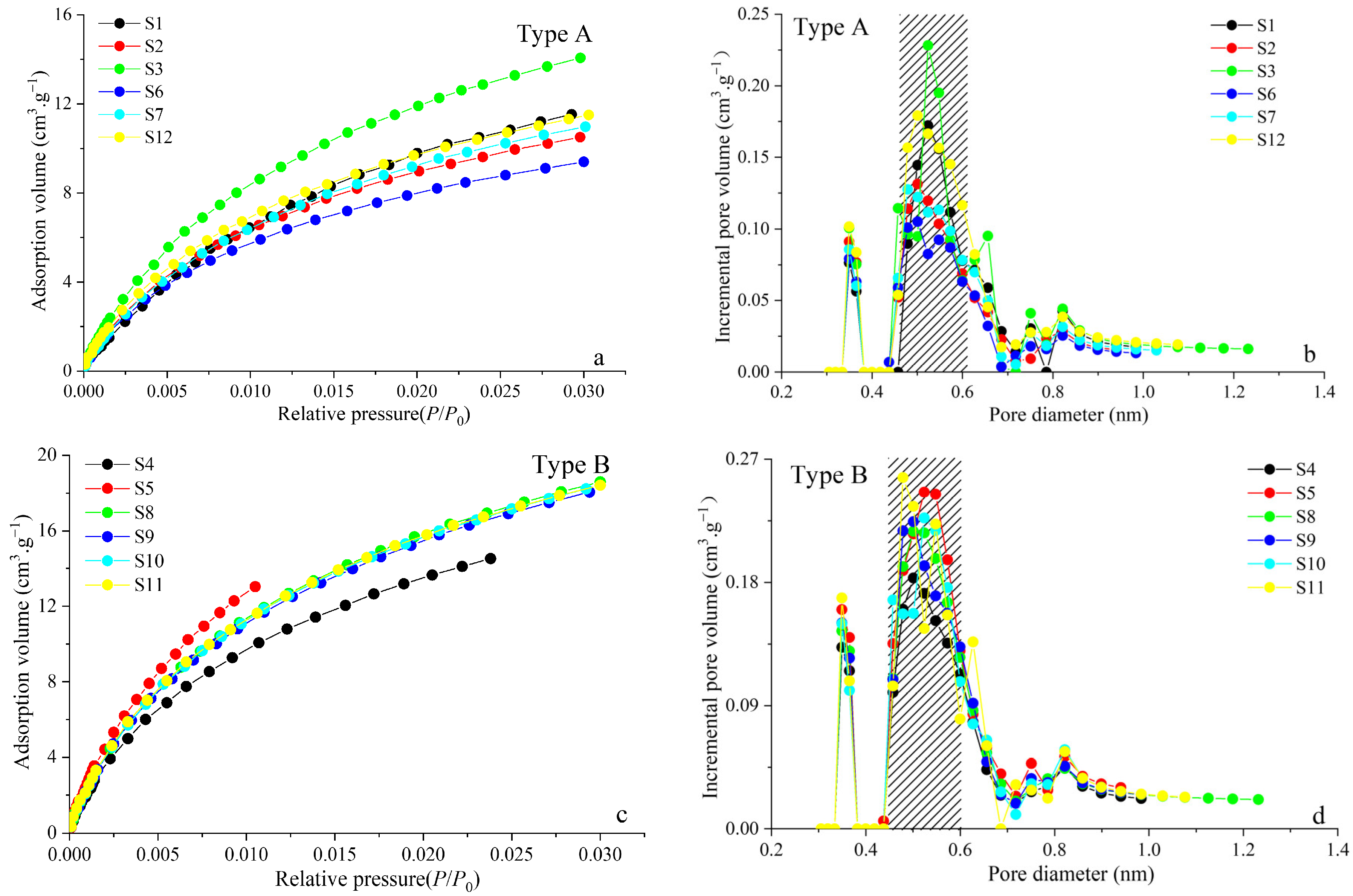
LPCO2 GA testing was used to characterize micropore volume development features (Figure 3). Figure 3a,c show that, as the relative pressure increases, the CO2 and CH4 adsorption capacities gradually increase, and the maximum CO2 adsorption of Type A samples is lower than that of Type B (the average maximum adsorption of Type A is 11.33 cm3/g, while that of Type B is 18.35 cm3/g). These results indicate that Aad% affects micropore development and also show that the CO2 adsorption isotherms belong to Type I according to the IUPAC classification (adsorption increases with rising pressure, rising rapidly at low pressures and then leveling off).
Based on the EFT model, micropore volumes were obtained (Figure 3b,d). The results show that micropore size distribution curves of s all exhibit a distinct three-peak pattern, with peaks located at 0.5~0.6 nm: Type A pores development degree is lower than that of Type B, and 0.6~1.2 nm pore volume is smaller than that below 0.6 nm, which indicates micropore distribution is heterogeneous.
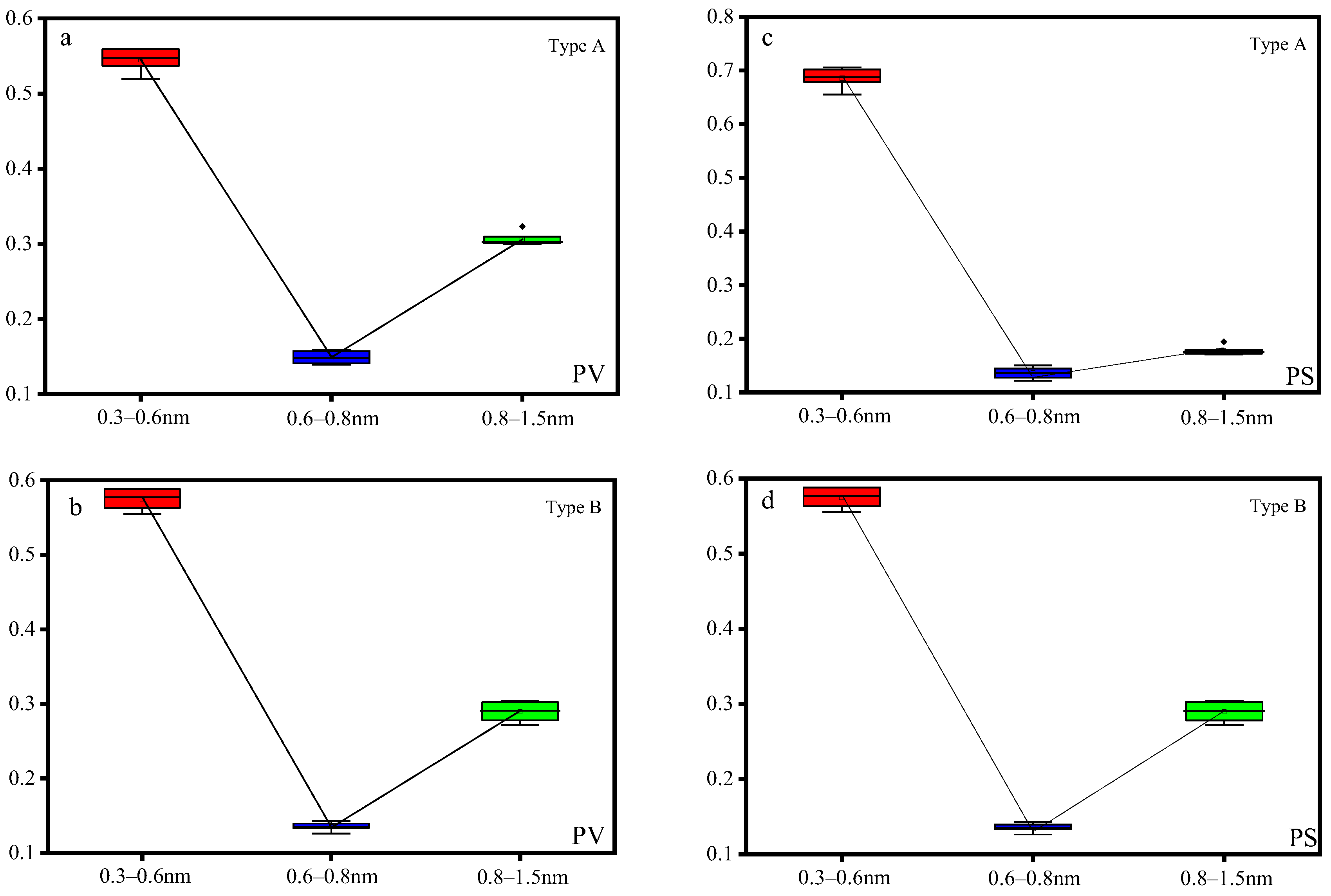
Figure 4 shows that the micropore volume distribution differences between the two types are mainly 0.3~0.6 nm, while 0.6~0.8 nm pores represent a zone of low micropore volume development. In contrast, 0.8~1.5 nm pores volume range is well-developed, indicating 0.6~0.8 nm pores have become a threshold for the connectivity of micropore volume in these samples, meaning that 0.6~0.8 nm pore volume development is a critical interval affecting micropore connectivity. Overall, different scales of pore diameters under varying micropore volumes of the selected samples exhibit strong heterogeneity.
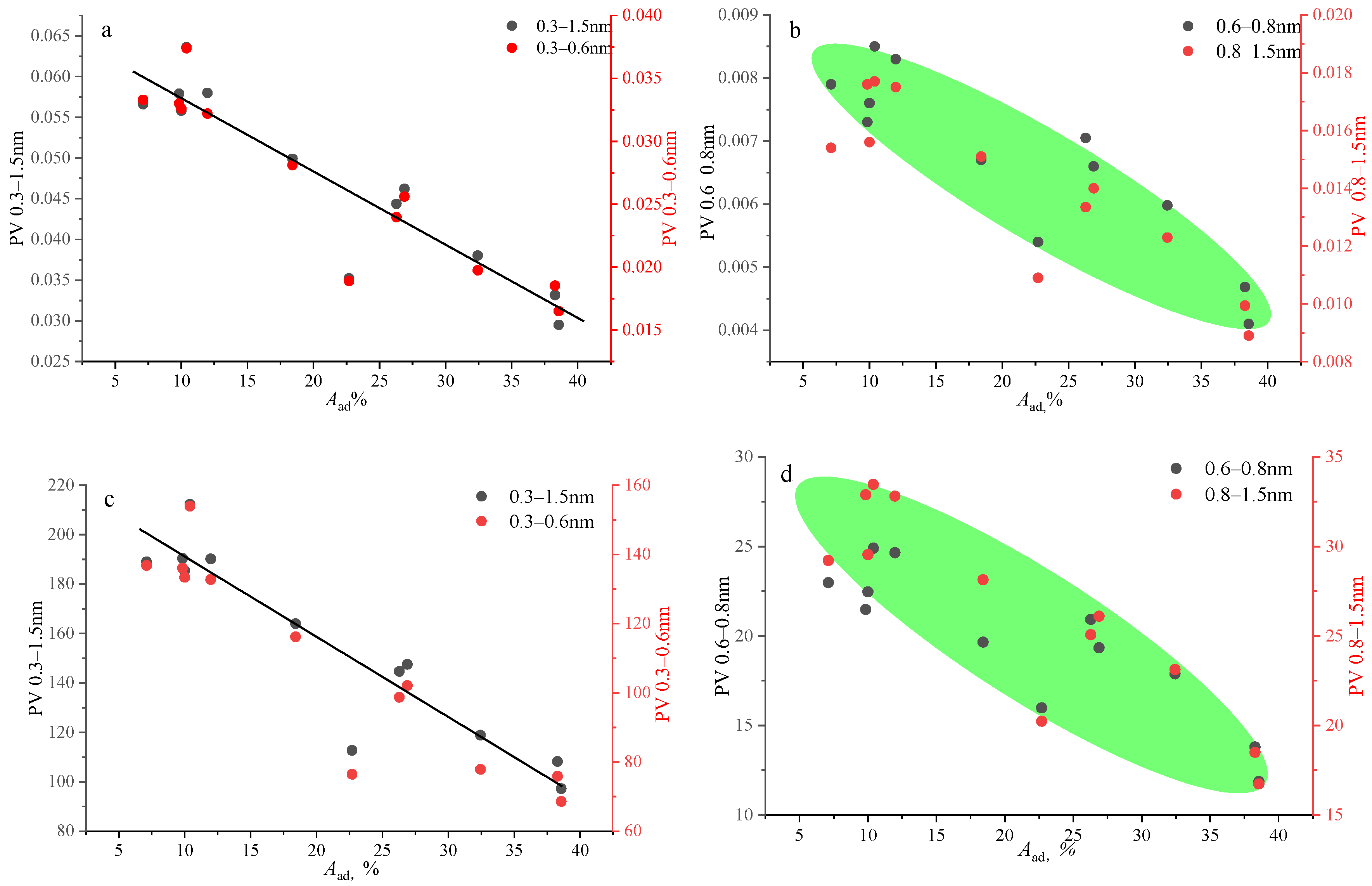
The increase in Aad% induces a pronounced linear decrease in micropore volumes in the 0.3–1.5 nm range. This reduction can be attributed to the infilling of micropores by kaolinite, the predominant ash mineral, which significantly diminishes micropore-specific surface area and volume. Consequently, the number of available methane adsorption sites is reduced, demonstrating that Aad% constrains micropore development and exerts strong negative linear control on methane adsorption characteristics. Meanwhile, the correlations between ash content and micropore volumes at different pore size scales were comparatively analyzed. The results show that the correlation between Aad% and micropore volume in the 0.3~0.6 nm pore size range is significantly stronger than that observed for the 0.6~0.8 nm and 0.8~1.5 nm ranges. This is primarily because micropores with pore sizes of 0.3~0.6 nm constitute a dominant proportion of the total micropore volume. Consequently, this pore size interval provides a greater number of effective adsorption sites, making the development of micropore volume at this scale more strongly influenced by Aad% (Figure 5).
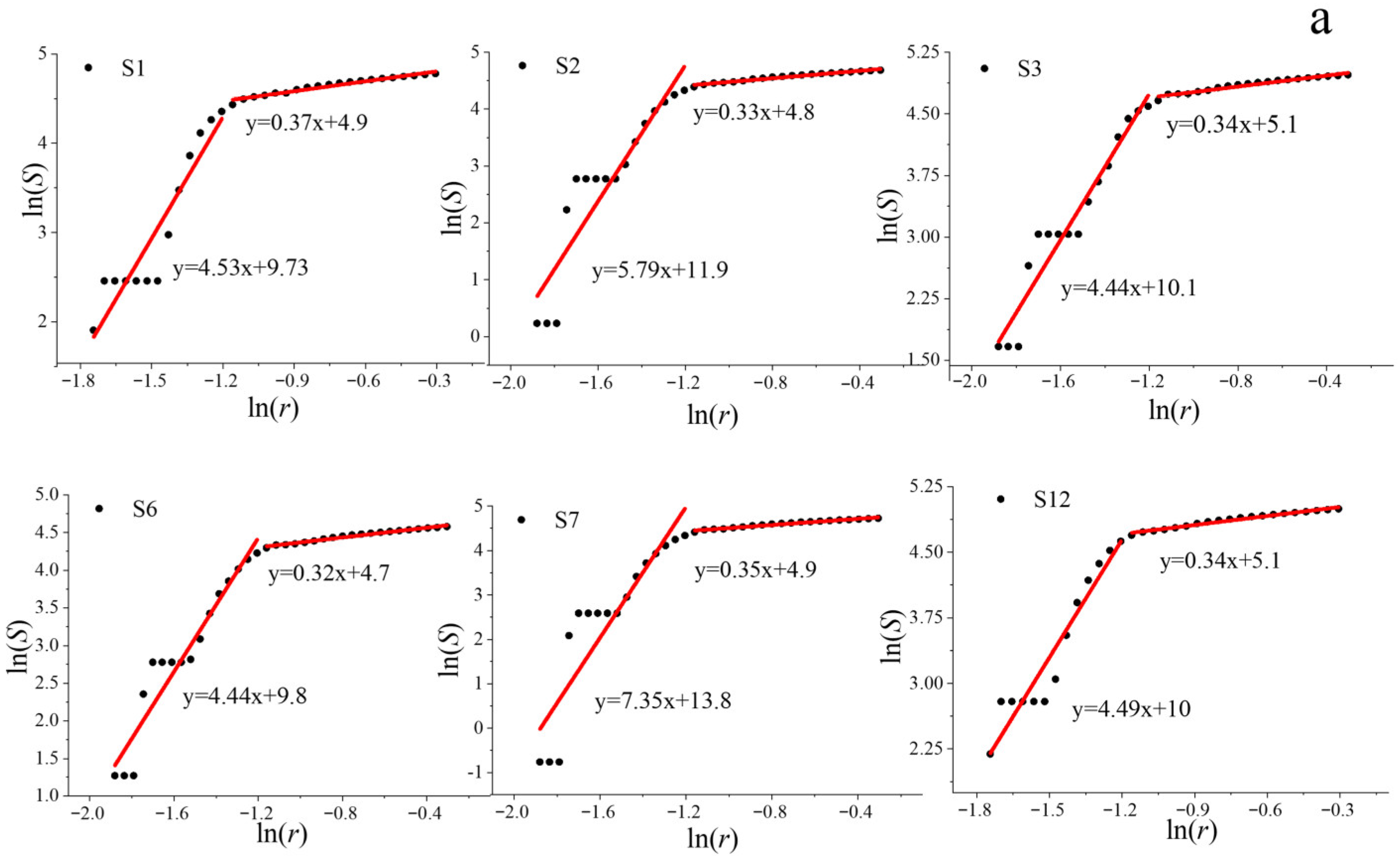
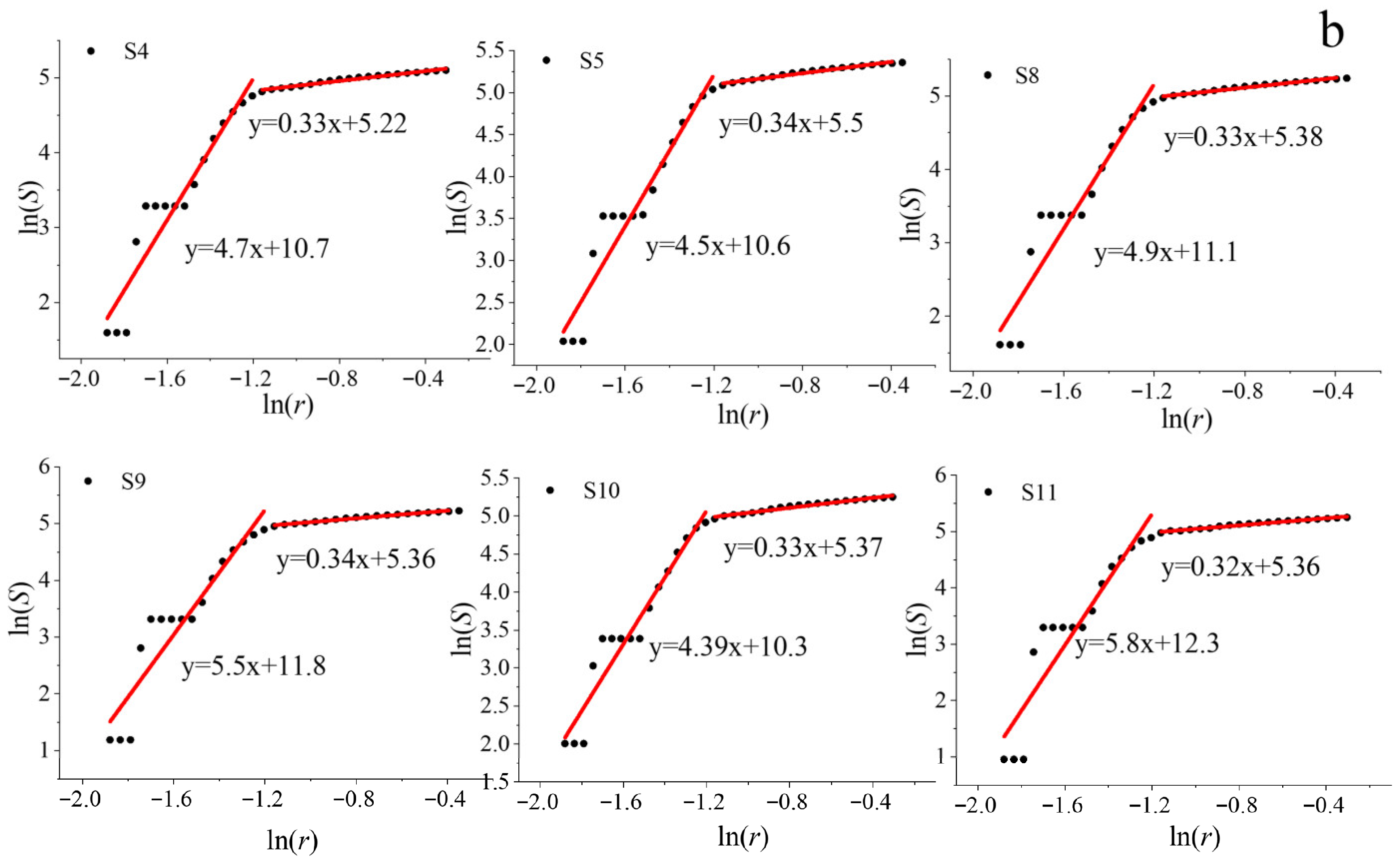
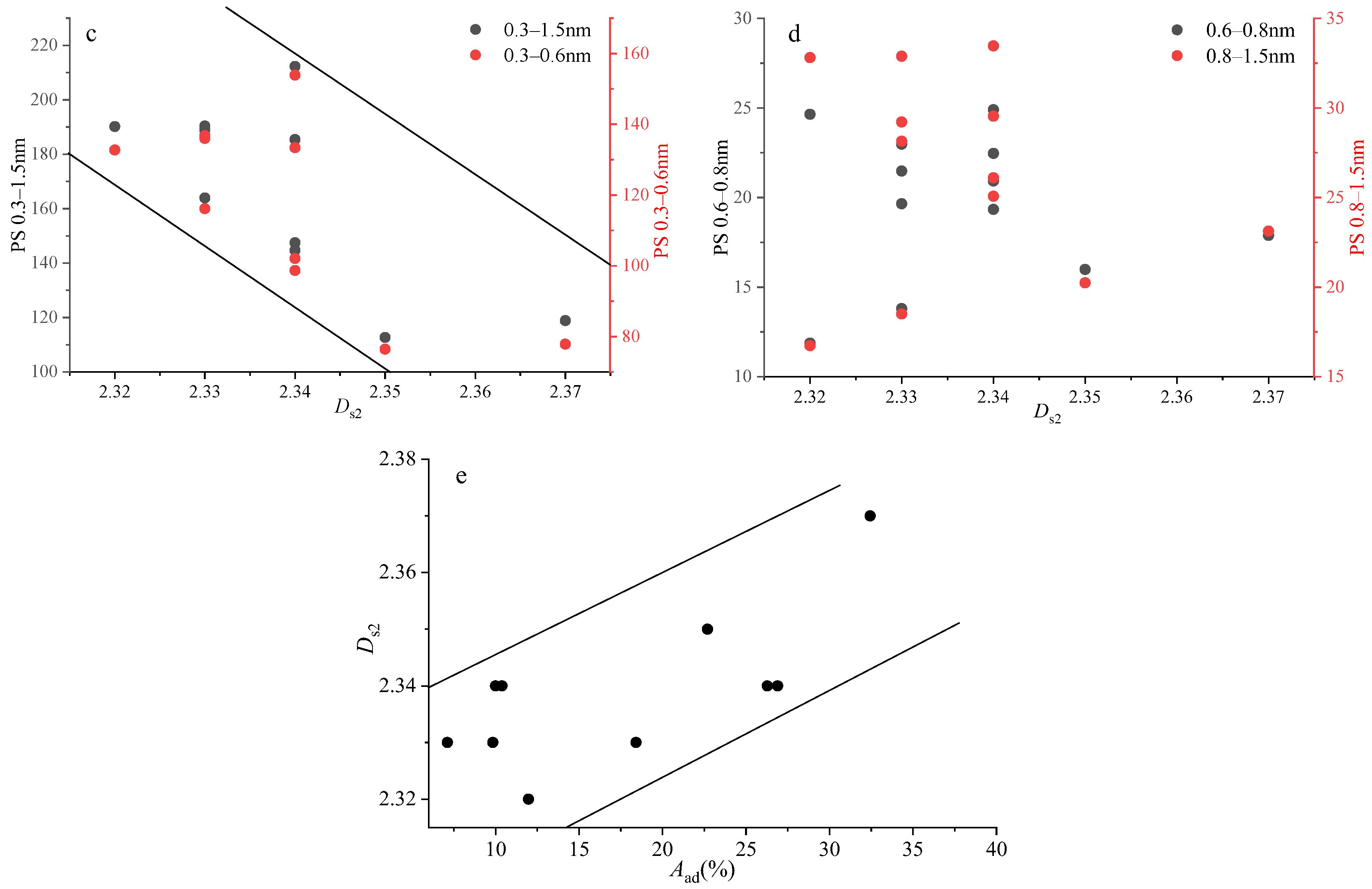
On this basis, a quantitative description of the micropore fractal characteristics was carried out (Figure 6). The results show that all samples exhibit distinct single fractal characteristics, and with r = −1.2 as the boundary, two clear curves can be distinguished. This indicates that 0.6 nm pore as the boundary, micropores of 0.3~0.6 nm and 0.6~1.5 nm show significantly different fractal characteristics. Comparing the same sample, the fractal dimension of 0.3~0.6 nm pore volume is significantly lower than that of 0.6~1.5 nm pore volume, which also indicates that 0.3~0.6 nm pore volume has strong heterogeneity.
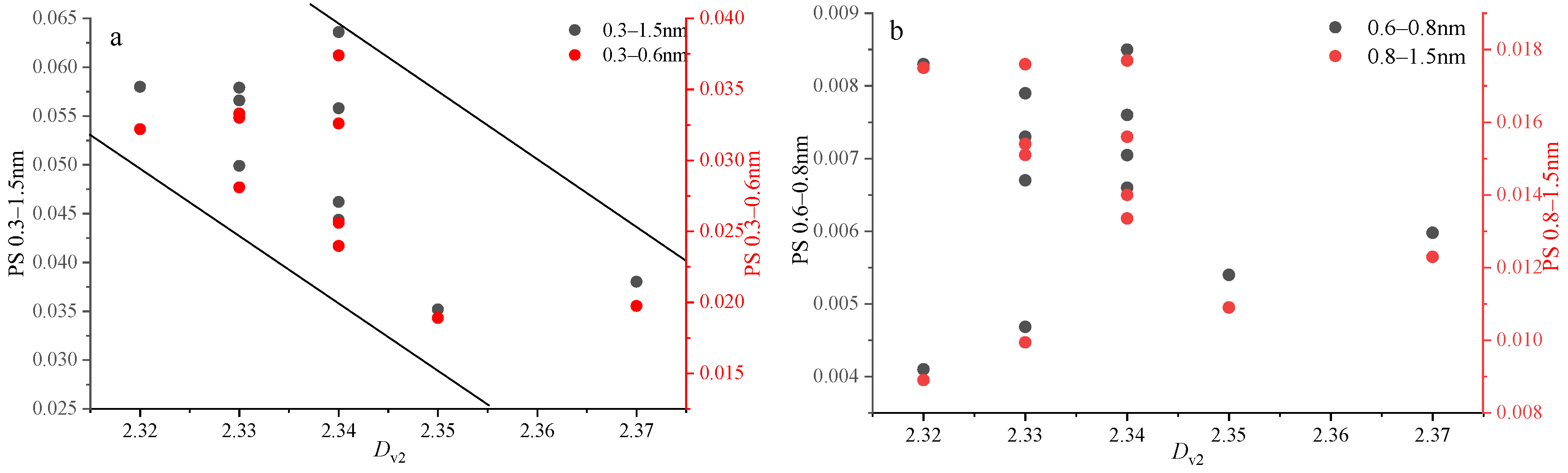
Based on the synthesis of the above results, the pore volume fractal dimensions of the selected samples were statistically determined to investigate the controlling factors influencing fractal characteristics. As shown in Figure 7a,b, the pore volume fractal dimension exhibits a gradual decrease with increasing pore volume. This trend indicates that the heterogeneity of pore volume distribution in deep coal samples is progressively weakened as the micropore volume increases.
This phenomenon can be attributed to the fact that an increase in total pore volume is accompanied by a synchronous increase in pore volume within the 0.3~0.6 nm pore size range. The expansion of micropores within this critical pore size interval effectively reduces the volumetric heterogeneity among micropores of different scales. Similarly, previous studies have demonstrated a significant positive correlation between micropore volume and specific surface area, which consequently results in a pronounced negative linear relationship between pore volume fractal dimension and specific surface area.
The underlying mechanism lies in the fact that an increase in micropore volume inherently leads to an enlargement of the micropore-specific surface area. In particular, the growth of specific surface areas associated with micropores in the 0.3~0.6 nm range mitigates the uneven development of micropore-specific surface areas across the entire pore size spectrum. The reduction in micropore volume (especially in the 0.3~0.6 nm range) directly leads to a decrease in specific surface area, which is the primary site for methane adsorption. As a result, higher ash content significantly diminishes the methane adsorption capacity of deep coal reservoirs. This implies that ash content should be considered a key parameter in evaluating gas storage potential and selecting favorable zones for deep CBM exploration.
Compared with previous studies on the Daning–Jixian Block, the Nalinhe Block samples exhibit a stronger negative correlation between ash content and micropore volume in the 0.3–0.6 nm range, suggesting a more pronounced control of ash on ultra-micropores in this region.

3.3. Mesoporous Structure of All Samples with Different Ash Content

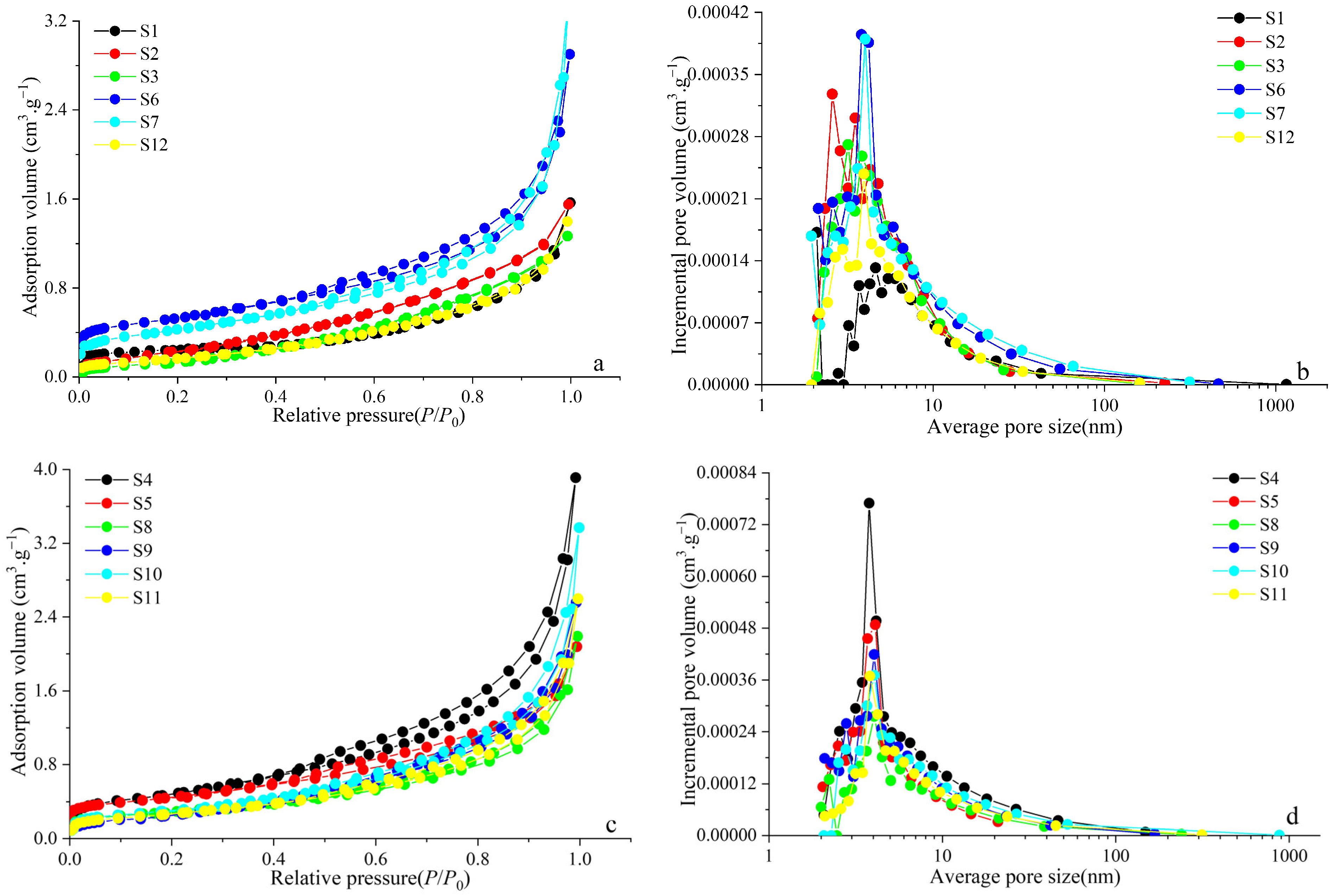
The pore volume in the 2–100 nm range was quantified using low-temperature nitrogen adsorption analysis. As shown in Figure 8a,c, the adsorption and desorption isotherms of the selected samples nearly overlap, suggesting that the pores are predominantly semi-open and the pore structure is simple. Moreover, the maximum nitrogen adsorption capacity of Type A samples ranges from 1.26 to 3.47 cm3.g−1 (with an average of 2.02 cm3.g−1), which is significantly lower than that of Type B samples (ranges from 2.07 to 3.91 cm3.g−1, with an average of average 2.77 cm3.g−1). This indicates a distinct difference in the 2–100 nm pore volume between the two sample types.
The pore volume distribution in the 2–100 nm range was derived from the BJH model. As shown in Figure 8b,d, the resulting curves exhibit a unimodal pattern, with the peak occurring around 4 nm. Compared to the micropore distribution curves, the 2–100 nm pore volume distribution displays a simpler profile, reflecting structural differences between micropores and meso/macropores in this size range.
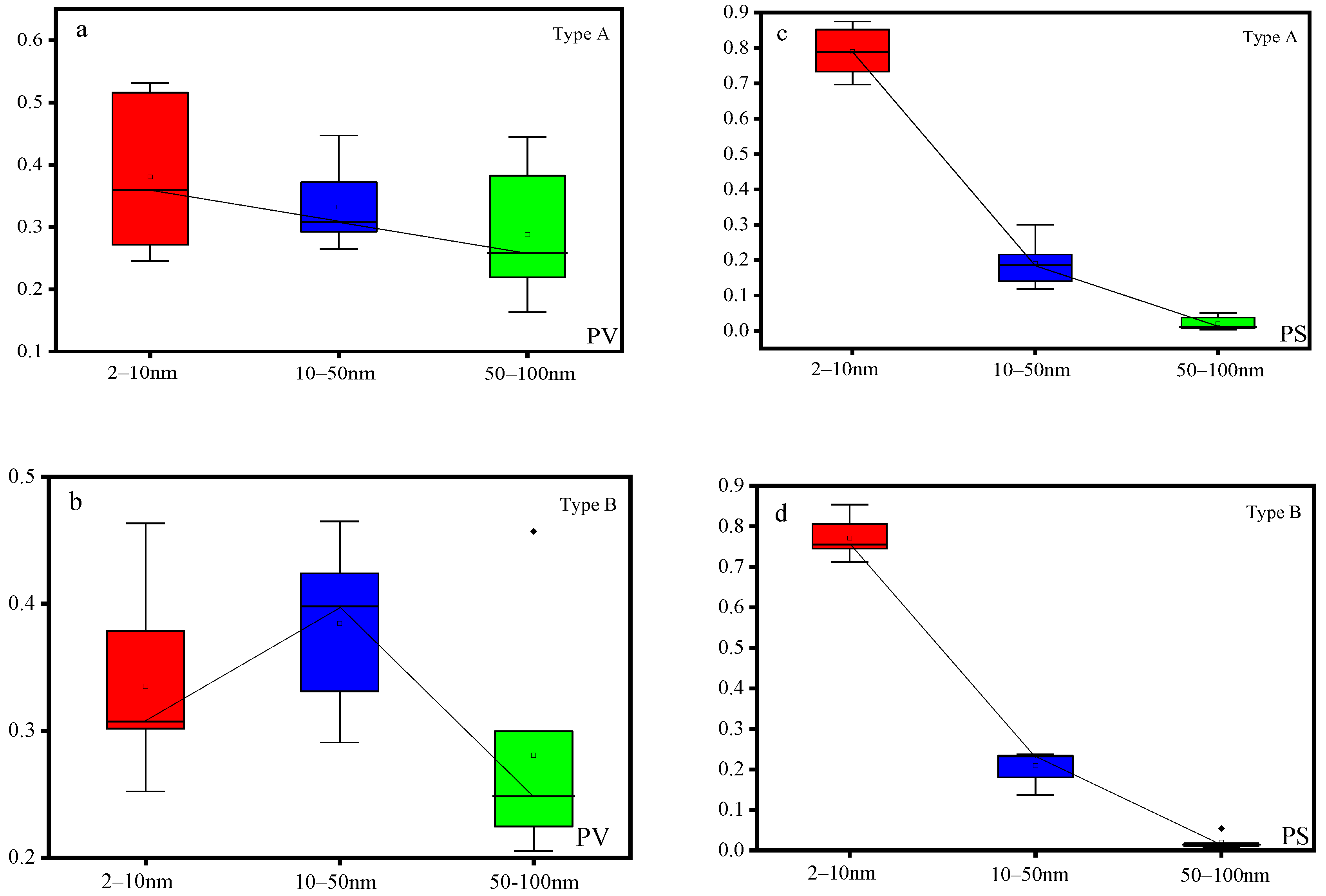
The mesopore distribution characteristics of different sample types are compared in Figure 9. The results indicate a consistent mesopore distribution pattern in all types: Within the 2–100 nm pore size range, the pore volume gradually decreases as the pore diameter increases. Smaller pores exhibit more complex structures, resulting in a larger specific surface area for the same pore volume. Accordingly, the specific surface area associated with the pores decreases as the pore size increases, which demonstrates that mesopores in the 2–10 nm range are the key factor affecting the pore structure.
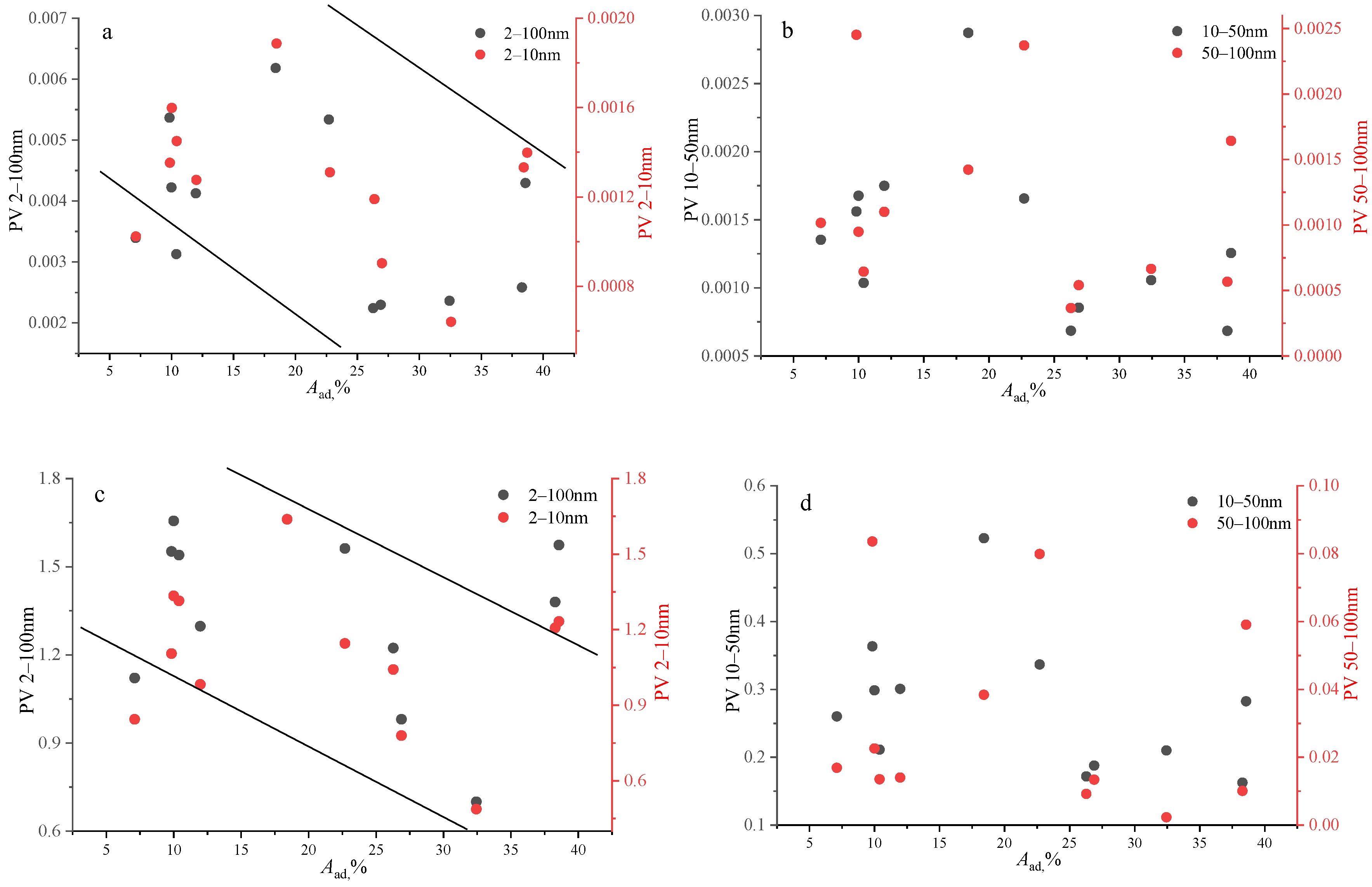
The development characteristics of 2–100 nm pores under the influence of ash content are compared in Figure 10. The results show a negative correlation between mesopore volume and ash content, indicating that ash occupies pores across multiple scales, which consequently result in a marked reduction in pore volume. It is noteworthy that the relationship between ash content and pore volume within the 10–100 nm range becomes more complex with increasing ash content, which can be attributed to the fact that kaolinite is primarily derived from the ash in this sample. Qualitative XRD analysis indicates the presence of quartz in the sample. Given the brittle nature of quartz, it is plausible that quartz promotes the development of micro-fractures to some extent, which may contribute to the increased pore volume in the 10–100 nm range and further complicate the correlation between ash content and pore volume. However, quantitative mineralogical data are needed to confirm this interpretation. Furthermore, a comparison of the relationship between ash content and the specific surface area of pores in the 2–100 nm range (Figure 10c,d) reveals a marked consistency in the influence of ash on both specific surface area and pore volume, which again demonstrates a strong correlation between pore volume and specific surface area within the 2–100 nm range to a significant extent.
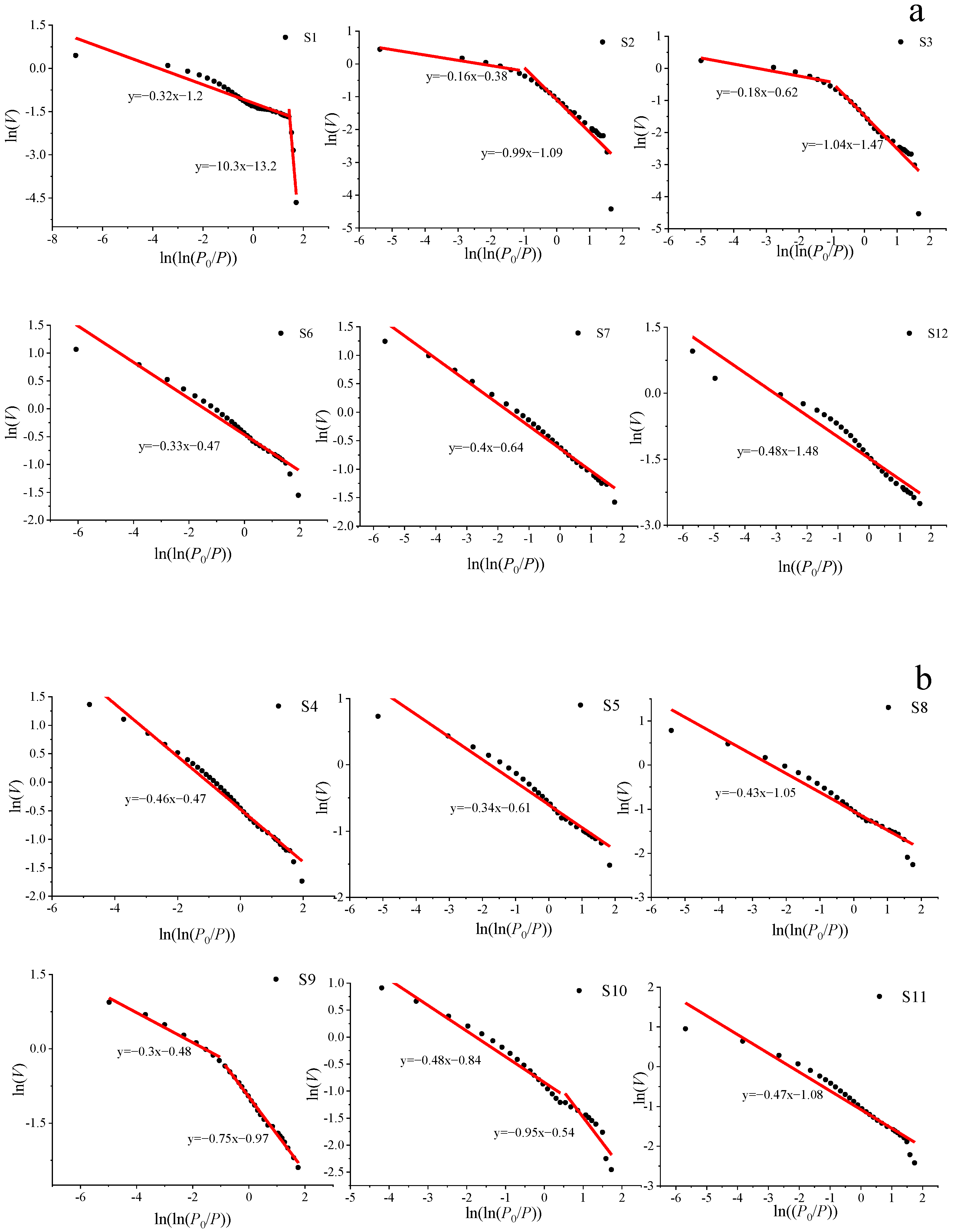
The fractal characteristics of pores within the 2–100 nm range were analyzed using low-temperature nitrogen adsorption data. The fractal dimension (D) for this pore size range was calculated by applying the Frenkel–Halsey–Hill (FHH) model to the adsorption data (Figure 11). The calculated D values for all samples range from 2.52 to 2.84. According to the definition of fractal geometry, a system is considered fractal when D lies between 2 and 3. Therefore, the pores in the 2–100 nm range for the samples from this study area exhibit distinct fractal characteristics.
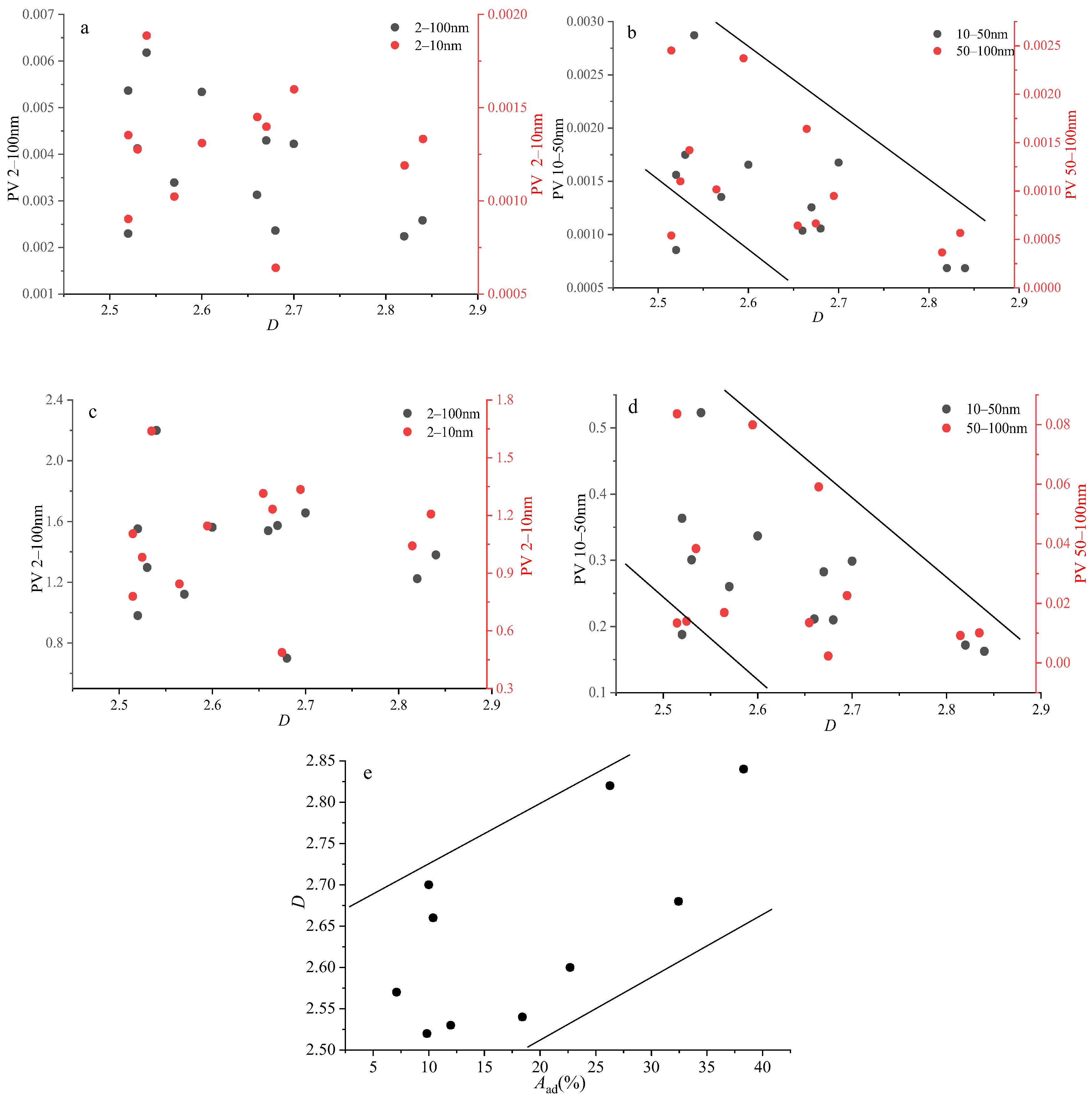
The relationships among pore volume, specific surface area, and fractal dimension (D) in the 2–100 nm range were analyzed. As shown in Figure 12, D exhibits a negative correlation with the total pore volume and total specific surface area, indicating that this fractal parameter effectively characterizes the pore structure. Furthermore, a comparison of Figure 12b,d reveals that D decreases linearly with increasing pore volume and specific surface area in the 10–100 nm pore size range. In summary, D can be used to characterize the heterogeneity of pore volume within the 10–100 nm range.
The relationship between ash content and D was further analyzed. It is suggested that pore heterogeneity, in addition to pore structure parameters, is influenced by ash content. A positive correlation is observed between ash content and D, which helps elucidate how ash content affects the pore structure.
Our fractal dimension values are comparable to those reported by Xiao et al. for medium- to high-rank coals, further confirming that ash content is a key factor controlling pore heterogeneity. Notably, our analysis extends these findings by demonstrating that this control is most significant within the 2–10 nm mesopore range, a scale-specific effect not explicitly identified in previous studies.

4. Conclusions

This study systematically investigated the constraining effect of ash content on the development and heterogeneity of nanopores in Seam 8 of the Benxi Formation in the Nalinhe Block, utilizing multi-scale pore structure characterization and quantitative fractal analysis. The primary findings are summarized as follows:
1. Deep coal reservoirs are characterized by micropores (<2 nm) and mesopores (2–100 nm) serving as the main storage and seepage spaces, with the 2–10 nm range acting as the core development interval for mesopores, and the reservoir exhibits significant vertical heterogeneity. Ash content is the key factor controlling the spatial variation in the pore structure; it significantly inhibits the development of micro-mesopores by physically occupying and filling organic pores.
2. The influence of ash content exhibits specific sensitivity within critical pore size intervals. For micropores, pore volume within the 0.3–0.6 nm range shows the strongest negative correlation with ash content, which leads to a direct loss of specific surface area and methane adsorption sites. For mesopores, the structural mainstay of the 2–10 nm interval is highly sensitive to ash content, fundamentally dictating the storage and seepage capacity of the mesopore system.
3. The fractal dimensions for both micropores and mesopores exhibit a strong negative correlation with their respective total pore volumes but a significant positive correlation with ash content. This confirms that increased ash content not only reduces the total pore quantity but also structurally intensifies the complexity and heterogeneity of the pore space distribution.

Author Contributions

Conceptualization, C.P.; methodology, Z.W. and T.Y.; software, Z.Q., Q.L. (Qianyu Li) and J.D.; validation, Q.L. (Qianyu Li), J.L., Q.L. (Qinglin Li) and Z.W.; formal analysis, Z.W.; investigation, Z.Q.; resources, Z.Q., Q.L. (Qinglin Li) and J.D.; data curation, J.L., Q.L. (Qinglin Li) and J.D.; writing—original draft, Q.L. (Qianyu Li), J.L., Z.W. and T.Y.; supervision, T.Y.; project administration, J.L. and T.Y. All authors have read and agreed to the published version of the manuscript.

Funding

This study was funded by the National Natural Science Foundation of China (No. 42202205).

Data Availability Statement

The original contributions presented in this study are included in the article. Further inquiries can be directed to the corresponding author.

Conflicts of Interest

Author Chuan Peng, Zhenzhen Qi, Jianwei Li, Zaoping Wu and Juan Du are employed by the company Huabei Geosteering & Logging Company of Sinopec Matrix Corporation, Sinopec Key Laboratory of Well Logging and Sinopec Key Laboratory of Measurement and Control While Drilling. The remaining authors declare that the research was conducted in the absence of any commercial or financial relationships that could be construed as a potential conflict of interest.

References

  1. Cai, Y.; Liu, D.; Pan, Z.; Yao, Y.; Li, J.; Qiu, Y. Pore structure and its impact on CH4 adsorption capacity and flow capability in bituminous and subbituminous coals from Northeast China. Fuel 2021, 283, 118892. [Google Scholar]
  2. Ouyang, Z.; Wang, H.; Sun, B.; Liu, Y.; Fu, X.; Dou, W.; Du, L.; Zhang, B.; Luo, B.; Yang, M.; et al. Quantitative Prediction of Deep Coalbed Methane Content in Daning-Jixian Block, Ordos Basin, China. Processes 2023, 11, 3093. [Google Scholar] [CrossRef]
  3. Li, S.; Tao, C.; Li, Y.; Li, C.; Miao, H.; Chen, J.; Wang, L.; Qiu, J. Integrated pore structure analysis and multifractal reservoir classification in deep coal seams. Energy Fuels 2026, 40, 3036–3051. [Google Scholar] [CrossRef]
  4. Li, Y.; Zhang, C.; Tang, D.; Gan, Q.; Niu, X.; Wang, K.; Shen, R. Coal pore size distributions controlled by the coalification process: An experimental study of coals from the Junggar, Ordos and Qinshui basins in China. Fuel 2018, 219, 103–115. [Google Scholar] [CrossRef]
  5. Nie, B.; Liu, X.; Yang, L.; Meng, J.; Li, X. Pore structure characterization of different rank coals using gas adsorption and scanning electron microscopy. Fuel 2015, 158, 908–917. [Google Scholar] [CrossRef]
  6. Fang, X.; Qiu, F.; Shu, L.; Huo, Z.; Li, Z.; Cai, Y. Reservoir Properties and Gas Potential of the Carboniferous Deep Coal Seam in the Yulin Area of Ordos Basin, North China. Energies 2025, 18, 3987. [Google Scholar] [CrossRef]
  7. Li, H.Q.; Chen, S.D.; Tang, D.Z. Coal pore size distribution and adsorption capacity controlled by the coalification in China. Int. J. Hydrog. Energy 2024, 88, 594–603. [Google Scholar] [CrossRef]
  8. Zhou, L.H.; Li, Y.; Ding, R.; Xiong, X.Y.; Hou, W.; Li, Y.Z.; Ma, H.; Fu, H.J.; Du, Y.; Zhang, W.Q.; et al. Differential accumulation characteristics and production of coalbed methane/coal-rock gas: A case study of the No. 8 coal seam of the Carboniferous Benxi Formation in the Daji block, Ordos Basin, NW China. Pet. Explor. Dev. 2025, 52, 872–882. [Google Scholar] [CrossRef]
  9. Zhang, Y.X.; Wu, C.J.; Li, Y.; Li, J.B.; Feng, C.J.; Li, B.; Wen, Z.G.; Liu, X.N. Coal-forming sedimentary model and its control on vertical reservoir heterogeneity of the upper carboniferous Benxi formation in Ordos basin, China. Sci. Rep. 2025, 15, 28676. [Google Scholar] [CrossRef]
  10. Li, Q.X.; Xu, J.; Peng, S.J.; Yan, F.Z.; Zhang, C.L.; Han, E.D. Different adsorbed gas effects on the reservoir parameters and production in coalbed methane extraction by multibranch horizontal wells. Energy Sci. Eng. 2020, 8, 1370–1385. [Google Scholar] [CrossRef]
  11. Xu, C.; Wang, W.J.; Wang, K.; Guo, L.; Yang, T.; Nie, Z.S.; Shi, Y.B. Non-homogeneous characterisation of nanopore structures in low-, medium- and high-rank coals based on gas adsorption and multifractal theory. Fuel 2025, 401, 135947. [Google Scholar] [CrossRef]
  12. Li, Z.W.; Chen, S.D.; Tang, D.Z.; Hou, K. Occurrence, Origin, and Infill Modification Effects of Minerals in Deep Coals in the Ordos Basin, China. Energy Fuels 2024, 38, 22885–22903. [Google Scholar] [CrossRef]
  13. Xiao, C.Y.; Han, D.L.; Zhang, J.J.; Chen, S.Z.; Qin, Z.Y.; Vandeginste, V. Effect of Coal Rank and Coal Facies on Nanopore-Fracture Structure Heterogeneity in Middle-Rank Coal Reservoirs. Acs Omega 2024, 9, 33279–33292. [Google Scholar] [CrossRef]
  14. Zhang, Z.; Wei, Z.Y.; Yin, T.T.; Song, J.; Zhang, P.F.; Agarwal, V. Micro-Pore Structure and Fractal Heterogeneity of Deep Coal Seam. Processes 2026, 14, 729. [Google Scholar] [CrossRef]
  15. Wang, L.; Li, Z.W.; Li, J.; Chen, Y.C.; Zhang, K.Z.; Han, X.W.; Xu, G.W. Changes in mineral fraction and pore morphology of coal with acidification treatment: Contribution of clay minerals to methane adsorption. Environ. Sci. Pollut. Res. 2023, 30, 114886–114900. [Google Scholar] [CrossRef]
  16. Ren, P.; Chen, L.; Luo, W.; Zhen, W.; Hu, X.; Yi, C.; Wang, X.J.; Pu, Z.C. Pore structure and heterogeneity characteristics of deep coal reservoirs constrained by coal macrolithotypes. Nat. Gas Geosci. 2025, 36, 1706–1717. (In Chinese) [Google Scholar]
  17. Chen, J.; Hu, W.; Li, Y.; Liu, X.; Ma, L.; Li, P. Influence of Pore Structure on Methane Adsorption in Deep Coal Reservoirs of the Linxing-Shenfu Block, Eastern Margin of the Ordos Basin. Rock Miner. Anal. 2026, 45, 116–130. (In Chinese) [Google Scholar] [CrossRef]
  18. Wei, H.; Lin, J.; Wang, X.; Qiang, X.; Wan, Y.; Li, T.; Guo, Y.; Lv, M.; Du, J. Analysis of Geological Characteristics and Main Controlling Factors of Gas-bearing Capacity in the Deep No. 8 Coal Seam, Southeastern Margin of the Ordos Basin. Geoscience 2025, 39, 1316–1331. (In Chinese) [Google Scholar] [CrossRef]
  19. Zhang, K.; Meng, Z.; Jin, Y.; Wang, B. Fractal characteristics of pore structures on different coal structures and its research significance. Coal Sci. Technol. 2023, 51, 198–206. (In Chinese) [Google Scholar]
  20. Yao, P.; Zhang, J.; Lv, D.; Vandeginste, V.; Chang, X.; Zhang, X.; Wang, D.; Han, S.; Liu, Y. Effect of water occurrence in coal reservoirs on the production capacity of coalbed methane by using NMR simulation technology and production capacity simulation. Geoenergy Sci. Eng. 2024, 243, 213353. [Google Scholar] [CrossRef]
  21. Chang, X.C.; Ming, D.Q.; Zhang, J.J.; Vandeginste, V.; Wang, H.; Yin, T.T.; Liu, Y.; Lang, H.L. Adsorption Energy Variation and Prediction of Different Coal Facies in Deep Coal Reservoirs and Spatial Distribution Using Logging Curves. Nat. Resour. Res. 2025, 34, 3127–3153. [Google Scholar] [CrossRef]
  22. GB/T 6948-2008; Method of determining microscopically the reflectance of vitrinite in coal. China Standards Press: Beijing, China, 2009.
  23. GB/T 8899-1998; Method of determining maceral group composition and mineral of coal. China Standards Press: Beijing, China, 1998.
  24. GB/T 212-2008; Proximate analysis of coal. China Standards Press: Beijing, China, 2008.
  25. Huang, D.; Xu, H.; Hu, J.; Dong, Y.; Jiao, P.; Chen, S.; Zhou, G.; Wu, X.; Wu, H. Pore development patterns and gas control effects of No.8 deep coal seam of Ordos Basin. Coal Sci. Technol. 2025, 53, 115–123. [Google Scholar] [CrossRef]
  26. Zhang, Q.; Tang, S.; Zhang, S.; Xi, Z.; Xin, D.; Jia, T.; Yang, X.; Zhang, K.; Li, J.; Wang, Z. Methane Adsorption Capacity of Deep Buried Coal Seam Based on Full-Scale Pore Structure. Nat. Resour. Res. 2025, 34, 1481–1505. [Google Scholar] [CrossRef]
  27. Miao, H.Y.; Veerle, V.; Zhang, J.J.; Chen, S.B.; Chang, X.C.; Du, Y.; Wang, Y.; Wei, C.T.; Luo, J.H.; Quan, F.K.; et al. Control mechanism of pressure drop rate on coalbed methane productivity by using production data and physical simulation technology. Fuel 2025, 406, 137060. [Google Scholar] [CrossRef]
  28. Jiang, W.; Zhou, Y.; Wu, C.; Du, M. Fractal characteristics and theirs influence on methane adsorption in high-rank coals with NMR. Front. Earth Sci. 2023, 10, 1047557. [Google Scholar] [CrossRef]
Figure 2. Comparison of maceral composition and proximate analysis of samples. (a) Comparison of vitrinite and inertinite content between Type A and Type B samples. (b) Comparison of ash content and fixed carbon between Type A and Type B samples.
Processes 14 01357 g002
Figure 3. CO2 adsorption curves and pore size distribution of coal samples with different ash content (a) CO2 adsorption isotherms of Type A samples. (b) Pore size distribution of Type A samples based on DFT model. (c) CO2 adsorption isotherms of Type B samples. (d) Pore size distribution of Type B samples based on DFT model.
Processes 14 01357 g003
Figure 4. Differences in micropore volume among different sample types (a) Micropore volume distribution in the 0.3–0.6 nm range for Type A samples. (b) Micropore volume distribution in the 0.6–0.8 nm range for Type A samples. (c) Micropore volume distribution in the 0.3–0.6 nm range for Type B samples. (d) Micropore volume distribution in the 0.6–0.8 nm range for Type B samples.
Processes 14 01357 g004
Figure 5. Correlation analysis between pore structure parameters and Aad%. (a) Relationship between Aad% and micropore volume in the 0.3–0.6 nm range. (b) Relationship between Aad% and micropore volume in the 0.6–0.8 nm range. (c) Relationship between Aad% and micropore volume in the 0.8–1.5 nm range. (d) Relationship between Aad% and total micropore volume.
Processes 14 01357 g005
Figure 6. Sample CO2 single-fractal presentation (a) Fractal fitting curves for Type A samples. (b) Fractal fitting curves for Type A samples.
Processes 14 01357 g006aProcesses 14 01357 g006b
Figure 7. Relationships among fractal dimensions, Aad%, and pore structure parameters in micropores (a) Relationship between micropore volume and fractal dimension. (b) Relationship between specific surface area and fractal dimension. (c) Relationship between Aad% and fractal dimension. (d) Relationship between Aad% and micropore volume in the 0.3–0.6 nm range. (e) Relationship between Aad% and specific surface area.
Processes 14 01357 g007aProcesses 14 01357 g007b
Figure 8. Nitrogen adsorption–desorption isotherms and pore size distribution curves for various types of samples. (a) N2 adsorption–desorption isotherms of Type A samples. (b) Pore size distribution of Type A samples based on BJH model. (c) N2 adsorption–desorption isotherms of Type B samples. (d) Pore size distribution of Type B samples based on BJH model.
Processes 14 01357 g008
Figure 9. Multi-scale mesopore distribution characteristics of different sample types. (a) Cumulative pore volume distribution in the 2–100 nm range for Type A samples. (b) Incremental pore volume distribution in the 2–100 nm range for Type A samples. (c) Cumulative pore volume distribution in the 2–100 nm range for Type B samples. (d) Incremental pore volume distribution in the 2–100 nm range for Type B samples.
Processes 14 01357 g009
Figure 10. Content correlation analysis between pore structure parameters and ash content. (a) Relationship between Aad% and mesopore volume in the 2–10 nm range. (b) Relationship between Aad% and mesopore volume in the 10–100 nm range. (c) Relationship between Aad% and specific surface area in the 2–10 nm range. (d) Relationship between Aad% and specific surface area in the 10–100 nm range.
Processes 14 01357 g010
Figure 11. Fractal characteristics of typical coal samples. (a) FHH fractal fitting curves for Type A samples in the 2–100 nm range. (b) FHH fractal fitting curves for Type B samples in the 2–100 nm range.
Processes 14 01357 g011
Figure 12. Relationships among fractal dimensions, Aad%, and pore structure parameters in mesopores. (a) Relationship between mesopore volume and fractal dimension. (b) Relationship between specific surface area and fractal dimension. (c) Relationship between Aad% and fractal dimension (D). (d) Relationship between Aad% and mesopore volume in the 2–10 nm range. (e) Relationship between Aad% and specific surface area in the 2–10 nm range.
Processes 14 01357 g012
Table 1. Basic information of all the samples.
Ro,maxMaceralMineral ContentProximate Analysis
VitriniteExiniteInertiniteMad, %Aad, %Vad, %FCad, %
Type A1.9461031.6712.330.6432.4411.7655.16
1.8837.3312.6744.335.670.6838.299.1751.86
1.8434.3324.6733.664.670.6926.2810.2562.78
1.9761.62828.40.3538.5721.5939.49
1.48841.212.22.60.4922.713.6763.14
1.91541.218.8260.4626.8910.7761.88
Type B1.6770.82.422.64.21.7318.4111.5268.34
1.9985.22012.80.8810.398.2180.52
2.2878.53020.650.820.417.119.6782.81
2.0585.4808.585.940.5109.7779.73
2.1666.67032.061.270.579.849.4480.15
2.1769.94024.545.520.4811.978.9578.6
Disclaimer/Publisher’s Note: The statements, opinions and data contained in all publications are solely those of the individual author(s) and contributor(s) and not of MDPI and/or the editor(s). MDPI and/or the editor(s) disclaim responsibility for any injury to people or property resulting from any ideas, methods, instructions or products referred to in the content.