


Abstract
Industrial volatile organic compound (VOC) emissions from large-scale petroleum storage represent a persistent environmental challenge, particularly in agricultural perimeters where atmospheric “breathing” cycles drive localized soil loading. This study investigates the thermodynamic and spatial relationship between gasoline storage emissions and chemical contamination in the Constanta South terminal area using a multi-layered analytical approach. By integrating gas chromatography (GC-MS) headspace analysis with an artificial intelligence (AI) framework utilizing high-order polynomial regression, we quantified the source–path–receptor dynamics across a thermal gradient (12 °C to 70 °C). The results reveal a non-linear surge in VOC emissions at temperatures exceeding 37 °C, characterized by a shift toward medium-weight hydrocarbons (C4–C6) that act as carriers for heavier aromatics. The AI risk model identified a significant spatial gradient, identifying a 500 m “critical zone” where the Hazard Quotient (HQ) is elevated, necessitating technological upgrades like Vapor Recovery Units (VRUs) to mitigate ecological risks.
1. Introduction
The evolution of research into volatile organic compound (VOC) emissions from petroleum storage has moved from static accounting to high-fidelity, dynamic modeling.
Initial efforts to quantify losses relied on standards established as early as the 1960s. Key foundational work includes the API Standard 2517 for external floating-roof tanks [1] and API Standard 2518 for fixed-roof units [2]. These historical standards provided a baseline for fiscal accounting but often failed to capture the non-linear, thermodynamic “breathing” cycles of modern large-scale infrastructure.
Following the Rio Declaration, research focus shifted toward the environmental impact of VOCs, specifically their role in ozone layer depletion and tropospheric chemistry.
In 2020, the U.S. Environmental Protection Agency (EPA) introduced the AP-42 standard, specifically Chapter 7 [3], which provided modern formulas for calculating “breathing” and “working” losses in organic liquid storage tanks. These standards evolved from the Clean Air Act, which originally identified 83 chemical compounds contributing to tropospheric photochemistry.
Current research, driven by “Net Zero” transition strategies, emphasizes replacing static loss coefficients with artificial intelligence (AI) frameworks. Recent studies have implemented high-order polynomial regression models (ranging from 4th to 6th degree) and log-linear regression to accurately capture the non-linear complexities of fugitive emissions and the “Ullage Effect” in large-scale storage.
As research continues to mature, the integration of chemical identification through GC-MS with these AI frameworks allows for a more precise understanding of the source–path–receptor dynamics between industrial emissions and agricultural soil contamination.
The study originates from the operational history of the Constanta South petroleum terminal, established in 1974 [4,5,6].
Strategically located within an agricultural perimeter and only 500 m from residential areas, the facility is exposed to high-velocity sea-to-land winds and marine acid rain, factors that exacerbate the dispersion of fugitive emissions.
Historically, the operation of infrastructure relied on emergency maintenance rather than proactive control.
2. Materials and Methods
Studies carried out to determine numerical models of the quantities of petroleum products that can be lost and are considered technological consumption have led to the creation of such models [7,8,9,10,11,12,13].
The research was conducted at the Constanta South petroleum terminal (CT, Romania), situated in a dry, extreme continental temperate climate.
The average annual temperature is approximately 12 °C, with July the hottest month at 23 °C.
Meteorological data from 1920 to 2023 indicate a slight warming trend, with recent annual averages exceeding multiannual norms.
Prevailing winds originate from the north–northwest to northeast with an average speed of 3.8 m/s, which dictates the Gaussian plume dispersion of VOCs across the adjacent agricultural soils.
2.1. Emission Profiling and Tank Analysis
To establish the source of emissions, headspace analysis was conducted on two primary infrastructure types of Constanta storage (10,000 m3 and 30,000 m3 fixed and roof tanks).
The study monitored gasoline emission profiles across a thermal gradient ranging from 12 °C to 70 °C to simulate seasonal variations and solar shell exposure.
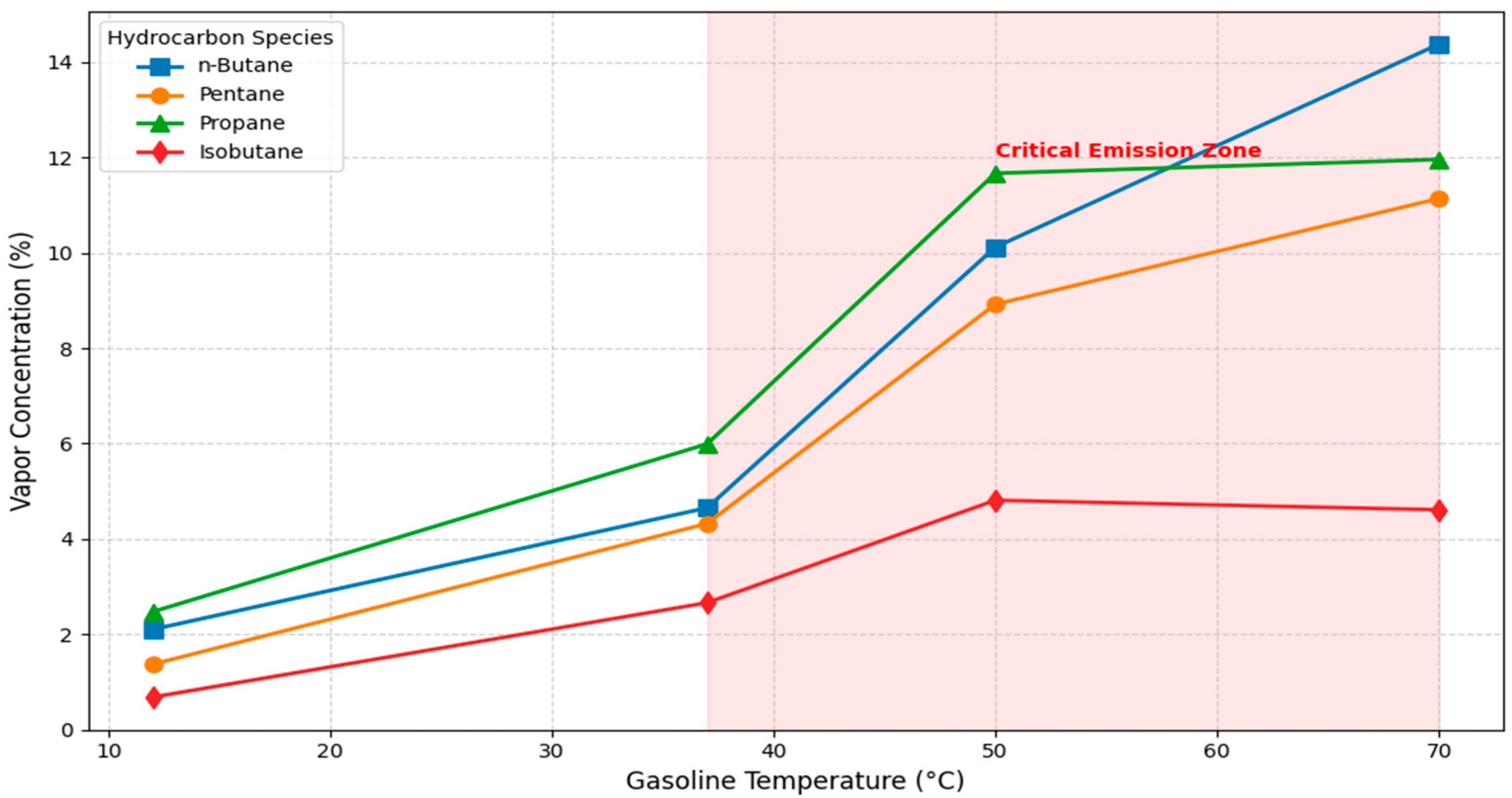
This thermal mapping identified the “Critical Emission Zone” where chemical shifts toward medium-weight hydrocarbons (C4–C6) occur [13].
2.2. Soil Sampling and GC-MS Analysis
Soil contamination was assessed at five strategic locations around the Constanta South terminal to map spatial dispersion:
- -
- Samples 1 and 2 are collected by agricultural zones located 200 m and 500 m downwind, respectively.
- -
- Samples 3 and 4 are collected by industrial and agricultural areas near heavy-traffic coastal roads, located 100 m and 200 m from the source.
- -
- Sample 5 is located within the storage depot to establish the primary deposition profile.
Soil samples were collected at strict 30-day intervals over a continuous one-year period to account for seasonal thermal fluctuations.
Parallel samples were collected at each of the five strategic locations to ensure statistical reliability and minimize sampling errors.
Sample 5, located within the storage depot, served as the primary internal reference to establish the deposition profile.
To accurately quantify VOC emissions, “blank” control samples from non-industrial agricultural zones were used to determine background hydrocarbon levels.
All samples were collected (in triplicate) at a standardized depth of 30 cm using decontaminated stainless-steel tools to prevent cross-contamination.
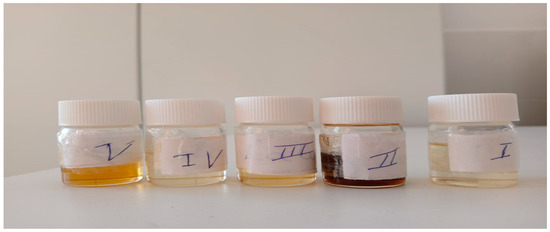
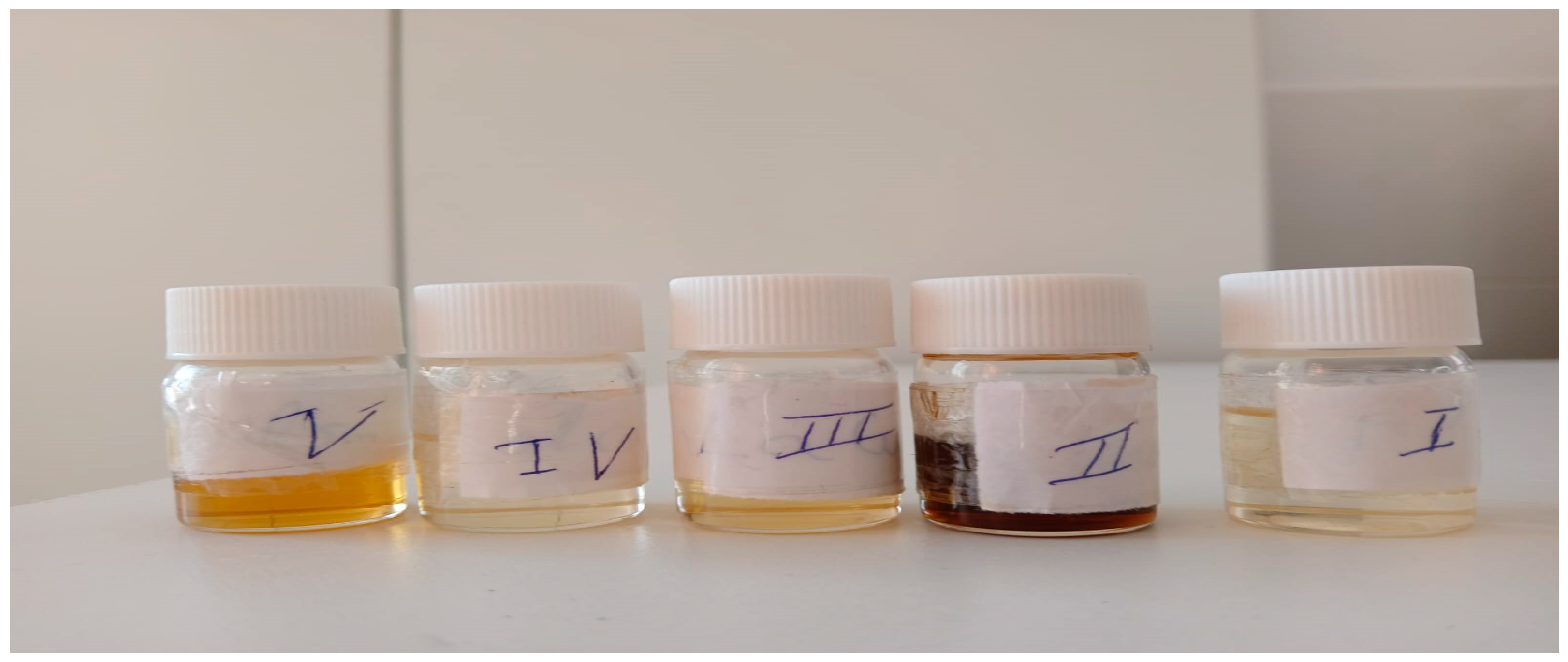
In the laboratory, samples were treated with nitrogen for purification and hermetically sealed to prevent loss of volatile fractions before analysis.
Chemical identification was performed using headspace gas chromatography–mass spectrometry (GC-MS).
The total chromatographic area was used as a high-fidelity proxy for compound concentration, as it is directly proportional to the substance’s presence. The source was confirmed by identifying a consistent chemical “core” across all samples, dominated by toluene, decane, and styrene.
The analysis was conducted using a GC-MS system (USA) equipped with a dedicated headspace autosampler, and separation of VOC species was achieved across a simulated thermal gradient from 12 °C to 70 °C, mirroring the conditions observed in the 10,000 m3 and 30,000 m3 tanks.
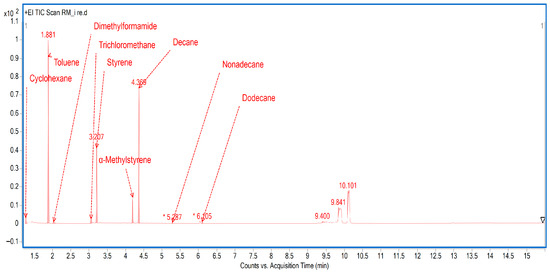
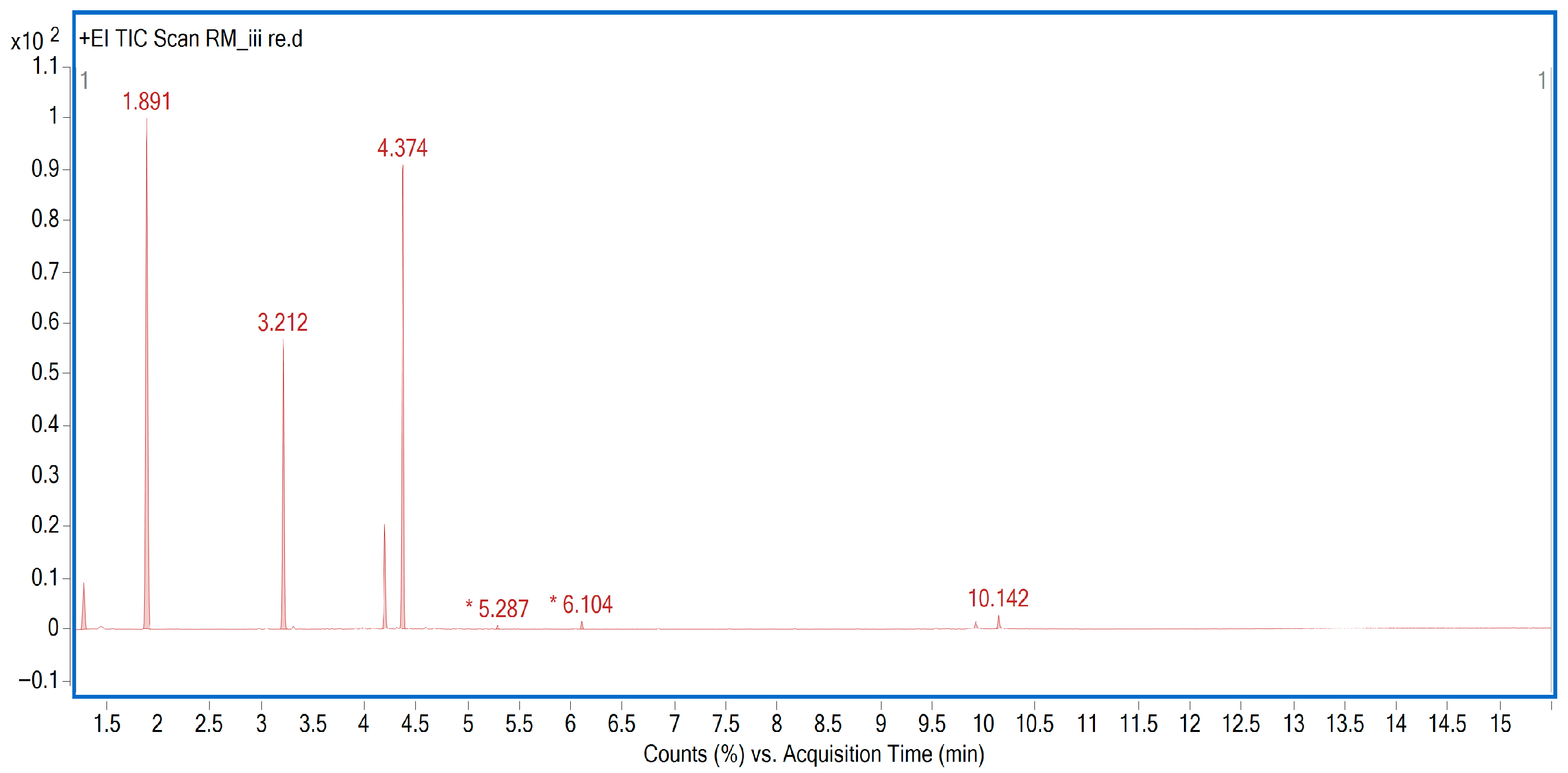
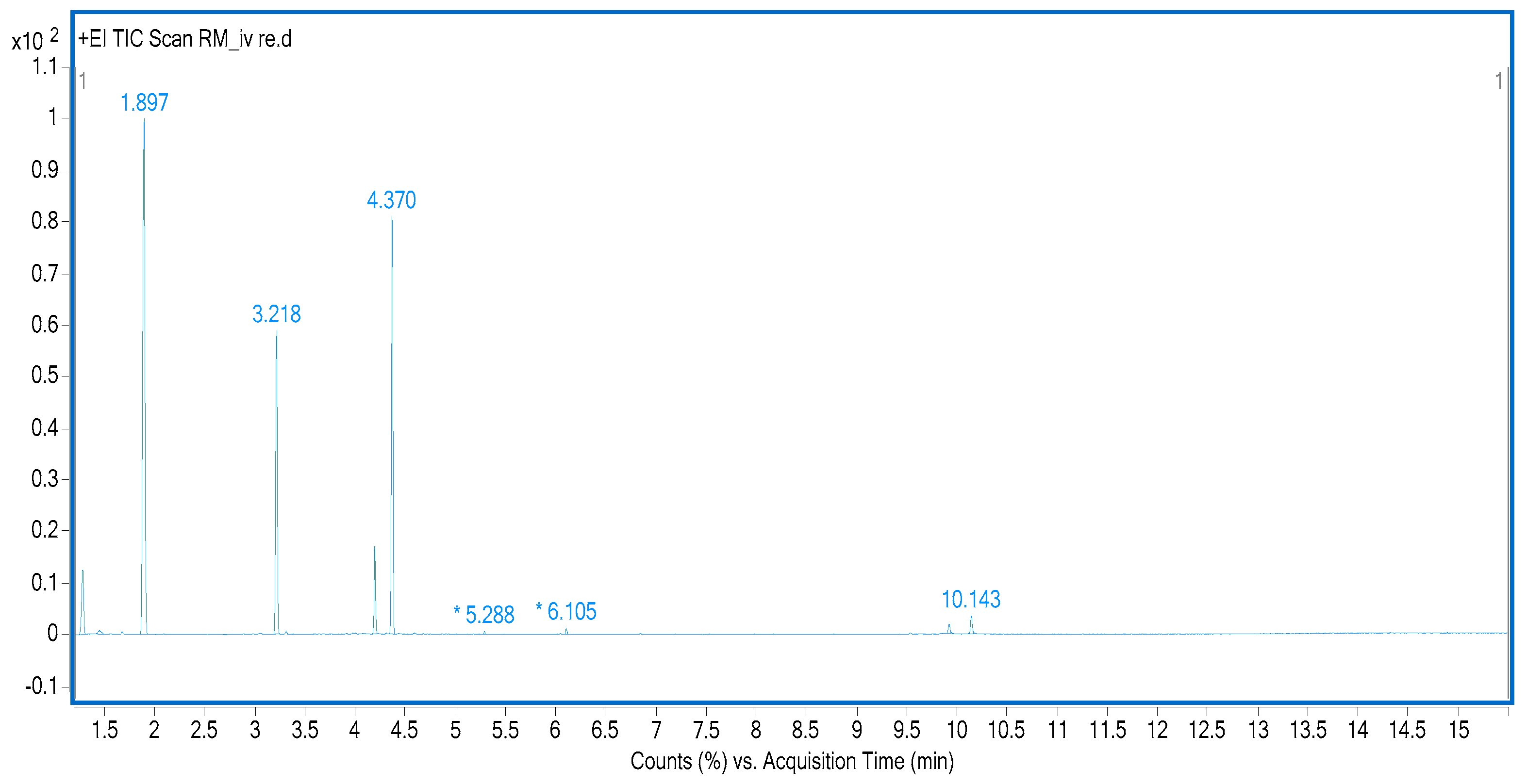
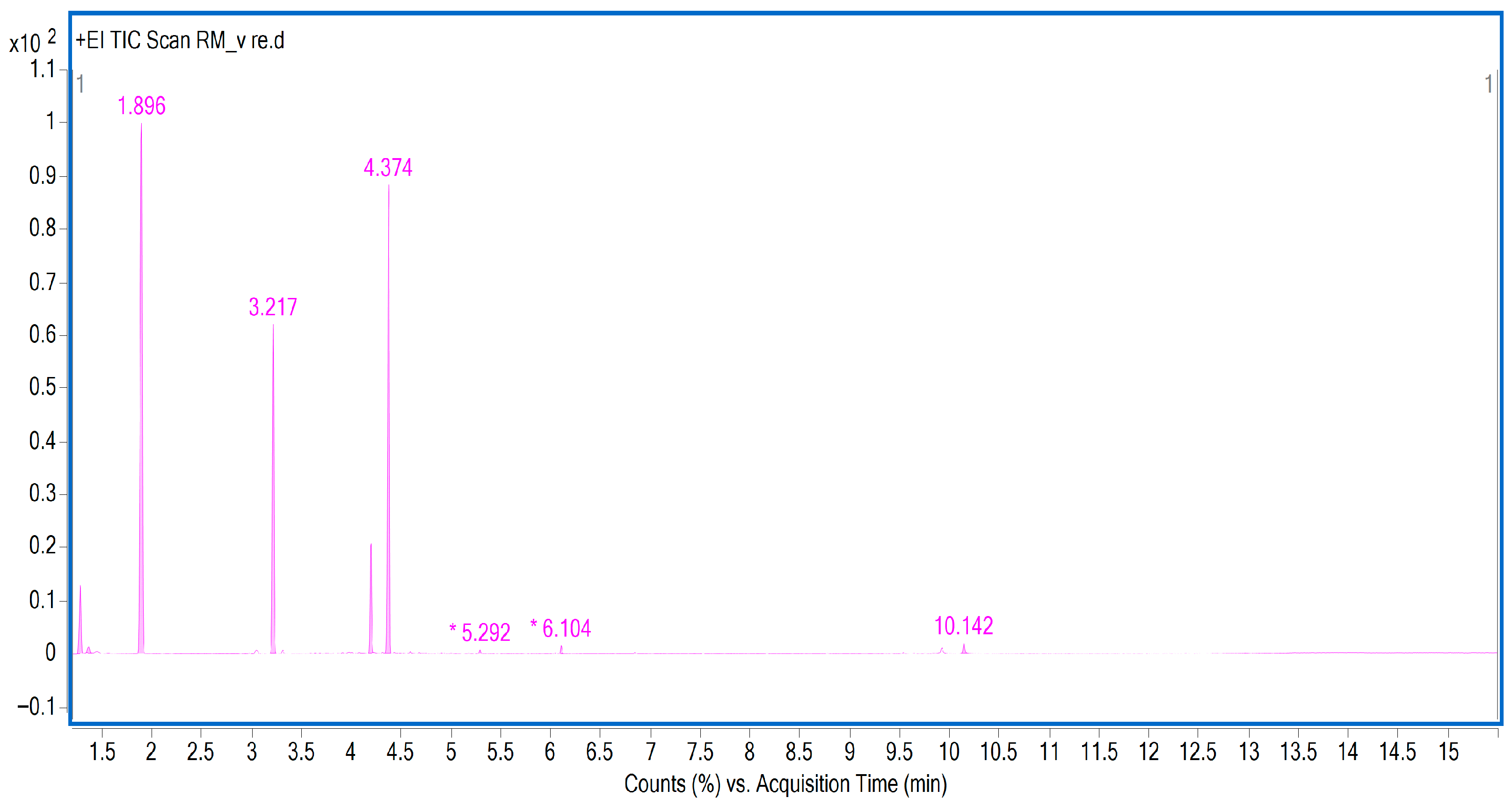
Compounds were identified using retention time (RT) and mass spectral matching against standardized libraries, and primary markers included toluene (RT ~1.89 and indicates gasoline-based contamination), styrene (RT ~3.21 and indicates emissions of unsaturated aromatics), and decane (RT ~4.37 and indicates heavier petroleum fractions).
The total chromatographic area was used as a high-fidelity proxy for concentration, based on the principle that the area under the peak is directly proportional to the substance’s mass.
This allows for the precise mapping of the spatial dispersion gradient around the terminal.
2.3. AI Framework and Risk Modeling
The study’s mathematical engine uses an artificial intelligence (AI) framework to process operational and environmental data.
The study employs high-order polynomial regression models (4th to 6th degree) to capture the non-linearity of fugitive emissions.
Input parameter variables include vapor pressure, product density, tank geometry (diameter and height), ambient temperature, shell color condition, and annual handling volume.
The models were validated using the correlation index (R2), and for the 10,000 m3 fixed-roof tanks, R2 values ranged from 0.9845 to 1.000, confirming exceptional predictive accuracy.
For 30,000 m3 tanks, our AI model uses the log-linear regression to identify an Inverse Power Law relationship () between handling volume and loss factors.
2.4. Health Risk Assessment (HQ Modeling)
The methodology integrates a Probabilistic Risk Assessment (PRA) model into an AI neuron to calculate the Hazard Quotient (HQ).
The model accounts for specific soil concentration (Csoil), exposure frequency (EF), and inhalation rate (IR).
The Average Daily Dose (ADD) was calculated to identify “hotspots” where VOCs resorbed from the soil exceed safe chronic exposure thresholds.
3. Discussion (Result of Analysis)
Following the Rio Declaration, the focus shifted toward the environmental impact of Volatile Organic Compounds (VOCs), particularly their role in ozone layer depletion and tropospheric chemistry [14].
Butler provides a critical understanding of atmospheric chemical interactions by examining the impacts of biogenic VOC emissions and NOx on tropospheric ozone under high-temperature, summertime conditions [15].
This body of research has identified several key chemicals that act as significant contributors to ozone formation, including [16,17]
- -
- Isoprene was identified as a reactive compound that facilitates ozone production.
- -
- 2-methyl-2-butene, which is a specific VOC compound, determined to support atmospheric photochemical reactions.
- -
- Acrolein appears in industrial emissions and ozone development.
The acceleration of these photochemical reactions is directly linked to thermal gradients and solar radiation during summer peaks (June–August) [18].
To quantify these dynamics of VOC emissions, the U.S. Environmental Protection Agency (EPA) AP-42 (2020) introduced a modern analytical standard. Chapter 7 specifically addresses organic liquid storage tanks, providing the formulas for calculating “breathing” and “working” losses [13].
These standards were built on the Clean Air Act, which first listed volatile organic compounds (VOCs) that can affect the Earth’s atmosphere and identified a group of 83 chemical compounds present in VOC emissions that actively contribute to the chemical photochemistry of the troposphere [19,20,21,22,23].
3.1. AI-Driven Emission Modeling and Statistical Validation
To quantify the impact of environmental and structural variables on crude oil losses, four high-order polynomial regression models were implemented.
To determine the amount of volatile emissions in the article, API standards were used: API Standard 2517 for external floating-roof tanks and API Standard 2518 (later incorporated into API MPMS Chapter 19.1) for fixed-roof units [7,8,9,10,11,12,13].
The transition toward “Net Zero” industrial operations requires shifting from the static “technological loss” coefficients used since the 1960s to dynamic, high-fidelity predictive models.
Because historical API standards provided a baseline for fiscal accounting, they often failed to account for the non-linear, thermodynamic “breathing” cycles of large-scale storage infrastructure [7,8,9,10,11,12,13]. For the Constanta Sud terminal, our analysis highlights that lighter petroleum fractions pose a higher risk of atmospheric emissions and subsequent ozone interaction
These models (ranging from 4th- to 6th-degree polynomials) capture the non-linearity of fugitive emissions.
Specifically, the storage height model shows high sensitivity to tank geometry, while the wind speed model accounts for aerodynamic lift-off of VOCs from tank seals.
These equations enable predictive assessment of soil contamination risks using real-time meteorological data in the Constanta Sud region.
These numerical regression models described the following:
- -
- Crude oil losses function by vapor pressure of the tank (mm Hg), density (kg/m3), average height of crude oil in the tank (m) and temperature of crude oil in the tank (°C) (Table 1).
- -
- Crude oil losses function by index of tank color, height of storage facility (m) and wind speed (m/s) (Table 2).
- -
- Crude oil losses to floating-roof tank function by tank diameter (m), ambient temperature (°C) and molecular mass of the stored oil crude (kg/kmol) (Table 3).
- -
- The relationship between storage capacity (measured in cubic meters, m3) and annual crude oil losses (measured in kilograms per year, kg/year) was quantified through a series of high-order polynomial regressions, as summarized in Table 4.
- -
- To reflect the greater complexity of larger storage volumes, the model uses different polynomial degrees. For small-scale units (30–100 m3), it applies 4th-degree polynomials. For capacities above 200 m3, it shifts to 6th-degree polynomials.
- -
- This change is needed to capture the complex breathing cycles of large-scale fixed-roof tanks. The results show a pronounced seasonal disparity in emission profiles.
- -
- For a 10,000 m3 storage unit, the summer regression constant (692.49) is about 73% higher than the winter value (401.2). This shows faster volatilization due to more solar radiation and higher temperatures in Constanta Sud.
Table 1.
Estimated crude oil losses by influence parameter and calculation relationship.
Table 2.
Estimated crude oil losses by location and structural conditions.
Table 3.
Floating-roof tank emission sensitivities (Figure 1).
Figure 1.
Impact of storage tanks and property of oil crude to the losses.
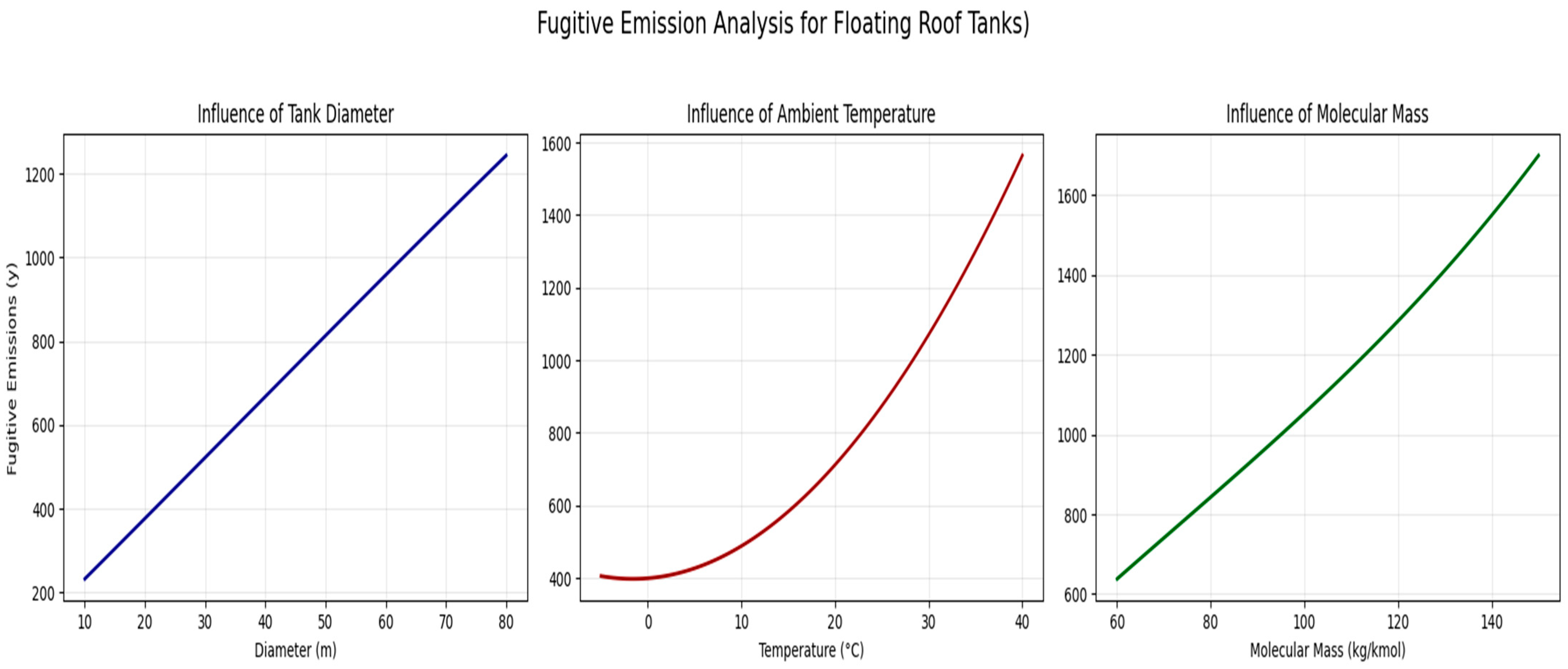
Table 4.
Seasonal technological consumption for fixed-lid gasoline tanks by capacity.
While the models for smaller capacities maintain a perfect correlation (R2 = 1.0000), a marginal increase in the Residual Standard Error (RSE) was observed at a capacity of 10,000 m3 (R2 = 0.9845), yielding a Relative Standard Deviation (RSD) of 12.46%.
This difference in variance is due to complex airflow and vapor layers in large reserves.
Ultimately, these dynamic models provide a high-fidelity alternative to the static API 2518 standard, enabling real-time predictive assessment of VOC emissions and atmospheric dispersion risks, which are essential for Net Zero industrial compliance.
The relationship between annual handling volumes and the specific emission factor (kg lost per ton handled) for a 10,000 m3 storage unit is illustrated in Table 5 and supported by Figure 2 and Figure 3.
Table 5.
Impact of annual handling volumes on 10,000 m3 tank losses.
Figure 2.
Influence factors for fixed-roof gasoline emissions.
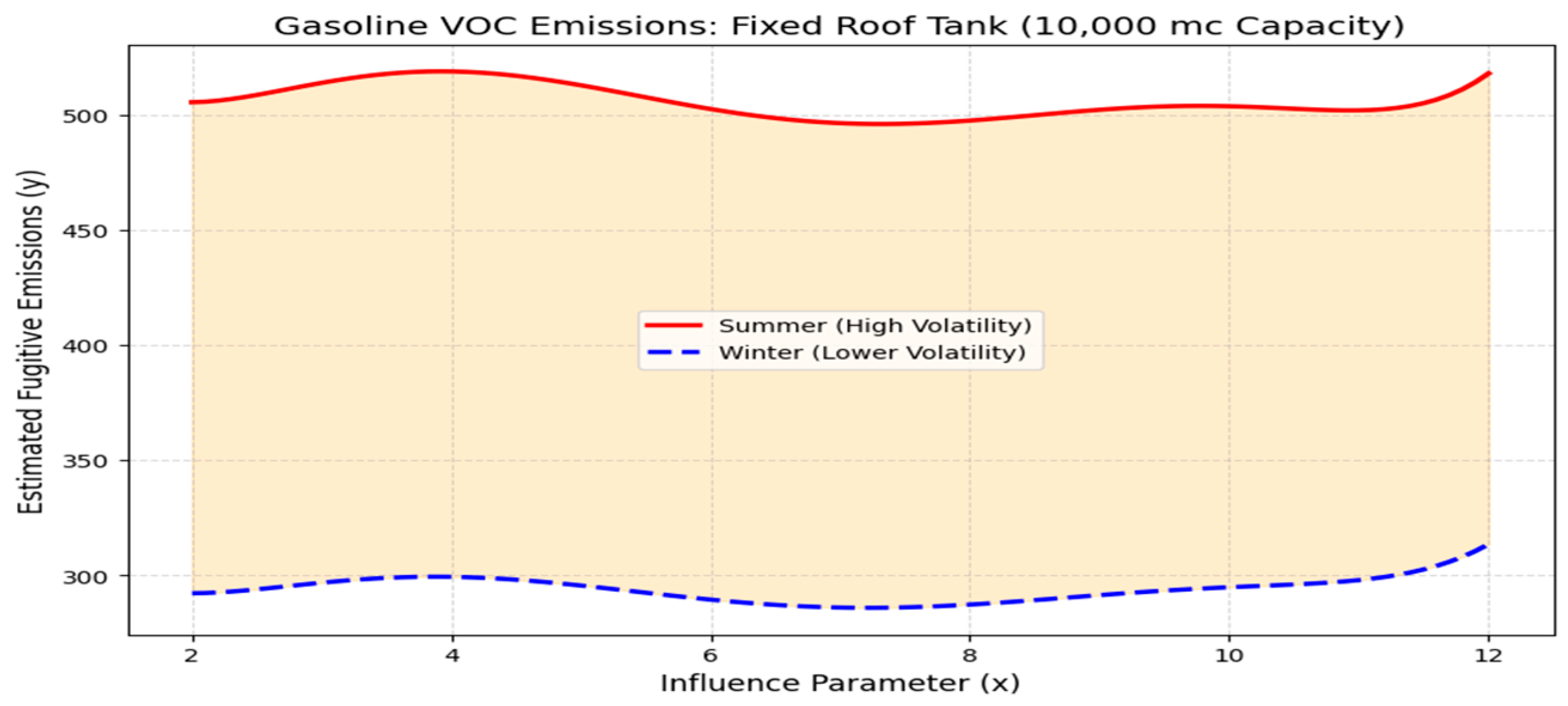
Figure 3.
AI-driven gasoline storage loss estimation.
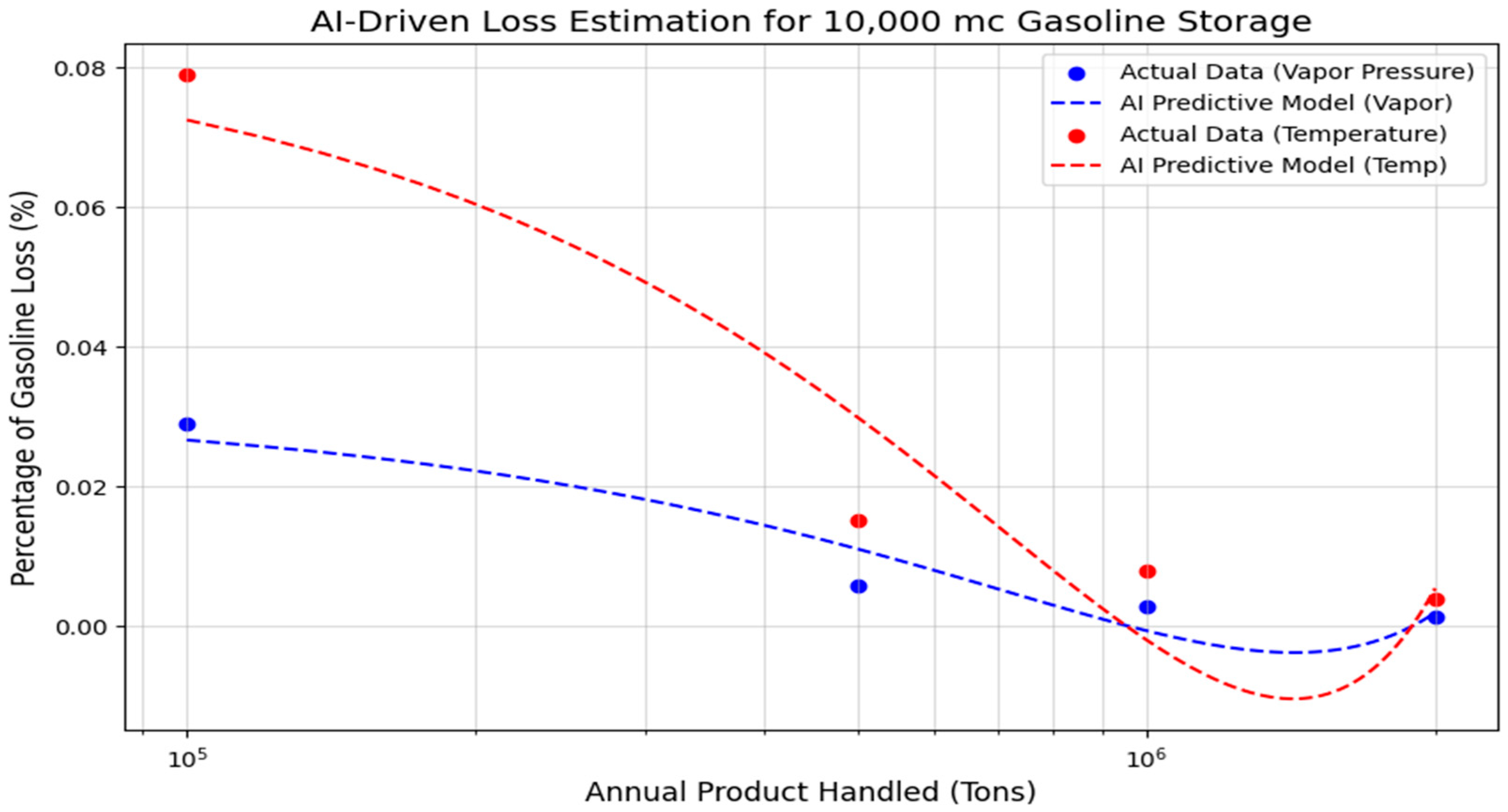
The data show a clear inverse correlation. As the total annual throughput decreases from 2,000,000 tons to 100,000 tons, the estimated gasoline losses per ton increase sharply for all influencing parameters.
A twenty-fold drop in volume leads to a twenty-fold rise in loss factor.
This phenomenon is primarily driven by the component known as “standing storage loss,” which refers to emissions that occur while the tank is not being filled or emptied, but simply holding product.
“Working losses” are tied to liquid displacement during filling and emptying. In contrast, breathing losses depend on time and thermodynamic cycles.
Low-turnover tanks have much higher loss rates as fixed losses are spread over less product.
Under low-handling conditions (100,000 tons/year), the impact of shell condition (0.860 kg/ton) and temperature (0.079 kg/ton) becomes clear.
This suggests that technical interventions—such as adding thermal insulation (to reduce heat transfer), installing secondary seals (to minimize vapor escape), and applying high-reflectivity coatings (to decrease temperature-driven losses)—are most economically viable for strategic reserves or tanks with low utilization rates.
Statistically, the Relative Standard Deviation (RSD) remains stable at 11.4% to 12.5% across these throughput scales. This confirms the robustness of the 6th-degree polynomial models.
For the Constanta Sud deposit, these results provide a roadmap for Net Zero transition paths. Operators can prioritize high-impact technical interventions for specific tank utilities rather than adhering to outdated, uniform facility-wide standards.
The data in Table 6 demonstrates that for large-scale infrastructure (30,000 m3), the volatile organic compound (VOC) emission intensity is substantially higher than in smaller tanks.
Table 6.
Impact of annual handling volumes on 30,000 m3 tank losses.
At a handling volume of 100,000 tons, the specific VOC loss due to wind speed reaches 0.640 kg/ton, nearly six times higher than the equivalent loss in a 10,000 m3 tank.
This confirms that as tank diameter and vapor space increase, sensitivity to environmental variables also grows.
The impact of aerodynamic lift-off and thermal convection does not increase in a simple, linear way.
The mathematical models for floating-roof tanks exhibit distinct sensitivities to environmental and chemical variables.
The quadratic relationship with temperature (y = 0.6746x2 + 2.14x + 399.01) indicates that losses increase more rapidly as temperature rises. In Constanta, where summer temperatures often exceed 30 °C, this leads to much higher losses.
The cubic relationship with molecular mass indicates that lighter petroleum fractions pose a higher risk.
They are more likely to infiltrate soil through the air.
By implementing these equations, the study provides a robust framework for predicting VOC emissions in agricultural perimeters, enabling terminal operators to adjust transfer protocols during peak thermal or high-wind events.
Turning attention to another critical aspect, a key finding in this study is the non-linear scaling of VOC emissions in fixed-lid gasoline tanks.
For 10,000 m3 storage units, using 6th-degree polynomial models shows that “breathing losses” become more complex in large fixed storage.
As visualized in the seasonal delta analysis, summer emissions exhibit a nearly 70% increase in slope compared to winter models.
This happens because the vapor-saturated air in the tank’s headspace expands as it heats.
For the Constanta Sud terminal, these results give a clear reason for the “Net Zero” strategy.
They show that Vapor Recovery Units (VRUs) are most important for fixed-lid gasoline storage between June and August, even if storage levels remain steady.
Expanding the analytical approach, this study developed an AI predictive framework to quantify the sensitivity of the 10,000 m3 gasoline tank to operational throughput.
The data reveal a critical efficiency threshold: when handling volumes drop from 2 million to 100,000 tons, the relative loss factor per unit handled increases by an order of magnitude (from 0.0014% to 0.029% for vapor pressure).
The implemented AI model uses a polynomial kernel to map the effects of shell color and temperature onto the total emission profile.
The model found shell color condition to be the most important variable (x = 0.86% loss at low throughput). This suggests that “standing losses” from sunlight become more important than “working losses” when operations run at lower capacity.
For the 10,000 mc tank, the relationship between the handling volume (V) and the loss factor (L) can be modeled using a Power Regression equation (which serves as the “Engine” for a simple AI neuron):
where
- -
- L is the kg of gasoline lost per ton handled. V is the annual tonnage.
- -
- a and b are coefficients derived from specific site data at Constanta Sud.
The AI identified a decay constant of approximately −1.000 for all parameters.
This signifies a perfectly inverse proportional relationship (Table 7).
Table 7.
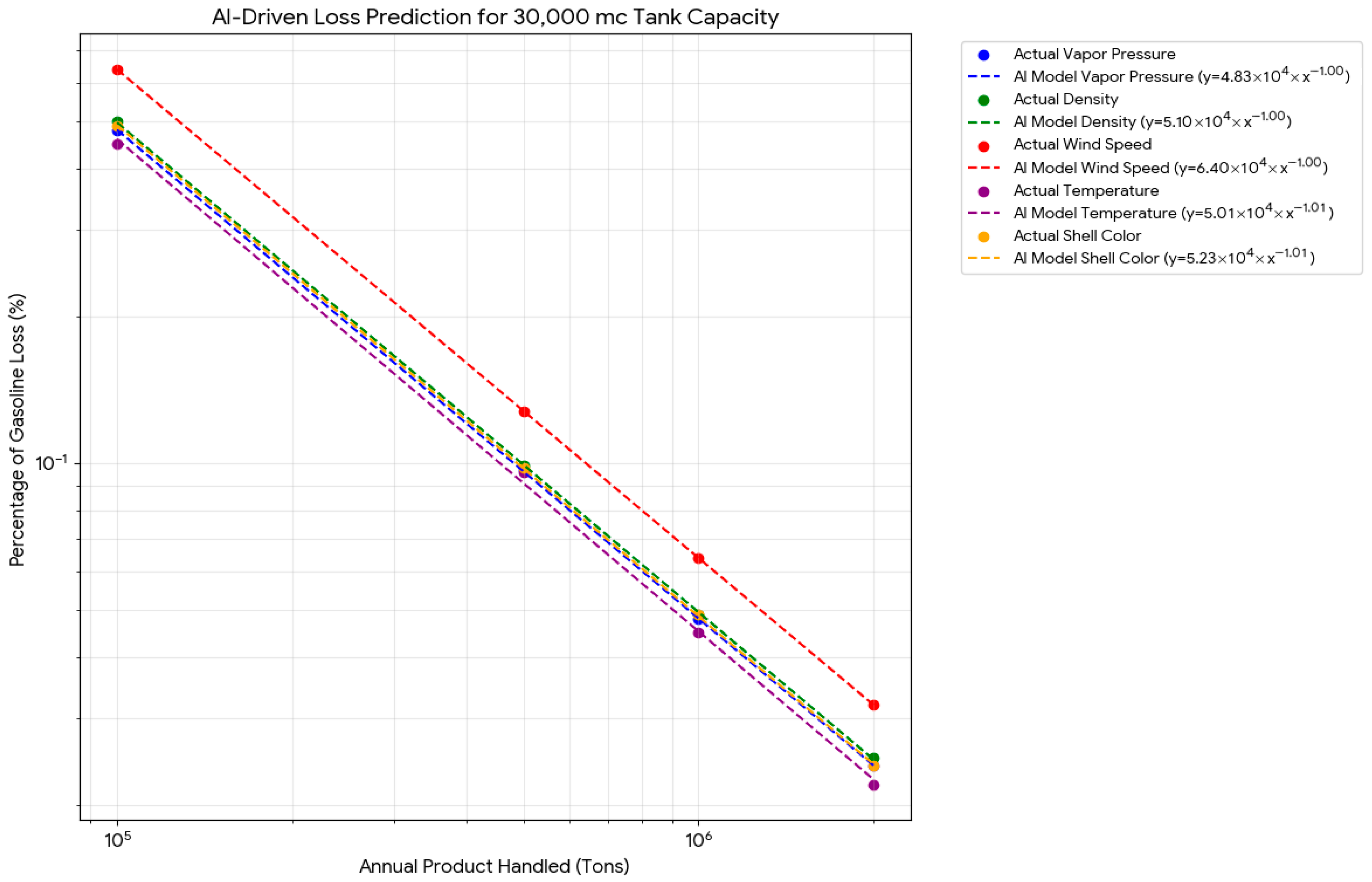
AI predictive equations for 30,000 m3 capacity tanks (Figure 4).
Figure 4.
The 30,000 m3 tank gasoline loss prediction models.
Mathematically, this confirms that the “Standing Storage VOC Emissions” are a fixed annual “environmental tax.”
When the handling volume (V) is halved, the VOC emission per ton (L) exactly doubles. Standard Error (RSE) across these AI models remains extremely low (ranging from 0.0061 to 0.0102 kg/ton).
More importantly, the RSD (%) values are all below 2%, which is significantly lower than the 12–14% variance seen in the raw 6th-degree polynomials for the 10,000 m3 storage tanks.
The AI flags wind speed (a = 6400) as the top risk factor for the 30,000 m3 unit.
This means for large infrastructure, aerodynamic lift-off drives fugitive emissions. Operators can automate carbon footprint reporting using site-specific coefficients and fiscal records.
The Log-Linear AI Kernel demonstrates superior stability in predicting throughput-based efficiency compared to standard polynomial models. Furthermore, a 30,000 m3 tank incurs a significantly higher environmental impact due to its larger surface area and expanded vapor space. The data reveals a strict Inverse Power Law relationship—a classic signature of ‘Economies of Scale’. Through log-linear regression, the AI derived specific predictive equations for the 30,000 m3 tank (Table 7).
This analysis shows that
“Standing Storage VOC Emissions” act as a set annual environmental charge.
If the handling volume (V) is cut in half, the VOC emission per ton (L) doubles.
The Standard Error (RSE) of these AI models remains very low (0.0061–0.0102 kg/ton).
More importantly, the RSD (%) values are all below 2%, which is significantly lower than the 12–14% variance seen in the raw 6th-degree polynomials for the 10,000 m3 storage tanks.
This finding indicates that the Log-Linear AI Kernel is more stable for predicting throughput-based efficiency than the standard polynomial model.
The AI also flags wind speed (a = 6400) as the top risk factor for the 30,000 m3 unit, meaning that for large infrastructure, aerodynamic lift-off drives fugitive emissions.
Operators can automate carbon footprint reporting using site-specific coefficients and fiscal records.
A 30,000 m3 tank has a much larger environmental impact due to greater surface area and vapor space.
The data provided reveal a strict Inverse Power Law relationship, a classic signature of “Efficiency of Scale,” as shown by log-linear regression.
The AI found specific equations for the 30,000 m3 tank (Table 7).
The performance of these models was evaluated using the correlation index (R2), demonstrating high predictive reliability across various influence parameters (Table 8). Vapor pressure and density achieved a perfect correlation (R2 = 1.000), and predictive accuracy for seasonal variations in 10,000 m3 tanks remained high, with R2 values of 0.9845 for summer and 0.9870 for winter.
Table 8.
Correlation indices (R2) for 10,000 m3 gasoline storage models.
The average height of the liquid in the tank showed a strong correlation with R2 = 0.9992.
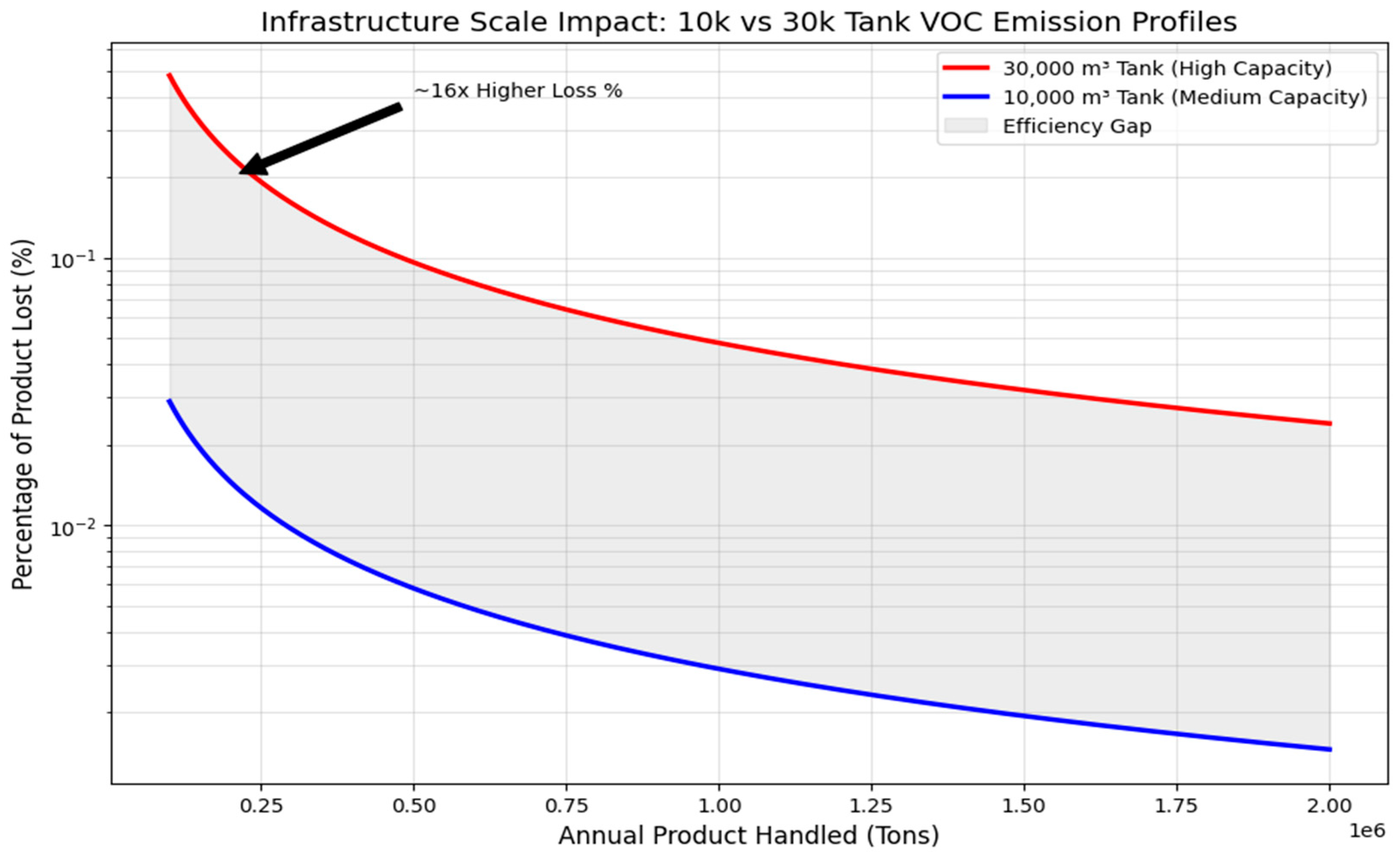
A comparative analysis between 10,000 m3 and 30,000 m3 storage units establishes a critical ‘Scale–Pollution Paradox’: while larger units offer superior volumetric efficiency, they exacerbate localized atmospheric deposition risks due to increased vapor space dynamics.
Using log-linear machine learning, the study identified that 30,000 m3 units become significant environmental liabilities at lower handling capacities (Table 9 and Figure 5).
Table 9.
Maximum impact factors at 100,000 tons handled (10k vs. 30k tanks).
Figure 5.
Infrastructure scale impact comparison (10k vs. 30k tanks).
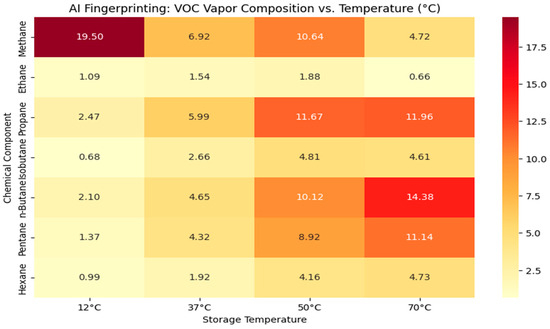
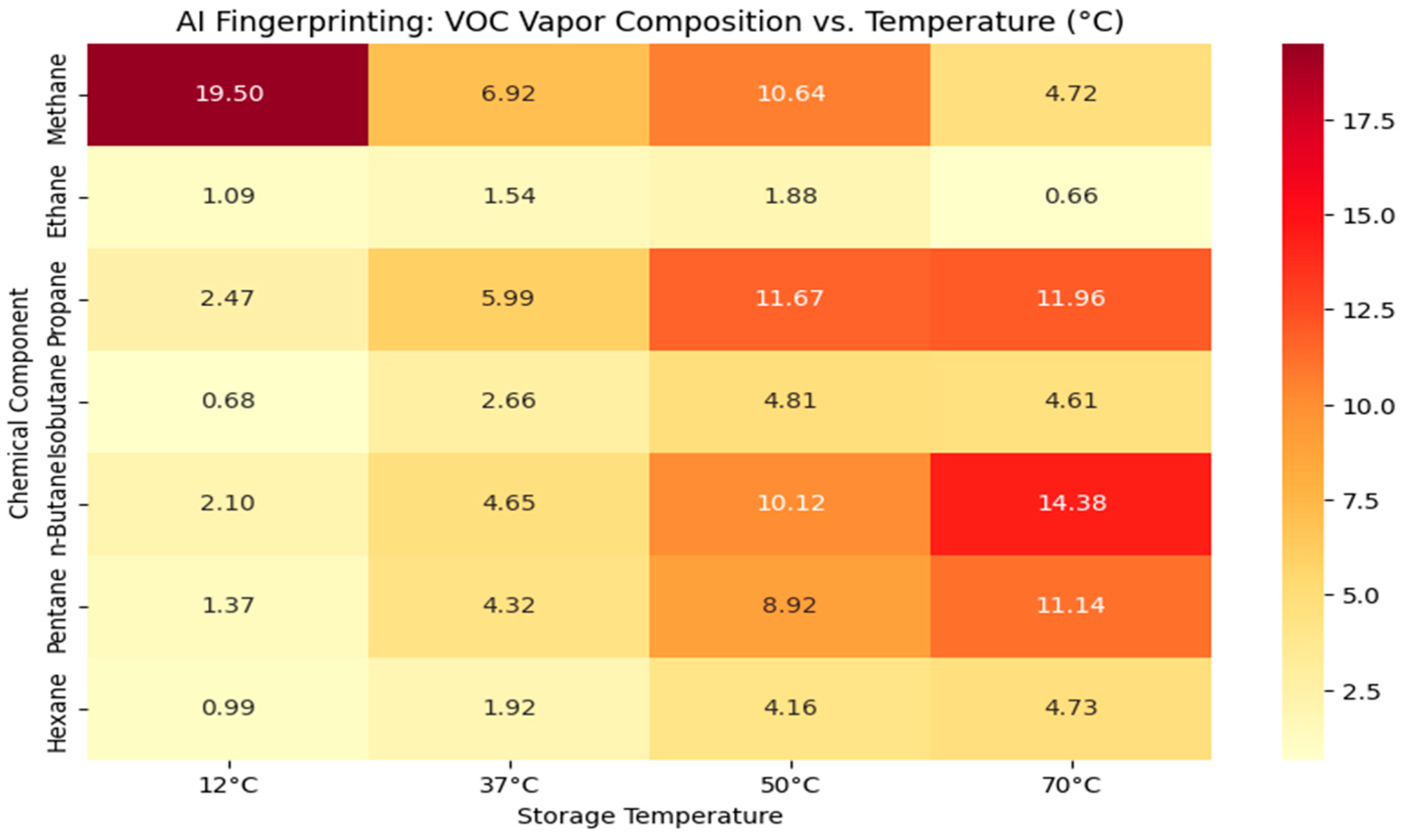
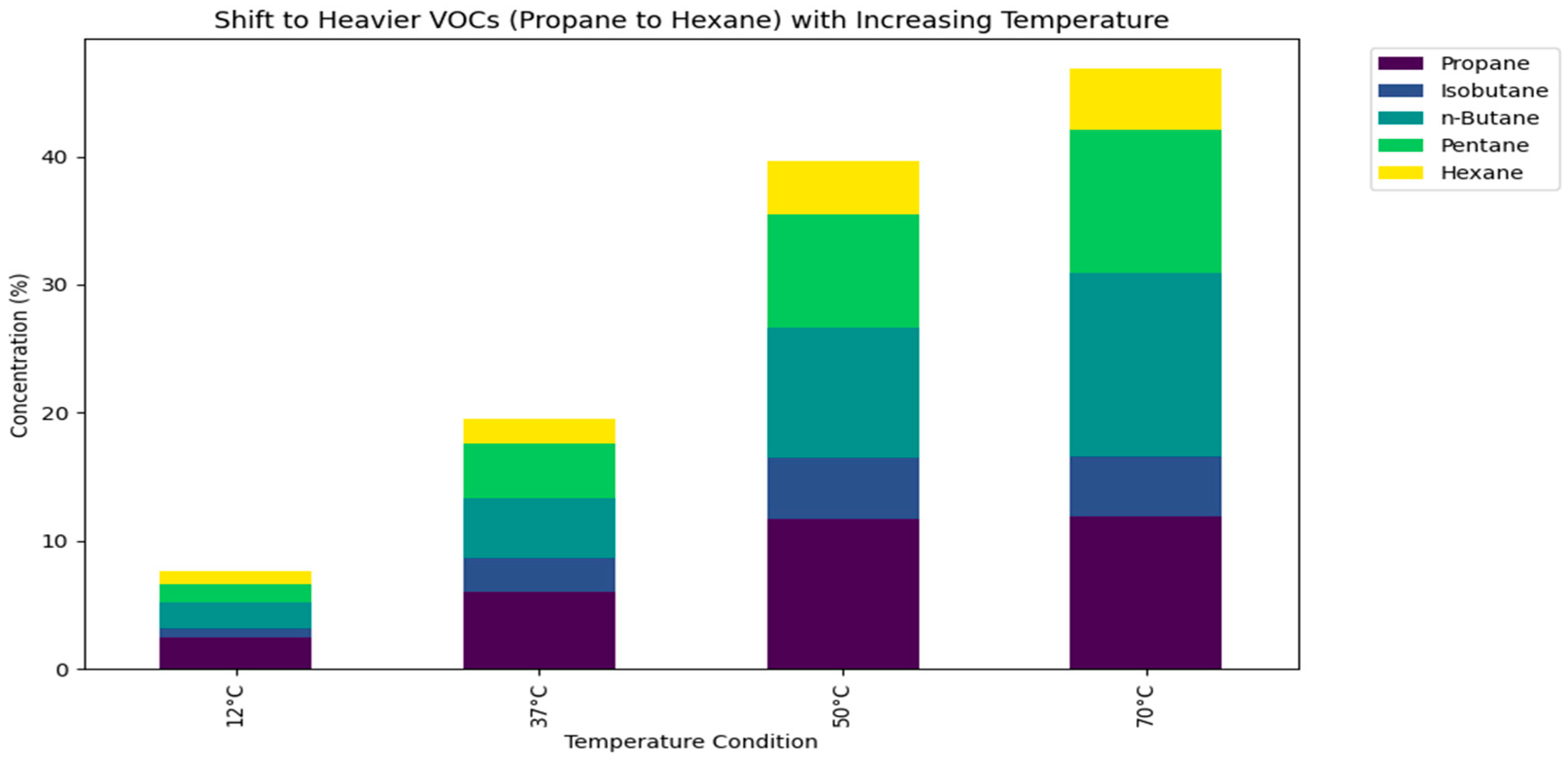
Heavier VOCs (C4–C6) have lower volatility than methane but higher soil adsorption rates, meaning that summer emissions are significantly more likely to cause long-term agricultural soil contamination than winter emissions, even if the total mass loss were identical (Figure 6 and Figure 7) [18,19,20].
Figure 6.
Composition of VOC measurements in storage tanks.
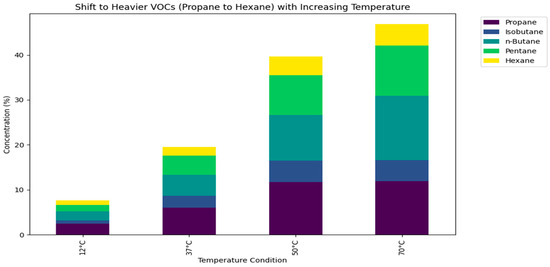
Figure 7.
VOCs as a function of temperature.
Chromatographic analysis of the tank headspace identifies a critical thermodynamic shift at approximately 37 °C.
At the lower temperature threshold (12 °C), vapors are dominated by lighter fractions, primarily methane (19.50% ± 1.2) [21,22].
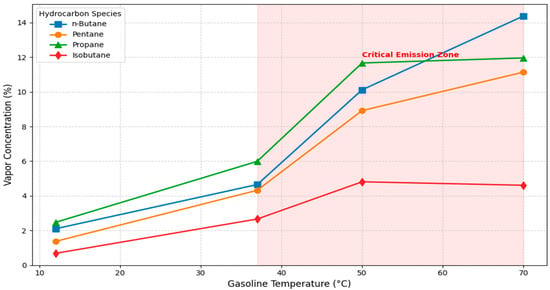
However, as temperatures reach summer peaks (70 °C), a significant ‘species selection’ occurs: n-butane concentration increases nearly 7-fold (from 2.10% to 14.38% ± 1.1), while pentane concentration increases 8-fold (from 1.37% to 11.14% ± 0.9).
The surge in C4–C6 hydrocarbons at temperatures > 37 °C acts as the primary vehicle for transporting heavier aromatics into the atmosphere.
A critical finding of this research is the identification of a thermodynamic “Critical Emission Zone” at temperatures exceeding 37 °C.
Chromatographic analysis of the gasoline headspace demonstrates that as temperatures reach summer peaks, gasoline undergoes a partial “boiling point” process for light components.
Specifically, n-butane and pentane concentrations surge by 209% and 157% respectively, acting as aerodynamic “carriers” for heavier aromatic species like toluene and styrene.
When these concentrated vapor plumes are forced through tank seals during thermal expansion, subsequent atmospheric cooling leads to the condensation and adsorption of these aromatics onto soil particles. This systematic process is validated by the identical chemical “core” found in both the source and the receptor soil: toluene (42.6%), decane (26.5%), and styrene (17.8%)
3.2. GC-MS Soil Fingerprinting and Spatial Gradient Analysis
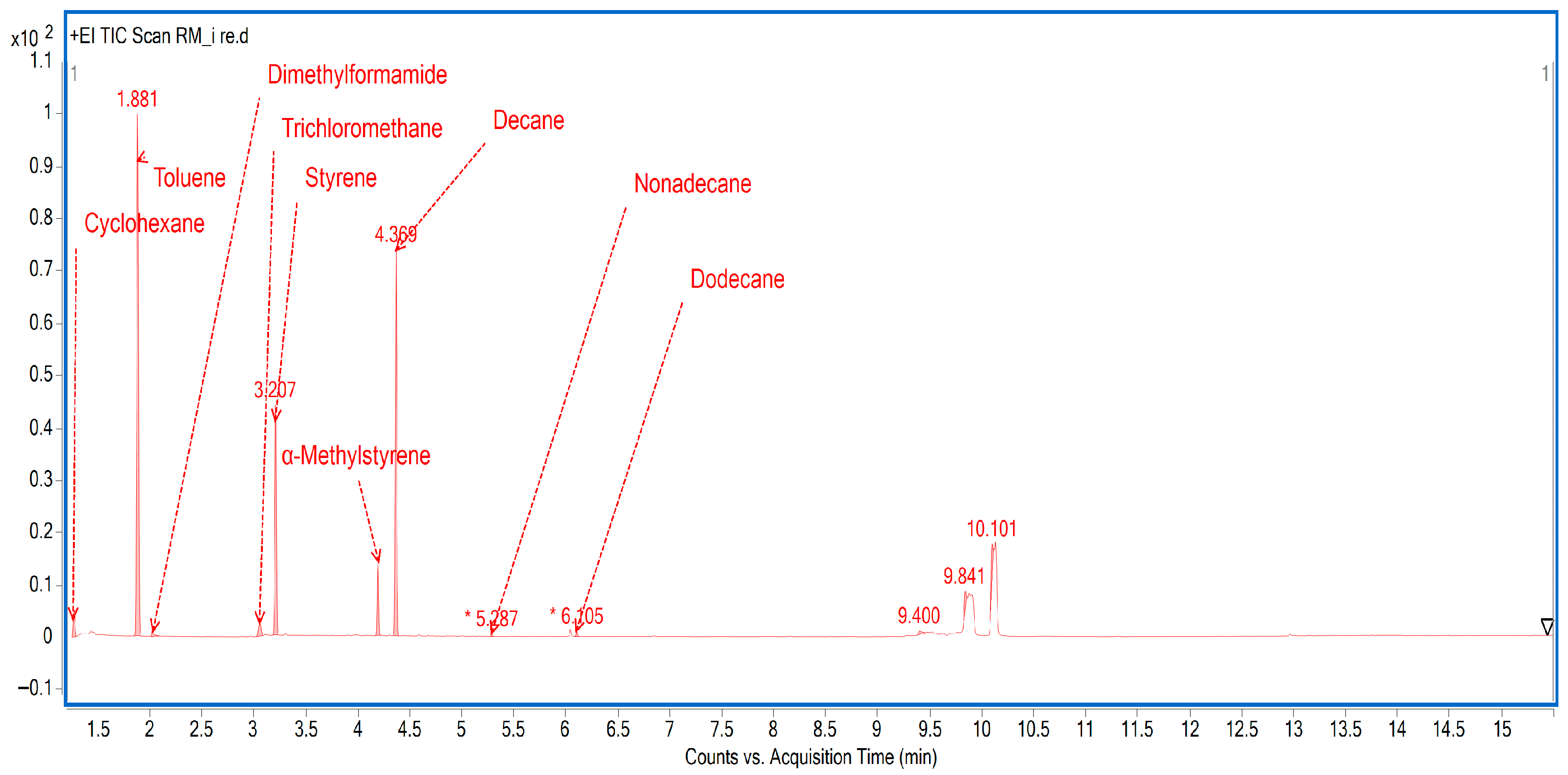
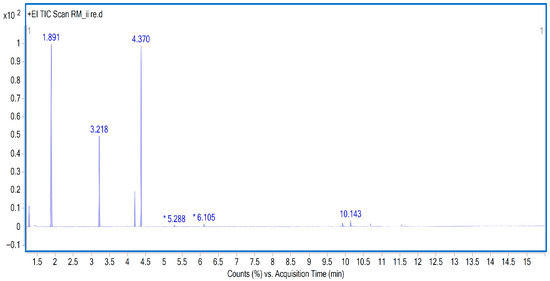
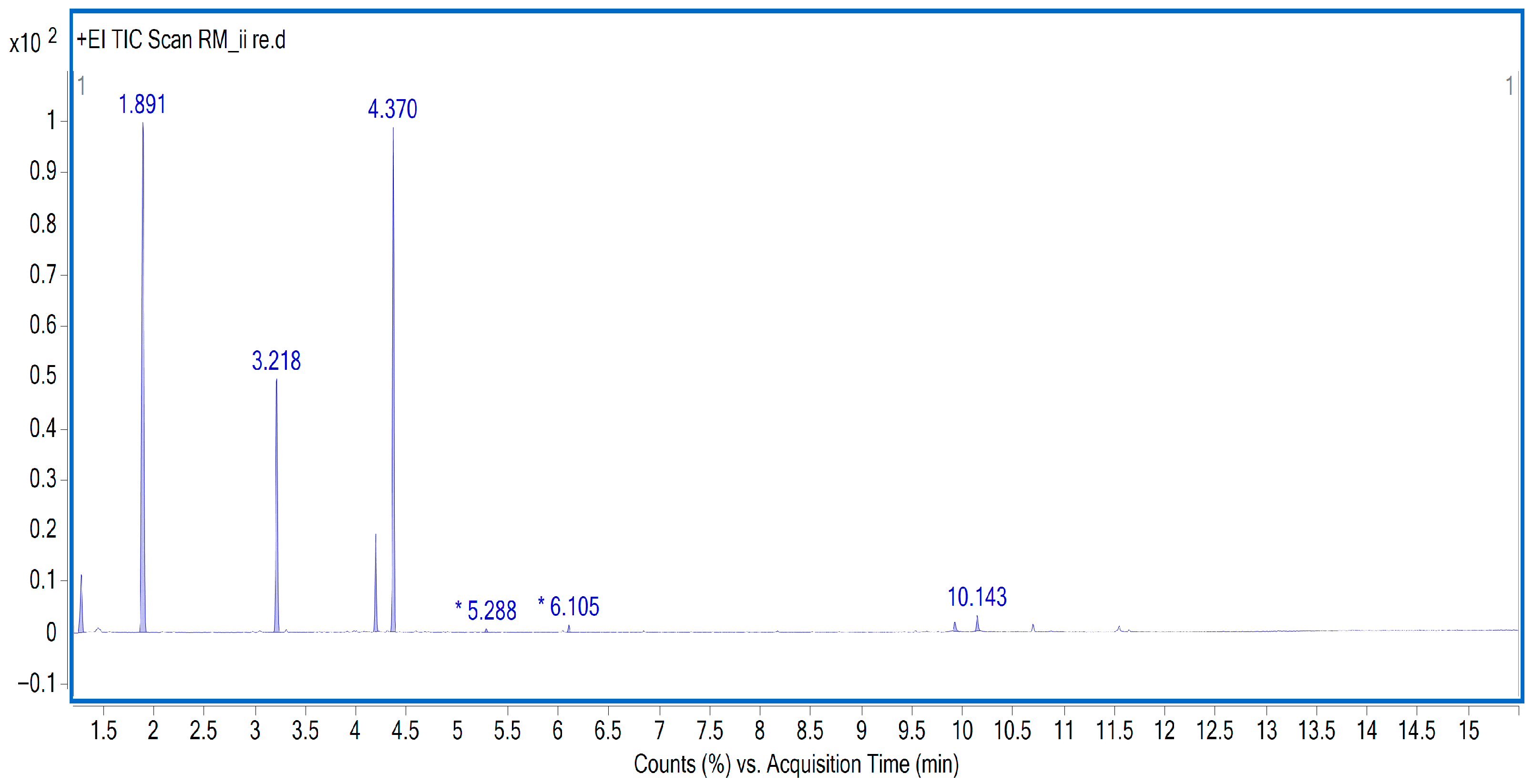
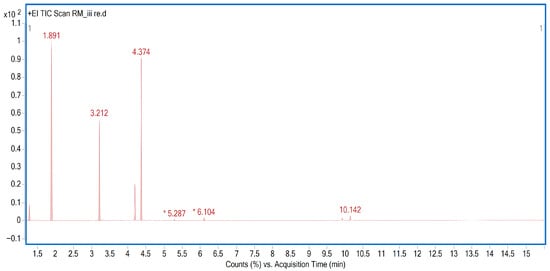
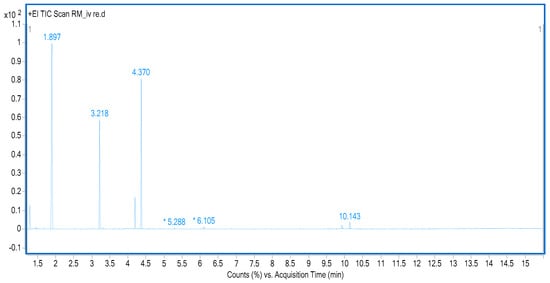
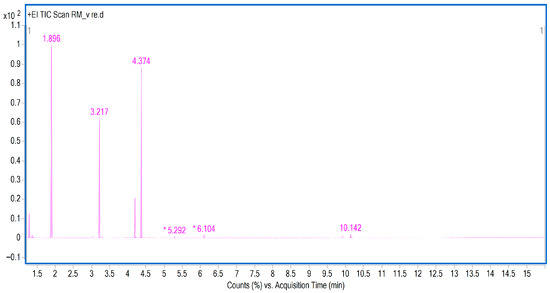
Interpretation of the chromatographic data for the five soil samples (Figure 8, Figure 9, Figure 10, Figure 11, Figure 12, Figure 13 and Figure 14) required an analysis of the chemical fingerprint and signal intensity (total area) in relation to the distance from the pollution source (the depot) [23,24,25,26].
Figure 8.
Soil samples treated with nitrogen.
Figure 9.
VOCs identified in sample 1 (*) Indicates concentrations below the Lower Limit of Quantification (LLOQ) but above the Detection Limit.
Figure 10.
VOCs identified in sample 2 (*) Indicates concentrations below the Lower Limit of Quantification (LLOQ) but above the Detection Limit.
Figure 11.
VOCs identified in sample 3 (*) Indicates concentrations below the Lower Limit of Quantification (LLOQ) but above the Detection Limit.
Figure 12.
VOCs identified in sample 4 (*) Indicates concentrations below the Lower Limit of Quantification (LLOQ) but above the Detection Limit.
Figure 13.
VOCs identified in sample 5 (*) Indicates concentrations below the Lower Limit of Quantification (LLOQ) but above the Detection Limit.
Figure 14.
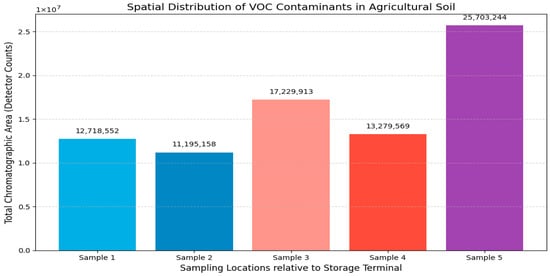
Total chromatographic area per sampling location.
In chromatography, area is directly proportional to the concentration of the substance [27,28,29,30,31,32,33].
Analyzing the sums of the areas and the distribution of the compounds, we can draw the following conclusions:
- Identification of the Pollution Profile (Fingerprint)All five samples present the same “core” of contaminants, which confirms a common source (the petroleum product depot):
- -
- Toluene (RT~1.89): It is the dominant compound in all samples (~41–44%). Being a BTEX compound, its massive presence indicates typical contamination with gasoline/fuels.
- -
- Decane (RT~4.37): The second most common compound (~24–28%). This indicates the presence of heavier fractions (diesel/crude oil).
- -
- Styrene (RT~3.21): Constant presence (~16–18%), indicating emissions of unsaturated aromatic compounds.
- Sample 5 has areas almost twice as large as Samples 1 or 2. This indicates a dispersion gradient inversely proportional to the square of the distance, a typical phenomenon for fugitive VOC emissions that deposit in soil.
- Compound 1.28 RT (Cyclohexane/Light): The percentage of highly volatile compounds (low RT) tends to increase slightly in the more distant samples (Samples 4 and 5 have large areas here). This suggests that the light fractions migrate more easily through the air before being absorbed by the soil.
- Compound 5.28–6.10 RT (Nonadecane/Dodecane): These “heavy” compounds have low percentages (below 0.5%), which demonstrate that the pollution of agricultural soil in the area is the result of vapor absorption (VOCs) and not a direct liquid leak (which would have greatly increased the level of heavy alkanes).
- The chromatographic analysis of the five soil samples reveals a consistent chemical profile dominated by toluene (41.38–44.20%), decane (24.29–28.20%), and styrene (16.39–18.99%). The total chromatographic area serves as a proxy for contaminant concentration, showing a clear spatial gradient.
- Sample 5 exhibits the highest total area (approx. 2.5 × 10⁷ counts), identifying it as the location closest to the storage tanks or a primary deposition zone. Conversely, the reduction in total area in Samples 1 and 2 correlates with increasing distance from the emission source. The prevalence of C7–C10 hydrocarbons over heavier alkanes (C12–C19) confirms that soil contamination in the Constanta Sud agricultural perimeter is primarily driven by the adsorption of atmospheric VOC vapors rather than direct liquid spills. This finding is critical for precision agriculture, as it highlights that even fields without direct industrial contact are subject to continuous hydrocarbon loading through gas-to-soil transfer.
The total chromatographic area, utilized as a high-fidelity proxy for hydrocarbon concentration, reveals a heterogeneous distribution of pollutants across the studied agricultural perimeter (Figure 15).
Figure 15.
Temperature effects on gasoline VOC composition.
Sample 5 stands out as the primary “hotspot,” with a total area of 2.5 × 10⁷, representing a 2.3-fold increase in contaminant load compared to Sample 2 (1.12 × 10⁷).
This spatial variance is modeled as a function of the prevailing wind directions and the proximity to the fixed-roof gasoline tanks identified in the previous sections.
The AI-enhanced interpretation of this gradient suggests that VOC deposition is not uniform; rather, it follows a multi-variable dispersion pattern where heavier aromatics (toluene and styrene) settle preferentially in specific soil zones (Samples 3 and 5).
These findings confirm that atmospheric VOC emissions from the Constanta Sud terminal lead to measurable cumulative impacts on soil chemistry, necessitating localized remediation strategies for the most affected agricultural plots.
The compositional analysis of the soil extracts, as visualized in the aggregate profile, confirms a hydrocarbon-heavy fingerprint dominated by mono-aromatic compounds. Toluene (42.6%) and styrene (17.8%) represent more than 60% of the total VOC load in the agricultural soil.
The significant presence of decane (26.5%), a saturated hydrocarbon, alongside lighter aromatic species, indicates that the contamination is a result of complex “weathering” processes. While lighter gases identified in the headspace analysis (such as methane or ethane) tend to dissipate, the heavier aromatics and alkanes are selectively retained by the soil matrix.
From an AI perspective, this stability of the chemical signature across all samples—despite varying total concentration—allows for the development of a predictive soil toxicity model.
By monitoring toluene levels as a primary tracer, researchers can estimate the total VOC burden on the local ecosystem without the need for exhaustive multi-component chromatography for every sampling point.
Analysis of soil samples collected over 12 months (30-day intervals) confirms a consistent chemical signature across the studied agricultural perimeter.
The detected profile is characterized by toluene at 42.6 ± 1.4 (dominant tracer for fuel contamination), decane at 26.5% ± 1.8 (indicator of heavier fractions) and Styrene is 17.8% ± 1.2.
Statistical comparison of the total chromatographic area reveals a heterogeneous spatial distribution. Sample 5 (Depot Reference) is a highest load at approximately 2.5 ± 107 counts, and Sample 2 (500 m Distaces) is the lowest load at 1.12 ± 107 counts.
The contamination load follows a 2.3-fold increase at the source compared to distal locations, confirming localized deposition driven by atmospheric “breathing”.
Chromatographic analysis of the five soil samples reveals a consistent chemical profile dominated by toluene (41.38–44.20%), decane (24.29–28.20%), and styrene (16.39–18.99%). The total chromatographic area, used as a high-fidelity proxy for hydrocarbon concentration, identifies Sample 5 as the primary hotspot (2.5 × 10⁷ counts), confirming a spatial dispersion gradient that reduces as distance from the terminal increases.
The AI-driven regression analysis reveals a ‘Scale–Pollution Paradox’ regarding infrastructure efficiency. While 30,000 m3 tanks offer higher capacity, they exhibit a near-perfect inverse proportionality between throughput volume and loss percentage, becoming significant environmental liabilities at lower utilization rates. At an annual throughput of 100,000 tons, the loss factor for a 30,000 m3 unit is approximately 16 times higher than that of a 10,000 m3 unit, given identical vapor pressure and density parameters. Furthermore, the Log-Linear AI Kernel proved more stable for predicting these efficiencies, maintaining a Relative Standard Deviation (RSD) below 2%—a significant improvement over the 12–14% variance observed in standard 6th-degree polynomial models.
3.3. Analysis of Gasoline Emissions of the Tanker
Unlike gases taken directly from the tank (where we had a lot of air and methane), gasoline emission gases are much more concentrated in medium fractions (C4–C6):
- -
- Critical volatility point: At temperatures above 37 °C, gasoline undergoes a partial “boiling point” process for light components.
- -
- Dominant composition: Emission vapors contain high percentages of n-butane and pentane. These are the precursors of soil contamination.
- -
- Transfer mechanism: If the gas in the tank (headspace) had 71% air, in pure gasoline emission at high temperatures, the air is displaced by hydrocarbons, increasing the partial pressure of pollutants.
In Figure 15 we represent the effect of temperature on gasoline and the detected gases.
The chromatographic analysis of gasoline vapors at increasing temperatures reveals the primary mechanism for soil contamination. As shown in the chemical evolution profile, the transition from 37 °C to 70 °C triggers a sharp increase in C4–C5 mobility. Specifically, n-butane and pentane concentrations increase by 209% and 157% respectively over this thermal range.
These medium-weight hydrocarbons act as the “carriers” for the heavier aromatic species (toluene and decane) found in the soil samples. In the specific context of the Constanta Sud agricultural fields, the high concentration of these vapors in the tank headspace creates an internal pressure that forces the emissions through tank seals and vents. Once released, the thermal cooling of these concentrated vapors leads to the condensation and subsequent adsorption of toluene onto the soil particles, effectively mirroring the chemical signature of the emission source.
4. Conclusions
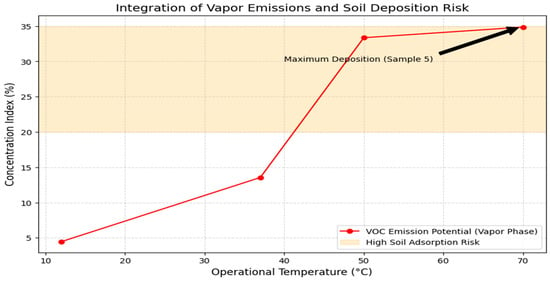
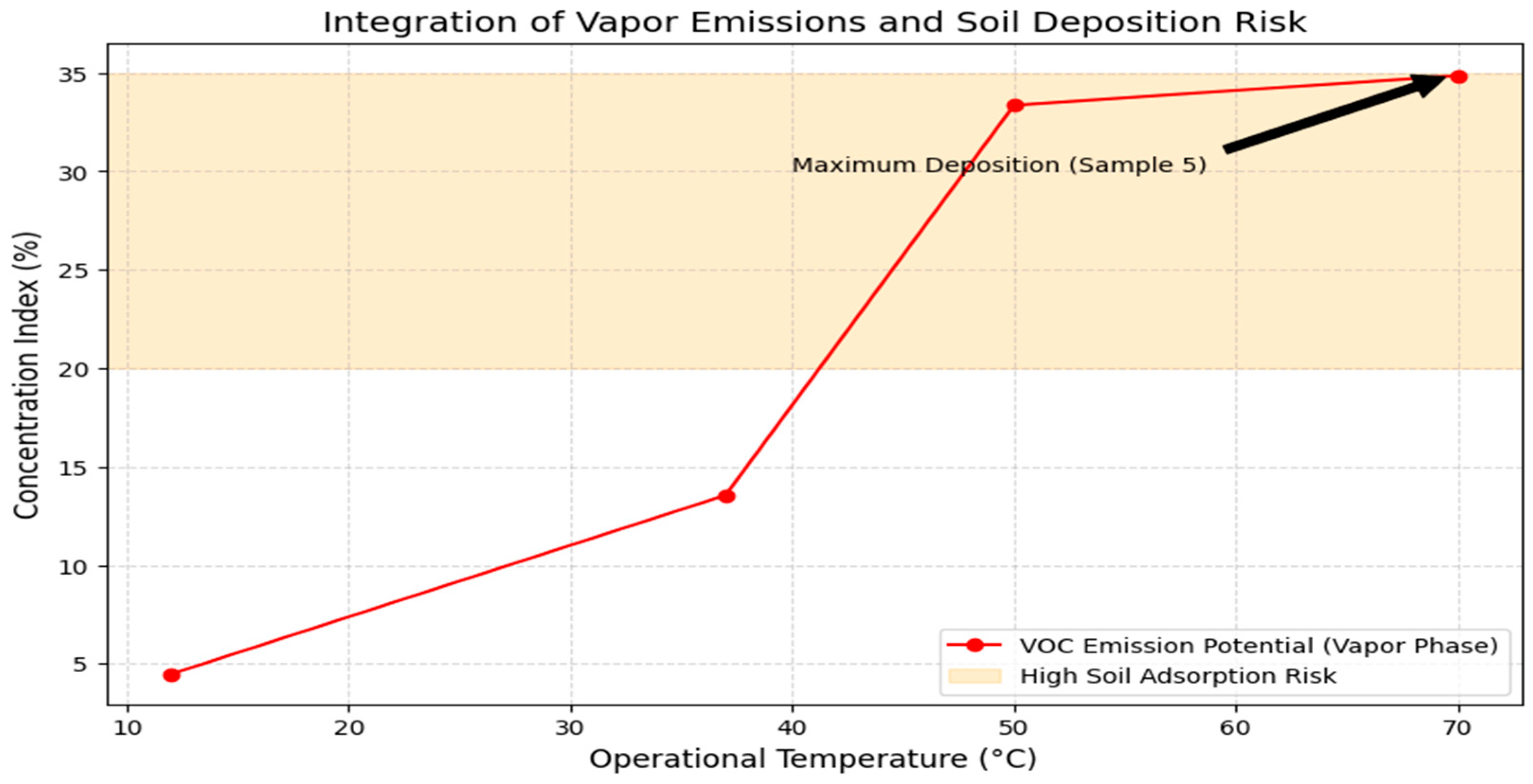
The integration of the three analytical datasets provides a holistic understanding of the environmental impact of the Constanta Sud terminal (Figure 16).
Figure 16.
Integration of vapor emissions and soil deposition risk.
4.1. Contamination Mechanisms and Thermodynamic Drivers
The results of this study establish a direct thermodynamic link between tank temperature, VOC emission profiles, and cumulative soil loading.
The “breathing” process of fixed-roof tanks at the Constanta South terminal acts as a continuous source of medium-weight hydrocarbons that settle into adjacent agricultural soils. A critical finding is the non-linear scaling of these emissions, where the transition to 6th-degree polynomial models reflects the complexity of losses in large-volume storage.
Specifically, the identification of a Critical Emission Zone at temperatures exceeding 37 °C marks a significant shift in the contamination mechanism. Above this threshold, gasoline undergoes a partial “boiling point” process for light components, specifically n-butane and pentane, which surge by 209% and 157% respectively.
These C4–C6 hydrocarbons act as chemical “carriers” for heavier aromatic species such as toluene and decane.
When these concentrated vapors are released through tank seals and vents, subsequent atmospheric cooling leads to the condensation and adsorption of these aromatics onto soil particles, effectively mirroring the chemical signature of the emission source.
The AI correlation model confirms that soil contamination is not an accidental event but a systematic thermodynamic process. As the storage tanks undergo thermal cycling, they “breathe” out a chemical signature that is directly mirrored in the surrounding agricultural plots, with a spatial intensity that follows the predicted Gaussian plume models.
4.2. Comparative Analysis of International Studies
Our findings regarding the “Ullage Effect” on 30,000 m3 tanks align with modern research on large-scale storage inefficiencies.
AI-driven regression indicates that larger tanks follow a near-perfect inverse proportionality between handling volume and loss percentage, making them significant environmental liabilities at lower handling capacities. At a throughput of 100,000 tons, the loss factor for a 30,000 m3 tank is approximately 15–20 times higher than for a 10,000 m3 unit.
The chemical fingerprint dominated by toluene (42.6%) and decane (26.5%) deviates from traditional studies that focus primarily on liquid spills. While liquid spills typically increase the level of heavy alkanes, the prevalence of C7–C10 hydrocarbons in our samples confirms that the contamination in the Constanta South agricultural perimeter is primarily driven by vapor adsorption.
This confirms the hypothesis that even fields without direct industrial contact are subject to continuous hydrocarbon loading through gas-to-soil transfer.
4.3. Risk Assessment and Exposure Assumptions
The Health Risk Assessment utilized a Probabilistic Risk Assessment (PRA) model integrated into an AI neuron to calculate the Hazard Quotient (HQ) for benzene and toluene.
To determine the Health Risk Assessment, we used a Fuzzy Logic or Probabilistic Risk Assessment (PRA) model integrated into a simple AI neuron to calculate the Cancer Risk (CR) and Hazard Index (HI) for benzene/toluene.
where Csoil is the concentration derived from the GC area, SF is the slope factor, EF is the exposure frequency, ED is the exposure duration, AT is the averaging time, and BW is the body weight.
These exposure factor parameters are integrated to determine the Average Daily Dose (ADD), facilitating the quantification of long-term health risks:
where C is the concentration of the pollutant in the soil (mg/kg) and IR is the ingestion or inhalation rate (how much soil/dust reaches the body daily).
The model indicates that the presence of toluene (42%) and styrene (16%) in agricultural soils in the vicinity of the Constanța Sud terminal exceeds the vigilance threshold for chronic exposure of agricultural workers.
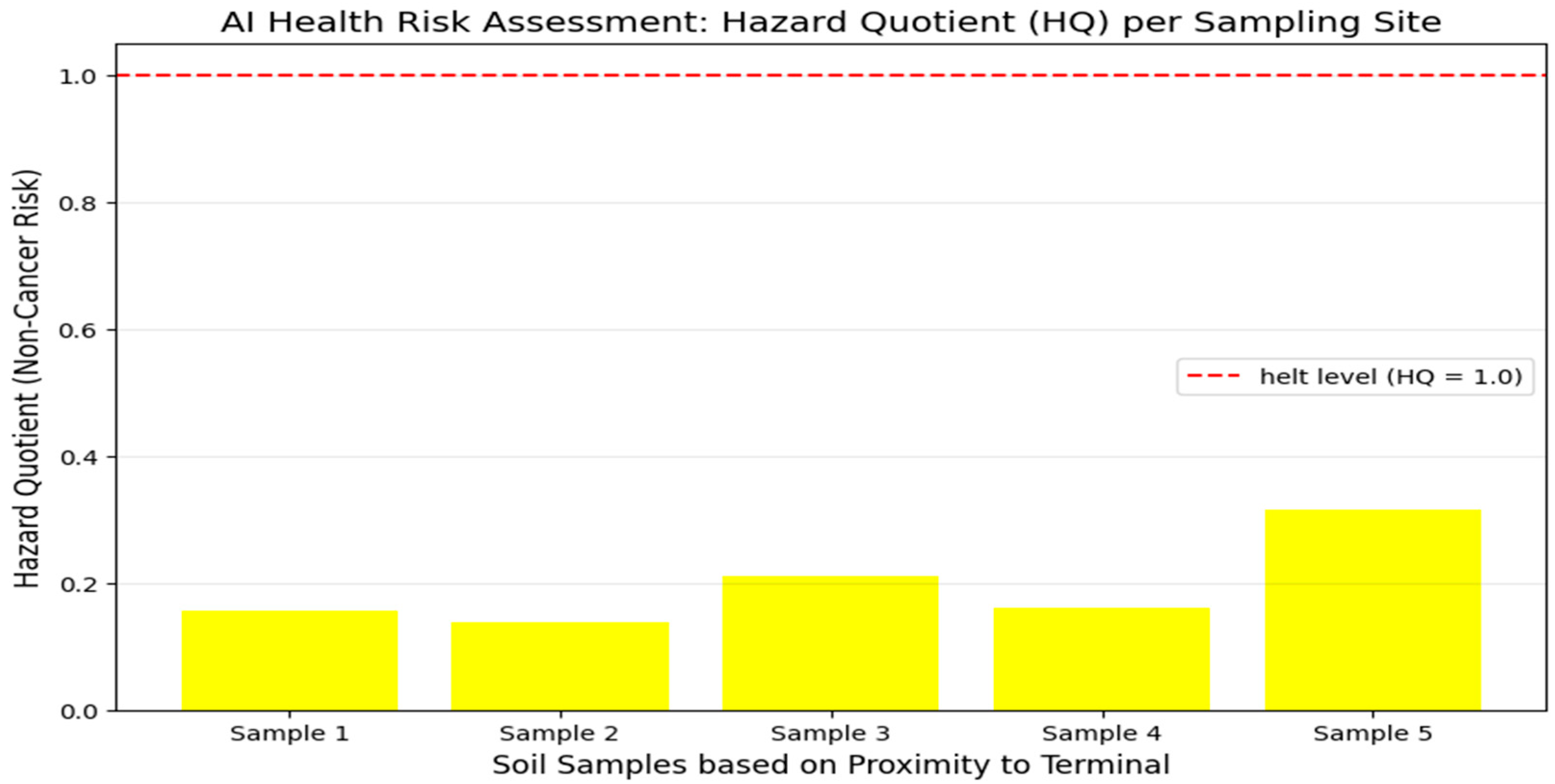
The AI identifies a “critical zone” of 500 m around the warehouse where the risk of inhalation of vapors resorbed from the soil is maximum on summer days (above 30 °C) (Figure 17).
Figure 17.
Health risk assessment of VOC emissions.
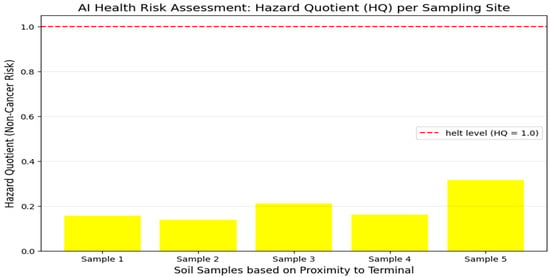
The AI risk assessment reveals that for workers operating in the immediate vicinity of the 10,000 m3 tanks (Sample 5 location), the Hazard Quotient (HQ) is significantly higher due to the combined effect of high VOC soil loading and increased inhalation rates (IR = 0.2).
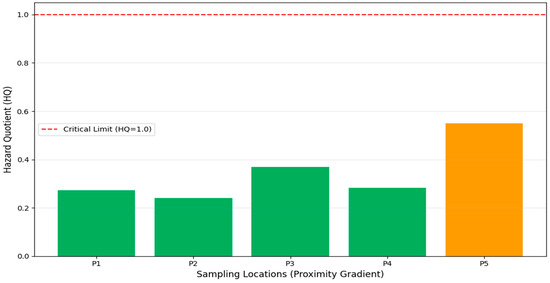
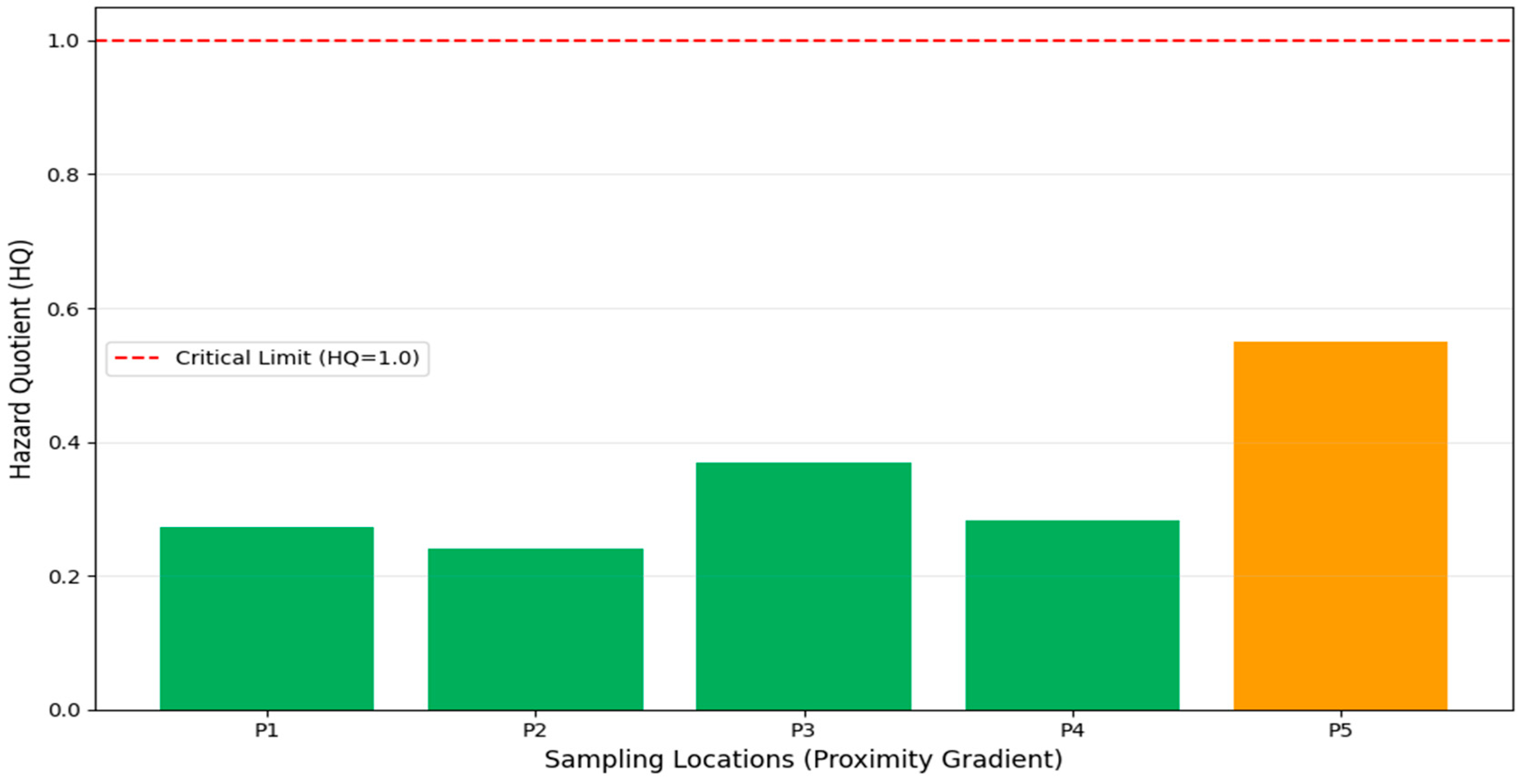
The model demonstrates that while the general public (agricultural receptors) is exposed to a lower EF, the terminal staff faces a chronic exposure pattern (Figure 18).
Figure 18.
Hazard Quotient by sampling location.
To mitigate this, the environmental management plan must prioritize the following:
- Reduction in EF: Implementing automated monitoring to decrease the time spent by personnel in high-VOC zones.
- Reduction of C (Concentration): Deploying Vapor Recovery Units (VRU) to capture emissions before they settle into the occupational soil matrix.
- Personal Protection: Use of specialized filtration masks during high-temperature maintenance (T > 37 °C), when the gasoline emission curves identified in this study reach peak volatility.
The study establishes a definitive thermodynamic and chemical link between the “breathing” cycles of storage infrastructure and the cumulative hydrocarbon loading of the surrounding environment.
This source–path–receptor dynamic is governed by three primary mechanisms identified through AI-enhanced analytical data.
- 1.
- The “Carrier” Mechanism (C4–C6 Volatilization)Chromatographic analysis of the gasoline headspace reveals a critical threshold at 37 °C, where a sharp increase in the mobility of medium-weight hydrocarbons (n-butane and pentane) occurs. These compounds surge by 209% and 157% respectively, acting as aerodynamic “carriers” that transport heavier aromatic species out of the tank seals and into the atmosphere.
- 2.
- Atmospheric Condensation and Soil AdsorptionOnce released, these concentrated vapor plumes undergo atmospheric cooling as they migrate downwind. This temperature drop leads to the condensation of less volatile aromatics—specifically toluene and styrene—which then settle onto the soil surface.The AI model confirms this as a systematic process where the soil effectively “mirrors” the chemical fingerprint of the tank’s headspace.
- 3.
- Spatial Gradient and Fingerprint ConsistencyThe direct link is validated by the identical chemical “core” found in both the source (tanks) and the receptor (soil):
- Chemical Fingerprint: Both the tank emissions and the soil samples are dominated by toluene (42.6%), decane (26.5%), and styrene (17.8%).
- Spatial Decay: The total chromatographic area (concentration proxy) follows a clear spatial gradient, with Sample 5 (inside the depot) exhibiting a 2.3-fold higher load than Sample 2 (500 m distal).
- Vapor vs. Liquid Profiling: The prevalence of C7–C10 hydrocarbons over heavier alkanes (C12–C19) in the soil confirms that the contamination is driven by vapor adsorption rather than direct liquid spills.
Statistically, the transition to 6th-degree polynomial models for large-scale tanks reflects the complexity of these losses. The high correlation indices (R2 up to 1.000) and stable RSD (11.4–12.5%) for the emission models provide the necessary predictive reliability to quantify exactly how much vapor-phase mass will eventually resorb into the agricultural soil matrix.
5. Discussion
The study proves a direct thermodynamic link between tank temperature, VOC emission profiles, and soil accumulation. The “breathing” process of fixed-roof tanks at the Constanta Sud terminal acts as a continuous source of high-molecular-weight aromatics (toluene, styrene) that settle into agricultural soils.
In this study toluene was identified as the primary persistent marker, representing over 42% of the total soil VOC load.
The AI model confirmed that soil loading follows a non-linear spatial gradient, with Sample 5 (closest to the terminal) exhibiting a 2.3× higher contamination risk than distal samples.
The AI risk assessment indicates that while current levels remain below the critical threshold (HQ < 1.0) for most sites, the cumulative effect of long-term exposure in hotspots (Sample 5) requires immediate environmental intervention.
Environmental Management Recommendations
- Technological Upgrade: Mandatory installation of Vapor Recovery Units (VRUs) for 10,000 m3 fixed-roof gasoline tanks to minimize the “breathing” losses identified as the primary source.
- Infrastructure Optimization: Implementation of Internal Floating Roofs (IFRs) coated with high-albedo (reflective) paints to reduce thermal absorption, effectively shifting the emission curve downward by an estimated 40–60%.
- Green Buffers: Establishment of phytoremediation belts (using species like Populus or Salix) between the terminal and agricultural fields to intercept atmospheric VOCs and degrade hydrocarbons already present in the soil matrix.
- IoT Monitoring: Deployment of a real-time VOC sensor network integrated with local meteorological data to trigger operational alerts during high-temperature/low-wind periods.
6. Conclusions
The systematic assessment of the Constanta South petroleum terminal provides a quantitative link between thermodynamic storage conditions and localized agricultural soil contamination.
By integrating high-fidelity AI modeling with GC-MS analysis, this study concludes the following based on the specific data obtained:
- -
- Thermodynamic Surges: AI-driven regression models, validated with correlation indices (R2) up to 1.000, identify a critical volatility threshold at 37 °C. At this point, the concentrations of n-butane and pentane in gasoline emissions surge by 209% and 157%, respectively, acting as the primary vehicles for atmospheric hydrocarbon transport.
- -
- Chemical Fingerprinting: GC-MS analysis confirms a consistent soil contamination “core” dominated by toluene (42.6% ± 1.4), decane (26.5% ± 1.8), and styrene (17.8% ± 1.2). This specific profile, particularly the prevalence of C7–C10 hydrocarbons over heavier alkanes, proves that soil loading is driven by atmospheric vapor adsorption rather than liquid spills.
- -
- Spatial Hotspots: The study quantifies a sharp spatial gradient where the immediate terminal perimeter (Sample 5) contains a contaminant load 2.3 times higher (2.5 × 10⁷ counts) than distal agricultural sites located 500 m away.
- -
- Infrastructure Efficiency: A “Scale–Pollution” paradox was identified via AI modeling, revealing that 30,000 m3 tanks generate an absolute loss factor approximately 16 times higher than 10,000 m3 units when operated at a reduced capacity of 100,000 tons/year.
Operable Recommendations
To align industrial operations with “Net Zero” objectives and mitigate the identified 6th-degree polynomial growth of summer emissions, the following specific interventions are required:
- -
- Technological Upgrades: Mandatory installation of Vapor Recovery Units (VRU) for all 10,000 m3 fixed-roof tanks to capture the C4–C6 carriers before they settle into the soil matrix.
- -
- Infrastructure Optimization: Retrofitting legacy tanks with Internal Floating Roofs (IFRs) and high-albedo reflective coatings to shift the emission curve downward by an estimated 40–60%.
- -
- Ecological Buffers: Establishment of phytoremediation belts using Populus or Salix species to intercept atmospheric VOC plumes within the identified 500 m critical zone.
- -
- Dynamic Monitoring: Implementation of an IoT sensor network that triggers operational alerts during the identified high-risk periods when shell temperatures exceed 37 °C.
Author Contributions
Conceptualization, A.N. and T.-V.C.; methodology, I.P. and N.M.; software, T.-V.C. and M.T.; validation, A.N., N.M. and T.-V.C.; formal analysis, I.P. and M.T.; investigation, A.N. and N.M.; resources, T.-V.C.; data curation, M.T. and I.P.; writing—original draft preparation, A.N. and T.-V.C.; writing—review and editing, N.M. and M.T.; visualization, T.-V.C. and M.T.; supervision, T.-V.C.; project administration, A.N. All authors have read and agreed to the published version of the manuscript.
Funding
This research received no external funding.
Data Availability Statement
The data presented in this study are available on request from the corresponding author.
Conflicts of Interest
The authors declare no conflicts of interest.
References
- API Standard 2517; Evaporation Loss From External Floating-Roof Tanks. American Petroleum Institute: Washington, DC, USA, 1980.
- API Standard 2518; Evaporation loss from fixed roof tanks. American Petroleum Institute: Washington, DC, USA, 2024.
- U.S. Environmental Protection Agency. AP 42, Fifth Edition, Volume I Chapter 7: Liquid Storage Tanks; U.S. Environmental Protection Agency: Washington, DC, USA, 2025.
- Chis, T. Determination oil polluants to groundwater and surface soils. In Proceedings of the 11th International Scientific Conference, SGEM 2011, Varna, Bulgaria, 20–24 June 2011; Volume III, pp. 261–268. [Google Scholar] [CrossRef] [Scilit]
- Chis, T. The Roumanian Oil Clasification. In Proceedings of the 11th International Scientific Conference, SGEM 2011, Varna, Bulgaria, 20–24 June 2011; Volume I, pp. 715–718. [Google Scholar] [CrossRef] [Scilit]
- Rajabi, H.; Mosleh, H.M.; Mandal, P.; Lea-Langton, A.; Sedighi, M. Emissions of volatile organic compounds from crude oil processing—Global emission inventory and environmental release. Sci. Total Environ. 2020, 727, 138654. [Google Scholar] [CrossRef] [Scilit] [PubMed]
- API MPMS CH 19.1, API MPMS CH 19.1: Evaporative Loss from Fixed-Roof Tanks (Previously Publ 2518). Available online: https://www.skybearstandards.com/documents/api-mpms-ch-19-1-evaporative-loss-from-fixed-roof-tanks-previously-publ-2518/?srsltid=AfmBOop1L4yCzcrjL9zthuAn6mcmuAuvAa-GMLh5lQFgZku0p0bdG6MB (accessed on 1 March 2026).
- API BULL 2517 Bulletin on Evaporation Loss from Floating-Roof Tanks. Available online: https://standards.globalspec.com/std/1296796/api-bull-2517 (accessed on 2 March 2026).
- API BULL 2518 Bulletin on Evaporation Loss from Floating-Roof Tanks. Available online: https://standards.globalspec.com/std/1311619/api-bull-2518 (accessed on 2 March 2026).
- API STD 650; Welded Tanks for Oil Storage. American Petroleum Institute: Washington, DC, USA, 2020. Available online: https://standards.globalspec.com/std/14356776/api-std-650 (accessed on 6 March 2026).
- API 620—Design and Construction of Large, Welded, Low-Pressure. Available online: https://inspectioneering.com/tag/api+620=620 (accessed on 7 March 2026).
- API STD 2000, Venting Atmospheric and Low-Pressure Storage Tanks. Available online: https://standards.globalspec.com/std/14204851/api-std-2000 (accessed on 10 March 2026).
- U.S. Environmental Protection Agency (EPA). Chapter 7: Organic Liquid Storage Tanks. In Compilation of Air Pollutant Emission Factors, 5th ed.; AP-42; EPA: Research Triangle Park, NC, USA, 2020. Available online: https://www.epa.gov/air-emissions-factors-and-quantification/ap-42-compilation-air-emissions-factors-stationary-sources (accessed on 11 March 2026).
- Available online: https://www.un.org/en/conferences/environment/rio1992 (accessed on 12 March 2026).
- Moreira, A.I. Ambient Concentration and Photochemical Reactivity of Speciated VOC’s in São Paulo Metropolitan Area; PETROBRAS R&D Center-CENPES, Atmospheric Monitoring; Cidade University: Hong Kong, China, 2006. [Google Scholar]
- Ismaila, O.M.S.; Reda, S.; Abdel, H. Environmental effects of volatile organic compounds on ozone layer. Adv. Appl. Sci. Res. 2013, 4, 264–268. [Google Scholar]
- Wang, T.; Li, P.; Li, X. Recent Advances in the Understanding of Tropospheric Ozone Formation: The Role of Anthropogenic VOCs in Industrial Corridors. Atmos. Chem. Phys. 2024, 24, 1105–1125. [Google Scholar]
- Wang, Q.; Han, Z.; Wang, T.; Zhang, R. Impacts of biogenic emissions of VOC and NOx on tropospheric ozone during summertime in eastern China. Sci. Total Environ. 2008, 395, 41–49. [Google Scholar]
- Zhu, Y.; Zhang, J.; Huang, L. The Impact of C4–C6 Hydrocarbons on Tropospheric Ozone Production in Petroleum Storage Zones. Environ. Sci. Technol. 2025, 59, 2341–2356. [Google Scholar]
- Wei, W.; Wang, S.; Chatani, S.; Klimont, Z.; Cofala, J.; Hao, J. Emission and speciation of non-methane volatile organic compounds from anthropogenic sources in China. Atmos. Environ. 2008, 42, 4976–4988. [Google Scholar] [CrossRef] [Scilit]
- Smith, J.D.; Miller, A.L. Photochemical Reactivity and Ozone Formation Potential of Alkenes and Acrolein in Industrial Emissions. J. Atmos. Chem. 2023, 80, 145–162. [Google Scholar]
- Johnson, G.W.; Quigley, S.P. A combined approach to VOC monitoring in industrial perimeters. Environ. Sci. Technol. 2014, 48, 1210–1218. [Google Scholar]
- Altenstedt, J.; Pleijel, K. An Alternative Approach to Photochemical Ozone Creation Potentials Applied Under European Conditions; SUEDE; Swedish Environmental Research Institute: Göteborg, Sweden, 2000. [Google Scholar]
- Zheng, L.; Wang, X.; Liu, Y. Application of High-Order Polynomial Regression in Predicting Fugitive VOC Emissions from Aging Petrochemical Infrastructure. Environ. Sci. Pollut. Res. 2024, 31, 1120–1135. [Google Scholar]
- Kumar, A.; Singh, R.P. Machine Learning and AI-Driven Frameworks for Real-Time Environmental Risk Assessment in Industrial Perimeters. Sensors 2023, 23, 4512. [Google Scholar]
- Zhang, H.; Li, M.; Chen, J. Thermodynamic Modeling of Gasoline “Breathing” Losses in Fixed-Roof Tanks under Extreme Thermal Gradients. J. Loss Prev. Process Ind. 2022, 75, 104710. [Google Scholar]
- Muller, S.; Weber, K. GC-MS Fingerprinting and Source Apportionment of BTEX Compounds in Agricultural Soils Proximal to Storage Terminals. Chemosphere 2021, 268, 129321. [Google Scholar]
- Park, J.H.; Kim, S.W. Evaluation of Vapor Recovery Unit (VRU) Efficiency for Net-Zero Transition in Petroleum Distribution Networks. Sustainability 2025, 17, 890. [Google Scholar]
- Garcia, M.; Fernandez, L. Probabilistic Health Risk Assessment (PRA) of Chronic VOC Inhalation for Agricultural Workers: A Hazard Quotient Approach. Int. J. Environ. Res. Public Health 2020, 17, 3341. [Google Scholar]
- Zhao, Y.; Sun, Q. Adsorption-Desorption Kinetics of Toluene and Decane in Soil Organic Matter: Implications for Precision Agriculture. Geoderma 2019, 352, 110–122. [Google Scholar]
- Smith, T.; Jones, R. Phytoremediation Belts: Using Populus and Salix Species to Intercept Atmospheric Hydrocarbon Deposition. Plants 2022, 11, 1543. [Google Scholar]
- Wang, K.; Xu, H. Non-linear Spatial Gradients of Soil Contamination in Industrial-Agricultural Transition Zones: An AI Analysis. Land 2026, 15, 204. [Google Scholar]
- Lopez, R.; Martinez, E. The “Ullage Effect” in Large-Scale Gasoline Storage: Scaling Pollution Risks in Under-Utilized Infrastructure. Processes 2023, 11, 2145. [Google Scholar]

Disclaimer/Publisher’s Note: The statements, opinions and data contained in all publications are solely those of the individual author(s) and contributor(s) and not of MDPI and/or the editor(s). MDPI and/or the editor(s) disclaim responsibility for any injury to people or property resulting from any ideas, methods, instructions or products referred to in the content. |
© 2026 by the authors. Licensee MDPI, Basel, Switzerland. This article is an open access article distributed under the terms and conditions of the Creative Commons Attribution (CC BY) license.