Article

A Study of Pre-Injection Effects on Combustion, Emissions, and Performance of Methanol–Ammonia Dual-Fuel Engines †

1
School of Materials and Energy, Guangdong University of Technology, Guangzhou 510006, China
2
School of Ocean Engineering, Guangzhou Maritime University, Guangzhou 510725, China
*
Authors to whom correspondence should be addressed.
This paper is an extended version of published paper International Conference on Energy Technology and Electrical Power (ETEP 2024), Guangzhou, China, 20–22 December 2024.
These authors contributed equally to this work.
Processes 2026, 14(7), 1060; https://doi.org/10.3390/pr14071060 (registering DOI)
Submission received: 27 February 2026 / Revised: 21 March 2026 / Accepted: 23 March 2026 / Published: 26 March 2026
(This article belongs to the Section Energy Systems)

Abstract

The implementation of methanol-ammonia dual-fuel engines has the potential to contribute to a reduction in carbon emissions in the environment. The present study employs numerical simulations of the methanol-ammonia dual-fuel engine to investigate methanol direct injection pre-injection strategies. The impact of pre-main injection time interval and pre-injection quantity was investigated on output power, output torque, cylinder pressure and exhaust emissions such as NOX, HC, CO, and CO2. The results show that compared with the single methanol injection strategy, increasing the pre-injection strategy can effectively reduce soot emissions. Under certain pre-injection conditions, NOX and soot emissions can also be significantly reduced. Compared with low pre-injection quantities, by using high pre-injection quantities, soot and NOX emissions can be reduced by 36.91% and 35.31%, respectively. Under high pre-injection quantities, increasing the pre-main injection time interval can also significantly reduce NOX emissions. Compared with the single methanol injection strategy, the pre-injection strategy leads to an increase in cylinder pressure peak and an advance in peak timing. As the pre-main injection time interval increases, both output power and output torque decrease. It is found that when the pre-injection quantity is 6 mg and the pre-main injection time interval is 25 °CA, with no substantial reduction in output power and output torque, the engine’s soot emissions can be reduced by 34.67%, and NOX emissions can be reduced by 30.31%.

1. Introduction

With the global energy crisis and environmental issues continuing to intensify, the development of high-efficiency and clean alternative fuels has become a pivotal research direction in internal combustion engine studies [1,2,3]. Traditional fossil fuels such as gasoline and diesel are recognized as major contributors to excessive CO2 and CO emissions during combustion, which severely degrade air quality and accelerate climate change [4,5,6,7]. To address these challenges, the integration of clean fuels has emerged as a proven strategy for emission reduction.
Ammonia, as a zero-carbon fuel, primarily generates water vapor and nitrogen as combustion byproducts, imposing negligible environmental pollution and emerging as a critical carbon-neutral energy carrier for achieving carbon neutrality goals [8,9,10]. Its storage and transportation advantages further enhance its practicality. However, standalone ammonia utilization faces technical limitations, including slow combustion velocity, low flame temperature, and combustion instability [11,12,13,14]. For instance, Wang et al. [15] investigated diesel-ammonia dual-fuel engine emissions, revealing that higher ammonia substitution rates prolong ignition delay and reduce in-cylinder combustion efficiency, accompanied by significant ammonia slip. Nie et al. [16] study employing response surface methodology demonstrated that ammonia’s sluggish combustion kinetics result in lower thermal efficiency compared to conventional diesel, leading to diminished overall engine performance and increased fuel consumption with rising ammonia substitution ratios. Flaih et al. [17] investigated the characteristics of a gasoline engine blended with aqueous ammonia solution. The study demonstrated that the presence of aqueous ammonia solution reduced peak pressure, heat release rate, combustion temperature, and exhaust gas temperature. This accordingly addresses the challenges of slow combustion speed and instability in ammonia combustion [18,19,20].
To address the challenges of slow combustion speed and instability in ammonia combustion, many researchers have blended ammonia with other highly reactive fuels. For example, He et al. [21] investigated ammonia-hydrogen blends using a rapid compression machine. Their research findings indicate that increasing the hydrogen proportion significantly reduces the ignition delay time of ammonia-hydrogen blends. Zhong et al. [22] studied the laminar combustion speed of ammonia-hydrogen mixtures, demonstrating that higher hydrogen content markedly lowers the laminar combustion speed of the blends. Guibert et al. [23] conducted numerical simulations on ammonia-hydrogen fuel combustion in spark-ignition (SI) engines, revealing that hydrogen addition enhances engine performance. While these studies highlight hydrogen as an effective additive to improve ammonia combustion, it is important to note that hydrogen still faces technical barriers to large-scale application in long-distance storage and transportation, despite its high reactivity and rapid ignition advantages [24,25].
The liquid-state characteristics of methanol at ambient temperature and pressure not only reduce storage and transportation costs but also ensure compatibility with existing infrastructure. Methanol’s high oxygen content enhances its combustion performance, enabling more complete burning during the combustion process and improving overall efficiency. However, methanol’s high latent heat of vaporization makes it challenging to achieve compression ignition [26,27]. Gong et al. [28] investigated the use of methanol as the main fuel and biodiesel as a combustion improver, finding that this combination significantly enhances engine performance.
In the field of methanol-ammonia dual-fuel engine research, studies are still quite limited, with most research focusing on exploring the feasibility of the fuel combination. For instance, Rong et al. [29] developed a model for the co-oxidation of ammonia and methanol under hydrothermal flame conditions, finding that methanol provides free radicals and reaction heat, which can promote ammonia decomposition. Hu et al. [30] studied the formation of stable flames from pre-mixed methanol-ammonia gaseous jets in an atmospheric spark-ignition engine and concluded that the stability of methanol-ammonia flames is closely related to the average jet velocity. Relatively speaking, there is less research on fuel pre-injection in methanol-ammonia dual-fuel engines, but pre-injection has a crucial impact on engine performance and emission characteristics [31,32]. Pre-injection refers to the technique of injecting a small amount of fuel before the main injection, which significantly improves fuel atomization and mixing uniformity, thus enhancing combustion stability and completeness. In practical applications, pre-injection technology not only optimizes the combustion process but also reduces engine emissions and improves overall performance. Lin et al. [33] studied the effect of the injection strategy on an ammonia direct injection-hydrogen jet ignition engine and found that NO emissions can be effectively reduced in the case of multiple injections. These studies indicate that pre-injection, as a flexible combustion control method, has significant potential for application in engines.
The present study aims to systematically analyze the impact of pre-injection strategies on the performance of methanol-ammonia dual-fuel engines using numerical simulations. The specific research content includes the effects of different pre-injection parameters (such as DwellPreMain and pre-injection quantity) on engine power output, and emission characteristics (such as NOX, CO, and HC emissions). By optimizing pre-injection strategies to improve the overall performance of methanol-ammonia dual-fuel engines and reduce harmful emissions, this research provides a theoretical foundation and practical guidance for future clean and efficient internal combustion engine technologies.

2. Simulation Model and Principles

2.1. Engine Parameters and Model

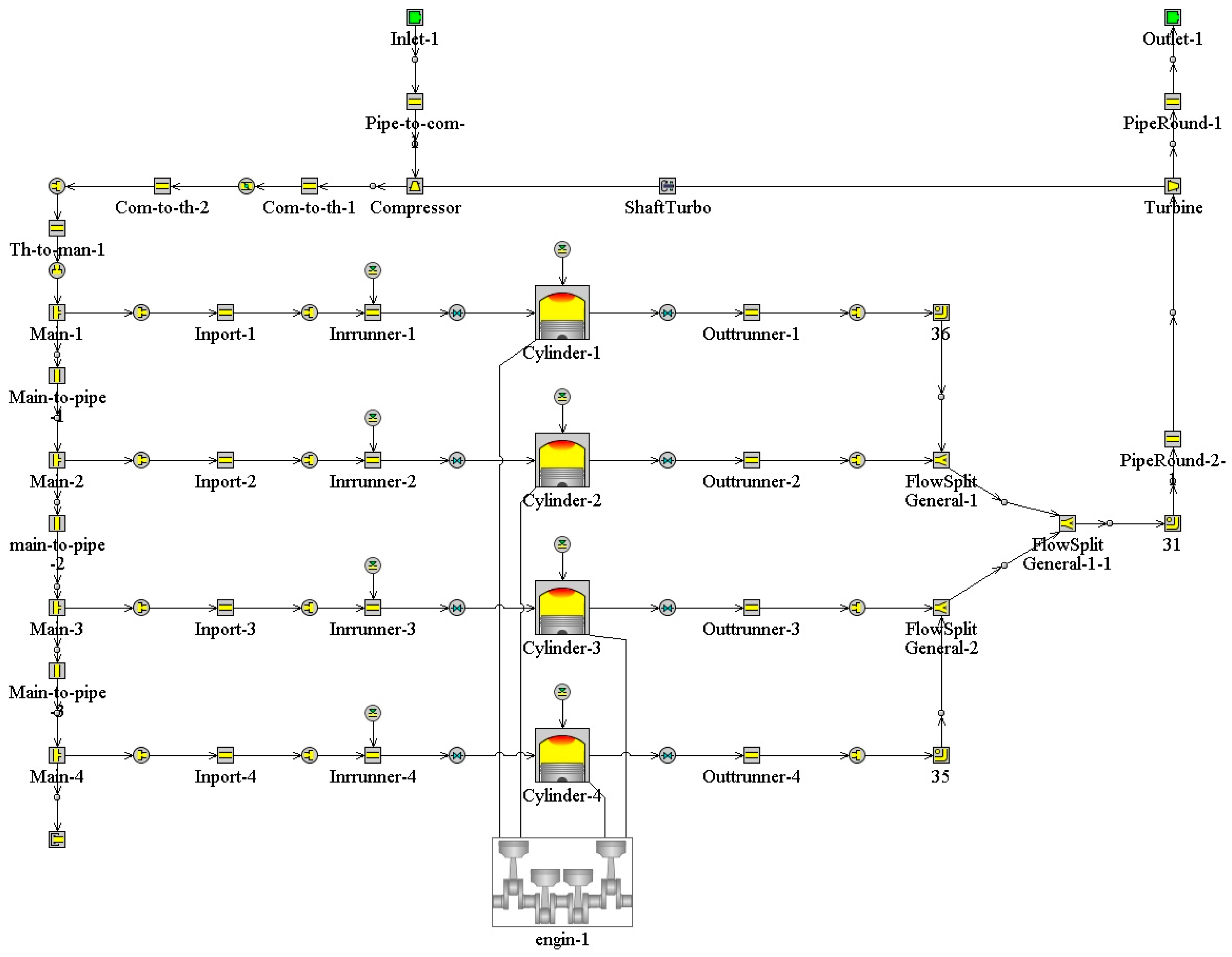
The engine prototype is a four-cylinder, four-stroke diesel engine, with its main parameters [34] shown in Table 1. The operating environmental conditions are 1 atm and 300 K. This engine is equipped with a turbocharger, and the fuel used is diesel. The engine adopts a high-pressure common rail injection system. The engine’s ignition sequence is 1-3-4-2. Based on this engine, a model is established using GT-POWER, as shown in Figure 1. The components of this model include the throttle, turbocharger, fuel injectors (used to represent the high-pressure common rail injection system), cylinders, crankcase, intake and exhaust valves, etc. In the heat transfer model between the gas and the cylinder wall, the HOHENBERG model is selected. The cylinder wall temperature is set to 433 K, the piston temperature to 553 K, and the cylinder head temperature to 523 K. To better study the pre-injection process, the DIPLUSE combustion model is used.

2.2. Governing Equations

This study uses GT-POWER to model the engine in detail. GT-POWER is primarily used for calculating one-dimensional gas flow processes; therefore, it is necessary to formulate the continuity equation, the momentum conservation equation, and the energy conservation equation to calculate the engine’s performance in detail.
Continuity equation:
ρ t + ( ρ u ) x = 0
Momentum equation:
( ρ u ) t + ( ρ u 2 ) x = p x + τ x
Energy equation:
( ρ h ) t + ( ρ u h ) x = q x + u p x + Q l o s s + d q d θ
where Q l o s s is the heat exchanged between the gas in the cylinder and the cylinder wall, and its expression is:
Q l o s s = α A ( T g a s T w a l l )
where α is the heat transfer coefficient, and its expression is given by the HOHENBERG heat transfer model equation:
α = C ( p m T n v k V )
d q d θ is the rate of heat release from the fuel, and its expression is given by the DIPLUSE combustion model equation:
d q d θ = i = 1 2 a i m i ( θ θ 0 i ) m i 1 e ( θ θ 0 i ) m i + 1 / θ i m i θ i m i + 1
where θ is the crankshaft angle, a i is the heat release fraction for the combustion stage i , θ 0 i is the starting angle for the combustion stage i , θ i is the duration of the combustion stage i , and m i is a dimensionless number.

2.3. Model Validation

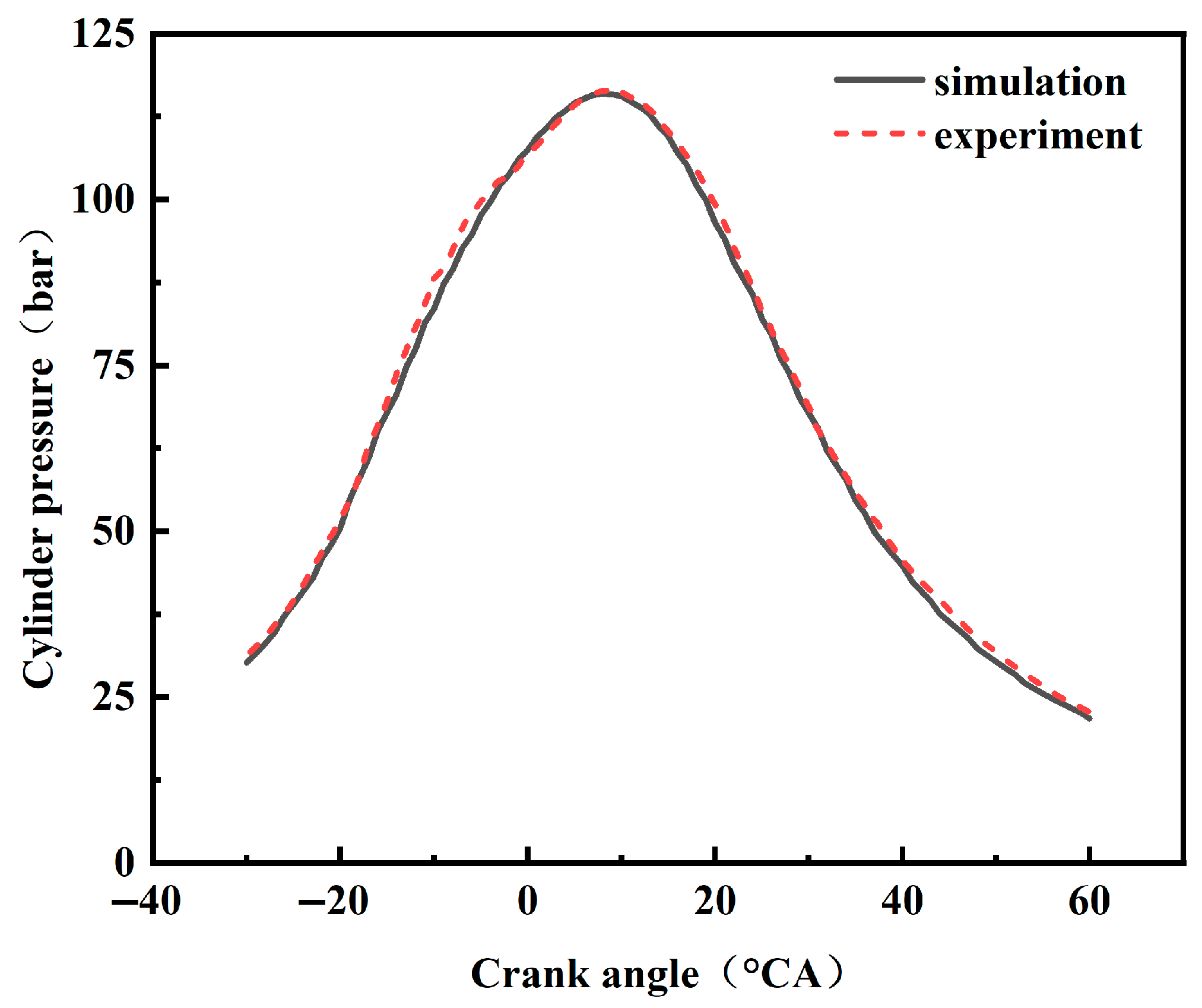
Based on the experimental data provided in the literature [34], under the full-load condition, the measured fuel injection quantity for the diesel engine is 46.7 mg, the measured fuel injection quantity for the diesel engine is 46.7 mg, the engine speed is 2800 rpm, and the injection timing angle is −10 °CA. The cylinder pressure is compared, as shown in Figure 2, for model validation. The simulated cylinder pressure closely matches the actual values and trends, with most data errors not exceeding 5%. Therefore, it can be concluded that this model is valid.

2.4. Simulation Conditions and Engine Operation

To study the impact of pre-injection on the performance of a methanol-ammonia dual-fuel engine, it is necessary to set the fuel properties in GT-POWER. Table 2 provides a comparison of the physical and chemical properties of ammonia, methanol, and diesel. Since the vaporization enthalpy of ammonia and methanol is approximately four to five times that of diesel, methanol fuel is mixed with 5 mol% diesel to facilitate better ignition of the engine. Upon ignition, the engine’s turbocharger compresses air, thereby increasing its pressure. This compressed air then enters the intake manifold, from which it is distributed to the intake pipes of each cylinder. The fuel injector in the intake pipe then sprays ammonia fuel, which fully mixes with the air before entering the cylinder.
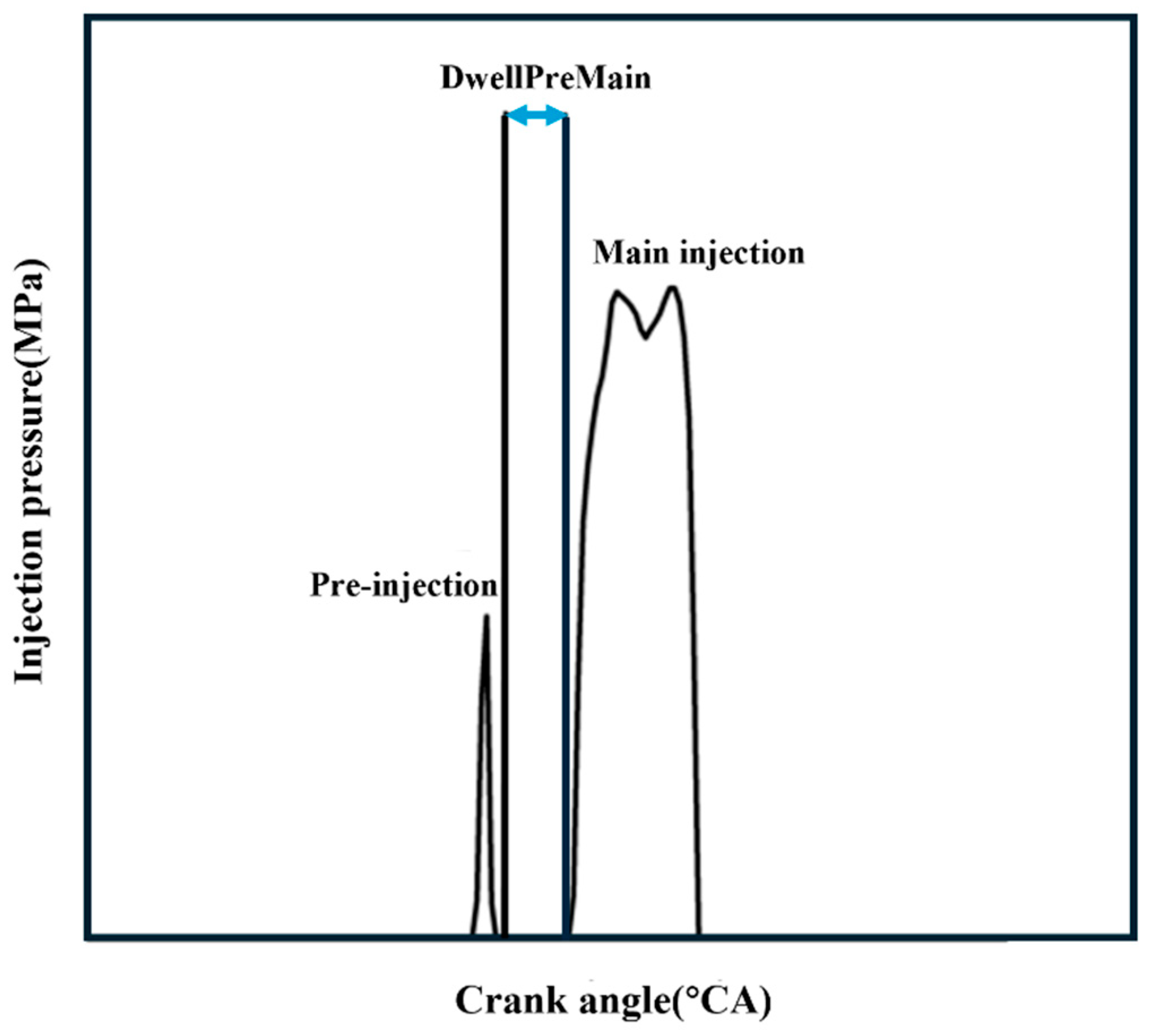
As shown in Figure 3, this diagram illustrates the pre-injection process. After the air-fuel mixture enters the cylinder and the intake valve closes, the injector sprays a small amount of methanol fuel after a certain crankshaft angle. After another specific crankshaft angle, the injector sprays a larger amount of methanol fuel. Once the fuel combustion is completed, the exhaust gases are expelled through the exhaust valve and then pass through the exhaust manifold to reach the turbine in the turbocharger. The gas expands and performs work, driving the turbine, which in turn rotates the shaft to drive the compressor, increasing the pressure of the incoming air. Finally, the expanded gas is expelled into the environment.
Table 3 shows the operating conditions for different injection strategies. To ensure consistency in other variables, the total fuel injection quantity and main injection timing are fixed, while the pre-injection quantity and pre-main injection timing interval are varied. In this study, the pre-injection quantity was controlled by adjusting the pre-injection pulse width while keeping all other injection parameters unchanged.

3. Conclusions and Analysis

3.1. Emissions Characteristics

3.1.1. Soot Emissions

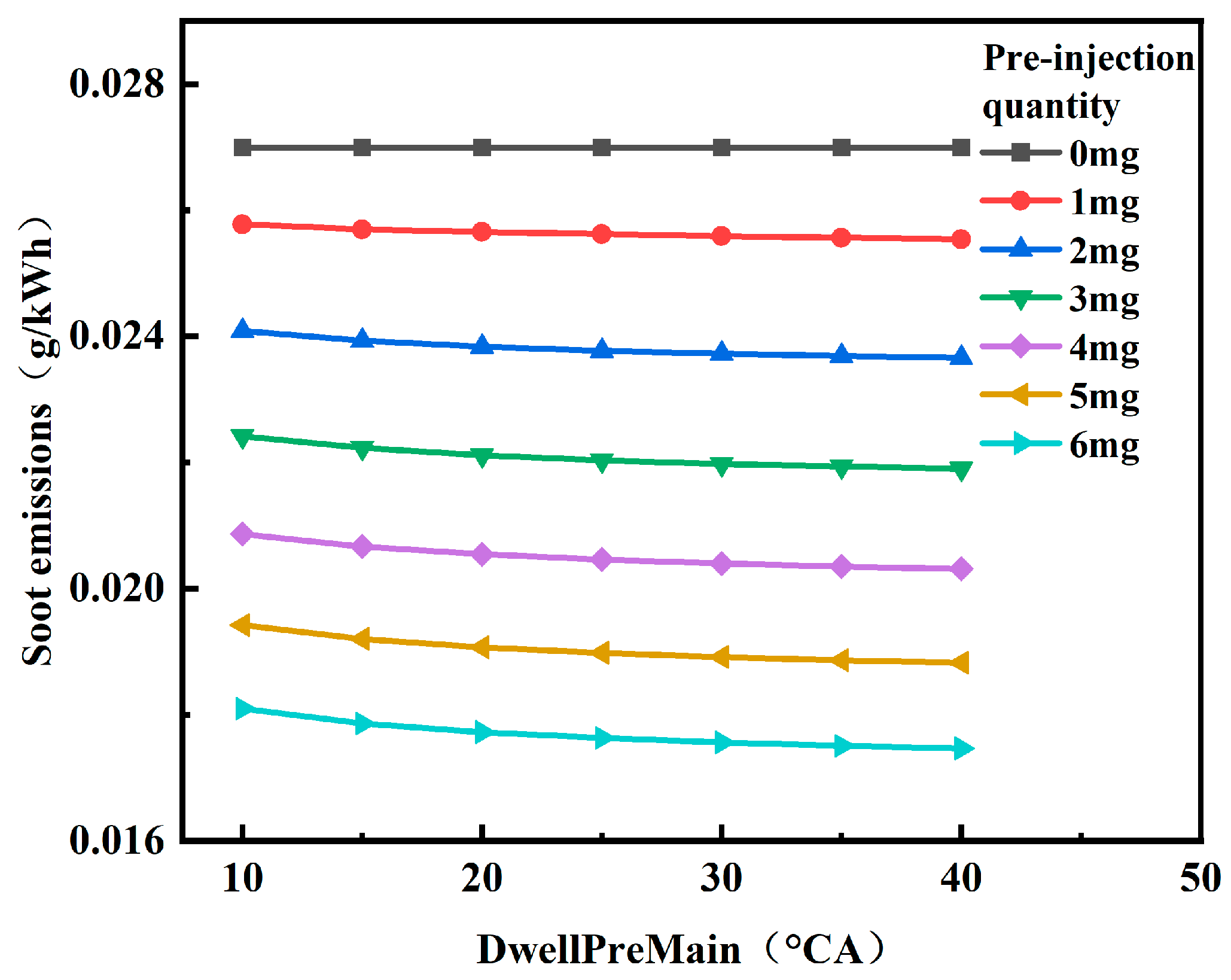
Figure 4 shows the effect of different DwellPreMains and pre-injection quantities on soot emissions. As seen in the figure, with an increase in pre-injection quantity, the overall soot emissions tend to decrease. This phenomenon can be attributed to the dynamics of pre-injection combustion, wherein an augmentation in the pre-injection quantity results in an enhancement of the equivalence ratio of the premixed fuel. As a result, during premixed combustion, the combustion rate increases, the combustion duration shortens, and the flame quickly spreads to the combustion zone. This type of combustion process typically completes the combustion reaction in a shorter time, reducing the formation of incompletely burned carbon particles. In the main injection combustion process, the diffusion combustion decreases, and the premixed combustion increases, which also results in the combustion process completing the reaction in a shorter time. Therefore, with an increase in pre-injection quantity, soot emissions are reduced. Similar trends have been reported in the literature, where an increase in pre-injection mass ratio was found to significantly reduce soot emissions due to enhanced combustion and reduced fuel-rich regions [35]. When the injection amount is 6 mg, the reduction in soot emissions is most significant, with a decrease of 35.31%. For different pre-injection quantities, soot emissions slightly decrease as the DwellPreMain increases, but the extent of the reduction is small. This is because increasing the DwellPreMain gives more time for the pre-injected fuel to mix with air, which can improve combustion efficiency and reduce soot formation to some extent. An increase in the DwellPreMain, from 10 °CA to 40 °CA, results in a 3.33% decrease in soot emissions. As a result, when the pre-injection quantity is minimal, the alteration in the DwellPreMain exerts a negligible influence on soot emissions. However, when the pre-injection quantity is large, increasing the DwellPreMain further reduces soot emissions, but the effect remains limited. Therefore, it can be concluded that appropriately increasing the pre-injection quantity and optimizing the DwellPreMain can effectively reduce soot emissions.

3.1.2. NOX Emissions

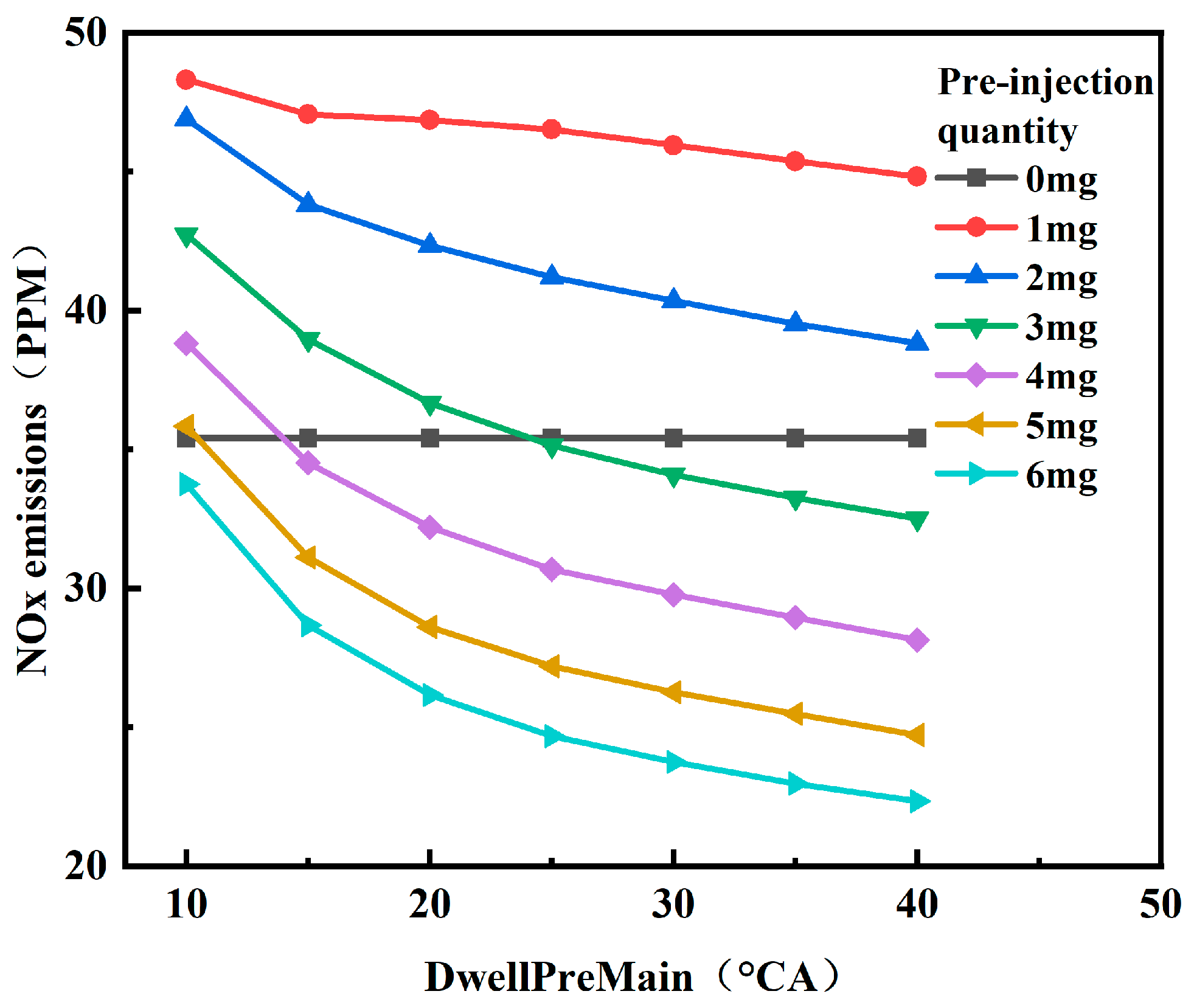
Figure 5 shows the effect of different DwellPreMains and pre-injection quantities on NOX emissions. As seen in the figure, when the pre-injection quantity increases from 1 mg to 6 mg, NOX emissions decrease significantly. However, when the pre-injection quantity is small, NOX emissions are higher than those observed when there is no pre-injection. In an engine, the generation of NOX mainly occurs through three pathways: thermal NOX, prompt NOX, and fuel NOX. Among them, prompt NOX is produced in very small amounts during the combustion process and can be neglected. Fuel NOX is influenced by the nitrogen content in the fuel. However, since this study does not alter the fuel composition, it can also be ignored. The formation of thermal NOX is closely related to temperature, with its reaction rate increasing exponentially as the reaction temperature rises. Based on the analysis in Section 3.1.1, it can be concluded that as the pre-injection quantity increases, the combustion speed increases, leading to lower local temperatures in the cylinder, thereby reducing NOX emissions. Consistent with previous research, the dwell between injections and split injection strategies have been shown to significantly affect NOx emissions, with certain dwell intervals promoting reduced NOx formation due to changes in heat release behavior and combustion phasing [36]. When the pre-injection quantity is 6 mg, the maximum reduction in emissions is achieved, with a decrease of 36.91%. As the DwellPreMain increases, especially at high pre-injection quantities, the reduction in NOX emissions becomes even more pronounced. This is likely because, with an increase in the DwellPreMain, the fuel injection during the pre-injection process occurs earlier, resulting in an advanced combustion process. This phenomenon can be attributed to the observation that an increase in the DwellPreMain results in earlier fuel injection during the pre-injection process, leading to an advanced combustion process. The figure clearly shows that when the DwellPreMain increases from 10 °CA to 40 °CA, the greatest reduction in NOX emissions occurs, with a decrease of 33.82%.

3.1.3. CO Emissions

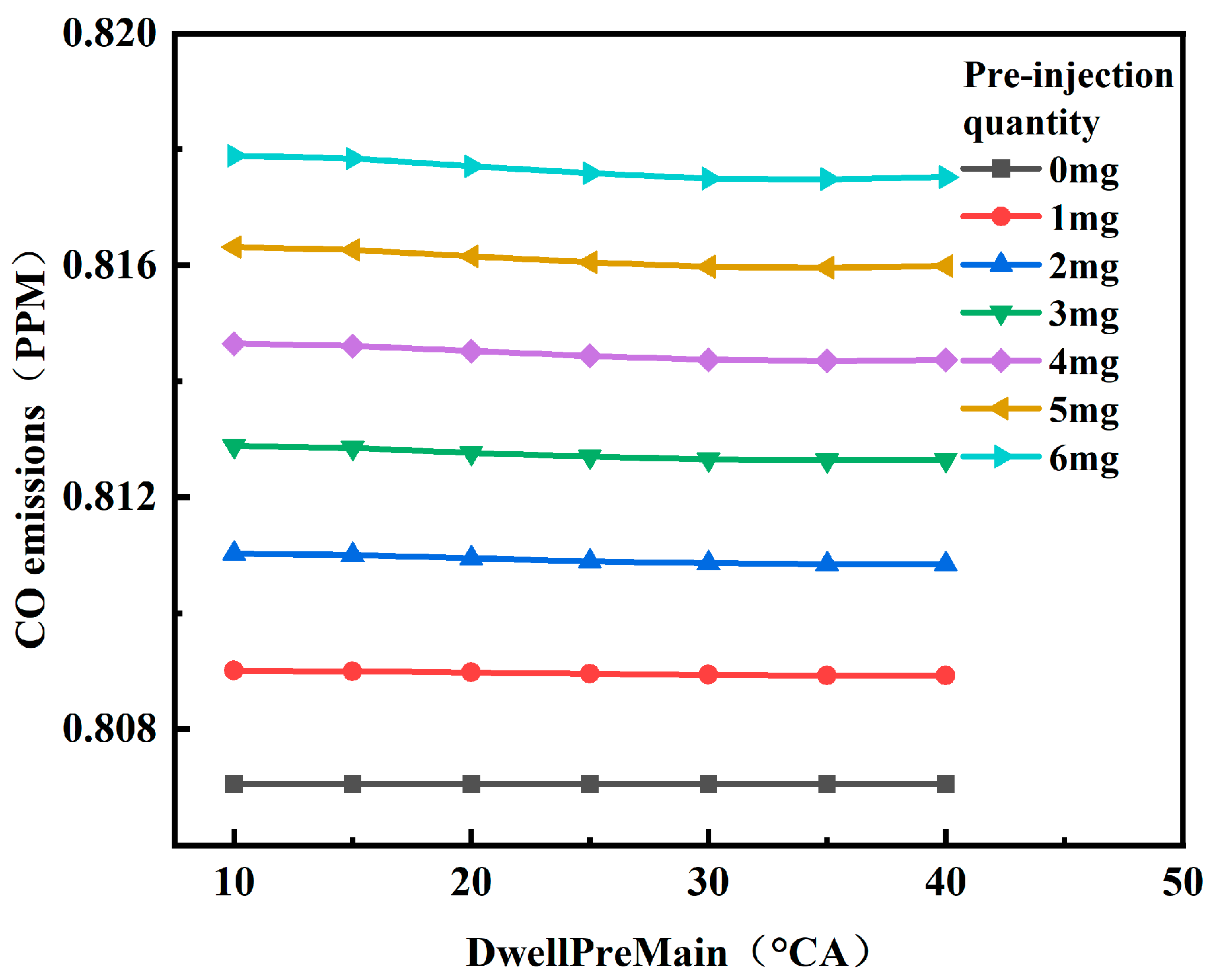
Figure 6 shows the effect of different DwellPreMains and pre-injection quantities on CO emissions. As seen in the figure, with an increase in pre-injection quantity, CO emissions show a slight increasing trend. Particularly at higher pre-injection quantities, CO emissions are slightly higher compared to those at lower pre-injection quantities. This is likely because the increase in pre-injection quantity leads to a reduction in the amount of fuel injected during the main injection, lowering the combustion temperature during the main injection process, resulting in incomplete combustion and an increase in CO formation. Previous studies have also reported that changes in pre-injection timing can weaken the impact of pilot fuel on main combustion, lowering combustion intensity and temperature, which can increase CO emissions due to incomplete combustion [37]. When the pre-injection quantity is 6 mg, CO emissions increase by 1.23%. The effect of the DwellPreMain on CO emissions is minimal. For each pre-injection quantity, as the DwellPreMain increases, CO emissions remain largely unchanged.

3.1.4. CO2 Emissions

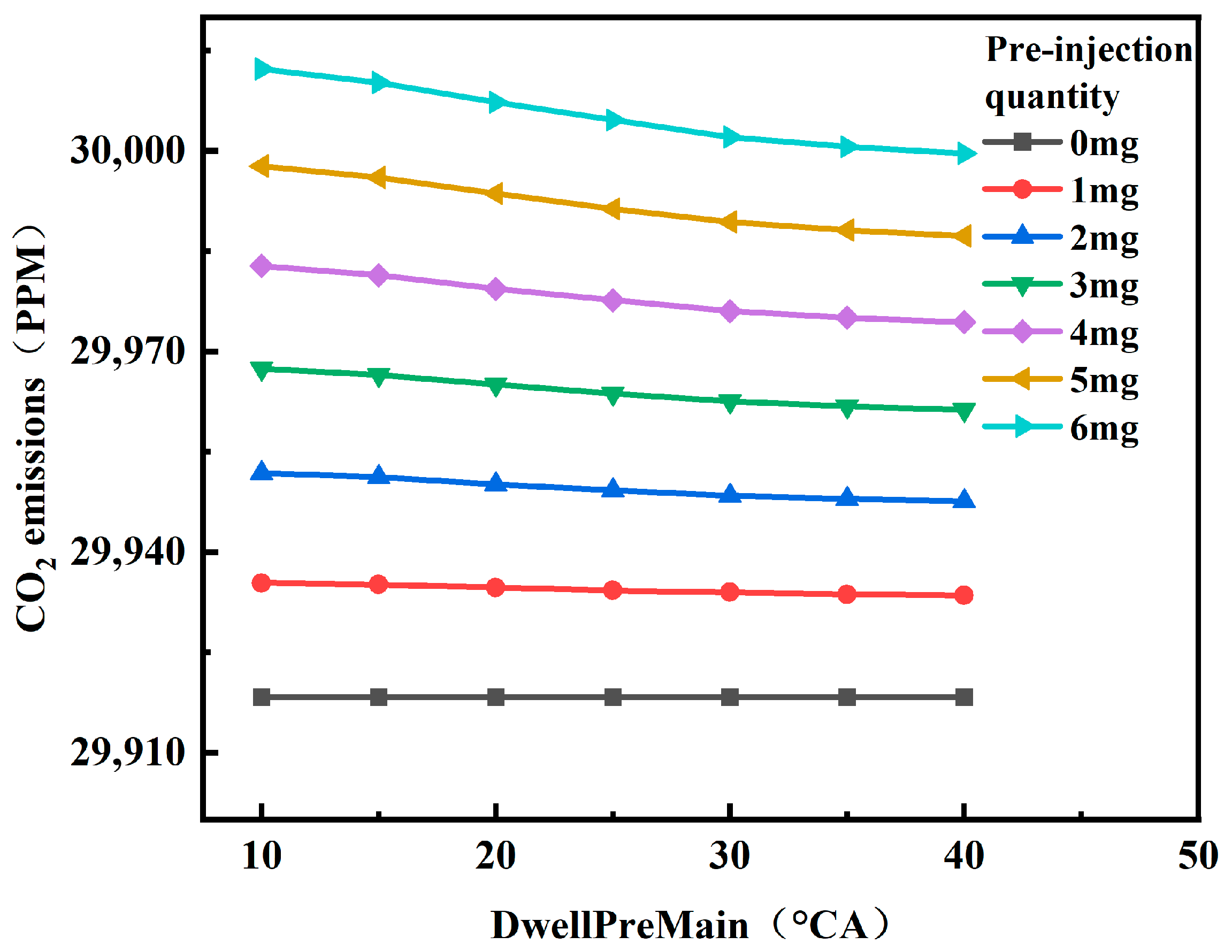
Figure 7 shows the effect of different DwellPreMains and pre-injection quantities on CO2 emissions. As the pre-injection amount increases, CO2 emissions generally rise. Excessive pre-injection fuel may lead to incomplete combustion, which increases the levels of HC and CO. These unburned gases are further oxidized to CO2 during the main combustion stage, resulting in higher CO2 emissions. As DwellPreMain increases, CO2 emissions tend to decrease slightly, with this trend being more noticeable at higher pre-injection amounts. However, if the time interval is too short, the pre-injected fuel has not had sufficient time to mix with the air before entering the main combustion phase, leading to reduced combustion efficiency and potentially generating more CO and unburned HC. These substances are partially oxidized to CO2 during the main injection, causing a slight increase in CO2 emissions. Similar trends have been reported in the literature, where varying pre-injection quantity and dwell interval between injections alter combustion phasing and mixing, thereby affecting CO2 emissions [38].

3.1.5. HC Emissions

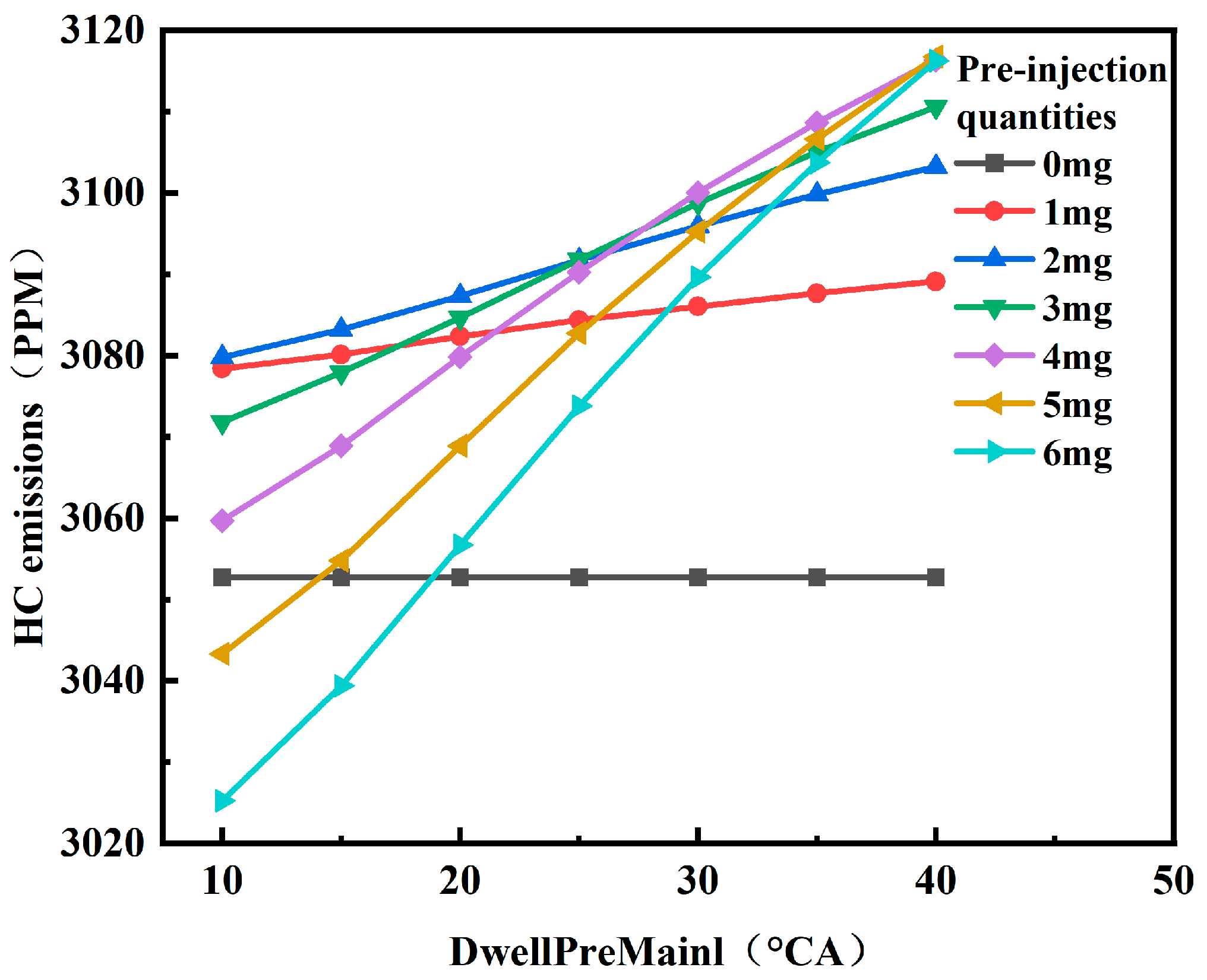
Figure 8 shows the effect of different DwellPreMains and pre-injection quantities on HC emissions. As DwellPreMain increases, HC emissions increase significantly, with the most notable increase occurring at high pre-injection quantities, where emissions rise by up to 3%. This is because, at high pre-injection quantities, the maximum cylinder pressure in the internal combustion engine is much higher than at low pre-injection quantities. Higher pressure increases the flame propagation speed, making it easier for the fuel to burn completely, thereby reducing HC formation. However, HC emissions are also influenced by the temperature in the combustion zone, and low combustion temperatures may lead to incomplete combustion, increasing HC emissions. As seen in the figure, at small DwellPreMains, HC emissions at high pre-injection quantities are higher than at low pre-injection quantities. In contrast, at larger DwellPreMains, HC emissions at high pre-injection quantities are lower than at low pre-injection quantities. This is because, at smaller DwellPreMains, the effect of cylinder pressure on HC emissions is greater than the effect of cylinder temperature. Conversely, at larger DwellPreMains, the influence of cylinder pressure on HC emissions is smaller than that of cylinder temperature. Similar results have been reported in the literature, where increasing the dwell period between split injections led to an increase in HC emissions, which is attributed to changes in combustion phasing and fuel–air mixing caused by the longer interval between injection pulses [36].

3.2. Combustion and Performance Characteristics

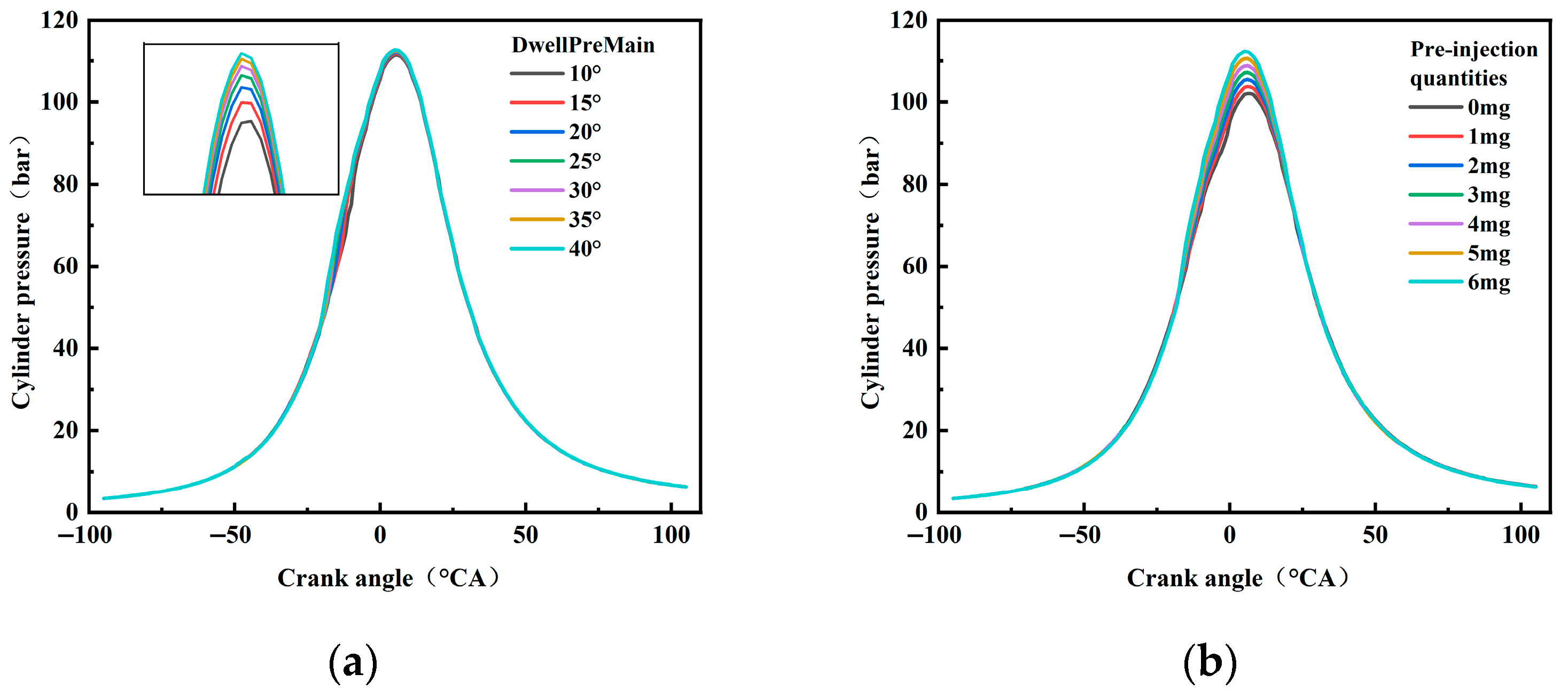
3.2.1. Cylinder Pressure

Figure 9a shows the cylinder pressure curves for different DwellPreMains. As seen in the figures, with an increase in the DwellPreMain, the maximum cylinder pressure slightly decreases, and the maximum occurs at a slightly later crank angle. This is because, with a longer DwellPreMain, the combustion start time is delayed, leading to a lower maximum pressure during the combustion process. Similar observations have been reported in the literature, where increasing the dwell period between split injections led to changes in combustion phasing and a reduction in the premixed combustion peak, resulting in a slight decrease in peak in-cylinder pressure and a shift in its crank angle [36].
Figure 9b shows the cylinder pressure curves for different pre-injection quantities. As the pre-injection quantity increases, the maximum cylinder pressure rises significantly, and the shape of the cylinder pressure curve also changes slightly. An increase in the pre-injection quantity means that some fuel is already present in the combustion chamber for pre-combustion before the main injection, which makes the combustion process more intense, raising the maximum cylinder pressure. The figure also shows that the maximum cylinder pressure occurs earlier. This is because the pre-injected fuel burns before the main injection, increasing the temperature in the combustion chamber. The rise in temperature accelerates the chemical reaction rate during the main combustion process, making the combustion faster and causing the maximum cylinder pressure to occur earlier.

3.2.2. Output Power

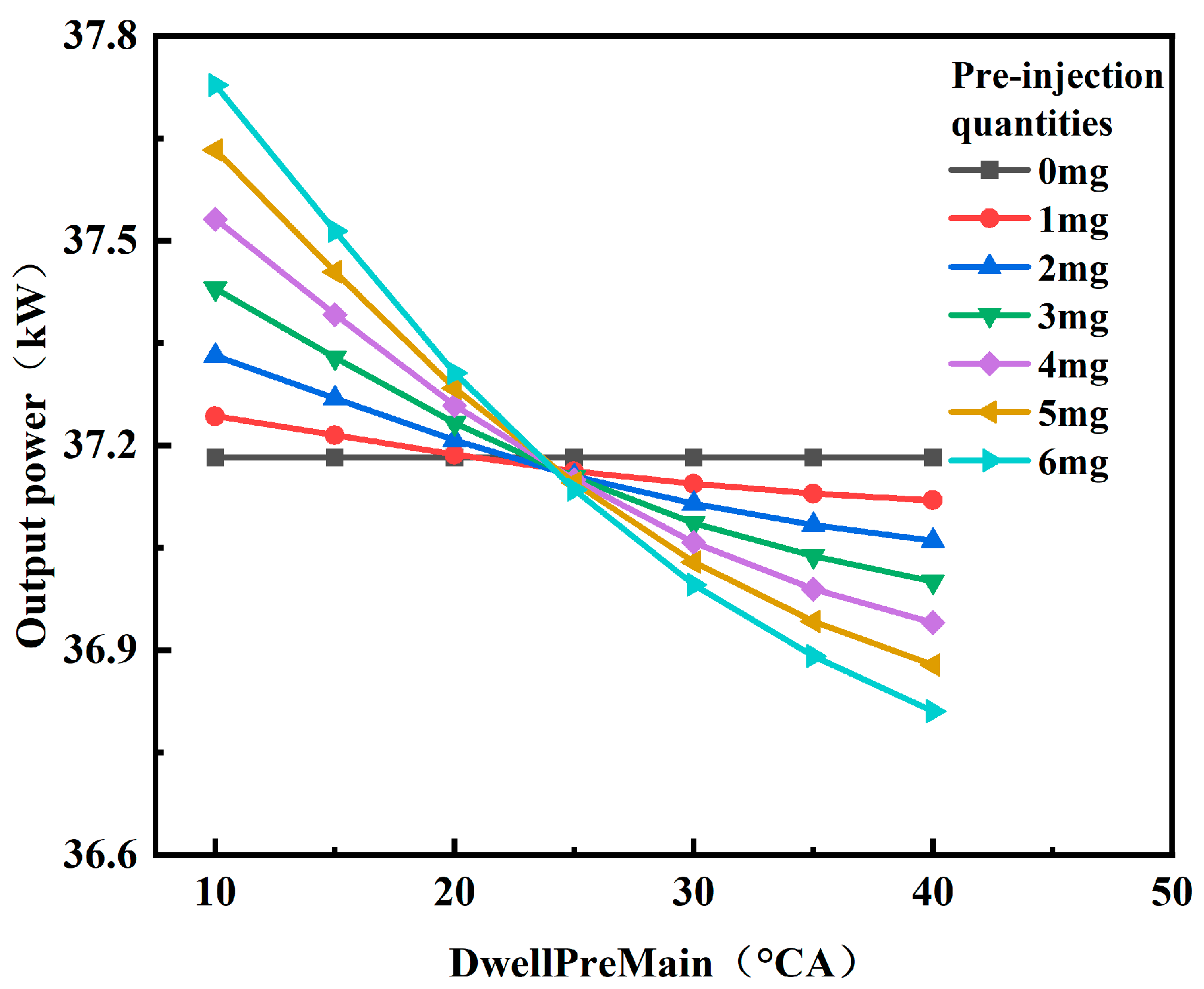
Figure 10 shows the effect of different DwellPreMains and pre-injection quantities on output power. When the DwellPreMain is short, the output power slightly increases as the pre-injection quantity increases. In particular, when the pre-injection quantity reaches 5 mg and 6 mg, the power increase becomes more noticeable, with the output power rising by a maximum of 1.46%. However, as DwellPreMain increases, the output power at higher pre-injection quantities decreases significantly, and the larger the pre-injection quantity, the greater the decrease. The output power decreases by a maximum of 1%. This is because increasing the pre-injection quantity within a short time interval helps improve output power, as the combustion process is more concentrated and the fuel can burn more completely. However, with longer time intervals, excessive pre-injection quantity can lead to advanced combustion, incomplete combustion, increased pressure fluctuations, and reduced thermal efficiency, all of which significantly lower output power. This trend is consistent with previous split-injection studies, where appropriate pre-injection enhances combustion and torque output, while overly long injection intervals or excessive pilot fuel can advance combustion phasing and reduce engine performance [36].

3.2.3. Output Torque

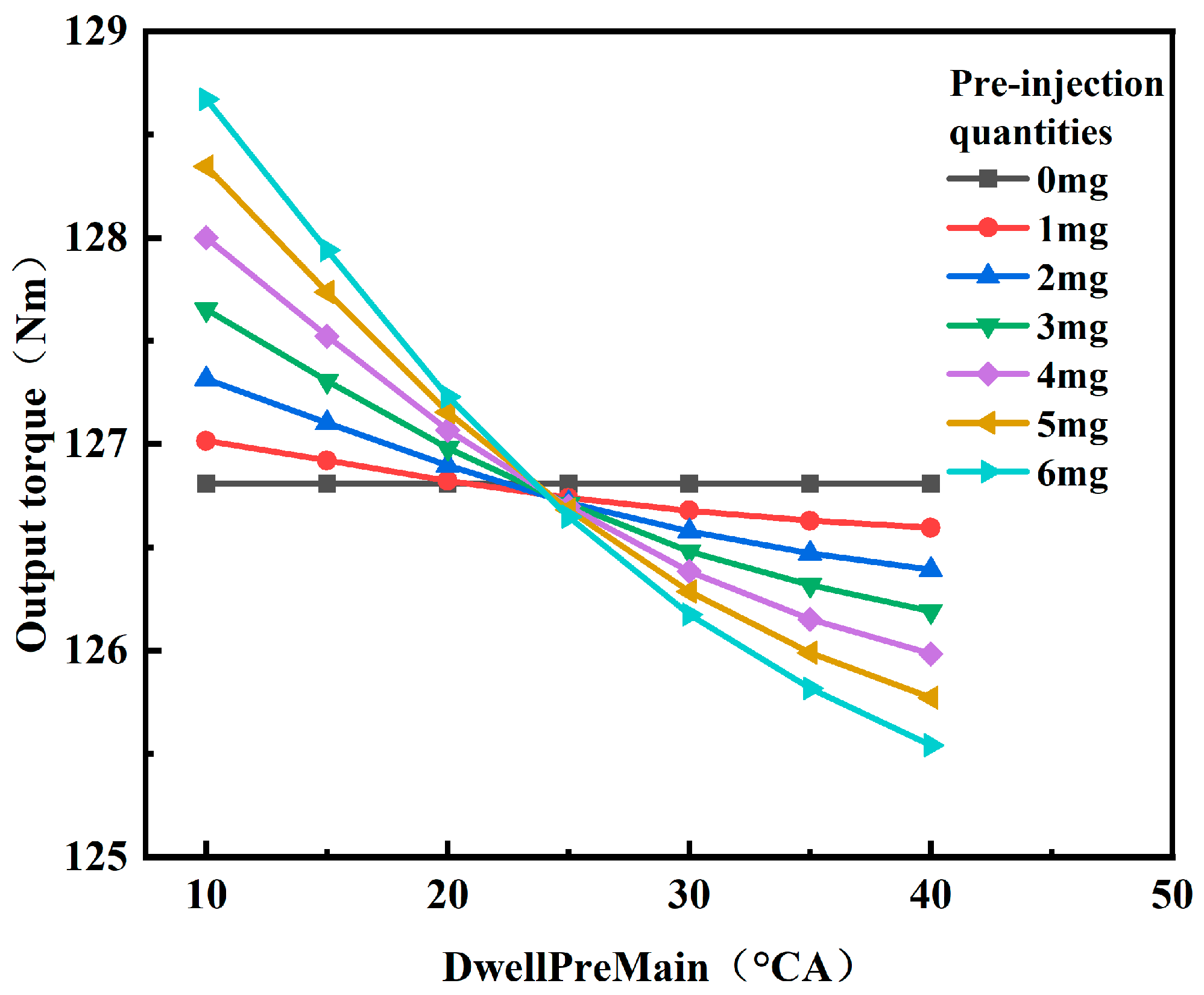
Figure 11 shows the effect of different DwellPreMains and pre-injection quantities on output torque. Both pre-injection quantity and DwellPreMain have a significant impact on output torque. An appropriate pre-injection quantity helps improve output torque at short time intervals, but at long time intervals and high pre-injection quantities, advanced combustion and incomplete combustion significantly reduce output torque. The overall trend in changes to output torque is similar to that of output power.

4. Conclusions

The present paper establishes a model of a 4-cylinder methanol–ammonia dual-fuel engine for the purpose of simulation calculations. A series of investigations was performed to analyze the impact of DwellPreMains and pre-injection quantities on the engine’s power and emission performance. The main conclusions are as follows:
Compared to the single methanol injection strategy, the implementation of an augmented pre-injection strategy has been demonstrated to be an effective method of enhancing the uniformity of fuel distribution, thereby facilitating more complete combustion. As a result, NOX and soot emissions decrease with the increase in pre-injection quantity, with the maximum reductions of 36.91% and 35.31%, respectively. Emissions of CO, CO2, and HC show no significant changes.
With the same pre-injection quantity, an increase in the DwellPreMain results in an advancement of the onset of combustion and a reduction in combustion temperature. This significantly reduces NOX emissions, with the maximum reduction of 33.82%. Soot emissions also decrease slightly, while emissions of CO, CO2, and HC show no significant changes.
An increase in the pre-injection quantity can result in an acceleration of the main injection combustion process. It leads to an increase in the maximum cylinder pressure and an advance in the maximum cylinder pressure timing. The maximum increase in the maximum cylinder pressure is 11.2%. As DwellPreMain increases, both output power and output torque decrease, especially at high pre-injection quantities.
When the pre-injection quantity is 6 mg, and the DwellPreMain is 25 °CA, the engine’s overall performance is set at optimized. While output power and output torque show no significant decrease, soot emissions decrease by 34.67% and NOX emissions decrease by 30.31%.

Author Contributions

Y.H.: Writing—original draft, Methodology. H.X.: Supervision, Conceptualization. A.C.: Writing—review and editing, Funding acquisition. Z.H.: Date curation, Validation. J.L.: Investigation, Formal analysis. G.C.: Project administration, Software. All authors have read and agreed to the published version of the manuscript.

Funding

This research was funded by the Guangzhou Education Bureau’s 2024 University Research Project [2024312533], [2024312526], and [2024312534], Science and Technology Projects in Guangzhou (SL2024A04J01991) and Start-up Fund for Talent Introduction at Guangzhou Jiaotong University (K42024035). The APC was funded by Xiao Hua.

Data Availability Statement

The original contributions presented in this study are included in the article. Further inquiries can be directed to the corresponding authors.

Acknowledgments

This article is a revised and expanded version of a paper entitled Effect of Pre-Injection on the Performance of Methanol-Ammonia Dual-Fuel Engines, which was presented at the International Conference on Energy Technology and Electrical Power (ETEP 2024).

Conflicts of Interest

The authors declare no conflict of interest.

References

  1. Huang, Y.; Chen, A.; Liang, Y.; Guo, Y.; Huang, Z.; Lai, J.; Chen, G.; Xiao, H. Effect of pre-injection on the performance of methanol-ammonia dual-fuel engines. In Proceedings of the International Conference on Energy Technology and Electrical Power (ETEP 2024), Guangzhou, China, 20–22 December 2024; Volume 13566, p. 135660C-1. [Google Scholar] [CrossRef]
  2. Anika, O.C.; Nnabuife, S.G.; Bello, A.; Okoroafor, E.R.; Kuang, B.; Villa, R. Prospects of low and zero-carbon renewable fuels in 1.5-degree net zero emission actualisation by 2050: A critical review. Carbon Capture Sci. Technol. 2022, 5, 100072. [Google Scholar] [CrossRef]
  3. Tian, Z.; Wang, Y.; Zhen, X.; Liu, Z. The effect of methanol production and application in internal combustion engines on emissions in the context of carbon neutrality: A review. Fuel 2022, 320, 123902. [Google Scholar] [CrossRef]
  4. Zhang, S.; Fu, M.; Zhang, H.; Yin, H.; Ding, Y. Emission control status and future perspectives of diesel trucks in China. J. Environ. Sci. 2025, 148, 702–713. [Google Scholar] [CrossRef]
  5. Xiao, H.; Ying, W.; Chen, A.; Chen, G.; Liu, Y.; Lyu, Z.; Qiao, Z.; Li, J.; Zhou, Z.; Deng, X. Study on the Impact of Ammonia–Diesel Dual-Fuel Combustion on Performance of a Medium-Speed Diesel Engine. J. Mar. Sci. Eng. 2024, 12, 806. [Google Scholar] [CrossRef]
  6. Huang, Z.; Lyu, Z.; Luo, P.; Zhang, G.; Ying, W.; Chen, A.; Xiao, H. Effects of Methanol–Ammonia Blending Ratio on Performance and Emission Characteristics of a Compression Ignition Engine. J. Mar. Sci. Eng. 2023, 11, 2388. [Google Scholar] [CrossRef]
  7. Valera-Medina, A.; Amer-Hatem, F.; Azad, A.K.; Dedoussi, I.C.; Joannon, M.D.; Fernandes, R.X.; Glarborg, P.; Hashemi, H.; He, X.; Mashruk, S.; et al. Review on Ammonia as a Potential Fuel: From Synthesis to Economics. Energy Fuels 2021, 35, 6964–7029. [Google Scholar] [CrossRef]
  8. Macfarlane, D.R.; Cherepanov, P.C.; Choi, J.; Suryanto, B.H.R.; Hodgetts, R.Y.; Bakker, J.M.; Vallana, F.M.F.; Simonov, A.N. A Roadmap to the Ammonia Economy. Joule 2020, 4, 1186–1205. [Google Scholar] [CrossRef]
  9. Ganean, N.; Viswanathan, K.; Karthic, S.V.; Ekambaram, P.; Wu, W.; Vo, D.N. Split injection strategies based RCCl combustion analysis with waste cooking oil biofuel and methanol in an open ECU assisted CRDl engine. Fuel 2022, 319, 123710. [Google Scholar] [CrossRef]
  10. Farooq, M.S.; Baig, A.; Wei, Y.; Liu, H.; Ali, U. A concise review of developments to overcome the cold start problems by analyzing combustion and emissions of methanol-based-fueled spark ignition engines. Int. J. Hydrogen Energy 2025, 99, 852–871. [Google Scholar] [CrossRef]
  11. Aziz, M.; Jiangsa, F.B.; Irhamna, A.R.; Irsyad, A.R.; Hariana, H.; Darmawan, A. Ammonia utilization technology for thermal power generation: A review. J. Energy Inst. 2023, 111, 101365. [Google Scholar] [CrossRef]
  12. Chiong, M.; Chong, C.T.; Ng, J.; Mashruk, S.; Chong, W.W.F.; Samiran, N.A.; Mong, G.R.; Valera-Medina, A. Advancements of combustion technologies in the ammonia-fuelled engines. Energy Convers. Manag. 2021, 244, 114460. [Google Scholar] [CrossRef]
  13. Dimitriou, P.; Javaid, R. A review of ammonia as a compression ignition engine fuel. Int. J. Hydrogen Energy 2020, 45, 7098–7118. [Google Scholar] [CrossRef]
  14. Wu, Y.; Chen, A.; Xiao, H.; Jano-Ito, M.; Alnaeli, M.; Mashruk, S.; Valera-Medina, A. Emission reduction and cost-benefit analysis of the use of ammonia and green hydrogen as fuel for marine applications. Green Energy Resour. 2023, 1, 100046. [Google Scholar] [CrossRef]
  15. Wang, B.; Wang, H.; Hu, D.; Yang, C.; Duan, B.; Wang, Y. Effect of different ammonia mixing methods for diesel ignition on combustion and emission performance of high pressure common rail engine. J. Energy Inst. 2023, 111, 101402. [Google Scholar] [CrossRef]
  16. Nie, X.; Bi, Y.; Shen, L.; Lei, J.; Chen, G.; Xiao, Y. Prediction of performance and emissions of ammonia-diesel dual-fuel engine using response surface methodology. Energy 2025, 320, 135398. [Google Scholar] [CrossRef]
  17. Flaih, D.; Al-Dawody, M.; Elkelawy, M.; Jamshed, W.; Abd-Elmonem, A.; Abdalla, N.S.E.; Amjad, A. Experimental and numerical study on the characteristics of gasoline engine powered by gasoline blended with water ammonia solution. Fuel 2025, 387, 134333. [Google Scholar] [CrossRef]
  18. Zhang, R.; Shu, G.; Zhao, H.; Chen, L.; Wei, H.; Pan, J. A comparative study on NH3/H2 and NH3/CH3OH combustion and emission in an optical SI engine. Fuel 2024, 369, 131731. [Google Scholar] [CrossRef]
  19. Lin, Z.; Liu, S.; Qi, Y.; Chen, Q.; Wang, Z. Experimental study on the performance of a high compression ratio SI engine using alcohol/ammonia fuel. Energy 2024, 289, 129998. [Google Scholar] [CrossRef]
  20. Li, X.; Ma, Z.; Jin, Y.; Wang, X.; Xi, Z.; Hu, S.; Chu, X. Effect of methanol blending on the high-temperature autoignition of ammonia: An experimental and modelling study. Fuel 2023, 339, 126911. [Google Scholar] [CrossRef]
  21. He, X.; Shu, B.; Nascimento, D.; Moshammer, K.; Costa, M.; Fernandes, R.X. Auto-ignition kinetics of ammonia and ammonia/hydrogen mixtures at intermediate temperatures and high pressures. Combust. Flame 2019, 206, 189–200. [Google Scholar] [CrossRef]
  22. Zhong, W.; Dai, L.; He, Z.; Wang, Q. Numerical study on the combustion characteristics of premixed ammonia flames with methanol/ethanol/n-butanol addition. Fuel 2025, 381, 133527. [Google Scholar] [CrossRef]
  23. Guibert, P.; Tran, K.; Sebai, S.; Perceau, M.; Guilain, S. Numerical simulation of predictive combustion and NOx emissions for different ammonia/hydrogen fuels in SI engine using zero-1 dimensional thermodynamic modeling. Int. J. Hydrogen Energy 2025, 143, 500–512. [Google Scholar] [CrossRef]
  24. Li, Z.; Gong, C.; Qu, X.; Liu, F.; Sun, J.; Wang, K.; Li, Y. Critical firing and misfiring boundary in a spark ignition methanol engine during cold start based on single cycle fuel injection. Energy 2015, 89, 236–243. [Google Scholar] [CrossRef]
  25. Shen, Z.; Qu, Q.; Chen, M.; Lyu, H.; Sun, J. Advancements in methanol distillation system: A comprehensive overview. Chem. Eng. Res. Des. 2023, 199, 130–151. [Google Scholar] [CrossRef]
  26. Zhou, F.; Yu, J.; Wu, C.; Fu, J.; Liu, J.; Duan, X. The application prospect and challenge of the alternative methanol fuel in the internal combustion engine. Sci. Total Environ. 2024, 913, 169708. [Google Scholar] [CrossRef] [PubMed]
  27. Bozzano, G.; Manenti, F. Efficient methanol synthesis: Perspectives, technologies and optimization strategies. Prog. Energy Combust. Sci. 2016, 56, 71–105. [Google Scholar] [CrossRef]
  28. Gong, C.; Liu, J.; Peng, L.; Liu, F. Numerical study of effect of injection and ignition timings on combustion and unregulated emissions of DISI methanol engine during cold start. Renew. Energy 2017, 112, 457–465. [Google Scholar] [CrossRef]
  29. Rong, W.; Zhang, F.; Zhao, Y.; Yan, S.; Yuan, Y.; Qiu, Y. A detailed chemical kinetic model for methanol and ammonia co-oxidation under hydrothermal flames: Reaction mechanism and flame characteristics. Chem. Eng. Res. Des. 2024, 210, 707–723. [Google Scholar] [CrossRef]
  30. Hu, Z.; Li, M.; Yu, W.; Wang, Z.; Li, L. Spark ignition and stable flame of premixed methanol-ammonia gaseous jet at atmospheric surrounding. Int. J. Hydrogen Energy 2024, 90, 1325–1332. [Google Scholar] [CrossRef]
  31. Xiong, Q.; Zhao, B.; Wan, Z.; Liang, D.; Liu, L. Effect of ammonia jet strategy and intake air temperature on mixing characteristics in ammonia/diesel dual-fuel marine engine. Appl. Therm. Eng. 2025, 262, 125192. [Google Scholar] [CrossRef]
  32. Wang, J.; Ma, Q.; Nie, J.; Lin, J.; Su, W.; Wu, B. Influence mechanism and optimization of the diesel engine jet disturbance chamber injection strategy for enhanced combustion and thermal efficiency. Appl. Therm. Eng. 2025, 261, 125169. [Google Scholar] [CrossRef]
  33. Lin, Z.; Liu, S.; Sun, Q.; Qi, Y.; Wang, Z.; Li, J. Effect of injection and ignition strategy on an ammonia direct injection-Hydrogen jet ignition (ADI-HJI) engine. Energy 2024, 306, 132502. [Google Scholar] [CrossRef]
  34. Liu, Y.; Wang, X.; Li, X.; Hong, W.; Li, X.; Jie, F. Simulation study of the synergistic effect of injection pressure and nozzle parameters on diesel engine performance. Automot. Engines 2023, 2, 11–17. [Google Scholar] [CrossRef]
  35. Wang, Z.; Li, L. Effect of Pre-Injection on Combustion and Emission Characteristics of a Diesel Engine Fueled with Diesel/Methanol/n-Butanol Blended Fuel. Processes 2021, 10, 60. [Google Scholar] [CrossRef]
  36. Brijesh, P.; Sreedhara, S. Experimental and numerical investigations of effect of split injection strategies and dwell between injections on combustion and emissions characteristics of a diesel engine. Clean Technol. Environ. Policy 2016, 18, 2325–2334. [Google Scholar] [CrossRef]
  37. Xu, M.; Cheng, W.; Zhang, H.; An, T.; Zhang, S. Effect of diesel pre-injection timing on combustion and emission characteristics of compression ignited natural gas engine. Energy Convers. Manag. 2016, 117, 86–94. [Google Scholar] [CrossRef]
  38. Yousefi, A.; Guo, H.; Dev, S.; Liko, B.; Lafrance, S. Effect of pre-main-post diesel injection strategy on greenhouse gas and nitrogen oxide emissions of natural gas/diesel dual-fuel engine at high load conditions. Fuel 2021, 302, 121110. [Google Scholar] [CrossRef]
Figure 1. Four-cylinder diesel engine model.
Processes 14 01060 g001
Figure 2. Validation of simulated cylinder pressure against experimental results.
Processes 14 01060 g002
Figure 3. Schematic of pre-injection.
Processes 14 01060 g003
Figure 4. The effect of different DwellPreMains and pre-injection quantities on soot emissions.
Processes 14 01060 g004
Figure 5. The effect of different DwellPreMains and pre-injection quantities on NOX emissions.
Processes 14 01060 g005
Figure 6. The effect of different DwellPreMains and pre-injection quantities on CO emissions.
Processes 14 01060 g006
Figure 7. The effect of different DwellPreMains and pre-injection quantities on CO2 emissions.
Processes 14 01060 g007
Figure 8. The effect of different DwellPreMains and pre-injection quantities on HC emissions.
Processes 14 01060 g008
Figure 9. Cylinder pressure curves for different DwellPreMains and pre-injection quantities (a) Cylinder pressure curves for different DwellPreMains (b) Cylinder pressure curves for different pre-injection quantities.
Processes 14 01060 g009
Figure 10. The effect of different DwellPreMains and pre-injection quantities on output power.
Processes 14 01060 g010
Figure 11. The effect of different DwellPreMains and pre-injection quantities on output torque.
Processes 14 01060 g011
Table 1. Basic parameters of the diesel engine.
Engine ParametersNumeric Value
bore/mm95.4
stroke/mm104.9
compression ratio17.2
nozzles6
pore/mm0.139
rated power/kW80
maximum torque/(Nm)240
rated speed/(r/min)3400
Table 2. Physical properties table.
CharacteristicAmmoniaMethanolDiesel Fuel
density/g·cm−20.770.790.84
autoignition temperature/°C650464316
latent heat of vaporization/kJ·kg−113701100260
low calorific value/kJ·kg−118,61019,66042,700
octane number110110-
boiling point (°C)−33.564.7280
Table 3. Operating conditions.
Pre-Injection Quantity (mg)DwellPreMain (°CA)Total Fuel Injection (mg)Start of Main Injection (°CA)
010, 15, 20, 25, 30, 35, 4046.7−10
110, 15, 20, 25, 30, 35, 4046.7−10
210, 15, 20, 25, 30, 35, 4046.7−10
310, 15, 20, 25, 30, 35, 4046.7−10
410, 15, 20, 25, 30, 35, 4046.7−10
510, 15, 20, 25, 30, 35, 4046.7−10
610, 15, 20, 25, 30, 35, 4046.7−10
Disclaimer/Publisher’s Note: The statements, opinions and data contained in all publications are solely those of the individual author(s) and contributor(s) and not of MDPI and/or the editor(s). MDPI and/or the editor(s) disclaim responsibility for any injury to people or property resulting from any ideas, methods, instructions or products referred to in the content.